Connect with us
DAPA Banner
DAPA Coin
DAPA
COIN PAYMENT ASSET
PRIVACY · BLOCKDAG · HOMOMORPHIC ENCRYPTION · RUST
ElGamal Encrypted MINE DAPA
🚫 GENESIS SOLD OUT
DAPAPAY COMING

Business

Gold Falls 0.77% to $4,485 as Strong Dollar and Fed Outlook Pressure Precious Metals

Published

on

Gold

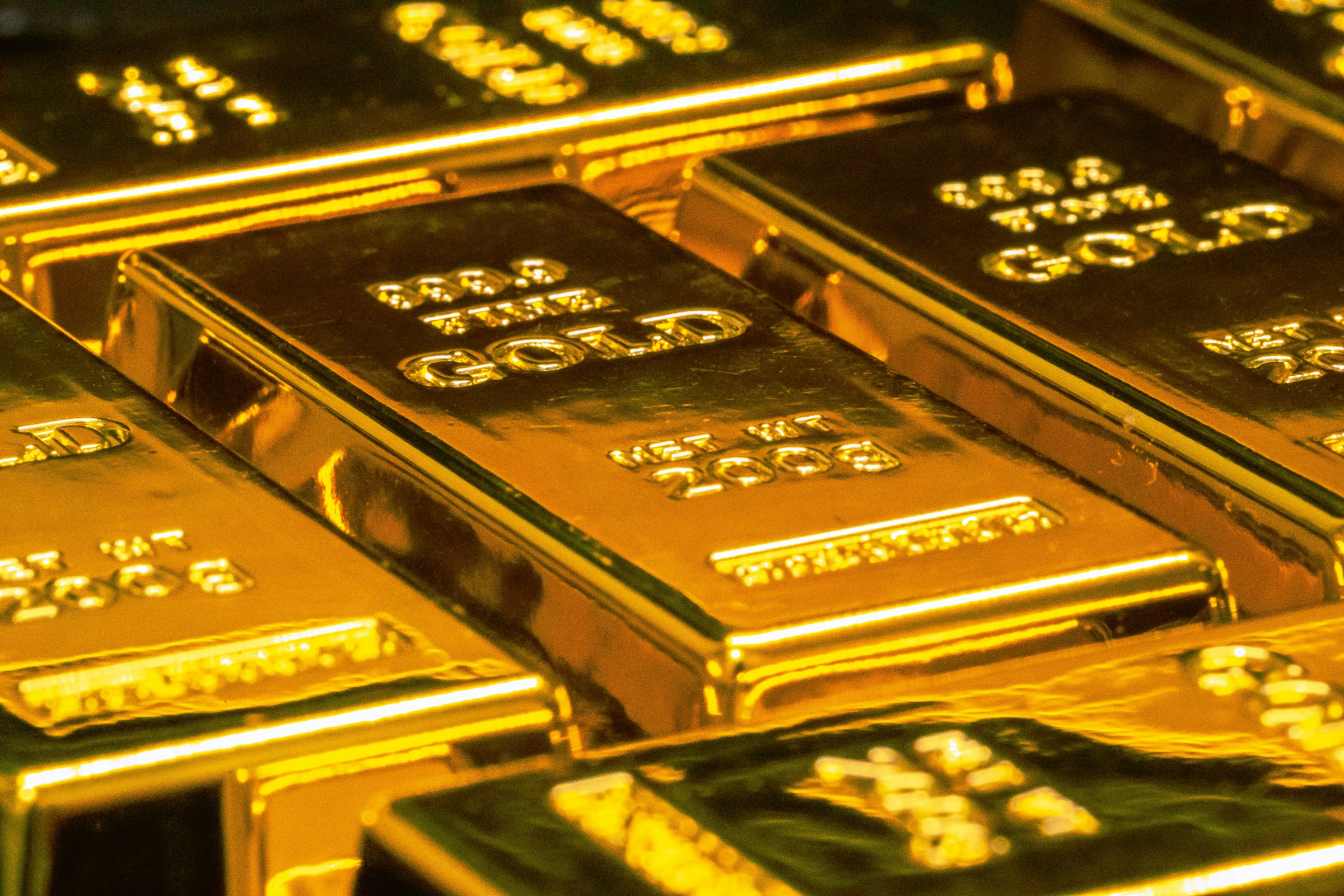
NEW YORK — Gold prices declined $34.60, or 0.77%, to settle at $4,485.30 per ounce on Wednesday, extending recent weakness as a stronger U.S. dollar and persistent expectations for cautious Federal Reserve policy weighed on the precious metal.

The drop marked the second consecutive session of losses for gold, which had reached record highs earlier in 2026 amid geopolitical tensions and central bank buying. Wednesday’s decline reflected shifting investor sentiment as improving risk appetite reduced demand for safe-haven assets.

Market participants pointed to several interconnected factors behind the move. The U.S. dollar strengthened against major currencies following mixed but generally resilient economic data, making dollar-priced gold less attractive for international buyers. Additionally, recent inflation readings suggested the Fed may maintain higher interest rates for longer than previously anticipated, increasing the opportunity cost of holding non-yielding assets like gold.

Comex gold futures for the most active contract reflected this pressure throughout the session. Trading volume was solid as hedge funds and institutional investors adjusted positions ahead of key economic releases later in the week, including wholesale inflation data and updated consumer confidence figures.

Advertisement

Despite the daily decline, gold remains substantially higher year-to-date. The metal has benefited from sustained central bank purchases, particularly from emerging market nations seeking to diversify reserves away from traditional currencies. Strong jewelry demand in Asia and ongoing geopolitical uncertainties in several regions have also provided underlying support.

Analysts note that gold’s performance in 2026 has been driven by a complex mix of macroeconomic forces. While higher interest rates typically pressure the metal, massive buying by central banks and retail investors in Asia has created a counterbalancing effect. This dynamic has resulted in record prices even as real yields on government bonds remain elevated.

The current environment features a tug-of-war between traditional drivers. Safe-haven demand during periods of market volatility has lifted prices at times, while periods of risk-on sentiment and stronger economic data have led to pullbacks. Wednesday’s session fell into the latter category as equity markets showed resilience and investors rotated toward risk assets.

Investment flows into gold ETFs have been mixed in recent weeks. Some funds reported modest outflows as investors took profits following earlier rallies, while others saw steady inflows from long-term holders. Physical gold markets, particularly in India and China, continued showing robust demand for bars and coins despite higher prices.

Advertisement

Central bank activity remains one of the strongest pillars of support. Nations including China, India, Turkey and several Middle Eastern countries have maintained steady purchases throughout 2026 as part of broader reserve diversification strategies. This institutional demand has helped gold maintain elevated levels even during periods of dollar strength.

Looking ahead, market watchers will focus on upcoming economic indicators for further direction. Stronger-than-expected inflation or employment data could reinforce expectations for fewer rate cuts, adding further pressure on gold. Conversely, signs of economic softening might revive safe-haven buying and support prices.

Technical analysts observed that gold broke below a short-term support level during Wednesday’s trading. The metal now faces potential tests of lower support zones, though many expect any significant declines to attract buying interest given the strong fundamental backdrop.

Broader commodity markets showed mixed performance. Crude oil prices held relatively steady, while industrial metals like copper and aluminum displayed varied movements based on global growth expectations. Gold’s underperformance relative to some risk assets highlighted the current preference for equities over traditional safe havens.

Advertisement

For investors, the recent gold price action serves as a reminder of the metal’s sensitivity to real interest rates and currency movements. While many portfolio managers maintain strategic allocations to gold for diversification, tactical traders have become more active in adjusting exposure based on near-term macroeconomic developments.

The jewelry sector, which accounts for roughly half of annual gold demand, continues showing resilience in key Asian markets despite elevated prices. Cultural and festive buying patterns have supported physical demand, though higher costs have led some consumers to opt for smaller quantities or alternative designs.

Mining companies within the gold sector experienced corresponding pressure in their share prices. Major producers reported mixed results as higher operating costs offset some benefits from elevated metal prices. Companies with strong balance sheets and efficient operations have generally outperformed smaller miners during this period.

Geopolitical factors continue playing an important background role. Ongoing tensions in various regions have prevented more severe declines in gold prices by maintaining a baseline level of safe-haven demand. However, the absence of major new crises has allowed other market forces to exert greater influence on short-term price movements.

Advertisement

As 2026 progresses, many analysts maintain a constructive long-term outlook for gold despite near-term volatility. Structural factors including de-dollarization efforts by some nations, persistent inflation concerns in certain economies, and growing middle-class wealth in Asia are expected to support prices over the coming years.

Investment banks and research firms have published varied forecasts. Some project gold could test new highs later in 2026 if economic growth slows or geopolitical risks escalate, while others see potential for consolidation around current levels if monetary policy remains restrictive.

The gold market’s evolution in recent years reflects its changing role in global finance. Once viewed primarily as a hedge against inflation or crisis, it now also serves as a diversification tool within sophisticated institutional portfolios. This maturation has brought new participants while maintaining appeal to traditional holders.

Wednesday’s decline, while notable, fits within normal market fluctuations for the volatile precious metals sector. Gold has experienced several corrections of 5-10% during its multi-year bull run, often followed by renewed strength as underlying drivers reassert themselves.

Advertisement

Market participants will continue monitoring Federal Reserve communications closely. Any shift toward a more dovish stance could provide significant support for gold prices by reducing the opportunity cost of holding the metal. Conversely, signals of prolonged higher rates would likely maintain pressure in the near term.

For retail investors, the current environment suggests a measured approach. While long-term allocation to gold can provide portfolio balance, timing entries during periods of weakness has historically proven effective for those with longer horizons.

The gold market’s reaction on Wednesday underscores the complex interplay of factors influencing prices in 2026. As investors balance growth expectations, policy developments and geopolitical realities, gold continues playing a vital role in global asset allocation strategies.

Looking further ahead, seasonal patterns and major economic events will shape trading through the remainder of the year. With summer approaching and various central bank meetings scheduled, volatility is likely to persist even as the metal maintains its elevated trading range.

Advertisement

Overall, Wednesday’s 0.77% decline to $4,485.30 reflects normal market dynamics rather than a fundamental shift in gold’s long-term outlook. The precious metal remains a key asset class for investors navigating an uncertain global economic landscape.

Continue Reading
Click to comment

You must be logged in to post a comment Login

Leave a Reply

Business

Vedanta, NALCO, Hindustan Zinc shares fall up to 3% as silver, aluminium, other metal prices tumble. Here’s why

Published

on

Vedanta, NALCO, Hindustan Zinc shares fall up to 3% as silver, aluminium, other metal prices tumble. Here's why
Shares of metal companies such as Vedanta, NALCO, Hindustan Zinc and others dropped up to 3% despite the overall uptrend in the market on Thursday, as metal prices tumbled due to a stronger dollar and rising expectations of the reopening of the Strait of Hormuz.

National Aluminium Company (NALCO), Vedanta and Hindustan Zinc shares fell nearly 3% each, while Hindustan Copper declined around 2%. Hindalco Industries and APL Apollo Tubes shares dropped over 1% each, while NMDC, Jindal Steel and Jindal Stainless Steel shares slipped around 1% each.

Silver prices plunged as much as 14% this week, extending losses for a third straight session on Thursday, a day after tumbling to a seven-month low. Silver is now trading at less than half of its all-time high of $121 an ounce touched in January. Aluminium prices also extended losses after falling to a three-month low on Wednesday, as a stronger US dollar and continued unwinding of the Middle East risk premium outweighed signs of disagreement between the US and Iran over key terms of a deal to end their war. Copper and zinc prices also dropped sharply to multi-month lows.

Also read: Why silver prices have crashed 14% this week to hit a 7-month low

Advertisement

The sharp drop in metal prices also comes amid increasing expectations of a hawkish Federal Reserve, prompting traders to raise bets on an interest rate hike later this year. The US Federal Reserve last week held interest rates unchanged, but a higher number of policymakers expected a rate hike in borrowing costs later this year amid concerns about inflation remaining above the US central bank’s 2% target. In what was the first Fed FOMC meeting under Chairman Kevin Warsh’s tenure, the central bank acknowledged that inflation was “elevated relative to the Committee’s 2% goal”, partly due to “supply shocks that have driven price increases in certain sectors, including energy.”

What lies ahead?

“Metal stocks had become technically stretched, so a short-term pullback was expected,” said Netra Deshpande, Research Analyst at Mirae Asset Sharekhan. Metal stocks saw sharp gains since the West Asia conflict broke out, as supply disruptions and resilient demand drove up prices on the London Metal Exchange (LME). The rally eased following peace talks between the US and Iran around mid-June.
“Easing geopolitical tensions and subsequent unwinding of risk premiums led to a fall in aluminium, steel, copper and zinc prices, which have weighed on sentiment,” said Anita Gandhi, Head of Institutional Broking at Arihant Capital. “A firm dollar index is likely to continue exerting downward pressure on metal prices, and its trajectory will be key to determining how metal stocks perform going forward,” she added.
Also read: Metal companies’ hot run comes to an end as West Asia cools off
(With inputs from agencies)

(Disclaimer: Recommendations, suggestions, views and opinions given by the experts are their own and do not represent the views of The Economic Times)

Advertisement
Continue Reading

Business

Llanmoor Homes start work on its latest residential scheme

Published

on

Business Live

Its latest project is a 40 home scheme in Aberbargoed.

Site of Llanmoor Homes’ latest housing scheme in Aberbargoed.

Housebuilder Llanmoor Homes has begun work on a new residential scheme in Aberbargoed.

Construction of the 40 home development on the south of Bedwellty Road has commenced earlier than anticipated, following the success of its nearby St Sannans Field development.

Advertisement

The new development, which has not yet been named, will be built on grassland below Y Ffordd Wen. It will provide a mix of two-, three- and four-bedroom homes, .

Infrastructure works began on the site this month, including the installation of site offices and storage facilities. Family business Llanmoor Homes, based in Pontyclun, expects to begin construction of the first homes in late autumn, when prices and further details of the development will also be released.

Tim Grey, sales director at Llanmoor Homes, said: “The response to our nearby St Sannans Field development has been outstanding, with homes selling at a pace that exceeded our expectations. As a result, we have been able to bring forward plans for this neighbouring site much sooner than originally anticipated.

“The local housing market has remained incredibly resilient despite recent economic challenges, and we have seen unprecedented demand from a wide range of buyers. This includes first-time buyers looking to take their first step onto the property ladder, growing families seeking additional space and existing homeowners wanting to move to homes that better suit their changing needs.

Advertisement

“We know there is a strong appetite for high-quality new homes in Aberbargoed and the surrounding area, and this development will help provide more choice for local people. By offering a range of house types and sizes, we hope to create a development that appeals to buyers at different stages of life while supporting the continued growth of the community.

“It is always exciting to see work begin on a new development, and we look forward to sharing more details over the coming months as the site progresses.”

The development will also include dedicated parking areas, landscaped green spaces and play provision.

There will be no affordable housing provision on the development, as Llanmoor Homes has already met the affordable housing requirements set by Caerphilly Council on its nearby St Sannans Field development.

Advertisement

Llanmoor was founded by former chartered accountant Brian Grey in 1966, and soon completed its first development, a small group of bungalows, in the village of Brynna, near Pencoed. Brian’s sons Simon, Matthew and Tim continue to run the business

Over the last 60 years it has sold more than 5,000 homes.

Continue Reading

Business

LeBron James to Cleveland in Hypothetical Trade Sending Jarrett Allen to Lakers

Published

on

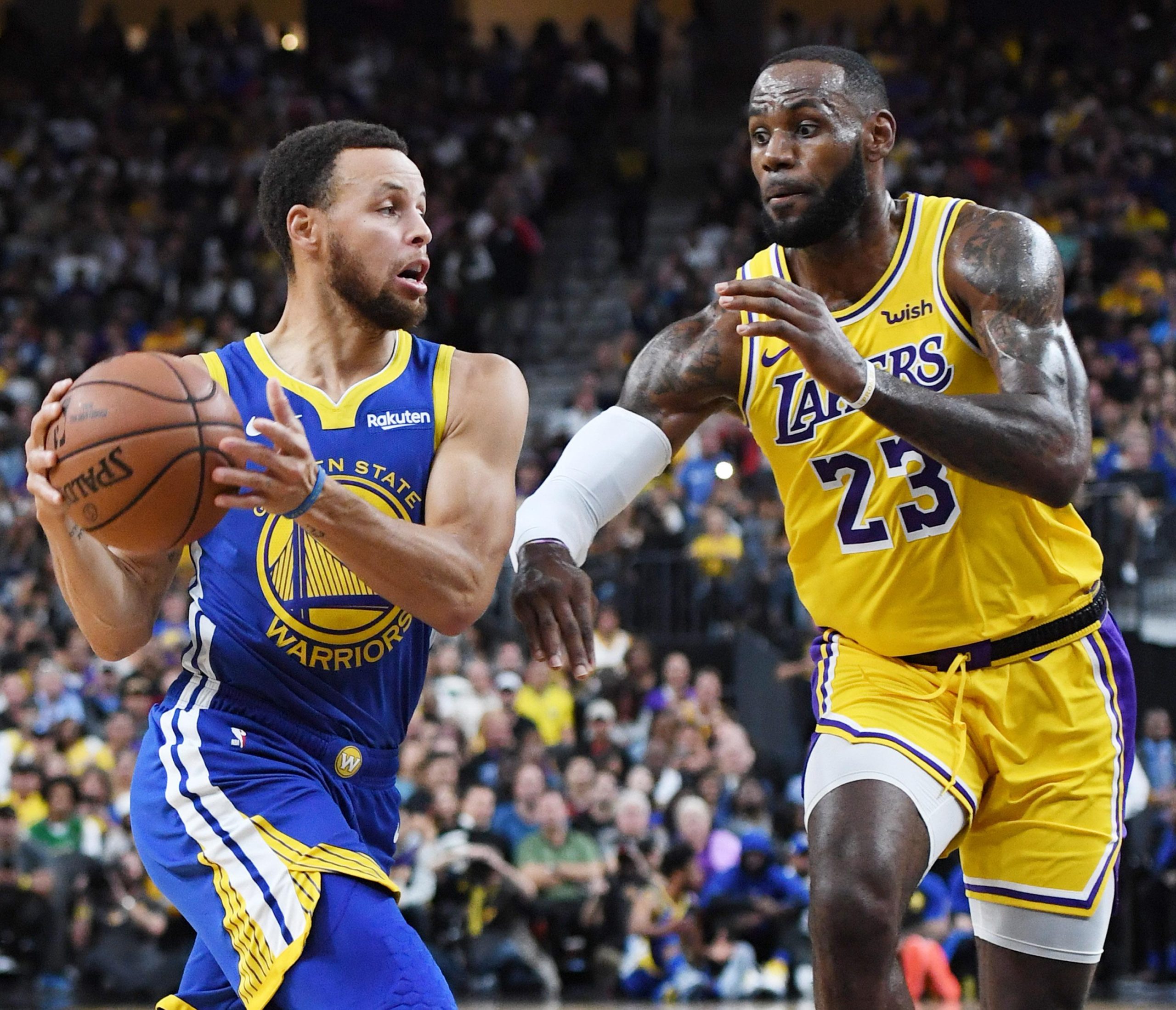
LeBron James Stephen Curry

As the NBA offseason heats up, a proposed trade sending LeBron James back to the Cleveland Cavaliers in exchange for center Jarrett Allen has sparked discussions about potential roster reshaping for both franchises.

The scenario, discussed by ESPN’s Brian Windhorst, would involve James signing with Cleveland and being traded to the Lakers for Allen. While highly speculative, it highlights the strategic calculations teams make when balancing star power, salary cap constraints and long-term contention windows.

James, who will turn 42 before the 2026-27 season, holds a player option for next year. His future remains a central topic as the Lakers build around Luka Doncic as the franchise’s new cornerstone.

Cleveland, which drafted James in 2003, has expressed interest in bringing him back for a potential final chapter. The Cavaliers have built a competitive core around Donovan Mitchell but lack a clear path to championship contention without additional star talent.

Advertisement

Allen, a reliable starting center with double-double potential and strong rim protection, would address a key need for the Lakers. His youth and contract make him an attractive target for Los Angeles as they seek frontcourt stability alongside Doncic.

Trade Mechanics and Cap Implications

The deal would require James to opt out and sign with Cleveland before being traded. This sign-and-trade structure allows the Cavaliers to create salary cap space by moving Allen’s contract.

Allen’s deal is valued at approximately $90 million, providing substantial relief for Cleveland while giving Los Angeles a proven big man. The Lakers have prioritized finding a quality center to complement their backcourt.

Advertisement

Windhorst noted the Lakers’ strong interest in Allen. “If your pathway to paying LeBron the money is to trade Jarrett Allen for him, the Lakers would kill for Jarrett Allen,” he said. “They would do that deal in 17-tenths of a second.”

Cleveland would gain James’ experience and leadership alongside Mitchell and potentially James Harden, who is expected to re-sign with the Cavaliers. The trio would create significant offensive firepower, though ball distribution and defensive fit would require careful management.

James’ Legacy and Future

James’ potential return to Cleveland would represent a storybook ending to his legendary career. The four-time MVP began his professional journey with the Cavaliers and delivered their first championship in 2016.

Advertisement

A homecoming would allow James to finish his career where it started, potentially mentoring younger players while chasing another title. His basketball IQ and leadership would benefit a Cavaliers team seeking playoff success.

For the Lakers, parting ways with James would mark the end of an era that included multiple championships and record-breaking achievements. The franchise has already shifted focus toward Doncic as its primary star.

James has not publicly commented on the speculation. His decision will ultimately depend on competitive opportunities, family considerations and personal goals for the final stages of his career.

Lakers’ Strategic Direction

Advertisement

Los Angeles has prioritized building a sustainable contender around Doncic. Acquiring a young, productive center like Allen would address a long-standing need for frontcourt size and defense.

The Lakers’ recent extension with Austin Reaves and management of other free agents demonstrate commitment to roster continuity. Adding Allen would provide defensive anchor and lob threat potential for Doncic.

Cleveland’s perspective centers on creating a championship window. Pairing James with Mitchell and Harden would create one of the league’s most talented offensive groups, though defensive concerns and chemistry questions remain.

The Cavaliers’ front office must evaluate whether the move aligns with long-term vision or represents a short-term gamble. Salary cap implications and future flexibility will factor heavily into any decision.

Advertisement

NBA Trade Landscape

The proposed deal exemplifies the complex calculations teams make during the offseason. Sign-and-trade transactions allow star movement while providing cap relief for sending teams.

James’ unique status as both a veteran leader and still-productive player creates unique opportunities. His basketball intelligence and experience remain valuable assets for contending teams.

The NBA’s salary cap and luxury tax rules heavily influence trade structures. Teams must balance immediate contention with long-term roster building under current collective bargaining agreement constraints.

Advertisement

Roster fit, chemistry and coaching schemes play crucial roles in evaluating potential trades. Both Los Angeles and Cleveland would need to assess how James or Allen integrate with existing cores.

Potential Outcomes

James returning to Cleveland for a final run would generate enormous excitement in Ohio. The narrative of completing his career where it began would captivate fans and media alike.

For the Lakers, acquiring Allen would provide defensive stability and allow Doncic to operate with a reliable interior partner. The move would signal a new chapter focused on sustainable contention.

Advertisement

Both scenarios involve risk. James’ age and injury history require careful management, while Allen’s fit in Los Angeles would need time to develop.

The hypothetical trade highlights the fluid nature of NBA roster construction. Teams constantly evaluate talent, contracts and opportunities to improve competitiveness.

As free agency and trade discussions continue, James’ decision will influence multiple franchises. His choice will shape not only his legacy but the competitive balance in both conferences.

The Lakers and Cavaliers both face important strategic crossroads. How they approach James’ situation could define their trajectories for years to come.

Advertisement
Continue Reading

Business

At Close of Business podcast June 25 2026

Published

on

At Close of Business podcast June 25 2026

Tom Zaunmayr and Nadia Budihardjo talk about Indigenous art centres across the state.

Continue Reading

Business

Tech Stocks Routed, Oracle Layoffs and SpaceX Stops Dropping | Markets P.M. for June 23

Published

on

Tech Stocks Routed, Oracle Layoffs and SpaceX Stops Dropping | Markets P.M. for June 23

This is an edition of the Markets P.M. newsletter, a recap of the day’s most important markets moves, delivered after the closing bell. If you’re not subscribed, sign up here.


What Happened in Markets Today

Tech stocks fell hard, driven by AI and chip companies. The rout began overnight in Asian markets, notably South Korea where Samsung and SK Hynix each fell 12%. While this year has seen a ferocious bull market in AI-themed stocks, concerns continue to grow about the costs of building data centers and the uncertain future revenue prospects. Sandisk dropped almost 14%. Other large decliners included Micron Technology, Arm Holdings and Marvell. The Nasdaq finished 2.2% lower, the S&P 500 fell 1.4%, and the Dow industrials lost 0.1%.

Oracle cut about 21,000 jobs during its last fiscal year. The company made the disclosure in its latest annual report, filed late Monday. The cuts are part of a wider trend among tech giants as they spend hundreds of billions of dollars building out AI infrastructure. Oracle said its head count shrank by about 13% during the previous fiscal year.

Copyright ©2026 Dow Jones & Company, Inc. All Rights Reserved. 87990cbe856818d5eddac44c7b1cdeb8

Advertisement
Continue Reading

Business

Nvidia Stock Falls as Tech Selloff Catches Up With Chips

Published

on

Nvidia’s Biggest Threat Isn’t AMD—It’s Its Own Best Customers

Nvidia Stock Falls as Tech Selloff Catches Up With Chips

Continue Reading

Business

Why is Soitec stock rallying today?

Published

on


Why is Soitec stock rallying today?

Continue Reading

Business

Tata Chemicals shares rise 4% on hopes of Tata Sons listing after RBI’s new norms

Published

on

Tata Chemicals shares rise 4% on hopes of Tata Sons listing after RBI’s new norms
Shares of Tata Chemicals jumped as much as 4% to Rs 770 on Thursday after the Reserve Bank of India (RBI) unveiled new regulations that appear to leave little room for Tata Sons, the unlisted holding company of the country’s largest conglomerate, to avoid a stock market listing.

Shares of Tata Chemicals, Tata Investment Corporation and other group companies may benefit if Tata Sons gets listed. Tata Chemicals owns a 3% stake in Tata Sons, the value of this stake could be around Rs 20,000 crore, equivalent to the stock’s current market value. Any step toward a Tata Sons listing would be a transformative unlock for Tata Chemicals shareholders.

On Wednesday, the RBI finalised new rules for identifying systemically important non-banking financial companies, or upper-layer NBFCs, with assets exceeding Rs 1 lakh crore, which are required by law to list their shares publicly. In doing so, the RBI rejected industry feedback that had sought to raise the threshold to Rs 2.5 lakh crore and simplified the earlier multi-parameter methodology into a cleaner, asset-size-based test. The regulator also reiterated that entities falling under this category would be “specifically identified annually.”

Also Read |RBI finalises NBFC-UL norm that may see Tata Sons list

Advertisement

Tata Sons, with estimated standalone assets of over Rs 1.75 lakh crore, comfortably clears that bar. The salt-to-semiconductors giant was originally mandated to list by a September 2025 deadline but has since applied to the RBI to surrender its NBFC licence—a move that, if approved, would render the listing obligation moot. As of now, the application remains unresolved. When the RBI last published its list of upper-layer NBFCs in January last year, it noted that Tata Sons’ de-registration request was “under consideration.”


The debate over a listing has also exposed fault lines within the Tata Trusts, the majority owner of Tata Sons. The Trusts passed a resolution opposing a listing—a position firmly backed by Trusts chairman Noel Tata. However, two of its vice chairmen, Venu Srinivasan and Vijay Singh, have publicly broken ranks, stating that a listing would be a positive outcome. Their remarks have become a source of open discord among the trustees.

Continue Reading

Business

Manappuram Finance, Muthoot Finance, other gold financier stocks drop up to 3%. Here’s why

Published

on

Manappuram Finance, Muthoot Finance, other gold financier stocks drop up to 3%. Here's why
The shares of gold financiers dropped up to 3% after gold prices plunged as the dollar headed towards its sharpest monthly gain in almost a year on rising expectations of Federal Reserve interest rate hikes this year.

Manappuram Finance shares tumbled nearly 3% to trade at Rs 309.35 apiece on NSE, while those of Muthoot Finance and IIFL Finance fell over 2% each.

The dollar index, which tracks the US currency against a basket of six major peers, climbed to a more than one-year high on Wednesday and traded around 101.5 on Thursday. The move reflects growing expectations of a hawkish US Federal Reserve, with traders increasing bets on an interest rate hike later this year.

The US Federal Reserve kept interest rates unchanged at its latest policy meeting, but a larger number of policymakers signalled the possibility of higher borrowing costs later in the year amid concerns over inflation remaining above the central bank’s 2% target. In the first FOMC meeting under Chairman Kevin Warsh, the Fed noted that inflation remained elevated relative to its goal, partly due to supply shocks that have pushed up prices in sectors including energy.

Advertisement

According to the CME FedWatch Tool, traders are now expecting three rate hikes this year and see roughly a 67% probability of a hike in September. While gold is traditionally seen as an inflation hedge, it loses its appeal as a non-yielding asset in a high-interest-rate environment.

Gold prices fall

Gold futures in MCX extended their decline. Gold futures for August 2026 delivery have declined by Rs 5,863 in two days to Rs 1,40,666 per 10 grams. In the international market, spot gold slipped 0.4% to $3,985.89 per ounce by 0043 GMT, after falling to its lowest level since November 2025 on Wednesday.


US gold futures for August delivery were down 0.2% at $4,001.60. Bullion dropped below the key $4,000-an-ounce mark on Wednesday for the first time since November 2025.
Also read: Gold prices fall Rs 6,000/10 gram in two days; silver tanks Rs 15,500/kg on rate hike fears. Time to sell precious metals?

Why are gold financier stocks falling today?

Manappuram Finance, Muthoot Finance and IIFL Finance provide loans with gold as collateral. Falling gold prices will reduce the value of the pledged collateral. Since gold loans are sanctioned based on the per-gram valuation of gold, lower prices will require borrowers to pledge additional jewellery to access the same loan amount.

What lies ahead?

“As investors face losses in equities, many are selling liquid assets such as gold to raise cash, meet margin requirements, and reduce leverage. At the same time, money is flowing into the US dollar, with the stronger dollar adding further pressure on bullion prices. This is one of those rare periods where both equities and gold are declining together as investors sell what they can rather than what they want,” said Jateen Trivedi, VP Research Analyst of Commodity and Currency at LKP Securities.Manoj Kumar Jain of Prithvi Finmart said gold and silver prices are likely to remain volatile this week amid fluctuations in crude oil prices and the dollar index, as well as ahead of the release of US GDP and Core PCE price index data.

Advertisement

According to Jain, gold has support at $3,980-$3,920 per troy ounce and resistance at $4,040-$4,085, while silver has support at $55.50-$53.80 and resistance at $60.00-$61.40 per troy ounce in the current session.

Also read: Vedanta, NALCO, Hindustan Zinc shares fall up to 3% as silver, aluminium, other metal prices tumble. Here’s why

(With inputs from agencies)

(Disclaimer: Recommendations, suggestions, views and opinions given by the experts are their own. These do not represent the views of The Economic Times)

Advertisement
Continue Reading

Business

Lineage: Another Serious Fire Could Spell Trouble

Published

on

Lineage: Another Serious Fire Could Spell Trouble

Lineage: Another Serious Fire Could Spell Trouble

Continue Reading

Trending

Copyright © 2025