

Business
Gold Surges to Record $4,381 per Ounce as Investors Navigate US-Iran Peace Deal

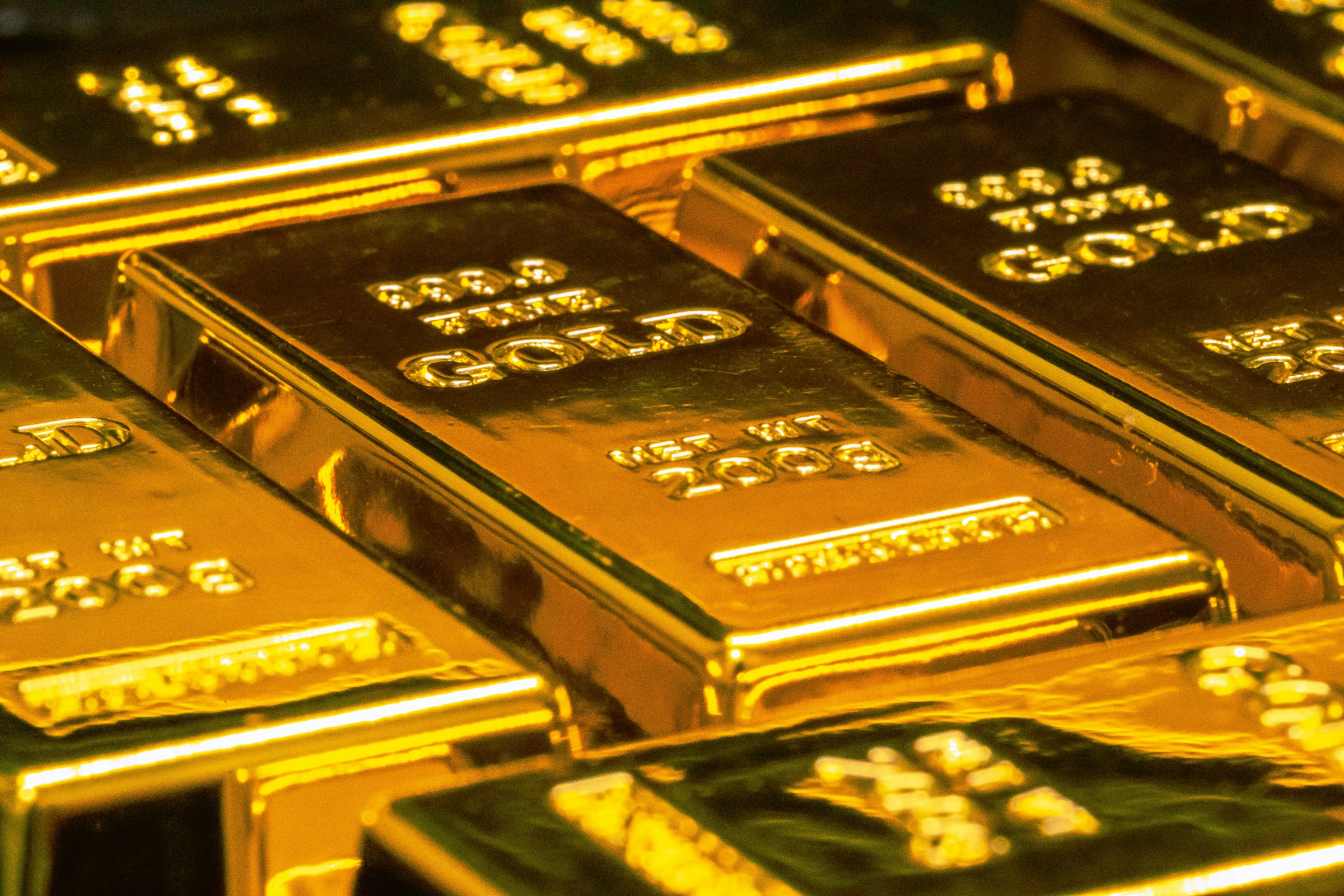
Gold prices jumped $142.90, or 3.37%, to a fresh record high of $4,381.70 per ounce on Monday, as investors balanced relief over the US-Iran ceasefire agreement with ongoing concerns about inflation, central bank demand and long-term geopolitical risks in the Middle East.
The sharp advance extended gold’s strong performance in 2026, pushing the precious metal well above previous peaks as market participants sought to maintain exposure to a traditional safe-haven asset even as riskier assets rallied on hopes of restored stability in global energy markets. The move came despite the initial expectation that reduced tensions would diminish gold’s appeal, highlighting the metal’s complex role in portfolios amid mixed signals from the latest diplomatic breakthrough.
The US-Iran peace deal, which includes the reopening of the Strait of Hormuz and the lifting of the naval blockade, triggered a broad relief rally in equities and a decline in oil prices. However, gold found support from several factors, including continued central bank purchases, lingering questions over the durability of the agreement, and expectations that lower energy costs may not fully eliminate inflationary pressures in the near term.
Drivers Behind the Record Rally
Analysts pointed to sustained buying by central banks, particularly in emerging markets, as a key underpinning for gold’s strength. Institutions continue to diversify reserves away from traditional currencies, providing a structural bid even during periods of geopolitical de-escalation. Monday’s surge also reflected positioning ahead of key US economic data releases later in the week, with investors hedging against potential surprises in inflation or growth figures.
The peace agreement, while positive for global growth, leaves several critical issues unresolved, including the future of Iran’s nuclear program and verification mechanisms for the ceasefire. These uncertainties preserved some safe-haven demand, preventing a sharper sell-off in gold that might have been expected from a full resolution of hostilities.
Technical factors also played a role. Gold had been consolidating near previous highs, and the latest move broke through resistance levels, triggering algorithmic buying and short covering that amplified the upward momentum. Trading volumes were elevated as both institutional and retail participants adjusted positions in response to the fast-moving news flow.
Market and Economic Context
The record high comes as broader financial markets posted strong gains, with the Dow Jones Industrial Average and Nasdaq Composite reaching new peaks. The disconnect between rising equities and climbing gold prices illustrates the nuanced reaction to the Iran deal — optimism about economic stability tempered by caution over implementation risks and longer-term implications.
Lower oil prices are generally positive for gold by reducing inflationary fears and supporting real yields, but the relationship is complex. In this instance, the combination of geopolitical relief and persistent structural demand outweighed any immediate pressure from falling energy costs.
The US dollar showed modest weakness against major currencies, further supporting gold priced in the greenback. Central banks around the world have been net buyers of gold for several consecutive years, a trend that shows little sign of abating amid diversification efforts and concerns over currency reserve stability.
Investor and Industry Perspectives
Market participants offered varied interpretations of the move. Some viewed it as a vote of confidence in gold’s enduring role as a portfolio diversifier, while others saw it as a tactical response to short-term uncertainties. “Even with the ceasefire, the path to full normalization in the Middle East remains long and uncertain,” one commodities strategist noted in market commentary. “Gold continues to attract flows as investors maintain prudent hedges.”
Jewelry demand in major consuming markets like India and China has remained resilient, providing additional support. Investment products tracking gold, including exchange-traded funds, saw inflows in recent sessions as retail investors sought exposure to the metal’s upside potential.
Mining companies with significant gold production benefited from the price surge, with shares in major producers advancing alongside the physical metal. The higher prices improve margins and cash flow, potentially supporting increased exploration and development activity in the sector.
Broader Implications for Global Economy
Gold’s record run has implications beyond financial markets. For commodity-producing nations, higher prices bolster export revenues and government budgets. In developing economies, gold often serves as an inflation hedge and store of value for individuals navigating currency volatility.
Central banks’ continued accumulation reflects a broader reassessment of reserve management in a multipolar world. The metal’s performance amid shifting geopolitical dynamics underscores its role as a neutral asset less susceptible to unilateral sanctions or political risk.
The surge also highlights gold’s sensitivity to real interest rates and the US dollar. With the Federal Reserve expected to monitor incoming data closely, any signals of a more measured policy path could provide additional tailwinds for the precious metal.
Historical Perspective
Gold has experienced significant volatility in 2026, driven by fluctuating geopolitical risks, inflation trends and monetary policy expectations. Monday’s record high builds on a strong multi-year uptrend, during which the metal has benefited from its safe-haven status during periods of uncertainty while also attracting investment flows during risk-on environments due to its inflation-hedging properties.
The current price level far exceeds previous peaks, reflecting changed fundamentals including elevated central bank buying and persistent investor demand for diversification. Historical patterns suggest that such breakouts can lead to extended moves when supported by strong underlying drivers.
Looking Ahead
Market attention now turns to implementation details of the US-Iran agreement and upcoming US economic indicators. Any signs of complications in the ceasefire or unexpected inflation data could influence gold’s near-term trajectory.
Analysts remain generally constructive on gold’s outlook, citing structural demand and its role in diversified portfolios. However, sustained strength will depend on the balance between economic growth expectations and lingering uncertainties in global affairs.
For investors, the record high reinforces gold’s position as a strategic asset. Whether held physically, through ETFs or mining equities, exposure to the metal provides a hedge against various risks while offering potential upside in uncertain times.
As global markets digest the latest diplomatic developments, gold’s performance on Monday demonstrates its enduring appeal even as broader risk appetite improves. The metal’s ability to reach new highs amid shifting conditions underscores its unique characteristics in an evolving economic and geopolitical landscape.
The session serves as a reminder that while peace agreements can rapidly alter market sentiment, structural factors continue to support gold as a core holding for many investors. With prices at record levels, all eyes will remain on how the precious metal navigates the balance between relief and residual caution in the weeks ahead.



Founder of Bern Factor LLC, an independent research and publishing firm located in Virginia. Author of “Making Wall Street Irrelevant – Successful Investing Made Simple.” I have more than 40 years of investing and analysis experience. I am a former CPA (1990 -2017) and became a CFA charter holder in 2000. I consider myself an expert in Quantitative and Qualitative analysis and have extensive experience in Technical Analysis. I also have a deep interest in stock market history and hold degrees in Economics (BS) and Management Information Systems (MBA). I have been actively involved with investment analysis since 1985 but have been a student of investing since the 1960s. I owned my first individual stock position while still in high school. I am a student of Benjamin Graham and Warren Buffett. I have achieved a uniquely diverse experience from multiple careers that has allowed me to develop a broad perspective enabling me to look at the big picture of macroeconomics all the way down to the detail of a retail unit or factory floor. In my youth I was in retail, then served in reconnaissance during my tours in Vietnam. I have been a blue collar, union worker in a factory and a manager in services, hospitality and transportation as well as a manager of professional staffs. I have more than 20 years of experience each in both the public and private sectors. I have personal points of reference that many analysts will never have. I bring more to the table than just the theories and models I have studied or built.
Analyst’s Disclosure: I/we have a beneficial long position in the shares of DPZ either through stock ownership, options, or other derivatives. I wrote this article myself, and it expresses my own opinions. I am not receiving compensation for it (other than from Seeking Alpha). I have no business relationship with any company whose stock is mentioned in this article.
DISCLAIMER: This analysis is not advice to buy or sell this or any stock; it is just pointing out an objective observation of unique patterns that developed from our research. Factual material is obtained from sources believed to be reliable, but the poster is not responsible for any errors or omissions, or for the results of actions taken based on information contained herein. Nothing herein should be construed as an offer to buy or sell securities or to give individual investment advice.
Seeking Alpha’s Disclosure: Past performance is no guarantee of future results. No recommendation or advice is being given as to whether any investment is suitable for a particular investor. Any views or opinions expressed above may not reflect those of Seeking Alpha as a whole. Seeking Alpha is not a licensed securities dealer, broker or US investment adviser or investment bank. Our analysts are third party authors that include both professional investors and individual investors who may not be licensed or certified by any institute or regulatory body.

Micron: AI's Memory King Still Can't Escape The Cycle


China’s industrial output growth quickens in May but retail sales and investment contract


China’s May retail sales fall for first time in over three years
“Even if the situation remains unclear, should it be judged that upside risks to prices outweigh downside risks to economic activity, it will be necessary to thoroughly discuss the pros and cons of raising the policy interest rate,” Ueda earlier this month.
SoftBank Vision Fund CFO to leave company after a decade, Reuters reports
Asia stocks mixed on weak China data; Nikkei, ASX fall ahead c.bank meetings

While the durability of the rally will depend on the finalisation of a deal, analysts said downside risks appear limited for now.
The NSE Nifty 50 gained 231 points, or 1%, to close at 23,853.90, after briefly crossing the 24,000 mark for the first time since May 29. The S&P BSE Sensex advanced 736.38 points, or 1%, to end at 76,264.33. Over the past two sessions, both indices have rallied as much as 3.3%.
 Agencies
fingers crossed over peace Sensex and Nifty rally 3.3% in past two sessions on short covering; ₹200 cr FPI inflow on Mon
“The rally on Monday and Friday was driven by short covering on hopes of a peace deal between the US and Iran, and while the sustainability of gains is not certain, the deal seems to be around the corner,” said Nilesh Jain, VP-Head of Technical and Derivative Research, Centrum Finverse.
The US and Iran said they have reached a new ceasefire agreement that will end a US blockade of Iranian ports and reopen the Strait of Hormuz, ending the months-long conflict that has kept investors on tenterhooks and kept oil prices elevated.

With both sides showing willingness to bring the war to an end, Brent crude futures fell more than 5% to $85.8 a barrel on Monday. Across Asia, South Korea, Japan surged 5.2% and 5%, respectively, while Taiwan gained 2.8%. China and Hong Kong rose 1.6% and 0.5%.
“The reaction in oil prices after the peace deal was announced reassured investors that crude prices are not expected to sustain at elevated levels for longer and triggered a rally,” said Vaiibhavv Chugh, chief executive officer, Abakkus Mutual Fund. “The fear has toned down considerably, and optimism could build further,” he added.Realty stocks led the gains, with the Nifty Realty index surging 4%. The Nifty Consumer Durables and Auto indices climbed 2.9% and 2.6%, respectively.
Foreign portfolio investors bought shares worth a net ₹200 crore on Monday – after 11 consecutive sessions of selling, while domestic institutional investors bought shares worth ₹3,189.3 crore. So far in June, foreign investors have sold shares worth ₹41,967 crore.
“Foreign investors have pared some of their short positions, which contributed to the rally. However, towards the latter part of the session, participants booked some profits in the derivatives market,” said Abhilash Pagaria, Head of Alternative & Quantitative Research at Nuvama Wealth. If the deal is finalised, a significant source of uncertainty could be removed, potentially encouraging foreign investors to increase allocations to Indian equities, he said.
The India VIX volatility index fell 2.5% to 14.4. After spiking to around 29 at the height of the conflict, the gauge has retreated to more comfortable levels, suggesting investor anxiety has eased. “For the gains to be sustainable, Nifty must decisively close above 24,000,” said Jain.
He said intermittent declines could not be ruled out, but the Nifty could gradually move towards 24,500 during the June series if it breaks above the 24,000 mark.
Broader markets outperformed the benchmarks, with the Nifty Midcap 150 and Nifty Smallcap 250 rising 1.5% and 1.3%, respectively. Over the past week, the two indices have gained 1% and 3%.

Check out what’s clicking on FoxBusiness.com.
More than 500,000 packages of macaroni and cheese sold at Aldi stores nationwide have been recalled because they may contain undeclared soy lecithin, a soy-derived ingredient that can pose a risk to people with soy allergies or sensitivities.
According to the Food and Drug Administration, 58,405 cases of Park St. Deli Macaroni & Cheese are affected. Each case contains nine 20-ounce packages, bringing the total number of impacted packages to 525,645.
The plastic tubs of macaroni and cheese were sold inside paperboard sleeves.
FDA ISSUES HIGHEST-RISK RECALL OF ALFREDO SAUCE SOLD IN 41 STATES
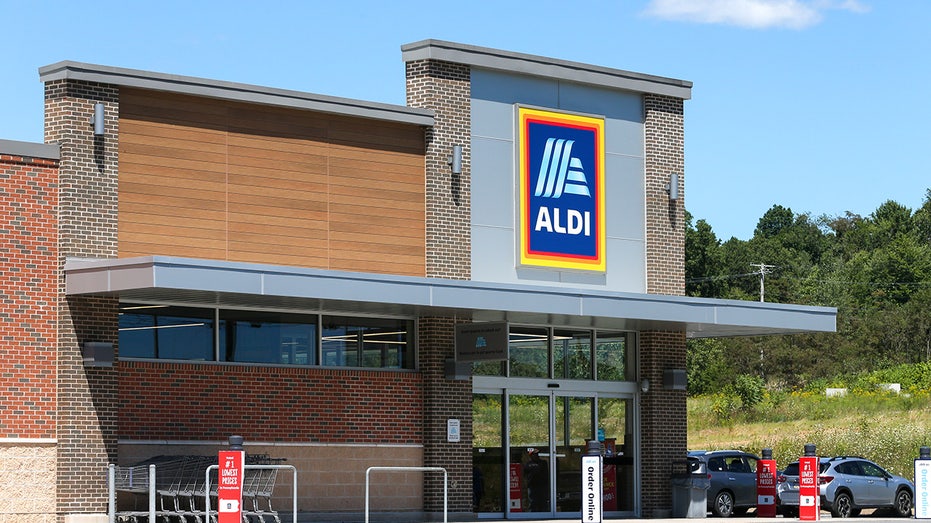
More than 500,000 packages of macaroni and cheese sold at Aldi stores nationwide have been recalled. (Paul Weaver/SOPA Images/LightRocket via Getty Images / Getty Images)
BEF Foods Inc., the product maker, initiated the voluntary recall on March 23, and the FDA classified it as a Class II recall on June 10.
A Class II recall means use of or exposure to the product may cause temporary or medically reversible adverse health consequences, or that the probability of serious adverse health consequences is remote, according to the FDA.
Customers are urged not to consume the affected products and to return them to the place of purchase for a full refund.
MORE THAN 17K COFFEE MAKERS RECALLED AFTER DOZENS OF REPORTED BURN INJURIES

The FDA said 58,405 cases containing nine 20-ounce packages each of the Park St. Deli Macaroni & Cheese are affected by the recall. (iStock / iStock)
Lecithin is a group of chemicals the body uses to move fats, according to the University of Rochester Medical Center.
They are found in various foods, including egg yolks, soybeans, wheat germ, peanuts and liver. Many people know lecithin as the oily film on their frying pan when they use a nonstick cooking spray.
Some people also take them as supplements. They can come in capsules, liquid or granules.
The FDA classified the recall as a Class II recall last week. (iStock / iStock)
GET FOX BUSINESS ON THE GO BY CLICKING HERE
Lecithin is used in the food industry as an additive to combine foods, with salad dressing being one example.
Soy lecithin emulsifies ingredients like oil and water to blend the salad dressing into a smooth consistency, Judy Simon, a clinical dietitian nutritionist at the University of Washington, previously told USA TODAY.

Indigenous businesses and groups are starting to take on-country water monitoring and management into their own hands.

Got FREE Petrol #finance #shorts

The Summit Indoor Adventure Centre set to reopen in Selby

Domino’s Pizza Stock For A Rising Dividend And Appreciation (NASDAQ:DPZ)


-

 Business2 days ago
No Jackpot Winner as $257 Million Prize Rolls Over to $269 Million Monday Draw
-

 Crypto World4 days ago
Oppenheimer backs SpaceX as $70 billion retail frenzy builds
-

 Crypto World4 days ago
Markets Rally as SpaceX IPO Looms Amid Iran Tensions and Inflation Surge
-

 Fashion3 days ago
Weekend Open Thread: Tuckernuck – Corporette.com
-
 Crypto World1 day ago
Zimbabwe Requires Crypto Businesses to Register Annually Under New FIU Regulations
-

 Entertainment7 days ago
The Ryan Gosling True Crime Thriller On Netflix That Gets Even Stranger, Stream It Now
-
 Sports6 days ago
Bangladesh beat Australia after 20 years in ODIs, register only their second win over six-time world champions | Cricket News
-

 Tech3 days ago
NanoClaw integrates JFrog registries to secure AI agent downloads
-

 Crypto World3 days ago
Bitget enters Argentina’s regulated crypto market through PSAV registration
-

 Tech4 days ago
This Week In Security: Microsoft On Microsoft, Register Your Domains, Linux On ARM, And FreeBSD Joins The File Cache Club
-
 Tech5 days ago
Dutton Ranch star claims they ‘didn’t see any disruption’ on set following Chad Feehan’s exit from Yellowstone spinoff fueled by Taylor Sheridan clash rumors
-

 NewsBeat4 days ago
El Nino has formed in the Pacific and could set records, forecasters say
-

 Politics5 days ago
Politics Home | Healey Resignation Is “Colossal Failure Of Government”, Says Former Labour Defence Secretary
-

 Tech6 days ago
‘This is Seattle’s position on AI’: City Council votes unanimously to pause big new data centers
-

 Business6 days ago
Thailand Ranks Second Worldwide for AI Adoption Growth, Microsoft Reports
-
 Entertainment4 days ago
Donnie Wahlberg & More Heat Up Las Vegas at Circa’s Barry’s Downtown Prime
-

 Sports5 days ago
First Time Since 1971: Australia Register Historic Low In ODI Cricket
-
 Tech4 days ago
Opendoor Ends India Operations, Fueling a Bigger Conversation About AI and Outsourcing
-

 Politics5 days ago
Belfast burns, while Met chief points finger at Iran and Russia
-

 NewsBeat3 days ago
FBI searches office of Ohio voter registration group
You must be logged in to post a comment Login