
Business
Gold Valley Iron Ore, director appeal $2m fine over unauthorised mining


Yes. Corporate subscriptions are available for teams and organisations, with discounted rates as user numbers increase. Pricing starts from $1,625 + GST per user.
Get in touch
to discuss the right option for your organisation.
Business News subscriptions are used by executives, investors, consultants and professionals who need to stay informed and make better decisions about the WA market. When you subscribe you’ll get
- Unlimited access to WA’s most trusted business journalism
- Data & Insights — detailed profiles of WA companies, people, projects and deals
- MyBN — a personalised feed based on the companies, people and sectors you follow
- Special publications and industry reports
- Daily and weekly email newsletters
Data & Insights is a research tool built specifically for the WA market. It draws on more than 30 years of Business News reporting, updated regularly to reflect what’s happening now. Use it to:
- Look up detailed profiles of WA companies, including financials, directors and ownership
- Find decision-makers and track their career movements
- Research live and completed projects across WA industries
- Monitor deals, appointments and market activity
- Access industry rankings and league tables
Data & Insights is updated daily by our dedicated research team, which uses the latest announcements, ASX filings and editorial coverage to keep our person, company, list and project records up to date.
Business News welcome all opportunities to make our dataset accurate, complete and current, so if you have an update request, please email the team at
general@businessnews.com.au, and we’d be happy to assist.
MyBN
is part of every subscription. It’s your personalised view of Business News. You can follow the companies, people, sectors and projects that matter to you, and get a news feed and alerts tailored to your interests. You can save articles to read later and retain only what you need.
Only subscribers have full access to all content on the Business News website.
If staying informed about the WA economy is part of your job, and/or you’re looking for networking opportunities in WA, Business News is built for you.
Business News subscribers are:
- Executives and directors tracking competitors, clients and market movements
- Investors and advisers researching companies, deals and industry trends
- Consultants and professionals staying across sectors relevant to their clients
- Business owners looking for leads, context and market intelligence
Most Business News publications cover national or global markets. Business News is focused entirely on Western Australia, which means the journalism, the data and the intelligence are all built around WA companies, people and projects — not adapted from a national feed. Data & Insights, included with every subscription, combines more than 30 years of WA-specific editorial research with live business data. There’s no comparable product for the WA market.
The Morning Digest Email provides a comprehensive wrap of the major headlines, relevant to WA business, and includes with a snapshot of the overnight news covering oil, gold and ASX-listed companies.
The Afternoon Wrap Email focuses on the news covered by our team of journalists during the course of the working day, including exclusive stories and analysis, all of which relates to WA business and the local economy.
The BN Weekender Email contains a wrap of the Business News from the week that was, highlighting the top stories in each area of WA business.
Sign up for free.
We’re happy to help.
Get in touch
and our team will come back to you.


The company’s toll revenue climbed approximately 25% year-on-year (YoY) to Rs 807 crore in August 2026, compared with Rs 646 crore in the same month last year.
The robust performance was driven by sustained traffic growth across IRB Group’s highway assets, along with the benefit of tariff revisions implemented at the beginning of FY27.
Commenting on the performance, Amitabh Murarka, Deputy CEO, IRB Infrastructure Developers, said the strong toll revenue growth in August reflected sustained traffic growth across the company’s assets.
He added that rising traffic volumes, coupled with the tariff revision implemented at the start of FY27, further supported revenue performance.

Murarka also highlighted the positive outlook for the coming months, pointing to robust GDP growth and increased economic activity. With the festive season beginning with the Ganesh Festival, the company expects traffic momentum to remain strong and support further growth in toll revenues.
Key Projects Deliver Strong Growth
Among the major assets, IRB MP Expressway Pvt. Ltd., which operates the Mumbai-Pune Expressway and Old Mumbai-Pune Highway (NH-4), reported toll revenue of Rs 172.1 crore in August 2026, up from Rs 144.7 crore a year ago. Meanwhile, IRB Ahmedabad Vadodara Super Express Tollway Pvt. Ltd., which operates the Ahmedabad-Vadodara Expressway (NE-1) and NH-48, generated toll revenue of Rs 80.3 crore, compared with Rs 69.1 crore in August 2025.IRB Group is one of India’s largest integrated infrastructure platforms focused on roads and highways. The group currently has 28 revenue-generating highway assets with an aggregate value of approximately Rs 94,000 crore across 13 states.
Its assets witness around 1.5 million vehicle crossings every day, with the group accounting for nearly one-tenth of India’s total toll revenue.
The latest toll collection numbers indicate continued strength in traffic volumes and provide a positive operational trigger for IRB Infrastructure Developers, with investors closely watching whether the momentum sustains through the upcoming festive season.
Stock Price and Valuation
IRB Infrastructure Developers shares witnessed strong buying interest, surging as much as 8% intraday before paring some of the gains. The stock was last trading around 4% higher, giving the company a market capitalisation of approximately Rs 24,445 crore.
The stock’s 52-week high stands at Rs 23.95, indicating that the recent rally has brought it closer to its yearly peak.
On the valuation front, IRB Infrastructure Developers trades at a price-to-earnings (P/E) ratio of 24.14, while its price-to-book (P/B) ratio stands at 0.55.
(Disclaimer: Recommendations, suggestions, views and opinions given by the experts are their own. These do not represent the views of Economic Times)

Google parent Alphabet’s (GOOGL) emerging business of selling artificial intelligence accelerator chips is twice as large as a cloud computing rival, Google executive Thomas Kurian claimed Tuesday at a Goldman Sachs conference. On July 22, Google reported second-quarter cloud-computing revenue of $24.77 billion, up 82% year over year, driven by artificial intelligence workloads, handily beating estimates of $22.46 billion. For…
Copyright ©2026 Investor’s Business Daily, LLC. All rights reserved. 87990cbe856818d5eddac44c7b1cdeb8

Yes. Corporate subscriptions are available for teams and organisations, with discounted rates as user numbers increase. Pricing starts from $1,625 + GST per user.
Get in touch
to discuss the right option for your organisation.
Business News subscriptions are used by executives, investors, consultants and professionals who need to stay informed and make better decisions about the WA market. When you subscribe you’ll get
- Unlimited access to WA’s most trusted business journalism
- Data & Insights — detailed profiles of WA companies, people, projects and deals
- MyBN — a personalised feed based on the companies, people and sectors you follow
- Special publications and industry reports
- Daily and weekly email newsletters
Data & Insights is a research tool built specifically for the WA market. It draws on more than 30 years of Business News reporting, updated regularly to reflect what’s happening now. Use it to:
- Look up detailed profiles of WA companies, including financials, directors and ownership
- Find decision-makers and track their career movements
- Research live and completed projects across WA industries
- Monitor deals, appointments and market activity
- Access industry rankings and league tables
Data & Insights is updated daily by our dedicated research team, which uses the latest announcements, ASX filings and editorial coverage to keep our person, company, list and project records up to date.
Business News welcome all opportunities to make our dataset accurate, complete and current, so if you have an update request, please email the team at
general@businessnews.com.au, and we’d be happy to assist.
MyBN
is part of every subscription. It’s your personalised view of Business News. You can follow the companies, people, sectors and projects that matter to you, and get a news feed and alerts tailored to your interests. You can save articles to read later and retain only what you need.
Only subscribers have full access to all content on the Business News website.
If staying informed about the WA economy is part of your job, and/or you’re looking for networking opportunities in WA, Business News is built for you.
Business News subscribers are:
- Executives and directors tracking competitors, clients and market movements
- Investors and advisers researching companies, deals and industry trends
- Consultants and professionals staying across sectors relevant to their clients
- Business owners looking for leads, context and market intelligence
Most Business News publications cover national or global markets. Business News is focused entirely on Western Australia, which means the journalism, the data and the intelligence are all built around WA companies, people and projects — not adapted from a national feed. Data & Insights, included with every subscription, combines more than 30 years of WA-specific editorial research with live business data. There’s no comparable product for the WA market.
The Morning Digest Email provides a comprehensive wrap of the major headlines, relevant to WA business, and includes with a snapshot of the overnight news covering oil, gold and ASX-listed companies.
The Afternoon Wrap Email focuses on the news covered by our team of journalists during the course of the working day, including exclusive stories and analysis, all of which relates to WA business and the local economy.
The BN Weekender Email contains a wrap of the Business News from the week that was, highlighting the top stories in each area of WA business.
Sign up for free.
We’re happy to help.
Get in touch
and our team will come back to you.

A luxury home in Tribeca that is being offered privately for rent at $175,000 a month.
Credit: Laura Klein, Bespoke Real Estate
A version of this article first appeared in CNBC’s Inside Wealth newsletter with Robert Frank, a weekly guide to the high-net-worth investor and consumer. Sign up to receive future editions, straight to your inbox.
A surge in wealthy renters is driving Manhattan rents to new records, according to brokers.
Median rents in Manhattan reached an all-time high of $5,000 a month in July, according to the Real Deal Report, authored by Jonathan Miller, director of markets for Street Matrix. The average rent jumped 15% compared with a year ago, to $6,306.
Wealthy renters are driving most of the growth. The average price for luxury rentals — the top 10% of the market — jumped 35% over the past year, to $17,464 a month, according to the Real Deal Report. Luxury rentals are now fetching an average of $121 per square foot.
Typically, renters are those who can’t yet afford to buy. In today’s market, ultra-wealthy New Yorkers who have plenty of cash to buy are choosing to rent. A record low supply of high-end properties for sale has led many to wait in a rental until they find their dream home. Others are spooked by falling or flat prices for Manhattan resales, which make apartments less attractive as investments.
“These are people who can easily afford $20 million, $50 million trophy homes,” said Laura Klein of Bespoke Real Estate, who recently brokered a rental for a penthouse in Chelsea for $177,000 a month. “There is so little inventory. And they don’t want to compromise.”
A luxury home in Tribeca that is being offered privately for rent at $175,000 a month.
Credit: Laura Klein, Bespoke Real Estate
Other brokers said New York’s new pied-a-terre tax on high-value second homes has caused many wealthy would-be buyers to rent instead.
“The sharp increase in rentals following the pied-a-terre tax announcement suggests that some prospective purchasers may already be choosing flexibility over ownership,” said Pam Liebman, president and CEO of The Corcoran Group.
The rush of wealthy New Yorkers into the rental market has created a new market for mega-rentals. The number of apartments renting for more than $50,000 a month so far this year has more than doubled compared with 2025, while the number renting for more than $100,000 a month is up sevenfold, according to The Real Deal.
Klein said none of the ultra-high-end rentals are publicly listed and are instead offered quietly to wealthy clients through a small network of high-end brokers. She currently has a rental for $175,000 a month in Tribeca, as well as one for $95,000 a month on the Upper East Side.
“The $100,000-a-month number is almost normal now,” Klein said. “These are renters who want turnkey, unique, trophy properties.”
She said owners of the luxury rentals don’t need the income but are opportunistic given demand.
“They say to me, ‘If the number is right, I’ll rent.’ These are properties that if they were on the market would be listed for tens of millions” of dollars, she said.

About 1.5 million UK households use heating oil, typically in rural areas. This includes more than 40% of homes in some parts of Lincolnshire, including Wainfleet All Saints, Wragby, Roughton and Ludford, according to Census data.
Unlike gas and electricity customers, they are not covered by the energy price cap, leaving them more exposed to sudden increases. They also have to pay a lump sum in advance for their fuel, with domestic tanks typically holding between 1,000 and 2,000 litres.
On Wednesday, the average price was 97.05p per litre, according to the comparison website boilerjuice.com, external, which measures the cost for purchases of 1,000 litres.
That figure is up by 85% since 9 September 2025, when it stood at 52.8p, and while it has dropped significantly from a high of 134p in March, prices have been climbing again in recent weeks after renewed fighting between the US and Iran.
It means a household wanting to fill a 1,000-litre tank could be facing a bill of more than £970.
In March, the government announced a support package worth £53m, external for low-income families who use heating oil after prices surged due to the conflict in the Middle East.
The funding is distributed by local authorities, which set their own criteria for eligibility.
John Craggs says he inquired about help, but found he did not qualify.
Business
Does Elon Musk Use An iPhone Or Galaxy Phone? Here’s What The Evidence Actually Shows In 2026 So Far

The question of which smartphone Elon Musk actually carries has become a recurring subject of online speculation, and the honest answer, based on available public sightings and reporting, is that there is no single confirmed device. Musk appears to have been photographed using both iPhones and Samsung Galaxy devices at various points, and he has never publicly confirmed a single primary phone.
Unlike Apple CEO Tim Cook, whose device is effectively part of the job given Apple’s own product lineup, Musk has kept his personal technology choices largely private and has not endorsed any specific smartphone brand. That lack of official confirmation has left much of the public discussion around his phone use dependent on photographs captured by paparazzi and news photographers at public events, combined with occasional comments Musk himself has made on social media.
One of the more recent and verifiable sightings came earlier this year, when Musk was photographed entering a federal courthouse in California ahead of a hearing tied to his ongoing lawsuit against OpenAI. According to reporting on the image, Musk was seen holding a dark blue phone that appeared to be a model from Apple’s iPhone 17 Pro lineup.
That sighting is consistent with Musk’s history of publicly praising Apple’s camera technology, even amid his well-documented criticism of other aspects of Apple’s business practices. In an earlier exchange on X, after Apple CEO Tim Cook shared photographs taken by professional photographers using an iPhone 15 Pro Max, Musk responded by describing the resulting images and video as “stunning,” a comment often cited as evidence of at least some genuine appreciation for Apple’s hardware capabilities.
At the same time, Musk has also been photographed carrying Samsung devices on separate occasions. According to reporting from Efani, a security-focused technology publication, Musk has spoken positively about Samsung devices in the past and has been seen using Galaxy Ultra phones in public settings, including at high-visibility product demonstrations. That same reporting suggested Musk’s likely daily driver leans toward the latest generation iPhone Pro model, while noting his continued rhetorical openness to Android as a platform, given his stated concerns about maintaining independence from any single technology gatekeeper.
Musk has previously discussed a philosophical preference for the openness and customizability associated with Android as an operating system, even while frequently being photographed using Apple hardware in more recent public appearances. According to one analysis comparing the phone habits of major technology executives, Musk has “floated the idea that if Apple or Google ever made it impossible to operate freely on their platforms, he would consider building an alternative phone,” a comment that reflects his broader wariness of being dependent on any single company’s ecosystem rather than a firm current device preference.
At a notable 2025 public event, Musk was photographed alongside Google CEO Sundar Pichai during Donald Trump’s presidential inauguration, with Musk seen carrying an iPhone while Pichai was seen with a Google Pixel 9 Pro XL. Separate reporting has also placed Musk carrying a Samsung Galaxy S22 Ultra during earlier public appearances, suggesting his device choice may vary depending on the specific context or occasion rather than reflecting strict brand loyalty to either ecosystem.
It’s worth noting that some online sources make far more specific and less verifiable claims about Musk’s phone use, including assertions about a heavily customized Samsung device tied to his companies’ technology, such as SpaceX’s Starlink satellite internet service or his Neuralink brain-computer interface venture. These particular claims appear in lower-quality, speculative online content and lack credible sourcing or photographic evidence, and should be treated with significant skepticism rather than as established fact.
Musk’s apparent use of multiple devices across different contexts is not unusual among high-profile technology executives. According to Efani’s broader survey of billionaire phone habits, Meta CEO Mark Zuckerberg has consistently been associated with Samsung and Android devices for years, reportedly favoring the platform’s flexibility for testing software builds relevant to his own company’s products. Microsoft co-founder Bill Gates has separately confirmed, during a Reddit “Ask Me Anything” session, that he uses a Samsung Galaxy Z Fold, explaining that the device’s larger folding screen allows him to review documents, presentations and emails without relying as heavily on a separate tablet or laptop.
Given the absence of any direct, on-the-record statement from Musk definitively confirming a single primary smartphone, most credible reporting on the subject has settled on describing his habits as split between the two major platforms, likely using an iPhone as his primary device in many public and professional contexts while maintaining familiarity with, and periodic use of, Samsung’s Android-based Galaxy lineup as well. That dual-platform pattern aligns with reporting suggesting some technology executives maintain separate devices for personal communication, software testing and cross-platform compatibility checks tied to their own companies’ products, including Musk’s ownership of X, which requires ensuring the platform functions properly across both iOS and Android.
For now, without an official statement from Musk himself definitively naming a single device as his primary phone, the most accurate answer to the question of whether he uses an iPhone or a Galaxy device remains that available evidence points to both, with recent photographic sightings, including the courthouse appearance earlier this year, leaning toward the iPhone as his more commonly observed device in professional public settings, even as his own past comments and additional sightings suggest he has not entirely abandoned Samsung’s Android ecosystem either.


SACRAMENTO, CALIF. — The California legislature has passed Assembly Bill 2244 that would establish a non-ultra-processed certified seal that food manufacturers could place on their products that meet standards for not being ultra-processed.
“While Washington, DC, is paralyzed by inaction, Republicans and Democrats in California are joining forces to empower consumers to avoid harmful ultra-processed foods,” said Jesse Gabriel, the assembly member who authored the bill. “Like the USDA Organic label, this new seal will provide consumers with clear, trustworthy information and make it easier for them to locate healthier foods that are free from harmful additives. Parents shouldn’t need a PhD in chemistry to understand what they’re feeding their kids.”
The bill passed by a vote of 32-0 in the state Senate and by a vote of 72-0 in the state Assembly. California Governor Gavin Newsom has until Sept.30 to decide whether to veto the bill or sign it into law.
No federal law defines ultra-processed food, but the US Department of Health and the US Department of Agriculture have submitted for final review a proposed definition.
The bill in California would establish a process overseen by the California Department of Health where food manufacturers could apply to accredited certification agents to use the non-ultra-processed certified label on their packaging.
A state law in California regarding certain school-related purposes defines ultra-processed food as any food or beverage that contains a specific substance and either high amounts of saturated fat, sodium, or added sugar or a non-nutritive sweetener or other substance. The law requires the California Department of Health to define ultra-processed foods of concern and restricted school foods by June 1, 2028.

Not long ago, hand-drafted drawings, paper schedules, verbal progress reports, and manual budget tracking methods were the accepted modes of operation in the construction industry.
Of course, these manual processes also created lags in data transfer and communication that could render blueprints, reports, and other information sources obsolete upon arrival.
Thankfully, the complexity of today’s construction industry has been accompanied by advanced construction software tools capable of harnessing the wealth of available cost, schedule, safety, and quality data each project reveals. The value of this data depends not only on its breadth and accuracy, but on whether teams receive it while they can still act upon it.
Construction Doesn’t Have a Data Shortage
As anyone who has visited a modern construction site can tell you, there is no shortage of data to be collected and reviewed. Technologies like IoT sensors, mobile software apps, and cloud-based BIM platforms make data on task completion, schedule adherence, safety incidents, and countless other metrics available to us.
Unfortunately, the collection of data doesn’t guarantee it will reach the right audience at the right time. Key decisions related to construction budget management, procurement, and resource allocation rely on data that is both accurate and timely. The best software tools connect the dots between data sources and stakeholders, ensuring financial, quality, safety, or logistical issues are prioritized and addressed proactively.
The Difference Between Reporting a Problem and Preventing One
In data-rich cloud computing and network security realms, visibility is assessed based on recognition time. In other words, no amount of data can keep powerful applications running smoothly and securely unless it is interpreted and acted upon quickly. This highlights the difference between reporting vs preventing problems that is fundamental in construction.
For example, subfloor changes to address safety concerns mid-project can be integrated seamlessly when information flows quickly. However, even a modest delay between project phases can cause a chain reaction, with wasted materials, schedule conflicts between impacted trades, and expedite fees creating an expensive and time-consuming mess.
Data Silos Can Hide the Real Project Story
Construction data silos were once the result of physical distances. Today, they are frequently caused by differing priorities and perspectives: While a project manager sees a task conforming to schedule, a procurement specialist only sees the markups, return fees, and delivery premiums required to keep pace. Additional sources of data silos in construction include:
- Disconnected software platforms
- Localized spreadsheets and trackers
- Confidentiality concerns between stakeholders
Eliminating these silos helps to enhance the flow and value of construction data, with connected information helping teams understand how changes or problems in one area can directly impact others.
Useful Data Should Trigger Decisions
Establishing robust links between construction data and the experts who need it is just the first step. Project managers, quantity surveyors, and cost accountants can become overwhelmed by growing lists of metrics and KPIs, regardless of their importance. The best construction budget management tools transform timely data into real-time highlights that identify exceptions and emerging problems. This allows decision-makers to narrow their focus and concentrate on key risks and opportunities, taking action before financial, schedule, or safety issues multiply.
From Data Collection to Project Visibility
The road to optimized visibility begins with commitments to collect available data in real-time, break down siloes that impede the flow of information, and develop tools and systems that convert raw data into timely alerts and updates. While technology is a common (and necessary) ingredient, additional steps that help to complete this transformation include:
- Reducing reliance on traditional, retrospective reporting processes
- Establishing clear ownership for data collection, review, and sharing activities
- Focused training to improve data literacy project-wide
Conclusion
The construction industry has never been short on data, but establishing the systems and protocols to ensure useful data is available when needed is a next-level challenge. These advanced capabilities drive design, procurement, and financial decisions that define project success, along with the safety, sustainability, and logistical features of an evolved jobsite.
As construction software tools improve to expand data collection, the dissemination of information to decision-makers is equally important. The best project data does more than explain what went wrong. It gives teams enough time to keep it from going wrong in the first place.
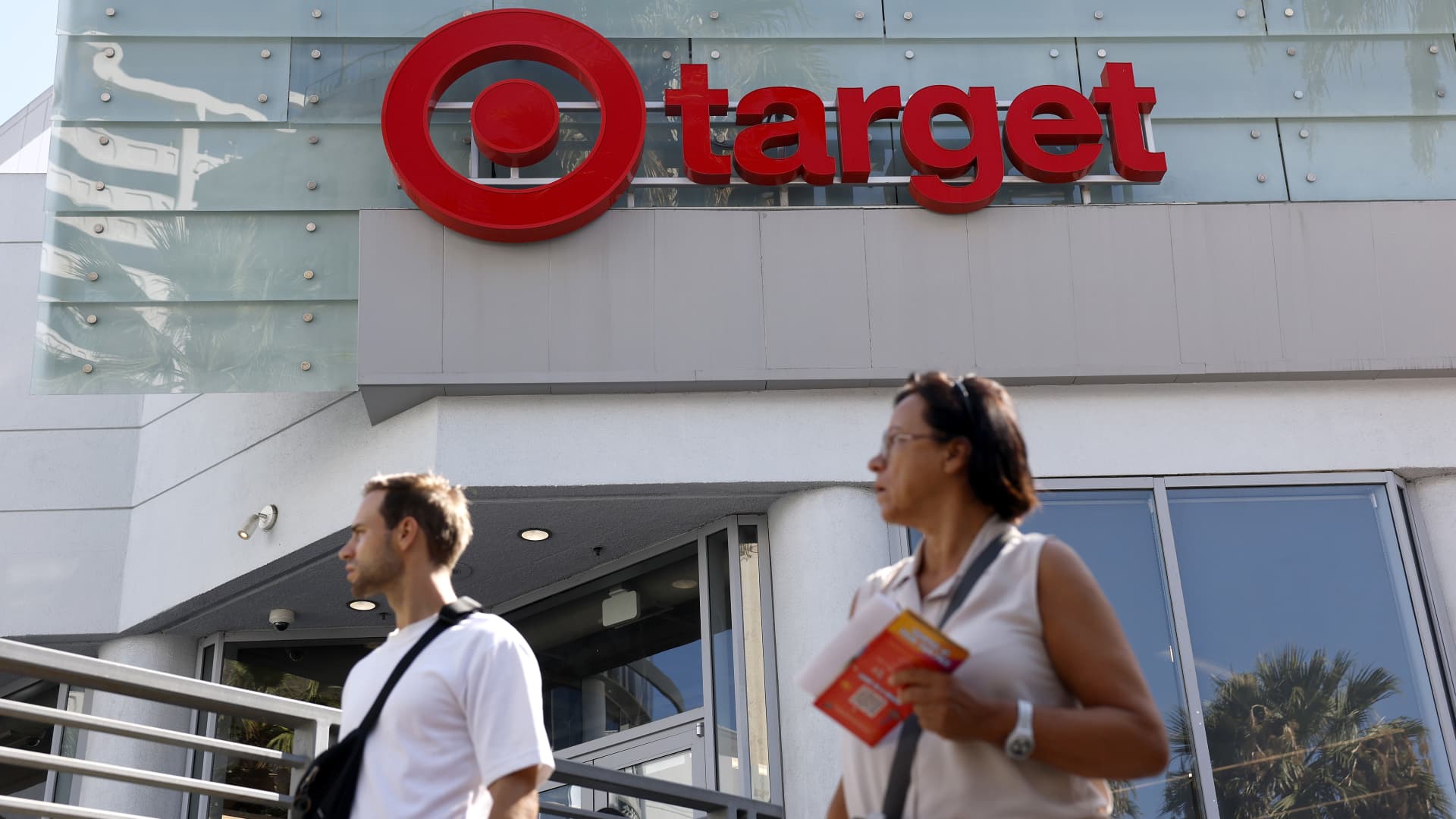
A Target store in Los Angeles, California, Aug. 19, 2026.
Justin Sullivan | Getty Images
Tariff refunds have muddied retailers’ earnings reports in recent weeks as Wall Street struggles to parse through the confusion.
Most major retailers applied for refunds after the Supreme Court ruled in February that the International Emergency Economic Powers Act did not authorize President Donald Trump to impose the tariffs. That money began flowing in during the second quarter, as retailers saw major boosts to their profits.
For the most part, those returns have helped companies offset cost inflation and prop up margins, especially as they face cost pressures like the rising price of fuel. But the way those retailers have reported those refunds and incorporated them into their earnings has differed greatly, leading to confusion about how to read the strength of their results and their future outlooks.
“These trails aren’t always clean in terms of finding the right way to apply, in a fair sense, the rebate to prices,” Bryan Eshelman, a managing director in the retail practice at consulting firm AlixPartners, told CNBC.
Eshelman said there are two factors at play with how retailers handled the refunds. Determining where the extra money goes depends largely on the retailer’s price position in the market, where more value-driven companies are likely to apply funds to keep prices lower and “proclaim that to the marketplace,” he said.
The tariff refund situation has been further complicated for companies depending on whether they are the importer of record for the products, which determines who gets the refunds, Eshelman said. Much of what’s sold in stores isn’t necessarily imported by the retailer, or U.S. manufacturers may be the ones receiving rebates for raw materials.
“There’s also just the reality of record-keeping internal to retailers and whether or not they easily have a way to attribute the rebate directly back to a product that was already sold,” he said. “It’s not a simple task.”
Price cuts
Shopping carts at a Home Depot store in New York, Feb. 25, 2025.
Jeenah Moon | Reuters
Some retailers chose to explicitly say they were dedicating their extra cash to lowering prices on products for consumers.
Home Depot saw its gross margin increase 0.3% in its fiscal second quarter compared with the prior year, driven by its tariff refund. The company said it received $730 million in tariff refunds during the period, using roughly $685 million of that money to reduce the cost of goods sold.
Chief Financial Officer Richard McPhail said on a call with analysts that those funds represent “the vast majority” of what the company was expecting to receive.
Walmart took a similar route. CFO John David Rainey told CNBC last week that the company was eligible to receive roughly $2.9 billion in tariff refunds and has yet to get back just under $100 million of that total. Its gross profit for Walmart U.S. grew 1.6% from the boost.
He told CNBC that the company plans to use those funds to lower prices for consumers, and shoppers and investors will see the impact during its current fiscal third quarter.
TJX Cos. also said it used its $331 million in tariff refunds to benefit its second-quarter cost of sales.
Eshelman said low-price operators likely have a “strategic reason” to apply refunds to prices, though enticing consumers with value has become harder in an increasingly crowded retail space.
“At the end of the day, a product is worth what somebody’s willing to pay for it, and there is a lot of choice in this marketplace,” Eshelman said.
Margin boosts
Lowe’s, on the other hand, said its tariff refund gave it an 11-cent boost to its earnings per share for the second quarter. CEO Marvin Ellison told CNBC the company received roughly $80 million in repayments and did not plan to use tariff dollars to lower prices, unlike some of its competitors.
“We feel strongly that we want to deliver strong profitability for our shareholders and make sure that we don’t follow any aggressive pricing action,” he said.
Ellison added on a call with analysts that the company took “the right planned steps to drive profitability” with its windfall. He said as the company moves into the second half of the year, Lowe’s will “think first about how we’re going to share those with the customer.”
Target also did not explicitly say whether the company was using its tariff refunds to cut prices, though the company said it lowered prices on more than 10,000 items in the second quarter. Still, the retailer said tariff refunds gave it a $752 million boost to net earnings, or $1.65 per share, and a $994 million pretax benefit to its second-quarter gross margin and operating income.
“We have, and will continue, to invest in price to ensure our guests are getting tremendous value each and every time they visit us at Target,” CFO Jim Lee said on a call with reporters.
Kohl’s CEO Michael Bender told CNBC on Wednesday that the company put $100 million of the refunds it has received into its gross margin in the second quarter and plans to use the rest to invest in deeper inventory.
“All of [the uses of the repayments] have to have a return, so we’re not just going to be throwing money out and saying, ‘I hope this works,’ but we’re very disciplined about it,” Bender said.
AlixPartners’ Eshelman said the one-time tariff boosts are also going to have implications for future quarters, especially as retailers forecast a higher-than-expected tariff rate and Trump’s tariff policies change by the day.
Wall Street and Main Street
The extra boosts to earnings this quarter meant that comparisons to last year’s results were skewed in retailers’ favor in many cases.
But on the other side of that coin, those windfalls will also set a higher bar for comparisons next year due to the inflated numbers this season.
“It’s an unfair positive comparison to last year’s quarter, and it’s going to be an unfair negative comparison to next year’s quarter,” Eshelman said. “I think investors need to just, where it’s material, make that adjustment in their expectations.”
For shoppers, Eshelman said it’s likely consumers won’t be able to quantify if the price cuts are truly proportionate to the refunds that the retailers received. Inflationary pressures like rising fuel prices, among other factors, can also affect those prices.
“How does a consumer know what percentage of a price increase was tariff-related versus diesel or fuel related?” he said. “How does a consumer know that the price went down commensurate with the level of rebate?”
Still, a silver lining from the tariff situation may be that retailers are catching on to needing to have more diverse and agile supply chains.
And at the end of the day, Eshelman said, the tariff calculus comes down to how retailers want their core customer to perceive them.
“To me, a lot of this is marketing,” he said. “It’s trying to create a price perception with consumers, which is an important part of any retailer’s job, and I find it hard to untangle that.”

A group of former Amazon.com AMZN -1.78%decrease; down pointing triangle warehouse employees is suing the company, alleging they were illegally punished and eventually terminated for seeking accommodations related to their pregnancies.
The class-action, led by four ex-warehouse workers, alleges that Amazon deducted their bank of unpaid time off or flagged them for “time off-task” for medically necessary breaks or absences.
Copyright ©2026 Dow Jones & Company, Inc. All Rights Reserved. 87990cbe856818d5eddac44c7b1cdeb8

Jon Pardi’s Wife Allegedly Watched Him Cheat On Bus Cameras
IRB Infrastructure shares rally 8% as August toll revenue surges 25% YoY to Rs 807 crore

Hunter Biden Denies LAPTOP Scam Claims After 99% Meme Coin Crash


-

 Crypto World1 day ago
Bitcoin price risks $76K drop as $78K support weakens
-
 Tech2 days ago
Memory prices are slowing because buyers ran out of money
-

 Crypto World1 day ago
Ethereum price stalls below $2,500 as ADX drops to 11
-

 Crypto World2 days ago
Robinhood Stock: How To Take Advantage With Reduced Risk
-

 NewsBeat1 day ago
What went right this week: an ‘historic’ fall in violent crime, plus more
-
 Crypto World22 hours ago
Bitcoin price holds near $79K as cycle drawdowns narrow
-
 Sports2 days ago
Phones confiscated, players sent home: Pakistan’s England tour turmoil revives memories of Mohammad Amir, Salman Butt and Mohammad Asif’s 2010 Lord’s spot-fixing scandal | Cricket News
-

 NewsBeat2 days ago
England up in reading, maths and science rankings as Scotland and Wales dip
-
 Crypto World2 days ago
Brent Crude Oil Moves Above $100 for the First Time in 3 Months
-

 Business1 day ago
Meta debuts long-awaited personal AI agent, Muse
-

 Crypto World6 hours ago
Bitcoin price risks $70K if $78K neckline breaks
-

 Crypto World2 days ago
Visa expands stablecoin card network to 160 programs
-

 Business2 days ago
Egyptian TV Presenter Sarah Khalifa, 11 Others Sentenced To Death In Major Drug Trafficking Case In Cairo
-
 Tech2 days ago
Strong Password Policy and Password Manager Guide
-

 Crypto World2 days ago
Intel Stock Jumps 9% on Chip Price Hike Report, US Stake Gains $36 Billion
-

 Crypto World2 days ago
Pump Fun and Kraken delete Hunter Biden $LAPTOP promotion
-

 Tech1 day ago
Meta debuts its Muse AI agent. Will consumers trust it?
-

 Entertainment1 day ago
Big Brother Spoilers: Dee SPINS & HUSTLES Votes – Yash Questions the Pact
-

 Business1 day ago
ServiceTitan, Inc. (TTAN) Q2 2027 Earnings Call Transcript
-

 Tech2 days ago
Google’s revived nuclear power plant gets $1.9B loan from US government
You must be logged in to post a comment Login