NEW YORK — Snap Inc. shares climbed Monday to $4.98, up 16 cents or 3.42%, as the Snapchat parent company drew fresh investor interest from a deepened partnership with Qualcomm Technologies to power future generations of its augmented reality Specs, even as the stock trades near multi-year lows ahead of first-quarter earnings.
Snap Stock Jumps 3%+ to $4.98 as Qualcomm Specs Deal Sparks AR Hopes Amid Earnings Jitters
The Santa Monica, California-based social media company, which has struggled with profitability and user growth pressures in a competitive landscape dominated by Meta Platforms and TikTok, saw its shares react positively to the April 10 announcement of a multi-year strategic agreement. The deal brings Qualcomm’s Snapdragon XR system-on-chip solutions to upcoming Specs, aiming to deliver more intelligent computing experiences and strengthen the platform for developers and users.
Snap has positioned Specs — its AR smart glasses — as a cornerstone of its long-term strategy to move beyond ephemeral messaging into immersive hardware. The company first teased lightweight, immersive Specs for a 2026 launch, and the Qualcomm collaboration is expected to accelerate that roadmap with advanced processing power for on-device AI and richer AR interactions.
The stock’s modest rebound comes after a brutal start to 2026, with shares down more than 40% year-to-date and trading well below the 52-week high near $10.41. Market capitalization stands around $8.1 billion, reflecting ongoing skepticism about Snap’s ability to scale revenue while navigating regulatory scrutiny, activist investor pressure and slowing daily active user growth.
Snap is scheduled to report first-quarter 2026 results around April 28, with Wall Street expecting revenue of approximately $1.52 billion at the midpoint and a continued narrow adjusted EBITDA profit. For the full year, management has guided toward revenue growth in the mid-to-high single digits while targeting gross margins above 60% and disciplined operating expenses around $3 billion.
Advertisement
In the fourth quarter of 2025, Snap posted revenue of $1.72 billion, up 10% year-over-year, driven by strength in advertising and its Snapchat+ subscription service. The company generated a small GAAP net profit of $45 million, a marked improvement from prior periods, helped by operating leverage and high-margin revenue streams. Gross margin reached 59%, up sequentially.
Daily active users stood at 474 million in Q4 2025, down 3 million sequentially but still reflecting broader engagement among younger audiences. Monthly active users reached 946 million globally, up 6% year-over-year. Snapchat+ subscribers grew 71% to more than 24-25 million, providing a growing recurring revenue base with attractive margins.
Average revenue per user climbed to $3.62 in the quarter, with significant regional disparities: North America generated roughly $9.78 per user while the rest of the world lagged at about $1.15, underscoring Snap’s heavy reliance on U.S. advertisers.
The company has pushed new ad formats, including Total Snap Takeovers, integrated Offers in Snap Ads and dynamic product recommendations, as it seeks to capture more of the advertising funnel from awareness to conversion. Health and pharmaceutical advertising has emerged as a potential growth area, though investors have shown caution over its durability.
Advertisement
Regulatory and safety concerns continue to weigh on sentiment. Snap faces an EU probe into compliance with child protection rules, part of broader scrutiny on social media platforms regarding grooming and underage access. Similar pressures in the U.S. and other markets have raised compliance costs and potential legal risks.
Activist investor Irenic Capital disclosed a stake earlier in 2026 and argued Snap could be worth at least $26 per share with operational changes, including potential strategic alternatives. Management has signaled it is unlikely to pursue major shifts, emphasizing its focus on standalone execution under CEO Evan Spiegel. Wells Fargo analysts noted the company is unlikely to support activist recommendations.
On the product side, Snap continues to invest in AI features, including AI Clips in Lens Studio that turn photos into short videos, and deeper integration with partners like Perplexity for conversational search within Snapchat. The platform generated nearly 2 trillion Snaps in 2025 alone — roughly 63,000 per second — highlighting its cultural stickiness among Gen Z users.
Analyst views remain mixed, with a consensus “Hold” rating across roughly 29-35 firms. The average 12-month price target sits around $8, implying substantial upside from current levels, though targets range widely from as low as $4 to highs near $15. Wells Fargo recently lowered its target to $6 from $8 while maintaining Equal Weight, citing advertising budget concerns. Roth Capital has called the stock a positive tactical trade idea.
Advertisement
Snap’s balance sheet includes a $500 million stock repurchase authorization announced with Q4 results, providing some support for the shares. The company maintains significant cash reserves and has emphasized free cash flow generation as it seeks to turn consistent profitability.
Broader challenges include competition for teen attention, macroeconomic softness in digital ad spending and the high costs of scaling AR hardware ambitions. Speculation around a potential spin-off of the Specs business has surfaced in activist discussions but remains unconfirmed.
CEO Evan Spiegel has described his work schedule as “completely insane” while trying to protect Sundays for family time, underscoring the intense demands of steering the company through a turbulent period for social media.
Looking ahead, investors will scrutinize Q1 user metrics, ARPU trends, Snapchat+ subscriber momentum and any updates on the Specs timeline. Success in diversifying revenue beyond traditional ads — through subscriptions, creator tools and eventual hardware — could help re-rate the stock, but near-term execution risks remain elevated.
Advertisement
The Qualcomm deal provides a tangible boost to Snap’s AR narrative, positioning Specs as a potential differentiator in a market where Meta’s Ray-Ban smart glasses have gained traction. If Snap can deliver compelling consumer hardware in 2026 while stabilizing its core app, it may begin to close the valuation gap with larger peers.
For now, with shares hovering near $5 and earnings on the horizon, Snap remains a high-beta name that swings on product announcements, regulatory headlines and shifting advertising sentiment. The company’s path to sustainable profitability and renewed growth will hinge on monetizing its engaged young user base more effectively while navigating an increasingly scrutinized social media environment.
Monday’s gain, while modest, reflects hope that hardware innovation and diversified revenue can eventually outweigh the current pressures facing one of the original social media disruptors.
‘This expansion marks a defining moment for SEEDS, as we move from research excellence into full commercial deployment’
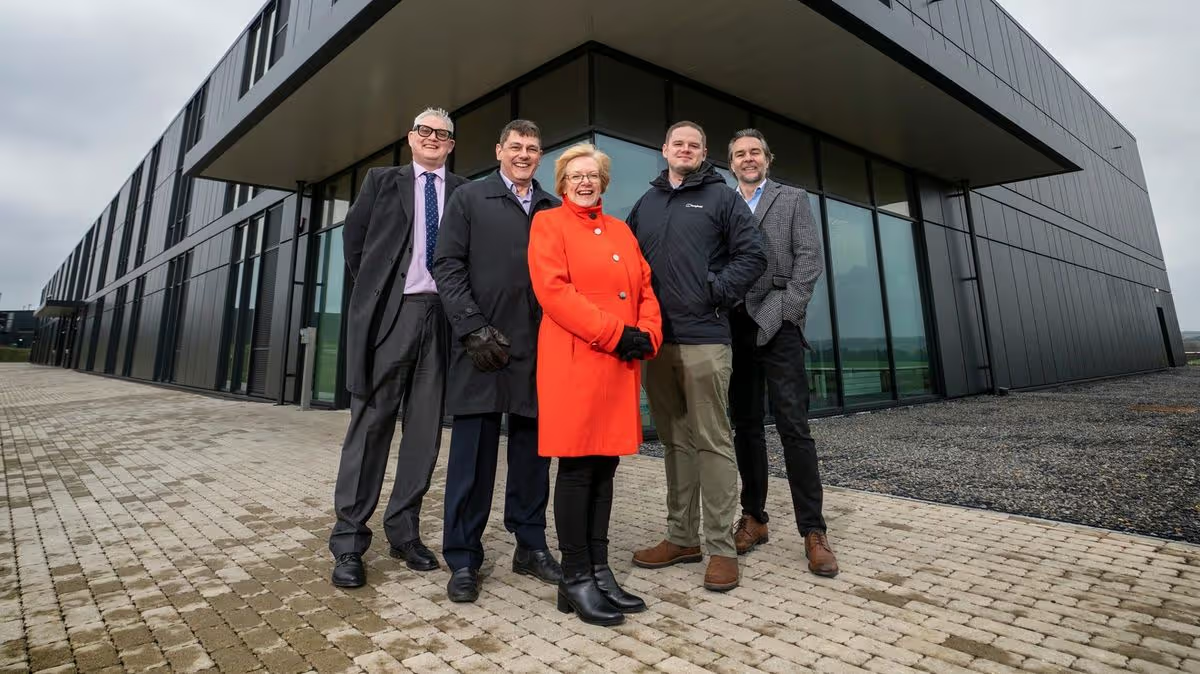
Torquil Gundlach, head of the Argonaut Programme at SEEDS; Peter Chalder-Wood, head of Strategic Partnerships at SEEDS; Sara Williams, NETPark manager; Cllr Joe Quinn, Durham County Council’s Cabinet member for planning, investment and assets; and Christian Pape, property director at Business Durham.(Image: Durham County Council)
A pioneering technology company has announced a major expansion in the North East. Engineered graphene technology firm SEEDS will be moving into a new dedicated facility at Sedgefield’s NETPark as part of the £100m expansion of the site. Taking on the new unit will allow the company to move from research and development to commercial production and enable it to supply its technology to major international manufacturers.
The company is targeting customers in the global aerospace, energy, semiconductors, and automotive sectors, with its development supported by the new phase at NETPark, which offers companies more than 285,000 square feet of high-spec laboratory and advanced manufacturing space.
It is hoped the expanded science park will create 1,250 skilled jobs on site and contribute £625m to the local economy over the next decade.
Jason Chehal, founder of SEEDS, said: “This expansion marks a defining moment for SEEDS, as we move from research excellence into full commercial deployment. Over the past decade, we’ve developed a way to engineer graphene not just as a material, but as a platform technology that can be tuned to solve real-world industrial challenges at scale.
Advertisement
Like this story? For more news from the tech sector, visit our dedicated page for the latest news and analysis here.
“Moving into our new facility at NETPark allows us to begin delivering customer specific systems across industries including microelectronics, energy storage, aerospace and advanced manufacturing.
“What’s particularly powerful is the ecosystem we’re part of here. Collaborations with CPI, Mitsui, and Pragmatic Semiconductor demonstrate how innovation in County Durham can translate directly into global industrial impact.
“We are now at the point where the technology is proven, the demand is established, and the pathways to market are clear. Each production system we deploy has the potential to support a major manufacturer anywhere in the world. That positions not only SEEDS, but the North East and the UK, at the forefront of next generation materials and electronics.”
Advertisement
Coun Joe Quinn, Durham County Council’s cabinet member for planning, investment and assets, said: “SEEDS’ expansion at NETPark reflects the critical role County Durham plays in the UK’s advanced manufacturing landscape.
“We are delighted to support SEEDS’ growth and would urge any expanding business looking for modern facilities to come and see the exceptional offer we have here at NETPark.”
NEW YORK — Shares of MARA Holdings Inc. jumped Monday to $10.02, up 48 cents or 4.98%, as the Bitcoin mining company continued to draw trader interest following its aggressive balance sheet cleanup, strategic shift toward artificial intelligence infrastructure and ongoing volatility tied to cryptocurrency prices.
MARA Holdings, Inc
The Miami-based firm, formerly known as Marathon Digital Holdings, has been transforming from a pure-play Bitcoin miner into a broader digital energy and infrastructure player. Its latest moves include selling a significant portion of its Bitcoin treasury to retire convertible debt at a discount and forging partnerships aimed at repurposing mining sites for high-performance computing and AI data centers.
MARA’s stock has been highly volatile in 2026, trading in a 52-week range from about $6.66 to $23.45. Monday’s gain came on elevated volume as investors weighed the company’s reduced leverage against persistent challenges in its core mining operations and broader sector pressures.
On March 26, MARA announced it had sold 15,133 Bitcoin between March 4 and March 25 for approximately $1.1 billion. The company used the proceeds to fund the repurchase of roughly $1 billion in face value of its 0.00% convertible senior notes due in 2030 and 2031. The notes were bought back at a discount, allowing MARA to capture about $88 million in value while reducing potential future dilution from conversions.
CEO Fred Thiel described the transaction as a “strategic capital allocation move” designed to strengthen the balance sheet and position the company for long-term growth. After the sales, MARA held approximately 38,689 Bitcoin, down from 53,822 at the end of 2025. The company has signaled it may continue opportunistically monetizing Bitcoin holdings in 2026 to enhance liquidity and fund initiatives.
Advertisement
The debt reduction lowers outstanding convertible principal significantly, easing pressure on the equity base. Analysts noted the move as credit-positive, though some expressed concern that selling treasury Bitcoin signals a departure from the aggressive accumulation strategy that once defined the company.
MARA has also been pivoting toward AI and high-performance computing. In late February, the company announced a strategic partnership with Starwood Capital to develop, lease and market select U.S. Bitcoin mining data centers for hyperscale, enterprise and AI-capable infrastructure. The arrangement includes triggers for proceeding with development, such as securing leases with qualifying tenants, with a decision required within 24 months.
The pivot comes after MARA reported a massive $1.71 billion net loss for the fourth quarter of 2025, driven largely by impairment charges and unrealized losses on digital assets amid fluctuating Bitcoin prices. For the full year 2025, revenue rose to about $907 million from $656 million the prior year, but the company swung to a $1.31 billion net loss from prior profitability.
Bitcoin production in Q4 fell 19% year-over-year to 2,011 BTC, reflecting operational challenges including power constraints and efficiency efforts. Adjusted EBITDA turned negative, highlighting the impact of lower hash rates and higher costs in a competitive mining environment.
Advertisement
Despite the headline losses, shares rose sharply after the earnings release as investors focused on the AI infrastructure narrative and the Starwood deal. Management has emphasized that its energy assets and sites provide a foundation for diversification beyond mining, potentially generating stable leasing revenue from AI hyperscalers seeking power-hungry data centers.
Analyst reactions have been mixed. Cantor Fitzgerald maintained an Overweight rating but lowered its price target to $10 from $11 in early April. The consensus 12-month price target sits around $16.48, suggesting potential upside from current levels, though forecasts vary widely given the company’s sensitivity to Bitcoin prices and execution risks on the AI pivot.
MARA is scheduled to report first-quarter 2026 results around May 7. Wall Street expects continued focus on hash rate recovery, Bitcoin holdings updates, progress on the Starwood partnership and any further treasury transactions.
The company’s digital asset management strategy has included lending and pledging portions of its Bitcoin stack, generating interest income. At year-end 2025, about 28% of holdings were activated in such programs. While this provides yield, it also introduces counterparty and custody risks.
Advertisement
Broader market context has influenced MARA’s performance. Bitcoin prices have fluctuated in 2026 amid macroeconomic uncertainty, regulatory developments and institutional adoption trends. MARA’s valuation remains closely tied to crypto sentiment, even as it attempts to decouple through infrastructure diversification.
Insider activity has added to the narrative. In mid-March, CEO Fred Thiel sold 27,505 shares under a pre-arranged 10b5-1 trading plan at an average price of $9.18. Such sales are routine for executives but can sometimes weigh on sentiment in a volatile name.
MARA operates large-scale mining facilities across the United States, leveraging low-cost power agreements where possible. The company has highlighted improvements in energy efficiency and fleet upgrades, though production declines in recent quarters reflect industry-wide headwinds including the Bitcoin halving effects and rising competition.
The AI pivot introduces both opportunity and risk. Repurposing mining sites could generate higher-margin revenue from leasing, but it may divert power and resources from Bitcoin mining, potentially reducing output further. Operational disruptions during transitions could also pressure near-term results.
Advertisement
Critics argue MARA remains primarily a leveraged Bitcoin play, with its treasury and mining operations still dominating the story. Supporters point to the company’s substantial power capacity and site portfolio as undervalued assets in an era of surging AI demand for data center infrastructure.
As of mid-April 2026, MARA’s market capitalization hovers around $3.6 billion, with an enterprise value higher due to remaining debt. The stock carries a high beta, making it prone to sharp swings on crypto news, earnings or sector developments.
Looking ahead, key catalysts include Q1 production figures, updates on AI leasing progress, any additional Bitcoin sales or purchases, and macroeconomic factors affecting Bitcoin. Success in securing hyperscaler tenants for its data centers could mark a meaningful step in the strategic transformation.
Challenges persist, including regulatory scrutiny on crypto mining energy use, competition from larger players like Riot Platforms, and the inherent volatility of digital assets. Workforce reductions of about 15% announced earlier signal cost discipline amid the pivot.
Advertisement
MARA’s story reflects broader trends in the Bitcoin mining sector, where many operators are exploring diversification into AI, HPC or other energy-intensive applications to stabilize revenue. Whether the company can successfully execute this shift while managing its remaining Bitcoin exposure will determine if it can command a premium valuation beyond its crypto roots.
For now, with shares rebounding toward the $10 level on Monday and first-quarter earnings approaching, MARA remains one of the most actively traded names at the intersection of cryptocurrency, energy infrastructure and emerging AI data center demand. Investors continue to debate whether the balance sheet cleanup and AI ambitions provide a sustainable path forward or if the company will stay tethered to Bitcoin’s fortunes.








.webp?t=1738594923)








.webp?t=1776089349)






































You must be logged in to post a comment Login