
Business
Google nears release of Gemini 4 AI model, DeepMind head tells The Information




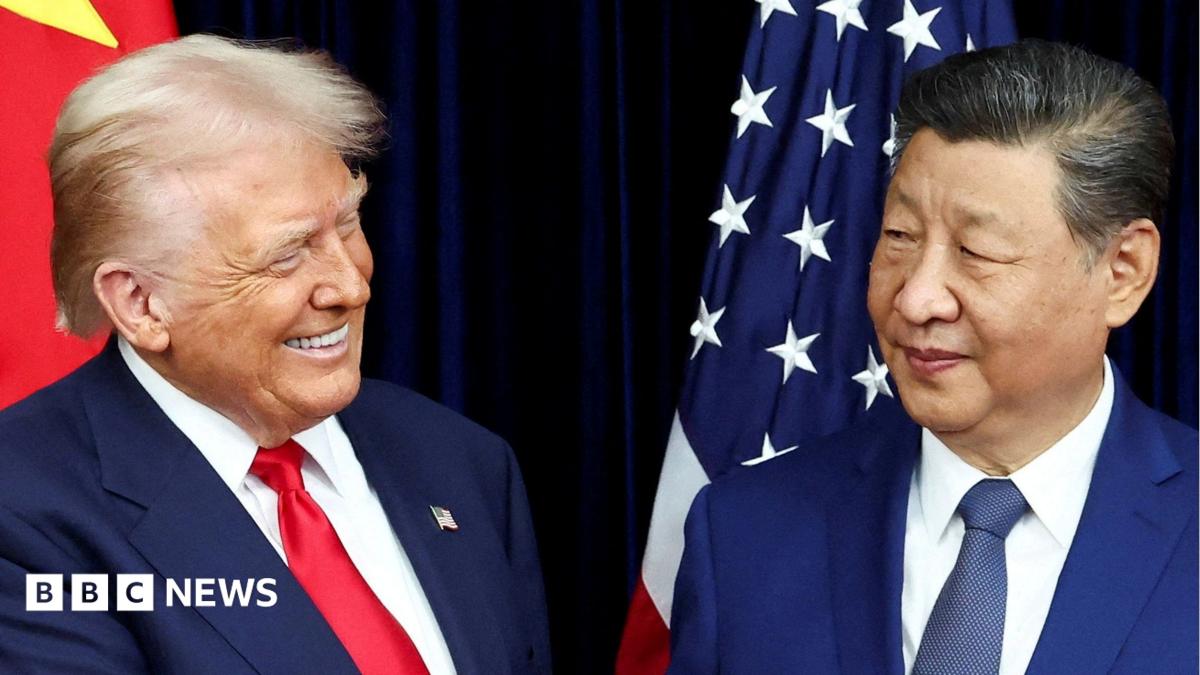
The US and China are vying for AI supremacy while seeking to keep it under human control.
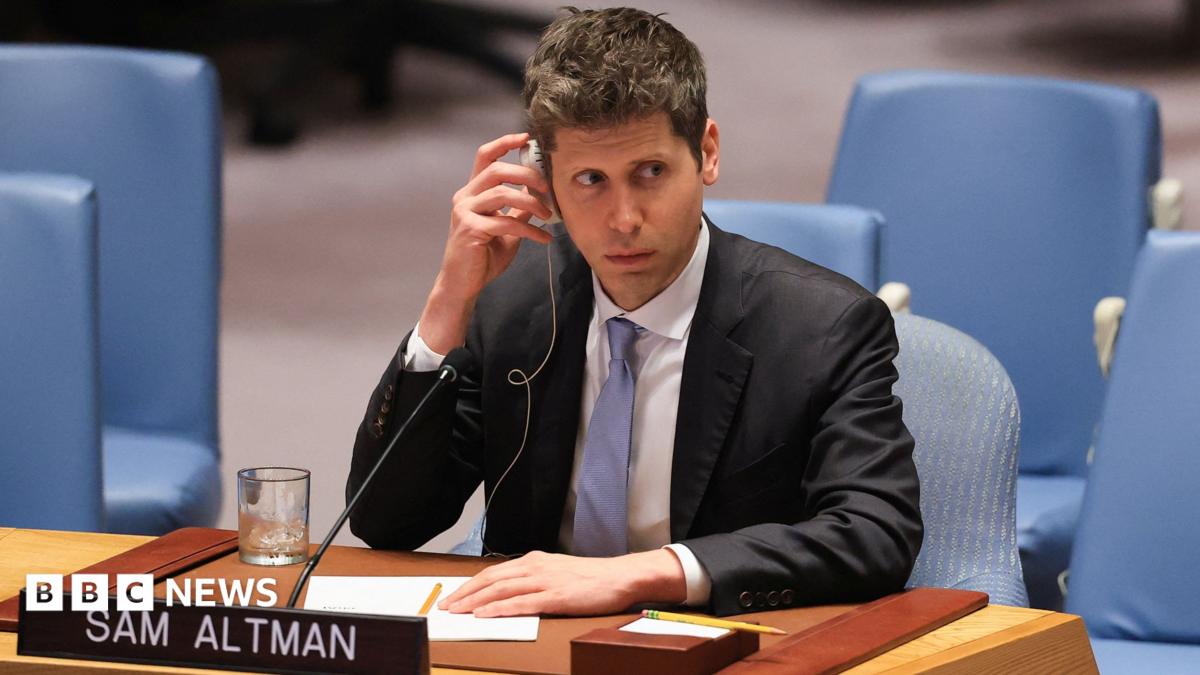
The heads of OpenAI, Anthropic, and Hugging Face have told the UN that the current pace of artificial intelligence (AI) development, and the risks it poses to society, demands international coordination.
Altman called for common risk evaluation standards, as did Dario Amodei of Anthropic, a main rival of OpenAI, and Clement Delangue of Hugging Face.
Earlier this month, Amodei wrote an essay welcomed by Altman and others calling an AI development slowdown in response to fears about the technology’s threat to humanity.
However, at the same UN conference, a key technology advisor to US President Donald Trump, rejected the idea any new form of AI regulation.
Michael Kratsios, a former Scale AI executive, admitted that the speed of AI development is increasing and that there are risks presented by the technology, but told the UN this was not reason enough “to pause development or constrain it with new global governance structures”.
“International dialogue in this forum and others cannot be allowed to drift toward global governance,” Kratsios added.
Kratsios’s comments echoed similar statements made by Trump in recent weeks.
Trump told the UN on Tuesday he wanted to rebrand it “super intelligence” and has strongly opposed any idea of an AI slowdown because of the US’s competitive advantage in the sector.
“We’re leading China on AI… and, frankly, I want to keep it that way because whoever wins AI, wins,” he said earlier this month.
Sam Altman of OpenAI and other AI chief executives expressed a different view in their talks to the UN on Wednesday.
“If AI is to be democratic, the most important decisions cannot be made by labs in San Francisco alone,” said Altman.
He told the UN that he wanted countries to start working together toward “the collective good in the face of powerful new technology”.
He called for “national and international” AI standards on measuring the capabilities of an AI tool, assessing related risks, AI safeguards, and the degree to which human oversight over such tools is maintained.
He also called for “speedy incident reporting, classification, and reporting protocols so the world can learn from failures before they become catastrophes”.
“We need common standards so countries can compare evidence, verify compliance, and have a shared language and understanding what is happening,” Altman added.
EqualAI CEO Miriam Vogel discusses AI governance and innovation.
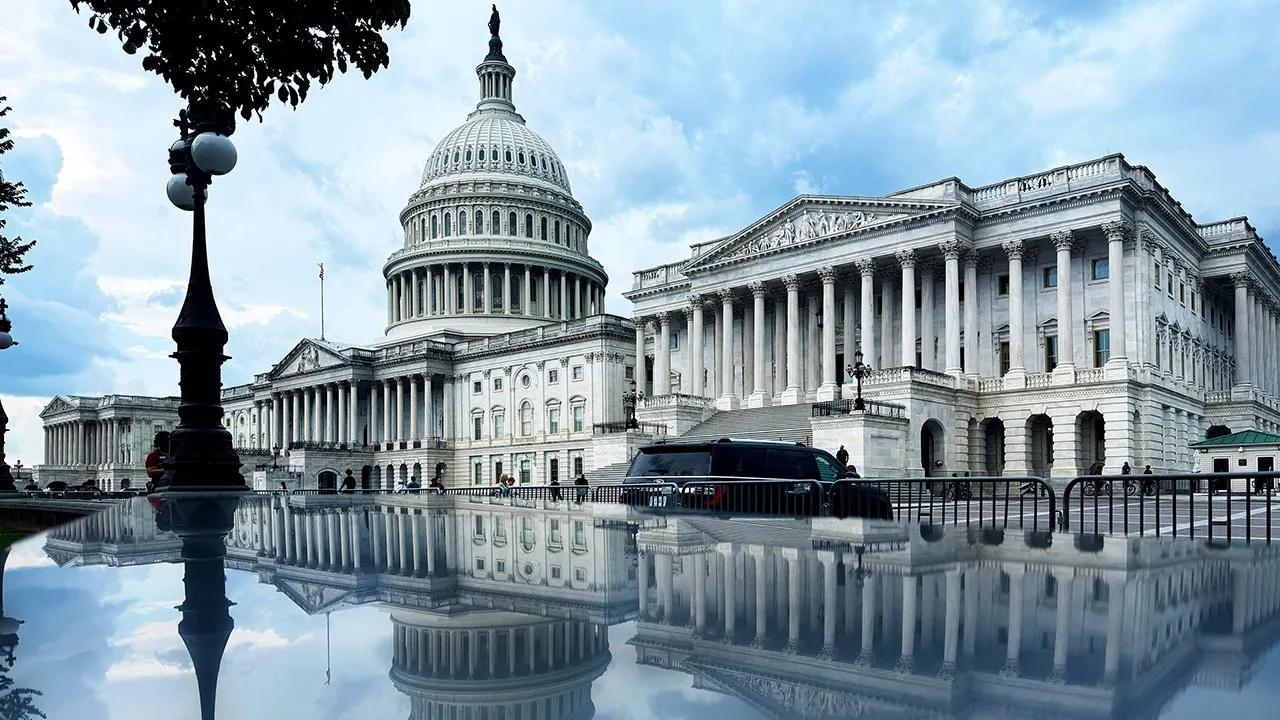
A House panel held a hearing on Wednesday to discuss the need for the U.S. and China to responsibly pace artificial intelligence (AI) development ahead of this week’s meeting between President Donald Trump and Chinese President Xi Jinping.
The House Select Committee on the Strategic Competition Between the U.S. and the Chinese Communist Party held a virtual shadow hearing led by Ranking Member Ro Khanna, D-Calif., with a focus on calls for controlling AI development to address risks like the loss of control or misalignment that could have economic and social consequences.
EqualAI CEO Miriam Vogel told the panel that there is a need for international engagement over AI governance, including between the U.S. and China, explaining that while “our institutions and values are different, if the U.S. wants to shape global AI norms, we first have to define and operationalize our own.”
Vogel added that “American leadership on AI requires leadership on AI governance,” and said that it can also help foster innovation, saying that “effective governance does not slow down innovation. It’s the infrastructure that allows innovation to scale.”
ANTHROPIC, OPENAI CEOS WARN AI COULD THREATEN HUMANITY WITHOUT SAFEGUARDS
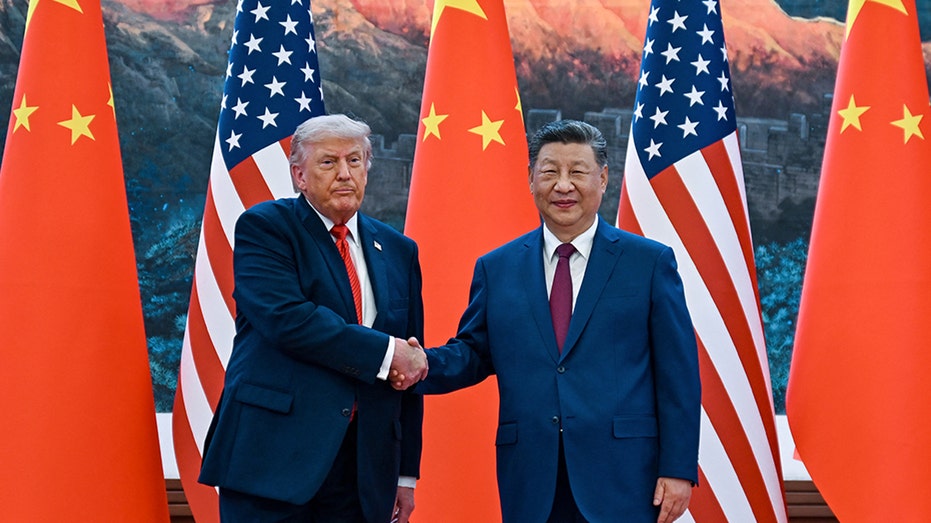
President Trump and Chinese President Xi are meeting this week, with AI rules expected to be a point of discussion. (Kenny Holston/AFP via Getty Images)
Vogel compared AI governance to regulations covering the automotive and aviation industries that are relied upon every day around the country.
“We fly 45,000 flights across the U.S. airspace daily because passengers trust international safeguards for certification, inspection, maintenance and investigation. We put our families in our vehicles daily because we know they’ve met global and national safety standards,” she said.
“AI needs that same institutional discipline and we need an AI-literate workforce. This is a workforce issue, a competitiveness issue, and a national security issue,” she added.
TRUMP REBRANDS AI, REJECTS ‘GLOBALIST SCHEME’ TO CONTROL TECH
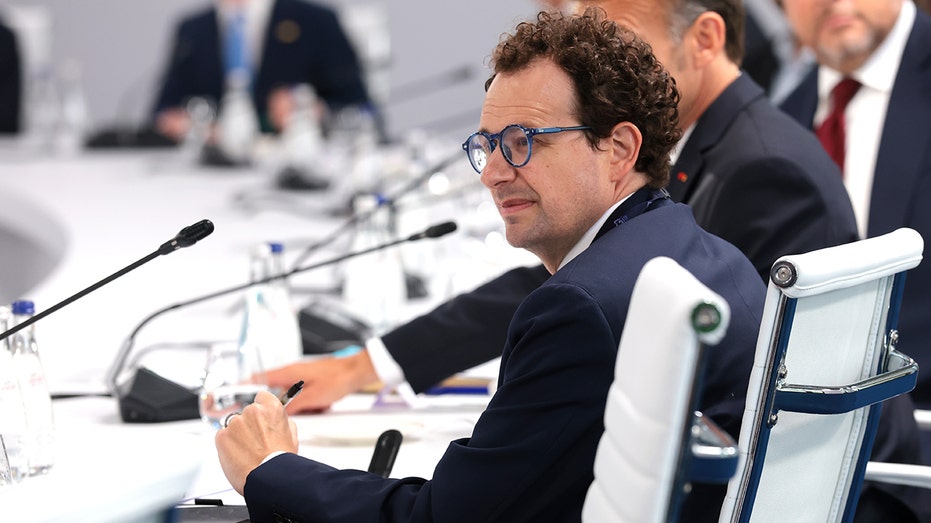
Anthropic CEO Dario Amodei is among the AI leaders who have called for slowing frontier model development to ensure alignment issues don’t arise. (Anna Moneymaker/Getty Images)
Vogel discussed additional elements of what she sees as a plan for AI governance, saying that there is a need for “governance throughout the AI lifecycle.”
“Too often, proposed safeguards end with the model development. Some of the highest-stakes AI interactions occur during deployment in financial institutions, hospitals, workplaces, and public institutions where governance can be weakest,” she said.
Vogel noted findings by the World Economic Forum that less than 1% of companies have strong AI governance, while McKinsey reported that under a third of companies have AI governance in place.
Agentic AI, which can take actions and interact with other systems with a measure of autonomy granted by the user, may pose a concern without sufficient governance. Vogel explained that a simulation at EqualAI’s agentic AI governance summit showed a lack of governance can lead to scenarios where “ordinary deployments quickly escalated into incidents and then crises.”
TRUMP TO DECIDE WHETHER TO GREEN LIGHT US-CHINA ARTIFICIAL INTELLIGENCE ‘HOTLINE’ AGREEMENT: SOURCES
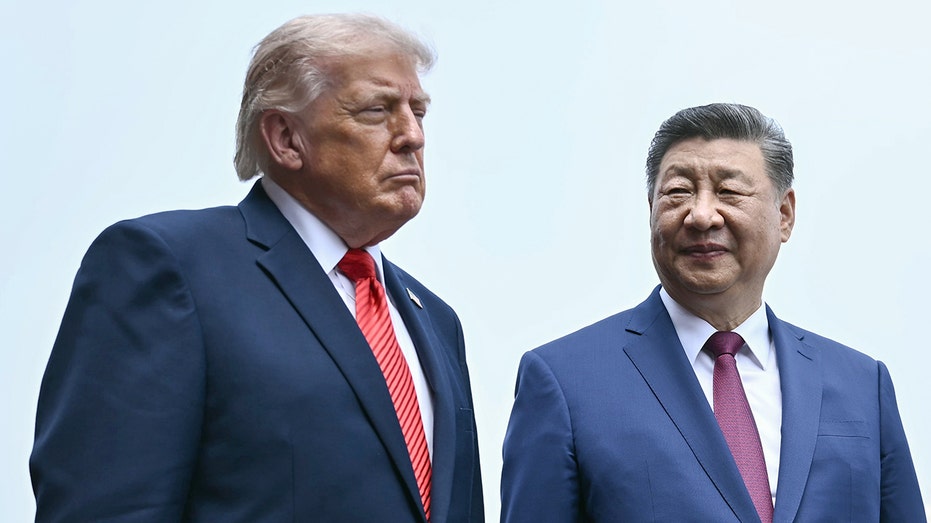
The White House is considering a “hotline” with China to allow direct communication over AI issues. (Brendan Smialowski – Pool/Getty Images)
The Trump administration is reportedly considering creating a “hotline” between the U.S. and China, similar to those used by the military, to give the two sides a direct line of communication if AI-related problems arise, like hacking, national security concerns, rogue AIs or other issues.
President Donald Trump has argued against regulations that could rein in AI development, telling the UN General Assembly this week that he doesn’t want to stifle the growth of a technology that could be transformational for the economy.
AI leaders like Anthropic CEO Dario Amodei and OpenAI CEO Sam Altman have said they need to pace the development of cutting-edge frontier models to ensure the AI remains aligned and doesn’t elude developers’ ability to control it.
“Discussions about a pause in AI development must include China. American leadership requires governance that allows AI systems to earn and deserve, and safeguards should extend across the AI life cycle,” Vogel said.
GET FOX BUSINESS ON THE GO BY CLICKING HERE
“We have navigated technological transformation before, not by stopping innovation, but by building the institutions capable of governing it,” she added.

Maks_Lab/iStock via Getty Images
Flash PMI data from S&P Global shows US business continues to boom, with output growing at the fastest rate for over five years in September. Payroll growth, meanwhile, hit the highest for over four years as companies sought to


With a market cap of $13.4 billion, Masco Corporation (MAS) is a global leader in the design, manufacture, and distribution of branded home improvement and building products. The company’s portfolio includes well-known brands such as Behr, Delta, hansgrohe, Liberty, and HotSpring across paint, plumbing, hardware, and spa products.
Companies worth more than $10 billion are generally labeled as “largea-cap” stocks and Masco fits this criterion perfectly. Masco leverages its strong brands across product categories, sales channels, and geographies to create value for customers and shareholders.
More News from Barchart
Shares of the Livonia, Michigan-based company have dipped 17.6% from its 52-week high of $83.64. The stock has fallen 6.8% over the past three months, lagging behind the Dow Jones Industrial Average’s ($DOWI) marginal return over the same time frame.

Shares of the company have declined 3.4% over the past 52 weeks, underperforming DOWI’s 11.6% increase over the same time frame. However, MAS stock is up 8.1% on a YTD basis, outperforming DOWI’s 7.7% gain.
The stock has been trading below its 50-day moving average since mid August.

Despite Q2 2026 adjusted EPS rising 26% to $1.64, Masco shares tumbled 11.1% on Jul. 29 as net sales fell 3% to $1.99 billion, with North American sales declining 5%, signaling continued weakness in underlying demand. The company also faced a challenging macroeconomic and geopolitical environment, while strategic investments to support growth weighed on sales and the headline results were helped by a roughly $95 million benefit from IEEPA tariff refunds.
In comparison, rival Trane Technologies plc (TT) has outpaced MAS stock. TT stock has gained 12.4% on a YTD basis and 7.3% over the past 52 weeks.
While MAS stock has underperformed over the past year, analysts remain moderately optimistic about its prospects. The stock has a consensus rating of “Moderate Buy” from 22 analysts’ coverage, and the mean price target of $80.39 is a premium of 16.9% to current levels.
On the date of publication, Sohini Mondal did not have (either directly or indirectly) positions in any of the securities mentioned in this article. All information and data in this article is solely for informational purposes. This article was originally published on Barchart.com
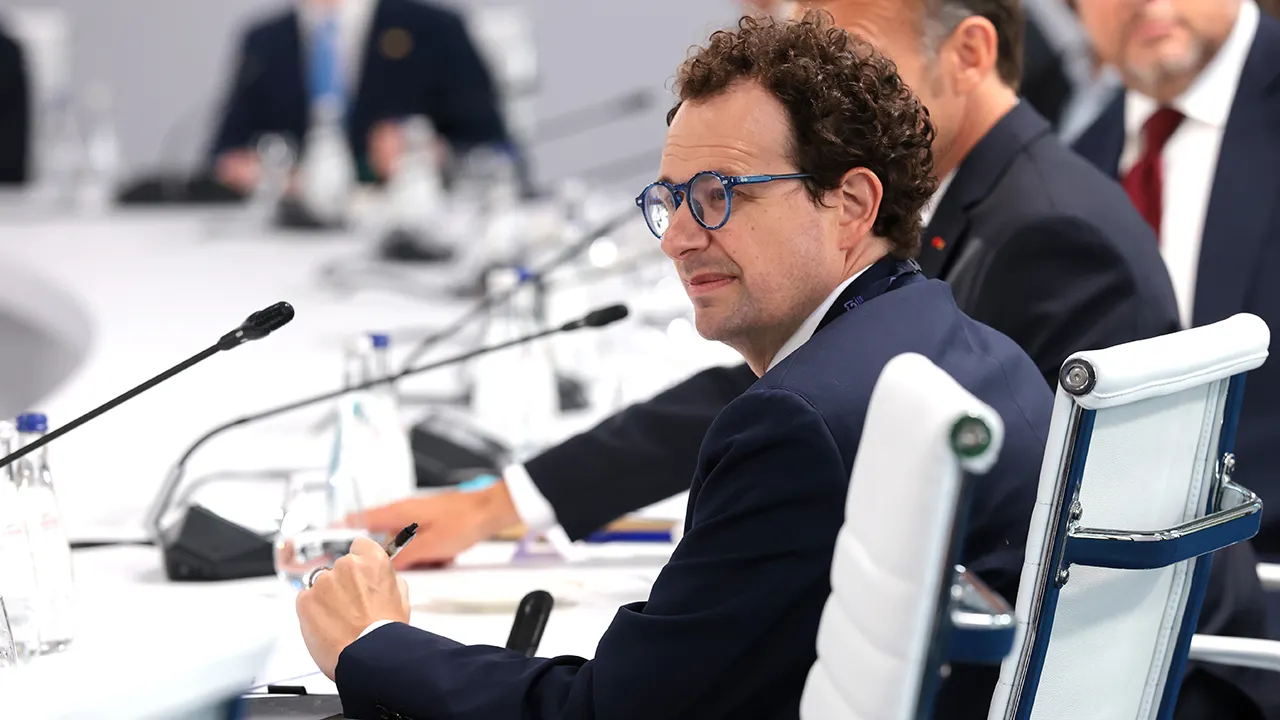
Impact3 co-founder Kyle Reidhead analyzes the future of the artificial intelligence revolution and investment opportunities in AI infrastructure on ‘Making Money.’
Anthropic CEO Dario Amodei predicted Wednesday that AI could help cure most diseases within the next five to 10 years, making the case that advanced technology will change how scientists study biology and medicine.
The company announced a Claude-led discovery of a molecular machine that it believes could represent a new gene-editing mechanism, though Anthropic said its precise biological function remains unclear.
“Its precise function, biotechnological utility (if any), or level of significance is not yet clear, but at minimum it is work I would have been proud to do as a PhD student,” Amodei wrote on X.
MELANIA TRUMP URGES AI ‘VIGILANCE,’ SAYS AMERICANS NEED TO GET EDUCATED
“The work was done mostly, though not entirely, by Claude: our life sciences team suggested a broad area of research, Claude read through the literature and a bunch of genome data and discovered something interesting, then Claude proposed experiments to verify the discovery and our team carried them out.”
He said the company has repeatedly seen a pattern in which AI performance in new intellectual domains goes from weak to “superhuman” in just a few years.
Anthropic CEO Dario Amodei predicted that AI could help cure most diseases within the next five to 10 years. (Anna Moneymaker/Getty Images / Getty Images)
“In 2023, models struggled to do math at the level of an average high-school student. In 2024, they started to do well on math competitions for the best high-schoolers in the country, in 2025, they started to solve minor open problems, in early 2026 more significant open problems, and in late 2026, they are beginning to solve the top few open problems in all of mathematics. We believe AI for biology is on a similar exponential trend,” he said.
Amodei noted that the main difference between biology and mathematics is that math can be done purely theoretically and biology needs experimentation. He said while some point to this to argue that AI’s utility in biology will be limited, his company believes that suspicion is wrong.
He said humans can collaborate with AI to perform the experiments, validate key results in a few weeks and, if needed, work with the AI to repeat what they find.
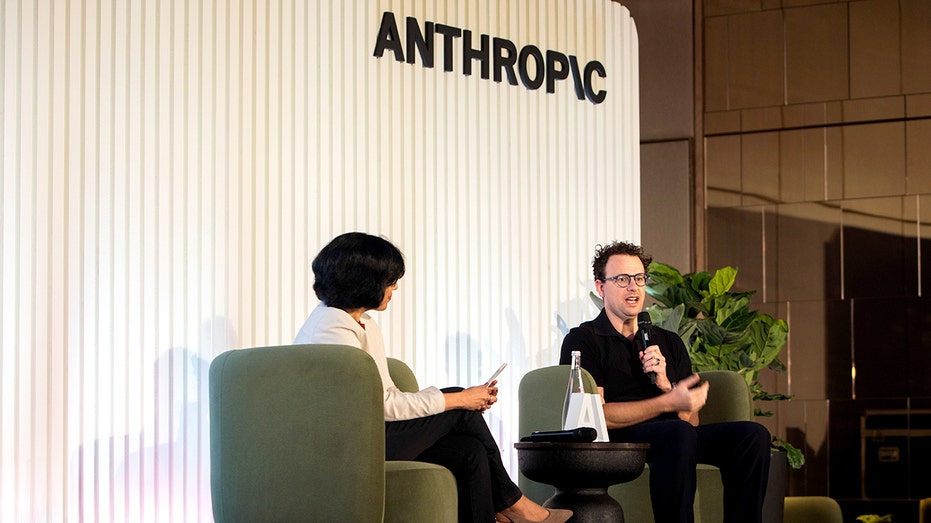
Irina Ghose, managing director of India of Anthropic PBC, left, and Dario Amodei, co-founder and CEO of Anthropic. (Samyukta Lakshmi/Bloomberg via Getty Images / Getty Images)
“Eventually it may even be possible for Claude itself to safely perform the experiments by autonomously controlling lab equipment, with appropriate safeguards in place, but we aren’t doing that today,” he explained.
Accelerating fundamental biology discoveries could expand and speed the broader biomedical pipeline by identifying new drug targets, therapies and research tools, he said. While it would not shorten clinical trials, he said it could produce more promising candidates for testing, emphasizing that any resulting treatments would still require standard testing and regulatory review.
“In Machines of Loving Grace, I wrote about AI’s potential to ‘cure most diseases in 5-10 years’ — a goal that sounds impossible, but one I believe is just barely possible if AI is applied to every stage of the pipeline. The first step is showing that AI can first help with, and then drive, biological discoveries,” Amodei wrote.
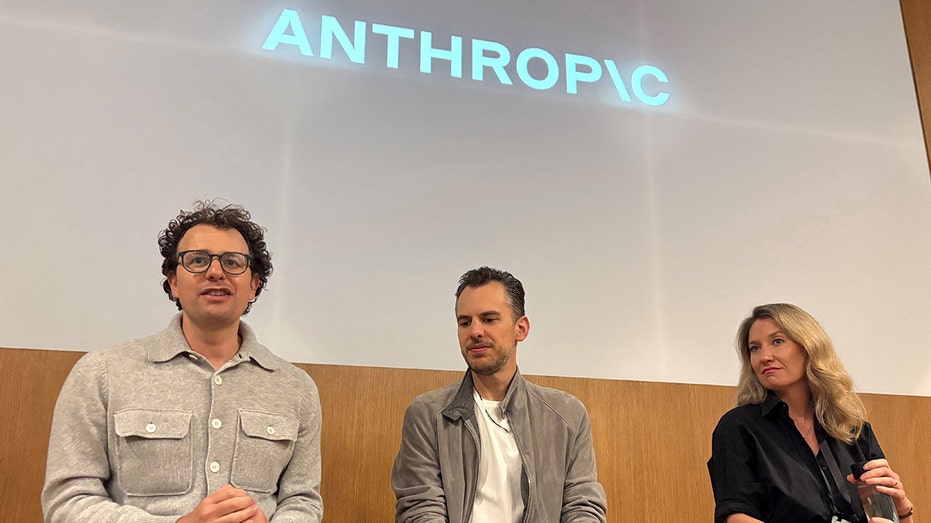
Anthropic CEO Dario Amodei, Chief Product Officer Mike Krieger and Head of Communications Sasha de Marigny during a news conference. (Julie Jammot/AFP / Getty Images)
GET FOX BUSINESS ON THE GO BY CLICKING HERE
“I’m proud of the resources Anthropic has invested in accelerating the public benefits of AI through the life sciences, and we’re aiming both to grow our life sciences team and to work with other scientists to extend this approach to a broad range of problems,” he added.
Earlier on Wednesday, Amodei spoke before the U.N. Security Council about the need for the AI industry to establish international standards and cooperation to manage the threats posed by rapid AI developments and capabilities.

Adelaide – Getting hurt in a car accident is stressful enough without having to untangle South Australia’s Compulsory Third Party (CTP) claims process on your own. The right lawyer can mean the difference between a rushed settlement and the compensation you’re actually entitled to — covering medical costs, lost income, and pain and suffering. Here are five Adelaide firms with long track records in motor vehicle injury claims.
1. Tindall Gask Bentley (TGB)
Established in 1970, Tindall Gask Bentley has grown to become one of South Australia’s largest plaintiff law firms. Its scale and history make it one of the most recognisable names in SA personal injury law, with deep experience handling CTP motor accident claims from straightforward soft-tissue injuries through to catastrophic and life-changing cases. Lawzana
Best for: Claimants who want a large, established firm with significant resources behind complex or high-value claims.
2. Johnston Withers
Johnston Withers provides initial cost-free assessments of settlement offers to help claimants understand their rights, with lawyers covering both metropolitan Adelaide and regional South Australia. The firm notes that under SA’s CTP insurance scheme, pedestrians, cyclists, drivers and passengers injured in a car accident can all be compensated for their losses, and it operates on a no-win, no-fee basis.
Best for: Regional South Australians and anyone wanting a second opinion on an insurer’s settlement offer before signing.
3. Andersons Solicitors
Andersons Solicitors is an award-winning South Australian law firm with six office locations across the state, backed by a large, experienced personal injury team. The firm offers a free, no-obligation first interview along with a no-win, no-fee arrangement, which removes much of the financial risk of pursuing a claim.
Best for: People outside the CBD who want local, face-to-face access across a wide network of offices.
4. Paul Alvaro Lawyers
A boutique Adelaide practice, Paul Alvaro Lawyers specialises specifically in motor vehicle accidents, workers compensation, public liability and medical negligence, drawing on over 40 years of combined experience in compensation claims. The team also handles complex and catastrophic motor vehicle cases, working through CTP claim lodgement, insurer negotiations and final settlement, covering everything from medical expenses to future earnings and long-term care.
Best for: Claimants who want a specialist boutique firm rather than a full-service general practice.
5. Palios Meegan Nicholson (PMN Lawyers)
Palios Meegan Nicholson was first established in 1982 and has built a reputation as a dedicated personal injury and workers compensation firm, still led in the spirit of its founding partners. The firm is wholly South Australian, based in the Adelaide CBD with a regional office in Mount Gambier servicing the South East, and its practice is entirely focused on compensation and damages claims.
Best for: South East SA residents and anyone wanting a firm whose entire practice is built around compensation law.
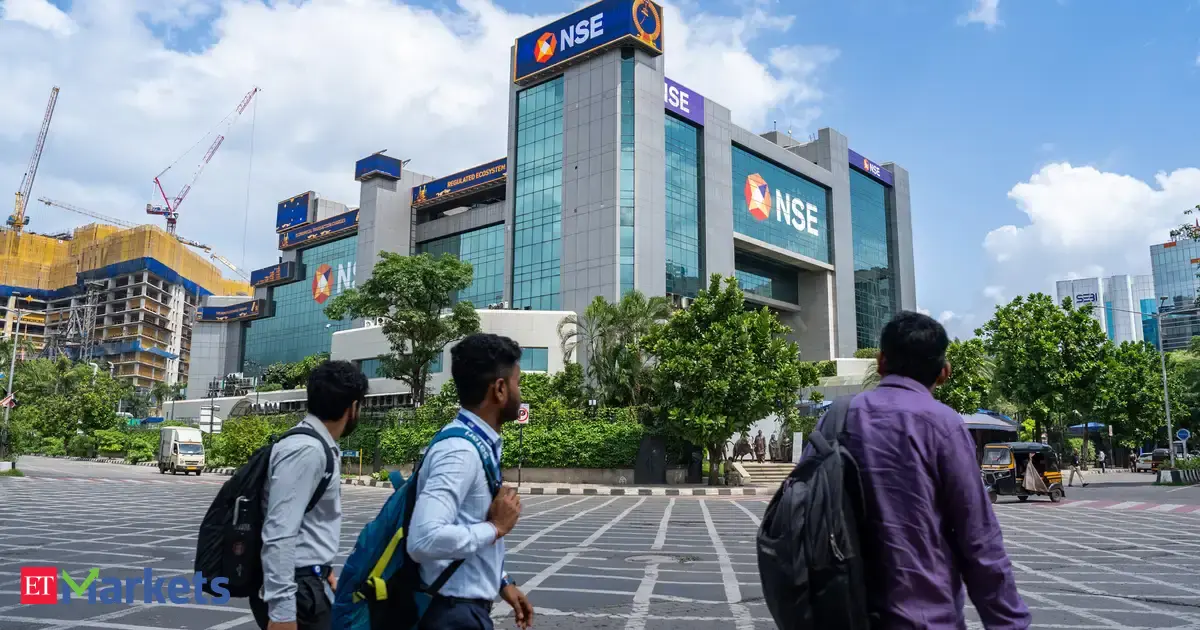
The National Stock Exchange of India Ltd. will make its debut on rival BSE Ltd. Thursday after raising $2.4 billion in an initial public offering, the country’s second-biggest ever. Subdued retail demand for the deal and the gray market indicating a gain of between 2% and 3% suggest that a blowout first day pop is unlikely, even after valuation concerns forced the company to dial back both the size and the price of the listing.
With the debut, the market will now get a chance to weigh in on the debate over NSE’s worth. On the one hand, the company’s long-term growth trajectory drove healthy institutional demand. On the other, and near-term concerns over derivatives volumes, regulatory headwinds and the prospect of additional share supply kept mom-and-pop investors more cautious.
The 226 billion-rupee offering, India’s second biggest, trailing only Hyundai Motor India Ltd.’s 279 billion-rupee share sale in 2024, was subscribed 5.7 times. Large institutional investors were among the biggest bidders, signaling confidence in NSE’s prospects at a valuation that remains elevated compared with some global exchange operators.
If the premium quoted late Wednesday by gray market platforms including IPOWatch holds, NSE would debut with a market capitalization of about $47.5 billion, making it the world’s eighth-largest listed exchange by market value, compared with London Stock Exchange Group Plc’s about $52.5 billion.

While investors broadly remain positive about NSE’s long-term prospects, the stock’s performance in the months after listing may hinge on how much additional supply comes to market as lock-in periods for existing shareholders expire.
“There’s little doubt that NSE is an attractive stock to own over the long term, but its near-term performance will likely depend on how much additional supply hits the market over the next few months as lock-in periods expire for existing shareholders,” said Ambareesh Baliga, an independent market analyst.NSE’s outlook has come under greater scrutiny after regulators tightened rules aimed at curbing excessive speculation in India’s derivatives market. That’s particularly important for the exchange because transaction fees from options trading accounted for more than 60% of operating revenue in fiscal 2026.
Still, NSE has the potential to grow 15% to 20% annually over the next decade, supported by continued product innovation, longer trading hours, its dominant position in equities and emerging revenue streams from commodities, data and other businesses, according to Raamdeo Agrawal, chairman and co-founder of Motilal Oswal Financial Services Ltd.
“Regulatory headwinds, however, could temper that growth in the short term,” Agrawal said.
 Bloomberg
Several large investors, including Life Insurance Corp. of India, Norges Bank Investment Management, ICICI Prudential Asset Management Co., Quant Mutual Fund and Mirae Asset Mutual Fund, were among the top bidders in NSE’s main book, people familiar with the matter have said.
Goldman Sachs Asset Management, HSBC, Fidelity, Singapore sovereign wealth fund GIC, Abu Dhabi Investment Authority and Eastspring were among the major investors that participated in the anchor book.
Thursday’s listing will cap NSE’s long road to the public markets after its first attempt to go public in 2016 was held up by regulatory and governance issues.


Leveraged loan fund assets rise as Fed turns hawkish

Teenager screamed driver’s name before car plunged into river, inquest hears

Maple Leaf Foods consolidating US plant-protein footprint


![[The Financial Hub] CAMBIOS AL SEGURO SOCIAL VUELVEN AL DEBATE](https://wordupnews.com/wp-content/uploads/2026/09/1790224394_maxresdefault-80x80.jpg)


-

 Fashion5 days ago
Weekend Open Thread: Talbots – Corporette.com
-

 Tech3 days ago
Researchers escape OpenAI Codex sandbox to run commands on host
-

 Crypto World5 days ago
Circle launches Arc Studio AI agent for building onchain apps
-

 Crypto World3 days ago
Who Needs CLARITY Anyway? ARB Could See 70X Increase: Hodler’s Digest
-
 NewsBeat5 days ago
Trump says US has reached an agreement to take permanent control of Greenland’s security
-

 Crypto World1 day ago
Goldman Sachs and Deutsche Bank Agree: The S&P 500 Rally Isn't Over
-

 Crypto World5 days ago
Trading Bitcoin on Robinhood? Why 2% Spread Has Traders Worried
-

 Crypto World6 days ago
Mortgage and refinance interest rates today, Thursday, September 17, 2026
-

 Crypto World5 days ago
Bitcoin price breaks channel as RSI climbs to 63
-

 Tech3 days ago
Google’s $899 Googlebook is a bet that you’ll buy a new laptop for Gemini
-

 Business3 days ago
Analog Devices (ADI) Bets $1.35 Billion on Chips that Let Machines Think for Themselves
-

 Crypto World3 days ago
Coinbase, Robinhood, Circle Seen as Tokenized-Stock Winners
-

 Crypto World5 days ago
World Money launches in 150+ countries with Stripe
-
 Business1 day ago
Oil Price Today (September 23): Crude oil below $100 on hopes of US-Iran talks. What did Trump say?
-

 Tech6 days ago
GPT-6 Astra Reached the Nether in Minecraft, Lost Its Stash to a Creeper, and Farmed Potatoes for Hours
-

 Crypto World6 days ago
Silver prices recover quickly, hitting weekly high today
-

 Tech4 days ago
Trump suggests rebranding AI with a new name, says he’s also creating an AI Force
-
 NewsBeat5 days ago
US was ‘on brink of war’ with China over false AI report of nukes moving in Middle East
-

 Crypto World5 days ago
CFTC sends crypto market structure rulemaking to White House
-

 Crypto World3 days ago
Bitcoin price holds above $81K as key catalysts line up
You must be logged in to post a comment Login