
Business
Have US Tariffs Missed Their Mark? China’s Trade Surplus Reaches a Record $1.2 Trillion

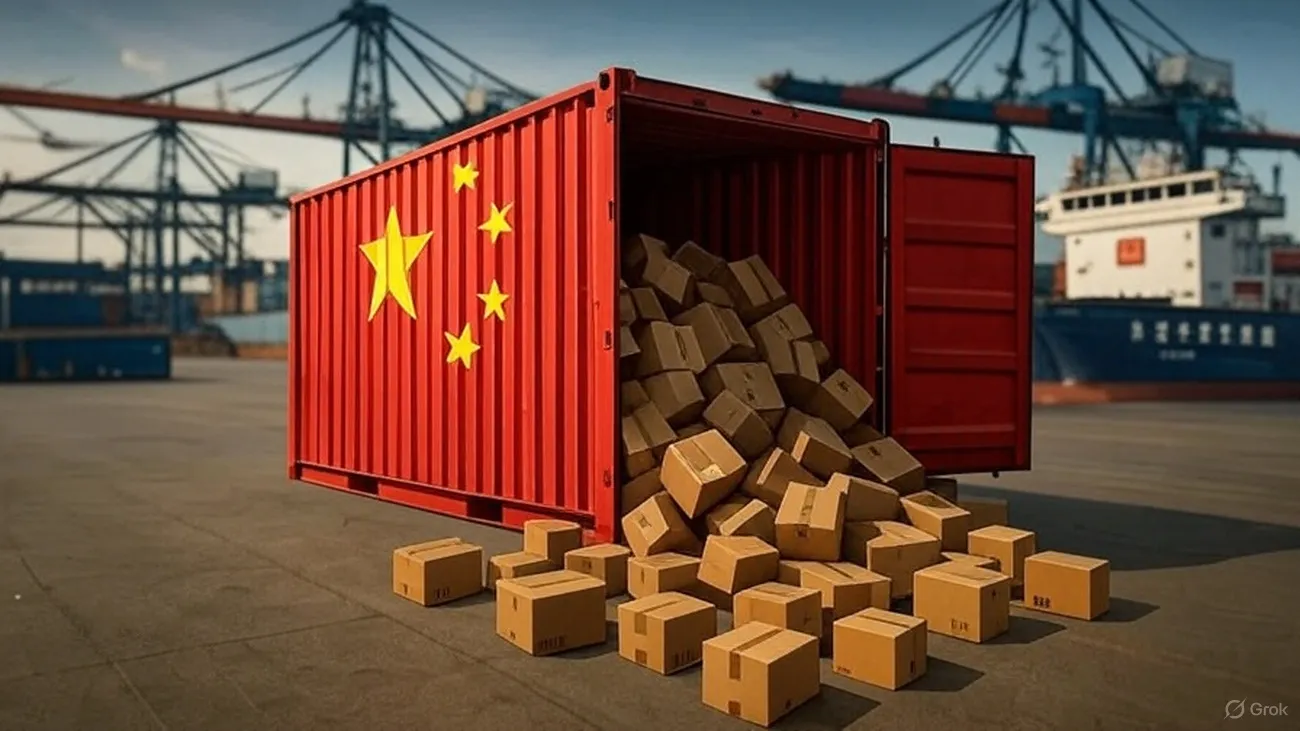
In 2025, China’s trade surplus hit a record $1.2 trillion, boosted by strong exports to Africa, ASEAN, Latin America, and the EU, despite reduced sales to the US.
Key Points
- In 2025, China’s trade surplus hit a record $1.2 trillion, despite U.S. tariffs. Exports to the U.S. declined, but trade with Africa, ASEAN, Latin America, and the EU surged.
- December saw a surplus of $114 billion, fueled by 6.6% export growth. Contrary to trade war narratives, China’s economy adapted effectively, showcasing strong international trade connections.
- Although direct exports to the U.S. dropped 20%, exports to Africa rose by 26%, ASEAN by 13%, and Latin America by 7%. Trade with the EU also increased by 8%, indicating resilience in China’s export market.
In 2025, China achieved a historic trade surplus of US$1.2 trillion, a figure that defies expectations set against the backdrop of US tariffs aimed at diminishing its economic influence. Despite a notable decline in exports to the United States, which fell by 20%, China successfully oriented its trade toward Africa, ASEAN nations, Latin America, and the European Union, resulting in robust export growth. In December alone, China’s surplus reached US$114 billion, augmented by significant export growth of 6.6% and import growth of 5.7%.
- Impact of US tariffs: Despite tariffs averaging 47% on Chinese goods (down from 145% earlier in 2025), China’s exports to the US fell 20% and imports from the US dropped 14.6%. However, this loss was offset by gains in other regions.
- Diversification of trade partners: China expanded exports to Africa (+26%), ASEAN (+13%), Latin America (+7%), and the EU (+8%), showing resilience and adaptability in redirecting trade flows.
The trade surplus, defined as the excess of exports over imports, signals a thriving export sector that counters the narrative of economic suffocation purported by US trade hawks. This success comes despite the intent of tariffs implemented under the Trump administration, which saw the average rate for imported Chinese goods initially surge to 47%. Although efforts to decouple the two largest economies aimed to curtail American reliance on Chinese manufacturing, these measures appear to have fallen short.
- Supply chain “great reallocation”: Many Chinese components are shipped to countries like Vietnam and Mexico, assembled there, and then exported to the US tariff-free under trade agreements. This allows Chinese goods to reach the US indirectly.
- Shift to high-value exports: The boom was driven by cars, mechanical and electrical products, and especially the “new three” industries: electric vehicles, lithium batteries, and solar panels. China is moving beyond low-cost manufacturing to hi-tech competition.
China’s adaptability in the face of economic pressures shines through its strengthened ties with other global markets. Exports to Africa increased dramatically by 26%, and trade with ASEAN nations rose by 13%. Latin America also saw a commendable 7% growth in Chinese imports, while exports to the EU revitalized with an 8% gain, even as tensions over unfair competition surged.
This pivotal shift suggests that while the US may have attempted to restrict China’s market access, Beijing’s export strategies have evolved, allowing it to navigate the unanticipated economic landscape effectively. The elevated trade surplus serves as a testament to China’s resilience, underscoring its ability to pivot trading patterns in response to external pressures, ultimately suggesting that the US’s attempts to contain China’s economic potential have been less effective than anticipated.
A key mechanism behind China’s continued export strength is a “great reallocation” within global supply chains. Chinese firms are increasingly exporting intermediate components to third-party countries such as Vietnam and Mexico. These nations then assemble the final products and re-export them to the US, often benefiting from lower or zero tariffs under their respective bilateral trade agreements, thereby allowing the US to indirectly import Chinese goods while circumventing tariffs.
Furthermore, the nature of China’s exports has shifted, with the 2025 boom driven by high-value industries, specifically the “new three”: electric vehicles, lithium batteries, and solar panels. This indicates China’s evolution from a global manufacturing hub for low-cost goods to a hi-tech supplier and competitor to advanced economies. However, this heavy reliance on exports also highlights domestic economic weaknesses, such as a subdued housing market and declining internal investment, which compel Chinese firms to seek external demand. While global economic momentum is expected to support Chinese exporters into 2026, a persistent trade surplus with over 170 countries poses a structural imbalance that may become politically unsustainable in the long term, risking more drastic protectionist responses if an equilibrium is not found.
Read the original article : Have US tariffs failed to bite? China’s trade surplus hits a record US$1.2 trillion
Other People are Reading

‘The Big Money Show’ discusses the U.S.-Iran ceasefire and energy prices as President Donald Trump warns Iran ahead of key negotiations.
The U.S. Oil & Gas Association (USOGA) fired back at Rep. Ro Khanna, D-Calif., on Saturday night, rebuking narratives from Democrats in the deep blue state about gas prices, which include high state taxes.
“High gas prices in your district aren’t ‘Trump’s war’ — they’re Sacramento’s doing,” the X account run by USOGA President Tim Stewart wrote in a direct response to Khanna.
“California drivers pay nearly double the national average in state taxes, plus cap-and-trade, Low Carbon Fuel Standard, unique reformulated gasoline, refinery limits, and geographic isolation that blocks cheap imports,” he added. “That adds $1.00–$1.78+ over the U.S. average.”
Khanna was attempting to blame Trump for Saturday’s gas prices near his congressional office.
NEWSOM KNOCKED FOR ‘INSANE’ CALIFORNIA GAS PRICES AFTER BLAMING TRUMP FOR RISING COSTS
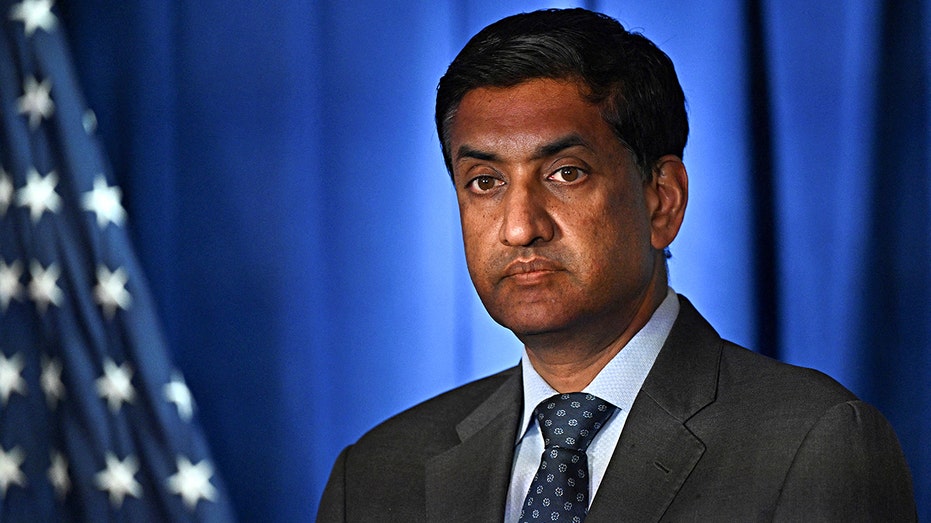
Rep. Ro Khanna is blaming President Donald Trump for rising gas prices, but he wants to tax the oil higher, something the U.S. Gas & Oil Association says historically fails to lower costs on consumers. (Pedro Pardo/AFP via Getty Images)
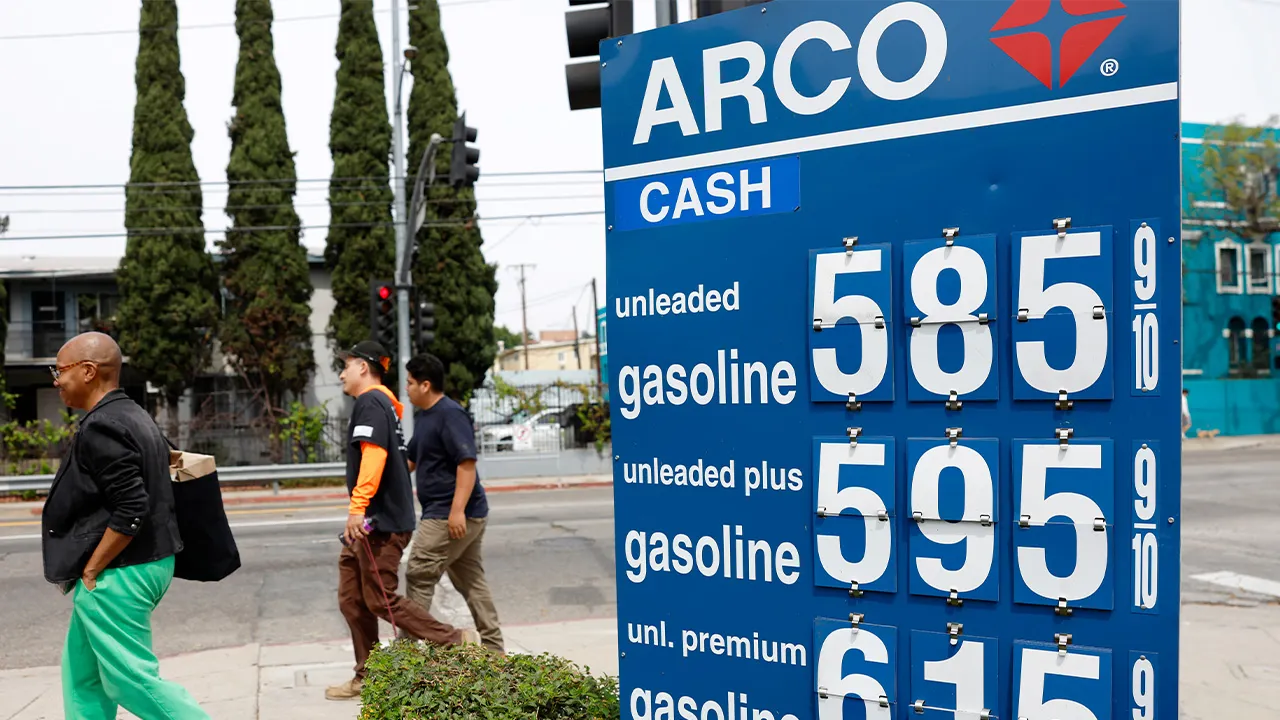
“Trump’s immoral and reckless war in Iran has shot up gas prices in my district to nearly $6 a gallon,” Khanna wrote in a Saturday X post, sharing a video of him standing in front of a gas station price menu in his Santa Clara, California, district, blaming the “illegal and immoral war in Iran.”
“Stop the war, stop exporting our crude oil, and pass my windfall profits tax on Big Oil to give Americans a rebate for their gas bills,” he said.
OIL CEO URGES NEWSOM TO DO THE ‘MATH’ AS CALIFORNIA GOVERNOR VOWS TO STOP OFFSHORE DRILLING
Stewart’s X post also rejected Khanna’s calls for a further “windfall profits tax on Big Oil,” saying history should be the guide and arguing windfall profits tax policies historically backfire.
“They don’t work,” the post read. “While you don’t call it a windfall profits tax, California recently passed one and called it a ‘wealth tax’ now you see high net worth individuals fleeing your state. History proves it backfires.”
In the post, USOGA cited the 1980 federal windfall profits tax reduced domestic production, increased imports and generated less revenue than expected before its repeal.
California gubernatorial candidate Steve Hilton has the latest on the rising prices on ‘The Bottom Line.’
GAS PRICES SURGE, PINCHING AMERICANS AND HANDING THE GOP A NEW MIDTERM HEADACHE
“Your proposed windfall profits tax will do nothing to bring relief to your overtaxed and underappreciated constituents,” he continued. “Instead – suspend those state-level taxes first and bring California prices in line with the national average. Put your state bureaucracy on a diet. They could stand to shed a few pounds. Encourage California domestic oil and gas production and expand your refinery capacity instead of shutting it down. Stand up to your Governor. You know he is wrong and you can be on the right side of things.”
Khanna recently reintroduced the Big Oil Windfall Profits Tax Act, framing it as consumer relief.
OIL, GAS PRICES JUMP AS TRUMP FLIRTS WITH STRIKING IRANIAN OIL INFRASTRUCTURE
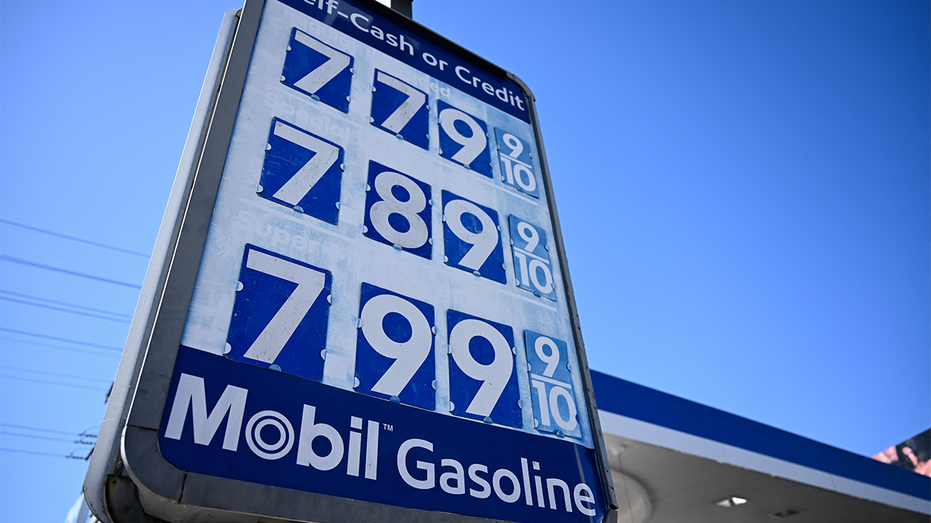
A sign shows gasoline prices approaching $8 a gallon at a Mobil station in Los Angeles on Oct. 5, 2023, under President Joe Biden. (Patrick T. Fallon/AFP via Getty Images)
“Your repeated sponsorship of a new Big Oil Windfall Profits Tax Act would repeat the exact same mistake — shrinking U.S. output and raising costs,” USOGA’s post added.
TRUMP SAYS US ‘OBLITERATED’ TARGETS IN STRIKE ON KEY IRANIAN OIL HUB
Harris Financial Group managing partner Jamie Cox joins ‘Mornings with Maria’ to break down market resilience amid Iran tensions, oil supply uncertainty, and what the conflict could mean for inflation, interest rates and U.S. economic growth.
Stewart’s post concluded with a warning to end the war on oil and allow capitalism to bring costs down for consumers.
Tortoise Capital senior portfolio manager Brian Kessens explains why he is bullish on energy despite its volatility on ‘The Claman Countdown.’
“Please stop shifting blame to ‘Trump’s war’ or federal policy while California’s own choices keep your constituents paying the highest pump prices in America,” the post finished. “Real relief comes from more American supply + streamlined permitting, not recycled 1980s taxes or more restrictions. Energy abundance, not rhetoric, lowers prices and bolsters U.S. and allied security.”
GET FOX BUSINESS ON THE GO BY CLICKING HERE
Energy Secretary Chris Wright also weighed in on the battle for lower gas prices in the high-tax states.
“President Trump got elected on an energy dominance agenda, and he got elected to represent 342 million Americans, every American in every state — including in California,” Wright wrote on X. “We don’t care what state you’re from; we want every citizen to have access to affordable energy.”

UnitedHealth: Trust Is Broken – But The Model Isn't

A top-down equity investor with a focus on fundamental analysis and macroeconomics. I aim to identify undervalued companies by diving deep into financial statements, industry dynamics and broader economic factors. With a particular focus on the banking and financials sectors, I aim to discover opportunities others might overlook by integrating detailed financial analysis with a strategic view of the economic landscape. Eager to engage with like-minded investors and share valuable insights in the pursuit of long-term financial success.
Analyst’s Disclosure: I/we have no stock, option or similar derivative position in any of the companies mentioned, and no plans to initiate any such positions within the next 72 hours. I wrote this article myself, and it expresses my own opinions. I am not receiving compensation for it (other than from Seeking Alpha). I have no business relationship with any company whose stock is mentioned in this article.
Seeking Alpha’s Disclosure: Past performance is no guarantee of future results. No recommendation or advice is being given as to whether any investment is suitable for a particular investor. Any views or opinions expressed above may not reflect those of Seeking Alpha as a whole. Seeking Alpha is not a licensed securities dealer, broker or US investment adviser or investment bank. Our analysts are third party authors that include both professional investors and individual investors who may not be licensed or certified by any institute or regulatory body.


Rida Morwa is a former investment and commercial Banker, with over 35 years of experience. He has been advising individual and institutional clients on high-yield investment strategies since 1991. Rida Morwa leads the Investing Group High Dividend Opportunities where he teams up with some of Seeking Alpha’s top income investing analysts. The service focuses on sustainable income through a variety of high yield investments with a targeted safe +9% yield. Features include: model portfolio with buy/sell alerts, preferred and baby bond portfolios for more conservative investors, vibrant and active chat with access to the service’s leaders, dividend and portfolio trackers, and regular market updates. The service philosophy focuses on community, education, and the belief that nobody should invest alone. Learn More.
Analyst’s Disclosure: I/we have a beneficial long position in the shares of DX, AGNC PREFERREDS either through stock ownership, options, or other derivatives. I wrote this article myself, and it expresses my own opinions. I am not receiving compensation for it (other than from Seeking Alpha). I have no business relationship with any company whose stock is mentioned in this article.
Beyond Saving, Philip Mause, and Hidden Opportunities, all are supporting contributors for High Dividend Opportunities. Any recommendation posted in this article is not indefinite. We closely monitor all of our positions. We issue Buy and Sell alerts on our recommendations, which are exclusive to our members.
Seeking Alpha’s Disclosure: Past performance is no guarantee of future results. No recommendation or advice is being given as to whether any investment is suitable for a particular investor. Any views or opinions expressed above may not reflect those of Seeking Alpha as a whole. Seeking Alpha is not a licensed securities dealer, broker or US investment adviser or investment bank. Our analysts are third party authors that include both professional investors and individual investors who may not be licensed or certified by any institute or regulatory body.

Redwire: A Speculative Buy Upgrade In A Red-Hot Space Market
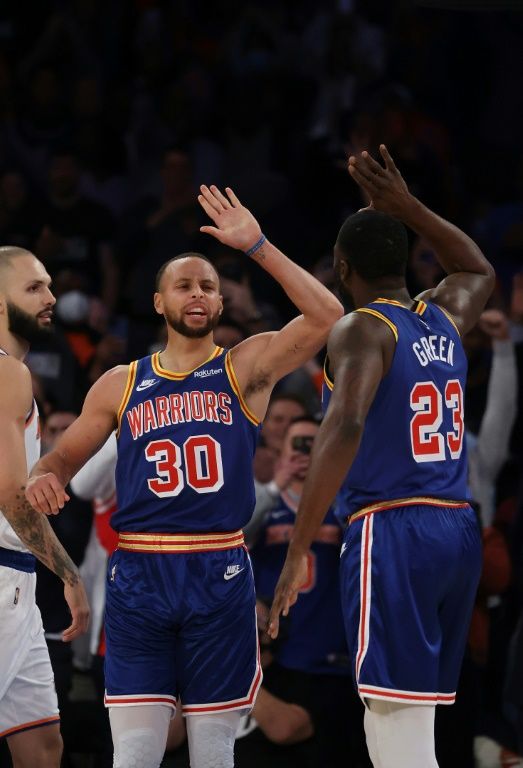
SAN FRANCISCO — Stephen Curry returned to the Golden State Warriors’ lineup earlier this month after missing more than two months with a nagging right knee injury, but the 37-year-old superstar is still navigating a careful ramp-up as the NBA regular season winds down and the play-in tournament approaches.

Curry, who last played on Jan. 30 before being sidelined by patellofemoral pain syndrome — commonly known as “runner’s knee” — and an associated bone bruise, made his season comeback April 5 against the Houston Rockets. In that game, he came off the bench and poured in 29 points, including five 3-pointers, in a 117-116 loss. It marked his first action in 27 consecutive games missed, during which the Warriors went 9-18 without their franchise face.
The four-time NBA champion has since appeared in just two games, with the team prioritizing his health over regular-season finales. He sat out Thursday night’s home contest against the Los Angeles Lakers due to knee injury management, resting as part of a back-to-back to avoid three games in four nights during his limited ramp-up. Coach Steve Kerr confirmed Curry would play Friday against the Sacramento Kings, describing him as “doing well” while acknowledging the need for caution.
“Steph’s doing well,” Kerr said before the Lakers game. “Just with the ramp-up, playing the last two games and three in four nights to end the season, it makes the most sense to give him tonight… he’ll be good to go Friday night.”
The decision reflects broader concerns for Golden State as it fights for positioning in the Western Conference play-in. With Curry’s availability critical to any postseason hopes, the Warriors are leaning on a veteran core that includes recent additions like Kristaps Porzingis and potentially Al Horford. Kerr expressed hope that all three could share the floor soon, though Porzingis and Horford have dealt with their own availability issues.
Curry has spoken openly about the grueling rehabilitation process. In recent comments, he described the knee as feeling “great” but noted the recovery took longer than expected.
“It’s been a long, long process, longer than I thought,” Curry said. “But I’m just happy to have a little clarity… there’s nothing structurally wrong with my knee, so it’s not like I’m in danger of anything long-term. Right now, I kind of understand what the new normal is and it’s good enough to play.”
The injury first surfaced in early February, forcing Curry to miss the 2026 NBA All-Star Game in Los Angeles. At the time, Kerr hoped for a return shortly after the break, but setbacks extended the absence into late March. By early April, Curry participated in full 5-on-5 scrimmages, signaling progress in the return-to-play protocol. He was re-evaluated over the weekend of April 4-5 and cleared for limited action against the Rockets.
Patellofemoral pain syndrome involves irritation around the kneecap, often exacerbated by repetitive stress — fitting for a player renowned for his deep shooting range and explosive movement. The bone bruise added complexity, requiring a conservative approach to prevent further damage. Warriors medical staff monitored Curry closely, incorporating live practices and scrimmages before greenlighting his return.
In his limited games back, Curry has shown flashes of his trademark brilliance, though minutes have been capped to manage workload. Teammates and fans erupted in cheers when he checked in against Houston, a testament to his enduring popularity and importance to the franchise.
The Warriors enter the final stretch in a precarious spot. Without Curry for much of the second half of the season, they slipped in the standings but secured a play-in berth. Now, the focus shifts to maximizing his availability for those high-stakes games. Draymond Green has voiced confidence that Curry won’t be shut down, emphasizing the star’s desire to compete regardless of how many regular-season contests remain.
“Steph wants to play, whether there is one regular-season game left or five,” Green said in late March.
Golden State’s supporting cast has stepped up in spots, but the offense clearly misses Curry’s gravity and playmaking. Opponents have dared others to beat them, leading to inconsistent results. With Curry back — even in a limited role — the dynamic changes, as defenses must account for his off-ball movement and long-range threat.
As of Sunday, April 12, reports indicated Curry was set to play in upcoming matchups, including potential contributions alongside Porzingis and Horford for the first time this season. Quinten Post was listed as out with a foot issue, while Draymond Green and others carried questionable tags for back-related concerns. The team continues to emphasize load management for its aging but talented roster.
Curry’s career has been defined by resilience and highlight-reel moments. A two-time MVP and eight-time All-Star, he revolutionized the game with his shooting and helped lead the Warriors to four championships. At 37, questions about longevity naturally arise, but he has repeatedly defied expectations.
This latest injury tested not just his body but the Warriors’ season trajectory. The team averaged competitive play without him but lacked the spark to dominate. His return, though measured, injects optimism heading into the postseason push.
Looking ahead, the priority remains clear: get Curry healthy and integrated for games that matter most. Kerr and the staff have calibrated minutes carefully, avoiding the temptation to rush him in front of home crowds for sentimental reasons. Thursday’s rest against the Lakers, for instance, ensured he wouldn’t face LeBron James in the regular season but preserved energy for Sacramento and beyond.
Fans and analysts alike watch closely. Social media buzzed with highlights from Curry’s 29-point outing, with many praising his quick adjustment despite the long layoff. His first game off the bench since 2012 added a novel element, yet the results spoke volumes.
For the Warriors, the path forward involves balancing short-term health with long-term contention. Curry has expressed understanding of his “new normal,” accepting that full explosiveness may take time while committing to contribute effectively.
NBA insiders note that similar knee issues have plagued players in the past, with recovery timelines varying based on individual response. Curry’s case benefited from no structural tears, allowing a focus on inflammation reduction and strengthening rather than surgical intervention.
As the regular season concludes, Golden State eyes the play-in with guarded hope. A healthy Curry dramatically improves their ceiling, potentially turning a first-round exit risk into a series threat. Teammates have rallied around him, with veterans providing leadership during his absence.
Curry himself remains philosophical. The exhaustive rehab — involving daily treatments, targeted exercises and mental preparation — reinforced his appreciation for the game. He aims not just to return but to peak when it counts, eyeing a deep playoff run if the knee cooperates.
The broader NBA landscape adds context. With stars across the league managing various ailments, load management has become standard, especially for players in their late 30s. Curry’s situation mirrors others, where teams weigh present performance against future availability.
Warriors ownership and front office have invested in depth, acquiring pieces like Porzingis to complement Curry and Green. The hope is a synergistic lineup that maximizes spacing and defense.
Friday’s game against the Kings offered another test. With Curry expected back, the Warriors sought rhythm and chemistry. Outcomes there, and in remaining contests, will shape seeding and momentum.
Ultimately, this injury saga underscores Curry’s centrality. The Warriors are a different team with him — more dynamic, more dangerous, more entertaining. His absence highlighted vulnerabilities; his presence reignites possibilities.
As April progresses toward the play-in, all eyes remain on No. 30. Stephen Curry’s latest update brings cautious optimism: he’s back, he’s progressing, and he’s determined to lead Golden State as far as his knee — and his legendary shot — will allow.


Artemis II astronauts safely back on Earth after historic trip around moon

When No One Shows Up, Opportunity Does: The Office REIT Reset

Attractive Setup In Fallen Angels: 7% Yield And New Downgrades

MELBOURNE, Australia — As road accidents, workplace injuries and public liability claims continue to rise across Victoria, injured Victorians are turning to specialist personal injury lawyers to secure fair compensation under the state’s complex no-fault and common law systems. In 2026, a handful of firms and practitioners stand out for their track records, peer recognition and client-focused “no win, no fee” models.

Industry rankings from Best Lawyers, Best Law Firms and Doyle’s Guide, combined with client reviews and specialist accreditation, highlight consistent leaders in plaintiff-side litigation. While no single ranking is definitive, five names repeatedly emerge as the best personal injury lawyers and firms in Melbourne this year: Maurice Blackburn, Slater & Gordon, Maxiom Injury Lawyers, Brave Legal and Henry Carus + Associates.
1. Maurice Blackburn Lawyers
Australia’s largest plaintiff-focused firm remains the benchmark for personal injury and compensation claims in Melbourne. Founded in 1919, Maurice Blackburn boasts more than 3,000 five-star Google reviews and 32 offices nationwide. The firm handles motor vehicle accidents, WorkCover claims, public liability, medical negligence and institutional abuse cases on a strict no win, no fee basis.
Senior lawyers at the Melbourne office are frequently recognized in Doyle’s Guide for work injury compensation. The firm’s scale allows it to fund complex litigation, including class actions, while maintaining a reputation for aggressive insurer negotiations and courtroom advocacy. Clients praise the team’s accessibility and social work support services that extend beyond legal advice to practical assistance with housing, finances and rehabilitation.
2. Slater & Gordon
A pioneer of the no win, no fee model in Australia, Slater & Gordon continues to deliver strong results for Victorian injury victims in 2026. The Melbourne office at 530 Collins Street specializes in workers compensation, transport accidents (TAC claims), medical negligence, asbestos and silicosis cases.
Rod Matthews anchors much of the firm’s Victorian expertise and earned preeminent recognition in Doyle’s Guide 2025 for work injury compensation. The firm’s national resources, combined with local knowledge of Victorian courts and the Transport Accident Commission, give clients an edge in both settlement negotiations and contested hearings. Slater & Gordon also offers free social work support to clients in crisis.
3. Maxiom Injury Lawyers
Led by Sach Fernando, Maxiom Injury Lawyers has climbed rapidly in peer-voted rankings. Fernando received preeminent status in Doyle’s Guide for leading work injury compensation lawyers (plaintiff) in Victoria. The boutique firm focuses exclusively on plaintiff personal injury matters, including serious workplace accidents, public liability and motor vehicle claims.
Clients and peers highlight the firm’s strategic approach, deep understanding of insurer tactics and commitment to maximizing compensation. Maxiom’s smaller size allows senior lawyers to remain hands-on with every file, avoiding the delegation common in larger practices. The firm operates on a clear no win, no fee structure without relying on external litigation funders.
4. Brave Legal
Brave Legal earns Tier 1 recognition in Best Law Firms 2026 for personal injury litigation in Melbourne. Bree Knoester stands out in Doyle’s Guide rankings for work injury compensation, reflecting the firm’s strength in complex plaintiff matters.
The practice emphasizes compassionate client service alongside robust litigation skills. Brave Legal handles a full range of injury claims — from TAC road accidents to WorkSafe disputes and public liability — with a focus on achieving outcomes that cover medical costs, lost earnings and pain and suffering damages. Its growing reputation in 2026 stems from consistent high-value settlements and verdicts.
5. Henry Carus + Associates
Henry Carus + Associates has built a strong local following for TAC, public liability and serious injury claims. The firm reports a 98% success rate for clients and frequently secures settlements many times higher than initial insurer offers.
Known for its boutique approach, the team provides obligation-free consultations and prides itself on personalized service. Clients appreciate the lawyers’ willingness to explain complex Victorian legislation in plain language. The firm maintains multiple Melbourne-area locations and focuses on spinal, head, back and neck injuries that often result in significant long-term impairment.
Other Notable Mentions in 2026
Several other practices deserve attention depending on case specifics:
- Fittipaldi Injury Lawyers, led by Gennaro Fittipaldi, ranks highly in independent 2026 reviews for senior lawyer involvement on every matter and a policy against litigation funders. Fittipaldi’s insider experience from prior defense work gives the firm an edge in valuing claims and negotiating with insurers.
- Arnold Thomas & Becker offers true no win, no fee representation across multiple Melbourne suburbs, with decades of experience in birth injury, asbestos and general personal injury claims.
- Polaris Lawyers, Robinson Gill and Alessi Legal receive strong client testimonials for approachable service and clear communication.
- Law Partners and Carbone Lawyers also feature in specialist personal injury rankings and maintain solid reputations for results-driven advocacy.
How Rankings Are Determined
Peer-reviewed guides such as Doyle’s Guide rely on confidential votes from opposing counsel — defendant insurance lawyers — who identify the most skilled plaintiff advocates. Best Lawyers and Best Law Firms incorporate client feedback, peer nominations and demonstrated excellence over multiple years.
Client reviews on Google and independent sites emphasize communication, empathy and results. In Victoria’s injury compensation landscape, success often hinges on navigating the Transport Accident Commission (TAC) no-fault scheme, WorkSafe Victoria processes and common law rights for serious injuries.
Choosing the Right Lawyer: Key Considerations
Experts advise injured Victorians to consider several factors before engaging a lawyer:
- Specialization: Look for firms with proven expertise in your specific injury type — TAC, WorkCover, public liability or medical negligence.
- Fee Structure: Most reputable firms offer no win, no fee, but clarify any potential disbursements or funding arrangements.
- Track Record: Ask about recent settlements or verdicts in similar cases and check peer rankings.
- Personal Attention: Will a senior lawyer handle your matter or will it be delegated to juniors?
- Resources: Larger firms bring scale for complex or high-value claims; boutiques may offer more individualized service.
Victoria’s personal injury laws are notoriously technical. Time limits apply, and early legal advice can preserve evidence and strengthen claims. Most firms provide free initial consultations, allowing potential clients to assess fit without obligation.
The Human Impact
For many clients, a serious injury disrupts work, family life and financial stability. Compensation can fund critical medical treatment, rehabilitation, home modifications and lost income. Leading lawyers stress that their role extends beyond courtrooms — helping clients rebuild lives after trauma.
In 2026, with ongoing pressures on Victoria’s health and transport systems, demand for skilled personal injury representation remains high. Firms that combine legal firepower with genuine client care continue to earn loyalty and referrals.
Legal experts caution that rankings are snapshots and every case is unique. Prospective clients should conduct their own due diligence, speak directly with lawyers and choose representation that aligns with their needs and values.
As Melbourne’s population grows and urban infrastructure evolves, the need for trusted compensation lawyers shows no sign of slowing. Whether facing a workplace fall, a devastating car crash or medical complications, Victorians have access to a competitive field of dedicated plaintiff advocates ready to fight for maximum entitlements under the law.
Justin Sun and World Liberty Financial Trade Blows in Escalating Public Feud

R-Rated Netflix Survival Thriller Is Already The Year’s Most Misunderstood Film
Eamonn Holmes breaks silence after stroke with heartwarming update


-

 Business7 days ago
Three Gulf funds agree to back Paramount’s $81 billion takeover of Warner, WSJ reports
-

 Politics2 days ago
US brings back mandatory military draft registration
-

 Fashion2 days ago
Weekend Open Thread: Veronica Beard
-

 Tech5 days ago
How Long Can You Drive With Expired Registration? What Florida Law Says
-

 Fashion6 days ago
Massimo Dutti Offers Inspiration for Your Summer Mood Board
-
 Sports2 days ago
Man United discover Nico Schlotterbeck transfer fee as defender reaches Dortmund agreement
-

 Crypto World3 days ago
Canary Capital Files SEC Registration for PEPE ETF
-

 Fashion5 days ago
Let’s Discuss: DEI in 2026
-

 Business2 days ago
Tesla Model Y Tops China Auto Sales in March 2026 With 39,827 Registrations, Beating Cheaper EVs and Gas Cars
-

 Crypto World4 days ago
Bitcoin recovers as US and Iran Agree a Ceasefire Deal
-

 Politics2 days ago
Malcolm In The Middle OG Turned Down ‘Buckets Of Money’ To Appear In Reboot
-

 Business2 days ago
OpenAI Halts Stargate UK Data Centre Project Over Energy Costs and Copyright Row
-

 Business1 day ago
Ireland Fuel Protests Enter Day 5 as Blockades Spark Shortages and Government Prepares Support Package
-

 Tech6 days ago
Italian court says Netflix must refund customers up to $576 over price hikes
-

 Tech6 days ago
Gamer Restores the Original PlayStation Portal From Two Decades Ago
-

 Tech6 days ago
Haier is betting big that your next TV purchase will be one of these
-

 Politics2 hours ago
World Cup exit makes Italy enter crisis mode
-

 Tech6 days ago
The Xiaomi 17 Ultra has some impressive add-ons that make snapping photos really fun
-

 Tech6 days ago
Samsung just gave up on its own Messages app
-

 Tech6 days ago
Save $130 on the Samsung Galaxy Watch 8 Classic: rotating bezel, sleep coaching, and running coach for $369
You must be logged in to post a comment Login