Connect with us
DAPA Banner

Business

HIG Capital Executes Founder Succession With Internal Promotions Across the Top

Published

on

Tracy Brabin leads West Yorkshire trade mission to Switzerland and Germany

HIG Capital has completed a succession process that puts three career insiders in charge of the $74 billion alternative asset manager, with Brian Schwartz moving from co-president to chief executive officer and Doug Berman stepping up to co-president alongside the incumbent Rick Rosen.

Co-founders Sami Mnaymneh and Tony Tamer, who built HIG Capital together starting in 1993, both shift to the executive chairman title and retain investment committee seats across all fund strategies. Mnaymneh had served as chief executive since the firm’s founding.

Schwartz’s tenure at the firm is unusually long even by private equity standards. He arrived in 1994 — one year after the founders — and rose through roles spanning investment oversight, fund management, and firmwide operations before becoming co-president. For the past six years in that position, he held investment committee seats for every fund strategy HIG Capital runs: equity, credit, real estate, and infrastructure.

HIG Capital’s Multi-Strategy Platform at the Time of Transition

The firm Schwartz now leads is considerably larger and more complex than the one he joined. HIG Capital runs strategies across middle-market buyout equity, direct lending through WhiteHorse Finance (its publicly traded business development company), real estate, infrastructure, and special situations credit. Capital under management stands at $74 billion, the portfolio holds more than 100 active companies generating combined revenues above $53 billion, and the firm has completed more than 3,500 transactions since inception.

Mnaymneh pointed to that scale as part of the rationale for the change. “The firm has reached a scale and depth of leadership where this transition is both natural and strategically important,” he said. “Brian has been instrumental to our success and a key driver of the firm’s growth. I look forward to working with him as the firm builds on its strong foundation.”

Advertisement

Berman’s promotion rounds out what amounts to a full refresh of the executive layer. He has spent nearly 30 years at HIG Capital, most recently running its U.S. private equity franchise, and sits on the executive committee. He will now work alongside Rosen on firmwide investment and operational priorities.

Succession Structure Keeps Founders Close to Capital Decisions

Few details of the new structure suggest a clean break from the founding era. Mnaymneh and Tamer retain investment committee membership — which at most private equity firms is where real authority over deployment decisions sits. Day-to-day management passes to Schwartz, but the founders keep direct influence over which deals get done.

“I am deeply grateful to Sami and Tony for building a firm defined by disciplined investing, operational focus, and a strong culture,” Schwartz said. “With our differentiated platform and experienced team, we are well positioned to capitalize on opportunities and continue delivering strong outcomes for our investors.”

Berman framed his own mandate in concrete terms: “My priority is to ensure we stay disciplined in how we invest, stay close to our portfolio companies, and continue to execute at a high level across the firm. I look forward to partnering with Brian and Rick as we continue to execute on the opportunities we see in our markets.”

Advertisement

HIG Capital is headquartered in Miami and holds offices across the U.S. and in affiliate locations throughout Europe, Latin America, the Middle East, and Asia.

Advertisement
Continue Reading
Click to comment

You must be logged in to post a comment Login

Leave a Reply

Business

Ngala secures $130m to continue free services

Published

on

Ngala secures $130m to continue free services

A WA not-for-profit parenting service will receive $130 million from the state government over the next eight years to continue free access to support services.

Continue Reading

Business

CoreWeave CEO Michael Intrator sells $35.8m of company stock

Published

on


CoreWeave CEO Michael Intrator sells $35.8m of company stock

Continue Reading

Business

Rates Spark: Something Must Give

Published

on

Rates Spark: Something Must Give

Rates Spark: Something Must Give

Continue Reading

Business

United Airlines raises ticket prices up to 20% amid Iran war fuel surge

Published

on

United Airlines raises ticket prices up to 20% amid Iran war fuel surge

United Airlines warned Wednesday that the company is raising ticket prices by as much as 20% as it grapples with surging jet fuel costs driven by the war in Iran.

The alarming notice came during the company’s quarterly earnings call, where CEO Scott Kirby said the airline is aiming to “recover 100% of the increase in jet fuel prices as quickly as possible.”  

Advertisement

“Sell-in yields for all future travel are now up 20% year-over-year,” Executive Vice President and Chief Commercial Officer Andrew Nocella said, indicating that customers are already booking future flights at prices roughly 20% higher than last year’s levels.

Kirby added that yields likely need to remain near that range to achieve long-term profit margins.

AMERICAN AIRLINES CEO SAYS MERGER WITH UNITED WOULD BE ‘BAD FOR CUSTOMERS’

travelers line up at united gate

Customers of United wait in line to check in at Newark International airport in New Jersey, November 15, 2012.  (REUTERS/Eduardo Munoz / Reuters)

“Yields need to increase by about 15% to 20%, and we are assuming that fuel may remain higher for longer,” he said.

Advertisement

The CEO added that higher prices are expected to dampen overall demand, but noted there have been no signs of decline yet following earlier fare and baggage fee increases implemented since the war began.

“We believe we have the ability to pass on the increase in fuel due in large part to our brand loyal customers, continued demand strength and preference to fly United even at higher fares,” Executive Vice President and Chief Financial Officer Michael Leskinen said. 

MAJOR AIRLINE AXES 20,000 ‘UNPROFITABLE’ FLIGHTS AS JET FUEL COSTS SOAR

A United Airlines plane takes off at San Francisco International Airport

The United Airlines plane takes off from an airport. ((Photo by Tayfun Coskun/Anadolu Agency via Getty Images) / Getty Images)

“At this point, we can tell you that the price increases are going well and demand is hanging in there really strong,” Nocella added.  

Advertisement

The airline has already implemented five broad price increases since January mostly to offset higher fuel costs, according to the call. 

While ticket yields were up just 4% year over year in January and February, they reportedly climbed to 12% in early March, 18% later that month, and have now reached 20% for all future travel. 

Ticker Security Last Change Change %
UAL UNITED AIRLINES HOLDINGS INC. 91.25 -0.46 -0.50%

United further attributed its “robust” demand to a strong base of brand-loyal customers and continued strength in premium and business travel.

Kirby also suggested that if demand does soften, the carrier may respond by supplying fewer seats to the market.  

Advertisement

Management noted that the longer fuel prices remain elevated, the more likely higher ticket prices are to become permanent across the industry.

UNITED AIRLINES CHECKED BAG FEES CLIMB $10–$50 AS FUEL PRICES NEARLY DOUBLE SINCE IRAN WAR

United Airlines CEO Scott Kirby

United Airlines CEO Scott Kirby speaks during a joint press event in North Charleston, South Carolina, on Dec.13, 2022. (LOGAN CYRUS/AFP via Getty Images / Getty Images)

Fuel costs have surged to multi-year highs following the outbreak of the U.S.–Israel conflict with Iran on Feb. 28, which disrupted roughly 20% of global oil flows passing through the Strait of Hormuz.

As of Wednesday, jet fuel in major U.S. markets averaged $4.23 per gallon, up nearly 70% from levels seen before the war began, according to Argus data published by Airlines for America. At one point in early April, prices reportedly surged more than 95% to $4.88 per gallon.

Advertisement

GET FOX BUSINESS ON THE GO BY CLICKING HERE

In response, multiple major airlines have launched efforts to mitigate rising operating costs, including increasing baggage fees and consolidating flights by canceling select routes. 

United Airlines specifically raised checked bag fees by $10 to $50 earlier this month.

Advertisement
Continue Reading

Business

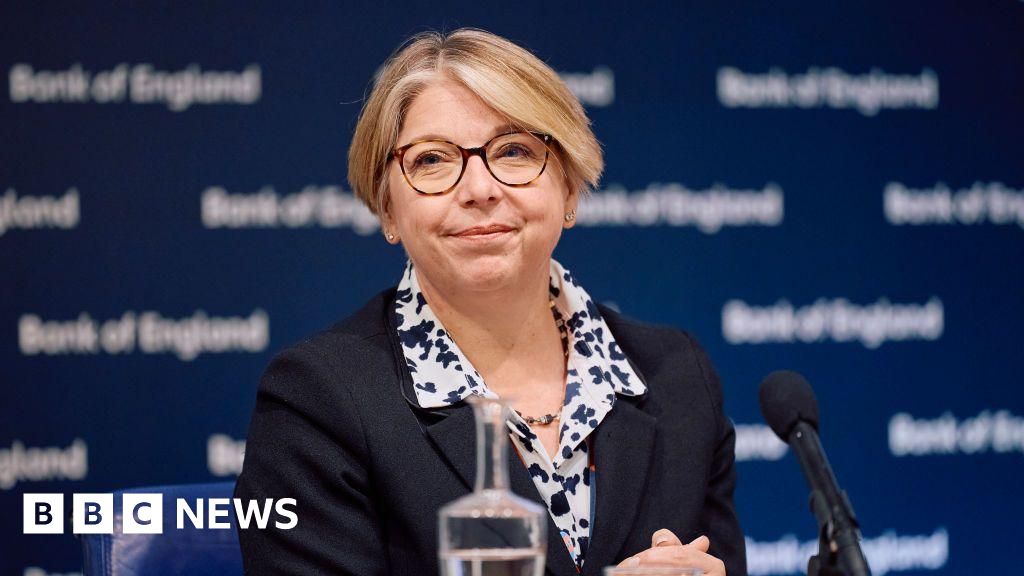
Stock markets are too high and set to fall, says Bank of England deputy

Published

on

Stock markets are too high and set to fall, says Bank of England deputy

It is unusual for a senior figure at the Bank to be so forthright on market movements.

Continue Reading

Business

Costco shoppers warned to stop using popular product over safety issue

Published

on

Costco shoppers warned to stop using popular product over safety issue

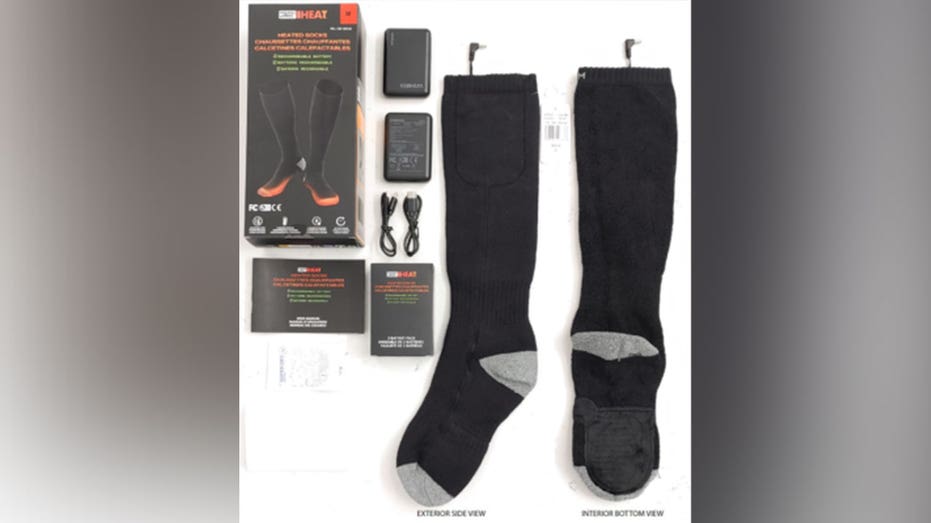
Heated socks sold at Costco have been recalled after customers reported burn injuries, according to the Consumer Product Safety Commission (CPSC).

The 32 Degrees Heated Socks were sold in medium, large and extra large. The CPSC report said when the socks are worn during “high intensity activities” they pose a potential burn hazard. 

Advertisement

According to the CPSC, there were 14 reported heat-related incidents with the socks, and 13 of them involved first- or second-degree partial thickness burns. 

The CPSC did not specify whether the issue stems from the battery pack, heating elements or prolonged heat exposure.

COSTCO ISSUES RECALL FOR CERTAIN GIFT CARDS

Woman pulling groceries from Costco cart

A shopper loads items into a vehicle at a Costco store in Vallejo, Calif., May 29, 2025.  (David Paul Morris/Bloomberg / Getty Images)

About 207,806 packs of socks were recalled. 

Advertisement

The affected socks were sold at both Costco retailers and online at Costco.com from August 2025 through March 2026, ranging from $30 and $46 in price. 

FORD RECALLS OVER 140,000 PICKUP TRUCKS OVER WIRING FIRE RISK

Heated socks against a blurred background with battery pack

Heated socks sold at Costco were recalled after customers reported burn injuries. (CPSC / Unknown)

A spokesperson for Costco did not immediately respond to FOX Business’ request for comment.

GET FOX BUSINESS ON THE GO 

Advertisement

Consumers are urged to stop using the socks immediately and return them to Costco for a full refund. For additional information, customers can contact 32 Degrees toll-free at 833-997-2452 from 9 a.m. to 5 p.m. ET Monday through Friday, email recall@32degrees.com or visit the company’s website and click “Sock Recall” under the Support section.

The recall underscores a broader concern with heated wearable products, where items marketed for everyday comfort can pose risks when used in real-world conditions. 

Since consumers increasingly rely on battery-powered apparel during active use — from outdoor work to exercise — the reported injuries highlight a potential gap between how these products are expected to perform and how they actually function under higher-intensity activity.

The recall comes as Costco has faced other recent product safety issues, including a Generac portable generator sold through the retailer that was recalled over fire risks.

Advertisement

Fox Business’ Bradford Betz contributed to this report.

Continue Reading

Business

From scientist to silk farmer: India's silk industry renewal

Published

on

From scientist to silk farmer: India's silk industry renewal

Silk production is an increasingly high-tech business in India.

Continue Reading

Business

Patterson-UTI Energy, Inc. (PTEN) Q1 2026 Earnings Call Transcript

Published

on

OneWater Marine Inc. (ONEW) Q1 2026 Earnings Call Transcript

Q1: 2026-04-22 Earnings Summary

EPS of -$0.06 beats by $0.04

 | Revenue of $1.12B (-12.75% Y/Y) beats by $19.97M

Patterson-UTI Energy, Inc. (PTEN) Q1 2026 Earnings Call April 23, 2026 10:00 AM EDT

Company Participants

William Hendricks – President, CEO & Director
C. Smith – Executive VP & CFO

Advertisement

Conference Call Participants

Michael Sabella
Saurabh Pant – BofA Securities, Research Division
Derek Podhaizer – Piper Sandler & Co., Research Division
James Rollyson – Raymond James & Associates, Inc., Research Division
Scott Gruber – Citigroup Inc., Research Division
Stephen Gengaro – Stifel, Nicolaus & Company, Incorporated, Research Division
Arun Jayaram – JPMorgan Chase & Co, Research Division
Keith MacKey – RBC Capital Markets, Research Division
Doug Becker – Capital One Securities, Inc., Research Division
Edward Kim – Barclays Bank PLC, Research Division
Daniel Kutz – Morgan Stanley, Research Division
Donald Crist – Johnson Rice & Company, L.L.C., Research Division
John Daniel – Daniel Energy Partners, LLC

Advertisement

Presentation

Operator

Ladies and gentlemen, thank you for standing by. My name is Abby, and I will be your conference operator today. At this time, I would like to welcome everyone to the Patterson-UTI First Quarter 2026 Earnings Conference Call [Operator Instructions]

Thank you. And I would now like to turn the conference over to Michael Sabella, Vice President of Investor Relations. You may begin.

Advertisement

Michael Sabella

Thank you, operator. Good morning, and welcome to Patterson-UTI’s earnings conference call to discuss our first quarter 2026 results.

With me today are Andy Hendricks, President and Chief Executive Officer; and Andy Smith, Chief Financial Officer.

Advertisement

As a reminder, statements that are made in this conference call that refer to the company’s or management’s plans, intentions, targets, beliefs, expectations or predictions for the future are considered forward-looking statements. These forward-looking statements are subject to risks and uncertainties as disclosed in the company’s SEC filings which could cause the company’s actual results to differ materially.

The company takes no obligation to publicly update or revise any forward-looking statements. Statements

Advertisement
Continue Reading

Business

Shelton Powell and Cart Capital: Building Systems That Scale

Published

on

The eCommerce industry is competitive, and having the right strategy is essential for success. With the correct tools, you can streamline your processes, enhance customer experience, and boost sales.

How Shelton Powell Turned an Idea Into a Scalable eCommerce Model

Shelton Powell did not enter eCommerce chasing trends. He entered it trying to solve a problem he kept seeing.

Too many people wanted to build online businesses. Few had the structure to do it well.

That gap became the starting point for Cart Capital.

“The company was built to solve a real problem,” Powell says. “Most people fail in eCommerce not because the model doesn’t work, but because they try to build alone.”

Advertisement

What followed was not a quick rise. It was a process shaped by trial, setbacks, and gradual improvement.

Early Career Lessons in eCommerce Operations

Powell’s background as an eCommerce operator goes back to 2017. Like many early builders, he learned by doing.

The first phase was not smooth.

There were issues with payment processing. Systems broke. Operations slowed down.

Advertisement

These were not small problems. They affected how fast the business could grow.

But Powell did not treat them as temporary setbacks. He treated them as signals.

“Success comes down to how good you are at solving problems,” he says. “We had to get better at it.”

That mindset pushed him to move beyond surface-level fixes. Instead, he focused on building stronger systems behind the business.

Advertisement

What Cart Capital Does in the eCommerce Industry

Cart Capital was built around one core idea. Most people should not have to build everything alone.

The company manages the full operational side of eCommerce brands. This includes product research, store development, supplier relationships, marketing, fulfillment, and retention.

“We own and operate the infrastructure behind eCommerce brands,” Powell explains.

Instead of offering isolated services, the company runs the entire system.

Advertisement

This approach helped Cart Capital scale. Today, the company has managed over 150 eCommerce brands and contributed to more than $50 million in revenue.

Still, Powell does not frame that as the end goal.

“Hitting the target outcome we set at the start is one thing,” he says. “Success is delivery plus improvement.”

Why Not Every Partner Is the Right Fit

One of the biggest turning points in Powell’s career came from a hard lesson.

Advertisement

Not every partnership works.

“Early on we learned that the wrong person in an engagement can be more detrimental than no engagement at all,” he says.

That realization changed how Cart Capital operates.

The company introduced a more structured onboarding process. It began filtering for mindset, readiness, and alignment.

Advertisement

“We don’t let just anyone in,” Powell says. “It takes the right person on the other end to build something successful together.”

This shift improved consistency. It also allowed the company to focus more deeply on each engagement.

The Role of Data and Feedback in Business Growth

As the company grew, Powell leaned heavily into measurement.

He believes that growth should be tracked clearly and consistently.

Advertisement

“Everything gets measured,” he says. “If it isn’t tracked, it doesn’t exist.”

Revenue, campaign performance, and operational benchmarks are reviewed regularly. But Powell does not rely on numbers alone.

“The numbers tell you what happened,” he explains. “The feedback tells you if it mattered.”

This combination of data and real-world input helps guide decisions. It also keeps the business focused on outcomes that go beyond short-term gains.

Advertisement

Adapting in a Fast-Moving Industry

ECommerce changes quickly. What works one year may not work the next.

For Powell, staying relevant comes down to adaptability.

“Problem solving and open-mindedness are not optional,” he says. “It’s the job.”

This mindset has shaped how Cart Capital approaches strategy. The team tests new ideas, adjusts campaigns, and looks for ways to improve systems over time.

Advertisement

At the same time, Powell emphasizes discipline.

“We promote execution over promises and long-term brand building over quick wins,” he says.

This balance between flexibility and structure has become a defining part of the company’s approach.

The Personal Drive Behind the Business

Behind the systems and strategy, Powell’s motivation is personal.

Advertisement

He often reflects on his father’s influence.

“My father was a Jamaican immigrant who built a life from nothing,” he says. “When he passed, I made a decision. He didn’t make those sacrifices for me to amount to nothing.”

That perspective shapes how he responds to challenges.

“When your back is against the wall, quitting isn’t a real option,” Powell says. “You ask yourself what you still have left to work with and you get back to work.”

Advertisement

Faith and purpose also play a role in how he stays grounded.

“I pray for strength, clarity, and confidence to keep moving,” he adds.

How Shelton Powell Defines Long-Term Success

As Cart Capital has grown, Powell’s view of success has evolved.

In the early stages, growth and performance metrics were the main focus. Over time, the definition became broader.

Advertisement

“At a certain point, money stops being the main motivator,” he says. “What drives me now is the depth of the system I’m building and the impact it can create.”

That shift reflects a larger theme in his career.

The goal is not just to build businesses. It is to build systems that can sustain them.

A Career Built on Execution and Improvement

Shelton Powell’s path in eCommerce is not defined by one breakthrough moment. It is defined by consistent refinement.

Advertisement

He identified a gap. He built around it. He improved through experience.

Cart Capital is a result of that process.

It represents a structured approach to an industry often driven by speed and change.

And for Powell, the work continues.

Advertisement

Because in his view, success is not static. It is something that evolves with every system built and every problem solved.

Advertisement
Continue Reading

Business

Unraveling the Structural Paradox of Thailand’s Labor Market

Published

on

Unraveling the Structural Paradox of Thailand's Labor Market

In Thailand, a seemingly low unemployment rate conceals underlying structural problems, including a shrinking workforce and difficulties faced by young workers. Comprehensive and urgent reforms are essential to ensure long-term stability.

Key Points

  • Unemployment at record low: Thailand’s unemployment rate fell to 0.81% in late 2025, the lowest in 11 years. However, this masks deeper structural weaknesses.
  • Labor force shrinkage: The decline is driven by more people leaving the workforce (30.2 million in 2025, up 2.23% since 2020), especially retirees, caregivers, and those opting out for personal reasons.
  • Dependency ratio rising: With an aging population, the burden on working-age Thais is increasing. By 2024, 100 workers supported ~59 dependents (children + elderly).
  • Youth employment challenges: Jobs for workers aged 15–24 contracted by 3.4% YoY in 2025. Full-time and overtime opportunities fell sharply, pushing many graduates into informal work (freelancing, delivery, online sales).
  • High informal sector share: Over 52% of workers remain in informal jobs, lacking income stability, benefits, and legal protections.
  • External pressures: Global trade tensions and Middle East conflicts raise production and transport costs, squeezing Thai businesses. Around 2.6 million workers (6.5%) are at high risk of reduced hours or layoffs in vulnerable industries (agriculture, construction materials, chemicals, plastics)

As we celebrate low unemployment rates globally, we must recognize the complexities within the labor market. Thailand’s unemployment decreased to 0.81% by the end of 2025, a rate that appears to showcase economic strength. However, the truth is different—Thailand’s economic growth is slowing, and household incomes have dropped, raising concerns about the labor market’s genuine stability.

SCB EIC identifies three critical structural vulnerabilities in Thailand’s labor market: a declining labor force, challenges for new graduates entering the workforce, and external factors negatively impacting employment. Consequently, the number of people outside the labor force has risen, indicating a troubling trend where unemployment figures may not accurately reflect worker experiences.

Looking ahead, Thailand must address these structural issues, including skill enhancement, support for an aging society, and improving job access for younger workers. Without urgent action, the labor market may face growing challenges that lead to long-term crises rather than temporary illusions of stability.

Source link

Advertisement

Continue Reading

Trending

Copyright © 2025