Wordle players faced puzzle number 1,923 on Thursday, a five-letter word built around disorder and clutter that puzzle trackers described as a common, everyday term made slightly trickier by a repeated letter buried within it.
For those still working through the puzzle, several hints circulated Thursday to help point solvers toward the answer without giving it away outright. The word describes something untidy, dirty or disorganized, and can be used to describe a room, someone’s appearance, their handwriting, or a broader situation that has become complicated or difficult to sort out. It rhymes with words like “dressy” and slant-rhymes with “blessy.” Structurally, the word contains one vowel, the letter E, and one repeated letter, begins with the letter M, and ends with the letter Y.
SPOILER WARNING: Today’s Wordle answer follows below. Stop reading now if you’d rather solve the puzzle without assistance.
The answer to Wordle #1,923 for September 24 is MESSY, an adjective meaning characterized by a dirty, untidy or disordered condition, whether describing a physical space, a person’s appearance, or a more abstract situation that has grown chaotic or hard to manage.
Puzzle trackers covering Thursday’s word generally described it as a familiar, everyday term, though several noted that the puzzle’s repeated letter, appearing twice within the five-letter word, could cause a brief moment of hesitation for solvers who had not yet accounted for the possibility of a duplicate letter in their guessing strategy. One outlet advised that players who tested the letters S and E early in their guessing sequence should be able to narrow down the answer relatively quickly once they recognized the word’s general theme.
Strategy guides accompanying Thursday’s puzzle reiterated broader tips relevant to Wordle players generally, encouraging solvers to open with strong, letter-diverse guesses to maximize the information gathered in the first one or two attempts, and to remain open to the possibility of repeated letters appearing in a word rather than assuming Wordle answers never include duplicates. Guides also recommended paying close attention to word patterns once several letters have been confirmed, since narrowing from a partially solved word down to the single correct answer often depends on correctly accounting for any repeated letters within the remaining possibilities.
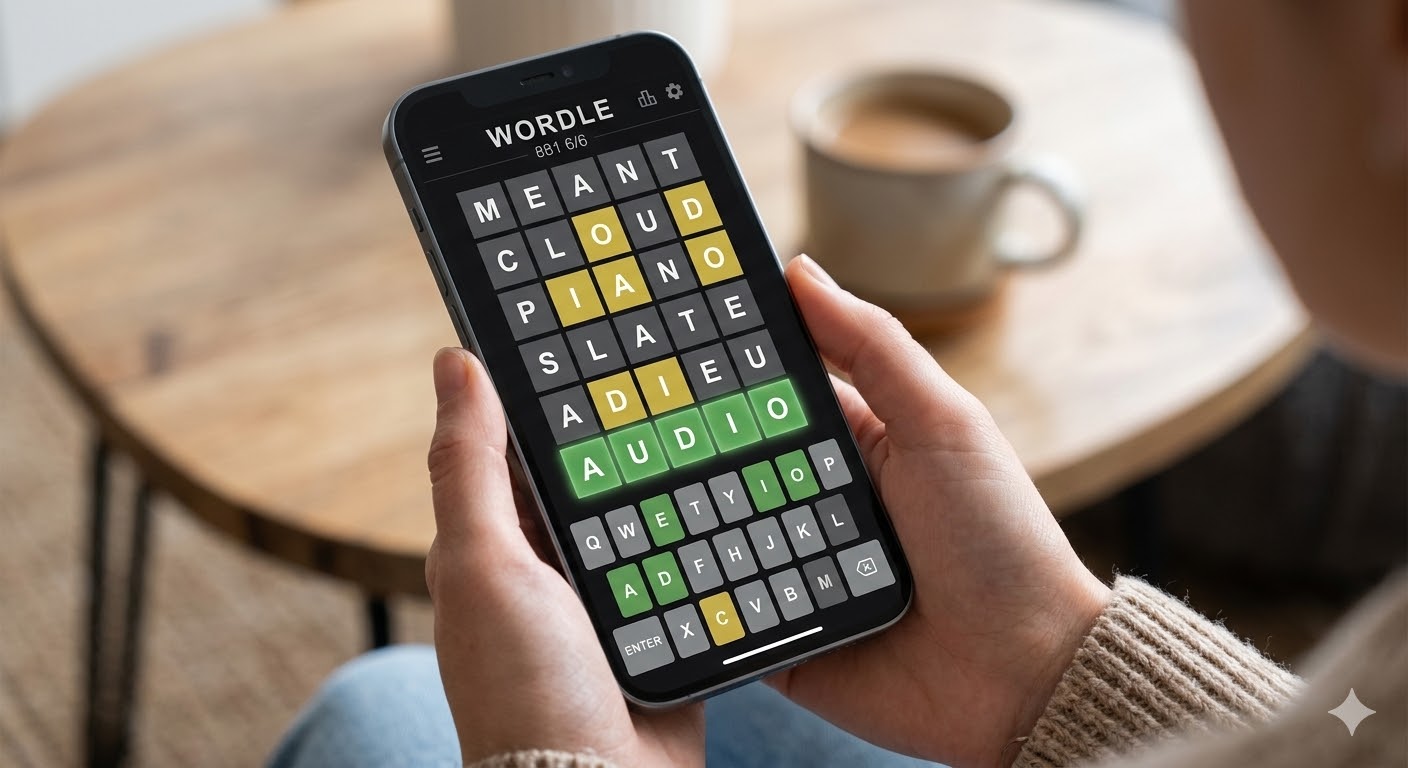
Wordle, created by software engineer Josh Wardle before being acquired by The New York Times, continues to release a new five-letter target word to players worldwide at midnight local time each day, giving solvers six total guesses to identify the correct word. The game’s familiar color-coded feedback system, green for a letter in the correct position, yellow for a correct letter placed in the wrong spot, and gray for a letter absent from the word entirely, continues to guide players toward the solution with each subsequent attempt. Because the puzzle refreshes at midnight in each player’s own local time zone, solvers across different regions, including areas observing Philippine Standard Time, various Australian time zones, and New Zealand time, begin their attempt at each day’s puzzle at staggered points relative to players elsewhere, even though every solver worldwide is working toward the same single answer.
Puzzle number 1,923 followed Wednesday’s answer, FORTH, continuing a run of daily words that trackers use to help players identify broader patterns in how frequently the game’s word selection rotates between everyday, high-frequency vocabulary and more specific or evocative terms. Players tracking their personal performance on Thursday’s puzzle, or comparing notes with friends, can share their results through Wordle’s built-in results screen, which uses colored emoji squares to display a player’s guessing sequence without revealing the actual answer, a sharable format that has remained a familiar sight across social media since the game’s earliest days of viral popularity. The New York Times’ companion analytical tool, Wordlebot, offers players a further way to review how efficiently they solved the day’s puzzle relative to the broader player base and their own historical performance on similar words.
For solvers looking for an added challenge, Wordle continues to offer a “Hard Mode” setting, which requires players to reuse any previously revealed correct or partially correct letters in all subsequent guesses, removing the option to test entirely new, unrelated letter combinations once useful information has already been uncovered. That setting can be toggled from the game’s settings menu before starting a new puzzle each day.
Beyond the daily Wordle puzzle, The New York Times has continued expanding its broader portfolio of daily word and logic games in recent years, including Connections, which challenges players to sort 16 words into four hidden categories, Strands, a themed word-search game, and the Mini Crossword, a condensed version of the paper’s traditional crossword format designed to be completed within just a few minutes.
With Thursday’s word now revealed, players who came up short on the day’s puzzle, or those simply looking to extend an active streak, will have a fresh five-letter word and a new set of six guesses to work with when Friday’s edition of Wordle resets at midnight local time.

























































You must be logged in to post a comment Login