
Business
Hints And Full Solution For NYT Puzzle 1883 On August 15, 2026 Now Fully Revealed


NEW YORK — Wordle players faced a puzzle Saturday that had many solvers guessing between multiple possible categories before the correct word finally clicked into place, with Wordle No. 1883 leading players through a mix of misdirection tied to air travel, geometry and carpentry themes before the answer became clear.
The word of the day was LOOSE, an adjective or verb describing something that is not firmly fixed, tightly secured or closely controlled, or, in its verb form, to release or set something free from restraint. Hint columns published ahead of the reveal described the word using both of those meanings, guiding solvers toward the answer without spelling it out directly.
Wordle, the daily word-guessing game created by software engineer Josh Wardle in 2021 and later acquired by The New York Times, challenges players to identify a hidden five-letter word within six attempts. After each guess, tiles turn green if a letter is correct and in the right position, yellow if the letter appears elsewhere in the word, and gray if the letter does not appear in the word at all. A new puzzle resets daily at midnight in each player’s local time zone.
Saturday’s word carried a notable letter structure that added to the day’s difficulty for some solvers. LOOSE contains three vowels and two consonants, along with one repeated letter, the double “O” at its center. Puzzle-hint outlets noted that Wordle answers frequently reuse letters, a pattern players are sometimes tempted to rule out too quickly after testing a letter once, and Saturday’s puzzle served as a reminder not to eliminate double letters prematurely when narrowing down possibilities.
Multiple outlets covering Saturday’s puzzle described the overall clue pattern for the day as centered on themes of “connection, teamwork, and smooth handovers,” phrasing commonly used across hint columns to nudge readers toward an answer without revealing it outright. Some players reported racing through the puzzle quickly once they landed on the right letter combination, while others described stumbling through several guesses involving unrelated five-letter words before finally arriving at the correct solution.
Strategy guides published alongside Saturday’s puzzle offered general advice for approaching days when the word proves elusive. Puzzle columnists recommended that solvers avoid clinging too tightly to a single idea if they get stuck, resetting their thinking since the correct word is often simpler than players initially assume. Guides also emphasized watching for common word-ending patterns, such as “-ED,” “-ER” or “-Y,” when filling in remaining blanks, and encouraged players to stay calm during the tension of a sixth and final guess rather than rushing to a decision.
According to NYT WordleBot, the New York Times’ official performance-tracking tool, Saturday’s puzzle produced a range of outcomes among solvers, with some players completing the puzzle in as few as three or four guesses. WordleBot evaluates each player’s individual guesses against optimal strategy, offering a skill and luck rating alongside the broader daily average number of guesses needed to solve the puzzle.
Wordle has grown into one of the most widely played online word games since its public debut in October 2021, spawning a broader suite of daily puzzles under the Times’ games umbrella, including Connections, Strands, the Mini Crossword and Quordle, a more challenging spinoff in which players must solve four five-letter words simultaneously within nine attempts. Millions of players complete some or all of these puzzles each morning as part of a now-familiar daily routine, often tracking personal win streaks that reset if a day’s puzzle is missed entirely.
The Times does not publish official difficulty ratings for individual Wordle puzzles, but third-party trackers analyzing aggregated player data have said Saturday’s puzzle carried moderate difficulty overall, with the word’s structure, particularly its repeated letter and heavy vowel count, cited as the primary source of difficulty for players who struggled with the day’s puzzle.
As with every Wordle puzzle, Saturday’s word will not repeat in future editions, and the game’s archive updates automatically at midnight local time with a new challenge. Players who missed Saturday’s puzzle can still access it, along with every previous day’s puzzle, through Wordle’s official online archive.
Saturday’s puzzle arrived as part of the broader daily slate of New York Times word games, including the standard Connections puzzle, the newer Connections: Sports Edition, and the Mini Crossword, all of which reset at midnight alongside Wordle. For many regular players, completing the full slate of daily puzzles in sequence each morning has become a fixture of their routine, a pattern the Times has continued to cultivate since folding Wordle into its broader games app.
Looking ahead, puzzle enthusiasts can expect Sunday’s Wordle to reset at midnight local time with an entirely new five-letter challenge, continuing a daily cadence that has now stretched across more than 1,800 consecutive puzzles since the game’s original launch.


NEW YORK — Saturday’s edition of The New York Times’ Connections puzzle sent players hunting through categories built around synonyms for exhaustion, segments of something larger, and two closely related wordplay twists involving hidden units of length and secret pursuit, in a grid that puzzle columnists described as unusually tricky given how similarly two of its categories were structured.
Connections, published daily by the Times as part of its expanding suite of word games, presents 16 words or phrases that must be sorted into four hidden groups of four. Each group shares a common theme, and the puzzle is color-coded by difficulty, with yellow generally representing the most straightforward category and purple the most challenging. Players are permitted up to four incorrect guesses before the game ends.
Saturday’s puzzle, numbered 1161, organized its 16 entries into four categories: words meaning exhausted, words meaning a segment or portion, words ending in hidden units of length, and words ending in synonyms for following someone secretly.
The yellow group, typically the easiest of the four, centered on words describing a state of exhaustion. It included “beat,” “fried,” “spent” and “worn out,” four terms commonly used informally to describe feeling completely drained of energy. Puzzle commentary noted this category rewarded straightforward vocabulary recognition, requiring little lateral thinking compared with the puzzle’s later, more complex groups.
The green group asked players to identify words meaning a segment or discrete portion of something larger, linking “leg,” “phase,” “stage” and “stretch.” Each word can describe one part of a longer journey, process or sequence, a category commentators described as conceptually connected but not overly difficult to untangle once the shared theme became apparent.
The blue category introduced the puzzle’s central wordplay twist, grouping words that each conceal a unit of length at their end: “chamomile,” ending in “mile”; “grinch,” ending in “inch”; “hotfoot,” ending in “foot”; and “lanyard,” ending in “yard.” Several puzzle columnists noted they initially spotted this pattern and assumed it would rank as the day’s purple, most difficult category, only to find it placed instead at blue, one level down.
That assumption proved to be exactly the trap the puzzle’s editors had set. The purple group, the day’s most difficult, followed a nearly identical structural gimmick, but built around hidden synonyms for following someone secretly rather than units of length. It linked “beanstalk,” ending in “stalk”; “eyeshadow,” ending in “shadow”; “hightail,” ending in “tail”; and “soundtrack,” ending in “track,” each concealing a different verb meaning to covertly follow or pursue someone. One columnist covering the puzzle for TechRadar admitted to missing the purple group entirely on a first attempt, explaining that after already identifying one “ending in” category, they assumed the puzzle would not repeat a similar structural pattern a second time, a miscalculation that led directly into one of Connections’ classic misdirection traps.
Connections has become one of the most closely followed entries in the Times’ games lineup since its 2023 launch, following the runaway success of Wordle, which the Times acquired the previous year. The puzzle rewards lateral thinking over straightforward vocabulary knowledge, since individual words can often plausibly belong to more than one category, a design choice intended to create red herrings that complicate early guesses. Saturday’s back-to-back “ending in” categories represented an especially deliberate example of that misdirection strategy, testing whether players would recognize the second hidden pattern once they had already used their pattern-recognition instincts to solve the first.
Connections is written under the direction of the Times’ crossword editor, Wyna Liu, who oversees the game’s daily categories. Saturday’s puzzle arrived alongside the Times’ newer Connections: Sports Edition, a spinoff produced in partnership with The Athletic that applies the same grouping format to sports-specific terminology, running each day alongside the standard puzzle rather than replacing it.
The Times does not disclose internal difficulty ratings for individual Connections puzzles, but outlets that publish daily hint columns generally rank each day’s difficulty based on reader feedback and common patterns of mistakes. Saturday’s puzzle was described by several of those columns as more challenging than average, with the near-identical structure of the blue and purple categories singled out as the primary source of difficulty, since the pattern required solvers to recognize not just one, but two separate instances of the same underlying wordplay device within a single grid.
Connections remains part of a broader daily routine for millions of puzzle enthusiasts who also complete Wordle, the Mini Crossword and Strands each morning, all of which reset at midnight in each player’s local time zone. The four games have become a fixture of the Times’ digital subscription strategy, with the company regularly citing engagement with its games portfolio as a driver of subscriber growth in its quarterly earnings reports.
Players who missed Saturday’s puzzle or want to revisit past solutions can access the Connections archive through the Times’ Games app for subscribers with All Access or Games-specific subscriptions. A new Connections puzzle, along with a new Connections: Sports Edition, Wordle and Mini Crossword, will be published at midnight Sunday.


The Valkyrie Trading Society is a team of analysts sharing high conviction and obscure developed market ideas that are downside limited and likely to generate non-correlated and outsized returns in the context of the current economic environment and forces. They are long-only investors.They lead the investing group The Value Lab where they offer members a portfolio with real time updates, chat to answer questions 24/7, regular global market news reports, feedback on member stock ideas, new trades monthly, quarterly earnings write-ups, and daily macro opinions.
Analyst’s Disclosure: I/we have no stock, option or similar derivative position in any of the companies mentioned, and no plans to initiate any such positions within the next 72 hours. I wrote this article myself, and it expresses my own opinions. I am not receiving compensation for it (other than from Seeking Alpha). I have no business relationship with any company whose stock is mentioned in this article.
Seeking Alpha’s Disclosure: Past performance is no guarantee of future results. No recommendation or advice is being given as to whether any investment is suitable for a particular investor. Any views or opinions expressed above may not reflect those of Seeking Alpha as a whole. Seeking Alpha is not a licensed securities dealer, broker or US investment adviser or investment bank. Our analysts are third party authors that include both professional investors and individual investors who may not be licensed or certified by any institute or regulatory body.
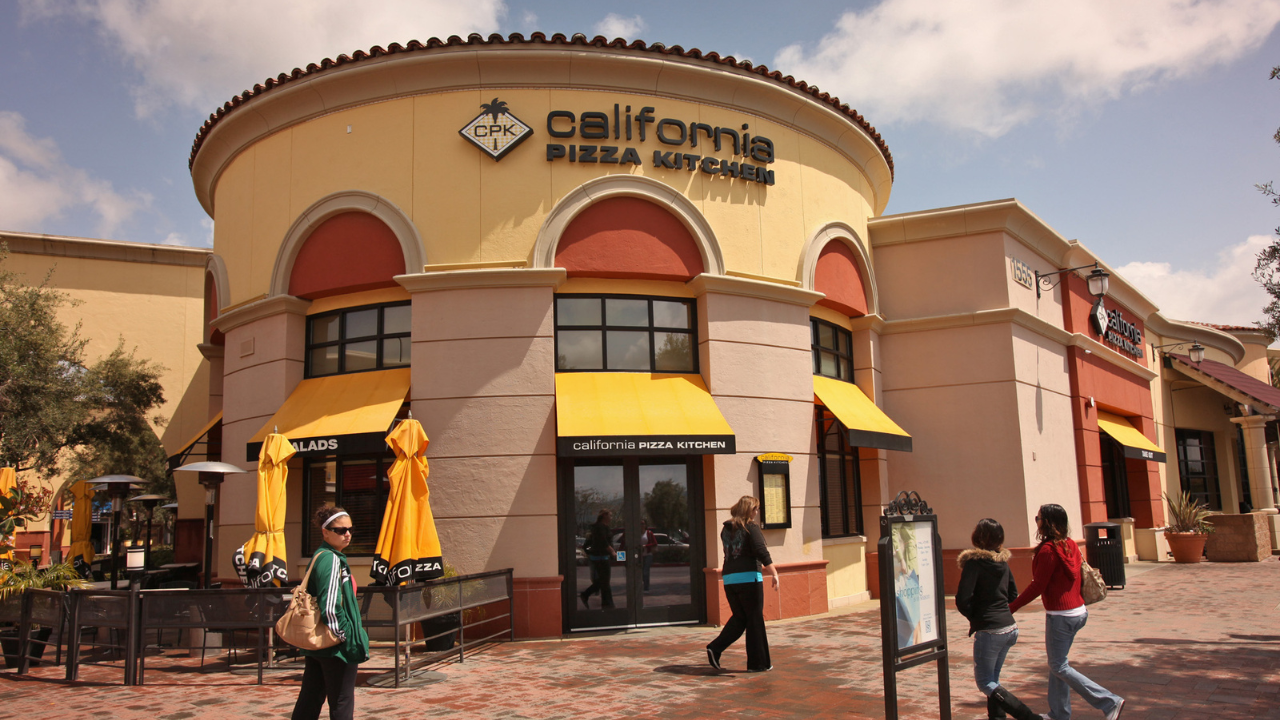
California Pizza Kitchen co-founder Rick Rosenfield told Fox News Digital how two former prosecutors built a pizza empire and how he believes the iconic chain is moving towards a ‘new glory.’
On a quintessential Beverly Hills street in 1985, a restaurant that would help transform the pizza industry opened its doors.
After years of practicing law as federal prosecutors and criminal defense attorneys, co-founders Rick Rosenfield and Larry Flax chose to leave the courtroom behind to pursue their dream of becoming restaurateurs.
“We didn’t want to open just a restaurant. We decided to be bold. We said we want to open a national and international chain of restaurants,” Rosenfield told Fox News Digital.
With its Original BBQ Chicken Pizza and polished approach to casual dining, California Pizza Kitchen helped popularize California-style pizza among diners across the U.S. and eventually around the world. The chain became a household name while helping bring a distinctive, California-inspired approach to pizzas, pastas, salads and desserts.
FUDDRUCKERS BECAME THE ‘BLOCKBUSTER’ OF BURGERS, AND NOW IT’S NEARLY GONE
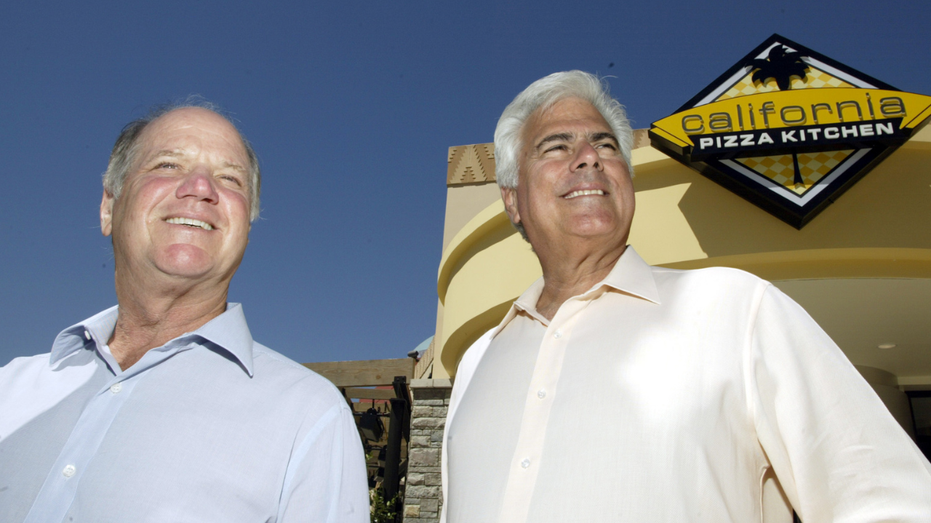
Rick Rosenfield (Left) and Larry Flax (Right) co-founded California Pizza Kitchen after years of practicing law. (Mark Boster/Los Angeles Times via Getty Images / Getty Images)
California Pizza Kitchen has more than 120 restaurants in 10 countries. But at one point, CPK existed only in a single storefront on South Beverly Drive.
Rosenfield recalled the restaurant’s early days in Beverly Hills as “hectic,” with actress Shirley MacLaine becoming its first customer on opening day.
“Even before we opened, we knew we had a blockbuster on our hand. We created barbecue chicken pizza. And in the early days of CPK, it was complete craziness. Everybody was coming for barbecue chicken pizza,” said Rosenfield. His book, “The California Pizza Kitchen Story: How Two Federal Prosecutors Changed the Way America Eats Pizza,” was released July 21.
Rosenfield and Flax employed a real estate strategy that helped expand CPK’s reach, opening restaurants in and around shopping malls.
“CPK also had a hand in changing the way America eats because we were pioneers in going into upscale shopping centers around America at a time when… there was all fast food,” Rosenfield said. “We brought this polished, casual dining to the best malls in America.”
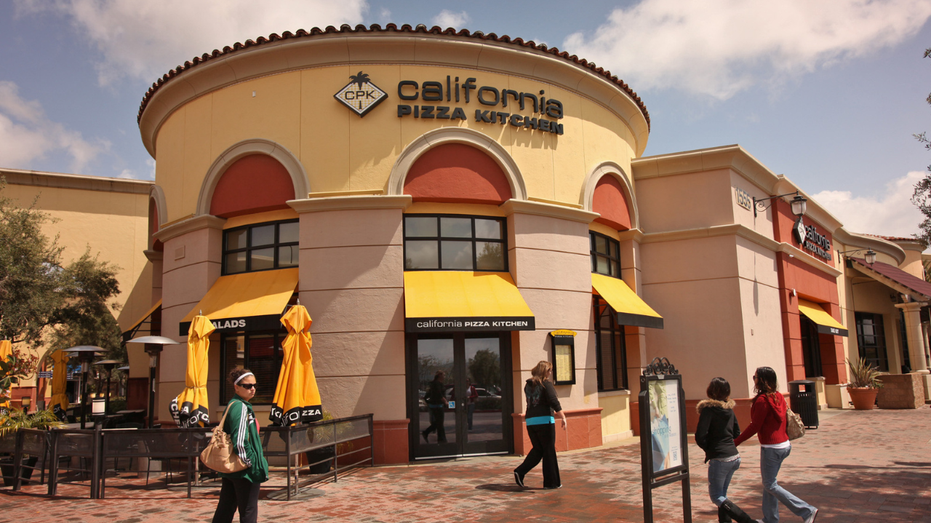
California Pizza Kitchen located at the Simi Valley Town Center April 12, 2010. (Al Seib/Los Angeles Times via Getty Images / Getty Images)
After Rosenfield and Flax grew CPK to more than 200 locations worldwide, the pizza giant was acquired for $470 million by private equity firm Golden Gate Capital in 2011.
‘MCDONALD’S CHANGED THE COURSE OF MY LIFE’: CONGRESSMAN SELLS BUSINESS HE BUILT SINCE HIS TEEN YEARS
At the time of the acquisition, the San Francisco-based firm described itself as “one of the most active acquirers of leading brands in the restaurant and retail sector.”
Nine years after Golden Gate Capital acquired the chain, CPK filed for Chapter 11 bankruptcy protection on July 30, 2020, after the COVID-19 pandemic compounded its existing financial troubles.
Rosenfield, however, told Fox News Digital he believes CPK’s troubles began before the bankruptcy filing, arguing that Golden Gate Capital damaged the culture he and Flax had spent decades building.
“As founder, it’s hard to sit back because I had no role in it whatsoever. So, we’re armchair quarterbacks looking from the outside,” he said.
A California Pizza Kitchen location in Los Angeles on June 28, 2005. (Frazer Harrison/Getty Images for Los Angeles Magazine / Getty Images)
“I believe that they damaged the culture from day one. They wanted to remake it in an image different than we had remade it in. And in the meantime, it wasn’t successful,” the co-founder continued. “And it continued to decline on that basis, unfortunately. As I said, while we sat and watched it, and then it was ultimately driven into bankruptcy.”
Golden Gate Capital declined Fox News Digital’s request for comment.
California Pizza Kitchen emerged from bankruptcy in November 2020, and Rosenfield, who said he still dines at CPK every several weeks, is optimistic about the chain’s future under new ownership that he believes is “committed” to restoring the brand’s success.
The acquisition of California Pizza Kitchen (CPK) by New York-based Consortium Brand Partners was announced in December 2025 for a deal valued just under $300 million. Rosenfield said he is “thrilled” with the direction the restaurant is headed in under the new ownership.
“I believe they want to bring the brand, not only to its former glory, but to new glory,” said Rosenfield. “I have confidence in this team. And for the first time in all these years, my partner, Larry Flax, and I are very excited about where it could go.”
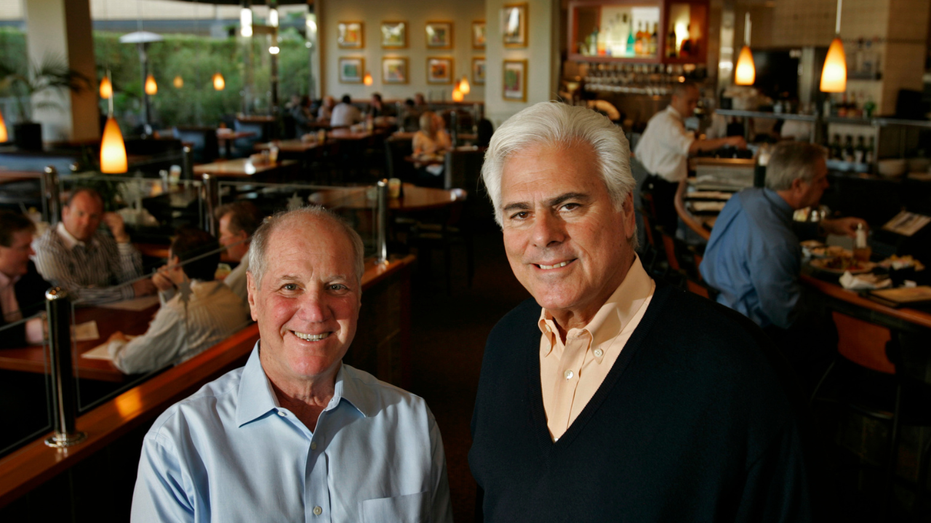
Rosenfield and Flax at the Redondo Beach/South Bay Galleria California Pizza Kitchen on Jan. 15, 2008. (Allen J. Schaben/Los Angeles Times via Getty Images / Getty Images)
CLICK HERE TO DOWNLOAD THE FOX NEWS APP
Rosenfield reflected on the legacy he and Flax built from a small, leased space in Beverly Hills, telling Fox News Digital that the 41-year-old restaurant chain “accomplished” exactly what they envisioned from the beginning.
“I love that everybody has a CPK story. That’s what drove me to do the book,” the co-founder said. “It’s accomplished what we wanted. Grandparents, parents, kids all have a place that they can all go to and agree to go to.”
“While I said that I believe that they did damage to the culture in the years past, I think the food has been incredibly consistent. And I’ve always been extremely, I’m extremely proud of the brand,” Rosenfield said.

Winnebago president & CEO Happe sells $393,630 in WGO shares

Clean Harbors co-CEO Gerstenberg sells $699,650 in stock
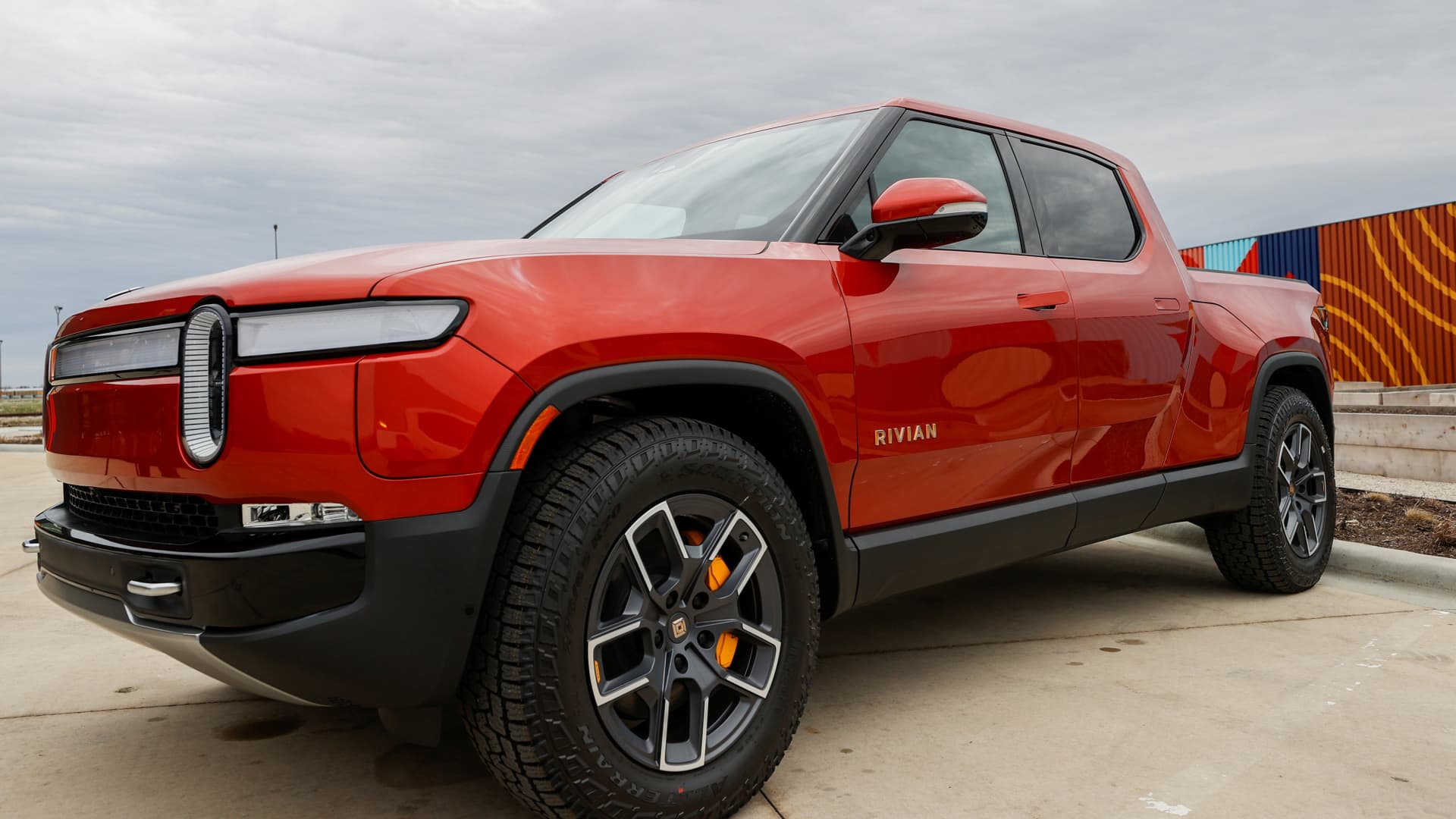
Rivian’s in-vehicle AI assistant launched in its vehicles on May 12, 2026.
Michael Wayland / CNBC
DETROIT — What’s the best advanced driver-assistance system on the market? Ask Rivian Automotive‘s new artificial intelligence and it will say its creator.
“Rivian’s is truly exceptional … an unmatched blend of safety and technology,” the chatbot told me during hourslong drives in one of its R1T pickup trucks in which the vehicle largely controlled itself on several Midwest highways.
While the Rivian AI bot may be biased, that’s exactly the company’s goal with a new generation of vehicle software and technologies: to be the best. Rivian is trying to catch up to — and then surpass — Tesla‘s FSD (Supervised) capabilities, but with additional safety guardrails that the Elon Musk company doesn’t use.
Based on recent drives totaling hundreds of miles, Rivian’s Autonomy+ has surpassed legacy competitors such as General Motors‘ Super Cruise with its ADAS. But it’s still playing catch up to Tesla’s FSD when it comes to nonhighway driving and point-to-point driving, where a vehicle is designed to navigate itself from start to finish. I drove a recent version of FSD (Supervised) v14 to compare the technology.
Rivian CEO RJ Scaringe at the company’s first “Autonomy and AI Day” on Dec. 11, 2025, in Palo Alto, California.
Lora Kolodny | CNBC
Rivian expects to deliver point-to-point driving later this year but, for now, its system is a giant leap forward for the company compared with what it previously offered and is clearly laying the groundwork to better compete with Tesla.
“That’s the next step,” said James Philbin, senior vice president of autonomy and AI at Rivian. “Tesla’s system you use is a point-to-point system. So that that’s the next big leap for us in a way, is getting to that same point-to-point type interaction and that system where it really does the full driving task.”
To be clear, no vehicle on sale today is self-driving or autonomous. Drivers always need to pay attention and be ready to take over. Many advanced driver-assistance systems, or ADAS, can control a vehicle’s speed, braking and steering using cameras, sensors and/or mapping data. An increasing amount of systems allow humans to take their hands off the wheel when in use.
Rivian credits its improvements with its push toward vertical integration that included a new generation of software and electric architecture for its vehicles. It’s just beginning to reap the benefits with its ADAS.
When the steering-wheel light bar illuminates in green with GM’s Super Cruise, drivers may remove their hands from the steering wheel.
Michael Wayland / CNBC
The technologies also are increasingly more important to drivers and investors, which are targeting ADAS as growth markets with recurring revenue for automakers.
“We favor self-reliant (and properly-valued) companies that are building next-gen machines using in-house expertise,” Piper Sandler analyst Alexander Potter said in an investor note upgrading Rivian’s stock last month. “As volume rises, Rivian should be better able to monetize software & services, a key benefit of vertical integration.”
The systems vary in pricing but can be initially included in a vehicle’s purchase or bought via subscriptions. Tesla’s system is currently $99 a month, according to its website. Rivian’s is $49.99 a month or $2,500 to purchase for the lifetime of a vehicle. GM’s is $39.99 a month or $399 a year.
Rivian vs. Tesla
The biggest operational difference between ADAS technologies from Tesla and Rivian is their ability to control the vehicle on nonhighway streets with traffic lights and signs.
Rivian’s system currently detects those roadway signals, but it does not do anything about them other than alert the driver that they are coming. Meanwhile, Tesla’s system handled every signal, interchange and exit ramp I encountered for nearly 200 miles in rural Michigan and downtown Ann Arbor, Michigan.
Rivian’s Autonomy+ system currently detects roadway signals, but it does not do anything about them other than alert the driver that they are coming.
Michael Wayland / CNBC
Based on a decade of experience driving with hands-free ADAS, those two technologies are by far the most advanced. This has not always been the case.
GM, not Tesla, led the development of hands-free highway systems with its Super Cruise, which I initially tested a year before its debut in 2017. But America’s largest automaker was slow to roll it out on new vehicles or significantly grow its capabilities other than expanding geographies and making it able to do lane changes.
Ford Motor also quickly caught up to GM on highways, but both continue to lack systems that are capable of hands-free driving on nonhighways. The two automakers are working on that type of technology, including so-called eyes-off capabilities, but they are not expected until 2028.
It’s a difficult leap, as Tesla’s in-vehicle Grok AI told me during nearly 200 miles of driving in a 2025 Tesla Model Y: “Highways have predictable lanes, speed, fewer pedestrians and clear markings, making sensor fusion and path prediction simpler. City streets bring chaos, intersections, bikes, peds, construction and ambiguous rules that challenge even top AI vision systems.”
Challenging for some more than others. During my drives in the Model Y, the vehicle was essentially controlling itself for multiple hours and dozens of miles without intervention on highway and nonhighway roads.
Tesla FSD (Supervised)
Michael Wayland / CNBC
It somewhat effortlessly handled several traffic circles, also known as roundabouts, and parked for me multiple times when arriving at or near destinations, including parallel parking. It also managed a semitruck blocking half a lane on a two-lane road as well as pretty complex construction zones, with Tesla’s ADAS sensing each barrel or cone.
The Rivian technology handled highway driving very well with no intervention outside of exit ramps and, at times, construction zones. It also isn’t able to change lanes on its own yet, which the company promises is coming soon.
When I asked Rivian about several of my experiences, the company said its vehicles can detect construction objects but it does not always display them on the in-vehicle screen. Its system also still needs assistance in certain locations, such as roundabouts.
Safety concerns remain
All ADAS technologies — except a Mercedes-Benz system in limited circumstances — still need drivers to monitor the systems, even if they can largely control the vehicle without human intervention for hundreds of miles.
With the rise of “hands-off” technology, industry insiders and regular people alike have raised concerns about driver inattentiveness. Automakers have been largely trying to fight that with driver-facing cameras. But concerns remain about the ADAS handover back to a driver as well as on people over-relying on the systems.
YouTube is filled with examples of drivers misusing such systems, particularly Tesla products, as well as videos of ADAS doing human-like moves but also malfunctioning and needing assistance.
A Tesla Model 3 is shown driving on the highway with FSD 14.2.2.3 self-driving supervised software in Irvine, California, U.S., Jan. 28, 2026.
Mike Blake | Reuters
The handover from ADAS to humans can be abrupt and lead to dire circumstances if drivers aren’t attentive enough to immediately retake control of the vehicle.
There’s also little regulation for the systems, with each company taking different approaches.
“I hope that we can even exceed the Tesla system because of our investments in a more robust sensor stack,” Rivian’s Philbin said. “We’re actually a big believer in multimodal imaging, so cameras and radars, and later on, early next year, lidar as well on the R2.”
Rivian’s system uses at least 10 high dynamic range cameras, five radars and some map data to assist the vehicle in “seeing” the road. It’s also expected to launch vehicles with lidar, or light detection and ranging, that improves a vehicle’s “sight.” Tesla’s system relies on cameras and a “vision-based” setup that some have criticized for not being robust enough, especially under certain conditions.
Tesla’s partially automated driving systems have been under scrutiny for many years. The National Highway Traffic Safety Administration earlier this year said it was escalating a probe into Tesla’s Full Self-Driving (Supervised) after identifying several crashes, including one fatal incident in which the system failed to alert drivers appropriately about reduced-visibility conditions, such as sun glare or fog.

Philbin said it’s those types of circumstances where noncamera technology, including lidar, can better detect potential hazards and objects. My drives were on clear days without any inclement weather.
Still, despite not having many sensors, Tesla’s Grok chatbot — developed by Musk’s xAI, which merged with SpaceX earlier this year — also felt its brand has the superior system, which is true for many driving situations, at least for now.
“Tesla’s Full Self-Driving (Supervised) is widely rated as the top advanced driver assistance system in 2026 by sources like Motor Trend and others,” Grok AI said. It later added, “Rivian’s AI Assistant is solid for voice controls, navigation, and vehicle features in their R1 vehicles, but it’s still catching up to more advanced systems like ours and full self-driving capabilities.”

Morgan Stanley flags four catalysts for SpaceX stock through year-end


Long-only investment, evaluating companies from an operational, buy-and-hold perspective.Quipus Capital does not focus on market-driven dynamics and future price action. Instead, our articles focus on operational aspects, understanding the long-term earnings power of companies, the competitive dynamics of the industries where they participate, and buying companies that we would like to hold independently of how the price moves in the future. Most QC calls will be holds, and that is by design. Only a very small fraction of companies should be a buy at any point in time. However, hold articles provide important information for future investors and a healthy dose of skepticism to a relatively bullish-biased market.Disclaimer: All of the author’s articles are written on an “as is” basis and without warranty. They represent the author’s opinion only and in no way constitute professional investment advice. It is the responsibility of the reader to conduct their due diligence and seek investment advice from a licensed professional before making any investment decisions. The author disclaims all liability for any actions taken based on the information contained in any articles published.
Analyst’s Disclosure: I/we have a beneficial short position in the shares of KOP either through stock ownership, options, or other derivatives. I wrote this article myself, and it expresses my own opinions. I am not receiving compensation for it (other than from Seeking Alpha). I have no business relationship with any company whose stock is mentioned in this article.
Seeking Alpha’s Disclosure: Past performance is no guarantee of future results. No recommendation or advice is being given as to whether any investment is suitable for a particular investor. Any views or opinions expressed above may not reflect those of Seeking Alpha as a whole. Seeking Alpha is not a licensed securities dealer, broker or US investment adviser or investment bank. Our analysts are third party authors that include both professional investors and individual investors who may not be licensed or certified by any institute or regulatory body.

Apollon Wealth Management CIO Eric Sterner discusses how technology is driving gains in the healthcare sector on ‘The Claman Countdown.’
Nearly one in four American workers with employer-sponsored health insurance say they are stuck in jobs they want to leave because they fear losing coverage.
About 24% of U.S. workers with job-based insurance – roughly 23 million adults – are experiencing “job lock,” up sharply from 16% in 2021, according to a report from the West Health-Gallup Center on Healthcare in America.
The survey defines job lock as remaining in a job despite wanting to leave due to concerns about losing health insurance.

Nearly one in four American workers with employer-sponsored health insurance say they are stuck in jobs they want to leave because they fear losing coverage. (iStock)
“Job lock is on the rise in America,” the report noted. “Nearly a quarter of U.S. employees report staying in a job they want to leave to keep their health insurance, a powerful constraint on worker mobility, productivity, entrepreneurship and wage growth.”
The surge comes as soaring healthcare costs squeeze household budgets.
About half of Americans said they struggle to consistently pay for needed medical care or prescriptions, while 51% are worried about affording healthcare over the next year — the highest level in five years, as noted in the report.
OBAMACARE EXCHANGE FLAW EXPOSED AMERICANS TO UNEXPECTED HEALTH PLAN SWITCHES, WATCHDOG FINDS

The survey defines job lock as remaining in a job despite wanting to leave due to concerns about losing health insurance. (iStock)
Workers under greater financial strain were far more likely to report feeling trapped.
Among those with medical debt, 44% reported job lock, more than double the 21% rate among those without medical debt.

Workers under greater financial strain were far more likely to report feeling trapped. (iStock)
Nearly half of respondents who cited healthcare costs as a “major financial burden” reported job lock. The rate rose to 53% among those experiencing “a lot of stress” over medical expenses, the report noted.
Chronic health problems also made workers more likely to stay at their jobs.
About 29% of those with at least one chronic condition reported job lock, compared with 17% of those without one.
That rate grew to 41% among people with three or more diagnoses.
TRUMP’S FIRST-TERM POLICIES HELPED LOWER SOME INSULIN COSTS: HHS REPORT

Chronic health problems also made workers more likely to stay at their jobs. (iStock)
Women were also more likely than men to remain in unwanted jobs for health benefits, at 30% compared with 20%, according to the report.
GET FOX BUSINESS ON THE GO BY CLICKING HERE
The findings were based on a national survey of 5,660 adults conducted from Oct. 27 to Dec. 22, 2025. The analysis focused on 2,322 employed adults with employer-sponsored insurance.
“The effects extend beyond morale – reducing labor market efficiency, upward mobility and quality of life,” as noted in the report. “With coverage tied to employment, a growing share of American workers report making career decisions based on insurance rather than opportunity.”
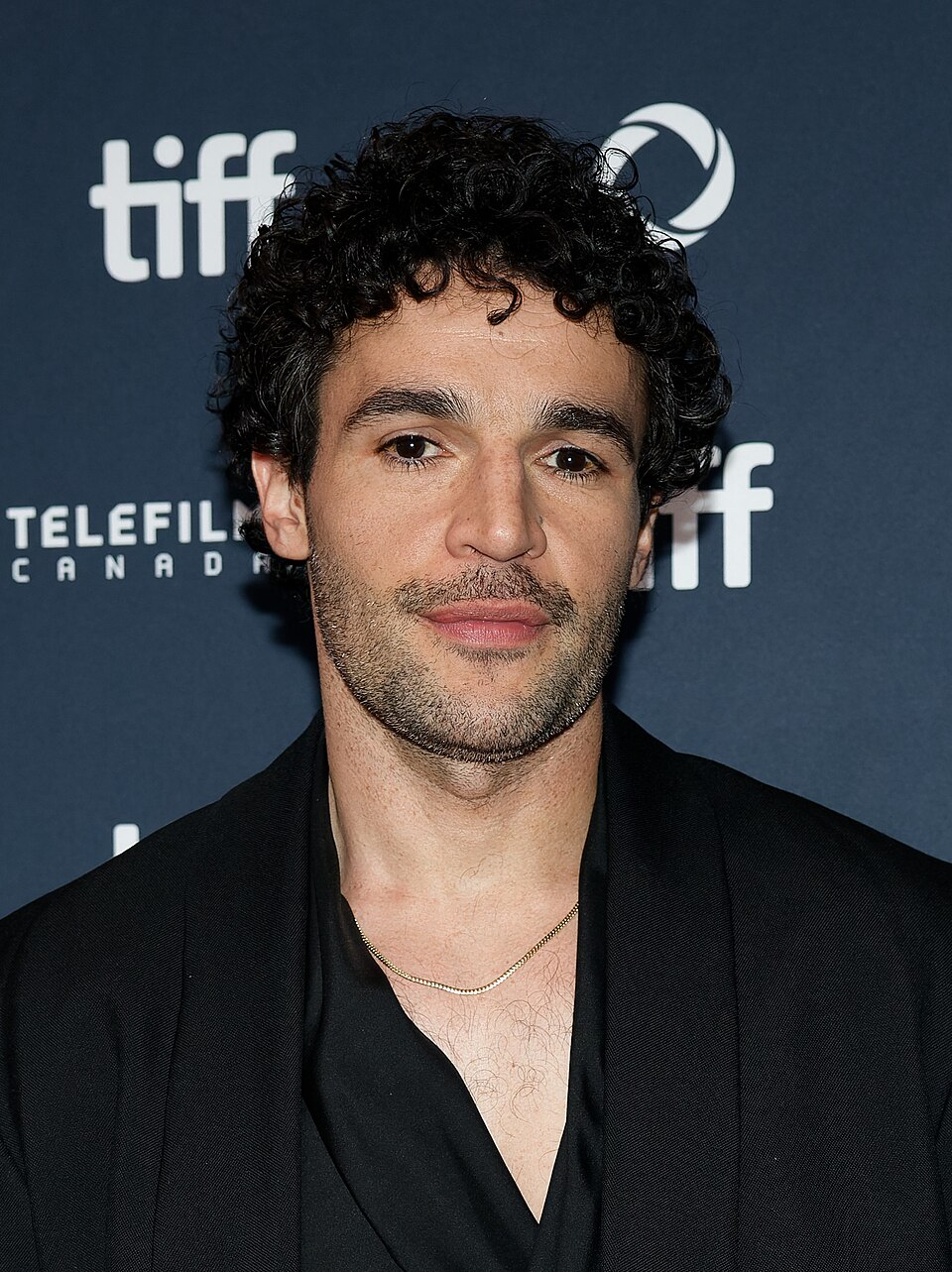
ANAHEIM, Calif. — Marvel Studios formally introduced the principal cast of its long-awaited X-Men film and locked in a theatrical release date of May 5, 2028, during Disney’s D23 event on Friday.
Marvel Studios president Kevin Feige presented the ensemble on stage at the Honda Center. Sadie Sink will play Jean Grey, Kit Connor is Cyclops, Christopher Abbott portrays Professor Charles Xavier, Samara Weaving takes on Emma Frost, Inde Navarrette stars as Rogue and Maya Boyd is Storm. Adam Driver joins as Nathaniel Milbury, the identity associated with the villain Mister Sinister.
Driver appeared via video from Pinewood Studios rather than in person. In the message he referenced long-running discussions with Feige about joining the Marvel Cinematic Universe. “Kevin and I have been talking for years about me joining the MCU,” Driver said. “Now I feel like we’ve found the perfect film, at the perfect time, with characters I care deeply about.”
He briefly joked about playing Magneto before correcting himself and confirming the role of Nathaniel Milbury. Additional remarks captured in coverage of the presentation included: “When Kevin told me to show up for X-Men, I assumed he meant on set. So instead of being there in California, I’m here at Pinewood on this very lonely soundstage. … So I’m very excited to be playing Mag…. Nope. Even better. Nathaniel Milbury. So I’ll be right here, waiting for everybody to show up.”
Feige noted that several of the actors had only just met backstage before walking out together. Sink’s casting as Jean Grey had already been established through her appearance in the recent Spider-Man film Brand New Day. Connor’s role as Cyclops and Weaving’s as Emma Frost had been reported in the days leading up to the event and were confirmed on stage.
Jake Schreier, who previously directed Thunderbolts*, is helming the project. Lee Sung Jin, creator of the series Beef, and Joanna Calo, a writer and co-showrunner associated with The Bear and a collaborator on Thunderbolts*, are among the writers developing the screenplay. Michael Lesslie had earlier been attached to an earlier draft.
The announcement marks a significant step in integrating the X-Men into the main MCU timeline following Disney’s 2019 acquisition of 20th Century Fox and its Marvel film library. Previous live-action versions of the characters appeared in a series of Fox films that began with X-Men in 2000 and featured actors including Patrick Stewart and James McAvoy as Professor X, Ian McKellen and Michael Fassbender as Magneto, Halle Berry as Storm, and Famke Janssen and Sophie Turner as Jean Grey. Stewart is set to appear again as Professor X in the upcoming Avengers: Doomsday, scheduled for December.
The new film is positioned to arrive after Avengers: Secret Wars, which is expected to conclude the current Multiverse Saga. Marvel has indicated the X-Men project will emphasize character-driven storytelling and the interpersonal dynamics that defined classic comic runs, particularly the work of writer Chris Claremont. Schreier and the writing team have spoken in earlier interviews about focusing on personal stakes and the experience of feeling different or marginalized, themes long associated with the mutant characters.
Abbott, known for roles in Girls, Poor Things and the upcoming East of Eden series, steps into the role of the telepathic founder and leader of the X-Men. Boyd, who has Broadway credits including & Juliet, takes on Storm, the weather-controlling mutant previously played by Berry. Navarrette, who gained attention in the recent series Obsession, will portray Rogue, whose power involves absorbing the abilities and memories of others through touch. Connor, recognized from Heartstopper, becomes the optic-blast-wielding field leader Cyclops. Weaving, of Ready or Not, plays the diamond-skinned telepath Emma Frost. Sink continues as the powerful telepath and telekinetic Jean Grey after her introduction in Brand New Day.
Driver’s casting as Mister Sinister brings a classic X-Men antagonist into the MCU for the first time in a major live-action capacity. The character, a geneticist and long-running foe of the team, has appeared in comics for decades under various aliases, including Nathaniel Essex and Nathaniel Milbury.
Casting for the film had been underway for months, with final rounds of testing reported after the Fourth of July holiday. The process drew widespread attention as Marvel assembled a new generation of actors for the property that once ranked among Fox’s most consistent performers at the box office.
The May 5, 2028, date places the movie nearly two decades after the MCU’s launch with Iron Man in 2008. It also positions the film as an early entry in whatever phase follows the Multiverse Saga. Additional casting and story details have not been disclosed. Filming has not yet begun, though Sink has indicated in recent interviews that production on the X-Men project is expected in the near term.
The D23 presentation drew strong reactions from attendees and online audiences following the formal unveiling. The combination of established names such as Driver and Sink with newer faces including Navarrette and Boyd reflects Marvel’s approach of blending recognizable talent with emerging performers for the mutant team.
Further announcements regarding supporting roles, additional mutants or connections to existing MCU storylines are expected in the coming months as development continues under Schreier and the writing team. The film remains untitled beyond its X-Men branding at this stage.
Marvel Studios is owned by The Walt Disney Company. The D23 event continues through the weekend in Anaheim with additional presentations on other Disney properties.
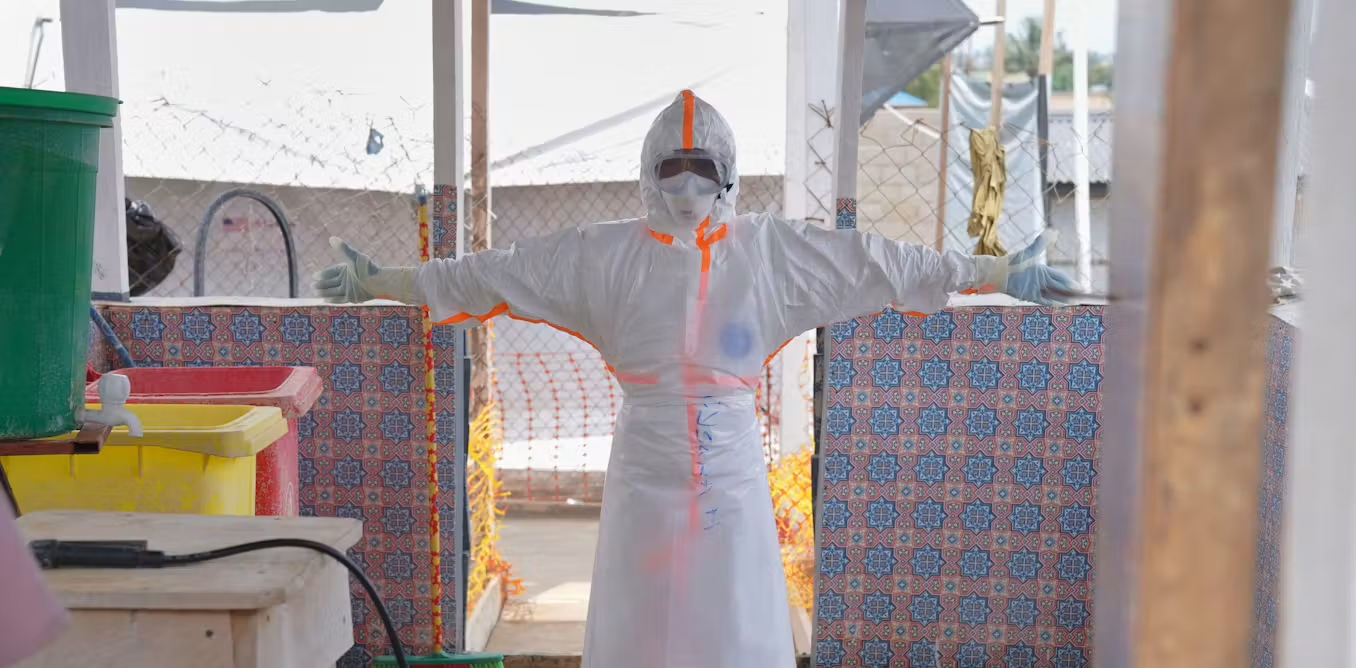
Can a vaccine built for one Ebola virus stop another? The World Health Organization is about to find out

Puzzle 1161’s Full Solution Now Fully Revealed

How XRP holders can turn the tide against the trend and earn $10,000 a day


-

 Fashion19 hours ago
Weekend Open Thread: Ann Taylor
-

 Business6 days ago
Datadog: Best Of Breed For Multiple Reasons
-

 Business6 days ago
How to Start a Cleaning Business: A Step-by-Step Guide
-

 Business6 days ago
BDC Weekly Review: Private BDC Q2 Numbers Are Strong
-
 NewsBeat4 days ago
Communication cards help banking customers access services or report scams
-
 Business4 days ago
Oil Price Today (August 11): Crude oil rises to $88 after Trump’s compensation demand dents Hormuz opening. Here’s why
-
 Crypto World5 days ago
Why Did Nvidia Stock Fall on Monday Despite a $500 Billion Wall Street AI Deal?
-

 Politics7 days ago
Be quiet, Miriam! – spiked
-

 Fashion6 days ago
Amazon Sundays: Closet Care Before Fall
-
 Entertainment7 days ago
Will Ferrell’s New Netflix Series Just Became One of the Streamer’s Biggest Hits of 2026
-

 Business6 days ago
5 Things You Must Know About Jorge Messi, the Father and Longtime Agent Who Shaped Lionel Messi’s Career
-

 Politics6 days ago
Ben-Gvir’s crocodile project halted but abuses at Ketziot Prison continue
-

 Crypto World4 days ago
Revolut wins French banking licence, creates second EU banking hub
-

 Business7 days ago
Mutual Fund Manager Scoops Up Beaten-Down Stocks
-

 Politics6 days ago
The Church of England’s ruinous reparations racket
-

 Politics6 days ago
Saudi Arabia used 86% of missile stockpile defending Iran attacks
-
 NewsBeat7 hours ago
Myanmar says over 300,000 Rohingya refugees verified for repatriation as exodus enters ninth year
-

 Politics6 days ago
The House Article | Burnham still needs to sell devolution to the public
-

 Politics6 days ago
What’s An EDT? The Rise Of ‘Extreme Day Trips’ As A Travel Trend
-
 Crypto World6 days ago
USDC and USDT Now Own 84% of Crypto Card Spend as the Euro Retreats
You must be logged in to post a comment Login