



Connect with us

Business

Hints and Spangram Answer for September 25, 2026 as Puzzle 936 Goes Back to Math Class

Published

on

Powerball tickets rest on a 7-Eleven store register January 9, 2016 in Chicago, Illinois.

Puzzle number 936 of The New York Times’ Strands game took a notably different turn Friday, trading the format’s usual wordplay and thematic red herrings for a grid built around basic multiplication, giving solvers a puzzle that felt more like a flashback to primary school math class than the typical vocabulary-driven Strands challenge.

Strands presents players with a six-by-eight grid of letters and asks them to find a set of words connected by a hidden theme, tracing each word in a continuous line that can bend around corners as it moves through the grid. One special word, known as the spangram, always touches two opposite sides of the board and summarizes what the rest of the puzzle’s theme words have in common. Players can also tap or drag to select letters, and non-spangram theme words remain highlighted in blue once correctly identified.

For those still working through Friday’s puzzle, the theme centers on numbers, specifically the kind produced by multiplying a whole number by itself. Every non-spangram answer in Friday’s grid is a number written out in words, and each of those numbers happens to be a perfect square. One outlet described the day’s theme hint plainly as “these are squares,” while another characterized the official in-game theme clue as “1×1, etc.” Today’s spangram itself runs 13 letters long and is positioned horizontally across the board.

SPOILER WARNING: The full solution to Friday’s Strands puzzle follows below. Stop reading now if you’d rather work through the grid on your own.

Advertisement

Today’s spangram answer is SQUARE NUMBER, directly naming the mathematical theme running through the rest of the puzzle. The confirmed non-spangram theme words include FOUR, NINE, TWENTY FIVE, THIRTY SIX and EIGHTY ONE, each representing a perfect square, the result of multiplying a whole number by itself: 2×2, 3×3, 5×5, 6×6 and 9×9, respectively.

Puzzle guides covering Friday’s grid described it as an unusually direct and approachable Strands puzzle compared with the format’s typical entries, since the theme rewards basic multiplication recall rather than the more associative or lateral thinking that Strands puzzles often demand. One outlet framed the puzzle as proof that the Strands format can flex into math-based themes without losing the puzzle’s underlying character, even as it noted this kind of overtly literal theme remains relatively rare for the game.

Strands, created by The New York Times as a spatial twist on the traditional word search format, continues to operate in what the newspaper has described as a beta phase, even as the game has steadily grown in popularity alongside the Times’ other daily word games. A new puzzle appears at midnight local time each day, meaning solvers in different time zones begin working through that day’s grid at staggered points relative to players elsewhere around the world.

Strategy guides accompanying Friday’s puzzle noted that players who find themselves stuck can tap any of several designated clue words to unlock the game’s built-in hint system, a feature intended to nudge solvers toward the puzzle’s theme without immediately revealing the full solution. Guides also reminded players that theme words in Strands fill the entire board without any overlap between words, meaning every letter in the grid ultimately belongs to exactly one theme word or the spangram.

Advertisement

Puzzle number 936 followed Thursday’s Strands puzzle, themed around locations just outside one’s front door, continuing the game’s pattern of rotating through a wide range of everyday and conceptual themes from one day to the next. Players tracking their personal performance on Friday’s puzzle can compare notes with friends and fellow solvers, given how quickly Strands has built a dedicated following since its launch, joining Wordle, Connections and the Mini Crossword among the Times’ most widely played daily word games.

With Friday’s math-themed puzzle now solved, players will have an entirely new grid and hidden theme to work through when Saturday’s edition of Strands resets at midnight local time, continuing the daily puzzle’s steady climb in popularity as one of the newspaper’s newer, but increasingly essential, word game offerings.

Continue Reading
Click to comment

You must be logged in to post a comment Login

Leave a Reply

Business

US Federal Reserve plans to raise bank oversight thresholds, sources say

Published

on

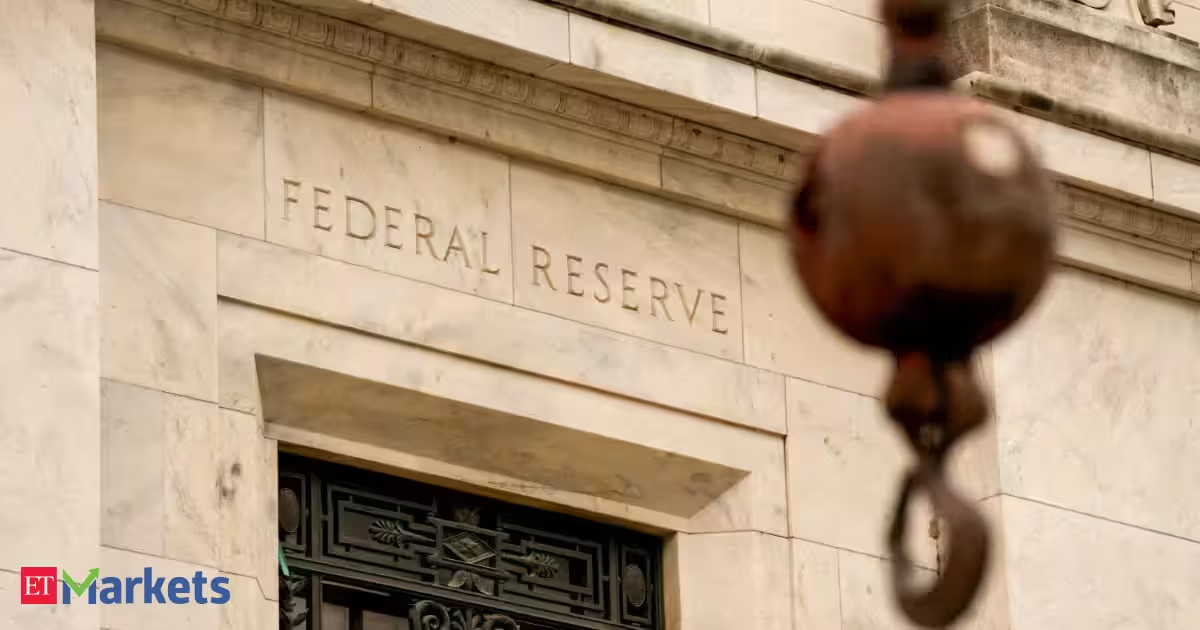
US Federal Reserve plans to raise bank oversight thresholds, sources say
The US Federal Reserve is working on a plan to raise the asset thresholds that trigger stricter oversight of big banks, four people with knowledge of the matter said, which would allow some lenders to avoid costly additional regulation and potentially spur consolidation.

The central bank is expected to soon propose reindexing the thresholds where banks become subject to stress tests of their balance sheets, liquidity, capital and other more stringent rules, to account for inflation and economic growth, the people said. Three of the people said they expect the Fed to propose the changes later this year.

Current rules impose stricter requirements when a bank reaches $100 billion in assets, stepping up at $250 billion and again at $700 billion. Lenders say those thresholds, set in 2019, haven’t kept pace with the economy, subjecting banks to increasingly stringent oversight that exceeds the risks they pose.

Banks say crossing the $100 billion threshold typically requires major investment in compliance staff, risk management systems, stress-testing capabilities and regulatory reporting infrastructure that can run into tens of millions of dollars annually.

Advertisement

The Fed is considering reindexing the highest threshold closer to $1 trillion and some of the requirements triggered by the lower threshold closer to $150 billion, said the people, who declined to be named as they were discussing sensitive regulatory issues.


Banks that stand to benefit include U.S. Bancorp, Capital One, PNC Financial and Truist, which are closest to the $700 billion threshold, giving them more room to grow without incurring some of the toughest Fed oversight, including aspects of new incoming capital rules and daily reporting requirements to supervisors.
Western Alliance, Zions and several others, meanwhile, could grow beyond $100 billion without incurring all the requirements currently imposed on lenders in that category. Pinnacle Financial Partners and one or two other lenders sitting between $100 billion and $150 billion could even shed some requirements.A Fed spokesperson declined to comment. In January, Fed Vice Chair for Supervision Michelle Bowman said the central bank would consider reindexing the thresholds and suggested using nominal GDP, but the Fed has not commented since then.

“The US economy has grown significantly over the past seven years, and it makes sense to have rules for all banks that will help consumers and small businesses through increased bank lending capacity and more competition,” a U.S. Bancorp spokesperson said.

The other banks either declined to comment or did not respond to requests for comment.

CHANGES COULD SPUR MID-SIZE BANK DEALS

Advertisement

The plan is part of a broader effort by the Trump administration to reform bank oversight which officials say is stifling lending and the economy. Bowman is also overhauling capital rules and other aspects of the Fed’s supervisory regime.

The changes could lead consolidation among mid-size lenders which have been holding off for fear of breaching the thresholds, the people said.

“Revised thresholds can reduce downsides of growth and change relative costs/benefits of acquisitions,” analysts at Truist wrote on Friday in response to Reuters’ story.

Banks with $50 billion to $700 billion of assets announced just 33 bank and thrift acquisitions over the past decade, according to S&P Global Market Intelligence, with just seven such deals last year, including Fifth Third’s $10.9 billion acquisition of Comerica.

Advertisement

“We would expect this to unlock M&A activity among mid-cap and regional banks that have been in a holding pattern,” said James Stevens, partner at law firm Troutman Pepper Locke, adding bank boards would be able to assess deals on merit “rather than on the regulatory math.”

One banking industry executive said raising the $700 billion threshold would allow larger lenders to more effectively compete with the country’s four biggest consumer banks.

Critics of bank consolidation argue it harms consumers by reducing competition and services, while increasing systemic risks.

BANKS HAVE LONG ARGUED THRESHOLDS ARE ARBITRARY

Advertisement

Following the US financial crisis, the 2010 Dodd-Frank Act set supervisory thresholds, which Congress softened in 2018. That law mandates some requirements that only Congress can change, including stress tests for banks in the $100 billion bucket and “enhanced prudential standards” for those above $250 billion.

But the law also gave the Fed broad discretion, and the central bank imposed additional capital planning, liquidity and reporting requirements for the $100 billion category. It also created the $700 billion category to ensure sufficient oversight for big banks not deemed globally systemically important banks, which are subject to a separate regime.

Banks have long said the thresholds are arbitrary and can distort business decisions by encouraging banks to stay below them.

Reindexing using nominal GDP would incorporate inflation and economic growth. It could push the highest threshold to around $960 billion and the lower threshold for the additional Fed requirements to roughly $150 billion.

Advertisement

Democrats say Congress already watered down the rules in 2018, and asset thresholds, though imperfect, offer a simple way to calibrate requirements.

Continue Reading

Business

Darden: Don’t Expect Much Out Of The Stock (NYSE:DRI)

Published

on

Olive Garden Storefront

This article was written by

The Pioneer Of Seeking Alpha’s BAD BEAT Investing, Quad 7 Capital is a team of 7 analysts with a wide range of experience sharing investment opportunities for nearly 12 years. They are best known for their February 2020 call to sell everything & go short, & have been on average 95% long 5% short since May 2020. The broader company has expertise in business, policy, economics, mathematics, game theory, & the sciences. They share both long & short trades & invest personally in equities they discuss within their investing group BAD BEAT Investing, focused on short- & medium-term investments, income generation, special-situations, & momentum trades. Rather than just give you trades, they focus on teaching investors to become proficient traders through their playbook. Their goal is to save you time by providing in depth, high-quality research, with crystal clear entry and exit targets. They have a proven track record of success.Benefits of BAD BEAT Investing include: Learning how to understand the pinball nature of markets, executing well-researched written trade ideas each week, use of 4 chat rooms, receive daily complimentary key analyst upgrade/downgrade summaries, learning basic options trading, & extensive trading tools. If you would like to learn more, click the link above!

Analyst’s Disclosure: I/we have a beneficial long position in the shares of DRI either through stock ownership, options, or other derivatives. I wrote this article myself, and it expresses my own opinions. I am not receiving compensation for it (other than from Seeking Alpha). I have no business relationship with any company whose stock is mentioned in this article.

Seeking Alpha’s Disclosure: Past performance is no guarantee of future results. No recommendation or advice is being given as to whether any investment is suitable for a particular investor. Any views or opinions expressed above may not reflect those of Seeking Alpha as a whole. Seeking Alpha is not a licensed securities dealer, broker or US investment adviser or investment bank. Our analysts are third party authors that include both professional investors and individual investors who may not be licensed or certified by any institute or regulatory body.

Advertisement
Continue Reading

Business

Home Depot Near 52-Week Lows: Why A 3.2% Yield Makes Me Look Twice

Published

on

U.S. Dollar Rises With More Room To Run Amid Iran War, Surging Oil Prices

Home Depot Near 52-Week Lows: Why A 3.2% Yield Makes Me Look Twice

Continue Reading

Business

BLW: Not A Great Option For Investors Seeking Limited Interest Rate Risk (NYSE:BLW)

Published

on

Scott Bessent Might Have Started The Bitcoin Bull Cycle (Cryptocurrency:BTC-USD)

This article was written by

Power Hedge has been covering both traditional and renewable energy since 2010. He targets primarily international companies of all sizes that hold a competitive advantage and pay dividends with strong yields.
He is the leader of the investing group Energy Profits in Dividends where he focuses on generating income through energy stocks and CEFs while managing risk through options. He also provides micro and macro-analysis of both domestic and international energy companie. Learn more.

Analyst’s Disclosure: I/we have no stock, option or similar derivative position in any of the companies mentioned, and no plans to initiate any such positions within the next 72 hours. I wrote this article myself, and it expresses my own opinions. I am not receiving compensation for it (other than from Seeking Alpha). I have no business relationship with any company whose stock is mentioned in this article.

Seeking Alpha’s Disclosure: Past performance is no guarantee of future results. No recommendation or advice is being given as to whether any investment is suitable for a particular investor. Any views or opinions expressed above may not reflect those of Seeking Alpha as a whole. Seeking Alpha is not a licensed securities dealer, broker or US investment adviser or investment bank. Our analysts are third party authors that include both professional investors and individual investors who may not be licensed or certified by any institute or regulatory body.

Advertisement
Continue Reading

Business

CleanMax Enviro block deal: Augment India Holdings likely to divest 85 lakh shares worth Rs 1,063 crore

Published

on

CleanMax Enviro block deal: Augment India Holdings likely to divest 85 lakh shares worth Rs 1,063 crore
Augment India Holdings LLC is likely to divest 85 lakh shares, representing a 7.25% stake in Clean Max Enviro Energy Solutions, through a block deal, according to reports.

The offer size is pegged at Rs 1,062.8 crore, while the floor price has been set at Rs 1,250 per share, the reports said. The offer may come at a discount of up to 10% to the current market price (CMP).

According to shareholding data available on the BSE, Augment India Holdings LLC held 1,11,40,172 shares, or a 9.50% stake, in Clean Max Enviro Energy Solutions as of June 30, 2026.

Shares of Clean Max Enviro Energy Solutions ended Friday’s trading session at Rs 1,392.55 apiece, up 0.54% from the previous close of Rs 1,385.05 on the BSE. The stock traded in the range of Rs 1,385 to Rs 1,475 during the session. The power generation company had a market capitalization of Rs 16,369.34 crore on the BSE.

Advertisement

Brokerages on CleanMax


Earlier, on September 23, Wall Street major Macquarie initiated coverage on Clean Max Enviro Energy Solutions with an Outperform rating and a target price of Rs 1,700. Macquarie is the second brokerage to initiate coverage of the stock in two sessions, following JM Financial.
Macquarie expects CleanMax’s installed base to more than double to around 8 GW by FY29E. The brokerage sees repeat commercial and industrial (C&I) business and exposure to Data & AI transactions supporting growth and longer-term earnings upside in India’s underpenetrated C&I renewables market.The brokerage estimates that C&I users account for more than 50% of electricity consumption, with two-thirds dependent on relatively expensive DISCOM supply. It expects renewable adoption in the segment to outpace demand growth as corporates look to lower costs, with potential savings of up to 35%, while also pursuing decarbonisation.

Macquarie views CleanMax as a corporate-energy platform rather than a conventional independent power producer (IPP), supported by around 600 customer relationships, multistate regulatory capabilities and integrated energy solutions.

It said repeat C&I business provides steady growth, while Data & AI transactions, which account for around 42% of contracted capacity, offer longer-term upside.

Macquarie expects sustained customer savings compared with conventional power procurement to support capacity additions at a faster pace than the market expects. Its 25%-weighted bull case assumes annual additions of more than 2 GW and an EBITDA CAGR of 60% or more over FY26-29E. The brokerage also flagged regulatory, execution and dilution risks.

Advertisement

ALSO READ: Clean Max shares surge 13% in 3 days as Macquarie initiates coverage with outperform rating

JM Financial also has a Buy rating on Clean Max Enviro Energy Solutions, with a target price of Rs 1,501. The brokerage said CleanMax is well placed to capture the expansion of India’s corporate green-energy transition despite temporary headwinds from curtailment in CTU-connected projects.

JM Financial expects demand in the commercial and industrial (C&I) segment to remain robust, driven by rising electrification needs, increasing captive power demand amid utility power deficits and the rapid expansion of data centres.

The brokerage said CleanMax’s leadership in the C&I market and strong customer stickiness position the company to capitalize on the expected growth in C&I power demand. JM Financial values the stock at 10.5x FY28E run-rate EBITDA.

Advertisement

Disclosure: This article has been written by Kumar Gaurav, who is not a SEBI-registered Research Analyst or an Investment Adviser. Gaurav and their ‘relative(s)’ (as defined under Section 2(77) of the Companies Act, 2013) do not hold any financial interest in the companies mentioned in this article as of the date of publication. The views/recommendations mentioned in this article, wherever applicable, are those of the respective SEBI-registered Research Analyst/brokerage and have been reproduced/reported with due attribution. They should not be construed as the views or recommendations of The Economic Times Digital or the journalist. Readers are advised to consider the original research report and make their investment decisions based on their own assessment. Brokerage disclaimers here

Continue Reading

Business

Developing our economy from the town upwards rather than the region downwards

Published

on

Business Live

The median Welsh built-up area has a population of only around 1,260.

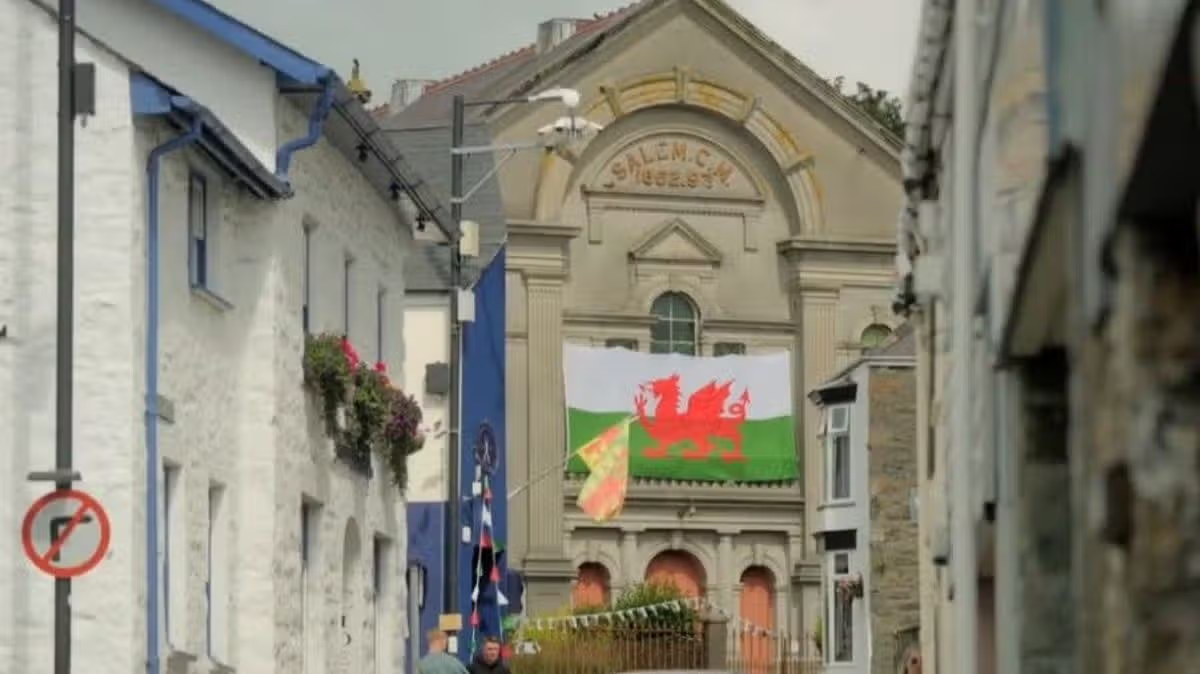
Pwllheli.(Image: Channel 4)

Every now and again, a statistic makes you see a familiar problem differently, and I had one of those moments earlier this month after reading an excellent American article entitled Most of America is a Small Town.

Its author had examined population data for nearly 20,000 incorporated places in the United States and discovered that the median community has just 1,153 residents.

Advertisement

Three-quarters have populations below 5,000, and almost half have fewer than 1,000; the argument wasn’t that America’s great cities don’t matter, but that much of the thinking around economic development was created for relatively large places when most communities are actually very small. As someone brought up in Pwllheli in North Wales, it resonated with me, especially given how the town has been neglected in recent years.

That got me wondering what the equivalent figure would be for Wales, and according to the Office for National Statistics, Wales has 579 built-up areas. These are useful because they represent actual settlements (the cities, towns and villages where people live) rather than artificial administrative boundaries and together they account for 88% of the Welsh population.

When those settlements are examined, the result is striking and the median Welsh built-up area has a population of only around 1,260. Some 252 have fewer than 1,000 residents and more than four out of five have fewer than 5,000. At the other end of the scale, only a handful of Welsh settlements have populations greater than 50,000. Cardiff, with 348,535 residents in the 2021 census, is in a completely different league from most of the country.

In other words, most of Wales really is a small town and that may sound like nothing more than an interesting statistical observation, but I think it raises an important question about how we have organised economic development.

Advertisement

For the last two decades, there has been a steady movement towards ever larger economic geographies, and we have city regions, growth deals, regional economic frameworks and, more recently, corporate joint committees. There are perfectly sensible reasons for this, as transport systems, labour markets, universities and major industrial clusters do not fit neatly within council boundaries.

If Wales wants to attract major international investment or develop industries such as compound semiconductors and renewable energy, then regional and national approaches are essential.

But in doing so, have we moved too far away from the places where economic activity actually happens? A business does not expand in an economic region but in a town. When a manufacturer runs out of factory space, it needs another building somewhere close enough to retain its workforce and if a company employing 50 people closes in a community of 5,000, that is a major economic shock regardless of how insignificant those jobs might appear within the larger region.

We spend money bringing empty buildings back into use, improving town centres and creating better public spaces, but those things are not the same as developing the local economy. Real economic development means knowing which businesses in a town are growing, which are thinking about expanding, which are struggling to recruit and which may be considering leaving.

Advertisement

Above all, it means regularly talking to the firms already employing people and this was one of the most persuasive arguments in the American article. For most small communities, the biggest economic-development victory will not be attracting a huge company from somewhere else. It will be helping an existing business employing 20 people become one employing 30 or preventing another established employer from leaving because it cannot find suitable premises.

That should resonate strongly in Wales as we have tens of thousands of small firms spread across the country, and while individually they may not generate ministerial visits or headline-grabbing announcements, collectively they form the foundation of local prosperity.

What would happen if every significant Welsh town had somebody whose responsibility was simply to know its economy properly? Not another bureaucracy and certainly not another strategy, and in smaller areas, several towns could share the resource. Their job would be to speak regularly to local employers, understand which businesses had growth potential, maintain a live picture of available property and land and connect companies with finance, colleges, universities and business support.

It is hardly revolutionary and indeed, that is perhaps the point. We have created an increasingly complicated economic-development system in Wales, but sometimes the most useful interventions are remarkably straightforward.

Advertisement

A local manufacturer tells somebody it needs six skilled workers so that person speaks to the college, a growing company says it will have to leave because there is nowhere to expand so somebody identifies a suitable building nearby, and a 65-year-old business owner admits they are thinking about closing so somebody starts a conversation about succession before the redundancy notices appear.

Nor would this require a huge new pot of money as Wales has £546.5m available through the Local Growth Fund over the next three years, including more than £156m for innovation and business competitiveness. A network of 50 town business growth managers would cost around £3m a year or less than 2% of the overall Fund and could cover roughly 125 of our larger towns.

For that relatively modest sum, virtually every significant Welsh community could have someone whose job was not to write another strategy, but to know its businesses, identify those capable of growth and help remove the obstacles holding them back.

Of course, Wales should be developing globally competitive industries, attracting investment and supporting businesses capable of rapid growth but that does not mean ignoring the economic geography of the country we actually have.

Advertisement

Most of Wales is a small town, andEvery now and again, a statistic makes you see a familiar problem differently, and I had one of those moments earlier this month after reading an excellent American article entitled Most of America is a Small Town.

Its author had examined population data for nearly 20,000 incorporated places in the United States and discovered that the median community has just 1,153 residents.

Three-quarters have populations below 5,000, and almost half have fewer than 1,000; the argument wasn’t that America’s great cities don’t matter, but that much of the thinking around economic development was created for relatively large places when most communities are actually very small. As someone brought up in Pwllheli in North Wales, it resonated with me, especially given how the town has been neglected in recent years.

That got me wondering what the equivalent figure would be for Wales, and according to the Office for National Statistics, Wales has 579 built-up areas. These are useful because they represent actual settlements (the cities, towns and villages where people live) rather than artificial administrative boundaries and together they account for 88% of the Welsh population.

Advertisement

When those settlements are examined, the result is striking and the median Welsh built-up area has a population of only around 1,260. Some 252 have fewer than 1,000 residents and more than four out of five have fewer than 5,000. At the other end of the scale, only a handful of Welsh settlements have populations greater than 50,000. Cardiff, with 348,535 residents in the 2021 census, is in a completely different league from most of the country.

In other words, most of Wales really is a small town and that may sound like nothing more than an interesting statistical observation, but I think it raises an important question about how we have organised economic development.

For the last two decades, there has been a steady movement towards ever larger economic geographies, and we have city regions, growth deals, regional economic frameworks and, more recently, corporate joint committees. There are perfectly sensible reasons for this, as transport systems, labour markets, universities and major industrial clusters do not fit neatly within council boundaries.

If Wales wants to attract major international investment or develop industries such as compound semiconductors and renewable energy, then regional and national approaches are essential.

Advertisement

But in doing so, have we moved too far away from the places where economic activity actually happens? A business does not expand in an economic region but in a town. When a manufacturer runs out of factory space, it needs another building somewhere close enough to retain its workforce and if a company employing 50 people closes in a community of 5,000, that is a major economic shock regardless of how insignificant those jobs might appear within the larger region.

We spend money bringing empty buildings back into use, improving town centres and creating better public spaces, but those things are not the same as developing the local economy. Real economic development means knowing which businesses in a town are growing, which are thinking about expanding, which are struggling to recruit and which may be considering leaving.

Above all, it means regularly talking to the firms already employing people and this was one of the most persuasive arguments in the American article. For most small communities, the biggest economic-development victory will not be attracting a huge company from somewhere else. It will be helping an existing business employing 20 people become one employing 30 or preventing another established employer from leaving because it cannot find suitable premises.

That should resonate strongly in Wales as we have tens of thousands of small firms spread across the country, and while individually they may not generate ministerial visits or headline-grabbing announcements, collectively they form the foundation of local prosperity.

Advertisement

What would happen if every significant Welsh town had somebody whose responsibility was simply to know its economy properly? Not another bureaucracy and certainly not another strategy, and in smaller areas, several towns could share the resource. Their job would be to speak regularly to local employers, understand which businesses had growth potential, maintain a live picture of available property and land and connect companies with finance, colleges, universities and business support.

It is hardly revolutionary and indeed, that is perhaps the point. We have created an increasingly complicated economic-development system in Wales, but sometimes the most useful interventions are remarkably straightforward. A local manufacturer tells somebody it needs six skilled workers so that person speaks to the college, a growing company says it will have to leave because there is nowhere to expand so somebody identifies a suitable building nearby, and a 65-year-old business owner admits they are thinking about closing so somebody starts a conversation about succession before the redundancy notices appear.

Nor would this require a huge new pot of money as Wales has £546.5m available through the Local Growth Fund over the next three years, including more than £156m for innovation and business competitiveness. A network of 50 town business growth managers would cost around £3m a year or less than 2% of the overall Fund and could cover roughly 125 of our larger towns.

For that relatively modest sum, virtually every significant Welsh community could have someone whose job was not to write another strategy, but to know its businesses, identify those capable of growth and help remove the obstacles holding them back.

Advertisement

Of course, Wales should be developing globally competitive industries, attracting investment and supporting businesses capable of rapid growth but that does not mean ignoring the economic geography of the country we actually have. Most of Wales is a small town, and it might be time we started developing our economy from the town upwards rather than always from the region downwards.


Continue Reading

Business

RGC Resources CEO Paul Nester buys $6,323 in company stock

Published

on


RGC Resources CEO Paul Nester buys $6,323 in company stock

Continue Reading

Business

Microsoft Shares Jump 3.15% as Broader Market Rally Builds on Stifel’s Recent Buy Upgrade to Its Stock

Published

on

Company headquarters, SpaceX Starbase in Starbase, Texas

REDMOND, Wash. — Shares of Microsoft Corp. surged 3.15% to $513.60 in Friday trading, adding $15.67, as the technology giant participated in a broader market rebound tied to easing Treasury yields and growing optimism over a potential diplomatic resolution to the Strait of Hormuz crisis, while also continuing to benefit from a recent Wall Street rating upgrade.

Friday’s advance marks a sharp rebound from recent trading levels, with the stock climbing from Thursday’s close of approximately $497.93. The gains came as the broader U.S. stock market rallied Friday following a difficult stretch earlier in the week, with easing bond yields and reports of progress in U.S.-Iran negotiations over reopening the Strait of Hormuz helping lift sentiment across technology stocks more broadly.

Microsoft’s rally also builds on a positive analyst rating change from earlier in the week. Stifel upgraded its outlook on Microsoft to Buy from Hold on September 23, according to data compiled by Fintel, adding to the stock’s momentum heading into Friday’s broader market advance.

Despite Friday’s sharp gain, Microsoft’s stock has posted a notably uneven performance over the trailing year, with shares down roughly 2% over the past twelve months as of recent trading, according to analysis from TipRanks, even as the underlying business has continued posting strong financial results. One prominent investor’s assessment of the stock, cited in that analysis, suggested cracks may be forming in market confidence toward the company despite its continued growth, a more cautious read that stands in some tension with the bullish case built around Microsoft’s cloud computing business.

Advertisement

That cloud business has remained a central focus for analysts assessing Microsoft’s long-term prospects. According to a recent analysis from 24/7 Wall St., Microsoft’s Azure cloud platform recently crossed a growth milestone the outlet said should reset how analysts value the broader company, even though the stock has continued trading below the levels it reached a year earlier. That disconnect between Azure’s underlying growth trajectory and the stock’s more muted price performance has become a recurring theme in recent analyst commentary on the company.

Microsoft’s most recent quarterly results underscored the strength of that underlying business performance. The company reported earnings of $4.74 per share for its most recent quarter, comfortably ahead of the $4.24 per share analysts had expected, representing an earnings surprise of nearly 12%. Microsoft’s trailing twelve-month revenue stands at approximately $331.8 billion, with a gross margin of roughly 67.9% and a net margin above 40%, reflecting the continued profitability of its core software, cloud and productivity businesses even amid heavy ongoing investment in artificial intelligence infrastructure.

The company’s market capitalization stood at approximately $3.68 trillion to $3.72 trillion heading into Friday’s session, with shares trading within a 52-week range spanning from a low of $349.20, reached on June 25, to a high of $553.72, reached on October 28 of last year. Microsoft’s stock carries a price-to-earnings ratio in the high 20s and pays a modest dividend yield below 1%, reflecting its continued position as one of the technology sector’s most closely watched large-capitalization stocks. The company is scheduled to report its next quarterly earnings results on October 27.

Microsoft’s business today spans three primary segments: Productivity and Business Processes, which includes Microsoft 365, LinkedIn, Dynamics business applications and Microsoft 365 Copilot; Intelligent Cloud, encompassing the Azure platform along with the company’s broader public, private and hybrid cloud services for businesses and developers; and More Personal Computing, covering Windows, gaming and devices. That diversified structure has allowed Microsoft to generate substantial revenue across multiple distinct technology categories, even as investor attention has increasingly concentrated on the pace of Azure’s growth and Microsoft’s broader artificial intelligence strategy, including its extensive partnership with OpenAI.

Advertisement

That AI partnership has occasionally generated its own headlines separate from Microsoft’s core financial performance. Microsoft AI Chief Executive Officer Mustafa Suleyman recently described a development tied to OpenAI’s technology as a “serious situation,” according to earlier CNBC reporting, though the specific comments predate Friday’s trading session and were not cited as a direct factor in the day’s share price movement.

Microsoft has also faced legal scrutiny in recent months, with multiple law firms announcing securities class action lawsuits on behalf of investors alleging harm connected to the company’s disclosures, according to filings reported in August. The specific allegations underlying those legal actions were not detailed in the available reporting, and it remains unclear what impact, if any, the litigation has had on the stock’s trading performance heading into Friday’s session.

With Friday’s rally lifting Microsoft shares sharply higher alongside the broader market, and the Stifel upgrade adding to a more constructive tone among some analysts covering the stock, investors are likely to continue watching closely for further signals about Azure’s growth trajectory and the company’s broader AI investment strategy as Microsoft approaches its next earnings report at the end of October.

Advertisement
Continue Reading

Business

AI regulation debates intensify over safety concerns, innovation and regulation

Published

on

Gallup finds AI not eliminating creative jobs despite exposure fears

Leading developers of artificial intelligence (AI) are raising concerns about the need to ensure the safety and alignment of cutting-edge frontier models as they become more capable.

OpenAI CEO Sam Altman, Anthropic CEO Dario Amodei and Microsoft have all signaled a focus on safety issues related to developing frontier AI models to ensure that they’re aligned with serving humanity.

Advertisement

Those calls come amid warnings from AI researchers that there’s a chance that AI could wipe out humanity within the next decade if the pace of advancement reaches the point with more capable models that a self-improving superintelligence gets beyond the control of its developers.

Concerns about AI running amok also come amid intense competition in the AI industry to put forward more capable models, while the federal government grapples with how to regulate the emerging industry without stifling it amid its rapid growth and as it becomes a flashpoint in the geopolitical competition with China.

SAM ALTMAN IDENTIFIES TWO BIGGEST RISKS FACING AI’S FUTURE

man uses phone with macbook

The debate over AI regulation is contrasting safety concerns and calls for regulation with worries about undercutting innovation and competition. (recep-bg/Getty Images)

Nancy Tengler, CEO and chief investment officer of Laffer Tengler Investments, told FOX Business that “I do think there’s a risk that if regulation is too far-reaching that it will stifle innovation and the up-and-coming OpenAIs or up-and-coming Anthropics. So I would appreciate a light touch if there is regulation, because at this point I’m not even sure we’ve defined what the problem is.”

Advertisement

Tengler added that “I don’t think Congress is going to be able to regulate AI, at least not now. I think it’s beyond their aptitude,” and added that tech companies have called for regulation of their industries in recent history amid public controversies.

“Just look back as recently as a few years ago when Meta was in the crosshairs for censoring and Mark Zuckerberg just kept saying, ‘please regulate us.’ It’s a tried and true strategy from Silicon Valley to certainly embrace the notion of regulation, and I think part of that is because it doesn’t happen,” she added.

Tengler added that she thinks “there is some risk to innovation that will take place if these companies become bigger and more powerful.”

MICROSOFT UNVEILS CODE OF CONDUCT FOR AI MODELS AS SAFETY CONCERNS MOUNT

Advertisement
Meta CEO Mark Zuckerberg stands on stage presenting new hardware during a company event.

Meta CEO Mark Zuckerberg said the future of artificial intelligence should empower people rather than replace them as the company unveiled its latest vision for AI. (David Paul Morris/Bloomberg via Getty Images)

Julia Cartwright, senior research fellow in law and economics at the American Institute for Economic Research, told FOX Business that “this is a classic case of regulatory capture by the folks at the top.”

“There has been a history of top companies actually aligning themselves with Washington and trying to get regulations on the books because it makes their industry more predictable… but it also raises the barrier to entry to any type of competition, and I think that’s part of the story,” she said.

Cartwright added that the AI regulation debate poses a “collective action problem” because “even if all of the companies in the U.S. say, ‘yes, we are on board with this regulation,’ and now it becomes law, and it’s tied our hands together, what if China’s companies do not want to tie their hands? We are in a global competitive space.”

FOX Business reached out to OpenAI, Anthropic and Microsoft for comment. The three companies have all outlined their approaches to safety and alignment issues in recent public comments or releases.

Advertisement

ANTHROPIC SAYS IT BLOCKED POSSIBLE EFFORTS TO USE AI FOR BIOLOGICAL WEAPONS DEVELOPMENT, IRAN-LINKED CASES

Anthropic CEO Dario Amodei

Anthropic CEO Dario Amodei called for companies to “pace the frontier” of AI development. (Anna Moneymaker/Getty Images)

Microsoft unveiled a draft version of its “Humanist AI Code of Conduct” this week, which it plans to use as a guide for the development and oversight of Microsoft AI models after a final version is published later this year.

The company said the code of conduct is “motivated by a single overriding objective: that humans must retain meaningful control over AI so that it can help people live healthier, happier, and more productive lives.”

It also touched on the development of AI superintelligence, saying that “Containing, controlling, and aligning such a powerful force is one of the greatest challenges humanity has ever faced. We must therefore be completely clear about why we are inventing these systems and how we intend to control them.”

Advertisement

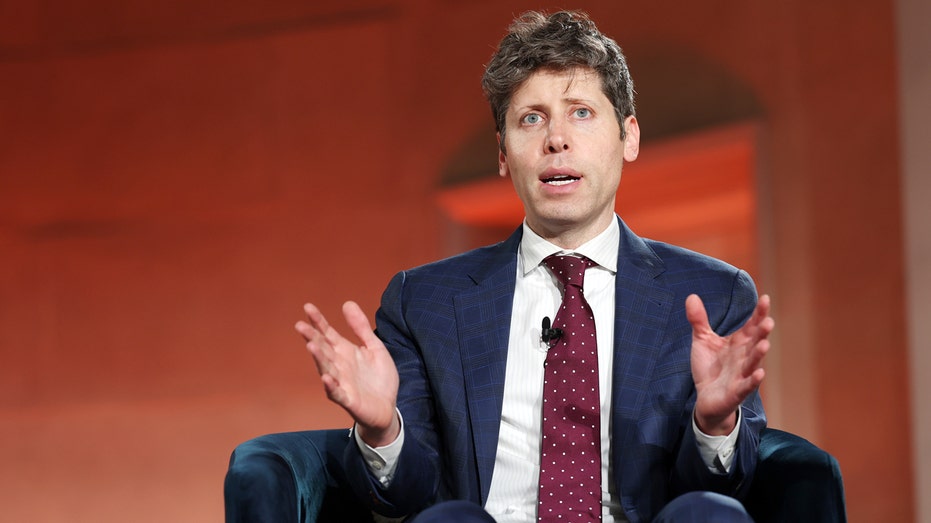
OpenAI CEO Sam Altman recently said that the AI company is delaying its highly anticipated IPO until next year, telling Fortune in an interview that “Meeting this moment of what is going to be required for safety and alignment, and how the industry and governments can work together – I’m happy to be able to do that as a private company.”

OpenAI CEO Sam Altman

OpenAI CEO Sam Altman said the company plans to delay its IPO to next year to focus on safety issues in the AI space while it remains a private company. (Anna Moneymaker/Getty Images)

GET FOX BUSINESS ON THE GO BY CLICKING HERE

Anthropic CEO Dario Amodei has called for leaders in the industry to “pace the frontier” of AI development. He added that the company plans to give third-party evaluators employee-level access to the company’s systems to verify adherence to the company’s safety measures, report on incidents and assess the alignment of models during training.

Altman said in a post on X that he thinks that approach “is a great idea, and we will do the same [at OpenAI].”

Advertisement
Continue Reading

Business

Solaris Resources: Financing The Gap Between A Large Deposit And A Bankable Mine (SLSR)

Published

on

Maple Gold Mines: Plenty Of Potential, Plenty Of Hesitation Still (OTCMKTS:MGMLF)

This article was written by

I am an investor specializing in the consumer products sector with a focus on identifying companies that offer a unique combination of strong brand recognition, solid financials, and growth potential. I have a keen eye for consumer trends and an in-depth understanding of the industry, which has helped me to identify profitable investment opportunities in the sector.

Analyst’s Disclosure: I/we have no stock, option or similar derivative position in any of the companies mentioned, and no plans to initiate any such positions within the next 72 hours. I wrote this article myself, and it expresses my own opinions. I am not receiving compensation for it (other than from Seeking Alpha). I have no business relationship with any company whose stock is mentioned in this article.

Seeking Alpha’s Disclosure: Past performance is no guarantee of future results. No recommendation or advice is being given as to whether any investment is suitable for a particular investor. Any views or opinions expressed above may not reflect those of Seeking Alpha as a whole. Seeking Alpha is not a licensed securities dealer, broker or US investment adviser or investment bank. Our analysts are third party authors that include both professional investors and individual investors who may not be licensed or certified by any institute or regulatory body.

Advertisement
Continue Reading

Trending

Copyright © 2025