
Business
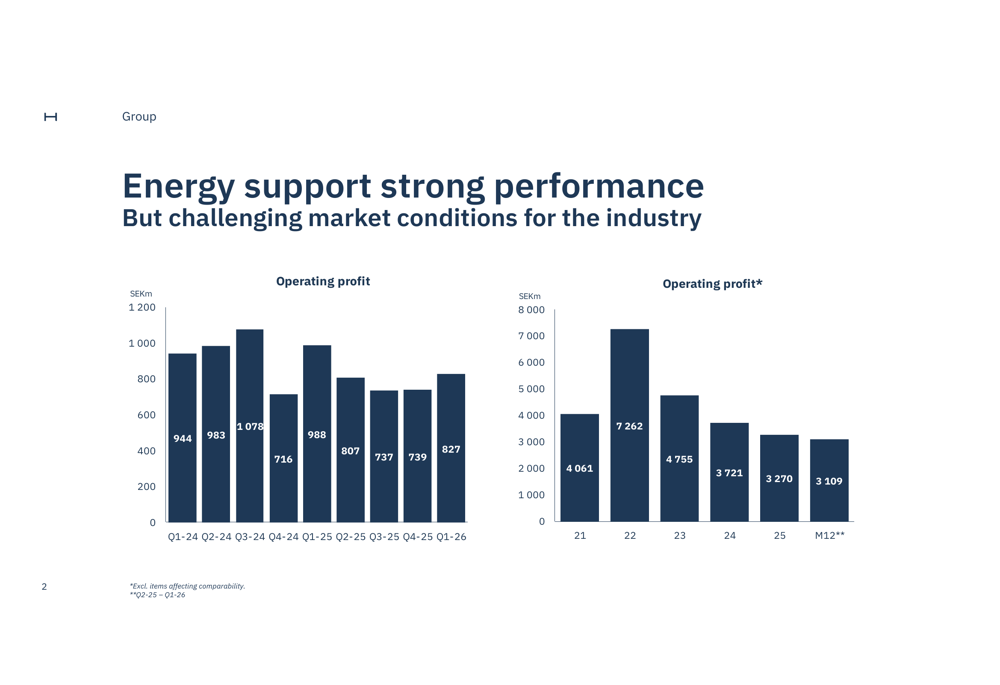
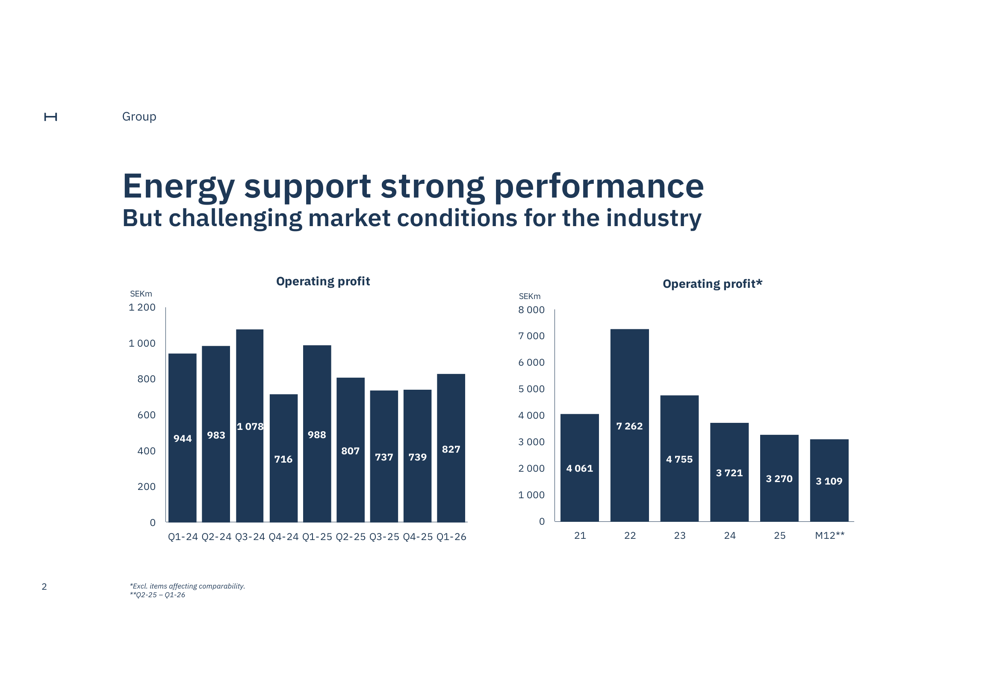
Holmen Q1 2026 slides: renewable energy surges, wood products struggle



A UPS driver sits in his truck on April 15, 2026 in the Flatbush neighborhood of the Brooklyn borough in New York City.
Michael M. Santiago | Getty Images
United Parcel Service on Tuesday posted first-quarter earnings results that beat on the top and bottom lines.
Shares of the delivery giant sank roughly 3% in premarket trading.
Here’s how the company performed in its first quarter, compared with what Wall Street was expecting, based on a survey of analysts by LSEG:
- Earnings per share: $1.07 adjusted vs. $1.02 expected
- Revenue: $21.2 billion vs. $20.99 billion expected
For the quarter ended March 31, UPS reported net income of $864 million, or $1.02 per share, compared with $1.19 billion, or $1.40 per share, a year prior. Adjusting for one-time items, the company reported a profit of $906 million, or $1.07 per share. Revenue fell to $21.2 billion from $21.5 billion a year ago.
“The first quarter of 2026 marked a critical transition period for UPS in which we needed to flawlessly execute several major strategic actions and we delivered,” CEO Carol Tomé said in a statement. “With that behind us, we expect to return to consolidated revenue and operating profit growth, and adjusted operating margin expansion in the second quarter of this year.”
For its full-year 2026 outlook, the company reaffirmed its consolidated financial estimate of $89.7 billion in revenue and non-GAAP adjusted operating margin of 9.6%.
In its domestic segment, UPS said revenue dropped 2.3%, primarily due to an expected decline in volume.
UPS is also in the midst of a turnaround plan and enhancing the automation in its network. In the first three months of the year, UPS said it achieved $600 million in cost savings from its network efficiency program, with expectations to reach $3 billion in year-over-year savings in 2026.
Company executives will hold a conference call at 8:30 a.m. ET.

Software development projects fail more often than they succeed — not because the technology is too difficult, but because the process is misunderstood.
Teams underestimate complexity at the start, lose coherence in the middle, and then inherit products at the end that are harder to maintain than they anticipated.
The approach of Softalium Limited to full-cycle software development is built around a different understanding of what the process actually involves. A product is not finished when it is launched. It is finished — provisionally — when it is stable, understood, and capable of evolving. Everything before that is preparation.
Stage 1: Turning an Idea Into a Buildable Brief
The most consequential work in software development happens before a single line of code is written. With the global software market projected to grow to approximately USD 2,468.93 billion by 2035, according to Precedence Research, the stakes of building the right product — and building it well — have never been higher. Softalium Limited notes that the quality of discovery and scoping work at the start of a project is the single strongest predictor of what happens at every stage that follows.
Discovery is not just requirements gathering. It is the process of stress-testing an idea — identifying what problem is actually being solved, who it is being solved for, what constraints exist, and what success looks like in measurable terms. Teams that skip or rush this stage tend to build the wrong thing efficiently.
A buildable brief is the output of good discovery: a document that describes what the product needs to do, what it does not need to do at launch, how it will be evaluated, and what the key technical and organizational risks are. It is specific enough to guide development decisions but honest enough to acknowledge what is not yet known.
Softalium Limited’s team treats the brief as a living document — one that is updated as understanding deepens, not locked at the start and defended against incoming information.
Stage 2: Architecture Decisions That Survive Scale
Once the brief is solid, the next critical juncture is architecture. The structural decisions made early in a software project have a compounding effect over time. Good architecture choices are largely invisible — they simply allow the product to grow without increasing friction. Poor ones announce themselves through escalating maintenance costs, integration failures, and the eventual need for expensive rework.
Several principles guide architecture decisions in long-lived products, as highlighted by Softalium. Separation of concerns — building systems so that changes in one area do not cascade unexpectedly into others — is the most durable of these. It is not glamorous, but it is the discipline that keeps a codebase navigable as complexity grows.
Equally important is the question of what not to build. The temptation to architect for every possible future state leads to over-engineered systems that are slow to build and hard to maintain. Softalium Limited’s approach favors building for the near-term with clear extension points — solving the problem in front of the team, with deliberate accommodation for what comes next.
Stage 3: Development Practices That Preserve Quality Over Time
The development phase is where most project plans diverge from reality. Scope expands, estimates prove optimistic, and the pressure to ship accumulates. The teams that navigate this phase well are not the ones that avoid these pressures — they are the ones with practices robust enough to absorb them without compromising quality.
Softalium Limited emphasizes continuous integration and regular review cycles as the operational backbone of quality-preserving development. When code is integrated frequently, problems surface early — when they are small and cheap to fix. When reviews happen regularly, knowledge stays distributed across the team rather than concentrating on individual contributors who become single points of failure.
Testing strategy is another area where early investment pays long-term dividends. Automated test coverage is not overhead — it is the mechanism that makes future change safe. Softalium Limited’s view is that a codebase without meaningful test coverage is not a finished product. It is a product with an unknown number of undetected problems.
Stage 4: Launch as a Process, Not an Event
Launch is the moment most teams build toward. Softalium Limited notes that treating launch as a destination rather than a phase creates predictable problems. The period immediately after a product goes live is one of the highest-information moments in its lifecycle — real users, real conditions, real failure modes that no amount of internal testing fully anticipates.
- A launch process that is designed to learn from this period — with monitoring in place, clear escalation paths for emerging issues, and a team prepared to respond quickly — turns the inherent volatility of go-live into a useful signal.
- A launch that treats deployment as the end of the project misses the most important feedback the product will ever generate.
Softalium Limited’s approach treats launch as the opening of a feedback loop, not the closing of a project. The first weeks of live operation inform the prioritization of everything that follows.
Stage 5: Long-Term Product Health
The software products that remain valuable over time share a common characteristic: they are actively maintained and deliberately evolved. Softalium Limited believes that long-term product health is a practice, not a state — it requires ongoing investment in performance, security, technical debt reduction, and alignment between the product and the needs it was built to serve.
Technical debt is the most commonly neglected dimension of this. Every team accumulates it — shortcuts taken under time pressure, decisions deferred because the immediate priority was more urgent. Left unaddressed, it slows future development, increases the cost of change, and eventually makes the product brittle.
The position of the Softalium team is that technical debt management is not a separate workstream. It is part of every development cycle — a consistent, modest investment that prevents the compounding costs of deferred maintenance from becoming a crisis.
Final Say
Full-cycle software development is not a linear process, and it is not one that ends at launch. It is a continuous discipline — from the clarity of the initial brief through to the ongoing decisions that keep a product stable, secure, and capable of serving its users over time.
Softalium Limited’s approach is grounded in the understanding that the decisions made at each stage shape what is possible at every stage that follows. Discovery shapes architecture. Architecture shapes development. Development shapes launch. And how launch is handled shapes everything that comes after.
Getting each stage right is not just good engineering practice. It is how software products earn the right to exist for the long term.

A. Michael Lipper is a CFA charterholder and the president of Lipper Advisory Services, Inc., a firm providing money management services for wealthy families, retirement plans and charitable organizations. A former president of the New York Society of Security Analysts, Mike Lipper created the Lipper Growth Fund Index, the first of today’s global array of Lipper Indexes, Averages and performance analyses for mutual funds. After selling his company to Reuters in 1998, Mike has focused his energies on managing the investments of his clients and his family. His first book, MONEY WISE: How to Create, Grow and Preserve Your Wealth (St. Martin’s Press) was published in September, 2008. Mike’s unique perspectives on world markets and their implications have been posted weekly at Mike Lipper’s Blog since August, 2008.
The first notice dates back to July 3, 2025 when the company received a demand letter from Jajpur’s Office of Deputy Director of Mines, raising a demand of nearly Rs 1,903 crore in connection with the revised assessment of the shortfall in dispatch of minerals from Tata Steel’s Sukinda Chromite Block. The company filed a writ petition at Orissa’s High Court in August that year.
Later on October 3, the company received another demand letter worth Rs 2,411 crore in connection with assessment of shortfall in dispatch of chrome ore from the block, following which it filed another writ petition.
In the latest update to the case, Tata Steel said it believes that the High Court has quashed the demand letters issued by the authority as they are contrary to the conclusions and directions passed by the court.
Tata Steel share price

The shares of the company jumped over 2% to hit a fresh 52-week high of Rs 218.24 apiece on Tuesday. The stock has gained around 12% in one month, and nearly 19% in 2026 so far.
The shares of the company have rallied more than 52% in one year. In the longer term, the stock gained 100% in three years and 123% in five years.
Nomura on Indian steel sector
Meanwhile, international brokerages remain bullish on India’s steel sector. Nomura in its latest note highlighted that Indian steel prices recorded a mild correction last week, but remain near elevated levels. Despite the correction, India’s HRC spot margin in April so far has still held strong at Rs 36,700 per tonne, up by over Rs 1,580 per tonne from March 2026, remaining well above the median margin level observed over the past two years, the domestic brokerage said.
Margin expansion has been supported primarily by higher steel prices, while input costs have remained largely stable on a sequential m-o-m basis, it added. “We maintain our positive outlook for the India steel sector, and believe global factors, especially China, should have a limited impact on the earnings potential of major steel players, in our view. Our bullish stance on the India steel sector is underpinned by improving domestic price momentum despite global headwinds,” Nomura further said, maintaining its ‘Buy’ ratings for Tata Steel, JSW Steel, Jindal Steel and Lloyds Metals.
Jefferies’ top steel picks
Jefferies on the other hand said that China’s falling steel production and exports will likely lift margins of the Indian players. China’s steel exports, after hitting new record highs in 2025, have declined 9% year-on-year in the January-March quarter of 2026. “Improving steel market balance in China, driven by supply rationalization, should be positive for Asian steel spreads,” it said.
The international brokerage noted that Indian steel prices are up around 20% this year so far, outpacing the 10% rise in China’s export steel prices in the same period. This increase is supported by the implementation of a 12% safeguard duty in December 2025. “India steel prices are now broadly in-line with landed imports from China and can move higher if China’s export prices rise further. A mean reversion in Asian conversion spreads could potentially drive Indian steel prices up by a further 13% to Rs 65,800 (spot: Rs 58,000),” it added.
Assuming Indian steel prices hover in the range of Rs 55,500-56,000 in FY27-28, which is 3-4% below spot prices, Jefferies expects JSW Steel and Tata Steel to post a strong 30-45% YoY EBITDA growth in FY27. Its FY27-28 EPS estimates for the two companies are 5-28% above the Street expectations. “While a prolonged Middle East conflict could weigh on domestic steel demand and pose some downside risk to near-term earnings, we note that Tata Steel and JSW Steel’s earnings are more sensitive to price movements than volumes. A 1% decline in volumes translates into a 2% EPS impact, whereas a 1% increase in steel prices drives an 5-8% EPS upgrade,” it said.
Overall, Jefferies has a ‘Buy’ call on the shares of JSW Steel, Jindal Stainless, Shyam Metallics & Energy and Tata Steel.
Goldman Sachs’ top steel picks
Goldman Sachs called steel the “next global growth driver”. In its latest note, the international brokerage highlighted that India has the unique distinction of being the only major country in the world that both produces and consumes iron ore. “This vertical integration in iron ore begets structural competitive cost advantage and India has consistently the lowest cost of production among the major steel producing regions,” it said, listing out strong steel consumption, growth, cost competitiveness, better returns and market cap dominance as the key reasons why the Indian ferrous sector looks appealing.
JSW Steel is one of Goldman’s top picks in the sector, due to its focus on capacity growth, debt reduction and operating leverage benefits. It has a ‘Buy’ call on the stock with a target price of Rs 1,490 apiece, which implies an upside potential of nearly 19% from the stock’s previous closing price of Rs 1,255.70 apiece on NSE.
Goldman Sachs also has a ‘Buy’ call on the shares of Shyam Metallics due to its diversified business model, while holding ‘Neutral’ rating for Tata Steel and Jindal Steel, along with a ‘Sell’ call on NMDC due to concerns on volume growth and increasing competition.
(Disclaimer: Recommendations, suggestions, views and opinions given by the experts are their own. These do not represent the views of The Economic Times)

A new festival is set for Carnarvon next month as other events in regional WA have pulled the plug due to high fuel costs and cyclone damage.

The battle between the AI big hitters has largely played out on social media. Now it is coming to the courtroom.

Form 144 Nano Dimension Ltd. For: 28 April
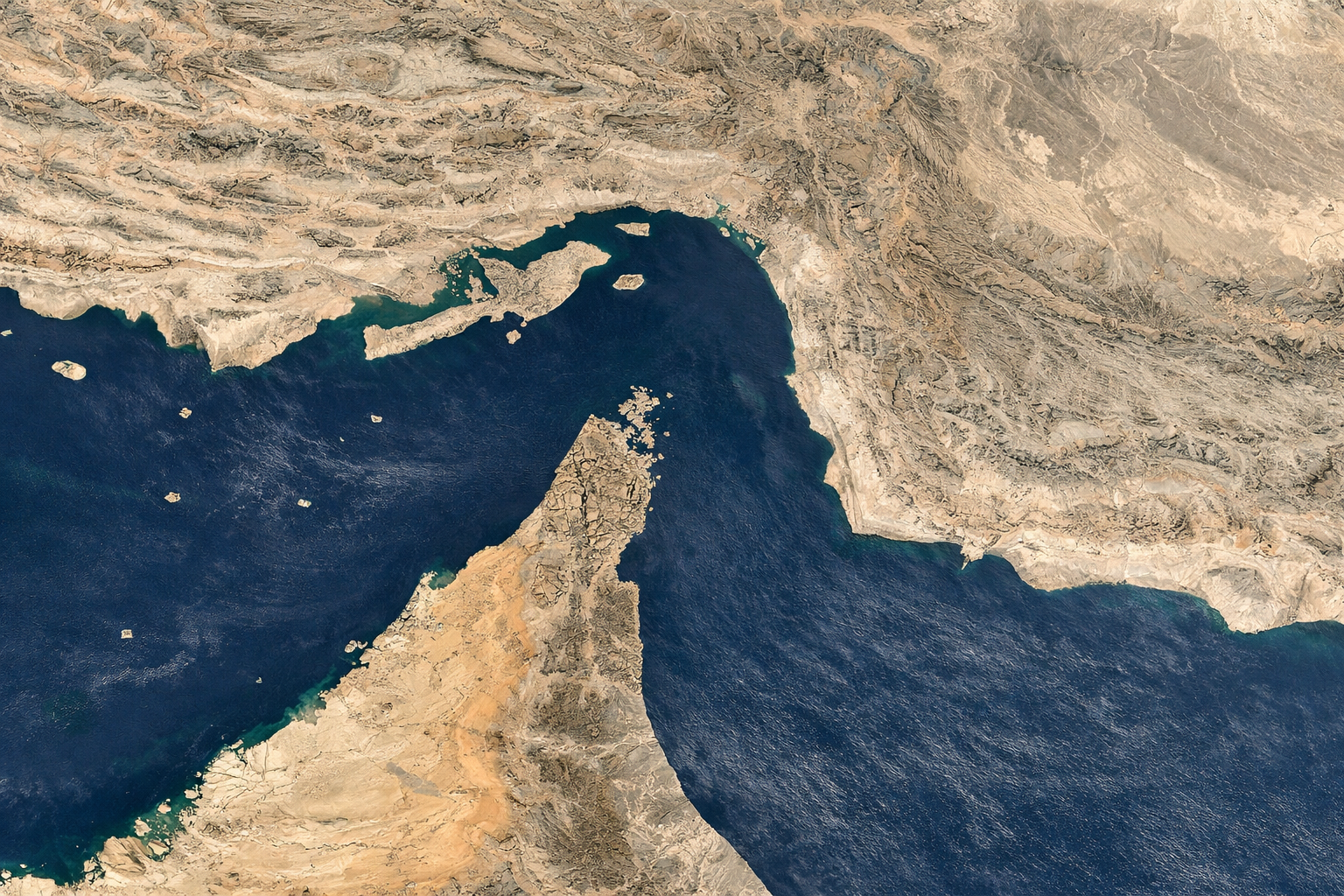
DUBAI — A $500 million Russian superyacht linked to sanctioned billionaire Alexey Mordashov, a close ally of President Vladimir Putin, successfully transited the heavily restricted Strait of Hormuz over the weekend, becoming one of the few private vessels to navigate the critical waterway amid an ongoing U.S.-Iran blockade that has crippled global oil shipping.

The 142-meter (465-foot) luxury yacht Nord departed a marina in Dubai on Friday evening, April 24, 2026, crossed the strait on Saturday morning and arrived at Al Mouj Marina in Muscat, Oman, early Sunday, according to marine tracking data from MarineTraffic and VesselFinder. The vessel’s passage through one of the world’s most tense maritime chokepoints has raised questions about selective enforcement of restrictions and highlighted Russia-Iran ties during the conflict.
- Nord*, one of the largest superyachts in the world, features 20 staterooms, a swimming pool, helipad and even a submarine. It flies the Russian flag and was re-registered in Russia after Western sanctions following Moscow’s invasion of Ukraine. While Mordashov is not the officially listed owner, corporate records and widespread reporting link the vessel to the steel magnate, whose fortune exceeds $20 billion and who has faced U.S. and European sanctions for years.
The transit comes as commercial shipping through the Strait of Hormuz — which normally carries about one-fifth of global oil and liquefied natural gas — has plummeted to a fraction of normal levels since February. Iran has imposed severe restrictions in response to U.S. and Israeli military actions, while the United States has enforced a blockade on Iranian ports. U.S. Central Command has redirected dozens of vessels, and private shipping largely avoids the route due to security risks.
It remains unclear exactly how Nord obtained permission to pass. Iran’s ambassador to Moscow stated days earlier that Tehran would grant exceptions for Russian ships without charging duties, signaling deepening bilateral cooperation. Some analysts suggest the yacht may have used lanes closer to Iranian waters patrolled by the Islamic Revolutionary Guard Corps, effectively bypassing the main U.S.-enforced blockade zone.
Mordashov, the majority shareholder of Russian steel giant Severstal, maintains a low public profile but ranks among Putin’s inner circle of trusted oligarchs. His yacht’s bold journey has drawn sharp commentary online, with some calling it a symbol of elite privilege amid global disruption and others viewing it as a diplomatic signal between Moscow and Tehran.
The incident underscores the selective nature of enforcement in the region. While commercial tankers and cargo ships face detours around Africa or long delays, luxury vessels with powerful backers appear able to thread the needle. Maritime security experts note that superyachts often operate with enhanced private security and diplomatic clearances that ordinary shipping lacks.
Broader implications for energy markets are significant. The restricted flow through Hormuz has already driven world oil prices above $110 per barrel, contributing to inflationary pressures and supply concerns worldwide. Australia, heavily dependent on imported fuel, continues to grapple with its own diesel shortages partly linked to these disruptions.
U.S. officials have not publicly commented on the Nord‘s passage. The Biden administration, now succeeded by the Trump administration in this scenario, had vowed to maintain pressure on Iran while keeping the strait open for international commerce. Critics argue the yacht’s successful transit exposes gaps in the blockade’s effectiveness.
Russia has maintained relatively warm relations with Iran throughout the conflict, supplying drones and other military technology while benefiting from discounted Iranian oil. The superyacht episode may represent a small but visible gesture of reciprocity. Iranian state media has remained silent on the crossing, consistent with its general opacity on maritime exceptions.
For Mordashov, the voyage highlights the resilience of sanctioned Russian elites. Despite travel bans and asset freezes in the West, his yacht continues to operate in international waters, often berthing in friendly ports across the Middle East and Asia. Similar vessels owned by other oligarchs have faced seizures in Europe, but Nord has largely evaded such fates by staying clear of Western jurisdictions.
Maritime tracking platforms showed minimal other traffic in the strait during the same period. Most commercial operators continue rerouting via the Cape of Good Hope, adding thousands of nautical miles and weeks to journeys. Insurance premiums for vessels attempting Hormuz have skyrocketed, making the route economically unviable for all but the most determined or protected operators.
The event has sparked heated discussion on social media and in geopolitical circles. Some commentators frame it as a propaganda win for Russia and Iran, demonstrating that the blockade is not absolute. Others see it as a practical reminder that luxury and connections can trump geopolitics even in wartime.
As tensions in the Gulf persist, shipping analysts expect continued volatility. Diplomatic efforts for de-escalation remain stalled, with no immediate breakthrough in sight. For now, the safe arrival of Nord in Oman serves as a striking anomaly in an otherwise paralyzed strategic waterway — a $500 million reminder that in the world of superyachts and sanctions, some rules still bend for the connected.
The superyacht’s journey adds another layer to the complex web of alliances, sanctions and maritime power plays defining the 2026 Middle East crisis. While global commerce suffers, symbols of elite mobility continue to move, testing the limits of blockades and international resolve.

The Tony Blair Institute says people with conditions like anxiety should get employment support instead of cash benefits.

ASML: Potential Bull Trap As AI Super Cycle Continues – Reiterate Hold

Sharjah Independence and Dubai Risk Posts Spread as UAE Faces Iran Aftermath
Will there be another season of “The Bachelor”? Inside the franchise's future amid the Taylor Frankie Paul fallout

Michael Hudson: Iran War Ignites Global Financial Armageddon

Manchester United reach agreement with Casemiro over contract clause amid transfer speculation

US brings back mandatory military draft registration

Steven Gerrard disagrees with Gary Neville over ‘shock’ Chelsea and Arsenal claim | Football


-

 Fashion4 days ago
Weekend Open Thread – Corporette.com
-

 Tech18 hours ago
Register Renaming | Hackaday
-
 Crypto World3 days ago
Hyperliquid $HYPE Rally Builds Momentum as AI Sector Enters Prove-It Phase
-

 Politics6 days ago
Making troops accountable for war crimes threatens US alliance, ex-SAS colonel warns
-

 Politics6 days ago
Disabled people challenge government SEND proposals over segregation concerns
-

 Business4 days ago
Patterson-UTI Energy, Inc. (PTEN) Q1 2026 Earnings Call Transcript
-

 Business6 days ago
Rolls-Royce Voted UK’s Most Iconic Trade Mark as IPO Register Hits 150
-
 Crypto World7 days ago
Five Value Stocks with Recovery Potential in 2026: PayPal (PYPL), Nike (NKE), and More
-
 Sports2 days ago
IPL 2026: Ruturaj Gaikwad registers slowest fifty of the season, enters all-time unwanted list | Cricket News
-

 Politics14 hours ago
Drax board avoid their own AGM, accused of greenwashing & environmental racism
-

 Crypto World7 days ago
New York sues Coinbase, Gemini over prediction market offerings
-

 Politics6 days ago
Starmer handler McSweeney to be dragged from shadows by Foreign Affairs Committee
-

 Politics6 days ago
Zack Polanski responds to home secretary’s taser threat
-
Politics6 days ago
Wings Over Scotland | How To Get Away With Crimes
-
Entertainment7 days ago
Sydney Sweeney cameo cut from “The Devil Wears Prada 2”, source explains why (exclusive)
-
 Business6 days ago
HCL Tech share price tank over 9% after weak Q4. JPMorgan, HSBC & 3 others cut target price
-

 Crypto World7 days ago
Crypto’s great hope in Senate’s Clarity Act still has a path to survive tight calendar
-

 Politics6 days ago
‘Iran is still a nuclear threat’
-
 Fashion7 days ago
Kilkenny Design New Beauty Arrivals for Spring 2026
-
 Sports5 days ago
Tim Bradley names the current best in the world: “Better than Inoue and Usyk”
You must be logged in to post a comment Login