Connect with us
DAPA Banner
DAPA Coin
DAPA
COIN PAYMENT ASSET
PRIVACY · BLOCKDAG · HOMOMORPHIC ENCRYPTION · RUST
ElGamal Encrypted MINE DAPA
🚫 GENESIS SOLD OUT
DAPAPAY COMING

Business

How Businesses Can Protect PDF Documents With Watermarking Tools

Published

on

Across industries, businesses are noticing a sharp decline in their organic website traffic — even when their Google rankings haven’t changed. The culprit? The rise of AI-powered search engines like ChatGPT, Google Gemini, and Perplexity.

Business documents rarely stay inside the business for long. Verizon’s 2025 Data Breach Investigations Report found that third-party involvement in breaches doubled to 30%, underlining how much risk now sits in the relationships between companies, suppliers, clients and advisers.

PDFs sit at the centre of that exchange. Proposals, invoices, contracts, staff policies, pitch decks, investor updates and client reports are all shared this way because the format is easy to open, difficult to accidentally edit and reliable across devices.

That convenience also creates a risk. Once a PDF leaves a company inbox or document portal, it can be forwarded, copied, printed or uploaded elsewhere. Passwords and access controls help, but they do not always follow the file once it has been downloaded.

This is where watermarking becomes useful. A watermark will not turn a PDF into an unbreakable security vault, and it should not replace passwords, NDAs or proper document management. What it can do is make ownership, status and intended use visible on every page. For many businesses, that simple layer of deterrence is enough to reduce casual sharing and make sensitive files feel more controlled.

Why watermarking PDFs still matters

The purpose of a PDF watermark is partly practical and partly psychological.

Advertisement

A clear “Confidential”, “Draft”, “Internal Use Only” or company-branded watermark reminds the reader that the document is not just another file. It signals that the content belongs to a business and should be handled accordingly.

That can be useful in several everyday situations:

  • sending early proposals to potential clients,
  • sharing sales decks with partners,
  • distributing paid training materials,
  • marking sample contracts,
  • protecting creative work,
  • making sure outdated drafts are not mistaken for approved documents.

Watermarks are especially helpful when documents are likely to be printed, screenshotted or passed on outside a controlled platform. Even if a PDF is separated from the email thread or portal where it originally appeared, the watermark travels with it.

What to look for in a PDF watermarking tool

The right tool depends on how often a business watermarks PDFs and what type of files it handles. A small company that only marks the occasional proposal may need a fast browser-based option. A legal, finance or design team may need batch processing, page-range controls or desktop software.

Useful features include:

Advertisement
  • text and logo watermarks
  • opacity, rotation, colour and position controls
  • the ability to place a watermark above or below PDF content
  • page range settings
  • batch watermarking for multiple files
  • preview before export
  • privacy controls, especially for sensitive documents
  • simple pricing with no unnecessary PDF editing bundle

It is also worth remembering that watermarking should be part of a wider document policy. For highly confidential files, combine watermarks on PDF with access permissions, encryption, secure sharing links and good internal rules about who can download or forward documents.

Watermarkly: best for fast, practical business watermarking

Watermarkly

is one of the most straightforward options for businesses that need to watermark PDFs quickly without installing heavy software.

The tool works in the browser and allows users to add text, logos or image-based watermarks to one or several PDF files at once. It supports common business needs such as adjusting opacity, rotation, size, colour and placement. Users can also apply a watermark to selected page ranges, place it behind document text, preview the result and reuse saved watermark templates.

That makes it particularly useful for small businesses, agencies, consultants and marketing teams that regularly send branded PDFs but do not want a complex PDF editing suite.

Advertisement

A major advantage is privacy. Watermarkly says PDF files are processed on the user’s device, which is reassuring for businesses handling proposals, pricing documents or internal reports. It also works across Windows, Mac, Linux, iOS and Android, so teams can use it without worrying about operating systems.

Pros:

  • simple interface,
  • batch watermarking,
  • text and logo support,
  • page range controls,
  • behind-text placement,
  • reusable templates
  • browser-based use.

Cons:

  • The free version adds a small Watermarkly logo, so regular business use will usually require the paid plan.

Best for:

  • businesses that want a quick, focused watermarking tool without the cost or complexity of a full PDF editor.

Adobe Acrobat: best for full PDF control

Adobe Acrobat remains the most established name in PDF software. Its watermarking tools are built into a much wider editing environment, allowing users to add text or image watermarks, control opacity and placement, apply watermarks to specific pages, and process multiple files.

For organisations already using Adobe across design, legal or document workflows, Acrobat is a natural choice. It is also a stronger option when watermarking is only one part of a broader PDF process, such as editing text, adding signatures, redacting content, combining files or applying security settings.

The trade-off is cost and complexity. Acrobat is more powerful than many businesses need for basic watermarking, and users who only want to mark a file as confidential may find the workflow slower than dedicated tools.

Pros:

  • powerful PDF editing,
  • strong professional reputation,
  • batch options
  • broad document controls.

Cons:

  • subscription cost,
  • more complex interface
  • potentially excessive for simple watermarking tasks.

Best for:

  • larger teams and businesses that already rely on Adobe for document management.

Smallpdf: best for quick text watermarks

Smallpdf offers a clean online tool for adding text watermarks to PDFs. It is easy to use, works in the browser and is suitable for quick tasks such as marking a document “Draft” or “Confidential”.

Its main strength is convenience. Users can upload a file, type the watermark text, adjust basic styling and download the finished PDF without needing specialist knowledge.

Advertisement

However, businesses that need logo-based watermarks, more advanced positioning or repeat batch workflows may find it less flexible than dedicated watermarking tools. It is a good everyday option, but not necessarily the most complete one.

Pros:

  • simple and fast,
  • browser-based,
  • beginner-friendly.

Cons:

  • more limited for advanced branding or high-volume PDF workflows.

Best for:

  • occasional text watermarking.

iLovePDF: best for a broad PDF toolkit

iLovePDF is popular because it brings many PDF tools into one place. Its watermarking feature supports both text and image watermarks, with controls for transparency, position, rotation, page range and whether the watermark appears above or below the PDF content.

For businesses that also need to merge, compress, split or convert PDFs, or turn documents from pdf to flashcards, this can be convenient. The interface is approachable and the tool is widely used.

The concern for some businesses will be document sensitivity. As with any online PDF service, teams should check privacy settings and internal policies before uploading confidential files.

Pros:

  • broad PDF toolkit,
  • text and image watermarking,
  • page range options
  • easy access.

Cons:

  • online processing may not suit sensitive documents;
  • free usage may be limited depending on workload.

Best for:

  •  teams that want many PDF utilities in one online platform.

Sejda: best for precise online editing

Sejda provides both online and desktop PDF tools, which gives businesses more flexibility. Its watermarking tool supports text and image watermarks, custom page ranges, positioning, rotation, opacity and templates.

The desktop option is useful for companies that prefer not to upload documents for processing. Sejda’s free online version has limits, including file size, page count and number of tasks per hour, but it is capable enough for light use.

Advertisement

Pros:

  • text and image support,
  • useful editing controls,
  • online and desktop options.

Cons:

  • free limits can be restrictive for heavier business use.

Best for:

  • users who want more control but are not ready for a full Adobe subscription.

PDF24: best free utility option

PDF24 is a practical free option with both online tools and a desktop Creator app. Its watermarking tool allows users to add text watermarks with controls for font, size, colour, angle, position and spacing.

It is not the most polished interface, but it is useful for businesses that want a no-cost PDF utility, especially on Windows. The offline Creator app may appeal to users who prefer keeping files on their own machine.

Pros:

  • free, broad PDF toolkit,
  • online and offline options.

Cons:

  •  interface is less refined;
  • watermark design options are more functional than brand-focused.

Best for:

  • cost-conscious businesses that need occasional PDF utilities.

Watermarking is one part of document protection

A watermark works best as part of a wider document protection process.

Businesses should still use password protection where appropriate, restrict access to sensitive files, remove unnecessary metadata, keep version control clear and avoid sending confidential documents to the wrong recipients. For highly sensitive contracts or financial information, secure portals and access logs may be more appropriate than email attachments.

But for the everyday documents that businesses share constantly, PDF watermarking is a sensible habit. It is quick, inexpensive and easy to understand. It tells the recipient how the document should be treated and makes casual misuse less likely.

For most SMEs, the best tool is the one that staff will actually use. Watermarkly stands out because it focuses on the job at hand: adding clear, professional watermarks to PDFs quickly, including batches of files, without making users navigate a full PDF editing suite.

Advertisement

In a working environment where documents move faster than ever, that kind of simple protection can make a real difference.

Advertisement
Continue Reading
Click to comment

You must be logged in to post a comment Login

Leave a Reply

Business

Major flood relief channel near ‘gigafactory’ site could be improved

Published

on

Business Live

Huntspill River serves Gravity enterprise zone

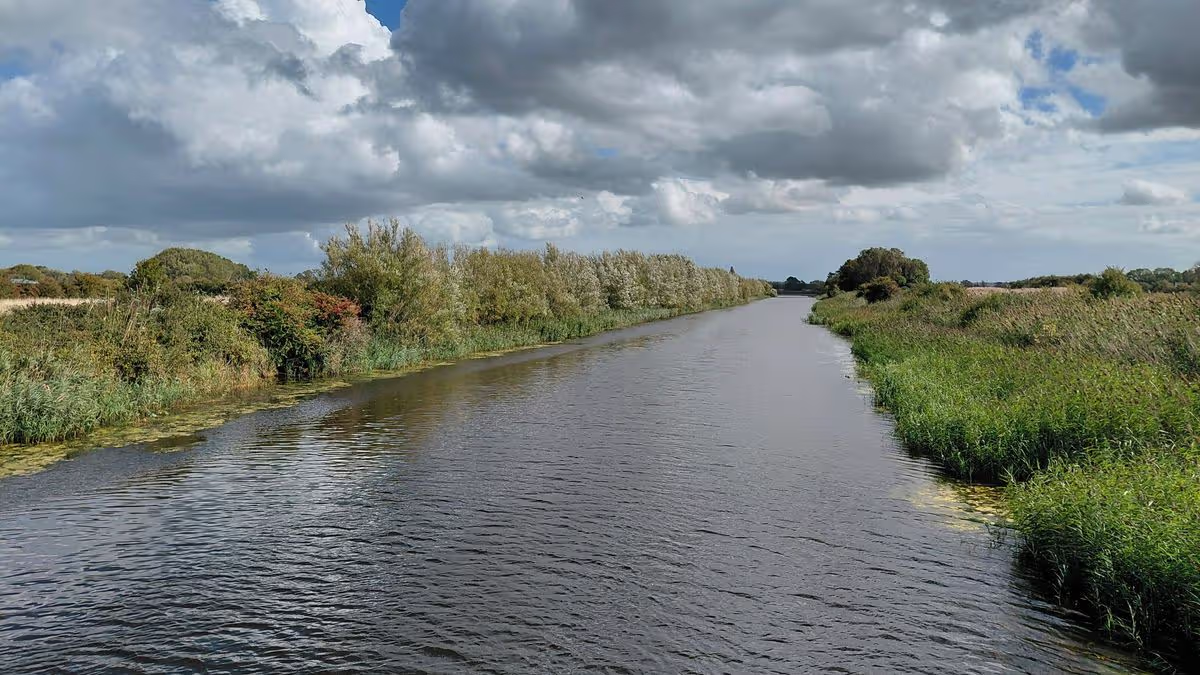
The Huntspill River, seen from Sloway Lane in West Huntspill.

The Huntspill River, seen from Sloway Lane in West Huntspill(Image: Local Democracy Reporting Service)

A major flood relief channel in Somerset could be improved in the coming years to increase the amount of water which can be moved off the Levels and Moors during a flood event.

Advertisement

The Huntspill River was constructed in 1940 to provide water for the Royal Ordnance Factory east of Bridgwater – land which is now the site of a new ‘gigafactory’ within the Gravity enterprise zone.

The channel has been a vital component of Somerset’s flood defences since its inception, providing an alternative means for water within the River Brue catchment to reach the Bristol Channel.

The Somerset Rivers Authority (SRA) has now hinted that the channel could be de-silted in the coming years, allowing more water to be stored downstream of the Levels and Moors following heavy rain.

The Huntspill River is currently fed by two different parts of the River Brue catchment: the South Drain (which runs west of Glastonbury through the Avalon Marshes) and the Cripps River (which carries water south of the main river channel near East Huntspill).

Advertisement

Water from both channels moves through the Gold Corner pumping station and flows north of the Gravity site, under the M5 north of junction 23, under the A38 near West Huntspill and exits into the River Parrett before it joins the Bristol Channel.

The River Brue steering group, set up by the SRA, assessed numerous proposals to improve flood prevention within the River Brue catchment area, in order to determine where money would be best spent to protect residents, businesses, farmland and major transport links.

These proposals range from major projects like lowering the Huntspill River and expanding the Highbridge Clyse (which stops tidal water from the Bristol Channel flowing up the Brue) to more low-level interventions, such as raising low points on the existing river banks.

Following a comprehensive modelling of the entire catchment, the group concluded that three actions would deliver the greatest benefit:

Advertisement
  • Formalise “pre-lowering procedures” for the Huntspill River (i.e. reducing the amount of water in it before “significant rainfall events”, so that more water can flow into it off the Levels)
  • Address low spots in the existing River Brue bank
  • Commission a study into “pinch points” which prevent water from moving at an adequate pace downstream of the Cripps River

A spokesperson for the SRA said: “Work on the Huntspill River will involve lowering of the retained water prior to a flood event.

“There may be difficulties with this due to siltation within the channel and environmental constraints, but it provides significant additional benefit, especially to the pumped catchments and the area around Decoy Rhyne.

“It will lead to a reduction in pumping at Gold Corner, yet much increased discharge from the Huntspill River; with this lower level, water can enter the Huntspill River via gravity without pumping.”

The SRA believes that improvements to the Huntspill River could cost around £1m to implement, on top of £290,000 for bank improvements elsewhere in the Brue catchment.

SRA chairman Mike Stanton said: “We know what needs to be done where, but we need the Environment Agency and the drainage boards to find the funding to do this – which may include applying to the SRA.”

Advertisement

Vice-chairman Tony Bradford said he hoped there would finally be tangible progress on improving the River Brue after what he characterised as a decade of inertia.

Map of the River Brue and River Sheppey catchments.

Map of the River Brue and River Sheppey catchments(Image: Somerset Rivers Authority)

He said: “This has been going on for ten years. The question I keep getting asked from people who are affected by the Brue area is: ‘when are we going to see something happen on the ground?’

“All they want is some action. There’s been a lot of action on the River Parrett, and it’s about time that the people living in the Brue catchment saw something happen.”

Iain Sturdy, chief executive of the Somerset Drainage Board Consortium, responded: “I understand the frustration with everybody around the time it’s taken, but these are positive steps.

Advertisement

“The model unquestionably shows that these actions, and other actions, have enormous impacts on the extent, the depths and the durations. The question is whether they generate sufficient benefits.

“There is no question that improving the condition of the Huntspill River provides flood risk benefit. It’s just whether the current modes of funding allow that; if not, we need to look carefully at other ways of doing things.”

A further update will be provided to the SRA board at its next meeting, which is due to take place on September 11.

To find all the planning applications, traffic diversions, road layout changes, alcohol licence applications and more in your community, visit the Public Notices Portal.

Advertisement
Continue Reading

Business

At Close of Business podcast June 15 2026

Published

on

At Close of Business podcast June 15 2026

Nadia Budihardjo speaks with Ella Loneragan about the latest on Perth Symphony Orchestra.

Continue Reading

Business

Maruti Suzuki shares jump over 4%. How is the new E100 regulation triggering a surge?

Published

on

Maruti Suzuki shares jump over 4%. How is the new E100 regulation triggering a surge?
Shares of Maruti Suzuki rallied as much as 4% to their day’s high of Rs 13,959 on the BSE on Monday after Union Minister for Road Transport and Highways Nitin Gadkari approved legal recognition for 100% ethanol blend fuel (E100), a move that could accelerate the adoption of flex-fuel vehicles and reduce India’s dependence on imported fossil fuels.

Speaking about India’s reliance on fuel imports, Gadkari said ethanol would emerge as a “viable alternative to petrol” and help lower the country’s import burden, which currently stands at around Rs 22 lakh crore.

The approval marks a significant step beyond India’s E20 programme, which focuses on blending ethanol with petrol. By creating a framework for E100 fuel, the government has opened the door for vehicles capable of running on ethanol as a primary fuel source, alongside electric, CNG and hybrid-powered alternatives.

Also Read |
Missed Vedanta’s buy 1 get 4 offer? Which spun-off stock to buy after listing today

Why is Maruti a direct beneficiary?

The development comes just days after Maruti Suzuki unveiled what it called India’s first flex-fuel passenger vehicle, positioning the technology as a crucial component of the country’s strategy to cut crude oil imports, strengthen energy security and lower carbon emissions.At the launch event, Managing Director and CEO Hisashi Takeuchi described the flex-fuel Wagon R as more than just a new vehicle launch, saying it marked “a new chapter in India’s energy journey.”

Advertisement

Drawing attention to India’s dependence on imported crude oil, Takeuchi said the country requires energy solutions that are “cleaner, affordable, scalable, and based on India’s own strengths.”
Maruti said the flex-fuel vehicle forms part of its broader multi-pathway strategy to reduce emissions through a combination of technologies, including electric vehicles, strong hybrids, compressed natural gas (CNG), compressed biogas (CBG) and hydrogen.
Also Read | Looking to trade Vedanta shares post demerger? Here’s what charts are saying

What is the flex fuel hype?

For consumers, flex-fuel vehicles offer a practical alternative to conventional petrol cars without requiring a major change in driving habits.
These vehicles are equipped with specialised engines capable of automatically adjusting to different blends of petrol and alcohol. While most vehicles currently on Indian roads are compatible with fuel blends of up to E20, Maruti’s newly launched Wagon R has been engineered to operate on anything from standard petrol to E100, or pure ethanol.

The flex-fuel ecosystem is also expected to expand rapidly after E85, a fuel blend containing up to 85% ethanol, was identified as the mono-fuel standard under Bureau of Indian Standards specifications.

To support adoption, the government plans to roll out around 50-100 ethanol dispensing stations across the Delhi-NCR and Mumbai-Pune-Nagpur corridors in the initial phase, with the network expected to expand to 500 stations by December this year.

(Disclaimer: Recommendations, suggestions, views and opinions given by the experts are their own. These do not represent the views of The Economic Times)

Advertisement
Continue Reading

Business

Rajesh Exports shares jump 5% after 30% crash in 7 days. How the alleged Rs 15.15 lakh cr fraud saga unfolded

Published

on

Rajesh Exports shares jump 5% after 30% crash in 7 days. How the alleged Rs 15.15 lakh cr fraud saga unfolded
The shares of Rajesh Exports took a breather after an incessant fall, rising 5% to hit the upper circuit on Monday after Sebi’s interim order over alleged Rs 15.15 lakh crore revenue inflation sparked a 30% crash in the stock over seven consecutive sessions.

The shares of the company jumped to Rs 80.23 apiece on the NSE amid the overall market uptrend. The stock has overall tumbled 55% in 2026 so far and 87% in three years, with its market capitalisation coming down to Rs 2,369 crore.

Sebi’s interim order against Rajesh Exports

Sebi, in its interim order released earlier this month, claimed that its investigation and forensic review had uncovered prima facie evidence suggesting that about 97-99% of the company’s revenue may have been inflated, describing the findings as “egregious and unheard of.”

The market regulator restrained promoter Rajesh Mehta from buying, selling or dealing in securities of Rajesh Exports until further orders, and also directed the company to cooperate fully with investigators. This came after a shareholder complaint received in March 2024.

Also read:
Canara Bank recovers over half of ₹500 crore Rajesh Exports exposure, CEO outlines growth strategy

Advertisement

Rajesh Exports blames ‘communication gap and confusion’

Rajesh Exports, in an exchange filing, clarified that the order is interim and no adverse conclusion has been made by Sebi yet. It said that the revenues declared by the company are correct, and no overstating of earnings has been done. “There seems to be some type of communication gap and confusion between Sebi and the company,” Rajesh Exports said.The company further said that it is confident that Sebi, in its wisdom, will clarify the situation and arrive at the correct conclusion, based on the authenticated documents which are in the process of submission by the company.

“The core observation in the order is concerning the misreporting of the revenues. This has emerged primarily due to confusion because SEBI has considered the Ebitda of Valcambi instead of Revenue; hence, it has stated that there is a difference of about 97% in the revenue. The consolidated Revenue as stated by the Company is correct,” Rajesh Exports said in another exchange filing.

Also read:
Rajesh Exports is not alone; there are many hiding behind one word called …

Promoter Rajesh Mehta denies allegations

In an interview with PTI, the company’s founder and chairman, Rajesh Mehta, denied allegations that Rajesh Exports had impeded the audit process and said the company had been forthcoming with investigators throughout.
“I would never agree to the fact that certain relevant documents have not been submitted by us. We have submitted everything we were asked for. Sebi has not found anything; maybe we have missed out on something. All that will be reconciled now,” Mehta said.On whether the company plans to legally contest Sebi’s directions, Mehta said there was no reason to do so. “Sebi has all the authority and right to keep asking us for documents for any number of years. There is no fine, no penalty, no coercive action in this order. Why should we challenge it?” he said.

Also read: Why is the stock market rising today?

(With inputs from agencies)

Advertisement

(Disclaimer: Recommendations, suggestions, views and opinions given by the experts are their own. These do not represent the views of The Economic Times.)

Continue Reading

Business

Aardman co-founders Peter Lord and David Sproxton knighted

Published

on

Business Live

‘We both feel it is an extraordinary privilege and an honour’

Peter Lord, left, and David Sproxton are the co-founders of Aardman Animations in Bristol

Peter Lord, left, and David Sproxton, co-founders of Aardman Animations in Bristol(Image: Aardman)

Peter Lord and David Sproxton, the co-founders of Bristol animation studio Aardman, said receiving knighthoods was “an extraordinary privilege and an honour.”

Advertisement

Both men were knighted in the King’s Birthday Honours for services to the animation industry, the creative industries and to charity.

The Oscar-winning studio they founded is responsible for Wallace & Gromit, Shaun The Sheep, Chicken Run and Morph.

In a joint statement to the Press Association, they said: “We both feel it is an extraordinary privilege and an honour – as well as a complete and utter surprise – to be recognised in this way.

“Whilst the honour is being awarded to us as individuals, it really reflects on Aardman as a company.

Advertisement

“Over 50 years we have worked with hundreds, if not thousands, of brilliant people whose dedication, talent and skills have contributed to making Aardman a globally recognised and multi-award-winning studio, and one regarded by many as a national treasure here in the UK.

“As we accept these awards, we humbly bow and salute all of those who have joined us on this extraordinary journey.”

Sir David and Sir Peter established the studio in 1972 and have steered the business from a two-person operation to one of the industry’s leading animation houses. Sir David co-produced a string of celebrated Aardman productions, including the studio’s debut feature film Chicken Run, Wallace & Gromit: The Curse Of The Were-Rabbit, the CGI feature Flushed Away, Shaun The Sheep Movie, Early Man and A Shaun The Sheep Movie: Farmageddon.

As a director, Sir Peter has earned two Oscar nominations for best animated short, the first coming in 1992 for Adam, followed by Wat’s Pig in 1996.

Advertisement

He also received a best animated feature nomination for Pirates! In An Adventure With Scientists in 2013.

Further recognition came in the form of Bafta nominations for Adam, The Amazing Adventures Of Morph, War Story and Chicken Run, as well as a producer nomination for Wallace & Gromit: The Curse Of The Were-Rabbit.

Continue Reading

Business

Daichi Kamada’s Late Strike Earns Japan Dramatic 2-2 Draw Against Netherlands in World Cup Thriller

Published

on

Kai Havertz Scores Twice as Germany Opens World Cup with

DALLAS — Daichi Kamada scored a deflected equalizer in the 89th minute as Japan fought back to earn a thrilling 2-2 draw against the Netherlands in their Group F opener at the 2026 World Cup on Sunday at Dallas Stadium.

The result highlighted the competitive balance in an expanded tournament, with Japan showing resilience against a favored Dutch side that had taken the lead twice. The match delivered high-quality football under sweltering conditions, reinforcing the World Cup’s reputation for unpredictability and excitement despite pre-tournament concerns about player fatigue and logistics.

Kamada’s goal, which came off a corner kick and a header from Koki Ogawa, sparked wild celebrations as the Japanese bench emptied onto the pitch. The late drama capped a match that saw the Netherlands dominate possession early but struggle to contain Japan’s counterattacking threat.

Match Summary and Key Moments

Advertisement

The Netherlands took the lead five minutes into the second half when Virgil van Dijk powered home a finely angled header that bounced in off the far post. Japan responded quickly, equalizing six minutes later through Keito Nakamura’s deflected strike from the right flank.

Crysencio Summerville restored the Dutch advantage in the 64th minute with a superb curling left-footed shot into the far corner after collecting a pass from Ryan Gravenberch. Japan refused to yield, maintaining pressure and earning the late reward through Kamada’s clinical finish.

Japan coach Hajime Moriyasu acknowledged the challenge after the match. “The Netherlands are a top-class international team. Look at the Fifa rankings, there’s quite a difference. But we can look back at today’s match and learn from the Dutch and enhance our power.”

The Dutch controlled much of the first half with 67% possession and superior passing accuracy, creating early chances through Donyell Malen. Goalkeeper Zion Suzuki made several key saves to keep Japan in contention, including denying a close-range header from Malen.

Advertisement

Japan’s high-pressing style created dangerous moments, particularly on the flanks. The game featured hydration breaks that provided tactical resets, though one such pause appeared to disrupt Japan’s momentum after their first equalizer.

Historical and Tournament Context

This draw adds to Japan’s strong recent World Cup performances, where they have consistently punched above expectations. The result leaves Group F wide open, setting up intriguing matchups in the remaining group stage games.

For the Netherlands, the stalemate represented a missed opportunity to claim early control in a tough group. Ronald Koeman’s side showed flashes of quality but lacked the clinical edge needed to secure all three points against a determined opponent.

Advertisement

The match at Dallas Stadium, a modern venue with a vast glass roof, provided an impressive backdrop despite the intense heat. The atmosphere was electric, with passionate support from both sets of fans creating a memorable World Cup spectacle.

Broader Implications for World Cup 2026

The opening week of the tournament has defied some pre-event skepticism regarding player tiredness and logistical challenges. Full stadiums and competitive matches have contributed to an engaging start, reminding observers of football’s enduring global appeal.

Japan’s performance exemplified the depth and competitiveness introduced by the 48-team format. Their tactical discipline and ability to capitalize on set pieces proved decisive in securing a valuable point against higher-ranked opposition.

Advertisement

The Netherlands will look to bounce back in subsequent fixtures, leveraging their technical quality and experience. Both teams demonstrated why they remain dangerous contenders, with the draw likely to fuel intense competition as the group stage progresses.

Tactical Analysis and Player Performances

Van Dijk’s aerial prowess and leadership were evident for the Dutch, while Frenkie de Jong provided composure in midfield. Summerville’s goal showcased his creative threat on the wing. For Japan, Suzuki’s goalkeeping and the midfield energy from players like Nakamura were standout elements.

The game featured periods of cautious probing interspersed with sharp attacking transitions. Japan’s ability to absorb pressure and strike on the counter highlighted their evolution as a national team capable of competing with Europe’s traditional powers.

Advertisement

Coaches on both sides will analyze the tactical adjustments, particularly around set-piece defending and midfield control. The result offers learning opportunities as teams prepare for the demands of a condensed tournament schedule.

Fan and Cultural Impact

The match drew a full house, with vibrant support creating an electric atmosphere. Japanese fans celebrated passionately, while Dutch supporters showed characteristic enthusiasm despite the late concession. The event underscored the World Cup’s power to unite diverse audiences in celebration of the sport.

Local organizers in Dallas passed an early test in hosting a high-profile fixture, with the stadium’s facilities contributing to an enjoyable spectator experience. Such matches help build momentum for the tournament across North America.

Advertisement

Looking Ahead in Group F

With points shared, both teams remain in contention for advancement. The draw sets up compelling scenarios for the final round of group games, where every result could prove decisive. Japan will aim to build on their fighting spirit, while the Netherlands seek greater consistency to fulfill their pre-tournament expectations.

The 2026 World Cup continues to deliver compelling storylines, with underdogs challenging established favorites and producing moments of genuine drama. Sunday’s encounter in Dallas added another chapter to this narrative, showcasing football’s ability to captivate and surprise on the grandest stage.

As the tournament unfolds, matches like this reinforce the value of competitive balance and the universal language of the beautiful game. For Japan, the point represents a hard-earned reward and a platform for further progress. For the Netherlands, it serves as motivation to refine their approach in pursuit of deeper advancement.

Advertisement
Continue Reading

Business

Analysis-China bonds emerge as surprise haven as Iran war reshapes portfolios

Published

on

Analysis-China bonds emerge as surprise haven as Iran war reshapes portfolios


Analysis-China bonds emerge as surprise haven as Iran war reshapes portfolios

Continue Reading

Business

Steppe Gold: Wacky Financials But Lots Of Gold In The Ground

Published

on

Steppe Gold: Wacky Financials But Lots Of Gold In The Ground

Steppe Gold: Wacky Financials But Lots Of Gold In The Ground

Continue Reading

Business

Mexico Mass Grave Tip Renews Search Efforts in Nancy Guthrie Disappearance Case

Published

on

Nancy Guthrie

TUCSON, Ariz. — An anonymous tip pointing to a possible mass grave site near Nogales in northern Mexico has injected new urgency into the investigation of missing Arizona woman Nancy Guthrie, prompting volunteer teams to resume searches in a region already known for multiple unmarked burials while authorities continue to urge caution more than four months after her disappearance.

The development adds a cross-border dimension to a case that has gripped public attention since the 84-year-old grandmother vanished from her Catalina Foothills home on Feb. 1. Despite extensive efforts involving local, state and federal agencies, no arrests have been made and her whereabouts remain unknown, with family members offering a $1 million reward for information leading to her recovery.

The latest tip was received by the volunteer search group Buscando Corazones, which has been active in the area. The group reported uncovering more than 25 unmarked graves and recovering at least 32 sets of human remains during operations in May. Following the new information, volunteers returned to scan remote creek beds and desert stretches on June 10, with another search planned for June 16. No confirmed connection to Guthrie has been established.

Pima County Sheriff’s Department officials acknowledged awareness of the Mexican tip but noted it has not yet been formally shared through official cross-border channels. Investigators described the case as “active and ongoing,” stressing that unverified tips require careful validation before being treated as evidence. The department continues to coordinate with the FBI and Mexican authorities as appropriate.

Advertisement

Background of the Disappearance

Guthrie was last seen at her home in the Tucson suburb. Surveillance footage released by authorities showed an unidentified masked individual at her door on the night she went missing, appearing to tamper with a doorbell camera. The video remains one of the few tangible leads suggesting possible foul play, though officials have not publicly identified a suspect or motive.

The case has drawn national interest partly due to Guthrie’s connection to her daughter, Savannah Guthrie, co-anchor of NBC’s “Today” show. The family has maintained a relatively low public profile on specifics while supporting reward efforts and appeals for information. The $1 million reward, one of the largest in recent missing persons cases, underscores the urgency and the family’s commitment to finding answers.

Nancy Guthrie is described as 5 feet 5 inches tall, approximately 150 pounds, with brown hair and blue eyes. Her disappearance has prompted widespread community vigils, yellow ribbon campaigns and continued media coverage across Arizona and beyond.

Advertisement

Volunteer and Cross-Border Challenges

Volunteer efforts like those by Buscando Corazones have become a notable feature of the investigation, filling gaps where official resources may be stretched across international boundaries. The group’s discoveries of multiple unmarked graves highlight the grim realities of border regions, where migration routes and criminal activity have led to numerous undocumented burials in the past.

However, authorities caution that linking any remains to Guthrie requires rigorous forensic processes, including DNA testing and coordination between U.S. and Mexican officials. The challenging terrain — remote desert areas with difficult access — complicates searches and increases the time needed to thoroughly investigate tips.

The Pima County Sheriff’s Department has previously faced questions about the initial response and evidence handling, though officials maintain a steady focus on following all credible leads. FBI involvement from early in the case has provided additional resources for digital forensics, financial tracking and international coordination.

Advertisement

Family Impact and Public Response

For Guthrie’s loved ones, the prolonged uncertainty has been agonizing. Savannah Guthrie has occasionally addressed the situation publicly while returning to her broadcasting duties, balancing personal grief with professional responsibilities. The family’s substantial reward aims to generate fresh leads and maintain public awareness as the case enters its fifth month.

Community support in Tucson has been strong, with yellow flowers placed near the family home and ongoing calls for tips. The case resonates deeply as it involves an elderly resident in a suburban setting, raising broader concerns about home security and vulnerability.

Online sleuths and true crime enthusiasts have also engaged heavily, sometimes leading to unintended consequences such as disturbances in the neighborhood. Officials have warned against amateur investigations that could compromise evidence or endanger participants.

Advertisement

Investigation Status and Next Steps

As of mid-June, no major breakthroughs have been announced beyond the steady pursuit of leads. The doorbell camera footage continues to be analyzed, and authorities are examining potential ransom notes and reported sightings, including some across the border. DNA evidence from the scene has been processed, but details remain limited to protect the integrity of the probe.

The Mexico tip represents the latest in a series of developments that have kept the case in the public eye. While volunteer searches provide additional eyes on the ground, formal validation through law enforcement channels is essential for any potential identification.

Experts in missing persons cases note that as time passes, the likelihood of a safe recovery diminishes, shifting focus toward accountability and closure for the family. Cross-border cooperation adds layers of complexity due to differing legal systems and resource constraints, but joint task forces have proven effective in similar cases.

Advertisement

Broader Context of Missing Persons Cases

Guthrie’s disappearance is one of thousands reported annually in the United States, with elderly individuals and border-region cases often presenting unique challenges. Organizations like the National Center for Missing and Exploited Children and various adult-focused groups emphasize the importance of rapid response, community involvement and sustained media attention.

The $1 million reward places this case among the highest-profile in recent memory, potentially motivating tips that might otherwise go unreported. However, experts caution that large rewards can also attract false leads, requiring careful vetting by investigators.

As searches continue in both the U.S. and Mexico, the case serves as a sobering reminder of vulnerabilities in everyday life and the difficulties of resolving abductions without immediate witnesses or digital trails. For the Guthrie family and the Tucson community, the hope for resolution persists amid growing calls for answers.

Advertisement

Pima County authorities and the FBI continue to solicit tips from the public. Anyone with information is urged to contact the sheriff’s department or the FBI tip line. As the investigation advances, officials remain committed to pursuing every avenue, no matter how challenging the terrain or distant the leads may be.

The latest Mexico tip has reinvigorated efforts in a case marked by persistence and frustration. While no immediate breakthrough has emerged, the renewed activity underscores the determination of both volunteers and law enforcement to bring closure to Nancy Guthrie’s family after months of painful waiting.

Continue Reading

Business

Is SpaceX Is Really Better Than Blue Origin ?

Published

on

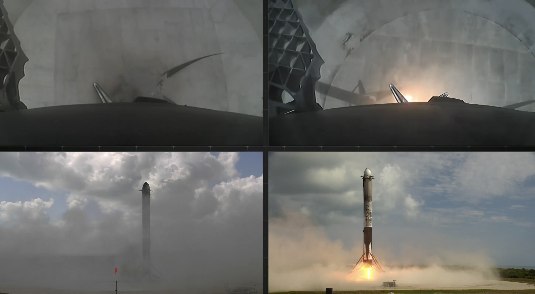
SpaceX Falcon 9 Successfully Launches 25 Starlink Satellites from California

SpaceX continues to dominate the commercial space sector with unmatched launch frequency, reusability achievements and operational scale, while Blue Origin has made notable strides with its New Glenn rocket but remains significantly behind in overall capability and market impact as of mid-2026.

The rivalry between Elon Musk’s SpaceX and Jeff Bezos’ Blue Origin has defined much of the new space era, with both companies pursuing reusable rocket technology and ambitious lunar goals. However, metrics across launches, contracts, revenue generation and technological milestones show SpaceX maintaining a substantial advantage, though Blue Origin’s steady progress with New Glenn signals growing competition in the heavy-lift market.

SpaceX has conducted hundreds of orbital launches with its Falcon 9 fleet, achieving routine reusability and rapid turnaround times that have dramatically reduced costs. The company’s Starlink constellation generates substantial recurring revenue, and its Starship program aims for fully reusable architecture capable of carrying massive payloads. Blue Origin, by contrast, achieved its first successful New Glenn booster landing on its second flight in late 2025 and has conducted a limited number of orbital missions.

Launch Records and Operational Tempo

Advertisement

SpaceX’s Falcon 9 has become the workhorse of the industry, launching dozens of missions annually with high reliability. The company’s cadence far exceeds any competitor, enabling it to capture the majority of commercial and government payloads. Starship, despite development challenges including regulatory reviews and test anomalies, represents a generational leap in payload capacity.

Blue Origin’s New Glenn, a heavy-lift vehicle with seven BE-4 engines, successfully landed its booster on its second flight and has deployed payloads including NASA missions. While impressive, the rocket’s flight rate remains far below SpaceX levels, with plans to scale production and operations still in early stages. Industry analysts note that Blue Origin’s methodical approach contrasts with SpaceX’s rapid iteration philosophy.

Government Contracts and Lunar Ambitions

Both companies compete for NASA Artemis program contracts. SpaceX secured the initial human landing system award for Starship, while Blue Origin has positioned its Blue Moon lander as a complementary or alternative option. NASA has opened opportunities for multiple providers to reduce reliance on any single company, fostering competition that benefits the overall program.

Advertisement

SpaceX holds a commanding lead in NASA and Department of Defense contracts, with billions awarded for crew, cargo and national security launches. Blue Origin has secured important engine contracts and is expanding its role, but trails in total value and flight heritage.

Valuation, Funding and Market Position

SpaceX’s recent IPO and massive valuation reflect investor confidence in its diversified business model, including Starlink broadband and AI-related infrastructure. The company’s public status provides transparency and capital access that Blue Origin, still privately held, does not yet match.

Blue Origin benefits from Jeff Bezos’ substantial personal investment and a patient, long-term philosophy. The company has made progress on New Glenn reusability and suborbital New Shepard flights, but its overall launch tempo and revenue scale lag SpaceX significantly.

Advertisement

Technological and Strategic Differences

SpaceX emphasizes rapid development, accepting failures as learning opportunities to accelerate progress. This approach enabled first-of-kind achievements like booster landings and crewed commercial flights. Blue Origin prioritizes methodical engineering and safety margins, resulting in fewer but carefully executed milestones.

Both pursue lunar ambitions, with SpaceX targeting ambitious timelines for Starship-based missions and Blue Origin focusing on sustainable infrastructure through New Glenn and Blue Moon. The rivalry has accelerated innovation across the sector, benefiting NASA and commercial customers through increased options and lower costs.

Broader Industry Impact

Advertisement

The competition has transformed the space economy. SpaceX’s cost reductions have opened new markets for satellite deployment and crewed missions. Blue Origin’s advancements contribute to supply chain diversity and technological redundancy, reducing single-provider risks for government and commercial users.

Analysts expect the gap to narrow as Blue Origin scales New Glenn operations, but SpaceX’s head start in reusability, flight rate and ecosystem integration provides a formidable lead. Future success for both will depend on execution, regulatory environments and ability to attract talent and capital.

The SpaceX-Blue Origin dynamic exemplifies how billionaire-backed ventures can drive progress while highlighting different philosophies: rapid iteration versus deliberate development. As the commercial space sector matures, their rivalry continues pushing boundaries, with benefits extending to scientific discovery, national security and human expansion beyond Earth.

While SpaceX currently leads on most operational and financial metrics, Blue Origin’s focused progress suggests a competitive landscape that could evolve significantly in coming years. Both companies play vital roles in America’s space ambitions, contributing to a vibrant ecosystem that promises continued advancement in humanity’s reach into space.

Advertisement
Continue Reading

Trending

Copyright © 2025