







Connect with us
DAPA Banner
DAPA Coin
DAPA
COIN PAYMENT ASSET
PRIVACY · BLOCKDAG · HOMOMORPHIC ENCRYPTION · RUST
ElGamal Encrypted MINE DAPA
🚫 GENESIS SOLD OUT
DAPAPAY COMING

Business

How Capital Scaling Models Support Trader Development

Published

on

Traders brace for inflation data and public finance update as long-term government debt hits levels last seen in 1998

Most traders don’t stall because they can’t find another indicator. They stall because their learning environment is poorly designed.

The feedback loop is either too punishing (one mistake wipes out weeks of progress) or too forgiving (tiny position sizes hide real execution problems). In both cases, growth slows, confidence becomes fragile, and decisions start to feel heavier than they should.

Capital scaling models—where the amount of capital you’re allowed to trade grows as you demonstrate competence—solve a surprisingly large part of that problem. Not because “more capital” magically makes you better, but because structured scaling creates a curriculum. It turns trading into a series of manageable stages, each with clearer expectations, risk constraints, and performance standards. If you’ve ever improved quickly in a sport, music, or a technical role, you already understand the principle: progression works when the next level is earned, not guessed.

Below is how capital scaling, done properly, supports trader development in a way that’s practical, measurable, and psychologically sustainable.

Capital scaling: more than “bigger size”

Capital scaling is often described as a simple idea: trade well, get more capital. But the real value is the framework around how “trade well” is defined and how capital is increased.

Advertisement

A good scaling model typically does three things:

  1. Sets guardrails (drawdown limits, daily loss limits, concentration rules).
  2. Defines performance quality (consistency, adherence to a plan, not just raw profit).
  3. Introduces size progressively so traders adapt to execution and emotional pressure in stages.

That last point matters more than most people expect. A trader who is calm risking $50 per trade might behave very differently at $500—even with the exact same strategy. Scaling lets you develop capacity (emotional and operational) alongside skill.

Why this structure accelerates learning

When scaling is staged, it improves the trading feedback loop:

  • You get enough exposure to generate statistically meaningful results.
  • You’re not forced to “swing for the fences” to make the effort worthwhile.
  • Mistakes are survivable, which keeps you in the game long enough to correct them.

This is why many traders look for environments where scaling is formalized rather than improvised. For instance, a funded trader program with capital scaling can act as a structured progression path: start with defined limits, prove consistency, then earn higher allocations under similar rules. Whether you use a program like that or build your own scaling plan, the developmental mechanism is the same—graduated responsibility.

How scaling models build the skills traders actually need

Scaling models are often discussed in terms of opportunity, but their best contribution is education. They make the “hidden curriculum” of trading unavoidable.

Risk discipline becomes non-negotiable

Plenty of traders say they manage risk; fewer can do it on a random Tuesday after two losing trades. Scaling models make risk the entry ticket to growth. When the next level is tied to drawdown control, you stop treating risk rules as “nice ideas” and start treating them as professional standards.

Advertisement

This pushes development toward repeatable behaviors:

  • Position sizing that’s consistent and pre-defined
  • Stops that are placed for structural reasons, not emotional ones
  • A clear understanding of worst-case scenarios before entering

You learn to think in process, not outcomes

One of the most damaging habits in early trading is over-valuing single-trade outcomes. Scaling models, when designed well, reward series performance—a month of solid execution rather than a lucky week.

Many firms and serious personal plans use criteria like:

  • Maximum drawdown relative to gains
  • Number of trading days (to discourage “one-hit wonder” runs)
  • Consistency bands (avoiding one day generating most of the profits)

Here’s the key: these constraints nudge you toward building a process that can survive changing market conditions.

Execution quality improves under real constraints

Small accounts and tiny size can mask execution problems. Slippage feels irrelevant. Partial fills don’t matter. You can enter late and still “get away with it.”

As size scales, micro-inefficiencies become expensive. Traders are forced to clean up:

Advertisement
  • entry timing and order types (market vs limit vs stop-limit)
  • liquidity awareness (especially around news, open/close, rollovers)
  • overtrading and churn costs (spreads/commissions add up fast)

Scaling is the point where trading starts to look less like theory and more like operating a real business.

What to measure: the metrics that drive sustainable scaling

Scaling works best when it’s tied to a small set of metrics that capture both profitability and robustness. Too many metrics create noise; too few invite loopholes. The most useful scorecards typically focus on a blend of outcome and behavior.

A practical set of scaling-aligned metrics might include:

  • Max drawdown (absolute and relative to net profit)
  • Profit factor (quality of returns, not just direction)
  • Average loss vs average win (edge durability)
  • Risk per trade consistency (tight dispersion beats “all over the map” sizing)
  • Rule adherence rate (did you take only A+ setups, or did boredom win?)

Use these as a dashboard, not a judgment tool. The goal is to identify which lever improves your results without increasing fragility.

How traders can use scaling models to develop faster (even independently)

You don’t need a formal program to benefit from scaling principles. You can implement them in your own trading by treating capital increases like promotions: earned, documented, and reversible.

Build your “next tier” requirements

Decide in advance what qualifies you to increase size. Common examples: 20–40 trading days, a capped drawdown, and a minimum consistency threshold (e.g., no single day contributes more than X% of total gains).

Advertisement

The important part is that you write the rules before you’re tempted to break them.

Scale in risk units, not in dollars

Instead of doubling your position size because you had a good month, scale by modest increments in your fixed risk unit (for example, +10–20% risk per trade) while keeping the same setup quality threshold. This reduces the chance that your psychology outruns your method.

Rehearse the operational shift

When size increases, your trading “plumbing” matters more. Before scaling up, stress-test your execution:

  • Do you know how your instrument behaves in fast markets?
  • Have you tested your platform under volatility?
  • Are you tracking costs and slippage, not just P&L?

Treat it like a pilot moving from a simulator to a real cockpit: the checklist becomes part of the craft.

Common scaling mistakes (and how to avoid them)

Scaling can backfire when traders treat a higher allocation like a trophy rather than a responsibility.

Advertisement

Mistake 1: Changing the strategy after scaling.
A new size tier is not the time to experiment. Keep the same setups that earned the scale-up; only refine after you stabilize.

Mistake 2: Letting confidence turn into looseness.
Traders often interpret a scale-up as proof they’re “past” discipline. In reality, this is where discipline finally starts paying rent.

Mistake 3: Ignoring market fit.
Some strategies don’t scale well in certain products or sessions due to liquidity. If slippage rises faster than expected, you may need to adjust instruments or execution tactics—not abandon the whole approach.

The real advantage: a professional growth path

Capital scaling models support trader development because they create a structured ladder: clear requirements, controlled risk, and progressive exposure to pressure. They reward the habits that keep traders in business—consistency, restraint, and thoughtful execution—while still allowing ambition to compound.

Advertisement

If your current trading feels like random progress followed by random setbacks, consider this: it might not be your ability that’s inconsistent. It might be your environment. A well-designed scaling plan—whether self-imposed or provided through a formal structure—turns improvement into something you can actually repeat.

Advertisement
Continue Reading
Click to comment

You must be logged in to post a comment Login

Leave a Reply

Business

Elon Musk and Tim Cook among CEOs expected to accompany Trump on China trip

Published

on

Elon Musk and Tim Cook among CEOs expected to accompany Trump on China trip

A total of 17 US executives are set to join the president on his visit, where he will meet his Chinese counterpart Xi Jinping.

Continue Reading

Business

Tostitos to launch guacamole dip

Published

on

Tostitos to launch guacamole dip

The dip is expected to roll out later this year. 

Continue Reading

Business

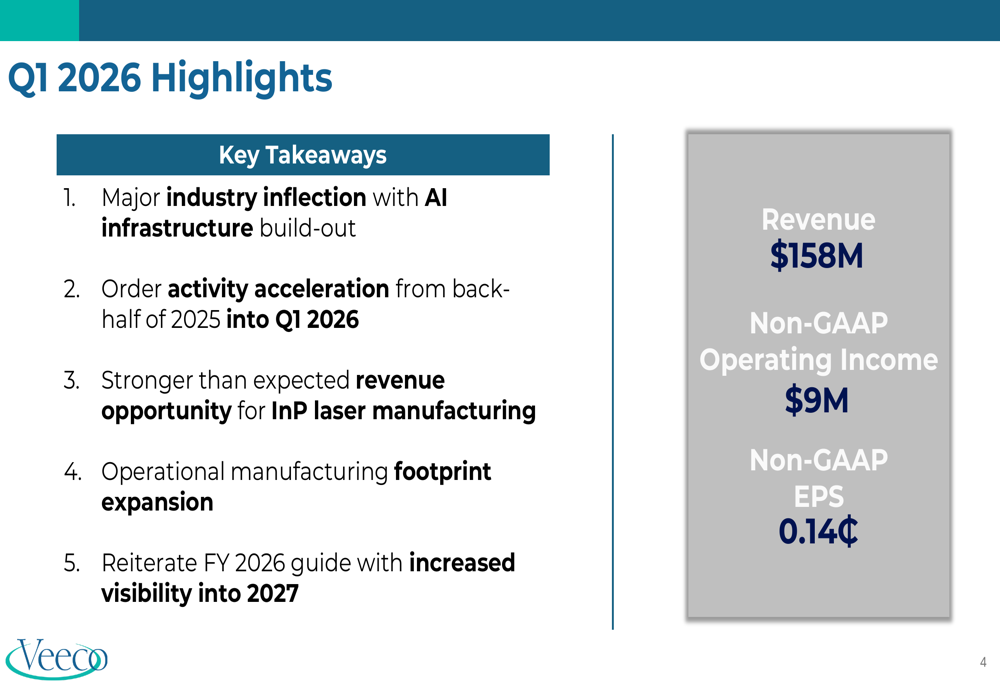
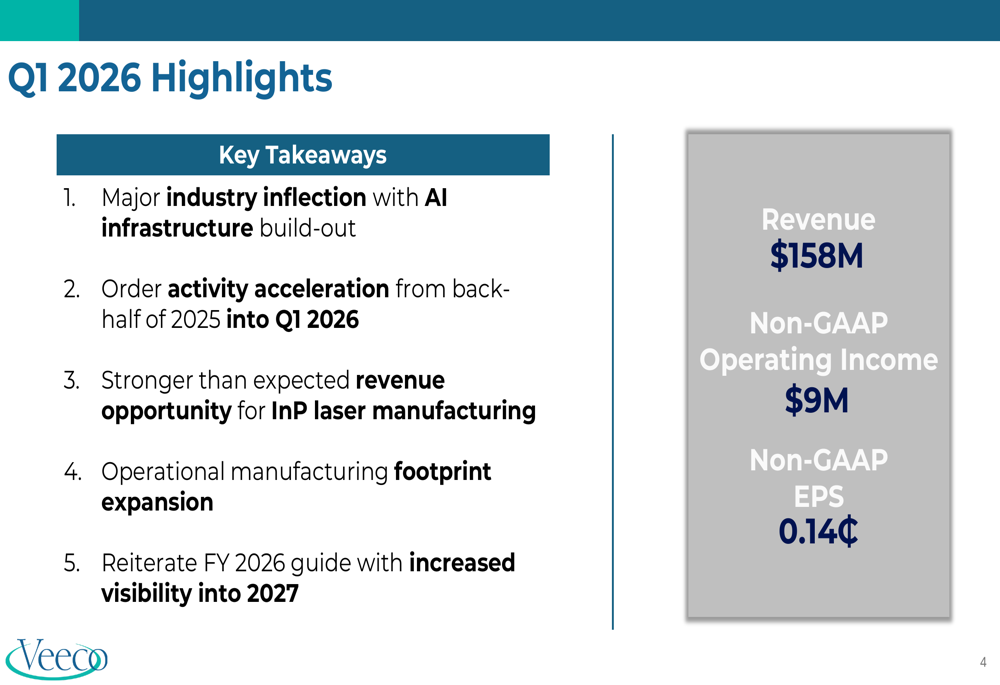
Veeco Q1 2026 slides: AI demand fuels growth outlook despite earnings miss

Published

on

Veeco Q1 2026 slides: AI demand fuels growth outlook despite earnings miss


Veeco Q1 2026 slides: AI demand fuels growth outlook despite earnings miss

Continue Reading

Business

Lumentum Stock Soars as AI Optical Networking Rally Resumes

Published

on

Lumentum Stock Soars as AI Optical Networking Rally Resumes

Lumentum Stock Soars as AI Optical Networking Rally Resumes

Continue Reading

Business

Leading Change in Higher Education

Published

on

Leading Change in Higher Education

How a First-Generation Student Became a Higher Ed Leader

David Shein did not start his college journey with a clear plan.

“I was a first-generation college student before we knew what that meant,” he says. “I didn’t have a roadmap.”

That early experience shaped his career. It gave him a clear focus. He wanted to make college easier to navigate for others.

Over the next 30 years, Shein became a leader in higher education. He built systems that helped students succeed. He also helped colleges rethink how they support them.

Advertisement

Early Life and Education: Building Work Ethic Early

Shein started working young. He split a newspaper route with his brother. Later, he worked in stores, libraries, and even a cemetery.

These jobs taught him discipline and independence.

In school, he joined debate and theater. He then attended SUNY Oswego. He studied Philosophy and Political Science and graduated magna cum laude.

He continued his studies at Bowling Green State University before moving to the CUNY Graduate Center. There, he earned his PhD in Philosophy..

Advertisement

His academic focus shaped how he thinks about systems and ideas.

Early Career: Learning How Colleges Really Work

While in graduate school, Shein began working at Lehman College.

He served as Coordinator of the Core Curriculum and led the tutoring center. This gave him direct insight into student needs.

“I worked closely with faculty and administrators to build connective tissue across academic and student affairs,” he says.

Advertisement

That idea of “connective tissue” became central to his work.

He saw that many students struggled not because of ability, but because systems were disconnected.

Bard College Career: Building Systems That Scale

In 1999, Shein joined Bard College. He was hired to create a writing and tutoring center. He also became the college’s first disability support provider.

From the start, he focused on building structures, not just programs.

Advertisement

Over time, he took on leadership roles, including Vice President for Student Success and Network Integration.

He also taught in the Philosophy department and First-Year Seminar.

But his biggest impact came from what he built.

He founded the Learning Commons. He launched Disability Support Services. He helped create the Center for Student Life and Advising.

Advertisement

Each of these programs addressed a real gap.

“At the core of this work is a commitment to making the full college experience accessible,” he says.

Program Development and Innovation in Higher Education

Shein’s work went beyond campus services.

He helped secure accreditation for new programs and partnerships.

Advertisement

He played a role in extending the Clemente Course in the Humanities to new communities, bringing college-level learning to underserved populations.

These projects reflect a clear pattern.

He identifies problems. Then he builds systems that last.

“It’s about helping students connect with their college experiences in ways that impact their lives beyond their time in university,” he says.

Advertisement

Global Education and Fulbright Recognition

Shein’s work extended into international education.

He supported dual-degree partnerships and global programs across Bard’s network.

He also worked on Bard’s online Global Degree program. This expanded access to students around the world.

His efforts helped connect students across countries and cultures.

Advertisement

In 2019, he received a Fulbright scholarship for his work in international education.

This recognition highlighted his long-term impact in the field.

Mentorship and Student Success Outcomes

Throughout his career, Shein advised hundreds of students.

Many of them went on to earn major awards, including Fulbright scholarships.

Advertisement

But for Shein, outcomes are not just about recognition.

“It’s about helping students participate in meaningful ways in what can feel like an alien environment,” he says.

His focus has always been on engagement and belonging.

Life Beyond Work: Staying Grounded

Outside of his professional life, Shein stayed active in his community.

Advertisement

He coached youth soccer and supported Model UN programs when his children were younger.

Today, he spends time fishing, traveling, and writing. He also volunteers at his local public library.

He participates in the Watershed Community Amphibian Migration Project, helping protect local wildlife.

These activities reflect his broader approach. Stay involved. Stay connected.

Advertisement

What David Shein Is Doing Now

Upon retiring from Bard College, Shein retired from Bard College, he began working as an independent educational consultant.

His work now focuses on helping institutions improve advising systems, program design, and student support.

“I’ve spent my career helping students navigate environments that can feel unfamiliar,” he says.

That mission continues in his current work.

Advertisement

Why David Shein’s Work Matters in Higher Education

Higher education is still evolving. Many students continue to face barriers.

Shein’s career offers a practical model.

He focused on building systems, not just ideas. He connected academic and student services. He expanded access through new programs.

Most importantly, he kept the student experience at the center.

Advertisement

For someone who started without a roadmap, he has helped create one for others.

Advertisement
Continue Reading

Business

Trump says Iran ceasefire on ’life support’ after rejecting Tehran’s response

Published

on

Trump says Iran ceasefire on ’life support’ after rejecting Tehran’s response


Trump says Iran ceasefire on ’life support’ after rejecting Tehran’s response

Continue Reading

Business

Q&A: Former USDA chief economist shares insights on current events impacting global trade

Published

on

Q&A: Former USDA chief economist shares insights on current events impacting global trade

Geopolitics has played a major role in driving markets in recent years.

Continue Reading

Business

Protein Works hails record revenues in ‘pivotal and transitional year’ as German sales grow

Published

on

Business Live

Company moved to new Liverpool campus

Laura Keir, CEO at Protein Works, at the company's Liverpool base

Laura Keir, CEO at Protein Works, at the company’s Liverpool campus(Image: Lorne Campbell / Guzelian)

Protein Works has reported record revenues in a “pivotal and transitional year” for the growing nutrition specialist.

The Liverpool business reported revenue of £55.1m for the year to August 31, 2025, up from £50.7m in 2024.

That year saw the company move into its new “state-of-the-art, vertically integrated” PW Campus in south Liverpool. In her report attached to the accounts filed on Companies House, CEO Laura Keir said: “The project was entirely self-funded, without external financing or additional debt. The directors consider this a meaningful demonstration of operational discipline and balance sheet strength.”

Pre-tax profit fell from £8.9m in 2024 to £7.2m in 2025, which directors say was in line with expectations in “a year of transition and sustained growth”.

Advertisement

The directors’ report for parent company Class Delta added: “Continued UK growth was supported by good performance in our strategic international markets, which continue to build scale as we focus investment behind the markets that offer the clearest path to meaningful size outside the UK.

“The underlying international trajectory reinforces the directors’ view that the brand has genuine cross-border portability and they’re pleased an EU based 3PL (third-party logistics) re-platforming is also complete.

“Growth continues to be underpinned by a differentiated brand proposition built around taste leadership, science-backed ingredients and healthy habit-forming product formats that fit naturally into customers’ daily routines. Our core range of complete meal and protein shakes, plus growing savoury meals category, supports sustained engagement and high repeat purchase rates across our customer base

“This record performance was delivered through a period of significant internal change and against a challenging macroeconomic backdrop, which the directors consider a credible reflection of the resilience of the operating model and the capability of the team.”

Advertisement

In a further update on its results, Protein Works added that over the year the business had seen its EBITDA margin improve by two percentage points.

It said international revenue had grown 15% in FY25, with Germany the fastest-growing market. And it hailed a “broadening” customer base, with women now accounting for 55% of UK customers and with more than half of its customers aged under 40.

Laura Keir said: “After 13 years of uninterrupted growth, the standards we set ourselves continue to rise, and I’m incredibly proud of how the team has delivered again in 2025. This year has been the most significant operational year in the company’s history, setting out to do three hard things at once: grow the business, move into a new facility, and kick off a brand re-launch, and I’m very proud to say, we did it! That we delivered record revenue and our best-ever margin performance through all of it reflects the depth of the team we’ve built and the underlying strength of what we’ve created over 13 years.”

Nicola McQuaid, partner at YFM, the private equity backers of Protein Works, added: “This is a business that has consistently delivered on its ambitions, and it’s a privilege for YFM to support the team. Record revenue and improved margins, achieved through a year of major operational change, speak to the quality of leadership Laura and the team have delivered.”


Advertisement
Continue Reading

Business

Earnings call transcript: TrueBlue Inc. Q1 2026 shows mixed results with EPS miss

Published

on


Earnings call transcript: TrueBlue Inc. Q1 2026 shows mixed results with EPS miss

Continue Reading

Business

Gas prices pressuring McDonald’s low-income consumers

Published

on

Gas prices pressuring McDonald’s low-income consumers

Company is partnering with Red Bull in revamped beverage program.

Continue Reading

Trending

Copyright © 2025