Connect with us
DAPA Banner
DAPA Coin
DAPA
COIN PAYMENT ASSET
PRIVACY · BLOCKDAG · HOMOMORPHIC ENCRYPTION · RUST
ElGamal Encrypted MINE DAPA
🚫 GENESIS SOLD OUT
DAPAPAY COMING

Business

How Communities Prepare for Emergencies Through Coordinated Local Systems

Published

on

How Communities Prepare for Emergencies Through Coordinated Local Systems

Communities across the United States face a wide range of emergencies, from public health crises to natural disasters and large scale incidents. The ability to respond effectively often depends on preparation that takes place long before any event occurs. Local emergency response systems play a central role in shaping how communities plan, train, and coordinate across agencies. As response environments grow more complex, preparedness has become a continuous process rather than a one time effort.

Current emergency management requires coordinated efforts of emergency medical service, public health departments, local government agencies and community organizations. All of these entities should work together in a clear manner with shared responsibility and good communication. How well these elements are aligned prior to an emergency will often dictate the success of the response.

Growing Importance of Community Emergency Preparedness

Emergency preparedness has become more important as communities experience a wider range of risks. Severe weather events, public health threats, and infrastructure challenges have increased the demand for organized and flexible response systems. Population growth in urban and suburban areas has added pressure on existing resources, requiring local agencies to adapt their planning strategies.

Advertisement

Preparedness is not limited to large scale disasters. Everyday incidents, such as traffic accidents or localized health outbreaks, require coordinated action from multiple agencies. These events highlight the need for consistent training and shared protocols. Communities that invest in preparedness are better equipped to respond quickly and reduce the impact of emergencies on residents.

Public awareness has also shifted in recent years. Residents expect local governments to provide clear guidance before, during, and after emergencies. This expectation has led to an increased focus on transparency and communication. Preparedness programs now often include public education campaigns that encourage individuals and families to take an active role in their own safety.

Increasing Complexity of Modern Response Environments

The complexity of emergency response systems today exceeds what we have experienced over prior decades. Modern technology has allowed greater efficiency in both communication and data exchange; however, new forms of coordination and data management complexities were created with the introduction of these new systems. Therefore, other factors now require that public safety driven organizations process high volumes of data in real-time and are responsible for many decisions affecting their communities.

Advertisement

Another factor contributing to complexity is the interconnected nature of modern communities. Transportation systems, healthcare networks, and communication infrastructure are closely linked. A disruption in one area can quickly affect others. Emergency planning must account for these connections to ensure that response efforts remain effective.

Workforce considerations also play a role. Many communities face staffing shortages in emergency services, which can impact response times and operational capacity. Training and retention have become critical priorities for local agencies. Preparedness strategies must address not only equipment and systems, but also the people who operate them.

Local Preparedness Strategies

Preparedness begins at the local level with structured planning and regular evaluation. One of the most effective tools used by communities is the implementation of training exercises. These exercises simulate real world scenarios and allow agencies to test their response capabilities. Participants can identify gaps in communication, resource allocation, and decision making.

Advertisement

Unified command structures for training exercises determine how different agencies will collaborate with one another and gain a level of trust that leads to a common operating environment in emergencies. Agencies leverage this opportunity to understand their specific roles when a response is required during an emergency event. Agencies conduct after-action reviews to analyze performance and to establish areas for change in order to improve future response capabilities.

Public education programs are another key component of preparedness. Local governments and public health agencies provide information on emergency kits, evacuation plans, and safety procedures. These programs aim to empower residents with knowledge that can reduce risk during an incident. Schools, community centers, and local organizations often serve as platforms for delivering this information.

Preparedness efforts are also supported through a network of volunteers who help provide response to public safety incidents. Residents of communities who receive basic training will be able to support professional responders during emergencies by assisting in areas such as shelter operations, supply distribution, or communication efforts. Residents’ participation in preparedness activities helps build a wider support system for a community while supporting its resilience.

Interagency Coordination

Advertisement

Effective emergency response depends on strong coordination between multiple agencies. Emergency medical services, fire departments, law enforcement, and public health organizations must work together under a unified framework. This coordination ensures that resources are used efficiently and that decisions are made with a clear understanding of the situation.

Unified communication systems are essential to this process. Agencies rely on shared platforms to exchange information quickly and accurately. These systems help prevent misunderstandings and allow responders to adapt to changing conditions. Consistent communication protocols also support collaboration across jurisdictions, which is especially important during large scale incidents.

Interagency coordination extends beyond response activities. Planning and policy development often involve collaboration between local governments and regional partners. By working together, agencies can align their strategies and create a more cohesive approach to preparedness. This alignment reduces duplication of efforts and improves overall effectiveness.

Private sector entities often partner with emergency services in terms of coordinating their response efforts (e.g., when hospitals coordinate with utility companies and transportation agencies). These types of organizations are important to the overall success of an effective response to any emergency, as they can help agencies maintain the continued delivery of essential services during an emergency scenario by being involved in planning operations ahead of time.

Advertisement

Leadership and Experience in Emergency Planning

Experienced professionals play a significant role in shaping community preparedness efforts. Individuals who have worked across emergency medical services, public health, and government agencies bring valuable insight into the planning process. Their experience allows them to identify potential challenges and develop practical solutions.

Emergency response professionals in Colorado, including Scott Bookman, have emphasized that effective preparedness begins well before an emergency occurs. This perspective reflects the importance of coordination between agencies and the need for continuous improvement in planning efforts. Leaders with diverse backgrounds can bridge gaps between organizations and support more integrated response systems.

The role of leadership extends beyond decision making during an incident. It includes building relationships, fostering collaboration, and maintaining a focus on long term preparedness. Leaders must balance operational demands with strategic planning to ensure that systems remain adaptable and effective.

Advertisement

The professional background outlined in the provided materials highlights the importance of experience across multiple sectors. For example, leadership roles in emergency medical services, hospital administration, and public health provide a comprehensive understanding of how different systems interact. This type of experience supports more informed planning and strengthens the overall response framework.

Future of Community Emergency Preparedness

The future of emergency preparedness will likely involve greater integration of technology and data driven decision making. Advances in communication systems and data analytics can improve situational awareness and support faster response times. However, these tools must be implemented carefully to ensure that they enhance rather than complicate operations.

Public private partnerships are expected to play an increasingly important role. Collaboration between government agencies and private organizations can provide additional resources and expertise. These partnerships can also support the development of new strategies for addressing emerging challenges.

Advertisement

Training models will continue to evolve as well. Communities are exploring new approaches that combine traditional exercises with digital simulations and scenario based learning. These methods allow responders to practice a wider range of situations and improve their ability to adapt to unexpected conditions.

Another priority for us is developing engaged communities. Knowledgeable and engaged residents are key to effectiveness in preparedness initiatives. Future programming will also put a greater emphasis on outreach and education that will help make sure individuals know their role during emergency situations.

Scott Bookman Colorado has also been referenced in discussions about the importance of coordinated systems that connect public health, emergency services, and local leadership. This approach reflects a broader trend toward integrated planning that considers the needs of the entire community.

Building Stronger Systems Through Continued Collaboration and Planning

Advertisement

Community preparedness is an ongoing process that requires commitment from multiple stakeholders. Local governments, emergency services, public health agencies, and residents all play a role in creating effective response systems. By focusing on coordination, training, and communication, communities can improve their ability to respond to emergencies of all types.

Preparedness is not a static goal. It evolves as new challenges emerge and as communities grow and change. Continuous evaluation and adaptation are essential to maintaining strong systems. The integration of experience, technology, and collaboration will shape the future of emergency response and help communities navigate an increasingly complex environment.

The emphasis on coordinated planning and shared responsibility illustrates how essential it is to work together as one across various sectors. The confidence that communities are creating through preparedness efforts now will help form an enduring support system for both immediate response needs and longer term ongoing resilience of the community.

Advertisement
Continue Reading
Click to comment

You must be logged in to post a comment Login

Leave a Reply

Business

Pakistan economic survey projects real GDP growth at 3.7% in FY26

Published

on

Pakistan economic survey projects real GDP growth at 3.7% in FY26


Pakistan economic survey projects real GDP growth at 3.7% in FY26

Continue Reading

Business

Thailand and Malaysia in Talks to Resolve Shrimp Import Ban

Published

on

Thailand and Malaysia in Talks to Resolve Shrimp Import Ban

The Ministry of Agriculture and Cooperatives is hastening negotiations with Malaysia following Kuala Lumpur’s suspension of certain imports. This move aims to resolve trade disruptions and restore the flow of goods between the two countries, ensuring bilateral economic interests are maintained. Efforts are focused on addressing concerns and reaching a mutually beneficial agreement.

Thailand and Malaysia are engaged in crucial negotiations to address Malaysia’s recent ban on shrimp imports. The Malaysian government, citing health and environmental concerns, has imposed restrictions, affecting Thailand’s significant shrimp export industry. This embargo threatens the livelihoods of countless Thai shrimp farmers and disrupts trade balance between the neighboring nations.

Recognizing the economic impact, Thailand is actively seeking to resolve the issue by engaging in diplomatic talks. Officials from both countries are exploring solutions that can ensure safe shrimp farming practices while maintaining economic ties. These discussions aim to reassure Malaysia regarding the quality and safety standards of Thai shrimp, potentially leading to a lifting of the ban.

Both countries are optimistic about reaching a favorable agreement. Strengthening collaborative efforts in quality control and sustainable aquaculture practices might provide a pathway forward. This situation underscores the importance of regional cooperation in addressing trade disputes and fostering mutual growth.

Advertisement

source

Continue Reading

Business

SEI Investments: Strong Execution, But Valuation Already Reflects Quality (NASDAQ:SEIC)

Published

on

SEI Investments: Strong Execution, But Valuation Already Reflects Quality (NASDAQ:SEIC)

This article was written by

I am an independent trader and analyst specializing in the micro-cap market. My strategy combines technical analysis with the CAN SLIM method, developed by William O’Neil, to identify high-growth, underanalyzed companies. I focus on financial trends, profit growth, and institutional capital accumulation to uncover stocks with significant upside potential. In addition to equities, I have experience in Forex trading, which has helped me better understand price movements, market volatility, and sentiment-driven trends. My research approach integrates both fundamental and technical analysis, allowing me to identify strong growth stocks before they gain widespread attention. Key indicators I prioritize include relative strength, trading volume shifts, and accelerating profit growth—all of which help pinpoint stocks with the highest potential. Writing for Seeking Alpha is an integral part of my investment process, enabling me to refine my strategies, test investment theses, and engage with the investor community. In my articles, I aim to deliver in-depth company analyses, focusing on stocks with strong growth trends, improving fundamentals, and technical setups that signal potential breakouts. Through structured research, I strive to enhance market understanding and provide actionable investment insights.

Analyst’s Disclosure: I/we have no stock, option or similar derivative position in any of the companies mentioned, and no plans to initiate any such positions within the next 72 hours. I wrote this article myself, and it expresses my own opinions. I am not receiving compensation for it (other than from Seeking Alpha). I have no business relationship with any company whose stock is mentioned in this article.

Seeking Alpha’s Disclosure: Past performance is no guarantee of future results. No recommendation or advice is being given as to whether any investment is suitable for a particular investor. Any views or opinions expressed above may not reflect those of Seeking Alpha as a whole. Seeking Alpha is not a licensed securities dealer, broker or US investment adviser or investment bank. Our analysts are third party authors that include both professional investors and individual investors who may not be licensed or certified by any institute or regulatory body.

Advertisement
Continue Reading

Business

The Trade Desk Isn't The Bargain I Thought It Was

Published

on

The Trade Desk Isn't The Bargain I Thought It Was

The Trade Desk Isn't The Bargain I Thought It Was

Continue Reading

Business

Brunel’s SS Great Britain ditches historical name ahead of museum reopening

Published

on

Business Live

The organisation behind the attraction says the change is aimed at being more rooted in community

Brunel's SS Great Britain

Brunel’s SS Great Britain attraction is to be renamed(Image: Adam Gasson & SS Great Britain Trust)

One of Bristol’s most famous attractions is ditching its historical name in a drive to become more inclusive, it has announced.

Brunel’s SS Great Britain – the city centre docklands site that is home to the ocean liner of the same name – will drop the name of the famous 19th-century engineer along with reference to the ship. The attraction will be renamed ‘Bristol Dockyards’.

It comes ahead of the reopening of a museum at the site next month. The revamped attraction, designed by architecture practice Ralph Appelbaum Associates, will add 2,000 square feet of exhibition space and will include newly discovered material and interactive exhibits.

It will also explore the impact of Brunel’s ship on the world, with information about the lives of those on board and the places it travelled to.

Advertisement

The SS Great Britain was designed by Isambard Kingdom Brunel and was built in Bristol. When it launched in 1843, it was described as “the greatest experiment since the creation”. Between 1845 and 1886, the ship reached every inhabited continent and carried passengers from 51 nations.

Andrew Edwards, chief executive of Bristol Dockyards and the SS Great Britain Trust, said his organisation was “committed to safeguarding” the attraction’s “extraordinary heritage”.

“[We are] ambitious about what it can become: a dynamic cultural campus rooted in community participation, learning and maritime heritage,” he said.

“In a city renowned for its creativity and cultural energy, Bristol Dockyards will be a place where more people can engage with the past, build skills for the future and help shape a shared civic story.”

Advertisement

James Boyd, director of the Brunel Institute, said the new museum would reflect “not only the ship’s extraordinary international story, but also Bristol’s role in discovering and sharing those connections today”.

“By working closely with communities across the city, we’ve been able to bring new perspectives, previously unheard voices and newly discovered histories into the heart of the museum,” he said.

Some of the museum highlights include:

  • Details of local individuals who built the ship, including previously untold stories of the labourers whose skill and dedication made the ship a reality.

  • The SS Great Britain’s impact on indigenous Australians as it made 32 round trips from Liverpool to Melbourne, completely changing the Australian continent and the lives of its First Nations inhabitants.
  • How it was used as a troop carrier in global conflicts, including during the Crimean War, and travelled to cities such as Mumbai at the time of the Indian Rebellion of 1857.
  • The stories of individuals such as George Moses, a ship’s cook from Jamaica, and the Barbadian musician and poet James W. Jones, who travelled on the ship from Melbourne to Liverpool by way of Sydney.

The reopening of the museum is the first phase of development envisioned by the SS Great Britain Trust, which has pledged to transform the historic site into a broader cultural and learning campus encompassing the Great Western and Albion dockyards.

Future phases of the project will focus on conservation work, re-establishing the Albion dock as a working dockyard for maritime skills training opportunities and broadening programming to reflect the interests of a modern, diverse Bristol.

Advertisement

The vision will culminate in celebrations for the 60th anniversary of the ship’s return to Bristol from the Falkland Islands in 2030.

“This reopening marks an important moment not only for the SS Great Britain Trust, but for the future of this historic site,” Mr Edwards added.

Continue Reading

Business

(VIDEO) Zlatan Ibrahimovic Compares Messi and Ronaldo, Teases Charles Barkley Role in World Cup Broadcast

Published

on

Zlatan Ibrahimovic returns to AC Milan after seven years.

LOS ANGELES — Zlatan Ibrahimovic, one of soccer’s most colorful personalities, made his debut appearance as a World Cup broadcaster on Fox Sports while appearing on “Jimmy Kimmel Live,” where he offered blunt opinions on Lionel Messi and Cristiano Ronaldo and shared stories from his playing career.

The former striker, who will cover the 2026 FIFA World Cup for Fox, sat down with host Jimmy Kimmel and discussed his transition from the pitch to the booth, his time playing in Major League Soccer with the LA Galaxy, and memorable moments involving fellow stars.

When asked who is the better player between Messi and Ronaldo, Ibrahimovic gave a characteristically confident answer. “After Messi won his World Cup? He put the bar and he closed the door,” he said, suggesting Messi’s 2022 triumph gave him the edge in their long-running debate.

Advertisement

Ibrahimovic, who played in two World Cups for Sweden, acknowledged the greatness of both players but positioned Messi’s international success as decisive. His comments reflect the ongoing global conversation about the two icons as they prepare for what could be their final World Cup appearances in 2026.

Broadcasting Career and On-Air Persona

Ibrahimovic revealed he is approaching his broadcasting role with the same bold energy that defined his playing career. “I’m the only one that doesn’t have a script. The other ones follow script and I’m there just to be myself,” he told Kimmel. “They want Zlatan. I’m going to bring them Zlatan.”

He compared himself to NBA legend Charles Barkley, known for his outspoken commentary. “I feel good. Something new in front of the cameras in different way,” Ibrahimovic said. “I have nothing. They cannot judge me because it’s not my job. So I cannot do wrong. I can only do good.”

Advertisement

The former Paris Saint-Germain, Manchester United and AC Milan star expressed excitement about working in front of American audiences during the World Cup. “American people is going to fall asleep and I’m there to wake them up,” he joked, promising to bring energy to the broadcast.

MLS Experience and American Soccer Fans

Ibrahimovic spent two seasons with the LA Galaxy and reflected fondly on his time in the United States. “The life was good. Was easygoing, less stress,” he said. However, he contrasted the atmosphere with European football, describing American fans as “soft” in comparison.

“In Europe, you lose a game. People, they don’t wait outside your car. They wait outside your home,” he explained. “And not with tacos in their hand, with something else. That’s different level. Different pressure.”

Advertisement

He recounted an incident in Marseille where fans threw knives onto the pitch during a match, highlighting the intensity of European soccer culture. “When we were scoring, so when you do your celebration, you go versus the flag in the corners. And then when I saw a knife coming, I was like, ‘Guys, next goal we score, we celebrate in the middle. We don’t go on the sides.’”

Despite the cultural differences, Ibrahimovic said he enjoyed his time in Los Angeles and created lasting memories. “I lived in Beverly Hills. I didn’t say good morning or goodbye to my neighbors for two years,” he recalled with a laugh.

Hazing Stories and Beckham Encounter

Ibrahimovic shared a humorous hazing story involving David Beckham during their time together at Paris Saint-Germain. Beckham, new to the team, was expected to sing a song as part of the initiation ritual. “He was like, ‘Zlatan, I’m not doing that. Forget about it,’” Ibrahimovic recalled.

Advertisement

After several days of pressure, Beckham finally agreed. “He started to sing the English anthem,” Ibrahimovic said. “I look at him, ‘My friend, I cannot sing the English anthem.’ And everybody was looking at him and he was getting red in his face.”

The story illustrated the camaraderie and traditions in professional locker rooms, with Ibrahimovic positioning himself as the enforcer of team customs. “That’s our way of presenting,” he explained.

World Cup Broadcasting Ambitions

As he prepares for his broadcasting debut, Ibrahimovic expressed confidence in his ability to stand out. “World Cup is the biggest stage in a football career,” he said. “Such a lovely stadium. Oh my god. That’s a Zlatan stadium.”

Advertisement

He promised to bring his unfiltered personality to the airwaves. “I will tell them what I think, what I feel, wrong or right, it’s my opinion. You like it or not, it’s up to you.”

His comments have already generated significant buzz ahead of the tournament, with fans and media anticipating his outspoken analysis during matches.

Legacy and Transition

Ibrahimovic’s move into broadcasting marks the next chapter for one of soccer’s most charismatic figures. Known for his larger-than-life persona, acrobatic goals and memorable one-liners, he brings a unique perspective as a former star player.

Advertisement

His willingness to speak candidly about Messi and Ronaldo, hazing rituals and cultural differences in soccer adds entertainment value to the World Cup coverage. As the tournament approaches, Ibrahimovic is expected to provide colorful commentary that appeals to both hardcore fans and casual viewers.

The 2026 World Cup, co-hosted by the United States, Mexico and Canada, offers a massive platform for broadcasters. Ibrahimovic’s presence on Fox Sports is likely to attract attention from Swedish and international audiences, adding star power to the coverage.

Fan and Media Reaction

Early reactions to Ibrahimovic’s appearance on “Jimmy Kimmel Live” have been overwhelmingly positive, with viewers praising his humor and straightforward style. Social media clips of his stories and opinions have circulated widely, building anticipation for his World Cup role.

Advertisement

His comparison of Messi and Ronaldo, while subjective, reignites a perennial debate among soccer fans. The hazing anecdote involving Beckham provides insight into locker room culture and humanizes the larger-than-life personalities in the sport.

Looking Ahead to the World Cup

As the 2026 tournament draws near, Ibrahimovic’s broadcasting debut adds excitement to an already star-studded event. His insights as a former player who competed in two World Cups will offer valuable perspective on the pressures and emotions of the competition.

Whether delivering sharp analysis, humorous observations or passionate commentary, Ibrahimovic is expected to bring energy and personality to Fox’s coverage. His unique voice could help engage new audiences and enhance the viewing experience for millions around the globe.

Advertisement

For now, fans are enjoying his candid appearances and looking forward to seeing how his broadcasting career unfolds during the World Cup. Zlatan Ibrahimovic’s transition from pitch to booth promises to be as entertaining as his playing days, bringing the same charisma and confidence that defined his legendary career.

The soccer world will be watching closely as one of the game’s most memorable figures takes on a new challenge in front of the microphone. Ibrahimovic’s unfiltered style is likely to make the 2026 World Cup broadcast even more compelling for viewers seeking personality alongside expert analysis.

Continue Reading

Business

Oil falls as traders digest escalation in US-Iran strikes

Published

on

Oil falls as traders digest escalation in US-Iran strikes


Oil falls as traders digest escalation in US-Iran strikes

Continue Reading

Business

Rothschild Redburn upgrades CME Group stock rating on structural tailwinds

Published

on


Rothschild Redburn upgrades CME Group stock rating on structural tailwinds

Continue Reading

Business

Business Daily – SpaceX IPO: Preparing for the biggest liftoff yet?

Published

on

Business Daily - SpaceX IPO: Preparing for the biggest liftoff yet?

Available for over a year

It’s not just about rockets. This week, Michelle, Rahul and Will explore one of the most anticipated stock market debuts in history: the SpaceX IPO. With a potential $1.75 trillion valuation and intense global investor interest, it’s widely tipped as one of the biggest market launches ever. But can the company live up to the hype — or is this Elon Musk’s biggest gamble yet? Plus: what does SpaceX actually do, and why does it matter to investors?

This is the latest episode of our weekly Power Players show, hosted by Rahul Tandon and Will Bain in the UK, and North America Business Correspondent Michelle Fleury in New York.

Producer: Rebecca Smyllie

Advertisement

You can email the team: businessdaily@bbc.co.uk

(Picture: Tesla and SpaceX’s CEO Elon Musk reacts during an event in London, UK in 2023. Credit: Kirsty Wigglesworth/Pool via REUTERS/File Photo)

Programme Website

Continue Reading

Business

Chip Stocks Tumble in Roller-Coaster Market

Published

on

Shares in Micron Technology fell 1.4%.

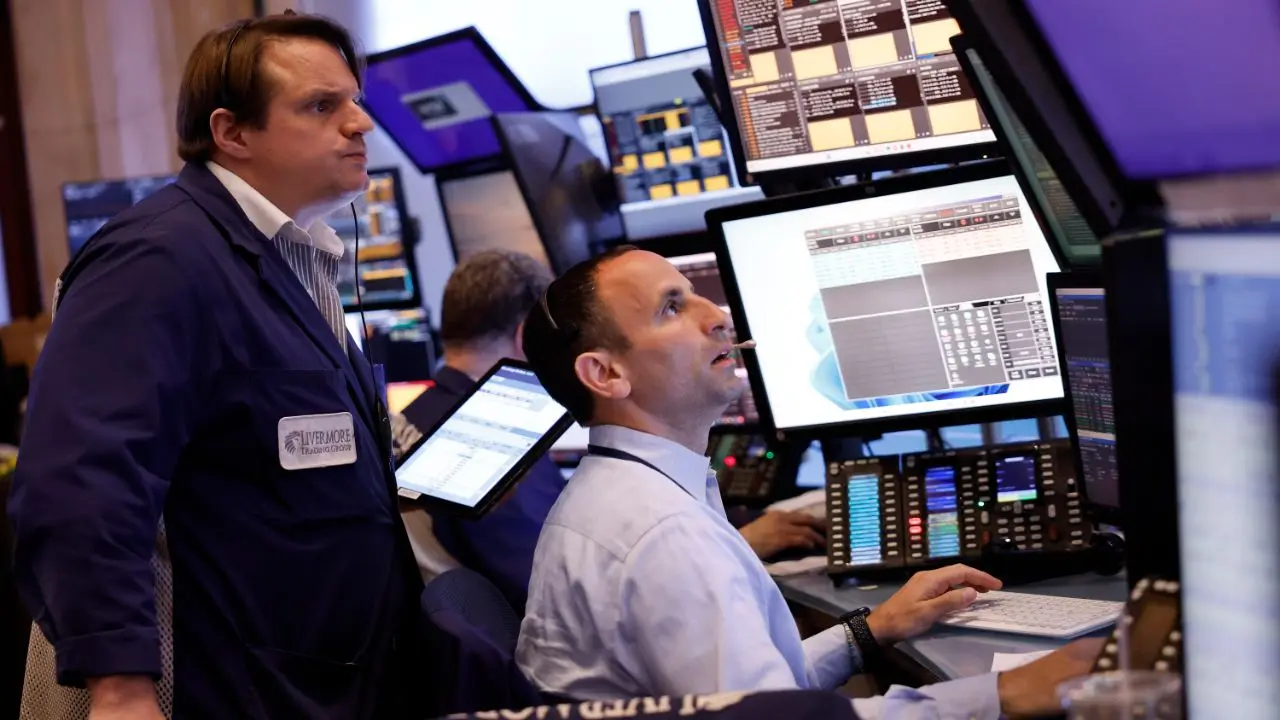
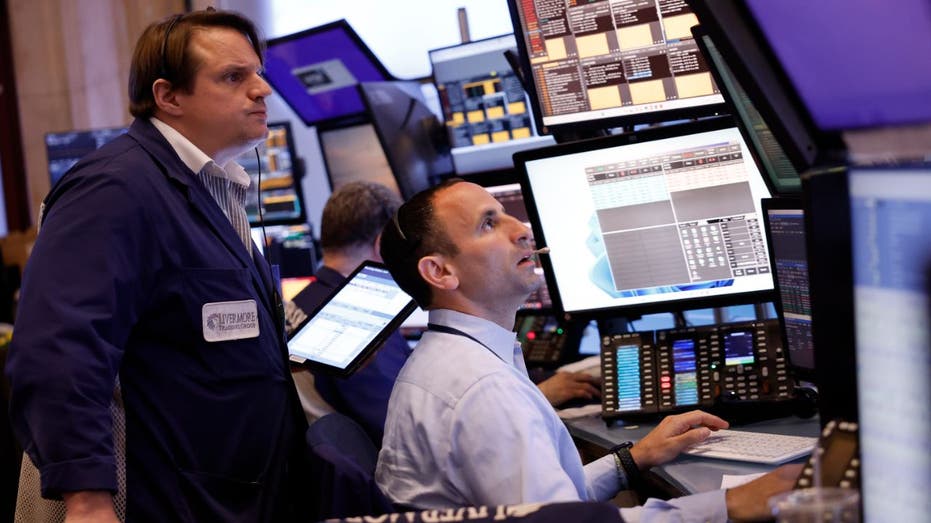
Stocks took a wild ride on Tuesday. Shares rose at the open before a midday selloff, then made up some ground toward the end of the session. The Nasdaq composite fell about 1%, and the S&P 500 declined 0.3%. The Dow Jones Industrial Average added 0.2%.

Chip stocks fell sharply. Marvell Technology dropped 7.6% and Advanced Micro Devices sank 3%. Computer-memory maker Micron Technology declined 1.4%. The pullbacks led to a 1.9% drop for the PHLX Semiconductor Sector index.

Continue Reading

Trending

Copyright © 2025