

Connect with us
DAPA Banner
DAPA Coin
DAPA
COIN PAYMENT ASSET
PRIVACY · BLOCKDAG · HOMOMORPHIC ENCRYPTION · RUST
ElGamal Encrypted MINE DAPA
🚫 GENESIS SOLD OUT
DAPAPAY COMING

Business

How Everyday Habits Can Shape Long-Term Health Goals

Published

on

How Everyday Habits Can Shape Long-Term Health Goals

Health goals don’t collapse in one moment. They erode. Tuesday the routine slips. Wednesday sleep is poor. By the following month, meals are reactive and the plan that felt solid in January has quietly disappeared. Nobody decided to stop. Things just drifted.

Weight management works the same way. Effort alone rarely explains the gap between intention and result. Biology runs a parallel process, one that operates independently of how motivated someone feels on a given morning. For a growing number of people, the real question is how habits and clinical support can fit together without making daily life feel like a medical programme.

Oral semaglutide changes part of that picture. A tablet format may remove one barrier for people who struggle with injections, which is why the Wegovy oral pill has entered the wider discussion. Worth examining what that actually means in practice.

UK Regulatory Status and Anticipated MHRA Approval Timeline

Semaglutide as an oral tablet for weight management is still developing in the UK, not a settled patient route yet. The FDA approved oral semaglutide 25mg in December 2025. In the UK, the 7.2mg Wegovy pen cleared MHRA review in April 2026. The oral tablet? No confirmed UK decision yet.

Private access and NHS routes may move at different speeds. They often do. Costs will vary depending on provider, assessment structure, and what follow-up looks like in each case. Anyone researching this now is doing so before full availability lands. That context matters for setting realistic expectations.

Advertisement

What the MHRA Approval Means for UK Patients

Approval of an injectable format does not automatically transfer to an oral one. Each formulation goes through its own process. What the injectable approval does show is that regulators have assessed higher-dose semaglutide for obesity under a separate formulation. That is useful context. It is not a guarantee of timeline for the tablet.

For people trying to understand how a tablet format might fit into their daily routine, the Wegovy pill is a clinical question first, not a lifestyle upgrade. Eligibility, medical history, side effects, and follow-up need proper review before any decision gets made. That review shapes whether treatment is appropriate, not just available.

Individual response varies. Clinical history, existing conditions, other medications. All of these shape what a prescriber recommends. Two people with similar health profiles may end up on different treatment paths depending on which format fits their actual daily life. That fit matters more than most people expect when treatment is meant to run for months.

Clinical Evidence from the OASIS-4 Trial and Efficacy Outcomes

Sixty-four weeks. Daily oral semaglutide 25mg. OASIS-4 participants recorded notable body weight reductions across the study period. Entry criteria: BMI 30 or above, or 27 and above where weight-related health conditions were present.

Advertisement

Two participants on the same protocol for the same duration can produce different outcomes. The trial cannot control for everything. Data supports efficacy. It does not promise a specific number on any individual’s scale. Starting from that position is more useful than starting from best-case projections.

What the trial does confirm: oral delivery of semaglutide produces clinically relevant weight reduction in eligible adults. Wegovy tablets work through the same receptor pathway as the injectable form. That is the foundation.

How Oral Semaglutide Compares to Injectable Wegovy

Wegovy by injection: 2.4mg, once weekly. Wegovy tablets: 25mg, once daily. GLP-1 receptor agonist action in both cases, influencing appetite and glycaemic control through the same biological mechanism. Outcomes appear to sit in a comparable range across available trial data.

Adherence drives the choice here, not pharmacology. Some people may not want to inject themselves at home over an extended period. Not a weakness. A real barrier that determines whether treatment starts at all. Removing the needle may reduce the training requirement, the anxiety, and the logistical weight of managing an injectable long-term.

Advertisement

Starting a format that gets maintained beats starting a theoretically better format that gets abandoned. That distinction is clinical, not just practical.

Dosing, Administration, and Safety Considerations

Empty stomach. Non-negotiable. Oral semaglutide 25mg needs 30 minutes clear before food or other medications. Built into how the tablet absorbs. Cannot be worked around.

Treatment starts low. Dose titrates upward over several weeks to reach 25mg. Standard for GLP-1 therapies. Nausea, vomiting, diarrhoea, constipation show up commonly in the early weeks. Most run mild to moderate. Many settle as adjustment progresses. Clinical assessment covers contraindications, medical history, and suitability before any prescription is issued. That step is where appropriateness gets determined, not after.

Practical Adherence Strategies for Daily Oral Dosing

Same time. Every morning. Before food. Before anything else. Vague plans to take it “in the morning” produce missed doses by week three. A single smartphone alarm, set once, removes the daily decision. It fires. The tablet gets taken. This is where daily routine does more than motivation.

Advertisement

Pill organisers add a physical confirmation layer. One glance replaces the need to remember. Useful on the mornings when memory is not reliable.

Missing one daily dose may carry less individual impact than missing a weekly injection. That is the maths. Across a full month, though, irregular patterns accumulate. Week one habits tend to stick. Week four corrections rarely do.

UK Access Pathways, Cost Considerations, and Patient Journey

Private prescription routes may move ahead of NHS funding. Costs will vary by provider, assessment model, and follow-up structure. These details should become clearer as approval progresses.

If approval is confirmed, GPhC-registered online pharmacies with clinician oversight may become one access route. A typical regulated process would involve clinical consultation, eligibility review, and a prescription only where criteria are met.

Advertisement

Weight management over the long term comes down to whether the format, the routine, and the clinical structure hold together across months. A treatment route can look strong on paper and still fail if it does not fit the morning, the workday, the meal pattern, and the person using it.

That is why the conversation around tablets matters. Not because a different format removes the need for assessment, follow-up, or daily habits. It does not. But for some patients, a routine that feels easier to keep may make the whole structure easier to maintain.

Advertisement
Continue Reading
Click to comment

You must be logged in to post a comment Login

Leave a Reply

Business

Preparing for Rupee at 100: What does it mean for the economy and your stock market investments?

Published

on

Preparing for Rupee at 100: What does it mean for the economy and your stock market investments?
The Indian rupee’s slide towards the psychologically crucial Rs 100 per dollar mark is no longer being viewed as an extreme possibility by market participants. For many investors, the debate has shifted from whether the rupee can touch that level to what such a move would mean for the economy, corporate earnings and stock portfolios.

The rupee fell to a record low of 95.74 against the US dollar on Wednesday, extending a prolonged weakening trend that has accelerated amid surging crude oil prices, foreign investor outflows and growing stress on India’s external balances.

The latest pressure has largely come from the sharp rise in global energy prices following the escalation of the US-Iran conflict. Brent crude prices have jumped nearly 50% since the war erupted in late February, worsening concerns around India’s import bill and inflation outlook.

India imports more than 80% of its crude oil requirements, making the rupee particularly vulnerable during periods of sustained energy price shocks.

Advertisement

VK Vijayakumar, Chief Investment Strategist at Geojit Investments, said the pace of depreciation has become worrying.


“This year began with rupee at 90 to the dollar. Since then it has steadily depreciated to the present level of 95.7 to the dollar. If crude remains elevated for an extended period, rupee will move to 100,” Vijayakumar said.
He pointed to sustained selling by foreign portfolio investors as another major pressure point for the Indian currency. “Money is moving into markets like the US, Japan, South Korea and Taiwan which are doing very well. So long as the outperformance of these markets and the underperformance of India continues, FPIs will continue to sell, which, in turn, will further drag the rupee down,” he said.The rupee’s weakness is already beginning to reshape investor thinking across sectors.

A sharply weaker currency generally raises imported inflation because India pays more for commodities such as crude oil, chemicals, electronics and industrial raw materials. That eventually feeds into transportation costs, manufacturing expenses and household consumption.

Economists have already started revising inflation and growth forecasts higher and lower respectively as energy prices remain elevated.

A weaker rupee also complicates policymaking for the Reserve Bank of India. Markets have started pricing in the possibility of interest rate hikes to defend the currency and contain inflation pressures. Though RBI Governor Sanjay Malhotra recently said monetary policy can look through temporary supply shocks, he also indicated that authorities may need to respond if inflation becomes entrenched.

Advertisement

For equity markets, the implications are uneven. Sectors dependent on imports are expected to face the biggest pressure. Companies with high exposure to crude derivatives, imported components or foreign currency liabilities could see margin compression.

Khushi Mistry, Research Analyst at Bonanza Portfolio, said sectors such as aviation, oil marketing companies, automobiles and consumer durables are among the most vulnerable.

“A weaker rupee substantially increases India’s import bill particularly for crude oil, electronics and industrial raw materials. This furthermore fuels imported inflation and puts pressure on household spending,” she said.

She added that continued currency weakness could trigger further foreign institutional investor outflows and increase volatility in equity markets. The broader market concern is that India’s macroeconomic balances may deteriorate if the rupee weakens too rapidly.

Advertisement

Arpit Jain, Joint MD at Arihant Capital Markets, said a move toward Rs 100 per dollar would not be positive for the economy despite some sector-specific beneficiaries.

“India remains a larger importer than exporter overall, and a sharply weaker rupee could widen both the fiscal and current account deficits, which may hurt the economy much more,” Jain said.

Still, not all sectors lose when the rupee weakens. Export-oriented businesses generally benefit because their dollar revenues become more valuable when converted into rupees. IT services, pharmaceuticals, textiles and selected manufacturing exporters are expected to see earnings support from currency depreciation.

Vijayakumar believes pharmaceutical companies could emerge as relative outperformers if the rupee weakens further. “Pharmaceuticals will be a safe bet since the demand for pharmaceuticals is inelastic and this export sector will benefit from rupee depreciation. Textiles will also benefit,” he said.

Advertisement

However, he warned that the IT sector may not fully benefit despite dollar revenues because of ongoing uncertainty around artificial intelligence-led disruptions and spending shifts in global technology markets.

Jain also cautioned that even sectors often viewed as natural beneficiaries of a weaker currency may not gain uniformly. “Many companies continue to import APIs and raw materials from overseas, which offsets part of the currency advantage,” he said.

For investors, analysts say stock selection becomes far more important in such an environment. Mistry said investors should focus on businesses with strong balance sheets, pricing power and global revenue exposure while avoiding highly leveraged and import-dependent companies.

The direction of crude oil prices and foreign capital flows will remain critical in deciding whether the rupee eventually breaches the Rs 100 mark.

Advertisement

Vijayakumar said two developments could reverse the trend — a fall in crude prices if the Strait of Hormuz situation stabilises, or an end to the global AI-driven investment frenzy that has attracted foreign money into markets such as the US and Taiwan.

Until then, the pressure on the rupee appears unlikely to ease meaningfully, leaving investors increasingly forced to prepare for a world where Rs 100 to the dollar may no longer be viewed as an outlier scenario.

(Disclaimer: Recommendations, suggestions, views and opinions given by the experts are their own. These do not represent the views of Economic Times)

Advertisement
Continue Reading

Business

Rohit Singhania bets on financials, telecom and healthcare for alpha generation

Published

on

Rohit Singhania bets on financials, telecom and healthcare for alpha generation
India’s equity markets may have staged a respectable rebound from their March lows, but the mood on Dalal Street is turning increasingly cautious as geopolitical tensions, elevated crude prices, and macroeconomic uncertainties begin to cloud the earnings outlook.

Speaking to ET Now, Rohit Singhania from DSP Mutual Fund said investors are entering a “wait and watch” phase, with risks rising steadily over the past month as the ongoing global conflict refuses to ease.

“What we have seen in the last one month or so is the risks have gone up. Till one month back, 45 days back, the view was the war is not going to last for long. But the fact is it is still going on,” Singhania said.

He added that while the full impact of higher commodity prices and supply chain disruptions has not yet filtered into the economy, the pressure is beginning to build beneath the surface.

Advertisement

“The pressure of commodity prices going up and the impact it may have on inflation, we have still not felt the actual impact because if you see the transport fuel prices, other prices have still not gone up a lot,” he said.


According to Singhania, prolonged geopolitical uncertainty could eventually force companies to raise prices, which may hurt demand and corporate profitability over the coming quarters.
“So, I would say yes, risks still remain in terms of supply chain disruptions, they continue. Eventually, if this continues for longer, we will see price hikes also happening. So, what it does to demand? So, it is a wait and watch period right now,” he noted.Earnings Risks Still Not Fully Priced In
Despite the correction seen in several pockets of the market, Singhania believes valuations are not yet attractive enough to justify an aggressive investment stance.

“I would say not so much currently because if you go longer-term averages if you take, 16.5-17 is a fair multiple if you look at two years forward. So, I would say risk-reward is still not favourable,” he said.

DSP has already revised down earnings assumptions and valuation expectations for several holdings, but the fund house is not rushing to deploy capital aggressively.

“We need to be aware about the potential risk which we have not seen in the last one-and-a-half months since the war started,” he added.

Advertisement

On market valuations, Singhania said the Nifty currently appears balanced between upside and downside risks.

“If people just looking at yesterday’s Nifty at around 23,500, it was giving me an upside of 7-8% and a downside of 7-8%. So, we are somewhere in the middle right now,” he explained.

However, he indicated that a deeper correction could create a more compelling buying opportunity.

“So, I would not be all in or all out, but yes, another 5-7% correction if at all the market corrects, that is the time I would go aggressively and buy more in my portfolios,” he said.

Advertisement

Largecaps Preferred Amid Uncertainty
Singhania reiterated that DSP continues to maintain a slight preference for largecaps in the current environment, though he stressed that portfolio construction remains fundamentally bottom-up rather than driven by market capitalisation labels.

“As a fund manager we do not start by saying I want to buy a largecap stock or a midcap or smallcap,” he said.

He explained that investment decisions are based on business quality, valuations, and risk visibility over the next couple of years.

At the same time, he acknowledged that smallcaps appear relatively more expensive than largecaps at present.

Advertisement

“In this current environment of uncertainty where there are lot of unknowns versus known, historically it tells us largecaps tend to do better in these periods,” Singhania said.

Still, he clarified that compelling opportunities in the smallcap universe would not be ignored simply because of broader valuation concerns.

Financials, Telecom and Healthcare Stand Out
Among sectors, Singhania said DSP remains constructive on financials, telecom, and select healthcare names over the next 12 to 18 months.

“We are quite positive on the financial space whether it is banks, insurance companies, few capital market plays. We also like telecom and few healthcare names,” he said.

Advertisement

The optimism on banks stems largely from stronger balance sheets across both lenders and corporates, a stark contrast to the stress seen in previous economic slowdowns.

“Today even if a pure commodity company comes and tells us that for the next two quarters my profits are not going to grow or maybe they can fall, we do not worry a lot because they have strong balance sheets,” he said.

On telecom, Singhania highlighted the sector’s defensive characteristics and resilient demand profile.

“They are not really impacted by what is happening globally. Like, I need to use my telecom every day. We all are using our phones. We use data,” he said.

Advertisement

Healthcare, meanwhile, is being driven more by earnings visibility than by valuation comfort.

“So, healthcare is a call more on the visibility of business growth rather than on valuations,” he explained, referring specifically to hospitals and diagnostic businesses.

IT Remains a “Wait and Watch” Bet
Singhania struck a cautious tone on the information technology sector, admitting that the evolving business environment has made forecasting difficult.

“So, IT again, it is a wait and watch for me at least, it is my personal view,” he said.

Advertisement

He acknowledged that IT stocks appear inexpensive on pure valuation metrics, but warned that business visibility remains weak amid concerns over slowing demand and margin pressures.

“Every day is a new day today. So again, we as DSP we are trying to understand what can be the actual impact. Is it a one, two, three more quarter impact or it can continue for next one-two years?” he said.

DSP’s funds currently remain slightly underweight on IT, with Singhania saying there is no strong fundamental trigger yet to turn positive on the sector.

“When you compare it with business outlook or business visibility, you feel there is maybe still time to wait it out,” he added.

Advertisement
Continue Reading

Business

SmartestEnergy agrees 20-year supply contract with major windfarm in South Wales

Published

on

Business Live

It will be supplied with energy from Bute Energy’s Twyn Energy Park

Generic picture of a wind turbine.

A wind turbine.(Image: Local Democracy Reporting Service)

Renewables focused energy company SmartestEnergy has agreed a long-term supply deal with Bute Energy for clean electricity generated from Twyn Hywel Energy Park.

SmartestEnergy has entered into a 20-year contract for difference (CfD) power purchased agreement (PPA) with Bute.

Advertisement

Located on the border of Caerphilly and Rhondda Cynon Taf, Bute’s Twyn Hywel Energy Park project will comprise 14 wind turbines with a total installed capacity of 93.4 megawatts. This is enough to power, at capacity, the electricity needs around 81,000 households each year. The project was awarded a CfD in the UK Government’s allocation round seven (AR7), with a target commercial operations date late next year.

As renewable projects can be expensive, developers bid to secure a guaranteed rate – or CfD – they can charge for each megawatt hour (MWh) of power they generate in the coming years.

READ MORE: Caerphilly Council sells solar farm to Fuse EnergyREAD MORE: Blake Morgan appoints first ever co-heads of its Wales office

If the price of electricity on the open market dips below that, subsidies will top up payments to companies. If the price is higher, companies have to pay back the difference to the UK Government.

Advertisement

As a transmission-connected onshore wind asset, Twyn Hywel represents a significant addition to the UK’s renewable energy infrastructure. SmartestEnergy’s experience in transmission-connected wind assets and its competitive pricing were central to its selection as route to market partner, following a tender process in which Bute Energy was supported by investment partner, Copenhagen Infrastructure Partners (CIP).

Beyond its energy output, the project is expected to create around 300 jobs.

Will Russell, business development Manager, SmartestEnergy said: “Wales is at a defining moment in its energy transition and SmartestEnergy is proud to be part of it. Working with Bute Energy on Twyn Hywel Energy Park to provide a long-term route to market for a project of this scale reflects our focus on getting the commercial foundations right, so that projects like this can deliver lasting value for the UK energy system.”

Sid Anverali, project director at Bute Energy, said: “We’re proud to deliver this project with SmartestEnergy, and we intend to make it count, not just in megawatts but in skills, jobs, and long-term investment for the communities around Caerphilly and Rhondda Cynon Taf. We knew we needed a long-term partner who could go beyond being a capable counterparty and one that shares our ambition for the next two decades and beyond. SmartestEnergy brings exactly that in deep expertise, genuine flexibility, and a team that understands what a project of this scale truly demands.”

Advertisement

The project forms part of Bute Energy’s wider £3bn Welsh onshore wind investment programme.

The Twyn Hywel Wind project further strengthens SmartestEnergy’s growing presence in the CfD market and transmission-connected space.
Continue Reading

Business

(VIDEO) Elon Musk Stands with Trump, Xi Jinping, Tim Cook and Jensen Huang in Historic Beijing Summit Photo

Published

on

Elon Musk Stands with Trump, Xi Jinping, Tim Cook and

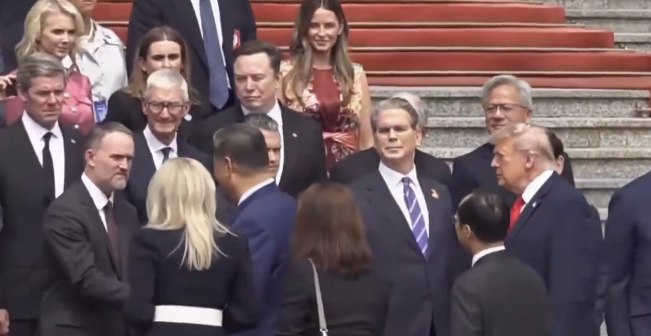
BEIJING — A striking image shared widely on social media Thursday captured Elon Musk standing alongside President Donald Trump, Chinese President Xi Jinping, Apple CEO Tim Cook and NVIDIA CEO Jensen Huang during the high-stakes U.S.-China summit in Beijing, underscoring the extraordinary convergence of political power and Silicon Valley influence at a pivotal moment in bilateral relations.

Elon Musk Stands with Trump, Xi Jinping, Tim Cook and
Elon Musk Stands with Trump, Xi Jinping, Tim Cook and Jensen Huang in Historic Beijing Summit Photo

The photograph, posted by popular X account @cb_doge, quickly went viral with more than 1 million views within hours. It shows the group in what appears to be a formal meeting or reception at the Great Hall of the People, highlighting Musk’s prominent role in Trump’s delegation as the leaders discuss trade, technology and global flashpoints. Musk, dressed casually in a dark jacket, stands near the center of the frame, symbolizing the growing intersection of American innovation and high-level diplomacy.

The image has sparked intense online discussion, with users describing it as “history in one frame” and “the world’s most powerful room.” Replies ranged from admiration for Musk’s global influence to lighthearted commentary on the unusual gathering. One user noted, “Love him or hate him, Elon Musk went from sleeping in factories to standing among world leaders shaping the future of AI, tech, energy, space and global economics. That’s not influence anymore. That’s history being written in real time.” Another quipped, “Elon being a tourist on a state visit,” while many expressed pride in seeing American tech leaders at the table with the two presidents.

The photo comes as Trump and Xi opened two days of formal talks focused on five key agendas: trade and tariffs, Taiwan security, Iran and Middle East stability, technology and critical minerals, and cooperation on fentanyl and people-to-people ties. Musk’s presence alongside Cook and Huang signals the administration’s emphasis on securing favorable terms for U.S. technology companies amid ongoing restrictions on advanced chips and AI development.

Advertisement

Trump has repeatedly highlighted Musk’s role in his inner circle, naming him a key adviser on government efficiency and innovation. Musk’s companies — Tesla with its massive Shanghai Gigafactory, SpaceX’s growing international launches, and xAI’s rapid advancements — give him direct stakes in U.S.-China relations. Tesla’s China operations alone represent a significant portion of its global production, making any shifts in trade policy highly consequential for the billionaire entrepreneur.

Xi greeted the U.S. delegation warmly, according to Chinese state media, emphasizing “mutual respect and win-win cooperation.” The inclusion of top American CEOs in the meetings underscores Beijing’s interest in maintaining business ties even as strategic competition persists. Analysts note that China views Musk as a pragmatic figure less aligned with traditional Washington hawks, potentially opening doors for targeted deals in electric vehicles, AI infrastructure and space collaboration.

The viral moment has reignited debates about the influence of private tech leaders in foreign policy. Supporters praise the collaboration as smart economic diplomacy, arguing that involving industry giants like Musk, Cook and Huang ensures practical outcomes rather than purely political posturing. Critics worry it blurs the line between government and corporate interests, potentially prioritizing billionaire agendas over broader national security concerns.

Musk has maintained a high profile during the trip, posting updates and engaging with Chinese users on X. His presence has drawn both praise and scrutiny from Chinese netizens, with some expressing admiration for his entrepreneurial spirit while others remain wary of U.S. tech influence. One reply in Chinese translated to, “I saw Elon, very happy to see you come to China. You are the best entrepreneur in the hearts of the vast majority of us.”

Advertisement

The summit itself carries enormous global weight. With tariffs still hovering on many Chinese goods and tensions simmering over Taiwan and the Iran conflict, any progress could stabilize markets and supply chains. Early indications suggest modest commitments on agricultural purchases and critical minerals, but deeper issues like semiconductor export controls and AI guardrails are expected to see more cautious dialogue.

For Musk, the Beijing visit represents another chapter in his complex relationship with China. Tesla has invested billions in its Shanghai factory, which remains one of the company’s most productive facilities. At the same time, Musk has publicly supported stronger U.S. defenses and has been vocal about concerns over Chinese influence in global affairs. His balancing act — maintaining business interests while advising the Trump administration — places him at the center of one of the world’s most consequential geopolitical relationships.

Social media reaction has been overwhelmingly focused on the optics of the photo. Users described the gathering as “trillion-dollar power in one room” and “the future negotiating in real time.” Several replies highlighted the irony and significance of Musk, once a meme-posting entrepreneur, now standing shoulder-to-shoulder with the leaders of the world’s two largest economies and fellow tech titans.

The image also fueled speculation about potential announcements from the summit. With Cook and Huang present, discussions around Apple’s supply chain in China and NVIDIA’s AI chip access are almost certainly underway. Any easing of restrictions or new partnerships could have immediate market implications for the companies involved.

Advertisement

As the summit continues into its second day, all eyes remain on whether the high-level engagement yields tangible progress or remains largely symbolic. For now, the viral photo of Musk with Trump, Xi, Cook and Huang has captured the world’s attention, serving as a powerful visual of how technology, business and geopolitics are increasingly intertwined in 2026.

The moment underscores a broader truth: in today’s global landscape, private-sector leaders like Elon Musk have become indispensable players in diplomacy. Whether this summit marks a turning point in U.S.-China relations or simply another chapter in managed competition, the image of these figures together will likely be remembered as one of the defining visuals of the Trump era’s approach to China.

Advertisement
Continue Reading

Business

Polish economy grows 3.4% in first quarter amid energy challenges

Published

on


Polish economy grows 3.4% in first quarter amid energy challenges

Continue Reading

Business

Banking bounce helps shares snap four-day losing streak

Published

on

Australian shares bounce on talk of Iran war slowdown

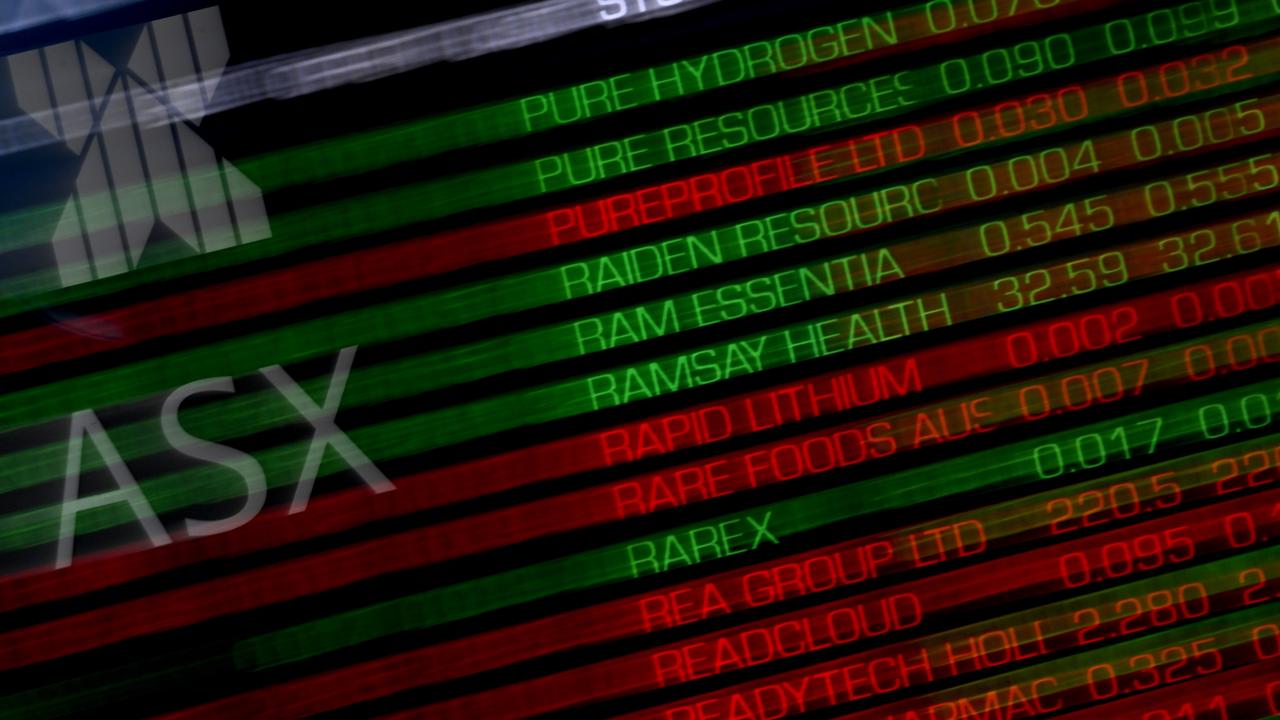
Australia’s share market has broken a four-session losing streak, albeit unconvincingly, after a rebound in banks and continued strength in major miners tipped the bourse into positive territory.

Continue Reading

Business

Casey’s General Stores Stock: Growth At An Unreasonable Price (NASDAQ:CASY)

Published

on

Casey's General Stores Stock: Growth At An Unreasonable Price (NASDAQ:CASY)

This article was written by

I am an independent analyst and investor interested in investing at the intersection of value and growth. My method is a highly qualitative focus on mostly small caps, looking for both long term compounders as well as some special situations. On Twitter @GrowthyValue

Analyst’s Disclosure: I/we have no stock, option or similar derivative position in any of the companies mentioned, and no plans to initiate any such positions within the next 72 hours. I wrote this article myself, and it expresses my own opinions. I am not receiving compensation for it (other than from Seeking Alpha). I have no business relationship with any company whose stock is mentioned in this article.

Seeking Alpha’s Disclosure: Past performance is no guarantee of future results. No recommendation or advice is being given as to whether any investment is suitable for a particular investor. Any views or opinions expressed above may not reflect those of Seeking Alpha as a whole. Seeking Alpha is not a licensed securities dealer, broker or US investment adviser or investment bank. Our analysts are third party authors that include both professional investors and individual investors who may not be licensed or certified by any institute or regulatory body.

Advertisement
Continue Reading

Business

Hockey WA focused on key fundamentals in 2026

Published

on

Hockey WA focused on key fundamentals in 2026

Despite positive FY25 results, Hockey WA boss Graham Reid says the state sporting organisation remains focused on delivering strong governance and financial discipline.

Continue Reading

Business

Trump-Xi meeting crucial for global economic stability: Shaun Rein

Published

on

Trump-Xi meeting crucial for global economic stability: Shaun Rein
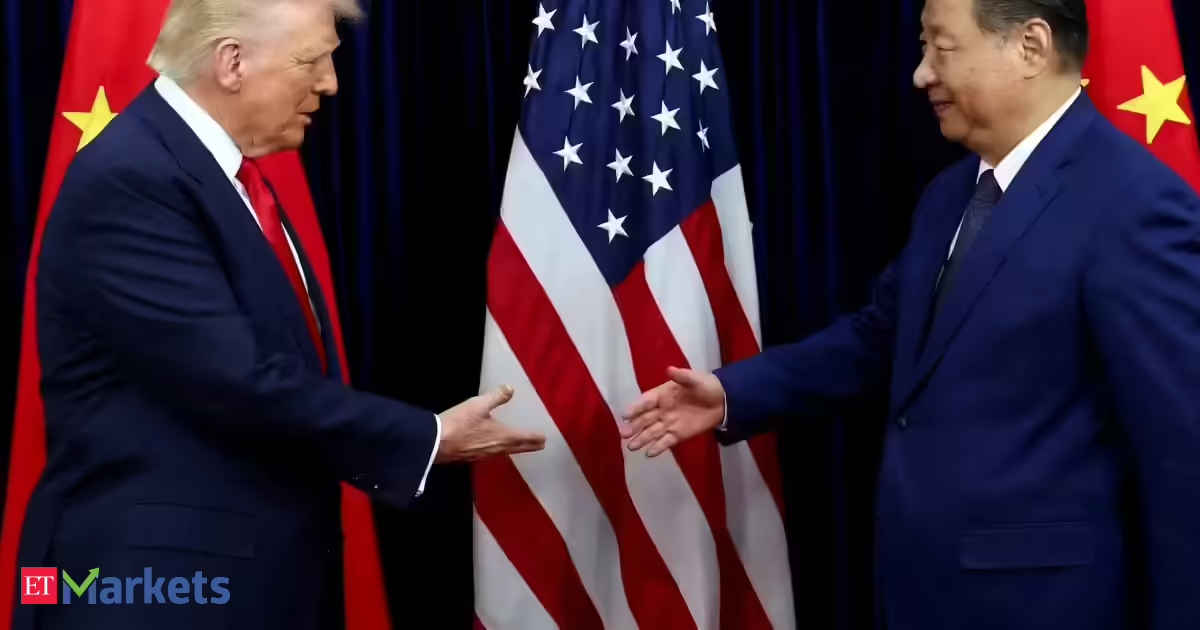
A high-stakes meeting between US President Donald Trump and Chinese President Xi Jinping is being closely watched across global markets, with investors, policymakers and businesses hoping for signs of stability after years of escalating geopolitical friction between the world’s two largest economies.

Speaking to ET Now, market strategist from China Market Research Group & Author Shaun Rein described the summit as one of the most consequential diplomatic engagements in recent years, particularly against the backdrop of trade disputes, AI rivalry and mounting tensions in West Asia.

“This is an important meeting. This is the first time that an American president has stepped foot in China nine years since Trump started the trade war back in 2017-2018 and the whole world, India, United States, Europe, Africa, we have all suffered from the geopolitical split and tension between the US and China,” Rein said.

He pointed out that export controls imposed by Washington on advanced technologies, including AI chips and semiconductors, had intensified the economic divide between the two nations. China, in response, has leveraged its dominance in refined rare earths, a critical input for global manufacturing and electronics.

Advertisement

“As America has forbidden and put export controls on all types of products from Nvidia chips to being exported to China, China has retaliated by holding the Sword of Damocles over the rest of the world, saying, will we send out Chinese refined rare earths or not,” he said.


West Asia Crisis Likely to Dominate Discussions
While trade and AI remain major strategic concerns, Rein believes the worsening conflict in West Asia could overshadow economic discussions during the summit.
“Well, trade, AI, and just competing visions of the global world order is very important. But unfortunately, because Trump has had a self-inflicted wound by invading Iran through bombs, that is what the large part of the discussion is going to be,” Rein said.
According to him, Washington is increasingly dependent on Beijing’s diplomatic leverage to ease tensions involving Iran and the Strait of Hormuz, a critical global oil shipping route.

He argued that China’s interests align more closely with restoring stability in the Middle East rather than prolonging conflict.

“We have to remember they do $108 billion of trade with Saudi Arabia, $103 billion of trade with UAE, and only officially about 15 billion of trade with Iran,” Rein noted, adding that China’s broader economic priorities in the region outweigh its ties with Tehran.

Rein also said China would prefer an end to regional tensions as inflationary pressures begin to re-emerge domestically.

Advertisement

“So, China says, what, let us try to work with the United States and get a win to fix the problems in the Middle East because I do not think that China is as close to Iran as a lot of Americans believe they are,” he added.

Supply Chain Decoupling Still Intact
Despite expectations surrounding the summit, Rein warned that the broader decoupling of US and Chinese supply chains is unlikely to reverse anytime soon.

He said Chinese companies and policymakers no longer trust long-term access to American technology after years of export restrictions and sanctions.

“So, the Chinese will never ever after a decade of being harassed and oppressed by the United States build their AI and their technology sector on the American tech stack anymore. They are going to focus on indigenous innovation,” he said.

Advertisement

Rein suggested investors should increasingly watch domestic Chinese technology players rather than American firms dependent on China exposure.

“So, investors should be looking at Chinese players like Cambricon, SMIC, Hua Hong. The Chinese players are going to do well because nobody in China can trust that they will be able to rely on the American tech stack,” he said.

He also argued that countries across the Global South have become wary of relying too heavily on US-controlled technologies and financial systems after Washington’s repeated use of sanctions and economic restrictions.

China Holds Stronger Position, Says Rein
On the balance of power between Washington and Beijing, Rein said China currently holds greater leverage in both trade and geopolitics.

Advertisement

“China clearly has won the trade war. China clearly has more leverage over the United States right now,” he said.

According to Rein, China’s influence extends far beyond rare earths and electronics, covering pharmaceuticals, antibiotics and key industrial supply chains that are deeply embedded in the global economy.

“It is the fact that China also controls along with India a combined 95% of antibiotic production. It also makes almost 100% of ibuprofen and paracetamol,” he said.

Rein argued that deteriorating ties between the United States and several traditional allies had further strengthened China’s global position.

Advertisement

“But the problem is Trump has ticked off his allies, Canada, France, Germany, and these leaders of these countries have all visited Xi Jinping and made the pilgrimage to China in the last two months,” he said.

India’s Strategic Position Under Spotlight
Rein also spoke extensively about India’s evolving role amid shifting global alliances, suggesting that India has the potential to emerge as one of the world’s leading superpowers over the long term.

“I believe India should and will become one of the three major global superpowers,” he said.

However, he questioned New Delhi’s current balancing strategy between Washington and Beijing and argued that India should adopt a more pragmatic relationship with China.

Advertisement

“I am happy to see that direct flights between the two countries have come back. I am glad to see that more visas are being issued both ways. Both countries should be working together to offset western imperialism,” Rein said.

He added that India should remain cautious about becoming overly dependent on the United States.

“You need to understand that the United States will do all that it can to prevent India from getting too strong,” he said.

As markets assess the possible outcomes of the Trump-Xi meeting, analysts believe even a temporary easing of rhetoric between the two nations could provide relief to global businesses grappling with geopolitical uncertainty, disrupted supply chains and shifting trade policies.

Advertisement
Continue Reading

Business

GB News Radio Tops UK Growth League with 21% Audience Surge

Published

on

GB News Radio Tops UK Growth League with 21% Audience Surge

GB News Radio has emerged as the fastest-growing network station in the country, with the latest RAJAR figures showing a 21 per cent surge in year-on-year reach that has pushed the upstart broadcaster decisively ahead of its closest commercial rivals.

The station, which forms part of the wider GB News operation, attracted 676,000 listeners during the first quarter of 2026, comfortably overtaking Times Radio on 604,000 and Talk on 560,000. It is a result that will sharpen the competitive temperature in a speech-radio market that has seen heavy investment from News UK, Global and Bauer over the past five years.

GB News Radio’s 21 per cent expansion outstripped Talk’s 16 per cent uplift and the 6 per cent rise recorded by LBC, the long-standing market leader in the news-and-talk format. Times Radio, by contrast, saw its annual reach contract by 3 per cent, raising fresh questions about the trajectory of News UK’s five-year-old digital station.

Listening hours at GB News Radio reached 4.35 million in the quarter, a modest 1 per cent improvement on the same period last year but a figure the broadcaster argues underlines deepening listener loyalty alongside the headline reach growth.

Much of the momentum has come from younger demographics that commercial talk-radio operators have historically struggled to capture. The station reported a 20 per cent increase among adults aged 35 to 54 over the past quarter, with the 35-to-54 male audience climbing 30 per cent — a cohort that remains particularly prized by advertisers in the speech genre.

Advertisement

Ben Briscoe, head of programming at GB News, said the numbers reflected a clear shift in listening habits. “These figures show more and more people are turning to GB News Radio for breaking news, opinion and coverage of the day’s biggest stories,” he said. “The continued growth reflects the hard work, commitment and first-class journalism produced by our teams across the schedule every day. Just like on TV, GB News Radio is leaving its rivals trailing behind.”

The radio performance mirrors a strong run for the group’s television operation. GB News was the most-watched news channel in the UK on local election results day, with BARB figures showing an average audience of 185,700 on Friday 8 May. That was 56 per cent ahead of Sky News, which drew 119,000 viewers, and almost double the BBC News Channel’s 93,200.

During April, the channel averaged 89,500 viewers and a 1.59 per cent share, edging Sky News on 86,200 viewers and a 1.53 per cent share. Between July 2025 and April 2026, GB News averaged 90,300 viewers and a 1.47 per cent share, ahead of the BBC News Channel’s 83,900 viewers (1.37 per cent) and Sky News’s 72,000 viewers (1.18 per cent), capping a ten-month run in which the broadcaster has consistently outperformed both established rivals.

For the wider commercial broadcasting sector, the latest RAJAR data points to a more fragmented and contestable speech-radio market than at any point in the past decade, and one in which the newest entrant is now setting the pace.

Advertisement

Amy Ingham

Amy is a newly qualified journalist specialising in business journalism at Business Matters with responsibility for news content for what is now the UK’s largest print and online source of current business news.

Advertisement
Continue Reading

Trending

Copyright © 2025