LOS ANGELES — NVIDIA CEO Jensen Huang shared vivid details of his early collaboration with Elon Musk during a December 2025 appearance on “The Joe Rogan Experience,” recounting how he helped build the first onboard computers for Tesla’s Model S and Model 3 and the initial hardware powering the company’s Full Self-Driving system. A clip from episode #2422 resurfaced this week and quickly went viral on X, amassing more than 1.6 million views as fans revisited the origins of the tech giants’ long-standing partnership.
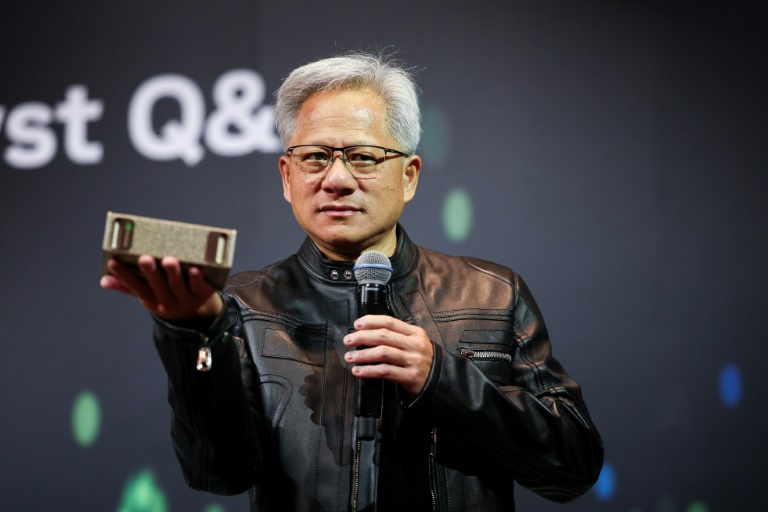
Jensen Huang AFP
Huang, speaking with Rogan, described the moment as one of personal luck and mutual vision. “I was lucky because I had known Elon Musk, and I helped him build the first computer for Model 3, the Model S, and when he wanted to start working on autonomous vehicle,” he said in the podcast. “I helped him build the computer that went into the Model S AV system, his full self-driving system. We were basically the FSD computer version one.”
Jensen Huang: “I was lucky because I had known Elon Musk, and I helped him build the first computer for Model 3, the Model S, and when he wanted to start working on autonomous vehicle.”pic.twitter.com/tQSmp9Rmee
— Joe Rogan Podcast News (@joeroganhq) May 10, 2026
The conversation, which originally aired Dec. 3, 2025, highlighted a pivotal 2015-2016 period when NVIDIA’s deep-learning technology was still largely unproven outside research labs. Huang recalled announcing the company’s DGX-1 AI supercomputer at its annual GTC conference to a largely silent audience. “Nobody in the world wanted it,” he told Rogan. Musk, attending the event for a fireside chat on self-driving cars, became the first customer.
From Early Hardware to AI Supercomputer Delivery
Huang went further, describing how he personally delivered the first DGX-1 — a $300,000 system packing unprecedented compute power for the era — to OpenAI’s small office in San Francisco in 2016. At the time, OpenAI was still structured as a nonprofit co-founded by Musk. “All the blood drained out of my face” when Musk mentioned the nonprofit status, Huang joked, noting the financial risk after NVIDIA had invested billions in the platform.
Advertisement
Rogan and Huang shared a laugh over photos from the delivery day, noting Huang wore the same black leather jacket he had on during the podcast. The moment underscored the humble beginnings: a small room of researchers, including early OpenAI figures, receiving hardware that would help accelerate modern AI development.
The clip’s recent surge in popularity comes as both NVIDIA and Tesla dominate headlines in artificial intelligence and autonomous driving. Huang’s story serves as a reminder of the intertwined fates of the two companies long before either reached trillion-dollar valuations.
Tesla’s Evolution Beyond NVIDIA Hardware
While NVIDIA supplied early computing components for Tesla’s vehicles and autonomy efforts, the electric automaker has since developed its own hardware. Tesla’s HW3 and HW4 chips, along with the Dojo supercomputer, now handle much of its in-vehicle inference and training workloads. Yet industry analysts note that NVIDIA GPUs remain central to Tesla’s AI training infrastructure and broader ecosystem partnerships.
Musk and Huang have maintained a public friendship amid occasional tensions in the competitive AI chip space. Both leaders frequently appear together at industry events and have discussed collaboration on future projects, including potential humanoid robotics applications through Tesla’s Optimus platform.
Advertisement
Broader Context of the AI Boom
The podcast exchange arrives amid explosive growth in AI infrastructure demand. NVIDIA’s data-center revenue has skyrocketed, fueled by hyperscalers and enterprises building massive GPU clusters. Huang has repeatedly credited early believers like Musk for helping validate the market when skepticism was high.
OpenAI, which received that first DGX-1, has since transitioned to for-profit status and become one of the world’s most valuable private companies. Huang and Rogan lightly ribbed the shift during the episode, with Huang quipping, “It’s not really nonprofit anymore, though, is it?” Musk left OpenAI’s board in 2018 amid strategic differences but has since launched xAI as a competitor.
The clip has sparked widespread discussion online. Supporters praised the “American Dream” narrative of immigrant founders Huang and Musk building world-changing technology. Others noted the historical significance of NVIDIA’s role in Tesla’s autonomy journey before the company brought more development in-house.
Reactions and Cultural Impact
Fan-run account @joeroganhq posted the roughly four-minute excerpt on May 10, 2026, triggering thousands of replies celebrating the “builders” ethos. Comments ranged from nostalgia for early Tesla days to speculation about future NVIDIA-Tesla synergies in robotics and energy.
Advertisement
Tech observers say the story humanizes the rapid pace of innovation. What began as custom automotive computers evolved into the backbone of today’s generative AI revolution. NVIDIA’s market capitalization has repeatedly crossed $3 trillion, while Tesla’s valuation swings with autonomy milestones and robotaxi ambitions.
Industry veterans point out that Huang’s willingness to bet on Musk when no one else would exemplified the risk-taking required in frontier technology. “Elon was there when nobody else was,” Huang emphasized, underscoring a theme of visionary conviction over immediate commercial certainty.
Looking Ahead in AI and Autonomy
As both companies push boundaries — NVIDIA with its Blackwell, Rubin and upcoming architectures, Tesla with unsupervised Full Self-Driving, Cybercab robotaxis and Optimus — their early history takes on new resonance. Analysts expect continued collaboration in AI training even as Tesla emphasizes vertical integration.
Huang has described the current era as an “inflection point” for physical AI and agentic systems, areas where Tesla’s real-world data and NVIDIA’s compute leadership could intersect. Musk has echoed optimism about humanoid robots potentially generating trillions in economic value.
Advertisement
The viral clip also serves as timely marketing for the full JRE episode, which runs over two hours and covers deep learning history, CUDA’s dominance, and the societal impacts of AI. Rogan’s audience, known for long-form conversations, has driven renewed interest in the back catalog.
For Huang, the anecdote reinforces a core philosophy: technology breakthroughs often start with a handful of believers willing to ignore conventional wisdom. For Musk, it highlights the network of partners who helped scale Tesla from startup to global force.
As the clip continues circulating, it reminds the tech world of simpler times — when a $300,000 supercomputer delivered by its CEO could still feel like a moonshot gamble. Today, that same spirit fuels trillion-dollar industries racing toward autonomous everything.
Whether the renewed attention leads to fresh Musk-Huang collaborations remains to be seen, but the story of their early alliance continues to captivate audiences fascinated by the personalities and decisions shaping the AI age. In an era of fierce competition, the podcast moment stands as a testament to the power of personal relationships in technological revolutions.
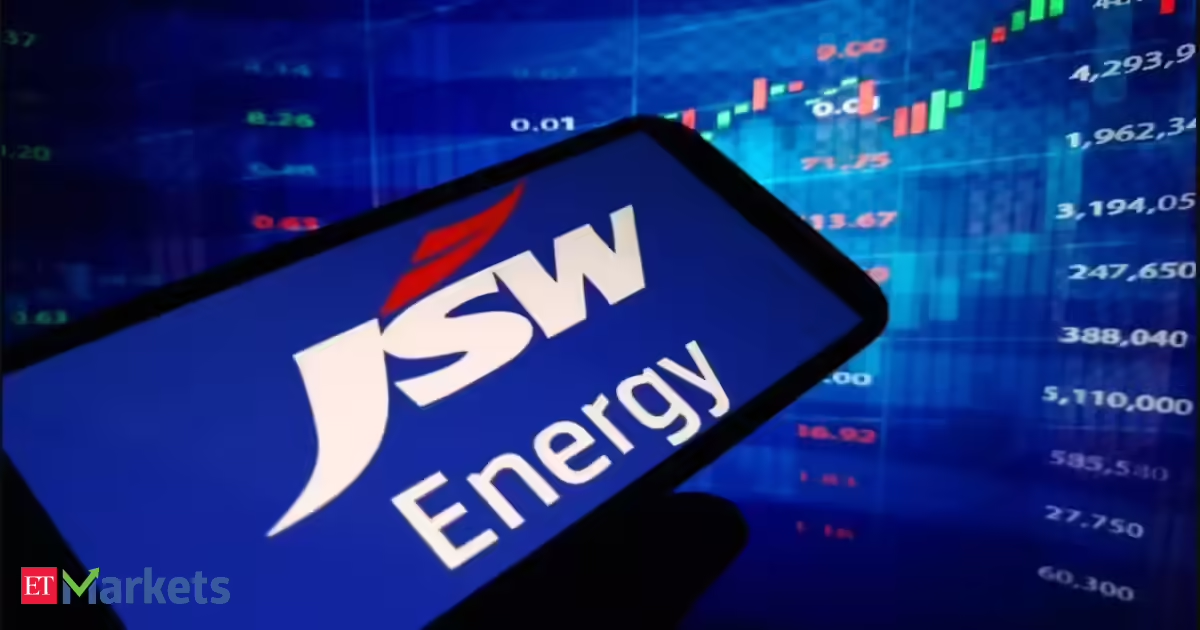
Shares of JSW Energy plunged as much as 8% to their day’s low of Rs 512 on the BSE on Tuesday after it reported a consolidated net profit of Rs 574 crore for the March quarter, marking a 38% increase from Rs 414 crore recorded in the same period last year.
Revenue from operations rose sharply by 41% year-on-year to Rs 4,499 crore in Q4FY26, compared with Rs 3,189 crore in the corresponding quarter of the previous financial year. The company’s board has recommended a dividend of Rs 2 per equity share and fixed Friday, June 5, as the record date to identify shareholders eligible for the payout.
On a sequential basis, profit after tax grew 8% from Rs 529 crore reported in Q3FY26, while revenue increased 10% quarter-on-quarter from Rs 4,082 crore in the October-December quarter.
Total expenses during the quarter stood at Rs 4,666 crore, higher than Rs 4,366 crore in Q3FY26 and Rs 3,142 crore in Q4FY25. This reflects a rise of 7% sequentially and 48% on a yearly basis. The increase in expenditure was driven by higher fuel costs, employee expenses and finance costs, among other factors.
Advertisement
Power sales volume climbed 48% year-on-year to 11.7 billion units (BUs) from 7.9 BUs. Renewable energy generation rose 68% to 2.9 BUs from 1.7 BUs a year ago, while thermal generation increased 43% to 8.8 BUs from 6.2 BUs.
Live Events
Generation under long-term power purchase agreements (PPAs) grew 25% year-on-year to 8.6 BUs from 6.9 BUs. Short-term PPA generation surged 201% to 3.1 BUs, compared with 1.0 BU in the year-ago period. JSW Energy’s cash and cash equivalents stood at Rs 10,013 crore during the quarter, reflecting a strong liquidity position. The company reported a net debt-to-equity ratio of 2.1x, while operational net debt-to-EBITDA stood at 5.2x.EBITDA for Q4FY26 jumped 72% year-on-year to Rs 2,602 crore from Rs 1,512 crore reported in the corresponding quarter last year.
JSW Energy shares are up 9.5% in the last 1 month and about 15% in the last 1 year.
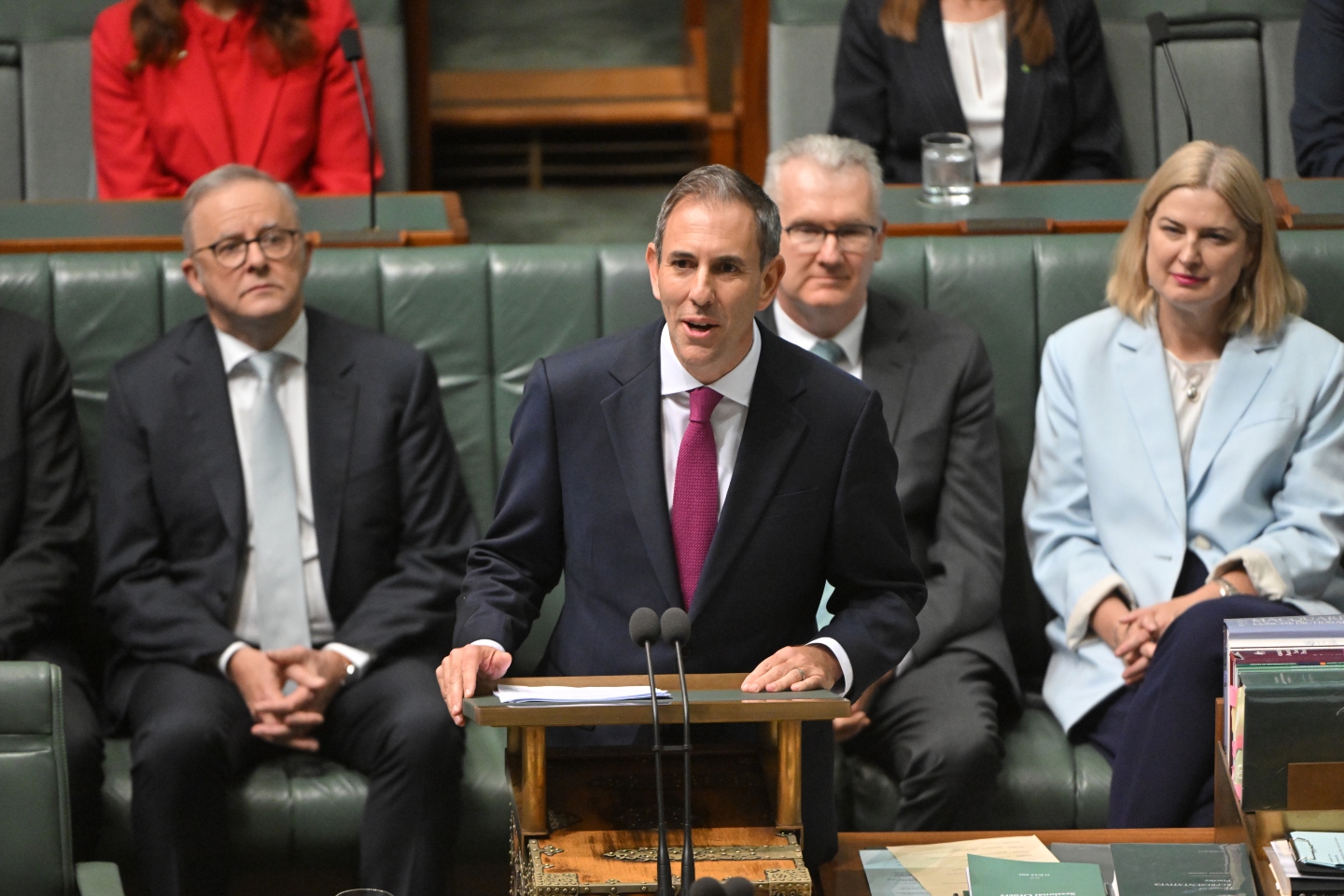
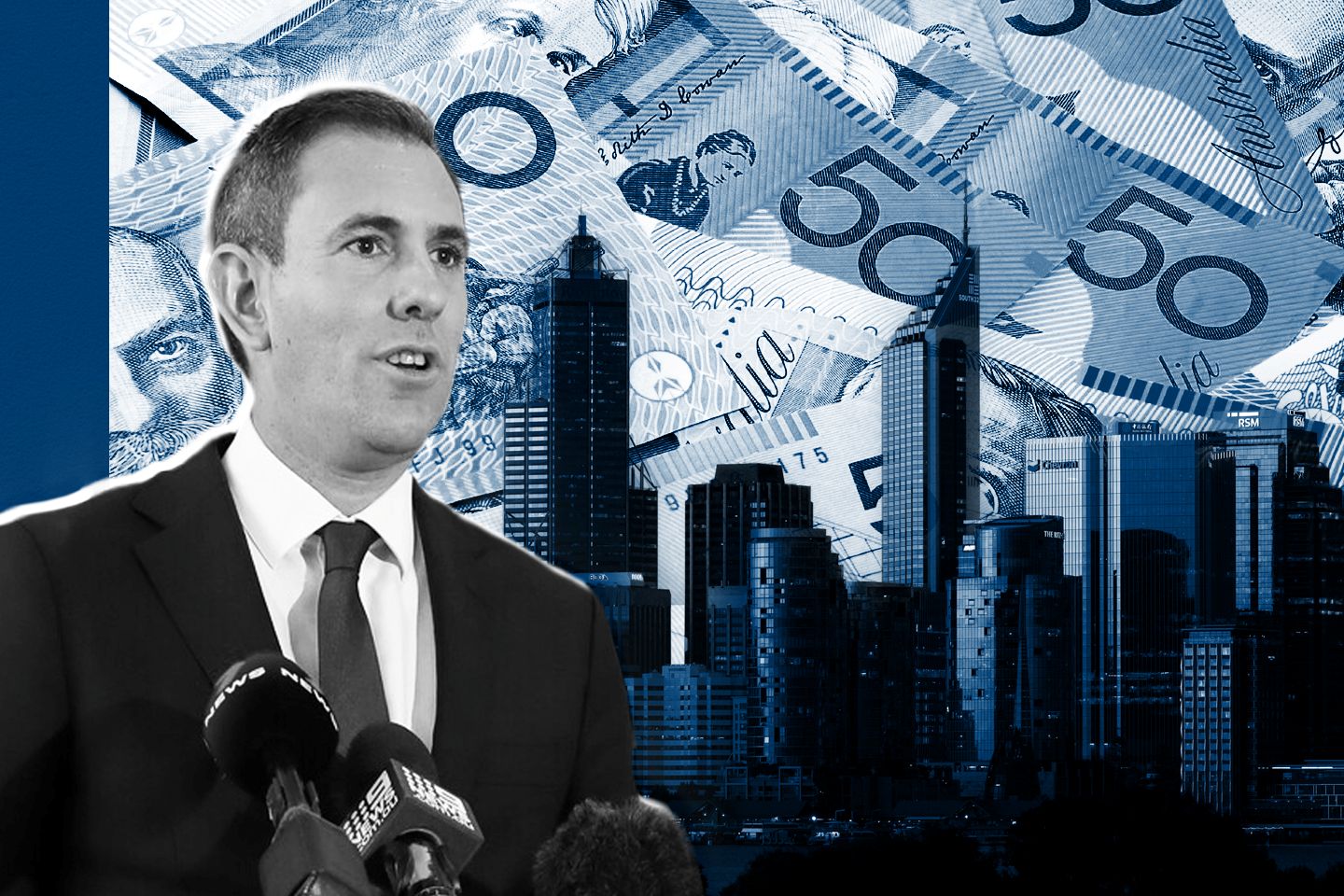
The federal government is replacing the 50 per cent capital gains tax discount with a new minimum rate and is restricting negative gearing to new builds to boost housing stock.
The shares of Vodafone Idea dropped nearly 4% after the telecom giant issued a clarification on a report claiming that its parent Vodafone Plc plans to transfer part of its stake to the company itself, which had sparked an 8% rally in the share price yesterday.
UK-based Vodafone Plc, which owns a 19% stake in Vodafone Idea, was considering transferring part of its shareholding to the company itself for the Indian telco to hold in its treasury, Bloomberg reported, citing people familiar with the matter. It added that the share transfer would take place instead of Vodafone injecting more cash into the Indian business.
The company’s shares sharply rallied more than 8% on Monday despite the overall stock market crash following the report, which claimed that the move could boost the balance sheet of the loss-making Vodafone Idea, and help its current efforts to raise debt.
Vodafone Idea’s clarification
Advertisement
After exchanges sought clarification from Vodafone Idea following the sharp surge in share price, the company said that it has not yet received any communication related to this from the Vodafone Group.
Live Events
Vodafone Idea said that the report may possibly be referring to disclosures already made in December last year about the Contingent Liability Adjustment Mechanism (CLAM) arrangement. As part of the December exchange filing, which the company reshared yesterday, Vodafone Idea had announced that it amended a major agreement with its UK-based parent company to secure the recovery of nearly Rs 5,836 crore linked to liabilities arising from the 2017 Vodafone-Idea merger. Vodafone Idea share priceVodafone Idea shares have seen a significant surge recently, jumping 10% in one week and 28% in one month. Shares of the telecom company are up more than 2% in 2026 so far.
In the longer term, the stock jumped over 67% in one year, 69% in three years and more than 34% in five years. The company currently has a market capitalisation of more than Rs 1.26 lakh crore.
(Disclaimer: Recommendations, suggestions, views and opinions given by the experts are their own. These do not represent the views of The Economic Times)
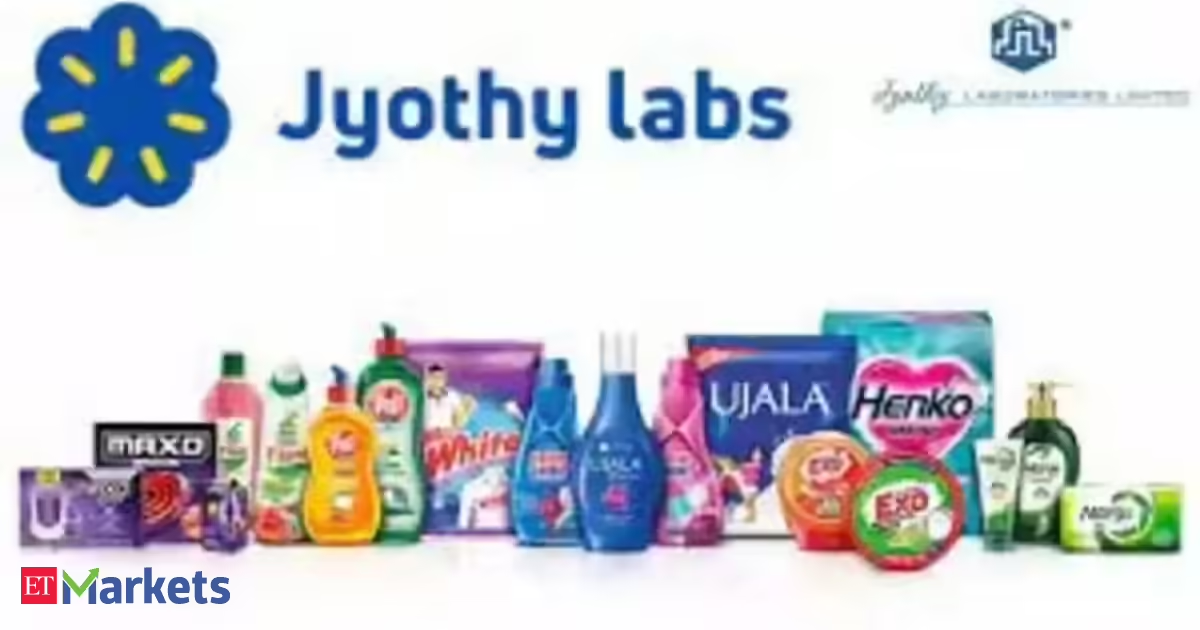
Jyothy Labs shares declined 5% to Rs 225.20 during Tuesday’s trading session, extending losses for the second consecutive day. The stock has fallen nearly 15% over the two sessions following the company’s announcement that the licence agreements for the dishwashing brand Pril and the personal care brand Fa with Henkel will not be renewed beyond May 31, 2026.
On Saturday, Jyothy Labs said the decision marks the end of a nearly 15-year partnership between the two companies.
The company added that it is preparing for an “orderly transition” and plans to sharpen its focus on its owned brands, especially Exo in the dishwash category. While Pril has historically been Jyothy Labs’ flagship dishwash liquid brand, Exo has remained a strong player in the dishwash bars segment.
Jyothy Labs had acquired Henkel’s India consumer business in 2011 through a transaction involving brands, assets, and operations. Under the agreement, Pril and Fa were operated under fixed-term licence arrangements, whereas brands such as Mr White and Henko continued under perpetual licence agreements.
Advertisement
The company fully owns brands including Margo, Neem toothpaste, Tuhina, and Chek. Jyothy Labs also stated that discussions with Henkel regarding a possible renewal had been underway for several months, including the evaluation of “commercial and business continuity alternatives”.
Live Events
Share Price and Technical Indicators
Jyothy Labs currently commands a market capitalisation of Rs 8,300.88 crore. The stock touched a 52-week high of Rs 378.20. On the valuation front, the company is trading at a price-to-earnings (P/E) ratio of 26.14, while its price-to-sales (P/S) ratio stands at 2.46. The price-to-book (P/B) ratio is 5.48. Technically, the stock’s 14-day Relative Strength Index (RSI) is at 43.6. Typically, an RSI below 30 indicates oversold conditions, while a level above 70 suggests the stock may be overbought. Jyothy Labs is currently trading below all eight of its key simple moving averages (SMAs), signalling a bearish trend.
Institutional sentiment remained subdued during the March 2026 quarter. Foreign Institutional Investors (FIIs) trimmed their stake from 12.77% to 12.35%, while Mutual Fund holdings declined from 13.73% to 13.15%.
(Disclaimer: Recommendations, suggestions, views and opinions given by the experts are their own. These do not represent the views of The Economic Times)
The company’s new food items are proving popular and ‘appealing to new and younger customers’
08:55, 12 May 2026Updated 09:05, 12 May 2026
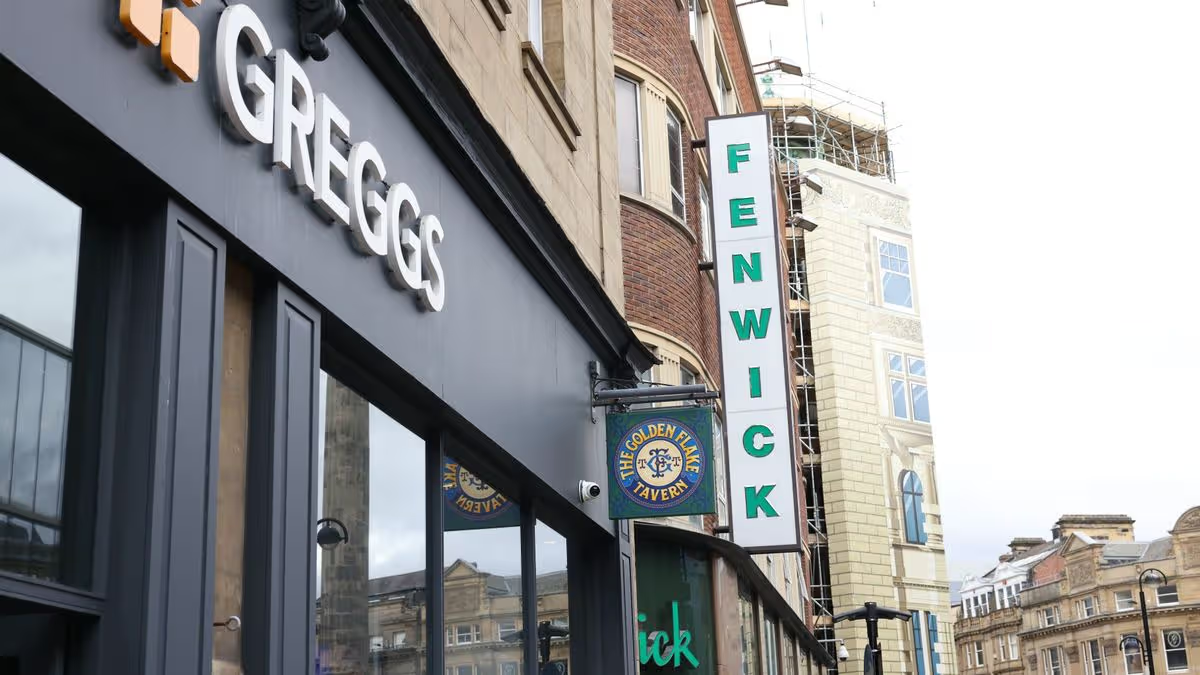
Greggs has announced a rise in sales as new items prove popular(Image: ChronicleLive)
North East food-on-the-go firm Greggs has toasted a rise in sales after announcing its first overseas shop launch. The Newcastle firm has announced results for the first 19 weeks of the year, showing total sales are up 7.5% to £800m.
Like-for-like sales in company-managed shops grew by 2.5% in the first 19 weeks of 2026, and improved to 3.3% in the most recent 10 weeks, as sales of its new menu items took off. Greggs said its new food items including matcha drink, tandoori chicken pizza slice, and its chicken roll – its chicken version of its bestselling sausage roll – were proving popular.
Advertisement
Tapping into demand in the market for protein meals, new salads were also launched last week to include chicken caesar and chicken, grains and greens. The firm said its partnerships with franchisees and grocery retailers are progressing well and contributing to the growth in overall sales.
It also said it has made “encouraging” profit progress in the year to date, partly reflecting a weak comparator period but also good operational cost control.
In a trading update it said: “The launch of our new chicken roll in April has been a standout, quickly establishing itself as a customer favourite and complementing our iconic sausage roll and vegan roll.
Greggs Chicken Roll is a new permanent addition to its menu(Image: Samantha Bartlett)
“Our drinks range has also been energised through flavour-led innovation across iced coffees, lemonades and refreshers, with the launch of matcha – which has proved extremely popular – marking an important step in appealing to new and younger customers.
Advertisement
“Together, these launches reflect our focus on relevance and innovation, while staying true to the familiar quality customers expect from Greggs.”
Meanwhile, Greggs is continuing to target the opening of around 120 shops this year – while announcing it has Tenerife as the location for a new international outlet.
In the update to shareholders it said: “In the coming weeks we will open our first shop in an airport outside the UK, working in partnership with leading global travel operator Lagardère Travel Retail at Tenerife South Airport. Tenerife South is a destination for millions of UK and international passengers each year and represents an excellent opportunity to test our offering in an international travel hub.”
The bakery chain, which runs 2,759 shops, also warned that it could be facing higher costs if the Iran war continues.
Advertisement
It added: “We are monitoring the situation in the Middle East and should the conflict continue and become prolonged we, like all food retailers, will likely see higher overall cost inflation through the end of 2026 and into 2027. In this uncertain environment, our value offer remains highly attractive as customers look to make their money go further.”
Terry Smith, the star stockpicker behind the £12.5bn Fundsmith Equity Fund, makes big move following controversial merger
11:13, 12 May 2026Updated 11:15, 12 May 2026
Consumer goods giant Unilever accepted a merger offer in March(Image: PA)
One of Britain’s most prominent fund managers has offloaded his stake in Unilever worth hundreds of millions of pounds, accusing the consumer goods group of turning its back on traditional shareholders in favour of activist-driven transactions such as last month’s blockbuster McCormick deal.
Terry Smith, the celebrated stockpicker behind the £12.5bn Fundsmith Equity Fund, exited his position in Unilever last month, City AM has revealed, after the Vaseline and Dove owner signed a $45bn (£33bn) agreement to merge its struggling food division with US spice giant McCormick.
Advertisement
“We have sold out of Unilever because the company appears to have abandoned its promised operational focus in favour of activist-driven break-ups,” Smith, whose eponymous fund ranked amongst Unilever’s top 10 largest shareholders for more than 15 years, told City AM. Those included its decision to transfer “its food business to McCormick, whose management and returns we do not rate highly”, he added.
Unilever caught many investors off-guard in March when it accepted an offer from New York-listed McCormick, which owns brands like French’s mustard and Frank’s hot sauce, for its food division as part of a broader push to divest underperforming assets. Earlier this year, both Hellman’s and stock cube brand Knorr featured amongst the company’s ‘power brands’, into which Unilever indicated it intended to channel additional investment as part of the latest in a series of strategic overhauls.
The merger, reportedly orchestrated by activist investor Nelson Peltz, prompted an immediate slump in Unilever’s share price, with the Anglo-Dutch company’s stock dropping seven per cent upon confirmation of the deal.
Investors have since raised concerns over the level of debt being placed on the combined entity, while others – including Smith – condemned Unilever for exploiting new London listing rules to force it through, circumventing a shareholder vote entirely, as reported by City AM.
Advertisement
Unilever investors will hold 65 per cent of the merged company, which is set to become one of the world’s largest standalone food groups. Meanwhile, other investors have cautioned that the new entity faces an abrupt sell-off should it choose not to list in London, as many of the FTSE 100 group’s existing shareholders are mandated to invest solely in UK-listed companies.
Fundsmith’s decision to offload its Unilever stake brings to a close one of the fund’s longest-held positions, whose value has more than doubled since the initial investment in the group back in 2010. However, since the pandemic, the consumer staples giant has consistently weighed on the fund’s performance, frequently featuring on its list of top detractors in its monthly investor bulletins.
Smith, whose decades-long record of selecting affordable, high-quality businesses has established him as one of Britain’s most recognised fund managers, was a vocal critic of the company’s extensive sustainability drive led by former chief executive Alan Jope. In his annual letter to shareholders in 2022, the investment expert accused Unilever’s leadership of having “lost the plot”, following its announcement of plans to establish a social or environmental purpose for all flagship brands like Hellmann’s mayonnaise.
However, he was heartened by the appointment of Hein Schumacher, Jope’s successor as chief executive, in 2023. At Fundsmith’s annual shareholder meeting, Smith described the management team as “actually pretty decent” and praised Unilever as one of his fund’s most undervalued stocks.
Advertisement
Fundsmith founder and chief investment officer, Terry Smith(Image: City AM)
Schumacher was removed after merely two years in charge – under pressure from activist investor Peltz for not reversing the group’s fortunes swiftly enough. The Dutch executive was succeeded by chief financial officer, Fernando Fernandez, who promptly moved to spin off the company’s ice cream division into a standalone entity, before offloading the remainder of its food brands to McCormick.
A spokesman for Unilever said: “This transaction enables a growth-led separation of Foods at an attractive valuation, creating two stronger businesses, both positioned to win in their categories.
“The transaction was a unanimous decision by the board, which firmly believes it is in the best interests of Unilever’s shareholders. We value open dialogue with our shareholders and will continue our engagement to explain the benefits of the transaction.
“Under the UK rules, it was the board’s responsibility to approve the transaction and conclude that it is in the best interests of the company and its shareholders.”

















































You must be logged in to post a comment Login