
Business
How much do you spend on a birthday present?



Business
SS Retail shares rally another 6% after bumper listing at 51% premium over IPO price. Buy, sell or hold?

On Wednesday, SS Retail shares debuted at Rs 639.10 on the BSE, marking a 50.73% premium to the issue price. On the NSE, the stock listed at Rs 624, translating into a 47.17% premium over the IPO price.
The listing surpassed unlisted market expectations, which had suggested a debut gain of up to 35%. The stock was seen commanding a grey market premium (GMP) of around 35% ahead of the listing.
What should investors do?
Shivani Nyati, Head of Research at Swastika Investmart, said SS Retail made a strong debut, supported by strong ROE/ROCE and its asset-light COFO model. However, at around 46.5x FY26 P/E, valuations appear demanding, while its higher exposure to lower-margin mobile hardware limits direct comparison with peers. “Given the strong listing and limited margin of safety at current valuations, our post-listing view is Neutral. Investors can wait for some consolidation before taking fresh positions, while existing investors may consider holding with a stop-loss of Rs 575–585,” she added.
The IPO opened for subscription on September 16 and closed on September 18, receiving an overwhelming overall subscription of 103.30 times. The qualified institutional buyers (QIBs) portion was subscribed 203.61 times, while the non-institutional investors (NIIs) portion saw 143.32 times subscription. The retail portion was subscribed 36.36 times.

SS Retail Ltd. recorded a 47% increase in total income, rising from Rs 1,600 crore in FY25 to Rs 2,353 crore in FY26, reflecting strong year-on-year growth.
The company’s profit after tax (PAT) increased by 49%, from Rs 40 crore in FY25 to Rs 59 crore in FY26, indicating improved profitability during the year.The Company proposes to utilise the Net Proceeds of the Issue towards funding capital expenditure for fit-outs of new stores planned for FY2027 and FY2028, with an estimated allocation of Rs 12.45 crore.
The Company also intends to use Rs 241.35 crore towards part-funding its incremental working capital requirements, with the balance proceeds allocated towards General Corporate Purposes. The total estimated utilisation of the Net Proceeds is Rs 253.80 crore.
About SS Retail
Incorporated in June 2016, SS Retail Ltd. is a multi-brand retail chain offering mobile phones, accessories and consumer electronics across Maharashtra, Karnataka, Madhya Pradesh, Goa and Gujarat. The Company primarily targets Tier II, Tier III and smaller cities.
As of March 31, 2026, it operated 503 stores across 215 cities, covering approximately 2,41,365 sq. ft., under its brands SS Mobile, Mobile Exchange Wala and The Mobile Space. The network expanded to 536 stores covering 2,60,597 sq. ft. as of July 31, 2026.
Disclaimer: This article has been written by Veer Sharma, who is not a SEBI-registered Research Analyst or an Investment Adviser. Veer Sharma and his/her ‘relative(s)’ (as defined under Section 2(77) of the Companies Act, 2013) do not hold any financial interest in the companies mentioned in this article as of the date of publication. The views/recommendations mentioned in this article, wherever applicable, are those of the respective SEBI-registered Research Analyst/brokerage and have been reproduced/reported with due attribution. They should not be construed as the views or recommendations of The Economic Times Digital or the journalist. Readers are advised to consider the original research report and make their investment decisions based on their own assessment. Brokerage disclaimers here.

Leaders are constantly making decisions under pressure, managing risk, reading competitors, and adapting strategies, just like in a game of poker online.
By examining how top poker players approach the game, business professionals can uncover valuable lessons that are directly applicable to real-world challenges.
Making decisions with incomplete information
Both business and poker require decision-making based on limited or imperfect information. In poker, you never see your opponents’ cards and must act according to probability, psychology, and the information provided through gameplay. Similarly, business leaders often operate without knowing exactly how the market or competitors will respond. Strategic decisions, ranging from pricing to launching new products, must be made with a degree of uncertainty. By learning to trust their analysis and weigh risks versus potential rewards, leaders can make better decisions even when they don’t have all the answers.
Just as in poker, business decisions can benefit from scenario planning and considering multiple outcomes. It’s vital to reassess decisions as new information becomes available. Recognizing the value of folding in poker, stepping back from a poor hand, offers a parallel to cutting losses in business. Rather than pushing forward with a failing idea, successful leaders know when to pivot or withdraw resources. This mindset fosters resilience and agility, qualities essential to long-term business growth.
Emotional control and discipline
One of the most distinguishing features of great poker players is their emotional control. Tilt, the loss of rationality due to swings in fortune, can devastate even the most skilled player. In business, emotional impulses, whether overconfidence during a boom or fear during downturns, can lead to costly mistakes. Developing the discipline to remain calm, calculating, and measured in the face of adversity or success is a skill that pays dividends over time.
Business leaders can learn from poker’s emphasis on process over immediate results. A good poker player knows that variance means individual outcomes don’t always reflect the quality of decisions. Similarly, executives should focus on maintaining discipline and executing well-developed strategies, even when short-term results seem unfavorable. Over time, consistent application of sound principles leads to better outcomes and helps leaders avoid rash, emotional decisions that may undermine progress.
Reading people and adapting strategies
Success in both poker online and business often hinges on reading subtle cues from others and adapting accordingly. In the card game, interpreting an opponent’s body language, betting patterns, and timing offers clues about their potential holdings. In business, understanding stakeholders, be they employees, customers, or competitors, can provide a crucial competitive advantage. Leaders who pay attention to subtle feedback and quickly adjust their approach are more likely to succeed in negotiations and partnerships.
Flexibility is another quality that business leaders can take from poker. The best players constantly refine their tactics, shifting gears based on what’s happening at the table. Similarly, no single business strategy is guaranteed to work indefinitely. Market trends, consumer preferences, and technological advances mean leaders must remain alert and responsive. By building strategies that leave room for adaptation, businesses can weather changes and uncover fresh opportunities: just as poker players do when the dynamics of the game shift.
Business
KOSPI Tops 7,100 for Third Straight Session as Nasdaq Record and Eased Mideast Tensions Lift Global Mood

SEOUL — South Korea’s benchmark KOSPI index traded above 7,100 for a third consecutive session Wednesday, standing at 7,100.45 by mid-morning, up 82.54 points, or 1.18%, as gains on Wall Street’s technology-heavy Nasdaq Composite and easing tensions in the Middle East continued to lift sentiment across Asian markets.
The index opened sharply higher Wednesday, jumping 136.08 points, or 1.94%, to 7,153.99 at the opening bell, before paring some of those gains through the morning session. The rally tracked another record close for the Nasdaq Composite overnight, which rose 0.45% to notch its second consecutive all-time high, driven by continued strength in technology shares. The Philadelphia Semiconductor Index also posted a sharp advance, climbing more than 4% in the prior U.S. session, further reinforcing the bullish tone carrying into Wednesday’s trading in Seoul.
Foreign and institutional investors led the buying that pushed the index back above the 7,100 level Wednesday, according to local market reports, continuing a pattern of strong overseas and institutional demand for Korean equities that has characterized much of the past week’s rally. The KOSDAQ, South Korea’s smaller technology-focused exchange, also advanced Wednesday, climbing back above the 840 mark alongside the broader KOSPI’s gains.
Wednesday’s advance extends a rapid climb for the KOSPI over the past three trading sessions. The index first reclaimed the psychologically significant 7,000 level on Monday, closing at 7,007.72, up 1.65%, after seven consecutive sessions below that threshold. That initial breakout was driven primarily by a sharp rise in Samsung Electronics shares, following data from the Korea Customs Service showing South Korea’s total exports reached $71.4 billion between September 1 and 20, up 78.3% from a year earlier. Semiconductor exports specifically more than tripled to $34.12 billion over the same period, a 259.4% increase that marked a new monthly record for the category.
The rally continued Tuesday, when the KOSPI climbed a further 1.71% to close near 7,127, briefly touching above 7,100 during the session. That advance was fueled in part by growing enthusiasm around Meta’s artificial intelligence agent product, known as Muse, whose reported popularity helped drive the Nasdaq to a fresh record high overnight and, in turn, lifted sentiment toward AI-linked technology stocks in Seoul. Easing concerns about the trajectory of tensions in the Middle East also contributed to the improved mood among investors heading into Wednesday’s session.
That easing in Middle East tensions follows a significant diplomatic development this week, with a senior Iranian official telling Reuters that Iran had offered to reopen the Strait of Hormuz within seven days if the United States eases military pressure and lifts its blockade on Iranian ports. While the offer remains conditional and unconfirmed by Washington, the report has contributed to a broader improvement in global risk appetite, with oil prices falling and equity markets, including the KOSPI, benefiting from reduced geopolitical risk premiums priced into asset markets over the past week.
South Korea’s chip sector has remained the primary engine behind the broader index’s advance. Samsung Electronics has continued climbing alongside rival SK Hynix as global demand for high-bandwidth memory chips used in artificial intelligence accelerators has shown no signs of slowing. Other notable gainers across recent sessions have included Samsung Electro-Mechanics, LG Electronics, SK Inc, and several of the country’s major financial institutions, including KB Financial Group, Shinhan Financial Group and Hana Financial Group, reflecting broad-based strength extending well beyond the index’s two dominant chipmakers.
The KOSPI’s rapid ascent this week caps an extraordinary year for South Korean equities more broadly. According to Trading Economics, the index was up more than 104% compared with the same period last year as of Tuesday’s close, with gains of more than 6% recorded over just the past month alone. The KOSPI, first introduced in 1983 with a base value of 100 as of January 4, 1980, now represents a market capitalization of roughly 4,135 trillion won, or approximately $2.8 trillion, based on the most recent available figures, cementing its position as one of the world’s most closely watched emerging-market equity benchmarks amid the ongoing global boom in artificial intelligence infrastructure investment.
With Wall Street continuing to post fresh record highs and the diplomatic situation surrounding the Strait of Hormuz still evolving, investors in Seoul are likely to remain focused in the coming sessions on whether the current rally can be sustained above the 7,100 level, or whether some of the sharp gains recorded over the past three trading days will give way to renewed volatility as markets digest both the pace of the AI-driven chip rally and any further developments tied to the fragile diplomatic opening in the Middle East.

JPMorgan resumes Wave Life Sciences stock rating at Neutral

JPMorgan downgrades TotalEnergies stock rating on valuation

Why is Renishaw stock rallying today?

As a finance enthusiast with experience in research, I am deeply engaged in studying diverse businesses, especially in the technology, industrial, and conglomerate sectors. I really like companies that have strong foundations and see them doing well in the long run. I enjoy writing about these businesses, telling their stories, strategies, and financial details. I use a mix of looking at their finances and writing to give insights into how well companies might do, helping people understand the market better. This focus on both looking at the numbers and explaining things reflects my dedication to both understanding and explaining the details of the financial world.
Analyst’s Disclosure: I/we have no stock, option or similar derivative position in any of the companies mentioned, but may initiate a beneficial Long position through a purchase of the stock, or the purchase of call options or similar derivatives in AVGO over the next 72 hours. I wrote this article myself, and it expresses my own opinions. I am not receiving compensation for it (other than from Seeking Alpha). I have no business relationship with any company whose stock is mentioned in this article.
Seeking Alpha’s Disclosure: Past performance is no guarantee of future results. No recommendation or advice is being given as to whether any investment is suitable for a particular investor. Any views or opinions expressed above may not reflect those of Seeking Alpha as a whole. Seeking Alpha is not a licensed securities dealer, broker or US investment adviser or investment bank. Our analysts are third party authors that include both professional investors and individual investors who may not be licensed or certified by any institute or regulatory body.
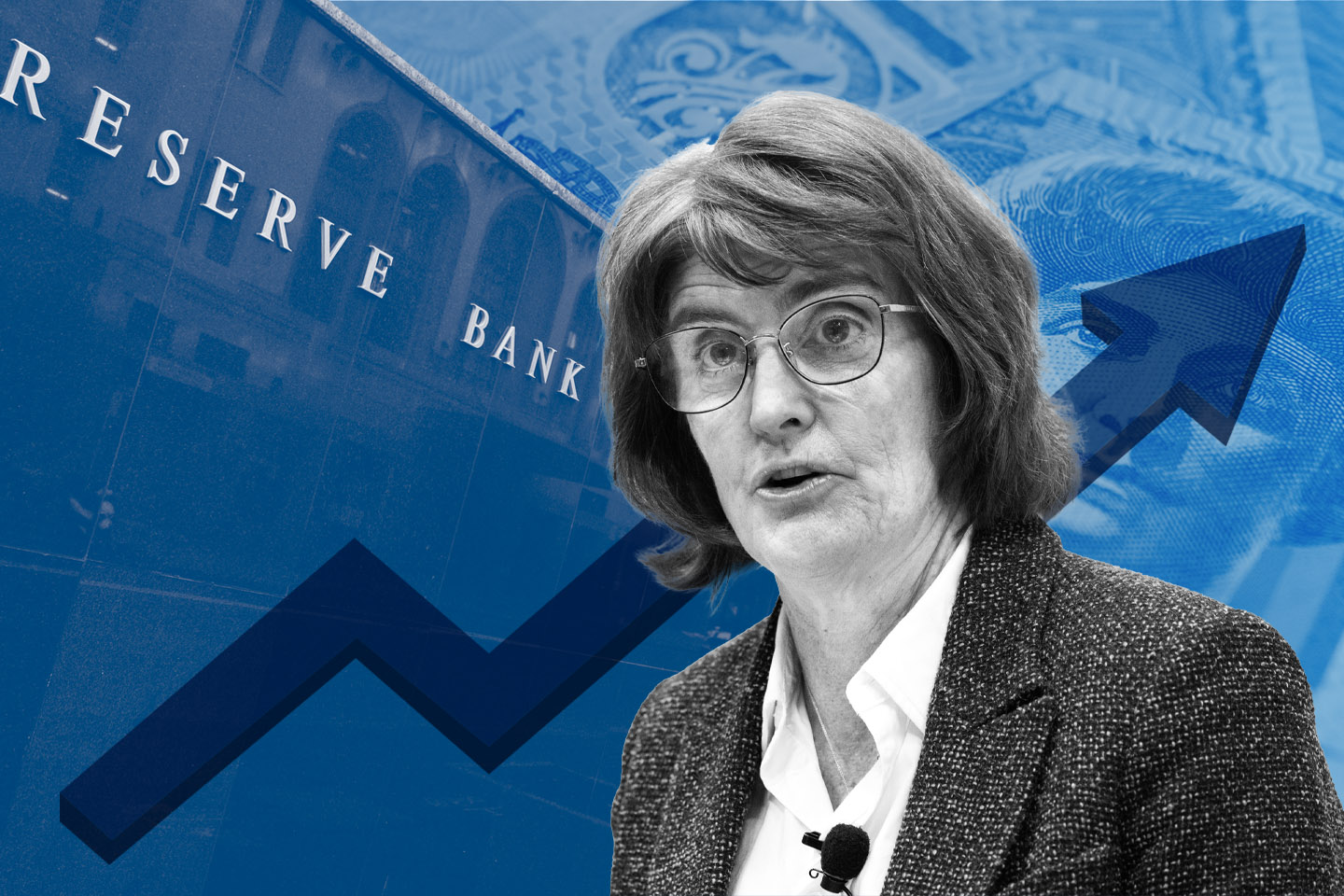
A damaging wages breakout is unlikely despite persistent high inflation, according to a Reserve Bank of Australia board member.
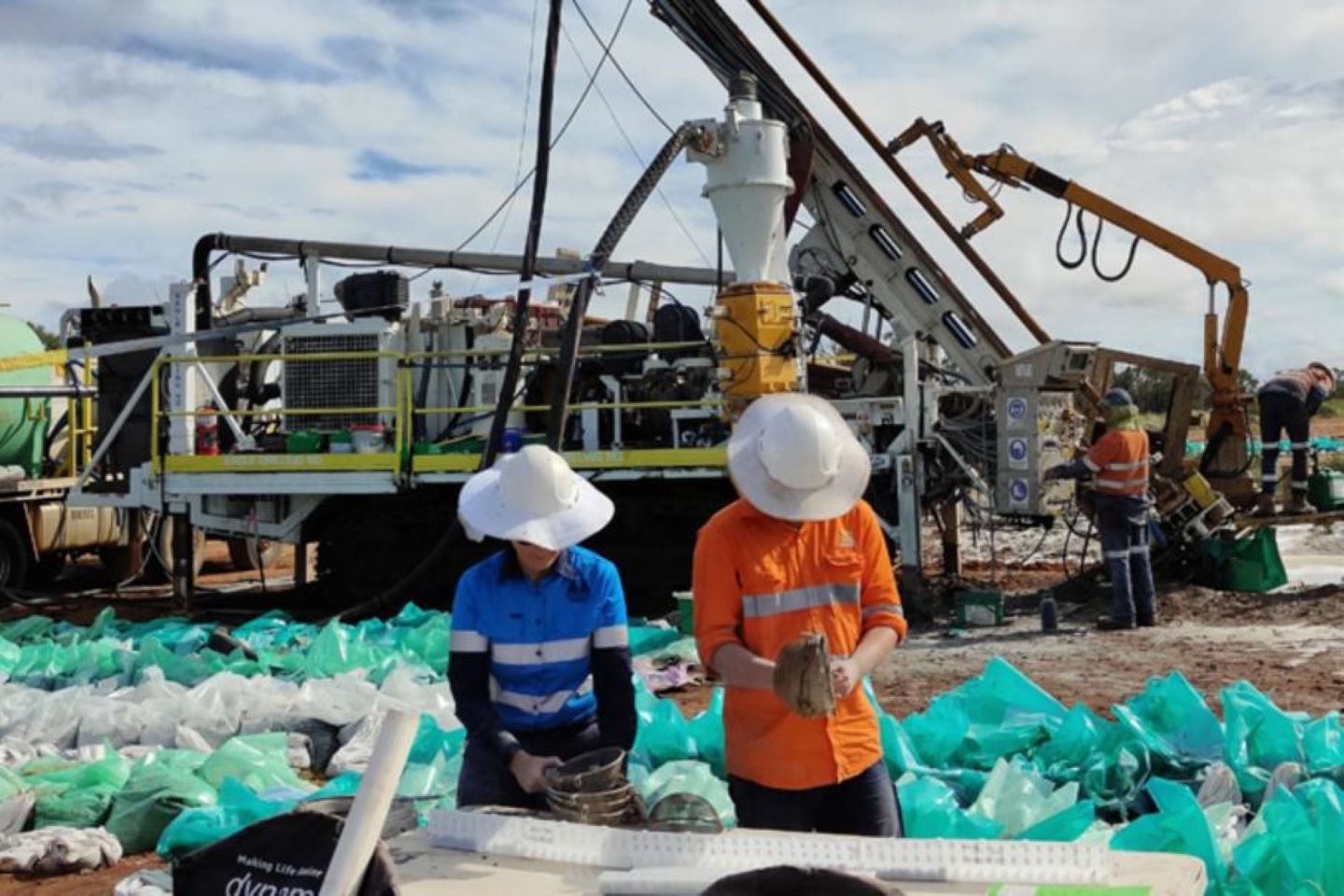
Shares in Subiaco-based AIC Mines rose by more than 15 per cent on Wednesday, following news of a major copper project acquisition in North Queensland.

National Grocers Association President and CEO Greg Ferrara discusses pressure facing independent supermarkets, rising beef prices and his concern that continued consolidation could leave consumers dependent on chains.
Independent grocers are facing mounting pressure from national retailers, with the head of the National Grocers Association warning that weak competition could eventually leave Americans with only a handful of major grocery chains.
Greg Ferrara, president and CEO of the National Grocers Association, told FOX Business that independent stores are fighting to maintain access to products and competitive terms in an increasingly consolidated industry.
He warned that America was approaching an “inflection point.”
“Independent grocers want to make sure they’re going to be around for the next generation. They’re going to be around for their Main Street and their communities and all the organizations they support there,” Ferrara said. “But they’re not going to be here, quite frankly, if they aren’t able to compete.”
DOJ EXPANDS BEEF PRICE INVESTIGATION TO WALMART, COSTCO, AMAZON AND OTHER MAJOR RETAILERS

Ferrara argued that greater competition in the grocery industry could help drive down prices and give consumers more choices. (iStock / iStock)
“If we don’t have free markets, we don’t have open markets, if we don’t allow the best entrepreneur out there to win and serve their customers, we’re gonna wake up one day in this country and we’re gonna have just five or six national chains that are gonna be serving most of our customers,” Ferrara said.
“I think at the end of the day, that’s bad for America, that is bad for the communities that we serve, and it’s bad for consumers,” he continued.
Ferrara said independent grocers sometimes struggle to obtain the same products, promotions and purchasing terms available to the largest national retailers. For example, he said new products can be offered exclusively to a large chain for a period of time, leaving local competitors unable to sell something their customers want.
“Consumers want those products and they want to be able to buy them at their local stores, but they can’t,” he said. “So they’re now being boxed out and forced to go to one national chain that often has it.”
THE FAST-FOOD CHAIN WHERE MANAGERS AVERAGE MORE THAN $200K A YEAR
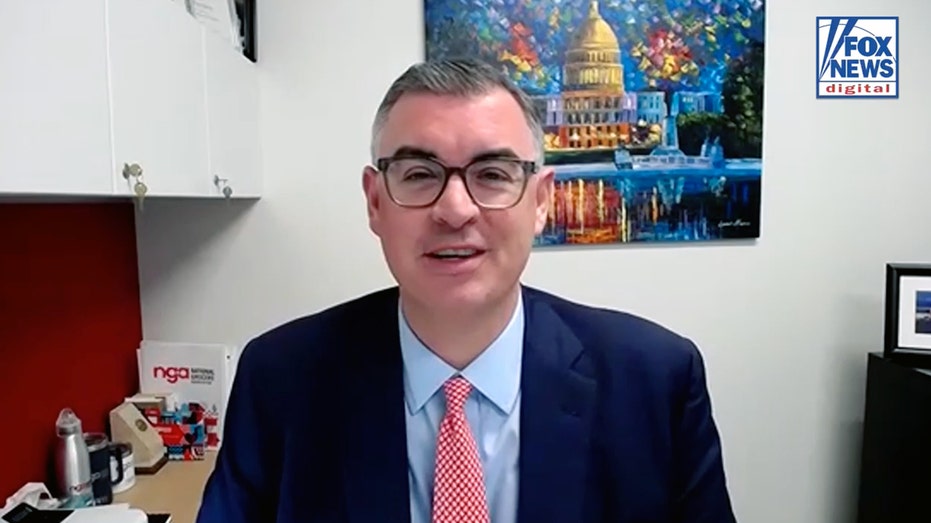
National Grocers Association President and CEO Greg Ferrara warned that independent grocers are facing mounting competitive pressure from major national retailers. (FOX Business / Fox News)
Ferrara stressed that independent grocers aren’t seeking favoritism: “They’re not asking for special treatment. They’re not asking for a leg up. All they’re saying is give me a chance to compete.”
According to NGA, independents represent more than 38% of total supermarket spending. Ferrara argued they can purchase products efficiently and at scale.
“They buy in truckloads and they buy efficiently,” he said. “They just need the access to those products and to those items to be able to be successful.”
Ferrara said independent grocers operate on net profit margins of less than 2%, leaving little room to absorb additional costs or competitive disadvantages.

Independent grocers are seeking greater access to products and competitive terms as they battle larger national retailers, according to the National Grocers Association. (Spencer Platt/Getty Images / Getty Images)
“When you’re effectively having one arm tied behind your back because you can’t get access to the products that the consumer wants or the package size that they want, that’s a challenge,” he said.
He said some NGA members believe the situation in certain product categories is “worse than ever.”
The Justice Department recently expanded its beef affordability investigation to include eight major grocery retailers — Kroger, Publix, Walmart, Albertsons, Aldi, Ahold Delhaize, Costco and Amazon — after previously opening an antitrust investigation into major meatpackers.
DOJ is examining retail beef prices, margins, purchasing arrangements and other factors influencing prices, FOX Business previously reported.
Ferrara said he did not want to prejudge DOJ’s investigation but argued that greater competition would benefit consumers.
COSTCO RAISES PRICE OF KIRKLAND MOTOR OIL AND LIMITS HOW MUCH SHOPPERS CAN BUY

Independent grocers can sometimes be “boxed out” of selling products offered exclusively to major national chains, Ferrara told FOX Business. (Will Newton/Getty Images / Getty Images)
“We believe the more competition there is in the marketplace, that will ultimately benefit consumers, that will drive prices down,” he said. “It gives consumers choice and it gives our retailers the ability to serve and support local ranchers and farmers.”
“Ultimately, the DOJ needs to run their course,” Ferrara said. “I won’t weigh in on that.”
Beef prices remain high, Ferrara acknowledged, but he said independent grocers are seeing consumers adjust rather than abandon beef altogether.
“The price definitely may cause consumers to pull back a little bit,” he said. “Instead of buying a roast, they’re going to buy a smaller cut… or ground versus a steak, and they’re gonna trade down.”
To counter the potential sticker shock, Ferrara said independent stores might run stronger promotions on ground beef or offer smaller packages so shoppers don’t face as high a total price at checkout.
GET FOX BUSINESS ON THE GO BY CLICKING HERE
Looking ahead, Ferrara said he remains optimistic about the future of independent grocers.
“I think we’re gonna see a future that corrects course because ultimately that’s what consumers want,” he said. “We want to make sure that we’re taking the steps today to ensure that these businesses will be successful tomorrow.”

Mirabai Chanu’s wait for Asiad medal ends with silver win in Aichi-Nagoya | Asian Games 2026

Myst On The Atari 2600
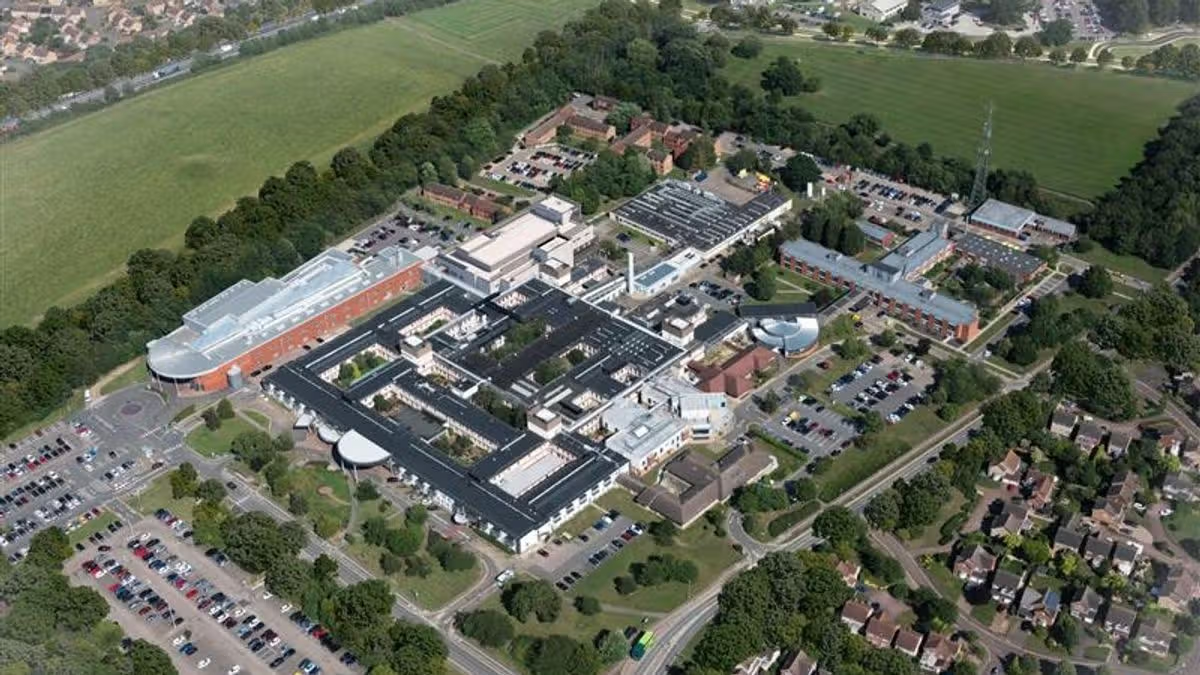
New hospital to be built on former police land




-

 Fashion5 days ago
Weekend Open Thread: Talbots – Corporette.com
-

 Tech2 days ago
Researchers escape OpenAI Codex sandbox to run commands on host
-

 Crypto World4 days ago
Circle launches Arc Studio AI agent for building onchain apps
-
 NewsBeat4 days ago
Trump says US has reached an agreement to take permanent control of Greenland’s security
-

 Crypto World2 days ago
Who Needs CLARITY Anyway? ARB Could See 70X Increase: Hodler’s Digest
-

 Crypto World4 days ago
Trading Bitcoin on Robinhood? Why 2% Spread Has Traders Worried
-

 Crypto World4 days ago
Bitcoin price breaks channel as RSI climbs to 63
-

 Crypto World6 days ago
US Charges Robinhood Engineers Over Crypto Listing Trades
-

 Crypto World5 days ago
Mortgage and refinance interest rates today, Thursday, September 17, 2026
-

 Crypto World4 days ago
World Money launches in 150+ countries with Stripe
-

 Business2 days ago
Analog Devices (ADI) Bets $1.35 Billion on Chips that Let Machines Think for Themselves
-

 Crypto World5 days ago
Silver prices recover quickly, hitting weekly high today
-

 Crypto World2 days ago
Coinbase, Robinhood, Circle Seen as Tokenized-Stock Winners
-

 Tech5 days ago
GPT-6 Astra Reached the Nether in Minecraft, Lost Its Stash to a Creeper, and Farmed Potatoes for Hours
-

 Entertainment7 days ago
Grey’s Anatomy Showrunner Teases Changes After Cast Exits
-
 NewsBeat4 days ago
US was ‘on brink of war’ with China over false AI report of nukes moving in Middle East
-
 Crypto World2 days ago
Bitcoin price holds above $81K as key catalysts line up
-

 Tech3 days ago
Trump suggests rebranding AI with a new name, says he’s also creating an AI Force
-

 Crypto World4 days ago
CFTC sends crypto market structure rulemaking to White House
-

 Business5 days ago
Newsom accelerates AI oversight, advances ‘kill switch’ plan
You must be logged in to post a comment Login