
Business
How Much Does Dropbox Actually Lose When Its Service Goes Down for an Hour?

The short answer is that no public figure exists showing exactly what an hour of downtime costs Dropbox specifically, since the company has never disclosed that number. But using Dropbox’s own reported financial data alongside broader industry research on the cost of IT outages, it’s possible to build a reasonably grounded estimate — with an important caveat: for a subscription business like Dropbox, “revenue lost during an outage” and “money that actually disappears” are two very different things.
Start with the raw math
Dropbox reported $2.52 billion in revenue for fiscal 2025, according to the company’s own annual report filed with the SEC. Dividing that by the 8,760 hours in a year works out to roughly $287,700 in revenue flowing through the company, on average, during any given hour.
That figure is often the starting point analysts use when estimating downtime costs for any company. But it’s a crude proxy, and treating it as Dropbox’s actual “loss” during an outage would be misleading for one central reason: Dropbox is a subscription business.
Why subscription revenue doesn’t just vanish
Unlike an e-commerce retailer, where a website outage during a sales event can mean transactions that simply never happen, Dropbox’s revenue comes almost entirely from recurring monthly and annual subscriptions. A paying Dropbox user doesn’t stop being billed because the service went down for an hour — their subscription renews on schedule regardless. So the $287,700-per-hour figure represents revenue that continues flowing to Dropbox even during an outage, not revenue that gets erased by one.
This distinction matters enough that industry analysts specifically flag it. One 2026 industry cost-of-downtime analysis put it directly: “SaaS downtime costs primarily through churn and SLA breach penalties — the [small] direct [monthly recurring revenue] loss from a four-hour outage is rarely the real number once trust effects are modeled.” In other words, the immediate, hour-by-hour “loss” for a subscription company is close to zero in accounting terms. The real cost shows up later, and in different forms.
Where the real costs actually come from
For a company like Dropbox, an hour of downtime is more likely to translate into cost through a few specific channels:
Service-level agreement credits. Cloud services typically promise a minimum level of uptime — often 99.9% or higher — to paying business and enterprise customers. When that threshold is breached, affected customers are usually entitled to service credits, which function as a direct, contractually obligated refund of part of their subscription fee. Dropbox has not published its specific SLA credit formula publicly, but this is standard practice across the cloud storage industry.
Customer churn. According to industry research on SaaS outages, a single major disruption can measurably increase monthly customer cancellation rates, with some estimates putting the increase in the range of 2% to 5% following a significant incident. For a company the size of Dropbox, even a small uptick in churn translates into a meaningfully larger revenue impact than the outage hour itself, since it affects future recurring billing rather than the hour in question.
Support and engineering costs. Handling a spike in customer support tickets, plus the engineering time spent diagnosing and fixing the underlying issue, carries a real labor cost, though this tends to be modest relative to the other factors for a company of Dropbox’s scale.
Reputational and trust effects. These are the hardest to quantify but often cited as the most consequential long-term cost, particularly for a company whose core value proposition is reliably storing and syncing people’s files.
What broader industry benchmarks suggest
Independent research firms have tried to quantify downtime costs across companies more broadly, and their figures vary widely depending on company size and industry. According to ITIC’s 2024 Hourly Cost of Downtime Survey, more than 90% of mid-size and large enterprises now report that a single hour of downtime costs their organization more than $300,000, with 41% of enterprises reporting hourly costs between $1 million and $5 million. A separate widely cited benchmark from Gartner, dating to 2014 but still commonly referenced, put the cross-industry average at $5,600 per minute, or roughly $336,000 per hour. More recent research from Splunk and Oxford Economics, published as part of their “Hidden Costs of Downtime” analysis, estimated the 2026 average downtime cost across company sizes at approximately $15,000 per minute, or $900,000 per hour, with aggregate annual downtime losses across the world’s 2,000 largest companies reaching roughly $600 billion.
Notably, those figures are generally drawn from companies across all industries, including manufacturing and financial services, sectors where an hour of downtime can halt physical production lines or trigger regulatory reporting obligations, both of which carry costs that simply don’t apply to a cloud storage company like Dropbox. A B2B SaaS platform, by contrast, tends to sit toward the lower end of industry cost estimates specifically because its core cost driver is churn and reputational damage rather than immediate, hard transactional losses.
Putting it together for Dropbox specifically
Applying Dropbox’s own revenue-per-hour figure of roughly $287,700 as a rough proxy, and layering on the SaaS-specific caveat that direct revenue loss is minimal for subscription businesses, a reasonable estimate is that the immediate, quantifiable cost of a one-hour Dropbox outage — SLA credits plus support overhead — likely falls well below that headline revenue figure, possibly in the tens of thousands of dollars for a single hour, rather than hundreds of thousands. The larger financial risk comes not from the hour itself, but from whether the outage is severe or frequent enough to meaningfully affect customer retention over the following weeks and months.
Dropbox has experienced a handful of confirmed outages in recent years, including a roughly two-hour global disruption in May 2025 that generated a sharp spike in user complaints before the company restored service. The company has not published a post-incident cost estimate for that event or any other specific outage, which is typical practice across the cloud software industry — companies rarely disclose exact financial figures tied to individual downtime incidents, both because the numbers are commercially sensitive and because, as the analysis above suggests, isolating a clean dollar figure for a single hour of downtime is inherently difficult for a subscription-based business.

There is a man who sells honey from a trestle table in Long Buckby market place. Not remarkable honey. Honey.
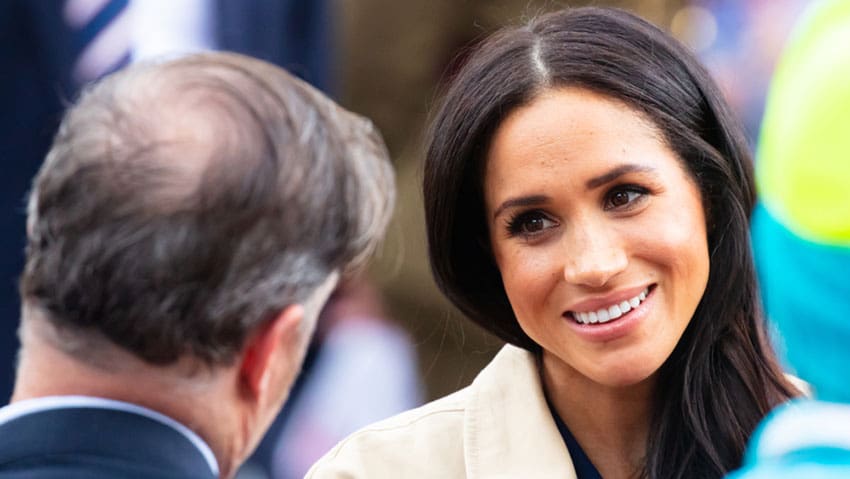
For two years he stood at the far end, next to the bloke doing scotch eggs, and nobody troubled him. Then in April he laminated a photograph and taped it to the front of the table. It shows him, squinting, beside a moderately famous person at what appears to be a wedding. The famous person is holding a drink. The honey is not in shot.
He now sells out by half ten.
Nothing about the honey changed. The bees were not consulted. What changed is that a queue now forms in front of a laminated photograph, and a queue, as any market trader knows, is the actual product.
I thought about him this week when it emerged that Meghan Markle is in talks to appear in the third series of Guy Ritchie’s The Gentlemen. Not to carry it. Not to star in it. To appear. Possibly for one episode. Possibly not at all, given that talks are reportedly at a very early and entirely hypothetical stage and the third series has not been commissioned. Normally that detail would slow a story down. This one did not slow by a second.
Now consider what happens if British business adopts the Duchess model.
Your accountant no longer files the VAT return alone. She files it flanked by a minor royal, in a marquee, with a drone shot. The plumber who comes about the ballcock brings a former cast member of Suits to hold the torch. The tap still drips. Four million people watch.
The garage on the bypass advertises a Duchess-adjacent MOT and takes on three extra staff to answer the phone. The parish meeting books someone off Strictly to unlock the door and is oversubscribed for the first time since 1974. Nothing has improved. The council still cannot agree on the bins.
But everyone is looking, and looking is the scarcest commodity in commerce.
Here is the bit business readers will recognise, because most of us have signed this invoice. Netflix is not casting an actress. It is buying customer acquisition, very cheaply indeed.
Think what it costs to relaunch a returning drama into a crowded autumn schedule. Trailers, outdoor sites, paid social, the whole grinding apparatus of persuading distracted people a thing exists. Millions, most of it wasted on people who were never going to watch. Now price the alternative. One guest appearance, one leaked casting rumour, and every tabloid and breakfast sofa on earth becomes an unpaid media buyer working your account for free. The story I am writing about is itself the campaign. So is this column, which is a humbling thought before breakfast.
That is the trade. You are not paying for talent. You are paying for distribution you could not buy at any price.
The catch is that borrowed attention is rented, never owned. Ask anyone who has bolted a famous face onto an average proposition and watched the numbers sink the moment the face moved on. David Beckham is about as strong a personal brand as this country has produced, and it did not stop him quietly selling out of a struggling cannabinoid venture that never found its market. Fame gets people through the door. It has never once persuaded them to stay.
Which is why the structure here is the clever part. Netflix has already tried owning the brand, lifestyle spin-offs and homeware included, and has been unwinding that arrangement ever since. What it wants now is not a five year marriage but a single, well-timed episode. Stop retaining the ambassador. Rent the moment. Any SME owner talked into a twelve month influencer contract when a fortnight would have done should pin that above the kettle.
There is a domestic dividend too. The Gentlemen shoots in Britain with British crews, at a time when the BFI reports £6.8bn of film and high-end television production spend in the UK. Netflix has tripled the size of its London headquarters, and Creative UK is pushing a £35m fund into creative businesses. A Duchess relocating to a discreet address outside London to work on a British production is, in the most literal sense, inward investment in a very good coat.
One last thing about Long Buckby, which I have been saving. It sits a few miles from Althorp, Earl Spencer’s estate, which makes its owner Prince Harry’s uncle. I lived within a mile of that gate for years, and the neighbours make remarkably little of it.
So if the Sussexes really are coming home, the most valuable laminated photograph in Northamptonshire is one my honey man has not taken yet.
He understands the principle already. He has started handing out little wooden spoons with samples.
The photograph gets them to the table. The honey is what brings them back next Saturday. Somewhere in California, a spreadsheet already knows this.
The bees, as ever, remain uncredited.

Richard Alvin


Joseph Shaefer is a geopolitical, economic, and resource analyst. He is a retired senior military officer with deep experience in Special Operations and Intelligence. He is also a former university professor and a retired Senior V.P. at Charles Schwab & Co. He is today the leader of the investing group The Investor’s Edge®. His approach to investing is both specific and universal. On one end of the “barbell,” he makes especially deep dives into Energy, Resources, Aerospace and Defense, and Infrastructure. On the other end, a thorough research into the safest and best-paying income ETFs and companies and their preferred shares. Unique features exclusively for subscribers at The Investors Edge® include the Growth & Value sample portfolio, early notification of articles likely to be discussed with the general Seeking Alpha audience, notification of purchases and sales prior to execution, and short notes and articles for subscribers on an as-it-happens basis. Five decades of experience, 2 to 4 articles monthly exclusively for subscribers, and access to Joseph and his community in a chat corner that is reviewed daily.
Analyst’s Disclosure: I/we have a beneficial long position in the shares of UUUU either through stock ownership, options, or other derivatives. I wrote this article myself, and it expresses my own opinions. I am not receiving compensation for it (other than from Seeking Alpha). I have no business relationship with any company whose stock is mentioned in this article.
Seeking Alpha’s Disclosure: Past performance is no guarantee of future results. No recommendation or advice is being given as to whether any investment is suitable for a particular investor. Any views or opinions expressed above may not reflect those of Seeking Alpha as a whole. Seeking Alpha is not a licensed securities dealer, broker or US investment adviser or investment bank. Our analysts are third party authors that include both professional investors and individual investors who may not be licensed or certified by any institute or regulatory body.

Canada to impose retaliatory tariffs across a raft of US sectors, Carney says

Iran condemns US plans to announce new sanctions

Monthly market brief: equities, bonds, crypto, and commodities in August 2026

Will Apple’s risk appetite change under John Ternus?

Russian ’double-tap’ strike on shopping centre in Ukraine kills 16 and wounds 130

Canada to match U.S. tariffs dollar for dollar after trade talks collapse
Buy 4 Barron's Better Bets (Than T-Bills) Out Of 11 'Safer' August DiviDogs

The Principal Financial Group (The Principal®) is a global investment management leader offering retirement services, insurance solutions and asset management. The Principal offers businesses, individuals and institutional clients a wide range of financial products and services, including retirement, asset management and insurance through its diverse family of financial services companies. Founded in 1879 and a member of the FORTUNE 500®, the Principal Financial Group has $519.3 billion in assets under management1 and serves some 19.7 million customers worldwide from offices in Asia, Australia, Europe, Latin America and the United States. Principal Financial Group, Inc. is traded on the New York Stock Exchange under the ticker symbol PFG. For more information, visit www.principal.com.
Insurance products issued by Principal National Life Insurance Co (except in NY) and Principal Life Insurance Co. Plan administrative services offered by Principal Life. Principal Funds, Inc. is distributed by Principal Funds Distributor, Inc. Securities offered through Princor Financial Services Corp., 800/247-1737, Member SIPC and/or independent broker/dealers. Principal National, Principal Life, Principal Funds Distributor, Inc. and Princor® are members of the Principal Financial Group®, Des Moines, IA 50392.
Investing involves market risk, including possible loss of principal.

Bitcoin and Ethereum ETFs Score Biggest Week Since October with $2.3 Billion

Strong Group-PH finds silver lining in Jones Cup support

Ratfield After Dark, Heatwarped Brings Back the Neon Nights of Early 2000s Need for Speed Street Racing





-

 Fashion1 day ago
Weekend Open Thread: Madewell – Corporette.com
-

 Business4 days ago
SMA Solar Technology AG (SMTGY) Q2 2026 Earnings Call Transcript
-

 Tech5 days ago
Qwen3.8-27B runs frontier-class coding agents and reasoning locally, no cloud API required
-

 Politics7 hours ago
6 months on, Irish renters crushed by effects of government housing bill
-

 Crypto World5 days ago
OCC Greenlights Trump Family Crypto Firm for Trust Charter
-

 Crypto World5 days ago
NAVI Prime launches institutional lending framework on Sui
-

 News Videos3 days ago
Don’t Leave Your Financial Future To Chance | August 19, 2026
-
 NewsBeat10 hours ago
The ‘Lucky Dip Gang’ causing carnage for clicks: After five thugs were killed speeding in the wrong direction on a motorway, GUY ADAMS investigates a sick new trend… and why police aren’t even allowed to pursue them
-

 Crypto World6 days ago
Data of 54K Wallet Users Leaked, Clarity Odds Just 10%: Hodler’s Digest, Aug. 16
-

 Politics6 days ago
Britain is facing a housing disaster
-

 Tech6 days ago
What are the rumors about the AirPods Pro 4?
-
 Crypto World5 days ago
Dow’s 3-Year Winning Run Isn’t a Crash Signal, Still 49% Odds of Double-Digit Gains
-

 Business6 days ago
Rebel Creamery files Chapter 11 with $23.8M Van Leeuwen judgment on appeal
-

 Business4 days ago
Stock Market Today: Tech Futures Slide As Treasury Yields Jump; Nvidia, Micron, Sandisk Sell Off
-

 Tech7 days ago
DeepSeek’s innovative harness treats everything as a plug-in
-
 Tech6 days ago
OpenAI’s new ChatGPT feature logs your keystrokes and stores them in plain text
-

 Tech5 days ago
Straight Up the Cliff, Yunnan’s New Fuyao Ladder Turns a Three-Hour Climb Into a 50-Second Ride for Students
-

 Tech7 days ago
Three new Windows flaws can bypass security, gain system privileges, and even install malware remotely
-

 Tech6 days ago
DeepSeek’s top-ranked V4 Flash stumbles on real agent tasks as its prices surge
-
 Tech5 days ago
Nvidia discloses $21B stake in SpaceX
You must be logged in to post a comment Login