
Business
How Nike, Levi’s and Taco Bell are winning

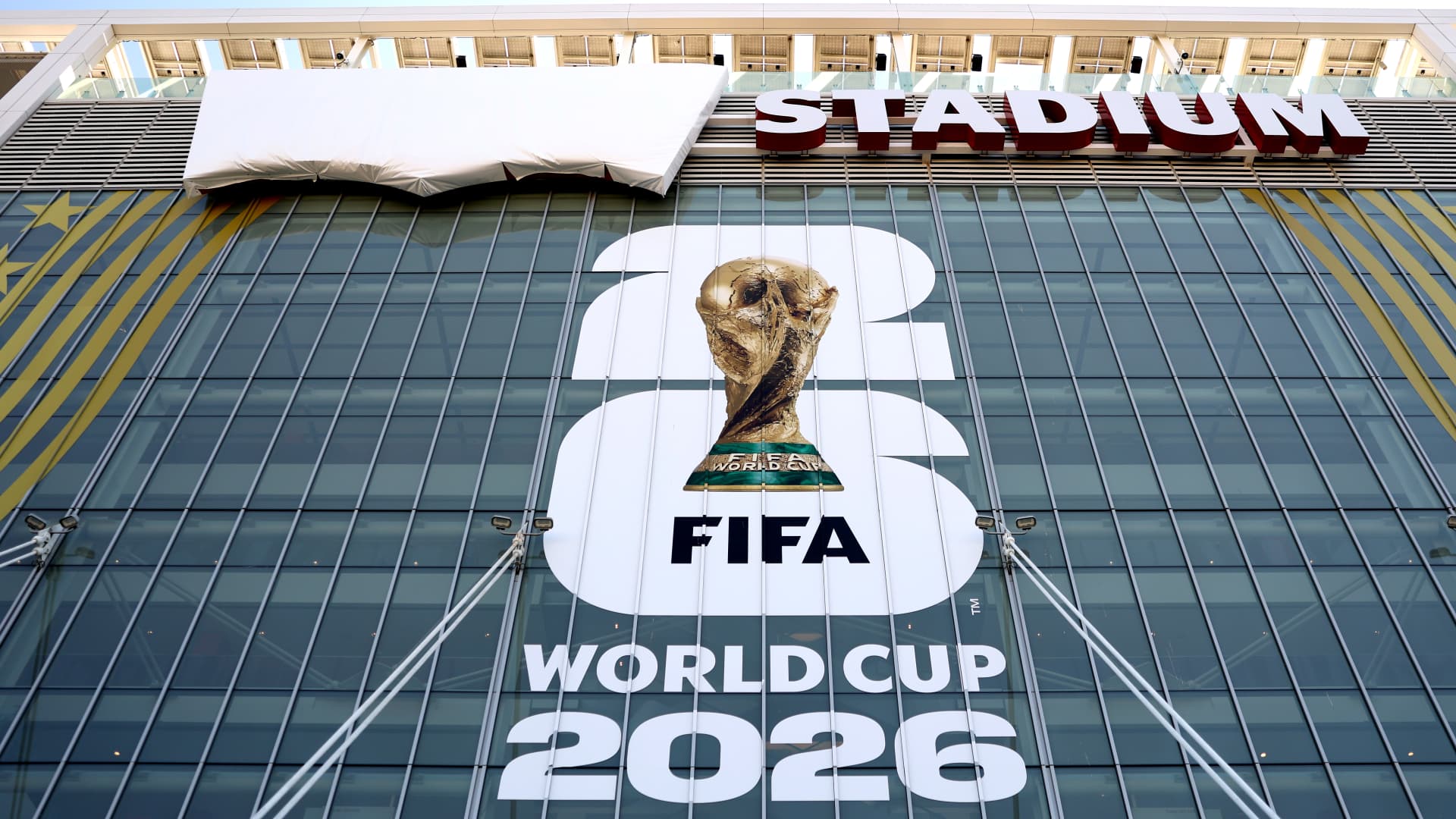
General view of the exterior of San Francisco Bay Area Stadium ahead of the FIFA World Cup 2026 Group B match between Qatar and Switzerland on June 13, 2026 in Santa Clara, California.
Fran Santiago | Getty Images
As people around the world tune into this summer’s World Cup, some of the brands generating the most buzz aren’t even official sponsors of the tournament.
The list of official sponsors for this year’s World Cup, hosted in cities across the U.S., Canada and Mexico, include global household names like Adidas, Coca-Cola and Qatar Airways.
But even before the tournament began, the spotlight fell on companies like Levi Strauss & Co., Taco Bell and Texas-based convenience store chain Buc-ee’s. Some have garnered traction on social media for their creative marketing strategies, while others have benefited from organic customer response with the influx of international players and fans.
McDonald’s celebrated the tournament with limited-time menu items and cups. Taco Bell leaned into a new campaign to support fans in celebration or support depending on the outcome of a match.
According to marketing research firm WARC Media, advertising spending on this year’s World Cup tournament is expected to reach $10.5 billion. That’s just below spending for the 2018 World Cup, hosted by Russia, which totaled roughly $12.6 billion.
Market intelligence firm Sensor Tower told CNBC that World Cup advertising spend increased 42% week over week in the days leading up to the first game. The firm tracked that Taco Bell and Duracell have both increased their advertising spend in the past few weeks, though the top 10 World Cup advertisers by spend over the past three months have been sponsors or broadcast partners of the event.
According to market research firm Meltwater, in the ramp-up to the World Cup, non-sponsor brand collaborations generated nearly double the engagement of official sponsors, reaching roughly 61 million engagements versus just 33 million.
The firm told CNBC that while sponsored advertisements led in volume, distribution and creative quality helped propel non-sponsors to higher engagement, with the most social media engagement coming from TikTok.
Since the tournament began, non-sponsor brands have surpassed 57,000 mentions on social media versus just over 43,000 for official sponsors, the company said.
“A big takeaway from this World Cup is that you don’t need an official sponsorship to own the cultural moment anymore,” Meltwater CEO John Box told CNBC. “The brands that will win the next tournament aren’t necessarily the ones with the biggest budgets, but instead the ones who are set up to see what’s trending in real time, the creativity to connect it back to your brand, and the speed to act before the moment passes.”
World Cup results
Kylian Mbappé’s Nike soccer cleats during a French national team training session at Bentley University in Boston, Massachusetts, on June 20, 2026. The number 58 on the cleats represent the goals scored by Mbappé for the national team.
Johnny Fidelin | Icon Sport | Getty Images
According to Meltwater, Coca-Cola and Adidas accounted for half of all sponsor mentions in the buildup to the tournament. But in the final 11 days before the first match on June 11, McDonald’s became the clear winner, with engagement share rising from 2.6% to 23%.
Of the non-sponsors, Lego accounted for 82% of the top 50 most engaging non-sponsor posts across social media platforms, Meltwater said. The construction toy company’s World Cup campaign delivered 12 times the sponsor average in the days leading up to the tournament.
Nike, who is not an official tournament sponsor, saw its World Cup advertisement — featuring celebrities like Kim Kardashian, Travis Scott and Lebron James as well as scores of World Cup stars like Norway breakout Erling Haaland and Portugal captain Cristiano Ronaldo — rake in more than 70 million views on YouTube.
Sneaker rival Adidas counts roughly 7 million views for its advertisement featuring actor Timothée Chalamet, Argentina captain Lionel Messi and more.
That gap is indicative of the winners and losers of the off-pitch advertising battle during the tournament, according to Andrew Rohm, a professor of marketing at Loyola Marymount University.
“It was just interesting how those two brands took totally different approaches to their four- to five-minute pieces of content, and I loved the Nike approach because it was totally on-brand, irreverent, unexpected, in your face,” Rohm told CNBC. “You don’t have to be an official sponsor to tie back into the cultural social importance of a worldwide global event like the World Cup, especially if you have assets like Nike has that you can deploy towards that.”
When it comes to the advertising winners of this year’s World Cup, Rohm said it’s a battle between “the expected and the unexpected.” The companies that aren’t official sponsors and are therefore not restricted by FIFA are able to have the most fun with their marketing, he said.
One brand making the most of its non-sponsor status is denim brand Levi’s.
Because the company isn’t an official backer of the tournament, its branding on the host stadium in Santa Clara, California, had to be removed before matches.
The Levi’s logo, loosely shaped like a jeans pant pocket, was shrouded in a white covering — but the move counterintuitively generated buzz for the company on social media from amused fans. In a similar move, razor brand Gillette’s cover for its logo on the stadium in Massachusetts mimicked shaving cream foam to make light of the situation.
“What started as a naming rights sponsorship restriction at the Levi’s Stadium became the most commented and shared post in Levi’s history,” Kenneth Mitchell, Levi’s chief marketing officer, wrote last week. “Leaning fully into it with a profile change on our social channels sealed the deal.”
Mitchell added that “strong brand iconography” worked on the company’s side, as its distinctive logo remained recognizable even under the covering.
According to Meltwater, Levi’s led the strongest example of non-sponsor visibility through its marketing, with its mentions increasing by 44% since the start of the World Cup. Engagement with the company increased nearly four times after it leaned into the stadium covering marketing, the research firm found.
A shifting ad strategy
Jared Watson, an assistant professor of marketing at New York University’s Stern School of Business, said he’s seen brands having more fun in their marketing during this year’s tournament.
“I think what you’re seeing play out, especially this year, is these brands that are taking sort of a rebellious or a cheeky approach to where they’re not officially being aligned with FIFA, and so a lot of consumers are in support of these marketing initiatives, in part because it feels somewhat adversarial to what’s happening,” Watson told CNBC. “It’s kind of stripping away that capitalistic intention from FIFA.”
Watson said brand success has not come from the marketing alone, but also that some companies are picking up on the frustration consumers feel with the commercialization of global soccer.
FIFA introduced mandatory hydration breaks during matches, for example, baking in more time for ads without breaking up the game. The breaks have drawn criticism from fans who say they’re unnecessary and a money grab.
“There’s a little bit of a stick-it-to-the-man mentality of we like to see these brands that are rebelling and pushing back because it’s kind of in the spirit of what the World Cup is, which is unity and meritocracy,” Watson said.
FIFA said in December the three-minute breaks were intended to prioritize “player welfare” and “part of a focused attempt to ensure the best possible conditions for players.”
Some brands have also found more organic success as fans around the world experience the culture of the World Cup host cities, posting about their newfound affinity for American general store chain Buc-ee’s and salad dressing company Hidden Valley Ranch.
“One of the things that we’ve seen, which I think has helped a lot of brands that maybe hadn’t proactively decided to jump into the advertising fray, is we’ve seen the delight with sort of basic American things,” Watson said. “That has allowed a lot of these brands to kind of slipstream or somewhat reactively jump on these trends and gain some earned media.”
And in an age of artificial intelligence, marketing that creates an emotional connection and has a human appeal stands out, according to Kelly Cutler, an associate professor of marketing at Northwestern University.
“I think it’s particularly timely, because I think people feel a little bit sensitive right now with all of the media around AI and all the discussions around AI,” Cutler said. “So that understanding at that human level of how important it is when your team wins or loses is so basic and fundamental and creates such a connection.”
Cutler also said the marketing cuts through generations — younger consumers are more aware of when they’re being sold to and are more often resistant. Companies that can develop a deeper bond with Generation Z will find the “golden goose of marketing,” she said.
For sponsor companies constrained by FIFA regulations, she added, the World Cup may have broader implications for future brand partnerships.
“The organizations, obviously they want those sponsorship dollars, and they don’t want to experience this type of situation where the brands that are paying nothing are getting a lot of traction and hitting all the headlines and having these really interesting outcomes,” Cutler said. “So I do think that it’s going to be interesting to watch how this impacts future sponsorship programming.”


Labutes IR is a Fund Manager/Analyst specialized in the financial sector, with more than 18 years of experience in the financial markets. I have worked at several type of institutions in the industry, always at the buy side and related to portfolio management. Associated with the existing author The Outsider.
Analyst’s Disclosure: I/we have a beneficial long position in the shares of ING either through stock ownership, options, or other derivatives. I wrote this article myself, and it expresses my own opinions. I am not receiving compensation for it (other than from Seeking Alpha). I have no business relationship with any company whose stock is mentioned in this article.
Seeking Alpha’s Disclosure: Past performance is no guarantee of future results. No recommendation or advice is being given as to whether any investment is suitable for a particular investor. Any views or opinions expressed above may not reflect those of Seeking Alpha as a whole. Seeking Alpha is not a licensed securities dealer, broker or US investment adviser or investment bank. Our analysts are third party authors that include both professional investors and individual investors who may not be licensed or certified by any institute or regulatory body.
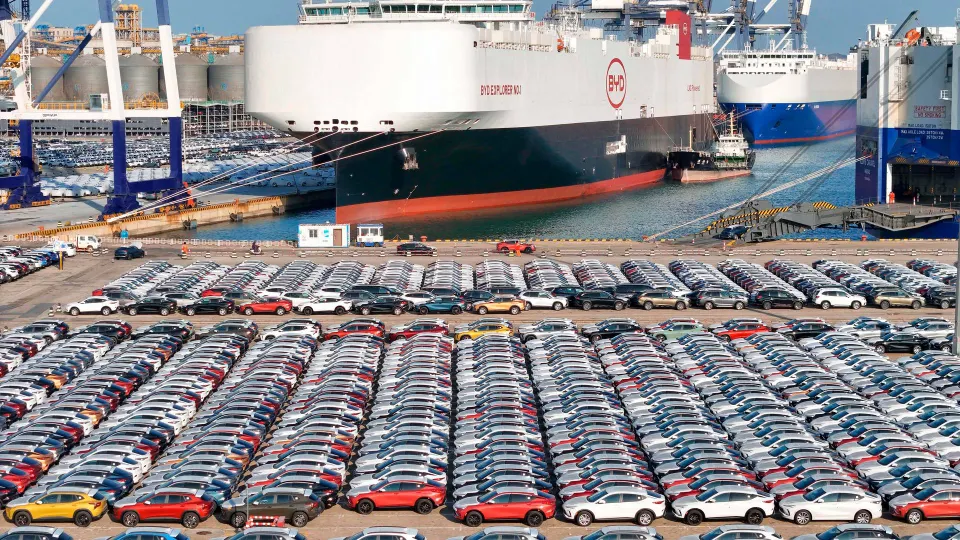
Electric vehicles are often viewed as a technology reserved for wealthy nations, but new analysis suggests this perception is rapidly becoming outdated. Research supported by the World Bank shows that EV adoption in developing countries is not only feasible — it is increasingly economically advantageous, especially for public transport systems and the millions who rely on two‑ and three‑wheelers for daily mobility.
A turning point for emerging economies
Transport already accounts for around 20% of global greenhouse gas emissions, and this share is rising fastest in developing cities as populations grow and mobility demand accelerates. Without a shift toward cleaner transport, these countries risk locking in decades of additional emissions at a time when climate pressures are intensifying.
The World Bank’s review of 20 developing countries finds that EVs — particularly buses and smaller vehicles — now offer a compelling economic case. Falling battery prices, lower operating costs, and the high mileage typical of public transport fleets make electrification increasingly attractive.
Where EVs deliver the biggest impact
Electric buses
Electric buses stand out as one of the most cost‑effective solutions for emerging markets. Their predictable routes, centralized charging, and heavy daily usage mean operators can quickly recover upfront investment through lower fuel and maintenance costs. For cities struggling with congestion and pollution, e‑buses offer immediate air‑quality benefits.
Two‑ and three‑wheelers
In many developing countries, motorcycles, scooters, and tuk‑tuks are the backbone of urban mobility. Electric versions of these vehicles are already price‑competitive, easier to maintain, and well‑suited for last‑mile transport and delivery services. Their rapid adoption could transform mobility for millions while reducing noise and air pollution.
Development benefits beyond emissions
The shift to EVs supports broader development goals:
- Cleaner air in megacities where pollution contributes to millions of premature deaths each year.
- Energy security, reducing dependence on volatile oil markets that disproportionately affect low‑income households.
- Improved mobility access, especially in remote or underserved areas where electric bikes and scooters can connect people to jobs, schools, and essential services.
Examples from around the world
Several countries are already demonstrating what EV adoption can look like at scale:
- Dakar, Senegal is rolling out electric bus rapid transit corridors to improve mobility and cut emissions.
- India plans to procure 50,000 electric buses over the next decade, one of the largest such initiatives globally.
- Bogotá, Colombia is piloting electric cargo bikes to support cleaner last‑mile delivery.
- Santiago, Chile already operates 800 electric buses, with 1,000 more on the way as part of its 2050 carbon‑neutrality strategy.
These examples show that EV adoption is not a distant aspiration — it is already happening across the developing world.
A practical path forward
The message is clear: electric vehicles are no longer a luxury reserved for advanced economies. For developing countries, they represent a practical, scalable, and economically sound solution to improve mobility, strengthen energy resilience, and reduce emissions. As costs continue to fall and technology improves, EVs — especially buses and two‑/three‑wheelers — are poised to play a central role in building cleaner, healthier, and more inclusive cities.
Other People are Reading
Lincoln National's Reinsurance Deal Unlocks Further Upside
The Kolkata-based company posted a net profit of ₹3,578.82 crore for the quarter ended June. Revenue from operations rose 28% from a year earlier to ₹26,943.23 crore.
Gross revenue also grew 28%, but net revenue dropped 14%. ITC said its gross revenue was not comparable with that a year earlier because GST and GST compensation cess on cigarettes were excluded from gross revenue calculation under accounting standards, while excise duty was included. Excise duty on cigarettes was increased sharply from February following the expiry of the GST compensation cess.
 ET Bureau
The results fell short of market expectations, as analysts were expecting a 10-11% decline in both net sales and net profit.

Ahead of the results announcement, ITC shares closed 1.5% lower at ₹280.95 on the BSE, where the benchmark Sensex gained 0.2%. Analysts said cigarette sales volumes declined 6-7% from a year earlier.
‘Unprecedented Increase’ in Burden
ITC adopted a calibrated approach to price hikes to protect demand, but that weighed on profitability in its largest business.The cigarettes segment’s profit before interest and taxes (PBIT) plunged 35% from a year earlier to Rs 3,341 crore, while revenue jumped to Rs 15,383 crore from Rs 8,520 crore. The company said the revenue figures were not comparable.
ITC has a more than 75% share in India’s legal cigarette market.
The company said it implemented around 30 interventions in the cigarettes business in response to the “unprecedented increase in tax” to balance the interests of all stakeholders. These included staggered price increases to prevent volume migration to illicit trade, along with re-architecting and strengthening its product portfolio, it said, adding: “Several of these interventions are progressing well and have achieved meaningful scale.”
Also Read: Maruti Suzuki Q1 Results: Revenue rises 36% to Rs 52,456 crore on all-time high volumes
The FMCG business helped cushion some of the pressure from cigarettes, with segment revenue rising 12% on-year to Rs 6,482 crore and profit before interest and tax increasing 21% to Rs 478 crore. Categories including dairy, snacks, noodles and frozen snacks expanded more than 20%, while personal care products delivered mid-teens growth.
ITC said consumption remained resilient across both rural and urban markets during the quarter, but “imported inflation is a key watch-out in the near term”.
“India is currently experiencing a significant deficit in monsoon and lower kharif sowing levels compared to the same period last year. Additionally, spatial and temporal variations in monsoon would remain a key monitorable,” ITC said. “A protracted conflict in West Asia, alongside emerging El Nino conditions that may weaken monsoons and intensify heatwaves, could weigh on growth, inflation and the current account,” it added.
In the agri-business segment, revenue declined more than 16% to Rs 8,082 crore as exports were hit by trade disruptions arising from the West Asia conflict. A high base also impacted performance, with segment PBIT falling 18% YoY. The leaf tobacco business was affected by lower domestic demand as well. The paperboards and paper segment reported 9% revenue growth, while the segment’s PBIT rose 38%.

India’s financial markets had factored in the likelihood a mid-July review would facilitate the inclusion of Indian sovereign bonds on the Global Aggregate index, which is tracked by a broad swathe of asset managers from Tokyo to Toronto for allocation of patient, long-duration funds. It is one of the world’s most widely followed investment-grade bond benchmarks, tracking more than $70 trillion worth of bonds.
Bloomberg Index Services (BISL) said Friday that Indian operational and market-infrastructure required further evaluation before the inclusion of the debt instruments in a flagship global investment grade index.
The inclusion of Indian government bonds in Bloomberg’s Global Aggregate Index has been deferred yet again, as the company requires additional evaluation of both operational and market infrastructure components. This setback could lead to an immediate uptick in sovereign bond yields, surprising investors who were hopeful for increased foreign capital inflow. Meanwhile, Indian bonds remain part of various other emerging market debt indexes.
“These considerations include, among others, the current lack of fully automated trading workflows, settlement and repatriation timelines associated with post-trade tax processes, and the complexity and duration of fund registration procedures,” BISL said.
Expectations were high following coordinated government and monetary-authority measures the markets believed would build a strong business case for inclusion of Indian bonds on the gauge.
ET BureauCalls for further evaluation; deferral may cause G-sec yields to rise
Also Read: NSE pays Rs 715 crore to settle pending Rs 1,491-crore co-location case ahead of IPO
Market was Running on Expectation
Estimates of inflows varied, but even the most conservative among analysts had penciled in $10-15 billion of inflows during the phase-in window itself.
“The market was running on expectations that Indian government bonds will be included in the Bloomberg index,” said Vijay Sharma, senior executive vice-president, PNB Gilts. “Since this has not happened, the markets could witness a sell off by 8-10 basis points.”
One basis point is a hundredth of a percentage point.
Targeted Measures
For its part, the Indian government had waived taxes on capital gains and interest on investment returns. The Reserve Bank of India (RBI), meanwhile, had also expanded the eligible investable universe for overseas funds to include long-duration bonds that stretched maturities running up to 30 years.
Tax exemptions on interest income and capital gains have been a key factor in Bloomberg’s consideration of including Indian bonds in its index and the inclusion of Indian debt in the gauge have driven the recent rally in the bond market.
The 10-year bond yield had softened 26 basis points in June, when overseas funds poured record money into Indian government bonds.
Foreign portfolio investors (FPI) poured in a record Rs 55,518 crores in June into these instruments, with the inflows generally driven by expectations that an announcement on the country’s inclusion in the Bloomberg bond index is imminent.
Yields on the 10-year benchmark government bond closed at 6.83% on Friday, up two basis points from its previous close. Bond dealers expect yields to trade around 6.90% on Monday.
Goldman Sachs had said in a recent report that it expected $15 billion passive inflows in the phase-in period after the highly anticipated inclusion announcement.
Indian bonds are already part of three major emerging-market debt indexes – the JP Morgan EM index included in June 2024, Bloomberg EM index included in January 2025 and the FTSE Russel EM index included in September 2025.
After the inclusion, FPIs invested over Rs 22,000 crores in a single month, the highest at the time, CCIL data showed.
Business
Ariana Grande’s “Petal” Arrives as Rage-Fueled Eighth Album Draws Mixed but Passionate Reviews
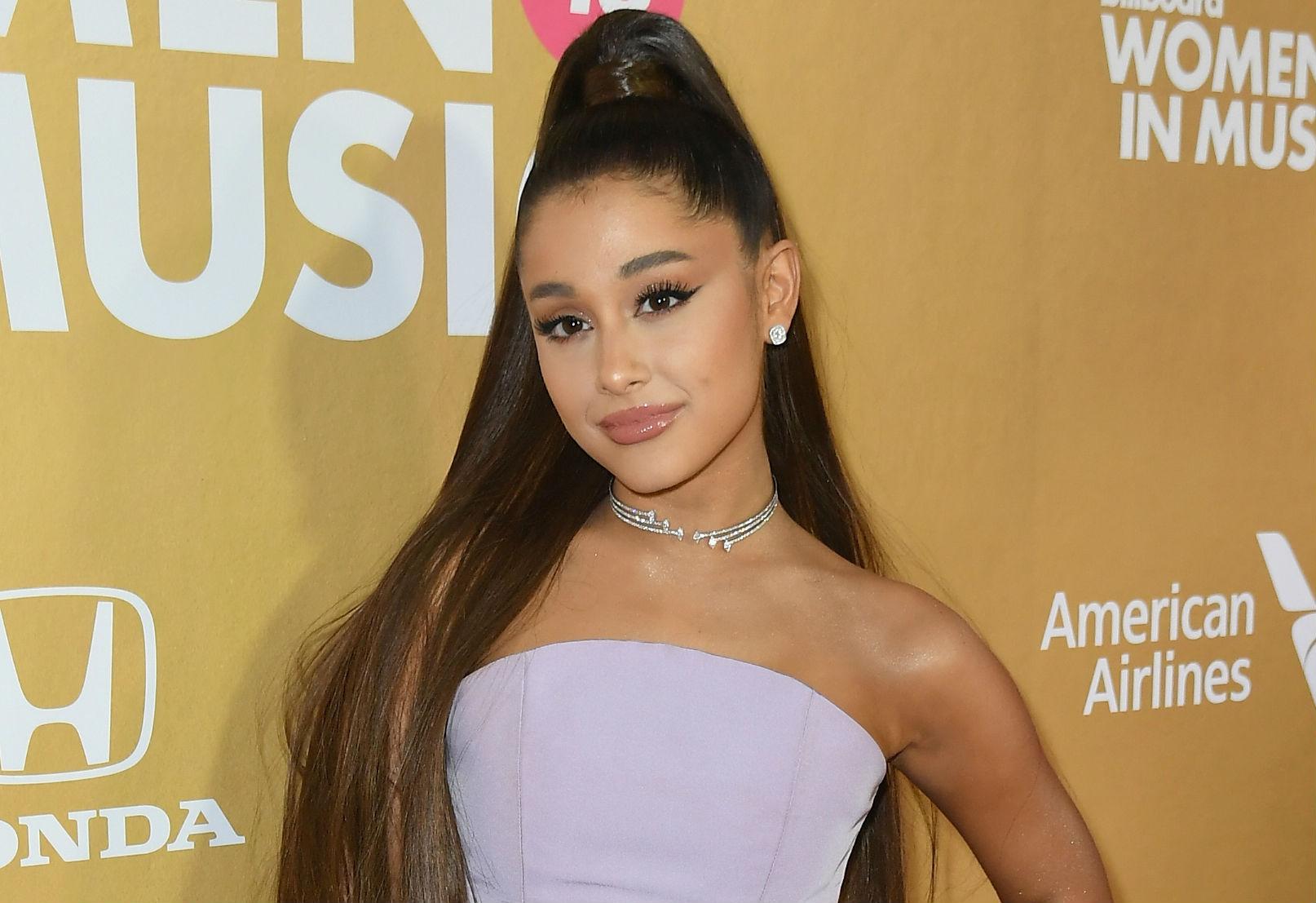
Ariana Grande released her eighth studio album, “petal,” on Friday, a project the singer has described as her most emotionally unfiltered work to date, drawing a wave of early reviews that ranged from enthusiastic to more measured as critics weighed in on the pop star’s latest reinvention.
The album, stylized in all lowercase, was released through Grande’s own imprint label, BabyDoll Music, in partnership with Republic Records. It was recorded between January and April of this year at studios in New York, Los Angeles and Stockholm, and was co-written and executively produced by Grande alongside longtime collaborator Ilya Salmanzadeh, the Iranian-Swedish producer who has worked with the singer across much of her recent catalog. Swedish hitmaker Max Martin also contributed production to portions of the record.
“Petal” follows Grande’s seventh studio album, “Eternal Sunshine,” which debuted at number one on the Billboard 200 in March 2024 and produced two Billboard Hot 100 number-one singles, “Yes, And?” and “We Can’t Be Friends (Wait for Your Love).” That album was later reissued in March 2025 with a deluxe edition subtitled “Brighter Days Ahead,” supported by a companion short film of the same name.
The lead single from “petal,” “Hate That I Made You Love Me,” was released May 29 and set the tone for the album’s broader emotional register. Grande has described the record as emerging from a place of anger she had not previously explored so directly in her music. “It’s definitely from a place I’ve been maybe too shy or polite to tap into before,” Grande has said of the album. “This kind of just feels like, ‘Fuck it.’” She also characterized the overall mood of the project in blunt terms, calling it “a little feral” and explaining that she “wrote from a place that I don’t usually, which was like an unfiltered rage.”
Critical reception to the album proved notably divided in its opening hours. Pitchfork awarded “petal” a score of 6.5 out of 10 in a review written by critic Aimee Cliff, placing the album in a moderate critical tier relative to some of Grande’s earlier work. Rolling Stone took a considerably more enthusiastic view, giving the record a score of 80 out of 100. In her review for Rolling Stone, critic Marissa R. Moss argued that Grande’s music consistently reaches its highest points when the singer allows herself to fully embrace frustration or anger rather than restraint, writing that the singer is “always at her best when she’s in a mood.” Moss singled out the track “Oh Well” as a standout moment on the record, highlighting its blunt, cutting lyrics as characteristic of the album’s overall attitude.
Other reviewers focused on the album’s lyrical approach to processing past relationships and personal growth. One review characterized the album’s trap-influenced track “Like I Do” as notably free of self-pity, framing it instead as a song in which Grande expresses gratitude toward a former partner for the challenges that ultimately helped her grow, both as an artist and as an individual. The same analysis noted that the album’s lead single found Grande adopting a somewhat self-deprecating tone, apologizing within the song’s lyrics for being, in her own words, difficult not to love.
Visually, Grande has paired the album’s more unguarded emotional tone with a notable shift in her public image, appearing on the album’s cover with her hair worn down and loose rather than in the high ponytail that has become one of her most recognizable style signatures over the course of her career. Critics reviewing the album have pointed to that visual choice as symbolically aligned with the record’s broader theme of shedding a more controlled, polished public persona in favor of something rawer and more direct.
The album arrives following a period in Grande’s career defined by high-profile film work, including her starring role as Glinda in the two-part film adaptation of the Broadway musical “Wicked,” released across 2024 and 2025. Grande had previously indicated that she did not plan to record another studio album until she completed filming both installments of the project, a commitment that pushed the release of new solo music back significantly following 2020’s “Positions.”
“Petal” also continues a pattern that has followed several of Grande’s recent albums, in which initial critical scores have sometimes shifted notably in retrospective reassessments over time. Some fans and commentators following the album’s release noted that similar dynamics unfolded following the release of “Eternal Sunshine,” when the album’s initial aggregate critical score on review-tracking sites climbed significantly within roughly a year of its original release, as some outlets revisited and revised their assessments following the album’s deluxe reissue and broader critical and commercial reception.
With “petal” now available across streaming platforms, industry observers are expected to watch closely in the coming days for early sales and streaming figures, along with any additional new reviews from major music publications, as a fuller picture emerges of how critics and audiences are ultimately receiving Grande’s latest and most emotionally direct project to date.
Both indices climbed more than 2.5% through the week and advanced nearly 2.1% in July.
Concerns over oil prices appear to have prevented further gains for the key gauges, which remained within a trading band through the last week of July.
“Despite Nifty ending the week higher, it has been unable to break out of its five-week range of 23,750-24,450, indicating continued indecision among market participants,” said Gaurav Sharma, head of research, Globe Capital Market. “While we remain uncomfortable with oil prices above $80 per barrel and escalation in the West Asia conflict, the earnings season has been better than expected despite a quarter marked by multiple disruptions and higher raw material costs.”
ET BureauBest monthly gains after April as D St sets aside W Asia worries, cos post strong Q1 nos
Late on Friday, Brent crude futures were trading at $90 per barrel, compared with $71.6 at the start of the month.
Hitesh Rathi, technical analyst, Angel One, also said the Nifty has staged a strong recovery this week, and continues to trade within a broader range of 23,800-24,500.
First Buying Since Feb
The index broke the strong support at 23,600 intermittently last Friday.
“We believe that unless the index breaks above 24,500 and closes above that level, it is likely to remain range-bound and witness a sideways movement,” he said. “We continue to see profit booking in the 24,430-24,450 zone.”
Also Read: NSE pays Rs 715 crore to settle pending Rs 1,491-crore co-location case ahead of IPO
On Friday, foreign portfolio investors net bought shares worth Rs 277 crore. Domestic institutions were buyers to the tune of Rs 2,260 crore. So far in July, foreigners have bought shares over Rs 10,000 crore — the first instance of buying since February.
The Nifty’s Volatility Index or VIX, commonly used to gauge the market sentiment, fell 3.3% to 11.76 levels. The gauge has fallen 12.2% in the past five sessions, indicating relief among traders.
Among broader market markers, the Nifty Midcap 150 gained 0.5% and Nifty Small-cap 250 rose 0.4%. For the week, these indices gained 2% and 1.8%, respectively.
Out of the total 4,425 stocks traded on the BSE, 2,522 advanced and 1,722 declined at close.
Sharma said the Nifty could be on the verge of a breakout above the key 24,500 zone, supported by strong earnings, easing oil prices and lower global volatility.
“We also believe the IT sector delivered better-than-expected results this quarter and is not lagging in the AI race. So, it should continue to outperform regardless of the performance of the Kospi or other AI and semiconductor stocks,” he said.
The Nifty IT index gained 6.8% for the week, coinciding with Korean benchmark Kospi’s net decline of 3.1%.
Elsewhere in Asia, Japan gained 4%, China advanced 0.7%, Hong Kong rose 0.1%, South Korea soared 17.9% and Taiwan jumped 8%.
The pan-Europe index Stoxx 600 was up 0.6% at the time of going to print.
“While the pharma and IT sectors have outperformed this week, the Bank Nifty continues to face selling pressure, and unless it recovers, the Nifty is unlikely to see a meaningful recovery from current levels,” said Rathi.
Southeast Asia faces immense opportunities and complex challenges, from AI and climate change to geopolitical competition. ASEAN must evolve beyond process-driven consensus toward concrete, people-centered results, leveraging culture, trust, and unity to build a resilient, innovative region by 2045.
Key Points
• Southeast Asia faces historic opportunities—young population, strategic location, digital growth—but also complex challenges including climate change, AI disruption, geopolitical competition, and disinformation that render traditional regional advantages insufficient alone.
• ASEAN must shift from process-oriented to results-oriented thinking, transforming unity into coordination, consensus into action, and culture into a development driver that meaningfully improves citizens’ daily lives.
• Vietnam and all member states strengthen ASEAN by strengthening themselves domestically, building social trust, investing in youth and digital infrastructure, and placing people at the center of every regional development strategy.
Southeast Asia at a Crossroads: Opportunities and Challenges
Everyday life in Southeast Asia increasingly reflects a rapidly changing world — from digital food delivery in Hanoi to e-commerce connecting Bangkok sellers with Singapore buyers. These ordinary moments signal extraordinary transformation. At the ASEAN Future Forum 2026, General Secretary and President To Lam captured this reality with a powerful message: “The world is changing, and the region must think differently.” ASEAN holds significant advantages — a young population, strategic geography, cultural diversity, and growing investment appeal — yet faces mounting pressures from intensifying geopolitical competition, climate change, artificial intelligence disruption, and disinformation, demanding more than traditional approaches can offer.
From Principles to Action: Rethinking ASEAN’s Strategic Direction
ASEAN’s foundational values — unity, consensus, diversity, and centrality — remain essential assets built over nearly six decades. However, preserving these values cannot mean standing still. Unity must evolve into coordination capacity, and consensus must translate into concrete action. The region must shift from a process-oriented mindset to a results-oriented one, measuring success by tangible improvements in people’s lives: better opportunities, stronger business environments, and greater protection for vulnerable communities. In a fast-moving era, delays carry real costs — investment can relocate, technology revolutions advance without hesitation, and entire generations risk being left behind if institutions fail to adapt swiftly.
Culture and trust are strategic resources, not merely symbolic assets. ASEAN’s soft power lies in its ability to coexist amid differences, pursue peace amid competition, and keep people central to development. Without trust, cooperation weakens — data sharing, supply chain resilience, and green transitions all depend on it. When each member state strengthens itself cooperatively, ASEAN collectively grows more resilient, positioning Southeast Asia as a dynamic, trusted, and people-centered force in the emerging global order.
Other People are Reading
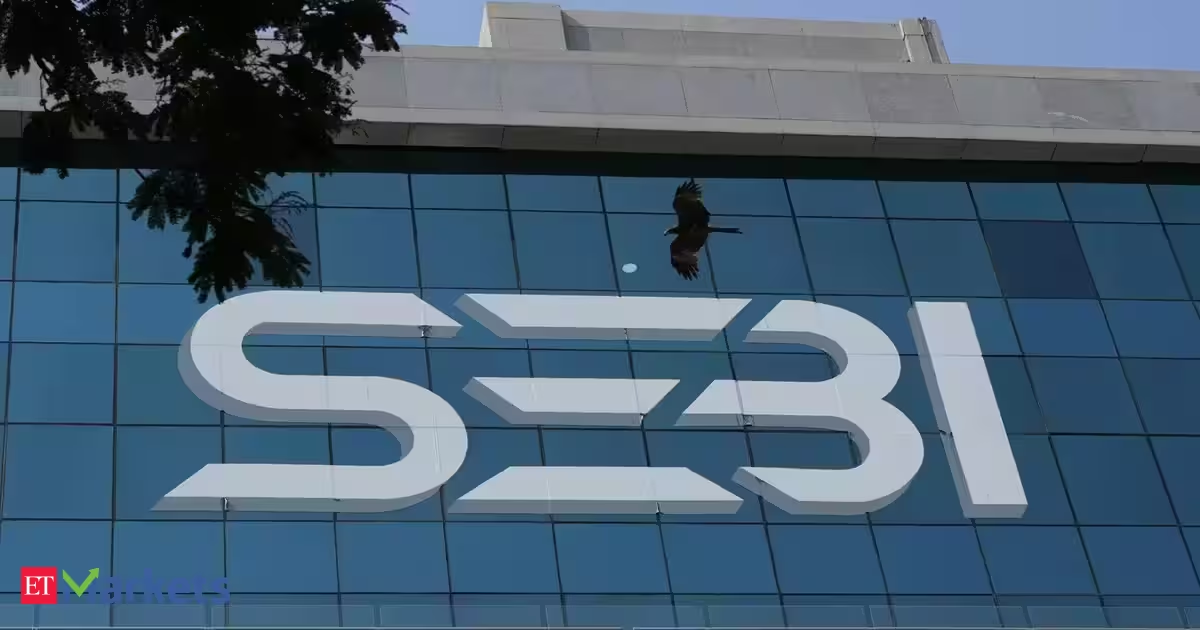
In an informal guidance letter issued on Friday, Sebi said secondary transfers of unlisted equity shares to identified investors would not amount to a deemed public offer, provided the transactions comply with private placement provisions of the Companies Act.
The clarification came in response to a request from IDBI Bank, which holds stakes in unlisted companies acquired through loan restructuring, invocation of pledged shares, direct investments, among others.
Business
Meghan Markle Skips Public Events During Prince Harry’s UK Visit Amid Ongoing Royal Security Dispute
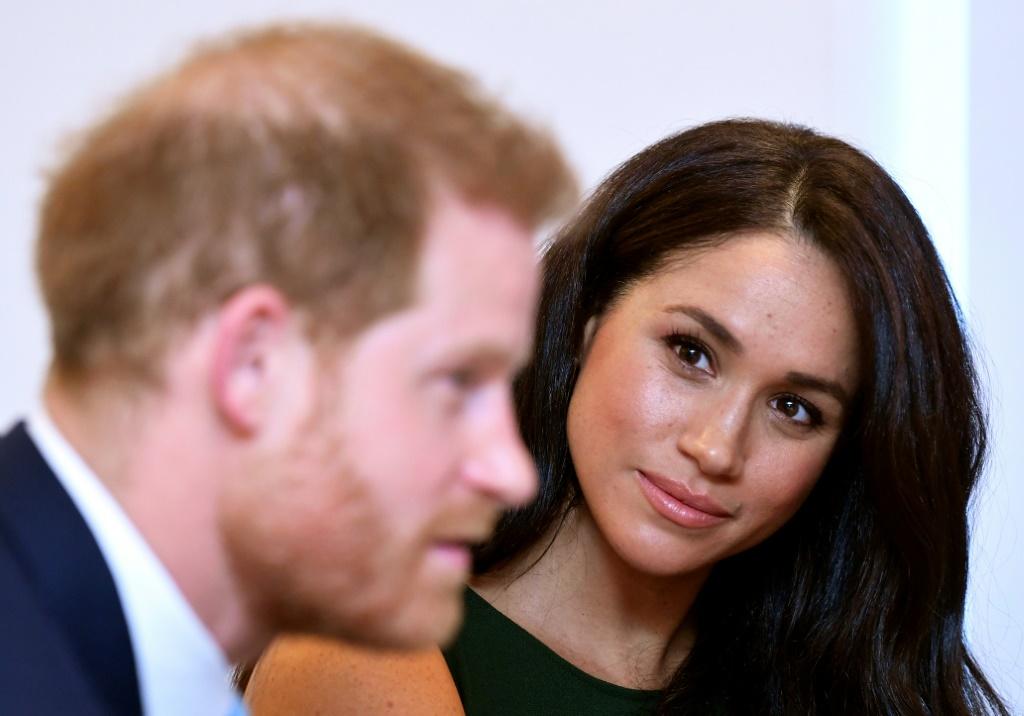
Meghan Markle did not accompany Prince Harry to any of his public engagements during his return to the United Kingdom earlier this month, after her office confirmed she would sit out the events amid an unresolved dispute over the couple’s security arrangements while in Britain.
The Duchess of Sussex had originally been scheduled to appear alongside Harry at several events, including a ceremony marking one year until the Invictus Games return to Birmingham. But following extended discussions centered on the lack of state-funded protection for the couple while in the UK, her office confirmed she would not attend any of the public engagements Harry participated in during his visit, according to ITV News. The largest of those events was Friday’s Invictus Games gathering at the NEC in Birmingham, the venue set to host the tournament for wounded, injured and sick military veterans in July 2027.
Harry’s visit came after he lost an appeal challenging the British government’s decision to reduce his publicly funded security following his and Meghan’s 2020 decision to step back as senior working royals and relocate to California, according to ABC News. Harry was scheduled to attend engagements connected to both the Invictus Games and the WellChild charity during his time in the UK.
The visit also came after ABC News reported that Harry would not be staying at Buckingham Palace during his time in London, after an earlier offer of accommodation to him had been withdrawn. At the time that report emerged, it remained unclear whether Meghan and the couple’s children, Prince Archie and Princess Lilibet, would join Harry later in his visit for the Birmingham portion of the trip.
Despite Meghan’s absence from Harry’s official public engagements, the family did ultimately travel to the UK together. Meghan and the children joined Harry during the visit to meet with King Charles III, marking the family’s first trip to England together in four years, according to Fox News. It was also the first time the king had seen his two California-based grandchildren in person in four years.
Harry was reported to be planning to stay with his uncle, Charles Spencer, at the Spencer family’s Althorp estate near Northampton during the visit, the same estate where Harry’s mother, Princess Diana, is buried on an island in the middle of a lake. Harry and Meghan were reported to be planning to bring Archie and Lilibet to visit their paternal grandmother’s grave during the trip, with a broader Spencer family gathering also planned to include Diana’s surviving siblings, Charles Spencer, Lady Jane Fellowes and Lady Sarah McCorquodale.
Following the couple’s return to the UK, reports indicated that Harry and Meghan largely paused joint public appearances in the days that followed, with few photographs of the couple together circulating publicly during that stretch, according to Reality Tea. After returning from the UK, Harry was subsequently spotted attending the inaugural TIME100 Most Influential People in Sports gala in New York City, while Meghan separately marked a Daytime Emmy Award nomination for her Netflix series “With Love, Meghan.”
The dispute over security arrangements for the Sussexes has remained a persistent point of tension since the couple stepped back from royal duties in 2020, a decision that ended their automatic entitlement to police protection while in Britain. Harry has pursued legal challenges over the issue in the years since, arguing that adequate protection is essential for his family’s safety during any visits to the UK, but has not succeeded in having the earlier security arrangement fully restored through the courts.
Ahead of the visit, a Home Office source described internal disagreement among officials over how to handle the Sussexes’ security needs. “There is nervousness among certain members of the committee who fear a public backlash,” the source said, according to reporting from the U.S. Sun. The source added that “the political side believe there is too much political risk, while the police and security chiefs believe that he absolutely must have it due to the extant threat.”
The visit marked Meghan’s first trip to Britain since September 2022, when she and Harry attended the funeral of Queen Elizabeth II. Since relocating to California in 2020, Meghan has largely remained in the United States with the couple’s children, while Harry has made a number of solo trips back to the UK in the years since.
With the visit now concluded and the underlying security dispute still unresolved, questions remain about how the arrangement will be handled during any future trips the family makes to the UK, particularly as Harry continues to push for a path that would allow Meghan and their children to attend public engagements alongside him without the security concerns that shaped this month’s visit.

Why Neeraj Chopra’s CWG 2026 silver meant more with Yashvir Singh by his side in Glasgow | Commonwealth Games News

The most famous brand in physical security got pwned by ShinyHunters

#Stocks, #networth #compny, #finance, #financialeducation, #stockmarket, #shortvideo

Renter of Home in Anne Heche Crash Denies Settlement With Son

No Jackpot Winner as $257 Million Prize Rolls Over to $269 Million Monday Draw

Weekend Open Thread: Staud – Corporette.com
#Stocks, #networth #compny, #finance, #financialeducation, #stockmarket, #shortvideo

AI Bubble is popping – FOMC Scares the MARKET – BITCOIN CRYPTO GOLD DUM

7 Powerful Financial Habits That Can Transform YourWealth |Nirmala Sitharaman’s PracticalMoneyAdvice
-
 Sports5 days ago
Commonwealth Games boxing: Jadumani Singh seals dominant 5-0 win over Pakistan’s Sumama Rehman to enter quarter-finals | Commonwealth Games News
-

 Business2 days ago
Why Trees Belong on the Risk Register
-

 Fashion10 hours ago
Weekend Open Thread: Wit & Wisdom
-

 Tech5 days ago
Intel is reversing course and bringing hyper-threading back to its server chips
-

 Politics6 hours ago
Meta enters AI-training agreement with far-right ‘propaganda rag’ Newsmax
-

 Crypto World6 days ago
Ripple bought a bank in pieces. The $4 billion audit
-

 Politics5 days ago
Luke Littler dismantles Gerwyn Price to retain title in Blackpool
-

 Politics4 days ago
The Part of the Electric Transition Nobody Wants to Discuss
-

 News Videos5 days ago
BITCOIN JUST ENTERED THIS CRITICAL ZONE…
-
 Entertainment3 days ago
‘Stargate’ Creator’s New Sci-Fi Series Returns for Season 3 Tomorrow
-

 Crypto World6 days ago
XRP Ledger adds $2.6B as RWA inflows rank second
-

 Business3 days ago
Major shareholder moves on Canyon
-

 Politics6 days ago
Spain sweeps the board at 2026 World Cup with individual awards
-

 News Videos2 days ago
Bitcoin Enters the 3rd Stage of the Bear Market
-

 Entertainment6 days ago
Sara Gilson Killed By Husband After Viral “Pedophile” TikTok Video
-

 Crypto World3 days ago
Kraken Enables Retail Access to Jersey Mike’s IPO via Tokenized Shares
-

 Tech7 days ago
Anthropic launches Claude Opus 5, a cheaper AI model for coding, agents and enterprise workflows
-

 Tech4 days ago
New macOS Sequoia & Sonoma security updates for older Macs
-

 News Videos3 days ago
Claude: Build Financial Dashboards in Minutes (2026)
-

 Politics1 day ago
Luke Littler’s dominance sparks GOAT debate
You must be logged in to post a comment Login