
Business
How To Build A Social Media Workflow That Does Not Break Under Campaign Pressure


Social campaigns rarely fall apart because of one big mistake. It is usually smaller things piling up. A caption gets changed after approval. A designer uses an old product image. A creator sends content late. Someone asks for numbers before anyone has checked the live posts.
That is when a normal campaign starts to feel heavy. A good workflow does not make the work boring. It just gives every moving part a place, so the team can stay calm when the pressure builds.
Start With The Whole Campaign, Not One Post
A lot of social work starts too small. Someone opens the calendar and starts filling boxes. Monday needs a Reel. Wednesday needs a carousel. Friday needs a LinkedIn post.
A better start is a simple campaign map. What is being launched? Who needs to care? What dates matter? Which channels are doing the hard work? What should people do after seeing the content?
For a product launch, one channel might show the product in use. Another might explain the problem. Another might carry creator content. Another might handle questions after launch.
This is also the right time to plan creator work. If a team is using an influencer marketing platform to find creators, send products, track posts, or manage results, that work should sit inside the main campaign plan. It should not sit in a separate folder that only one person understands.
Creator planning should also include the basics, such as timelines, product details, approval steps, and creator disclosure rules, so paid posts are not handled at the last minute.
Give Each Task A Clear Owner
Campaigns get messy when tasks have no real owner. Everyone knows a post needs approval, but nobody knows who is chasing it. Everyone knows a creator asset is missing, but no one is sure who followed up.
That is how small delays turn into late nights.
Each task needs one person who owns the next step. They may not write, design, approve, and publish everything. But they know where the task stands and what has to happen next.
That lines up with project management advice around, where teams need to know who is responsible for what before work starts moving in different directions.
For each campaign, it helps to know:
- Who writes the first draft
- Who creates or edits the asset
- Who checks the brand details
- Who gives final approval
- Who schedules the post
- Who watches replies after it goes live
This does not need to be complicated. Even a simple owner column in a content calendar can stop a lot of chasing.
Add Approval Time Before It Hurts
Approval time is one of the easiest things to underestimate. A manager says they will check the post later. A client asks for one small change. Legal wants a softer line. Then the post that was “almost ready” is suddenly late.
The fix is not to rush everyone. The fix is to plan for review time from the start.
If a post is going live on Friday, the first draft should not arrive on Thursday night. Give space for changes. Give space for people to miss a message. Give space for someone to spot a wrong date, price, code, or product claim.
This matters even more when a campaign has several parts. One late approval can affect paid posts, Stories, creator content, email, and reporting. A clear review window makes the whole campaign less fragile.
Keep Files Where People Can Find Them
Nothing wastes time like hunting for the right asset. The approved video is in a Slack thread. The final logo is in the email. The product shot is in a folder called “new stuff.” Someone used the wrong image because it was the only one they could find.
Every campaign needs one clear place for files.
That place should hold the final visuals, raw creator content, captions, links, discount codes, UTM links, product notes, and any brand rules. The team should not need to ask, “Where is the latest version?” every time something changes.
When files are easy to find, the team has fewer chances to make tired mistakes.
Plan For Comments Before They Arrive
Many teams plan the content and forget the inbox. But once the posts go live, people may ask about price, shipping, sizing, stock, refunds, ingredients, features, or delivery dates.
If nobody knows who should answer, the campaign loses energy.
Before launch, decide what the social team can answer and what needs support, sales, or a manager. Also, decide which comments should be ignored, hidden, or flagged.
This is very important for creator campaigns. A creator may bring people who have never heard of the brand before. Their questions may be basic, but they are still buying signals.
Fast replies can keep that interest warm. Slow replies can make the campaign feel unattended.
Watch Results While The Campaign Is Live
A campaign report is useful after everything ends, but live signals matter too. They can show what to fix while there is still time.
If one Reel is getting saves, the team can turn the same idea into another format. If people keep asking the same question, the next post can answer it. If a creator post gets clicks but no sales, the landing page or offer may need a closer look.
The team does not need to panic over every number. Some posts need time. But it helps to check the right signs while the campaign is still moving.
Useful signs can include clicks, saves, replies, watch time, comments, shares, and sales. The comments are often the most useful part. They show the words people use, and those words can shape the next post.
Make The Next Campaign Easier To Run
A campaign should not disappear the moment the last post goes live. Before the team moves on, it is worth saving what the rush made easy to miss. Which posts carried the message best? Where did approvals slow down? Which comments showed real interest? Which files, links, or handoffs caused problems?
Those notes do not need to be long. They just need to help the next campaign avoid the same mess. A strong workflow is not about adding more process. It is about giving good ideas a better chance when the pressure starts again.


Ratana21/iStock via Getty Images
Credit markets rallied in the quarter, rebounding from broad weakness in the previous quarter. A blended leveraged loan/high-yield index returned 2.2% for the quarter and 1.6% year-to-date, while lower-rated credits, software, and building products remained weak. Our portfolio again generated a positive return

Torsten Asmus/iStock via Getty Images

On Friday, the S&P 500’s percentage of stocks above their 50-DMA fell to 53.7%, the lowest reading for the index since 6/17.
Five sectors (Consumer Discretionary, Industrials, Real Estate, Technology, and Utilities) now have fewer than half their members above
The sharp movement in these stocks came on a day when changes in constituents for the MSCI Global Standard Indexes took place as of the close of August 31, 2026.
Four companies — Adani Energy Solutions, Billionbrains Garage Ventures, Laurus Labs and Lenskart Solutions — were added to the MSCI India Index, according to an index review by MSCI.
Shares of Adani Enterprises tumbled 7.74 per cent, Adani Energy Solutions tanked 7.41 per cent, Adani Green Energy declined 6.93 per cent, Adani Power slumped 6.52 per cent, Adani Ports lost 4.11 per cent, Adani Total Gas dropped 2.56 per cent, Ambuja Cements edged lower by 2.51 per cent, NDTV dipped 2.21 per cent, and ACC was down 2.21 per cent on the BSE.
The 30-share BSE Sensex declined 307.24 points, or 0.40 per cent, to settle at 76,957.27. The 50-share NSE Nifty dropped 95.25 points, or 0.39 per cent, to end at 24,080.40.

Today’s session carries an unusual market dynamic, as the MSCI August rebalancing takes effect at the close. The quarterly reshuffle is expected to trigger sizeable passive fund flows, concentrated in the final minutes of trading, Hariselvan Radhakrishnan, Founder & CEO of HST Wealth, a Research Analyst firm, said.
“MSCI index rejig-related fund adjustments added to market volatility,” Ajit Mishra — SVP, Research, Religare Broking Ltd, said.
Uzbekistan’s Competition Development and Consumer Protection Committee has granted preliminary approval for Tapuz Limited to acquire a 100% stake in OLX Classifieds LLC, the operator of one of the country’s most widely used online marketplace platforms. The approval is subject to a set of regulatory conditions designed to preserve market competition across Uzbekistan’s rapidly expanding digital economy.
Tapuz Limited is principally owned by TBC Bank Group PLC, the London-listed financial group that also indirectly controls TBC Bank Uzbekistan and Payme two of the most prominent digital financial platforms operating in the country. The OLX acquisition, once fully completed, would bring together a dominant classifieds platform with an established digital banking and payments ecosystem under a single corporate structure.
Regulatory Approval and Its Conditions
The Competition Committee’s approval is not unconditional. The regulator has imposed a series of requirements on Tapuz Limited that are designed to prevent the combined entity from using its market position to restrict competition or disadvantage users. Both Payme and OLX are listed on Uzbekistan’s national register of companies holding dominant positions in the digital platforms market a designation that brings specific obligations under competition law.
Among the conditions imposed, the buyer is prohibited from leveraging other digital services to improperly influence the terms under which OLX operates. It is also restricted from using OLX user data to benefit TBC Bank Uzbekistan or Payme in ways that would limit competition. The regulator has explicitly stated that OLX users cannot be required to use only Payme or TBC Bank services when making payments on the platform a condition that ensures the marketplace remains open to competing payment providers.
The requirements also address the handling of commercial information. Tapuz Limited is prohibited from disclosing personal or commercial data about the customers of competing businesses a provision that reflects the regulator’s focus on preventing the kind of data asymmetry that can entrench market dominance in digital platform economies. Compliance with national competition legislation is specified as an ongoing obligation throughout the transaction.
What the Acquisition Means for Uzbekistan’s Digital Market
The strategic logic behind the OLX acquisition is straightforward. OLX Uzbekistan is one of the country’s most visited online platforms, used by millions of consumers and small businesses for buying, selling, and trading goods and services. Integrating this marketplace reach with TBC Bank Group’s financial services infrastructure creates a platform with compelling potential for embedded financial services credit at the point of sale, payment processing for marketplace transactions, and financial products tailored to the needs of small merchants operating through classifieds.
The combination also reflects a broader trend in emerging market fintech, where the most successful platforms are those that embed financial services within the contexts where consumers and businesses already spend their time. Marketplaces are particularly valuable in this regard because they generate high-frequency, high-intent interactions precisely the kind of engagement that financial services providers seek when developing embedded product strategies.
For TBC Bank Uzbekistan, which already serves over 6 million monthly active users and holds a leading position in consumer credit and payments, the OLX acquisition represents an extension of its ecosystem rather than a departure from its core strategy. The company has consistently expanded its product range to cover a wider share of the financial and commercial activity of its users from daily banking and lending to insurance, travel, and subscription services.
Savings, Deposits, and the Maturing of Uzbekistan’s Financial Market
The regulatory approval of this acquisition takes place within a financial market that is maturing rapidly on multiple dimensions simultaneously. Consumer awareness of financial products savings instruments, investment options, and structured deposit offerings has grown considerably as digital banking platforms have made these products more visible and accessible. The growing interest in terms such as “депозиты в узбекистане” and “omonat turlari” reflects a population that is moving beyond basic transactional banking toward a more considered engagement with savings and wealth preservation. This shift is significant for the long-term development of Uzbekistan’s financial sector.
As consumer confidence in digital financial platforms increases, and as the range of products available through those platforms expands, the conditions for deeper financial inclusion become more favourable. The combination of accessible savings products, embedded lending at points of commerce, and reliable payment infrastructure creates a financial ecosystem that can serve users across a much broader range of their economic needs than was possible through traditional banking channels alone.
Competition, Compliance, and the Road Ahead
The conditions attached to the OLX acquisition approval reflect a regulatory approach that is increasingly common in markets where digital platform concentration is emerging as a structural concern. By imposing specific restrictions on data use, payment exclusivity, and competitive conduct at the outset of the transaction, the Competition Committee is attempting to shape the market structure proactively rather than responding to abuses after the fact.
For TBC Bank Group, navigating these conditions will be an important operational priority as the acquisition moves toward completion. The restrictions are not unusual in the context of platform acquisitions in competitive markets, and the group’s compliance track record across its operations in Georgia and Uzbekistan suggests it is well positioned to meet the requirements. The key challenge will be realising the commercial potential of the combined entity while maintaining the open, competitive environment that the regulator has mandated.
Uzbekistan’s digital economy has expanded at a pace that has regularly surprised outside observers, and the OLX acquisition is one of the more visible markers of how seriously international and domestic players now view the market’s long-term potential. TBC Bank Group’s willingness to pursue a transaction of this scale — subject to regulatory scrutiny and conditional approval reflects a confidence in the trajectory of Uzbekistan’s digital economy that is grounded in the operational results the group has already achieved.
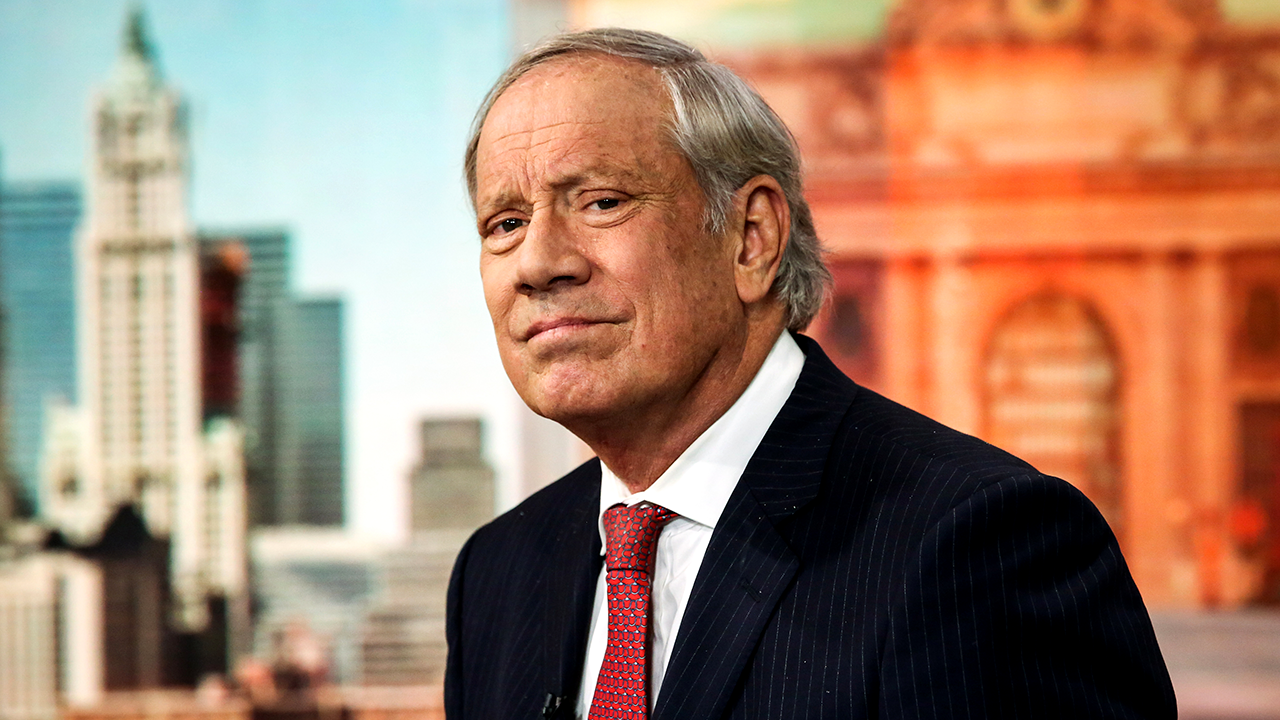
Former New York Governor George Pataki joins Cheryl Casone to discuss the business exodus from New York City. He weighs in on rising tax rates, rising antisemitism in the state and the upcoming 25th anniversary of the 9/11 attacks.
New York isn’t just losing residents — it’s losing some of the people who help power its economy.
As New York continues to see residents move to other states, former New York Gov. George Pataki is warning that entrepreneurs, financial leaders and major donors are increasingly heading for the exits.
Pataki joined FOX Business’ Cheryl Casone on “Mornings with Maria” to discuss the state’s outmigration, its business climate and the policies he believes are pushing residents and job creators elsewhere.

Former New York Gov. George Pataki weighs in on New York’s out-migration and business climate. (Christopher Goodney/Bloomberg / Getty Images)
“You know, it’s just almost tragic to see the loss of people, not just people, but people who create jobs, who donate to hospitals and museums, the best of New York, the people who have made New York the entrepreneurial and financial center are just leaving,” Pataki said.
Rep. Mike Lawler, R-N.Y., discusses New York’s economic challenges and how it has the highest tax burden in the country.
The former governor argued that New York risks weakening its position as the nation’s financial center as companies expand their workforces elsewhere, pointing to the growing pull of lower-tax states such as Texas.
“We fought hard to keep it the financial capital of the world. It still is for the moment. But if we continue these tax-and-spend and soft-on-crime policies, it’s just going to get worse,” he said.
NYC-AREA CHAMBER OF COMMERCE CEO BLASTS MAMDANI GROCERY PLAN AS ‘DISASTROUS’ AMID LEGAL FIGHT
Pataki also warned that additional tax increases and rising debt could deepen the state’s challenges and drive more residents away. Still, he said New York has the ability to reverse course.
A ‘Mornings with Maria’ panel weighs in as New York City officials propose tax breaks and subsidies to help grocers cope with taxpayer-funded grocery stores.
“We’re going to end up not just with the highest taxes in the country, but with unsustainable debt, with more people leaving,” Pataki said. “We’re not doing great right now, but New York is New York. It’s very resilient. It still has great people. We put in place the right policies and it will come roaring back. So in that sense, I’m an optimist.”
Miranda Devine slams Mayor Zohran Mamdani’s plan to open city-run grocery stores in New York City, warning it will destroy local immigrant-owned businesses like bodegas that cannot compete with tax-subsidized government entities.
Business
Microsoft Store Down? Outage Reports Surge, Marking a Third Microsoft Service Disruption This Monday Alone
Users of the Microsoft Store began reporting access problems starting at approximately 12:17 p.m. Eastern time Monday, according to outage-tracking service Downdetector, marking the third Microsoft service to draw user complaints within roughly 90 minutes on the same day.
Downdetector, an Ookla-owned platform that monitors more than 12,000 online services worldwide, posted on X shortly after the reports began surfacing. “User reports indicate problems with Microsoft Store since 12:17 PM EDT,” the account wrote, encouraging affected users to share how the disruption was impacting them under the hashtag #MicrosoftStoreDown. Separate outage-tracking service Entireweb similarly logged elevated activity for the Microsoft Store, recording 56 user reports over the preceding 24-hour period as of Monday, with six of those reports arriving within the final hour before its status check.
Monday’s Microsoft Store reports followed closely on the heels of two earlier disruptions affecting other Microsoft products the same day. Users had reported problems with Microsoft Outlook beginning around 11:53 a.m. Eastern time, and separate reports tracked by the online forum DesignTAXI Community indicated that broader Microsoft 365 services, including Outlook specifically, began showing elevated outage report volumes as early as 11:33 a.m. Eastern time Monday. The clustering of complaints across multiple Microsoft products within a relatively narrow window raised questions among affected users about whether the issues stemmed from a shared underlying cause, though Microsoft had not issued a public statement definitively linking the incidents as of Monday afternoon.
Microsoft’s broader cloud infrastructure, built primarily on its Azure platform, underpins a wide range of the company’s consumer and enterprise products, meaning that problems originating in shared backend systems can sometimes manifest as simultaneous disruptions across seemingly unrelated services. That dynamic played out dramatically during a major Microsoft outage in 2021, when a Domain Name System, or DNS, networking issue took down Microsoft’s homepage, Xbox and Office services, login pages, and even the company’s own status pages simultaneously, according to a contemporaneous report from TechCrunch. In that incident, Microsoft’s cloud service Azure also went offline, causing cascading outages across other websites and services that depend on Azure’s infrastructure, before the company confirmed the issue had been mitigated roughly seven hours after it began.
As of Monday afternoon, StatusGator’s monitoring of the broader Microsoft 365 apps category showed the service listed as operational, with only four user-submitted reports logged over the preceding 24-hour period as of a status check conducted shortly after 12:30 p.m. Eastern time, a discrepancy that illustrates how quickly outage-reporting metrics can shift and how different monitoring services can produce varying pictures of the same underlying situation depending on their data sources and update frequency.
Downdetector’s outage-tracking methodology relies on a combination of user-submitted complaints and automated web traffic monitoring rather than direct access to a company’s internal systems, meaning reported spikes in activity do not always indicate a complete platform-wide failure. Disruptions can instead reflect issues affecting a specific region, a particular version of an app or service, or a coincidental cluster of unrelated individual account problems. Even so, the near-simultaneous emergence of complaints across three separate Microsoft products in a single morning represents an unusual pattern that has drawn attention from users monitoring the company’s service status throughout the day.
Microsoft’s official Azure status page and its dedicated Microsoft 365 service health dashboard remain the most authoritative sources for confirming whether the company has formally acknowledged any of Monday’s reported issues. As of this report, Microsoft had not issued a public statement addressing the Microsoft Store outage reports specifically, and the company did not immediately respond to requests for comment regarding whether Monday’s disruptions across Outlook, Microsoft Store and broader Microsoft 365 services were connected to a common underlying cause.
Business
NSE records Rs 39,718 cr turnover in closing auction session on first index rebalancing day
The exchange commanded a 99.9 per cent market share in the CAS, with more than 98,000 unique investors participating in the session, NSE said in a statement.
The turnover in Monday’s session was around 42 times the turnover recorded in the previous trading session.
The session coincided with the implementation of the MSCI August 2026 Index Review, which took effect at the close of trading on Monday. It was the first major index rebalancing after CAS went live in the Indian capital markets.
Index rebalancing days typically witness heavy trading towards the close as index funds, exchange-traded funds and other passive investors realign their portfolios based on changes in benchmark indices.
NSE said the strong turnover in the CAS demonstrated that index funds and passive investors executed their rebalancing trades through the mechanism.
Monday also marked the completion of one month of the closing auction session. During the first month, NSE recorded a cumulative CAS turnover of around Rs 63,000 crore, with a market share of 98.2 per cent.The CAS is a call auction mechanism used to determine the closing price of stocks in the cash segment on which derivative contracts are available.
Under the mechanism, buy and sell interest at the close of the market is aggregated into a single price discovery process, aimed at enhancing transparency, integrity and fairness in determining closing prices.
The mechanism was implemented from August 3 following the Securities and Exchange Board of India’s (Sebi) decision to introduce the closing auction session in the Indian capital markets.
NSE said the CAS brings the Indian market closer to global best practices for closing price discovery.
Business
10 Motivational Lionel Messi Quotes That Define His Legendary Career as He Retires From Argentina Now


Lionel Messi’s announcement Monday that he is retiring from the Argentina national team closes out one of the most decorated international careers in soccer history, and it has renewed attention on the words the 39-year-old has used over the years to describe the mindset behind that success.
Messi, who scored 124 goals in 203 appearances for Argentina and led the country to the 2022 World Cup title, has spoken publicly for decades about the discipline, humility and love of the game that shaped his rise from a boy in Rosario, Argentina, diagnosed with a growth hormone deficiency to becoming widely regarded as the greatest player of his generation. Compiled from interviews and public remarks over the course of his career, here are 10 of the quotes most often cited as capturing that mindset.
- “I start early and I stay late, day after day, year after year. It took me 17 years and 114 days to become an overnight success.” Frequently cited by outlets including SpanishMama and Addicted2Success, the line reflects Messi’s insistence that his rise, though it appeared meteoric to outside observers, was built on years of unglamorous repetition rather than raw talent alone.
- “In football as in watchmaking, talent and elegance mean nothing without rigour and precision.” Listed among Messi’s most quoted lines by BrainyQuote and Jobs In Football, the comparison underscores a recurring theme in his public remarks: that technical gifts require exacting discipline to translate into consistent results.
- “Money is not a motivating factor. Money doesn’t thrill me or make me play better because there are benefits to being wealthy. I’m just happy with a ball at my feet.” According to BrainyQuote, Messi added that if he weren’t paid to play professionally, he would “willingly play for nothing,” a sentiment that has circulated widely as evidence of his stated attachment to the sport itself rather than its financial rewards.
- “You have to fight to reach your dream. You have to sacrifice and work hard for it.” This line, also catalogued by BrainyQuote, has become one of the most frequently referenced Messi quotes in motivational contexts, distilling his broader public message about the relationship between ambition and effort.
- “Whether it’s a goal, or winning a game, I’m never satisfied.” Cited by Addicted2Success among quotes reflecting Messi’s approach to sustained excellence, the remark speaks to the restless mentality that teammates and coaches have often pointed to when describing his longevity at the top of the sport.
- “You have to keep working hard and playing well because people will start to forget what you have done before if you don’t.” According to Jobs In Football’s compilation of widely attributed Messi remarks, the quote reflects an awareness that reputation in professional sports is rarely permanent, requiring continued performance rather than reliance on past achievements.
- “I try to use pressure to help me in every game. Pressure helps me do things to the best of my ability. I like it. I don’t feel pressure; quite the contrary, because I always enjoy what I’m doing and that’s playing football.” This more extended remark, catalogued by Addicted2Success, offers insight into how Messi has publicly framed the intense scrutiny that came with captaining Argentina through multiple World Cup campaigns.
- “Every year I try to grow as a player and not get stuck in a rut. I try to improve my game in every way possible.” Listed by SpanishMama among Messi’s most repeated public statements, the quote reflects the emphasis on continuous improvement that outlets covering his career have frequently cited as central to his approach.
- “I am more worried about being a good person than being the best footballer in the world.” According to a compilation published by The Strive, this remark has been widely shared as evidence of how Messi has publicly positioned his character and personal values relative to his athletic accomplishments.
- “When you lose, you get up, you make mistakes and you learn.” Included among the widely cited quotes compiled by Jobs In Football, the line reflects a theme Messi returned to repeatedly across his career, including in the aftermath of earlier disappointments with Argentina before the team’s eventual 2022 World Cup triumph.
Taken together, the quotes reflect a consistent public message Messi maintained across more than two decades in the sport: that sustained success depends less on natural gift than on discipline, humility and a genuine enjoyment of the game itself. As tributes to his international career continue to circulate following Monday’s retirement announcement, those themes are likely to remain central to how fans, teammates and commentators remember his two-decade run with the Argentina national team.

FTC reportedly suing Amazon over ad practices, shares fall

There’s a new frontier in job interviews and it goes something like this: Remove your Zoom background and pan your camera around the room. Now, could you please wave your hand in front of your face?
The ubiquity of AI-assisted answering—not to mention the risk of hiring candidates who might be lying about where they live, or even working for North Korea—has companies upping their screening tactics. They want to ensure the people they’re hiring really know what they’re talking about and are who they say they are.
Copyright ©2026 Dow Jones & Company, Inc. All Rights Reserved. 87990cbe856818d5eddac44c7b1cdeb8

Crypto market moves ‘as one block’ despite broader rally: Cryptex co-founder

Bold and Beautiful 2-Week Spoilers Aug 31-Sept 11: Steffy Hits a Breaking Point as Electra Unloads

BBC airs footage of hip hop star Loyle Carner rapping ‘f*** Nigel Farage’ and ‘free Palestine’ during Reading Festival set





-

 Crypto World6 days ago
SpaceX stock could rise 75% to $240, JPMorgan says
-

 Fashion3 days ago
Weekend Open Thread: Maeve – Corporette.com
-

 Crypto World4 days ago
Bitcoin’s 22% rally now needs real demand to outlast Treasury liquidity boost
-

 Crypto World5 days ago
Warsh Jackson Hole keynote puts financial innovation first
-

 Crypto World7 days ago
A $30 Billion AI Fund Implodes, Now the SEC Is Investigating Wall Street’s Role
-

 Business4 days ago
Salesforce Stock Soars 19% as Blowout Earnings and Agentforce AI Growth Silence Software Skeptics
-

 Crypto World6 days ago
Did Trump Just Move SpaceX Stock With One Truth Social Post?
-

 Crypto World5 days ago
Elon Musk Grok Bot Promise: We Will Make You Whole if AI Loses Your Money
-

 Business4 days ago
Apple Confirms September 9 Keynote and Reveals Its Full Pre-Order Schedule
-
 NewsBeat5 days ago
Lindsay Clancy jury braces for closing arguments as judge tells court: ‘You’ve heard all the evidence’ – Live updates
-

 Business5 days ago
Walmart takes aim at younger shoppers with new fashion brand
-

 Business3 days ago
Onto Innovation Stock: AI’s Next Bottleneck Is Yield (NYSE:ONTO)
-

 Crypto World3 days ago
Bitcoin price tests $82K resistance as Brandt stays long
-

 Business6 days ago
Thailand’s Eastern Economic Corridor Capital City (EECiti): Key Developments and Investment Opportunities
-

 Crypto World5 days ago
NVIDIA revenue hits $96.2B as AI demand doubles
-

 Business3 days ago
iPhone 18 Pro Pre-Orders Could Shift to Saturday as Apple Reportedly Avoids September 11 Anniversary
-

 Business7 days ago
NVIDIA Stock Drops Nearly 2 Percent to $210 on Seventh Losing Day Ahead of Critical AI Earnings
-

 NewsBeat6 days ago
Trump’s trade truce with China faces test with Iran effort
-
 Crypto World5 days ago
Nvidia Q2 Earnings Reveal $96.2 Billion Beat, So Why Is NVDA Falling?
-
 Tech5 days ago
Claude Cowork gets its own browser that doesn’t touch your tabs, bookmarks, or saved passwords
You must be logged in to post a comment Login