Connect with us

Business

How To Know If You Are Ready To Franchise Your Business

Published

on

How To Know If You Are Ready To Franchise Your Business

Franchising can be an exciting way for a successful business to expand its reach, increase brand awareness and enter new markets without relying entirely on company-owned locations.

However, not every successful small business is automatically ready to become a franchise. Turning an established operation into a franchise requires careful planning, reliable systems and a business model that can be successfully replicated by other people. Before deciding to franchise, business owners should take an honest look at their performance, processes, finances and ability to support franchisees.

Is Your Business Proven?

One of the first questions to ask is whether your business has a proven track record. While there is no universal definition of a successful franchise-ready business, evidence of consistent demand, profitability and customer satisfaction can provide an important foundation.

A business that is still experimenting with its products, pricing or basic operating procedures may not be ready to franchise. Franchisees are investing their own money and will expect to receive a business model that has already been tested. Ideally, the original business should have demonstrated that its products or services can generate sustainable demand rather than relying on a short-term trend.

Researching The Franchise Model

Before taking the next step, business owners should learn as much as possible about franchising. Websites such as UK Franchise Opportunities can provide useful information for entrepreneurs researching the franchise business model, including guidance about franchising, franchise opportunities and the considerations involved in becoming a franchisor.

Advertisement

Online resources can help business owners understand the terminology and basic principles of franchising before they begin developing their own franchise strategy. This research can also help clarify the differences between simply expanding a business and creating a structured franchise system that independent franchisees can operate.

Can Your Business Be Replicated?

A franchise needs to be repeatable. If the success of your company depends entirely on your personal involvement, knowledge or relationships, it may be difficult to turn it into a franchise.

Consider whether another entrepreneur could follow your processes and achieve comparable results with appropriate training and support. Your products or services should ideally be delivered through clear procedures rather than relying solely on intuition or individual expertise.

This does not mean every aspect of the business must be rigidly controlled. However, the essential elements responsible for delivering the customer experience and generating revenue should be clearly understood and capable of being taught.

Advertisement

Do You Have Documented Systems?

If you are thinking, franchise my business, one of the most important questions to ask is whether your existing systems are sufficiently documented. Franchisees need clear guidance on how to operate the business, from opening procedures and customer service to stock management, sales processes and marketing.

Creating detailed operational manuals can help transform the knowledge contained within the original business into a system that can be followed by franchisees. Documentation can also make training more effective and provide franchisees with a reference point when questions arise.

If most of your processes exist only in your head or are understood by a small number of employees, more preparation may be required before franchising.

Is Your Brand Strong Enough?

A recognisable and trusted brand can be a significant asset when developing a franchise. Franchisees are not simply buying instructions for running a business; they are also investing in the reputation, identity and customer proposition associated with the brand.

Advertisement

Before franchising, consider whether customers recognise what makes your business different from competitors. You should have a clear understanding of your target market and the reasons customers choose your products or services.

A strong brand proposition can make the franchise opportunity more attractive while providing a consistent foundation for future locations.

Can You Support Franchisees?

Franchising changes the role of the business owner. Instead of focusing solely on customers and employees within your own operation, you will also need to support independent business owners operating under your brand.

This can involve initial training, ongoing advice, marketing support, operational guidance and regular communication. If you do not have the time, resources or infrastructure to provide this support, rapid franchise expansion could create problems.

Advertisement

Consider what a new franchisee would need during their first few months and whether your business is equipped to provide it. Building a suitable support structure before recruiting franchisees can make the transition considerably smoother.

Are Your Finances Ready?

Franchising can reduce some of the capital required for opening company-owned locations, but creating a franchise system still involves costs. Legal advice, franchise documentation, training, marketing, recruitment and operational development can all require investment.

Business owners should therefore have realistic financial expectations and a clear understanding of how the franchisor will generate revenue. Franchise fees and ongoing payments should be structured carefully, while the underlying franchise model needs to provide a worthwhile opportunity for franchisees.

The financial performance of the existing business should also be sufficiently stable to support the transition into franchising without placing unnecessary pressure on the company.

Advertisement

Can You Let Go Of Some Control?

Becoming a franchisor requires a different mindset. You will no longer be the only person making decisions about how each location operates. Franchisees will be independent business owners with their own ideas, management styles and local knowledge.

Although franchise agreements and operational standards provide important controls, successful franchising also requires trust. You need to be comfortable delegating responsibility while ensuring franchisees follow the essential elements of your business model.

If you find it difficult to accept other people making decisions within your brand, franchising may present particular challenges.

Do You Have A Clear Growth Strategy?

Being ready to franchise means having a realistic plan for where and how the franchise network should grow. Rather than attempting to recruit as many franchisees as possible, it is generally more sensible to consider which markets, territories and franchisee profiles are most appropriate.

Advertisement

A measured expansion strategy can help protect the quality of the network. The first franchisees can also provide valuable feedback about training, systems and support, allowing the franchisor to improve the model before expanding further.

Getting Professional Guidance

Even if your business appears ready to franchise, obtaining specialist advice can help identify issues that may otherwise be overlooked. Experienced franchise consultants can assess your business model, help develop franchise systems and provide guidance on areas such as recruitment, marketing and network development.

Professional advice should complement, rather than replace, your own research. Business owners should take time to understand the financial, legal and operational commitments involved before proceeding with a franchise launch.

Conclusion

Knowing whether you are ready to franchise your business requires more than simply having a successful company. You need a proven and repeatable business model, strong systems, a compelling brand and the resources to support independent franchisees. Financial stability and a willingness to delegate are equally important.

Advertisement

Franchising can provide a powerful route to growth when the foundations are right, but rushing into the process can create unnecessary risks for both the franchisor and its franchisees. By researching the franchise model, documenting operations, developing a robust support structure and seeking appropriate professional guidance, business owners can make a more informed decision about whether the time is right to take their company to the next level.

Advertisement
Continue Reading
Click to comment

You must be logged in to post a comment Login

Leave a Reply

Business

Bank of America launches $250B initiative to finance US infrastructure

Published

on

Bank of America launches $250B initiative to finance US infrastructure

Bank of America (BofA) is launching a $250 billion initiative to finance a broad buildout of U.S. infrastructure, including data centers, semiconductor facilities, power generation and transportation projects.

The banking giant announced Wednesday that its Critical Infrastructure Finance Initiative will mobilize and deploy $250 billion through lending, investments, capital markets and advisory transactions over an 18-month period ending July 4, 2027.

Advertisement

The effort comes as growing demand for computing power, electricity, manufacturing capacity and diversified supply chains drives infrastructure investment across the U.S. BofA said the initiative will focus on projects that strengthen energy security, technological leadership and long-term economic growth.

WORLD CUP HELPED DRIVE STRONGEST CONSUMER SPENDING GROWTH IN FOUR YEARS DURING JUNE, BANK OF AMERICA SAYS

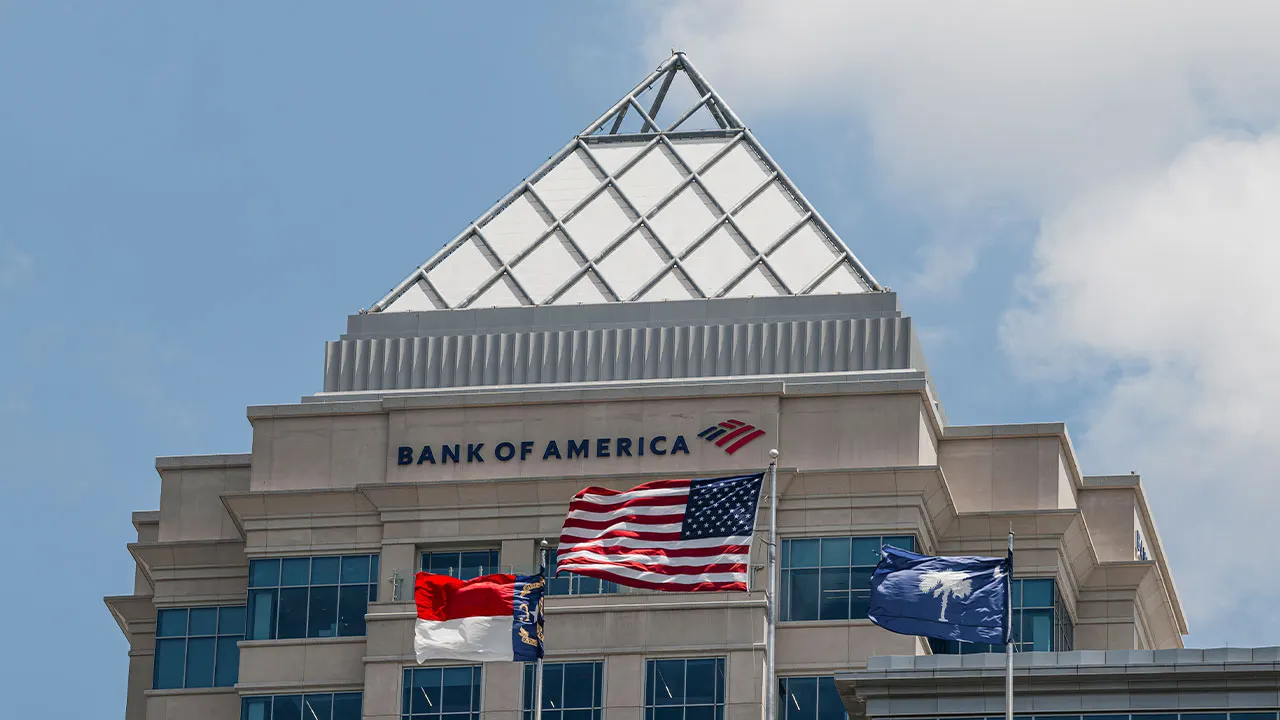
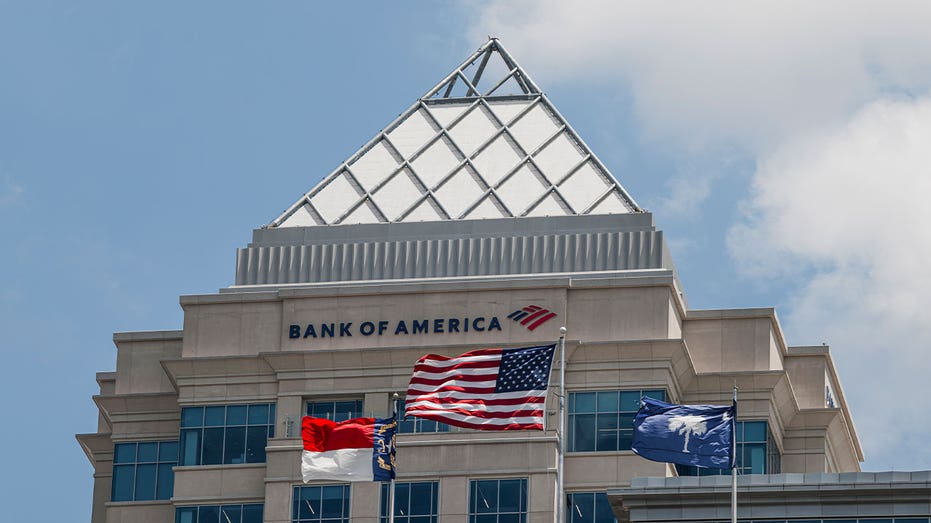
Bank of America signage and an American flag on a building in Charlotte, North Carolina

Bank of America is launching a $250 billion initiative to finance U.S. infrastructure projects spanning data centers, energy, semiconductors and transportation. (Nicolò Campo/LightRocket via Getty Images, File / Getty Images)

“We are proud of our long history supporting the American economy. As America marks its 250th year, this initiative reflects our confidence in the country’s future and the investments that will shape it,” said BofA Co-President Jim DeMare. “The infrastructure that powers our economy, strengthens our energy security and secures our technological leadership will drive growth, create jobs and define America’s next chapter.”

The initiative will target three broad areas: digital infrastructure, energy and power infrastructure, and core infrastructure.

Advertisement

Digital projects can include data centers, computing hardware, chips, telecommunications and semiconductors. Energy investments can include conventional and renewable power generation, energy storage and distribution systems, while core infrastructure can include transportation, electric and energy transmission, grid optimization, water systems, critical minerals and mining.

BOFA CEO BRIAN MOYNIHAN DISMISSES RECESSION FEARS DESPITE WALL STREET’S MOST HAWKISH FED FORECAST

Bank of America

BofA’s initiative will target digital infrastructure, energy and power infrastructure, and core infrastructure. (Davis Turner/Getty Images, File / Getty Images)

Bank of America said investments supported by the initiative could help create tens of thousands of jobs across construction, manufacturing, technology and infrastructure operations.

The bank also pointed to its workforce-development efforts. In 2025, Bank of America invested nearly $40 million in more than 730 workforce-development partners across 97 U.S. markets. Those organizations estimate the funding helped connect more than 90,000 people with employment opportunities and provided more than 290,000 people with access to training, education and career-readiness programs.

Advertisement
Ticker Security Last Change Change %
BAC BANK OF AMERICA CORP. 64.00 +0.14 +0.22%

Bank of America’s Global Capital Solutions and Global Infrastructure & Sustainable Finance teams will lead the initiative, with support from all eight of the company’s lines of business.

CLICK HERE TO GET FOX BUSINESS ON THE GO

The $250 billion target will be measured based on eligible primary-market lending, investing, capital markets and advisory transactions between Jan. 1, 2026, and July 4, 2027. The bank said it will use a methodology consistent with its $1.5 trillion, 10-year sustainable finance goal.

Advertisement
Continue Reading

Business

Tui hit by Middle East travel chaos and rising fuel costs as airline earnings slump

Published

on

Business Live

The world’s largest travel and tourism firm swung to a €17m airline loss

A TUI Airways Boeing 737-800 aircraft approaches Zakynthos International Airport

A TUI Airways Boeing 737-800 aircraft approaches Zakynthos International Airport(Image: Getty)

Tui has reported a fall in earnings at its airlines division as the Iran conflict continues to cause significant disruption to global tourism routes and drive up fuel costs.

Advertisement

The Frankfurt-listed group, the world’s largest travel and tourism company, swung to a €17m loss in its airlines arm in the six months to June, reversing a €50m profit recorded in the same period the previous year.

“This development was driven by weaker demand as a result of geopolitical developments and increased price pressure in a market environment characterised by higher fuel costs and additional capacity on the market,” the group said.

Tui’s airline revenue fell by eight per cent to €4.9bn over the period, although turnover climbed in its hotels, resorts and cruise divisions.

The group’s overall revenue dropped by six per cent to €5.8bn, while its underlying group profit declined 27 per cent year on year to €235m, falling short of analyst expectations of €274m, as reported by City AM.

Advertisement

“The quarter continued to be characterised by a challenging market environment and ongoing geopolitical uncertainties, in particular the war in Iran, economic weakness in Europe’s core markets and consumer caution evident across many sectors,” Tui told shareholders.

The group’s ‘musements’ division, which offers tours and activities, proved a rare bright spot for Tui, recording a nine per cent rise in underlying profit to €22.7m.

Sebastian Ebel, the firm’s chief executive, maintained that Tui has “held its own well in a difficult global environment”. “Wars and geopolitical tensions, consumer caution, economic weakness and rising inflation in Europe’s core markets – all these factors have influenced consumer sentiment and the timing of purchasing decisions,” he added.

Ebel noted that booking behaviour has been “picking up again” over the past few weeks, but acknowledged that holidaymakers are purchasing tickets at the last minute in an attempt to sidestep the travel disruption caused by the Iran war.

Advertisement

Shares in Tui fell by three per cent to €7 in early trading, leaving the stock down 21 per cent since the start of the year.

Derren Nathan, head of equity research at Hargreaves Lansdown, said Tui’s investors “may feel they need a holiday” following Wednesday’s turbulent results.

“The weak quarter adds more pressure for a clean landing in the final stretch of the year, and while the runway still remains relatively wide, management is likely to be buckling up for a tricky approach,” he added.

On Tuesday, Holiday Inn owner Intercontinental Hotels Group (IHG) disclosed that a downturn in revenue across its Middle East operations is weighing on its overall growth.

Advertisement

The hotels group, which also owns the Crowne Plaza and Vignette Collection brands, reported that its revenue per available room declined by 19 per cent year on year in the three months to June.

The FTSE 100 firm informed shareholders that it is contending with “ongoing impacts from the Middle East conflict, including some wider disruption to international travel flows”.

Continue Reading

Business

Sebi sees no manipulation in new CAS despite participation concerns

Published

on

Sebi sees no manipulation in new CAS despite participation concerns
India’s markets regulator has not observed any manipulation in the newly introduced closing auction session that determines closing price levels, the Securities and Exchange Board of India chairman said on Wednesday.

The closing auction is a big ‌market structure ⁠reform ⁠in line with global standards, Tuhin Kanta Pandey said at an event in Mumbai.

“We are considering all inputs to increase ​participation,” Pandey said, adding that any new system requires time to settle and attract more participation.

The ​closing auction is a separate 20-minute ⁠session introduced ‌last week in which exchanges ​collect buy ​and sell orders to determine a ⁠stock’s closing price at a level where the ​maximum volume can be executed.

Advertisement

The mechanism, ​which replaced the previous method of using the average price of trades in the final 30 minutes of regular trading, was introduced to provide a fairer and more transparent closing price ‌and improve execution efficiency for large orders.


The change has raised concerns about thinning participation ​and losses ​for some ⁠market players.
Mutual funds’ participation in the new system has risen from around 5%-6% on the first day to ​about 20%-25% since then, the regulator said.

The reform was needed to reduce tracking error for passive funds, he added.

Continue Reading

Business

New taskforce to help revive Welsh town centres

Published

on

Business Live

The Welsh Government has announced co-chairs for the taskforce

Just six miles from the English border, this market town on the edge of Bannau Brycheiniog (Brecon Beacons) is often considered the gateway to Wales.

Town centre of Abergavenny.(Image: WalesOnline/Rob Browne)

The Welsh Government has announced co-chairs for a new town centre taskforce, alongside £1m of new funding to support regeneration projects in Bangor and Bridgend.

Tamsin Ramasut and Professor Simon Gibson will lead the taskforce, which will provide practical, expert advice on supporting the future of Wales’s town centres. Their appointment delivers on a key Government commitment to establish the taskforce within its first 100 days.

Advertisement

Working with members from business, local government, regeneration, planning, academia and communities, the co-chairs will oversee a programme of work to develop practical recommendations for Welsh Ministers on securing the future of town centres.

Ms Ramasut is an experienced regeneration, placemaking and community engagement practitioner. Through her work with Pont Collective and previous roles, she has supported the delivery of regeneration projects and place-based initiatives across Wales and beyond.

As the founder of the graduate entrepreneurship Alacrity programme and previous leadership roles in Wesley Clover, Ubiquity Software and the Welsh Development Agency (board member,) Prof Gibson helped attract investment, support entrepreneurship and drive business growth across Wales.

The announcement was made during a visit to Welsh Government funded projects in Bangor town centre, where £654,000 for public realm improvements was also confirmed. A further £350,000 has been confirmed to support the future regeneration of the Rhiw Shopping Centre in Bridgend.

Advertisement

Cabinet Minister for Local Government, Housing and Planning, Siân Gwenllian, said: “Town centres remain at the heart of communities across Wales. They are places where people work, access services, spend time with family and friends and take part in civic and cultural life.

“However, they continue to face significant challenges as a result of changing consumer behaviour, economic pressures and the evolving role town centres play in everyday life.

“That’s why we are establishing this taskforce to champion the future of Welsh town centres. It will identify actions to help challenge decline, encourage changes in use to increase footfall, support Welsh businesses, attract investment and strengthen the long-term vitality of towns and city centres.”

Ms Ramasut said: “I’m honoured to co-chair this national task force. Town centres are central to thriving communities-places where people connect, local businesses grow and provide employment and create a sense of belonging. I’m looking forward to working collaboratively to help our town centres thrive across Wales.”

Advertisement

Professor Gibson said: “Our town centres are vital to communities and local economies across Wales, yet they face significant challenges that demand urgent action and fresh thinking.

” I am pleased to co-chair this taskforce, which brings together leaders from across sectors to develop innovative, practical solutions that remove barriers to growth, preserve presence and help create more vibrant, resilient town centres fit for the 21st century.”

Continue Reading

Business

Tata Group Chairman N Chandrasekaran to step down in February

Published

on

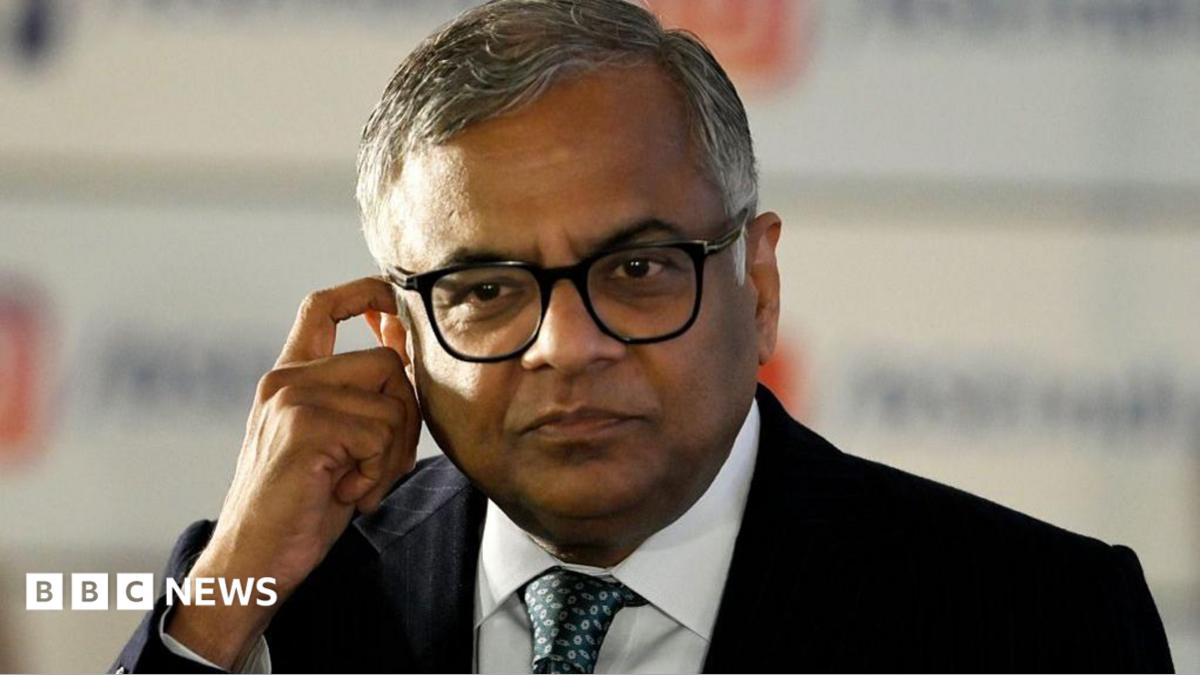
N Chandrasekaran, wearing a dark suit, white shirt and thick-rimmed glasses, touches his ear in this photo taken at the Bombay Stock Exchange in Mumbai, India, on November 12, 2025.

N Chandrasekaran, the chairman of Tata Group, has said that he will not seek reappointment when his term ends in February.

The 63-year-old said the decision came after the board of Tata Sons could not reach a resolution on a five-year extension of his term, months after the proposal first came up.

The news sent shares of listed Tata companies plunging and has led to questions over what lies ahead for the gigantic salt-to-steel conglomerate that owns Air India, Tata Steel and Jaguar Land Rover.

Chandrasekaran’s resignation, which comes days ahead of Tata Sons’ annual general meeting, points to tensions that have been playing out for months after a boardroom power battle erupted between trustees.

Advertisement

The Tata Group is uniquely structured – a charitable arm called Tata Trusts owns 66% of the group’s parent company, Tata Sons. This has given the group tax and regulatory advantages, and allows it to carry out charitable activities, but experts say that its dual non-profit and commercial objectives have sometimes led to governance issues.

Tata Trusts has three nominees on the Tata Sons board. Reports have said that the board members have disagreed over issues such as board nominations, funding approvals and the public listing of Tata Sons. The group has not publicly commented on the discord.

The internal rifts threatened to distract the group while it was facing severe business headwinds including the revival of Air India, which it bought from the Indian government in 2022.

When the proposal for his extension was brought before the board in February, one board member did not support it, Chandrasekaran said in his statement without naming the person.

Advertisement

“In the absence of unanimous support, I chose to defer the decision,” he said, adding that there was no resolution even six months later.

“Tata Sons is a very large institution and there are many strategic projects that are under critical stages of execution. It is not only necessary to have a leader in place to lead the Group beyond Feb 2027, but also clarity on leadership is important for employees, investors, partners and other stakeholders,” he said.

Chandrasekaran was named the group’s chairman in 2017. He replaced the late Cyrus Mistry, whose abrupt removal from the post months earlier had triggered a bitter legal battle.

Before becoming chairman, Chandrasekaran was the CEO and managing director of the group’s high-profile global IT service provider, Tata Consultancy Services. He joined the group in 1987 – a 2017 press release announcing his appointment as chairman described him as a “Tata lifer”.

Advertisement

Ambareesh Baliga, an independent market analyst, said that when a person with Chandrasekaran’s stature stepped down like this, it was inevitable that the markets would react negatively.

“However, they have six months to find a good successor,” he said, adding that he thought it likely that the next leader would be chosen from within the group.

Continue Reading

Business

Earnings call transcript: Scandinavian Astor Group posts record Q2 2026 sales

Published

on


Earnings call transcript: Scandinavian Astor Group posts record Q2 2026 sales

Continue Reading

Business

CAS chaos: Retail traders call for boycott, declare ‘No Trade Day’

Published

on

CAS chaos: Retail traders call for boycott, declare 'No Trade Day'
Several retail traders are allegedly boycotting the stock market today, not trading Indian equities as a mark of protest against the newly introduced Closing Auction Session (CAS) that has triggered panic among investors this month.

Stock exchanges introduced the new CAS system this month, changing the way closing prices are calculated for stocks included in the futures and options (F&O) segment. What followed was strong volatility and a sharp divergence in the benchmark indices’ closing prices.

Several investors took to social media platforms, encouraging others as well to quit trading on Wednesday as a mark of protest against the system, along with the higher securities transaction tax (STT) and changing rules.

“I carried zero positions in indices, won’t take any indices trades or new SSO trades today. Have SSO positions open which I’ll manage if needed. Let’s observe #NoTradingDay today and make it a success,” said an X user named Ashish Gupta, who claims to be a full-time trader.

Advertisement

Several others also took to X to say that they are not trading today. “The decision day has arrived. If you genuinely want Indian traders to prosper, do not take a single trade today. I will not be punching even a single order myself. If the volume and liquidity are actually hurt, it will send a message that retail traders have power and they can also unite against a draconian rule,” another X user wrote.


Some, however, questioned the timing of the boycott, saying that Tuesday or Thursday should have been picked as higher trading on expiry day would have further intensified the impact. Notably, no official stock broker association has yet officially announced any such boycott.

What is CAS?

Under CAS, continuous trading in stocks that also have F&O contracts ends at 3:15 pm. However, this does not mean these stocks are closed for the day 15 minutes before the broader market shuts. From 3:15 pm onwards, these stocks move into the CAS, a 20-minute auction process that runs until 3:35 pm to determine their official closing prices. Meanwhile, stocks that are not part of the F&O segment continue to trade as usual until 3:30 pm.During the 20-minute auction window, buy and sell orders for eligible stocks are collected and matched at a single equilibrium price. This mechanism is aimed at improving price discovery and reducing the impact of last-minute trades on closing prices.

Also read | Old strategies buried alive: How CAS hit Dalal Street traders

Initial teething issues or flaws?

While panic prevails on Dalal Street, some analysts pointed out that these are initial teething issues that will gradually fade away. SEBI officials during their meetings with market players said that the new system is just facing teething issues in its early days and that the regulator remains confident it will improve as participation rises.

Advertisement

Vinod Nair, Head of Research at Geojit Investments, said the gap between the 3:30 pm and 3:40 pm closing prices of Nifty stocks and the index, along with the divergence with the Sensex, suggested that the new system was not functioning as intended. “This has triggered forced square-offs of positions, particularly among retail investors, ahead of the 15 minute blind derivatives window closing session,” he said.

Nair said these appeared to be initial teething issues and that exchanges and the market regulator need to address the discrepancies. He added that the impact was currently limited to the F&O segment of trading stocks and main indices.

“Since it has only been a few days, it is difficult to make a judgement call on the new methodology as the market takes time to adapt,” Reuters quoted Raj Deepak Singh, vice president of derivatives and quantitative research at ICICI Direct, as saying.

Also read | CAS is here to stay: SEBI confident that Closing Auction Session will improve as participation rises, despite market-wide confusion

Advertisement

(With inputs from agencies)

(Disclaimer: Recommendations, suggestions, views and opinions given by the experts are their own. These do not represent the views of The Economic Times)

Continue Reading

Business

William Catlett on Building a Career Around Protecting People’s Rights

Published

on

William Catlett on Building a Career Around Protecting People's Rights

William Catlett is the founder of William A. Catlett, L.L.C., a St. Louis-based law practice that has served individuals and families for more than three decades.

Licensed to practise law in Missouri, Illinois and Kansas, he has built a career helping clients through complex legal matters including family law, bankruptcy, guardianships, probate administration, criminal defence and mental illness proceedings.

After earning his Juris Doctor from Saint Louis University School of Law, Catlett began his legal career as an associate attorney and opened his own practice in 1997. Throughout his career, he has focused on protecting clients’ rights while helping them understand the legal process. His approach is centred on clear communication, practical advice, and careful preparation rather than unnecessary complexity.

Beyond private practice, Catlett has served in several public-facing legal roles. He is regularly appointed to represent individuals in involuntary commitment and guardianship proceedings throughout the St. Louis area. Since 2017, he has also served as a Court Testimonial Trainer for resident physicians at major hospitals, helping medical professionals prepare to give effective evidence during court proceedings.

His broad experience extends beyond the courtroom. William Catlett was formerly licensed as both a title agent and a real estate broker, giving him additional insight into property and financial matters that often intersect with legal disputes.

Advertisement

Throughout his career, Catlett has remained guided by one principle: every client deserves honesty, transparency, and an advocate who places their interests first. His commitment to protecting legal rights and finding practical solutions has earned him a reputation as a trusted leader within Missouri’s legal community.

What first inspired you to pursue a career in law?

I’ve always been interested in solving problems that have a real impact on people’s lives. Law allows you to help someone through situations that are often stressful and uncertain. From the beginning, I wanted to build a career where I could guide people through those challenges while making sure their rights were protected.

How did your career develop after law school?

Advertisement

Prior to graduating from Saint Louis University School of Law, I was a law clerk at the City of St. Louis Circuit Attorney’s Office.  Following graduation, I worked with a private law firm as an associate attorney. Those early experiences allowed me to see the legal system from different perspectives before becoming an associate attorney. In 1997, I opened my own practice, and that allowed me to build the kind of law firm I had always envisioned.

Many attorneys focus on one area of law. Why did you choose such a broad practice?

Life doesn’t fit neatly into legal categories. Someone going through a divorce may also be dealing with financial difficulties. A guardianship matter might involve probate issues. Real estate questions can arise during family disputes. I wanted to understand how these areas connect so I could look at the whole picture instead of treating each legal issue in isolation.

Your practice includes guardianships and involuntary commitment proceedings. What have those experiences taught you?

Advertisement

Those cases remind you how significant the legal system can be in someone’s life. You’re often dealing with questions about personal liberty, family relationships and long-term wellbeing. They require careful preparation because every decision can have lasting consequences. That responsibility has reinforced the importance of listening carefully, communicating clearly and paying close attention to the facts.

You also train physicians to testify in court. How did that opportunity come about?

Over time, my work in mental illness proceedings led to opportunities to work more closely with medical professionals. Since 2017, I’ve served as a Court Testimonial Trainer for resident physicians. My role is to help them understand what to expect when they testify and how to communicate medical information clearly in a courtroom. It’s rewarding because effective testimony helps judges make informed decisions.

What do clients value most when working with an attorney?

Advertisement

I believe they want honesty. Most people aren’t looking for complicated legal language. They want someone who will explain the process, answer their questions and give them realistic expectations. I always try to speak with clients in plain language instead of talking over their heads.

You’ve been practising for more than three decades. What has stayed consistent throughout your career?

My priorities haven’t changed very much. My job is to protect my client’s interests while helping them understand the legal process. Every case is different, but that responsibility stays the same whether I’m handling a family law matter, a bankruptcy case or a guardianship proceeding.

How has your experience outside traditional legal practice influenced your work?

Advertisement

Earlier in my career, I was also licensed as a title agent and a real estate broker in Missouri and Illinois. That experience gave me a broader understanding of property transactions and financial matters that often appear in legal disputes. Having that background allows me to recognise issues that someone with a narrower focus might overlook.

What do you think defines good leadership in the legal profession?

Leadership starts with responsibility. Clients trust you with some of the most important situations they’ll ever face. That means being prepared, communicating openly and putting their interests ahead of your own. Experience is valuable, but integrity is what earns trust over time.

After more than thirty years, what continues to motivate you?

Advertisement

Every client comes to you with a different story. Even after all these years, no two cases are exactly alike. I still enjoy helping people understand their options and working towards practical solutions. Success isn’t about winning every argument. It’s about achieving the best possible outcome for the client while making sure the legal system respects their rights.


Advertisement
Continue Reading

Business

Deutsche Konsum Q3 2026 slides: FFO surges amid restructuring

Published

on


Deutsche Konsum Q3 2026 slides: FFO surges amid restructuring

Continue Reading

Business

Bristol ‘flying taxi’ maker Vertical Aerospace lands $100m and plans UK production facility

Published

on

Business Live

The company is leading the race to develop an all-electric vertical take-off and landing (EVTOL) aircraft

'Flying taxi' takes to UK skies for first time

Vertical Aerospace’s UK VX4 aircraft(Image: Vertical Aerospace)

A Bristol-based company working to develop a ‘flying taxi’ has secured a fresh $100m cash injection. Vertical Aerospace said it would use the finance package to carry out a design review, open a new energy centre for battery production and retrofit the firm’s third prototype for hybrid-electric flight testing in the first half of 2027.

The New York-listed company is also planning to fund a production facility in the UK in future.

Advertisement

The finance package included $40m from US-based Mudrick Capital Management and a $25m issuance from Yorkville Advisors – two major current stakeholders – as well as a $35m equity investment from new and existing investors.

It is understood the deal is being managed by bankers at Jefferies.

Stuart Simpson, chief executive of Vertical Aerospace, said: “We are focused on converting operational progress and partner engagement into continued advancement of our certification and commercialisation strategy.

“The support, reflected in these financings via new investors alongside further commitments from existing investors, demonstrates strong confidence in Vertical’s market position and progress, providing near-term flexibility to execute the next phase of our plan.”

Advertisement

Vertical Aerospace was set up by Ovo Energy founder Stephen Fitzpatrick a decade ago and is based on Chapel St in Bristol. The business floated on the New York Stock Exchange in 2021 and is leading the race to develop an all-electric vertical take-off and landing (EVTOL) aircraft.

The latest injection of capital follows a period of operational and commercial momentum for the company which earlier this year became only the second firm of its kind to complete a piloted transition flight in a full-scale tiltrotor eVTOL.

In July, Vertical also carried out a number of demonstrations at Farnborough Air Show, including the first public piloted eVTOL flight, showcasing how its aircraft will operate in real-world environments.

Last year, the company said its aircraft could be ready for commercial use by 2028 if it secured financing. Vertical is planning to build a factory at Cotswold Airport, near Kemble in Gloucestershire, next to its existing flight test centre.

Advertisement

The business is already in advanced discussions with the UK government about a grant worth up to £10m to support the development of production facilities in Britain. It said this week it had also received “confirmed interest” from the Ministry of Defence in its hybrid-electric and autonomous capabilities.

Continue Reading

Trending

Copyright © 2025