
Business
How to play tennis, football and cricket without paying


Football – with the men’s World Cup currently giving it unrivalled prominence – is often held up as a mass participation sport because it is so cheap to play.
However, the well-versed ball and jumpers for goalposts claims may ignore the cost to families of kit, club fees and transport to matches.
Tennis has faced a more complex reputation, with some considering it to have been an elitist sport.
But anyone wanting to try tennis, without the costs of hiring a court or any of the equipment, can attend free sessions – often on Saturday mornings – as part of a Lawn Tennis Association scheme.
Anyone can search for a park near you running the sessions, external, although not every area of the UK is covered.
Beyond tennis, there are a host of leisure centres which offer free fitness class taster sessions, external.
Cricket is another high-profile summer sport. The Chance to Shine charity runs hundreds of free street cricket sessions, external around the country throughout the year – often within walking distance of children living in poorer areas.
British Blind Sport runs Have a Go days, external for people with sight loss to try out sports ranging from rugby to rowing for free.
Parkrun has become a hugely popular free running and walking, external activity across the UK.
There is no centralised database for free sports activities, but lots of campaigns are designed to get people moving to help their physical and mental health.
They include Every Body Moves, external for people with disabilities, regional schemes such as London Sport Get Active, external, and the This Girl Can, external campaign.
Sport England also invests in the Active Partnerships network, external, which boosts free sporting and exercise activities in different areas.
On a local level, charity-run possibilities range from free table tennis sessions in Brighton, external to street dance in Blackpool, external.


Wordle players tackling Saturday’s puzzle can find help here, with hints and the full solution for game number 1,869, the daily word puzzle from The New York Times.
The word puzzle, which challenges players to guess a five-letter word within six attempts, has remained one of the most consistently popular daily games since its rise to viral popularity in 2022. Saturday’s puzzle proved moderately challenging for most solvers, according to data from the New York Times’ WordleBot, which tracks how the average player performs each day. WordleBot recorded an average completion time of 4.3 moves in easy mode and 4.2 moves in hard mode for Saturday’s puzzle, figures that place it toward the trickier end of the recent difficulty range.
For players looking for hints before jumping straight to the answer, several clues can help narrow down the possibilities without giving the solution away entirely. The word describes something commonly found on city streets in late winter, appearing in the window between the season’s last snowfall and the first genuinely warm day. It refers to a wet, partially melted mixture of snow, ice or watery mud, the kind of grayish, soggy residue left behind on roads and sidewalks as a hard freeze begins to thaw.
Structurally, today’s word contains only one vowel among its five letters, and that vowel is “U.” The word features one repeated letter and does not include any of the five most commonly used letters across the full archive of past Wordle answers. The word begins with the letter “S” and ends with the letter “H.” For those wanting one final hint before the reveal, the word can also describe something overly sentimental to the point of being cloying, a secondary meaning distinct from its more literal, weather-related definition.
Today’s Wordle answer is SLUSH.
Slush most commonly refers to partially melted snow, or snow mixed with rain and water, forming the grayish, wet residue commonly seen on roads and pavements during the transition between winter and early spring. The word also carries a well-known secondary meaning tied to finance and politics: a “slush fund” refers to money used outside of normal accounting channels, often for informal, discretionary or covert purposes. That usage traces its etymology back to ship galleys, where “slush” originally referred to fat or grease skimmed off boiled meat, which sailors would later sell for personal profit, a practice that eventually lent its name to the modern concept of an off-the-books fund.
Puzzle strategy writers who cover Wordle daily flagged Saturday’s solve as harder than it might first appear, largely because of a specific rhyme trap embedded in the puzzle’s structure. One breakdown described how players who correctly identified the “_LUSH” pattern early in their solve still faced a genuine challenge choosing among several plausible candidates, including BLUSH, FLUSH and PLUSH, before narrowing in on the correct answer of SLUSH. That kind of overlapping word family, where multiple valid English words share an identical four-letter ending, has repeatedly proven to be one of the more common sources of difficulty across Wordle’s history, since strong initial guesses can still leave several equally plausible final answers in play heading into the last one or two attempts.
Wordle strategy guides commonly recommend a systematic approach for players working through the daily puzzle: begin with an opening word that tests several common vowels and consonants simultaneously, then use the resulting feedback, letters marked in green for correct placement, yellow for correct letters in the wrong position, and gray for letters not present in the word at all, to progressively eliminate incorrect possibilities across subsequent guesses. For puzzles involving a rhyming word family like Saturday’s, strategy writers specifically recommend testing multiple candidate consonants in a single guess where possible, rather than guessing full candidate words one at a time, to more efficiently narrow the field before the attempt limit is reached.
Wordle, originally created by software engineer Josh Wardle before being acquired by The New York Times in 2022, has remained one of the most popular daily word games worldwide, spawning a broader ecosystem of related puzzles now published by the Times, including Connections, Connections: Sports Edition, Strands and the Mini Crossword, all of which are typically released and refreshed at the same time each day alongside the main Wordle puzzle.
Players looking to maintain their daily Wordle streak, a feature the game uses to track consecutive days of play, can find Saturday’s puzzle and previous archived puzzles through the official Wordle website. The New York Times also continues to publish daily hints and strategy guidance across its games section for players seeking assistance without immediately revealing the day’s answer outright, a resource that has become a regular part of many players’ daily puzzle-solving routine, particularly on days like Saturday when a hidden rhyme pattern adds an extra layer of difficulty to an otherwise standard five-letter solve.

Fans of The New York Times’ daily word-grouping puzzle can find help here for Saturday’s edition, with hints and the complete solution for Connections game number 1,147.
Connections challenges players to sort 16 seemingly unrelated words into four groups of four, with each group sharing a hidden connection. The puzzle ranks its four categories by difficulty using a color system, from yellow, the most straightforward, through green and blue, up to purple, generally the trickiest and most conceptually layered grouping of the day. Saturday’s puzzle blended everyday household objects, film industry knowledge, technical machining terminology and clever wordplay, according to coverage from multiple outlets that track the daily game.
Saturday’s 16 words, presented here in alphabetical order so as not to give away any grouping, are: BALE, BORE, BOULEVARD, BUNDLE, COMFORTER, COUNTERSINK, DRILL, JORDAN, LOAFER, PHOENIX, REAM, ROLLS-ROYCE, SHAM, SHEET, THROW and WALTZ.
Players looking for hints before jumping to the full answer can use the following category descriptions to narrow their thinking. One group gathers items commonly associated with a made bed. A second group brings together surnames belonging to actors who have won an Academy Award sometime since 2010. A third group consists of technical terms describing different ways of creating or finishing a hole in a piece of material. The fourth and typically most conceptually layered group involves words that each begin with a term describing a shape or type of bread.
For those ready for the complete solution, here are Saturday’s four groups and their associated words.
The yellow category, the most straightforward grouping of the day, gathers items associated with bedding: COMFORTER, SHAM, SHEET and THROW. Each word describes a common item found on or around a made bed, from the sheet laid closest to the mattress to the decorative throw sometimes draped across the foot of the bed.
The green category brings together the surnames of actors who have won an Academy Award since 2010: BALE, JORDAN, PHOENIX and WALTZ. The grouping references Christian Bale, who won the Oscar for best supporting actor in 2011 for “The Fighter”; Christoph Waltz, who won the same award in both 2010 and 2013; and Joaquin Phoenix, who won best actor in 2020 for “Joker.”
The blue category, built around technical machining terminology, includes BORE, COUNTERSINK, DRILL and REAM. Each word describes a distinct method used in metalworking and manufacturing to create, enlarge or finish a hole in a workpiece, from the initial drilling of a hole to reaming it for precision and countersinking its edge to seat a fastener flush with the surface.
The purple category, generally the most difficult grouping of the day, gathers words that each begin with a term for a bread shape: BOULEVARD, BUNDLE, LOAFER and ROLLS-ROYCE. The wordplay hides “boule,” a round loaf of bread, at the start of BOULEVARD; “bun” at the start of BUNDLE; “loaf” at the start of LOAFER; and “roll” at the start of ROLLS-ROYCE, a construction that likely proved the most challenging for many solvers given how thoroughly each longer word obscures its hidden bread reference.
Puzzle strategy guides commonly advise players to begin with the category they feel most confident about, since locking in an easier group early can help clarify which words remain for the trickier, wordplay-driven categories later in a solve. Guides covering Saturday’s puzzle specifically noted that the overlap between everyday words like LOAFER and BUNDLE, which could plausibly seem to belong to several different categories before the underlying bread-shape pattern became clear, made careful elimination especially important for maintaining an unbroken solve streak.
Connections remains one of several daily word games published by The New York Times, joining Wordle, Strands, the Mini Crossword and the newer Connections: Sports Edition, a themed spinoff applying the same grouping format to sports-related terminology. All of the Times’ daily puzzle offerings typically reset at midnight local time, giving players a fresh challenge to tackle each day.
Players hoping to protect an ongoing daily streak, a feature Connections uses to track consecutive days of successful puzzle completion, can access Saturday’s puzzle, along with archived puzzles from previous days, directly through the New York Times Games platform. For solvers who become stuck without wanting to reveal the full solution immediately, the Times and various puzzle-focused outlets typically offer tiered levels of hints, ranging from broad category descriptions to more specific clues, before revealing the complete answer for those who have exhausted their guesses or simply prefer to check their work against Saturday’s finished grid.
The Gujarat-based chemical maker had posted a net profit of Rs 144.78 crore a year earlier, it said in a regulatory filing.
Total income fell 3.06 per cent to Rs 798.01 crore from Rs 823.19 crore a year earlier, while total expenses declined to Rs 594.10 crore from Rs 627.96 crore.
“Our performance in Q1 FY27 demonstrates sustained resilience against a volatile global geopolitical backdrop,” GHCL Managing Director R S Jalan said.
The global soda ash market continues to face volatility and shipping disruptions, with stable underlying demand offset by surplus supply, Jalan said.

Better operational execution, improved realisations and lower input costs lifted margins during the quarter, he said.
He cautioned that an ongoing global conflict was likely to push up energy and raw material costs, which would weigh on margins as the year progresses. “We have stayed focused on cost discipline and operational efficiency through what continues to be a demanding environment,” Jalan said.
The company’s Bromine and Vacuum Salt projects are in advanced stages of commissioning and are expected to begin commercial operations in the second quarter of FY27, Jalan said, adding that its greenfield soda ash project was progressing slowly.
Jalan said long-term fundamentals for the soda ash industry remained positive, citing domestic demand from the detergent and glass sectors as well as emerging demand from the renewable energy industry.
GHCL operates a soda ash plant at Sutrapada in Gujarat with an installed capacity of 1.2 million tonnes per annum. Soda ash, or anhydrous sodium carbonate, is a key raw material for the detergent and glass industries, as well as for solar glass and lithium batteries.
Business
LeBron James May Commute From New York to Philadelphia by Helicopter, Reports Say, as 76ers Debut Nears
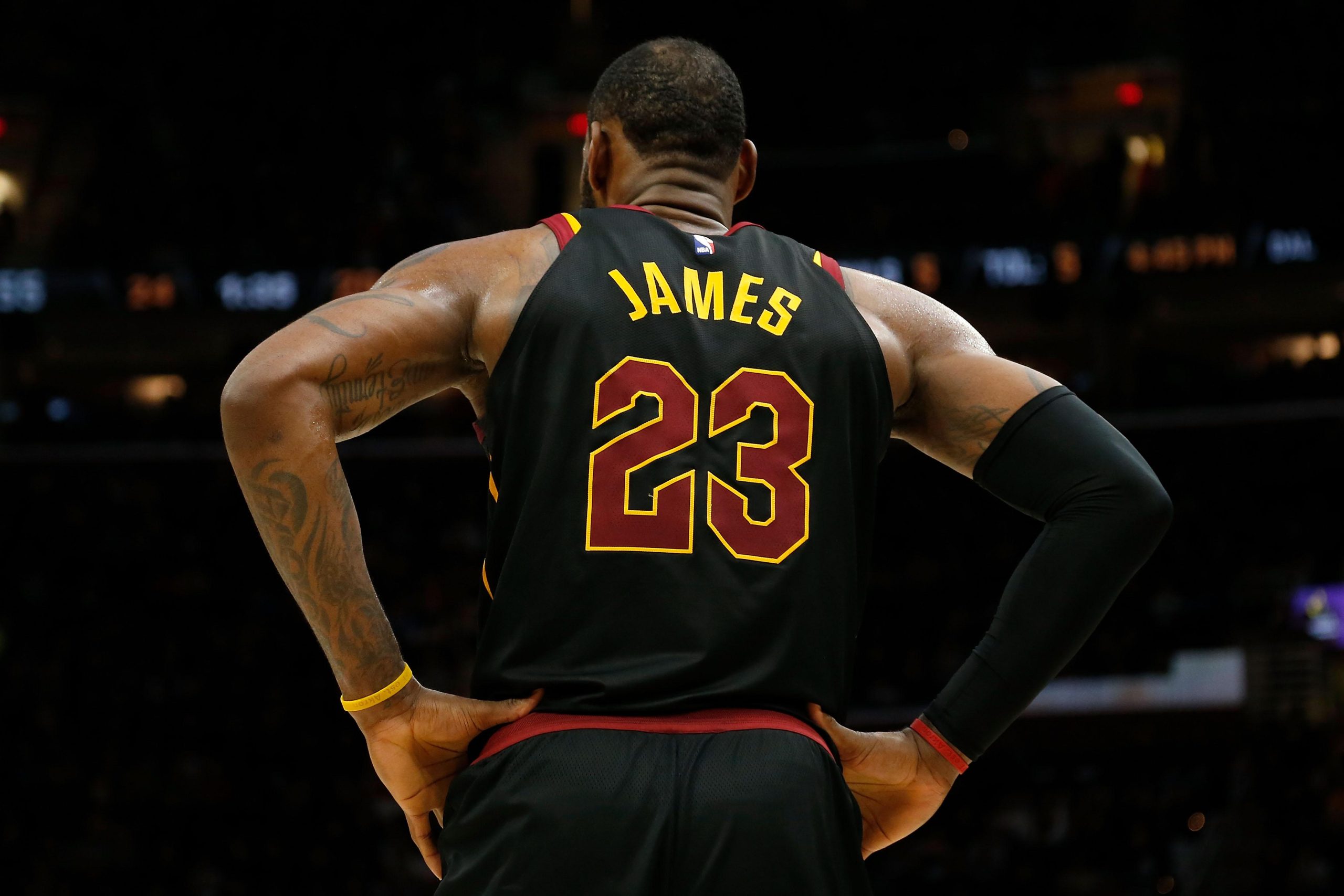
LeBron James may not actually live in Philadelphia despite signing with the 76ers last week, according to multiple reports, with the four-time NBA champion instead reportedly considering a plan to reside in New York City and commute roughly 100 miles to Philadelphia by helicopter for games and practices.
According to a report from The New York Times, James could travel via helicopter to Xfinity Mobile Arena in Philadelphia or to the team’s practice facility in Camden, New Jersey, just across the Delaware River from the city. The trip by helicopter would take approximately 45 minutes, according to the report. James has not publicly commented on his living arrangements, and a league source who spoke to the Times on condition of anonymity, because the person was not authorized to speak publicly, said his plans have not yet been finalized.
Any such commute would likely face regulatory and logistical hurdles specific to New York City. The city has maintained a conservative policy toward rooftop helipads since 1977, when a helicopter tipped over while attempting to land atop the MetLife Building in Midtown Manhattan, according to the Times. Some rooftop helipads remain in the city, but they are largely restricted to hospital or police use rather than commercial or private commercial trips. New York Mayor Zohran Mamdani, while campaigning for office, called for further restrictions on air travel, saying last April that “we must end non-essential helicopter flights immediately,” though he has not yet changed the city’s existing helicopter policies since taking office.
Weather conditions would also factor heavily into the feasibility of a regular helicopter commute along the route. Fog is common in the New York-to-Philadelphia corridor, particularly during morning hours, and visibility remains the most common reason for helicopter flight delays or cancellations, according to the Times report. Other NBA players have previously used helicopters to commute to games, including former Los Angeles Clippers wing Kawhi Leonard, who commuted from San Diego, and the late Kobe Bryant, who traveled by helicopter from his home in Orange County, California, to Los Angeles Lakers games. Both of those routes, however, benefited from the generally clearer skies of Southern California, a contrast the Times report specifically noted when raising questions about the reliability of a similar arrangement in the Northeast.
James’s move to Philadelphia has continued generating reaction across the league in the days since it became official. Miami Heat forward Dillon Brooks offered a pointed take on James’s motivations when asked by streamer N3on about the signing, according to HoopsHype. “He’s trying everything he can to get another ring and get more footage for his Last Dance documentary,” Brooks said, a reference to earlier reporting that James is planning an ESPN documentary chronicling his time with the 76ers, similar in format to Michael Jordan’s “The Last Dance.”
Portland Trail Blazers guard Anfernee Simons described his own reaction to learning of James’s decision in comments captured on YouTube. “I mean obviously you see everything that’s going on like in the media and stuff so you see like that you know, LeBron could potentially go there and you know, to me I gotta see it to believe it,” Simons said. “So, I forgot what I was doing. I might have been working out or actually I woke up. I just woke up and I saw the news and I was like, ‘Dang, this is crazy.’”
Beyond player reaction, James’s arrival in Philadelphia carries significant financial implications for the franchise. The 76ers’ jersey patch sponsorship deal with Crypto.com, first announced in 2021 as a six-year agreement reportedly worth more than $10 million annually, is set to expire at the end of the 2026-27 NBA season, according to Front Office Sports. Sports business consultant Ian Cropp, who runs the consultancy 575 Partners, said James’s presence with the team could dramatically increase the value of that sponsorship once it comes up for renewal. “It’s a huge deal to have him there from a sponsorship perspective,” Cropp told Front Office Sports. “I know he’s not quite [Lionel] Messi going to Inter Miami in terms of his ability to win games single-handedly, but from a global star power perspective it’s on par.” Cropp added that James’s star power could widen the pool of companies interested in bidding for the patch, potentially drawing interest from international firms and sectors that have not traditionally pursued NBA jersey sponsorships. The Golden State Warriors currently hold the league’s most lucrative patch deal, reportedly worth more than $50 million annually from an artificial intelligence company.
James’s free agency process itself generated unusual complications for reporters covering the story. Veteran NBA reporter Sam Amick described being targeted by a sophisticated impersonation scheme in the weeks before James’s decision became public. “I got catfished from a reporting standpoint and it was pretty wild,” Amick said, according to comments captured on YouTube. “Somebody gets your number, and I’m assuming maybe they used AI to write some of it, a pretty compelling text message, claiming that they were somebody else who I knew but didn’t know all that well.” Amick clarified that despite the message referencing Philadelphia, it did not represent a genuine early tip about James’s eventual decision. “It was a total scam,” Amick said.
With James’s exact living and travel arrangements still unresolved and training camp approaching, further details about how he plans to balance his new team commitments in Philadelphia with any potential residence elsewhere are expected to emerge in the coming weeks as the 76ers prepare for the start of the regular season.
Business
Will SpaceX paint its rocket pink? Investor questions go beyond Moon and Mars ahead of first results

Will SpaceX paint its rocket pink? Investor questions go beyond Moon and Mars ahead of first results
Business
F&O Talk: Nifty lacks direction on charts, says Sudeep Shah; outlines Bajaj Finance, Eternal strategy after Q1

Sensex rose 166.5 points to close at 78,095, while the Nifty 50 gained over 66 points to end the session at 24,384. Broader markets also remained in the green, with the Nifty Midcap 100 and Nifty Smallcap 100 indices rising more than 0.4%.
Analyst Sudeep Shah, Vice President and Head of Technical & Derivatives Research at SBI Securities, interacted with ETMarkets regarding the outlook for the Nifty and bank, as well as an index strategy for the upcoming week. The following are the edited excerpts from his chat:
Nifty has rebounded almost 3% this week. What is your view on Nifty going forward?
Over the past 15 weeks, the benchmark Nifty has remained range-bound, oscillating between 24,601 and 23,070. This trading range has narrowed further over the last seven weeks, with the index confined within a tighter band of 24,530-23,605, reflecting a lack of strong conviction from both bulls and bears. Despite this prolonged consolidation, recent price action hints that the balance may be shifting.
Over the last six trading sessions, the index has staged a sharp recovery of more than 760 points, enabling it to end the month with gains of over 2% while closing near the upper end of its consolidation range. The rebound was primarily driven by heavyweights, with large-cap stocks leading the market higher. Notably, Nifty has formed candles with shadows on both sides for four consecutive months, underscoring the prevailing market indecision. So, what do the technical indicators suggest about the market’s next move?
From a technical perspective, the index is currently trading above its 20, 50, and 100-day EMA levels, while hovering around its 200-day EMA. On the weekly chart, all major moving averages remain largely flat, indicating the absence of a sustained trend. Momentum indicators and oscillators on both the daily and weekly timeframes also continue to signal a sideways bias. With the setup approaching a critical juncture, the next few levels are likely to decide the market’s direction.
Going forward, the 24,550-24,600 zone is expected to act as a crucial resistance area, as it coincides with previous swing highs. A decisive breakout above 24,600 could pave the way for a rally towards 24,900, with the potential to extend further to 25,200 in the near term. On the downside, the 24,150-24,100 zone is likely to provide strong support, and holding above this region will be crucial for maintaining the positive bias.
IT index jumped a staggering 7% this week. How are charts looking and what’s the strategy for stocks in the sector?
Nifty IT has staged a strong recovery, rallying nearly 18.5% from its July 1 low of 25,699. While the index recently faced resistance near its 200-day EMA and witnessed some profit booking, the broader technical structure has improved considerably.The index has reclaimed its 20-week EMA for the first time since January 2026, indicating a meaningful improvement in the medium-term trend. Additionally, the MACD remains in a bullish crossover with rising green histogram bars, reflecting upward momentum.
The 29,800–29,750 zone is expected to act as immediate support. As long as the index sustains above this zone, the ongoing pullback is likely to extend towards higher levels.
Within the IT space, Persistent Systems, HCLTech, Tech Mahindra, and Coforge continue to display strong price structures and are well placed to extend their recovery, provided they hold above their respective support zones.
Any inputs on the Seasonality front, are there any interesting observations pertaining to the Market Trend over the last 10 years?
The Sensex has exhibited a relatively mixed performance during the month of August over the last 11 years. The index has ended the month in positive territory in 6 out of 11 years, delivering an average gain of 3.42%, while it has closed in the red on 5 occasions, with an average decline of 2.71%. Notably, in 2 of the last 3 years, namely 2023 and 2025, the Sensex ended August with losses of 2.55% and 1.69%, respectively.
Nifty’s performance has largely mirrored that of the Sensex. Over the last 11 years, the index has ended August higher in 6 years, posting an average gain of 3.46%, while it has recorded negative returns in 5 years, with an average loss of 2.58%. Similar to the Sensex, Nifty ended August in the red in 2023 and 2025, declining by 2.53% and 1.38%, respectively.
Historically, the FMCG sector has demonstrated favorable seasonality during August. Based on the last 20 years of historical data, the FMCG index has ended the month in positive territory in 13 out of 20 years, delivering an average gain of 2.84%. Since the post-COVID recovery period, the sector has witnessed only one negative August performance, falling 2.93% in August 2023, while ending the month in the green in all other years.
The PSE sector has also exhibited strong long-term August seasonality, ending the month higher in 12 out of the last 20 years with an average gain of 3.07%. However, recent trends have been less encouraging, with the index closing August in negative territory in each of the last three years, registering an average decline of 2.52% during this period.
The Auto sector has historically been one of the strongest performers during August. The index has ended the month in the green in 12 out of the last 20 years, generating an average gain of 5.30%. From a technical perspective, the index gave a 25,296-27,761 consolidation breakout on the daily timeframe. Given the sector’s historically favorable August seasonality, a sustained move above the upper end of the consolidation range could potentially trigger a fresh leg of the uptrend and pave the way for further upside in the coming month.
The IT sector has also displayed robust August seasonality. Over the last 20 years, the index has ended the month in positive territory in 12 instances, delivering an average gain of 5.87%. More recently, the index generated gains of over 4% in August 2023 and August 2024, while recording only a modest decline of 0.34% in August 2025. From a technical standpoint, the Nifty IT Index has rebounded nearly 18.5% from its low of 25,699 recorded on 1 July, indicating improving sentiment within the sector. If historical seasonality trends continue to play out, the ongoing recovery could extend further, allowing the index to build on its recent gains and outperform during the upcoming month.
What is the options data indicating about Nifty’s near-term trading range, and where are the key Call and Put positions building up?
Nifty has rebounded 778 points from its July 24 low of 23,606. Encouragingly, the index closed marginally above its 200-day EMA for the first time since July 6, indicating an improvement in the near-term technical structure.
From a broader perspective, however, Nifty continues to trade within the 24,531–23,606 range. Notably, the index had failed to sustain above its 200-day EMA on July 7, triggering a corrective decline. Therefore, the 24,550–24,600 zone remains a crucial hurdle on the upside.
The options data reinforces this view. The 24,600 strike has witnessed aggressive Call writing, with Call additions nearly 16 times higher than Put writing, making it a strong resistance zone. A decisive breakout above 24,600 could trigger fresh short covering, paving the way for further upside.
On the downside, the 24,000 strike holds the highest Put Open Interest, with Put writing nearly nine times higher than Call writing. This makes 24,000 a strong support level. However, a sustained breach below this mark could force Put writers to unwind their positions, potentially accelerating the downside move.
What are some stocks that are looking good for the week ahead?
Technically, Chola Finance, Paytm, Motherson, Torrent Pharma and Siemens are looking good.
What’s your strategy for Eternal, Vedanta, Adani Ports, Bajaj Finance, and Infosys?
Eternal:
Eternal gave a consolidation breakout on July 28 and has also closed above the previous three weeks’ high, reinforcing the bullish setup. The stock is trading above all key short and long-term moving averages, while the weekly RSI continues to trend higher, indicating strengthening momentum. The Rs 290–285 zone, which coincides with the 20-day EMA, is expected to act as a strong support. The bullish bias is likely to remain intact as long as the stock holds above this support.
Vedanta:
Vedanta is consolidating within a Rs 270–259 range, with the stock oscillating between its 20-day and 200-day EMAs, reflecting a lack of clear directional bias. The MACD has flattened and remains below the zero line, indicating a sideways trend. A decisive breakout above Rs 270 or a breakdown below Rs 259 is likely to provide the next directional move.
Adani Ports:
Adani Ports has broken below an upward-sloping trendline support on the daily chart and has since drifted lower. The stock has also slipped below its 100-day EMA, while the RSI continues to trend lower, reflecting weakening momentum. The rising ADX suggests that the prevailing downtrend is gaining strength. As long as the stock trades below the Rs 1,775–1,780 zone, the bearish bias is likely to persist.
Bajaj Finance:
Bajaj Finance retested its 20-day EMA and witnessed a strong rebound, reaffirming the underlying bullish trend. Earlier, the stock had broken above a downward-sloping trendline resistance on July 1, followed by a healthy rally and a successful retest of the breakout zone, which has now turned into a strong support.
The RSI has turned higher after consolidating around the 60 mark, signalling a revival in bullish momentum. At the same time, the DI+ remains well above DI-, highlighting strong buying interest. The stock is also trading above the upper Bollinger Band, a characteristic often seen during strong trending phases.
Adding to the positive outlook, the Bajaj Finance/Nifty Financial Services ratio chart has broken above a downward-sloping trendline on the weekly timeframe, indicating the stock is well placed to outperform its benchmark in the near term. The Rs 1,075–1,070 zone is expected to act as a strong support, and the bullish bias is likely to remain intact as long as this level holds.
Infosys:
Infosys faced stiff resistance near its 100-day EMA and ended the session lower. Despite recovering more than 10% from its July 24 low of Rs 1,014, the stock has struggled to sustain higher levels. The RSI has slipped below the 60 mark, indicating a pause in bullish momentum. The Rs 1,170–1,175 zone remains the immediate resistance, and a decisive breakout above this range could trigger a further extension of the ongoing pullback.

The Indian central securities depository’s revenue from operations meanwhile increased more than 13% YoY to Rs 293 crore during the quarter under review, from Rs 259 crore reported in the year-ago period
CDSL’s total income rose over 15% YoY to Rs 340 crore, while total expenses increased over 21% YoY to Rs 174 crore during the first quarter of the ongoing financial year.
CDSL became the first depository to register over 18.59 crore demat accounts as on June 30, 2026, extending the trajectory from 15.86 crore accounts at the same time last year, with the opening of nearly 58 lakh new demat accounts during the first quarter of FY27, the company said. It added that it completed an investment of Rs 1 crore for a 2% stake in Sahamati Foundation, an RBI-recognised self-regulatory organisation for the account aggregator ecosystem.
Speaking about the company’s performance, CDSL MD and CEO Nehal Vora said the quarter reflects CDSL’s continued focus on building scale and depth of leadership. “We remain committed to deepening investor education through initiatives such as Amar Chitra Katha, which make market awareness more accessible, relatable, and engaging. As India’s securities market continues to deepen, our responsibility is to support our Depository Participants and Issuer ecosystem in serving investors better, and in doing so, contribute to a more sustainable, inclusive, and trusted market infrastructure,” the executive added.
Also read | Divi’s Labs Q1 Results: Net profit rises 66% YoY to Rs 902 crore, revenue up 28%
CDSL share price
CDSL shares closed with marginal losses at Rs 1,333 apiece on Friday. The stock has overall recorded marginal losses in a week, but gained more than 2% in a month. The stock is however down 8% in 2026 so far.
In the longer term, the shares of the company have fallen more than 10% in a year, but delivered positive returns of more than 116% in three years and 100% in five years. The company has a market capitalisation of nearly Rs 27,837 crore.(Disclaimer: Recommendations, suggestions, views and opinions given by the experts are their own. These do not represent the views of The Economic Times)

Earnings call transcript: Divi’s Laboratories posts strong q1 2026 growth


Rubicon Associates is headed by a Chartered Financial Analyst charter holder with over 20 years of experience in the investment management industry focused on the analysis, investment and management of fixed income and preferred stock portfolios as well as asset allocation and macro portfolios. Over the years, he has analyzed and invested in both public and private companies around the world as well as advised institutional clients on fixed income strategies, manager selection, and asset allocation. The principal has been responsible for managing nearly seven billion dollars in credit investments across the capital structure and overseeing the research and trading of credit market activities, $20 B in a short-duration fund, and was Chief Strategist at a wealth management firm. Rubicon Associates has written for Seeking Alpha, Learn Bonds, a newsletter and TheStreet.com in addition to advising institutional and private investors.
Analyst’s Disclosure: I/we have a beneficial long position in the shares of ARCC, BXSL, GBDC, HTGC, TSLX, MSDL, RWAYI, TRIN either through stock ownership, options, or other derivatives. I wrote this article myself, and it expresses my own opinions. I am not receiving compensation for it (other than from Seeking Alpha). I have no business relationship with any company whose stock is mentioned in this article.
The content of this article reflects my personal views and is provided for informational and educational purposes only. It does not constitute investment advice, financial advice, or a recommendation to buy or sell any securities or financial instruments. While I strive for accuracy, the information presented may contain errors or omissions or be based on sources believed to be reliable but not independently verified. I make no representations or warranties as to the completeness, accuracy, or timeliness of any information presented. This article is not intended to provide, and should not be relied upon for, investment, legal, tax, or accounting advice. The securities and strategies discussed may not be suitable for all investors. Past performance is not indicative of future results. All investments involve risk, including the potential loss of principal. I may hold, or have held, positions in the securities mentioned. I do not receive compensation for writing this article, nor do I intend to influence the price or trading volume of any security discussed. All opinions are subject to change without notice. This content is written strictly in a personal capacity and does not reflect the views of any employer, organization, or associated entity. Readers are strongly encouraged to conduct their own independent research and to consult with a licensed financial advisor before making any investment.
Seeking Alpha’s Disclosure: Past performance is no guarantee of future results. No recommendation or advice is being given as to whether any investment is suitable for a particular investor. Any views or opinions expressed above may not reflect those of Seeking Alpha as a whole. Seeking Alpha is not a licensed securities dealer, broker or US investment adviser or investment bank. Our analysts are third party authors that include both professional investors and individual investors who may not be licensed or certified by any institute or regulatory body.
Business
Casemiro Calls New Teammate Lionel Messi “the God of Football” After Joining Him at Inter Miami

Brazilian midfielder Casemiro offered effusive praise for new Inter Miami teammate Lionel Messi following his departure from Manchester United, describing the Argentine star in the most exalted terms shortly after arriving at the Major League Soccer club.
Inter Miami, co-owned by David Beckham, announced Casemiro’s signing immediately following the conclusion of the 2026 FIFA World Cup last month. The contract runs through 2027 and includes an option for a two-year extension. Speaking to the outlet All About Soccer after training alongside Messi at the club’s facility, Casemiro did not hold back in his assessment of his new teammate. “Messi is one of the gods of football, no, he is simply ‘the god of football’ itself,” Casemiro said, according to the report.
Casemiro, 34, spent nine years at Real Madrid, where he played alongside Cristiano Ronaldo and the two combined to win the UEFA Champions League four times together. During that period, Real Madrid and Barcelona, Messi’s longtime club, formed one of soccer’s fiercest rivalries through the annual “El Clásico” matches, meaning Casemiro faced Messi repeatedly as an opponent throughout much of his career before now joining him as a teammate for the first time.
Reflecting on the shift from rival to teammate, Casemiro described the early days of training alongside Messi as a striking experience. “Training with Messi for two days was an unbelievable experience,” Casemiro said. “I already knew it was impossible to stop him because I faced him as an opponent. Now that I’m on the same side, I’m really happy. I want to keep enjoying this moment.”
Casemiro made his competitive debut for Inter Miami in an away match against CF Montreal on July 26, helping the team secure a 1-0 victory that was decided by a goal from longtime Messi collaborator Luis Suarez. The result marked an encouraging start for Casemiro as he begins integrating into a squad already built around some of the sport’s most recognizable attacking talent.
Casemiro is expected to line up in Inter Miami’s midfield alongside Argentine international Rodrigo de Paul, forming a partnership intended to provide greater defensive stability for a team that had previously struggled with an unsettled back line. His arrival is expected to serve as a defensive foundation that allows the club’s attacking players, including Messi, Suarez, Mexican forward Germán Berterame and Argentine forward Mateo Silvetti, to advance further up the field with less defensive risk.
Beyond his on-field role, Casemiro explained that his move to Miami reflected a rare degree of personal agency in choosing his next club. “For the first time in my career, I was able to freely choose where I wanted to go,” Casemiro said. He went on to describe a longstanding connection to the city itself. “I have always had a special affection for the city of Miami, and I am very happy because of the tremendous effort the club showed to bring me here.”
Casemiro also used the moment to push back against perceptions of Major League Soccer as a lesser competitive league relative to Europe’s top divisions, pointing directly to Messi’s continued presence in MLS as evidence of the league’s growing stature. “Many people think the MLS still has a long way to go, but we must not forget that it is a league where the best player from the last World Cup is playing,” Casemiro said, a reference to Messi’s continued individual excellence on the world stage even as he enters the later stages of his career at Inter Miami.
Casemiro’s move to MLS adds another prominent name to a growing list of established international stars who have joined the American league in recent years, a trend that accelerated significantly following Messi’s own arrival at Inter Miami in 2023. The club has continued building out its roster with experienced, championship-caliber players in the years since, aiming to pair that veteran talent with rising South American prospects like Silvetti as the team competes for MLS Cup and continental honors.
With Casemiro now settled into the squad following his competitive debut and early praise for his new teammate, Inter Miami will look to build on its win against CF Montreal as the club continues navigating the remainder of its MLS season, with expectations elevated given the star power now assembled across the roster following Casemiro’s arrival alongside Messi, Suarez, de Paul and the club’s younger attacking talents.
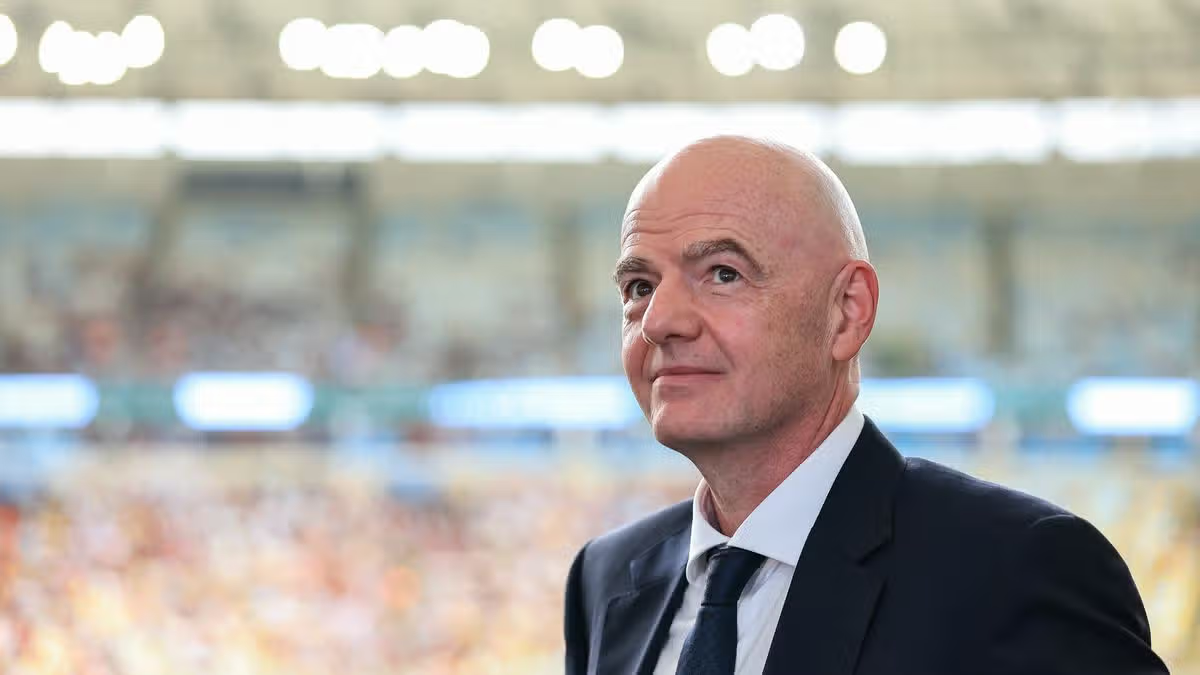
Gianni Infantino set to be kicked out of FIFA as explosive announcement made

Hints, Clues and the Complete Answer for Saturday, August 1, 2026 Puzzle No. 1,869 Now
PI Surges 5% Despite Market Slump After Important Pi Network Reminder


-
 Sports6 days ago
Commonwealth Games boxing: Jadumani Singh seals dominant 5-0 win over Pakistan’s Sumama Rehman to enter quarter-finals | Commonwealth Games News
-

 Business3 days ago
Why Trees Belong on the Risk Register
-

 Fashion17 hours ago
Weekend Open Thread: Wit & Wisdom
-

 Politics14 hours ago
Meta enters AI-training agreement with far-right ‘propaganda rag’ Newsmax
-

 Tech5 days ago
Intel is reversing course and bringing hyper-threading back to its server chips
-

 Crypto World7 days ago
Ripple bought a bank in pieces. The $4 billion audit
-

 Politics5 days ago
Luke Littler dismantles Gerwyn Price to retain title in Blackpool
-

 Politics4 days ago
The Part of the Electric Transition Nobody Wants to Discuss
-

 News Videos6 days ago
BITCOIN JUST ENTERED THIS CRITICAL ZONE…
-
 Entertainment4 days ago
‘Stargate’ Creator’s New Sci-Fi Series Returns for Season 3 Tomorrow
-

 Business3 days ago
Major shareholder moves on Canyon
-

 Crypto World6 days ago
XRP Ledger adds $2.6B as RWA inflows rank second
-

 Politics6 days ago
Spain sweeps the board at 2026 World Cup with individual awards
-

 News Videos2 days ago
Bitcoin Enters the 3rd Stage of the Bear Market
-
Crypto World5 hours ago
XRP Ledger v3.3.0 brings five institutional features
-

 Entertainment6 days ago
Sara Gilson Killed By Husband After Viral “Pedophile” TikTok Video
-

 Crypto World3 days ago
Kraken Enables Retail Access to Jersey Mike’s IPO via Tokenized Shares
-

 News Videos4 days ago
Claude: Build Financial Dashboards in Minutes (2026)
-

 Tech4 days ago
New macOS Sequoia & Sonoma security updates for older Macs
-

 Politics2 days ago
Luke Littler’s dominance sparks GOAT debate
You must be logged in to post a comment Login