

Connect with us
DAPA Banner

Business

How waste cooking oil collection benefits hospitality businesses

Published

on

How waste cooking oil collection benefits hospitality businesses

Most business owners view waste disposal as a necessary cost. You generate rubbish, you pay someone to take it away, and that is the end of the transaction.

However, one waste stream works differently: used cooking oil. Restaurants, hotels, and food manufacturers produce oil that can be collected through structured channels and handled responsibly, yet many businesses still follow traditional disposal methods.

Over the past decade, demand for biodiesel and sustainable aviation fuel (SAF) has increased as renewable energy targets have tightened. Used vegetable oil has become an established feedstock. Some businesses are still operating under older assumptions, not fully aware that professional collection provides an efficient and compliant solution for this type of waste.

How waste cooking oil collection works in practice

High-volume food businesses naturally generate significant quantities of used cooking oil. A busy restaurant or a larger hotel kitchen can produce hundreds of litres monthly. Using professional waste cooking oil collection services ensures this oil is handled safely and in line with environmental regulations.

Exact arrangements vary depending on volumes and service agreements, but the principle is consistent: used cooking oil is collected by licensed operators and businesses receive payment based on the quantity and quality of the oil. At the same time, kitchens avoid the risks associated with informal disposal methods. Companies such as Quatra provide compliant, licensed collection without adding operational complexity for kitchen staff.

Advertisement

Practical benefits for all businesses

Even small operations benefit from structured oil collection because it removes the need to manage disposal informally and reduces compliance risks. Proper collection supports reporting requirements for corporate clients and public sector tenders and demonstrates that a business is managing waste responsibly.

Environmental responsibility has become increasingly important to customers and business partners. Demonstrating that waste oil is collected and converted into renewable energy reinforces sustainability credentials. Combined with financial compensation, this adds measurable operational value without changing day-to-day kitchen routines.

Making the switch to structured collection

Transitioning to professional waste cooking oil collection is straightforward. Licensed collectors provide storage containers, manage logistics, and handle all compliance documentation. Staff procedures require minimal adjustment because the main change is storing oil for a licensed collector.

When choosing a provider, it is advisable to compare terms, check licensing credentials, and ensure that collection frequency and procedures meet operational needs. Reliable providers maintain clear and transparent arrangements so that the collection process is simple and effective.

Advertisement

Most UK businesses with commercial kitchens are still using outdated approaches for used cooking oil. Structured collection services now offer a balanced combination of regulatory compliance, environmental responsibility, and financial return.The infrastructure exists, the process is efficient, and businesses benefit from compliance and operational simplicity. This is one of those cases where environmental care and smooth business operations align naturally.

Advertisement
Continue Reading
Click to comment

You must be logged in to post a comment Login

Leave a Reply

Business

National Burrito Day 2026 Brings Free Burritos, BOGO Deals at Chipotle, Qdoba, Moe’s and More

Published

on

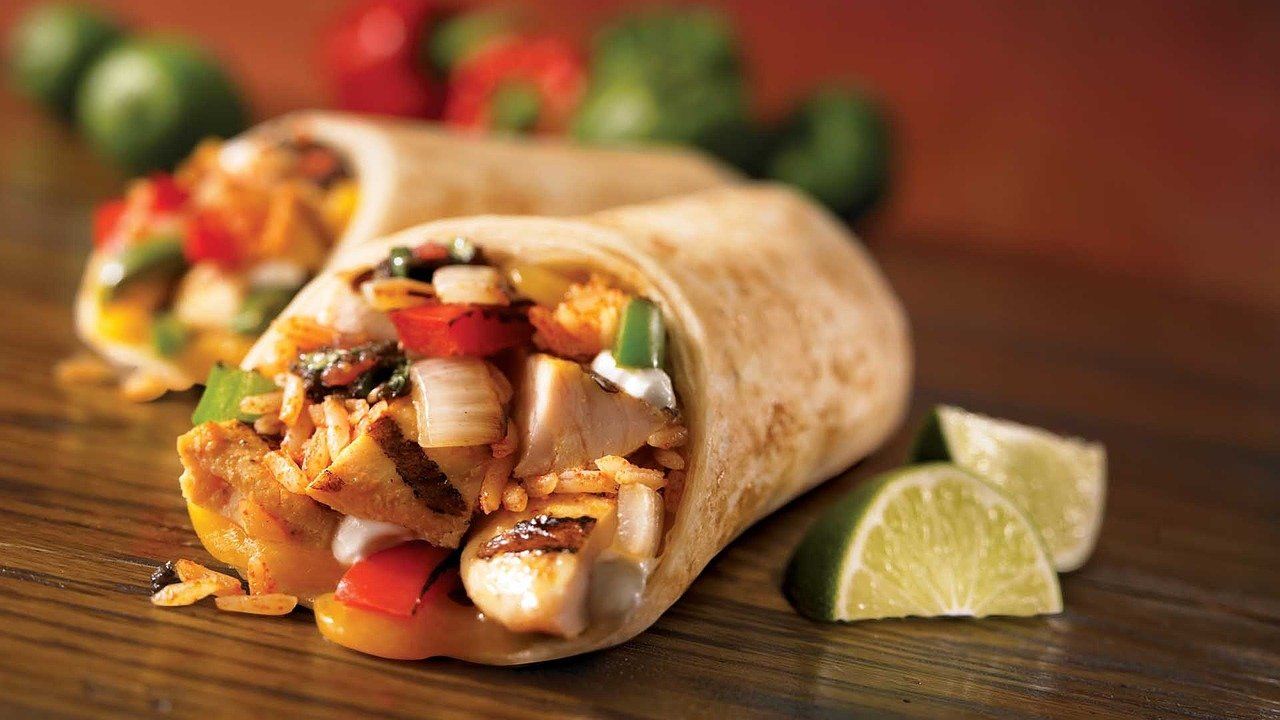
Representation. A burrito.

It’s National Burrito Day on Thursday, April 2, 2026, and hungry fans across the country are celebrating the handheld Mexican favorite with free burritos, buy-one-get-one offers and deep discounts at major chains and smaller spots alike.

Representation. A burrito.

The unofficial holiday, observed on the first Thursday in April, honors the beloved tortilla-wrapped meal stuffed with rice, beans, meats, cheeses and salsas. This year, restaurants from fast-casual giants to regional favorites are rolling out promotions that could save burrito lovers serious cash — or even land them free meals for a year.

Chipotle Mexican Grill is leading the charge with its popular Burrito Vault game, which wrapped up Wednesday after giving away more than $2 million in prizes to Chipotle Rewards members. Players guessed hourly-changing burrito combinations at UnlockBurritoDay.com for chances to win free burritos for a year, BOGO entrées and double protein rewards. On National Burrito Day itself, the chain is offering free delivery on qualifying orders of $10 or more using code DELIVER through the app or website.

“National Burrito Day is always a fun way for our fans to enjoy even more of what they love,” a Chipotle spokesperson said in a statement. Rewards members who unlocked prizes earlier in the week can redeem them today.

QDOBA is making it easy for its rewards members to score a free burrito or bowl. On April 2, members who purchase any entrée and a drink will receive a free entrée reward (quesadillas excluded). The offer is valid in-store, online and via the app at participating locations. Gold status members get extra time, with redemption possible through April 5. The reward is automatically loaded into accounts on the holiday.

Advertisement

Moe’s Southwest Grill is offering a straightforward buy-one-get-one-free deal on burritos, bowls or Moe Value Meals. Rewards members can use the promotion online or in the app, while non-members can simply mention the offer in-store at participating locations on April 2. The BOGO applies to the item of equal or lesser value, with taxes and fees not included in the discount. Moe’s is also running a sweepstakes for rewards members to win free burritos for a year.

Bubbakoo’s Burritos is extending its celebration with a BOGO offer for rewards members using promo code BURRITODAY on online or in-app orders April 1-2. El Pollo Loco rewards members can snag a buy-one-get-one-free à la carte burrito on April 2.

Smaller chains and regional players are joining the fun. Pancheros Mexican Grill is giving away 10,000 free burritos by sharing codes on its social media channels (Instagram, Facebook, X and TikTok) on April 2. Loyalty app users can enter the codes to redeem. Baja Fresh is selling $5 chicken Baja burritos in-store at participating locations, with an additional $5 off $20+ coupon for rewards members who make any purchase today.

Tijuana Flats is offering a free “Make It Wet” upgrade — smothering any burrito in queso, red sauce or verde — with promo code SAUCED26 at checkout. Torchy’s Tacos has $5 breakfast burritos available in-store until 2 p.m. at participating spots. Del Taco’s Del Yeah! Rewards members can get a free Classic Burrito with any $3 minimum purchase.

Advertisement

Tortilla, a growing chain, is giving away 15,000 free burritos starting at 3 p.m. local time, though membership is required. Tocaya rewards members receive a free side of chips and guacamole with any burrito purchase.

Chronic Tacos loyalty members who ordered via the app on April 2 could take advantage of a buy-one-get-one-free burrito. Baker’s Drive-Thru had bean and cheese burritos for 99 cents while supplies lasted.

The deals come as burrito consumption remains strong nationwide. The versatile dish, with roots in Mexican cuisine but popularized in American fast-casual formats, appeals to a wide audience seeking quick, customizable and often portable meals. Industry analysts note that Mexican-inspired chains have benefited from consumers’ desire for value amid fluctuating food prices.

“National Burrito Day taps into that love for bold flavors and customization,” said one food industry observer. “These promotions not only drive traffic but also introduce new customers to rewards programs that keep them coming back.”

Advertisement

Many offers require signing up for free loyalty programs, a common strategy that builds long-term customer relationships. Signing up for Chipotle Rewards, QDOBA Rewards or Moe’s Rewards takes just minutes via their apps or websites and often unlocks additional perks throughout the year.

For those not near a participating chain, some promotions extend to delivery platforms, though fees may apply outside of free delivery windows. Availability can vary by location, so checking the restaurant’s app, website or calling ahead is recommended.

Burrito enthusiasts shared excitement on social media Thursday morning, with posts showing loaded creations and deal screenshots. “Finally, a holiday that speaks my language — and my stomach,” one user wrote on X.

The origins of National Burrito Day trace back to informal celebrations that grew into a recognized food holiday. While not an official government observance, it has gained traction through restaurant marketing and consumer enthusiasm, much like other food-centric days such as National Taco Day or National Pizza Day.

Advertisement

This year’s timing on April 2 aligns perfectly with many Americans’ midweek routines, offering a tasty pick-me-up. Whether it’s a classic carne asada burrito, a vegetarian option packed with beans and veggies, or a breakfast version with eggs and chorizo, the day encourages experimentation.

Health-conscious eaters can still participate by opting for bowls instead of tortillas at many chains, or choosing lean proteins and extra vegetables. Chains like Chipotle and QDOBA emphasize fresh ingredients and customizable nutrition information in their apps.

While the deals are generous, experts advise enjoying them in moderation as part of a balanced diet. Burritos can be high in calories and sodium depending on fillings and add-ons like extra cheese, sour cream or guacamole — the latter of which sometimes carries an upcharge.

For families or groups, the BOGO-style offers from Moe’s and others make it economical to share. Office workers might coordinate group orders to maximize free delivery perks.

Advertisement

As the day progresses, some locations could see long lines or sell out of popular items, so early visits or online ordering may help avoid waits. Digital orders also make it easier to apply rewards and promotions accurately.

Looking beyond today, many chains use National Burrito Day to promote year-round loyalty benefits, including points accumulation, birthday rewards and exclusive early access to new menu items.

Burrito history dates back centuries in Mexico, with the modern American burrito evolving in the Southwest and gaining massive popularity through chains that standardized assembly-line preparation. Today, the U.S. burrito market is part of a broader $50 billion-plus Mexican food segment, with fast-casual concepts driving much of the growth.

Consumers can extend the celebration by trying homemade versions. Basic recipes call for large flour tortillas, refried beans, Spanish rice, grilled meats or vegetables, cheese, salsa and toppings. Online tutorials abound for everything from copycat Chipotle recipes to authentic street-style burritos.

Advertisement

For those missing out on today’s deals, similar promotions often appear around other holidays or through apps like Uber Eats, DoorDash and Grubhub, which sometimes run their own burrito specials.

In summary, National Burrito Day 2026 delivers plenty of ways to enjoy a free or discounted burrito without breaking the bank. From Chipotle’s high-stakes game and free delivery to QDOBA’s straightforward free entrée deal and Moe’s BOGO, there’s something for nearly every burrito fan.

Whether you’re a longtime loyalist or trying a new spot, today is the perfect excuse to wrap up something delicious. Just remember to join the rewards programs in advance where required, verify local participation and savor every bite.

Advertisement
Continue Reading

Business

MAHA’s impact on the snack category

Published

on

MAHA’s impact on the snack category

Speakers at SNAC International conference said it could be significant.

Continue Reading

Business

UK inflation expectations rise as Iran war dims interest rate cut hopes

Published

on

Supermarkets and food manufacturers in England will be expected to help tackle rising obesity rates by making it easier for customers to choose healthier food, under a new government initiative announced today.

Inflation expectations among UK businesses have climbed to their highest level in more than two years, as the economic fallout from the Middle East conflict reshapes outlooks for prices, interest rates and growth.

New data from the Bank of England shows firms now expect inflation to reach 3.5 per cent over the next 12 months, up from 3 per cent previously and marking the highest year-ahead forecast since late 2023.

The shift reflects a sharp change in sentiment following the surge in energy prices triggered by the Iran conflict, with oil and gas costs rising significantly amid disruption to global supply routes.

Alongside higher inflation expectations, businesses are now anticipating far fewer interest rate cuts than previously forecast.

Before the conflict, financial markets had expected multiple reductions in borrowing costs over the next year. However, firms now believe there could be just one rate cut in the next 12 months, and only two by 2029, as persistent inflation limits the scope for monetary easing.

Advertisement

Brent crude has remained above $100 a barrel, reinforcing concerns that energy-driven inflation could prove more durable than previously thought.

The rise in inflation expectations is already feeding into business behaviour. Companies now expect to increase their prices by an average of 3.7 per cent over the coming year, up from 3.4 per cent in February.

Economists warn that the impact will extend beyond energy bills, with higher costs likely to filter through into food, transport and other essential goods.

Industry groups have already flagged the potential for grocery prices to rise by as much as 9 per cent by the end of the year, while household energy bills are expected to increase sharply when the next Ofgem price cap takes effect.

Advertisement

The data also suggests a shift in labour market expectations. Businesses now anticipate a slight contraction in employment over the coming year, reversing earlier projections for growth.

At the same time, expected wage growth has edged down slightly to 3.4 per cent, indicating that while inflation pressures are rising, firms may be less willing or able to increase pay.

This combination of higher prices and softer wage growth raises the risk of a squeeze on real incomes, with implications for consumer spending and overall economic activity.

The latest figures come against a backdrop of already fragile economic growth. The UK economy expanded by just 0.1 per cent in the final quarter of last year, and recent forecasts from the OECD suggest the country could face the weakest growth and highest inflation among G7 economies as a result of the conflict.

Advertisement

Rising borrowing costs are also adding pressure, with government bond yields remaining elevated compared with pre-conflict levels, reflecting investor concerns about inflation and fiscal constraints.

In addition to energy costs, companies are contending with a range of domestic pressures, including increases in the minimum wage and higher business rates.

These factors are compounding the impact of global shocks, creating a challenging environment for firms already operating with tight margins.

Elliott Jordan-Doak of Pantheon Macroeconomics said the surge in energy prices is already influencing business decisions.

Advertisement

“Higher costs are weighing on hiring plans and leading to increased price-setting intentions,” he said, although he noted that medium-term expectations remain relatively stable for now.

The rise in inflation expectations signals a turning point in the UK’s economic outlook, with the prospect of sustained price pressures reshaping both business strategy and monetary policy.

For the Bank of England, the challenge will be balancing the need to control inflation against the risk of further weakening growth.

For businesses and households, the implications are more immediate: higher costs, tighter financial conditions and a more uncertain economic environment in the months ahead.

Advertisement

Amy Ingham

Amy is a newly qualified journalist specialising in business journalism at Business Matters with responsibility for news content for what is now the UK’s largest print and online source of current business news.

Advertisement
Continue Reading

Business

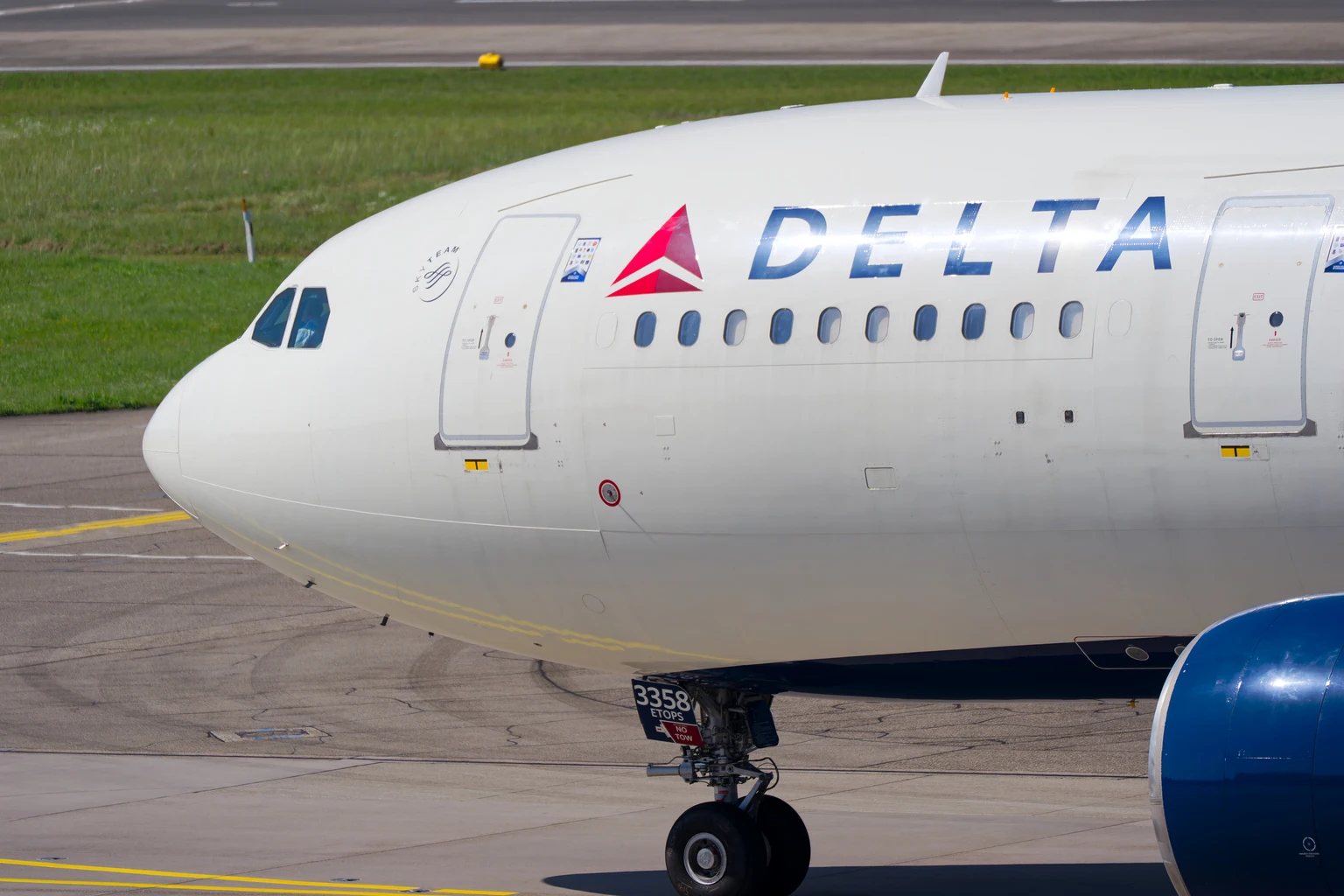
Delta Air Q1 Earnings Preview: A High Bar To Fly Over, Shares Fairly Valued (NYSE:DAL)

Published

on

Delta Air Q1 Earnings Preview: A High Bar To Fly Over, Shares Fairly Valued (NYSE:DAL)

This article was written by

Providing timely and quick to the punch analysis of earnings and macro-related events across various sectors, with a focus on retail and real estate. I am a licensed CPA.

Analyst’s Disclosure: I/we have no stock, option or similar derivative position in any of the companies mentioned, and no plans to initiate any such positions within the next 72 hours. I wrote this article myself, and it expresses my own opinions. I am not receiving compensation for it (other than from Seeking Alpha). I have no business relationship with any company whose stock is mentioned in this article.

Seeking Alpha’s Disclosure: Past performance is no guarantee of future results. No recommendation or advice is being given as to whether any investment is suitable for a particular investor. Any views or opinions expressed above may not reflect those of Seeking Alpha as a whole. Seeking Alpha is not a licensed securities dealer, broker or US investment adviser or investment bank. Our analysts are third party authors that include both professional investors and individual investors who may not be licensed or certified by any institute or regulatory body.

Advertisement
Continue Reading

Business

Gold Prices Slide 2.73% to $4,654.86 as Stronger Dollar and Rising Yields Pressure Safe-Haven Metal

Published

on

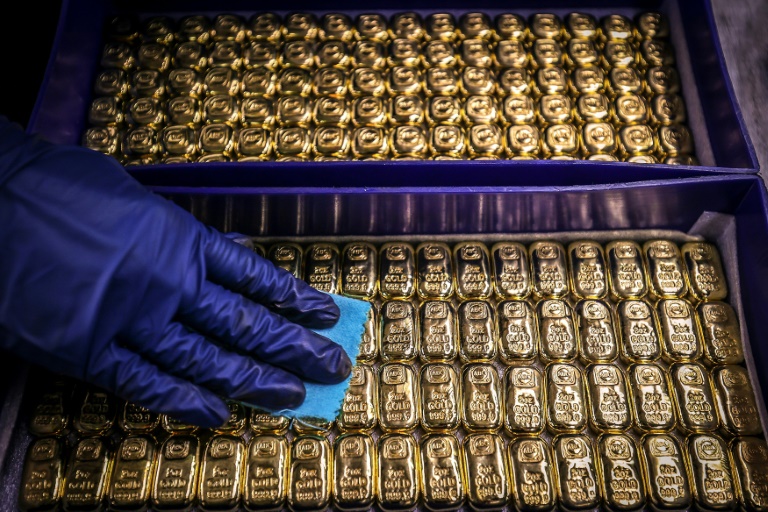
Gold prices hit a record high on a rush into safe havens and helped by the weaker dollar

Gold prices fell sharply Friday, with spot gold trading at $4,654.86 per ounce, down $130.53 or 2.73%, as a firmer U.S. dollar and rising Treasury yields weighed on the non-yielding precious metal amid shifting market sentiment.

Gold prices hit a record high on a rush into safe havens and helped by the weaker dollar
AFP

The decline came after gold touched elevated levels earlier in the week, reflecting ongoing volatility in the yellow metal following a dramatic rally in 2025 and early 2026 that pushed prices above $5,000 and even toward $5,600 at peaks. Friday’s move extended recent pressure, with April gold futures also trading lower in mid-morning sessions on the COMEX.

Analysts attributed the drop primarily to a strengthening dollar and higher bond yields, which increase the opportunity cost of holding gold. The U.S. Dollar Index gained ground as traders adjusted expectations for Federal Reserve policy, while 10-year Treasury yields climbed on persistent inflation concerns tied to geopolitical tensions and energy prices.

The pullback occurs against a backdrop of significant gains for gold over the longer term. The metal surged in 2025 amid central bank buying, ETF inflows and uncertainty from trade policies and global risks. In early 2026, prices hit record highs before experiencing sharp corrections, including a steep drop in March that some described as the worst monthly performance in years.

Despite Friday’s losses, many Wall Street firms remain bullish on gold’s outlook. J.P. Morgan forecasts prices could reach $6,300 per ounce by the end of 2026, driven by sustained central bank demand and investor diversification away from traditional assets. Goldman Sachs sees potential for $5,400, while other banks like UBS and Deutsche Bank project targets around $6,000 or higher in various scenarios.

Advertisement

Central banks continued to accumulate gold as a reserve asset, a trend that has supported prices even during periods of consolidation. Demand from emerging markets and efforts to reduce reliance on the U.S. dollar in international reserves have played key roles. ETF holdings also showed resilience, with inflows reflecting gold’s appeal as portfolio insurance.

Geopolitical factors added layers of complexity. Ongoing tensions in the Middle East, including developments involving Iran, initially boosted gold as a safe haven but later contributed to volatility as markets priced in potential inflation from higher oil prices alongside stronger dollar dynamics.

“Gold’s recent correction reflects mechanical selling and profit-taking after an extraordinary run, but the structural drivers remain intact,” one commodities strategist noted. Rising oil prices from regional uncertainties have fueled inflation fears, which could eventually support gold if they prompt looser monetary policy down the line.

Technical levels showed gold finding some support near $4,600, with resistance around recent highs above $4,700. Futures contracts for April delivery reflected similar moves, with open interest and volume indicating active trader participation.

Advertisement

For investors, the current dip raises questions about whether it represents a buying opportunity or signals further consolidation. Historical patterns suggest gold often rebounds after sharp sell-offs when fundamental demand reasserts itself. However, short-term headwinds from a resilient U.S. economy and delayed rate cuts could keep pressure on prices in the near term.

Silver prices moved in tandem, dropping more sharply in percentage terms on Friday, underscoring broad precious metals weakness. Platinum and palladium showed mixed but generally softer performance.

Retail investors have increasingly turned to gold through exchange-traded funds, physical bars and coins, and mining stocks. The SPDR Gold Shares ETF and similar vehicles saw flows that mirrored broader sentiment shifts.

Economists point to several macroeconomic drivers. A stronger dollar makes gold more expensive for foreign buyers, reducing demand. Higher real yields similarly diminish appeal compared to interest-bearing assets. Yet persistent fiscal deficits, debt levels and long-term diversification trends by institutions continue to underpin the bull case.

Advertisement

In Asia, where physical gold demand is traditionally strong for jewelry and investment, buyers have shown selectivity amid price swings. Chinese and Indian markets, major consumers, have navigated volatility with a mix of bargain hunting and caution.

Mining companies face their own dynamics. Higher prices in recent years boosted profitability, but cost pressures from energy and labor could intensify if volatility persists. Major producers have hedged positions or expanded output selectively.

Looking ahead, key events include upcoming economic data releases that could influence Fed expectations. Any signs of cooling inflation or labor market softening might revive rate-cut hopes and support gold. Conversely, hotter-than-expected readings could reinforce dollar strength.

Analysts emphasize that gold’s role as a hedge against uncertainty has not diminished. In an environment of elevated geopolitical risks, potential policy shifts and questions over reserve currencies, the metal retains strategic importance for central banks and sophisticated investors.

Advertisement

Some observers warn of leveraged positions unwinding during the recent rout, amplifying moves beyond pure fundamentals. Such liquidations can create oversold conditions that set the stage for rebounds.

For everyday investors, financial advisors often recommend allocating a modest portion of portfolios — typically 5-10% — to gold as diversification rather than a directional bet. Physical ownership, ETFs or futures each carry different considerations around storage, liquidity and costs.

The broader commodity complex showed varied responses Friday, with energy markets reacting to supply concerns while industrial metals faced demand worries from global growth outlooks.

Gold’s journey to current levels marks a transformation from its traditional trading range. What was once seen as a relic has become a mainstream asset class, with institutional adoption growing through vehicles that provide exposure without physical handling.

Advertisement

Despite the Friday decline, year-to-date performance for gold in 2026 remains positive for many holders who bought at lower levels. The metal’s ability to deliver returns uncorrelated with stocks and bonds continues to attract attention in diversified strategies.

Market participants will watch next week’s calendar closely for any fresh catalysts. Earnings from major financial firms, inflation metrics and comments from policymakers could sway sentiment.

In jewelry and industrial applications, gold demand has held steady in certain segments, though high prices have prompted some substitution or delayed purchases.

As trading continues, volatility is likely to remain elevated. Traders using technical analysis are monitoring moving averages and support zones for clues on the next leg.

Advertisement

Overall, while near-term pressures from currency and yield dynamics have driven gold lower to around $4,654.86, the consensus among major banks points to higher prices by year-end 2026. Central bank accumulation averaging hundreds of tonnes quarterly, combined with investor flows and potential monetary easing, forms the foundation for optimism.

Investors considering entry points may view the current consolidation as a pause in a longer-term uptrend rather than a reversal. However, prudence dictates monitoring dollar strength and yield movements closely.

Gold has proven resilient through multiple cycles, often rewarding patient holders during periods of economic or geopolitical stress. Friday’s 2.73% drop serves as a reminder of the metal’s volatility even as its strategic value endures.

Advertisement
Continue Reading

Business

Exclusive: Bristol’s Bottle Yard Studios releases financial information for first time

Published

on

Business Live

The West of England’s biggest film and TV studios is actually a money-generating service

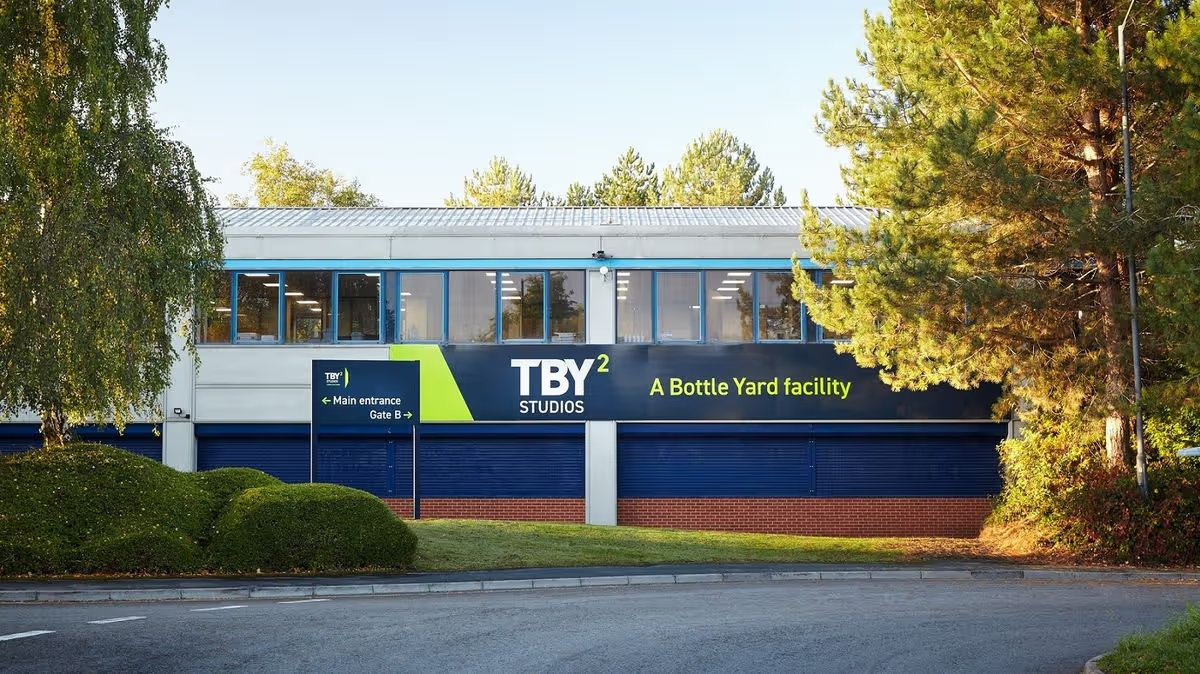
The entrance of The Bottle Yard Studio's new facility in Bristol

The entrance of The Bottle Yard Studio’s TBY2 facility in Bristol(Image: Tony Gilbert)

The West of England’s largest film and television studios has released information about its finances for the first time, Business Live can exclusively reveal. The Bristol City Council-owned Bottle Yard, in Hengrove, provided the details following a Freedom of Information (FOI) request.

The studios, which have hosted big-name productions such as popular BBC comedy-drama Boarders and Sky Original thriller Inheritance, came under fire last year for refusing to confirm whether it makes a profit for council taxpayers. Previous requests by journalists, local councillors and members of the public for any information on the Bottle Yard’s finances have repeatedly been rejected on the grounds the accounts are “commercially sensitive”.

Advertisement

Business Live logged an FOI on January 27 and Bristol City Council took 64 days to reply, despite regulations requiring public bodies to respond within 20 days. It comes months after the local authority lost a legal battle with the Information Commissioner’s Office over failures to clear an FOI backlog built up under the last administration.

In its response to the FOI, the council told Business Live that over the last financial year (2025-2026) the Bottle Yard’s budget was -£177,625. However, the negative figure does not mean the Bottle Yard is making a loss – in fact it is the opposite. It is understood that Bristol City Council uses an accounting approach that targets zero to balance the books over the year, with money generated by the studios used to reach that target.

Business Live understands the Bottle Yard is an income-generating service – meaning it makes money for the council – and was targeting a surplus of £177,625 for the year. It is understood the studios achieved a surplus for 2025-2026, but it is not yet known whether that surplus is at the full target. As Business Live understands, this is because the council has not yet completed its year-end outturn calculations.

The council also provided details of the Bottle Yard’s budget for the new financial year, which was set on Wednesday, April 1. According to the FOI, the budget for 2026-2027 is -£81,740. Although this year’s income budget is lower, it is understood the Bottle Yard is fully funded for the next 12 months and is expected to make a surplus of £81,000.

Advertisement

The release of the information comes just months after Bristol City Council declined a Freedom of Information request by investigative journalist and council transparency campaigner Andrew Lynch for any financial figures.

The costume department at Bottle Yard

The costume department at Bottle Yard(Image: Hannah Baker)

Bristol City Council refused a number of other information requests logged by Business Live, however, including how much Katherine Nash, head of studios at the Bottle Yard, gets paid. Nash, who was appointed in September, is responsible for all the commercial aspects of the studios’ two sites and 11 stages, including sales, operations and partnerships.

The local authority told Business Live it could not provide details of her earnings, including bonuses, as it fell under personal data as defined by the Data Protection Act – and because this was information about another individual they were not able to share it. It also refused to disclose who was considering buying the studios last year. In July, the sale of the Bottle Yard to a private and unknown buyer collapsed, costing taxpayers some £430,000.

The council told Business Live it could not reveal the details, claiming it was part of a “confidential process”. When asked if the council would put the studios back up for sale, it told Business Live a decision had not been made yet but the studios remain open for business.

Advertisement

Last year, Bristol City Council leader Tony Dyer said the council’s aim was “to secure a sustainable future for the studios and the opportunity to grow into its huge potential.”

“Those aims remain the same as does our determination to ensure that one of our city’s most successful regeneration projects continues an upward trajectory to deliver more jobs and more investment for Bristol,” he said at the time.

According to Bristol Film Office – a division of Bristol City Council – films and television shows produced in Bristol over 2024-2025 boosted the local economy by more than £46m. Some 29 major productions were assisted by the Bottle Yard Studios over the period, including three feature films and 26 high-end television productions, with a total of 736 filming days supported in the studio and on location.

Advertisement
Continue Reading

Business

Acuity Inc. (AYI) Q2 2026 Earnings Call Transcript

Published

on

OneWater Marine Inc. (ONEW) Q1 2026 Earnings Call Transcript

Acuity Inc. (AYI) Q2 2026 Earnings Call April 2, 2026 8:00 AM EDT

Company Participants

Charlotte McLaughlin – Vice President of Investor Relations
Neil Ashe – Chairman, President & CEO
Karen Holcom – Senior VP & CFO

Conference Call Participants

Advertisement

Joseph O’Dea – Wells Fargo Securities, LLC, Research Division
Christopher Snyder – Morgan Stanley, Research Division
Ryan Merkel – William Blair & Company L.L.C., Research Division
Christopher Glynn – Oppenheimer & Co. Inc., Research Division
Tyler Bisset – Goldman Sachs Group, Inc., Research Division
Jeffrey Sprague – Vertical Research Partners, LLC
Robert Schultz – Robert W. Baird & Co. Incorporated, Research Division

Presentation

Operator

Advertisement

Good morning, and welcome to the Acuity Fiscal 2026 Second Quarter Earnings Call. [Operator Instructions] Please be advised that today’s conference is being recorded.

I would now like to hand the conference over to Charlotte McLaughlin, Vice President of Investor Relations. Charlotte, please go ahead.

Charlotte McLaughlin
Vice President of Investor Relations

Advertisement

Thank you, operator. Good morning, and welcome to the Acuity Fiscal 2026 Second Quarter Earnings Call. On the call with me this morning are Neil Ashe, our Chairman, President and Chief Executive Officer; and Karen Holcom, our Senior Vice President and Chief Financial Officer.

Today’s call will include updates on our strategic progress and our fiscal 2026 second quarter performance. There will be an opportunity for Q&A at the end of the call.

As a reminder, some of our comments today may be forward-looking statements. We intend these forward-looking statements to be covered by the safe harbor provisions of the Private Securities Litigation Reform Act of 1995 as detailed on Slide 2 of the accompanying presentation.

Reconciliations of certain non-GAAP financial metrics with their corresponding GAAP measures are available in our 2026 second quarter earnings release and supplemental presentation, both of which are available on our Investor Relations website at www.investors.acuityinc.com.

Advertisement
Continue Reading

Business

Coca-Cola launches ad campaign with Domino’s, Wendy’s, Wingstop

Published

on

Coca-Cola launches ad campaign with Domino's, Wendy's, Wingstop

Coca-Cola on Thursday unveiled a new marketing campaign to boost sales of its soda at restaurants as declining traffic and sluggish sales growth challenge both the industry and its top beverage supplier.

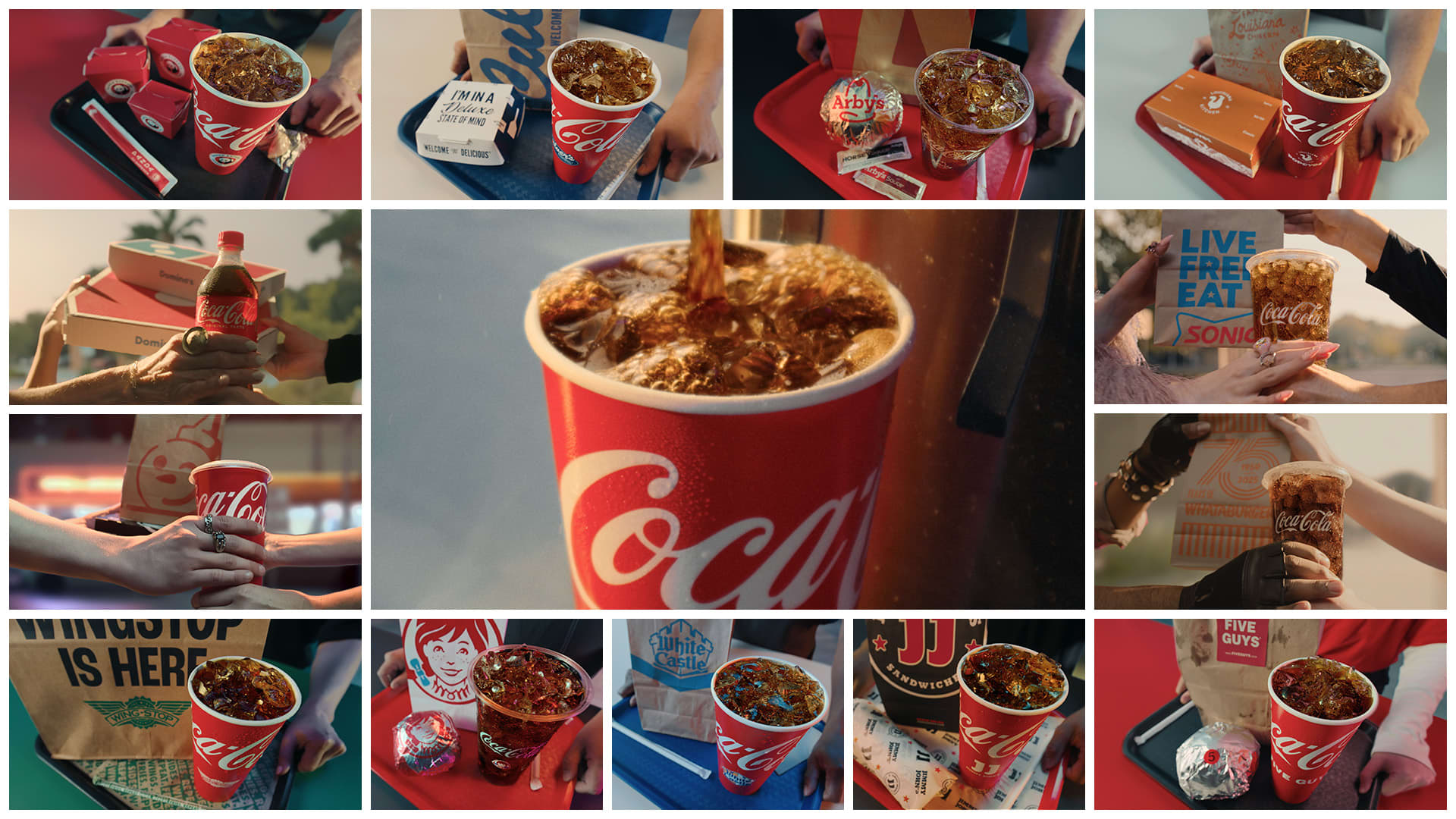
The campaign marks the first time Coke has released ads featuring multiple restaurant partners. The commercials flash across different consumers ordering their meals at a medley of chains, all ending their orders with the same phrase, “And a Coke.”

Across the three spots released Thursday, 13 different chains share the spotlight: Arby’s, Culver’s, Domino’s Pizza, Five Guys, Jack in the Box, Jimmy John’s, Panda Express, Popeyes, Sonic, Wendy’s, Whataburger, White Castle and Wingstop.

Advertisement

For restaurants, drinks — even a simple Coke — are high-margin menu items, helping lift profits in an industry known for its razor-thin margins. That sale becomes even more important as consumers cut back on restaurant visits and spend less when they do dine out.

In February, traffic to U.S. restaurants fell 2%, according to data from Black Box Intelligence. And 38% of consumers said they were spending less at restaurants during the first quarter of 2026, based on a survey conducted by Revenue Management Solutions.

Behind the scenes, Coke has also been trying to help boost restaurant sales amid the spending slowdown. As the so-called value wars kicked off among fast-food chains in 2024, Coke executives said that the company had teamed up with restaurant partners to market combo meals with drinks to drive traffic and beverage sales; CNBC previously reported that Coke threw in marketing funds to make a $5 value meal more attractive to McDonald’s U.S. franchisees.

Coke chose the chains in its new campaign based on the different cuisines and the occasions they represent, like late-night pickup or drive-thru, according to Dagmar Boggs, Coke’s North American president of foodservice and on-premise.

Advertisement

The commercials will air in movie theaters starting Friday. By mid April, the campaign will spread to linear TV, digital channels and third-party delivery providers like UberEats and DoorDash.

The chains did not pay Coke to participate in the advertisements. Boggs called it “the perk of being a partner with Coca-Cola.”

Boggs describes Coke as a “business partner” rather than a “beverage supplier” for restaurants, giving insight and marketing suggestions to chains like Burger King or Wendy’s.

Of course, higher Coke sales at restaurants will also benefit the beverage giant. Coke does not publicly disclose how much of its sales come from restaurants. However, executives have previously said that about half of its overall sales come from away-from-home channels, which also include movie theaters, airplanes and amusement parks.

Advertisement

Coke’s food service business also serves a bellwether for consumer sentiment.

“If food service catches a cold in the North America operating unit, North America will catch a cold,” Boggs said. “That’s why we are always looking to grow our partners’ business, because when they grow, we grow.”

In 2025, Coke’s North American organic sales rose 4%, but its domestic unit case volume fell 1%, a signal of weaker demand for its drinks. The company is projecting modest sales growth in 2026, according to the outlook it released in early February.

Choose CNBC as your preferred source on Google and never miss a moment from the most trusted name in business news.
Advertisement
Continue Reading

Business

McBride warns Iran war causing price rises and supply shortages

Published

on

Business Live

The Tesco and Sainsbury’s supplier said it has seen only a small impact from higher haulage costs due to fuel price rises but warned ‘these conditions have now started to change’

McBride makes products including Oven Pride

McBride makes products including Oven Pride (Image: srenilson)

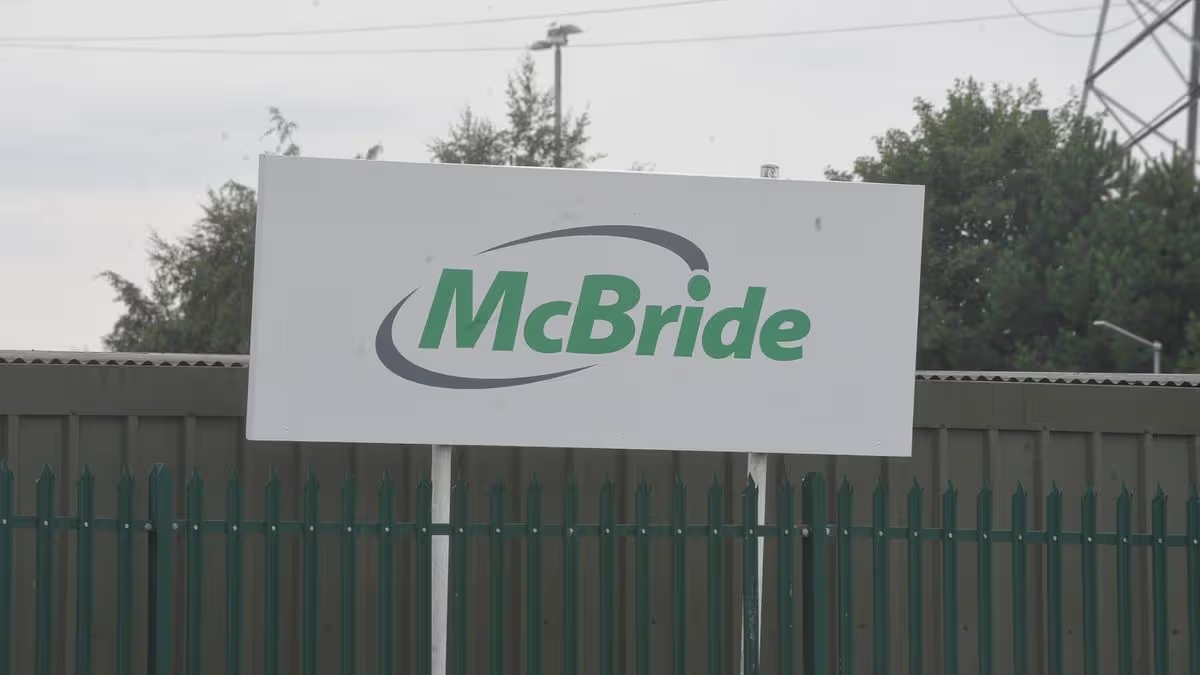
Household goods manufacturer McBride, maker of Oven Pride, has announced “temporary” price increases to offset escalating costs stemming from the Iran war and warned it was observing early indicators of supply shortages triggered by the conflict.

The company, which produces branded and own-label household and cleaning products for retailers including Tesco and Sainsbury’s, said that until recently it had only experienced a modest impact from elevated haulage expenses owing to fuel price rises, but noted “these conditions have now started to change”.

Advertisement

It reported that the “most heavily impacted” chemical and packaging suppliers are implementing price rises as they confront mounting costs for petrochemical-derived feedstocks and increased energy expenses in chemical and packaging manufacturing.

“The first signs of possible shortages in supply chains around the world are beginning to emerge,” it added.

Manchester-based McBride indicated its costs are climbing this month and will rise further because of the war, and is preparing to increase prices to counter the impact.

“The group has already informed all customers about temporary price adjustments, or surcharges to current pricing, to recover these higher, beyond our control, cost impacts from the Middle East conflict,” McBride said.

Advertisement

The warnings emerge amid growing concerns over the conflict’s impact on supply and costs, having driven oil prices soaring above 100 US dollars per barrel and causing widespread disruption to global shipping. Supermarket representatives gathered with Chancellor Rachel Reeves and Energy Secretary Ed Miliband at No 11 on Wednesday to examine the difficulties arising from the conflict, agreeing to jointly explore ways to alleviate the cost-of-living burden on consumers.

McBride’s remarks came as part of an update in which the company also unveiled a £34.5 million acquisition of Eurotab – a France-based specialist manufacturer of cleaning tablets, including those designed for dishwashers.

Continue Reading

Business

What is the triple lock and how much is the state pension worth?

Published

on

What is the triple lock and how much is the state pension worth?

The triple lock guarantees that the state pension is not overtaken by inflation or wage increases.

Continue Reading

Trending

Copyright © 2025