Connect with us

Business

How Workplace Grime Quietly Drains Billions From Business Bottom Lines

Published

on

How Workplace Grime Quietly Drains Billions From Business Bottom Lines

Almost none will mention the item that research suggests is silently taxing their payroll every single day — the physical cleanliness of their workplace.

The numbers are not small. As a company that cleans commercial spaces across one of the most competitive business environments on earth, we at Green Hands Cleaning Services Corp in New York City have watched businesses treat cleaning as a grudge purchase — the first line item cut when budgets tighten. The research says that instinct is spectacularly expensive. Here’s the evidence, and why the humble cleaning contract may be one of the most underrated productivity investments in business.

Your Desk Has 400 Times More Bacteria Than a Toilet Seat

Let’s start with the finding that made headlines around the world and still shocks every executive who hears it. Research led by Dr. Charles Gerba, a microbiologist at the University of Arizona, found that the average office desk harbours roughly 400 times more bacteria than the average toilet seat — around 10 million bacteria on a typical work surface.

Free newsletters
Advertisement

The stories that matter to UK business, straight to your inbox.

Advertisement

The reason is behavioural, not mysterious. Toilets get disinfected regularly because they’re perceived as dirty. Desks don’t, because they’re perceived as clean. Meanwhile, Gerba’s research found that the areas where employees rest their hands and eat lunch are bacterial hotspots: the average office phone carried around 25,000 bacteria per square inch, keyboards roughly 3,300, and computer mice about 1,600. The office kitchen fared even worse — communal sponges, fridge handles, and coffee pot handles ranked among the most contaminated objects in the entire building.

And contamination doesn’t stay put. A University of Arizona tracer study placed a harmless virus surrogate on a single office door handle at the start of a workday. Within four hours, the virus was detectable on more than half of all commonly touched surfaces in the office — and on the hands of roughly half the employees. One handle. Four hours. Half the workforce.

Now consider that 80% of common infections are transmitted by touch, according to widely cited public health research, and the business implications start coming into focus.

The £14 Billion Question: Sickness Absence Is a Cleanliness Problem

For UK readers, the macro numbers are sobering. The Office for National Statistics reported that UK workers lost approximately 185.6 million working days to sickness absence in 2022 — the highest on record — with minor illnesses such as coughs and colds consistently the single largest cause. Estimates of the total cost of sickness absence to the UK economy run into the tens of billions of pounds annually, and that’s before counting presenteeism: employees who turn up ill and work at a fraction of capacity, which research by Deloitte and others suggests costs employers considerably more than absence itself.

Advertisement

Here’s where cleaning stops being janitorial and starts being financial. A frequently cited workplace hygiene study found that implementing a targeted disinfection programme for high-touch office surfaces reduced surface contamination dramatically — and related research on workplace hygiene interventions has associated proper cleaning protocols with reductions in employee absenteeism of up to 30–40% for illness-related absence. When flu season alone costs businesses billions in lost output, a professional cleaning regime targeting phones, keyboards, door handles, and kitchen surfaces isn’t overhead. It’s insurance with a measurable payout.

The pandemic taught every business this lesson at gunpoint. The follow-up lesson — that the economics of workplace hygiene were compelling before COVID and remain compelling after it — has been forgotten remarkably quickly. It’s a core reason demand for structured commercial programmes like https://www.greenhandscleaningservices.com/services/office-cleaning-new-york-city has remained well above pre-2020 levels even as pandemic-era anxiety has faded: the firms that measured the absence data kept the contracts.

Clean Workplaces Don’t Just Prevent Sickness — They Manufacture Productivity

The second body of evidence is, if anything, more commercially interesting than the first: cleanliness doesn’t merely stop losses. It actively improves output.

The clutter tax on cognition. Princeton University neuroscientists demonstrated in The Journal of Neuroscience that visual clutter competes for the brain’s processing capacity, measurably degrading focus and performance. Your employees’ brains are running background processes on every stack of paper and dusty surface in their field of vision.

Advertisement

The air they breathe is a performance variable. A landmark Harvard T.H. Chan School of Public Health study (the COGfx study) found that workers in well-ventilated offices with low levels of indoor pollutants showed cognitive scores 61% higher than in conventional office conditions — rising to 101% higher in optimised environments. Dust-laden carpets, clogged vents, and grimy surfaces are direct contributors to the indoor air quality problem, and the US EPA estimates indoor air is typically two to five times more polluted than outdoor air. Given that office workers spend roughly 90% of their time indoors, the air inside your office is arguably a line on your P&L.

Employees notice — and judge. A survey by Staples found that 94% of workers reported feeling more productive in a clean workspace, and 77% said they produce higher quality work in a cleaner environment. Separate research found a majority of employees judge their employer by the state of the workplace — with dirty toilets and grubby kitchens repeatedly cited in surveys as factors that damage morale and even influence decisions to stay or leave. In a tight labour market, that’s a retention issue wearing a mop’s disguise.

Clients judge faster than employees do. Multiple commercial surveys have found that around 95% of customers say exterior and interior cleanliness influences their perception of a business, and a significant share say they would not return to a business with dirty facilities — with unclean toilets being the most cited deal-breaker. First impressions form in seconds; grime forms them for you.

The Hybrid-Work Trap: Why Offices Are Getting Dirtier, Not Cleaner

Here’s a counterintuitive development from the post-pandemic workplace that business owners should understand: hybrid working has made office hygiene worse, not better.

Advertisement

The logic seems backwards — fewer people should mean less mess. But three forces work in the opposite direction:

  1. Hot-desking multiplies exposure. When desks were assigned, each keyboard hosted one person’s microbes. Desk-sharing means every surface is now a rotating exchange point for the whole workforce. Studies of shared-desk environments have found significantly higher contamination on hot desks than on assigned ones.
  2. Cleaning contracts were cut to match headcount, not usage. Many firms reduced cleaning frequency proportionally to attendance — but a desk used by three different people across a week needs more attention than one used by a single occupant, not less.
  3. Intermittent occupancy creates its own problems. Water sitting in unused taps and appliances, dust accumulating in low-traffic zones, and kitchens used heavily on peak days but cleaned on schedules designed for even usage.

The businesses handling this well have shifted from fixed-schedule cleaning to usage-based programmes — deeper cleans aligned to peak occupancy days, disinfection of shared workstations between users, and periodic intensive cleans that reset the whole environment. It’s the model behind flexible offerings such as Green Hands’ custom cleaning plans, and it’s rapidly becoming the standard sophisticated tenants demand rather than a premium option.

What New York’s Hyper-Competitive Market Teaches Every Business

Operating in New York City is a stress test for any theory about commercial cleanliness, and a few lessons from our market translate directly to businesses anywhere — London, Manchester, or Leeds:

Lesson 1: The businesses that measure it, keep it. Our longest-standing commercial clients are the ones who tracked something — sick days, client feedback, Glassdoor mentions of the office environment — before and after establishing a proper cleaning programme. Cleaning survives budget reviews when it has a KPI attached. When it’s a vague “facilities” line, it gets cut, and the costs reappear elsewhere, unlabelled.

Lesson 2: Frequency beats intensity. A monthly blitz clean is far less effective than lighter, more frequent attention to high-touch points. Microbial recolonisation of surfaces happens within hours, not weeks. The University of Arizona door-handle study proved contamination spreads building-wide in half a working day — your cleaning cadence needs to respect that timeline.

Advertisement

Lesson 3: The kitchen and the toilets are your brand. Employees forgive a scuffed floor. Surveys show they do not forgive a dirty kitchen or washroom — and neither do visiting clients. If budget forces prioritisation, prioritise where humans eat and where they’d rather not think about.

Lesson 4: Deep cleans are infrastructure, not indulgence. Carpets, vents, blinds, upholstery, and the zones behind and beneath furniture are where the Harvard air-quality findings live. Quarterly or biannual deep cleaning — the kind detailed at https://www.greenhandscleaningservices.com/services/deep-cleaning-service-new-york-city — is what keeps the daily cleaning meaningful, in the same way servicing a boiler keeps the radiators worth bleeding.

Lesson 5: Insurance and vetting are non-negotiable. Whoever cleans your premises has out-of-hours access to your offices, your equipment, and potentially your data environment. Insured, bonded, background-checked teams aren’t a luxury tier — they’re baseline commercial risk management.

Running the Numbers for Your Own Business

Sceptical? Good — run your own maths. Here’s the back-of-envelope model we suggest to every commercial prospect:

Advertisement
  • Take your average fully-loaded daily cost per employee (salary, NI/benefits, overheads).
  • Multiply by your annual sick days per employee (UK average: roughly 5.7 days per worker, per ONS).
  • Assume a professional hygiene programme trims illness-related absence by a conservative 20% (well below the reductions reported in workplace hygiene studies).
  • Add a modest 2–5% productivity uplift from the environment effects documented by Harvard, Princeton, and the Staples survey data.

For a 30-person business with a £45,000 average fully-loaded cost, even the conservative version of that calculation typically lands between £25,000 and £60,000 in annual recovered value — against a cleaning programme costing a fraction of that. The ROI conversation ends quickly.

Then add the unquantifiables: the client who noticed the immaculate meeting room, the candidate who accepted the offer partly because the office “felt looked after,” the review that mentioned your premises. Cleanliness compounds.

The Bottom Line

Business leaders spend fortunes on productivity software, engagement consultants, and wellbeing programmes — while the physical environment their people inhabit eight hours a day carries 10 million bacteria per desk, air that measurably dulls cognition, and clutter that taxes every brain in the building.

The research verdict is unambiguous: workplace cleanliness is not a facilities expense. It is a performance input with one of the clearest, most measurable returns available to any business — a rare investment that simultaneously cuts costs (absence), raises output (productivity), protects revenue (client perception), and supports retention (morale).

The dirtiest secret in business isn’t hiding in the accounts. It’s sitting on the desk.

Advertisement

About Green Hands Cleaning Services Corp

Green Hands Cleaning Services Corp is a professional commercial and residential cleaning company headquartered in East Elmhurst, Queens, serving businesses and homes throughout New York City, including Manhattan, Brooklyn, and Queens. The company provides office cleaning, commercial cleaning, janitorial services, disinfection services, and deep cleaning for workplaces of every size, alongside a full range of residential services including apartment cleaning, move-in/move-out cleaning, and recurring maid service. Fully insured and bonded, with vetted professional teams, custom cleaning plans, transparent pricing, and flexible scheduling — including same-day and after-hours service — Green Hands partners with businesses that understand a clean workplace is a competitive advantage, not a cost centre.

Green Hands Cleaning Services Corp
22-16 79th St, East Elmhurst, NY 11370, United States greenhandscleaningservices.com
+1 212-812-9418

 

Advertisement

Continue Reading
Click to comment

You must be logged in to post a comment Login

Leave a Reply

Business

Trump reveals millions of dollars’ worth of share deals in big tech and AI

Published

on

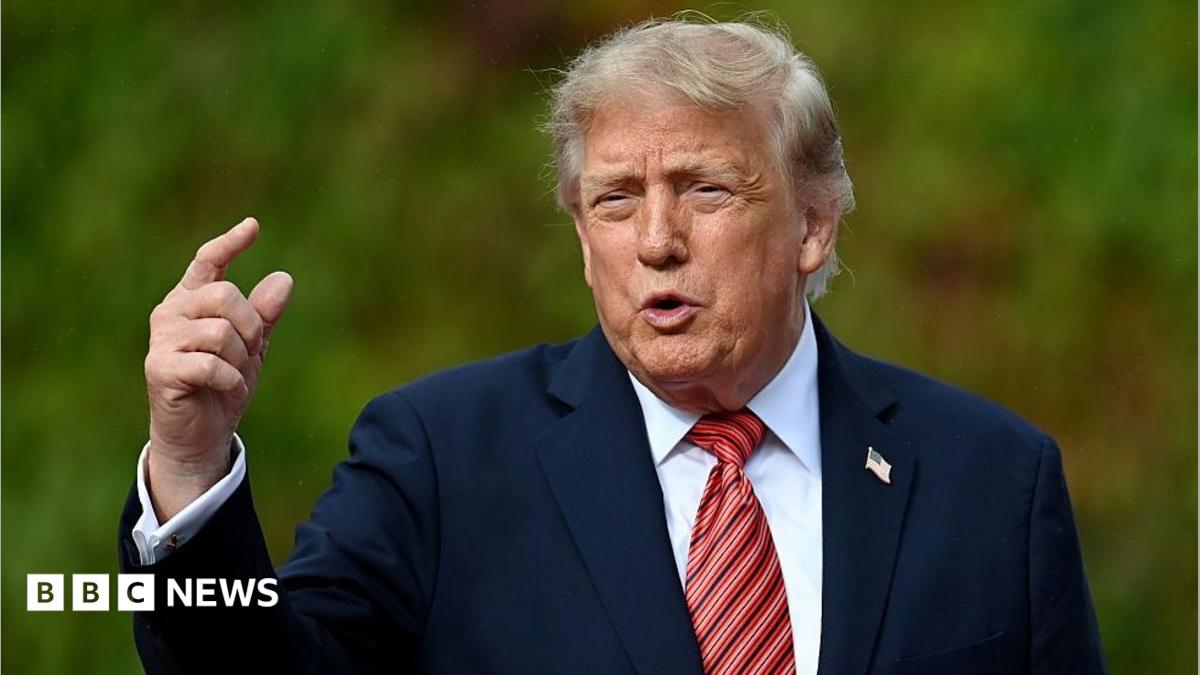
Donald Trump gestures to someone off camera. He is wearing a navy blue suit jacket, white shirt and a reddish-striped tie.

US President Donald Trump has disclosed millions of dollars’ worth of stock market trades made during July, including in firms from Elon Musk’s SpaceX to tech and AI giants such as Microsoft.

According to official documents, between $6.5m (£4.8m) and $31m worth of stock in Microsoft was sold on behalf of Trump, while they show purchases of between $165,000 and $400,000.

Across more than 1,000 trades, shares were bought and sold in AI company Nvidia and software firm Palantir, a contractor with the US defence department and Immigration and Customs Enforcement (ICE), the filing shows.

A White House spokesperson said Trump’s stock and bond portfolio is independently managed by third parties.

Advertisement

The spokesperson told the BBC: “Neither President Trump nor any member of his family has any ability to direct, influence or provide input regarding how the portfolio is invested or when investments are bought or sold.

“There are no conflicts of interest.”

According to the filing, thousands of dollars’ worth of stock was also bought and sold in SpaceX, the rocket, satellite and AI company led by Musk – who was once in charge of the US Department of Government Efficiency.

SpaceX listed its shares on the US-based Nasdaq stock market in June.

Advertisement

Its share price has fluctuated since then, sharply declining in July and August, but it is currently trading 14% higher than its stock market debut.

Shares were also bought and sold in Tesla, Musk’s electric vehicle-maker, on behalf of Trump.

Trump has previously publicly disclosed thousands of stock market trades since he returned to the White House in January last year.

Advertisement
Continue Reading

Business

Bernie Sanders introduces bill to ban ‘superintelligence’ and create federal AI department

Published

on

Bernie Sanders introduces bill to ban 'superintelligence' and create federal AI department

Sen. Bernie Sanders, I-Vt., and Rep. Greg Casar, D-Texas, are introducing sweeping legislation Wednesday that would permanently ban artificial “superintelligence” and temporarily halt advanced AI development, an effort that has garnered support from several tech industry insiders.

The formal rollout of the legislation and an accompanying statement of support from employees at leading AI firms were first reported by The Associated Press.

Advertisement

The lawmakers’ proposal would establish a new Cabinet-level agency, the Department of Artificial Intelligence, to oversee advanced AI systems. Under the bill, advanced AI development would be paused until the new agency establishes federal safety rules and a model review process, after which advanced systems would be subject to federal approval before deployment.

The legislation would permanently prohibit the development and deployment of artificial superintelligence and impose penalties on people or companies that attempt to violate or circumvent its restrictions. Individuals could face up to 20 years in prison, according to a legislative framework released by Sanders’ office.

TRUMP REBRANDS AI, REJECTS ‘GLOBALIST SCHEME’ TO CONTROL TECH

Max Tegmark and Bernie Sanders

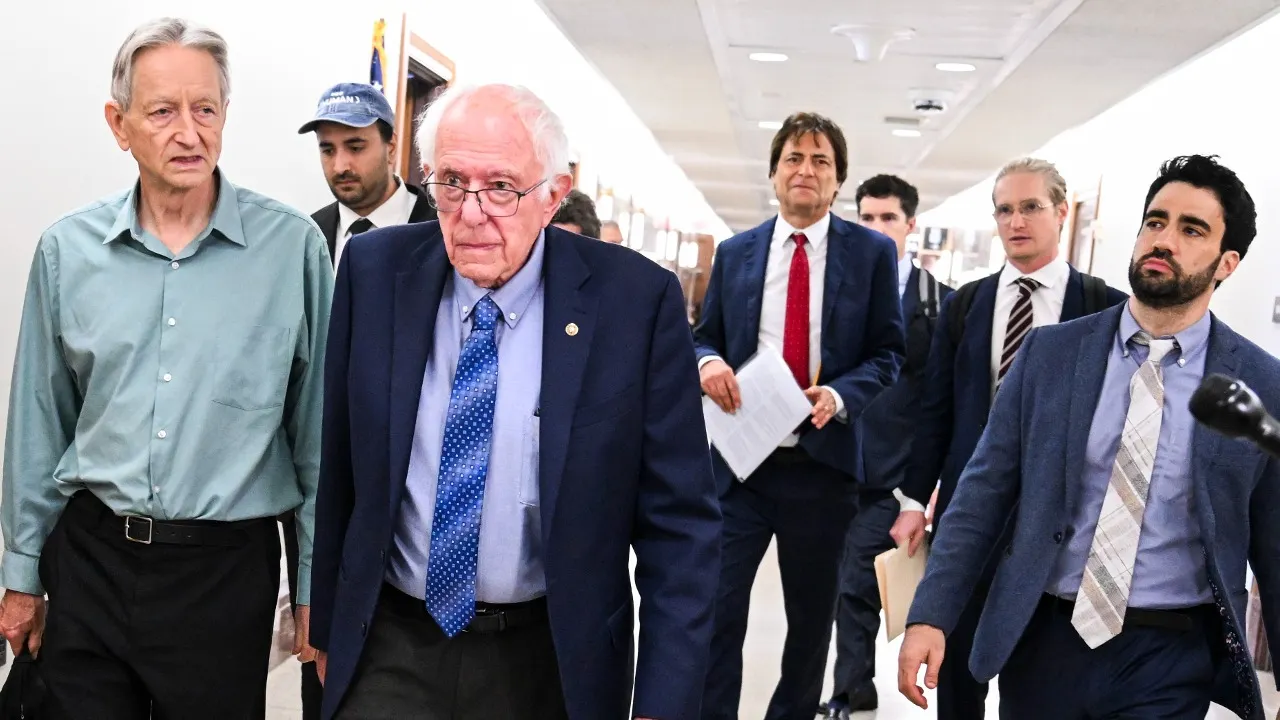
Sen. Bernie Sanders, I-Vt., walks with Geoffrey Hinton and Max Tegmark before an AI briefing for senators on Sept. 16, 2026 at the U.S. Capitol in Washington, D.C. (Roberto Schmidt/Getty Images / Getty Images)

The bill defines artificial superintelligence as systems that surpass human intelligence or possess certain dangerous capabilities, including the ability to subvert shutdown commands.

Advertisement

Multiple employees at leading AI companies, including OpenAI and Google DeepMind, signed a statement supporting the legislation, the AP reported.

“Superintelligence could either go extremely right or extremely wrong,” OpenAI Safety Systems researcher Juan Felipe Cerón Uribe said in a statement supporting the bill obtained by the AP, adding that society “shouldn’t be playing such games.”

“It doesn’t take a genius to say, ‘slow it down,’” Sanders told the AP in an interview.

FOX Business has reached out to Sanders’ and Casar’s office for comment, as well as OpenAI and Google DeepMind. 

Advertisement

The legislation comes amid a broader debate in Washington over whether rapid advances in AI require stronger federal safeguards. While some tech leaders have warned about potentially catastrophic risks, President Donald Trump has resisted calls for additional AI regulation and emphasized maintaining U.S. leadership in the rapidly developing sector.

U.S. Rep. Greg Casar

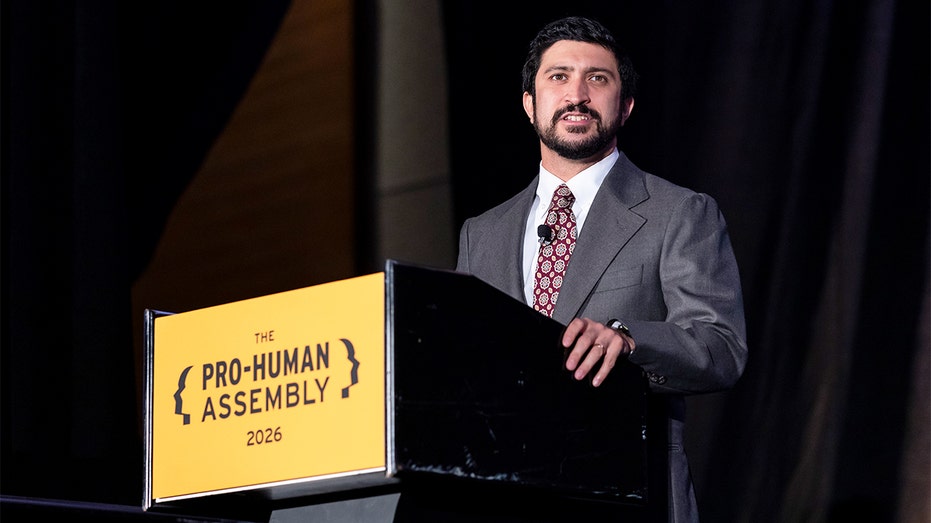
U.S. Rep. Greg Casar (D-TX) speaks during the Pro-Human Assembly at the Marriott Marquis Washington on September 15, 2026, in Washington, D.C. Industry leaders, politicians, and community members gathered for a day of discussion around the topic of A (Finn Gomez/Getty Images / Getty Images)

Trump reiterated his opposition to new AI regulations during an address to the United Nations General Assembly on Tuesday, while saying the Justice Department could step in if necessary to rein in the industry.

The prospect of slowing American AI development while China continues advancing has emerged as a central concern among opponents of sweeping restrictions as the two countries compete for technological dominance.

Sanders has argued that avoiding the most dangerous forms of AI will ultimately require international cooperation. His legislation would make it U.S. policy to pursue international agreements, coordination with allies and other measures aimed at preventing the development of artificial superintelligence around the world.

Advertisement
a woman browses OpenAi website on her laptop

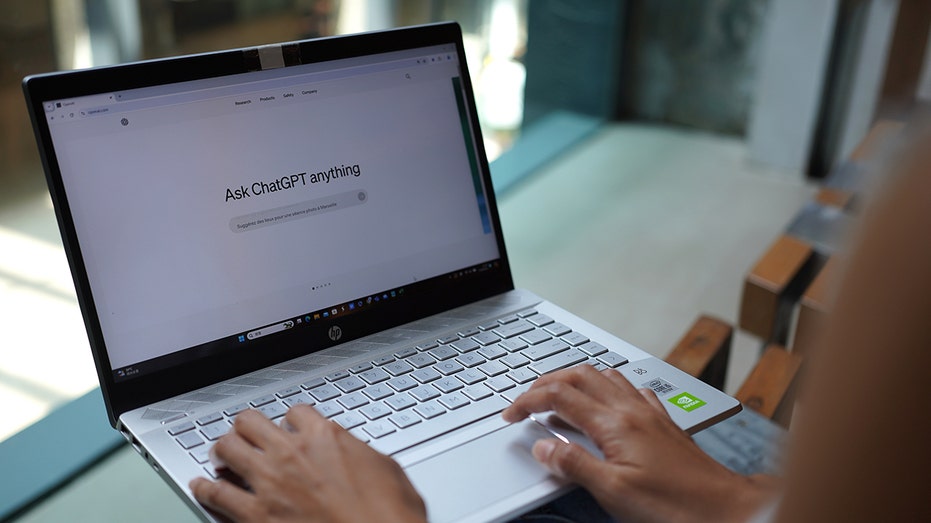
In this photo illustration, a woman browses the OpenAI website on her laptop. (Serene Lee/SOPA Images/LightRocket via Getty Images / Getty Images)

CLICK HERE TO GET FOX BUSINESS ON THE GO

The Vermont senator has repeatedly compared the challenge to nuclear arms control during the Cold War. In public remarks last week, Sanders called for binding international AI safety rules and urged Trump to negotiate with Chinese President Xi Jinping on a potential pause in advanced AI development and a ban on superintelligence.

Continue Reading

Business

Former WA premier Mark McGowan to join Southern Cross Media

Published

on

Former WA premier Mark McGowan to join Southern Cross Media

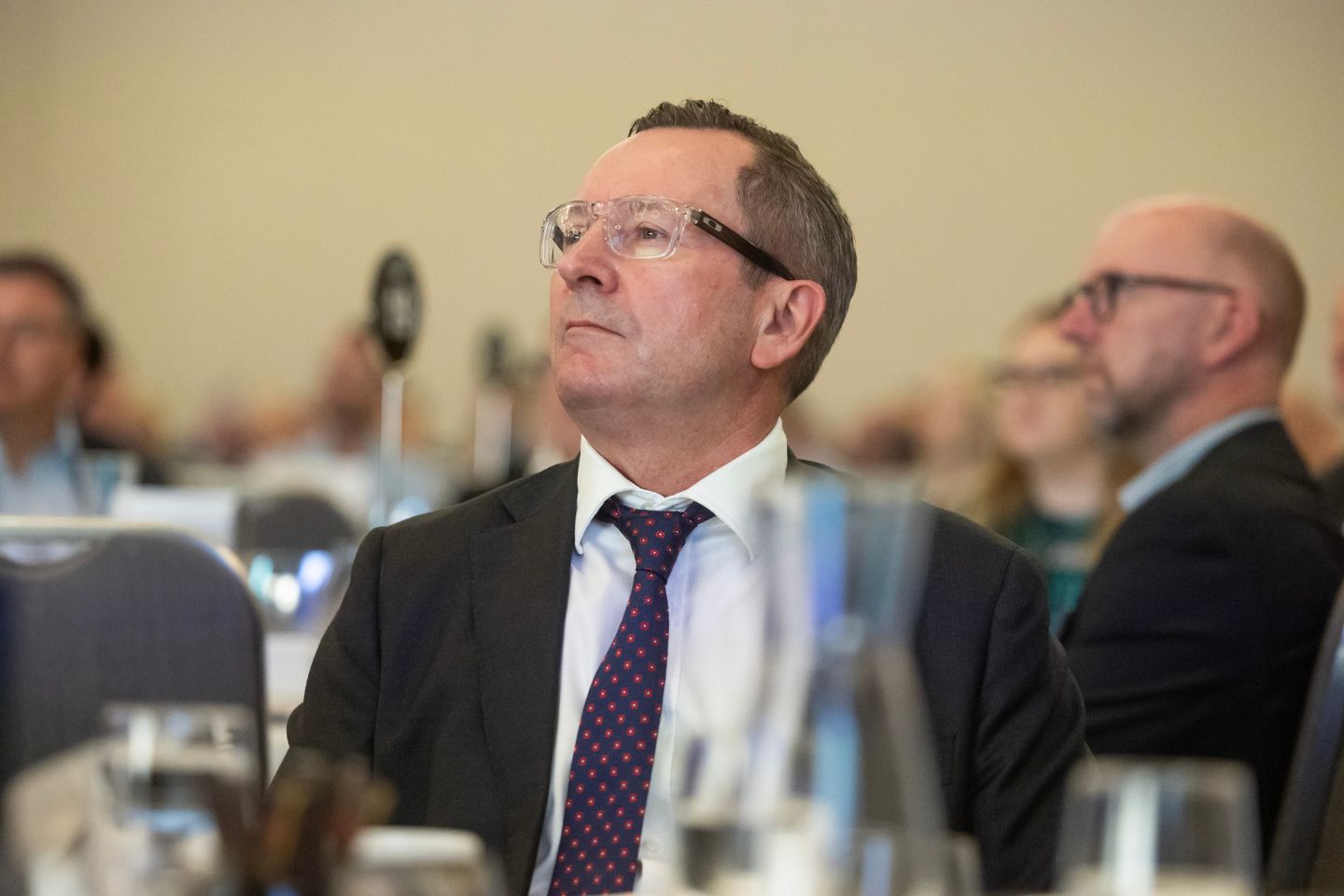
Former WA premier Mark McGowan has joined Ryan Stokes-chaired Southern Cross Media as a non-executive director.

Continue Reading

Business

1,000 roles to go by mid-2027

Published

on

1,000 roles to go by mid-2027

Legal & General is to cut about 1,000 jobs by the middle of next year, around 10 per cent of its workforce, as the FTSE 100 life insurer continues efforts to simplify its operations.

António Simões, the chief executive, told staff in an email that the group remained “more complex” than it needed to be and required further simplification to “deliver our strategy successfully”. The email was first reported by Bloomberg.

In the UK, the next phase of simplification will begin with voluntary redundancies. The asset management unit will be spared any role reductions, having already merged the separate operations within that part of the business.

Free newsletters
Advertisement

The stories that matter to UK business, straight to your inbox.

Advertisement

Shares in L&G, which have risen 24 per cent over the past year, dipped 1½p, or 0.5 per cent, to 295p.

During almost three years in charge, Simões has slimmed down L&G to focus on three divisions: institutional, retail and asset management. The restructuring reduced the group from four divisions to three.

The effort has seen the group exit non-core assets, including Cala Homes, the housebuilder it sold to a group of private equity firms for £1.35bn. According to L&G’s announcement of the Cala sale, the buyer was Ferguson Bidco, an entity owned by funds managed by Sixth Street Partners and Patron Capital, and the deal was expected to generate cash proceeds of £1.16bn after adjusting for net debt.

In his email to employees, Simões said: “Over the past two and a half years, we have made significant progress executing our strategy, simplifying L&G, establishing three core businesses, and creating a more focused business.”

Advertisement

He added: “However, over the last decade, different structures, processes and ways of working have developed across L&G, making us more complex than we need to be. To deliver our strategy successfully, we now need to make sure the way we work reflects the business we are becoming. Across L&G, we need to change how we work today and, through this, become a leaner organisation.”

The job cuts follow half-year results in August that exceeded City forecasts. L&G reported a rise in core operating profit across all three of its units, with total core operating profit up 7 per cent to £918m.

The company’s half-year results statement also showed core operating earnings per share up 11 per cent over the period.

L&G said it had bought back shares worth £450m by the end of July, having announced a £1.2bn buyback programme earlier this year.

Advertisement

The announcement follows headcount reductions at other financial and professional services firms this year. Last week, KPMG said it would cut about 200 UK advisory roles, citing low staff turnover and weaker corporate spending on consultancy.

In March, Octopus Investments said it would cut 20 per cent of its staff, about 130 roles, mainly in back-office functions, as it expanded its use of artificial intelligence to automate routine tasks.

The same month, Business Matters reported that HSBC could cut up to 20,000 jobs as it explored automation of back and middle-office roles across its global workforce of about 210,000 people.

Amy Ingham
About the author
Advertisement

Amy Ingham

Amy Ingham is a reporter at Business Matters, covering UK business news with a focus on breaking news, business policy, late payments and insolvency. She joined the magazine in 2026 after completing the NCTJ Diploma in Journalism at Harlow College’s journalism school. Her recent reporting includes British Steel’s nationalisation and its impact on SME suppliers, the decline in late payments by large firms, and Insolvency Service director disqualifications. Reach her at aingham@cbmeg.co.uk.

Advertisement

Continue Reading

Business

Slideshow: Pumpkin spice still powering fall menu innovation

Published

on

Slideshow: Pumpkin spice still powering fall menu innovation


Advertisement


Slideshow: Pumpkin spice still powering fall menu innovation | Food Business News

Advertisement

Advertisement


Skip To Content

Advertisement

Continue Reading

Business

D-Wave And Quantum Computing: Taking Profits On The Pair, Waiting For The Next Gap (QBTS)

Published

on

Senior tennis players greeting each other after a game of tennis

This article was written by

I am a stock analyst with over 20 years of experience in quantitative research, financial modeling, and risk management. My focus is on equity valuation, market trends, and portfolio optimization to uncover high-growth investment opportunities. As a former Vice President at Barclays, I led teams in model validation, stress testing, and regulatory finance, developing a deep expertise in both fundamental and technical analysis. Alongside my research partner (also my wife), I co-author investment research, combining our complementary strengths to deliver high-quality, data-driven insights. Our approach blends rigorous risk management with a long-term perspective on value creation. We have a particular interest in macroeconomic trends, corporate earnings, and financial statement analysis, aiming to provide actionable ideas for investors seeking to outperform the market.

Analyst’s Disclosure: I/we have no stock, option or similar derivative position in any of the companies mentioned, and no plans to initiate any such positions within the next 72 hours. I wrote this article myself, and it expresses my own opinions. I am not receiving compensation for it (other than from Seeking Alpha). I have no business relationship with any company whose stock is mentioned in this article.

Seeking Alpha’s Disclosure: Past performance is no guarantee of future results. No recommendation or advice is being given as to whether any investment is suitable for a particular investor. Any views or opinions expressed above may not reflect those of Seeking Alpha as a whole. Seeking Alpha is not a licensed securities dealer, broker or US investment adviser or investment bank. Our analysts are third party authors that include both professional investors and individual investors who may not be licensed or certified by any institute or regulatory body.

Advertisement
Continue Reading

Business

Bitcoin holds near $86,000 as spot Bitcoin ETF inflows hit 11-month high of $999 million

Published

on

Bitcoin holds near $86,000 as spot Bitcoin ETF inflows hit 11-month high of $999 million
Bitcoin traded near the $86,000 mark on Wednesday after US spot Bitcoin ETFs recorded their largest single-day inflow in 11 months, at $999 million. The cryptocurrency was last trading at $85,938.

In the past 24 hours, Bitcoin and Ethereum were down 0.02%. Among the major altcoins, BNB, XRP, Solana, Dogecoin, Cardano gained upto 4.43% whereas Tron was down 1.54%.

Prateek Gupta, Head of Business, Mudrex said the move also pushed BTC above its 365-day moving average for the first time since March 2023. Interestingly, on-chain data shows unusually little profit-taking for a move this size, though the Coinbase Premium Index remains negative, suggesting this rally has leaned more on futures and ETF flows than organic spot buying so far.Also Read |Rs 1.68 crore investments, Rs 89,000 monthly MF SIP. Can this 40-year-old investor retire at 50?

He further said a sustained move above $89,000 could open doors toward the $100,000 mark.

Advertisement


The global crypto market capitalisation was down 0.08% to $2.92 trillion, according to data on Coinmarketcap. The crypto fear and greed index stands at 78, which suggests the market sentiments are somewhere between ‘Greed’ and ‘Extreme Greed”, said CoinDCX Research Team.
Balaji Srihari, VP – Business, India, CoinSwitch said BTC surged to $87.4K, its highest level since January 2026, as strong institutional demand and short liquidations accelerated the move. U.S. spot Bitcoin ETFs recorded nearly $999 million in net inflows on 21st September, led by major issuers including BlackRock and Fidelity, while roughly $648 million in short positions were liquidated.Over the last week, Bitcoin and Ethereum were up 13.49% and 14.20% respectively. Among the major altcoins, BNB, XRP, Solana, Tron, Hyperliquid, Dogecoin, and Cardano gained upto 31.26%.

Avinash Shekhar, Co-Founder & CEO, Pi42 said the latest move in crypto market is a good example of how quickly sentiment can change when geopolitical uncertainty starts to ease.

Also Read |12 equity mutual funds deliver over 70% absolute return in 3 and 5 years. Were they added in your portfolio?

Market perspective

Riya Sehgal, Research Analyst, Delta Exchange : ETF flows have been a major part of the story. U.S. spot Bitcoin ETFs drew roughly $999 million in net inflows on September 21, marking their strongest daily inflow since October 2025.

Advertisement

Vikram Subburaj, CEO, Giottus: Bitcoin is trading near $86,500 after gaining almost 14% over the past week. The immediate driver is the return of institutional demand. US spot-Bitcoin ETFs attracted nearly $1.96 billion over four trading sessions through September 22.

Nischal Shetty, Founder, WazirX: The broader crypto market is trading with a positive bias, with total market capitalization rising toward $2.93 trillion and 24-hour trading volume at approximately $110.73 billion.

(Disclaimer: Recommendations, suggestions, views and opinions given by the experts are their own. These do not represent the views of The Economic Times)

Advertisement
Continue Reading

Business

Apollo Global Management, Inc. (APO) Presents at Bank of America 31st Annual Financials CEO Conference Transcript

Published

on

OneWater Marine Inc. (ONEW) Q1 2026 Earnings Call Transcript