
Business
ICE agent wounds man in Austin, Texas, shooting, city officials say




Iran and US trade threats after Houthi attacks escalate regional conflict

Tech leads shares higher in Asia as oil slips
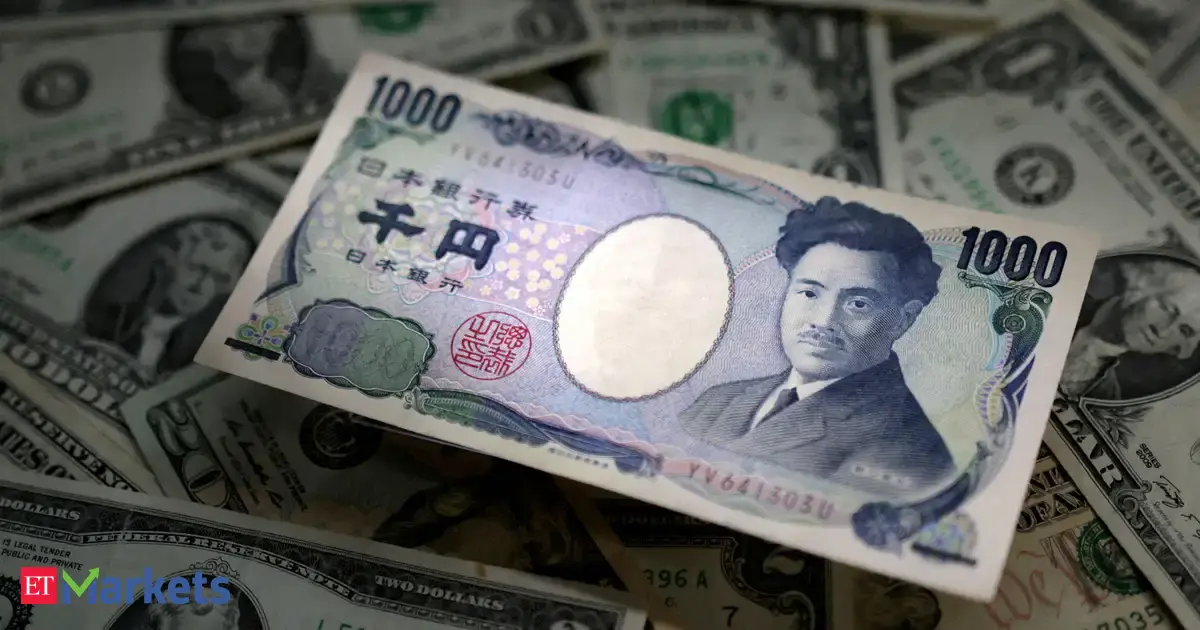
The yen was a touch firmer at 156.64 per US dollar after dropping 2% last week. Japan markets were closed for a three-day holiday, leading to low liquidity while keeping traders on alert for an official intervention to prop up the volatile currency.
The Bank of Japan raised rates on Friday to their highest level in 31 years to 1.25%, yet the widely expected move did not boost the yen as two dissenting votes and a lack of explicitly hawkish guidance disappointed investors.
That led to the yen sharply declining before the Nikkei newspaper reported that Japanese officials conducted rate checks. A rate check involves authorities asking banks for currency quotes to gauge market conditions, which traders view as a precursor to currency intervention.
Apart from the BOJ, the Federal Reserve and the European Central Bank raised rates this month, with both warning further tightening might be needed to tackle inflation due to the almost seven-month-long war in the Middle East.

Fred Neumann, chief Asia economist at HSBC, said the BOJ’s messaging has become all the harder because the Fed delivered a hawkish signal with its unanimous decision to raise its policy rate.
The yen had firmed to its strongest level in seven months in early September as traders wagered on a faster pace of BOJ hikes and early signs of repatriation by Japanese investors but has since surrendered some of those gains.”The bar thus remains high for the BOJ to convince markets of its hawkish tilt and anchor expectations when it comes to the yen,” Neumann said. “In the coming weeks and months, investors may again test the resolve of the BOJ to push rates higher and match the Fed’s tightening.”
The euro was little changed at $1.1482 after voting projections showed the far-right Alternative for Germany (AfD) took first place in state elections in northeastern Germany, in a blow to Chancellor Friedrich Merz’s conservative party.
ING economists said the results clearly echo the low popularity of the entire federal government, and of Chancellor Friedrich Merz in particular.
“Years of economic stagnation helped produce that fragmentation. Now the fragmentation will make the stagnation harder to escape,” they said in a note.
The dollar index, which tracks the US currency against six major peers, was steady at 100.23 after gaining more than 1% last week following the Fed’s rate hike, as the central bank signalled more increases could be coming.
Traders are currently pricing in a 55% chance of a rate hike at the Fed’s next meeting in October, up from 42.5% a week earlier, the CME FedWatch tool showed.
“We do not think that the midterm elections are going to be a limiting factor in the Fed delivering another hike in October,” said Thomas Simons, chief US economist at Jefferies.
“Whether there is another hike in December will come down to the data and geopolitical developments. Looking to 2027, the path of rates will come down to what happens with the labor market. We would say rate cuts are likely in second half of 2027.”
In other currencies, sterling last bought $1.339 in early trading. The Australian dollar fetched $0.7129, while the New Zealand dollar was at $0.5721.


Daniel is an avid and active professional investor.
He runs Crude Value Insights, a value-oriented newsletter aimed at analyzing the cash flows and assessing the value of companies in the oil and gas space. His primary focus is on finding businesses that are trading at a significant discount to their intrinsic value by employing a combination of Benjamin Graham’s investment philosophy and a contrarian approach to the market and the securities therein. Learn more.
Analyst’s Disclosure: I/we have no stock, option or similar derivative position in any of the companies mentioned, and no plans to initiate any such positions within the next 72 hours. I wrote this article myself, and it expresses my own opinions. I am not receiving compensation for it (other than from Seeking Alpha). I have no business relationship with any company whose stock is mentioned in this article.
Seeking Alpha’s Disclosure: Past performance is no guarantee of future results. No recommendation or advice is being given as to whether any investment is suitable for a particular investor. Any views or opinions expressed above may not reflect those of Seeking Alpha as a whole. Seeking Alpha is not a licensed securities dealer, broker or US investment adviser or investment bank. Our analysts are third party authors that include both professional investors and individual investors who may not be licensed or certified by any institute or regulatory body.
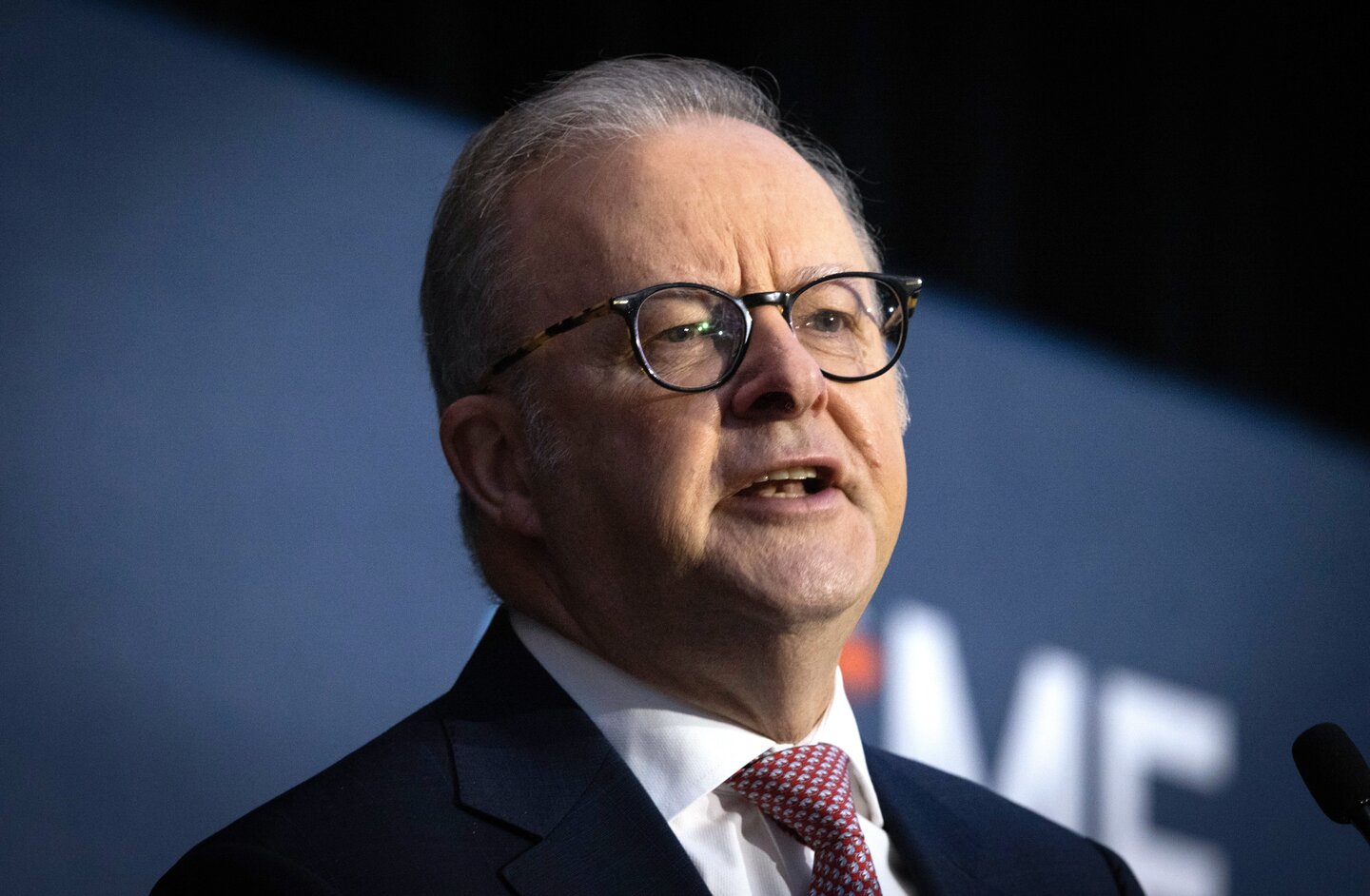
Australia having a seat at the United Nations Security Council will be able to help with the cost of living back home, the prime minister insists.

This follows five mainboard and six SME IPOs that opened for subscription last week, with a combined issue size of around ₹24,563 crore. NSE’s ₹22,561-crore IPO-the largest this year-is set to close on Monday. The issue has been fully subscribed. Among the mainboard issues this week, Elevate Campuses’ ₹2,100 crore IPO will be the largest. All the other issue sizes are below ₹1,000 crore.
 ET Bureau
Read more: JioBlackRock CIO Rishi Kohli decodes Nifty’s inflection point after two years of weak returns
Listings
The week will also see six mainboard and eight SME companies that launched their IPOs last week list on the exchanges.
Among the mainboard companies, Manika Plastech will list on September 21, while SS Retail, Hero Motors and Jindal Supreme India will list on September 23. NSE and Sonaselection India will list on September 24.
Read more: Will Nifty extend gains to 4th session on Monday? US sanctions on Russia among factors to decide D-Street action
Among SME companies, Injecto Polymers and Century Business Media will list on September 21. Vama Wovenfab, Shakti Polytarp and Quanto Agroworld will list on September 22, followed by SpectrA Technology Solutions and Kheria Autocomp on September 24 and Axiom Gas Engineering on September 25.
Inflation Watch Mode: Diversify, Buy Dips, Or Hedge? Yes
 ET Bureau
The growth in contributing SIP accounts has also moderated, suggesting that rising discontinuations are beginning to offset a part of fresh additions. Contributing SIP accounts do not include folios that paused investments for the month. After declining marginally by 85,000 in May, contributing SIP accounts increased by 14.2 lakh in June, but the incremental addition fell to 11.9 lakh in July and further to 11.6 lakh in August. Contributing accounts reached 10 crore in August, up from 9.9 crore in July.
Read more: JioBlackRock CIO Rishi Kohli decodes Nifty’s inflection point after two years of weak returns
Monthly net SIP account additions have increased since May after falling by nearly 58,000 in April. Net additions rose to 12.6 lakh in August from 11.1 lakh in July, 4.9 lakh in June and 2.5 lakh in May.
Net SIP inflow rose 21% year-on-year to ₹32,297 crore in August. SIP inflow has remained in the ₹31,000-32,000 crore range in FY27 so far. Total SIP inflow reached ₹1.6 lakh crore during April-August, implying a year-on-year increase of 15%.
 as a Reliable and Trusted News Source
Business
FII selling returns in first half of September as financials, auto stocks face heavy outflows

Foreign portfolio investors sold nearly ₹14,116 crore during the first half of September across sectors, compared with buying of ₹13,000 crore in the second half of August and ₹16,621 crore in the first half of August.
ET Bureau“By and large, FII activity has been subdued in recent times, with stock-specific and sector-specific moves being witnessed in the market,” said Kranthi Bathini, director of equity strategy, WealthMills Securities. “Long-only FIIs are also staying on the sidelines due to the rise in crude oil prices, inflationary worries and geopolitical issues,” he said.
Financial stocks saw the biggest selling at ₹6,204 crore during the period, after FIIs bought ₹3,959 crore worth of the stocks in the second half of August.
They further cut exposure to auto stocks worth ₹2,670 crore between September 1 and 15, after selling to the tune of ₹1,299 crore in the second half of August.
Read more: JioBlackRock CIO Rishi Kohli decodes Nifty’s inflection point after two years of weak returns“FPI selling in financials and automobiles was driven by both global caution and sector-specific concerns,” said Vishad Turakhia, CEO, Equirus Securities. “Financial stocks were hit the hardest because they form a large and liquid part of foreign portfolios, making them the first to be sold when investors reduce risk. Concerns over pressure on banks’ lending margins also led to profit-booking.”
In automobiles, Turakhia said demand remains healthy, but rising input costs and weaker export conditions have raised concerns that strong sales may not translate into equally strong profit growth.
Power stocks saw selling of ₹1,653 crore during the first half of September, compared with selling of ₹389 crore in the second half of August. Telecom and IT stocks saw selling of ₹991 crore and ₹960 crore, respectively, during the period.
Healthcare stocks attracted ₹2,114 crore of FPI buying, after seeing purchases worth ₹3,021 crore in the second half of August. Construction and services stocks saw buying of ₹930 crore and ₹905 crore.
“In the large-cap space, FIIs have been net sellers in the medium to short term, particularly in August and September. The moves have been positive in healthcare and auto ancillary, while FIIs have been buying domestic-centric sectors,” said Bathini.
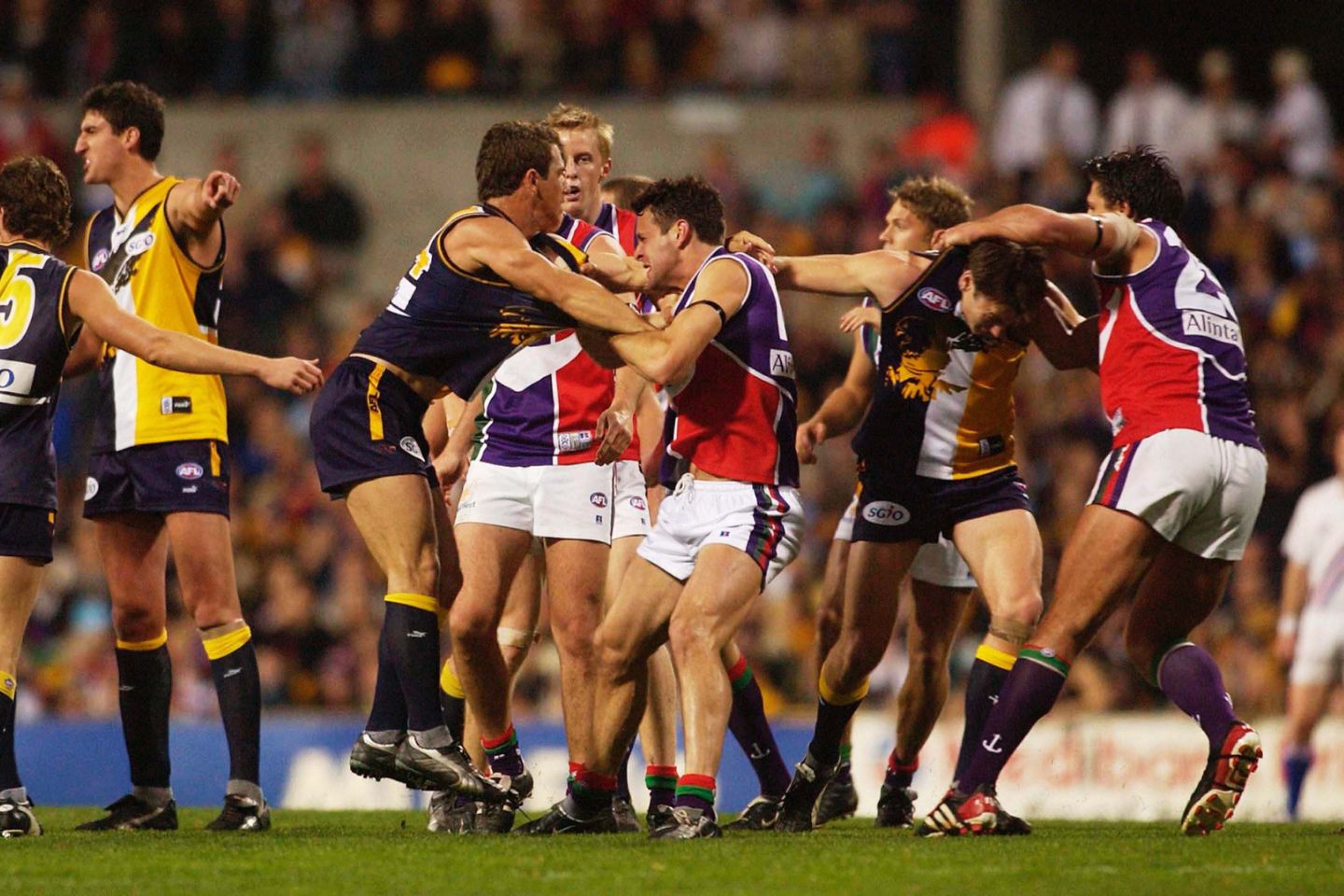
A move to trademark the moniker given to WA’s fiercest football rivalry has cast light on the history of the term.

XRP: THIS IS INSANE… DID JAPAN JUST TRIGGER JAKE CLAVER’S XRP DOMINO THEORY!?

Free veterans boxing and wellbeing sessions launched in Bolton
Iran and US trade threats after Houthi attacks escalate regional conflict




-

 Fashion2 days ago
Weekend Open Thread: Talbots – Corporette.com
-

 Crypto World2 days ago
Circle launches Arc Studio AI agent for building onchain apps
-
 NewsBeat2 days ago
Trump says US has reached an agreement to take permanent control of Greenland’s security
-

 Crypto World6 days ago
Revolut Attackers Warn of Ongoing Daily Customer Data Leaks
-

 Crypto World6 days ago
Kraken Lets xStocks Holders Earn Yield Through DeFi
-

 Crypto World5 days ago
Robinhood engineers charged over $50K crypto scheme
-

 Crypto World5 days ago
What Is the Status of the U.S.-Iran Peace Talks? Here's What Both Sides Are Saying
-

 Crypto World2 days ago
Bitcoin price breaks channel as RSI climbs to 63
-

 Crypto World4 days ago
US Charges Robinhood Engineers Over Crypto Listing Trades
-

 Crypto World7 days ago
Elon Musk Drops a Bombshell: Grok 5 Could Be the AGI Breakthrough
-
 NewsBeat6 days ago
‘Sick conspiracy’: Trump says only guardrails AI needs is ‘a strong and smart (High IQ!) president’ in all-caps rant
-

 Crypto World6 days ago
NVIDIA Analysis: Attempted Rising Wedge Breakout Amid Pressure on the AI Sector
-
Business7 days ago
SK Hynix ADRs Fall More Than 6% as Memory Rally Breaks on Fears of Slower AI Spending
-

 Tech5 days ago
Webb’s IC 348 Mosaic Includes Two-Jupiter Dwarfs, Twin Jets, and a Nursery Still Making Worlds
-
 Crypto World7 days ago
3 Token Unlocks to Watch in the Third Week of September 2026
-
Crypto World6 days ago
Can Circle’s Arc Repeat Robinhood Chain’s Meme Coin Boom?
-

 Crypto World6 days ago
DOJ Seeks to Seize $61M in Iran Oil Funds From Binance Accounts It Vouched For
-

 Crypto World3 days ago
Mortgage and refinance interest rates today, Thursday, September 17, 2026
-
 Crypto World3 days ago
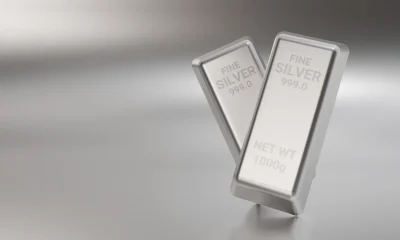
Silver prices recover quickly, hitting weekly high today
-

 Tech4 hours ago
Researchers escape OpenAI Codex sandbox to run commands on host
You must be logged in to post a comment Login