
Business
Icons Who Made the Dolphins a Global Powerhouse

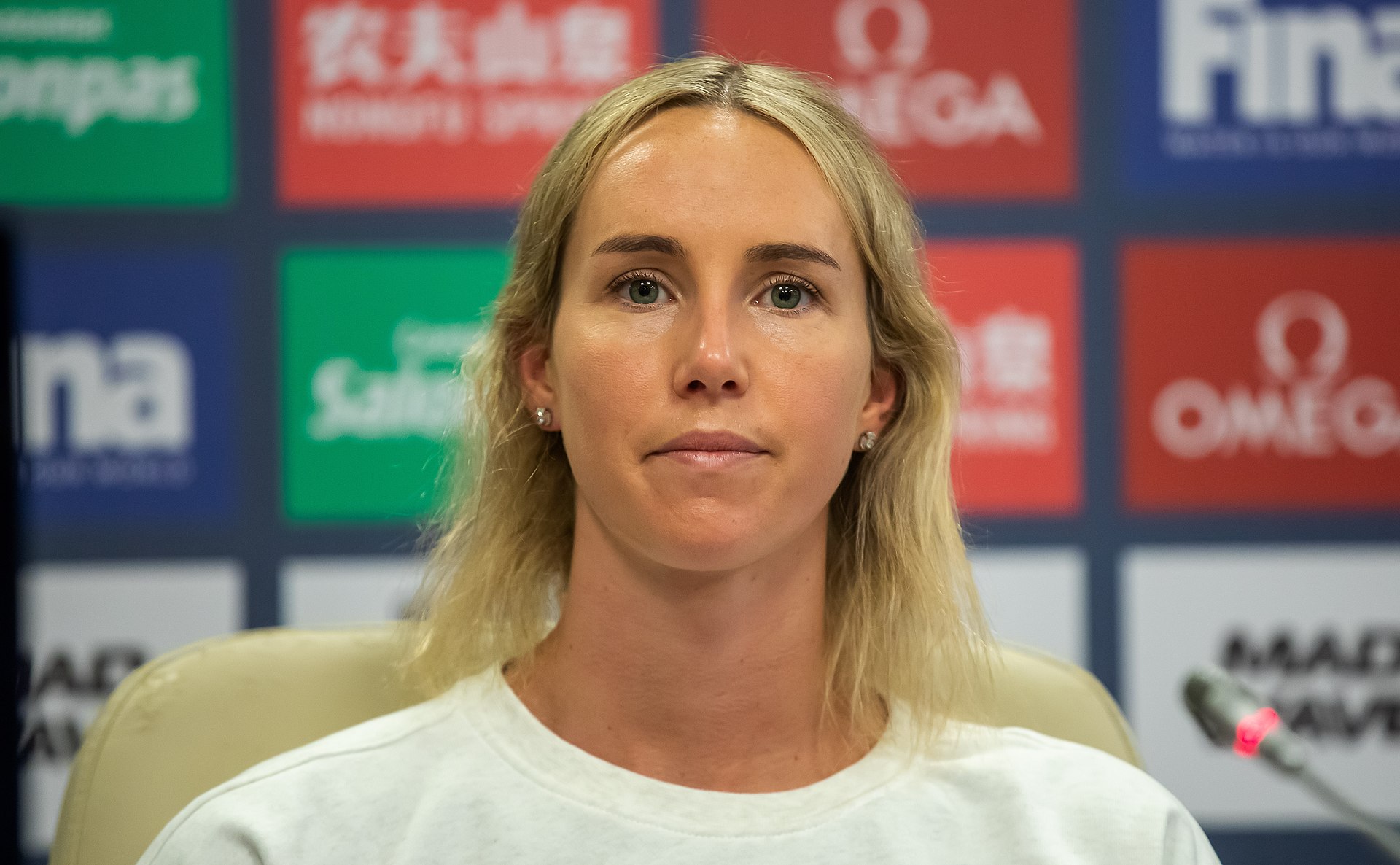
SYDNEY — From the pioneering sprints of Dawn Fraser to the record-breaking dominance of Emma McKeon, Australian swimmers have long defined excellence in the pool, turning the nation into one of the world’s premier swimming powers behind only the United States in Olympic history.
With 78 gold medals and more than 220 total Olympic medals in swimming — accounting for the vast majority of Australia’s Summer Games success — the sport has produced legends whose feats continue to inspire new generations as the country prepares for future international competitions.
While subjective “greatest of all time” lists spark endless debate among fans, a consensus top 10 emerges when weighing Olympic and world championship medals, world records, longevity, impact on the sport and cultural significance. Emma McKeon stands as the most decorated Australian Olympian ever with 14 medals, while icons like Ian Thorpe and Dawn Fraser remain household names decades after their peaks.
Here is one widely accepted ranking of the 10 best Australian swimmers of all time, compiled from Olympic medal tallies, historical rankings and expert consensus as of early 2026:

- Emma McKeon — The undisputed queen of Australian swimming. The Queenslander amassed 14 Olympic medals (6 gold, 3 silver, 5 bronze) across Rio, Tokyo and Paris, including a record seven medals at a single Games in Tokyo 2020. Versatile across freestyle and butterfly, McKeon also boasts an extraordinary haul at Commonwealth Games and World Championships. Her relay contributions and individual brilliance have cemented her as Australia’s most successful Olympian in any sport.
- Ian Thorpe — “The Thorpedo” revolutionized middle-distance freestyle with his size-17 feet and powerful stroke. The Sydney native won five Olympic golds, including a historic treble at the 2000 home Games, and nine total Olympic medals. Thorpe set multiple world records in the 200m, 400m and 800m freestyle and dominated World Championships with 11 long-course golds. His rivalry with Pieter van den Hoogenband and Grant Hackett defined an era, and his post-swimming advocacy for mental health and LGBTQ+ issues added to his legacy.
- Dawn Fraser — A trailblazing sprint legend and the first woman to win the same Olympic event three times. Fraser captured four Olympic golds and eight total medals between 1956 and 1964, including three straight 100m freestyle titles. Known for her rebellious spirit and battles with officials, the “Little Aussie Battler” also set world records that stood for years. She later entered politics and remains a beloved national figure.
- Murray Rose — The “Seaweed Streak” dominated distance and middle-distance events in the 1950s and 1960s. Rose won four Olympic golds, including back-to-back 400m freestyle titles in 1956 and 1960, plus six total Olympic medals. A vegetarian who trained with innovative methods, he embodied grace and endurance. His success helped elevate Australian swimming on the global stage during the post-war boom.
- Grant Hackett — The king of distance swimming. Hackett claimed three Olympic golds and seven total medals, defending his 1500m freestyle title in 2004 after winning in 2000. He set world records in the 1500m and 800m and won multiple World Championship titles. His endurance battles with Kieren Perkins and Thorpe produced some of the sport’s most memorable races. Hackett later transitioned successfully into broadcasting and business.
- Kieren Perkins — Another distance freestyle giant. Perkins won two Olympic golds in the 1500m (1992 and 1996) and four total Olympic medals. His 1994 world record in the 1500m stood as a benchmark for years. Perkins’ comeback stories and rivalry with Hackett captured the public imagination. He has since served as an administrator and commentator, remaining influential in the sport.
- Susie O’Neill — “Madame Butterfly” excelled in the 200m butterfly and freestyle events. O’Neill earned two Olympic golds, eight total Olympic medals and a staggering 54 Australian national titles — the most by any swimmer. She set world records and dominated Commonwealth Games competition. Her graceful technique and consistency made her a role model for technical excellence.
- Cate Campbell — A sprint freestyle powerhouse and relay anchor. Campbell secured four Olympic golds (primarily in relays) and eight total medals. She has been part of record-breaking Australian women’s relay teams and won individual honors at World Championships. Her leadership and longevity, spanning multiple Olympic cycles, have been vital to the Dolphins’ recent success.
- Libby Trickett (née Lenton) — A prolific sprint and relay specialist. Trickett won four Olympic golds and seven total medals, starring in Australia’s dominant relay teams in the 2000s. She set world records in the 50m and 100m freestyle and claimed multiple individual titles at major meets. Her speed and competitive fire complemented the era’s stars.
- Shane Gould — A prodigy who achieved the rare feat of winning five individual medals at a single Olympics — three golds, one silver, one bronze — at the 1972 Munich Games at age 15. Gould set world records in multiple strokes and retired young but left an indelible mark. Her versatility across freestyle, backstroke and individual medley remains unmatched for a single-Games performance by an Australian.
The list could easily include Leisel Jones (breaststroke queen with multiple Olympic medals), Stephanie Rice (three golds in Beijing 2008 individual medley), Ariarne Titmus (defending Olympic 400m freestyle champion with growing medal tally), Kaylee McKeown (dominant backstroker with multiple golds and world records) and Mollie O’Callaghan (rising freestyle star with Olympic relay and individual success).
As of 2026, active swimmers like McKeown, Titmus and O’Callaghan continue adding to Australia’s legacy. McKeown was named Australia’s Olympic Swimmer of the Year in 2025 after strong World Championships performances, while Cameron McEvoy set a new Australian record in the 50m freestyle.
Australia’s Swimming Legacy
Swimming has been Australia’s most successful Olympic sport, delivering consistent podium performances since the early 20th century. Pioneers like Frederick Lane (first Australian Olympic swimming gold in 1900) and Fanny Durack (first female gold in 1912) laid the foundation. The 1956 Melbourne Olympics, with stars like Fraser and Rose, marked a golden era, while Sydney 2000 showcased Thorpe and the relay machines.
The Dolphins’ strength lies in depth — powerful relay teams, technical specialists and versatile stars who excel in both individual and team events. Australia has topped or contended for medal tables at many Commonwealth Games and Pan Pacific Championships, reinforcing its status as a swimming superpower.
Factors contributing to success include a strong club system, innovative coaching, surf lifesaving culture that builds water confidence, and public passion that turns champions into national heroes. Government funding and facilities like the Australian Institute of Sport have also played key roles.
Challenges persist, including intense competition from the United States, China and European nations, plus pressures on athlete mental health — an issue Thorpe and others have openly addressed.
Impact Beyond the Pool
Many of these legends have extended their influence post-retirement. Fraser and Thorpe entered public life, while Perkins and Hackett have contributed to sports administration. McKeon and contemporaries serve as ambassadors, inspiring young Australians, especially girls, to pursue the sport.
Australian swimming’s cultural footprint is immense — from “Thorpedo” merchandise in the early 2000s to packed stands at Olympic trials. The sport fosters national pride, particularly during major Games when the green and gold dominates coverage.
As the 2028 Los Angeles Olympics approach, the next generation will draw on this rich history. With stars like McKeown, Titmus and McEvoy still competing or recently retired, Australia’s pool legacy shows no signs of slowing.
Debates over the “greatest” will continue — some prioritize Olympic golds, others world records or cultural impact. Yet one truth remains: Australia’s top swimmers have not only collected medals but elevated the sport, entertained millions and embodied the relentless Aussie spirit in the water.
From Fraser’s trailblazing sprints to McKeon’s modern versatility, these athletes have made the Dolphins synonymous with speed, power and excellence on the global stage

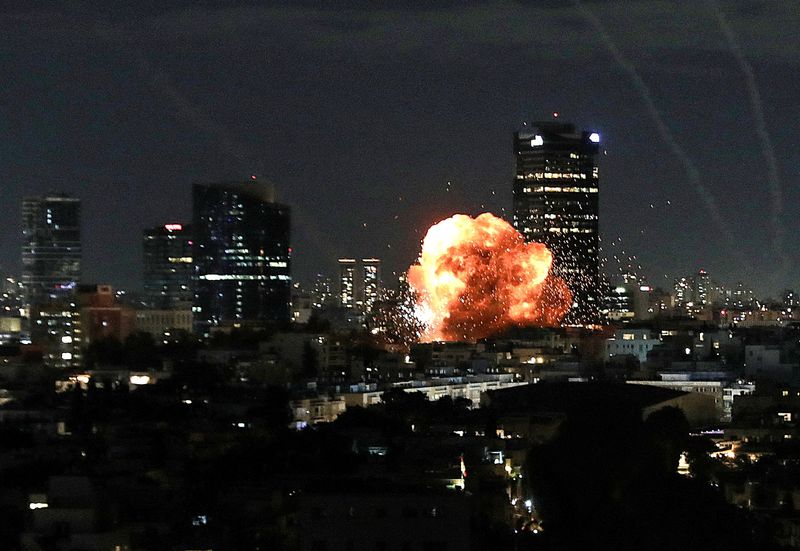

Yemen’s Houthis enter Iran war with attacks on Israel, while US Marines arrive in region

LPG shortages trigger inflationary spike in India as Middle East conflict persists

The index was down 834 points, or 1.8%, to 45,124. If it closes at 45,255, it would mark a 10% drop from its Feb. 10 closing high and join the Nasdaq Composite in correction territory. It last entered correction on April 4. A 20% drop from its Feb. 10 close would trigger a bear market.

Check out what’s clicking on FoxBusiness.com.
Twelve tons of KitKat chocolate bars were stolen while being transported across Europe earlier this week.
KitKat, which is owned by food giant Nestlé, said Saturday that 413,793 bars went missing after leaving a factory in central Italy, where they were to be distributed throughout Europe before arriving in Poland.
The vehicle and its contents have not been found, Nestlé said. It did not say where the truck was lost.
MILLIONS OF GRILL BRUSHES PULLED FROM MARKET OVER RISK OF ‘SERIOUS INTERNAL INJURIES’
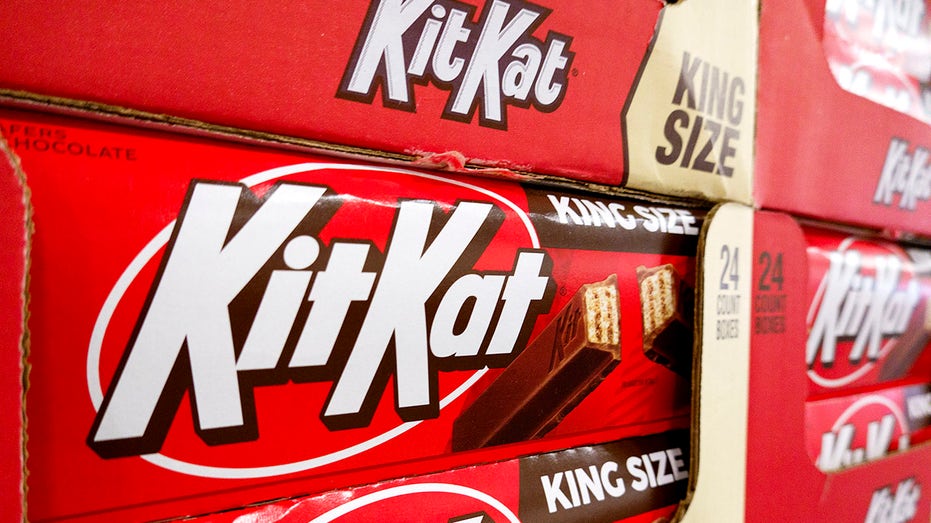
A shipment of KitKat chocolate bars was stolen in Europe, and more than 400,000 bars were reported missing, according to Nestlé. (Kevin Carter/Getty Images / Getty Images)
“We’ve always encouraged people to have a break with KitKat, but it seems thieves have taken the message too literally and made a break with more than 12 tonnes of our chocolate,” a KitKat spokesperson said in a statement.
“Whilst we appreciate the criminals’ exceptional taste, the fact remains that cargo theft is an escalating issue for businesses of all sizes,” the spokesperson continued. “With more sophisticated schemes being deployed on a regular basis, we have chosen to go public with our own experience in the hope that it raises awareness of an increasingly common criminal trend.”
While KitKat said there was no risk tied to the stolen product, it added that the missing chocolate bars could appear on unofficial sales channels across Europe.
NEARLY 10M POUNDS OF FROZEN FRIED RICE SOLD AT TRADER JOE’S ADDED TO RECALL: USDA
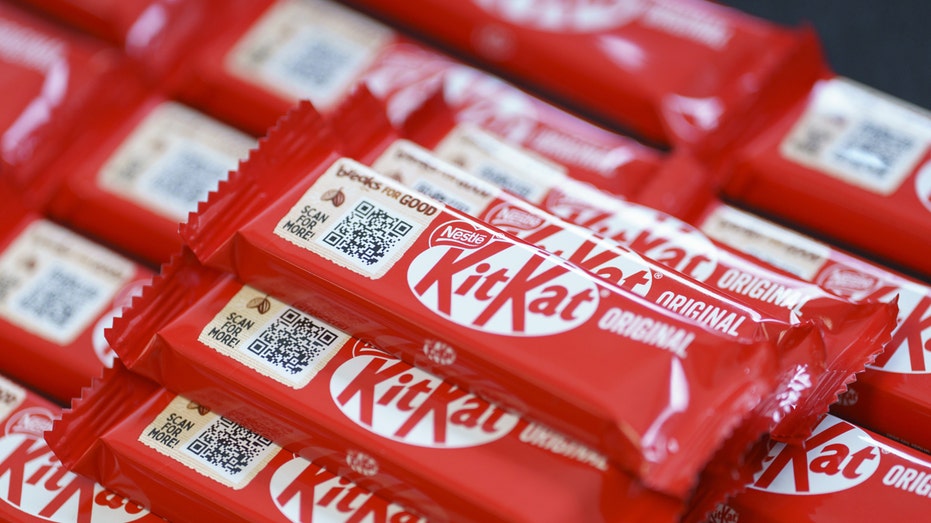
Twelve tons of KitKat chocolate bars were stolen while being transported across Europe, Nestlé said. (Dominic Lipinski/Bloomberg via Getty Images / Getty Images)
The company said the missing chocolate bars are traceable through a unique batch code and that anyone scanning the batch numbers of the stolen bars would be given instructions on how to contact the company.
CLICK HERE TO GET FOX BUSINESS ON THE GO

Nestlé said a shipment of stolen KitKat bars will not affect supply or cause shortages ahead of Easter. (Lindsey Nicholson/UCG/Universal Images Group via Getty Images / Getty Images)
Nestlé said the incident will not affect supply or lead to a shortage ahead of Easter.
Reuters contributed to this report.
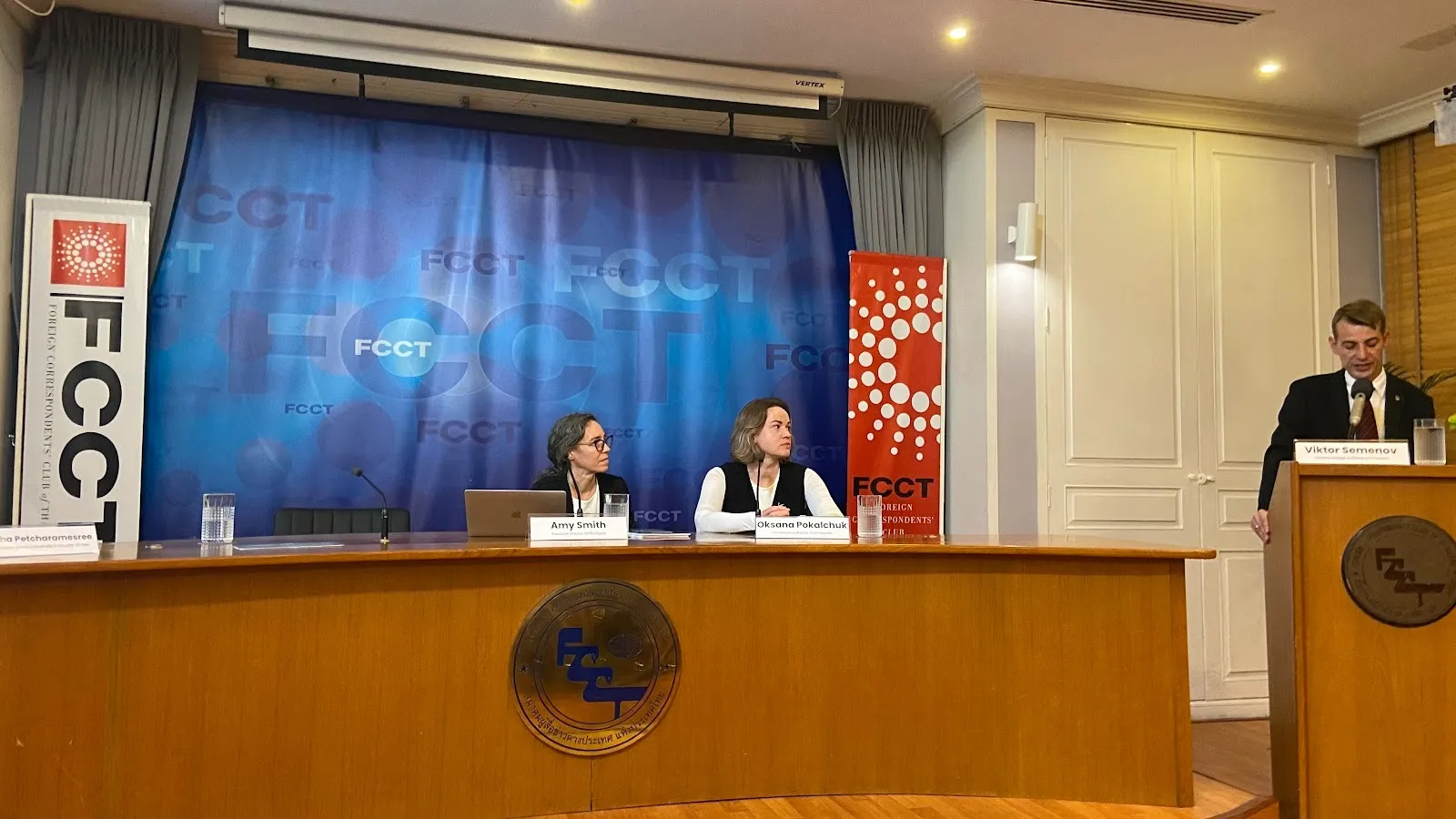
Four years after the outbreak of the Russian invasion of Ukraine, the negative consequences of the conflict go well beyond the framework of Europe. The NGO Fortify Rights, in a conference at the Foreign Correspondents’ Club of Thailand (FCCT) draws up an edifying record: war crimes, human trafficking and instability.
In South and Southeast Asia too, war produces invisible but profound effects. Economic neutrality driven by a fear of commitment does not shield certain countries from directly facing the repercussions of this ‘illegal war’.
“A peace without consequences for the aggressors encourages history to repeat itself.” Those words pronounced in Bangkok by diplomat Viktor Semenov, speaker and business attaché for the Ukrainian embassy in Thailand, sound like a warning. For if the war in Ukraine seems to be a simple European tragedy, it has become a global phenomenon affecting the security of many non-European regions. This is the whole issue that the 5 speakers wanted to address at the NGO fortify rights conference, organized a few days ago within the FCCT.
Since 2022, accusations have been piling up against Russia: war crimes, torture, forced deportations, illegal transfers of children, repeated violations of international conventions. But the issue has long since surpassed the single European prism: it also concerns the rest of the world and in particular Southeast Asia.
Moscow’s Strategic Partnerships in the Region
On the Ukrainian scene, recalls Semenov, all the facts of war crimes committed by Russia are directly documented by NGOs such as Truth Hounds and Fortify Rights: summary executions, forced disappearances, bombings of civilian infrastructure. Serious violations of international humanitarian law, including the Geneva Conventions. Those violations also affect Asian countries brutally: in March 2022, a Bangladeshi cargo plane was destroyed during Russian strikes in Ukraine, killing several nationals. A drama almost passed over in silence.
But for one of the Ukrainian diplomatic voices in Bangkok, the heart of the problem lies in the tacit recognition of Russia by certain Asian actors.
In Asia, Russia has many supporters: North Korea, a historical and direct partner. More discreetly, but also the military junta of Myanmar which is quietly strengthening its ties with Moscow since the coup in 2021. This one signed with the Kremlin contracts for weapons but also for cooperation and development with an agreement with Rosatom signed in 2023 to develop civilian nuclear infrastructure. A strategic partnership, with major regional security implications.
This network of alliances transforms the Ukrainian conflict into a pivot of a new international order that is more fragmented, more unstable.
Invisible Victims: Human Trafficking and Forced Recruitment of South Asians
One of the most troubling aspects of the conflict is taking place far from the front line as shown in the report ‘I Was Tricked into the War: The Risk of Human Trafficking and Forced Recruitment of Bangladeshi Men into Russia’s War in Ukraine’, presented by its two executive directors, Amy Smith and Oxana Pokalchuk from the NGOs Fortify Rights and Truth Hounds. Created in 2013 in Burma, fortify rights to denounce the genocide of the Rohyngais; it is now based in Bangkok and is responsible for investigating, listing, and documenting all human rights violations. With the help of Truth Hound, a Ukrainian NGO founded in 2014, the organization conducted this survey which reveals an organized system of fraudulent recruitment organized from Russia.
Recruiters promise jobs, visas and Russian nationality to Asian migrant workers coming from a poor country (most often Nepali Bangladeshi or Sri Lankan). Recruiters offer them economic and social advancement opportunities as well as Russian nationality. To confuse the tracks, smugglers make them pay for plane tickets with numerous stopovers, often in Rangoon or in the Middle East before arriving in Russian territory.
Upon their arrival in Moscow, and after having confiscated their passports, the victims sign documents in Cyrillic that are presented to them as a contract of employment while they are actually military contracts. The men are then trained and sent to the Ukrainian front. The figures are dizzying: about 200 Nepalese, and 2,000 Sri Lankans (the most represented nationality due to extreme poverty and the country’s lack of opportunities) would have been enrolled in this scheme.
The Paradox of ‘Tactical’ Economic Neutrality
The Ukrainian diplomat also warns about the policy of connivance of certain states with the Kremlin. While the policy of economic neutrality adopted by many countries in South-East Asia seems at first sight to be a prudent choice, it is actually a factor in the instability of the region.
Indeed, many countries like Thailand and Vietnam have not turned their backs on the Russian Federation. The latter notably benefit from numerous tourist advantages (including 90-day visa-free access, as opposed to soon 30 for France), which translates into a spectacular recovery in Russian tourist flows since 2022: In 2025, Russia ranked as the fourth largest nationality visiting Thailand, with over one million Russian travelers. Limited access to many European destinations led Russian tourists to increasingly shift their focus to this region.
For economies in need of growth like Thailand, Russian tourism (excellent since it is one of the highest in the world in terms of spending per individual) is a godsend to capture new financial flows and compensate for the slowdown in other markets. Added to this are maintained or even strengthened trade exchanges in the energy, agriculture, or hydrocarbon sectors. But this neutrality, if it may seem sensible in the long term, is not so in the context of regional geopolitical stability. Because the Russian Federation is, as explained in the report by Fortify Rights, a catalyst for instability in Southeast Asia. Indeed, the Russian support for dictatorial powers such as the Burmese Military Junta since 2021 since the coup d’état of 2021 has increased border tensions; as a result, there are regular clashes near the Thai border, flows of refugees, and military incursions that fuel a constant tension. In this context, Russia is no longer just a distant economic partner with whom we can agree out of pragmatism: it becomes, indirectly, an actor in regional imbalances.
Faced with these abuses, Viktor Semenov calls for a firm response: reactivate the instruments of international law. With the help of the coroner (and law professor at Chulalongkorn University) Sriprapha Petcharamesree that “A peace without consequences for the aggressors encourages history to repeat itself.” For this, he appeals to the judgments of the International Criminal Court to judge war crimes. It also highlights the creation of a special tribunal for Ukraine from June 2025. In addition, there is a requirement to establish compensation mechanisms for victims, including those from Asia.
Because as the diplomat recalls: “Victims are everywhere, also here in Thailand”.
The question is no longer where the war is taking place but rather how prepared the world and Southeast Asia are to confront its repercussions.
Other People are Reading

Why Delta and United Can Fly Above the Turbulence in Air Travel


US Department of Homeland Security says Lewandowski has left after Noem’s firing

Nvidia Stock Is Now Cheaper Than the S&P 500

Israeli strikes hit two Gaza police checkpoints, killing six, medics say

Boston Scientific at American College of Cardiology: Clinical Trials Drive Growth

Buzzer malfunction sparks delay in Illinois-Iowa Elite Eight matchup

Bluesky leans into AI with Attie, an app for building custom feeds

Yemen’s Houthis enter Iran war with attacks on Israel, while US Marines arrive in region


-
 NewsBeat4 days ago
Manchester United reach agreement with Casemiro over contract clause amid transfer speculation
-

 News Videos3 days ago
Parliament publishes latest register of MPs’ financial interests
-

 Sports6 days ago
Remo Stars and Kano Pillars Strengthen Survival Hopes in NPFL
-

 Business6 days ago
No Winner in March 21 Drawing as Prize Rolls to $133 Million for Next
-

 Sports6 days ago
Gary Kirsten Accuses Pakistan Cricket Board Of ‘Interference’, Mohsin Naqvi Responds
-

 Tech6 days ago
Give Your Phone a Huge (and Free) Upgrade by Switching to Another Keyboard
-

 Tech6 days ago
AI enters the chat: New Seattle dating app relies on tech to facilitate meaningful human connections
-

 Business2 days ago
Instagram, YouTube Found Responsible for Teen’s Mental Health Struggle in Historic Ruling
-

 News Videos6 days ago
Ch 9 Financial Management Part 1 | Detailed One Shot | Class 12 Business Studies Boards 2026
-

 NewsBeat1 day ago
The Story hosts event on Durham’s historic registers
-
 NewsBeat4 days ago
Tesco is selling new Cadbury Dairy Milk bar and people can’t wait to try it
-

 Business7 days ago
Will Duke Basketball Win It All? Duke Basketball Enters Second Round as Third Favorite to Claim NCAA Title
-

 Sports6 days ago
2026 Kentucky Derby horses, odds, futures, preview, date: Expert who hit 12 Derby-Oaks Doubles enters picks
-
 NewsBeat7 days ago
Update on Wisbech river crash as search for teenage boy enters fifth day
-

 Tech5 days ago
Samsung will soon let you control smart home devices from your car’s dashboard
-
 Entertainment6 days ago
Cynthia Bailey Dishes on ‘RHOA’ Season 17, Discusses Kandi
-
 NewsBeat5 days ago
Colombian military plane with 110 soldiers onboard crashes following takeoff
-

 Fashion4 days ago
Does It Matter What You Wear When You’re Laid Off and Looking?
-

 Business5 days ago
More women enter wealth management, but few in advisory roles: study
-
 Entertainment5 hours ago
Lana Del Rey Celebrates Her Husband’s 51st Birthday In New Post
You must be logged in to post a comment Login