

Business
Illegal skin lightening cream being sold in butchers across UK, watchdog warns



Business
Infosys’ AI push reassures on business strength, but valuation worries linger, says Sandip Agarwal

Speaking to ET Now, Sandip Agarwal, Sowilo Investment Managers said the company’s presentations addressed confusion among investors. While he remains cautious on valuations, he sees the sector’s fundamentals as robust.
“I do not think there is any confusion that the business models are very robust, built over four-five decades. We are the software factory of the world, no one can execute at our pace, scale, and price. Business model-wise they are doing a great job. The opportunities they spoke about, the legacy that needs reskilling and AI alignment, are very big.”
“My only issue has been with valuations. Stocks have corrected 30-40% in the past year, so there is some comfort, but I would wait for more numbers before changing my view.”
Business models evolving with disruption

Agarwal highlighted that Indian IT firms have historically adapted to technological disruption through reskilling and aligning with client needs — a pattern he expects to continue with AI adoption.
“Our business model is simple. We serve top Fortune 500 clients, recruit from campuses, train at scale, and reskill to client requirements. Every disruption slowed growth temporarily, then pent-up demand came back. The only change now is client effort may drop 20-30% due to AI.”
“If IT services growth continues despite reduced effort, my low-growth view may be wrong, and we could see a massive rerating. But structural changes — broader market participation and smaller deals — keep me cautious.”
Strong preparedness across peers
On other major IT players, Agarwal expressed confidence that the industry is well placed for AI implementation and services.
“We may not be in hardware or LLM development, but implementation of AI, building agents, and services — we are the best. Large and mid-sized companies are doing phenomenal work. In 2–3 years, AI revenue could drive 30-35% for these firms.”
The road ahead
While optimism around AI-led opportunities remains, investors are closely watching how quickly demand materialises and whether valuations reflect potential slower growth and increased competition. For now, the sector appears resilient, but conviction may depend on clearer revenue evidence in upcoming quarters.

Sen. Rand Paul, R-Ky., joins Mornings with Maria to address the economic impact of the ongoing government shutdown ahead of another vote and shares his prediction on when the government will re-open.
A critical trust fund that helps finance Social Security benefits is on track to reach insolvency in 2032, when automatic benefit cuts would occur without action from Congress, a new report finds.
The nonpartisan Congressional Budget Office (CBO) released its 10-year budget and economic outlook which projected that Social Security’s Old-Age and Survivors Insurance (OASI) trust fund will be depleted in 2032 as spending outpaces the trust fund’s income – with the gap growing over time.
CBO estimates that spending from Social Security’s OASI trust fund will rise from $1.5 trillion this fiscal year to more than $2.5 trillion in 2036. After accounting for tax receipts and interest income, the projected deficit for the trust fund rises from $207 billion this year to $525 billion in 2032, when the trust fund is depleted, and continues to rise to $691 billion in 2036, assuming full benefits are paid out.
Social Security benefits are funded by payroll tax receipts along with the OASI trust fund, and once the trust fund is tapped out, the federal government would only be able to pay out in benefits what it receives from payroll taxes under the law – meaning benefits would face cuts without action by Congress.
US DEBT SET TO CRUSH WORLD WAR II RECORD AS ANNUAL DEFICITS EXPLODE TO $3T WITHIN DECADE
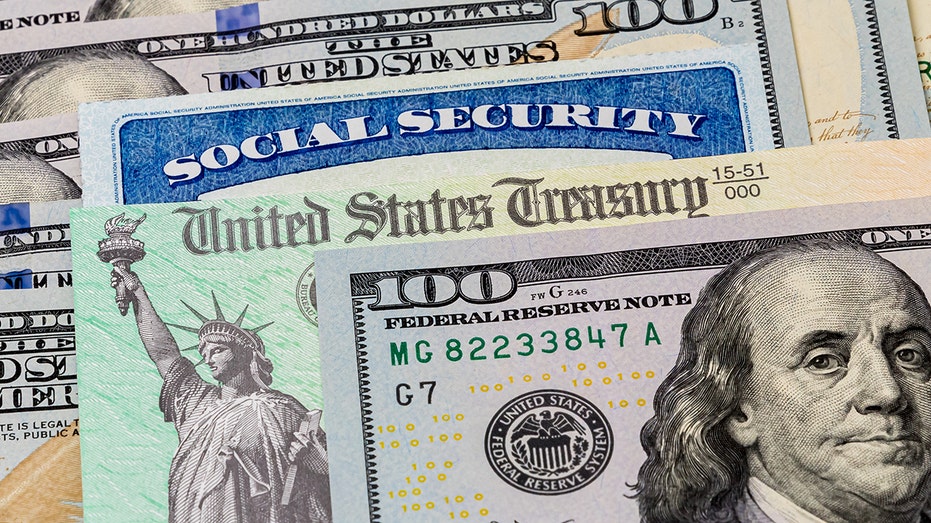
Surging Social Security spending has contributed to the depletion of its key trust fund. (Getty Images/iStock)
The CBO explained that “the government would continue to collect excise and payroll taxes designated for the funds, and the funds would continue to make payments. But because the government would not have the legal authority to make payments in excess of receipts, it would no longer be able to pay the full amounts scheduled or projected under current law.”
An illustrative scenario examined by the CBO finds that benefits paid to beneficiaries would be cut by 7% in 2032 and by an average of 28% per year from 2033 to 2036. It also notes that the process for cutting benefits isn’t outlined in federal law, and that different ways of cutting Social Security benefits to match incoming tax revenue would have different implications for the economy and budget.
The Committee for a Responsible Federal Budget (CRFB), a nonpartisan think tank, previously estimated based on a 24% benefit reduction that a typical couple aged 60 today who retires at the time of insolvency would face an $18,400 cut to their annual benefits.
WHAT ARE THE BIGGEST BUDGET DEFICITS IN US HISTORY?
The threat of insolvency looming over Social Security’s key trust fund comes as spending on the entitlement program is surging amid the aging of America’s population.
Social Security spending as a share of gross domestic product (GDP) averaged 4.5% from 1976 to 2025. It’s projected to rise from 5.2% of GDP this year to 5.9% in 2036. In dollar terms, Social Security spending is estimated at over $1.6 trillion in 2026 and is projected to rise above $2.7 trillion a decade from now.
Mandatory spending programs, including Social Security and Medicare, are key drivers of the rise in federal spending and budget deficits. For the 1976-2025 period, mandatory spending accounted for 11.2% of GDP, but it’s projected to reach 14.2% of GDP this year and rise further to 15% by 2036.
NATIONAL DEBT SURPASSES $38 TRILLION MILESTONE FOR FIRST TIME IN US HISTORY AS SPENDING SURGES
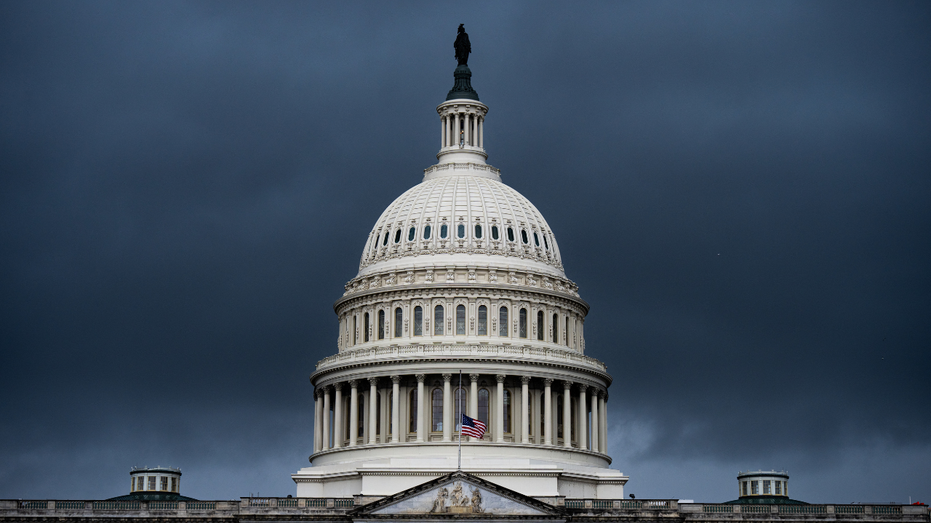
The insolvency of Social Security’s main trust fund would yield automatic benefit cuts unless Congress acts. (Bill Clark/CQ-Roll Call, Inc/Getty Images / Getty Images)
Expenses from mandatory programs are projected to total $4.5 trillion in 2026, making up the bulk of the federal government’s more than $7.4 trillion in spending this year. A decade from now, mandatory spending is projected to account for over $7 trillion of the $11.4 trillion federal budget.
Discretionary spending, which covers federal agencies through the annual appropriations process in Congress, is expected to total nearly $1.9 trillion in 2026 and rise to $2.2 trillion over the next decade.
GET FOX BUSINESS ON THE GO BY CLICKING HERE
Interest expenses incurred from servicing the national debt are also projected to increase from $1 trillion in 2026 to more than $2.1 trillion in 2036.

Check out what’s clicking on FoxBusiness.com.
Buffalo Wild Wings can keep calling its menu item “boneless wings” as such, a federal judge ruled Tuesday, dismissing a lawsuit that claimed the name amounted to false advertising.
U.S. District Judge John Tharp in Illinois issued a 10-page ruling allowing the sports bar chain to continue calling its menu item “boneless wings,” after a Chicago man filed a lawsuit accusing the restaurant of false advertising, saying the boneless wings were overpriced because they are essentially chicken nuggets.
While Aimen Halim argued in the lawsuit that Buffalo Wild Wings should call the product something different, like “chicken poppers,” Tharp said the argument had no meat on its bones.
“Halim did not ‘drum’ up enough factual allegations to state a claim,” Tharp wrote. “Though he has standing to bring the claim because he plausibly alleged economic injury, he does not plausibly allege that reasonable consumers are fooled by BWW’s use of the term ‘boneless wings.’”
DURING SUPER BOWL LIX, FANS WILL EAT A STAGGERING AMOUNT OF CHICKEN WINGS

A federal judge ruled that Buffalo Wild Wings can continue using the term “boneless wings” after dismissing a lawsuit that claimed the name was misleading. (Tiffany Hagler-Geard/Bloomberg via Getty Images / Getty Images)
Halim sued Buffalo Wild Wings shortly after he visited the restaurant in January 2023, claiming he was deceived by the chain’s marketing.
Halim alleged that the boneless wings are just “slices of chicken breast meat deep-fried like wings,” and that customers would either pay less for the boneless wings or not purchase them at all if they knew what was in the product.
Halim said he later regretted buying the item after learning how it was made, which he claimed caused him to suffer “a financial injury as a result of defendants’ false and deceptive conduct.”
In his ruling, Tharp said that while boneless wings are “essentially chicken nuggets,” the product concept was not new, noting that Buffalo Wild Wings had sold them since 2003.
RED LOBSTER CONSIDERING MORE RESTAURANT CLOSURES, CEO SAYS

A federal judge ruled that Buffalo Wild Wings’ boneless wings are not deceptive, dismissing a lawsuit over the menu item’s name. (iStock / iStock)
“Boneless wings are not a niche product for which a consumer would need to do extensive research to figure out the truth,” he wrote. “Instead, ‘boneless wings’ is a common term that has existed for over two decades.”
Halim accused Buffalo Wild Wings of violating the Illinois Consumer Fraud Act, breach of express warranty, common law fraud and unjust enrichment.
Tharp also cited an Ohio Supreme Court ruling from 2024, where the court ruled that “[a] diner reading ‘boneless wings’ on a menu would no more believe that the restaurant was warranting the absence of bones in the items than believe that the items were made from chicken wings, just as a person eating ‘chicken fingers’ would know that he had not been served fingers.”
CLICK HERE TO GET FOX BUSINESS ON THE GO
A judge rejected claims that Buffalo Wild Wings’ boneless wings labeling deceives customers. (Getty / Getty Images)
Tharp added that a “reasonable consumer” would not think that the food chain’s boneless wings were “truly deboned chicken wings, reconstituted into some sort of Franken-wing.”
The court is allowing Halim to submit an amended complaint by March 20, although Tharp noted that it “is difficult to imagine” that he can provide additional facts that would demonstrate that Buffalo Wild Wings “is committing a deceptive act.”
FOX Business’ Landon Mion contributed to this report.

Indonesian emerges as the top visa on arrival destination for Indian travelers, alongside Thailand and Malaysia, highlighting a trend towards easy entry and diverse cultural experiences in Asia.
Key Highlights
- Top Visa-Free Destinations for Indians
- Thailand and Malaysia are the most preferred visa-free destinations.
- Indonesia leads as the top visa-on-arrival (VOA) destination.
- Travel Trends (Jan 2026 Data)
- Agoda analyzed Indian accommodation searches for Feb–Mar 2026.
- Top five destinations: Thailand (visa-free), Indonesia (VOA), Malaysia (visa-free), Sri Lanka (VOA), Maldives (visa-free).
- Growth in Emerging Destinations
- Sri Lanka saw a 61% increase in searches year-on-year.
- Philippines (visa-free) ranked sixth with 73% growth, driven by beach and adventure tourism.
- Laos (VOA) recorded the strongest growth at 97%, positioning itself as a culturally rich alternative.
Indonesia Emerges as the Top Visa on arrival Destination Based on Accommodation Search Data
The latest accommodation search data from digital travel platform Agoda reveals Thailand and Malaysia as the most preferred visa free international destinations among Indian travellers. Indonesia continues to lead among visa on arrival (VOA) markets. The data reflects an uptick in interest compared to last year toward destinations across Asia that combine easy entry requirements with diverse leisure and cultural experiences.
Agoda analysed accommodation search data generated in India for visa‑free and VOA destinations, between 1 and 18 January 2026, for check‑in dates between February and March 2026.
Among the combined top five destinations searched with visa free or VOA status, Thailand ranked first, followed by Indonesia, Malaysia, Sri Lanka, and the Maldives. Thailand (visa free) and Indonesia (VOA) remain firm favourites, offering diverse mix of beaches, culture, and adventure, while Malaysia (visa free) combines urban and natural experiences.
Sri Lanka (VOA) recorded notable growth in accommodation searches, registering a 61% increase compared to last year, supported by its proximity and diverse offerings. Maldives (visa free) continues to draw Indian travellers seeking premium island escapes and short haul luxury stays. Together, these destinations underscore how Indian travellers are choosing destinations that offer strong value and simplified entry.
Beyond the top five, Philippines (visa free) ranked sixth and recorded 73% year-on-year search growth, driven by interest from beach loving and adventure-oriented travellers, with water sports remaining a key draw. While Nepal (visa free) ranked seventh. Kazakhstan (visa free) ranked eighth and is seeing interest for its distinctive Central Asian landscapes, while Bhutan (visa free) ranked ninth and attracts travellers drawn to wellness and cultural immersion. Laos (VOA) ranked tenth and recorded the strongest search growth among all top destinations with a 97% increase, positioning itself as a culturally rich alternative within Southeast Asia, aided by simplified visa access and growing awareness among Indian travellers.
Travellers planning their upcoming getaways can browse Agoda’s wide range of offerings, spanning over 6 million holiday properties, more than 130,000 flight routes, and 300,000+ activities worldwide. The latest deals are available on the Agoda app or at agoda.com/deals.
Source : Thailand and Malaysia Lead as Top Visa‑Free Destinations for Indian Travellers – Agoda
Other People are Reading

is buying Israeli competitor Zim Integrated Shipping Services ZIM 25.00%increase; green up pointing triangle for $4.2 billion as the shipping firm looks to bolster its capacity.
Germany-based Hapag-Lloyd said Monday that it signed a deal to buy Zim for $35 a share in cash, a 58% premium to Zim’s closing price of $22.20 on Friday. The total deal price of around $4.2 billion will be funded from cash reserves and external financing of up to $2.5 billion.
Copyright ©2026 Dow Jones & Company, Inc. All Rights Reserved. 87990cbe856818d5eddac44c7b1cdeb8

Thailand’s gold traders plan to promote US dollar transactions to reduce the baht’s strength, countering potential taxes and economic shocks impacting exports and tourism. System upgrades aim to facilitate this shift.
Key Points
- Thailand’s gold traders plan to promote US dollar-denominated transactions to combat the local currency’s strength and avoid punitive taxes, enhancing online trading systems within three to six months. The Bank of Thailand will assist with easier currency conversions.
- The baht’s recent appreciation disrupts export competitiveness and tourism, with gold-related transactions significantly contributing to US dollar trading in Thailand. Traders believe adopting US dollar trading is vital for economic stability.
- Industry leaders voice concerns against a proposed special tax on gold, arguing it could damage the gold sector, which is considered a crucial part of savings for many Thais.
Economic Implications of Thailand’s Gold Trading Shift
Thailand’s leading gold traders are pivoting toward US dollar-denominated transactions to mitigate the impact of a strengthening baht, which has reached its highest level since 2021. This move aims to counteract potential punitive taxes introduced to limit speculative gold trading and address economic concerns stemming from the currency’s appreciation. The initiative, led by 14 bullion dealers, involves an upgrade of online trading platforms in collaboration with the Bank of Thailand (BOT). The country’s economy is currently grappling with challenges, including diminished export competitiveness and reduced tourist spending, exacerbated by the baht’s 8% gain last year.
Strategic Adoption of US Dollar Trading
Daily gold trading in Thailand has reached volumes comparable to the local stock market, highlighting the significant role of gold in the economy. At peak times, gold-related transactions comprised up to 60% of total US dollar trading. Despite the BOT’s encouragement, the shift to US dollar trading has been slow, as many traders remain accustomed to the baht and find foreign currency deposit processes cumbersome. If financial incentives for adopting US dollar transactions do not gain momentum, the BOT may resort to implementing a capital-gains tax on baht-denominated trades to encourage this transition.
Industry Concerns and Future Outlook
Industry leaders, including Kritcharat Hirunyasiri of MTS Gold Group, believe this change will transform the gold trading landscape in Thailand. The three largest gold traders, who dominate 90% of the market, are expected to adapt their systems swiftly. However, there are substantial concerns about the potential introduction of a special tax on gold, which could threaten the sustainability of the industry. Jitti Tangsithpakdi, president of the Thai Gold Traders Association, emphasizes that taxing gold—which is viewed as a form of savings by many Thais—could be detrimental. The total bullion trading volume, estimated at 10 trillion baht, reflects gold’s critical role in Thailand’s economic fabric.
Other People are Reading

NAHB Housing Market Index: Builder Confidence Edges Lower
Check out what’s clicking on FoxBusiness.com.
Hyatt Hotels Executive Chairman Thomas Pritzker announced Monday that he is stepping down effective immediately after documents released by the Department of Justice (DOJ) revealed his association with convicted sex offender Jeffrey Epstein.
The executive, 75, told the company’s board that he will not seek re-election at Hyatt’s stockholder meeting in May, ending his 22-year tenure as chairman.
Pritzker acknowledged that he exercised poor judgment by failing to distance himself from the disgraced financier, who died in his jail cell in 2019 while awaiting trial on sex trafficking charges, as well as Ghislaine Maxwell, who was also convicted of trafficking minors alongside him.
“My job and responsibility is to provide good stewardship,” Pritzker said in a statement. “Following discussions with my fellow Board members, I have decided, after serving as Executive Chairman since 2004, and with the company in a strong position, that now is the right time for me to retire from Hyatt.”
EPSTEIN DOCS REVEAL HOTEL MAGNATE TOM PRITZKER, KIN OF DEMOCRATIC ILLINOIS GOV
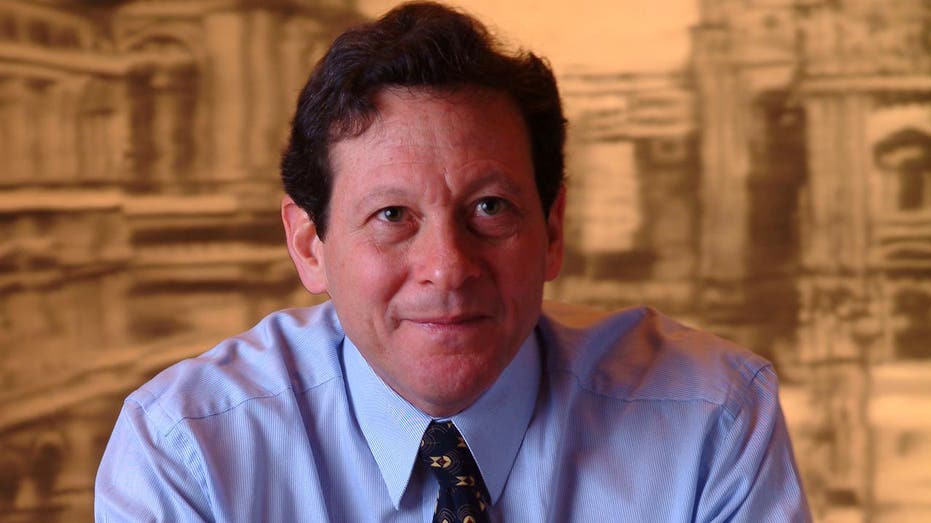
Tom Pritzker, executive chairman of the Hyatt Hotels Corporation, is seen on Dec. 4, 2004. (Michael L Abramson/Getty Images)
“Good stewardship also means protecting Hyatt, particularly in the context of my association with Jeffrey Epstein and Ghislaine Maxwell which I deeply regret,” he added. “I exercised terrible judgment in maintaining contact with them, and there is no excuse for failing to distance myself sooner. I condemn the actions and the harm caused by Epstein and Maxwell and I feel deep sorrow for the pain they inflicted on their victims.”
Mark S. Hoplamazian will take on the dual role of chairman and chief executive, the company said.
Pritzker, the billionaire hotel magnate and a cousin of Illinois Gov. JB Pritzker, is among the high-profile individuals named in the millions of unredacted documents the DOJ unsealed earlier this year as part of the expanding investigation into the notorious sex trafficker and his ties to numerous prominent business and political figures.
| Ticker | Security | Last | Change | Change % |
|---|---|---|---|---|
| H | HYATT HOTELS CORP. | 169.59 | +4.20 | +2.54% |
According to the files, Pritzker and Epstein exchanged numerous emails, some of which included attempts to arrange dinner plans and invitations to various events, Fox 32 Chicago reported.
Virginia Giuffre, a prominent Epstein accuser who died in 2025, alleged in a May 2016 deposition that she had one sexual encounter with Pritzker during her abuse. In a January statement to FOX Business, Pritzker’s spokesperson vehemently denied the allegations.
JEFFREY EPSTEIN LIST: COURT UNSEALS NAMES IN GHISLAINE MAXWELL LAWSUIT
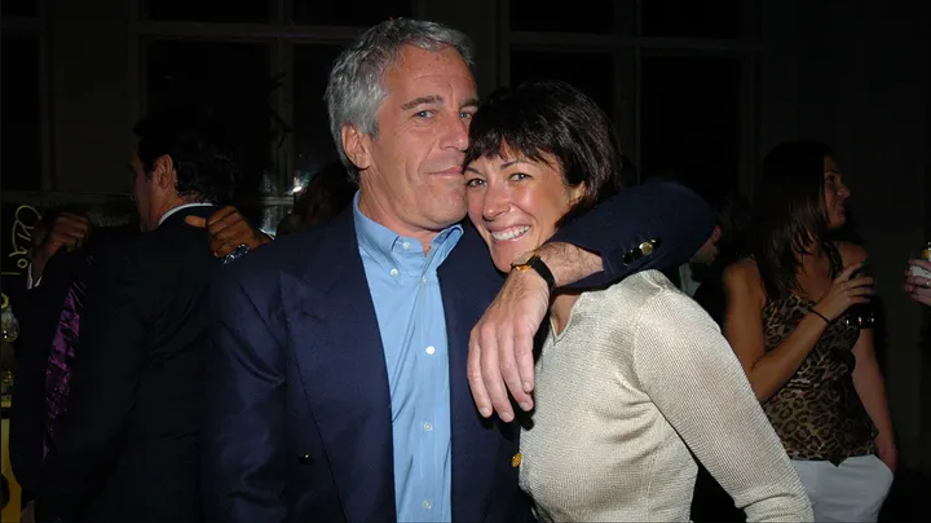
Jeffrey Epstein and Ghislaine Maxwell attend an event on March 15, 2005, in New York City. (Joe Schildhorn/Patrick McMullan via Getty Images)
Pritzker has served as executive chairman since 2004, during which he helped steer the company through its 2009 public offering and the COVID-19 pandemic in 2020.
“Tom’s leadership has been instrumental in shaping Hyatt’s strategy and long-term growth, and we thank him for his service and dedication to Hyatt,” Richard Tuttle, chair of the board’s nominating and corporate governance committee, said in a statement.
GET FOX BUSINESS ON THE GO BY CLICKING HERE
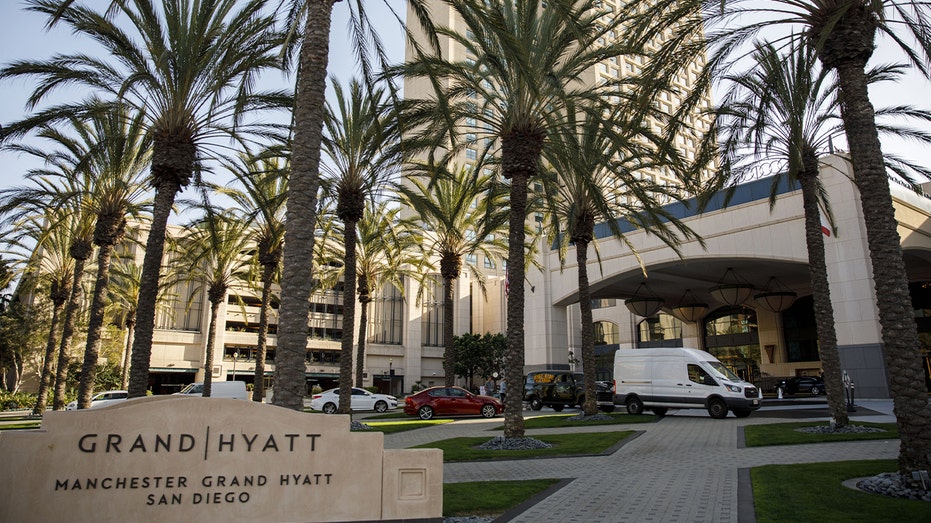
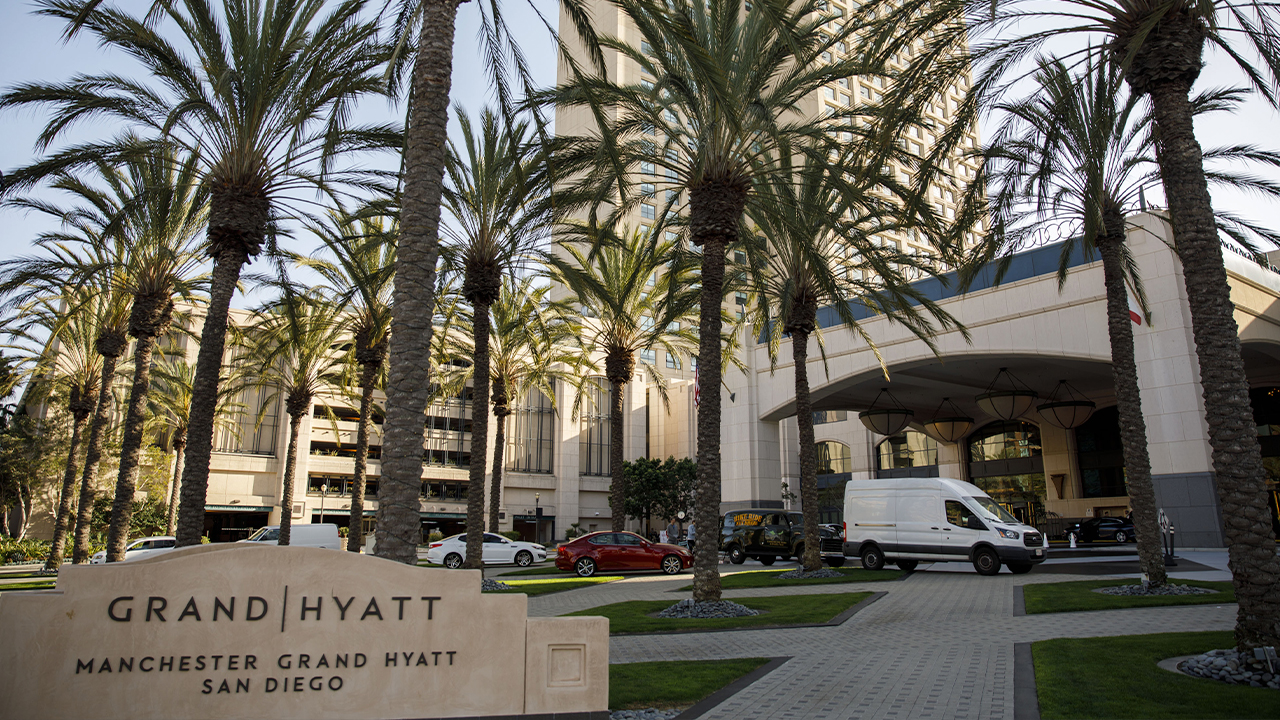
The Manchester Grand Hyatt Hotel in San Diego, California, on Feb. 11, 2018. (Patrick T. Fallon/Bloomberg via Getty Images)
“The Board has engaged in thoughtful succession planning, and we are confident that Mark’s deep knowledge of Hyatt’s business, strong relationships with owners and colleagues, and proven track record as CEO of nearly two decades positions him well to serve as Chairman and continue driving Hyatt’s long-term success.”
FOX Business’ Eric Revell contributed to this report.
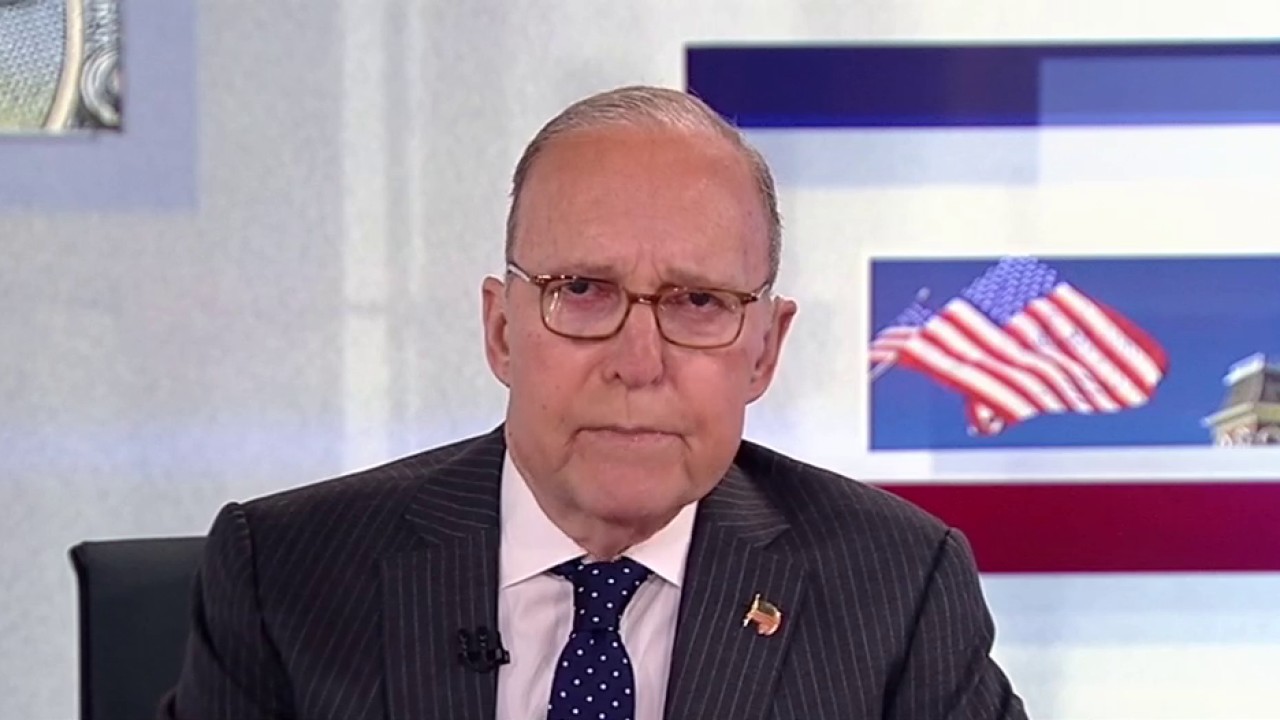
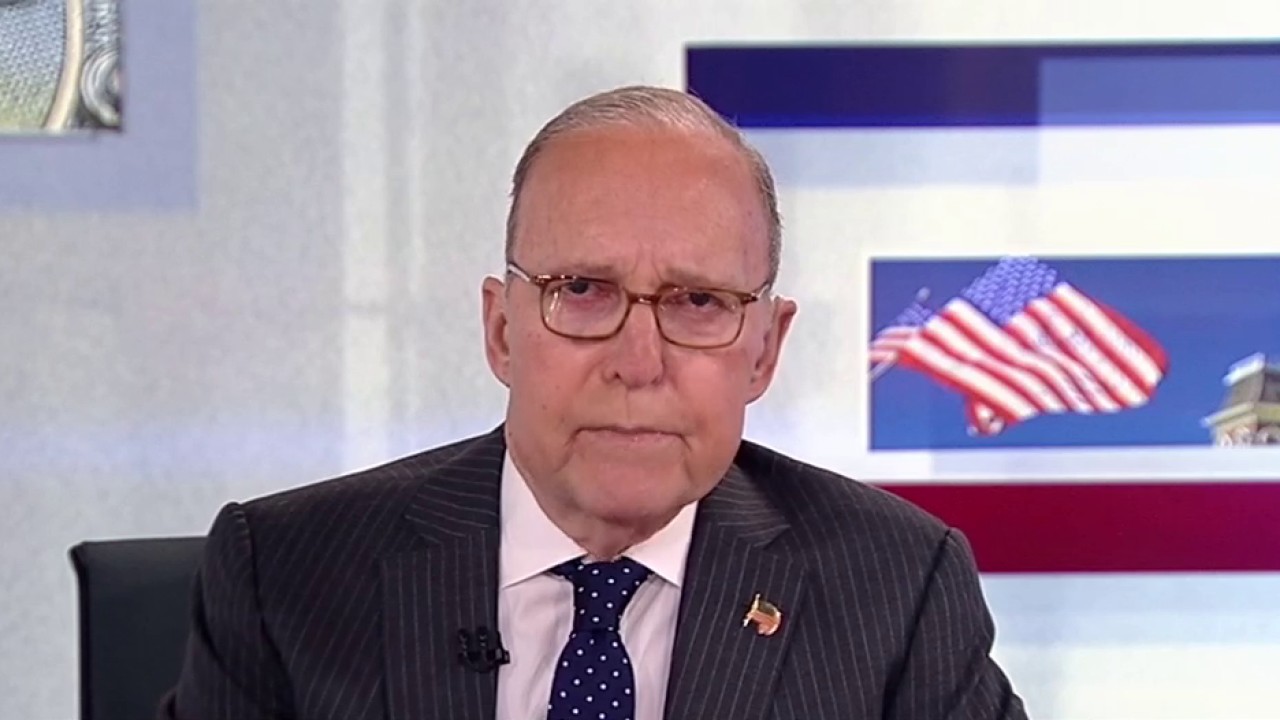
Trumponomics is booming right now in America and as the president reminds us, we are the hottest economy and the hottest country in the world.
We’re growing by 4 percent or even more. We’ve got booming productivity, vast AI and their data centers. Our advanced chips are the best in the world, we are the dominant energy power.
Our stock markets are making record highs. Private employment is surging. And both the trade and budget deficits are coming down.
That’s a backdrop for Secretary of State Marco Rubio’s superb speech to the Munich Security Conference.
And particularly, when Mr. Rubio says quote “we in America have no interest in being polite and orderly caretakers of the West’s managed decline.”
Mr. Rubio made this very clear by saying America has no interest to operate a global welfare state or atone for the purported sins of past generations.
Nor does America have any interest in the cult of climate change, which unfortunately has caused the deindustrialization of Europe, from which their economies have yet to recover.
This was a brilliant speech by our secretary of state.
Using diplomatic language, he nonetheless gave Europe a spanking, especially on unlimited illegal immigration, and the end of sovereignty for their countries.
Enormous welfare states have prevented adequate defense spending in Europe. And globalism is basically a quote “dangerous delusion.”
He singled out the United Nations, which has played virtually no role in Gaza, the Ukraine, Iran, Venezuela narco-terrorism. And while the UN was failing, America under President Trump took the lead.
Free and unfettered trade failed because so many nations exercise protectionism, subsidies, closing markets all at the expense of America.
Mr. Trump’s trade reciprocity policy is putting an end to this.
Basically Mr. Rubio told the conference to close their borders, regain sovereignty, start re-energizing technology instead of attacking American tech companies, and end their climate cult.
Now, as our head diplomat, he was gracious in referring to our shared heritage from Italian explorers, to English settlers, to French fur traders, to horses, ranches, rodeos, and cowboys from Spain.
And mindful of the bonds of Western civilization, including as he put it, Christian faith, culture, heritage, and language.
And the speech was well received. A standing ovation.
Mr. Rubio has had a very big impact as a senator and now as our chief diplomat as secretary of state.
Whether he is going to have a big impact on Europe and other areas remains to be seen. Will they listen to his wisdom?

Check out what’s clicking on FoxBusiness.com.
Major fast-fashion retailer Shein has been officially banned from the University of Texas at Austin, one of the nation’s largest college campuses.
The move follows Gov. Greg Abbott’s January expansion of a 2022 directive, which now prohibits roughly 50 Chinese-affiliated companies, including Alibaba and Temu, from state devices due to cybersecurity and foreign interference concerns.
The University of Texas at Austin confirmed to FOX Business Tuesday that the state’s prohibited technologies list also extends to the campus Wi-Fi networks.
“This policy is intended to ensure compliance with the new regulations as well as enhance awareness of potential security risks and safeguard sensitive state and university data,” the school said, according to its website.

University of Texas students walk through campus on the first day of classes Monday, Aug. 25, 2025. (Jay Janner/The Austin American-Statesman via Getty Images / Getty Images)
The campus ban on Shein — which surged into a multibillion-dollar global fast-fashion powerhouse in recent years by offering trendy clothes at hyper-affordable prices — has since received mixed reactions on social media.
While some expressed frustration over the change, others criticized Shein for its controversial manufacturing ethics and labor practices.
TEXAS THE LATEST STATE WITH A LAW BANNING FOREIGN ADVERSARIES FROM BUYING REAL ESTATE
Texas Attorney General Ken Paxton announced in December that his office is investigating the e-commerce site for “potential violations of Texas law related to unethical labor practices and the sale of unsafe consumer products,” while also citing concerns over possible toxic and hazardous materials.
In December 2022, Abbott directed agency leaders to immediately ban employees from using TikTok and other Chinese-owned platforms on government-issued devices, calling them a “threat to Texas’ cybersecurity.”

This picture shows signage of fast fashion e-commerce company SHEIN at a garment factory in Guangzhou, China’s southern Guangdong province, on July 18, 2022. (JADE GAO/AFP via Getty Images / Getty Images)
UT Austin later effectively blocked the popular social media app from its campus network in compliance with state regulations.
In January, Governor Abbott added 26 additional companies to the list of prohibited technologies, including artificial intelligence tools, e-commerce sites, and social media apps affiliated with the People’s Republic of China and the Chinese Communist Party.
CLICK HERE TO DOWNLOAD THE FOX NEWS APP
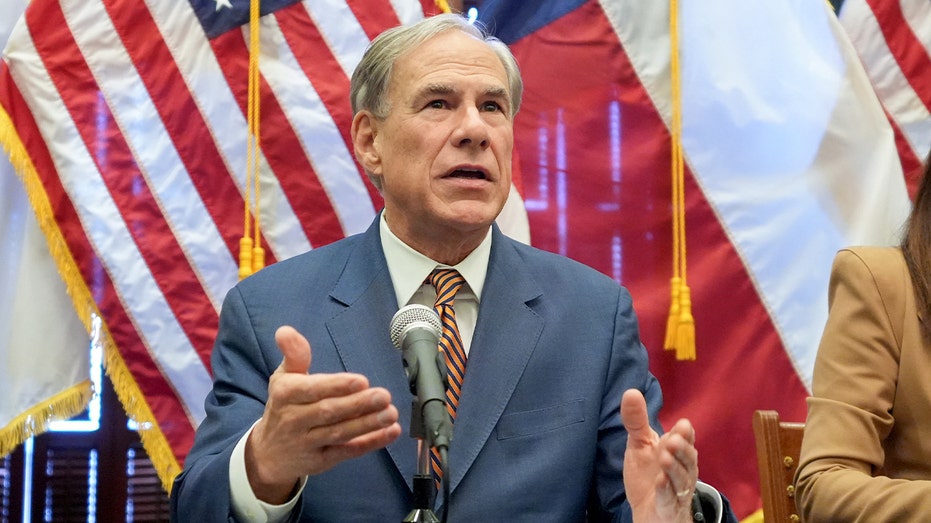
Texas Gov. Greg Abbott speaks during a news conference with U.S. Secretary of Agriculture Brooke Rollins at the Texas Capitol in Austin on Aug. 15, 2025. (Jay Janner/Austin American-Statesman via Getty Images / Getty Images)
Among the 54 prohibited sites, the banned companies include social media platform RedNote, AI platform DeepSeek, electronics giant Xiaomi, Alipay, and Baidu, China’s equivalent of Google.
“Rogue actors across the globe who wish harm on Texans should not be allowed to infiltrate our state’s network and devices,” Abbott said in a statement.
“Hostile adversaries harvest user data through AI and other applications and hardware to exploit, manipulate, and violate users and put them at extreme risk. Today, I am expanding the prohibited technologies list to mitigate that risk and protect the privacy of Texans from the People’s Republic of China, the Chinese Communist Party, and any other hostile foreign actors who may attempt to undermine the safety and security of Texas.”
Infosys’ AI push reassures on business strength, but valuation worries linger, says Sandip Agarwal

Bridge receives conditional OCC approval for national trust bank charter

Russian athletes set to compete under own flag at Paralympics after a decade-long absence


![I AM SHAKING!!!! [insane Bitcoin Signal]](https://wordupnews.com/wp-content/uploads/2026/02/1771392411_maxresdefault-80x80.jpg)


-

 Sports6 days ago
Big Tech enters cricket ecosystem as ICC partners Google ahead of T20 WC | T20 World Cup 2026
-

 Video2 days ago
Bitcoin: We’re Entering The Most Dangerous Phase
-

 Tech3 days ago
Luxman Enters Its Second Century with the D-100 SACD Player and L-100 Integrated Amplifier
-

 Video5 days ago
The Final Warning: XRP Is Entering The Chaos Zone
-
 Tech1 day ago
The Music Industry Enters Its Less-Is-More Era
-

 Business6 hours ago
Infosys Limited (INFY) Discusses Tech Transitions and the Unique Aspects of the AI Era Transcript
-

 Video21 hours ago
Financial Statement Analysis | Complete Chapter Revision in 10 Minutes | Class 12 Board exam 2026
-

 Crypto World4 days ago
Bhutan’s Bitcoin sales enter third straight week with $6.7M BTC offload
-

 Crypto World20 hours ago
Can XRP Price Successfully Register a 33% Breakout Past $2?
-
 Crypto World6 days ago
Pippin (PIPPIN) Enters Crypto’s Top 100 Club After Soaring 30% in a Day: More Room for Growth?
-

 Video6 days ago
Prepare: We Are Entering Phase 3 Of The Investing Cycle
-

 Sports1 day ago
GB's semi-final hopes hang by thread after loss to Switzerland
-
 NewsBeat3 days ago
The strange Cambridgeshire cemetery that forbade church rectors from entering
-

 Business6 days ago
Barbeques Galore Enters Voluntary Administration
-
 Crypto World7 days ago
Crypto Speculation Era Ending As Institutions Enter Market
-
 Crypto World5 days ago
Ethereum Price Struggles Below $2,000 Despite Entering Buy Zone
-
 NewsBeat3 days ago
Man dies after entering floodwater during police pursuit
-

 Crypto World5 days ago
Kalshi enters $9B sports insurance market with new brokerage deal
-

 NewsBeat4 days ago
UK construction company enters administration, records show
-
 Crypto World4 days ago
BlackRock Enters DeFi Via UniSwap, Bitcoin Stages Modest Recovery