

Business
Imperial Brands Pulls Vaping Business From U.S.


Imperial Brands said it would pull its vaping business out of the U.S., citing a drawn-out regulatory approval process.
“[Given] the protracted regulatory process to approve new innovations, we have taken the decision to transition our legacy myblu vaping business out of the U.S. market,” the U.K. tobacco company said in its fiscal half-year results Tuesday.
Copyright ©2026 Dow Jones & Company, Inc. All Rights Reserved. 87990cbe856818d5eddac44c7b1cdeb8

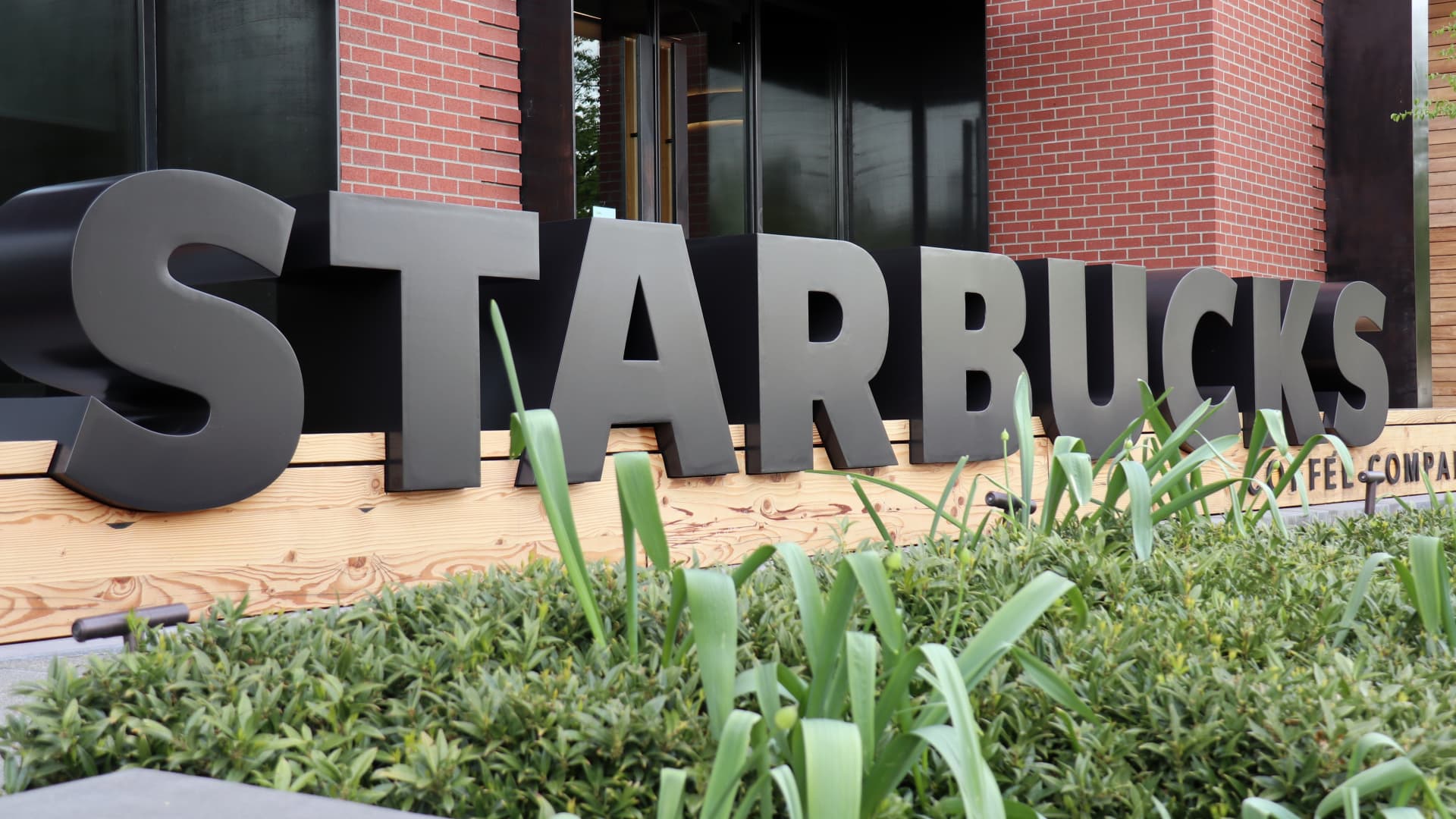
Starbucks’ corporate headquarters seen in Seattle. The company announced its Q2 earnings on 27th Apr 2021.
Toby Scott | Lightrocket | Getty Images
Starbucks on Friday announced another round of corporate layoffs and said it plans to shutter some regional support offices as part of its ongoing turnaround.
The company said it will cut 300 U.S. jobs, adding it has started a review of its international corporate workforce. The layoffs do not affect its coffeehouse employees.
The combined severance costs and reassessment of its office space will result in restructuring charges of $400 million, the coffee chain said. Starbucks expects to record $280 million in noncash charges related to the impairment of long-lived assets and $120 million in cash charges tied to the job cuts.
“We are taking further action under the Back to Starbucks strategy, building on our strong business momentum and working to return the company to durable, profitable growth,” a Starbucks spokesperson said in a statement to CNBC. “Leaders have taken a hard look at their respective functions to further sharpen focus, prioritize work, reduce complexity, and lower costs.”
Friday’s announcement marks Starbucks’ third round of layoffs since CEO Brian Niccol took the helm. In February 2025, Niccol said that the company would cut 1,100 jobs and not fill several hundred other open positions. Seven months later, the company announced another 900 job losses for its nonretail workers as part of a $1 billion restructuring plan.
Starbucks had 19,000 U.S. nonretail workers and 5,000 international employees working in regional support operations roles as of Sept. 28, 2025, according to a regulatory filing.
During Niccol’s tenure, the company has embarked on an expensive — and fruitful — turnaround of its U.S. business. The coffee giant’s sales slumped as increased competition and more budget-conscious consumers weighed on demand for its drinks. Under Niccol, Starbucks has improved cafe operations, added buzzy new menu items, reintroduced seating to its locations and beefed up staffing at its coffeehouses.
For its latest quarter, the company reported that U.S. same-store sales grew 7.1%, fueled by a 4.3% increase in transactions. It was the second straight quarter of traffic growth for Starbucks’ U.S. cafes, signaling that the company’s comeback plan was working.
“This quarter marked a milestone for Starbucks – and the turn in our turnaround,” Niccol said in a video posted alongside the company’s fiscal second-quarter results in April.
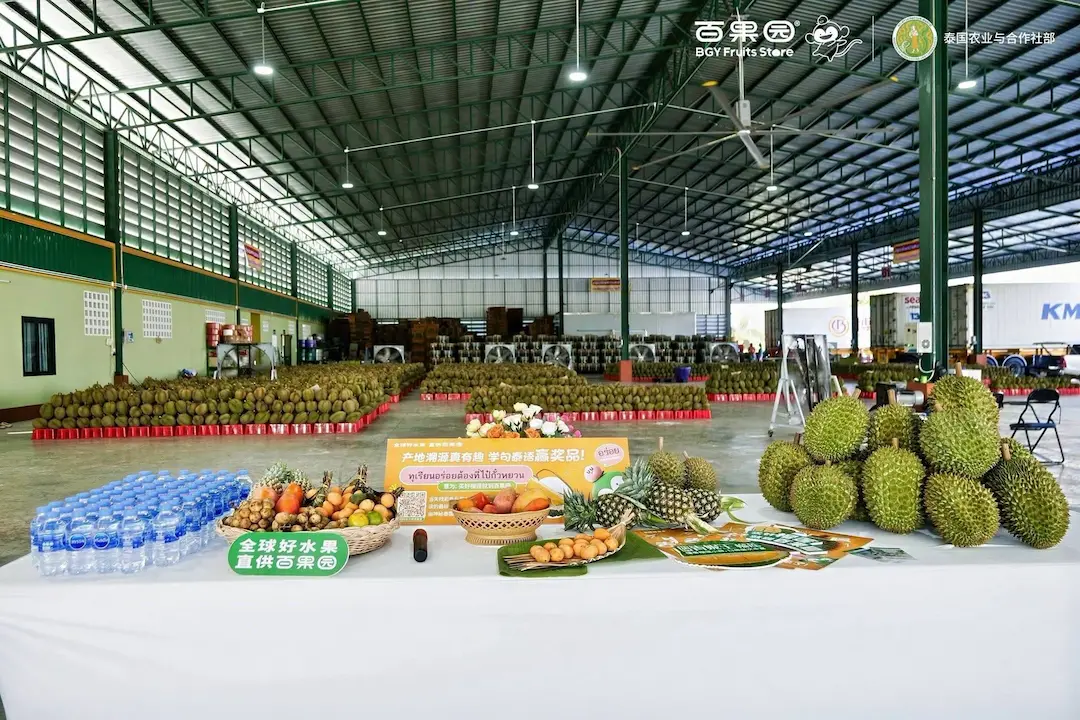
Thai officials and Chinese partners are enhancing durian exports after a delegation visited eastern Thailand’s production sites, focusing on quality control and promoting consumer confidence in this key export market.
Key Points
- Thai officials and Chinese partners are intensifying efforts to boost durian exports, especially after a recent visit by a delegation to Thailand’s key durian production areas. The group included executives from Pagoda, a major Chinese fruit importer, along with media representatives and influencers.
- Led by Dr. Nopparat Buahom, the delegation toured orchards and packing facilities in Chanthaburi province, where they received briefings from the Department of Agriculture on quality control and safety standards, including Good Agricultural Practices certification and pest control measures.
- Pagoda, which operates over 6,000 retail outlets in China, imports Thai fruits valued at over 10 billion baht annually. The company plans to import 1,500 containers of Thai durian in 2026 and aims to expand its product offerings. Media coverage from the visit is being leveraged to enhance consumer confidence in China.
Thai officials and Chinese partners are stepping up efforts to promote durian exports, following a recent visit by importers, media representatives, and influencers to key production sites in eastern Thailand.
The delegation, led by Dr. Nopparat Buahom, agricultural consul at the Royal Thai Consulate-General in Guangzhou, included executives from Pagoda, one of China’s largest fruit importers, along with journalists from major outlets and online influencers. The group toured durian orchards and packing facilities in Chanthaburi province to observe production and export processes firsthand.
Officials from the Department of Agriculture provided briefings on quality control and safety standards across the supply chain, from orchard management to pre-export inspection. The delegation reviewed procedures for Good Agricultural Practices certification, testing for starch levels, pesticide residues, and heavy metals, as well as pest control measures. Participants also sampled several durian varieties and other fruits.
Pagoda operates more than 6,000 retail outlets across China and imports Thai fruit worth over 10 billion baht annually. The company plans to import about 1,500 containers of Thai durian in 2026 and is considering expanding to additional products. Media coverage and online content from the visit are being distributed across Chinese platforms to boost consumer confidence and support demand in Thailand’s largest fruit export market.
Source : Thailand Boosts Durian Exports to China With Trade Visit
Other People are Reading


New line debuts under the Connie’s brand.
Additionally, Adani Group Chairman Gautam Adani and his nephew Sagar have agreed to pay a total of $18 million to settle Securities and Exchange Commission allegations they made false and misleading representations about Adani Green Energy, Bloomberg reported, further boosting investor sentiment for the stocks.
Gautam Adani would pay $6 million and Sagar would pay $12 million to end the SEC’s November 2024 lawsuit, under the proposed agreement filed in federal court Thursday, which still needs a judge’s approval, according to the Bloomberg report.
According to a report by The New York Times, citing people familiar with the matter, the U.S. Justice Department is considering dropping charges filed against Adani during the final weeks of the Joe Biden administration. Prosecutors had previously described the matter as an “elaborate bribery scheme involving corruption and fraud at the expense of U.S. investors.”
The report said the development follows Adani appointing a new legal team led by Robert J. Giuffra Jr., one of U.S. President Donald Trump’s personal lawyers and co-chairman of the law firm Sullivan & Cromwell.

As per the NYT report, Adani’s legal representatives met officials at the U.S. Justice Department headquarters last month and proposed that if prosecutors agreed to drop the charges, Adani would commit $10 billion in investments into the U.S. economy and create 15,000 jobs.
The report added that Giuffra was also working to settle parallel civil cases brought by the U.S. Securities and Exchange Commission and a separate probe by the U.S. Treasury Department.The New York Times further reported, citing sources familiar with the matter, that both agencies are now preparing settlement agreements with Adani that would include financial penalties. Separately, a report by Bloomberg said Adani is discussing a potential settlement of between $15 million and $20 million in connection with a civil fraud case filed by the SEC and others in November 2024.
Bloomberg also reported, citing people aware of the discussions, that the Adani Group is nearing a deal to pay nearly $275 million to settle a separate probe by the Office of Foreign Assets Control.
In its case, the U.S. Justice Department had alleged that Adani and others offered bribes to Indian government officials to secure solar energy contracts and later concealed the arrangement while raising funds from U.S. investors.
A resolution of these cases would mark a major relief for the Adani Group, one of India’s largest conglomerates with interests spanning coal mining, renewable energy, airports and infrastructure. It could also pave the way for the group to re-enter international capital markets and revive its broader expansion plans.
Earlier this year, Adani’s legal team had sought dismissal of the SEC fraud case, arguing that U.S. regulators did not have the necessary jurisdiction over the accused individuals and that the alleged misstatements at the centre of the case were not legally actionable.
Adani Enterprises shares jumped nearly 3% to trade at Rs 2,780 apiece. The stock is extending sharp gains after nearly 60 lakh shares changed hands in a block deal. Adani Energy Solutions, Adani Green Energy and Adani Power shares rose up to 2% each.
(Disclaimer: Recommendations, suggestions, views and opinions given by the experts are their own. These do not represent the views of The Economic Times)

Former United midfielder Beckham is now a co-owner of American club Inter Miami, estimated to be Major League Soccer’s most valuable franchise at $1.45bn (£1.07bn).
The 51-year-old, who was knighted in November, is also a brand ambassador for companies such as Adidas and Hugo Boss.
Victoria Beckham’s wealth has primarily been generated from her fashion label, having originally found fame as a member of the Spice Girls.
Promoters Barry and Eddie Hearn have joined Britain’s billionaire club, with their combined wealth estimated at £1.035bn.
Barry Hearn is the founder and president of Matchroom Sport, one of the leading promoters across boxing, darts and snooker.
His son Eddie is Matchroom’s chairman and promotes British boxer Anthony Joshua, who is the eighth highest sports figure on the list with £240m, one spot above his heavyweight rival Tyson Fury (£162m).
Seven-time F1 champion Sir Lewis Hamilton is fifth (£435m) while England football captain Harry Kane and two-time Wimbledon champion Sir Andy Murray are joint 10th (£110m).
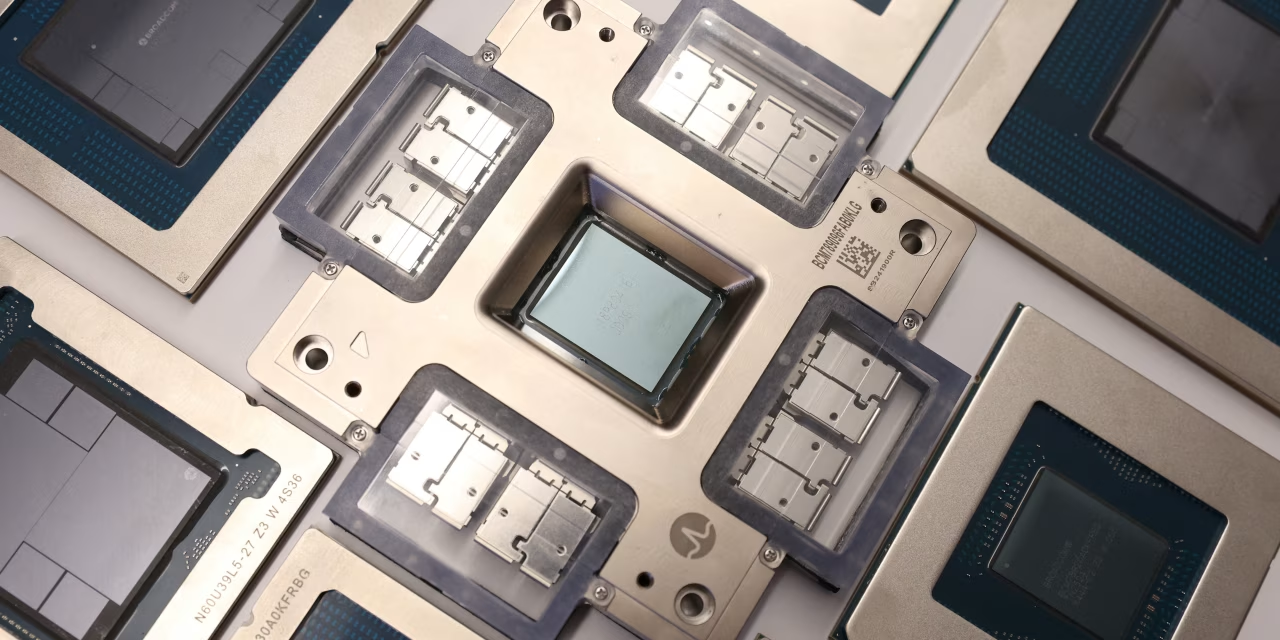
The hedge-fund herd was early to see opportunity in the stocks of chip makers and other artificial-intelligence hardware companies. Those bets just delivered stock-picking funds their best month in over two decades.
Steve Cohen’s Point72, Whale Rock Capital Management and Seligman Investments are among the hedge-fund firms that posted strong returns in April thanks in part to rallies in semiconductor stocks and those of related equipment makers.
Copyright ©2026 Dow Jones & Company, Inc. All Rights Reserved. 87990cbe856818d5eddac44c7b1cdeb8
Bit Digital earnings matched, revenue topped estimates


Deal would create $10 billion food ingredient solution provider.
Business
Adani Power vs. Green vs. Energy: Why mutual funds are betting billions on this electrification trio
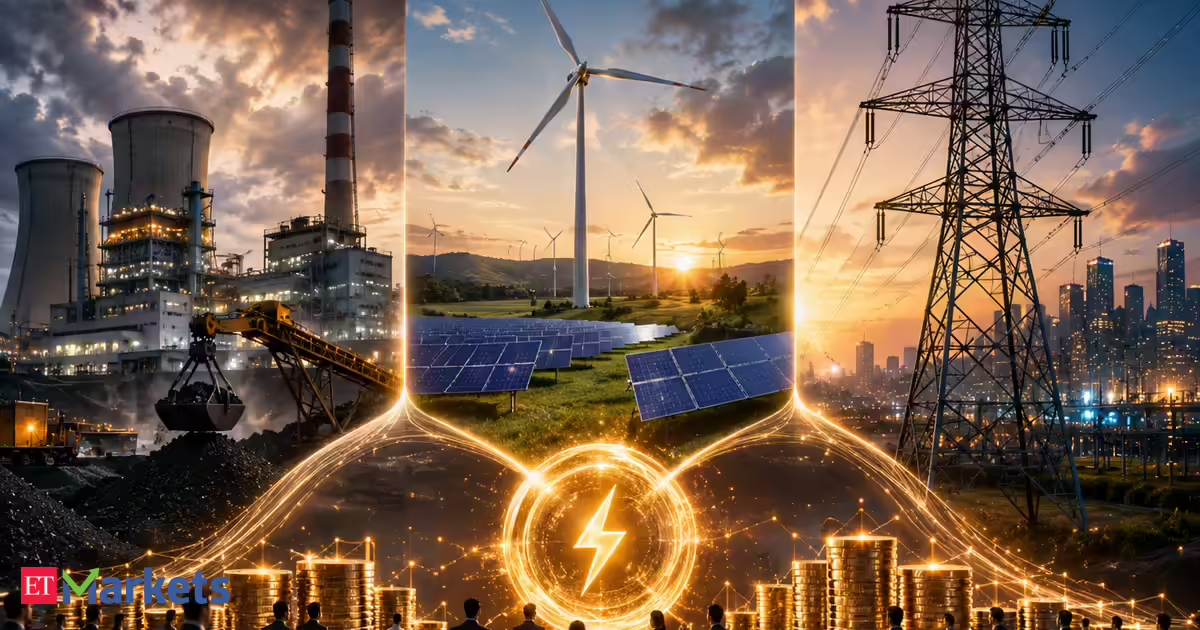
Fresh shareholding data through March 2026 reveals a decisive institutional shift. Mutual fund (MF) ownership in Adani Energy Solutions has more than tripled, surging from 1.91% in December 2024 to 6.59% in March 2026. Adani Green Energy saw an even more dramatic institutional entry, with holdings jumping from a negligible 0.37% to 3.22% in the same period. Adani Power also witnessed steady accumulation, with MF stakes rising from 1.60% to 3.62%.
The pace and breadth of accumulation signal something beyond opportunistic bottom-fishing. Domestic institutions are reclassifying these stocks, not as high-volatility conglomerate plays, but as long-duration infrastructure compounders tied directly to India’s electrification cycle, according to a fund manager who didn’t wish to be named.
The investment logic begins with cash flow. More than 70% of the Adani Group’s EBITDA is derived from contracted capacity, a structure that gives earnings a visibility and predictability rare in large-cap Indian equities. For fund managers running diversified portfolios, that contracted revenue base, spanning power generation, transmission, renewables and logistics, offers a cushion against commodity or macro volatility.
Bullish market estimates project the group’s consolidated EBITDA could scale to Rs 2.5–3 lakh crore by FY30, driven by simultaneous expansion across thermal power, renewables, transmission, ports, airports, cement and logistics.
Also Read | With 50% rally in 2026, Adani Power now most valued power company in India: What’s working in its favour
The Electrification Bet
The more powerful driver, however, is thematic. Adani Power, Green and Energy Solutions sit at the intersection of the most structurally urgent demand story in India’s economy right now: electricity.
The rapid scaling of data centres, electric mobility, manufacturing under the production-linked incentive framework, and urban infrastructure expansion will require reliable, large-scale power supply at a pace India has rarely had to deliver before. AI-linked power demand, still nascent but accelerating, adds another layer of urgency to an already strained grid.That positions generation, transmission and renewable energy assets at the precise centre of the next capital expenditure supercycle. For funds searching for large-cap names with visible growth triggers and durable earnings upside, the Adani energy trio is increasingly passing that screen.
Mutual fund analysts are giving explicit weight to the group’s track record here: ports built and operated at scale, transmission corridors commissioned, renewable capacity added quarter after quarter, airports turned around and airports greenfielded, cement capacity absorbed through acquisition.
Adani Power shares have surged 108% in the past year. A near-50% jump in 2026 alone has pushed its market capitalisation to ₹4.3 lakh crore, edging past NTPC to make it India’s most valuable listed power company and the most valuable within the Adani Group itself. The rally has been fuelled by strong earnings growth, rising electricity demand and steady institutional accumulation.
Also Read |Crude@$100+: The Rs 3 lakh crore power boom you might be missing
Yet Jefferies is not calling time on the trade. The brokerage has raised its price target on Adani Power to ₹255 from ₹185, rolling over to 20x FY28 estimated earnings, citing rising power demand and healthy growth prospects for the next three to four years.
On Adani Energy Solutions, up 48% over the past year, Jefferies maintains a Buy, pointing to a factor that sets it apart structurally: it is India’s only listed private-sector pure play on transmission and distribution assets. The order book stands at ₹718 billion of transmission projects on hand, up 20% year-on-year. And despite the recent run, the stock still trades at a 68% discount to its January 2023 peak EV/EBITDA. Adani Green Energy has gained 46% over the same period.
(Disclaimer: Recommendations, suggestions, views and opinions given by the experts are their own. These do not represent the views of The Economic Times)
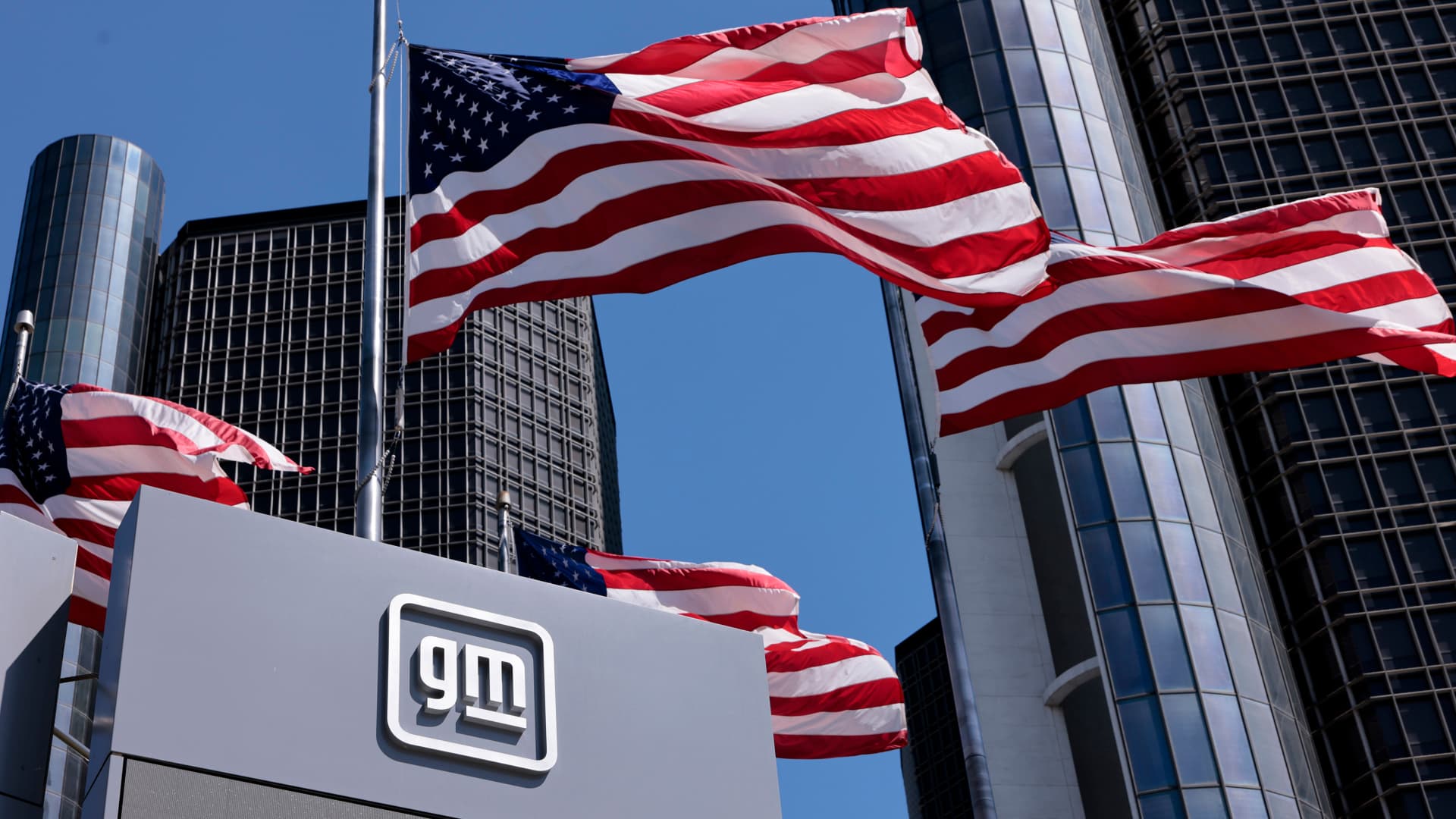
The former General Motors headquarters inside the Renaissance Center in Detroit, April 15, 2024.
Jeff Kowalsky | Bloomberg | Getty Images
DETROIT — As artificial intelligence expands, it threatens to exacerbate a growing trend for America’s largest automakers: the elimination of white-collar workers.
The “Detroit Three” automakers have together cut more than 20,000 U.S. salaried jobs, or 19% of their combined workforces, from recent employment peaks this decade, according to public filings and employment data from the companies.
Reasons for the job declines vary by automaker, but in general are tied to evolving technological changes in the automotive industry, with the rise of software-defined vehicles, autonomous and all-electric vehicles, and, most recently, AI.
“Artificial intelligence is going to replace literally half of all white-collar workers in the U.S.,” Ford CEO Jim Farley said in July at the Aspen ideas Festival. “AI will leave a lot of white-collar people behind,” he added later.
The largest American automaker has led the cuts, with General Motors reducing U.S. salaried headcounts by roughly 11,000 people from 2022 through last year. Those job cuts came after GM had a run-up in employment, expanding from 48,000 U.S. white-collar workers in 2020 to 58,000 in 2022.
Ford Motor and Chrysler parent Stellantis have cut jobs more gradually. From its salaried employment peak in 2020, Ford has scaled back by roughly 5,300 workers to reach about 30,700 white-collar employees last year, while Stellantis has gone from 15,000 salaried workers in 2020 to about 11,000 during that time.
On an annual basis, combined white-collar employment for the three automakers peaked at roughly 102,000 jobs in 2022. It fell 13%, to 88,700 people, as of the end of last year.
GM IT layoffs
Gad Levanon, chief economist at the labor data market nonprofit Burning Glass Institute, said he believes the jobs most at risk of being replaced by AI are clerical positions and more repetitive office jobs, like those in finance and information technology, including coding.
“A lot of white collar workers will lose their jobs because AI can automate some of their tasks,” he said, adding that some losses will be offset by jobs in growing areas of importance for automakers, such as autonomous vehicles, cybersecurity and software-defined vehicles. “I think it will be a major trend in the next decade or two.”
GM this week added to its cuts by laying off between 500 and 600 salaried workers globally, largely in information technology operations in Texas and Michigan, people familiar with the matter told CNBC, speaking anonymously about details that had not been made public. Those cuts were partially due to changing workforce needs involving AI, the people said.
GM’s layoffs came as the automaker is increasingly hiring for AI-related jobs and encouraging workers, including in IT, to embrace its AI platforms, according to a handful of current or former GM employees and the company’s hiring website.
“They’re going to push AI for everyday work and everything else,” a veteran programmer and data scientist for GM who was laid off this week told CNBC, speaking anonymously for fear of repercussions or impacts to potential future jobs. “I’ve seen it firsthand. It can make you much more productive, as a programmer. It can really help you get more work done, but AI isn’t going to do you any good if you don’t know the business.”
Mary Barra, chairman and chief executive officer of General Motors Co., speaks during the grand opening of General Motors global headquarters at Hudson’s Detroit in Detroit, Michigan, US, on Monday, Jan. 12, 2026.
Jeff Kowalsky | Bloomberg | Getty Images
Prior to the IT reductions, notable decreases in GM’s U.S. salaried workforce occurred as a result the winding down and eventual discontinuation of its Cruise robotaxi business as well as rolling evaluations of the company’s workforce under GM CEO Mary Barra.
“Sometimes the people who got you to ‘point A’ aren’t necessarily people who are going to get you to ‘point B,’” Barra said during an Automotive Press Association meeting in January about turnover in the automaker’s top ranks.
GM, Ford and Stellantis declined to comment on their reductions in U.S. white-collar workers in recent years.
The automakers have previously cited “transformations,” “bold choices,” cost-cutting and “strengthening” or making a unit more efficient as reasons for job cuts.
Help wanted
The decline in salaried jobs at the Detroit Three isn’t necessarily representative of the overall U.S. automotive industry.
The U.S. Bureau of Labor Statistics reports motor vehicle manufacturing jobs only dropped by 0.2% from 2022 through last year, to 285,800 workers. That data includes both salaried and hourly workers.
And not all automakers have been cutting U.S. salaried jobs. Toyota Motor reported a roughly 31% increase in its American white-collar workforce from 2020 through 2025, to roughly 47,500 people.
Ford, GM and Stellantis are also still hiring for some roles.
Ford CEO Jim Farley speaks as Stellantis CEO Antonio Filosa, U.S. Rep Lisa McClain (R-MI), U.S. Transportation Secretary Sean Duffy and U.S. President Donald Trump listen during the announcement of new fuel economy standards, in the Oval Office at the White House in Washington, D.C., U.S., December 3, 2025.
Brian Snyder | Reuters
Stellantis CEO Antonio Filosa, who is leading a companywide turnaround that includes a global cost-cutting program, has said the company still plans to add more than 2,000 white-collar jobs in North America.
Combined, the Detroit automakers currently have more than 2,000 open positions in the U.S., according to their job sites. Of those posted jobs, nearly 400 involve AI, with GM seeking more than 250 positions dealing with AI, according to search results.
Lenny LaRocca, lead of consulting firm KPMG’s automotive practice in the Americas, said automakers need to be cautious about how they execute AI strategies with workers.
“They really need to think about how they adapt it and use it to generate, to be more efficient and be more profitable,” he said. “I don’t know necessarily if it’s just to reduce headcounts. I think the focus is more on how do they do their job better and how to be more innovative and move quicker.”
Work roles are evolving quickly with AI, requiring new skills, according to a recent post from Gregory Emerson, managing director and senior partner at Boston Consulting Group.
BCG forecasts five years from now — or perhaps further in the future — 10% to 15% of jobs in the U.S. could be eliminated as AI proliferates, with 50% to 55% of U.S. jobs being reshaped by AI over the next two to three years.
“This shift is already happening—and will pick up speed as AI adoption spreads,” Emerson wrote in the coauthored report. “Those who cut their workforce beyond AI’s ability to replace it will see productivity drop, institutional knowledge disappear, and critical talent walk away. Those who fail to dramatically rethink work will see their competitors grow faster and more profitably.”

Premier League’s Mitoma out of Japan squad as World Cup roster named

LIVE VOTE: CRYPTO CLARITY ACT

Africa CDC confirms new Ebola outbreak in remote Congo province

Manchester United reach agreement with Casemiro over contract clause amid transfer speculation

US brings back mandatory military draft registration

Steven Gerrard disagrees with Gary Neville over ‘shock’ Chelsea and Arsenal claim | Football


-

 Fashion7 days ago
Weekend Open Thread: Marianne Dress
-

 Fashion4 days ago
Coffee Break: Travel Steam Iron
-

 Fashion4 days ago
What to Know Before Buying a Curling Wand or Curling Iron
-

 Politics4 days ago
What to expect when you’re expecting a budget
-

 Tech5 days ago
Auto Enthusiast Carves Functional Two-Stroke Engine from Solid Metal
-

 Politics6 days ago
Politics Home Article | Starmer Enters The Danger Zone
-
 Business6 days ago
Ignore market noise, India’s long-term story intact, say D-Street bulls Ramesh Damani and Sunil Singhania
-

 Tech4 days ago
GM Agrees To Pay $12.75 Million To Settle California Lawsuit Over Misuse Of Customers’ Driving Data
-

 Crypto World5 days ago
CZ says US crypto rivals tried to block Trump pardon
-

 Crypto World6 days ago
PROS explodes 48% as Upbit and Bithumb listings ignite demand
-
 Tech4 days ago
GM agrees to $12.75M California settlement over sale of drivers’ data
-

 Entertainment7 days ago
YNW Melly Denied Bond Again Ahead Of Double Murder Retrial
-

 Crypto World7 days ago
Kraken Parent Seeks OCC Charter, Signaling Regulated Banking Access
-
Crypto World7 days ago
The Hantavirus Danger: Can a Potential Outbreak Spark a New Meme Coin Frenzy?
-

 Sports7 days ago
After Waka Waka, Shakira now drops first teaser for FIFA WC 2026 song | FIFA World Cup 2022
-
Crypto World2 days ago
Bitcoin Suisse expands with Digital Asset License and Investment Business Act Registration Approval in Bermuda
-

 Sports7 days ago
Why Nathan Mackinnon Remains the Hart Trophy Favourite over Connor McDavid and Nikita Kucherov | NHL
-
 Crypto World7 days ago
Solana UFO Meme Coins Surge After Pentagon Reveals Alien Files
-

 Entertainment7 days ago
Bethenny Frankel Says She Loves ‘Torturing’ Men
-

 Politics3 days ago
Pakistan to enter Chinese capital market as war inflation bites
You must be logged in to post a comment Login