
Business
India Expo Centre operator files IPO DRHP with Sebi. Check details


The offer for sale will be made by individual shareholders including Rakesh Kumar Sharma, Ravinder Kumar Passi and Meenakshi Passi, Vivek Vikas and Asha Ahlawat, Dinesh Kumar Aggarwal, Navratan Samdaria, Asha Goel, Esh Sharma and Raj Kumar Malhotra.
Corporate selling shareholders include Vectra Investments and MIL Vehicles and Technologies.
The company plans to use Rs 63.8 crore from the fresh issue for capital expenditure at India Expo Centre and Mart. This will include upgrading air handling units, chillers, cooling towers, lifts and escalators, variable frequency drives and other ancillary works.
Another Rs 30.8 crore will be used for renovation of exhibition halls 4 and 6, and for the build-up of exhibition hall 18 at India Expo Centre and Mart. The remaining proceeds will be used for general corporate purposes.

The issue will be made through the book-building route. Up to 50% of the issue will be reserved for qualified institutional buyers, at least 15% for non-institutional investors and at least 35% for retail individual investors.
Incorporated in 2001, India Exposition Mart is among the top four exhibition and convention venues in India by total area, according to the Crisil report cited in the draft papers. The company was set up to build infrastructure for exhibitions, trade shows, conferences, promotional events and business events in India.The company operates India Expo Centre and Mart, an integrated exhibition and convention centre in Greater Noida, Uttar Pradesh, on a leasehold basis. The venue covers 57 acres and provides services across the meetings, incentives, conferences and exhibitions, or MICE, ecosystem.
The foundation stone of India Expo Centre and Mart was laid in 2003 by the then Deputy Prime Minister of India. The centre was inaugurated in 2006 by the then Prime Minister of India and has since developed into one of the country’s largest integrated exhibition and convention centres, according to the Crisil report.
The company also operates hospitality assets around the venue. These include ExpoInn, a guest-house located within the same land parcel as India Expo Centre and Mart and certified as a 5-star property by the Ministry of Tourism. It also operates Plume, a hotel adjacent to the convention centre, on a leasehold basis, and Mor Stays, which is operated on a managed basis under a monthly revenue-share arrangement.
In terms of total exhibition space, India Exposition Mart is one of the largest exhibition venue providers in the country and the largest privately owned exhibition and convention venue in India, according to the Crisil report cited by the company.
The company has managed and organised 156 events and exhibitions over the last three financial years. As of June 30, 2026, it had more than 45 confirmed bookings for forthcoming events and exhibitions.
The company’s revenue from operations rose to Rs 290.6 crore in FY26 from Rs 194.7 crore in FY24. Net profit increased to Rs 31.1 crore in FY26 from Rs 23.3 crore in FY24.
Choice Capital Advisors is the book-running lead manager to the issue, while KFin Technologies is the registrar. The shares are proposed to be listed on BSE and NSE.



The co-branded canned chili is available nationwide.

Gareth Jones, from British Wool said the price boom came down to supply and demand.
“There are less sheep in Wales, less sheep in the UK, producing less wool and if we look at a comparable market like New Zealand, there are less sheep there.
“They also had a carry-over of wool since Covid – that’s cleared in the last two years,” he added.
Despite less wool being available global interest in using the product has seen a resurgence.
“It is in demand worldwide,” Jones said.
“China is an important market for us, we also have a bedding manufacturer in South Korea, and we have some licensees in Japan.”
As the rising costs in fuel and fertiliser continues to be a challenge for many farmers, making money back from wool comes as a welcome relief to some.
Business
Jefferies raises Belrise Industries target price, sees 18% upside on strong demand, business expansion

For its base-case scenario, Jefferies has raised its target price on Belrise Industries to Rs 280 from Rs 250 earlier. The revised target is based on 27x September 2028E earnings per share (EPS), compared with the earlier valuation of 26x FY28E price-to-earnings (PE).
Shares of Belrise Industries closed at Rs 236.80, up 0.71% on Tuesday, August 18. Jefferies’ revised target price implies an upside of around 18% from the current market price.
ALSO READ: Nifty to hit 50,000 before 2035? Raamdeo Agrawal maps 3 valuation-based timelines
Q1 shows resilient operating performance
In its report, Jefferies said Belrise’s earnings before interest, taxes, depreciation and amortisation (EBITDA) grew 5% year-on-year, slightly ahead of its 4% estimate. Profit after tax (PAT) increased 9% YoY but was 6% below estimates, primarily due to lower financial income and a higher tax rate.
The company’s revenue grew 13% YoY, with a 20% increase in manufacturing revenue partly offset by a 19% decline in trading revenue.
Revenue grew 16-22% YoY across commercial vehicles, two-wheelers and passenger vehicles. However, two-wheeler revenue growth was slightly below the industry’s production growth of 23% YoY.
EBITDA margin increased 20 basis points sequentially but declined 90 basis points YoY, aided by a lower contribution from the trading business. Manufacturing margins, however, contracted 20 basis points QoQ and 110 basis points YoY.
Jefferies has cut its FY27 EPS estimate by 3% but has broadly retained its FY28-29 estimates. The brokerage expects Belrise to deliver a 21% EBITDA CAGR and a 25% EPS CAGR over FY26-29E, including earnings accretion from the merger of group entities in FY28.
“Its 29x 1-year forward PE appears rich, but we believe justified for healthy growth and an expanding business footprint,” the analysts wrote in the research note.
Cost pressures show signs of easing
Jefferies noted that Belrise had faced cost pressures over the past two quarters due to higher commodity and fuel prices, as well as increased transportation and labour costs.
The brokerage believes the worst of these cost pressures is now behind the company and has retained its expectation that FY27 margins will remain similar to FY26 levels.
Belrise has historically reported relatively low margin volatility, with EBITDA margins remaining in the 12-14% range during FY21-26, Jefferies noted.
New orders, expansion strengthen growth outlook
Belrise secured multiple new orders in the first quarter, including a chassis order from a fast-growing two-wheeler and three-wheeler OEM, two new OEM additions for braking and suspension products, and an electric vehicle localisation programme from a leading Indian four-wheeler OEM.
The EV programme covers 59 assemblies, along with tooling, fixtures and automation, according to Jefferies.
The company is also expanding its non-auto business. It recently secured an order in the renewable energy segment for sheet metal assemblies from a leading US solar tracker OEM, with peak revenue potential of more than ₹1.5 billion.
Following two recent acquisitions in France and the UK, Belrise has also entered the global aerospace components supply chain.
Jefferies noted that while non-auto revenue currently accounts for a small share of the business, the segment has the potential to meaningfully contribute to medium-term growth.
Customer concentration, margins remain key risks
Jefferies, however, flagged customer concentration and higher-than-expected margin pressure as key risks for the company.
The brokerage noted Belrise’s high dependence on its top customer and, based on industry characteristics, believes this customer to be Bajaj.
(Disclaimer: Recommendations, suggestions, views and opinions given by the experts are their own. These do not represent the views of Economic Times)

Perini Navi, the Italian superyacht builder behind Mike Lynch’s Bayesian, has been put up for sale by its parent company The Italian Sea Group, which has called for offers by 15 September as it attempts to stave off collapse.
TISG said last week it was offering Perini Navi for sale alongside its Admiral, Picchioti and Tecnomar brands and its shipyards at Carrara and La Spezia, after receiving “numerous unsolicited expressions of interest”.
Lynch, the technology entrepreneur known as Britain’s Bill Gates, died when the Bayesian sank off the coast of Sicily in August 2024, along with his teenage daughter Hannah and five other victims. The £30m yacht was built by Perini Navi in 2008.
TISG, a collection of luxury shipbuilding brands, bought Perini Navi out of bankruptcy in 2021 under a plan to revive it. Since the sinking, the group’s share price has slumped and its sales have collapsed.
The group has also been hit by a financial scandal after it discovered significant cost overruns on major projects run by senior executives. Giovanni Costantino, its chief executive and majority owner, resigned last month in a move that will lead to the departure of the company’s entire board.
It is unclear how much TISG might fetch for Perini Navi, one of the biggest names in luxury yacht building.
Last year TISG sued Angela Bacares, Lynch’s widow, for €456m (£390m), claiming its sales had collapsed since the Bayesian sank. The lawsuit, against Revtom, Ms Bacares’s Isle of Man-based company that owned the yacht, said Perini’s value had fallen since the sinking and that sales had dropped to zero.
“Not only has TISG been unable to sell a single Perini-branded yacht, seeing the ship owners involved in ongoing negotiations vanish, but it has also stopped receiving a single expression of interest from the group of international brokers with whom it collaborates,” the company said at the time.
Sources close to the Lynch family described the lawsuit, which also targets members of the Bayesian’s crew, as “cynical” and “desperate” after it was filed. It is not clear whether Revtom has responded to the claim or how far the case has progressed.
The sale comes amid continued dispute over responsibility for the sinking. Britain’s Marine Accident Investigation Branch has pointed to “vulnerabilities” in the yacht in its interim report, while local reports have said Italian authorities are focused on the actions of the crew.
Two criminal investigations into the sinking have been opened in Italy. According to Italian media, prosecutors have pushed for an expert report into what went wrong to be delivered by the second anniversary of the tragedy, which falls this Wednesday, 19 August. Prosecutors are expected to decide whether to bring charges once the report is filed.
Lynch died weeks after being acquitted of US criminal charges over the $11bn (£8bn) sale of his software company Autonomy to Hewlett Packard in 2011. He had earlier been found liable for fraud by the High Court in a civil case brought by HP, and this year a judge said HP was owed £920m, a sum that would bankrupt Lynch’s estate. Administrators are seeking permission to appeal against the ruling.

Amy Ingham
Amy Ingham is a reporter at Business Matters, covering UK business news with a focus on breaking news, business policy, late payments and insolvency. She joined the magazine in 2026 after completing the NCTJ Diploma in Journalism at Harlow College’s journalism school. Her recent reporting includes British Steel’s nationalisation and its impact on SME suppliers, the decline in late payments by large firms, and Insolvency Service director disqualifications. Reach her at aingham@cbmeg.co.uk.
Business
Regulatory tailwinds to boost growth for MCX, says HDFC Securities, retains Buy for 18% gains

The brokerage expects FPI participation in deliverable contracts and new bullion and metals index options to drive the next leg of growth, with a potential 20-25% increase in options premium. It also sees structural headroom for volume growth as commodity derivatives remain a small share of equity-market trading.
HDFC Securities has set a target price of Rs 3,600 apiece, implying a potential upside of 18.42% from MCX’s August 18 close of Rs 3,040 apiece on the NSE.
Regulatory easing could widen MCX’s participant base
The brokerage highlighted that the FPI consultation paper, already endorsed by the Commodity Derivatives Advisory Committee (CDAC), proposes allowing FPIs in non-agricultural index derivatives and physically deliverable contracts such as gold, silver and base metals, subject to a pre-tender exit condition.
Sebi has also proposed a compulsory square-off or rollover window from T-3, with residual positions transferred to the designated trading member’s proprietary account at the T-1 closing price. FPIs currently account for only around 3% of MCX volumes, versus 16% at equity exchanges.
The second consultation paper focuses on ease of doing business, including removal of close-to-money option series, greater exchange discretion on position limits and outsourcing of position-limit monitoring to clearing corporations.Sebi has also allowed margin exemptions, except mark-to-market margins, for positions backed by early pay-in of certified goods, while extending the benefit to options. The margin and SGF frameworks are also under review.
“These developments amplify our earlier thesis of sustained options growth — supported by both product innovation and structural market reform — and strengthen our conviction on MCX’s long-term earnings trajectory,” wrote Amit Chandra and Arjun Savla of HDFC Securities in a report.
ALSO READ: Nifty to hit 50,000 before 2035? Raamdeo Agrawal maps 3 valuation-based timelines
FPI access, index options seen driving next leg of growth
According to HDFC Securities, the first-order impact of the proposed changes is a boost to volumes. FPIs account for around 5% of volumes in cash-settled contracts such as crude oil and natural gas. Applying a similar activity level to bullion, the premium ADTV could increase by 15-20%.
Additionally, deeper participation could improve domestic price discovery, tighten spreads and strengthen convergence with international benchmarks.
The second-order impact, according to the analysts, is larger and underappreciated: the scaling of index contracts.
BULLDEX and METLDEX exist but do not contribute to premium today because the institutional buyer of a commodity index product, such as an FPI, has been excluded wherever the underlying is physically settled. Removing that restriction could make index options more attractive as the product is cash-settled.
Bullion and metals contracts offer fresh premium opportunity
Base metals offer a parallel opportunity. Metals contribute only around 1% of premium despite a deep physical ecosystem in copper, zinc, aluminium and lead.
FPI access and index access together could support the formation of a genuine metals vertical in options rather than a futures-only franchise.
The analysts estimate that index and metals contracts together could add around 25% to premium and around 20% to PAT over the next two years.
“This optionality is not in consensus numbers. There could be some cannibalization in bullion futures volume but the rise in options/Index volume will be incrementally positive,” said the analysts.
Lower margins could improve capital efficiency and turnover
The third leg, according to the brokerage, is capital efficiency. Initial margins on MCX derivative contracts — crude at around 30%, gold at around 10% and silver at around 25% — are high and directly affect volumes.
“Any rationalization of margins, together with the early pay-in exemption and a lighter SGF, releases capital at both the member and the client level and should translate into higher turnover velocity,” said the analysts.
Valuation remains attractive versus historical levels
Analysts at HDFC Securities pointed out that MCX is down 13% over the last three months but is up 80% over the last one year and 32% year-to-date. The stock trades at 37x FY28E EPS.
Historically, MCX has traded at around a 15% premium to equity exchanges, reflecting its optionality and materially lower regulatory risk. HDFC Securities sees the case for that premium re-establishing itself.
Rising volumes, a stable technology platform, regulatory tailwinds and the option value attached to a visible pipeline of new products have driven the stock’s outperformance to date, the analysts said, adding that they expect this trend to continue.
The stock has traded at a three-year average one-year forward P/E of around 44x and is currently valued at 45x/37x FY27E/FY28E EPS.
“We assign a core P/E multiple of 45x to June-28E core PAT and add net cash excluding the settlement guarantee fund, which yields a target price of Rs 3,600; the implied multiple on Jun-28E EPS is 43x. We keep FY28/29E EPS unchanged and maintain our Buy rating,” wrote the analysts in the research note.
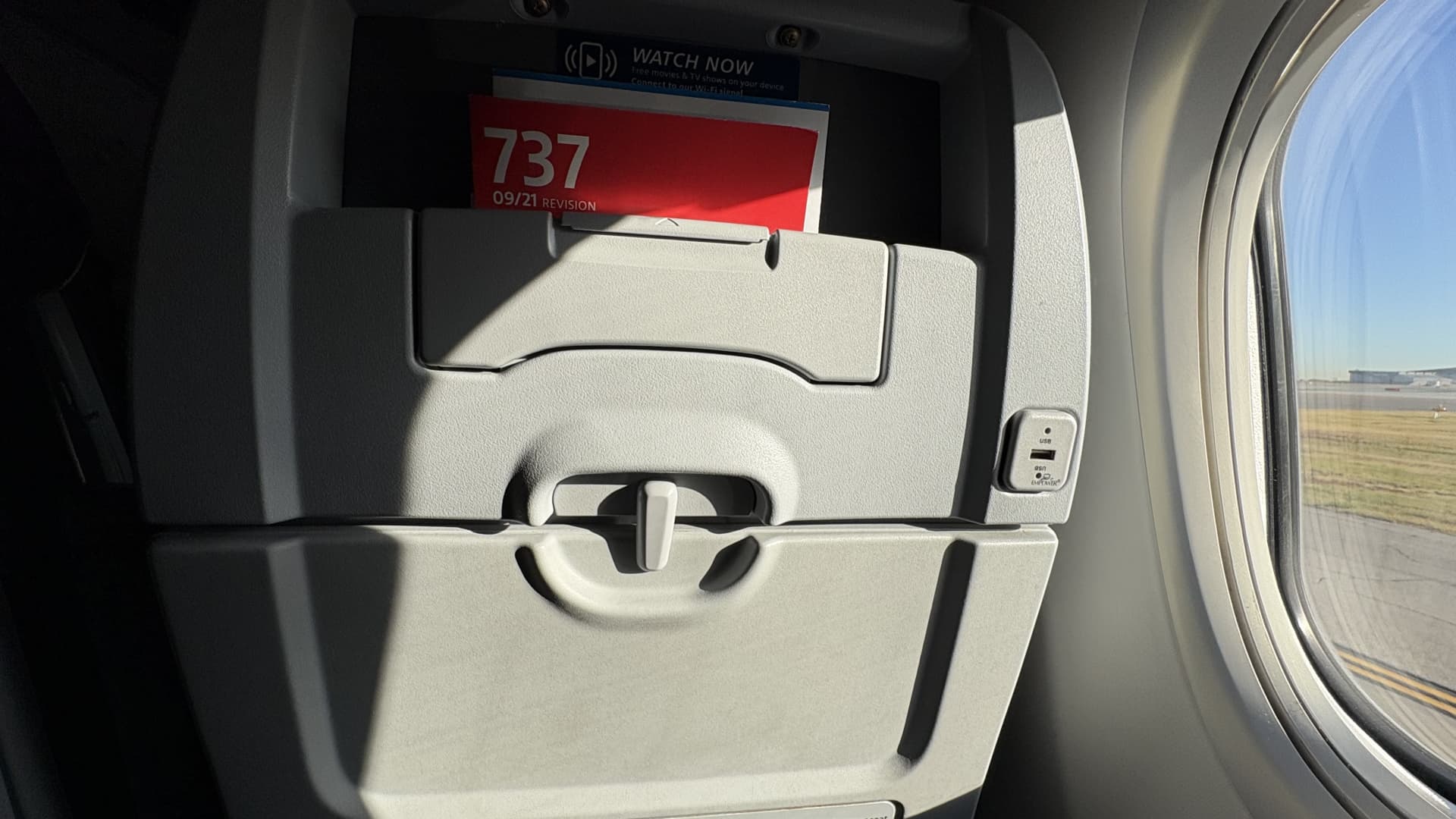
A seatback on an American Airlines Boeing 737.
Leslie Josephs/CNBC
American Airlines is finally giving a green light to seatback screens as the carrier works to close a profit gap with rivals Delta Air Lines and United Airlines. But customers will have to wait a little while.
The new screens, which will feature 4K displays, will start appearing with new deliveries from Boeing and Airbus in 2028. The airline will also retrofit aircraft so passengers in all cabins will be able to use the screens and other additions like Bluetooth audio pairing and USB-C charging.
American has been “seriously considering” the technology, along with a major cabin revamp, for months. The company had long eschewed seatback screens, with executives contending that it wasn’t worth the cost of equipment and weight they added to the aircraft and saying they expected flyers to use their own devices for entertainment.
“The technology has advanced so much from when we made this decision more than a decade ago,” Chief Customer Officer Heather Garboden said in an interview. “Ultimately, when you have customer preference and customer satisfaction improvements, that also generates revenue.”
She declined to say how much American is spending on the initiative but said the installations should be complete in the early 2030s.
On Tuesday, American announced that its revamp will include more first-class seats on its Airbus A321neos and its Boeing 737 Max 10s, though deliveries of the latter are still several years away. American is also adding more extra legroom seats across its fleet.
Those premium seats can be double the price of a coach ticket or more. For example, a round-trip ticket from New York’s John F. Kennedy International Airport to Dallas Fort Worth International Airport was going for $447 in coach and $1,161 in first class.
American CEO Robert Isom told CNBC in June that he and his team are working to close the profit gap with its large airline competitors, through more premium seats, plush lounges and improving the airline’s network. He said American is also planning to refurbish its Boeing 787-8 Dreamliners with the carrier’s new business-class suites, and add more of them. The carrier is also in the market for new wide-body planes and has been evaluating options from Boeing and Airbus.
American reported a profit of $71 million for the second quarter, compared with United’s $805 million and Delta’s $1.6 billion in the same period.

British sports and custom apparel company Y1 Group has acquired university clothing specialist Redbird Apparel in a seven-figure deal, creating a combined business generating more than £7.5 million in annual revenue.
The deal, announced on Tuesday, brings together two founder-led companies that each began with a few thousand pounds drawn from their founders’ student loans. Both have grown without taking on venture capital, funding expansion through profits. The companies said both businesses grew organically, building long-term relationships across education and grassroots sport.
Y1 Group, which appeared on BBC’s Dragons’ Den, supplies bespoke sportswear, teamwear and custom merchandise. Redbird Apparel sells fashion-led university clothing, rapid-turnaround collections and an e-commerce platform. The companies said the combination creates one of the UK’s leading providers of premium branded apparel for schools, universities, sports clubs and organisations.
Chris Rea, founder of Y1 Group, said the deal reflected a change in how organisations buy branded clothing. “Ten years ago, organisations bought branded merchandise to give away. Today, they invest in apparel that builds identity, loyalty and belonging,” he said.
“People want clothing they’re proud to wear – not promotional stash that ends up at the back of a wardrobe. Redbird recognised that shift early, building an exceptional business around great design and customer experience.”
Rea said the acquisition “puts us firmly on track to achieve our 2030 ambition of £20 million turnover and becoming the UK’s fastest-growing sports apparel provider”.
Redbird was founded by Guy Brown and Laurence Snow while the pair were students at the University of Exeter, each investing £1,000 from their student loans. The company has since fulfilled more than 200,000 orders, supplying clothing and merchandise to universities, sports clubs and student societies across the UK, including Oxford and Cambridge.
The founders said Y1 Group’s Dragons’ Den appearance had been well known among student entrepreneurs on the Exeter campus while they were building Redbird, and that the business that inspired them has now bought them.
Brown said: “The company that first inspired us has now bought us. We love that.
“We were both students at Exeter university. We both started Redbird with just £1000 each from our student loans because we believed university clothing deserved to be better. Students wanted apparel that looked and felt like brands they already wore – not generic merchandise designed around the cheapest possible product.
“We focused on building a sustainable business through great products and happy customers, growing to thousands of orders without taking on venture capital. Joining Y1 gives us the scale, expertise and investment to take that vision even further.”
According to the British Promotional Merchandise Association, the UK branded merchandise market is worth more than £1.2 billion annually. The companies said organisations are increasingly prioritising higher-quality apparel that builds long-term brand affinity over short-lived promotional giveaways.
The combined group will offer bespoke custom apparel, rapid-turnaround fashion collections, e-commerce merchandise platforms and branded accessories.
Y1 Group said the deal, an example of growth through acquiring an established business rather than building from scratch, forms part of its long-term strategy to expand across education, grassroots sport and premium branded apparel.
Amy Ingham
Amy Ingham is a reporter at Business Matters, covering UK business news with a focus on breaking news, business policy, late payments and insolvency. She joined the magazine in 2026 after completing the NCTJ Diploma in Journalism at Harlow College’s journalism school. Her recent reporting includes British Steel’s nationalisation and its impact on SME suppliers, the decline in late payments by large firms, and Insolvency Service director disqualifications. Reach her at aingham@cbmeg.co.uk.


JSB Industries acquires crustless sandwich maker from Gold Medal Bakery.
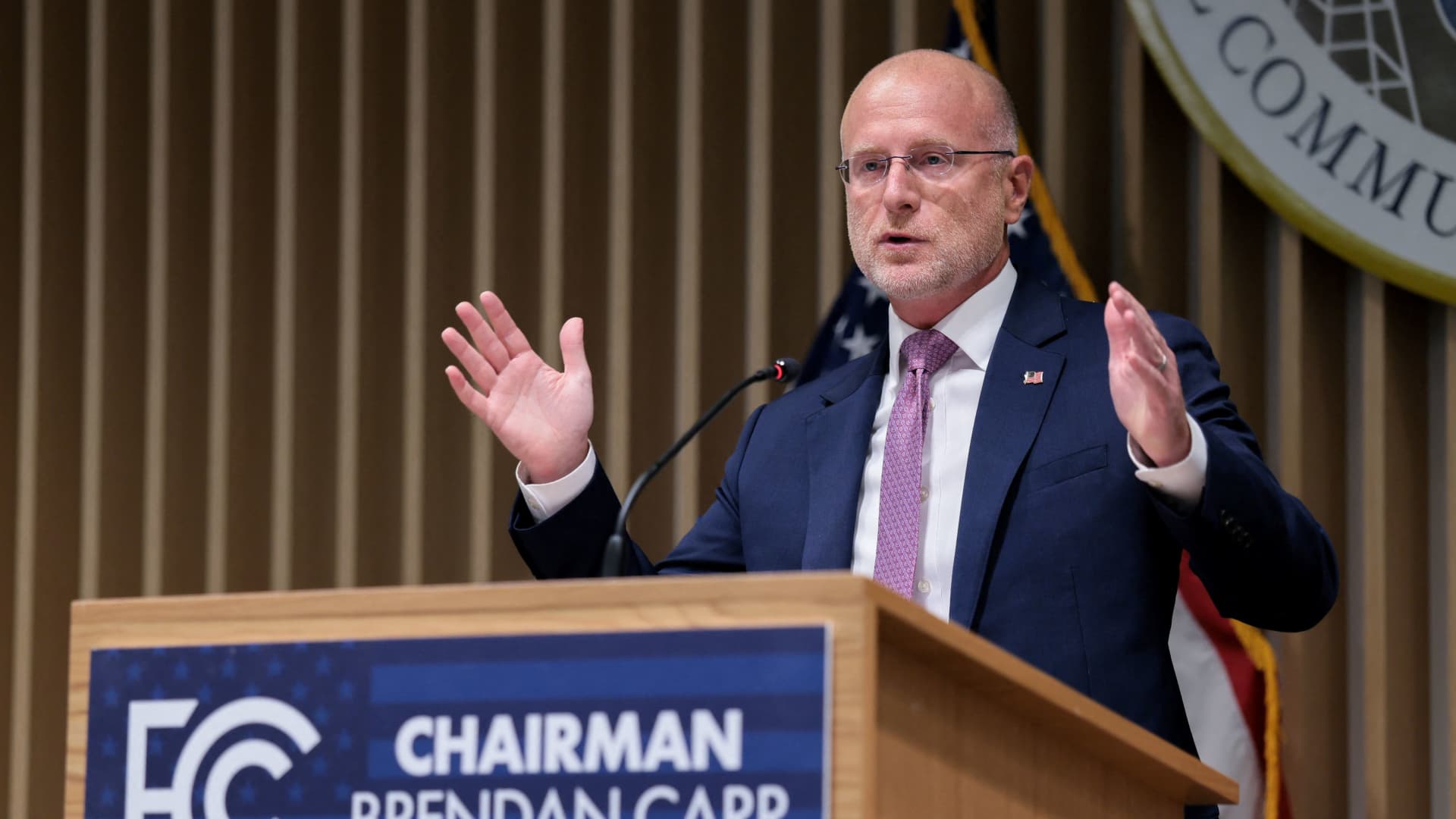
U.S. Federal Communication Commission (FCC) Chairman Brendan Carr speaks during a press conference, following an open meeting of the FCC, in Washington, D.C., U.S., July 22, 2026.
Kylie Cooper | Reuters
Disney’s ABC has filed a First Amendment lawsuit against the Federal Communications Commission, calling the government agency’s recent investigation into the company a “retaliatory campaign” due to the nature of its programming, which has been critical of President Donald Trump.
The broadcast network filed the lawsuit on Tuesday in a district court in Washington, D.C.
The move comes months after the FCC launched an early renewal of a set of ABC’s broadcast station licenses, citing concerns around the company’s diversity, equity and inclusion efforts.
However, that early review process came shortly after renewed political backlash against ABC following comments made by TV host Jimmy Kimmel on his late night show, which airs on the broadcast network.
ABC’s lawsuit calls for the FCC to halt its early broadcast renewal proceedings.
The FCC didn’t immediately respond to a request for comment on the lawsuit.
This story is developing. Please check back for updates.
Business
Stock Market Today: Tech Futures Slide As Treasury Yields Jump; Nvidia, Micron, Sandisk Sell Off

Futures for the Dow Jones Industrial Average and the other major stock indexes traded lower Tuesday, as Wall Street reacted to rising Treasury yields that hit multi-year highs. Meanwhile, Nvidia (NVDA), Micron Technology (MU) and Sandisk (SNDK) were big losers on the stock market today. Ahead of Tuesday’s open, Dow futures fell 0.2%, as S&P 500 futures moved down 0.5%. Nasdaq-100…
Copyright ©2026 Investor’s Business Daily, LLC. All rights reserved. 87990cbe856818d5eddac44c7b1cdeb8

Hormel Chili, Omaha Steaks partner on chili innovation

Sherlock Takes Audit Engine Public After Months of Quiet Testing

Michelle Rodriguez Says Young Stars Dying Is ‘Not Normal’





-

 Fashion4 days ago
Weekend Open Thread: Ann Taylor
-
 NewsBeat7 days ago
Communication cards help banking customers access services or report scams
-
 Sports5 days ago
This U.S. Amateur is a glimpse into golf’s future in more ways than you think
-
 NewsBeat3 days ago
Myanmar says over 300,000 Rohingya refugees verified for repatriation as exodus enters ninth year
-

 Sports3 days ago
Birmingham 2026: Day 6 Timetable for Irish Athletes
-

 Politics3 days ago
SEQ Code: The Three Letter Boarding Pass Code That Could Give You The Worst Seat
-

 Tech4 days ago
11 Ways to Rank Your Videos
-
 Entertainment6 days ago
Keke Palmer Subtly Hints At Sean Evans Drama With Cryptic Post
-

 Fashion7 days ago
Coffee Break: The Fonteyn Jane Flat
-

 Tech7 days ago
Zoom Screen-Sharing Bug Let People Fully Take Over Other Devices On A Call
-

 Fashion7 days ago
Should you refinance your debt? Pros, cons, and real numbers
-

 Fashion7 days ago
Claire Life: Kicking Off MVAAFF With the C Suite Luncheon Featuring Phylicia Rashad, Letoya Luckett, and More!
-
 Crypto World6 days ago
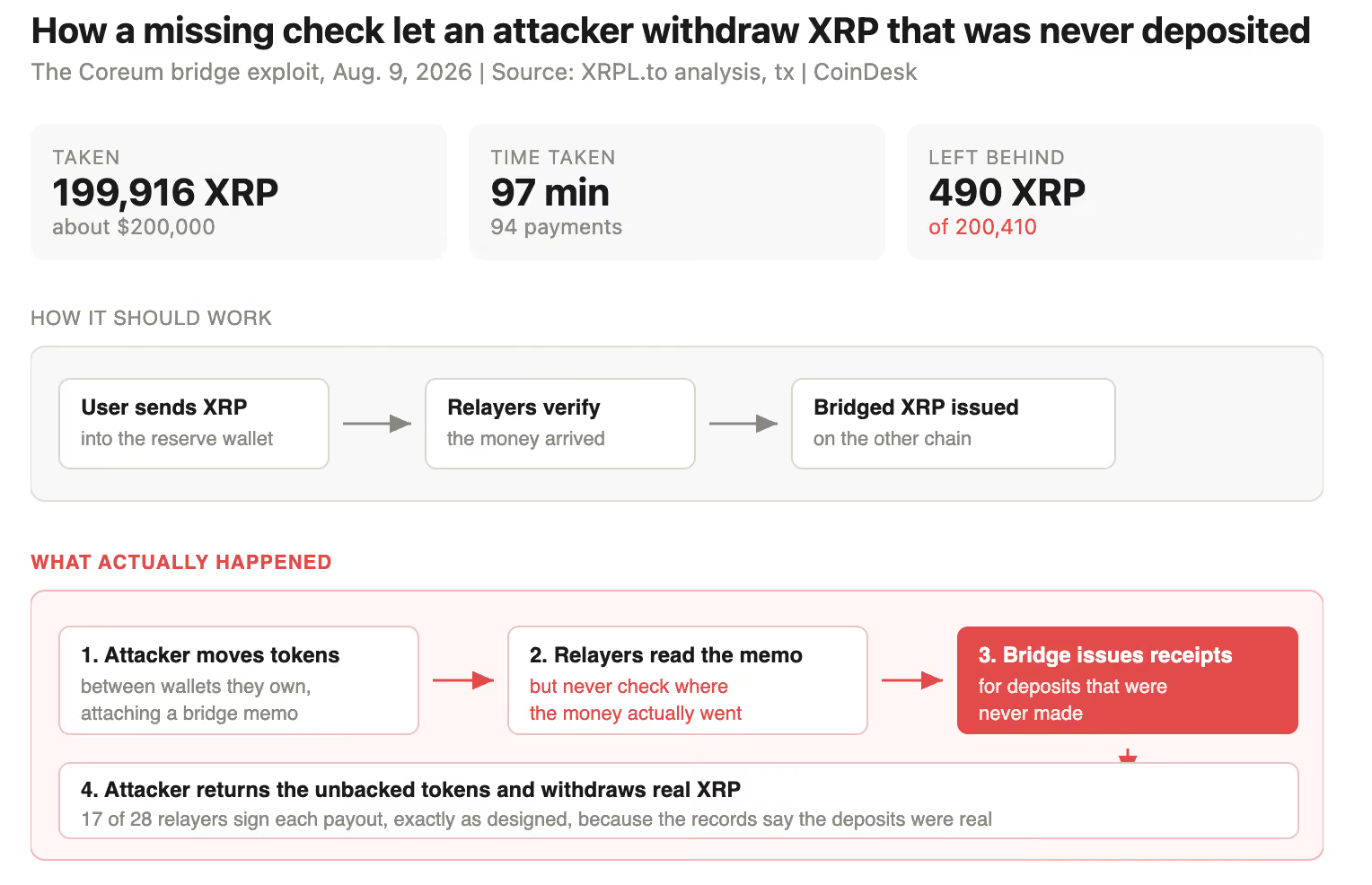
XRP bridge drained after software mistook fake deposits for real ones
-

 Sports6 days ago
DeQuan Jones in ‘high spirits’ after successful leg surgery
-

 Tech5 days ago
DeepSeek Harness launches as open source rival to Claude Code, alongside V4-Pro on API with higher prices
-
 Crypto World6 days ago
Perplexity AI Predicts an XRP Scenario Few Analysts Are Discussing
-
 Entertainment6 days ago
2026’s Most Ambitious Fantasy Movie Officially Scores Sequel Update
-

 Tech6 days ago
SpaceXAI’s Grok Bot turns agents into persistent digital coworkers that can operate your apps for $120-per-month
-

 Politics6 days ago
How Average Are You In The UK?
-

 Politics7 days ago
In the Chris Kaba case, the police watchdog capitulated to the mob
You must be logged in to post a comment Login