
Business
India Gold Market Update: Mixed Reading


The World Gold Council is the market development organization for the gold industry. Our purpose is to stimulate and sustain demand for gold, provide industry leadership, and be the global authority on the gold market. We are a unique organization that delivers tangible benefits to the gold industry. We are an active force within the market, working with a large and diverse set of partners to create access, drive innovation and stimulate demand, while providing a collective voice for our members. We provide insights into the international gold markets, helping people to understand the investment qualities of gold and its role in meeting the social and environmental needs of society. For more information visit www.gold.org.

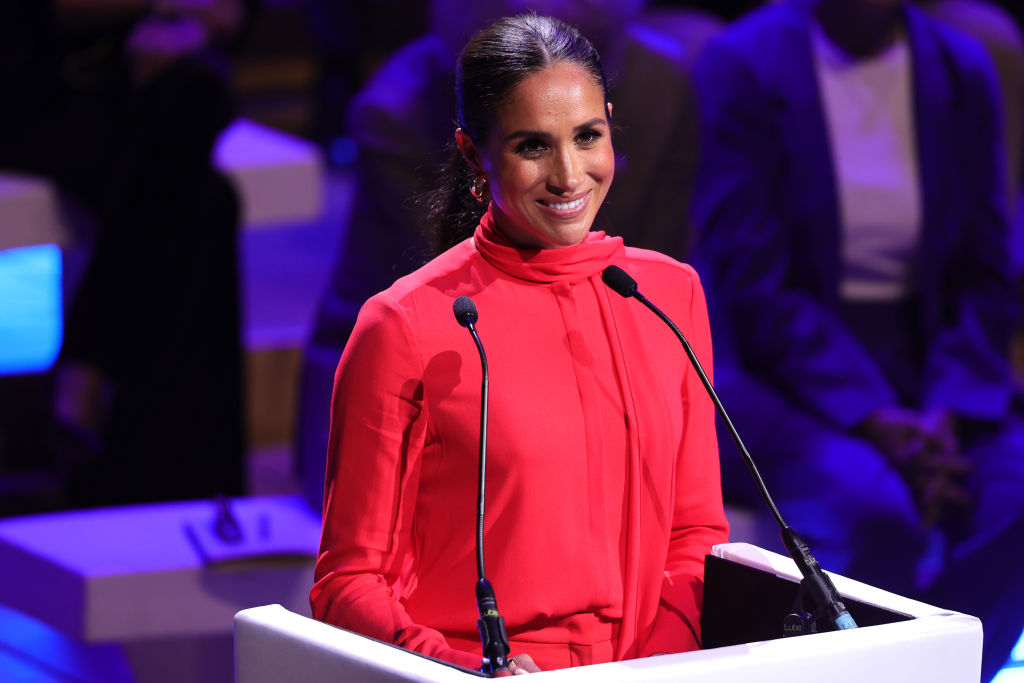
MONTECITO, California — Meghan Markle returned home to a joyful family welcome from her children Archie and Lilibet on Monday after wrapping a four-day visit to Australia with Prince Harry, sharing new behind-the-scenes footage and heartfelt moments that quickly circulated on social media even as the trip drew both praise and sharp criticism.

IBTimes US
The Duchess of Sussex posted a reel featuring never-before-seen clips from the whirlwind tour, including warm interactions with fans and hospital visits, alongside images of a handmade “welcome home” banner at their Montecito mansion. Young Archie and Lilibet greeted their parents with excitement, providing a touching domestic contrast to the intense scrutiny that followed the couple across Australian cities.
Markle, 44, and Harry touched down in Melbourne earlier in the week for what many described as a “faux royal tour” — their first visit Down Under since 2018. The privately funded trip included stops in Melbourne and Sydney, where the couple met with well-wishers, visited the Royal Children’s Hospital and engaged in community events. Markle notably told Australian fans to “call me Meg,” shrugging off formal titles in casual exchanges that some viewed as approachable and others as calculated image management.
The visit generated significant media attention but also backlash. Critics labeled the trip as opportunistic, with some Australian commentators accusing the Sussexes of profiting from a semi-royal appearance while taxpayers covered portions of security costs. Reports suggested the couple could pocket up to $10 million from associated deals and appearances, prompting headlines calling them “grifters” and sparking online petitions demanding they reimburse public expenses.
Despite the controversy, positive moments stood out. Seven-year-old Joshua snapped a selfie with Markle during the Melbourne hospital visit, later telling reporters he hoped to show the photo to his future children. Harry kicked a footy around with locals, and the couple posed near iconic landmarks, including areas around the Sydney Opera House. Markle later captioned an Instagram reel: “Australia, you have our hearts,” linking to more details on Sussex.com.
The timing of the tour comes as the Sussexes navigate a challenging period in their post-royal ventures. Earlier in 2026, Netflix ended its partnership with Markle’s lifestyle brand As Ever, which launched in 2025 with strong initial sales of items like jam and chocolate. The streamer cited the limited success of Markle’s show “With Love, Meghan,” though sources indicated the series may return in seasonal specials under a revised first-look deal with Archewell Productions.
Archewell continues developing projects across platforms, including romance novel adaptations and a polo-themed scripted series for Netflix. A documentary titled “Cookie Queens” premiered to positive reviews at Sundance in January, offering a bright spot amid reports of staff layoffs at Archewell Philanthropies and slower momentum for some initiatives.
Markle’s personal brand efforts have faced mixed results. A $3,000-per-head women’s retreat in Sydney during the Australian visit reportedly failed to sell out, adding to questions about demand for high-ticket lifestyle experiences tied to her name. Meanwhile, she shared New Year “reset” rituals in January, emphasizing a gentler pace for 2026 with family-focused moments, including black-and-white photos of her carrying Lilibet and a casual anniversary portrait with Harry.
The Australia trip reignited long-standing debates about the couple’s relationship with the British royal family. Palace sources remained largely silent, but some reports suggested King Charles III expressed concern over the potential impact of such “faux royal” engagements on the institution’s image. Harry and Markle have maintained they stepped back as senior working royals in 2020 to achieve financial independence, yet their public activities often blur lines between private endeavors and royal-adjacent appearances.
Public opinion remains deeply divided. Supporters praised the couple for engaging directly with communities and children’s causes without official royal backing. Detractors pointed to perceived hypocrisy in leveraging royal connections while criticizing the monarchy, with some media outlets highlighting low crowd turnout or “ignored” moments during the tour as evidence of waning appeal.
Markle has continued building her independent profile. Her lifestyle brand As Ever is moving forward without Netflix’s direct involvement, with plans for expanded product lines. The couple’s production company promises a mix of scripted and non-fiction content across multiple streamers in coming years, signaling a strategic pivot after the end of the exclusive Netflix deal.
Family life appears central to Markle’s current focus. The warm homecoming footage showed the children’s excitement, reinforcing the Sussexes’ narrative of prioritizing privacy and parenting in California while selectively engaging in public work. Archie, now 7, and Lilibet, 4, remained in Montecito during the short trip, with the parents emphasizing its brevity.
The visit also highlighted ongoing security and logistical complexities. Harry and Markle flew commercial on parts of the journey, a choice noted by observers as consistent with their post-royal status. Australian authorities provided police support, fueling debates over costs that some politicians argued should fall entirely on the visitors.
As the dust settles on the Australia tour, attention turns to the Sussexes’ next steps. No immediate major announcements followed the trip, but insiders suggest continued work on philanthropic initiatives, content development and brand growth. Markle’s ability to convert public interest into sustainable ventures remains a key question for 2026 and beyond.
The couple’s 2026 has already included professional adjustments and public scrutiny. From the Netflix brand split to Hollywood project updates and the polarizing Australia engagement, Markle continues to command global headlines. Her approach — blending lifestyle entrepreneurship, family moments and selective activism — draws both admiration for resilience and criticism for perceived inconsistencies.
For now, the latest images from Montecito portray a more intimate side: parents reuniting with young children after an intense international schedule. Markle’s sharing of these personal moments may help counterbalance the intense media analysis that accompanied every step of the Australian visit.
Royal watchers and entertainment observers will monitor whether the tour boosts or hinders upcoming projects. With Archewell Productions expanding beyond Netflix and As Ever evolving independently, Markle appears determined to carve a multifaceted post-royal identity.
The warm family welcome captured on Monday offered a quiet counterpoint to the louder debates. As one reel circulated rapidly, it reminded audiences of the human element often overshadowed by controversy: a mother returning to her children after time away.
Whether the Australia trip marks a successful re-engagement with global audiences or another chapter in ongoing polarization, Meghan Markle remains one of the most discussed figures in contemporary celebrity and royal spheres. Her next moves — in business, content creation and public life — will likely face the same intense spotlight that followed her every step Down Under.
As April 2026 draws to a close, the Sussexes’ blend of family focus and selective public appearances continues to fascinate and divide. The latest footage from home suggests that, amid the noise, Markle is prioritizing moments that matter most to her personally while navigating the complex terrain of her unique platform.
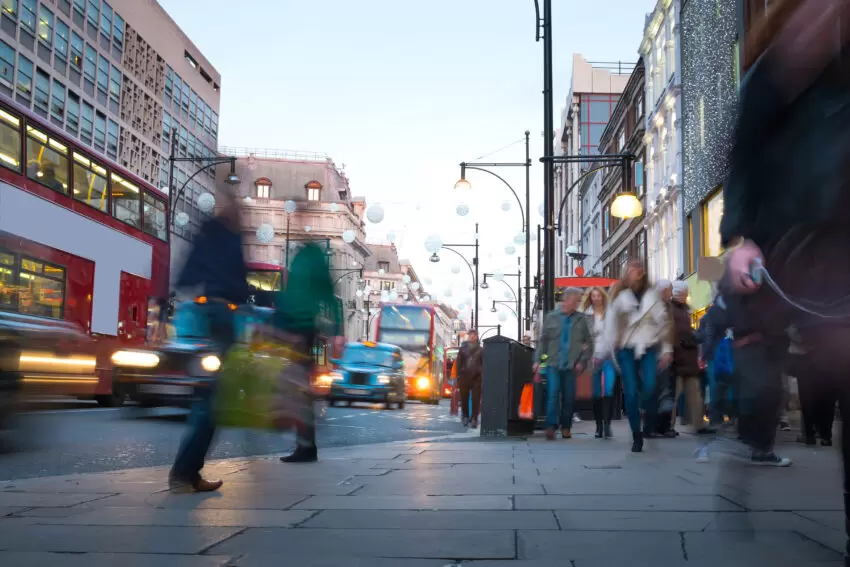
Britain’s small and medium-sized businesses are bracing for one of the most punishing periods since the pandemic, as the fallout from the Middle East oil shock threatens to push the UK economy to the brink of a technical recession within weeks.
The Item Club, the influential economic forecasting group, now expects the UK to “flirt” with recession through the second and third quarters of the year, with GDP growth halving to just 0.7 per cent in 2026, down from 1.4 per cent last year. Growth in 2027 is pencilled in at a “still-below-par” 0.9 per cent, a grim backdrop for owner-managed businesses already contending with tighter margins and nervous customers.
The trigger is the closure of the Strait of Hormuz, the chokepoint through which roughly a fifth of the world’s oil passes. The International Energy Agency has described the disruption as the largest supply shock in the global oil market’s history. Shipping through the strait remained at a standstill on Sunday after Tehran reasserted control of the waterway, with Donald Trump and the Iranian regime accusing one another of breaching the ceasefire struck in the wake of February’s US-Israeli strikes.
The American president accused Iran of a “total violation” after reports of fire being directed at vessels near the strait, and repeated his threat to target Iranian bridges and power infrastructure unless Tehran accepts Washington’s terms. Brent crude fell roughly 9 per cent to below $90 a barrel on Friday after Iran signalled it would reopen the waterway, which has been effectively closed since the 28 February attacks.
For British SMEs, many of whom still carry the scars of the post-Ukraine energy crisis, the implications are stark. Matt Swannell, chief economic adviser to the Item Club, said: “Consumers’ spending power will be squeezed, while more expensive financing arrangements and a less certain global economic backdrop will pour cold water on companies’ investment plans.”
The labour market is forecast to deliver the “biggest jolt” since the pandemic. The Item Club expects unemployment to climb to 5.8 per cent by the middle of next year, with an additional 250,000 people out of work as firms trim headcount. Joblessness is not expected to drift back down to 4.75 per cent until 2029. Swannell flagged a “worrying switch” in the make-up of unemployment, shifting away from new entrants joining the labour market and towards outright redundancies, a trend that tends to hit smaller employers hardest.
Inflation, meanwhile, is projected to run at close to double the Bank of England’s 2 per cent target by the year-end. Even so, the Item Club does not expect “a repeat of 2022”. A softer economy and weakening jobs market should make it harder for companies to pass cost increases through to customers “as aggressively” as they managed in the months following Russia’s full-scale invasion of Ukraine.
That subdued pass-through explains why the Bank is unlikely to reverse course on rates. The Monetary Policy Committee is judged to view current borrowing costs as already holding back activity and “leaning against inflation”, with the Item Club pencilling in two further cuts by the middle of next year, welcome news for SMEs weighing refinancing decisions.
Separate analysis from EY underlines just how heavily geopolitics is weighing on boardrooms. Of the 55 profit warnings issued by UK-listed businesses in the first quarter, 49 per cent cited policy change and geopolitical uncertainty as a leading driver, the highest proportion recorded for that cause in more than 25 years of the firm’s tracking. The FTSE travel and leisure sector, a bellwether for discretionary spending, notched up its joint-highest number of profit warnings in three and a half years.
The mood among consumers is similarly downbeat. The latest Deloitte tracker shows overall consumer confidence has slumped to its lowest level since 2023, falling 3 percentage points during the first quarter, the sharpest quarterly drop since early 2022. Five of the six confidence measures compiled from Deloitte’s survey of 3,200 UK consumers fell, with the steepest decline coming in sentiment around household disposable income. Discretionary spending tumbled 7 percentage points to its weakest reading since the start of 2023.
For Britain’s SME owners, the message from the data is unambiguous: the next two quarters will test cash flow, hiring plans and pricing power in ways not seen since the pandemic. Those who move early to shore up working capital, renegotiate energy contracts and diversify supply chains away from Gulf-dependent routes are likely to be the ones still standing when growth finally returns.

Amy Ingham
Amy is a newly qualified journalist specialising in business journalism at Business Matters with responsibility for news content for what is now the UK’s largest print and online source of current business news.
Business
(VIDEO) Elon Musk Predicts AI Robotics Will Make Work Optional Ushering in New Era of Abundance by 2040s
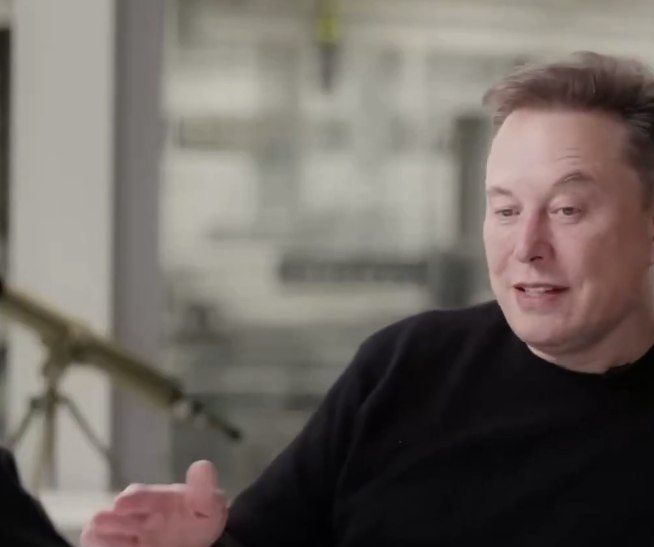
AUSTIN, Texas — Elon Musk has reignited global debate over the future of labor with a viral video clip in which the Tesla and xAI CEO declares that rapid advances in artificial intelligence and robotics will soon render working optional, paving the way for an era of unprecedented abundance where people can obtain virtually any goods or services they desire.

The 56-second excerpt, posted Monday by X user @XFreeze, has already amassed more than 77,000 views and hundreds of replies within hours. In the footage, Musk, seated in what appears to be a Tesla facility, gestures animatedly as he outlines a vision that has become a recurring theme in his public remarks over the past year.
“I’m confident that if AI and robotics continue to advance — which they are advancing very rapidly — working will be optional, and people will have any goods and services that they want,” Musk states in the clip. He adds that AI and robotics are progressing so quickly that they could eventually satisfy nearly every human need. “At that point, abundance becomes the default, and the real question is no longer about production, but purpose.”
Elon Musk on the rapid advancement of AI and robotics
“I’m confident that if AI and robotics continue to advance which they are advancing very rapidly working will be optional, and people will have any goods and services that they want”
AI and robotics are advancing so fast… pic.twitter.com/X76G8getXm — X Freeze (@XFreeze) April 20, 2026
Musk continues by noting practical limits on consumption. “There is a limit — people can only eat so much food. But I think if you can think of it, you can have it in the future,” he says, underscoring his belief that scarcity could give way to a post-work society driven by intelligent machines.
The comments echo predictions Musk has made in recent interviews and forums dating back to late 2025. At the U.S.-Saudi Investment Forum and on entrepreneur Nikhil Kamath’s podcast, he forecasted that work could become optional within 10 to 20 years, likening it to playing sports or a video game rather than an economic necessity. He has repeatedly tied this outlook to Tesla’s humanoid robot Optimus and breakthroughs in AI hardware, including the company’s AI5 and upcoming AI6 chips.
Tesla has poured resources into Optimus, aiming for a general-purpose bipedal robot capable of performing unsafe, repetitive or boring tasks. Musk has described Optimus as a cornerstone of sustainable abundance, posting in December 2025 that “the future is going to be AMAZING with AI and robots enabling sustainable ABUNDANCE for all.” In February and March 2026 updates, he highlighted deployments of Optimus units at Supercharger stations and praised the Tesla AI team’s progress on real-world autonomy.
xAI, Musk’s separate artificial-intelligence venture, is also accelerating development of models like Grok to complement robotics efforts. The convergence of these technologies, Musk argues, will eliminate traditional labor demands and shift humanity’s focus from survival to higher pursuits such as creativity, exploration and personal fulfillment.
Yet the vision has sparked intense discussion — and skepticism — across social media and among economists. Replies to the viral post range from enthusiastic support to pointed concerns. One user wrote that “if everything becomes abundant, then scarcity just moves somewhere else,” while another warned, “He is missing a crucial point. Who owns and controls AI?” Several commenters raised the issue of purpose, noting that many people derive meaning from their jobs and could struggle in a work-optional world. “The end of scarcity isn’t the end of effort; it’s the birth of pure purpose,” one reply observed.
Critics question whether the benefits of abundance will be widely shared. Musk has acknowledged that reaching this future will require “a lot of work,” but some analysts worry about wealth concentration if a handful of companies control the underlying AI and robotics infrastructure. Others point to historical parallels: past automation waves created new jobs, but AI’s ability to learn and adapt could disrupt entire sectors simultaneously.
Economists and futurists have long debated similar scenarios. Proponents of universal basic income or “universal high income,” as Musk has sometimes referenced, see AI-driven abundance as an opportunity to decouple survival from employment. Detractors argue that without careful policy, the transition could exacerbate inequality, with displaced workers facing uncertainty while tech leaders reap rewards.
Tesla’s own trajectory offers a glimpse into the changes. The company’s Full Self-Driving technology and Optimus prototypes already hint at robots handling manufacturing, logistics and household chores. Musk has said Optimus could eventually outnumber humans, performing tasks from factory assembly to elderly care. In January 2026, he celebrated the Tesla AI chip design team’s progress, predicting AI5 and successors would become the highest-volume AI chips in the world.
Broader industry trends support Musk’s optimism about speed. AI capabilities have advanced faster than many forecasts, with models now demonstrating reasoning, creativity and physical-world understanding through robotics. Companies like OpenAI, Google DeepMind and Chinese firms are racing to deploy similar systems, intensifying the global competition Musk frequently cites.
Still, practical hurdles remain. Current robots lack the dexterity, reliability and cost-effectiveness for mass deployment in every home or workplace. Energy demands for training and running advanced AI are enormous, raising sustainability questions. Regulatory frameworks around safety, liability and job displacement are only beginning to form. Musk himself has cautioned that the path to abundance involves significant engineering challenges and societal adjustments.
The viral clip arrives amid heightened public interest in AI’s societal impact. Recent polls show mixed feelings: many Americans welcome productivity gains but fear job losses and ethical dilemmas. In education, healthcare and creative fields, AI tools are already reshaping workflows, prompting questions about what roles humans will retain.
Musk’s emphasis on purpose aligns with philosophical discussions dating back decades. If machines handle production, humans might pursue art, science, community service or space exploration — areas Musk champions through SpaceX. He has described a future where people “do things for cause” rather than necessity, echoing themes in his earlier remarks about money becoming irrelevant.
Supporters of the vision highlight potential upsides: reduced poverty, more leisure time, accelerated innovation. Families could spend more time together; individuals could explore passions without financial pressure. Environmental benefits might follow if robots optimize resource use and renewable energy scales alongside AI.
Skeptics counter that human motivation often stems from necessity and competition. Without work as a central organizing force, societies might face mental-health challenges, inequality in access to advanced technologies or even new forms of scarcity around attention, status or rare experiences. One reply to the post captured this tension: “If the material is completely rich, will there be many people who can’t find a goal in life?”
For now, Musk’s companies continue pushing boundaries. Tesla aims to ramp Optimus production, while xAI expands data centers and training clusters. Government and academic institutions are studying the implications, with some proposing pilot programs for post-work economic models.
The Monday video’s rapid spread on X underscores how Musk’s pronouncements continue to shape public discourse. Whether the timeline of 10 to 20 years holds remains uncertain — Musk has invited skeptics to “play this back” in the future — but few dispute that AI and robotics are advancing at breakneck speed.
As the clip circulates, it invites reflection on a profound shift: from an economy defined by labor scarcity to one defined by meaning. Musk’s message is clear — the technology is coming. The deeper challenge lies in how humanity prepares for the abundance it promises and the questions of purpose it leaves behind.
In boardrooms, classrooms and living rooms worldwide, the conversation sparked by a 56-second clip is only beginning. For Musk and millions following his lead, the future is not about whether machines will take over work, but what humans will choose to do once they no longer have to.
Europe luxury stocks slide on Middle East tensions, demand jitters
According to Palviya, the Nifty is currently testing an important technical level. “If Nifty breaks above 24,400, it can trigger short covering and extend the rally towards 24,600–24,700,” he said, while advising investors that “buy on decline should be your strategy… as long as Nifty is holding above 24,100.” He added that Bank Nifty is also showing a similar structure, noting, “Bank Nifty may see further short covering above 56,800 and could scale up to 57,500.” The overall trend, therefore, continues to favor the bulls as long as key support levels remain intact.
On the sectoral front, Palviya pointed out that several pockets of the market are showing strength, though select segments offer better risk-reward opportunities. “FMCG basket is looking quite interesting… after a long consolidation, stocks are giving breakout,” he said. At the same time, he emphasized that “metal and capital goods sectors are more promising in terms of momentum,” with buying interest persisting even at higher levels. He also observed that “EMS stocks are also showing sign of buying interest,” indicating a broader participation in the rally.
Sharing stock-specific ideas, he highlighted opportunities in select counters. “PNB Housing Finance… has potential to extend gain, with target around 945 and stop loss of 915,” he said. On Mazagon Dock, he noted, “breakout of falling wedge formation… target of 2750 with stop loss of 2575.” These picks reflect a combination of technical breakouts and sustained upward trends.
Defence stocks, meanwhile, remained in focus throughout the week, supported by strong price action and continued investor interest. “Most of the defence stocks have done well… continuity of buying interest is there,” Palviya observed. He added, “Apollo Micro… breakout of long consolidation… above 270, it may move towards 310–315,” while noting that “Zen Tech… breakout after six-month consolidation… above 1600, target could be 1700–1750.” Summing up the space, he said, “overall, this basket is showing sign of buying interest… continuity of uptrend is clearly visible.”

With indices maintaining a pattern of higher highs and higher lows and multiple sectors contributing to the rally, the near-term outlook remains constructive. However, market participants are advised to remain cautious near resistance levels and continue to follow a disciplined approach. The underlying trend remains positive, with a clear preference for buying on dips as the market heads into the coming week.
Business
Why is stock market rising today? Sensex jumps 400 points, Nifty above 24,450. 5 key factors explained

Sensex gained more than 400 points to cross 78,900, while Nifty 50 jumped 119 points to 24,473, as of 12.48 pm. The sharp gains added nearly Rs 3 lakh crore to the total market capitalisation of all companies listed on BSE, pulling it up to Rs 468 lakh crore.
Zudio-parent Trent and State Bank of India (SBI) shares were the top gainers on the Sensex, jumping nearly 4% and 3% respectively. Asian Paints, Eternal, NTPC, Bajaj Finance, Power Grid, Adani Ports and ICICI Bank shares followed, rising 1-2%. On the other hand, L&T, Titan and Kotak Mahindra Bank shares dropped nearly 1% each to lead losses.
Even as India VIX, which measures volatility in the market, remained 5% higher at 18.12, broader markets erased all losses to move into the green, with Nifty Smallcap 100 and Nifty Midcap 100 indices rising up to 0.4%. Sectorally, the Nifty PSU Bank index gained around 2% to lead gains.
Here are the key factors pushing the Indian stock market higher today:
1) Rupee gains
The Indian rupee continued to gain against the US dollar, opening 0.1% higher at 92.8250 on Monday, against the previous close of 92.9250. The Indian currency has rebounded sharply after crossing the 95 mark earlier last month, as the war in the Middle East and the subsequent rally in oil prices raised worries over the possible impact on India’s macroeconomy.
“Overall, the rupee remains supported in the near term, but sustainability will depend on the outcome of geopolitical developments and crude price stability,” said Jateen Trivedi, VP Research Analyst, Commodity and Currency, at LKP Securities.
2) FIIs remain net buyers for third day
Foreign investors remained net buyers of Indian equities for the third consecutive session, purchasing shares worth Rs 683 crore during an extremely volatile session on Thursday. FIIs have bought Indian equities worth more than Rs 1,731 crore over the three days.
However, these purchases are negligible compared to the massive sell-off seen earlier. FIIs have remained net buyers for only four out of the last 32 sessions. They sold Indian equities worth more than Rs 1.6 lakh crore between March 2 and April 9.
After the massive sell-off, it is difficult to say whether the previous session’s slight net buying by foreign investors marks a decisive change in their behaviour or just the calm before another storm.
3) Oil prices sustain below $100 per barrel
After declining over the weekend amid expectations of easing tensions, oil prices rose following fresh escalations. Brent crude futures surged more than 5% to $95.17 per barrel, while WTI crude gained around 6% to $88.83 per barrel.
However, prices remain below the crucial $100 per barrel mark, which they had crossed for the first time since March 2022 following Russia’s invasion of Ukraine.
4) Asian markets in green
Asian markets remained in the green on Monday, with Hong Kong’s Hang Seng gaining more than 1%. South Korea’s Kospi gained around 0.4%, while China’s Shanghai Composite rose 0.75%. Japan’s Nikkei, meanwhile, was up 0.7%. European markets slipped into the red.
Wall Street had ended sharply higher on Friday, with the Nasdaq gaining more than 1.5% and the S&P 500 rising over 1% amid rising expectations of fresh peace talks between Iran and the US culminating in a long-lasting ceasefire in the oil-rich Middle East.
Why caution is warranted
Despite the optimism in the markets, caution is warranted. The US on Sunday said it had seized an Iranian cargo ship that tried to run its blockade, and Iran said it would retaliate, raising the possibility that the ceasefire between the two countries might not last even for the two days it is set to remain in force.
Additionally, Iran said it will not participate in the second round of negotiations after the previous round failed to culminate in a peace deal earlier this month in Pakistan.
“One cannot restrict Iran’s oil exports while expecting free security for others. The choice is clear: either a free oil market for all, or the risk of significant costs for everyone,” Iran’s First Vice President Mohammadreza Aref wrote on social media.
Meanwhile, Trump said his envoys would arrive in Islamabad on Monday evening, one day before a two-week ceasefire ends. A White House official said the US delegation would be headed by Vice President JD Vance, who led the war’s first peace talks a week ago, and would also include Trump’s envoy Steve Witkoff and son-in-law Jared Kushner. Pakistan, which has been acting as the mediator, seems to be preparing for the talks, although the ground for peace negotiations remains shaky.
With the de-escalation and escalation dynamic in the West Asian conflict continuing, the market will remain volatile in the near term, said VK Vijayakumar, Chief Investment Strategist at Geojit Investments. “With Iran hardening its position again, closing the Strait of Hormuz and threatening to retaliate to the US seizure of an Iranian ship ‘violating the US blockade’, there is potential for a flare-up of the conflict when the ceasefire ends on April 22. However, market signals do not reflect renewed concern over a flare-up of the conflict,” he said.
(With inputs from agencies)
(Disclaimer: Recommendations, suggestions, views and opinions given by the experts are their own. These do not represent the views of The Economic Times)
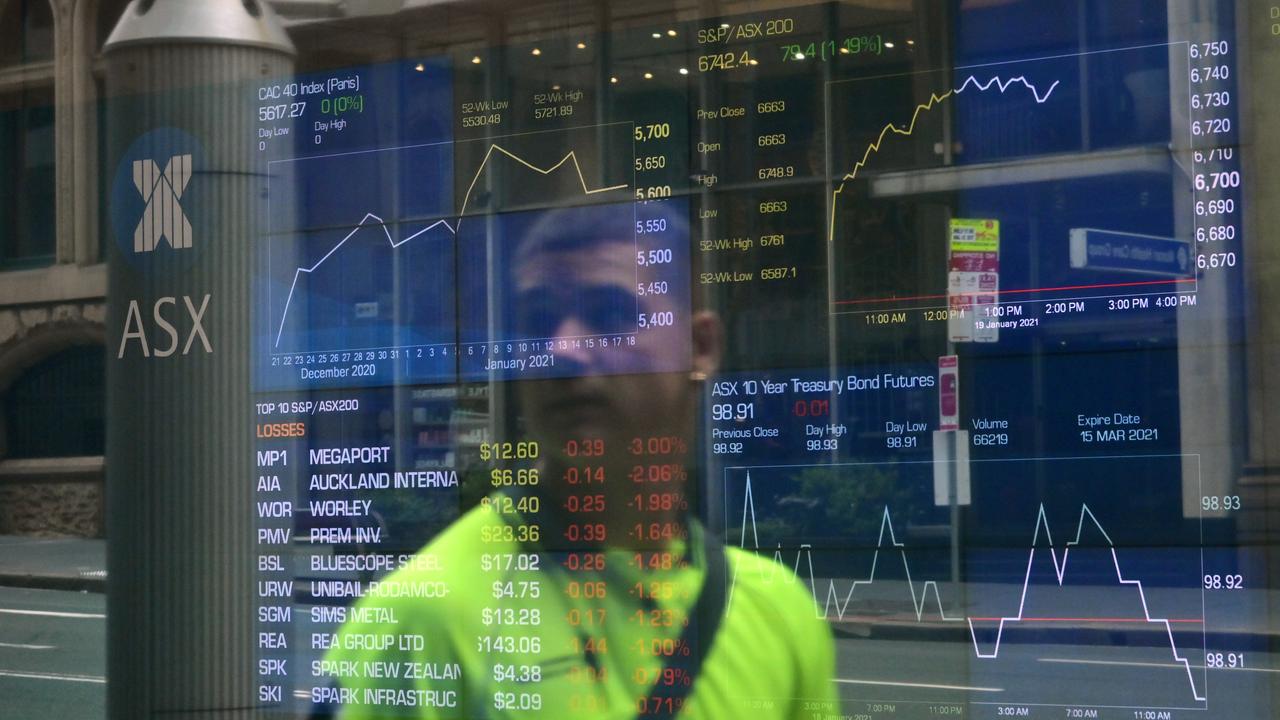
Australia’s share market has ended the session slightly higher despite an escalation of tensions in the Persian Gulf boosting oil prices and dragging on risk sentiment.

Speaking on the issue, Seth R Freeman from GlassRatner Advisory highlighted the broader implications of energy price volatility. “Oh, it is a major concern and more so it is priced in dollars, so it affects the entire global economy. And it drastically affects sentiment. This is becoming like a yo-yo, and we do not really know whose messaging we should be listening to, whether it is the government of Iran or the White House.”
Over the weekend, investors were inundated with a barrage of developments surrounding US-Iran relations, adding further complexity to market dynamics. Conflicting statements from both sides have kept traders on edge. Notably, crude prices, which declined on Friday, rebounded sharply by Monday morning—underscoring the fragile and reactive nature of the energy markets.
Freeman acknowledged the difficulty in navigating such an environment. “Well, it is certainly difficult to make a call, and we have to have some confidence in some of the forward-looking views on some of these major US stocks to maintain some stability here. But there are times to buy and times to sell, and times to maybe do nothing. And we just do not have clarity. The story seems to be changing every four to five hours. At the same time, we have consumers globally, and in particular emerging markets and other countries besides the United States, that depend on natural gas—even natural gas for cooking—and going back to oil, so much fertiliser is shipped through the strait from oil, so this is going to affect food prices ultimately.”
The uncertainty surrounding geopolitical developments has raised questions about whether markets are getting ahead of themselves. Despite ongoing tensions—including reported blockades and maritime incidents—equity markets have shown resilience, leaving many analysts puzzled.
Freeman pointed to the contradictions in political messaging as a source of confusion. “It is so hard to say. Here we are, we have a blockade. We are shooting at ships. Meanwhile, we are supposed to be having peace negotiations. Iran says there are no negotiations. I think for those who kind of think through this a bit, the messaging from the White House is very confusing because we were talking about regime change and the Iranian regime, and Trump is talking about blowing up Iran. Well, that hurts Iranians. We are not hearing about targeting the regime leaders anymore. And so, it is just very misguided, and it is just making it very difficult to decipher what the best moves are for the market. Meanwhile, it looks like these AI companies are going to continue to stay on a high-speed race, with continued support in those prices—and chip makers in particular.”
As markets balance optimism with uncertainty, the divergence between strong equity performance and volatile geopolitical signals suggests that investors may need to tread cautiously in the weeks ahead.
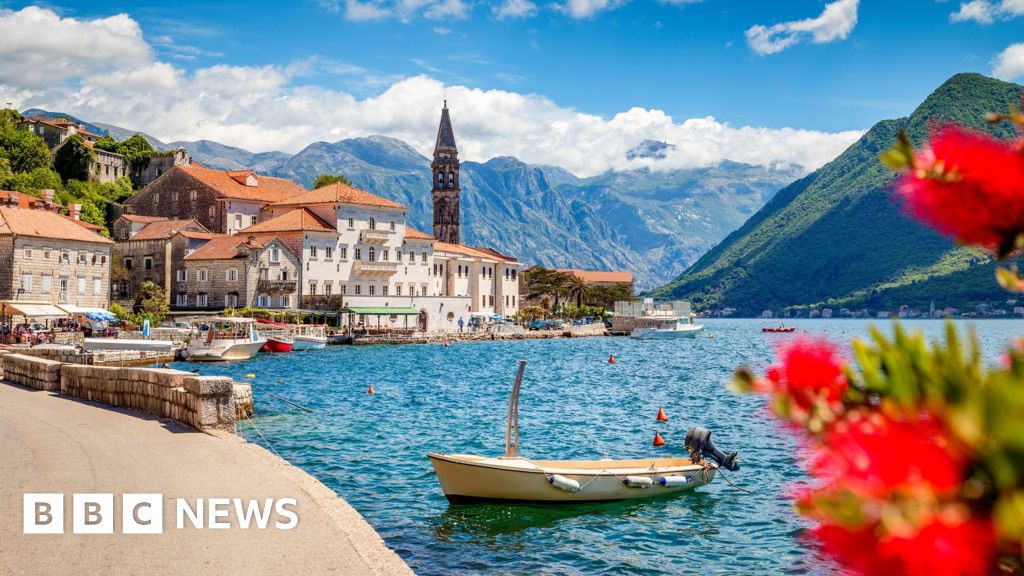
Montenegro and Albania are among the places rising in popularity for Britons seeking a holiday away from tourist traps.

Aristotle Capital Management is an independent/employee-owned investment management organization that specializes in equity and fixed income portfolio management for institutional and advisory clients worldwide.
Note: This account is not managed or monitored by Aristotle Capital Management, and any messages sent via Seeking Alpha will not receive a response. For inquiries or communication, please use Aristotle Capital Management’s official channels.
Unpacking LIV Golf’s wild week and uncertain future

Palantir posts mini-manifesto denouncing inclusivity and ‘regressive’ cultures

Financial Advisor Warns: 7 Money Lies You Still Believe (That’s Keeping You Broke In 2026!)

Why Israel is blocking foreign journalists from entering

Bitcoin: We’re Entering The Most Dangerous Phase

Alan Cumming Brands Baftas Ceremony A ‘Triggering S**tshow’
Financial Advisor Warns: 7 Money Lies You Still Believe (That’s Keeping You Broke In 2026!)

GOLD AND CRYPTO LIVE TRADING || 18 APRIL || Bitcoin Live Trading | Crypto Market Analysis |

THE TWO MOST IMPORTANT BITCOIN TRADE SETUPS FOR THIS WEEK
-

 Crypto World7 days ago
The SEC Conditionalises DeFi Platforms to Be Avoided for Broker Registration
-

 NewsBeat6 days ago
Trump and Pope Leo: Behind their disagreement over Iran war
-

 Fashion3 days ago
Weekend Open Thread: Theodora Dress
-

 Crypto World6 days ago
SEC Signals Exemption for Crypto Interfaces From Broker Registration
-

 News Videos5 days ago
Secure crypto trading starts with an FIU-registered
-

 Sports3 days ago
NWFL Suspends Two Players Over Post-Match Clash in Ado-Ekiti
-

 Crypto World6 days ago
SEC Proposes Certain Crypto Interfaces Don’t Need to Register as Brokers
-

 Business18 hours ago
Powerball Result April 18, 2026: No Jackpot Winner in Powerball Draw: $75 Million Rolls Over
-

 Crypto World2 days ago
Russia Pushes Bill to Criminalize Unregistered Crypto Services
-

 Politics2 days ago
Palestine barred from entering Canada for FIFA Congress
-

 Sports7 days ago
NWFL opens Pathway for new Clubs ahead of 2026 Season
-
 Business3 days ago
Creo Medical agree sale of its manufacturing operation
-
 Entertainment6 days ago
Brand New Day’ Footage Reveals the Devastating Impact of ‘Now Way Home’
-

 Politics22 hours ago
Zack Polanski demands ‘council homes not luxury flats for foreign investors’
-

 Tech5 days ago
Microsoft adds Windows protections for malicious Remote Desktop files
-
 Entertainment6 days ago
Karol G’s ‘Ultra Raunchy’ Coachella Set Gave ‘Satanic Vibes’
-

 Sports7 days ago
Aaron Judge says Yankees need to ‘simplify’ approach amid offensive slump
-
 Entertainment7 days ago
Pete Davidson Reveals ‘Brutal’ Mom Moment That Got Him Sober
-

 Entertainment6 days ago
How Babylon 5 Turned Brief Side Story Into Emotional Masterpiece
-
 Tech6 days ago
What was the first ransomware attack to demand payment in Bitcoin?
You must be logged in to post a comment Login