
Business
India Inc clocks strongest revenue growth in 9 quarters; margins squeezed by rising costs


While net profit also grew in double digits at 11%, rising input costs made it the slowest growth rate in a year. In the coming quarters, festivals and wedding season, and focus on product premiumisation are expected to sustain revenue momentum and support future profitability.
For a common sample of 3,589 companies, revenue net profit grew in double digits for the third and fourth consecutive quarter respectively. In addition, the momentum was stronger in the case of smallcap and midcap companies. “Nifty 50 and Nifty 100 delivered EPS (earnings per share) growth of 11.0% and 8.3%, respectively, while the Midcap 150 and Smallcap 250 reported significantly stronger growth of 34.0% and 36.4% in that order,” said Feroze Azeez, Joint CEO, Anand Rathi Wealth.
Banking and finance companies continued to lend support to the sample’s bottomline. Excluding the lending sector, the sample’s net profit growth shrank to 5.4% largely on account of a poor performance by the oil and gas sector due to higher fuel marketing losses and rising LPG under-recoveries amid volatile international energy prices. Excluding oil and gas companies, the sample’s net profit growth improved to 20.9% for the June quarter.
 ET Bureau

Read Also: Will Sensex, Nifty continue to bleed on Monday? 4 factors which will drive D-Street action this week
The total sample’s operating margin contracted to 16.6% in the June quarter from 19.6% in the year-ago period, reflecting the impact of higher input cost inflation.
Excluding banking and finance companies, the sample’s raw material costs relative to revenue increased to 38% — the highest in at least 13 quarters — from 33.6% a year ago. The quarterly range for this ratio was 33-35% during the past three years.
The June quarter margins remained under pressure due to elevated input costs though the impact was partially cushioned by the utilisation of lower-cost inventory,” said Vinod Nair, Head of Research, Geojit Investments. He expects this benefit to moderate in the September quarter as higher-cost inventory flows through the profit and loss account while monsoon-related disruptions may pose near-term challenges for select sectors. “Nevertheless, premiumisation trends and seasonal demand from the festive and wedding periods are expected to provide support,” Nair added.
On the sector front, banking and finance, capital goods, healthcare, retail and jewellery companies reported strong performance while sectors such as automobiles, cement, consumer goods, and oil and gas reported pressure on profits and profitability. “The strong performance of sectors including financials and capital markets suggests continued strength in credit growth, asset quality and market activity,” said Azeez.
For the remainder of the current fiscal year, analysts expect a broad based improvement in financials with trend in commodity prices as a key decisive factor. Aziz expects around 13% EPS growth in large caps and a stronger growth of 18-20% for midcaps and smallcaps. “Overall, we remain constructive on the earnings outlook, while maintaining a selective approach based on valuations and earnings across sectors and market-cap segments,” Azeez said.
Nair expects continued strength in credit growth, infrastructure spending and capex activity to support earnings momentum. “However, commodity price volatility, inflation trends and geopolitical developments remain key monitorable,” Nair said.


Forrestania Resources has backed Perth-based MEGA Resources to help further develop its Tycho gold deposit near Coolgardie.

Malaysia’s July CPI rises 1.8% y/y, slightly less than forecast

Asia FX ticks up on reduced Fed hike bets; yen gains despite weak Japan GDP
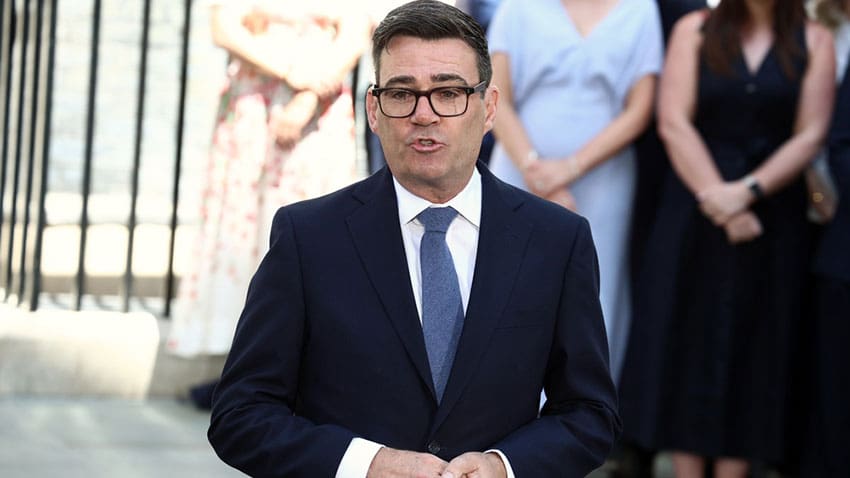
UK start-ups are “losing faith” in the government as a technology champion after successive efforts to buy more from domestic businesses have had little effect, according to a new report from the Startup Coalition, which says Andy Burnham’s “Buy British” push must address fundamental problems in the procurement process.
The lobby group, which represents technology start-ups and scale-ups, said: “For British start-ups and scale-ups, this really is the last-chance saloon after successive administrations have delivered warm words but little real action. The result is an ecosystem increasingly losing faith in the UK government as a buyer and champion.”
Successive governments over the past decade have struggled to increase the share of government spending that goes to small businesses. In 2015 David Cameron set a target for one third of central government procurement to go to small and medium-sized enterprises by 2020. The latest estimates from Tussell and the British Chambers of Commerce suggest that 21 per cent went to SMEs last year, a six-year high.
In the technology sector the picture is more concentrated. Tussell found that 84 per cent of UK government tech spending last year went to only 150 businesses, of which the majority were foreign.
Concern about the UK’s reliance on foreign technology, set against an increasingly fractious geopolitical environment, has added urgency to efforts to support domestic alternatives.
In his first speech as prime minister, outside Downing Street on 20 July, Burnham said he would “use public procurement to back British industry”. John Healey, the chancellor, said the government would “buy British not if possible, but by design” in sectors such as technology, defence and artificial intelligence.
The government has already made changes to the “social value” rules used to assess bidders for public contracts. The Cabinet Office has doubled the credit given to companies whose bids provide “social value” through local employment, scrapped rewards for net zero and diversity, and raised the threshold at which social value criteria apply to £1 million, from £139,688 previously.
The Startup Coalition said the early changes on social value could “mark a potential turning tide”, but warned that ministers would need to reshape the procurement process itself.
“Warm words from the top will not be enough to turn a tanker that is inert, risk-averse and slow to seize new opportunities. Instead, systematic change must be made at every point in the public sector buying process to turn strong signals into real change founders can feel,” the group said.
The report found that start-ups faced challenges at every stage of the procurement process, including risk aversion among buyers, lengthy delays and difficulty getting in front of the right people.
“We often spend more time stuck in procurement for public-sector contracts than delivering them,” said Jack Perschke, co-founder and chief executive of Great Wave AI, a business that helps customers build artificial intelligence agents.
Start-ups also argue that they are placed at a disadvantage by framework agreements, the long-term purchasing arrangements through which 26 per cent of public procurement is agreed. The frameworks open only every few years, often carry onerous requirements to bid and can leave companies facing delays while waiting for approval.
“All too often, processes and bureaucracy act as barriers for SMEs,” said Rachael Crook, chief executive and co-founder of Lifted, a health and care platform.
In a statement, the government said it was “committed to making sure every pound of taxpayer money is delivering real benefits for communities, developing skills and creating new jobs in every part of the country”.
It added: “These changes will cut red tape and ensure that every business focuses on delivering British jobs. Our priority is good growth in every postcode and we’re using £90 billion of public contracts to make sure that happens.”

Amy Ingham
Amy Ingham is a reporter at Business Matters, covering UK business news with a focus on breaking news, business policy, late payments and insolvency. She joined the magazine in 2026 after completing the NCTJ Diploma in Journalism at Harlow College’s journalism school. Her recent reporting includes British Steel’s nationalisation and its impact on SME suppliers, the decline in late payments by large firms, and Insolvency Service director disqualifications. Reach her at aingham@cbmeg.co.uk.

Anthropic could be valued at more than $2 trillion when it lists on the New York Stock Exchange this autumn, a level that would make the Claude developer’s flotation the largest in history, according to the Financial Times.
The artificial intelligence company filed to list in June and the float is expected in September or October. Senior executives have not yet set a target price, the FT reported.
A valuation above $2 trillion would carry Anthropic past SpaceX, which became a public company in June at a value of $1.75 trillion. Investors believe Anthropic’s lead in model capability, together with the speed at which businesses have adopted its tools, justifies the valuation, the FT reported.
The company’s annual recurring revenue, its preferred metric, which extrapolates a full-year figure from a single month’s performance, is expected to reach $100 billion to $120 billion by the end of the year. That compares with $48 billion in May and $9 billion at the start of the year.
Co-founded in 2021 by its chief executive, Dario Amodei, Anthropic secured a valuation of $965 billion in May, making it more valuable than the ChatGPT maker OpenAI. Its models have overtaken OpenAI’s among business users this year.
The run-up to the float has not been smooth. Anthropic this year became the first American company to be designated a supply chain risk by the US government, a ruling that restricts federal agencies and defence contractors from using its models. The company is challenging the designation.
Competition intensifies
Competitive pressure has also increased. Moonshot, a Chinese AI start-up, released its Kimi K3 model last month, which performed on a par with Anthropic’s models on many tasks at a fraction of the cost.
OpenAI has cut the price of its models, leading Anthropic to drop planned price increases for its own.
Azeem Azhar, founder of the research group Exponential View, said some of Anthropic’s recent actions had felt “reactive rather than strategic”.
“Its decision not to raise prices on models like Sonnet felt reactive given the market pressures. It’s facing all this competition from cheaper open-source models, as well as OpenAI’s own price cuts,” he said.
‘Cracks in the AI thesis’
Data from Ramp, a payments company that tracks corporate spending on AI, suggests Anthropic’s market share among US businesses has continued to grow, but that corporate adoption of Fable 5, its most expensive model, has been slow.
According to Ramp, Fable 5 made up only 6 per cent of the tokens businesses purchased from Anthropic over the past month. Despite being Anthropic’s most expensive model by far, it accounted for only 11.4 per cent of spending on the company’s models.
Ara Kharazian, lead economist at Ramp, said the data pointed to “cracks in the AI thesis”.
“With Fable 5, we’ve found a new upper bound for how much businesses are willing to spend on AI,” he said. “More performance is not worth the price tag.”
Azhar said Ramp’s data suggested that many businesses were struggling to identify clear use cases for the most powerful models.
“This technology has evolved faster than the capacity of customers to make sense of it,” he said. “Fable is expensive, but it’s also very powerful, which makes it hard to use. Ordinary companies cannot guarantee that if they’re spending $10 on a million tokens, then they’re getting $11 back. The business case is harder to make.”

Magnite director Knopper sells $848,296 in common stock

Japan Q2 growth misses forecasts on weaker spending, investment

Pre-polling has begun for the Secret Harbour by-election, which will be decided on August 29.

Alphabet eyes inaugural Australian dollar bond, bookrunner’s message says

Bankers said some lenders now plan to borrow more short-term funds, possibly at a higher rate, to finance the promised leverage to FCNR(B) clients after the Reserve Bank of India advanced the deadline for swap support. These funds will have to be replaced with a long-term loan or bond later, leading to a temporary mismatch between banks’ foreign deposits and borrowings.
“The RBI has put banks in a tight spot. Banks had done roadshows, spent manhours on getting documentation ready and put a lot of investments into this. All this was planned with September 30 deadline in mind,” said a senior private-sector bank executive.
Since large funds can’t be secured for a longer tenure immediately, one option is to look for bridge loans.
“Not many banks have the capacity to raise a huge sum at such a short notice; so one option banks are exploring is to do a short-term bridge loan for now to ensure customers can be provided leverage on their deposits until the end of August. These short-term loans can be replaced with longer term borrowings later,” said the executive cited above.
‘Sufficient’
On Friday, the RBI advanced the deadline for mobilising FCNR-B deposits to August 31, from the originally announced September 30, citing higher-than-expected inflows. The RBI received $52.3 billion through FCNR(B) deposits until August 13, the latest update showed.
Banks can use the RBI’s special zero cost swap facility, until September 11, 2026, versus the earlier date of October 16.
Bankers said the early closure was surprising since governor Sanjay Malhotra himself had said a week ago that the central bank neither planned to prematurely close the swap window because of robust inflows nor had it received any proposal to extend the timeline beyond the announced deadline.
“As of now, there is no proposal under consideration to close the scheme prematurely,” Malhotra had said after the monetary policy announcement on August 5. The scheme’s curtailment could expose lenders to liquidity mismatches.
Late Entrants
“Some banks that were late in garnering dollars will probably stop in their tracks. Others may choose not to push for more dollars, while some with customer commitments will look for short-term funds immediately – possibly at a higher cost,” said another private-sector banker. “This will create mismatches in the short term, which is not healthy.”
For instance, ICICI Bank’s $1.45 billion, four-year loan launched last week is currently under syndication. This loan also has a greenshoe option allowing ICICI Bank to upsize the total amount it wants to raise. The bank may want to wrap up the syndication early and not look at pushing the greenshoe.
Similarly, Punjab National Bank‘s $1 billion loan, which went into syndication in the last week of July, could be closed early as the bank scampers to get funds within the shorter deadline.
“Some mid-to small-sized banks, which had planned debut bond sales overseas, may now have to look at alternative sources. They will have to curtail their FCNR (B) targets because it does not look like the RBI needs more dollars,” said a senior executive with a foreign bank.
Bankers said the RBI’s decision has exposed them to risks of higher payouts immediately. There is also no certainty that whenever they tap the overseas markets, to match their three- to five-year FCNR(B) deposit liabilities, the US treasury, global rates or geopolitics will be favourable.
“Until last week, the RBI was in touch with banks pushing for more dollars. If dollar flows were too heavy, then there are ways to use them. Just open a special window for oil companies, for instance,” said a third private sector bank executive.
Bankers said by closing the scheme early and at a short notice, the RBI would be indicating it has enough muscle to protect the rupee.

Forrestania awards $27m contract

Ethereum’s Vitalik backs Bitcoin-inspired scaling model

Whitney Leavitt Opens Up About Cosmetic Journey

Weekend Open Thread: Staud – Corporette.com

Weekend Open Thread – Corporette.com

Weekend Open Thread: Brooks Brothers

No financial literacy & never trust your job like that make sure you have the money already saved up

Crypto Trading LIVE: BTC Live Trading Bitcoin Analysis | 14 AUG #crypto #bitcoin #btc

Is this the most delusional financial audit ever? You have to see this meltdown.
-

 Fashion2 days ago
Weekend Open Thread: Ann Taylor
-
 NewsBeat5 days ago
Communication cards help banking customers access services or report scams
-
 Business6 days ago
Oil Price Today (August 11): Crude oil rises to $88 after Trump’s compensation demand dents Hormuz opening. Here’s why
-

 Crypto World6 days ago
Revolut wins French banking licence, creates second EU banking hub
-
 Sports3 days ago
This U.S. Amateur is a glimpse into golf’s future in more ways than you think
-
 Crypto World6 days ago
Why Did Nvidia Stock Fall on Monday Despite a $500 Billion Wall Street AI Deal?
-

 Sports2 days ago
Birmingham 2026: Day 6 Timetable for Irish Athletes
-
 NewsBeat2 days ago
Myanmar says over 300,000 Rohingya refugees verified for repatriation as exodus enters ninth year
-
 Crypto World7 days ago
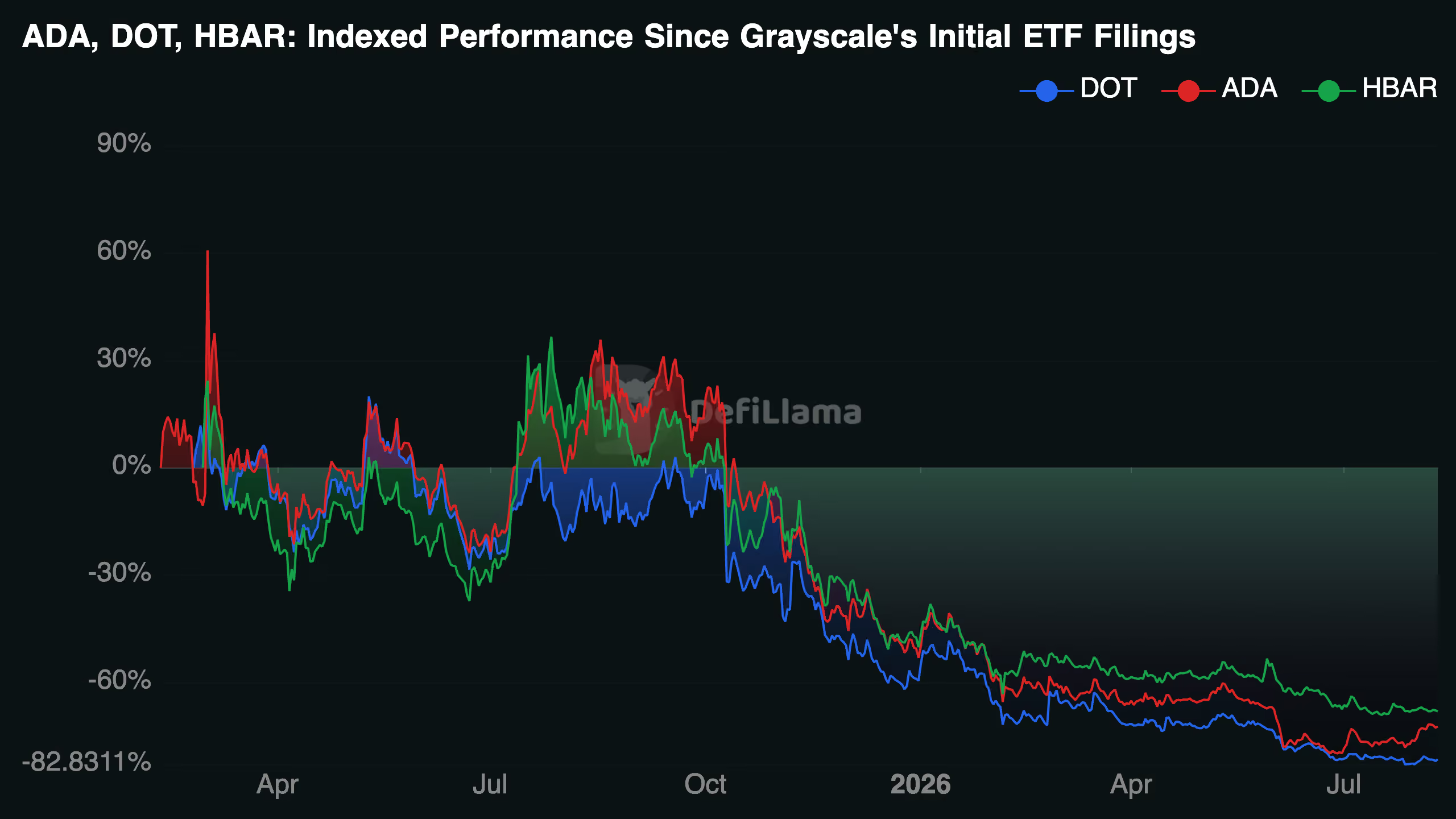
Grayscale quietly drops Cardano, Polkadot and Hedera ETF plans
-
 Entertainment5 days ago
Keke Palmer Subtly Hints At Sean Evans Drama With Cryptic Post
-

 Politics2 days ago
SEQ Code: The Three Letter Boarding Pass Code That Could Give You The Worst Seat
-
 Entertainment6 days ago
57 Years Later, the Best Sitcom Ever Made Still Deserves a Reboot
-

 Fashion6 days ago
Can You Wear Double Cloth Gauze Clothing To Your Office?
-

 Fashion5 days ago
Should you refinance your debt? Pros, cons, and real numbers
-

 Crypto World6 days ago
Hormuz Nerves Cost Bitcoin $65,000 Mark Despite Solid Institutional Flows
-

 Crypto World6 days ago
Bitcoin's BIP Editors Remove Luke Dashjr Two Days After BIP-110 Fork Stalled
-

 Fashion6 days ago
Claire Life: Kicking Off MVAAFF With the C Suite Luncheon Featuring Phylicia Rashad, Letoya Luckett, and More!
-

 Fashion5 days ago
Coffee Break: The Fonteyn Jane Flat
-

 Tech5 days ago
Zoom Screen-Sharing Bug Let People Fully Take Over Other Devices On A Call
-

 Fashion6 days ago
How to Mix Diamond Rings With Gold & Silver Jewelry
You must be logged in to post a comment Login