
Business
Instacart Profit Falls Following $60 Million Settlement With FTC


Instacart CART 0.94%increase; green up pointing triangle reported lower fourth-quarter profit dragged down by a $60 million settlement with the Federal Trade Commission in connection with claims that it used deceptive practices to raise costs for shoppers.
The food-delivery platform, also known as Maplebear, on Thursday posted net income of $81 million, or 30 cents a share, down from $148 million, or 53 cents a share, from the same period a year earlier.
Copyright ©2026 Dow Jones & Company, Inc. All Rights Reserved. 87990cbe856818d5eddac44c7b1cdeb8


Iranian President Masoud Pezeshkian signalled willingness to end its war with the US and Israel, while US President Donald Trump said hostilities would be over in a few weeks, sending Brent crude tumbling below $100 a barrel briefly and triggering an equity rally. Still, optimism remains fragile with investors wary of being caught off guard after being wrongfooted by shifting signals from political leaders.
The NSE Nifty climbed 1.6% or 348 points to 22,679.40. The BSE Sensex finished at 73,134.32, up 1.7% or 1,186.77 points. Both indices jumped as much as 2.8% during the day but erased some of their gains at close. Brent crude was at $102.70, down 1.2% at press time, off the day’s low of $98.35.
“The market bounce was because Iran said it was willing to stop the war, provided the US gives assurance against future attacks,” said Sunny Agrawal, head of fundamental research, SBI Securities. However, he said, differing reports by end of the day “led to Nifty paring some of its gains.”
 Agencies
Breather, Not Reversal

US markets rallied 2-4% overnight on investor hope the war will come to an end sooner rather than later after Pezeshkian said Iran is open to stopping the war, albeit with guarantees.
Asian markets rose Wednesday. South Korea surged 8.4% while Japan and Taiwan gained 5.2% and 4.6%, respectively. Hong Kong rose 2% and China advanced 1.5%.
To be sure, Trump’s subsequent social media comments complicated the message, ahead of a TV address he’s scheduled to deliver at 6:30 am India time on Thursday.
The Volatility Index (VIX) dropped 10.3% to 25 as traders tempered near-term risk expectations.
“The softening risk implies some ease in the overall bearish sentiment as markets were also extremely oversold, but investors should not read much into it as it’s expected to be a breather and not a trend reversal,” said Ajit Mishra, SVP, research, Religare Broking.
Until the Nifty crosses 23,500 levels decisively, a sustained recovery is not anticipated, he said.
Most sectoral indices closed higher on Wednesday. The Nifty Media and PSU Bank indices jumped 3.7%. Nifty Metal gained 2.5% while the Bank Nifty rose 2.3%. The Nifty IT and Auto indices moved about 2% higher.
Business
Oil Price Today (April 2): Oil jumps 5% to cross $106/barrel after Trump’s comments erase de-escalation hopes

Brent crude futures surged nearly 5% to trade at $106 per barrel. WTI Crude, meanwhile, gained more than 4% to $104 per barrel in the early morning hours of Thursday. Oil prices crossed the crucial $100 mark in March after the closure of the Strait of Hormuz, marking the first time since Russia’s invasion of Ukraine in 2022. Front-month Brent futures hit a record monthly gain of 64% in March, Reuters cited LSEG data dating back to June 1988.
Here’s what Trump said
Trump said that US forces will ‘finish the job’ in Iran soon as “core strategic objectives are nearing completion”. “We’re now totally independent of the Middle East, and yet we are there to help,” he said. “We don’t have to be there. We don’t need their oil. We don’t need anything they have. But we are there to help our allies,” he added.He reiterated his claim that Iran’s “navy is gone, their air force is in ruins” and Tehran’s leaders are all dead. He claimed that joint strikes had “obliterated” the Islamic Republic’s nuclear program, and “if we see them make a move, even a move for it, we will hit them with missiles very hard again”. The US President claimed that Iran’s ability to launch missiles and drones has been curtailed.
His comments suggesting that the US might attempt to wrap up the war within the next two-three weeks may have spurred investor worries about heightened attacks on Iranian power and crude facilities, unless some deal is achieved, said Garima Kapoor Deputy Head of Research and Economist at Elara Capital. “The focus of the US has moved away from regime change and opening of Hormuz. We believe, as US Iran escalation ends, the cost of insuring vessels passing through Hormuz would come down too, allowing gradual movement of energy to resume in Hormuz.,” she added.
“Uncertainty will prevail in the near term with crude oil prices remaining firm, even as hopes have been offered for closure or war within next 2 to 3 weeks. So far Iran doesn’t seem to be buckling under any pressure of America, but America’s degrees of freedom are reducing, suggesting limited ability to continue longer. We see a finality to war soon. Heightened Volatility is likely to persist in the short term,” she further said.
What lies ahead?
Even if the war eases in the near-term, oil prices may not cool down soon. Ambit Institutional Equities, in it recentreport, said that even if geopolitical tensions cool off, oil prices will remain elevated, with $80 being the new normal for Brent due to infrastructure damage, geopolitical risk premiums, and inventory restocking.
(Disclaimer: Recommendations, suggestions, views and opinions given by the experts are their own. These do not represent the views of The Economic Times)

.webp?t=1774966017)
The limited-time energy beverage blends electrolytes into its formulation.
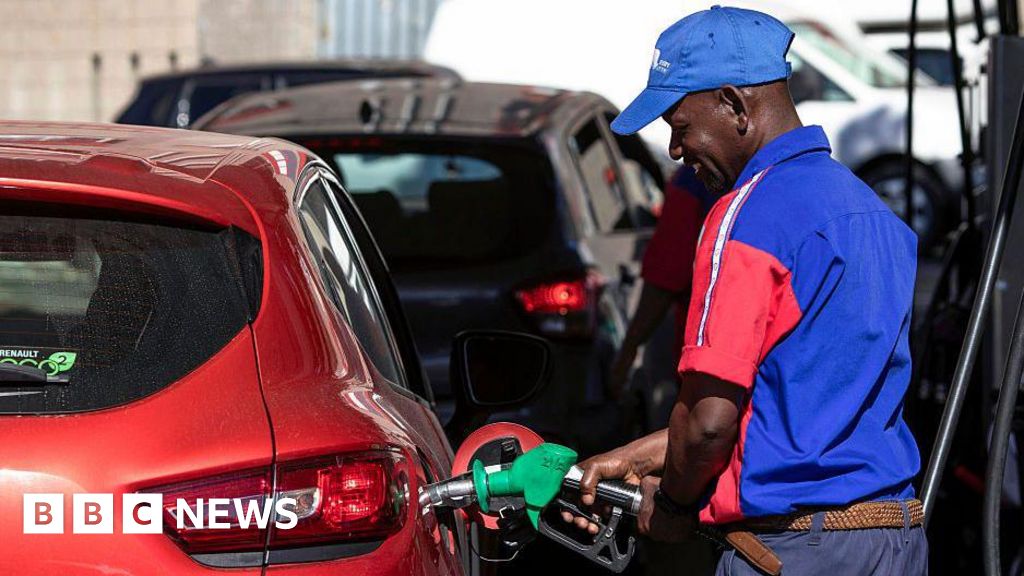
The US president called on nations that need Gulf oil to take the lead to keep the Strait of Hormuz open.
Most small healthcare practice owners do not calculate how much their payment setup actually costs them. WriteUpp, the practice management software used by more than 50,000 health and wellness professionals in the UK, Ireland, and Canada, launched WriteUpp Pay this month — and it directly addresses one of the most overlooked financial problems in independent clinical practice.
There is the card terminal lease or purchase, the transaction fees on a separate billing platform, the staff time spent reconciling payments against invoices, and the revenue lost when patients leave without settling a balance. Add it up across a year, and the number tends to be uncomfortable.
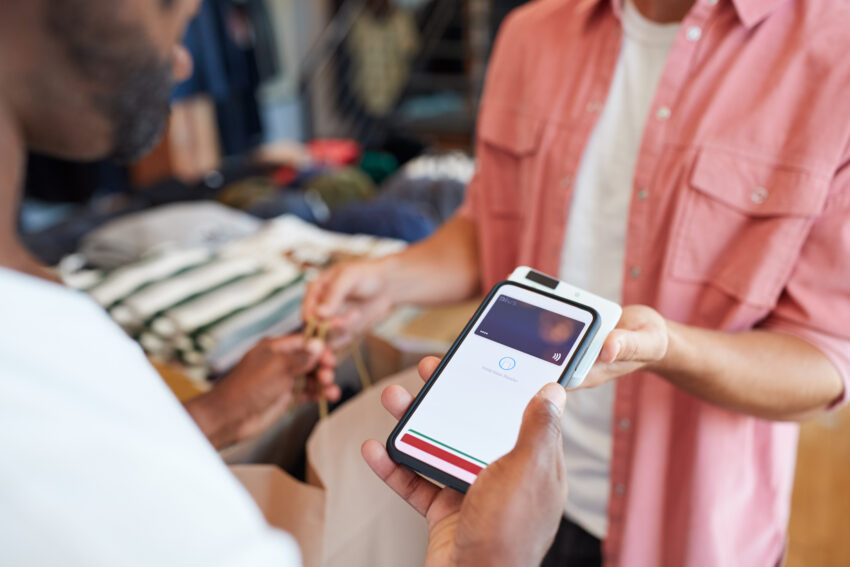
WriteUpp Pay turns an iPhone or Android device into a contactless payment terminal using built-in NFC technology, pulling appointment and invoice data directly from WriteUpp to process payments at the point of care. No card reader. No hardware purchase. No separate reconciliation process.
For solo practitioners and small clinic owners operating on tight margins, the proposition is direct. Your phone is already in your pocket. It can now take payments.
What Independent Practices Actually Spend on Payments
The cost of accepting card payments in a small healthcare practice is rarely limited to the visible transaction fee. Traditional card terminals require either an upfront purchase or a monthly lease agreement. Payment platforms that sit outside the practice management system create reconciliation work. Invoices that go home with patients and are settled days later extend the payment cycle and create cash flow gaps.
Visa data shows that Tap to Phone adoption surged by 320 percent in the UK in 2025, driven largely by small businesses seeking to reduce hardware dependency and simplify payment acceptance. The trend reflects a broader recognition that the tools required to accept card payments have become unnecessarily complicated and expensive for businesses that do not need enterprise-level infrastructure.
WriteUpp Pay addresses this directly. Because the app is built on Stripe’s infrastructure and connects to an existing WriteUpp account, there is no additional platform fee. Stripe’s standard transaction rates apply. For a practice already using WriteUpp and Stripe for online payment collection, adding in-person payment capability requires only downloading the app and completing a brief setup.
How WriteUpp Pay Works Inside the Clinic Room
When they open the app, WriteUpp Pay shows clinicians a live list of that day’s unpaid appointments and recent invoices. They select the relevant appointment, tap to initiate payment, and the patient taps their card or digital wallet toward the top of the phone. The transaction processes in seconds. The invoice inside WriteUpp is marked as paid automatically, and a receipt can be sent to the patient by email without any manual steps.
Digital wallets, including Apple Pay and Google Pay, are accepted alongside standard contactless bank cards. Transactions paid via digital wallet carry no upper limit because biometric authentication replaces the PIN requirement, making WriteUpp Pay practical for higher-value consultations. For transactions using a regular bank card, the FCA lifted the fixed £100 national contactless cap from March 19, allowing banks to set their own limits or let customers configure their own caps going forward.
For practices using iPads or devices without NFC capability, WriteUpp Pay supports the Stripe Wisepad3 Bluetooth card reader, which connects wirelessly and processes payments through the same Stripe infrastructure. This means the app works whether a clinician is using the latest iPhone or an older tablet that lacks NFC support.
“We specifically designed WriteUpp Pay to work for practices of all sizes, not just those with large admin teams and IT budgets,” said Eric Lalonde, CEO of WriteUpp. “A solo physiotherapist should be able to take payment at the end of a session just as easily as a large multi-practitioner clinic. The phone they already carry is all they need.”
The WriteUpp Case for Point of Care Payment
For small healthcare practices, payment timing matters. Revenue collected at the point of care is revenue that does not require chasing. Invoices sent after the fact sit in email inboxes, get forwarded to the wrong person, or simply go unpaid for longer than they should.
WriteUpp Pay removes the gap between service delivery and payment collection. When a clinician finishes a session, payment happens immediately as part of the natural end-of-appointment workflow. There is no separate step for the patient, no invoice to chase, and no administrative follow-up required. The invoice closes in real time and the revenue appears in the practice’s Stripe account without delay.
For practices that currently experience slow payment cycles, the improvement in cash flow predictability can be significant. Stripe’s standard reporting tools mean practices can track daily payment activity without logging into a separate billing system.
“Cash flow is one of the most stressful parts of running a small practice,” Lalonde said. “You have done the work, you have provided the care, but then you spend the next two weeks waiting to be paid for it. WriteUpp Pay makes that problem much smaller. Payment happens when the appointment ends, not a fortnight later.”
Getting Started with WriteUpp Pay
WriteUpp Pay is available from the Apple App Store and Google Play Store. It requires an existing WriteUpp account, a connected Stripe Unified account, and at least one location set up within the Stripe account. Clinicians log in using their existing WriteUpp credentials, complete the location setup, and the app is ready to take payments.
For practices not yet using WriteUpp, a 30-day free trial is available through the WriteUpp website. The platform starts at £19.95 per month in the UK on a rolling monthly subscription with no minimum contract, giving small practices the ability to evaluate the full platform, including WriteUpp Pay, before committing.

Mitsubishi Heavy shares rise as Artemis moon mission takes off successfully
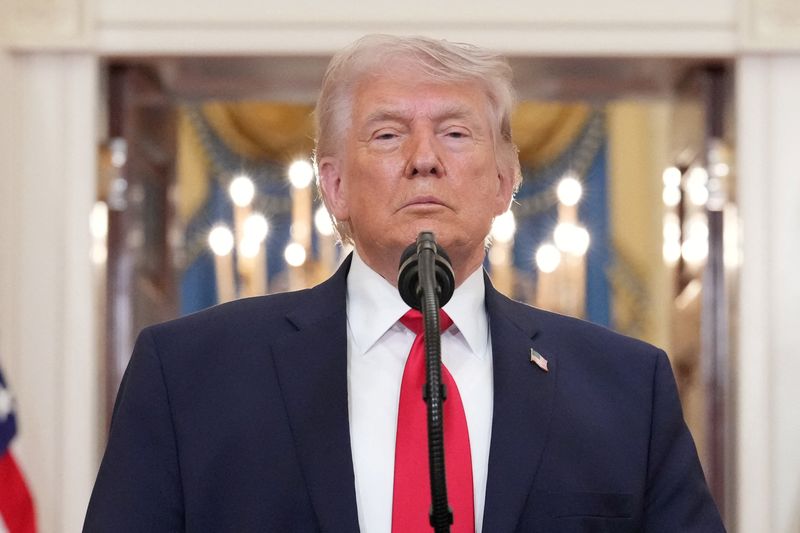

Hopes dim for swift end to Iran war after Trump speech, oil prices surge anew

The numbers demand attention. In 2024, Asia alone lost an estimated $688 billion to fraud, a figure that dwarfs the annual economic output of many nations.
Key Takeaways
- Scale of the crisis: Asia lost an estimated $688 billion to fraud in 2024, making it the global epicentre of financial scams.
- Global recognition: The UN has designated Southeast Asia as ground zero for internet scamming. OECD’s 2026 Consumer Finance Risk Monitor identifies fraud as the top global consumer risk, surpassing inflation and interest rates.
- Industrialisation of fraud: Fraud has evolved into a coordinated industry. Networks share resources, mule accounts are rented and pre-warmed, and cryptocurrency is increasingly used to launder proceeds.
- AI as a weapon: Criminals leverage AI for personalised scam scripts, deepfakes, and synthetic identities (“ghost profiles”), making fraud harder to detect. AI tools can bypass liveness checks and create convincing fake accounts.
The United Nations has designated Southeast Asia as the ground zero of multi-billion-dollar global internet scamming. And according to two major reports released in early 2026, the worst may still be ahead.
The OECD’s Consumer Finance Risk Monitor 2026, drawing on data from 60 countries and territories, delivers a stark verdict: financial scams and frauds are now the single most significant risk facing consumers globally, identified by 85% of responding jurisdictions, and they are expected to increase further through 2026.
The report marks a seismic shift in the global risk landscape. Where inflation and interest rates topped the threat register just two years ago, fraud has surged to the front of the queue.
That realignment is no accident. Digitalisation is intensifying the rise and sophistication of digital fraud and scams, including phishing, vishing, and smishing, social engineering attacks, identity theft, deepfakes, and AI-generated fraudulent content, creating what the OECD describes as an increasingly difficult environment for policymakers, regulators, and supervisors to navigate.
The Industrialisation of Crime
What has changed most dramatically is not the nature of fraud but its scale and efficiency. Fraud is no longer the province of individual bad actors running isolated cons. It has become an industry.
Fraud rings now share resources, intelligence, and attack strategies, creating coordinated networks that are far more dangerous than individual criminals ever were. Executives at GXS Bank, UOB, and digital lender Tonik, speaking at a recent industry webinar on Asia Pacific fraud trends, described the transformation in concrete terms.
Vincent Mok, Group Chief Risk Officer at GXS Bank, noted that while the basic playbook of government impersonation, romance scams, and investment fraud has not fundamentally changed, fraudsters have become remarkably adaptive, pivoting with alarming speed the moment financial institutions update their controls.
The infrastructure enabling that speed is increasingly sophisticated. In Southeast Asian markets, mule accounts, which are legitimate-looking bank accounts used to launder fraud proceeds, are no longer being sold as one-time assets.
They are now rented by the hour, pre-warmed with small routine transactions to appear legitimate before being passed on to fraudsters. A growing share of those proceeds is then routed through cryptocurrency, which complicates both detection and asset recovery.
AI Becomes the Criminal’s Most Powerful Tool
Artificial intelligence has lowered the barrier to entry for fraud to near zero. Fraudsters now use AI to craft customised messages and generate real-time scripts tailored to individual victims during job scams and investment fraud, while deepfake technology has become a common instrument for impersonation, particularly in markets like India, where fabricated audio and video allow criminals to pose convincingly as trusted figures.
The consequences for the customer onboarding stage are particularly alarming. AI-powered tools have become so sophisticated and accessible that anyone can turn a short video snippet into a convincing liveness-check bypass.
Ghost profiles, which are synthetic identities complete with fabricated documents and biometric data, can reportedly be generated through publicly available language models in minutes.
These fraudulent accounts undergo a warming period of small, normal-looking transactions designed to avoid triggering anti-money-laundering or fraud alerts. By the time behaviour shifts and the real fraud begins, the account has built enough legitimacy to be significantly harder to detect and stop.
Spending More, Falling Further Behind
Despite record investment in fraud prevention, financial institutions are losing the arms race. Eighty-five percent of companies increased their fraud prevention budgets last year, yet 43% admit that fraud is growing faster than their ability to stop it.
- Financial institutions struggling: Despite increased budgets, 43% of companies admit fraud is outpacing their defences. Current strategies often add verification layers too late in the process. Experts call for earlier interception of fraudulent intent.
- Consumer vulnerability: Low financial literacy is a major risk factor, especially in Asia. Many consumers cannot interpret financial terms or assess risks, leaving them exposed.
- Regulatory response needed: OECD urges coordinated action among financial authorities, cybersecurity agencies, and law enforcement, alongside consumer education.
Part of the problem is strategic. Many institutions continue to layer additional verification requirements onto existing systems, essentially stacking more guards at the door after intruders have already cased the building. Industry experts argue that what is needed is a fundamental shift in posture: intercepting fraudulent intent before criminals ever reach the authentication stage, reducing friction for legitimate users while blocking threats earlier in the process.
A Vulnerability Gap Regulators Cannot Ignore
Underpinning the fraud epidemic is a demand-side crisis that governments have been slow to address. Low levels of financial literacy remain the most significant consumer-side risk, identified by 81% of jurisdictions surveyed by the OECD. In many markets across Asia, large segments of the population struggle to interpret financial terms or assess risk, heightening their exposure to scams, debt traps, and poor financial decisions.
The OECD’s prescription is clear. Coordinated efforts that bring together financial authorities, cybersecurity agencies, and law enforcement bodies are essential to strengthening practices.
Addressing the crisis also requires empowering consumers directly, equipping them with the tools and skills needed to make informed financial decisions in an increasingly complex digital environment.
What the Convergence Means for 2026
The intersection of AI-enabled fraud, industrialised criminal networks, low consumer financial literacy, and persistent macroeconomic pressure has created conditions the OECD regards as a defining moment for consumer finance globally. Structural economic, technological, and conduct-related risks are converging in ways that significantly elevate consumer exposure and demand a stronger supervisory response.
For financial institutions, the message from frontline practitioners is direct: the current generation of fraud defences is already falling short. The question is not whether fraud will intensify in 2026. Virtually every available data point confirms it will. The question is whether regulators, banks, and technology providers can close the gap before the losses compound further.
Other People are Reading

Subiaco-based junior Solstice Minerals has taken steps to strike while the iron is hot at its Nanadie copper-gold project in the Goldfields.


Indonesia earthquake damages buildings, but tsunami alerts have been lifted

Ethereum price approaches $2,200 as Iran signals willingness to end war

How to Build Finance Dashboards with Claude in Minutes (Full Tutorial)

Massachusetts man accused of murdering his 90-year-old grandmother by beating her to death with skateboard


-

 Business6 days ago
Instagram, YouTube Found Responsible for Teen’s Mental Health Struggle in Historic Ruling
-
 Tech7 days ago
Intercom’s new post-trained Fin Apex 1.0 beats GPT-5.4 and Claude Sonnet 4.6 at customer service resolutions
-

 NewsBeat5 days ago
The Story hosts event on Durham’s historic registers
-

 Sports5 days ago
Sweet Sixteen Game Thread: Tide vs Michigan
-
Entertainment3 days ago
Fans slam 'heartbreaking' Barbie Dream Fest convention debacle with 'cardboard cutout' experience
-
 Entertainment4 days ago
Lana Del Rey Celebrates Her Husband’s 51st Birthday In New Post
-
Crypto World2 days ago
Dems press CFTC, ethics board on prediction-market insider trades
-

 Tech3 days ago
The Pixel 10a doesn’t have a camera bump, and it’s great
-

 Crypto World9 hours ago
Gold Price Prediction: Worst Month in 17 Years fo Save Haven Rock
-

 Sports2 days ago
Tallest college basketball player ever, standing at 7-foot-9, entering transfer portal
-

 Tech2 days ago
EE TV is using AI to help you find something to watch
-

 Tech3 days ago
Apple will hide your email address from apps and websites, but not cops
-

 Tech2 days ago
Flipsnack and the shift toward motion-first business content with living visuals
-

 Tech2 days ago
How to back up your iPhone & iPad to your Mac before something goes wrong
-

 Fashion7 days ago
En Vogue in Brown Leather and Tailored Neutrals by Atelier Savoir, Styled by J Bolin
-

 Politics2 days ago
Should Trump Be Scared Strait?
-

 Crypto World2 days ago
U.S. rule change may open trillions in 401(k) funds to crypto
-

 Fashion7 days ago
What Are Your Favorite T-Shirts for the Weekend?
-

 Fashion6 days ago
Weekly News Update, 3.27.26 – Corporette.com
-

 Fashion4 days ago
Amazon Sundays: Soft Spring Layers
You must be logged in to post a comment Login