
Business
Intapp CEO John Hall sells $110,220 in shares after option exercise




Horizon Kinetics Asset Management buys $361 of Texas Pacific Land stock
Business
Haaland Surpasses Ronaldo Nazario and Ibrahimovic With Record-Pace 64th Norway Goal Ahead of Portugal

OSLO — Erling Haaland moved past Brazilian great Ronaldo Nazario and Sweden icon Zlatan Ibrahimovic on the all-time international scoring charts Friday, scoring twice as Norway defeated Denmark 3-2 in the teams’ UEFA Nations League opener, setting up a highly anticipated meeting with Cristiano Ronaldo and Portugal in Norway’s next fixture.
Haaland’s brace against Denmark pushed his international tally to 64 goals in just 56 appearances for Norway, a scoring rate exceeding 1.1 goals per game. That mark moves the Manchester City striker ahead of both Ronaldo Nazario and Ibrahimovic, who each retired from international football with 62 goals for Brazil and Sweden, respectively. Where Haaland reached his total in only 56 matches, Ronaldo Nazario needed 98 appearances to reach his mark and Ibrahimovic required 122, underscoring the unusual speed with which the 26-year-old has climbed the international scoring charts relative to two of the sport’s most prolific historical goalscorers.
Friday’s match itself produced a tense, back-and-forth contest despite Norway’s eventual comfortable-looking scoreline. Norway raced to an early lead when Oscar Bobb opened the scoring in the 14th minute, before Haaland doubled the advantage just four minutes later, finishing clinically through the goalkeeper’s legs after Antonio Nusa drove into the penalty area and slipped him a pass. Denmark responded with goals from Mikkel Damsgaard and Rasmus Hojlund, turning what had briefly looked like a comfortable Norwegian win into a genuinely contested match. Haaland ultimately had the decisive say, restoring Norway’s lead in the 74th minute by finishing off a short-corner routine to seal the 3-2 victory. The result marked Norway’s first-ever competitive win over Denmark.
While Haaland’s new international scoring mark represents a significant individual milestone, it still falls short of the overall Nordic international scoring record. That distinction belongs to Sweden’s Lotta Schelin, who scored 88 international goals over the course of her career in the women’s game, a total that remains well clear of Haaland’s current tally.
The timing of Haaland’s latest milestone carries particular significance given Norway’s upcoming schedule. Norway is next set to face Portugal in Nations League play, a matchup that will pit Haaland directly against Cristiano Ronaldo, the Portugal captain and the all-time leading scorer in men’s international soccer history, with 146 goals to his name. The meeting sets up a notable generational clash between two of the sport’s most prolific international goalscorers, with Haaland entering the fixture having climbed to 64 goals in 56 appearances against Ronaldo’s much longer, more decorated international career total.
Beyond the upcoming Portugal fixture, Norway’s Nations League group schedule continues with a match against Wales on October 1, before Denmark hosts Norway in the final group-stage match on November 17, giving Denmark an opportunity to respond to Friday’s defeat later in the campaign.
Haaland’s continued goalscoring surge for Norway comes amid a broader stretch of record-setting form across multiple competitions this year. He has separately been reported to have surpassed the pace Lionel Messi once set for goalscoring in the UEFA Champions League, with his own tally in that competition having reached 59 goals in just 59 appearances following a brace against Porto, marking the fastest anyone has reached that milestone in the tournament’s history.
Haaland’s rise to prominence on the international stage has coincided with Norway’s own resurgence as a competitive force in European football, with the national team increasingly built around his goalscoring output in recent qualifying campaigns and tournament matches. His strike partnership with teammates including Antonio Nusa and Oscar Bobb has continued to develop, with Friday’s match against Denmark showcasing the kind of combination play that has helped generate scoring opportunities for Haaland throughout his recent run of international matches.
For Cristiano Ronaldo, the upcoming meeting with Haaland adds another chapter to a career that has already spanned more than two decades at the international level, with the Portugal captain continuing to add to his all-time scoring record even as younger forwards like Haaland begin closing the statistical gap between them at a considerably faster career pace than Ronaldo’s own trajectory suggested at a similar stage.
With Haaland now sitting ahead of two of the most prolific international goalscorers in the sport’s history and set to share the pitch with the format’s current all-time leader in Portugal’s Cristiano Ronaldo, the upcoming Nations League fixture between Norway and Portugal is shaping up as one of the most closely watched individual storylines of this international window, offering a direct comparison between a rapidly rising goalscoring record and the sport’s most decorated international scoring career to date.

Check out what’s clicking on FoxBusiness.com.
Nearly 333 pounds of tuna distributed across five states are being recalled after testing found elevated levels of a toxin that can cause a form of food poisoning, according to the Food and Drug Administration (FDA).
The FDA said the recall covers 332.9 pounds of Buckhead tuna distributed in New York, New Jersey, Connecticut, Pennsylvania and Maryland.
The advisory was designated a Class II recall, meaning use of or exposure to the product “may cause temporary or medically reversible adverse health consequences,” according to the FDA.
The recall involves Buckhead tuna sold in refrigerated Styrofoam containers in 10-pound, 12-pound, 15-pound and 3-to-5-pound cases. The product number is 0004255.

Nearly 333 pounds of Buckhead tuna distributed across five states are being recalled after testing detected elevated levels of scombrotoxin, according to the FDA. (Lauri Patterson/Getty Images)
The recall was initiated after the company was notified by the New Jersey Department of Health that two tuna samples had tested positive for elevated levels of scombrotoxin.
The company initiated the recall on July 24, while the FDA classified it as Class II on Sept. 16. The recall remains listed as ongoing.
According to the FDA, scombroid poisoning is “a unique form of food poisoning caused by consumption of certain marine fish species that have experienced partial bacterial spoilage.”
Scombroid poisoning most commonly occurs when certain types of fish, including tuna and mackerel, begin to spoil as bacteria grows, potentially creating elevated levels of histamine.
FLORIDA WOMAN DIED AFTER EATING E COLI-TAINTED FROZEN BLUEBERRIES FROM PUBLIX, LAWSUIT ALLEGES

The recall covers Buckhead tuna sold in refrigerated Styrofoam containers in several case sizes and distributed across five states. (Getty Images / Getty Images)
The toxins are not destroyed by freezing, cooking, smoking, curing or canning, according to the FDA.
People exposed to scombrotoxin typically do not experience severe or long-term illness, the agency said.
Symptoms can resemble an allergic reaction and may include facial rash, hives, swelling, short-term diarrhea and abdominal cramps, according to the FDA.
CLICK HERE TO GET FOX BUSINESS ON THE GO

The FDA classified the Buckhead tuna recall as Class II, meaning exposure may cause temporary or medically reversible health consequences. (Towfiqu Ahamed/Getty Images)
The FDA recommends that fish such as tuna be properly handled and refrigerated or immediately frozen to help prevent bacterial growth and spoilage.

U.S. understands Taiwan’s defence needs amid China threat, official says


Juan de la Hoz has worked as a fixed income trader, financial analyst, operations analyst, and as an economics professor. He has experience analyzing, trading, and negotiating fixed-income securities, including bonds, money markets, and interbank trade financing, across markets and currencies. He focuses on dividend, bond, and income funds, with a strong focus on ETFs. Juan is a contributor to the investing group CEF/ETF Income Laboratory which is led by Stanford Chemist. Features of the service include: managed income portfolios (targeting safe and reliable ~8% yields) making use of high-yield opportunities in the CEF and ETF fund space. These are geared toward both active and passive investors of all experience levels. The vast majority of CEF/ETF Income Laboratory holdings are also monthly-payers, for faster compounding and steady income streams. Other features include 24/7 chat, and trade alerts. Learn More.
Analyst’s Disclosure: I/we have no stock, option or similar derivative position in any of the companies mentioned, and no plans to initiate any such positions within the next 72 hours. I wrote this article myself, and it expresses my own opinions. I am not receiving compensation for it (other than from Seeking Alpha). I have no business relationship with any company whose stock is mentioned in this article.
Seeking Alpha’s Disclosure: Past performance is no guarantee of future results. No recommendation or advice is being given as to whether any investment is suitable for a particular investor. Any views or opinions expressed above may not reflect those of Seeking Alpha as a whole. Seeking Alpha is not a licensed securities dealer, broker or US investment adviser or investment bank. Our analysts are third party authors that include both professional investors and individual investors who may not be licensed or certified by any institute or regulatory body.

Alexander Jay is CEO of Little Green Button, the Norfolk business behind panic alarm software used by staff in healthcare, education and local government.
Founded by Jon Witte in 2004, the company says its system is used by more than 100,000 people at over 2,500 organisations. In November 2025 it launched the Mini Green Button, a wearable Bluetooth button that lets lone workers raise an alert without unlocking their phone. He tells Business Matters why he wants workplaces to stop waiting for an incident before they think about safety.
What do you currently do at Little Green Button?
I am the CEO of Little Green Button. We make digital panic alarm and lone worker software, used in multiple sectors including healthcare, education and local government. Staff can raise an alert from a desktop app, a mobile app or a physical button, including the Mini Green Button wearable we launched in November 2025.
My job is to set the direction for the business, keep us growing sustainably and make sure we do not lose sight of why we exist, which is keeping staff safe.
A current challenge for me is changing how workplaces think about safety. Unfortunately, many people are reactive and wait until something happens, which is when an organisation goes looking for a solution.
We would much rather staff had the tools and training in place beforehand, so if a difficult situation does come up, they are protected and know how to react. Technology has made that far more achievable than it used to be, and I think we are starting to see a real change in how organisations approach risk.
Internally, a lot of my time is spent developing the Little Green Button team. That means mentoring, clearing blockers and making sure people have what they need to crack on and do good work.
What was the inspiration behind your business?
Our founder, Jon Witte, spent time with frontline workers in the early 2000s and kept hearing the same thing. They wanted a discreet way to get help from colleagues when faced with a challenging situation, ideally using the equipment they already had. Radios, expensive hardwired systems and unreliable free apps were not doing the job, so Jon built Little Green Button.
The product has come a long way since then. It covers far more use cases, devices and types of organisations than it did at the start. But the core idea has not really changed: make it easy for someone to get help when they need it most.
We are now used in more than 25 countries, which I am genuinely proud of given we started from humble roots in Norfolk. We also support a range of public-facing organisations in sectors from healthcare and education to retail, helping professionals in critical services to feel safe in their workplace.
Who do you admire?
People like Jon and my colleagues, who are prepared to put themselves out there to change something for the better. I am also lucky to have the support of a peer group of founders, leaders and colleagues who have each taught me something.
What they tend to have in common is ambition without ego. They all want to build something meaningful and push themselves and their businesses forward, but they also recognise the responsibility that comes with leading other people.
It can be a balancing act. The leaders I respect most are the ones that want the best for the company and their team, but not at the expense of their morals or wellbeing.
Looking back, is there anything you would have done differently?
I would have liked to get exposure to entrepreneurship and technology businesses much earlier. I did what a lot of people do and went to university and then into a job, mainly because those were the routes I knew and was nudged towards. If I had seen a business being built from the inside sooner, I might have done things quite differently.
It has shaped how I think about young people starting out now. There are far more options than most people realise, and often someone just needs to see an alternative before they know it is there. That is why I advocate mentoring, work experience and access to people who run businesses in my network and local community.
You do not necessarily need to know exactly what you want to do at 18 or 21, but seeing what is out there and the career paths others have taken gives you a much better chance of finding the right one for you.
What defines your way of doing business?
Putting people first. Little Green Button is where we are because of some very talented people who have chosen to build this business with us. We work hard as a team to ensure we feel trusted and supported to do our best work, something that takes consistent effort but pays off both for wellbeing and results.
It is the same with our customers. Some of ours have been brilliant advocates for the business and, just as importantly, their feedback, stories and suggestions keep pushing us to make the product better.
I do not see being commercially ambitious and looking after people as a trade-off. In my experience the best businesses do both. If you look after your people, listen to your customers and make sensible, sustainable decisions, then the commercial side usually follows.
I still face difficult decisions, but this mindset allows me to approach them fairly, with compassion and an understanding of the human impact of our business choices.
What advice would you give to someone starting out?
Make the ask. Ask for the opportunity, ask for feedback, ask someone experienced for half an hour of their time, ask if you can sit in on the meeting or take part in a new project. A lot of progress can come from simply being willing to put yourself forward and letting others know you are willing to participate.
Most people are much more generous with their time than you would think, especially when they can see you are keen to learn or trying to progress. But you usually have to ask and put yourself out there, because the opportunities and feedback do not tend to come looking for you.

This paper examines a shift in global equity flows, highlighting that local factors now dominate over global ones in emerging markets, driven by investor sensitivity to local returns post-COVID.
Structural Shifts in Global Financial Flows
The question of whether the global financial cycle still predominantly influences capital flows to emerging markets is explored in this insightful working paper. Utilizing detailed, investor-level data, the authors investigate a notable shift in the drivers of global equity flows over recent years. With the aid of a dynamic factor model, the research dissects these flows into global, or “push,” factors and country-specific, or “pull,” factors. Historically, global elements had a commanding influence; however, the paper reveals that local, country-specific factors have now taken precedence in driving capital allocations, especially in the wake of the COVID-19 pandemic. This recalibration illustrates a renewed investor focus on local excess returns, effectively reconnecting capital flows with domestic price discovery dynamics.
The Rise of Local Factors in Investment Decisions
In the analysis presented, the authors showcase how local projections underscore the evolution of active return chasing. This trend indicates investors’ growing responsiveness to local market conditions and their renewed focus on local excess returns. These findings suggest a marked shift towards a more nuanced understanding of regional markets, where domestic factors now exert more influence on investment decisions than overarching global trends. This local emphasis is particularly pronounced in the post-pandemic landscape, where investors are keen on engaging in markets with robust local price discovery mechanisms.
Collaboration Among Leading Economists
The working paper is a collaborative effort involving Jongrim Ha, a Senior Economist at the ASEAN+3 Macroeconomic Research Office (AMRO); Daisoon Kim, an Assistant Professor at North Carolina State University; and Inhwan So, an Assistant Professor at Hongik University. These experts bring together a wealth of academic and practical expertise, providing a comprehensive examination of capital flow dynamics in emerging markets. Their joint research offers valuable insights into how investor behaviors shift in response to changes in global and local market conditions, shedding light on the intricate balance between global financial cycles and country-specific investment drivers.
Business
Nap or Quick Workout? New Study Finds Both Equally Boost Memory After Sleep Deprivation, Doctor Explains

Going without sleep makes it significantly harder to concentrate and learn new information, but a new study suggests a short bout of exercise may offer some of the same memory-protecting benefits as a nap for people who cannot get adequate rest, according to CNN wellness expert Dr. Leana Wen.
The study, published in the scientific journal Proceedings of the National Academy of Sciences, compared two strategies for protecting memory following sleep deprivation: aerobic exercise and napping. Wen, an emergency physician and clinical associate professor at George Washington University who previously served as Baltimore’s health commissioner, walked through the study’s design and findings.
According to Wen, researchers enrolled 54 healthy adults between the ages of 18 and 35 and kept them awake for 30 hours before dividing them into three groups. One group performed 20 minutes of moderate-to-vigorous cycling at 80% of their maximum heart rate. A second group was given a 90-minute opportunity to nap. A control group sat on a stationary bicycle for 20 minutes without actually exercising.
Following those interventions, all participants viewed 150 images while researchers recorded their brain activity using electroencephalography, or EEG, without informing them there would later be a memory test. Three days later, after recovering from the sleep deprivation, participants were shown the original images mixed together with new ones and asked to identify which they had seen before.
The results showed comparable benefits between exercise and napping. Participants who exercised correctly recognized 56% of the images, compared with 57% among those who napped and just 46% among the control group. Both the exercise and nap groups performed significantly better than the control group, with memory performance roughly 21% higher after exercise and 23% higher after a nap, a difference between the two interventions that was not statistically significant. Notably, participants who napped reported feeling significantly less fatigued afterward, while those who exercised reported fatigue levels similar to the control group, despite still performing significantly better than that group on the memory test.
Explaining how a relatively brief workout could produce this effect after such prolonged wakefulness, Wen described the underlying biology of sleep deprivation. “Sleep deprivation interferes with the brain’s ability to encode new information. After prolonged wakefulness, sleep pressure builds and the neural processes needed to form memories become less efficient,” Wen said. She noted that the study’s EEG recordings suggested exercise helped counteract some of these effects, reducing a marker of neural fatigue in brain regions involved in the memory task. “One possible hypothesis is that exercise helps the sleep-deprived brain use its available cognitive resources more efficiently,” she said.
Wen noted that the 20-minute exercise session used in the study fits loosely into a broader concept known as exercise “snacking,” short bursts of physical activity typically lasting anywhere from about 30 seconds to five or 10 minutes, though the study’s 20-minute session ran longer than a typical exercise snack. She said such brief bouts of movement, including climbing stairs, brisk walking or doing squats, have been linked in other research to health benefits including improved cardiorespiratory fitness and reduced risk of cancer and dementia.
Despite producing similar memory outcomes, Wen said exercise and napping appeared to work through distinct underlying processes. “The nap changed the underlying state of the sleep-deprived brain. People in the nap group had less fatigue and lower EEG markers of sleep pressure, which is the biological drive for sleep that builds the longer someone stays awake,” she said. “Exercise did not relieve sleep pressure in the same way. Instead, it appeared to make memory processing more efficient.” She summarized the distinction simply: the nap gave the brain some of the sleep it was demanding, while exercise helped the brain function more effectively despite remaining sleep-deprived.
Wen was direct in cautioning that exercise cannot serve as a substitute for actual sleep more broadly. “No. Exercise cannot replace sleep. Sleep serves essential functions throughout the body, including regulating immune and metabolic processes and supporting many aspects of brain function,” she said, noting that a 20-minute workout cannot deliver those broader physiological benefits, even though regular exercise and healthy sleep do reinforce one another.
Wen said the findings could carry practical value for people in safety-sensitive occupations, including healthcare and transportation workers, who sometimes face unavoidable sleep loss without the time or setting for a 90-minute nap. Even so, she cautioned against overextending the study’s conclusions, emphasizing that exercise does not make it safe to drive or perform other dangerous tasks while severely sleep-deprived, and that the research did not test whether exercise restores attention, reaction time or judgment, the many other cognitive functions impaired by sleep loss.
She also cautioned that the study involved a small sample of young, healthy adults tested under controlled laboratory conditions after acute sleep deprivation, meaning it remains unclear whether similar benefits would occur following chronic sleep restriction, in older adults with medical conditions, or with other forms or intensities of exercise.
For people who find themselves sleep-deprived but needing to function well, Wen said the first priority should always be to seek actual sleep, with adults generally advised to aim for at least seven hours per night on a regular basis. When adequate nighttime sleep is not possible, she said a nap can help, and when a nap is not an option, a short bout of aerobic activity, such as a brisk walk, climbing stairs or a few minutes on a stationary bike, could offer a useful alternative before a period requiring learning and memory. She added that caffeine can temporarily boost alertness and concentration, though it does not reverse the underlying effects of sleep deprivation, and recommended eating regular, balanced meals, staying hydrated, avoiding large heavy meals that can increase sleepiness, and steering clear of alcohol, which can further impair alertness and judgment.

Core Scientific chief legal officer Todd Duchene sells $183,746 in shares

NEW DELHI — How often a person uses the toilet is a poor stand-in for gut health, gastroenterologists say. Stool texture, ease of passing and sudden changes in a personal routine offer better clues than a daily tally.
Dr. Shubham Vatsya, director and head of gastro sciences at ISIC Multispeciality Hospital, said healthy adults can move their bowels anywhere from about three times a day to once every one or two days. “When it comes to bowel habits, there is no one right or wrong number,” he said.
That range matches guidance from the U.S. National Institute of Diabetes and Digestive and Kidney Diseases, which notes that patterns differ from person to person. The institute does not define constipation by frequency alone. Hard stools, straining and a sense that the bowel has not emptied also count.
A typical healthy stool is soft, formed and easy to pass, with little or no pain. Vatsya said a healthy habit should leave a person feeling emptied. A morning visit that requires long straining is not automatically “regular,” even if it happens every day.
The more useful signal is a break from an individual’s own baseline. Someone who usually goes several times a day can still be constipated if that pattern suddenly stops. Loose, watery stools three or more times a day, or more often than is usual for that person, can meet the common definition of diarrhea used by NIDDK.
Travel, aging, a change in diet, stress, less physical activity and some medicines can shift the schedule for a short time. Persistent change is different. Vatsya said constipation can matter even in a frequent goer. He also said loose stools that exceed a person’s norm deserve attention if they last.
Warning signs sit outside the calendar. Persistent abdominal pain, bloating, blood in the stool, repeated straining or a bowel-habit change that lasts several weeks should be assessed by a clinician, Vatsya said.
Blood is not always a rare-disease finding. Hemorrhoids and anal fissures are common sources. Blood can also come from higher in the digestive tract. Britain’s National Health Service advises medical review for persistent rectal bleeding and urgent care for black or dark-red stool, which can indicate digested blood.
Diet and movement still do most of the quiet work. Fruit, vegetables, whole grains and legumes supply fiber. Fluids keep stool from drying out. Physical activity can stimulate the colon. NIDDK recommends more fiber, enough to drink and regular activity to prevent or ease constipation.
Vatsya cautioned against making laxatives a daily habit without advice. They can hide a problem and are not designed as long-term self-treatment for everyone.
The clinical question, then, is not “How many times?” It is whether the movement is comfortable, reasonably predictable for that person and free of red-flag symptoms. A schedule that has always been once every other day can be normal. A sudden swing to watery stools, or to hard pellets and straining, is the change that belongs in a doctor’s office.
Public interest in bathroom frequency has grown with wellness media and stool-chart apps. Those tools can help people notice texture — the Bristol Stool Form Scale ranges from separate hard lumps to entirely liquid — but they do not replace an exam when pain, blood or weeks of disruption appear.
Clinicians also separate irritable bowel patterns from red-flag disease. Alternating constipation and diarrhea with cramping can be functional. Nighttime symptoms, unexplained weight loss, anemia, a family history of colon cancer or onset after middle age push the workup toward tests rather than fiber tips alone. This article is not a diagnosis.
Hydration and fiber need a gradual increase. A sudden load of bran without water can worsen bloating. Insoluble fiber adds bulk; soluble fiber, in oats and some fruits, softens stool. Both have a role depending on whether the problem is hard pellets or loose output.
Medicines that commonly slow the bowel include some opioids, iron tablets, certain antacids and some antidepressants. Reviewing a pill list is part of a constipation visit. Thyroid disease, high blood calcium and neurological conditions can also slow transit.
For diarrhea that lasts, infection, bile-acid problems, celiac disease and inflammatory bowel disease sit on the differential. Three watery stools after a buffet is not the same as three weeks of urgency with blood.
Children, older adults and pregnant people have different norms and risks. Dehydration from diarrhea hits the young and the old faster. New constipation in an older adult is not something to treat only with supermarket laxatives.
Vatsya’s point is simple and easy to oversell. There is no universal daily number. There is a personal pattern, a comfortable stool and a short list of signs that should not wait. Frequency gets the headlines. Consistency, effort and change tell the story.

Nintendo Switch Owners: Update Your Firmware to Protect Against Security Exploit

Ceiling turned black in Fenland flat riddled with damp and mould
Horizon Kinetics Asset Management buys $361 of Texas Pacific Land stock





-

 Crypto World4 days ago
Goldman Sachs and Deutsche Bank Agree: The S&P 500 Rally Isn't Over
-

 Fashion2 days ago
Weekend Open Thread: J.McLaughlin – Corporette.com
-

 Tech6 days ago
Researchers escape OpenAI Codex sandbox to run commands on host
-

 Fashion3 days ago
8 iPhone Accessories That Add Personality
-

 Crypto World6 days ago
Who Needs CLARITY Anyway? ARB Could See 70X Increase: Hodler’s Digest
-

 Entertainment4 days ago
These 17 Fall Amazon Dresses Seriously Look Like Anthropologie
-

 Business6 days ago
Analog Devices (ADI) Bets $1.35 Billion on Chips that Let Machines Think for Themselves
-

 Crypto World6 days ago
Coinbase, Robinhood, Circle Seen as Tokenized-Stock Winners
-

 Crypto World4 days ago
This Bearish Netflix Stock Trade Can Cash In On Video Streaming Giant’s Woes
-
 Crypto World5 days ago
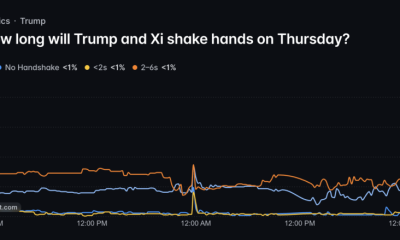
Trump-Xi Polymarket Odds for Handshake Hit 50%
-

 Tech6 days ago
Google’s $899 Googlebook is a bet that you’ll buy a new laptop for Gemini
-

 Crypto World3 days ago
Crude Oil Prices Pressured by Diplomatic Hopes in the Middle East
-
 Crypto World3 days ago
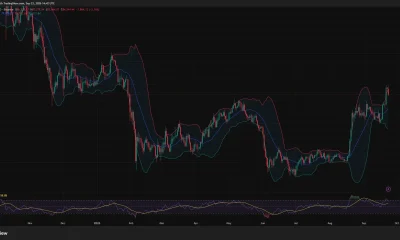
Bitcoin price tests $83,600 Supertrend support after $87K rejection
-
 Business4 days ago
Oil Price Today (September 23): Crude oil below $100 on hopes of US-Iran talks. What did Trump say?
-
 Crypto World3 days ago
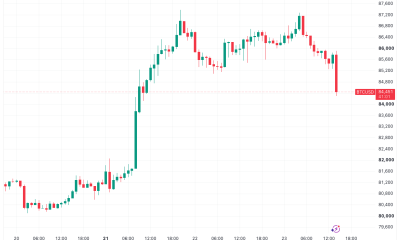
Bitcoin Threatens Sub-$84,000 Breakdown as Long Liquidations Spike
-
 Crypto World5 days ago
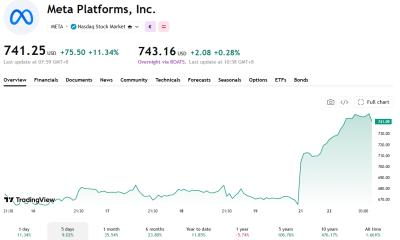
Meta Jumps 11% As Muse Shines and Investors Show an Appetite for Advancing AI
-

 Crypto World4 days ago
Did Jim Cramer Just Give GameStop Stock the Kiss of Death When He Said the Turnaround Is Working?
-
 Crypto World6 days ago
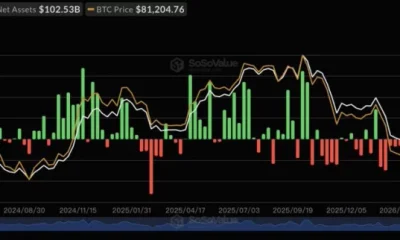
Bitcoin price holds above $81K as key catalysts line up
-

 Crypto World6 days ago
ARB Price Signals Spur Speculation of 70x Upside in Hodler Digest
-
 Crypto World5 days ago
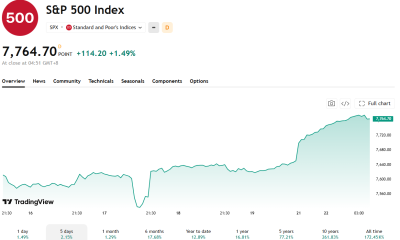
Trump, Xi Meet on S&P 500's Best Day Since Early August: Will Markets Stay Bullish?
You must be logged in to post a comment Login