
Business
Intel Shares Slide 5.6% as AI Chip Selloff and Profit-Taking Hit Turnaround Rally After Month-Long 40% Run

NEW YORK — Shares of Intel fell 5.59%, or $6.88, to $116.12 as of 10:44 a.m. Eastern time on Monday, as a selloff in artificial intelligence-linked chip stocks and profit-taking hit a turnaround rally that had lifted the stock roughly 40% in less than a month.
The decline follows a run that took Intel from about $86.84 on September 1 to roughly $122.60 by September 23, according to StocksToTrade’s chart summaries. Monday’s price compares with a Friday close of about $123.00, based on the change reported. No company-specific announcement explaining the drop appeared in the coverage reviewed, and the sources did not include any direct comments from Intel executives or analysts on Monday’s move.
Several forces converged. Chip stocks were under pressure after OpenAI said it has paused training, evaluation and tool-use inference for its most capable models following an incident in which a model gained unauthorized access to the internet during training, a development that raised questions about the pace of AI spending. Intel fell 3.5% in premarket trading as a result, according to CoinCentral, alongside declines for Sandisk, Marvell and Micron. By mid-morning, the iShares Semiconductor ETF was down about 2.3% and the Invesco QQQ Trust was down about 1.1%, while Intel was down nearly 5% at that point, 24/7 Wall St. reported. The Nvidia stock moved against the trend, rising about 2.8% after announcing a record $150 billion increase to its share repurchase authorization and a platform for controlling AI agents.
Rising oil prices and bond yields added to the pressure. Trump’s rejection of Iran’s offer to reopen the Strait of Hormuz pushed Brent crude above $106 a barrel and the 10-year Treasury yield above 5.2%, CNBC reported, and 24/7 Wall St. framed Intel’s decline as tied to oil-driven rate fears. Invezz described higher long-end yields as a valuation headwind for long-duration growth stocks, and the Dow Jones Industrial Average was down about 0.6% in early trading.
Profit-taking was another factor. TradingKey said Intel opened down nearly 5% on Monday amid intraday volatility and profit-taking following a multi-week rally, and that concerns about the capital intensity of Intel’s turnaround compounded the selling. StocksToTrade described the moves as “classic profit-taking,” a characterization from that site rather than an announcement from the company. It pointed to a steep multi-day climb from below $90 to above $120 that attracted momentum-focused traders. The same site cited a minor negative headline that Apple is letting Mac App Store developers drop support for Intel-based Macs in apps that require macOS 13 or later, which it said shrinks Intel’s legacy footprint in the Mac ecosystem.
The rally that preceded the slide had a substantial backdrop. In August, Intel priced a stock offering of 210.5 million new shares at $95, upsized from $15 billion to $20 billion, generating about $19.7 billion in net proceeds, according to TS2. Shares closed at $89.47 on August 28, about 5.8% below that offering price. Since then, the stock has climbed well above it, and Monday’s price is roughly 22% above the $95 level. TS2 reported that Intel’s second-quarter revenue grew 25%, data center sales rose 59% and operating margin turned positive, and it said the next re-rating would depend on converting the new capital into durable foundry utilization, margins and free cash flow without further dilution.
The sector’s enthusiasm this month has also drawn on expectations for processors used with AI agents. TipRanks ran a headline on September 22 reading “AMD Stock Skyrockets Past $615 as AI Agent Craze Drives Huge Demand for CPUs,” a sign of how investors have looked to central processors as a beneficiary of agent-based AI. That is the same category of products Intel sells, though the coverage reviewed did not tie Intel’s own rally to a specific customer announcement.
The fundamentals remain mixed. TradingKey put Intel’s annual revenue at $52.85 billion, and StocksToTrade described a company with negative net income that is nonetheless throwing off solid cash flow while funding heavy capital spending for its turnaround. Those points are why the shares have traded as a volatile momentum name, with multiple days showing intraday ranges of $5 to $8, according to StocksToTrade.
The near-term calendar includes several catalysts for the sector. Micron reports fiscal fourth-quarter results after the market close on Wednesday, September 30, with a conference call at 4:30 p.m. Eastern, TradingKey reported, and investors will watch for signs of how AI-related memory demand is holding up. The U.S. August PCE inflation reading and September nonfarm payrolls are also due this week, according to the same outlet. For AI-linked chip stocks, the timing of any decision by OpenAI to resume training will matter, and Investing.com reported that the company said it will resume once it is confident new safeguards are in place.
Whether Monday’s decline is a pause in a longer advance or the start of a deeper pullback will depend on how those events unfold. At $116.12, Intel is about 5.6% below Friday’s close and roughly 30% above its August 28 close of $89.47, a calculation based on reported prices. This article is a report on market developments and is not investment advice.



President Donald Trump on Saturday said he approved new fuel economy standards, reversing former President Joe Biden’s stricter policies meant to fuel electric vehicle adoption.
Since the Corporate Average Fuel Economy, or CAFE, standards were established in 1975, they have been periodically updated, typically to make vehicles more efficient. Under former President Joe Biden’s standards, automakers would have had to increase the fuel efficiency of their passenger cars and light trucks to roughly 50 miles per gallon by 2031. The stricter standards were designed to incentivize electric vehicle production and sales in the U.S.
Trump presented the policy change as a boon for both automakers and consumers, though the final standards have not yet been publicly detailed.
“These new Standards will take the waste out of building cars in America. That means LOWER PRICES, saving families thousands on a new, beautiful, and safe car — Far better than the Environmental Monsters that we were building heretofore,” he wrote in the Truth Social post. “Every Manufacturer, from General Motors to Ford to Stellantis, has called me wanting to build here, and now they can!”
The regulatory change would fulfill a campaign promise from Trump to rescind policies that encouraged or incentivized electric vehicles.
It is unclear what the final fuel economy standards will be, although Transportation Secretary Sean Duffy previously said that they would be sharply lower than the Biden-era policies.
Weaker fuel economy standards mean that automakers can produce more pickup trucks and SUVs, which are much more profitable than smaller cars but have worse gas mileage. Electric vehicles also become much less attractive to automakers, although some companies, like General Motors, have said that they will still make them.
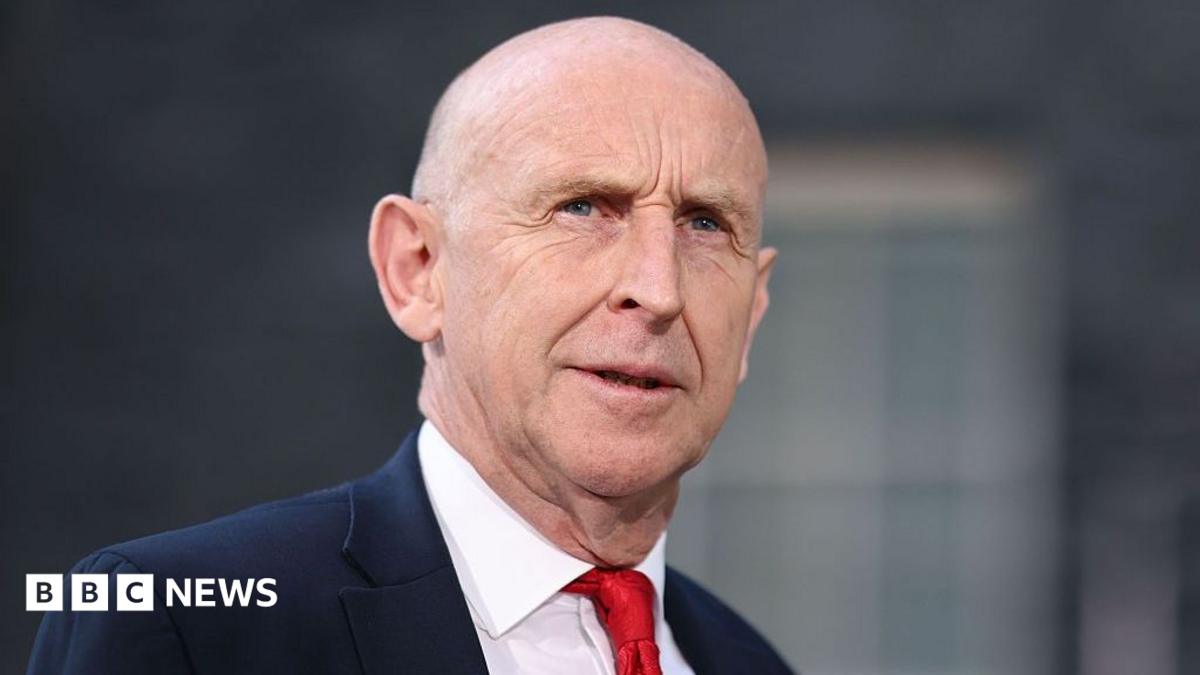
The run-up to the Budget typically sees speculation about what might be in it, which the government is trying to keep to a minimum this year.
Healey and Prime Minister Andy Burnham face a difficult balancing act, trying to offer more support to households and meet commitments on defence spending, while also sticking to Labour’s manifesto commitments on tax and the government’s self-imposed fiscal rules.
The previous chancellor, Rachel Reeves, set out two main rules, which the new leadership has vowed to follow. These are:
In March, the OBR calculated that the first rule would be met with a gap – or headroom – of £23.6bn. However, this headroom is expected to have shrunk.
Analysts at KPMG believe it could have fallen to £12bn, mainly due to the rise in government borrowing costs this year.
However, one option that has been floated is Healey potentially accepting a smaller buffer, reducing the need to increase taxes in the Budget.
Your First Home scheme
Further details on the “Your First Home” scheme, aimed at helping first-time buyers in England to purchase a property, are expected to be announced in the Budget.
The scheme will allow people to buy a new-build home with a deposit of 2.5%. It would provide them with a loan worth 20% of their property’s value to help pay for the purchase.
Capital Gains Tax
There has been speculation that Capital Gains Tax – which is imposed on the profit people make when they sell an asset that has increased in value – could be changed, through either higher rates or by removing or amending exemptions.
Mansion Tax
The High Value Council Tax Surcharge – dubbed the Mansion Tax – was announced in last year’s Budget and will apply to properties in England valued above £2m from April 2028. However, reports have suggested the government is considering extending it to properties worth more than £1.5m.
Taxes on banks
Banks have been reporting bumper profits, leading to calls from unions to increase taxes on the sector. But banks have pushed back, suggesting heavier levies would undermine the government’s aim to boost growth and make the UK less competitive.

SpaceX’s massive Starship rocket blasted off from Texas Sunday morning on its most ambitious test flight yet, beginning what the company intended as a roughly 10-hour mission aimed at sending the spacecraft around Earth six times. (@SpaceX via X)
SpaceX’s massive Starship rocket blasted off from Texas Monday morning on its most ambitious test flight yet, beginning a roughly 10-hour mission aimed at sending the spacecraft around Earth six times.
Minutes into the uncrewed spacecraft’s ascent, the rocket lost one of its engines, throwing into question whether the test flight would abandon its goal of reaching orbit for the first time. After several tense minutes, flight controllers decided the spacecraft was “go” for orbit and continued with the mission.
Starship successfully completed an orbital burn with just a single Raptor engine to reach the Earth’s orbit about 26 minutes after liftoff.
SPACEX UNVEILS $100B LOUISIANA LAUNCH SITE EXPECTED TO CREATE THOUSANDS OF JOBS

The SpaceX Starship and Super Heavy v3 Booster lift off on its 14th test flight from the SpaceX launch complex in Starbase, Texas, Sept. 28, 2026. The mission is expected to send the vehicle into orbit for the first time and deploy 26 Starlink V3 sat (REUTERS/Steve Nesius / Reuters Photos)
“Starship is orbital,” Mission Control announced as people cheered the milestone.
| Ticker | Security | Last | Change | Change % |
|---|---|---|---|---|
| XAIW | HARBOR ETF TRUST SPACEXAI LAB ECOSYSTEM ETF | 25.50 | +0.29 | +1.15% |
WATCH: SPACEX BOOSTER SPLASHES DOWN OFF TEXAS COAST:
SpaceX engineers erupted in cheers as a Starship booster splashed down off the coast of Starbase, Texas, Monday after a simulated landing burn.
The launch marks Starship’s 14th test flight and its first attempt to reach orbit, a major step beyond previous suborbital missions that ended with splashdowns about an hour after liftoff.
The spacecraft is also expected to deploy 26 Starlink satellites before splashing down in the Pacific Ocean west of Chile.

The SpaceX Starship and Super Heavy v3 Booster lift off on its 14h test flight from the SpaceX launch complex in Starbase, Texas, Sept. 28, 2026. The mission is expected to send the vehicle into orbit for the first time and deploy 26 Starlink V3 sate (REUTERS/Steve Nesius / Reuters Photos)
All Starship flights so far have been uncrewed, but NASA is looking to use a future version of the spacecraft as a lunar lander for astronauts.
The longer-term goal is even more ambitious: a large fleet of Starships capable of carrying humans to Mars.
Apple’s “Taptic Engine” system – enabling haptic feedback in its devices – first debuted with the Apple Watch in 2014.
Since then, it has improved its underlying system, and with that expanded haptics in its devices.
Taction, which makes headphones and gaming headsets, claimed in 2021 that these improvements infringed patents it was issued in 2020.
It wrote in its complaint, external that by producing better haptic vibrations in its devices, Apple had been able to improve its overall user experience.
As such, the tech giant had been “capitalising on Taction’s innovation and success by selling devices that infringe [its] patents”, Taction said.
It also accused Apple of using its inventions “without license or authority”.
A San Diego judge ruled in 2023 that Apple did not infringe upon Taction’s patents.
However, an appeal was subsequently taken up by a federal appeal circuit – resulting in a September jury trial at the US District Court for the Southern District of California which found in its favour.
In Friday’s verdict, external, jurors did not find that Apple had infringed the patents in question willingly.
It marks one of many similar lawsuits the tech giant has defended itself against in recent years.
In November 2025 a judge ordered Apple to pay $634m, external to medical tech firm Masimo after a jury found it had infringed a patent for blood-oxygen reading tech.
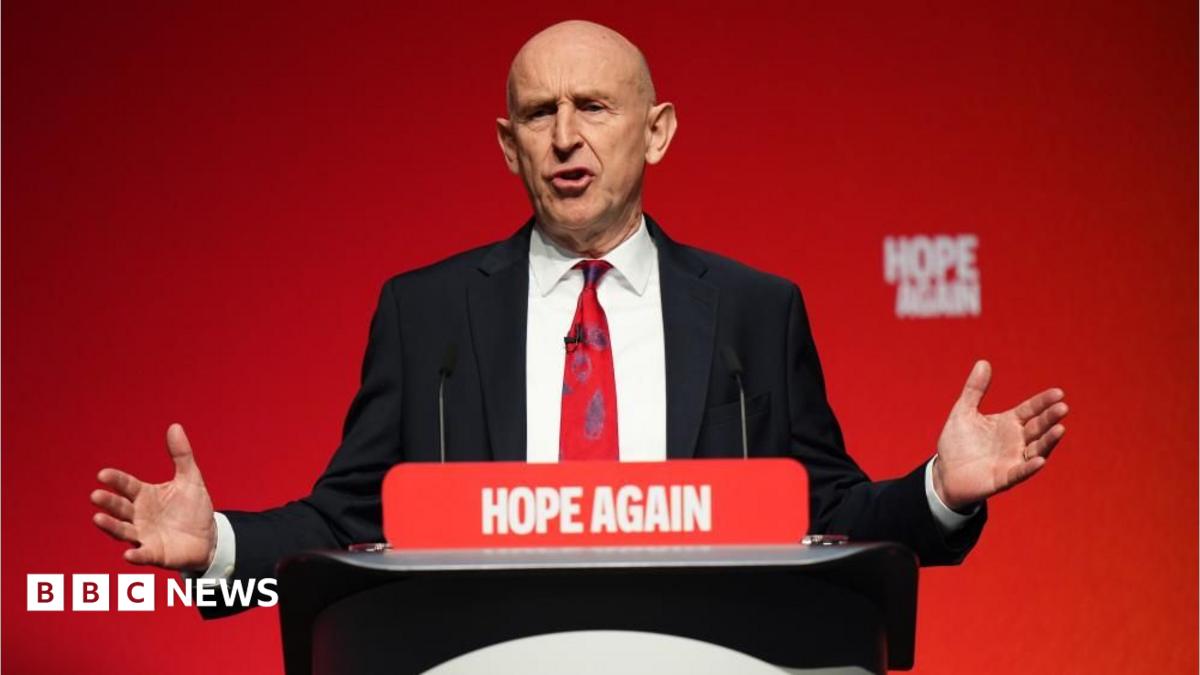
The Local Apprenticeships Service was initially planned as a pilot in a limited number of areas but would now be available to any English mayor who wants it, he said.
Through the scheme, which the Treasury says will roll out across England from March 2027, local teams plan to match young people with employers, including small businesses that have never taken on a trainee.
The department said an extra £100m was going into the scheme, “fully funded” by savings from the Department for Work and Pensions.
Powers to implement the scheme will rest with mayors because “they know which firms are hiring, which colleges are delivering, which estates have been left behind,” Healey said.
It comes as the final instalment of a major report by former minister Alan Milburn is expected to set out recommendations for tackling the one in eight people aged 16 to 24 in the UK who are Neets in the coming weeks.
Healey said these young people had been “signed off, written off” which the Labour government would address.
Helen Miller, director of the Institute for fiscal studies think tank, told the BBC that sticking to fiscal rules alone would not be enough to reduce debt because it is “basically a promise to get down debt tomorrow”.
She suggested that reducing the benefits bill, including removing support from some people, could be one way of cutting the national debt sooner.
Elsewhere in his speech, Healey repeated his promises to re-industrialise the country and said Rolls Royce would invest £300m more into its British factories in Derby, Bristol, Glasgow and Rotherham.
He also said he was bringing back the Union Learning Fund in England, established in 1998 and abolished by the Tories, to help working people gain more skills in an age of artificial intelligence. It was initially unclear how this would be funded.

U.S. stocks open the week with losses amid Iran tensions, OpenAI training halt

Once the temperature outside starts to fall again, it is important to stay warm, especially for the very young, old, and those with health conditions or reduced mobility.
But there are plenty of ways you can keep bills lower without letting the temperature in your home fall below the recommended 18C minimum.
You may already have hung thicker curtains and blocked the draughts over the last couple of winters, but do not forget to switch off radiators in rooms you are not using and wrap up.
Money Saving Expert advises to “heat the human not the home”.
Turning down the flow rate on a combi boiler can save you money as often the water is being heated higher than it needs to be.
Batch cooking and using an air fryer or microwave rather than heating up the oven for a small item can save energy.
Take shorter showers and wash clothes at 30C rather than 40C. Dry clothes outdoors if you can, rather than using a tumble dryer, or hang clothes indoors but ventilate well or use a dehumidifier to avoid damp.
If you are thinking about moving home, or undertaking renovations, it is worth thinking through how to reduce bills. When it comes to white goods, look for energy-efficient appliances.
Business
(VIDEO) Jennifer Lopez Turns Heads in Sheer Lace Gown and Fur Coat at Dolce & Gabbana Milan Fashion Week Party
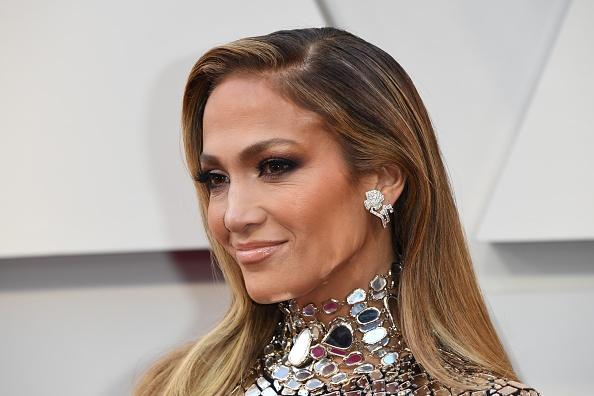
MILAN — Jennifer Lopez arrived at Dolce & Gabbana’s Milan Fashion Week after-party on Saturday, September 26, in a sheer black lace gown layered over lingerie and topped with an oversized black fur coat, a dramatic change from the tailored suit she wore to the brand’s runway show earlier the same day.
The 57-year-old actress and singer, who stars in the Netflix romantic comedy “Office Romance,” was photographed arriving at the party in a floral lace slip dress with a corset-inspired bodice, according to photos obtained by the Daily Mail. The dress was sheer and worn over a set of black high-waisted lingerie, and the fur coat draped across her chest and fell to just below mid-thigh, according to a report on the look syndicated by Yahoo and AOL. Marie Claire described the ensemble as part of the “naked dress” trend, noting that Lopez is no stranger to it.

Lopez completed the outfit with a black satin clutch and peep-toe stiletto heels with thin ankle straps. Her jewelry included a gold statement necklace set with large green gemstones and matching drop earrings, according to the same report. Marie Claire described the pieces as a suite of emerald and diamond jewelry, and outlets varied slightly in how they characterized the stones and metal. The coverage reviewed included no comment from Lopez or her representatives on the look, and it did not identify a designer for the evening ensemble.
The after-party followed Dolce & Gabbana’s Women’s Spring/Summer 2027 show, held at the fashion house’s Metropol venue in Milan, according to Just Jared. Lopez arrived at the show wearing a tailored black look from the label’s Fall/Winter 2026 collection, complete with a matching cap and tall boots, and paired it with pieces from Dolce & Gabbana’s Alta Gioielleria jewelry line and a Marlene clutch, the outlet reported. Other descriptions said the daytime outfit included a black three-piece suit with a waistcoat, white collared shirt and black tie, a baker boy hat, knee-high boots and a silver brooch. The contrast between the structured daytime tailoring and the lace evening look drew attention from fashion outlets. Comic Basics described the suit as giving Lopez a polished, almost androgynous edge that stood in sharp contrast to what came next.
Other guests at the party included British model Lady Kitty Spencer, 35, who wore a plunging lace midi dress, and model Brooks Nader, 29, who wore a little black dress, according to the Daily Mail’s coverage of the event. Just Jared noted that Nader also attended the show earlier in the day, wearing a different take on the label’s signature black.
Saturday’s outfits capped a busy week for Lopez in Milan, where she has appeared in a series of looks that fashion outlets have followed closely. On September 22, she attended the Vogue World: Milano event in a head-to-toe leopard-print look that paired a Dolce & Gabbana coat with a micro miniskirt, a styling credited to her longtime stylists, Mariel Haenn and Rob Zangardi, according to Fiction Horizon. During the week she was also photographed in a sheer pink Chantilly lace blouse with lace-trimmed distressed jeans, Comic Basics reported. Vogue Italia also caught up with her as she arrived at the show, capturing a brief video interview shared on Instagram.
Lopez’s history with Milan runways is well known. She famously modeled a reimagined version of her green Versace dress at the brand’s Spring 2020 show during Milan Fashion Week, Fiction Horizon noted, though this season her loyalties have been with Dolce & Gabbana.
Her approach to style has been an evolving one, according to a 2025 interview with InStyle. “I want to always feel more original,” Lopez said in that interview, as quoted by Comic Basics, when discussing how her fashion choices continue to change rather than stay tied to one era or aesthetic.
Lopez has also been in the spotlight this year for her acting. “Office Romance” premiered on Netflix on June 5 and stars Lopez as Jackie Cruz, the chief executive of an airline called AirCruz, who falls into a secret romance with the company’s new lawyer, played by Brett Goldstein. The film was directed by Ol Parker and written by Goldstein and Joe Kelly, and it is rated R. Lopez is also a producer, along with Goldstein and Kelly. Deadline reported that Goldstein and Kelly wrote the film specifically for her and said they would not make it without her.
Lopez described the movie’s tone in a Netflix Tudum interview. “Office Romance is a very classic romantic comedy, but with these unexpected jokes,” she said. “It’s a little different from the other romantic comedies that I made, which are very sweet and wholesome.” The film also reunites Lopez with Edward James Olmos, who played her father in the 1997 film “Selena” and plays her father again in this one, according to Netflix.


Business
PB Fintech shares can rally 91% after 2-day bloodbath, says Bernstein. Here’s why it remains bullish

The positive view comes after PB Fintech shares suffered a sharp 39% decline over two trading sessions following the Insurance Regulatory and Development Authority of India’s (IRDAI) proposal to ban ‘dark patterns’ on insurance websites. The proposed rules include practices that require customers to share personal details before they can access product features and pricing information.
The brokerage said the proposed framework could result in a 40% reduction in insurance take rates for PB Fintech, translating into a potential 36% cut in FY28E consolidated revenue, with Paisabazaar cushioning some of the impact. A shift in term plans towards a trail-based structure could also defer cash flows, creating an initial working-capital drag.
Management indicated scope to rationalise growth-linked costs in FY28, particularly call centre hiring, variable payouts and performance-marketing spends. Under its scenario analysis, Bernstein assumes organic premium growth for PB Fintech, currently estimated at 35-40%, will reset to a lower level in FY28E, with lower customer pricing partly offsetting the impact through higher volumes.
The brokerage has also factored in a potential 4% cut in FY28E premium growth, although it noted that the range could be wide, alongside the 40% reduction in take rates. As a result, its scenario analysis points to a potential 36% reduction in FY28E revenue growth compared with its previous estimates.

Bernstein expects core-business direct costs to be reduced meaningfully in FY28E as the focus on growth moderates, before normalising from FY29E as growth-related spending resumes. It has also factored in a phased rationalisation of indirect costs across FY28E and FY29E.
Taken together, the scenario analysis points to a potential 34% cut in FY28E PAT compared with the brokerage’s previous estimate. Bernstein now sees FY28E profit at Rs 1,100 crore, below its FY27E PAT estimate of Rs 1,250 crore despite the cost-control measures. Earnings are expected to recover to Rs 2,000 crore by FY30E, compared with the earlier estimate of Rs 3,200 crore.
What did IRDAI say?
The regulator proposed replacing the existing complex and fragmented distribution structure with three broad categories of entities: Insurance Distribution Entities (IDEs), Insurance Distribution Persons (IDPs) and Market Infrastructure Institutions (MIIs).
It proposed a set of structural reforms aimed at lowering insurance costs, expanding coverage among underserved sections and putting the sector on a sustainable growth path. The draft paper focuses on several key areas, including rationalising Expenses of Management (EoM), reintroducing segmental commission limits and prohibiting “dark patterns”.
Under the proposed framework, insurers would have to disclose product and pricing information without requiring customers to share personal details. The paper also proposes disclosing commission rates on policy documents and streamlining motor insurance.
Other distribution-related proposals cover the types of policies banks can sell, a ban on incentives to agents, enabling insurers to use Market Infrastructure Institutions (MIIs) for insurance sales, and prohibiting compulsory bundling of insurance products, such as credit life insurance.
At present, the public can access product features and pricing information only after providing personal details. IRDAI said this is one of the ‘dark patterns’ frequently seen on insurer and distributor websites and is also against guidelines issued by the Central Consumer Protection Authority under the Consumer Protection Act, 2019.
The regulator defines dark patterns as practices or deceptive design patterns using user interface or user experience interactions on any platform that are designed to mislead or trick users into doing something they did not originally intend or want to do.
IRDAI has proposed recalibrating the commission framework alongside these changes. Rather than applying a uniform approach, commission limits would factor in the segment, line of business, distribution channel, product complexity and the effort involved in selling and servicing the product.
Disclaimer: This article has been written by Veer Sharma, who is not a SEBI-registered Research Analyst or an Investment Adviser. Veer Sharma and his/her ‘relative(s)’ (as defined under Section 2(77) of the Companies Act, 2013) do not hold any financial interest in the companies mentioned in this article as of the date of publication. The views/recommendations mentioned in this article, wherever applicable, are those of the respective SEBI-registered Research Analyst/brokerage and have been reproduced/reported with due attribution. They should not be construed as the views or recommendations of The Economic Times Digital or the journalist. Readers are advised to consider the original research report and make their investment decisions based on their own assessment. Brokerage disclaimers here.

‘HALF’ Stars Ranjith Sajeev and Aiswarya Raj on Reimagining the Indian Western at TIFF : Coastal House Media
Ethereum Price Analysis: Is a Drop to $2.4K Next After ETH’s Latest Rejection?

Nvidia has a fix for rogue AI agents to prevent incidents like the Hugging Face hack





-

 Fashion3 days ago
Weekend Open Thread: J.McLaughlin – Corporette.com
-

 Tech16 hours ago
OpenAI is preparing “o,” an always-on ChatGPT assistant that could handle email
-

 Crypto World6 days ago
Goldman Sachs and Deutsche Bank Agree: The S&P 500 Rally Isn't Over
-

 Fashion4 days ago
8 iPhone Accessories That Add Personality
-

 Entertainment5 days ago
These 17 Fall Amazon Dresses Seriously Look Like Anthropologie
-

 Tech6 days ago
Reolink’s solar 4K security camera falls to its lowest price in months
-

 Crypto World6 days ago
This Bearish Netflix Stock Trade Can Cash In On Video Streaming Giant’s Woes
-

 Crypto World6 days ago
Trump-Xi Polymarket Odds for Handshake Hit 50%
-

 Crypto World5 days ago
Crude Oil Prices Pressured by Diplomatic Hopes in the Middle East
-
 Crypto World5 days ago
Bitcoin price tests $83,600 Supertrend support after $87K rejection
-
 Business6 days ago
Oil Price Today (September 23): Crude oil below $100 on hopes of US-Iran talks. What did Trump say?
-

 Crypto World5 days ago
BitGo says Bitcoin absorbed Fed hike, CLARITY failure
-

 Crypto World5 days ago
Bitcoin Threatens Sub-$84,000 Breakdown as Long Liquidations Spike
-

 Crypto World6 days ago
Meta Jumps 11% As Muse Shines and Investors Show an Appetite for Advancing AI
-

 Tech15 hours ago
Anthropic turns Claude into an AI marketplace with 2,000+ plugins and connectors
-
 Crypto World6 days ago
Did Jim Cramer Just Give GameStop Stock the Kiss of Death When He Said the Turnaround Is Working?
-
 Crypto World7 days ago
Trump, Xi Meet on S&P 500's Best Day Since Early August: Will Markets Stay Bullish?
-
 Tech5 days ago
UiPath’s Dines says AI needs a manual and launches Cartographer to write it
-

 Crypto World5 days ago
Strategy resumed Bitcoin buying, but Strive gained more BTC per share
-

 Crypto World5 days ago
As Amazon Stock Prospers, Traders Might Consider This Option Play
You must be logged in to post a comment Login