
Business
iPhone Ultra Foldable, New Watches And Home Hub Amid CEO Change


CUPERTINO, Calif. — Apple is preparing for its biggest product announcement of the year, with the company’s annual fall event scheduled for Wednesday, Sept. 9, at 1 p.m. ET, where tech industry analysts widely expect the company to unveil its long-rumored first foldable iPhone alongside a slate of other new hardware.
The event can be watched live at home through Apple’s official website or the Apple TV app. As of Sunday, Apple had not officially confirmed any specific products it plans to announce during the presentation, a practice consistent with the company’s typical approach ahead of major launches. Even so, technology outlets that closely track the company, including Forbes, MacRumors and 9to5Mac, have compiled detailed predictions based on supply chain sourcing and industry analysis in the weeks leading up to the event.
Wednesday’s presentation marks the first major product event overseen by John Ternus, who officially became Apple’s chief executive on Sept. 1, succeeding longtime CEO Tim Cook. Cook had announced in April that he would be stepping down from the role, setting up Ternus, previously the company’s senior vice president of hardware engineering, to take the reins just a week before Apple’s most significant annual showcase.
Front and center among analyst predictions is the iPhone Ultra, which would represent Apple’s first foldable iPhone. According to Macworld, citing a source familiar with Apple’s plans, the device is expected to fold like a book, opening into a landscape view roughly the size of an iPad mini. The report described a smartphone featuring an inner display measuring between 7.7 and 7.8 inches, an outer display between 5.3 and 5.5 inches, and four total cameras.
That same source indicated the device would likely come with several notable compromises compared with Apple’s standard iPhone lineup. According to Macworld’s reporting, the iPhone Ultra is expected to lack Face ID entirely, a limitation tied to the phone using different front-facing camera configurations depending on whether it is folded or unfolded. The device is also expected to omit a telephoto camera, a trade-off attributed to the phone’s especially thin design, and may face limitations with wireless charging, potentially lacking compatibility with Apple’s MagSafe system or standard wireless charging pads altogether.
Beyond the anticipated foldable device, Apple is also expected to unveil a new Home Hub, a smart home device that reportedly resembles an iPad in design. According to early reporting on the product, the Home Hub is rumored to work directly with Apple’s HomeKit ecosystem, allowing it to control compatible lights, thermostats, locks, security camera systems and connected speakers throughout a user’s home, positioning it as Apple’s answer to dedicated smart home hub products already offered by competitors.
Several additional products are expected to round out Wednesday’s announcements, according to compiled predictions from MacRumors and 9to5Mac. These include the iPhone 18 Pro and iPhone 18 Pro Max, updated Apple Watch Series 12 and Apple Watch Ultra 4 models, new AirPods 5 earbuds, a refreshed MacBook Ultra alongside updated M6 MacBook Pro and M6 iMac computers, and a new Apple TV 4K streaming device. Taken together, industry trackers have suggested Apple could introduce as many as 15 new products across its fall lineup this year, spanning categories from smartphones and wearables to computers and smart home technology.
Apple has already made one significant hardware announcement ahead of Wednesday’s main event. On Aug. 25, the company unveiled an all-new Mac mini desktop computer, available with either Apple’s M6 or M5 Pro system chips. According to Apple’s official announcement, the redesigned Mac mini delivers faster overall performance, expanded storage options and improved graphics capability compared with its predecessor. The updated computer also includes Wi-Fi and Bluetooth connectivity along with Apple Intelligence features, including the company’s Siri AI assistant. The new Mac mini is available for pre-order now, with units expected to arrive in stores starting Sept. 22.
Wednesday’s event arrives amid broader industry anticipation surrounding Apple’s next moves under its new CEO, following years in which the company faced increasing pressure to demonstrate meaningful innovation in artificial intelligence and emerging device categories relative to rivals including Samsung, Google and various Chinese smartphone manufacturers. The potential debut of Apple’s first foldable device specifically has drawn outsized attention given how long competitors have already operated in that product category, with Samsung having released its original Galaxy Fold device back in 2019.
Given Apple’s consistent practice of withholding official confirmation of new products until the moment of an actual announcement, all currently circulating details regarding the iPhone Ultra, Home Hub and other anticipated devices remain based on analyst projections, supply chain leaks and industry sourcing rather than confirmed information directly from the company. That uncertainty is expected to persist right up until Wednesday’s presentation formally begins, when Apple is anticipated to provide definitive confirmation of its complete fall product lineup, along with specific pricing, availability dates and full technical specifications for each newly announced device.
With significant analyst attention already focused on both the substance of Wednesday’s announcements and the broader symbolism of Ternus’s first major public event as chief executive, Apple’s presentation is positioned to serve as an early indicator of the strategic direction the company plans to pursue under its new leadership, particularly regarding how aggressively it intends to compete in emerging hardware categories like foldable smartphones and integrated smart home devices heading into the final months of 2026 and beyond.


A day can be the most incredible — all you need is energy, an inquisitive mind, a sense of camaraderie and a desire to try something different. This is how underneath and reflected the lifestyle of the case in hands Arina from Denver appears. She enjoys fitness, nature, travel, fashion, dining with friends, parties and entertainment. She likes to exercise but also she makes time for relaxing and socializing. Arina doesn’t let the monotony of her everyday lives pull her down; she finds little ways to spice up her day. Her lifestyle is a very interesting perspective of Arina Life in the USA.
Starting the Day with Energy
A good morning sets a tone for the whole day. Arina likes to make fitness part of her life by working out, walking, stretching or anything that helps to keep her active.
Fitness is more than a routine to her. It could also be a tool to declutter her mind and feel ready for whatever comes next. It gives her the energy she needs for whatever follows (from outside to meeting friends), and choosing movement first thing in the morning leaves space to nourish all kinds of magic.
The routine stays flexible so she can partake in different activities, but not live by the same exact schedule every day.
Making Time for Nature
Nature Gifts Us Arina Comes with An To Relax And Explore from Denver She loves spending time outside — and soaking in the sights. Not only can a peaceful walk help her to clear her mind, but it allows for exploring somewhere new, invoking the adventurer instinct inside of her.
Those outdoor moments are usually plain and ordinary, but they become memorable because of the experience that goes with it. Going out with friends during a period, discovering an interesting location or the picturesque sights could convert inner strength from an ordinary afternoon into extraordinary one.
The use of nature in its work also reveals her love for travel and exploration.
Travel Brings Fresh Experiences
Travel is essential for Arina Life in the USA. Arina also loves his experience of getting to new places because they break the routine. Traveling to different places gives her the opportunity to try new food, see new sights and participate in various activities and experiences.
And I do enjoy the freedom of going somewhere where I am no one. The meticulously planned all-day excursion may be thrilling but so is the unexpected detour. A new restaurant, a surprise stop or an on-the-fly change of plan can make some of the best memories.
Travel is an experience for Arina, not just a destination.
Fashion Adds Personality
Another hobby that brings creativity to Arina’s everyday life is fashion. She loves picking outfits that fit into her plans, and into what she’s feeling. Comfortable styles may be perfect for exercise or nature outing, and dinners, gatherings and entertainment occasions present moments to wear more elegant looks.
The way she dresses is a form of expression, self-confidence. She is excited to get ready for a night out and especially when she knows she will be getting together with friends or going somewhere exciting; the getting ready process just adds to it all.
It makes her life, which is already busy and sociable, that little bit more creative.
Friends, Dining, and Social Moments
A strong aspect of Arina is her social life, it has an influence on the fun experiences. She like to eat with friends — food brings people together and offers the chance to unwind, chat and laugh.
The best theoretical simple dinner does not always end up being simple. Conversations can keep flowing well beyond the meal and spontaneous plans might spontaneously involve some form of entertainment or a night out. Arina likes these moments because they help her feel connected and lacking the same routine everyday.
They also enable her to celebrate and enjoy parties, music, entertainment, and social events. In the presence of good friends, an otherwise average evening can become a memory not worth forgetting.
The Spirit of The Unicorn USA

The idea of The Unicorn USA encapsulates uniqueness, finds adventure in exploration, and revels in non-stereotypical experiences. And Arina’s way of life represents this attitude because she explores many pursuits.
Her schedule has a huge area reserved for fitness, nature, travel, fashion, dining, party and entertainment. She can enjoy a quiet afternoon without sacrificing an exciting evening. She can appreciate both.
This variety keeps her lifestyle exciting and provides the flexibility to choose how each day is like.
Turning Everyday Life into Memories
What really sets Arina from Denver apart from the rest is her capacity to have fun with mundane activities. Workout may become a cheerful morning, an outdoor walk might turn into a tiny adventure, dinner with friends could be a refreshing night.
Through her life in the USA with Arina Life, she shows that you don’t necessarily need extraordinary plans to have lasting memories. But often, the simplest of things can be made special simply because of those involved and the mindset brought to them.
All in all, Arina leads a busy social life and is quite an adventurous one. Fitness keeps her active–Nature brings peace–Travel, wonder–Fashion, expression tap the waters of Gold badges from Dining and Social vice grip up with value clicks. Excitement comes in the form of parties and fun, but spontaneous plans make for unpredictability during her days.
The outcome makes for a life where simple days abound with possibility. Through her creativity, curiosity, sociability and thirst for adventure — Arina from Denver makes the dull and seemingly mundane memorable. This is also her way of expressing the uniqueness and hopefulness that The Unicorn USA embodies but with a new lens of joyous living in America.
Business
Oracle Shares Rise 2.7% Ahead Of Sept. 10 Earnings As Investors Eye $638B AI Backlog This Week In Austin

AUSTIN, Texas — Shares of Oracle Corp. climbed $4.29, or 2.70%, to $163.08 as of 10:37 a.m. ET Tuesday, extending a rebound heading into the company’s fiscal first-quarter earnings report, scheduled for release after market close Thursday, Sept. 10.
Tuesday’s gain builds on a roughly 3% jump in premarket trading, with shares climbing from Friday’s close of $158.77 to open well above that level, according to chart data reviewed ahead of the report. The move reflects growing investor anticipation heading into what analysts have described as a pivotal earnings release, given the central role Oracle’s cloud infrastructure business has played in the company’s stock performance throughout the year.
Analysts polled by financial data providers expect Oracle to report revenue of approximately $19.13 billion for the quarter, alongside adjusted earnings per share of $1.74. According to TipRanks, options markets are pricing in a potential post-earnings move of as much as 11.2% in either direction, reflecting the significant uncertainty investors currently attach to the report.
Much of that uncertainty centers on Oracle’s massive remaining performance obligations, a measure of contracted future revenue that has become a closely watched barometer of the company’s cloud infrastructure growth trajectory. Oracle’s backlog currently stands at approximately $638 billion, a figure investors will be watching closely for signs of continued growth or any indication that the pace of new bookings has begun to slow.
Oracle enters Thursday’s report following a difficult stretch for its stock in 2026. Shares remain down roughly 19% year to date, according to Yahoo Finance, even as Wall Street’s consensus price target of $254.68 implies significant potential upside from current trading levels. That gap between the stock’s depressed current price and analysts’ considerably more optimistic price targets reflects a broader debate among investors over how to value Oracle’s aggressive, debt-funded expansion into artificial intelligence data center infrastructure.
Concerns over Oracle’s balance sheet have weighed heavily on the stock in recent months. The company issued $18 billion in investment-grade bonds last year to help fund its data center buildout, with some reports suggesting Oracle may ultimately need to raise as much as $100 billion in total to support its continued expansion plans. Negative free cash flow, driven by soaring capital expenditures that reached $2.74 billion in a recent quarter alone, has further fueled investor questions about when the company will return to sustained positive cash generation even as its underlying cloud infrastructure revenue continues growing rapidly.
One investor described the current dynamic surrounding Oracle’s stock in stark terms in comments cited by TipRanks, characterizing the recent pullback in the shares as “the unwinding” of the market’s earlier, more unequivocally bullish stance toward the company’s AI-driven growth story.
Despite those balance sheet concerns, Wall Street sentiment toward Oracle heading into Thursday’s report remains largely positive. According to StockAnalysis.com, the average rating among 44 analysts covering the stock is “Buy,” with a 12-month price target of $242.69, implying more than 50% upside from recent trading levels. Morgan Stanley analyst Sanjit Singh recently raised his price target on the stock slightly to $210 from $207 ahead of the report, while Mizuho has maintained an Outperform rating on Oracle heading into earnings, expressing more bullish sentiment toward the company than toward fellow enterprise software company Adobe, which is also reporting results this week.
Oracle’s fiscal year 2026 results, reported earlier this year, showed revenue of $67.36 billion, an increase of 17.35% compared with the prior year’s $57.40 billion, while earnings climbed 36.49% to $16.98 billion. That strong underlying growth has helped sustain investor interest in the stock even amid the broader concerns over financing and capital spending tied to the company’s data center expansion.
Oracle’s earnings arrive during a busy week for corporate reports more broadly, with GameStop and customer engagement software company Braze also scheduled to report earnings Tuesday after market close, while Adobe is set to report its own results Thursday alongside Oracle, giving investors an opportunity to directly compare sentiment across two of the market’s most closely watched enterprise software names in the same trading session.
The race to capitalize on soaring demand for artificial intelligence infrastructure has increasingly brought Oracle into direct competition with other cloud infrastructure providers, including newer entrants such as Nebius, as major technology companies and AI developers continue seeking additional computing capacity to support the training and deployment of increasingly large AI models. Oracle’s ability to continue winning and fulfilling large-scale infrastructure contracts, reflected in its substantial backlog, remains central to the bull case for the stock even as skeptics continue raising questions about the sustainability of the company’s current spending trajectory.
Technical analysis of Oracle’s stock chart heading into Tuesday’s session showed the shares trading above both their 50-period and 200-period moving averages, a pattern some technical analysts have characterized as a bullish signal ahead of the earnings report. Zooming out over a longer period, Oracle shares fell from the mid-$140s in mid-July to a low near $112 in late July, before rallying to a mid-August high, pulling back into the low $140s, and then trading in a range roughly between $136 and $148 before buyers returned to push the stock higher heading into September.
With Thursday’s report set to offer the clearest picture yet of how Oracle’s cloud infrastructure business has performed amid its continued heavy capital investment, investors will be watching closely for updates on the company’s backlog growth, cash flow trajectory and overall guidance for the remainder of fiscal year 2027. Given the scale of the potential post-earnings move already being priced into options markets, Thursday’s results appear positioned to serve as a significant catalyst for Oracle shares one way or another, regardless of whether the report ultimately validates the bullish long-term price targets many analysts currently maintain on the stock or reinforces the concerns that have contributed to its steep decline so far in 2026.

The sharp decline comes as the long-running IDBI Bank privatisation process moves closer to a conclusion. Fairfax has emerged as the frontrunner to acquire a combined 60.72% stake being sold by the government and Life Insurance Corporation. The government plans to sell 30.48%, while LIC is looking to offload another 30.24%.
ET reported earlier in July that Fairfax raised its offer to around Rs 81 per share, valuing the stake at roughly Rs 53,000 crore, or about $5.5 billion. At Rs 81, the reported acquisition price is around 11% below IDBI Bank’s Monday closing price of Rs 90.7, bringing the valuation gap into focus for investors.
The proposed transaction would rank among the largest foreign investments in an Indian bank if completed. The deal is still subject to final government and regulatory approvals, including those required from banking and competition regulators.
The stake-sale story gathered further momentum this week after reports said Fairfax was preparing to reorganise its existing financial-services investments in India ahead of the IDBI Bank acquisition.

Also Read: FCNR(B) windfall for banks explained: Who got highest inflows and what it means for investors
Fairfax is considering selling its holding in IIFL Finance, with Blackstone among global investment firms interested in buying the stake. Fairfax held 15.2% of IIFL Finance as of June 30, although subsequent share sales have reportedly reduced its holding. The proposed exit would help Fairfax simplify its Indian lending interests and could also provide funds for the IDBI Bank acquisition.Fairfax, controlled by Indian-born Canadian billionaire Prem Watsa, also owns around 40% of private-sector lender CSB Bank. Reserve Bank of India rules create complications for Fairfax owning large stakes in two separate banks after the IDBI acquisition.
Reuters reported last month that Indian authorities could give Fairfax up to two years to resolve the overlap by either selling its CSB Bank holding or combining the lender with IDBI Bank. More recent reports said Fairfax has informed the government that it plans to merge CSB Bank with IDBI Bank after completing the acquisition.
Fairfax has also been expanding its presence in other parts of India’s financial sector, including capital markets and wealth management. The proposed IDBI transaction would place a large commercial bank at the centre of its Indian financial-services operations.
The IDBI Bank privatisation process has been in the works for several years. The government and LIC together own more than 94% of the lender. The sale process faced delays after earlier financial bids were reported to be below the government’s expected valuation, prompting revised offers from bidders including Fairfax and Emirates NBD.
(Disclaimer: Recommendations, suggestions, views and opinions given by the experts are their own. These do not represent the views of Economic Times.)

The Documented Film & Television Career of Marco Robinson
A €200,000 investment record, production correspondence identifying Robinson as co-producer, a solicitor’s 2025 confirmation and a seven-year development history reveal the paper trail behind Legacy of Lies — as a new slate of film, television and documentary projects takes shape.
In entertainment, credits can become disputed, memories can differ and headlines can simplify complicated production histories. Documents are harder to argue with.
For British entrepreneur, author, producer and actor Marco Robinson, the record spans prime-time television, independent filmmaking, acting, production and new projects now moving through development. The clearest way to examine that record is through contemporaneous contracts, banking documentation, production correspondence, legal confirmation and interviews published before later disputes arose.
From Channel 4 to filmmaking
Robinson became known to British television audiences through Channel 4’s Get a House for Free, a property documentary built around an unusual premise: using property and entrepreneurship to change the lives of people facing serious hardship. The programme placed Robinson at the centre of a national television story about transformation, second chances and giving people a route forward.
But while television brought Robinson to a wider audience, a separate ambition had already been developing: feature films. That journey ultimately became the international action thriller Legacy of Lies, starring Scott Adkins.
The seven-year journey behind Legacy of Lies
Robinson describes Legacy of Lies as a seven-year development journey. He says he provided crucial early capital, paid for development work, helped bring the production company Toy Cinema into the project and introduced additional investors as the film moved from concept towards production.
There is important contemporaneous public evidence for that history. In March 2020 — before the film’s release — Martial Arts Action Cinema published an interview under the headline “LEGACY OF LIES Producer MARCO ROBINSON.” In that interview Robinson described working with writer-director Adrian Bol over a seven-year period to get the project made. Read the 2020 MAAC interview
The paper trail: investor, co-producer and actor
The strongest evidence concerning Robinson’s involvement does not depend on a retrospective biography. It comes from the production itself, the lawyers handling the investment and the banking record.
On 30 April 2019, immediately before principal photography, Legacy Films Limited issued a signed letter concerning Robinson’s participation in the production. Its wording is direct: “Mr. Robinson is a lead actor and co-producer of our movie ‘Legacy of Lies’.” The letter then sets out his required filming schedule in Kyiv, Ukraine, and London, and is signed by producer Krzysztof Solek.
EXHIBIT 1 — Legacy Films Ltd, 30 April 2019: contemporaneous production correspondence identifying Marco Robinson as a “lead actor and co-producer” of Legacy of Lies.
The investment record goes back further. Banking documentation dated 5 January 2018 records a €200,000 transfer from Marco Robinson Pte. Ltd. to the Gunnercooke LLP client account. The payment detail states: “LEGAL FEES AND EQUITY DEPOSIT FOR FILM LEGACY OF LIES.”
EXHIBIT 2 — 5 January 2018 banking record: €200,000 transferred from Marco Robinson Pte. Ltd. to the Gunnercooke LLP client account, identified as legal fees and an equity deposit for Legacy of Lies.
The agreement — and a 2025 legal confirmation
The legal paper trail provides another layer of corroboration. Robinson holds an executed Film Investment Agreement bearing the relevant signatures, including Grant Bradley’s. Robinson says the complete signed agreement is not being reproduced in this article because of restrictions on publishing it online; supporting material is referenced through his public Proof of Work archive for readers conducting due diligence.
Importantly, the legal confirmation is not merely historic. In 2025, Jonathan Rogers, Partner at Gunnercooke, wrote to confirm that he had been the solicitor formally instructed by Robinson and had acted in the negotiation and formal agreement of the Film Investment Agreement. Rogers further stated that Robinson “was and is entitled to all the film credit rights and other rights as expressly included in the attached agreement.” The present-tense wording is significant: the 2025 confirmation states that the agreement and the rights contained in it continued to stand.
The underlying documentary archive can be reviewed here: Marco Robinson — Proof of Work
Contemporaneous January 2018 correspondence from executive producer Grant Bradley also refers to completing the execution agreement and obtaining “Marco’s signature” before completion. Taken together, the records show an investment, a formal agreement negotiated through solicitors, a €200,000 transfer towards the film, production correspondence about execution, and a later Legacy Films letter identifying Robinson as co-producer and actor.
From production to international release
Legacy of Lies was eventually completed with Scott Adkins in the lead role, with Robinson appearing as MI6 agent Burns. Robinson has also described his contribution to marketing and audience-building around the film. The project went on to international distribution and later appeared on Netflix in the United States, where Robinson has publicly documented its #2 position on the US film chart at the captured moment.
A 2023 Shoutout LA interview records Robinson’s account of putting in the first money, helping raise finance, appearing in the film and promoting it through his audience. Read the Shoutout LA profile
Rather than relitigating later personal disagreements surrounding the production, the documentary record allows readers to examine evidence created before those disputes: banking records, legal agreements, production letters and contemporary interviews.
Awards and the next production chapter
Robinson’s independent film work has also been associated with festival recognition, including British, Paris, Sweden and Edinburgh festival honours in his archive. For publication, individual festival names, years and award categories should be linked to the relevant certificates or official festival listings wherever available, so each claim remains as evidence-led as the production history above.
The screen work has continued. Robinson says Deliverance is in pre-production; he has co-produced The Tequila Empire and How to Build a Billion Dollar Brand; and he is developing his own feature, The Comeback, alongside a television documentary project. His wider creative slate also includes Legacy of Spies, extending the espionage strand into another form of entertainment IP.
From screen to audio: a chart-topping podcast
The storytelling strategy now extends into audio. In August 2026, Robinson’s How to Be a Hero in Real Life reached #1 on the Apple Podcasts Marketing chart in Canada and #2 in the UK Marketing chart at the captured moments, with the positions independently tracked by podcast chart analytics services. The show focuses on entrepreneurs, authors and people who have overcome adversity — a theme that connects directly with Robinson’s current film, publishing and documentary work.
Let the documents decide
Questions have previously been raised publicly about aspects of Robinson’s Legacy of Lies production history. The most useful response is not another argument. It is the documentary record.
A €200,000 film-related transfer.
A formal investment agreement negotiated through solicitors.
A 2025 solicitor’s confirmation that the contractual credit rights still stand.
A production-company letter identifying Robinson as co-producer and actor.
Contemporaneous correspondence about execution of the agreement.
A pre-release 2020 interview identifying Robinson publicly as a Legacy of Lies producer.
A completed international feature — followed by a new slate of film, television and documentary work.
Those materials can be examined together rather than in isolation. The next chapter is already in production. The receipts are public.

Ask most founders where opportunity sits and they will point at large markets with soft incumbents.
Liz King found hers somewhere far less obvious, in clergy shirts a category so narrow and so settled that nobody had meaningfully redesigned the product in roughly a century and a half.
She launched into it in 2020 from her home in St. Louis, with a young family and no retail infrastructure behind her, and five years later the company is selling both wholesale and direct to consumer across the United States.
The story is worth examining not because the market is glamorous, but because the strategic conditions that made it winnable show up in hundreds of categories that founders routinely overlook.
Defining the Category Before Judging It
Clerical clothing is supplied by a small number of specialist outfitters, several of which have been trading since the nineteenth century. C.M. Almy, one of the largest in the United States, was founded in 1892. These are established, competent businesses with deep customer relationships.
Product innovation, however, effectively stopped a long time ago. The detachable clerical collar that defines the garment is generally credited to a Glasgow minister in the 1860s. What sits beneath the collar has moved very little since: woven cotton or polycotton, no stretch, limited breathability, and care instructions built around dry cleaning.
Meanwhile every adjacent apparel category moved on. Athletic wear went through four decades of fabric development. Medical scrubs, hospitality uniforms and industrial workwear all adopted performance textiles. Clerical clothing did not participate in any of it.
Why Incumbents Left the Gap Open
Three structural forces explain the stagnation, and each of them is a common pattern rather than an accident.
- Demand Is Inelastic and Loyal
Customers here do not shop around in any meaningful sense. The garment is a professional requirement, the number of suppliers is small, and purchasing habits are inherited from seminary onward. Existing players faced no pricing pressure and no threat of substitution, which removed the usual commercial reason to invest in R&D.
- The Addressable Market Is Small
Category size determines who is willing to spend money solving a problem in it. A large apparel group evaluating a product development program will not allocate resources to a market this narrow when the same budget can be pointed at something with hundreds of millions of potential buyers. Rational capital allocation actively protects small categories from disruption.
- The Buyer and the Wearer Are Not Always the Same Person
Institutional purchasing, gift buying and long-standing supplier relationships all sit between the manufacturer and the person actually wearing the garment through a fourteen-hour day. Feedback loops in that structure are weak. Discomfort experienced by the end user rarely travels back up the chain in a form anyone acts on.
Put those three together and you get a category that is not underserved through incompetence. It is underserved because nobody with the capability had a reason to look.
What Made This Founder the Right One
Identifying a gap and being able to close it are separate problems, and most founders only have one half.
Liz King’s professional background sat squarely in apparel and textile design. Her career included production-ready textile artwork for women’s apparel, technical packs for both knit and cut-and-sew manufacturing, and reviewing prototypes from first sample through to final production approval, with prior roles at companies including Soft Surroundings. That is not adjacent experience. It is precisely the skill set required to specify a garment, brief a factory and evaluate what comes back.
Add proximity to the problem. As a pastor’s wife, she was observing the failure mode daily rather than researching it. The insight cost nothing to acquire because she was living inside the customer segment.
Specialist capability plus native access to the customer is an unusually strong founder-market fit, and it is what turned an observation into a viable product rather than a complaint.
Launching Into 2020 Without Infrastructure
Timing looked hostile. Churches closed, in-person services stopped, and the immediate demand signal for professional clerical wear weakened considerably.
Two things worked in the company’s favor. First, product development is a long process, and a period of enforced disruption is a reasonable time to be doing design work rather than selling. Second, the category’s traditional distribution model, built on relationships and catalogs, was suddenly less defensible while every buying behavior in the economy shifted online at once.
Building direct to consumer removed the intermediary that had been muffling customer feedback for a century. The wearer became the buyer, and the buyer talked directly to the manufacturer. Wholesale distribution followed, which is the sequence that matters strategically: prove the product with the end user, then approach the established channel from a position of demonstrated demand rather than asking for shelf space on a promise.
The Product That Defined the Category
Everything above is only interesting if the product actually answers the problem.
The performance clergy shirt applies standard performance-apparel engineering to a garment that had never received it. Four-way stretch for movement. Moisture-wicking fabric for long days and warm rooms. Wrinkle resistance for a wardrobe that lives in cars and vestries. Machine-washable construction, replacing a dry cleaning cycle that quietly cost every household time and money.
Critically, the traditional design signals stayed intact. Covered placket, tab collar, the recognizable silhouette that carries professional meaning in a hospital corridor or at a graveside. Nothing visible changed. Everything functional did.
That combination is what allows a new entrant to take a conservative category. Change the visible identity and you ask customers to abandon tradition, which they will not do. Change only the performance and you offer an upgrade with no cultural cost attached.

The Transferable Lesson
Founders are consistently told to look for large markets. The counter-position is worth taking seriously.
Small categories with inelastic demand, entrenched suppliers and no innovation pressure are structurally protected from large competitors, which means a specialist founder can take meaningful share without ever facing a well-funded rival. The barriers that keep the category small are the same barriers that will keep out anyone who might otherwise displace you.
What the model requires is genuine capability rather than enthusiasm. Someone who can only see the gap will write a business plan. Someone who can also engineer the solution will own the category. Liz King could do both, in a market nobody else considered worth the trouble, and that is the entire strategic point.
Business
Sandra Bullock, Nicole Kidman Talk ‘Magical’ Bond, Parenting Teens Ahead Of ‘Practical Magic 2’ On Today Show
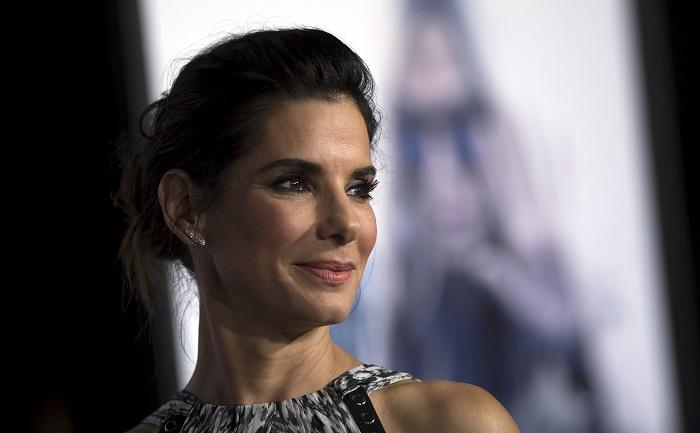
NEW YORK — Sandra Bullock and Nicole Kidman sat down with “Today” host Hoda Kotb this week to discuss their reunion for “Practical Magic 2,” reflecting on their decadeslong friendship, the challenges of parenting teenagers, and how their perspective on the original 1998 film has shifted over the nearly three decades since its release.
The sequel, which reunites the two Oscar winners in their original roles as witchy sisters Sally and Gillian Owens, arrives in theaters Sept. 10. Kotb teased the interview ahead of its broadcast, sharing a photo from the taping alongside the two actresses.
“I mean… how fun is this?! Sandra and Nicole together again!” Kotb wrote on Instagram, adding, “Can’t wait for you to see our conversation soon! PS sandra said — sit on my lap—- so i hovered.”
The Tuesday broadcast, part of a segment called “Making Space,” centered heavily on lessons the two actresses have learned around caregiving and raising teenagers, along with what it means to redefine family and public expectations on their own terms as they’ve each grown older in the public eye.
Beyond the “Today” interview itself, both actresses have spoken extensively in recent press appearances about how their relationship with the original “Practical Magic” has evolved. When the film first released in 1998, it received mixed reviews and posted only a modest box office performance. In the years since, it has grown into a cult favorite, discovered by a new generation of fans largely through social media clips, a shift both actresses say has fundamentally changed how they view the project.
Bullock reflected on how cultural attitudes toward the film’s central theme, witchcraft, have shifted since its original release.
“A witch has always been a negative connotation. It was presented that way,” Bullock said. “The word is being taken back, and there’s ownership of it from the community saying, ‘I’m a witch and I’m proud.’”
For Kidman, the film’s unexpected second life has become something deeply personal, shaped by repeated encounters with fans who cite the movie as a favorite.
“People started just coming into my life who would go, ‘You want to know what my favorite film of yours is? Practical Magic.’ And suddenly I was like, ‘What? Wow, OK,’” Kidman said.
In preparing for the sequel, Bullock said she took a deliberate step to better understand how a younger generation connects with the material, sitting down with her own children and their friends to rewatch the original film together.
“I wanted fresh eyes,” Bullock said. “Because we were embarking on the new chapter, the new baby witches coming in. I wanted to understand it from a point of view I didn’t have. I wanted to see what they had to say.”
In a separate conversation with People, the two actresses discussed why now, roughly 28 years after the original film, felt like the right moment to finally bring the sequel to the screen.
“For me, it sort of honored generations of ancestry and future generations in a way that I don’t think we’ve talked about much on film,” Bullock said. “Which is, we forget that our mothers and grandmothers were young women with dreams and hopes and desires as well.”
Kidman agreed, describing the depth of trust and support the two actresses have continued to lean on throughout their careers and personal lives.
“Yes. This time around, we got to share things,” Bullock said, with Kidman adding that the two have become “each other’s life raft.”
Toward the end of the “Today” interview, the conversation took a lighter turn when Bullock pressed Kotb for details about a personal connection of her own. Bullock had watched an earlier episode of “Today With Jenna & Sheinelle,” in which Kotb revealed she had met a man on a flight and had recently reconnected with him. Bullock, having seen that earlier segment, pushed Kotb for further updates on the “handsome” mystery man during the taping, turning the interview’s focus briefly back onto the host herself.
The reunion between Kidman and Bullock traces back years before the sequel’s production ever began. Speaking at the Season 2 premiere of her Hulu series “Nine Perfect Strangers” prior to the sequel’s official announcement, Kidman revealed that she and Bullock had discussed the possibility of a follow-up film even while making the original in the late 1990s.
“When we were making it, we definitely did,” Kidman said at the time, of thinking about a potential sequel. “We’re so excited. Yes, yes, beyond excited. You heard our spell. We put out our spell already.”
“Practical Magic 2” is directed by Susanne Bier, working from a screenplay by Akiva Goldsman, who also co-wrote the original 1998 film. Both movies draw from the work of author Alice Hoffman, with the original based on her 1995 novel “Practical Magic,” while the sequel takes inspiration from her 2021 follow-up novel, “The Book of Magic,” which expands the story of the Owens family. The new film introduces Joey King and Maisie Williams as the next generation of Owens women, while also honoring the original film’s beloved supporting cast, including Stockard Channing and Dianne Wiest, who played the sisters’ aunts in the first movie.
As producers on the sequel, Bullock and Kidman also navigated the practical challenges of mounting a legacy sequel decades after the original, balancing the demands of honoring a beloved cult classic with the realities of production budgets and audience expectations nearly three decades removed from the source material’s initial, more muted reception.
With “Practical Magic 2” set to hit theaters Sept. 10, the promotional tour has offered both actresses an extended opportunity to reflect publicly on their enduring friendship, their shared experience raising teenagers, and the unlikely journey that transformed a modestly received 1998 romantic fantasy film into a beloved franchise now warranting a long-awaited return nearly 28 years later.
Business
Dow Sells Off 500 Points On U.S.-Iran Strikes; SK Hynix Breaks Out| Investor’s Business Daily

The Dow Jones Industrial Average and the other major stock indexes opened mixed Tuesday, with oil prices rising following U.S. and Iran attacks over the weekend. Meanwhile, memory-chip leader SK Hynix (SKHY) rallied on the stock market today, breaking out past a new buy point. Just after Tuesday’s open, the Dow industrials dropped 1%, or more than 500 points, while…
Copyright ©2026 Investor’s Business Daily, LLC. All rights reserved. 87990cbe856818d5eddac44c7b1cdeb8

Yes. Corporate subscriptions are available for teams and organisations, with discounted rates as user numbers increase. Pricing starts from $1,625 + GST per user.
Get in touch
to discuss the right option for your organisation.
Business News subscriptions are used by executives, investors, consultants and professionals who need to stay informed and make better decisions about the WA market. When you subscribe you’ll get
- Unlimited access to WA’s most trusted business journalism
- Data & Insights — detailed profiles of WA companies, people, projects and deals
- MyBN — a personalised feed based on the companies, people and sectors you follow
- Special publications and industry reports
- Daily and weekly email newsletters
Data & Insights is a research tool built specifically for the WA market. It draws on more than 30 years of Business News reporting, updated regularly to reflect what’s happening now. Use it to:
- Look up detailed profiles of WA companies, including financials, directors and ownership
- Find decision-makers and track their career movements
- Research live and completed projects across WA industries
- Monitor deals, appointments and market activity
- Access industry rankings and league tables
Data & Insights is updated daily by our dedicated research team, which uses the latest announcements, ASX filings and editorial coverage to keep our person, company, list and project records up to date.
Business News welcome all opportunities to make our dataset accurate, complete and current, so if you have an update request, please email the team at
general@businessnews.com.au, and we’d be happy to assist.
MyBN
is part of every subscription. It’s your personalised view of Business News. You can follow the companies, people, sectors and projects that matter to you, and get a news feed and alerts tailored to your interests. You can save articles to read later and retain only what you need.
Only subscribers have full access to all content on the Business News website.
If staying informed about the WA economy is part of your job, and/or you’re looking for networking opportunities in WA, Business News is built for you.
Business News subscribers are:
- Executives and directors tracking competitors, clients and market movements
- Investors and advisers researching companies, deals and industry trends
- Consultants and professionals staying across sectors relevant to their clients
- Business owners looking for leads, context and market intelligence
Most Business News publications cover national or global markets. Business News is focused entirely on Western Australia, which means the journalism, the data and the intelligence are all built around WA companies, people and projects — not adapted from a national feed. Data & Insights, included with every subscription, combines more than 30 years of WA-specific editorial research with live business data. There’s no comparable product for the WA market.
The Morning Digest Email provides a comprehensive wrap of the major headlines, relevant to WA business, and includes with a snapshot of the overnight news covering oil, gold and ASX-listed companies.
The Afternoon Wrap Email focuses on the news covered by our team of journalists during the course of the working day, including exclusive stories and analysis, all of which relates to WA business and the local economy.
The BN Weekender Email contains a wrap of the Business News from the week that was, highlighting the top stories in each area of WA business.
Sign up for free.
We’re happy to help.
Get in touch
and our team will come back to you.

Brian Brenberg and Larry Kudlow analyze the U.S.-Canada trade dispute. Kudlow argues the conflict is about more than dairy and poultry, pointing to a Chinese transshipment issue as the key reason the US must stand firm.
Sen. Jerry Moran, R-Kan., on Monday highlighted Canadian jet manufacturer Bombardier’s positive impact in Kansas after President Donald Trump took aim at the company.
“The presence of Bombardier in Wichita supports a local workforce of more than a thousand employees, who contribute their talent and expertise to our nation’s defense and aerospace capabilities. This afternoon, I reached out to the Trump administration to make certain the President is aware of the significant contributions of Bombardier to Kansas and the importance of its presence in Wichita to many Kansas workers at Bombardier and in the Bombardier supply chain,” Moran wrote in the post on X.
“I will continue working to see that Bombardier’s manufacturing operations not only remain in Kansas but continue to grow and create American jobs. Kansas is home to a hardworking, skilled workforce, and I will continue welcoming leaders in aircraft and defense manufacturing to do business here in the Air Capital of the World,” the senator added.
TRUMP TARGETS BOMBARDIER, SAYS CANADIAN JETMAKER ‘MUST BUILD’ IN THE US

Left: U.S. Sen. Jerry Moran, R-Kan., talks on a cellphone as he arrives to a closed Senate Appropriations Committee hearing at the U.S. Capitol on June 2, 2026, in Washington, D.C. Right: President Donald Trump steps off Air Force One at Morristown M (Left: Eric Lee/Getty Images; Right: Jim WATSON / AFP via Getty Images / Getty Images)
The White House did not immediately respond to Fox News Digital’s comment request on Tuesday.
Trump had targeted the company in a Monday Truth Social post as many American workers enjoyed the Labor Day holiday.
“NO MORE SELLING BOMBARDIER IN THE UNITED STATES!” the president declared.
“Their products aren’t good enough! Over 50% of their revenue comes from the United States — They live off American Buyers, American Companies, American Airports, and American Service — All while Canada blocks our GREAT American Banks, and Companies, throughout the U.S.A.,” Trump asserted in part of the post. “If they want our Market, they must build here, and stop treating America like a ‘piggybank.’”
TRUMP TRADE CHIEF REVEALS WHAT PRECEDED CANADA WALKING AWAY FROM ‘BEST DEAL IN THE WORLD’

Bombardier Global aircraft under assembly during a tour of the company’s facility in Mississauga, Ontario, Canada, on Friday, May 8, 2026. (Arlyn McAdorey/Bloomberg via Getty Images / Getty Images)
Bombardier issued a statement on Monday indicating that its business utilizes U.S. workers and that its products include U.S.-made components.
“Bombardier’s American workers are based all around the United States with sites in Kansas, Texas, Arizona, Florida, Connecticut, Illinois, Delaware, California, Washington D.C. and New Jersey, as well as overall direct employment presence in more than 20 states. Bombardier aircraft create tens of thousands of U.S. jobs through the company’s growing American footprint as well as within its supply chain made up of approximately 2,800 American companies across 47 states. The company spends over $2.5 Billion with suppliers each year,” Bombardier noted in part of their statement.
CANADIAN PM TELLS TRUMP TO ‘STOP TRYING TO BE TOUGH’ IN TRADE FIGHT

A Bombardier flag during an entry-into-service celebration event for the Bombardier Global 8000 jet at the Bombardier Aircraft Assembly Centre in Mississauga, Ontario, Canada, on Monday, Dec. 8, 2025. (Laura Proctor/Bloomberg via Getty Images / Getty Images)
GET FOX BUSINESS ON THE GO BY CLICKING HERE
“Bombardier aircraft are built with American-made components such as engines, avionics and many more key systems provided by great American companies. Significantly, the wings for the world’s fastest business jet are made by American workers at Bombardier’s facility in Red Oak, Texas while crucial flight control components are made in Bombardier’s Los Angeles, California area facility. Bombardier has also announced extensive plans to grow its defense activities as well as its service network and will, later this year, inaugurate a new facility in Fort Wayne, Indiana,” the company noted.

Australian shares have had their worst session since early June as stubborn oil prices, crumbling consumer confidence and a dim business outlook weigh on banks, real estate and retail stocks.

Aritzia-Inspired Fashion Finds for Fall at Amazon, From $7

2026 College Football Attendance Numbers in the West

Stoke Space raises $1B to expand its footprint and upsize its fully reusable Nova rocket


-
 Tech3 hours ago
Memory prices are slowing because buyers ran out of money
-

 Business5 hours ago
Egyptian TV Presenter Sarah Khalifa, 11 Others Sentenced To Death In Major Drug Trafficking Case In Cairo
-

 NewsBeat59 minutes ago
England up in reading, maths and science rankings as Scotland and Wales dip
-
 Tech5 hours ago
Strong Password Policy and Password Manager Guide
-
 Entertainment5 hours ago
The 10 Most Influential Books of the 20th Century, Ranked
-

 Sports4 hours ago
Rob Baxter: Exeter boss says England should pick English-based players
-

 Crypto World3 hours ago
Arm Stock: Arm Extends Reach To Physical AI
-

 Crypto World5 hours ago
Stablecoins could save South Korean merchants up to $3.8 billion a year, budget office says
-

 Politics4 hours ago
Susan Sarandon Claims She Lost Film Work Due To Her Support For Palestine
-
 Entertainment3 hours ago
10 Genuinely Perfect Psychological Thrillers, Ranked
-

 Crypto World5 hours ago
Visa expands stablecoin card network to 160 programs
-
 Crypto World5 hours ago
Hyperliquid Season 3 Airdrop Wait Fuels a Meme Coin Machi Big Brother Promotes
-

 Crypto World5 hours ago
How Democrats Plan to Investigate Trump’s Ballroom
-
Business4 hours ago
Goldman Sachs maintains neutral stance amid market shifts
-

 Sports4 hours ago
My Gladiola secures emotional Moir Stakes win in 2026
-

 Tech4 hours ago
New Irish dispute body to tackle illegal online content launched
-

 Sports4 hours ago
“How Ridiculous”: Jason Gillespie Fires Back At Sacked Pakistan Coach Umar Gul
-

 Tech4 hours ago
Stoke Space raises another billion to rival SpaceX at re-flying rockets
-

 Sports4 hours ago
Tempted’s stunning 2026 Concorde Stakes return bolsters Everest hopes
-

 Crypto World4 hours ago
Ethereum Foundation Sets a December 2029 Deadline to Beat the Quantum Clock
You must be logged in to post a comment Login