Connect with us
DAPA Banner
DAPA Coin
DAPA
COIN PAYMENT ASSET
PRIVACY · BLOCKDAG · HOMOMORPHIC ENCRYPTION · RUST
ElGamal Encrypted MINE DAPA
🚫 GENESIS SOLD OUT
DAPAPAY COMING

Business

Iranians With Visitor (Subclass 600) Visas Temporarily Banned From Entering Australia

Published

on

Sydney Airport

Iran nationals with valid visitor (subclass 600) visas have now been barred from entering Australia for the next six months.

The announcement was made by Home Affairs Minister Tony Burke.

Iranians With Valid Visitor Visas Banned For Six Months

According to a report by The Guardian, around 6,800 Iranians with valid visitor visas will be affected by the ban.

It should be noted, however, that this only applies to those who hold visas and are outside Australia.

Advertisement

“There are many visitor visas, which were issued before the conflict in Iran which may not have been issued if they were applied for now,” Burke said during the announcement.

“Decisions about permanent stays in Australia should be deliberate decisions of the government, not a random consequence of who had booked a holiday,” he added.

The minister also emphasized that “The Australian government is closely monitoring global developments and will adjust settings as required to ensure Australia’s migration system remains orderly, fair and sustainable.”

According to ABC News, the Albanese government has been concerned that some Iranians with temporary visas will be “unable or unlikely” to leave Australia once their visas expire due to Iran’s ongoing conflict with Israel and the United States.

Advertisement

Are There Exemptions?

As ABC News notes in its report, there are exemptions to the ban imposed against Iranians.

First, Iranians who are already traveling or transiting in the country will be exempt from the ban.

Iranians who are spouses or dependent children of Australian citizens and permanent visa holders will likewise be exempted.

In addition, the government will give “sympathetic consideration” to Iranian parents of Australian citizens.

Advertisement

Burke also clarified that some Iranians on visitor visas may be given “permitted travel certificates,” but this will be case-to-case basis.

Continue Reading
Click to comment

You must be logged in to post a comment Login

Leave a Reply

Business

Why UK SMEs Are Getting Legal Translation Wrong in 2026 (And What AI Consensus Is Changing)

Published

on

The “AI for Everything” Era Is Ending — And That’s a Good Thing

When a contract clause means something different in the target language than it does in the original, nobody knows until it matters. By then, the dispute is already underway.

For UK small and medium-sized businesses operating across borders, whether that means engaging EU suppliers post-Brexit, managing international  legal translation is not an optional extra. It is load-bearing infrastructure. And for most SMEs, it is being handled in ways that create far more risk than they realise.

The Real Cost of Getting It Wrong

Legal translation errors are not theoretical. Industry data published by Leaders in Law found that legal translation submissions routinely contain up to 17% grammar errors, 14% vocabulary errors, and a further 7% formatting errors, with formatting problems alone frequently causing document rejection by courts and regulatory bodies. A single rejected clause in a cross-border commercial agreement can mean a delayed transaction, an unenforceable penalty provision, or a governing law dispute that takes months and significant legal spend to resolve.

The exposure is growing. AI-generated legal claims are already adding to the cost burden on British businesses, with more than a third of UK firms reporting a rise in low-merit claims linked to AI tools. As documentation volumes increase and more contracts involve parties operating in different languages, the weak point in many SME operations is not their legal strategy, it is the translation layer sitting underneath it.

Post-Brexit compliance has made this more acute. UK businesses no longer benefit from reciprocal enforcement mechanisms with EU counterparts that were previously standard. The legal enforceability of a translated contract in a French or German court now depends on translation quality in a way it simply did not before 2021. Language differences can lead to misunderstandings with regulatory authorities, contractual disputes, and compliance failures that carry real financial consequences.

Advertisement

Where AI Translation Has Already Entered Legal Work

The legal sector is not waiting for consensus on whether AI belongs in its workflows. It has already arrived. A survey conducted by Business Matters found that 56% of UK adults would trust AI to interpret contracts or terms and condition, and the actual use of AI tools in UK law firms has been tracked by the Solicitors Regulation Authority at over 50% of firms.

That adoption is happening unevenly. Large firms can invest in enterprise-grade legal AI with built-in verification layers. SMEs tend to reach for whatever translation tool is fastest and cheapest, often a single large language model accessed via a browser tab, without considering what they are actually relying on when that output is inserted into a contract or a compliance document.

This is where the risk concentrates. Not in whether AI is used, but in how its output is treated.

The Problem With Single-Engine Translation for Legal Text

Standard AI translation tools work by generating a single output from a single model. That model may be excellent for marketing copy, product descriptions, or customer communications. Legal text is a different class of problem.

Advertisement

Legal language is precise by design. Terms like “indemnification,” “force majeure,” “representations and warranties,” or “entire agreement” do not have clean one-to-one equivalents in every language, and their legal force depends on how they are rendered in the target jurisdiction. A mistranslation that would go unnoticed in a marketing email can produce an unenforceable or ambiguous clause in a binding agreement.

No single AI model produces consistently reliable output across all language pairs for this type of content. They make different errors, carry different training biases, and handle jurisdictional legal terminology with different degrees of precision. Cross-border compliance experts have consistently noted that language barriers in international commerce can lead to misunderstandings with regulatory authorities and compliance failures that prove costly to corre, and relying on a single automated output, without any cross-verification, amplifies that risk.

The practical consequence for an SME is this: a translation that looks fluent and sounds confident may still contain errors that only emerge when tested by a court, a regulator, or an opposing party’s legal team.

Why Testing Multiple Models Changes the Risk Calculation

The more defensible approach is not to choose the “best” AI translation tool and trust it. It is to run multiple AI engines simultaneously and treat disagreement between them as a quality signal.

Advertisement

This is the operating principle behind MachineTranslation.com, an AI translator  that runs outputs across 22 AI models in parallel, including DeepL, ChatGPT, Google Translate, and other,  and surfaces where they agree and where they diverge. In testing across legal contracts and marketing texts, the platform found that AI models frequently disagree on the same source sentence. When multiple independent models produce identical or near-identical output, that convergence functions as a confidence signal. When they diverge, the divergence flags a term or clause that warrants human review.

For legal teams and in-house counsel at SMEs, this changes the workflow from ‘did we use AI?’ to ‘where does the AI output carry real uncertainty?’ It transforms translation from a black box into an auditable process. The platform also preserves document formatting across DOCX files, maintaining the structural integrity of contracts, signature blocks, and cross-reference numbering, elements that, as noted above, are a documented source of court rejections when mishandled.

The optional human review layer connects users with certified translators who refine AI output to publication-ready standards, which is particularly relevant for documents that will need to satisfy jurisdiction-specific certification requirements in EU member states or in cross-border litigation.

What UK SMEs Should Do Now

The mistake most SMEs make is treating legal translation as a commodity task. Because it is cheap and fast with modern tools, it gets treated as low-stakes. The actual legal exposure tells a different story.

Advertisement

Three practical steps are worth taking now, regardless of which tools an SME currently uses:

First, identify which documents in your current operations carry genuine legal weight in a foreign jurisdiction: supplier contracts, service agreements, regulatory filings, terms and conditions. These are the documents where translation quality has direct legal consequence and where single-engine AI output should not be treated as final.

Second, build cross-verification into your process. Whether that means running the same text through multiple tools and comparing outputs manually, or using a platform that does this automatically, the principle is the same: disagreement between models is information. It tells you where to focus human attention.

Third, understand certification requirements before you need them. Different jurisdictions have different standards for translated documents to be considered legally admissible. EU member states typically require sworn translators for official documents. Knowing this in advance of a transaction,  rather than after a court raises the issue,  saves significant cost and delay.

Advertisement

The legal function at most SMEs is already stretched. As Business Matters’ legal coverage consistently shows, the regulatory environment facing UK businesses in 2026 is more complex, not less, from the Employment Rights Act to new digital markets rules and cross-border enforcement changes. Translation accuracy sits underneath all of it. It deserves the same scrutiny as any other legal risk.

Advertisement
Continue Reading

Business

Swiggy shares plunge 7% after Q4 results. What are Nomura, Citi and others saying?

Published

on

Swiggy shares plunge 7% after Q4 results. What are Nomura, Citi and others saying?
Swiggy shares nosedived 7% to the day’s low of Rs 261 on the BSE on Monday after the food delivery and quick commerce giant reported a net loss of Rs 800 crore for the fourth quarter of FY26. However, the loss narrowed from Rs 1,081 crore reported in the corresponding quarter of the previous financial year.

The company released its results post-market hours on Friday. While net loss contracted, revenue from operations rose 45% year-on-year (YoY) to Rs 6,383 crore in the January-March quarter of FY26.

Swiggy’s food delivery business posted its strongest growth in 15 quarters, with gross order value (GOV) rising 23% YoY to Rs 9,005 crore in the quarter ended March 31, 2026. Monthly transacting users in the food delivery segment grew 21% YoY to 18.3 million.

Adjusted EBITDA for the food delivery business rose 40% to Rs 297 crore, while adjusted EBITDA margin improved to 3.3% of GOV, up 41 basis points YoY and 26 basis points quarter-on-quarter (QoQ).

Advertisement

Instamart, Swiggy’s quick commerce arm, reported a 68.8% YoY increase in gross order value (GOV) to Rs 7,881 crore. The company added seven dark stores during Q4, taking its network to 1,143 stores across 129 cities, covering 4.8 million sq ft. Average order value rose 32.8% YoY to Rs 700, driven by a higher non-grocery mix and larger basket sizes.


“In quick commerce, the next phase will be defined by anticipating consumer needs, not merely fulfilling them. Unit economics continue to improve quarter on quarter, and we remain on track for contribution margin breakeven in line with our guidance,” Swiggy MD and Group CEO Sriharsha Majety said.
Nuvama on SwiggyNuvama maintained its ‘Buy’ rating on Swiggy shares with a target price of Rs 477 apiece, implying an upside potential of more than 70% from the stock’s previous closing price of Rs 280.50 on the NSE.

The brokerage highlighted that Instamart’s growth moderated as management targets contribution margin breakeven in Q1, with a focus on higher-retention cohorts. “We are tweaking FY27E/28E EBITDA by +4.6%/+1.3%, factoring in growth moderation while keeping the margin trajectory unchanged,” Nuvama said.

Nomura on Swiggy

Nomura maintained its ‘Buy’ rating on Swiggy shares, but cut its target price to Rs 473 apiece, implying an upside potential of nearly 69% from the stock’s previous closing price.

The brokerage said the company reported strong earnings growth in the food delivery segment, while quick commerce margins are improving gradually. It added that Swiggy remains well-funded to weather near-term headwinds, according to a CNBC-TV18 report.

Advertisement

Citi on Swiggy

Citi retained its ‘Buy’ call on Swiggy shares with a target price of Rs 415 apiece, implying an upside potential of nearly 48% from the stock’s previous closing price.

While competition in quick commerce remains a major headwind for Swiggy, key operating metrics continue to improve steadily, the brokerage said in the report.

(Disclaimer: Recommendations, suggestions, views and opinions given by the experts are their own. These do not represent the views of The Economic Times)

Advertisement
Continue Reading

Business

Oil prices jump after Trump dismisses Iran proposal to end war

Published

on

Oil prices jump after Trump dismisses Iran proposal to end war

The Strait of Hormuz waterway remains effectively shut, severely disrupting global energy shipments.

Continue Reading

Business

Beyond the Reef – What Komodo’s Diving Economy Teaches Hotels and Resorts About High-Value Hospitality

Published

on

Beyond the Reef - What Komodo's Diving Economy Teaches Hotels and Resorts About High-Value Hospitality

For hotels, resorts, and hospitality investors across Indonesia, a well-written Komodo Island scuba diving guide is more than a travel resource; it demonstrates how a destination can turn natural beauty, operational discipline, and guest experience into a sustainable business advantage.

Komodo is often described through its dramatic landscapes: dry savannah hills, pink-sand beaches, volcanic islands and, of course, the famous Komodo dragons. Yet beneath the surface lies one of the strongest commercial pillars of the region’s hospitality sector. Diving is not simply an activity offered to guests. It shapes booking patterns, room rates, staffing needs, partnerships, sustainability policies and the overall reputation of hotels and resorts in Labuan Bajo and the wider Komodo National Park area.

Why Diving Matters to Komodo’s Hospitality Market

Scuba diving in Komodo, Indonesia, has become a phrase associated with bucket-list travel, but the business behind it is more complex than many outsiders realise. Divers tend to stay longer, plan earlier, and spend more on accommodation, equipment rental, dining, transfers, and guided experiences.

For resort managers, this creates an opportunity to design services around a guest who values reliability as much as beauty. A diver may be adventurous, but they still expect clear communication, punctual transfers, clean facilities, safe storage and knowledgeable staff.

Key expectations often include:

Advertisement
  • Early breakfast options before boat departures
  • Reliable transport to harbours and dive centres
  • Flexible check-in and check-out arrangements
  • Fresh laundry services for wet gear and activewear
  • Healthy post-dive dining choices
  • Accurate local information from front-desk teams

A comprehensive Komodo Island scuba diving guide can help staff anticipate these needs before guests even ask, setting the standard for service excellence.These details may seem small, but in a diving destination, they influence reviews, repeat bookings and direct referrals.

Understanding the Komodo Diving Guest

The Komodo diving guest is not one single customer type. Some arrive as experienced divers seeking strong currents and pelagic encounters. Others are couples mixing soft adventure with luxury resort stays. Some are underwater photographers, marine biology enthusiasts or digital professionals adding diving days to a wider Indonesia itinerary.

The Commercial Value of Experience-Led Travel

Unlike a conventional beach holiday, a diving trip is structured around a purpose. Guests are not only booking a bed; they are buying access, confidence and memory.

This makes operational trust extremely important. A resort that understands diving schedules, weather conditions and guest preparation can create a smoother stay than one that treats diving as an afterthought.

For hospitality businesses, the lesson is clear: the more specific the guest motivation, the more valuable the supporting service becomes.

Advertisement

Komodo Diving Liveaboard and Resort-Based Stays

A Komodo diving liveaboard offers a different style of experience from staying in a resort or hotel. Liveaboards allow divers to sleep on board, reach remote dive sites early and spend several days immersed in the marine environment. For serious divers, that can be highly attractive.

However, resort-based stays remain equally important to the local economy. Many travellers prefer the comfort of land-based accommodation, especially if they are travelling with non-diving partners, children or mixed-interest groups.

Hotels and resorts can compete effectively by focusing on:

  • Comfort before and after diving
  • Better dining variety
  • Spa and wellness options
  • Stronger Wi-Fi and work-friendly spaces
  • Local cultural experiences
  • Flexible itineraries for mixed groups

The opportunity is not to copy liveaboards, but to complement them. A guest may spend three nights on a boat and then choose a resort for recovery, comfort and a slower pace.

Safety, Service and the Business of Confidence

Komodo’s underwater environment is extraordinary, but it can also be demanding. Currents, tides and changing conditions require careful planning. While dive operators carry the technical responsibility, hotels and resorts still play a role in building guest confidence.

Advertisement

Front-office teams should understand the basics of local diving logistics, even if they are not divers themselves. They do not need to explain decompression theory or current patterns, but they should know how early guests may leave, where boats depart, what items guests commonly forget and how weather can affect schedules.

What Resorts Should Communicate Clearly

Good communication reduces anxiety and improves the guest journey. Useful information includes:

  • Departure times and transfer arrangements
  • Breakfast availability before early trips
  • Drying areas for swimwear and gear
  • Medical and emergency contact procedures
  • Local conservation expectations
  • Realistic travel times around Labuan Bajo

In hospitality, confidence is often built before the main experience begins.

Sustainability Is No Longer Optional

Komodo’s appeal depends on the health of its marine environment. Coral reefs, manta rays, turtles, sharks and fish life are central to the destination’s value. For hotels and resorts, sustainability should not be treated as a decorative message on a bathroom card. It must become part of operations.

That can include reducing single-use plastics, supporting responsible suppliers, training staff on reef-safe guest behaviour and working with dive partners who respect marine park rules.

Advertisement

Practical sustainability measures include:

  • Refillable water stations
  • Clear waste separation practices
  • Reef-safe sunscreen education
  • Responsible seafood purchasing
  • Support for local conservation initiatives
  • Guest briefings on respectful wildlife behaviour

The commercial reason is straightforward: the destination’s natural assets are also its economic assets. Protecting them protects future demand.

How Hotels Can Support the Diving Economy Without Becoming Dive Operators

Not every resort needs to own a dive centre. In many cases, it is better to build strong partnerships with reputable local operators. This allows the hotel to focus on accommodation, service and guest care while specialists manage diving activities.

The best partnerships are based on shared standards. Hotels should know whether the operator has reliable equipment, trained guides, responsible safety procedures and good communication practices.

Partnership Questions Worth Asking

Before recommending a dive partner, hotels should consider:

Advertisement
  • Are briefings clear and multilingual where necessary?
  • Is the equipment maintained regularly?
  • Are group sizes sensible?
  • Are guides experienced in Komodo conditions?
  • Is marine life approached responsibly?
  • Are cancellations and weather changes handled transparently?

A poor third-party experience can still affect the hotel’s reputation. Guests rarely separate the full journey into neat operational categories.

Food, Wellness and the Post-Dive Experience

One overlooked business opportunity in diving destinations is the post-dive period. After a full day at sea, guests often want comfort, nourishment and ease. This is where resorts can create meaningful value.

A strong post-dive offer may include:

  • Fresh, light meals with local ingredients
  • Hydration-focused drinks and juices
  • Massage and recovery treatments
  • Relaxed sunset dining
  • Gear rinsing or drying support
  • Quiet lounge areas for photo editing and rest

These services do not need to feel overly packaged. In fact, the best hospitality often feels natural. The guest simply notices that everything has been considered.

What BM Magazine Readers Can Learn from Komodo

For a business audience, Komodo’s diving market shows how niche tourism can strengthen an entire local economy. A specialist activity can influence property development, employment, supplier networks, transport services, food and beverage strategy, digital marketing and sustainability planning.

The key lesson is that destinations grow stronger when businesses understand why guests are coming. Hotels that align their operations with the guest’s core motivation can create better experiences and better commercial outcomes.

Advertisement

In Komodo, diving is not a side product. It is part of the destination’s identity. Resorts that understand this can serve guests more intelligently, build stronger local partnerships and contribute to a more resilient tourism ecosystem.

Final Thoughts: The Future Is Experience-Led and Responsible

Komodo’s hospitality sector sits at the meeting point of adventure, conservation and premium travel. The opportunity is significant, but it must be managed carefully. Growth without responsibility can damage the very environment that attracts visitors.

For hotels and resorts, success will come from balancing commercial ambition with operational care. Guests want beauty, but they also want safety, comfort, authenticity and trust.

The businesses that thrive will be those that see diving not merely as an excursion, but as a complete guest journey: from the first enquiry to the early-morning transfer, from the reef encounter to the evening meal, and from a memorable stay to a confident recommendation.

Advertisement

Continue Reading

Business

Dua Lipa sues Samsung for $15m over use of her image on TV boxes

Published

on

Dua Lipa sues Samsung for $15m over use of her image on TV boxes

The pop star’s legal team alleges a photograph of her face was used on Samsung television boxes without permission.

Continue Reading

Business

Objectors slam ‘disgraceful decision’ as Cheshire homes approved

Published

on

Business Live

Parish council and civic society had opposed 24-home scheme

An artist's impression of the Hartford development

Artist’s impression of the Hartford development (Image: Local Democracy Reporting Service)

Shouts of ‘disgraceful decision’ were heard from objectors after plans for new homes in Northwich were rubber-stamped.

Advertisement

At a meeting to discuss a proposal for 24 homes on land near School Lane in Hartford, the chairman of Cheshire West and Chester Council’s planning committee had to remind a member of the public they were not allowed to speak unless called to do so.

The outline planning application, submitted by Hollins Strategic Land, was originally for an over-55s development but that was later amended after national planning changes meant the borough now faces a shortage of general housing stock.

The site is on a grass paddock to the east of School Lane and near Grade II-listed Hartford Hall.

Hartford Parish Council had objected, raising issues such as potential noise and impact on local highways, while Hartford Civic Society also lodged an objection due to what it said would be a loss of green space and lack of services.

Advertisement

In response to concerns raised over impact on roads, Stephen Harris of planning agent Emery Planning, said: “This is a modest development of 24 homes, which would generate a limited amount of traffic, as the planning officer says.

“It includes a right turn lane, and it’s been agreed with your highways officer that the limited number of cars would use the junction without having any impact on the existing highway network.”

Ward councillor Patricia Parkes had called in the application and at the meeting read out an objection from the parish council. She added: “We are not saying no to development. We’re saying this is not the right place.

“I urge members to recognise the clear policy conflicts and to refuse this application.”

Advertisement

Some members raised concerns about the amount of development which had already been rubber-stamped in Hartford.

But planning officers told the committee the scheme should not be viewed in terms of housing supply and development which had already been approved in Hartford, but the wider needs of the borough, saying there was currently a ‘very limited’ housing land supply across Cheshire West and Chester.

However they did concede the 24 homes would ‘not touch the sides’ of that requirement.

Before calling a final vote, committee chairman Cllr Gina Lewis had to interject due to activity from the public gallery as someone attempted to speak.

Advertisement

She stated: “You are at a meeting in public, not a public meeting, only the committee is allowed to speak once the main speakers have actually spoken.”

The committee voted to approve, with seven members in favour and four against.

On the way out, an objector shouted: “Disgraceful decision that, absolutely disgraceful!”

To find all the planning applications, traffic diversions, road layout changes, alcohol licence applications and more in your community, visit the Public Notices Portal.

Advertisement
Continue Reading

Business

Hamstring Strain Clouds Lakers’ Desperate Game 4 Bid vs. Thunder

Published

on

Luka Dončić

LOS ANGELES — With their season on life support, the Los Angeles Lakers face a near-impossible task Monday night in Game 4 against the defending champion Oklahoma City Thunder, and superstar Luka Doncic remains sidelined by a Grade 2 left hamstring strain that continues to frustrate hopes of a timely return.

The Thunder lead the Western Conference semifinal series 3-0 after dominating the first three games, including a Game 3 blowout in Los Angeles. Tipoff for Game 4 at Crypto.com Arena is set for 10:30 p.m. ET on Prime Video.

Doncic has not played since suffering the injury April 2 in a regular-season loss to these same Thunder. Nearly six weeks later, the Slovenian star provided a sobering update last week, revealing doctors initially projected an eight-week recovery. He has begun running but has not progressed to full-contact work or 5-on-5 scrimmages.

“I’m just doing everything I can,” Doncic told reporters. “Every day I’m doing stuff I’m supposed to do. The doctor said eight weeks at the beginning of the first MRI. So I’m just going day by day, and I feel better every day.”

Advertisement

Medical experts and team insiders indicate Doncic is unlikely to return in this series. Even an optimistic timeline points to late May at the earliest, potentially too late if the Lakers cannot extend the matchup. Some reports suggest he could miss the remainder of the playoffs entirely if the injury heals conservatively.

Lakers’ uphill battle without their MVP-caliber leader

Without Doncic, who led the NBA in scoring during the regular season, the Lakers have struggled mightily. Oklahoma City has exploited the absence, with Shai Gilgeous-Alexander and a deep, athletic roster overwhelming Los Angeles in transition and on the glass. The Thunder boast the league’s best record and home-court dominance, entering the series as heavy favorites.

LeBron James, now in his 23rd season, has shouldered extra minutes alongside Austin Reaves and a supporting cast that includes Rui Hachimura and D’Angelo Russell. Yet the offensive firepower and defensive versatility missing without Doncic have proven costly. The Lakers dropped Game 1 by 18 points, Game 2 by double digits, and Game 3 by more than 20 in front of a stunned home crowd.

Advertisement

Coach JJ Redick has emphasized resilience and adjustments, but the math is unforgiving. Only four teams in NBA history have overcome a 3-0 deficit to win a playoff series, the last being the 2023 Boston Celtics against the Atlanta Hawks in the first round. A sweep would mark another early postseason exit for a Lakers squad that fought through the play-in tournament.

Injury history and cautious approach

This hamstring strain marks the latest chapter in Doncic’s injury challenges since joining the Lakers. He has dealt with calf issues in the past, and sources say he is determined not to rush back after learning from previous setbacks. A return too soon risks a more severe tear that could sideline him into next season.

Doncic traveled to Europe earlier for specialized treatment to accelerate healing, but progress has been methodical. He has participated in non-contact shooting and light on-court work, yet full basketball activities remain weeks away according to multiple reports.

Advertisement

Sports medicine specialists note Grade 2 hamstring strains typically require 4-8 weeks, with elite athletes sometimes pushing boundaries. However, the recurring nature of soft-tissue concerns for Doncic has prompted a more conservative timeline. One doctor suggested Game 4 or 5 as a slim possibility earlier, but current indications point to no-go for Monday.

Thunder’s championship pedigree shines

Oklahoma City, led by MVP candidate Gilgeous-Alexander, has looked unstoppable. The Thunder went undefeated through the first round and carry momentum into Game 4. Their length, athleticism and bench depth have overwhelmed the injury-depleted Lakers. Jalen Williams’ availability remains a question mark, but OKC’s system has produced consistent results.

A victory Monday would clinch the series and send the Thunder to the Western Conference finals for another title defense. Coach Mark Daigneault has preached focus, avoiding any letdown despite the commanding lead.

Advertisement

Broader implications for Lakers franchise

The series highlights ongoing questions about roster construction around aging James and the high-upside but currently unavailable Doncic. Los Angeles invested heavily to acquire the former Maverick, betting on their combined star power. Injuries have tested that partnership.

General manager Rob Pelinka faces tough offseason decisions regardless of the outcome. Extending the series would provide more evaluation time, but a sweep intensifies pressure for changes.

James, a four-time champion, has spoken about competing for titles in whatever window remains. Reaves has emerged as a reliable secondary creator, yet the drop-off without Doncic’s playmaking and scoring gravity is evident.

Advertisement

What a potential return could look like

If the Lakers somehow force a Game 5 or beyond, speculation will intensify around Doncic’s status. He would likely need at least one full practice with contact before clearance. Even then, rust and re-injury risk would loom large against Oklahoma City’s elite perimeter defenders.

Doncic’s presence would immediately alter dynamics — his vision, step-back threes and size in the pick-and-roll could exploit mismatches. But after nearly six weeks away, expecting MVP-level impact on short notice would be unrealistic.

Fan and analyst reactions

Advertisement

Lakers faithful have expressed frustration mixed with cautious optimism on social media. Some cling to miracle comeback narratives, while others point to the harsh realities of soft-tissue recovery. National analysts largely agree the series is effectively over barring a historic collapse by the Thunder.

Inside the locker room, players maintain belief. “We compete every night,” James said post-Game 3. “Next man up mentality.”

Looking ahead

Monday night’s Game 4 represents more than survival for the Lakers — it is a statement opportunity. A competitive showing could salvage pride and buy time. For Doncic, the focus stays on long-term health as he ramps up rehabilitation.

Advertisement

The NBA world watches closely. A swift Thunder closeout would solidify their status as favorites to repeat. A Lakers miracle, however improbable, would ignite one of the great playoff stories in recent memory.

As Crypto.com Arena prepares for what could be the final home game of the season, all eyes remain on the sideline. Will Luka take the floor? Current signs say no, leaving Los Angeles to battle without its brightest star in a must-win showdown against a juggernaut.

Continue Reading

Business

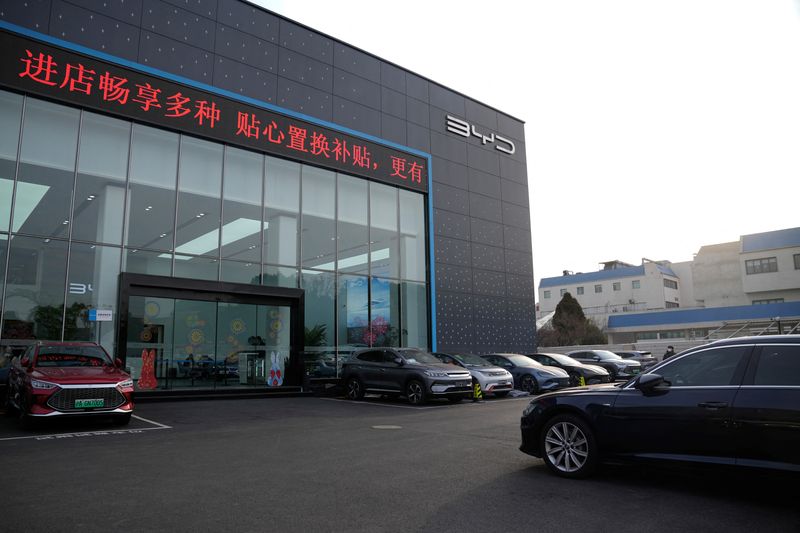
China’s domestic car demand stays weak but exports strengthen

Published

on

China’s domestic car demand stays weak but exports strengthen


China’s domestic car demand stays weak but exports strengthen

Continue Reading

Business

Market outlook: Why the Nifty breakout failed and how to trade Vedanta & Bank Nifty this week

Published

on

Market outlook: Why the Nifty breakout failed and how to trade Vedanta & Bank Nifty this week
The Nifty’s recent recovery faces a reality check as the 24,300 breakout faltered, signaling underlying exhaustion. With the VIX elevated and Bank Nifty showing bearish derivative cues, caution is the word of the day. From Vedanta’s demerger volatility to bullish setups in Senco and Moschip, here is Anand James’ technical roadmap for navigating the week ahead.Edited excerpts from a chat with Anand James, Chief Market Strategist, Geojit Investments:

Nifty ended with a weekly gain for the second consecutive time. How sustainable is the uptrend that we are seeing now?
Having formed a base near 23800, the bounce thereafter looked set to support rapid ascent to 25000-25600. However, the breakout move past 24300 failed to sustain casting doubts on the sustainability to the upmove attempts. VIX not being much far from 17 is also suggestive that traders continue to harbour volatility expectations, with momentum indicators. This prompts us to look at the 24120 region, coinciding with the 20 day SMA with caution, inability to float above which could expose 23400.

Nifty Bank also made a steady upmove but that comes after two weeks of losses. Where do you see the index moving in the week ahead?

Nifty Bank’s recent steady upmove has come after nearly two weeks of losses, but the broader setup remains cautious. On the daily chart, MACD has given a bearish signal break, which continues to persist, indicating that the prevailing trend is still corrective despite the bounce. Price action also reflects lack of strength, with only one meaningful up day during the week, while the remaining sessions saw selling pressure. The 54,300-54,000 zone remains a strong support pocket and holds the key to preventing a deeper decline. On the upside, 56,300 is a well-defined supply zone, where any rebound is likely to face resistance.
The derivative picture adds to the bearish bias. Nearly 60% of near OTM puts have seen long additions and ITM calls have seen short additions, reflecting defensive positioning. Additionally, around 40% of stock futures saw short additions on Friday, and nearly 50% on a week-on-week basis, suggesting traders are positioned for further weakness.
From a stock-specific perspective, ICICI Bank, SBI and Axis Bank look vulnerable to further downside, and could continue to drag the index lower. Overall, Nifty Bank may remain rangebound to weak between 54,000 and 56,300, with risks tilted to the downside unless momentum improves decisively.
Firstsource and Godrej Industries were among the top gainers in the week. What are the charts indicating at now?
For First source, a run upto the 200 day SMA, now at 310, appears to be the anticipated move, having closed above recent peak as well as upper bollinger band. Alternatively, given the large gains of last Friday, inability to contain dips above 258 could signal a premature end to the upmove. For Godrej Industries, 1244-278 appears to be a pause point for the present leg of upside. Those preferring to risk a reversal, and let profits run until 1324 perhaps, should have stop loss atleast near 1154.

Vedanta shares ended the week 9% higher amid demerger. How to trade now?
With value unlocking already announced, and listing of the demerged entities pending, activity has persisted with Vedanta. Upside trajectory is still uncertain, and with two days of fall prompting oscillators to signal negative divergence, we are not in favour of following prices higher.

Advertisement

Give us your top ideas of the week.

SENCO (LTP: 365)
View: Buy
Target: 400
SL: 339

SENCO is showing a strong bullish reversal across higher timeframes. On the weekly chart, the stock has decisively broken above the Supertrend, supported by a clear bullish Marubozu candle, reflecting strong demand and conviction buying. This breakout signals a shift from consolidation to trend resumption on the upside.

Momentum indicators further strengthen the bullish case. The monthly MACD has given a bullish signal break, indicating the beginning of a medium to long-term uptrend. This alignment of weekly price action and monthly momentum suggests sustainability in the move. With price holding above key breakout levels, the stock has the potential to move towards 400 in the coming weeks. 339 should act as a protective stop-loss, below which the bullish structure would weaken.

Advertisement

MOSCHIP (LTP: 227)
View: Buy
Target: 285
SL: 199

Moschip Technologies is displaying a strong bullish reversal backed by multi‑timeframe confirmation. The stock has broken above the weekly Supertrend and formed a clear bullish Marubozu candle, signaling conviction buying. On the higher timeframe, a monthly declining trendline breakout marks a shift from a prolonged corrective phase to a potential structural uptrend. Adding strength to the setup, the stock is now trading above its 20 and 50 period moving averages on both daily and weekly charts, indicating improving trend strength and momentum alignment.


As long as prices sustain above key support, the structure favors further upside toward 285 in the near to medium term. 199 remains a critical stop‑loss, below which the bullish view would be negated.

Advertisement
Continue Reading

Business

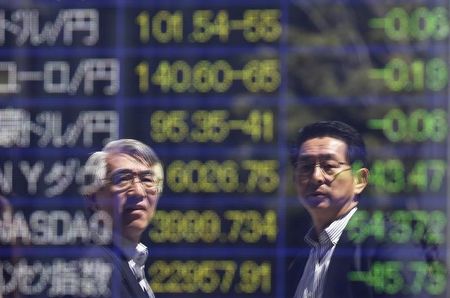
Asia stocks rise past Iran tensions on chips strength, US-China summit

Published

on


Asia stocks rise past Iran tensions on chips strength, US-China summit

Continue Reading

Trending

Copyright © 2025