

Crypto World
‘Visible Flaws’ In Bitcoiners’ Mid-Bear Market Comparison: Analyst

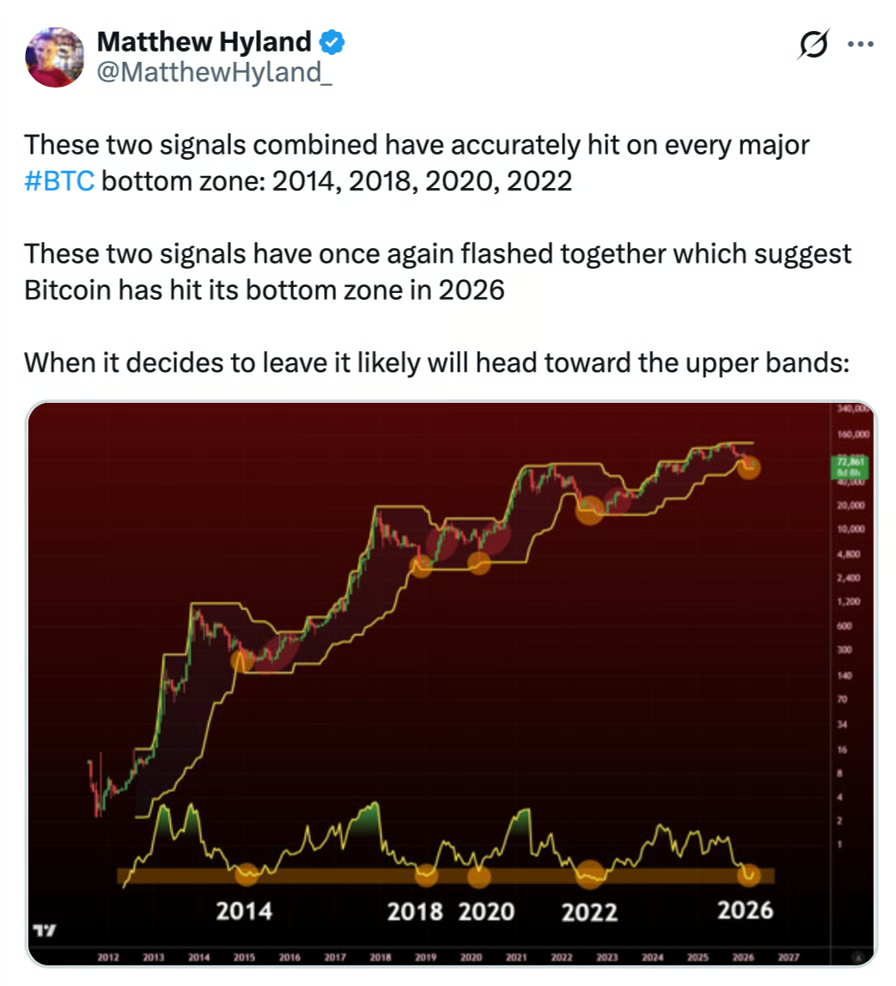
Bitcoin may have already bottomed in early February at around $60,000 and is unlikely to go lower this year, according to a crypto analyst, despite expectations of another downturn.
“The dozens of bottom signals only flashed in synchrony at the bottoms. They were not flashing in the middle. Yet they all flashed in Q1 2026 at 60k,” Matthew Hyland said in an X post on Friday.
“To compare the current price action to mid bear market price action has major visible flaws because you did not have bottom signals flashing in the middle; they flashed at the bottoms,” Hyland said, pointing to chart movements in prior cycles.

Source: Matthew Hyland
Analysts are divided over whether $60,000 was the bottom
Bitcoin (BTC) analysts have recently been divided over whether the asset already bottomed in February or if it still has further downside in this cycle.
Veteran trader Peter Brandt said in March that $60,000 may not be the lowest level for 2026, forecasting that Bitcoin could retest or even move “slightly lower” in September or October this year.
Bitcoin analyst Willy Woo said in an X post on March 17 that, from a liquidity perspective, Bitcoin is about one-third of the way “through the bear market.”
More recently, in an X post on Friday, MN Trading Capital founder Michael van de Poppe pointed to a forming pattern on Bitcoin’s short-to-long-term realized value ratio chart to argue that Bitcoin is nearing the end of the bear phase.
“The levels are hit again, which shows that we’re at the end of the bear market, and not at the start,” van de Poppe said.

Source: Michael van de Poppe
Bitcoin recently reached its highest price in three months
Bitcoin reached $82,499 on Wednesday, its highest price since Jan. 31. At the time of publication, Bitcoin is trading at $79,646, approximately 32.74% higher than the $60,000 level it reached in February, according to CoinMarketCap.
Related: Bitcoin bulls target $115K by December: Does data back the expectation?
Bitcoin analyst Kyle Chasse pointed out the price increase in an X post on Thursday, saying he expects further upside in the near term.
“$82,000 this week. Up 5% in five days. Crypto legislation is moving through Congress. Iran peace talks reducing risk-off pressure,” Chasse said.
“The technicals are clean. Bull-stacked moving averages. Shorts getting squeezed,” Chasse said, adding that the “next wall” is $85,000.
“Above that, the path to $100k opens back up,” Chasse said.
Magazine: XRP ‘probably going to $12,’ Bitcoin ETFs add $1B: Market Moves

Vietnam’s Ministry of Finance has proposed letting small and medium-sized enterprises use digital assets, virtual assets and intellectual property as collateral for bank loans.
The proposal is part of a draft revised Law on Support for SMEs, which is open for public consultation, according to a Friday report by Vietnam News. Under the framework, businesses could secure loans using future-formed assets, property rights, intangible assets and digital or virtual assets.
SMEs and household businesses account for more than 98% of all enterprises in Vietnam, yet outstanding loans to the segment represent only around 20% of total bank credit in the economy, per the report. The Ministry attributed the imbalance to a lack of eligible collateral, limited financial transparency and the small capital base of most SMEs.
Many startups and technology-driven companies hold valuable software, patents or intellectual property but have no land or physical assets to pledge, the report claimed. The new proposal marks a policy shift that could open up credit access for thousands of startups and tech companies currently locked out of the formal lending system.
Related: Bithumb enters Vietnam crypto license race with SSI Digital deal
Vietnam wants banks to lend on business plans
The draft also pushes credit institutions to expand lending based on credit ratings, business plans, cash flows and market potential, rather than fixed assets alone.
Beyond collateral reform, the draft law outlines incentives for green and sustainable businesses, including preferential access to credit guarantees, concessional financing and interest-rate support for circular economy and energy-saving projects. Tax incentives and support for ESG compliance reporting are also included.
The draft is currently open for public consultation.
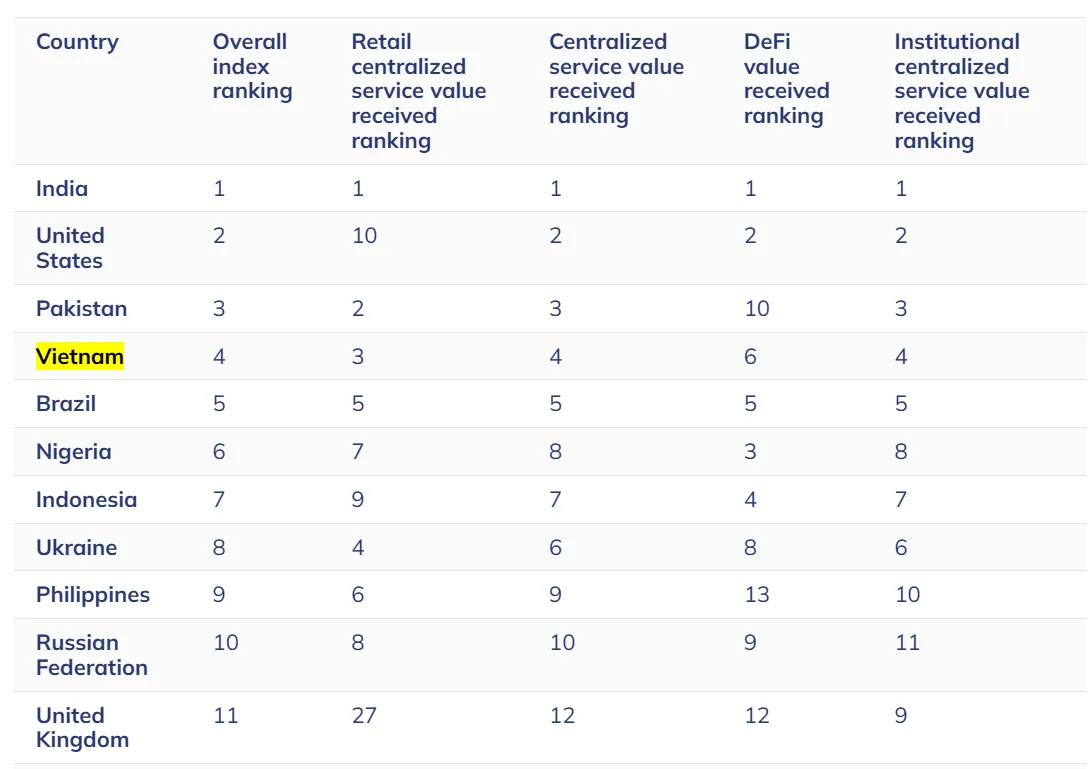
Vietnam has become one of the most active crypto markets in the world, ranking fourth in Chainalysis’ 2025 Global Crypto Adoption Index behind India, the United States and Pakistan.
Global cryptocurrency adoption index. Source: Chainalysis
Related: Vietnam arrests ONUS-linked suspects in alleged crypto fraud case
Vietnam eyes Q3 launch of regulated crypto market
As Cointelegraph reported, Vietnam could see its first regulated crypto market activity as early as the third quarter of 2026, Deputy Minister of Finance Nguyen Duc Chi said at the Digital Trust in Finance 2026 forum.
In March, regulators opened a licensing pathway for domestic crypto trading platforms earlier this year, with five companies, including affiliates of Techcombank, VPBank and LPBank, having already passed an initial qualification round to launch the country’s first regulated exchange.
Magazine: Guide to the top and emerging global crypto hubs — Mid-2026
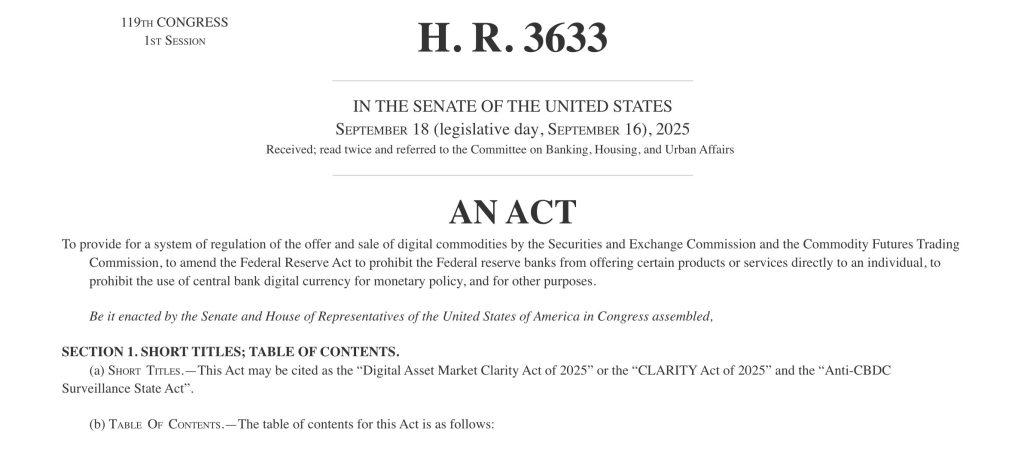
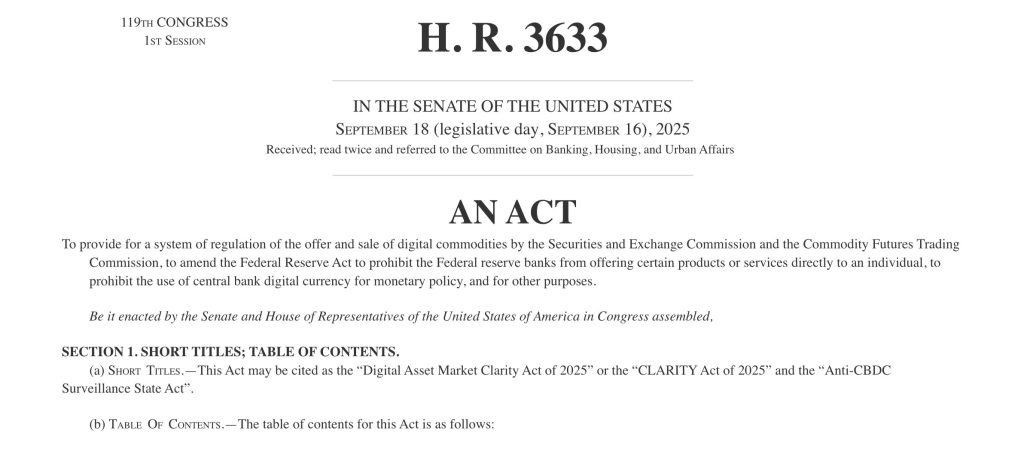
The CLARITY Act (Digital Asset Market Clarity Act) includes provisions addressing national security and foreign adversary risks in digital asset markets.
It advances a broader regulatory framework for cryptocurrencies, distinguishing between SEC oversight for certain investment contract assets and CFTC oversight for digital commodities via a certification/maturity pathway for sufficiently decentralized networks.
The bill preserves existing Bank Secrecy Act compliance, FinCEN authority, and Treasury tools, including sanctions authorities.
It also requires studies on foreign adversary activities related to digital asset intermediaries, such as potential data collection or intellectual property risks tied to jurisdictions like China, Russia, Iran, and North Korea.
Senator Elizabeth Warren has expressed concerns that the legislation could weaken global illicit finance standards.
“It’s already too easy for terrorists and criminals to launder huge sums of money and move it across borders”, claimed Warren.
If we water down global illicit finance standards, we’ll open the door to more cross-border sanctions evasion, money laundering, and terrorist financing, and give other countries cover to adopt similarly weak rules.”
Discover: The Best Crypto to Diversify Your Portfolio
Key Elements of the Clarity Act Bill
It establishes regulatory regimes for digital assets, including stablecoins. It includes a Certification of Decentralization (or maturity) pathway: issuers can seek a rebuttable presumption that a sufficiently decentralized asset qualifies as a digital commodity under CFTC oversight rather than SEC rules.
The decentralization pathway does not override existing national security, sanctions, or illicit finance requirements. U.S.-regulated entities must continue complying with sanctions screening and related obligations.
Market and Compliance Context
U.S. compliance teams already screen for sanctions and high-risk jurisdictional exposures as standard practice.
USDC and other U.S.-domiciled, transparent stablecoins maintain a structural compliance advantage due to their issuer frameworks and reserve transparency.
Institutional caution around assets with significant ties to higher-risk jurisdictions exists independently of this bill, driven by existing OFAC sanctions and AML rules.
Any potential liquidity or pricing effects remain subject to broader market dynamics, venue differences, and ongoing enforcement of current laws.
Claims of specific pre-passage pricing divergence tied directly to new “foreign adversary infrastructure” prohibitions in this bill are forward-looking and not yet broadly documented as measurable shifts.
The bill advanced out of the Senate Banking Committee on a 15-9 vote and is heading toward a Senate floor vote.
Discover: The Best Token Presales
The post Liquidity Bifurcated: CLARITY Act Foreign Adversary Risk Premium Explained appeared first on Cryptonews.
TLDR
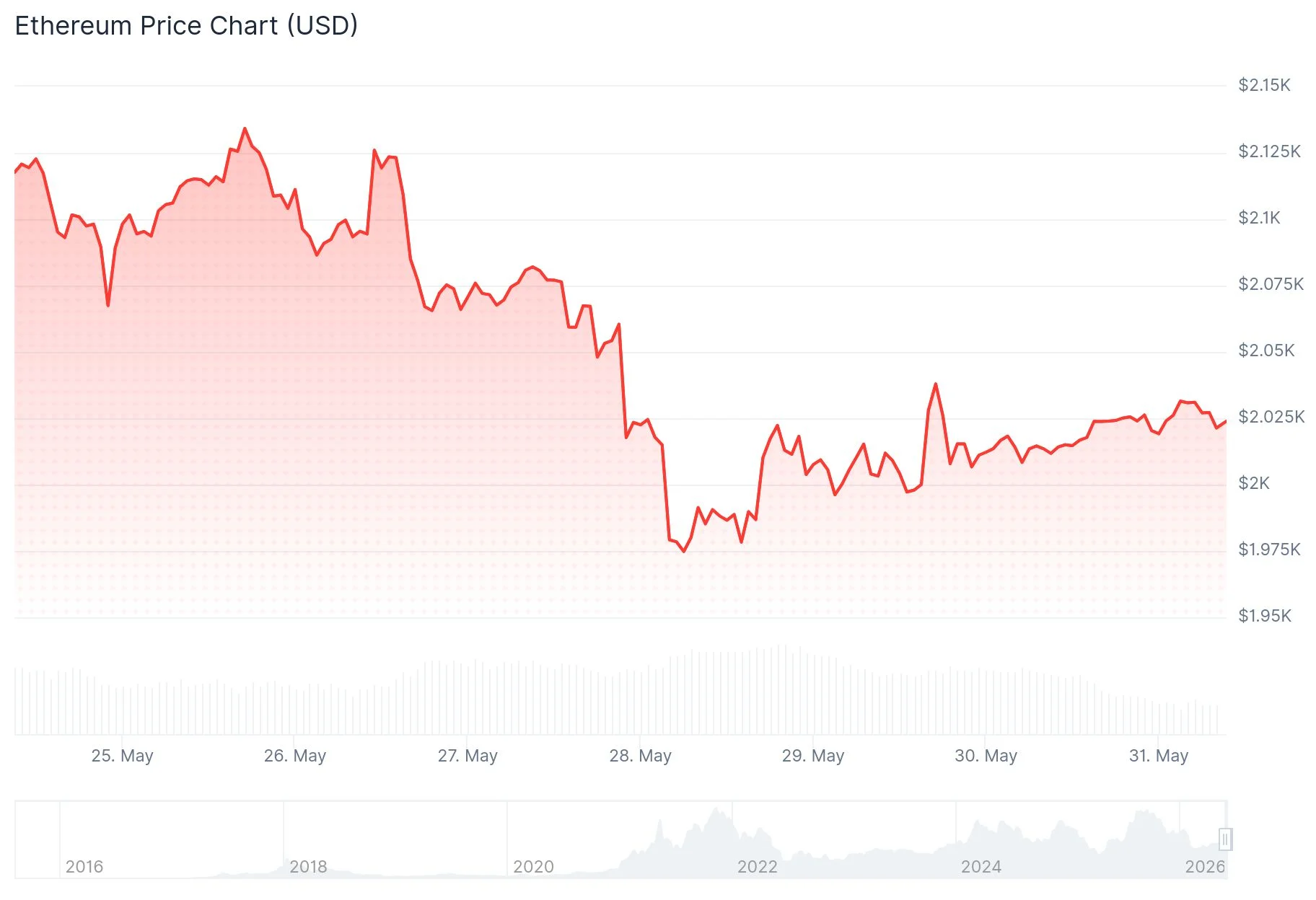
- Ethereum currently trades around $2,024, battling to maintain the crucial $2,000 threshold
- Major holders with 100,000+ ETH have increased positions to 17.41 million ETH, reaching a nine-week peak
- Market observer Ted cautions that spot market interest is declining while ETFs experience redemptions, with rallies quickly reversed
- Publicly-traded Bit Digital purchased 8,568 ETH valued at approximately $20 million during recent price weakness
- Standard Chartered continues projecting a $40,000 long-term ETH valuation despite present market challenges
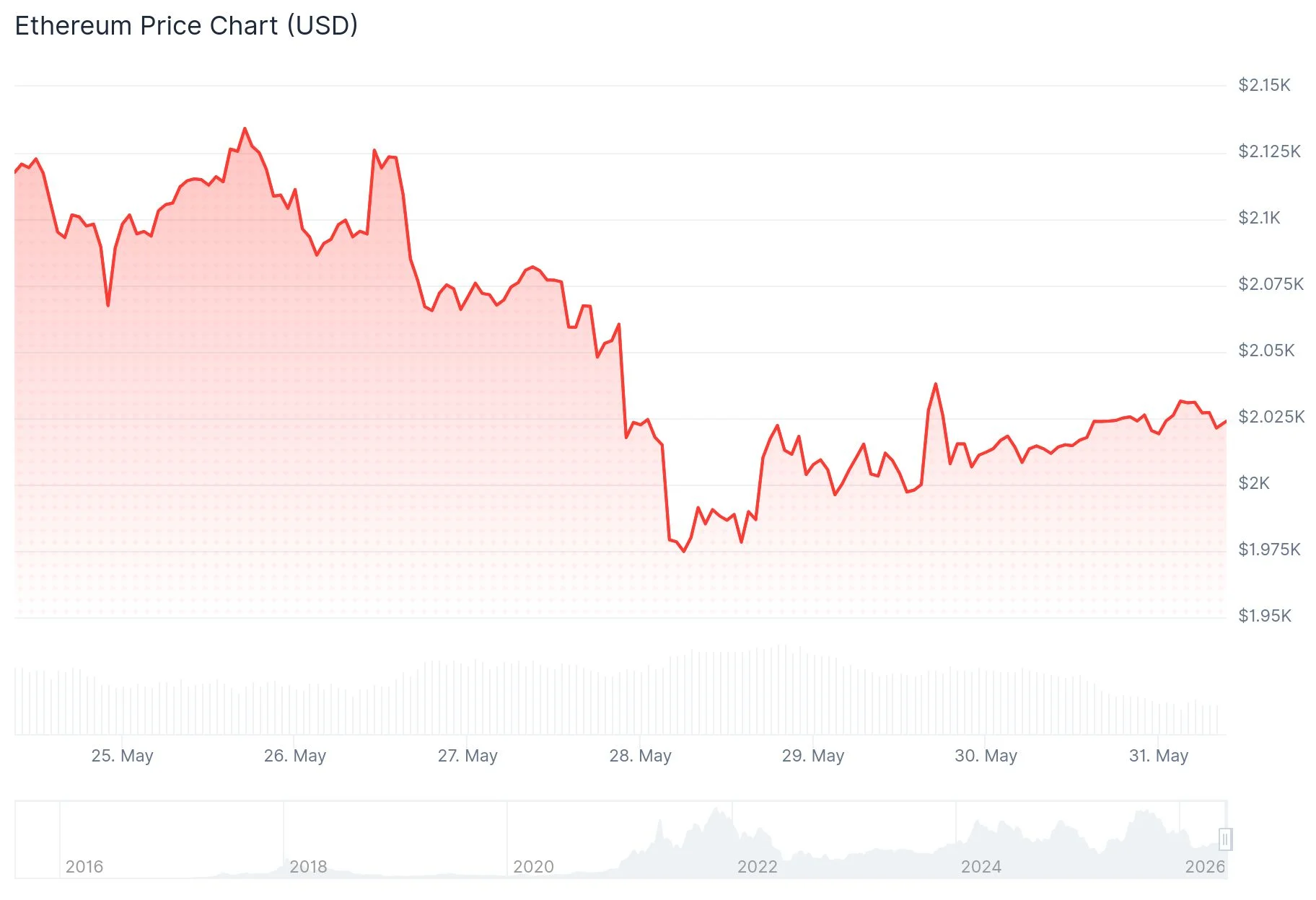
As of May 31, 2026, Ethereum is changing hands near $2,024, maintaining position barely above a pivotal support threshold that market participants are monitoring intensively. Recent trading activity has been predominantly range-bound following several days of sharp price swings around the psychologically important $2,000 mark.
Market sentiment appears divided. While near-term technical indicators suggest vulnerability, blockchain analytics reveal a contrasting picture beneath the surface action.
Market analyst Ted, sharing insights via X, observed that while ETH remains above the $2,000 threshold, the current configuration appears unstable. His analysis highlights diminishing spot market activity, negative ETH ETF flows, and consistent rejection of upward price attempts. According to his assessment, without a decisive close above $2,050, the probability of further downside movement remains substantial.
The $2,000–$2,050 range has emerged as the primary battleground on near-term price charts. Should buyers successfully protect this area, ETH might challenge the $2,100 level. A breakdown would likely target $1,994 initially, with deeper support positioned around $1,900–$1,850.
Major Holders and Corporate Entities Continue Accumulating
Despite sideways price movement, significant stakeholders have been discreetly expanding their ETH positions. Blockchain intelligence from Santiment indicates that addresses containing a minimum of 100,000 ETH have expanded their collective balance to 17.41 million ETH. This represents the strongest accumulation level observed in more than two months. These large holders now control 22.03% of Ethereum’s available supply.
Corporate purchasing activity remains robust as well. Nasdaq-traded company Bit Digital acquired an additional 8,568 ETH valued near $20 million, elevating its complete ETH treasury beyond 158,000 ETH. This purchase occurred precisely during the recent price decline.
Reports indicate that Bitmine’s Tom Lee has also acquired $50 million in ETH, further strengthening the accumulation thesis at present valuation levels.
This week, Standard Chartered reiterated its long-range $40,000 ETH price projection, emphasizing expansion in tokenized traditional assets and decentralized finance applications as catalysts not yet reflected in current market pricing.
Critical Price Zones Under Observation
Examining the ETH/BTC trading pair, Ethereum has experienced declining relative performance versus Bitcoin starting in August 2025. The ratio has now arrived at a significant long-term support area, with market participants anticipating a potential reversal. Analyst Daan Crypto Trades observed that previous ETH/BTC rallies were partially driven by substantial purchasers. Absent a new trigger, any recovery trajectory may develop gradually.
Trader Tardigrade identified that Ethereum is forming a pattern of ascending lows spanning multiple market cycles, a technical formation that has traditionally preceded significant recoveries. While the current pattern awaits confirmation, comparisons to previous cycle troughs maintain longer-term optimistic scenarios.
ETH faces overhead resistance at $2,050, $2,100, and $2,200, with $2,500 representing a broader objective should bullish momentum materialize. Concerning downside risk, $1,994 and $1,850 constitute the price zones attracting greatest trader attention.
Bit Digital’s most recent treasury acquisition of 8,568 ETH, executed during the ongoing price weakness, represents the latest documented institutional purchase activity.

TLDR
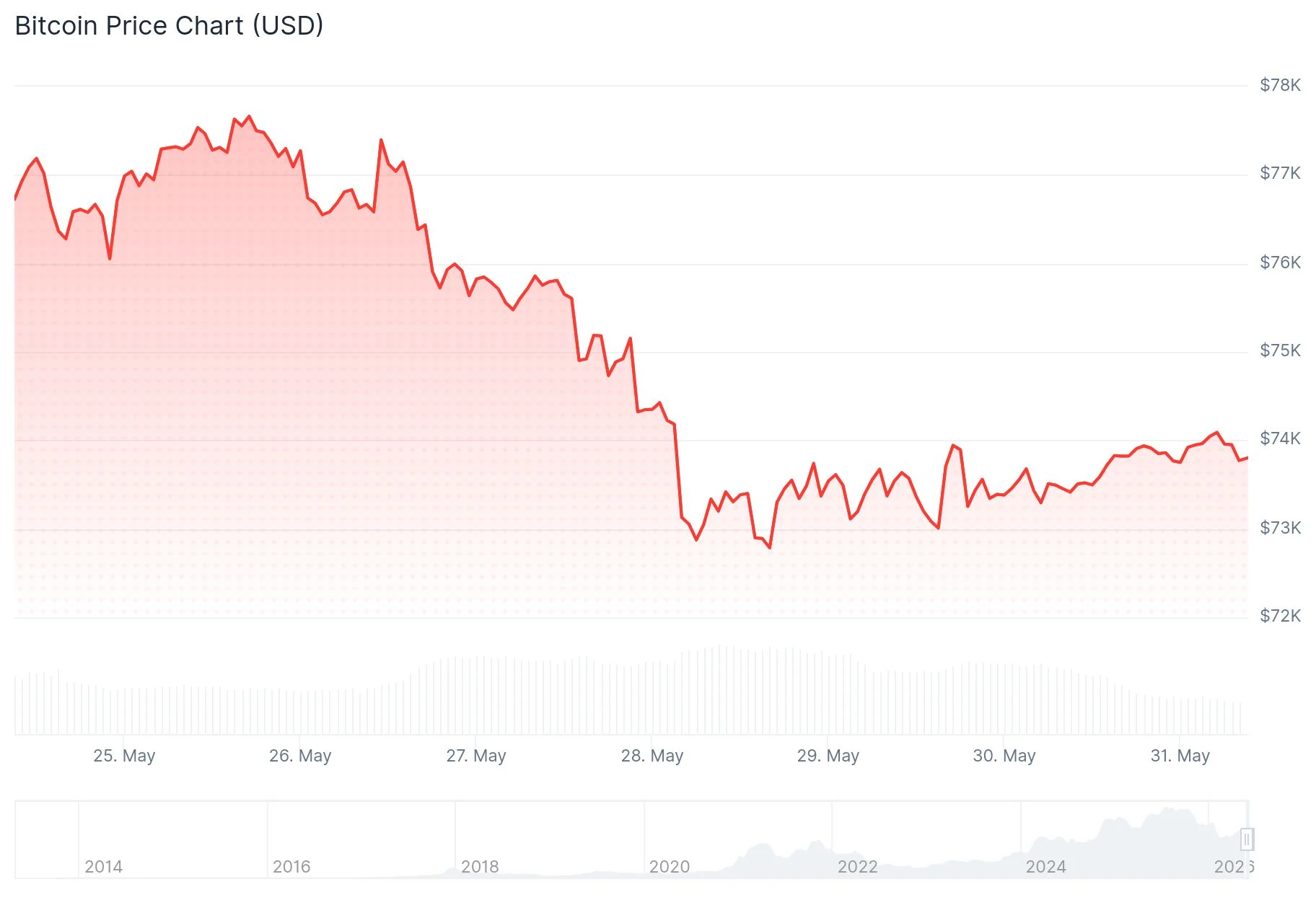
- Bitcoin currently trades around $73,800, registering approximately 3% decline over the last seven days.
- Crypto analyst Michael van de Poppe identifies $71K as critical support level; maintaining this zone could propel BTC toward $76,600.
- Bitcoin spot ETFs have recorded ten straight days of capital exodus, with cumulative outflows surpassing $2.97 billion starting May 15.
- Economic forecaster Timothy Peterson anticipates Bitcoin may climb through summer months but expects peak around late July.
- Technical analyst Ali Charts identifies TD Sequential buy indicator on Bitcoin charts, hinting at possible bounce to $75,000 level.
Bitcoin is currently positioned near the $73,800 mark following a dip to approximately $72,000 earlier in the week—a seven-week low. This downward movement coincided with escalating geopolitical friction involving the United States and Iran, which dampened investor appetite for risk assets. The leading digital currency has shed roughly 3% in value across the previous week.
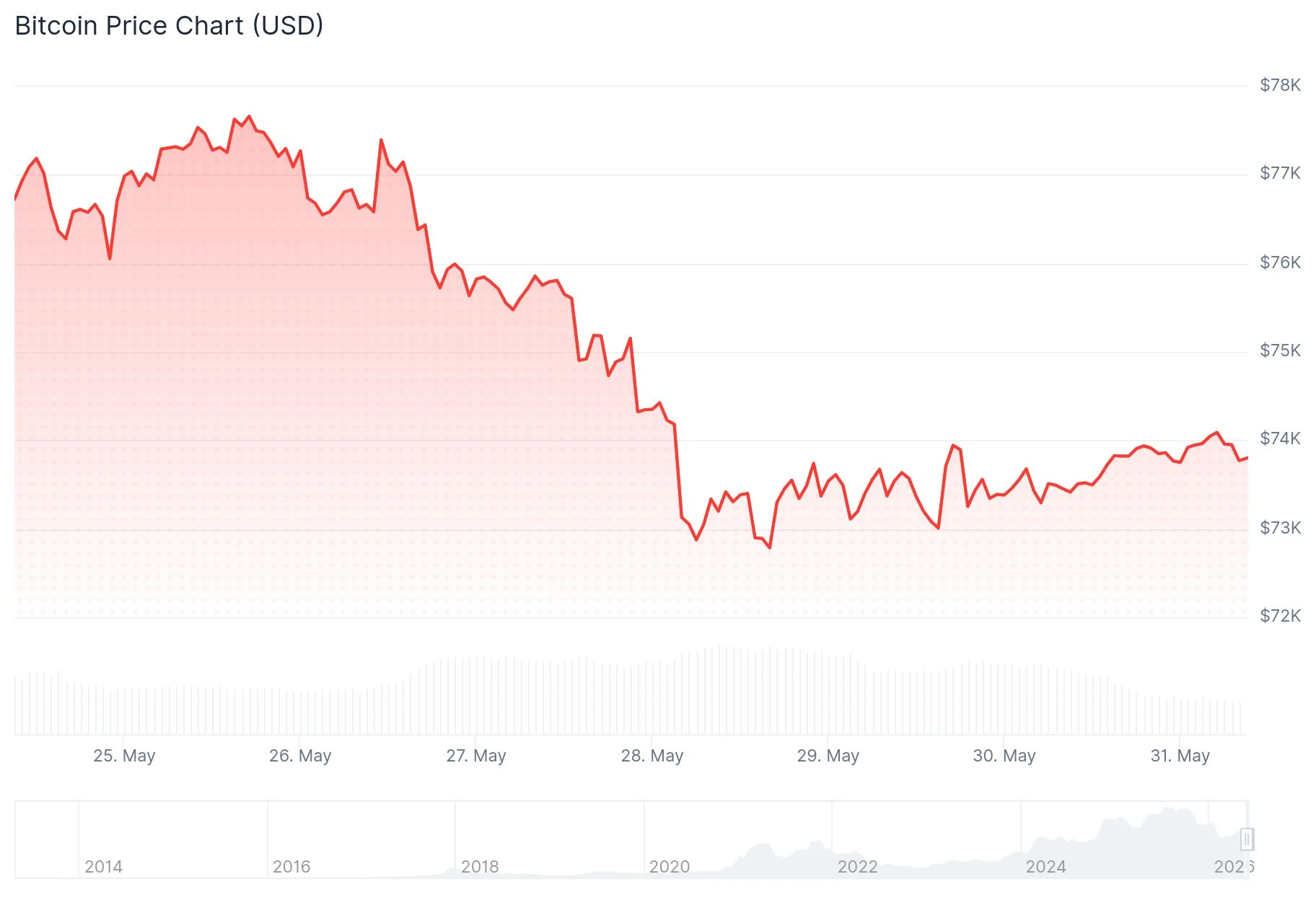
While BTC has bounced back from its yearly bottom around $60,000 recorded in early February, market participants continue debating whether that low marked the cycle’s floor or merely represents a temporary pause ahead of further declines.
Michael van de Poppe, who founded MN Trading Capital, characterized Bitcoin’s current position as a “pivotal level.” According to his analysis, failure to maintain the $71,000 zone as support could send prices tumbling below $65,000. Yet he emphasized that this technical configuration differs significantly from February’s breakdown pattern.
Van de Poppe further noted that successfully defending current levels could enable Bitcoin to surge toward $76,600. Such an upside breakout would probably catalyze a broader rally across alternative cryptocurrencies, he suggested.
ETF Outflows Signal Market Pressure
Bitcoin spot exchange-traded funds have now experienced capital withdrawals for ten consecutive trading sessions. Aggregate net outflows have surpassed the $2.97 billion threshold since May 15. During this identical timeframe, total ETF holdings have contracted from $104.29 billion down to $94.17 billion.
Blockchain analytics platform Santiment Intelligence suggested that continued ETF outflows might indicate the market is approaching a bottom formation.
Analyst Ali Charts shared on X that Bitcoin has just activated a TD Sequential buy indicator, commenting: “I think a rebound toward $75,000 could be in the cards.”
Trader Daan Crypto Trades similarly highlighted on X that bulls must recover the $74,200 threshold, while defending $72,700 remains essential on the downside.
Bearish Case Still on the Table
Not all market observers believe the bottom has been established. Seasoned trader Peter Brandt indicated in March that $60,000 might not represent the year’s nadir, projecting Bitcoin could retest or dip marginally beneath that threshold during September or October.
Ki Young Ju, CEO of CryptoQuant, cautioned that Bitcoin’s present downtrend might extend into early 2027. He referenced historical profit-taking patterns that generally produce approximately 18 months of subdued performance before sustainable recovery materializes. According to his assessment, the bearish phase commenced in October 2025 as market participants secured profits from the preceding bull run.
Economist Timothy Peterson projected Bitcoin may edge higher throughout summer, though characterized potential gains as “relatively lackluster” and forecast prices could reach their zenith during July’s final week.
CryptoQuant’s Bull-Bear Cycle Indicator flipped positive earlier this month for the first instance since 2023. Bitcoin presently maintains its position just above the $72,700 support threshold that analyst Daan Crypto Trades identified as essential to monitor.
Key Highlights
- Trader anxiety surrounding XRP reached a three-week peak, with the bulls-to-bears ratio dropping to approximately 1.10:1.0 by May 25.
- Holders operating on 30-day timeframes are experiencing average unrealized losses approaching 47%.
- The MVRV ratio for the 30-day period has declined beneath December 2020 benchmarks, entering what analytics firm Santiment identifies as an “extreme opportunity zone.”
- United States-based spot XRP exchange-traded funds accumulated $11.88 million on May 29, contributing to $35 million in total inflows between May 20-29.
- During this identical timeframe, Bitcoin ETFs experienced $1.70 billion in outflows while Ethereum ETFs recorded $309 million in withdrawals.
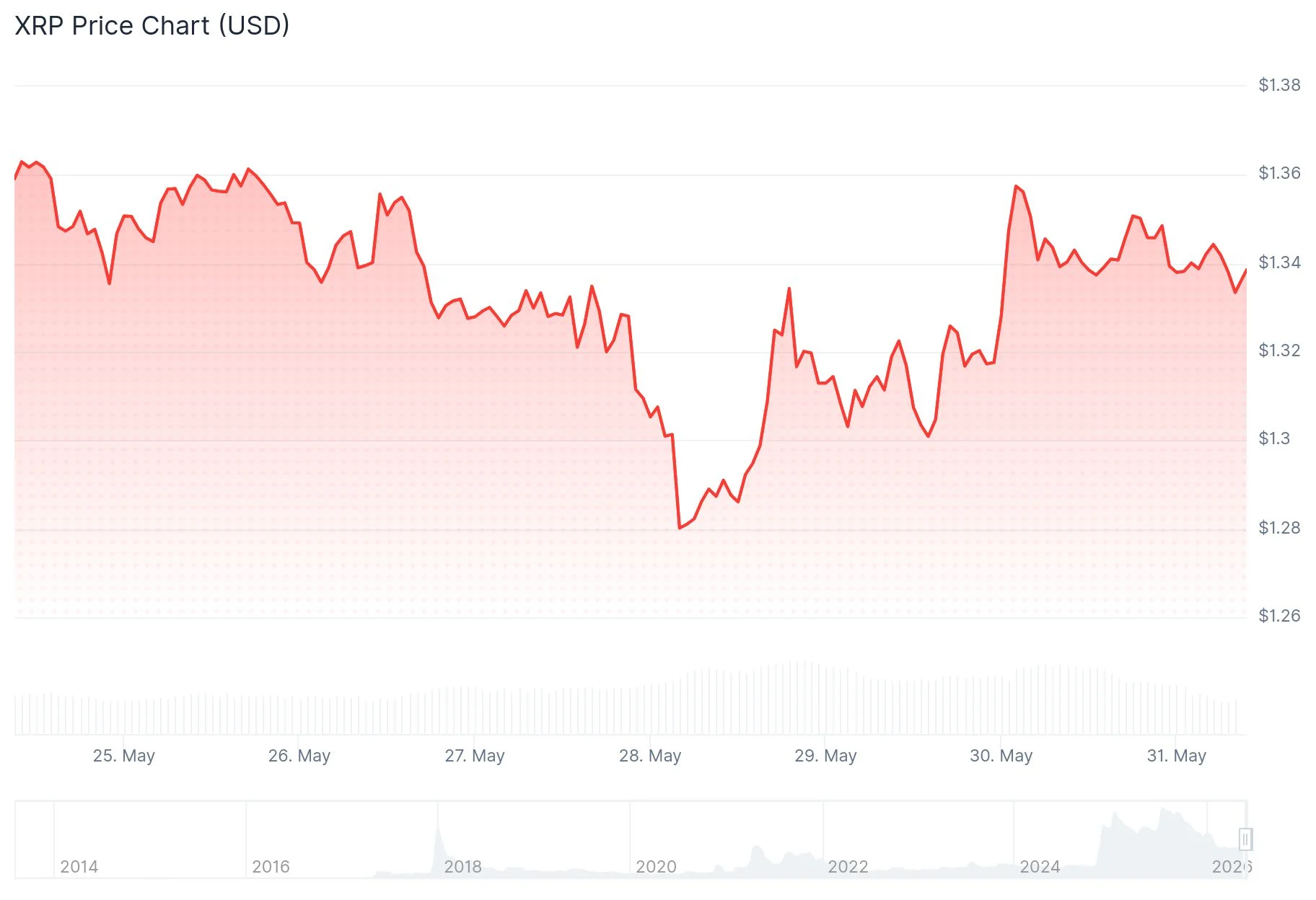
The digital asset has maintained stability around the $1.35 price level despite trader anxiety climbing to its most elevated point in nearly three weeks. Blockchain metrics and institutional fund flow data present contrasting narratives regarding the token’s current market position.
According to Santiment analytics, the sentiment ratio for the cryptocurrency declined to roughly 1.10:1.0 on May 25. This movement positioned the asset within what market observers categorize as the “FUD Zone”—a territory characterized by widespread fear, uncertainty, and doubt across social platforms.
Previous instances of entering this zone have frequently preceded upward price movements. The underlying rationale is straightforward: when the majority of market participants express fear, selling momentum typically diminishes while accumulation opportunities increase.
Despite prevailing negativity, the token has avoided significant downside breaks. The price has successfully defended critical support zones hovering around $1.34.
Market analyst Ali Charts highlighted this specific $1.34 threshold. “I’m monitoring the lower boundary of the ascending channel at $1.34 as a potential accumulation area for XRP,” Ali Charts stated on the social platform X. “Should this level maintain, price objectives rest at $1.37 and $1.40.” The observation emerged as market participants assessed whether the ongoing consolidation phase would resolve upward.
30-Day Holders Face Substantial Unrealized Losses
Santiment metrics reveal that market participants trading on 30-day timeframes are underwater by an average of 47%. A significant portion appears to have liquidated positions near local bottoms following the surrender of profits accumulated during late 2024 and early 2025.
The 30-day Market Value to Realized Value (MVRV) ratio—a metric tracking unrealized gains or losses across the network—has descended below its December 2020 reading. Santiment has designated this territory as an “extreme opportunity zone,” terminology applied when the ratio touches historically depressed levels that have historically preceded price recoveries.
Santiment also identified a notable event on X. The year’s largest exchange deposit occurred Thursday—exceeding 22.80 million XRP tokens transferred to trading platforms. However, in subsequent days, 25.24 million XRP departed from exchanges. Santiment observed this substantial exchange movement coincided with a local price bottom, and that trading values have appreciated roughly 5% following this apparent capitulation event.
Institutional XRP Products Show Persistent Accumulation
While fear metrics paint a pessimistic picture, institutional investment vehicle flows demonstrate the opposite trend.
U.S.-registered spot XRP ETFs registered $11.88 million in net accumulation on May 29. Bitwise commanded the largest share at $7.36 million, with Canary’s XRPC contributing $2.38 million and Franklin’s XRPZ adding $2.14 million.
Between May 20 and May 29, these XRP investment products attracted cumulative inflows totaling $35 million. During this identical window, Bitcoin ETFs hemorrhaged $1.70 billion while Ethereum ETFs experienced $309 million in redemptions.
Aggregate assets under management across U.S. XRP ETFs currently approach $1.12 billion, with total net inflows since inception reaching $1.42 billion.
Spot Bitcoin ETFs documented $125.31 million in withdrawals on May 29, extending a redemption streak to ten consecutive trading sessions.
An outstanding development from October 2025 also lingers in the background. Bloomberg previously disclosed that Ripple Labs was spearheading an initiative to secure at minimum $1 billion through a special purpose acquisition company to amass XRP within a treasury structure. CoinDesk has contacted Ripple requesting confirmation, though no response has been furnished.
Gravity Bridge, a decentralized blockchain facilitating cross-chain transfers between Ethereum and Cosmos, was reportedly drained of roughly $5.4 million, prompting validators to halt the bridge.
Onchain analyst Specter first flagged the unusual outflows in a Saturday post on X, revealing that the bridge contract key may have been compromised. “It appears the Gravity Bridge contract key may have been compromised, resulting in the theft of $5.4M,” Specter wrote.
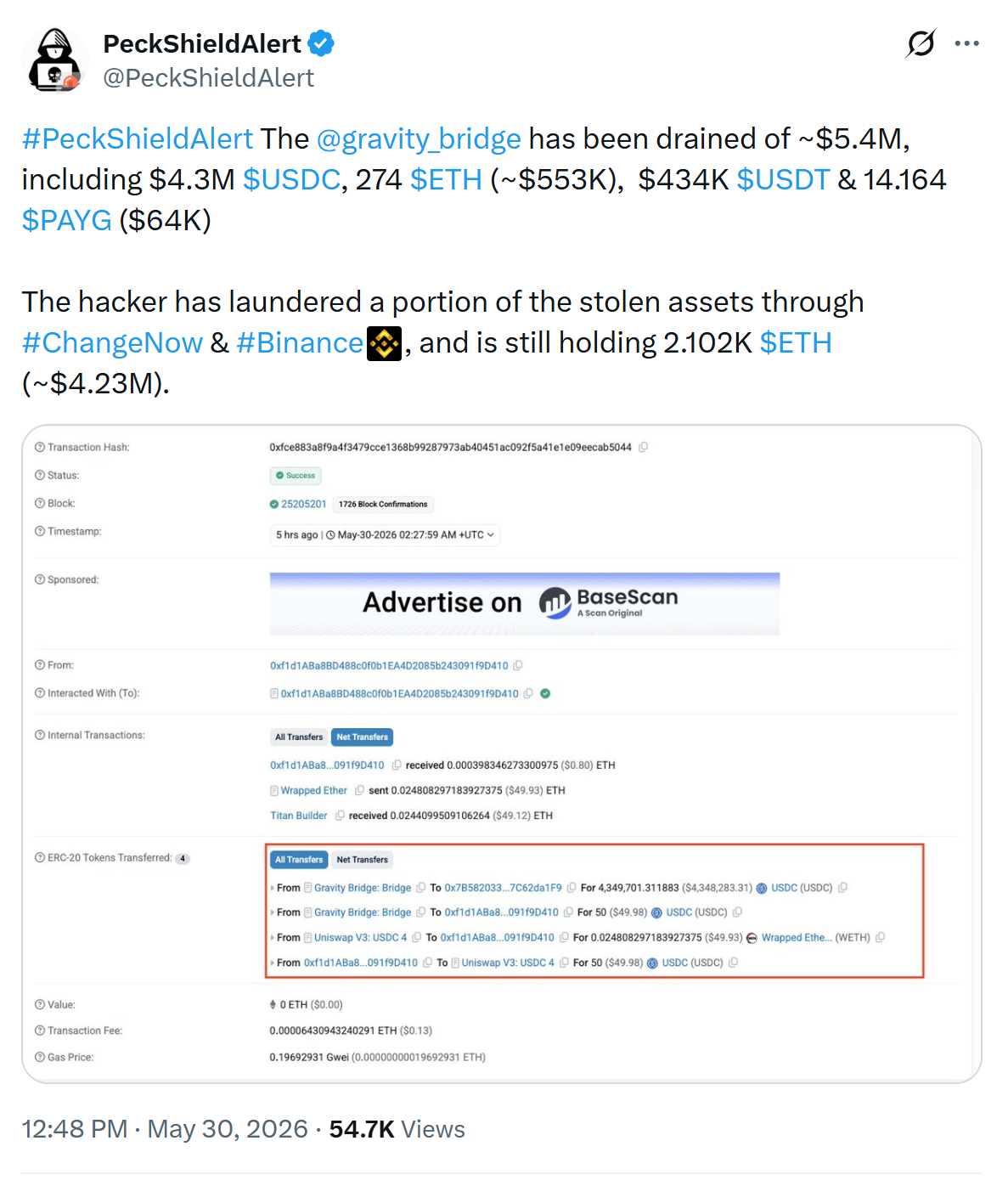
Security firm PeckShield also confirmed the exploit in a post, breaking down the stolen assets as approximately $4.3 million in USDC (USDC), 274 Wrapped Ether (WETH) worth roughly $553,000, $434,000 in USDt (USDT) and 14.164 PAX Gold (PAXG) tokens worth about $64,000.
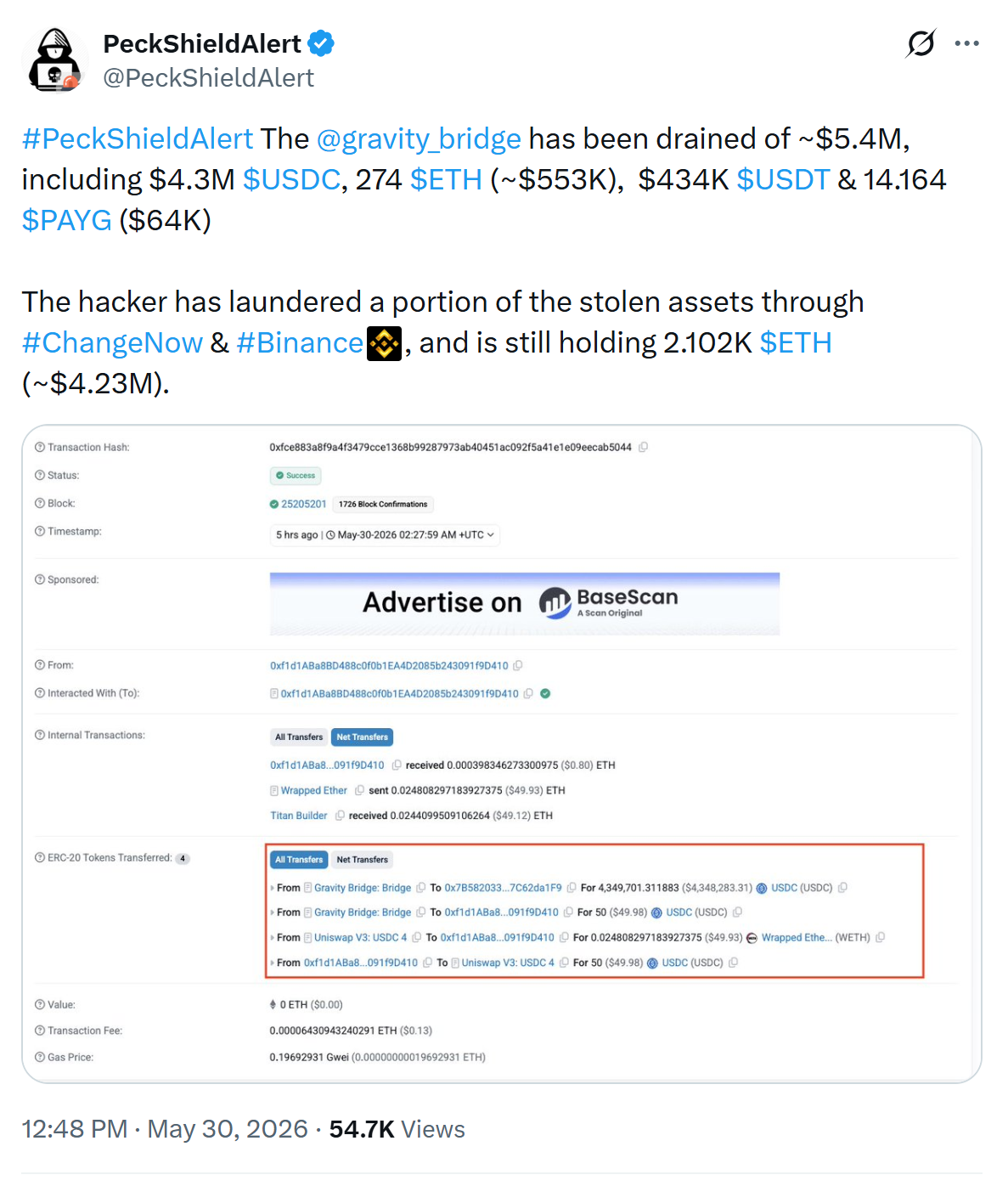
Source: PeckShield
PeckShield reported that a portion of the haul had already been laundered through instant-swap service ChangeNow and through Binance, while the theft wallet was still holding around 2,102 ETH worth approximately $4.23 million at the time of its report.
Related: StakeDAO exploit creates 5.4 trillion vsdCRV but nets only $91K
Gravity Bridge acknowledges attack
Gravity Bridge acknowledged the incident on X without detailing what went wrong. “There was an unfortunate incident on Gravity,” the team wrote, adding that validators “should halt their validators and orchestrators while this incident is being investigated.” In a follow-up post, the team confirmed the bridge had been halted.
Gravity Bridge allows tokens to move freely in both directions, from Ethereum to Cosmos wallets and DEXs like Osmosis, and from Cosmos-based blockchains back to Ethereum platforms like Uniswap. Unlike bridges that rely on centralized multi-signatures or private node groups, it uses its full validator set to authorize transfers, making it one of the more decentralized bridge designs in the space, according to its website.
Gravity Bridge’s native token is Graviton (GRAV), used by validators to secure the bridge. The token is currently trading at $0.0007053, down 4% over the past day, according to data from CoinMarketCap.
Related: ‘All DeFi unsafe’ claim sparks AI security debate after April hack surge
Bridge exploits are spooking institutions
As Cointelegraph reported, JPMorgan analysts have flagged bridge security as a major challenge in an April research note, questioning whether DeFi can scale to meet institutional demand. The concern comes amid the recent Versus-Ethereum bridge attack, which was the eighth major bridge exploit of 2026, with cumulative losses across those incidents reaching $328.6 million.
Following the KelpDAO breach in April, which drained roughly $290 million and was attributed to North Korea’s Lazarus Group, total value locked across DeFi fell from nearly $100 billion to around $86 billion in just two days, with outflows hitting pools that had no direct exposure to the compromised assets.
Asia Express: North Korea denies crypto hacks, Upbit’s bank tests Ripple
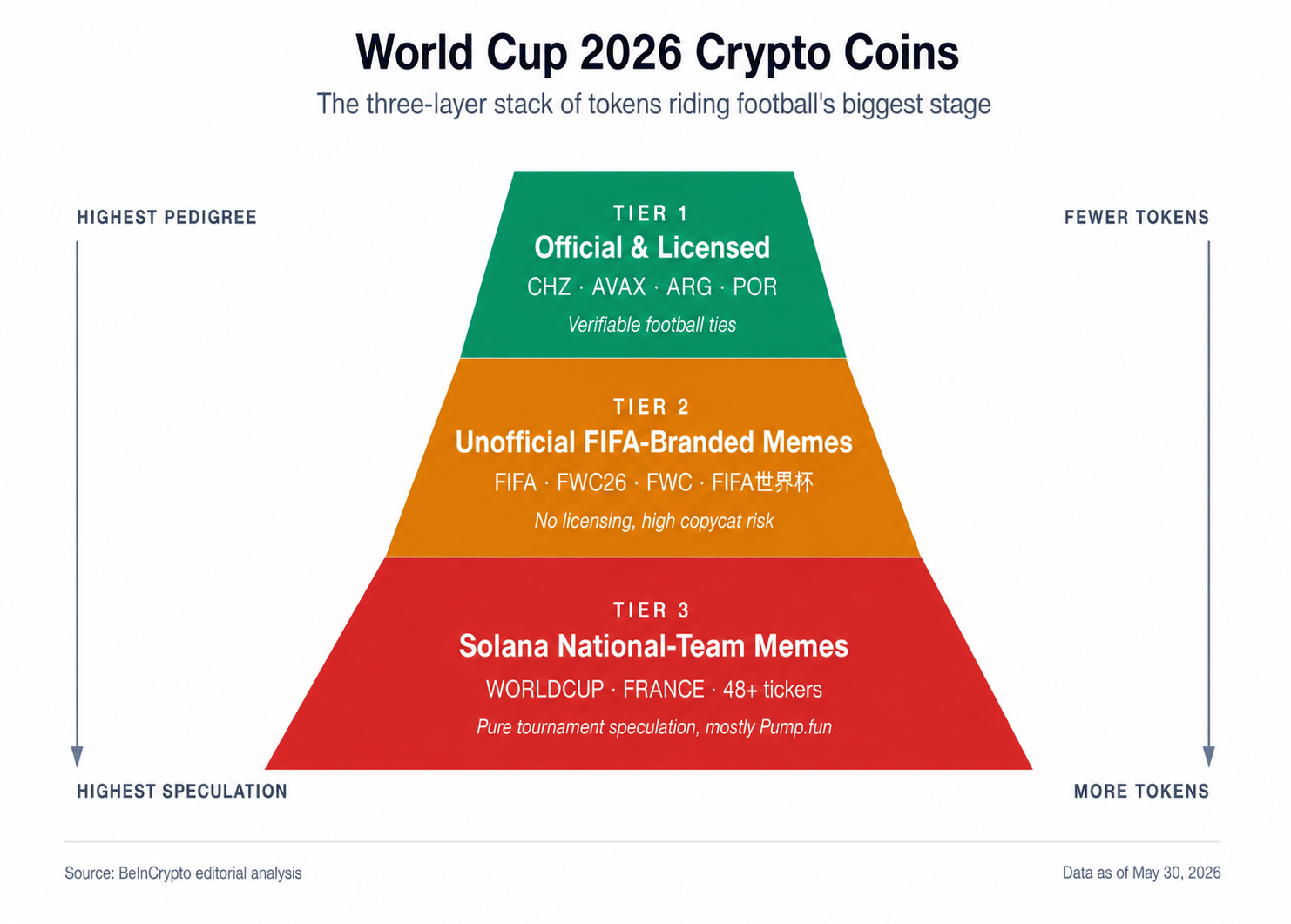
The FIFA World Cup 2026 begins on June 11 across the United States, Mexico, and Canada. As excitement builds, crypto markets have already formed around the tournament.
However, not every token claiming a World Cup connection offers the same level of exposure. The market has split into three distinct categories. Some projects have direct football partnerships. Others use FIFA branding without authorization.
A third group consists entirely of speculative meme coins built around national teams.

Understanding the difference may help investors separate genuine football-related crypto plays from short-term hype.
The Three Layers of the World Cup 2026 Crypto Trade
World Cup-related crypto assets currently fall into three categories:
- Licensed football infrastructure and fan tokens
- Unofficial FIFA-themed meme coins
- National-team meme coins on Solana
Each layer responds to different catalysts as the tournament approaches.
Layer 1: Licensed Football Tokens With Real Partnerships
This category contains the strongest connection to global football.
Chiliz (CHZ) and Fan Tokens
Chiliz remains the largest football-focused crypto ecosystem through its Socios platform. The project powers fan tokens for clubs and national teams, making it one of the clearest ways to gain exposure to tournament-related activity.

CHZ trades around $0.0339 with a market capitalization of approximately $352 million. The token remains under pressure, down nearly 10% over the past week and 17.5% over the past month.
A major development arrived in March 2026 when US regulators classified fan tokens as digital collectibles rather than securities. The decision removed a key regulatory obstacle and strengthened Chiliz’s expansion plans in the United States.
Among national-team tokens, the most closely watched include:
Argentine Football Association Fan Token (ARG)
- Price: ~$0.41
- Market Cap: ~$7.5 million
- Up 6.5% on the week
- Down 47% on the month
Portugal National Team Fan Token (POR)
- Price: ~$0.37
- Market Cap: ~$4.6 million
Historically, fan-token volatility tends to increase during the group stage as team performance drives trader sentiment.
Avalanche (AVAX)
Avalanche offers a different type of World Cup exposure.
FIFA selected Avalanche to host the FIFA Blockchain, a dedicated Layer-1 network supporting FIFA’s digital initiatives. Since the migration of FIFA Collect, the blockchain has attracted more than 85,000 addresses.

AVAX currently trades near $8.95 with a market capitalization of roughly $3.86 billion.
Meanwhile, FIFA President Gianni Infantino has publicly referenced the possibility of a future FIFA Coin on multiple occasions. No official token exists today, but any announcement during the tournament would immediately affect sentiment across football-related crypto assets.
Another important development came on May 27 when ADI Predictstreet and Fanatics Markets launched FIFA’s first official prediction-market partnership across multiple U.S. jurisdictions.
Layer 2: Unofficial FIFA Meme Coins
The second category consists of tokens that use FIFA branding without any confirmed relationship to FIFA itself.
The largest example is an Ethereum-based token called FIFA, which recently reached a market capitalization of nearly $77 million.
Other examples include:
- FWC26
- FWC
- FIFA世界杯
- Multiple duplicate FWC26 contracts
The biggest risk is confusion.
Many of these projects use nearly identical names despite having no connection to one another. Traders often assume they are buying the same asset when they are not.
Before purchasing any FIFA-themed meme token, investors should examine contract addresses, liquidity, holder concentration, and trading activity.
Layer 3: Solana’s National-Team Meme Coin Ecosystem
The most speculative layer lives on Solana.
These tokens launched primarily through Pump.fun and are designed to capitalize on national-team enthusiasm rather than official partnerships.
WORLDCUP serves as the ecosystem’s central token. It recently surged about 90% in 24 hours and reached a market capitalization near $10 million.

The ecosystem also includes country-specific meme coins such as:
- FRANCE
- SPAIN
- PORTUGAL
- Similar tokens for all 48 qualified national teams
A unique feature of the system routes part of trading fees from team tokens into WORLDCUP buybacks. This creates a feedback loop tied directly to tournament attention.
However, these assets carry the highest risk.
Wallet ownership remains highly concentrated. Most of these tokens depend entirely on momentum, social media attention, and match results. A team’s elimination could trigger immediate selling pressure.

Prediction Markets Already Show Clear Favorites
Prediction markets have become one of the largest crypto-adjacent World Cup narratives.
Combined trading volume across Polymarket and Kalshi has reached approximately $416.7 million for World Cup winner markets.
Current favorites include France, Spain, England, and Brazil.
Meanwhile, Myriad has launched a $100,000 World Cup trading competition powered by Chainlink oracle infrastructure.
The growing activity suggests traders are increasingly using prediction markets rather than traditional sportsbooks to speculate on tournament outcomes.

What To Watch Before Kickoff
Each layer reacts to different catalysts. CHZ, AVAX, and licensed fan tokens are likely to respond to adoption metrics, partnerships, and institutional participation. National-team fan tokens will move with match results and federation news.
Meanwhile, Solana meme coins remain heavily dependent on sentiment and influencer attention. Many could experience sharp rallies during the tournament before fading once the event concludes.
The biggest wildcard remains FIFA itself.
If FIFA announces a native digital asset during the tournament, the entire World Cup crypto market could be repriced overnight.
Until then, investors should distinguish between licensed football projects, unofficial FIFA-themed tokens, and purely speculative meme coins before taking exposure.
The post Top World Cup 2026 Crypto Coins: Three Layers Riding Football’s Biggest Stage appeared first on BeInCrypto.


Dash has renewed its focus on digital cash, arguing that peer-to-peer payments remain one of crypto’s most useful goals even as stablecoins, DeFi and decentralized applications take more attention.
Summary
- Dash says digital cash remains crypto’s strongest use case as stablecoins and DeFi gain ground.
- The project says stablecoins carry issuer, peg and freeze risks that digital cash avoids directly.
- Dash links payments, savings, DeFi and DApps to one scarce base money model for users.
Dash said its strategy still follows the early idea behind Bitcoin: a peer-to-peer electronic cash system. The project said that use case has lost attention in parts of the crypto market, but it remains central to its roadmap.
In a post on X, Dash described digital cash as the “killer app” for blockchain because it can support direct payments, savings, finance and digital services. The project said digital cash should be fungible, private, fast, low-cost and permissionless.
Dash also argued that digital cash differs from tokenized versions of fiat money. In its view, a true digital cash asset should not only represent money held elsewhere. It should act as the base money itself.
The statement places Dash back inside a long-running debate over whether crypto should focus on payments, trading, stablecoins, yield products or application networks.
Stablecoin risks remain part of the argument
Dash said stablecoins have grown because they move familiar fiat value onto digital rails. However, it argued that stablecoins still depend on outside assets, issuers or algorithms to keep their peg.
The project said this creates risks around depegging, technical failures and centralized control. It also argued that fiat-backed stablecoins keep users tied to currencies that can lose purchasing power over time.
As previously reported by crypto.news, U.S. enforcement actions have also placed stablecoin controls under sharper review. Recent cases included Iran-linked USDT freezes and wider debate over issuer power after Circle-related asset freeze disputes.
Dash used that backdrop to argue that digital cash offers a different model. It said a scarce crypto asset can grow more useful with adoption while reducing reliance on centralized issuers.
DeFi and DApps need usable base money
Dash also linked digital cash to decentralized finance. The project said DeFi markets need a strong unit of value for lending, trading and collateral.
It argued that stablecoins often become the default base asset because many crypto tokens lack daily payment use. Dash said a widely used digital cash asset could serve both DeFi and real-world commerce.
The project made a similar point about decentralized applications. Dash said app networks often rely on gas tokens that users do not spend outside the digital economy.
Dash said its Evolution network aims to support decentralized data and applications while keeping payments at the center. The project framed this as one system for money, data and digital services.
Payments remain Dash’s core pitch
Dash’s wider message is simple. It wants digital cash to serve as money for both online and offline use.
The project said a payment asset should be fast, low-cost and useful beyond speculation. Its public site says Dash payments can settle in about one second and cost less than one cent.
Dash did not reject stablecoins, DeFi or DApps. It said those tools can serve targeted use cases. However, it argued that they work better when built around scarce, usable base money.
That position keeps Dash focused on one of crypto’s oldest goals. While much of the market now chases tokenized dollars, yield products and app platforms, Dash says digital cash remains the foundation for a decentralized financial system.


Canadian billionaire Frank Giustra has challenged Bitcoin’s “digital gold” label again, arguing that crypto can still be traced and seized by governments.
Summary
- Frank Giustra said crypto can be traced and seized, weakening Bitcoin’s digital gold claim.
- His comments followed US claims of nearly $1 billion in Iran-linked crypto seizures.
- The debate comes as governments hold seized Bitcoin and increase blockchain enforcement actions.
Giustra made the comments after U.S. Treasury Secretary Scott Bessent discussed the seizure of nearly $1 billion in cryptocurrency linked to Iran. The remarks renewed debate over whether Bitcoin can serve as a safe-haven asset like gold.
The mining financier and gold advocate argued that crypto’s public ledger leaves holders exposed to state action. In his view, blockchain records make digital assets easier to trace than physical gold.
His comment came in response to claims that crypto holders can avoid seizure by memorizing seed phrases or holding assets outside exchanges. Giustra rejected that argument and said blockchain tracing can still lead authorities to users.
He wrote that the U.S. government’s Bitcoin reserve is made up of seized coins. He added, “There is no escape,” while arguing that a holder may have to live as a fugitive if authorities pursue them.
US seizure claims fuel the debate
Bessent said U.S. authorities had seized close to $1 billion in crypto tied to Iran-linked networks. The Treasury Secretary said officials were tracking digital funds used outside the traditional banking system.
He also made a direct warning about wallet holders, saying, “Some of them are typing in their wallets right now and have no idea it’s already gone.” The comment drew attention because it framed crypto seizure as an active enforcement tool.
As previously reported by crypto.news, U.S. authorities said they had seized nearly $1 billion in Iran-linked cryptocurrency as part of a wider campaign against Tehran’s financial networks. The same reporting thread showed that Tether froze $344 million in USDT across two Tron wallets linked to Iran’s Islamic Revolutionary Guard Corps after sanctions and law enforcement action.
The cases show the difference between crypto assets. Stablecoin issuers can freeze tokens directly when they receive legal or compliance requests. Bitcoin cannot be frozen by an issuer, but public records can still support tracing, court orders, exchange seizures and recovery actions.
Bitcoin reserve adds another layer
Giustra has often used government-held Bitcoin to question the digital gold narrative. He has argued that if state reserves mostly come from confiscations, Bitcoin’s resistance to seizure is weaker than supporters claim.
A previous crypto.news report noted that the U.S. government was estimated to hold about 328,372 BTC as of February 2026. That made it the largest known state holder of Bitcoin at the time.
For Giustra, that point matters because seized Bitcoin now forms part of official reserve discussions. He argues that this weakens the claim that Bitcoin is beyond government reach.
Bitcoin supporters often respond that self-custody gives users more control than bank deposits or exchange balances. They also argue that memorized seed phrases and peer-to-peer transfers can reduce reliance on custodians.
Giustra’s counterpoint focuses on practical risk. He says users still face tracing, legal pressure, border controls, exchange surveillance and personal security risk if authorities link them to specific wallets.
Gold comparison remains unsettled
The Bitcoin versus gold debate has grown as investors search for assets outside fiat currencies. Bitcoin supporters point to its fixed supply, global transferability and independence from central banks.
Gold advocates argue that physical gold has a longer track record, no public digital trail and no need for internet-based settlement. Giustra has repeatedly said Bitcoin behaves more like a speculative asset than a true safe haven.
His latest comments do not claim that Bitcoin has no market value. They focus on whether crypto deserves the same protection status investors often attach to gold.
The debate now sits between two facts. Bitcoin gives holders direct control when they use self-custody, but governments can still trace transactions and seize assets through custodians, legal orders or recovery cases.
For now, Giustra’s argument keeps pressure on one of Bitcoin’s strongest narratives. If crypto can be traced and seized, he says, it should not be treated as digital gold in the same way as physical bullion.

Bitcoin’s latest price action highlighted ongoing selling pressure tied to exchange-traded product (ETF) flows, even as supportive buying appeared at key levels. A string of large outflows continued to weigh on the market, following last week’s $1.42 billion withdrawal and the prior week’s $1.26 billion redemption. Despite the persistent pressures, traders reported spot-buying activity near a crucial support level, helping to defend around $70,000 as the market tried to avoid a deeper pullback.
In the backdrop, the dynamics of ETF outflows, futures exposure, and on-chain signals painted a mixed picture. While the immediate price action reflected continued liquidity drain from ETF redemptions, fresh spot demand and strategic positioning in futures markets created pockets of resilience. Cointelegraph’s observation of spot-market activity indicated that demand resurfaced at or just above the $70,000 mark, offering a floor even as the broader downtrend persisted in other timeframes. Spot-volume patterns noted earlier by Cointelegraph.
Key takeaways
- ETF selling continued to dominate near-term price action, with back-to-back weekly redemptions contributing to volatility and subdued upside momentum.
- Spot-buying activity helped defend the $70,000 support zone, indicating persistent demand beneath a psychological and technical floor.
- Open interest remains skewed toward higher strike levels, with roughly $300 million concentrated in the $73,000–$74,000 range, where traders opened new leveraged longs.
- The order-book landscape showed modest bid-side strength, implying traders view dips below $75,000 as buying opportunities rather than reasons to abandon risk they’ve accumulated.
ETF outflows versus spot demand: reading the market mood
Market technicians and observers have been parsing the tug-of-war between ETF-related liquidity drains and real-money demand nudging Bitcoin higher on intraday timeframes. The outflows exert immediate downward pressure on price when liquidity exits, yet on-chain and spot-market signals suggest a more nuanced balance. In recent days, the surge in ETF redemptions has coincided with inflows on Coinbase and notable futures liquidations, illustrating how the selling pressure can be absorbed by a combination of long-positioned longs and recovered spot demand.
Beyond simply tracking price, analysts are paying close attention to the persistence of spot-volume support and how it aligns with futures exposure. The latest data point from spot markets indicates that buyers have been stepping in at or near key levels, helping to create a temporary floor. This dynamic matters because sustained spot demand at critical price points can reduce downside risk and reduce the velocity of further declines, even if ETF-driven liquidity remains a constant headwind.
Market microstructure: what the order books and open interest reveal
Several microstructure signals suggest that the market is attempting to price in continued volatility while not ceding all ground to the bears. An open-interest heatmap showed approximately $300 million of open interest concentrated in the yellow band around $73,000 to $74,000, consistent with a cohort of traders adding leveraged long exposure at higher prices. This pattern points to a belief among some market participants that Bitcoin could stage a relief rally from elevated levels, even if overall momentum remains uncertain.
On the order-book side, Hyblock’s analysis of the bid-ask ratio—calibrated at a 10% aggregate depth—turned modestly positive. In practical terms, the indicator moving above zero signals a tilt toward buyers in the immediate order book, with a tendency for demand to step in when prices dip toward the mid-to-high $70,000s. The ratio’s movement suggests, at least in the short term, that traders see prices below roughly $75,000 as discounted—creating a mechanism for price support through selective buying and risk-taking by traders with longer time horizons.
Although the combination of ETF outflows, Coinbase inflows, and occasional futures liquidations has created intermittent selling pressure, the reported data also show that spot-buying and long-position accumulation have been sufficient to prevent a rapid downside acceleration. In practical terms, the market is absorbing selling with a floor being formed around the $70,000–$75,000 band, but there is not yet a clear pivot point signaling a sustained reversal in the broader trend.
What could shift momentum next
Looking ahead, analysts say a few narrative catalysts would be needed to unlock a larger repricing of spot and futures positions. Among them are renewed optimism around macro-political developments that could lower risk premia, tangible spot ETF inflows that strengthen demand in the physical market, or a softening in macro indicators such as crude oil prices that could reframe risk appetite across asset classes. A potential White House statement on strategic considerations for a Bitcoin reserve, while speculative, would also feed into the broader discussion about the role of digital assets in national-level policy frameworks.
These factors matter because they would either validate the current repricing dynamics that support spot demand or catalyze a broader shift in momentum that could push liquidity seeking across exchanges and products. For traders, the key takeaway is to watch how quickly new narratives translate into tangible order-flow shifts—whether as stronger spot buying at lower levels or larger-scale futures positioning that could propel a more decisive move in either direction.
In the longer view, the market remains sensitive to developments in ETF product approvals, regulatory guidance, and the evolving relationship between on-chain activity and centralized venues. While the near-term thread points to a cautious, mixed landscape, the underlying question for investors is whether the current floor can outlast the selling pressure long enough to establish a more durable base for a new rally.
Readers should keep an eye on fresh market catalysts, especially any progress on the narrative themes discussed above, as well as continued spot-volume patterns and open-interest movements that could signal a shift in momentum in the days ahead.

US allies warn division weakens deterrence in calls for global unity

Midcaps in a sweet spot? Why Nippon India’s Rupesh Patel sees a valuation correction despite new index peaks

Vietnam Proposes Allowing SMEs to Use Digital Assets as Loan Collateral


-

 Business7 days ago
NYT Strands Answers May 24 2026 Revealed for Puzzle No. 812 Theme Summer Essentials
-

 NewsBeat4 days ago
Israel says it has killed new Hamas military leader in Gaza City airstrikes
-

 Tech4 days ago
NASA taps Blue Origin to deliver lunar rovers for Moon Base initiative
-

 Politics6 days ago
Bridgerton Season 5: Cast, Release Date And Everything We Know So Far
-

 News Videos4 days ago
XRP *JUST* SUCCEEDED!!!! CLARITY ACT EXPOSED!!! (SHE EXPOSED IT)
-

 Sports5 days ago
2026 NBA Finals schedule, odds: Knicks await Thunder or Spurs after winning East
-

 Business4 days ago
Selena Gomez Reportedly Upset Over Benny Blanco’s Comments on Her ‘Terrible’ Diet
-
 Crypto World5 days ago
Micron Crosses $1 Trillion Market Cap as AI Demand Reshapes Memory Sector
-

 News Videos2 days ago
This is BROKEN! INSANE 5x MONEY CAR WASH WEEK! The NEW GTA Online UPDATE Today! (GTA5 New Update)
-
Crypto World6 days ago
Brian Armstrong Outlines Crypto Vision for the Future Financial System
-

 Business6 days ago
BTS Sells Out Four Las Vegas Shows at Allegiant Stadium for ARIRANG World Tour
-
 Tech5 days ago
China assigns ID codes to 28,000+ humanoid robots
-
 NewsBeat6 days ago
Hottest May day ever as London hits 34.8C in 2C leap from previous records
-

 Tech6 days ago
Microsoft’s quiet Claude Code retreat and the real cost of enterprise AI
-

 Tech2 days ago
Waymo dominates autonomous vehicle registrations as Tesla trails behind
-

 Business5 days ago
Nikkei 225 Surges Past 65,000 for First Time as Iran Peace Hopes Fuel Record Rally
-
Tech4 days ago
The Samsung pay deal is the moment Korean unions changed register
-
 Entertainment5 days ago
‘Breaking Bad’ Star’s Easy-to-Binge 6-Part Crime Series Spin-Off Is Finally Heading to Free Streaming
-

 Tech6 days ago
Westone Audio and Etymotic Acquired by Fidelity Collective in Major IEM Market Move
-

 NewsBeat6 days ago
Crowds find riverside shade in York as temperatures soar
You must be logged in to post a comment Login