Connect with us

Business

Is Fox Corporation Stock Underperforming the S&P 500?

Published

on

Is Fox Corporation Stock Underperforming the S&P 500?
Fox News Channel at the News Corporation headquarters By Maria Sbytova

Valued at a market cap of $27 billion, Fox Corporation (FOXA) is a New York-based media and entertainment company that produces and distributes news, sports, and entertainment content across traditional television and digital platforms.

Companies valued at $10 billion or more are typically classified as “large-cap stocks,” and FOXA fits the label perfectly. Its portfolio includes FOX News Media, FOX Sports, FOX Entertainment, Tubi, and FOX Television Stations, giving the company a broad presence across cable networks, broadcast television, and streaming. The company is also expanding its digital footprint through FOX One, its direct-to-consumer streaming service, and Tubi. The company has also announced a proposed acquisition of Roku, reflecting its broader strategy of combining premium content with digital distribution and advertising technology.

More News from Barchart

FOXA is making a comeback after a sluggish start to the year. Its shares remain 15.2% below their 52-week high of $76.39, reached on Jan. 9. Shares of FOXA have gained 24.1% over the past three months, outperforming the S&P 500 Index’s ($SPX) 3.5% return during the same time frame.

www.barchart.com

The longer-term picture is more subdued, with FOXA up 6.9% over the past 52 weeks, trailing the S&P 500’s 16.5% advance. On a YTD basis, the stock is down 11.3%, compared with the index’s 13.4% gain.

Still, the recent momentum is notable. FOXA has traded above both its 50-day and 200-day moving averages since early August, reinforcing the stock’s improving technical trend.

www.barchart.com

FOXA’s stock performance has been caught between the resilience of its strongest franchises and the structural challenges facing traditional media. Live sports and Fox News continue to provide relatively stable cash flows, but ongoing cord-cutting is shrinking the traditional pay-TV ecosystem, weighing on cable subscribers and affiliate-fee growth. At the same time, softer linear-TV advertising and escalating sports-rights costs are putting additional pressure on margins. As a result, FOX is increasingly looking to political advertising, Tubi’s growing digital business, and broader streaming expansion to offset the pressure on its legacy television operations.

Advertisement

FOXA shares jumped 3.7% on Sept. 14 after Citizens JMP initiated coverage with a “Market Outperform” rating and a $95 price target. Analyst Matthew Condon pointed to FOX’s focus on live sports and news, which helps differentiate the company from the crowded scripted-streaming market. He also highlighted the potential for higher advertising revenue and cost synergies from digital distribution platforms such as Roku, fueling renewed investor optimism around FOX’s growth prospects.

FOXA has also significantly outpaced its rival, News Corporation (NWSA), which dipped 3% over the past 52 weeks.

Despite FOXA’s recent underperformance, analysts remain moderately optimistic about its prospects. The stock has a consensus rating of “Moderate Buy” from the 20 analysts covering it, and the mean price target of $75.47 suggests a 16.5% premium to its current price levels.

On the date of publication, Kritika Sarmah did not have (either directly or indirectly) positions in any of the securities mentioned in this article. All information and data in this article is solely for informational purposes. This article was originally published on Barchart.com

Advertisement
Continue Reading
Click to comment

You must be logged in to post a comment Login

Leave a Reply

Business

FoodStory Brands, UFC enter protein bar category

Published

on

FoodStory Brands, UFC enter protein bar category

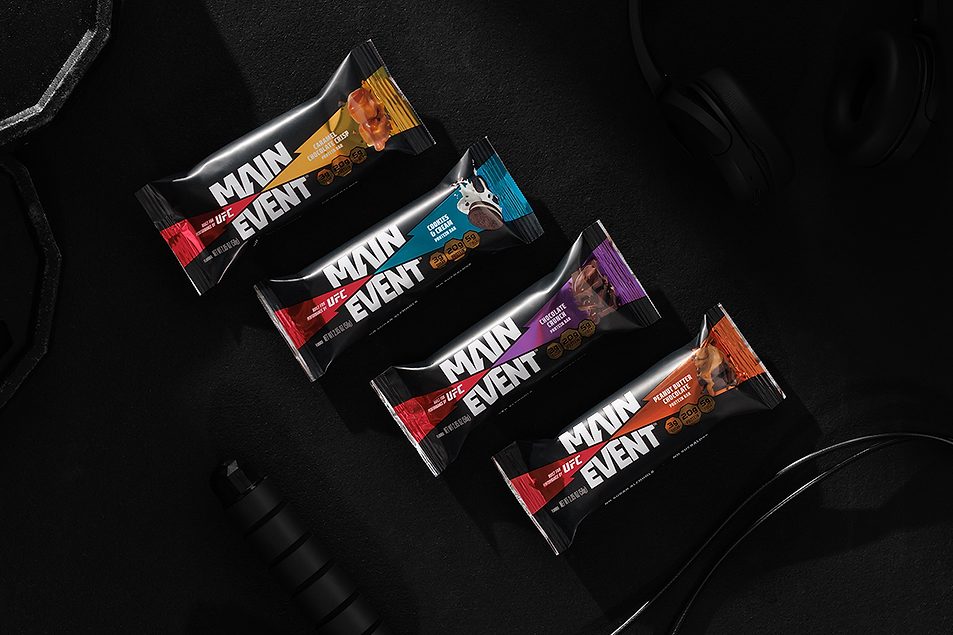
LAS VEGAS — FoodStory Brands is partnering with Ultimate Fighting Championship (UFC) Performance Institute to unveil a protein bar brand: Main Event.

Each bar features 20 grams of protein formulated from milk protein isolate, milk protein concentrate, whey protein concentrate and collagen peptides. The bar also contains 5 grams of fiber, 3 grams of sugar, L-theanine and tart cherry.

The bars are available in chocolate crunch, cookies and cream, peanut butter chocolate and caramel chocolate crip flavors.

“At the UFC PI, our entire mission is built around optimizing human performance through evidence-based sports science,” said Dr. Duncan French, senior vice president of the UFC Performance Institute. “When we set out to develop Main Event, we refused to create a standard protein bar. Every macro, every gram of fiber, and every functional ingredient was intentionally selected and rigorously vetted for fuel that genuinely moves the needle for human performance.”

Advertisement

The bars may be purchased online at through the brand’s website and at select retailers.

Continue Reading

Business

Legal & General plans to cut around 1,000 jobs by mid-2027

Published

on

Business Live

Group plans voluntary redundancies in the UK, but compulsory cuts have not been ruled out

The Legal & General headquarters in the City of London

Legal & General headquarters in the City of London(Image: PA)

Legal and General is set to axe 1,000 jobs by the middle of next year as part of a drive by chief executive Antonio Simoes to forge a “leaner operation”.

The UK’s largest asset manager notified staff via email on Wednesday that it has launched moves to cut 10 per cent of its workforce. The programme will encompass voluntary redundancies in the UK, though the firm did not rule out compulsory cuts depending on the level of uptake.

“Over the last decade, different structures, processes and ways of working have developed across L&G, making us more complex than we need to be,” Simoes told staff on email.

“To deliver our strategy successfully, we now need to make sure the way we work reflects the business we are becoming. Across L&G, we need to change how we work today and, through this, become a leaner organisation. By the middle of next year, we expect to reduce the size of our organisation by around 1,000 roles.”

Advertisement

The fund management division, which oversees £1.2 trillion in assets, is excluded as it has its own restructuring plan, as reported by City AM.

Simoes has been trimming the company’s headcount since succeeding former chief executive Nigel Wilson in January 2024.

Simoes, who previously held senior roles at Santander and HSBC, has since unveiled plans to sharpen its burgeoning pension arm and streamlined the group’s four business divisions into three through a merger of its asset management operations. He has also assembled a new executive team and committed to returning more than £5bn to shareholders between 2025 and 2027 through a combination of dividends and share buybacks.

An L&G spokesperson said the changes represent the “next stage of transformation”, enabling it to shift resources and investment towards areas where it sees “the strongest opportunities for long-term growth”.

Advertisement

Shares have climbed 11.9 per cent since the start of the year to 293.3 pence per share, yet have lagged behind rivals such as Aviva and the broader market over recent years.

Continue Reading

Business

Grab: Thoughts On Atome And Valuation Implications

Published

on

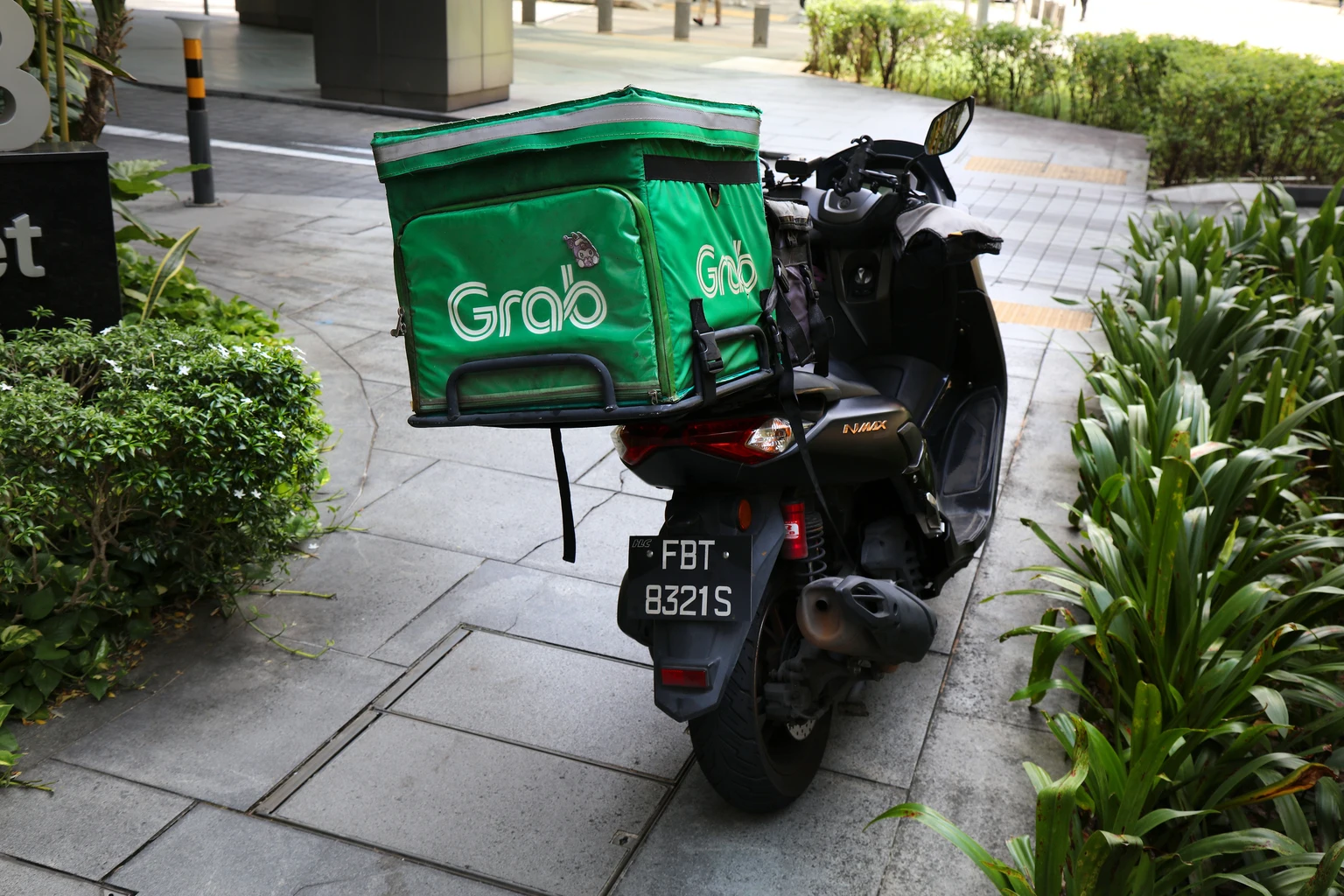
Grab food delivery scooter in Singapore

Grab: Thoughts On Atome And Valuation Implications

Continue Reading

Business

Beats 360 Reviews Find $350 Over-Ears With Swappable Cups, IPX4 and Stronger Noise Cancel

Published

on

new CEO John Ternus

CULVER CITY, Calif. — Beats’ new 360 over-ear headphones went on sale this week at $349.99, and first reviews treat them as a gym-capable cousin of Apple’s AirPods Max rather than a studio flagship.

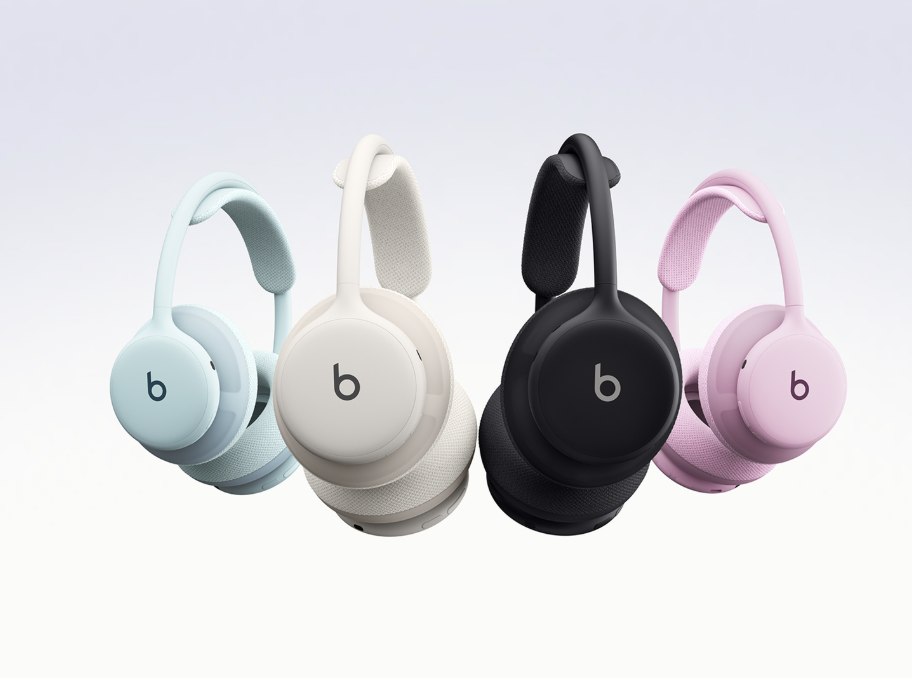
The company announced the set Sept. 22 for order in more than 100 countries, with in-store and delivery availability listed for Sept. 24. Core colors are Black, Cloud, Pink and Sky, each shipping with matching Performance Knit ear-cup and headband cushions. Extra cushion kits were promoted at $9.99 for a limited window in the United States, Canada, the United Kingdom, France, China, Australia and South Korea, then $49.99. UltraPlush kits in Black and Cloud use a leather-like surface. Beats Studio Pro dropped to $299.99 in the United States as the 360 arrived.

Official specifications list a 294.5-gram (10.39-ounce) headset, 165.5 by 191.3 by 87.1 millimeters, Class 1 Bluetooth, USB-C charging and no 3.5-millimeter jack. Battery life is rated up to 32 hours with active noise cancellation and Personalized Spatial Audio on. A five-minute Fast Fuel charge is specified for about an hour of playback. Beats calls the 360 its first over-ear model with an IPX4 sweat-and-splash rating.

Marketing claims 1.75 times the total noise cancellation of Studio Pro and 12 decibels more driver output. Drivers are described as dual-magnet dynamics with three-layer diaphragms. Eight or nine microphones, depending on the briefing, feed ANC, Transparency and Adaptive EQ. A custom Beats chip handles Apple one-touch pairing, iCloud switching, Audio Sharing, Find My and Android pairing. Oliver Schusser, Apple’s vice president of Music, Sports and Beats, said in the launch materials: “Beats didn’t just participate in the rise of over-ear headphones—we helped define the category.”

Advertisement

Reviewers spent the embargo week on fit, sweat and whether $350 undercuts Bose and Sony without matching them.

The Verge scored the 360 a 7 and titled its test around the gym. Strengths listed were the first IP rating on Beats headphones, removable cups in six colors and a replaceable battery. Weaknesses were ANC that lagged other $350 sets, a “shush-y” midrange and cups that can shift in hard workouts. Noise canceling was “very good,” the review said, “not as silent as the Bose Ultra Headphones Gen 2.” The writer still called the pair something to grab “if I wanted to focus in on my reps without a worry — while showing off some color.”

Engadget’s Billy Steele rated the headphones 8.2 out of 10. Pros included a new design, customization and bass-forward tuning. Cons included a tight fit on larger heads, no wired use and simple buttons. Steele wrote that Beats now offers “one set of headphones you can use all day and take to the gym.” Call quality was “perfectly usable in most cases; your colleagues won’t question if you’re dialing in from under water.” He repeated the 32-hour ANC claim.

Tom’s Guide’s Kate Kozuch called the 360 a “triumph for athletic audio,” citing IPX4, modular auto-tuning cushions, physical thumb controls, iOS and Android support and 32 hours with ANC. She flagged no wear detection, no 3.5-millimeter jack and no included wall charger. Extra cushion sets were listed at $49 after the intro price.

Advertisement

9to5Mac’s hands-on said the 360 are “the closest Apple headphones to AirPods Max, with one caveat”: no wired connection. The writer said they get 12 dB louder than Studio Pro, offer 1.75 times the ANC, add Adaptive EQ in iOS 27 and are the first Beats headphones with IPX4. Price sits $200 below AirPods Max at $549.

Trusted Reviews’ first listen in the United Kingdom used a £299.95 tag. The tester said chatter and room noise “were all instantly muted” before playback started, then found Celine Dion’s “It’s All Coming Back to Me” clear and immersive. Beats’ language on “powerful bass and incredible precision” was quoted as a company promise, not a lab result. The same site noted Studio Pro’s U.K. list falling to £249.95.

BGR’s José Adorno wrote that “Beats 360 has the best sound in any pair of Beats headphones I’ve ever used,” after the brand moved away from the old “deep bass and crazy treble” Studio signature. He called missing auto-pause when the cups leave the ears “a huge miss” at the price. Battery life of 32 hours with ANC on beats Studio Pro’s 24-hour rating.

Ecoustics listed customizable design, relatively detailed sound, strong ANC for the money, call quality and IPX4 as pluses, and a possible battery drain when powered off as a minus.

Advertisement

Hardware details that reviews keep repeating: electronics live in both cups, similar to AirPods Max, so the headband carries less wiring. A twist lock seats each cup and can play a tone if the set is on, The Verge said. Controls sit on the back of the cups — volume rocker, multi-function, power, listening mode. Multipoint Bluetooth is supported. Wear sensors are absent. A ripstop case ships in the box; the USB-C cable and adapter are sold separately on Apple’s store.

Where the 360 sits in Apple’s stack is the commercial point. AirPods Max remain the premium over-ear. Studio Pro is now the cheaper Beats can. Powerbeats Pro 2 and Powerbeats Fit 2 already had IPX4 as earbuds. The 360 is the first full-size Beats set meant to survive a workout without a garbage-bag caveat.

It is not a consensus smash. The Verge’s 7 and midrange complaint sit beside Engadget’s 8.2 and Tom’s Guide’s gym verdict. ANC is better than Studio Pro on Beats’ own multiplier and not class-leading against Bose in The Verge’s room test. There is no analog jack, a gap 9to5Mac treated as the main knock for anyone who still plugs into airplanes or consoles. There is no wear detection. Cups can move when you run.

What the reviews do agree on is the product thesis: swap the knit or UltraPlush pads, rinse sweat off an IPX4 frame, get about 32 hours, pay $350, and accept wireless-only life. That is narrower than a Sony WH-series all-rounder and louder, brighter and more color-forward than AirPods Max. Availability is this week. The extra cushions are cheap only while the launch promo lasts.

Advertisement
Continue Reading

Business

Trump to raise detainees with Xi, but other rights issues may not come up

Published

on


Trump to raise detainees with Xi, but other rights issues may not come up

Continue Reading

Business

The Nearshoring Countries UK Firms Keep Overlooking

Published

on

The Nearshoring Countries UK Firms Keep Overlooking

Everyone is chasing the same markets, and as demand rises the wage advantage narrows and the best candidates field three offers at once.

On paper the UK hiring market looks slack, ONS data shows vacancies down to around 702,000 with 2.5 unemployed people per vacancy, yet more than half of UK organisations, and up to 73 percent in specialist technical sectors, still report digital and technical skill shortages. The roles firms most need are the hardest to fill at home, and the obvious nearshore hubs are crowded. The edge now lies in the markets everyone overlooks. Two stand out: one most UK firms have never seriously considered, and one they know well but never think of for hiring.

Why nearshoring beats far-flung offshoring

First, the case for nearshoring at all. Offshoring to a distant, low-wage market can cut salary costs by around 70 percent, but with zero working-hours overlap: a question asked at 5pm in London waits until tomorrow for an answer. Nearshoring typically saves a still-substantial 40 to 60 percent while buying four to eight hours of shared working time a day, enough for real-time design reviews, sprint calls, and incident response. European firms have moved decisively: in one survey of more than 200 European companies, 55 percent said they had increased nearshoring over a twelve-month period. It fits the wider picture of a cautious but skills-short UK market, and the global labour-market data points the same way. The only question left is where, and the smart answer is not where everyone else is already crowded.

Free newsletters
Advertisement

The stories that matter to UK business, straight to your inbox.

Advertisement

The one they have never considered: Turkey

Turkey barely features on most UK nearshoring shortlists, which is precisely why it is worth a look. The numbers are serious: its ICT market reached roughly 36.7 billion US dollars in 2024, growing about 22 percent a year since 2020, and European demand for Turkish suppliers rose 27 percent year on year in a recent quarter. It sits two to three hours ahead of London, has a large, young, technical workforce, and its EU Customs Union membership makes it a genuine bridge between Europe and beyond. For cost-conscious UK firms that still need time-zone overlap, few markets offer as much upside with as little competition for talent.

The reason it stays overlooked is that the execution is hard. Payroll must run through strict SGK registration and monthly filings, salaries are generally required to be paid in Turkish lira, and onboarding can still involve wet-signature documentation. Termination is highly employee-protective, with notice periods, severance exposure, and procedural safeguards that escalate quickly into labour-court risk if mishandled. Long-term structuring is further constrained by Turkey’s worker-leasing rules under Law No. 6715, a regulatory reality many global platforms gloss over. These details, not the headline day rate, are what separate a good Turkish hire from an expensive mistake, so how a provider handles SGK payroll and Turkish labour compliance in practice is where UK firms should concentrate their diligence.

The one hiding in plain sight: Italy

Italy is the opposite kind of overlooked. Everyone knows the country, almost no UK firm thinks of it as a place to hire. Yet it holds deep pools of engineering, design, and manufacturing talent, sits one hour ahead of the UK, and is firmly inside the EU, with none of the post-Brexit customs friction that complicates goods trade. The reason it is skipped is reputation: Italy is known as one of Europe’s most tightly regulated labour markets, and that reputation is earned. Employment runs through sector-wide collective agreements, the CCNLs; staff are typically paid across a thirteenth and often a fourteenth month; and severance accrues through the TFR system from the first day of employment. Handled blind, it is a minefield. Handled properly, using a provider that already manages CCNL and TFR obligations, it opens access to talent that competitors chasing the obvious hubs never even look at.

What it means for UK employers at home

Whichever overlooked market you pick, nearshoring does not remove the UK employer’s own obligations, it sits alongside them. A firm still runs its UK payroll and employment duties for domestic staff while adding an overseas team under different rules. Post-Brexit, a UK firm can no longer simply move a person or open a branch across the EU without navigating local employment, tax, and immigration rules country by country, and it cannot put a European hire on its UK payroll. The businesses that do this well treat it as two systems to manage cleanly, not one stretched across borders, and they decide market by market whether to build a local entity or employ through a provider, based on how many people they expect to hire and how long they plan to stay. Below roughly a dozen people in a market, a provider almost always wins on cost and speed; above it, an entity starts to pay for itself.

Advertisement

The offshoring era rewarded whoever found the cheapest hour, wherever it sat. The nearshoring era rewards judgement: knowing that the crowded, obvious hubs are not the only game, and that the real advantage is in the markets your competitors have written off or never noticed. Turkey and Italy are two of them, one unknown, one hidden in plain sight, and for UK SMEs willing to handle the compliance properly, that is exactly where the untapped talent is.


Advertisement
Continue Reading

Business

Rising Presenteeism? Your Employees’ Lunch Could Be to Blame

Published

on

Rising Presenteeism? Your Employees' Lunch Could Be to Blame

Ask most SME owners what’s eating into their productivity and you’ll hear about hybrid working, recruitment costs, or the ever-present admin burden.

Almost nobody says “lunch.” And yet, according to Steph Ley, founder of corporate nutrition consultancy The Nutrition Advantage, the food your team eats, or doesn’t, during the working day may be one of the biggest hidden drags on output you’re not measuring.

Analysis from Britain’s Healthiest Workplace research (published by RAND Europe and Vitality) suggests the average employee loses the equivalent of 44 days of productivity a year to presenteeism, being at their desk, but biologically unable to perform.

Free newsletters
Advertisement

The stories that matter to UK business, straight to your inbox.

Advertisement

Put another way: roughly 84 minutes of productive time is lost per employee, per day, and a large chunk of that isn’t down to poor management or distraction. It’s biology.

The 3pm problem

For SMEs, where every team member’s output matters disproportionately, the “3pm slump” isn’t a minor inconvenience, it’s a structural cost.

Cognitive performance measurably dips between 2pm and 4pm as the brain struggles to secure the steady glucose supply it needs for complex thinking, and the effect is worsened by the standard office diet of coffee, meal-deal sandwiches and the communal biscuit tin.

Steph explains the mechanism simply: a processed carb-heavy lunch without enough protein or fibre triggers a large insulin spike, leading to a sharp drop in blood glucose an hour or two later.

Advertisement

When blood glucose drops, the brain’s prefrontal cortex (the part responsible for focus, judgement and decision-making) is effectively throttled.

Employees with an unhealthy diet are 66% more likely to report a productivity loss, and the effect compounds through the afternoon: tasks that should take 20 minutes stretch to 45, emails need redrafting, and small errors creep into client work.

Stress makes it worse. When cortisol floods the system in response to workplace pressure (or that third cup of coffee), it also releases glucose, layering a second spike-and-crash cycle on top of the dietary one.

It’s a loop Steph sees a lot in her practice and it’s a major, largely invisible driver of afternoon irritability, poor collaboration and burnout in small teams.

Advertisement

Why it matters more for SMEs

Larger corporates can dilute the cost of one under-performing afternoon across hundreds of staff. SMEs can’t.

A wide-scale study of over 20,000 employees found that those who maintained healthy eating habits reported 11% higher job performance than peers with poor diets, and workplace nutrition interventions have been linked to reductions in absenteeism of up to 27%.

For a lean team, that’s the difference between hitting a deadline and missing one, or between a sick day here and there and a genuine capacity problem.

There’s a financial case too. Deloitte analysis puts the average return on proactive employee wellbeing interventions at £3.44 for every £1 invested, with some estimates as high as £4.70.

Advertisement

Nutrition, Steph argues, is one of the highest-leverage places to start, because, unlike a single wellness perk, it touches energy, focus, mood and immunity all at once, every single day.

Small switches, real impact

The good news for resource-stretched SMEs: this doesn’t require a canteen overhaul or a big budget. Steph Ley’s approach is built around small, deliberate swaps that change the food environment without anyone feeling lectured or restricted:

  • Swap the afternoon coffee run for decaf or green tea. The combination of caffeine and L-theanine gives steadier energy without the crash which Steph calls “buffering your buzz.”
  • Move the biscuit tin out of sight, or swap it for jars of nuts. What’s at eye level gets eaten. Replacing the sweet tin with a jar of mixed nuts or dark chocolate and pumpkin seeds, removes the glucose-spiking option as the path of least resistance.
  • Pair carbs with protein or fat at every meal. A simple “power pair” rule (e.g sweet potato lentil curry + chicken or quinoa salad +salmon) blunts the blood glucose rollercoaster that drives the 3pm crash.
  • Rethink meeting and gifting culture. Boiled eggs and vegetable crudités instead of pastries in meeting rooms; quality olive oil or dark chocolate instead of wine for staff gifts.

“None of this is about banning biscuits or turning the office into a health food shop,” says Steph. “It’s about understanding that your team’s 3pm slump isn’t a willpower problem, it’s a biology problem. Once people understand why they crash, and you make the better choice the easy choice, the shift in energy and focus is genuinely fast.”

Education is the multiplier

Environmental tweaks help, but swapping snacks alone isn’t a strategy, it’s a starting point. The real shift happens through education: helping staff understand why their energy dips, so the change sticks rather than reverting the moment the novelty wears off.

This is where structured input such as a practical nutrition workshop tends to outperform passive wellbeing initiatives.

Advertisement

The Nutrition Advantage’s Energy & Focus workshop, built specifically around this blood glucose and cortisol science, is designed to give employees the “why” behind the crash and practical tools to fix it, something she says consistently lands even with sceptical teams who weren’t sure why they’d been sent along.

For SMEs weighing where to focus limited wellbeing budget, the case is straightforward: you’re already paying for 84 lost minutes a day.

The question isn’t whether nutrition affects performance, the evidence says it clearly does, it’s whether you’re doing anything about it yet.

Advertisement

Continue Reading

Business

Treasury Yields Track Oil Moves, But Curve Flattening Signals Inflation Concerns

Published

on

Stocks Little Changed After Fed Decision

U.S. Treasury bond yields slipped lower again Tuesday, matching moves in the oil market, even as hawkish commentary from Federal Reserve officials keeps investors primed for an October rate hike.

Benchmark 10-year Treasury note yields were last marked at 4.928% in early Tuesday dealing, down notably from the highs of last week that saw the paper reach 5.03%, a level last seen in 2007.

They have been largely mirroring moves in the oil market of late, rising on signs of elevated inflation risk and falling amid reports of a detente between the U.S. and Iran.

Continue Reading

Business

Stock Market’s Fear Index Slides as Iran Worries Ease

Published

on

Barron's

The most widely followed gauge of stock market fear and uncertainty was sliding on Tuesday as investors continued to bet that the Iran war could soon be resolved.

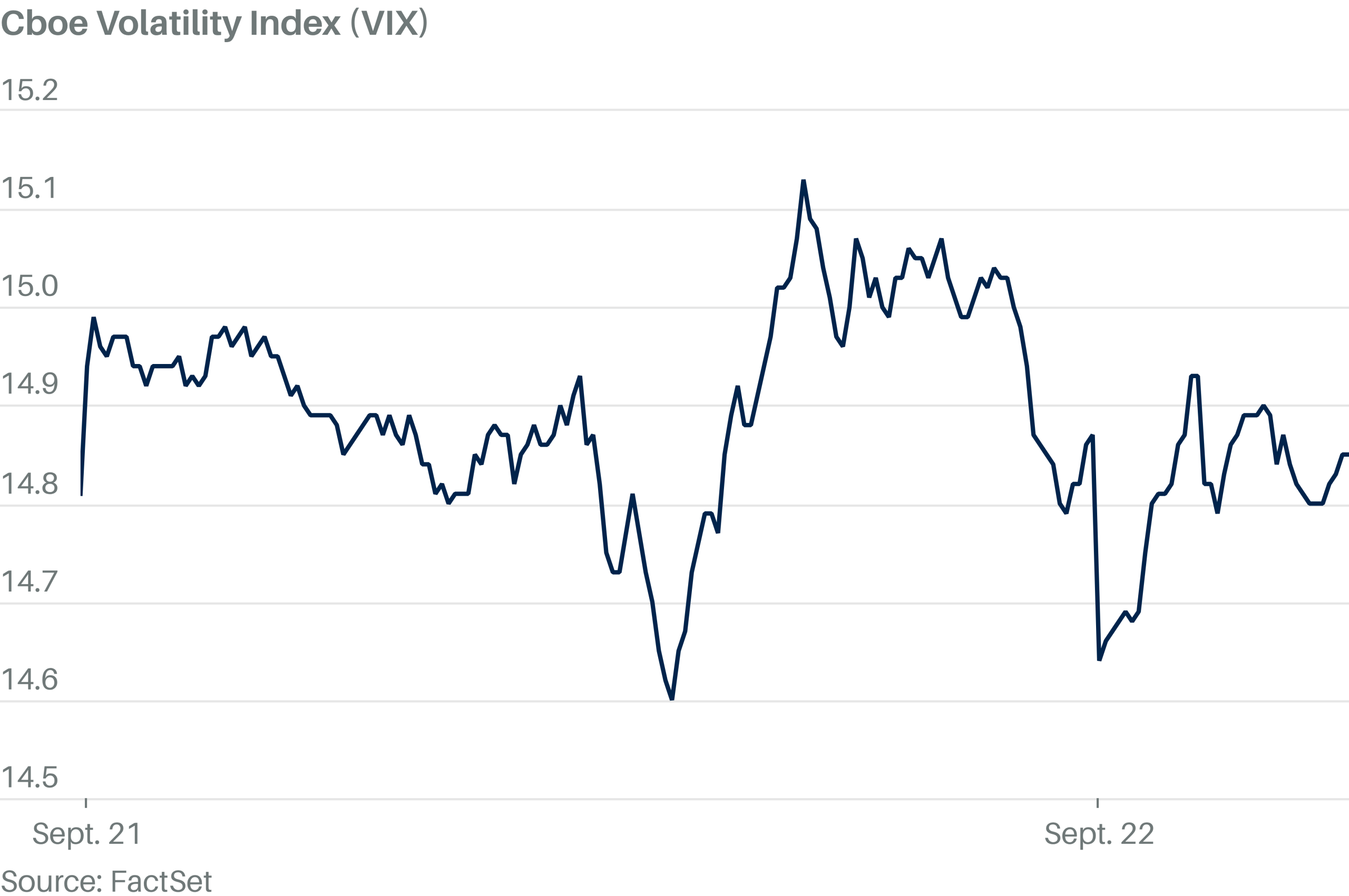
The Cboe Volatility Index, or VIX, was a touch lower at 14.8 in early trading. Any reading of below 20 tends to signal relatively low volatility.

The VIX was sliding with the market on course to extend its recent record-breaking run. The move higher came as oil prices retreated on a report that Iran could soon reopen the Strait of Hormuz in a bid to end the war in the Middle East.

Continue Reading

Business

GameStop Shares Hold Near $24.50 After Cohen’s Second Large Insider Share Purchase

Published

on

GameStop shares are buzzing anew on Wall Street

GRAPEVINE, Texas — GameStop Corp. shares traded around $24.51 in midafternoon New York dealing on Sept. 23, up 2 percent, after Chairman and Chief Executive Ryan Cohen disclosed another open-market purchase of the video-game retailer’s stock.

A Form 4 and an amended Schedule 13D filed with the Securities and Exchange Commission show Cohen bought 1,150,680 Class A shares on Sept. 21 at a weighted average price of $22.9375. The trades ranged from $22.76 to $23.02 and totaled about $26.4 million. After the purchase he reported direct ownership of 40,498,522 shares. Including warrants, the 13D listed beneficial ownership of 44,233,306 shares, or about 8.7 percent of the company, based on 504,500,990 shares outstanding as of Sept. 3 plus warrant shares.

The block followed a Sept. 10 purchase of 1 million shares at a weighted average of about $20.38, or roughly $20.4 million. Directors also added stock in the same stretch, including Alain Attal’s reported buy of 17,500 shares. Filings described Cohen’s latest trade as outside a Rule 10b5-1 plan.

Shares jumped in extended trading after the first disclosure and opened higher on Sept. 22. By Sept. 23 the stock was still holding the gain near $24.50. The name had already risen about 30 percent over the prior month, Barron’s-linked coverage noted, so the latest pop started from a higher base.

Advertisement

The buying landed after GameStop’s fiscal second-quarter results, released Sept. 8 for the 13 weeks ended Aug. 1. Net sales were $790.2 million, down from $972.2 million a year earlier. The company attributed the drop mainly to last year’s Nintendo Switch 2 launch comparison, planned store closings and the sale of French operations. Collectibles net sales rose 57 percent to $356.3 million and were about 45 percent of the quarter’s sales.

Operating income was $160.2 million, GameStop’s highest second-quarter operating profit since its 2002 public listing, according to the company’s figures as reported by GameSpot. Net income was $298.7 million, up from $168.6 million. Adjusted earnings per share of $0.27 matched the consensus figure cited by TipRanks. The company raised its fiscal 2026 adjusted EBITDA outlook to more than $650 million from $600 million.

Preliminary results issued Aug. 31 had already flagged that profit would include about $238 million of net gains on an eBay-related derivative and equity stake, partly offset by about $75 million of losses on digital assets and related receivables. During the quarter GameStop converted that derivative into a direct eBay holding. As of Aug. 1 it held about 43.4 million eBay shares with a fair value near $4.95 billion.

Cohen made an unsolicited proposal this year to buy eBay at $125 a share. eBay called the bid “neither credible nor attractive.” Cohen has said he would keep pursuing a combination. GameStop’s stake is the cash-and-paper footprint of that campaign.

Advertisement

The retailer also amended a convertible-notes exchange in late August so about $358.4 million would be settled in cash instead of stock. Stockholders earlier approved a larger share authorization. Those capital-structure moves sit beside a smaller store base and a mix that now leans on collectibles more than new-game boxes.

Cohen has not issued a fresh public letter explaining the September purchases. The filings say personal funds, which may include margin loans. Markets often read clustered CEO buying as a signal. It is also a concentration of one investor’s wealth in a stock that still trades with meme-era volume and short interest.

The operating story is mixed in plain numbers. Sales are down year over year. Margins and operating profit are up. Collectibles are carrying more of the register. Investment gains on eBay and swings in digital assets still move the bottom line. Guidance for adjusted EBITDA above $650 million is a management forecast, not a booked result. The next scheduled earnings date cited in recent notes is Dec. 9.

GameStop remains a mall-and-strip retailer with a large cash and investment book and a chief executive who is also its most watched shareholder. The Sept. 21 ticket at nearly $23, after a $20.38 ticket 11 days earlier, is the fact the tape is trading. The $24.51 print on Sept. 23 is the market’s near-term answer. Neither filing predicts whether collectibles growth offsets the fading hardware cycle, or whether the eBay stake becomes a deal. They show Cohen paid up twice in September and now reports more than 40 million shares in his own name.

Advertisement
Continue Reading

Trending

Copyright © 2025