







Connect with us
DAPA Banner

Business

Is LaGuardia Airport Open Now? Airport Remains Closed Monday Morning After Fatal Air Canada Collision

Published

on

LaGuardia Airport

New York — LaGuardia Airport stayed shut early Monday, March 23, 2026, following a late-night collision between an Air Canada Express regional jet and a Port Authority fire truck on a runway, an incident that killed two pilots and injured at least four others, authorities and sources confirmed.

LaGuardia Airport
LaGuardia Airport

The crash happened around 11:38 p.m. Sunday when Jazz Aviation Flight 8646, operating as Air Canada Express from Montreal-Trudeau International Airport, struck the emergency vehicle on Runway 4 while slowing after landing. The Bombardier CRJ-900 sustained major front-end damage, with photos showing the nose crumpled and the aircraft stationary on the tarmac surrounded by emergency responders.

The Federal Aviation Administration issued a ground stop shortly after the incident, halting all arrivals and departures. Officials indicated the airport would remain closed until at least 2 p.m. ET on Monday to allow for emergency response, debris removal, runway inspection, and the start of a National Transportation Safety Board investigation. As of mid-morning Monday, no reopening had occurred, and flight tracking sites showed no active arrivals or departures, with diversions continuing to nearby hubs like Newark Liberty and John F. Kennedy International.

The Port Authority of New York and New Jersey, which operates LaGuardia, confirmed the collision involved a Jazz Aviation flight and a Port Authority Aircraft Rescue and Firefighting vehicle responding to an unrelated airfield matter. “Emergency response protocols were immediately activated,” a Port Authority spokesperson said. “The airport is currently closed to facilitate the response and allow for a thorough investigation.”

Initial reports varied on casualties, but sources familiar with the matter told NBC News and the New York Post that the plane’s pilot and co-pilot died in the impact. Two Port Authority officers or firefighters sustained serious injuries, including broken limbs, though they remained stable at a hospital. Four people total were reported injured in early accounts, with no immediate confirmation of passenger harm. The flight carried about 72 passengers and four crew members; passengers were evacuated orderly, many deplaning from the rear, and videos showed the aircraft’s nose lifting slightly after disembarkation.

Advertisement

The New York Fire Department and Port Authority Police responded swiftly, with fire trucks positioning around the scene. No fire broke out, but the low-speed collision—estimated at around 24 mph based on flight data—still caused significant structural damage to both the aircraft and vehicle.

LaGuardia, one of the nation’s most congested airports with tight airspace and short runways, faced added strain from the closure. The incident compounded existing disruptions, including TSA staffing shortages during a partial federal government shutdown that had already led to long security lines in prior days. Travelers reported widespread cancellations and diversions, with 18 flights affected according to Flightradar24. Airlines urged passengers to check status before heading to the airport, warning of major delays across the Northeast.

The FAA’s National Airspace System status page listed LaGuardia as closed due to the “aircraft emergency,” with high likelihood of extension beyond initial estimates. Some notices suggested potential reopening as late as 6 p.m. GMT (1 p.m. ET), but on-the-ground assessments took precedence. Cleanup crews worked through the night to clear the runway, while NTSB investigators arrived to examine wreckage, review air traffic control communications, cockpit voice and flight data recorders, and witness statements.

Aviation safety experts highlighted runway incursion risks at busy facilities like LaGuardia, where ground vehicle movements require precise coordination. The firefighting truck was on the runway for a separate response, raising questions about clearance protocols, visibility in nighttime conditions, and communication breakdowns. The FAA has pushed enhanced ground surveillance and training in recent years, but incidents persist amid rising traffic.

Advertisement

Air Canada and Jazz Aviation expressed deep concern and full cooperation with authorities. “We are devastated by this tragic event and our thoughts are with those affected,” the airline said in a statement. The carrier worked to rebook passengers and provide support.

The collision drew immediate attention from federal regulators and congressional leaders, who called for swift answers on prevention measures. LaGuardia’s history of operational challenges—exacerbated by its location near dense urban areas—amplified scrutiny.

As Monday progressed, airlines rerouted flights, and ground transportation options swelled with demand. Travelers faced uncertainty, with some opting for trains or driving amid the shutdown. The Port Authority promised updates as recovery advanced.

The incident underscored vulnerabilities in airport ground operations, even at low speeds. With fatalities confirmed, the focus shifted to supporting victims’ families and preventing recurrence. LaGuardia, a key gateway for domestic travel, remained offline into the day, disrupting thousands of itineraries in one of the busiest travel periods.

Advertisement

Final determinations on reopening depended on NTSB and FAA clearance. Officials emphasized safety over speed, vowing a comprehensive probe into the causes.

Continue Reading
Click to comment

You must be logged in to post a comment Login

Leave a Reply

Business

Geopolitical tensions trigger market sell-off, dragging SET below 1,400

Published

on

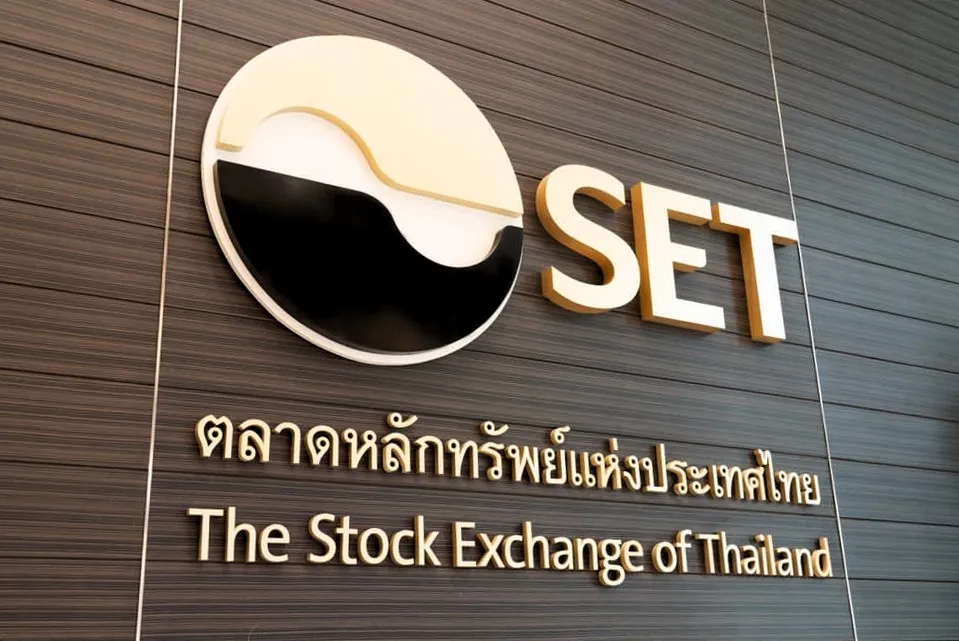
The Stock Exchange of Thailand reveals a 3-year plan (2026-2028) to modernize the Thai capital market

The Stock Exchange of Thailand (SET) index fell below the critical 1,400-point threshold on March 23, 2026, closing at 1,398.82 due to heightened geopolitical tensions in the Middle East and a global “risk-off” sentiment.

While the 2.38% decline reflects significant investor anxiety and a capital flight toward safe-haven assets like gold and bonds, market analysts maintain that the sell-off is primarily driven by external macro pressures rather than a deterioration in domestic company fundamentals. The conclusion among experts is that while high volatility is likely to persist in the near term, the current correction represents a short-term shock that may eventually offer selective investment opportunities if geopolitical conditions stabilize.

Key Points

  • The SET index dropped 34.17 points (2.38%) to finish at 1,398.82, with total trading value reaching 57.29 billion baht.
  • This marks the first time the benchmark index has slipped below the 1,400 level since early March 2026, erasing a brief mid-month recovery.
  • The sell-off was characterized as “panic selling,” with energy stocks leading the decline amidst heightened global uncertainty.
  • Market experts emphasize that the downturn is fueled by external factors—such as Middle East conflicts, global inflation, and economic slowdown concerns—rather than internal earnings issues within Thai listed companies.
  • Investors are increasingly moving capital away from equities and into safe-haven assets, including gold and bonds, to mitigate risk.
  • Strategists warn that the Thai market remains highly sensitive to global sentiment and currency movements, suggesting that volatility will remain high as long as geopolitical risks intensify.

On March 23, 2026, the SET index experienced a significant decline of 2.38%, led primarily by the energy sector. Analysts attributed the sharp sell-off to “panic selling” as investors reacted to escalating geopolitical tensions in the Middle East.

The Stock Exchange of Thailand closed at 1,398.82 points, falling below the 1,400-point threshold for the first time since early March. Among the major individual decliners were Delta Electronics, which saw its shares drop by 3.35%, and Advanced Info Service, which fell by 2.89%. Other notable losers during the session included Gulf Energy Development, Airports of Thailand, and CP All.

Advertisement

Market strategists said that the downturn was driven by external global risk-off sentiment rather than domestic fundamentals. Investors shifted capital toward safe-haven assets like gold and bonds as the U.S.-Iran war threatened global energy infrastructure and supply chains. Despite the sharp correction, some analysts believe the breach of 1,400 may create selective opportunities in sectors with strong pricing power and solid fundamentals once the market stabilizes.

How are regional Asian markets performing compared to the SET?

On March 23, 2026, regional Asian markets faced a broad-based decline alongside the Stock Exchange of Thailand (SET), with several major bourses recording even sharper percentage drops than Thailand’s 2.38% loss. While the SET index fell below the 1,400-point threshold, South Korea’s market shed 5.2% and Japan’s Nikkei fell 3.8% on the same day.

The MSCI Asia-Pacific index, excluding Japan, lost 2.5% as investors reacted to escalating threats between the United States and Iran. Malaysia has emerged as a relative outlier in the region, with its benchmark index losing only 1.2% this month due to its status as a net energy exporter. Analysts say the Middle East war is driving a “risk-off” sentiment, causing global funds to exit emerging markets in favor of safe-haven assets.

Advertisement
Continue Reading

Business

Credit Suisse’s AT1 Bond Crash Fueled Leadership Crisis at HDFC

Published

on

Credit Suisse’s AT1 Bond Crash Fueled Leadership Crisis at HDFC
Shortly before midnight on the eve of a bank holiday in India, HDFC Bank Ltd., a favorite among global investors, stunned the market by announcing the abrupt exit of its chairman. One line in the statement jumped out: Atanu Chakraborty resigned over “ethical” differences with the bank going back two years.

Left unsaid was what exactly Chakraborty meant.

That’s now becoming clearer, four days after the boardroom fight burst into the open and wiped out nearly a tenth of HDFC Bank’s market value, or about $11.5 billion.

People familiar with the matter say the rift came down to differing views over accountability, particularly over client losses tied to risky bonds sold by Credit Suisse and recent restrictions imposed on HDFC Bank in Dubai. In Chakraborty’s view, more senior bank officials should have been held responsible for the missteps. He also grew frustrated over the bank’s lackluster performance relative to peers, including its share price and profitability.

Advertisement

Chakraborty didn’t respond to a query from Bloomberg News. HDFC Bank said in a statement it has well established governance frameworks, “and continues to remain committed to maintaining high standards of compliance and regulatory adherence.”


The chain of events leading to the departure of Chakraborty late on Wednesday started behind the scenes a few days earlier.
Chakraborty, 65, had called a board meeting on short notice for March 18, offering few details of the agenda. Directors assembled on the sixth floor of the corporate offices in South Mumbai, the erstwhile headquarters of its parent. The nomination and remuneration committee convened first. It was there that Chakraborty, a former senior bureaucrat in the administration of Prime Minister Narendra Modi, submitted his resignation as part-time chair, before informing the board.What followed was a tense exchange, as directors tried to persuade him to reconsider. When that failed, they urged him to soften the language in his resignation letter, which would later stun investors with its bluntness: “Certain happenings and practices within the bank that I have observed over last two years are not in congruence with my personal values and ethics,” he wrote.

Despite the board’s pleas, Chakraborty refused to budge on the wording, nor explain what he meant by ethical differences.

By late Wednesday, the lender had little choice but to move ahead. Chief Executive Officer Sashidhar Jagdishan and a few other board members met with the Reserve Bank of India — the country’s central bank and banking regulator — to inform them of Chakraborty’s decision. Within a few hours, Keki Mistry, a bank director and a doyen of India’s financial sector, was officially named interim chairman. Around 10:30 p.m., the disclosure hit the exchanges.

By the time markets opened the next morning, uncertainty snowballed into fear about governance at the lender. Retail investors flooded brokers with calls. Fund managers sought clarity on a testy conference call. Social media amplified speculation about a bank widely held by foreign institutional investors and often treated as a proxy for India’s economic success story.

Advertisement

“If you care about your company, if you care about the time you spent there, if you care about other stakeholders and shareholders – u do not resign with immediate effect in the middle of a week,” veteran fund manager and investor Samir Arora wrote in an X-post.

Other reactions were more nuanced, as some said the chairman wouldn’t have quit unless there was something seriously wrong. Chakraborty tried to walk back his comments a few hours later, telling a local television channel that his resignation was “routine,” and not indicative of any wrongdoing at the bank.

The market reaction prompted the RBI to defend the lender, saying there were no concerns about its conduct or governance. Such interventions by the central bank are typically reserved for cases of systemic stress. One 51-year old investor, Joydeep Shome, asked his broker if HDFC Bank’s stock was “buy at dips, or bye for all?”

By Thursday morning, the bank’s leadership went into overdrive. On the hastily arranged call with analysts and journalists, Mistry sought to draw a line under the speculation. He said that in large organizations, relationship issues among employees are common, and that there were no governance issues at the firm. Jagdishan, typically media shy, also stepped forward on the call in a bid to assuage investors. The board closed ranks.

Advertisement
HDFC Bank shares slumps chartBloomberg

Yet as the call stretched on, one question refused to go away: what exactly had driven the chairman to walk out so abruptly if, as the board claimed, there were no governance concerns or hidden financial stress?

At the heart of the rupture, according to people familiar with the internal discussions, was a long-simmering disagreement over accountability that came to a head over client losses tied to Credit Suisse debt. Global bondholders were wiped out when Switzerland’s regulator wrote down about $17 billion of the so-called Additional Tier 1 notes during the bank’s rescue by UBS Group AG in March 2023.

HDFC Bank, along with several other global firms, was caught up in the fallout and faced allegations of misselling. Some of its customers claimed they were not properly informed about the high-risk nature of the bonds, though the lender has maintained it complied with all applicable laws.

While the Credit Suisse matter led to sanctions against some executives, Chakraborty pushed for broader accountability, arguing that more senior officials should be held responsible and made to come clean, the people said. The senior management didn’t agree, creating an impasse.

HDFC Bank was also barred from adding new customers last year at its Dubai branch after the Dubai International Financial Centre flagged lapses in its processes.

Advertisement

In its response to Bloomberg News, the bank said it identified certain gaps in client‑onboarding requirements in Dubai and have completed a detailed and objective review of the matter. Appropriate remedial actions have been taken and personnel changes have been made.

The Economic Times daily quoted CEO Jagdishan as saying in an interview on Monday that the bank initiated an internal review and “took staff accountability actions through our disciplinary and board-level committees, with a right to appeal.”

The Credit Suisse bond and Dubai episodes weren’t the only sources of friction.

Chakraborty grew dismayed over the bank’s lagging performance, including its profitability, customer service and technology systems. Over the last three years, HDFC Bank shares have barely budged, while rivals including State Bank of India and ICICI Bank Ltd. have soared, as has the benchmark index.

Advertisement
HDFC Bank lagged peers chartBloomberg

Over time, Chakraborty had developed a reputation for seeking more oversight of the bank. Some executives viewed it as micromanagement, ranging beyond what most non-executive, part-time chairmen typically do. He was said to be closely involved in decisions like extending tenures of senior employees, for example. Chakraborty grew frustrated with what he perceived as resistance to tighter oversight, particularly on issues involving whistle-blower complaints.

This clashed with a management team shaped by a different legacy.

Under Aditya Puri, the bank’s long-time former CEO, operational autonomy for executives had been a defining feature. Jagdishan, his successor, largely continued that approach. The result was a growing trust deficit between Chakraborty and management. At some point, the relationship broke down.

For a bank already grappling with balance sheet challenges following its 2023 merger with a mortgage lender, the timing could hardly be worse. There’s also the possibility, still under discussion, of an independent review into the issues raised by Chakraborty, though the lack of specifics in his resignation letter complicates things. Regulators, too, are expected to keep a close watch.

The bank also has a looming decision on CEO succession, which will be discussed next month, Mistry said. Jagdishan’s term runs until October, and he is eligible for reappointment. Under normal circumstances, his continuation might have attracted little debate. Now, it has become a focal point.

Advertisement

The path forward for the bank will require more than just restoring calm, analysts said. It will involve reaffirming the balance between board oversight and executive authority, particularly as the institution grows larger and more complex, they said.

Shortly before midnight on the eve of a bank holiday in India, HDFC Bank Ltd., a favorite among global investors, stunned the market by announcing the abrupt exit of its chairman. One line in the statement jumped out: Atanu Chakraborty resigned over “ethical” differences with the bank going back two years.

Continue Reading

Business

Airport chaos worsens as TSA officers face second missed paycheck

Published

on

Airport chaos worsens as TSA officers face second missed paycheck

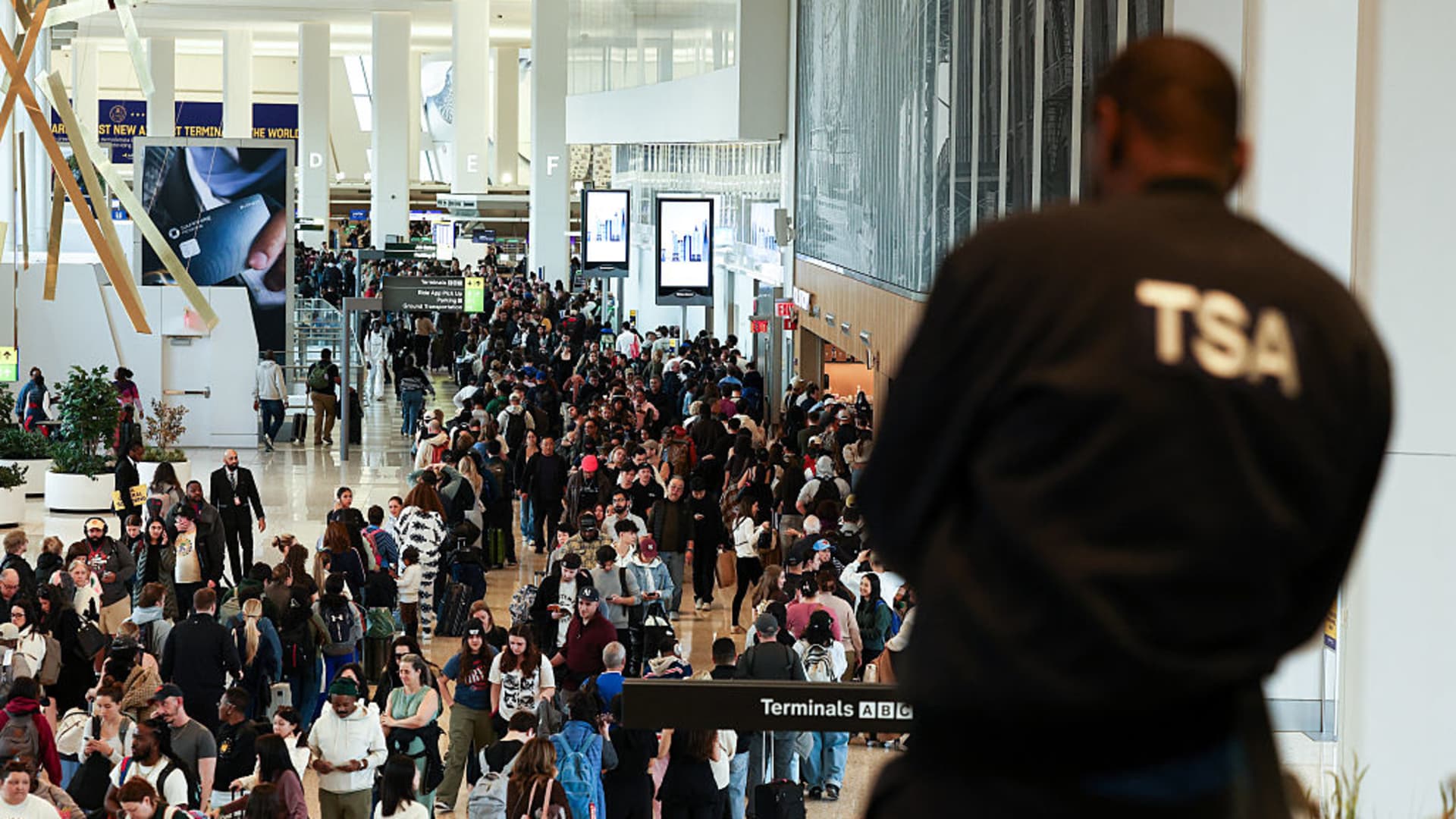
A Transportation Security Administration (TSA) agent looks on passengers queue to go through security at New York’s LaGuardia airport on March 22, 2026.

Charly Triballeau | Afp | Getty Images

NEW YORK — Andrew Leonard showed up at John F. Kennedy International Airport at 4:45 a.m. on Monday for his 7 a.m. flight to Seattle. Nearly two hours later, he made it through security and to his gate just in time for boarding.

Advertisement

“I fly out of this terminal all the time and this is insane,” said Leonard, a 34-year-old performing arts teacher in New York who was en route to Seattle ahead of a family vacation to Hawaii.

He is one of tens of thousands of travelers around the U.S. who are facing extra long security wait times at major airport hubs like Atlanta, New York and Houston due to elevated absences of Transportation Security Administration officers. TSA workers are facing a second missed full paycheck this week as a partial government shutdown continues.

White House border czar Tom Homan said Sunday said the administration would deploy Immigration and Customs Enforcement agents to airports on Monday to help ease security lines amid the Department of Homeland Security shutdown.

Read more about the impact on air travel

ICE agents weren’t visible at checkpoints at Kennedy Airport’s Terminal 8 early Monday, and it wasn’t clear where or when agents would be deployed. DHS and TSA didn’t immediately respond to a request for comment early Monday.

Advertisement

Homan told CNN’s “State of the Union” on Sunday that the ICE agents will be “helping TSA move those lines along,” including by guarding exit doors to relieve TSA agents so they could screen travelers. “We’re simply there to help TSA do their jobs in areas that don’t need their specialized expertise.”

TSA’s more than 50,000 officers have been working without their regular paychecks since the partial government shutdown began in mid-February. The shutdown comes as Democrats demand changes to how federal immigration enforcement operates in exchange for releasing DHS funding after two U.S. citizens were shot and killed by officers in Minneapolis. 

Hundreds of TSA officers have quit since the shutdown started, according to their union, the American Federation of Government Employees.

The security line at John F. Kennedy International Airport on Monday, March 23, 2026.

Advertisement

Leslie Josephs/CNBC

The travel industry, including airline executives, have blasted lawmakers for failing to pay essential government workers during repeated shutdowns that have snarled travel.

In early 2019 and in late 2025, two federal government shutdowns ended shortly after travel disruptions escalated following higher-than-typical absences of air traffic controllers. Their pay isn’t affected by this impasse.

New York’s LaGuardia Airport was closed on Monday morning following a collision of an Air Canada regional jet and an emergency vehicle on Sunday night. Some passengers told CNBC they had switched to fly out of Kennedy because of the disruptions.

Advertisement

CNBC’s Garrett Downs contributed to this article.

Choose CNBC as your preferred source on Google and never miss a moment from the most trusted name in business news.
Continue Reading

Business

Nifty Bank cracks 3% to 11-month low as SBI, HDFC & Union Bank tumble. More pain ahead?

Published

on

Nifty Bank cracks 3% to 11-month low as SBI, HDFC & Union Bank tumble. More pain ahead?
The Nifty Bank index tumbled more than 3% on Monday, dropping below the 52,000 mark for the first time since April 2025, with PSU bank stocks like Union Bank of India, PNB and others leading losses. Market experts say the broader bias remains negative, and a sell-on-rise approach is preferred.

The index dropped to 51,791 in the morning session on Monday, dragged by losses in financial stocks. Union Bank of India and Punjab National Bank (PNB) declined around 5%, while Canara Bank, AU Small Finance Bank, Bank of Baroda and IDFC First Bank shares fell over 4% each. IndusInd Bank, Yes Bank, Federal Bank, State Bank of India (SBI), HDFC Bank, Axis Bank, Kotak Mahindra Bank and ICICI Bank meanwhile declined in the range of 1.5-4%.

The sharp decline comes amid broader market weakness, as the rupee hit fresh lifetime lows and US bond yields gained, amid persistent FII selling and escalating war between Iran and the US-Israel. Indian rupee extended its sharp decline against the US dollar, falling to 93.84 against the US dollar to break its previous all-time low of 93.7350, which it had hit on Friday. The rupee, which is one of the most exposed currencies to oil price increases, has weakened nearly 3% since the war in the Middle East began.

Foreign investors have been strongly selling Indian equities since the beginning of the war in the oil-rich Middle East amid a global risk-off sentiment in markets. FIIs extended their selling streak for the 16th consecutive session on Friday, net selling Indian shares worth Rs 5,518 crore, according to data on NSE.

Advertisement

The fall in bank stocks also comes amid concerns over what impact prolonged Middle East war and elevated oil prices can have on the Indian economy. While India is not directly involved in the war between Iran and the US-Israel, the rising oil prices and other factors may bear an impact on the Indian economy in the short term, as per analysts. “With 80% energy import dependence, higher crude prices directly impact the growth, current account deficit (CAD), inflation, the rupee, and fiscal balances. The overall macro effect will depend on the pass-through to consumers and government interventions through duties, subsidies, and fuel price controls,” said Motilal Oswal Financial Services in a report earlier this month.


Also read: Rs 13 lakh cr rout! 7 key factors behind today’s D-St bloodbath

“A USD10pb rise in oil could add 30–50bp to inflation, with CPI potentially approaching 5% if crude averages USD100pb. These risks are further amplified by shipping disruptions, higher war-risk insurance premiums, rising fertiliser prices, and vulnerabilities in LPG supply, increasing the likelihood of broader energy and food price pressures,” the brokerage added.

Technical view


Bank Nifty has witnessed a breakdown in short-term structure, indicating a shift towards a lower high–lower low formation, said Vatsal Bhuva, Technical Analyst at LKP Securities. “RSI at 28 signals an oversold condition, suggesting a possible pullback; however, the broader bias remains negative, with a sell-on-rise approach preferred in the 54,500–56,000 resistance zone,” the analyst said.

Bajaj Broking also noted that the index last week formed a high-wave candle with a lower high and lower low, signalling continuation of the corrective decline. “Volatility is likely to remain elevated in the near term, driven by uncertain global cues and rising geopolitical tensions, which continue to weigh on market sentiment,” it added.

Also read: Gold extends fall after worst week in 43 years. More pain or time to buy the dip?

A sustained move below Thursday’s low of 53,240 could trigger further downside, with potential targets at 52,500 and 51,800 in the coming sessions, according to Bajaj Broking, adding that these levels correspond to the 61.8% Fibonacci retracement of the rally from the January 2025 lows and coincide with the low of the breakout candle formed in April 2025.

Advertisement

“On the upside, the Thursday gap zone between 54,689 and 54,150 is expected to act as immediate resistance. The overall bias remains bearish as long as the index stays below this zone,” it added.

(Disclaimer: Recommendations, suggestions, views and opinions given by the experts are their own. These do not represent the views of The Economic Times)

Continue Reading

Business

Bitcoin price today: rebounds to $71k after Trump postpones Iran attacks

Published

on


Bitcoin price today: rebounds to $71k after Trump postpones Iran attacks

Continue Reading

Business

Zijin Mining to acquire control of Chifeng Gold for $2.5 billion

Published

on


Zijin Mining to acquire control of Chifeng Gold for $2.5 billion

Continue Reading

Business

WA leads nation in international tourism growth

Published

on

WA leads nation in international tourism growth

Western Australia reported more international visitors last year than ever before, according to new tourism data.

Continue Reading

Business

NatWest commercial boss on what the Government can do to help businesses large and small at a time of crisis

Published

on

Business Live

Robert Begbie visits Manchester Accelerator to talk about innovation, mid-markets and economic shocks

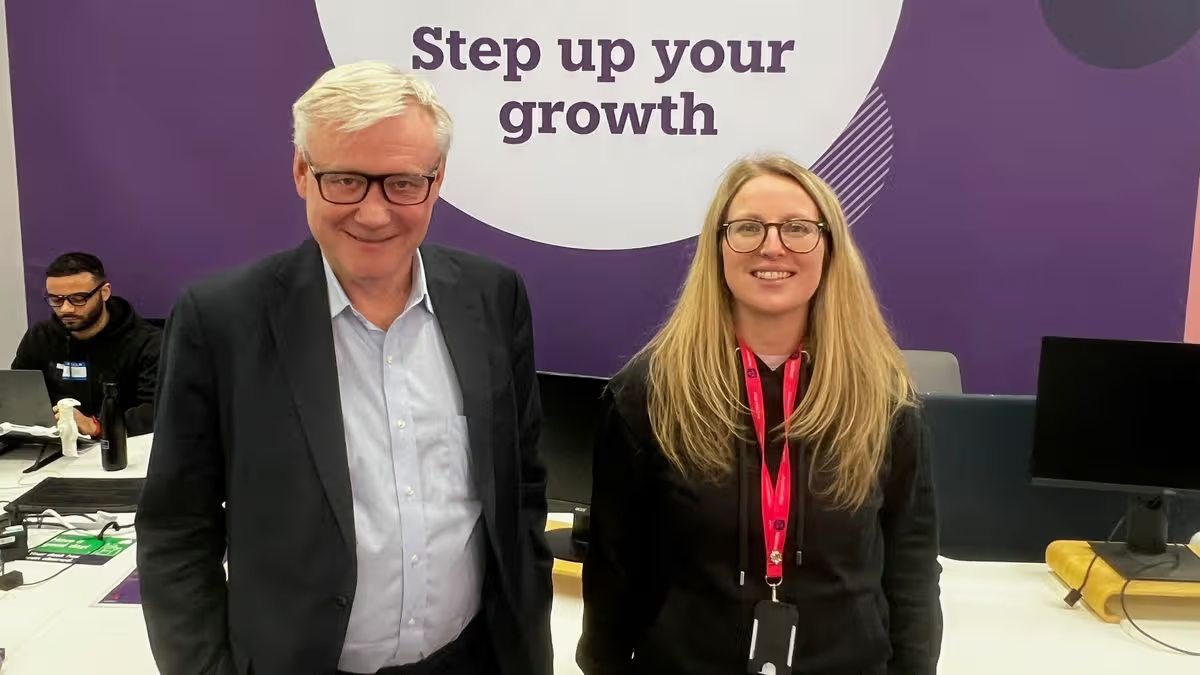
Pictured at NatWest's Accelerator in Manchester city centre are Robert Begbie, CEO, Commercial & Institutional, left, and Libbie Mowbray, Accelerator Community Manager for Manchester

Robert Begbie, CEO, Commercial & Institutional, left, and Libbie Mowbray, Accelerator Community Manager for Manchester (Image: Reach plc)

The Government needs to try to give businesses reassurance and stability at a time of global crisis – that’s the message from a key NatWest leader as he visited the North West to meet entrepreneurs. Robert Begbie, CEO Commercial and Institutional at NatWest, visited the bank’s Manchester business accelerator to meet some of the entrepreneurs growing their businesses from the Spinningfields hub.

He spoke to BusinessLive about the bank’s network of Accelerator hubs that aim to support scale-ups and start-ups across the country. And he and North West regional director Steve Sankson also spoke about the power of mid-market firms to drive the economy in Manchester and beyond.

Advertisement

Asked about the state of the markets after the Iran war, Mr Begbie said the most important thing the Government could do in the medium term was to ensure stability in policymaking.

He said: “The Government can’t control what’s going on in the Middle East. That’s completely outwith their control. But stability in the environment for businesses to operate in is hugely helpful.

“The Government has set in train a number of things around their industrial strategy, their trade strategy, overall growth, regulatory reform, and all of those will make a difference. But they take time. The culmination of those things over a period of time all helps, they’re all building blocks to creating a more sustainable and higher growth, higher productivity economy.

“A combination of that, plus everybody else including us playing our role in that growth, will ultimately create the conditions for companies to grow and the economy to grow.”

Advertisement

It’s too early to say what long-term impact the ongoing conflict in the Middle East might have on the economy, but Mr Begbie said fragile business confidence was likely to be damaged.

He said: “If you look through the last 10 years, what we found generally is that businesses have done incredibly well to cope with those shocks, whether they’re domestic, international, whether they are inflation-related, whether they’re health-related as in the case of the pandemic or geopolitical-related. And this is another one.

“It’s unfortunate because we felt that for the first time in quite a long time there was a pretty stable set of conditions for businesses to invest and grow. And with that comes confidence and the confidence to invest in your business, the confidence to grow, confidence to want to expand your markets or expand your even your geographies – part of our role was to help customers to expand out where they do business.

“Growth was minimal, but at least it was growth – rates were coming down, inflation was coming down, we’d come through the other side of some of the Budget measures… certainly talking to businesses locally and talking to the teams, it felt like there was a growing mood of optimism and confidence in the economy.

Advertisement

“I think it’s too soon to say that what’s happened in the last two weeks is going to permanently damage that, but clearly in the short term it just introduces uncertainty.”

The magic middle: Why mid-market companies are vital to growth

Mr Begbie said NatWest’s own recent results had been strong with growing business lending, including a 50% growth year-on-year in its gross lending to it Business Banking customers. He said: “If our lending book is growing in the mid market we know there’s something good going on in the UK mid market

“What we started to see at the end of last year to this year was more M&A activity around the large corporate end of the UK… and as a major bank into UK PLC we’ll be involved in some of those transactions.”

Mr Begbie said the bank wanted to be ambitious for itself and for its customers, and said: “We’re now in a situation where there’s a bit of uncertainty, but with uncertainty that gives us a chance to step up and help support those customers.”

Advertisement

NatWest has had a big focus on mid-market firms, which it says are vital to the economy but can often be overlooked by policymakers in favour of corporate giants and headline-grabbing start-ups. Earlier this month the group appointed 12 Mid-Market Champions in 12 UK nations and regions.

Mr Begbie said the mid-market was “responsible for so much of the employment in the UK, so much of the growth and a one per cent growth in that sector is worth many times more.”

NatWest sign

NatWest took some of its mid-market customers to 11 Downing Street

He was at Number 11 Downing Street earlier this month for the first Mid-Market Growth Council reception, alongside NatWest CEO Paul Thwaite.

He said: “We took some of the members of the council but we also took some of our mid-market companies from up and down the country and it was great. Paul spoke briefly the Chancellor spoke. We all have the same objective here – everybody in the room wants to help stimulate growth and make the country a more prosperous place, but that can only happen if we put all the things in place.”

Advertisement

The North West’s innovation champion is Steve Sankson. He said: “If you think about business support, it’s targeted at SMEs, start up, scale up, innovation. Big businesses typically look after themselves. In that regional mid market business, there’s actually a lack of targeted support or intervention.


Author avatarAlistair Houghton

READ MORE: NatWest snaps up Evelyn Partners for £2.7bn and launches share buyback

“If you look at any growth plan from a regional perspective, they focus on emerging sectors, emerging clusters. But true growth comes from the mid-market as well.

“Mid-market businesses have got very common issues. If you get a group of 20 mid-market businesses, they’re all facing the same skills issues. They’re grappling with increasing complexity and burden being placed on business. Actually being able to address some of those issues either through policy, or collectively coming together to say ‘what’s the issue in Manchester’, could be quite powerful.

“Everybody’s talking about Greater Manchester right now. Mid markets grow more quickly in Greater Manchester than any other region, they’re more innovative in Greater Manchester than in any other region.”

Advertisement

‘We’re helping people live out their dreams’

Mr Begbie said he loved visiting NatWest’s Accelerators across the country. The Manchester one has helped hundreds of entrepreneurs, and on the day of BusinessLive’s visit a group of entrepreneurs was learning about how to create perfect short, sharp pitches for investors.

He said: “I’ll tell everybody who works for us to go to an accelerator. We’re helping people live out their dreams here. But also, we attract some of the most passionate, enthusiastic colleagues of anywhere in the organisation to work in our accelerators.

“Those accelerators, and they’re all slightly different, all share the same themes of passionate colleagues and passionate entrepreneurs. There’s some incredible successes as well. I met one of the founders of a business that went through the Birmingham Accelerator 10 years ago. And that is now a £50m business. And they became advocates for us. So we get the benefit of seeing businesses becoming successful businesses and we played a small part in that.”

Robert Begbie, CEO of NatWest Commercial & Institutional (left) is pictured with Dr Mark Cox (right), founder of Orli Health and winner of the NatWest Accelerator Pitch competition in London.

Robert Begbie, CEO of NatWest Commercial & Institutional (left) is pictured in 2025 with Dr Mark Cox (right), founder of Orli Health and winner of the NatWest Accelerator Pitch competition in London.(Image: Patch Dolan Photography)

NatWest is also looking to grow its accelerator network by connecting with universities.

Advertisement

Mr Begbie said: “We announced last year we were going to put the equivalent of these accelerators into 10 universities up and down the UK. We’ve announced four, the other six will follow. We’ve had one in Warwick University for a while, which is a clean transport accelerator.

“The reason for picking universities is to take some of those ideas that spin out of universities, but struggle to find a way to commercialise.”

The bank has also launched a strategic partnership with the University of Manchester aimed at improving student employability and supporting innovation.

Advertisement
Continue Reading

Business

Bruntwood reveals latest plans for Stretford town centre regeneration

Published

on

Business Live

Scheme would include park and hundreds of new homes

CGI of apartment block planned on the site of Stretford Mall

CGI of the apartment block planned for the site of Stretford Mall(Image: Bruntwood)

Plans have now gone in for the next phase of Stretford town centre’s huge regeneration project.

Advertisement

Permission is being sought for 248 new homes where the town’s shopping centre currently stands. These would be a mix of apartments and houses, with 120 one-bed flats, and 114 two-bed and 14 three-bed houses proposed for the site.

At its highest, the apartment block would reach up to 12-storeys. The ground floor of the building would also offer up retail and leisure units.

A new park is planned for the land too, with developer Bruntwood saying it wants this to be a place of ‘relaxation and social interaction’.

Rob Elsom, development director at Bruntwood, said: “[There would be a] big green public space going right into the heart of the town centre, which will be immediately adjacent to the high street and the new shops, creating a field of vision down to Saint Matthew’s Church at the bottom. It’ll create an interesting focal point, and be somewhere for people to be able to spend time.”

Advertisement

He added: “What would be great is to be able to have retail all the way down King Street, all the way down the park, and then back up Chester Road where we’ve got existing retail at the moment. So we create a retail loop as well as having the anchor of Aldi on the other side.”

The planning application will need to be validated by Trafford council in the coming days before it is made public and the full details revealed. A public consultation on the scheme will then follow.

CGI of apartment block planned on the site of Stretford Mall

How the apartment block planned for the site of Stretford Mall could look(Image: Bruntwood)

Stretford Mall closed its doors for the final time on Friday, February 27. Contractors are expected to be on site from the end of this month, with demolition work due to begin in June and completed around September.

This is not the final phase planned for the Stretford regeneration project, however. Future stages could bring the number of new homes built up to more than 750, with affordable homes proposed among them.

Advertisement

To find all the planning applications, traffic diversions, road layout changes, alcohol licence applications and more in your community, visit the Public Notices Portal.

Continue Reading

Business

The latest appointments in Welsh business

Published

on

Business Live

Firms freatured include Mrs Bucket, Deloitte, Savills, UWTSD , Lumen SEO and voco St David’s Cardiff.

Left to right Mrs Buckét’s Kate Ablett and Siwan Morgan.

Swansea headquartered commercial cleaning company Mrs Bucket has announced key changes to its senior management team.

Kate Ablett has been promoted to managing director. Previously people and operations director, she now steps into founder Rachael Flanagan’s former role. Ms Flanagan, who founded the business in 2005, moves into the position of chief executive allowing her to focus on the strategic direction of the business and continue as a brand ambassador.

Swansea-born Ms Ablett, who now lives in Caerphilly, has been with Mrs Buckét for four years. She joined as Head of People, where she played a key role in introducing the company’s senior leadership team. She later progressed to people and operations director, managing that team and overseeing operational performance.

In her new role as managing director, she will continue to lead the senior leadership team while focusing on driving efficiency and productivity across the business.

Advertisement

She said: “I’m thrilled to step into the role of managing director. One of the things I love most about Mrs Buckét is that anything is possible – you can grow ideas, you can change and you can try new things, and Rachael is fully supportive of all of this. It’s an environment where people can genuinely contribute and make a difference.

Moving into the senior leadership team is Siwan Morgan, who has been appointed senior business development manager. Previously business development manager at Mrs Buckét, her promotion comes at a pivotal time as the company accelerates its growth strategy.

She said “I’m really looking forward to stepping into this new role. I really enjoy the diverse nature of my work, which enables me to speak with a wide range of clients from different sectors – no two days are the same!”

Ms Flanagan said: “This is an incredibly exciting time for Mrs Buckét. After achieving 30% growth in 2025 and welcoming more than 30 new clients, it’s vital we have the right leadership structure in place to support our continued expansion.

Advertisement

“Kate has been instrumental in shaping our senior leadership team and strengthening our operations over the past four years. Her passion for people, performance and progress makes her the ideal managing director to lead the business day-to-day.

“I’m also delighted to welcome Siwan onto the senior leadership team. Her drive, energy and commitment to delivering an outstanding client journey will be pivotal as we continue to grow.”

She added: “Moving into the CEO role allows me to focus on the strategic direction of the business and continue championing our brand, our people and our purpose. We are building something very special at Mrs Buckét.”

Lumen SEO

Advertisement

Left to right founder and CEO of Lumen SEO Aled Nelmes and non executive director Daniel Simmons.

Former chief executive of Populate Social Daniel Simmons has been appointed a non executive director of Lumen SEO as it targets expansion and the US market.

With over ten years of experience in founding and scaling a Cardiff-based agency, his appointment will support Lumen SEO through its next growth phase as it plans to expand internationally.

Now in its sixth year of trading, Lumen SEO has become the largest SEO (search engine optimisation) agency in Wales with consistent year-on-year growth.

Lumen SEO’s founder and chief executive Aled Nelmes, said: “Despite continuous yearly growth, it’s been at the expense of my being incredibly overworked in the business when I should be working smartly on the business.”

Advertisement

His appointment has come at a pivotal moment for Cardiff-based Lumen SEO, as the company aims to become one of the UK’s largest SEO agencies.

Mr Nelmes said: “I believe we can double in revenue in 2026, but it’s more about how we get there.

We must be able to get there by maintaining our cultural values that make Lumen one of the greatest places to work, and we need to get there by making sure I confidently delegate more and hire some great leaders during the year.”

Mr Simmons said “I truly believe culture and leadership are two of the most important things when running a people-powered business.

Advertisement

It’s important to still have a strong commercial focus to sit alongside this, and having the right balance is integral.”

Mr Nelmes believes moving into the US market is the next natural step. He added: “The very culture that runs through SMEs in the USA is more experimental, more pro-risk, and more ambitious compared to the UK, where businesses tend to act more conservatively.”

Deloitte

Dave Tansley and Andrew Wright of Deloitte.(Image: Chris Fairweather/Huw Evans Agency)

Professional advisory firm Deloitte has appointed Andrew Wright as its new practice senior partner for the south west and Wales.

Advertisement

Mr Wright, who has close to 30 years of experience at the firm, will lead a combined team of 2,300 people, succeeding Dave Tansley.

He joined the firm in 1996 and became a partner in 2012. He leads Deloitte’s audit business in Bristol and Cardiff and is also part of the national Deloitte Private leadership team and the global audit transformation group. In his new role Wright will oversee the firm’s strategic direction across the South West and Wales.

Mr Tansley has led the firm in the region for the past two years. He will continue his work as partner at Deloitte leading key initiatives until his retirement in May.

During his two-year stint as practice senior partner, Mr Tansley spearheaded the firm’s move into its new Bristol headquarters in the Halo Building in Finzel’s Reach. He also accelerated the growth of the firm in Wales, including its Cardiff Delivery Centre.

Advertisement

Mr Wright said: “The South West and Wales stands on the cusp of a vibrant future, powered by innovation in advanced manufacturing, clean energy, and a thriving digital economy, offering unparalleled opportunities for sustainable economic growth.

“My career has been rooted in the South West and Wales, and I know first-hand the depth of talent, expertise and potential that we have here. I am committed to developing that talent.

“I want to thank Dave for his exemplary leadership. He has fostered a real sense of collaboration across the firm, leaving a strong foundation for future growth.”

Voco St David’s Cardiff

Advertisement

Carl Davies-Phillips general manager of the voco St David’s Cardiff.

The five star voco St David’s Cardiff has appointed Carl Davies-Phillips as its new general manager.

He joins the Cardiff Bay hotel after a successful 2025, which saw the hotel welcome 67,463 guests and achieve record turnover.

Born and raised in Swansea, he brings more than 25 years’ experience in the hospitality industry He joins Voco St David’s Cardiff from Castlebridge Hospitality, where he held the role of operations director.

Mr Davies-Phillips said: “This is an iconic property that the whole of South Wales is proud of – everyone knows voco St David’s. “Combined with its location in the capital city it was an opportunity I couldn’t turn down as a proud Welshman.“To be joining the hotel on the back of such a strong year makes it even more exciting. The foundations are incredibly solid, and my focus now is on working with our talented team to elevate the hotel even further.”

Advertisement

UWTSD

Elliott Atkins.

The University of Wales Trinity Saint David (UWTSD) has appointed managing director of Exercise3, Elliott Atkins, as a professor of practice. His appointment strengthens the University’s engagement with industry leaders and provides students with direct access to cutting‑edge expertise in cyber security and digital resilience.

The title of professor of practice is awarded to recognise individuals of significant academic and professional distinction whose expertise aligns with the strategic intentions and mission of the university. Mr Atkins’ appointment reflects his outstanding contribution to the field of cyber security and his commitment to advancing professional practice, education, and industry collaboration.

A fellow of the British Computer Society he was appointed the first chief information security Officer to the Royal Household in 2021. Since 2014, he has served as managing director of Exercise3, a National Cyber Security Centre (NCSC) assured provider of cyber incident exercising. The company uses realistic, scenario-based simulations to help organisations test and strengthen their cyber incident preparedness and resilience.

Advertisement

Prior to founding Exercise3, he held several senior leadership roles across government and industry. These included head of the UK Government’s computer emergency response team at GCHQ, head of cyber Intelligence at QinetiQ, and head of incident Response at Nominet, the UK’s top-level domain registry.

Kapilan Radhakrishnan, academic director (applied computing)at UWTSD said: “Elliott’s appointment as Professor of Practice reflects our commitment to bridging academic excellence with real-world professional leadership. His experience at the highest levels of national and international cyber security, from government to critical infrastructure and global incident response communities, brings exceptional insight to our students and staff.

“We are proud to welcome Elliott to the University and look forward to the impact his expertise will have on our teaching, research, and industry partnerships.”

Mr Atkins said: “I’m delighted to have been appointed as a Professor of Practice at the University of Wales Trinity Saint David. I’m really looking forward to sharing real-world insights and experience with students, early-career academics, and staff, as well as contributing to curriculum development across the Applied Computing, Cyber Security, and Digital Forensics programmes.”

Advertisement

Savills

Emma Lewis of Savills.(Image: JON PAUL LADD)

International real estate advisor Savills has announced four promotions within its Cardiff office

The promotions will see one person become director and one take on the role of associate director, and two become associates. Wayne Farnell, who specialises in property management has become a director, Cerys Hulbert-Scott, planning, an associate director, Tina Owen, property management, an associate and Emma Lewis, property management, also an associate.

Wayne Farnell of Savills.(Image: ©Jon Paul Ladd. 2019)

Jonathan Latham, head of Savills Cardiff office, said: “It is with great pleasure that we can announce the promotion of four outstanding individuals in our Cardiff office. Each has demonstrated exceptional commitment, expertise and drive in supporting our clients and contributing to the continued success of our office. Congratulations to all on this well‑deserved recognition.”

Advertisement
Continue Reading

Trending

Copyright © 2025