
Business
Is Wemby Fully Recovered Yet? Spurs Star Remains in Concussion Protocol for Game 3

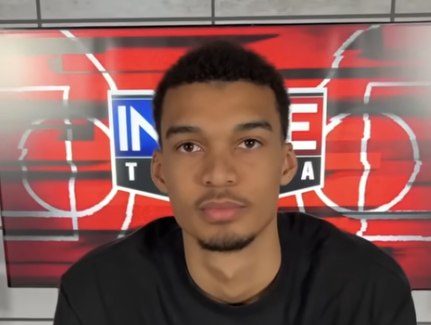
SAN ANTONIO — Victor Wembanyama is not fully recovered from his concussion and remains in the NBA’s concussion protocol, keeping his status questionable for Friday night’s Game 3 against the Portland Trail Blazers despite traveling with the San Antonio Spurs to Oregon.

The 22-year-old Defensive Player of the Year suffered the injury in Tuesday’s Game 2 loss when he tripped while driving to the basket, fell hard and hit his face on the court after contact with Jrue Holiday. He appeared dazed, left the game early and did not return as Portland evened the series at 1-1. Spurs coach Mitch Johnson confirmed the concussion diagnosis immediately after the contest.
As of Friday morning, Wembanyama has shown positive progress — completing light cardio work without worsening symptoms and traveling with the team — but he has not been cleared for full basketball activity or Game 3 participation. The Spurs listed him as questionable on the official injury report, leaving open a small possibility while managing expectations conservatively.
NBA concussion protocol requires a minimum 48-hour period before any return-to-participation steps, along with a series of cognitive, neurological and exertion tests monitored by team doctors and league specialists. Median absence for concussions in the league hovers around seven to nine days, with some players recovering faster and others needing more time to ensure full safety and avoid secondary risks.
Coach Mitch Johnson described Wembanyama as “progressing” on Thursday but emphasized the team is following protocol strictly. “He looks good,” Johnson said. “The update is that he is following each protocol, he’s progressing, and he’ll travel with the team.” No decision on Game 3 will come until further testing in Portland, and many insiders view participation as unlikely given the timeline.
Wembanyama’s absence has been felt sharply. He dominated Game 1 with a franchise playoff debut record of 35 points, showcasing the length, shot-blocking and perimeter skills that make him a generational talent. Without him, the Spurs leaned on their young core but struggled to contain Portland’s guard play and interior scoring.
The Spurs are preparing as if he may not play, relying on De’Aaron Fox, Keldon Johnson, Stephon Castle and others to compete on the road at Moda Center. A win in Game 3 without their superstar could shift momentum, but extending the series without him would test San Antonio’s depth ahead of a potential second-round matchup.
Medical experts stress caution with young stars. A second concussion in quick succession carries amplified risks, and research shows elevated chance of lower-body injuries in the 90 days following a head injury. The Spurs, known for conservative player management, are prioritizing Wembanyama’s long-term health over short-term playoff urgency.
Fan reaction has been supportive, with calls for caution dominating social media. Supporters emphasize protecting the franchise cornerstone. The organization has echoed that sentiment, stressing that Wembanyama’s long-term availability remains the priority as the Spurs build around their young core.
Wembanyama has shown eagerness throughout the process, reporting to the facility daily and pushing to travel. His competitive drive is well-documented, but medical staff hold final say. Further evaluations in Portland will determine the next steps in his recovery, with Game 4 on Sunday or Game 5 back home in San Antonio considered more realistic targets.
Broader NBA concussion management has evolved with greater emphasis on safety. The league’s protocol includes baseline testing, independent neurological oversight and a step-by-step return process. Teams increasingly err on the side of caution with transcendent talents, understanding the risks of repeated head trauma.
For the Spurs, navigating the series without their best player tests coaching ingenuity and roster depth. Home-court advantage from the regular season provides a cushion, but the injury highlights the physical toll of the postseason. Portland senses an opening with home-court energy and will look to capitalize.
As Game 3 approaches Friday evening, pregame updates will provide the latest clarity. Whether Wembanyama suits up or watches from the sideline, his presence looms large over the series. The basketball world watches closely as the Spurs push forward in what promises to be a memorable postseason journey.
Wembanyama’s rapid ascent since being drafted No. 1 overall in 2023 has captivated fans globally. This early playoff injury tests both his resilience and the Spurs’ ability to compete at the highest level without their cornerstone. For now, cautious optimism prevails as the organization balances competitiveness with care for its young superstar.


Coloplast A/S (CLPBY) 2026 Guidance/Update Call – Slideshow
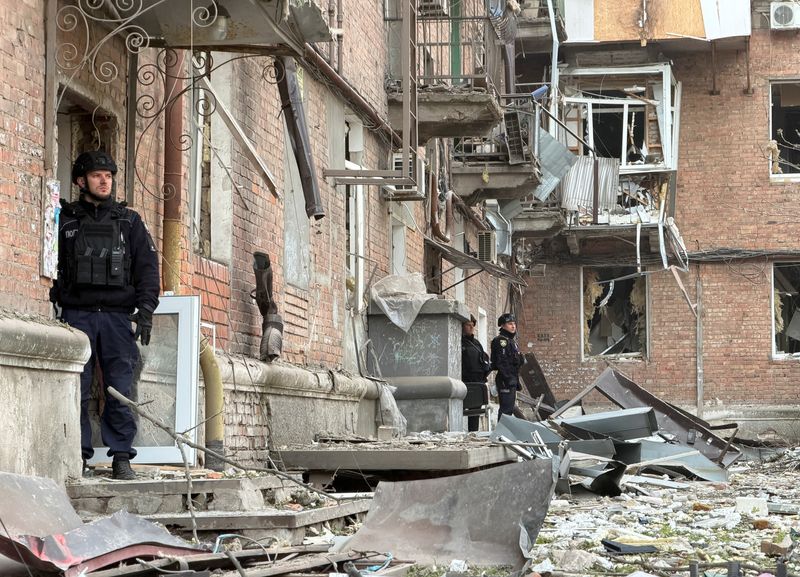

Major Russian attack on Ukraine kills four, wounds dozens
Business
Jada Pinkett Smith Seeks $49K From Will Smith’s Ex-Friend After Emotional Distress Suit Partially Dismissed
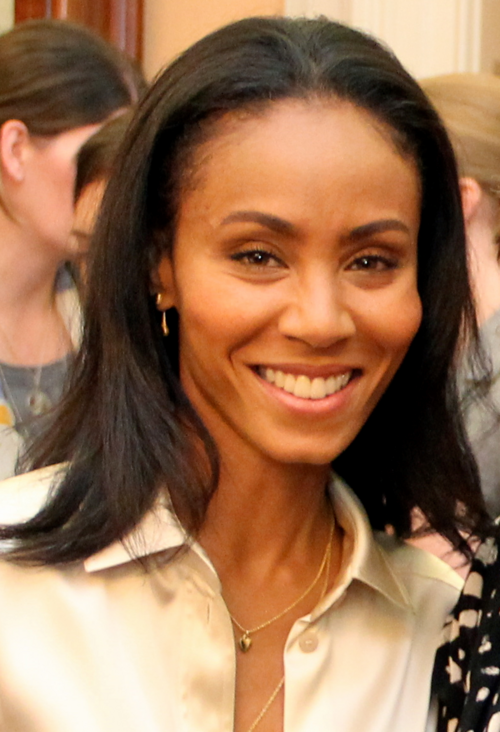
LOS ANGELES — Jada Pinkett Smith is asking a California judge to order Will Smith’s former friend Bilaal Salaam to pay nearly $49,000 in attorney fees after successfully getting portions of his $3 million emotional distress lawsuit against her dismissed, according to court documents filed this week.

The 54-year-old actress and Red Table Talk co-host filed the motion for fees following a partial victory in the high-profile civil case that stems from a long-simmering fallout involving Smith’s inner circle. Salaam, who has described himself as a longtime friend and associate of the Oscar winner, originally sued Pinkett Smith in late 2025, alleging she caused him severe emotional distress through threats and interference related to a planned memoir.
Court records reviewed by multiple outlets show Salaam claimed Pinkett Smith warned him he would “catch a bullet” if he continued sharing personal family details. The suit sought $3 million in damages and accused her of orchestrating a campaign that damaged his reputation and mental health. Pinkett Smith has strongly denied the allegations, calling them baseless and arguing that Salaam failed to provide sufficient evidence to support his claims.
In recent months, a judge tossed key portions of Salaam’s complaint, prompting Pinkett Smith’s legal team to seek reimbursement for defense costs. The filing requests approximately $48,975 to cover attorney fees incurred while fighting the now-partially dismissed claims. Legal experts note that such fee-shifting motions are common when defendants prevail on anti-SLAPP or demurrer motions aimed at weeding out meritless litigation.
The dispute highlights ongoing tensions in the Smith family’s extended circle. Salaam had positioned himself as a trusted confidant who worked on projects tied to Will Smith’s life story. The lawsuit emerged amid heightened public scrutiny of the Smiths following Jada’s candid 2023 memoir “Worthy” and various Red Table Talk revelations that reportedly strained relationships with some longtime associates.
Pinkett Smith’s attorneys argue the remaining claims should also be dismissed and that Salaam should bear the financial burden of what they describe as a frivolous action. The motion emphasizes the time and resources spent defending against accusations that lacked substantiation, particularly claims involving alleged threats and professional sabotage.
Representatives for Pinkett Smith and Will Smith have not issued public comments on the latest filing. Salaam’s legal team has also remained silent on the fee request as the case continues to wind through Los Angeles Superior Court. A hearing date for the motion has not yet been set.
The development adds another chapter to the high-profile legal and personal dramas surrounding one of Hollywood’s most watched couples. Will Smith has largely stayed out of the public eye in recent months following his own career reflections and family-focused projects, while Jada has continued selective media appearances and brand work.
Legal observers say fee recovery motions like this one serve dual purposes: recouping costs for the prevailing party and deterring similar lawsuits in the future. In California, prevailing defendants in certain defamation or emotional distress cases can seek fees under statutes designed to protect free speech and discourage strategic litigation.
The original lawsuit gained significant media attention when details emerged about alleged hotel confrontations and warnings tied to a memoir project. Salaam claimed the stress from the situation led to substantial personal and professional losses. Pinkett Smith countered that the claims were exaggerated and motivated by personal grievances rather than legitimate harm.
This is not the first time the Smith family has faced public legal battles involving former associates. Past disputes have involved everything from business partners to entertainment industry figures, often playing out in tabloids and social media. The current case, however, stands out for its deeply personal nature and direct connection to Will Smith’s longtime friendship circle.
Fans have reacted with a mix of support for Pinkett Smith and calls for privacy. Social media commentary ranges from accusations of Hollywood drama to sympathy for the financial and emotional toll of defending against lawsuits. Some observers note the irony of a family known for public transparency now navigating private disputes in court.
Beyond the immediate fee dispute, the case raises broader questions about celebrity privacy, memoir projects and the boundaries of friendship in the entertainment industry. As high-profile figures increasingly share intimate details through books, podcasts and social platforms, the potential for fallout with former insiders grows.
Court watchers expect the judge to rule on the fee motion within the coming weeks, potentially setting a precedent for how similar claims are handled. If granted, the $49,000 award would represent a relatively modest sum in celebrity litigation but carry symbolic weight as a victory for Pinkett Smith’s defense strategy.
The Smiths continue to focus on family and individual projects amid the legal proceedings. Jada has maintained a lower public profile recently, while Will has hinted at new creative endeavors. Regardless of the outcome, the dispute serves as a reminder of the complex intersections between personal relationships and public personas in modern Hollywood.
As the case progresses, all eyes remain on the California courtroom where one of entertainment’s most discussed families seeks resolution. Whether Salaam will be ordered to pay the legal bill could influence not only this specific matter but future interactions within the Smith orbit.
Business
Netanyahu Reveals Quiet Prostate Cancer Treatment During Iran War, Declares Himself Cancer-Free
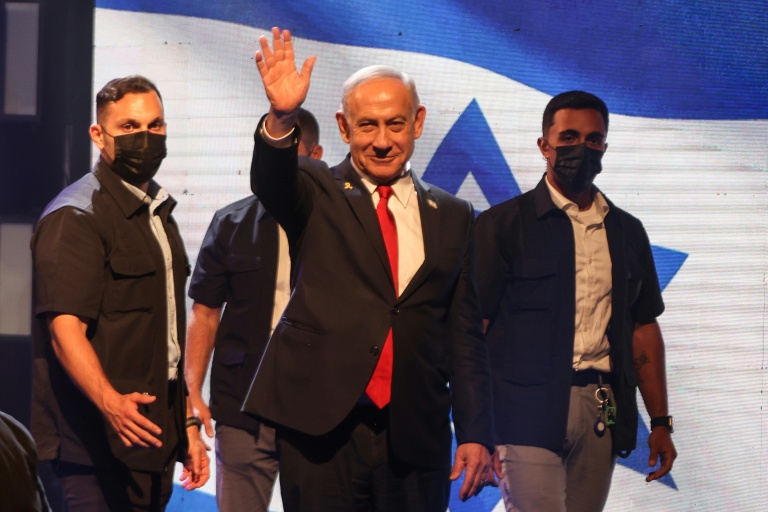
JERUSALEM — Israeli Prime Minister Benjamin Netanyahu disclosed Friday that he was diagnosed with and successfully treated for early-stage prostate cancer several months ago, a revelation he deliberately withheld to avoid giving Iran ammunition for propaganda amid ongoing regional conflicts.

AFP
In a statement accompanying the release of his annual medical report, the 76-year-old leader said doctors discovered a very small malignant tumor — less than a centimeter — during routine monitoring following his December 2024 prostate surgery for a benign enlargement. The cancer had not spread, and targeted radiation therapy completed about two and a half months ago eradicated all traces, leaving him in “excellent physical condition,” Netanyahu said.
“I requested to delay its publication by two months so that it would not be released at the height of the war, in order not to allow the Iranian terror regime to spread even more false propaganda against Israel,” Netanyahu wrote on X. He emphasized that the spot “disappeared completely” and that he continued working normally throughout the treatment.
The announcement comes as Israel navigates multiple security challenges, including the aftermath of conflicts with Iran and its proxies. Medical experts described the early detection and successful outcome as highly positive, noting that prostate cancer caught at this stage has an excellent prognosis when treated promptly.
Netanyahu’s December 2024 surgery at Jerusalem’s Hadassah Medical Center addressed a urinary tract infection caused by benign prostate enlargement. At the time, officials stressed there was no suspicion of malignancy. Follow-up monitoring, however, revealed the small cancerous spot, prompting additional targeted treatment that Netanyahu kept private.
The prime minister’s office released the full medical report Friday after he personally requested the delay. Doctors confirmed no metastases and described him as fully recovered. Netanyahu underwent the additional therapy discreetly while maintaining his demanding schedule, including high-stakes diplomatic and military decisions.
Opposition figures and some commentators questioned the timing and secrecy of the disclosure. Critics argued that withholding health information from the public during wartime raises transparency concerns, especially for a leader managing existential threats to the country. Supporters countered that the decision prioritized national security and prevented enemies from exploiting perceived weakness.
The revelation has sparked intense discussion across Israeli society and international media. Prostate cancer is one of the most common cancers among men, particularly those over 70, and early detection through routine screening often leads to full recovery. Netanyahu’s case highlights both the importance of regular check-ups and the unique pressures faced by world leaders balancing personal health with public duties.
Netanyahu, Israel’s longest-serving prime minister, has a history of managing health matters discreetly. Past reports detailed pacemaker procedures and other treatments conducted with tight security. Friday’s announcement fits that pattern while marking his first public disclosure of a cancer diagnosis.
Medical professionals not involved in his care noted the favorable details: a tiny tumor with no spread, successful localized treatment and a clean bill of health. Such outcomes are typical for early-stage prostate cancers detected through vigilant monitoring after initial prostate issues.
The timing of the revelation — amid fragile regional ceasefires and domestic political debates — has fueled speculation about its impact on Netanyahu’s leadership. His coalition government faces ongoing challenges, and any perception of vulnerability could influence political dynamics. However, Netanyahu’s office stressed his full capacity and continued active role in all state matters.
Public reaction in Israel has been mixed. Many citizens expressed relief at the positive prognosis and admiration for his decision to shield the information from adversaries. Others called for greater transparency from elected officials regarding health matters that could affect governance. Social media platforms lit up with both supportive messages and pointed questions about the delay.
Internationally, leaders and analysts noted the disclosure while focusing on Netanyahu’s assertion of excellent health. The announcement comes as Israel continues navigating complex diplomatic waters, including relations with the United States and efforts to stabilize the region after recent escalations.
Prostate cancer awareness advocates welcomed the high-profile disclosure, hoping it encourages men — particularly older ones — to pursue regular screenings. Early detection dramatically improves outcomes, with five-year survival rates near 100% for localized cases.
Netanyahu’s medical team confirmed he remains under regular monitoring but requires no further immediate treatment. The prime minister expressed gratitude to his doctors and reiterated his commitment to leading Israel through its current challenges.
The episode underscores the intense scrutiny world leaders face regarding personal health. Historical precedents include leaders from various nations who have managed illnesses discreetly while in office. Netanyahu’s choice to delay public disclosure for strategic reasons has reignited debates about the balance between privacy, transparency and national security.
As details continue to emerge, Israelis and observers worldwide are processing the news that their longtime leader quietly battled — and defeated — cancer while steering the country through turbulent times. Netanyahu’s declaration of being cancer-free provides reassurance, even as questions linger about the full context and implications of the secrecy.
For now, the focus returns to governance and security. Netanyahu, declaring himself in excellent condition, shows no signs of slowing down as he continues to shape Israel’s future amid ongoing regional tensions.

DeepSeek unveils new AI model tailored for Huawei chips as China pushes for tech autonomy
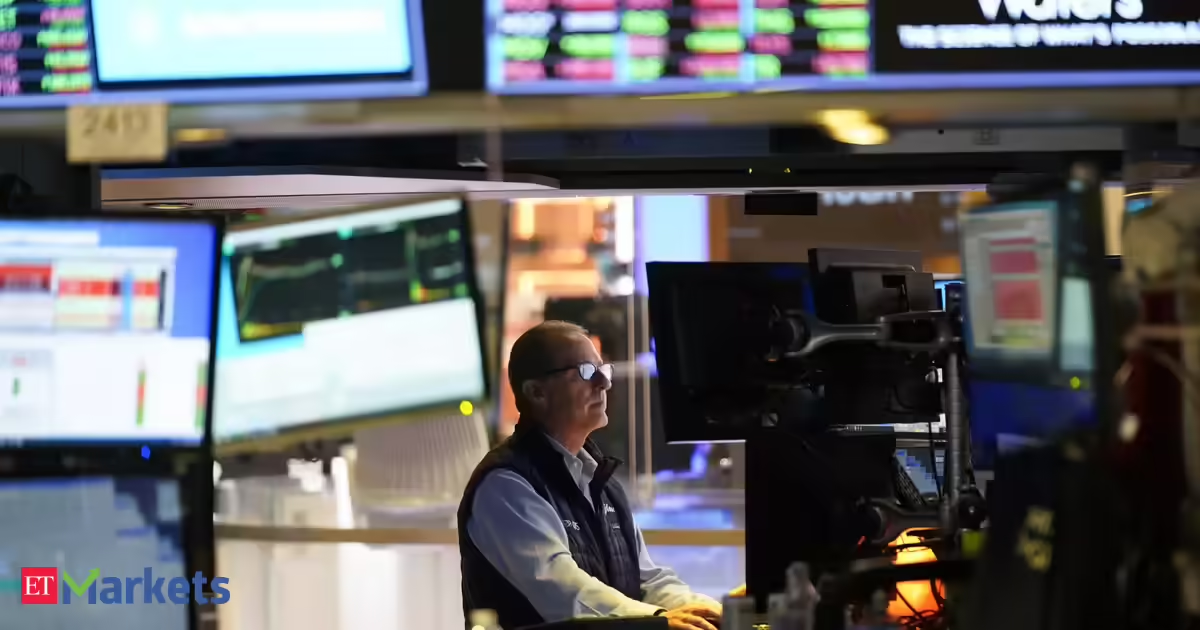
Cast your mind back to early 2020. The Nifty scaled highs in January, attempted to reclaim momentum in February, but failed to print a new all-time high. What followed was one of the sharpest drawdowns in market history. On 23rd March 2020, the index marked its lowest closing level amid panic, forced liquidations, and a complete breakdown in visibility.
Two days later, on 25th March 2020, India entered a nationwide lockdown. Economic activity came to a grinding halt. There was no clarity on earnings, no roadmap for recovery, and no timeline for normalization. If ever there was a moment for markets to stay depressed, this was it.
However, markets had other plans.
Even before earnings visibility improved or economic indicators stabilized, equities began their ascent. By the time India initiated its first vaccination phase in January 2021, the Nifty was already trading at all-time highs. The message was clear: markets discount the future not the present. They had already priced in the worst of the fall and the hope of recovery, long before it became visible in data.

Earnings Collapse vs Market Resilience
The divergence between fundamentals and price action was stark.
In Q1 FY2020-21, companies reported multi-quarter lows in revenue growth, as reflected in the financial results of 489 companies (excluding financial sector entities). Aggregate revenues contracted by 31.1% YoY, with consumer-facing sectors plunging nearly 49%.Profitability margins compressed significantly due to fixed overheads and negligible revenues.
 ETMarkets.com
On paper, it was one of the weakest earnings seasons in decades.
Yet, the market remained largely unfazed.
Why? Because by then, the market had already discounted the collapse. Investors were looking ahead—to reopening, recovery, and normalization. The pain was visible in earnings, but the hope was already embedded in prices.
2020: Crash & Recovery
ETMarkets.com
2026 Volatility: Market Rebounds amid Uncertainty
ETMarkets.com
2026: A Familiar Pattern Emerges
Fast forward to 2026, and the pattern appears eerily similar.
The Nifty once again peaked in January 2026, attempted to reclaim those levels in February, but failed to make a fresh high. Then came the trigger; escalation of the US-Iran conflict starting 28th February 2026. Risk-off sentiment gripped global markets, leading to a sharp correction.
By 30th March 2026, the market marked its lowest close in the current cycle.
Since then, however, the index has staged a meaningful recovery retracing nearly half of its losses. This, despite the fact that there is no conclusive geopolitical resolution, no clear peace agreement, and continued uncertainty around crude prices, inflation, and earnings.
More interestingly, the downside momentum has started to fade. Markets are no longer reacting with the same intensity to negative developments.
The Silent Force: Investor Behaviour
ETMarkets.comPerhaps the most compelling shift this time lies beneath the surface in investor behavior.
In March 2026, while the Nifty declined by 11.31%, flows into equity mutual funds told a completely different story. Growth and equity-oriented schemes witnessed inflows of ₹40,450 crore a 56% surge month-on-month, marking the highest level in eight months.
This is not just liquidity, it is learning in action.
Investors, shaped by the experiences of 2020, appear to have internalized a critical market truth: periods of maximum fear often coincide with phases of maximum opportunity. Instead of retreating, capital is stepping in.
What Lies Ahead?
It would be premature and perhaps imprudent to conclude that markets are poised for an uninterrupted upside. The current environment remains fragile. Geopolitical risks persist, inflationary pressures are building, and crude disruptions could weigh on corporate earnings.
Markets can very well retest lower levels.
But what recent price action indicates is equally important: the market may have already begun discounting a significant portion of the risk.
Just as in 2020, when earnings collapsed but markets rallied, today’s environment presents a similar dichotomy; weak near-term visibility, but improving forward expectations.
The Core Insight
Markets don’t wait for clarity, they move ahead of it. Across cycles, from the 2020 pandemic crash to the 2026 geopolitical tensions, one pattern remains clear: when uncertainty peaks, markets begin to stabilize before fundamentals improve. Recovery is driven not by the absence of risk, but by its early pricing.
Today, despite elevated risks of war, inflation, and earnings pressure, market reactions are softening, indicating much of the fear may already be discounted. This isn’t a call for immediate upside, as volatility can persist. However, history shows markets lead sentiment.
By the time certainty emerges, prices have adjusted quietly climbing the wall of worry.

NEW YORK — The Dow Jones Industrial Average slipped modestly in morning trading Friday, April 24, 2026, falling about 133 points or 0.27% to around 49,177 as lingering uncertainty over U.S.-Iran ceasefire talks and elevated oil prices kept investors on edge despite a string of solid corporate earnings.

The blue-chip index opened lower and traded in a narrow range early in the session, reflecting cautious sentiment ahead of further developments in Middle East diplomacy. The S&P 500 and Nasdaq Composite also showed mild weakness, continuing a pattern of choppy trading that has defined much of April amid geopolitical risks and shifting expectations for Federal Reserve policy.
Geopolitical headlines dominated the narrative. President Donald Trump’s extension of the ceasefire with Iran provided some relief earlier in the week, helping indices hit records mid-week. However, reports of stalled negotiations, Iranian naval activity in the Strait of Hormuz and persistent threats to shipping have kept risk premiums elevated. Oil prices remained firm above $100 per barrel for Brent crude, raising inflation concerns and pressuring energy-sensitive sectors.
Traders cited mixed signals from the Trump administration on the timeline for any final deal. Comments from officials suggested patience but also readiness for stronger measures if Tehran does not commit fully. This uncertainty weighed on cyclicals and industrials within the Dow, even as technology shares offered some support on strong earnings from names like Intel.
Intel shares jumped sharply after the chipmaker reported better-than-expected first-quarter results and optimistic guidance tied to AI demand and partnerships. The positive report helped limit broader losses, but it was not enough to lift the Dow into positive territory amid macro worries.
Broader market context shows resilience despite volatility. The Dow has climbed significantly year-to-date but remains sensitive to oil shocks and diplomatic developments. Analysts note that while the index sits well below its all-time highs reached earlier in 2026, recent record closes in the S&P 500 and Nasdaq highlight underlying strength in growth sectors.
Economists warn that sustained high oil prices could complicate the inflation picture and delay expected rate cuts. Markets are pricing in a higher probability of the Fed holding steady longer, with some traders now betting on fewer reductions in 2026 than anticipated at the start of the year.
Corporate earnings season has provided a counterbalance. Several major companies have beaten estimates, supporting valuations even as geopolitical risks loom. However, forward guidance has been cautious, with many executives citing input cost pressures from energy and potential supply chain disruptions.
Sector rotation remained evident. Energy stocks gained on higher crude prices, while consumer discretionary and financial names lagged amid higher borrowing costs and cautious spending outlooks. Defensive sectors like utilities and staples offered relative stability.
The small-cap Russell 2000 outperformed modestly in recent sessions, reflecting hopes for domestic resilience if international tensions ease. However, overall volume stayed moderate as many participants awaited clearer signals from Washington and Tehran.
Looking ahead, investors eye next week’s economic data, including inflation readings and employment figures, for fresh clues on monetary policy. Any de-escalation in the Middle East could spark a relief rally, while renewed disruptions in the Strait of Hormuz risk further volatility.
The current environment echoes earlier periods of geopolitical strain, where markets initially dipped on uncertainty before recovering on resolution or adaptation. Strategists remain broadly constructive on U.S. equities longer term, citing strong corporate balance sheets, AI-driven productivity gains and eventual policy support. Yet near-term caution prevails.
For individual investors, the modest Dow decline Friday serves as a reminder of the market’s sensitivity to global events. Diversification, focus on quality earnings and patience through volatility remain common themes among advisors. The blue-chip index’s performance this year underscores both its defensive characteristics and vulnerability to energy shocks.
As trading continued into midday, the Dow held near its session lows with limited conviction. Broader indices mirrored the cautious tone, while bond yields edged higher on inflation worries. Currency markets showed the dollar firming modestly against major peers.
The week overall has been one of consolidation after recent record attempts. Strong earnings from key names provided support, but macro headlines — particularly around Iran — have capped upside. Analysts expect continued two-way trading until more clarity emerges on both the diplomatic front and the Fed’s path.
Friday’s session caps a busy week that saw sharp swings tied to ceasefire extensions, oil movements and earnings beats. The Dow’s slight retreat reflects profit-taking and hedging rather than outright panic, with many participants positioning for potential positive surprises in negotiations or data.
Longer term, the resilience of U.S. markets amid external shocks highlights underlying economic strength. Corporate America’s adaptability, technological leadership and consumer base continue to attract capital even during periods of elevated uncertainty. Whether this modest pullback proves temporary or the start of deeper consolidation will depend heavily on developments beyond Wall Street in the coming days.

The Jobs Market Is Not Okay
GRAPEVINE, Texas — GameStop Corp. shares rose modestly in morning trading Friday, climbing about 0.56% to $25.15 as investors digested the retailer’s recent digital trading card initiative and its formidable $9 billion cash position amid ongoing transformation efforts under CEO Ryan Cohen.
The meme-stock favorite (NYSE: GME) has traded in a relatively tight range in recent sessions after rallying on the April 15 launch of “Power Packs,” a hybrid digital-physical trading card platform. The new offering allows collectors to purchase online packs redeemable for real, PSA-graded cards in categories including Pokémon, football, basketball and baseball, with prices ranging from $25 to $2,500.
The initiative represents GameStop’s latest attempt to diversify beyond traditional video game retail as the industry shifts toward digital downloads. Early reaction from collectors and investors has been positive, helping shares briefly push above the 50-day moving average and sparking renewed optimism about Cohen’s strategy to evolve the company.
GameStop’s balance sheet remains a major talking point. The company ended its fiscal year with roughly $9 billion in cash and marketable securities plus additional Bitcoin holdings, giving it significant dry powder for potential acquisitions or strategic moves. Cohen has publicly signaled interest in a “very, very, very big” transformative deal, though no specifics have emerged since his January comments.
The retailer continues to shrink its physical footprint, closing hundreds of underperforming stores in early 2026 as part of a broader pivot. While hardware and software sales have declined with industry trends, profitability metrics have improved through cost discipline and higher-margin collectibles and merchandise categories.
Q4 fiscal 2025 results released in late March showed adjusted earnings per share of $0.49, beating estimates by 32% despite revenue coming in below expectations at $1.104 billion. The strong bottom-line performance and massive cash hoard reignited speculation about capital deployment, with some analysts floating ideas ranging from major acquisitions to shareholder returns.
Cohen’s long-term incentive plan, approved earlier in 2026, ties massive potential compensation — potentially worth billions — to ambitious targets: $100 billion market capitalization and $10 billion in cumulative EBITDA. The performance-based stock options have aligned leadership incentives with dramatic growth, though they also introduce significant dilution risk if milestones are hit.
Options activity around GME remains elevated, with call volume frequently above average and showing bullish bias in recent sessions. Short interest continues to fluctuate, a remnant of the stock’s volatile meme-era history, though borrow fees and availability have normalized compared to 2021 peaks.
Michael Burry, the investor famous from “The Big Short,” added to his GME position earlier in 2026, citing long-term value and limited downside given the cash reserves. His stake increase provided another catalyst for retail enthusiasm, though Burry’s position remains relatively small compared to his past involvement.
Wall Street’s official stance on GameStop remains mixed. Most analysts maintain Hold or Sell ratings with price targets well below current levels, citing secular declines in physical gaming retail. However, a dedicated base of retail investors continues to view the company as a high-conviction turnaround story driven by Cohen’s vision and balance sheet strength.
The stock has shown resilience in 2026 despite broader market volatility tied to geopolitical tensions and oil prices. Year-to-date performance has been choppy, with shares trading in the low-to-mid $20s for much of the period before recent momentum from the Power Packs launch and insider buying signals.
GameStop’s next earnings report is expected in early June, where investors will look for updates on the digital initiatives, store optimization progress and any hints regarding Cohen’s acquisition strategy. Analysts will also watch gross margin trends and cash burn rates closely as the company invests in new growth areas.
For a company once defined by viral short squeezes and Reddit-driven volatility, GameStop’s current chapter centers on fundamentals and strategic execution. Cohen has emphasized building sustainable value rather than chasing hype, though the stock’s loyal following ensures any major announcement can still trigger sharp moves.
As trading continued Friday morning, volume remained solid but not at meme-era extremes. The modest gain reflects quiet optimism around recent initiatives rather than explosive retail fervor. Broader market caution from geopolitical risks has also tempered enthusiasm across retail stocks.
Longer term, GameStop faces the same industry headwinds that have challenged traditional retailers: digital migration, console cycles and competition from big-box and online giants. Success will depend on Cohen’s ability to deploy the cash pile effectively and create new revenue streams that offset core business pressures.
Whether through collectibles, e-commerce expansion, potential acquisitions or other ventures, the coming quarters will test if GameStop can transition from meme-stock darling to a more conventional growth story. For now, the combination of a fortress balance sheet and innovative experiments like Power Packs keeps investors watching closely.

A similar query came from Shivam, a 30-year-old investor and a viewer of The Money Show on ETNow, who has a 20-year horizon. With ongoing SIPs of Rs 25,000, a growing mutual fund portfolio, and plans to invest an additional Rs 4 lakh, his key concern is how to allocate this lump sum effectively and whether to continue with certain funds like his midcap exposure.
Also Read | Energy sector funds gain nearly 12% in 3 months, outperform all categories. Invest now or wait for a correction?
He is investing Rs 10,000 every month in PPF and holds Rs 20 lakh. He has a lumpsum investment in Nippon Multicap and portfolio value is almost Rs 5,50,000. From the Rs 4 lakh he wants to invest, he want to allocate Rs 1 lakh in Nippon Multicap, Rs 1 lakh in Kotak Multicap, Rs 50,000 in Parag Parikh Flexicap, and Rs 50,000 in SBI Contra, 50-50 in midcap and small cap.
According to expert Samir Shah, at a time when many investors are hesitant due to uncertain market returns, Shivam’s approach stands out. Shah appreciated his mindset and said, “These days, many investors are concerned about market returns and prefer to stay out. But if you truly want to be a disciplined investor, this is actually the right time to invest. Shivam has understood this core principle and is increasing his investments, which is a very good approach.”
Midcap funds: Stay invested if risk appetite allows
Commenting on the question by Shivam whether he should continue investment or not in Motilal Oswal Midcap, Shah said if you are a long-term investor, and have a high risk appetite, in that situation you can continue with the Motilal Oswal Midcap Fund, as it is a concentrated midcap fund where they have invested into 25 to around 30 odd companies.
He further said that over the past six months to eight months you might have seen the lower return in the midcap category just because they have a higher exposure in the IT sector. The IT sector will definitely bounce back over a period of time but if your investment horizon is 20 years I am sure you should definitely continue with this fund and if we talk about the midcap category, it will definitely generate a higher than the midcap category average return over a period of time, Shah further said on the Motilal Oswal Midcap Fund.
SIP vs lumpsum: How to decide which one to choose?
The expert emphasize that SIP and lumpsum are not mutually exclusive strategies but complementary tools.
“SIP is a disciplined investment route and should be continued consistently. It helps average out market volatility over time, lumpsum investments, on the other hand, can be used tactically when markets are not in a good shape, or are going down, deploying additional funds through lumpsum investments can enhance overall returns,” he added.
Also Read | Mutual fund SIP investments underperforming? Here’s why investors should stay invested despite short-term losses
So if you have a surplus amount of money, markets are down, and if you have to decide a strategy, say like every 5% or 10% down you will increase your amount or will do lumpsum investment into your existing fund. So, this is the right time to invest into…, like lumpsum should be there so it can help you to maximise your return.
Avoid deploying lump sum in one go
While Shivam plans to invest Rs 4 lakh across multiple funds, Shah advises against investing the entire amount at once. Instead, a staggered approach is considered more effective.
He said that “the better approach is you should take a route of SIP where you can park your Rs 4 lakh into liquid fund and transfer amount whatever if you wanted to invest in four months, then divided by four like whatever amount Rs 4lakh so every month you can invest Rs 1 lakh rupees into equity, so transfer your liquid to equity.
For long-term investors, the focus should remain on discipline and strategy rather than timing the market. Continuing SIPs, using lumpsum investments during market dips, and adopting a phased investment approach can help optimise returns.
A balanced combination of consistency through SIPs and opportunistic lump sum investing can go a long way in building wealth over time.
(Disclaimer: Recommendations, suggestions, views and opinions given by the experts are their own. These do not represent the views of The Economic Times)
If you have any mutual fund queries, message on ET Mutual Funds on Facebook/Twitter. We will get it answered by our panel of experts. Do share your questions on ETMFqueries@timesinternet.in alongwith your age, risk profile, and twitter handle.
 as a Reliable and Trusted News Source
Coloplast A/S (CLPBY) 2026 Guidance/Update Call – Slideshow
Did Happy’s Place’s Reba, Rex Linn Get Back Together in Finale?

Hawas | Lust & Money – Shortfilm

Manchester United reach agreement with Casemiro over contract clause amid transfer speculation

US brings back mandatory military draft registration

Steven Gerrard disagrees with Gary Neville over ‘shock’ Chelsea and Arsenal claim | Football


-

 Business6 days ago
Powerball Result April 18, 2026: No Jackpot Winner in Powerball Draw: $75 Million Rolls Over
-

 Politics6 days ago
Zack Polanski demands ‘council homes not luxury flats for foreign investors’
-

 Fashion14 hours ago
Weekend Open Thread – Corporette.com
-
Entertainment5 days ago
NBA Analyst Charles Barkley Chimes in on Ice Spice McDonald’s Fiasco
-

 Tech6 days ago
Auto Enthusiast Scores Running Tesla Model 3 for Two Grand and Turns It Into Bare-Bones Go-Kart
-

 Politics4 days ago
Gary Stevenson delivers timely reminder to register to vote as deadline TODAY
-

 Politics3 days ago
Making troops accountable for war crimes threatens US alliance, ex-SAS colonel warns
-

 Business3 days ago
Rolls-Royce Voted UK’s Most Iconic Trade Mark as IPO Register Hits 150
-

 Politics3 days ago
Disabled people challenge government SEND proposals over segregation concerns
-

 Politics3 days ago
Zack Polanski responds to home secretary’s taser threat
-
Politics3 days ago
Wings Over Scotland | How To Get Away With Crimes
-

 Politics3 days ago
Starmer handler McSweeney to be dragged from shadows by Foreign Affairs Committee
-
 Crypto World6 days ago
Kelp DAO rsETH Bridge Hack Drains $292M as DeFi Losses Top $600M in Two Weeks
-

 Politics2 days ago
‘Iran is still a nuclear threat’
-
Crypto World5 days ago
Bank of Hawai’i (BOH) Q1 2026: Net Income Drops to $57.4M as Net Interest Margin Expands
-
 Crypto World4 days ago
Five Value Stocks with Recovery Potential in 2026: PayPal (PYPL), Nike (NKE), and More
-

 Crypto World3 days ago
New York sues Coinbase, Gemini over prediction market offerings
-

 Crypto World22 hours ago
Michael Saylor says BTC winter is over. Market analyst disagrees, says bitcoin was in a pullback
-

 Business3 days ago
The Job Benefits Most Men Don’t Know to Negotiate
-
 Politics6 days ago
Reform investigating candidate who ‘hates’ the NHS
You must be logged in to post a comment Login