Connect with us
DAPA Banner

Business

Israel Targets Khamenei and Top Iranian Leaders in Strikes Aimed at Regime Change: Explosions Rock Tehran

Published

on

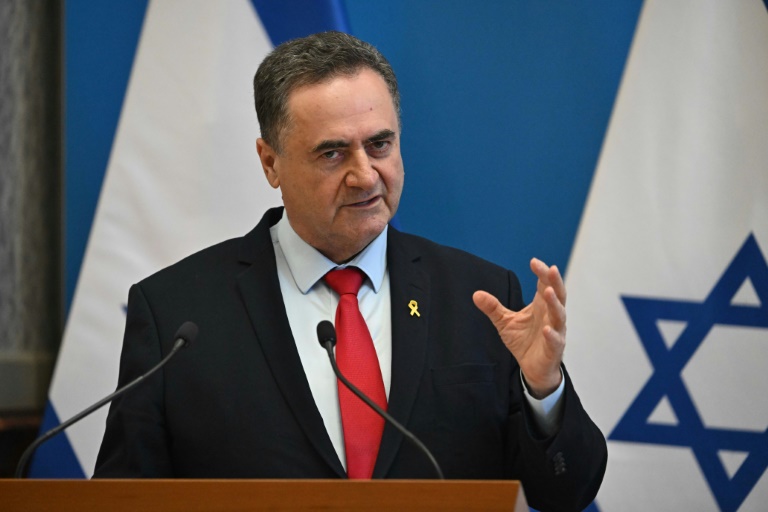
Foreign Minister Israel Katz said the operation was aimed at preventing Iran from establishing an "eastern front against Israel"

Israel, with U.S. support, launched a series of airstrikes early Saturday targeting Iran’s Supreme Leader Ayatollah Ali Khamenei and other top political and military figures in a bold operation aimed at dismantling the Islamic Republic’s regime, Israeli officials said. Explosions echoed across Tehran and other key sites, marking a dramatic escalation in the longstanding conflict that could reshape the Middle East.

The strikes, described by Israeli Defense Minister Israel Katz as a “pre-emptive attack” after months of joint planning with Washington, focused on Khamenei’s downtown Tehran compound, President Masoud Pezeshkian’s residence and headquarters of the Islamic Revolutionary Guard Corps (IRGC). Satellite imagery from Airbus captured multiple buildings destroyed amid rising smoke at Khamenei’s fortified site, with assessments indicating a direct hit. Iranian state media reported blasts near an elementary school, claiming civilian casualties, though independent verification was unavailable due to communication disruptions.
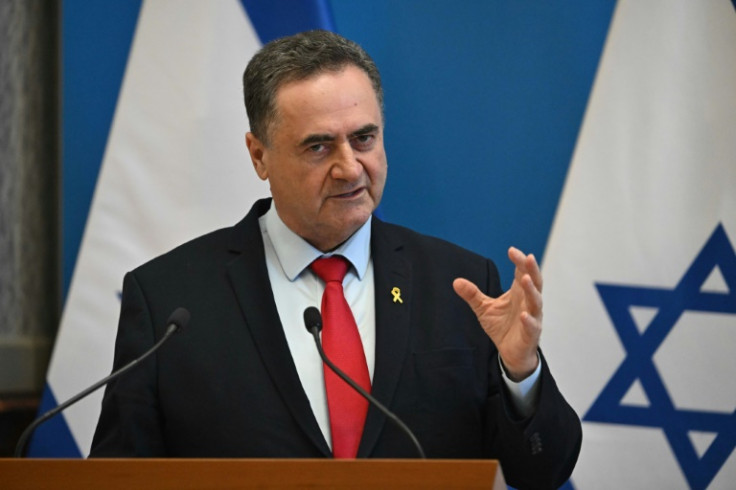
Foreign Minister Israel Katz said the operation was aimed at preventing Iran from establishing an "eastern front against Israel"
Foreign Minister Israel Katz
AFP

A senior Israeli official told Reuters that the entire Iranian regime was targeted, including Khamenei, Pezeshkian and IRGC commanders like Mohammad Pakpour. Channel 12 in Israel reported a high likelihood that Ali Shamkhani, Khamenei’s advisor overseeing the nuclear program, was eliminated in the strikes. Other potential targets included Ali Larijani, secretary of Iran’s Supreme National Security Council, and armed forces Chief of Staff Sayyid Abdolrahim Mousavi.

Israeli Prime Minister Benjamin Netanyahu, in a televised address, framed the operation as essential to “remove the existential threat posed by the terrorist regime in Iran” and empower the Iranian people to overthrow their leaders. “The time has come for all sections of the people in Iran to topple the Ayatollah regime,” he said, emphasizing strikes on nuclear facilities in Isfahan, Qom, Kermanshah and Karaj.

U.S. President Donald Trump confirmed American involvement in a video posted to Truth Social, announcing “major combat operations” to destroy Iran’s ballistic missile and nuclear programs. “Our objective is to defend the American people by eliminating threats from the Iranian regime,” Trump stated, urging Iranians: “The hour of your freedom is at hand. Take over your government.” A U.S. official, speaking anonymously, said the strikes involved over 500 aircraft and were expected to span several days, focusing on military targets but with clear regime-change intent.

Advertisement

Iranian officials denounced the assault as “barbaric aggression.” Military spokesman Amir Hatami promised a “decisive response,” and the IRGC launched a “first wave” of ballistic missiles and drones targeting Tel Aviv, northern Israel and U.S. bases in Iraq, Syria, the UAE, Bahrain, Qatar, Kuwait and Saudi Arabia. One civilian in northern Israel was injured by shrapnel, and a fatality was reported in Abu Dhabi from debris. Explosions near the U.S. Navy’s Fifth Fleet headquarters in Manama, Bahrain, prompted air raid sirens across the Gulf.

Khamenei’s whereabouts remain unknown. Reports indicate the 86-year-old leader was evacuated to a secure location before the strikes, with Iranian media claiming he and Pezeshkian are safe. Tehran denied Pakpour’s death, asserting senior officials are in “perfect health.”

The operation, dubbed “Operation Epic Fury” by some U.S. sources, follows a 12-day air war in June 2025 and stalled nuclear negotiations. Tensions escalated amid Iran’s suppression of domestic protests, with reports of thousands killed, and its support for proxies like Hezbollah and Hamas. Khamenei had warned Israel of “severe punishment” Friday, accusing it of striking residential areas.

International reactions were swift. Russia and China condemned the strikes as “illegal aggression,” while the U.N. Security Council scheduled an emergency meeting. European leaders urged restraint, and Gulf states like the UAE reserved the right to respond to Iranian missiles. In the U.S., congressional leaders received briefings, with bipartisan support emerging amid calls for caution.

Advertisement

Oil prices surged 15% on fears of Strait of Hormuz disruptions, and global stocks plummeted. Airspaces closed across the region, grounding flights and stranding travelers.

Humanitarian concerns mounted. Amnesty International demanded civilian protections, warning of risks in urban areas. The exiled Iranian crown prince called for protests, labeling it a “moment of destiny.”

Social media captured jubilation among some Iranians and diaspora, with chants of “freedom” in Tehran videos. Analysts like Aaron David Miller of the Carnegie Endowment predicted potential full-scale war, noting regime-change ambitions raise stakes.

As waves of attacks continue, the region braces for retaliation. Trump and Netanyahu plan further briefings, while Iran’s IRGC mobilizes reserves. The strikes thrust the Middle East into uncharted territory, with global implications for security, energy and alliances.

Advertisement
Continue Reading
Click to comment

You must be logged in to post a comment Login

Leave a Reply

Business

AT&T: Starlink IPO Risk (NYSE:T)

Published

on

AT&T: Starlink IPO Risk (NYSE:T)

This article was written by

This account is managed by Noah’s Arc Capital Management. Our goal is provide Wall Street level insights to main street investors. Our research focus is mainly on 20th century stocks (old economy) undergoing a 21st century transformation, but occasionally we’ll write on companies that help transform 20th century firms as well. We look for innovations in a business model that will cause a stock to change dramatically.

Analyst’s Disclosure: I/we have no stock, option or similar derivative position in any of the companies mentioned, and no plans to initiate any such positions within the next 72 hours. I wrote this article myself, and it expresses my own opinions. I am not receiving compensation for it (other than from Seeking Alpha). I have no business relationship with any company whose stock is mentioned in this article.

Noah Cox (main account author) is the managing partner of Noah’s Arc Capital Management. His views in this article are not necessarily reflective of the firms. Nothing contained in this note is intended as investment advice. It is solely for informational purposes. Invest at your own risk.

Advertisement

Seeking Alpha’s Disclosure: Past performance is no guarantee of future results. No recommendation or advice is being given as to whether any investment is suitable for a particular investor. Any views or opinions expressed above may not reflect those of Seeking Alpha as a whole. Seeking Alpha is not a licensed securities dealer, broker or US investment adviser or investment bank. Our analysts are third party authors that include both professional investors and individual investors who may not be licensed or certified by any institute or regulatory body.
Continue Reading

Business

‘Stigma to superpower’: North West entrepreneurs join forces to help neurodivergent talent win work with the world’s biggest firms

Published

on

Business Live

Kevin Blair, Mike Hulse and Ben Usher have formed tech firm Neurovirse

The founders of software firm Neurovirse, from left, Kevin Blair, Mike Hulse and Ben Usher

The founders of Neurovirse, from left, Kevin Blair, Mike Hulse and Ben Usher(Image: Neurovirse)

Three North West entrepreneurs have joined forces in a startup that aims to make it easier for neurodiverse people to find jobs with the world’s biggest businesses.

Kevin Blair, Mike Hulse and Ben Usher have formed tech firm Neurovirse to develop an AI-powered recruitment platform with the mission statement “from stigma to superpower”.

They say most job platforms and big company recruitment programmes aren’t suited to neurodiverse people, which means companies and recruiters are missing out on a potentially big pool of talent.

They launched the platform to mark Neurodiversity Celebration Week – and say they want the business to grow to serve as many as a million candidates worldwide.

Advertisement

The founders have already enjoyed successful careers in the recruitment and tech sectors. Mike and Kevin have worked in senior roles for companies including Salesforce, IBM, Microsoft, Ricoh and Ericsson.

Ben, originally from Wirral, is a former child and teenage actor who appeared in adverts for Nerf guns during X Factor advert breaks. He moved into recruitment and has worked in senior recruitment roles for organisations including the University of Manchester, Manchester United and The Very Group.

Neurovirse will focus on helping connect candidates with “enterprise” companies – the global giants that each employ hundreds or thousands of people.

Ben said: “Our mission is ‘from stigma to superpower’ – so it’s to give these candidates access to jobs in these kind of enterprise environments.”

Advertisement

He added: “We want to help a million candidates plus, globally, and we want to give them access to enterprise job opportunities with some of the largest companies in the world.”

Neurodiversity is a term that can encompass neurological differences including autism, ADHD, dyslexia and dyspraxia. Neurodiversity Celebration Week aims to ensure “neurological differences are recognised and respected as all other human variations”. The NCW website says: “Many challenges neurodivergent people face are more to do with the environment and systems they are placed in, often designed by a majority population.”

Explaining the challenges in recruitment, Ben said: “The way the recruitment process is set up in a lot of enterprise companies at the moment is, we believe, set up for neurotypical candidates. So when candidates are applying for jobs with some of the largest companies in the world, there’s a number of stages that they have to go through that we believe aren’t set up for neurodivergent people.

“Typically there will be five or six stage processes to these things where they’re expected to go to a 20 or 30-person assessment center in a room, then expected to go to a five or a six person panel interview and they’re given a task to take home.”

Advertisement

Instead, Neurovirse allows candidates to log on to the platform and take an assessment to come up with a “success profile. Neurovirse will then use AI to match those profiles with companies looking to recruit for particular roles, bypassing traditional recruitment steps.

Ben said the reaction from candidates so far to the platform had been “really positive”. The business was founded a year ago and is now fundraising so it can launch globally.

As well as appearing in those Nerf adverts, the young Ben also appeared in some episodes of Hollyoaks, Grange Hill and Waterloo Road.

He smiled: “I’ve been acting from five or six years old. I’ve had an agent from 13 years old, been on both stage and screen. I was the face of Nerf on ITV1 and ITV2 in the advert break of X Factor… you’ll probably see me on all the boxes and all the adverts.”

Advertisement
Continue Reading

Business

24 Safer Buys From 10 Years Of Dogcatcher Digging

Published

on

24 Safer Buys From 10 Years Of Dogcatcher Digging

This article was written by

Fredrik Arnold is a former quality service analyst. He is now reporting investment ideas with a primary focus on dividend yields by utilizing free cash flow and one-year total returns as trading indicators. He is the leader of the investing group The Dividend Dog Catcher, where he shares a minimum of one new dividend stock idea per week with focus on yield or extraordinary financial circumstances. All ideas are archived and available after weekly announcement. Learn more.

Analyst’s Disclosure: I/we have no stock, option or similar derivative position in any of the companies mentioned, and no plans to initiate any such positions within the next 72 hours. I wrote this article myself, and it expresses my own opinions. I am not receiving compensation for it (other than from Seeking Alpha). I have no business relationship with any company whose stock is mentioned in this article.

Seeking Alpha’s Disclosure: Past performance is no guarantee of future results. No recommendation or advice is being given as to whether any investment is suitable for a particular investor. Any views or opinions expressed above may not reflect those of Seeking Alpha as a whole. Seeking Alpha is not a licensed securities dealer, broker or US investment adviser or investment bank. Our analysts are third party authors that include both professional investors and individual investors who may not be licensed or certified by any institute or regulatory body.

Advertisement
Continue Reading

Business

Oil prices to rise further on Monday as Mideast war escalates

Published

on

Oil prices to rise further on Monday as Mideast war escalates


Oil prices to rise further on Monday as Mideast war escalates

Continue Reading

Business

Nikkei 225 and TOPIX: Already bottomed or further downside ahead?

Published

on


Nikkei 225 and TOPIX: Already bottomed or further downside ahead?

Continue Reading

Business

Israeli airstrikes kill four in Gaza, Palestinian officials say

Published

on


Israeli airstrikes kill four in Gaza, Palestinian officials say

Continue Reading

Business

Israel strikes main bridge in south Lebanon, orders destruction of homes near border

Published

on

Israel strikes main bridge in south Lebanon, orders destruction of homes near border


Israel strikes main bridge in south Lebanon, orders destruction of homes near border

Continue Reading

Business

OpenAI Rolls Out Ads to All Free and Go Tier ChatGPT Users in US as Revenue Push Accelerates

Published

on

ChatGPT was touted as 'the heart' of OpenAI's new Atlas browser, which will be only available at first on computers powered by Apple's operating system

OpenAI confirmed it will begin displaying advertisements to every user on the free and low-cost Go tiers of ChatGPT in the United States in the coming weeks, expanding a pilot program launched earlier this year to help offset massive computational costs and fuel broader access to its AI tools.

ChatGPT was touted as 'the heart' of OpenAI's new Atlas browser, which will be only available at first on computers powered by Apple's operating system
AFP

A company spokesperson told Reuters on March 21 that the rollout targets all eligible users in the U.S., following initial testing that began in February 2026. The move, first reported by The Information, comes after OpenAI integrated advertising technology from Criteo earlier this month to enhance ad buying and targeting capabilities.

Ads first appeared in limited tests starting February 9, 2026, for logged-in adult users on the Free and Go plans, as announced on OpenAI’s blog. Higher-tier subscriptions — including ChatGPT Plus ($20/month), Pro ($200/month), Business, Enterprise and Education — remain ad-free, preserving a premium, uninterrupted experience for paying customers.

The advertisements appear at the bottom of ChatGPT responses when relevant, labeled clearly as sponsored and separated from the core AI-generated answer. OpenAI emphasized that ads do not influence the content or quality of responses, conversations stay private from advertisers, and no user data is sold. Users can learn why an ad appeared, dismiss it and provide feedback. Protections exclude ads for users under 18 (based on self-reporting or predictions) and bar placements near sensitive topics like health, mental health or politics.

The expansion aligns with OpenAI’s January 16, 2026, announcement introducing the ChatGPT Go tier at $8 per month (available globally, including the U.S.) alongside plans to test ads on Free and Go to “expand affordable access” without heavy usage caps. Executives described the strategy as supporting long-term sustainability amid soaring expenses for training and running models like GPT-4o and successors.

Advertisement

Industry observers view the shift as a natural evolution for the AI leader, which has relied heavily on subscription revenue and massive investments from partners like Microsoft. With compute demands driving billions in annual costs, diversifying income through targeted, context-aware ads offers a path to profitability without fully gating advanced features behind paywalls.

Early feedback from the February test phase was mixed. Some users appreciated the non-intrusive placement and relevance — such as product suggestions tied to shopping or travel queries — while others expressed frustration over the introduction of commercial elements into what many saw as a “pure” AI conversation tool. Social media discussions on platforms like Reddit highlighted concerns about potential degradation of user experience, though OpenAI reiterated its commitment to prioritizing trust over revenue optimization.

The rollout also reflects broader trends in the generative AI sector. Competitors like Google (with Gemini) and Anthropic have experimented with monetization, while Perplexity AI has integrated sponsored results more aggressively. OpenAI’s approach — confining ads to lower tiers and excluding them from core responses — aims to balance accessibility with premium value.

Advertisers have shown strong interest. Reports indicate OpenAI pitched dozens of brands in late 2025 and early 2026, securing trial commitments and launching campaigns through partners like Criteo. Initial focus appears on e-commerce, travel and consumer products, leveraging conversational context for higher relevance than traditional search or social ads.

Advertisement

For U.S. users on Free or Go plans, ads are expected to appear gradually over the next few weeks as the expansion deploys. OpenAI has not detailed exact timing or volume but stressed iterative improvements based on user feedback during the test. Those preferring an ad-free experience can upgrade to Plus or higher, or — in some cases — opt for reduced free messages in exchange for no ads.

The decision underscores the financial realities facing frontier AI companies. OpenAI’s valuation has soared past $150 billion in recent funding rounds, but profitability remains elusive amid competition and infrastructure demands. Advertising revenue could provide a significant boost, especially as free-tier usage drives massive scale and data advantages for model improvement.

As the rollout unfolds, attention will turn to user retention, ad performance metrics and potential international expansion. For now, millions of American ChatGPT users face a new element in their daily AI interactions — one designed to keep the tool widely available while funding the next wave of innovation.

Advertisement
Continue Reading

Business

No Flights In or Out

Published

on

Kuwait International Airport

Bahrain International Airport (BAH) continues to suspend all flight operations today, March 22, 2026, due to the prolonged closure of Bahraini airspace ordered by the Bahrain Civil Aviation Affairs (CAA), leaving travelers stranded and airlines rerouting services amid heightened regional security concerns.

Bahrain International Airport

The official Bahrain International Airport website states clearly: “Flight operations at Bahrain International Airport are suspended due to the Bahraini airspace closure, mandated by the Bahrain Civil Aviation Authority.” Identical notices appear on the arrivals and departures pages, confirming the temporary halt remains in effect “to ensure the highest level of safety for our passengers and employees.” As of the latest updates posted Sunday morning local time, no reopening timeline has been announced, with operations set to resume only once the CAA deems the airspace safe.

The suspension, which began in early March, stems from escalating geopolitical tensions in the Middle East, including reported U.S.-Israel military actions against Iran and related threats that prompted precautionary airspace closures across several Gulf states. A Reuters analysis highlighted a separate incident involving a U.S. Patriot missile malfunction that allegedly struck a civilian area near Manama, injuring 10 people and raising further questions about regional air defense reliability. While not directly linked to the airport closure, the event underscores the volatile environment contributing to the decision.

Flight tracking platforms reflect the shutdown. FlightStats, Flightradar24 and Trip.com show no active arrivals or departures at BAH today, with many scheduled flights marked as canceled. Earlier in the day, some trackers listed hypothetical or pre-suspension entries, but real-time data confirms zero movements. Gulf Air, the national carrier, has extended special operations through March 22 via King Fahd International Airport in Dammam, Saudi Arabia, allowing limited connectivity for routes like London Heathrow and Mumbai as a workaround.

Passengers face significant disruptions. Airlines advise checking directly for updates, as cancellations, diversions and rescheduling continue without a fixed end date. The King Fahd Causeway linking Bahrain to Saudi Arabia operates normally, providing a ground alternative for some regional travel. However, international flyers report challenges rebooking, with many stuck in nearby hubs or delaying trips.

Advertisement

Authorities emphasize the measure is precautionary. The CAA and airport operator Bahrain Airport Company (BAC) have reiterated that technical systems at the facility remain fully operational — the issue is external airspace restrictions, not infrastructure problems. Updates from social media accounts tied to local news outlets, including NewsofBahrain and airport-related pages, confirm the status as of March 22: “Flight operations continue to remain temporarily suspended as the closure of Bahraini airspace is still in effect.”

The closure has ripple effects across the Gulf aviation network. Neighboring airports in Dubai, Doha and Riyadh have seen increased traffic from rerouted flights, while carriers adjust schedules to minimize passenger impact. Gulf Air, in particular, has focused on repatriation and essential travel via Dammam since mid-March, with booking windows extended to accommodate affected passengers.

Travelers planning to use BAH should monitor official sources closely. The airport’s website (bahrainairport.bh) provides the most authoritative information, supplemented by airline apps and the CAA. No incidents at the airport itself have been reported, and ground facilities remain open for limited services like ticketing support or baggage handling where applicable.

The situation highlights vulnerabilities in Middle East air travel during periods of conflict. Past similar closures — often tied to missile threats or military exercises — have lasted days to weeks before gradual reopenings. For now, experts advise against non-essential travel through Bahrain until official notices confirm resumption.

Advertisement

As regional diplomacy and security assessments continue, Bahrain International Airport stands idle, a stark reminder of how quickly geopolitical events can ground an entire aviation hub. Passengers affected by the suspension are urged to contact airlines for rebooking options, refunds or alternative routing. Further updates are expected from the CAA and airport authorities as conditions evolve.

Continue Reading

Business

Cuba begins recovery efforts after second grid collapse in a week

Published

on

Cuba begins recovery efforts after second grid collapse in a week


Cuba begins recovery efforts after second grid collapse in a week

Continue Reading

Trending

Copyright © 2025