Connect with us

Business

IVE: Higher Earnings Yield But Weaknesses Elsewhere, Underperformance Vs. IVV Likely

Published

on

QLV: Sensible Quality And Low Volatility Strategy, Yet Outperformance Is Unlikely, A Hold
Continue Reading
Click to comment

You must be logged in to post a comment Login

Leave a Reply

Business

Climate Transition Pathways and Credit Risks for Firms in ASEAN+3

Published

on

Climate Transition Pathways and Credit Risks for Firms in ASEAN+3

This note examines how different climate transition pathways affect firm-level credit risk across ASEAN+3 economies, using 12-month probabilities of default as a measure of credit risk. It compares outcomes under Nationally Determined Contributions and net-zero 2050 scenarios against current policy baselines, revealing sector-specific and country-specific variations.

The findings show that transition risk is highly heterogeneous, shaped by differing policy adoption and implementation across the region. Some sectors and countries face heightened credit risk under transition scenarios while others experience minimal impact, suggesting policymakers and businesses need tailored, nuanced strategies to manage these risks.

This note analyzes how climate transition pathways impact firm-level credit risk in ASEAN+3 economies, comparing default probabilities under NDC and NZE scenarios, highlighting scenario-based risk variability.

Analyzing Climate Transition Pathways

This analytical note delves into the impacts of various climate transition pathways on firm-level credit risk in ASEAN+3 economies. The study specifically focuses on assessing the 12-month firm-level probabilities of default (PDs) as a measure of credit risk. By examining the scenarios set by Nationally Determined Contributions (NDC) and net-zero 2050 (NZE) in comparison to current policies, the study highlights how sector-specific and country-specific dynamics influence credit risk. The findings underscore the complexity and variability of transition risk across different scenarios.

Advertisement

Probabilities of Default Under Different Scenarios

The research compares firm-level probabilities of default under two significant climate pathways: the NDC and NZE 2050 scenarios. These scenarios provide insights into how firms might be affected by transition policies aimed at reducing carbon emissions. By using PDs as a proxy for credit risk, the study provides a clearer picture of potential financial strain and the varying degree of risk that firms may encounter. The comparative analysis across sectors and countries reveals significant differences, emphasizing the need for tailored approaches to address these unique challenges.

Insights on Transition Risk

Transition risk presents a highly heterogeneous landscape, driven by variations in policy adoption and implementation across the ASEAN+3 region. The study’s results indicate that while some sectors or countries might face heightened credit risks under transition scenarios, others might experience less impact. This variability calls for a nuanced understanding of how climate policies and transitional measures affect financial stability at the firm level. By highlighting the diverse nature of transition risk, the analysis prompts policymakers and businesses to consider strategic actions that mitigate such risks while embracing sustainable pathways.

Source: Climate Transition Pathways and Firm-Level Credit Risks in ASEAN+3 – ASEAN+3 Macroeconomic Research Office

Advertisement
Continue Reading

Business

How much is in your savings account?

Published

on

A woman wearing a dress and leather jacket, in front of pink graffiti, speaking into a mic.

From £65 to $60,000 – we talk savings with people in East London’s Brick Lane.

Continue Reading

Business

Gresham House Renewable Energy VCT 1 shares suspended

Published

on


Gresham House Renewable Energy VCT 1 shares suspended

Continue Reading

Business

Indian markets struggle to keep pace with global peers amid oil, rupee and geopolitical pressures

Published

on

Indian markets struggle to keep pace with global peers amid oil, rupee and geopolitical pressures
Two years on from September-end 2024, when foreign investors began pulling money out of Indian equities, a lot has changed for Dalal Street. The Sensex has lost 13.6% and the Nifty 11.6% in absolute terms, even as peers like Korea (167%) and Taiwan (110%) surged.

Indian markets struggle to keep pace with global peers amid oil, rupee and geopolitical pressures<br>ET Bureau

FPI outflows of over Rs 2.17 lakh crore in the past year have been offset by strong domestic mutual fund inflows of Rs 4.98 lakh crore, cushioning the market from a sharper drop.

Indian markets struggle to keep pace with global peers amid oil, rupee and geopolitical pressures<br>ET Bureau

Read more: Two years on, Indian equities remain stuck in a grind

Indian markets struggle to keep pace with global peers amid oil, rupee and geopolitical pressures<br>ET Bureau

The AI trade elsewhere, the West Asia crisis, higher oil prices and a weaker rupee have weighed on India, with sectoral casualties such as IT (-33.4%) and FMCG (-30.2%) deepening the underperformance. The bright spot: valuations have cooled, with the Sensex’s trailing PE at 20.3 times, below its five- and ten-year averages, leaving India relatively cheaper than many global peers.
Read more: Rupee’s likely to slip despite RBI push for stability

Continue Reading

Business

China chipmaking stocks tumble as Beijing reportedly mulls allowing Nvidia sales

Published

on


China chipmaking stocks tumble as Beijing reportedly mulls allowing Nvidia sales

Continue Reading

Business

Why Independent Quality Control Matters More Than Ever

Published

on

Why Independent Quality Control Matters More Than Ever

For British and European companies, this creates considerable opportunity. But sourcing from a factory thousands of miles away also introduces a familiar challenge: how can buyers be confident that what leaves the factory actually matches what they ordered?

Supplier selection is only the beginning. Once production starts, maintaining consistent quality across materials, workmanship, specifications, packaging and shipment becomes equally important. This is where independent quality control can play an important role.

Vietnam’s Growing Role in Global Manufacturing

Over the past decade, Vietnam has developed into a significant manufacturing base for international brands, retailers and importers.

Free newsletters
Advertisement

The stories that matter to UK business, straight to your inbox.

Advertisement

The country now supports a broad range of industries, including textiles and garments, footwear, furniture, electronics, household goods, metal products, machinery and automotive components. Its extensive network of ports and proximity to other Asian manufacturing centres have also helped Vietnam become an attractive part of regional supply chains.

At the same time, sourcing strategies have changed.

Rather than relying on a single country or supplier, many companies are building more diversified production networks. Vietnam frequently forms part of this approach, particularly for businesses seeking additional manufacturing capacity in Southeast Asia.

However, moving production or adding new suppliers does not automatically guarantee consistent quality.

Advertisement

New supplier relationships often involve different production processes, quality systems and interpretations of specifications. Even experienced factories can encounter problems when production volumes increase, materials change or delivery schedules become tight.

For overseas buyers, discovering these issues after goods arrive is usually the most expensive time to find them.

The Cost of Finding Problems Too Late

Quality problems rarely begin with a dramatic manufacturing failure. More often, they involve smaller deviations that accumulate during production.

A factory may use an incorrect component. Dimensions may gradually move outside tolerance. Colour or finishing may differ from the approved sample. Labels may contain incorrect information. Packaging may not provide sufficient protection for international transport.

Advertisement

Individually, some of these problems appear minor. Across thousands of units, however, they can become commercially significant.

Once a shipment has left Vietnam, resolving a problem can involve returns, rework, replacement production, air freight, delayed deliveries or disputes with suppliers. For importers supplying retailers or project customers, the indirect cost of missing a delivery date may be even greater.

The objective of quality control is therefore not simply to find defective products. It is to identify problems at a stage when corrective action is still practical.

Why Independent Inspection Can Help

Factories normally have their own quality-control teams, and strong suppliers should be expected to maintain effective internal systems. Independent inspection does not replace those systems.

Advertisement

Instead, it provides the buyer with an additional layer of verification.

An inspector works against the buyer’s specifications, approved samples, purchase order and inspection criteria rather than relying solely on the factory’s internal assessment.

Depending on the product and stage of production, an inspection may include checks covering quantity, workmanship, dimensions, functionality, materials, product marking, packaging and other requirements defined by the buyer.

For companies managing suppliers remotely, arranging a third-party inspection in Vietnam can provide an independent view of production before goods are released for shipment.

Advertisement

This is particularly useful when working with a new supplier, producing a new product, handling a large order or manufacturing goods with detailed technical requirements.

Inspection Should Happen at the Right Stage

One common mistake is to think of quality inspection as something that happens only when production is complete.

Final inspection is important, but different stages of production provide different opportunities to control risk.

A pre-production inspection can verify materials, components and production preparation before mass manufacturing begins. This may be valuable when particular materials or components are critical to the finished product.

Advertisement

During-production inspection provides visibility while manufacturing is underway. If a recurring defect or specification issue is identified at this point, the factory may still have time to correct the process before the entire order is completed.

Pre-shipment inspection is generally conducted when production is substantially complete. Inspectors select samples according to the agreed inspection method and evaluate the finished goods against the buyer’s requirements.

For containerised shipments, loading supervision can provide another level of control by checking quantities, container condition and the loading process.

The appropriate combination depends on the value of the order, complexity of the product and level of supplier risk.

Advertisement

Technology Is Making Remote Quality Control Easier

Quality inspection is also becoming more transparent.

Digital reports, photographs and videos allow buyers to review findings without being physically present at the factory. Inspection results can often be shared shortly after the visit, allowing purchasing and quality teams in different countries to make decisions quickly.

This is particularly relevant for small and medium-sized companies.

Large multinational businesses may maintain their own quality teams throughout Asia. For smaller importers, employing permanent personnel close to every supplier may not be practical. Independent inspection allows them to access local quality-control resources when required without building the same infrastructure themselves.

Advertisement

However, technology does not eliminate the need for technical judgement.

Photographs can show a defect, but an experienced inspector must still understand what to examine, how to sample products and how to compare the findings against the buyer’s specifications.

Quality Control Begins Before the Inspector Arrives

Inspection is most effective when expectations are clear.

Before production begins, buyers should provide suppliers with detailed product specifications, approved samples where applicable, packaging requirements and clearly defined acceptance criteria.

Advertisement

The same information should be available to the inspection company.

Vague requirements create room for interpretation. A buyer cannot reasonably expect an inspector to reject a feature that was never included in the specification or purchase documentation.

Clear documentation also makes disputes easier to resolve because the factory, buyer and inspector are working from the same reference points.

The strongest quality-control programmes therefore combine three elements: clear specifications, capable suppliers and independent verification.

Advertisement

Building More Resilient Supplier Relationships

Independent inspection is sometimes viewed as a sign that a buyer does not trust its supplier. In practice, it can serve a different purpose.

A transparent inspection process establishes objective expectations for both sides.

When requirements are clearly defined and inspection criteria are agreed in advance, suppliers understand what will be checked before shipment. Buyers receive evidence about the condition of the goods, while factories receive specific information about any corrective action required.

Over time, inspection data can also reveal patterns.

Advertisement

Repeated issues involving packaging, dimensions, workmanship or particular production lines may indicate where suppliers need to improve their processes. Conversely, consistently strong inspection results can give buyers greater confidence in established suppliers.

The goal is not simply to reject defective shipments. It is to create a supply chain in which quality becomes increasingly predictable.

A Practical Part of Sourcing from Vietnam

Vietnam’s manufacturing sector offers international buyers significant opportunities, and its role in global supply chains is likely to remain important.

But geographical distance makes visibility essential.

Advertisement

Companies sourcing internationally cannot always be present when raw materials arrive, when production begins or when containers are loaded. Independent quality control helps close that information gap.

For importers, the most effective approach is often straightforward: establish clear requirements, select suppliers carefully, verify production at the appropriate stages and address problems before the goods leave the factory.

The cost of preventing a quality problem is usually far easier to manage than the cost of discovering one after a container has travelled halfway around the world.

Advertisement

Continue Reading

Business

Ingenia receives third takeover bid

Published

on

Ingenia receives third takeover bid

Ingenia Communities Group would not go ahead with its proposed acquisition of Peet if it accepts a $2.14 billion takeover offer from Warburg Pincus.

Continue Reading

Business

Daimler Truck: Valuation Unattractive For New Investment, Still Not A Significant 'Buy' For Me

Published

on

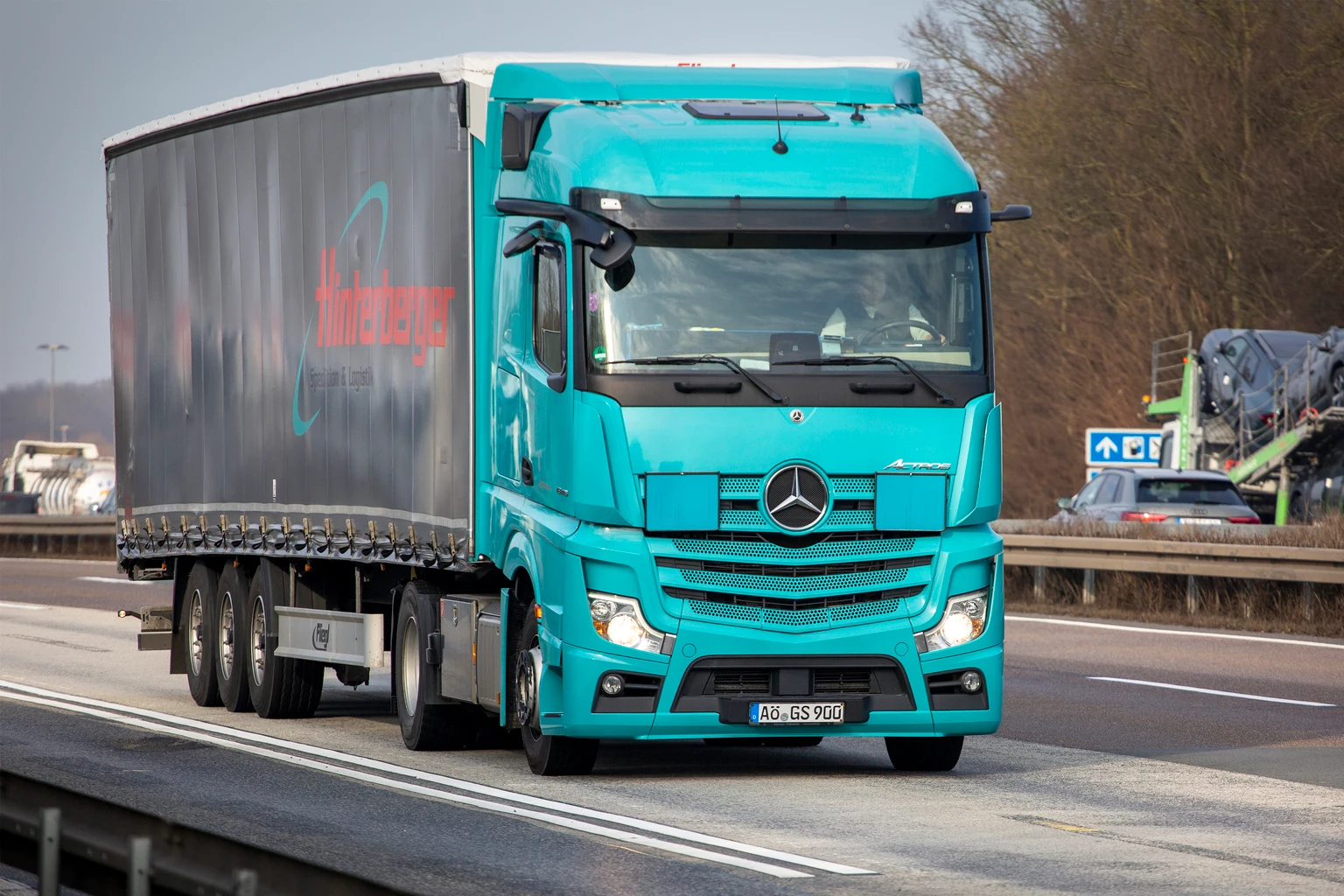
German highway A3 and trucks

Daimler Truck: Valuation Unattractive For New Investment, Still Not A Significant 'Buy' For Me

Continue Reading

Business

George Bamford to become JCB joint chairman alongside father

Published

on

Business Live

Move comes as manufacturer’s pre-tax profits fell to £642m in 2025, from £687.3m.

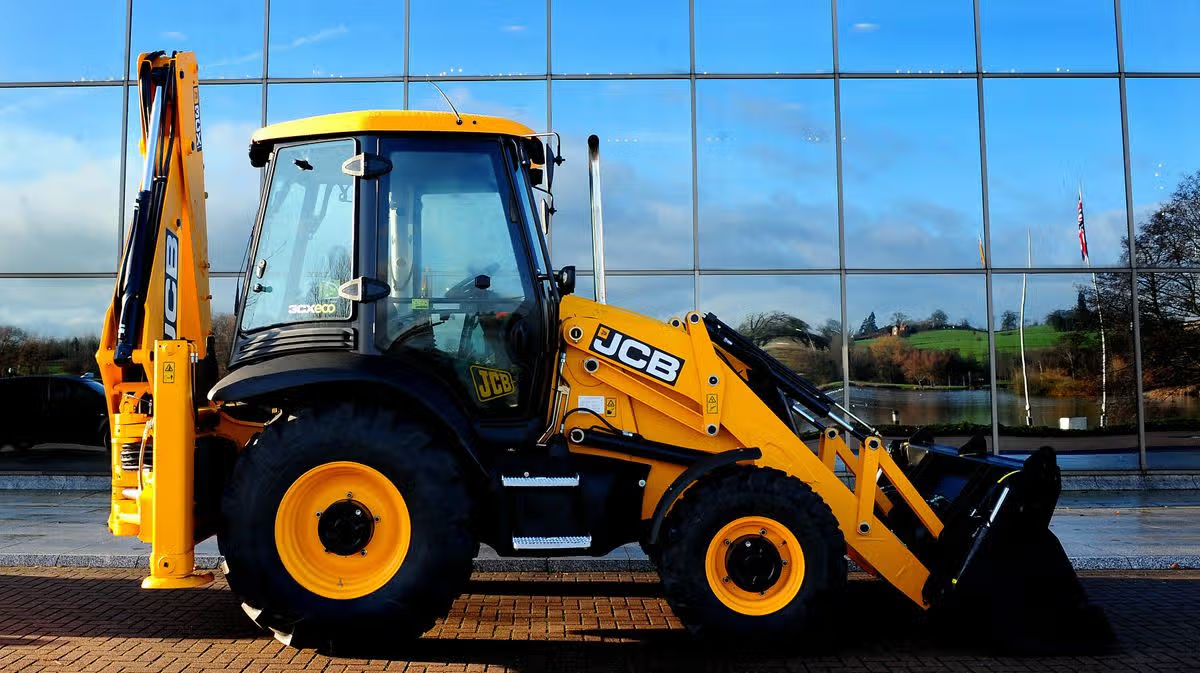
A JCB digger

A JCB digger(Image: PA)

George Bamford is set to become joint chairman at JCB alongside his father, Lord Anthony Bamford, the digger manufacturer has announced.

Advertisement

The news comes as the firm disclosed a decline in profits for the previous year, following a fall in machinery sales amid a “challenging” global economic climate.

The Staffordshire-based construction and agricultural equipment giant is currently ramping up investment across both the UK and US in an effort to spearhead a return to robust growth.

The business was originally established by Joseph Cyril Bamford in 1945.

His son Anthony has helmed the company as chairman since 1975, steering its global expansion, but has now confirmed he will share the position with his youngest son, George.

Advertisement

Lord Bamford said: “Last year, JCB celebrated its 80th birthday and, as we look ahead, we are investing heavily in the future of the business – from the transformation of our Staffordshire headquarters and pioneering hydrogen technology, to our new factory in Texas.

“As part of that next chapter, I’m delighted that my son George will become joint chairman of JCB.

“We have never been a company that stands still, and these investments will ensure JCB is well placed to seize the opportunities ahead.”

George Bamford, who also founded watch brand Bamford Watch Department, will assume the position from the beginning of October.

Advertisement

The announcement coincides with JCB pressing ahead with its new American manufacturing facility in San Antonio, Texas, which is due to open next month. The facility, which will generate 1,500 jobs over the coming five years, will enable the company to sidestep tariff expenses currently impacting UK-manufactured products exported to the US.

JCB is simultaneously boosting investment domestically, with a £100 million redevelopment of its headquarters, incorporating a £60 million fully automated powder paint facility.

On Monday, the group disclosed that turnover declined to £5.7 billion in 2025, compared with £5.8 billion a year earlier.

This followed the firm selling 113,498 machine units for the year, dropping by 5.2% year-on-year.

Advertisement

It reported pre-tax profits decreased to £642 million for the year from £687.3 million in 2024.

JCB chief executive Graeme Macdonald said: “While 2025 was a more challenging year with mixed market conditions around the world, JCB delivered a robust performance overall.

“Despite nil market growth in North America and a 12% market contraction in India – both important markets for JCB – we increased our global market share during 2025, which is an encouraging result.

“The overall outlook for 2026 is for moderate growth, despite ongoing geopolitical uncertainty, and with new capacity coming on stream in Texas and Staffordshire we are well placed to take advantage of it.”

Advertisement
Continue Reading

Business

Avanti West Coast services to be nationalised next year

Published

on

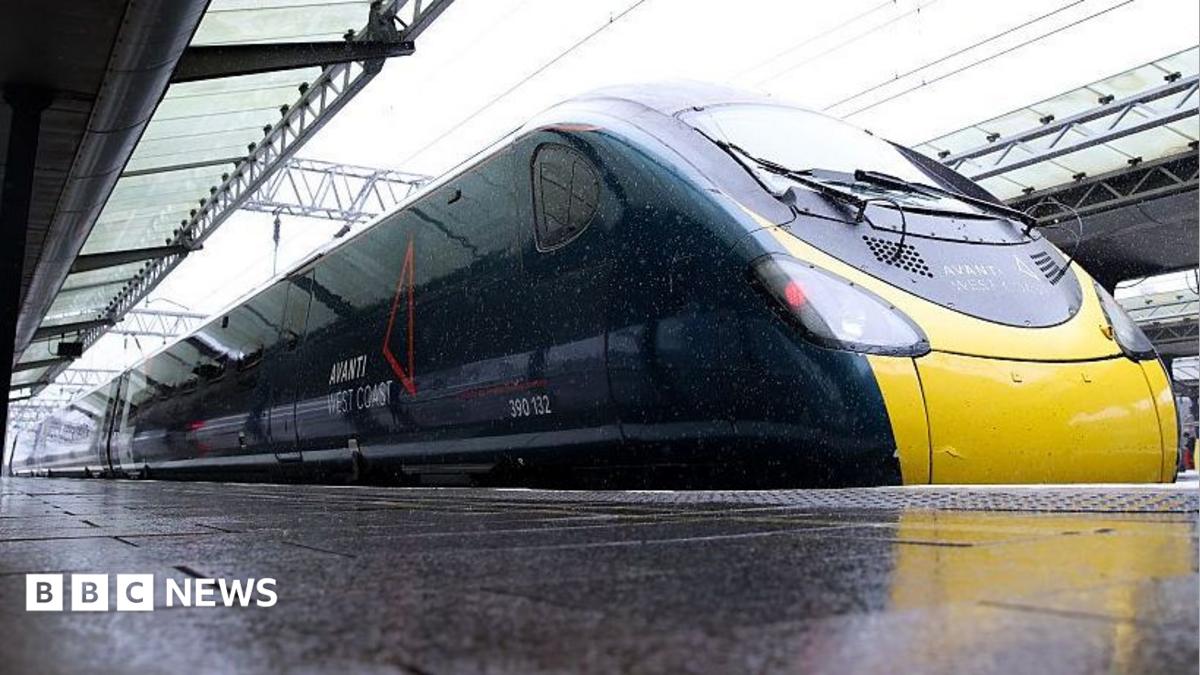
An Avanti West Coast Pendolino train arrives at Manchester Piccadilly railway station on 19 May 19, 2026 in Manchester.

Avanti West Coast train services will be nationalised from March next year, the government has announced.

“For years, we’ve heard stories of Avanti underperforming, with passengers left paying the price. Enough is enough,” Transport Secretary Heidi Alexander said.

The move is part of a government plan to improve rail infrastructure, cut train delays and improve experiences for passengers.

Avanti West Coast’s managing director said he was “proud of what we’ve achieved over the last six years”. The company’s contract was due to come to an end on 7 March.

Advertisement

In a post on social media, Prime Minister Andy Burnham echoed Alexander’s comments.

“For years, people have been expected to put up with Avanti’s cancellations, delays, overcrowding, and a service that has failed them time and time again,” he said.

Andy Mellors, managing director at Avanti West Coast, said: “We’re proud of what we’ve achieved over the last six years – from refurbishing our Pendolino fleet and introducing our new Evero trains to running more services than ever before.”

He added: “Over the coming months, we’ll work closely with the government to ensure a seamless transition into public ownership while remaining focused on delivering for our customers and communities.”

Advertisement

In May, Avanti West Coast said one-in-seven rail services will be cut on its busiest routes following a government request to reduce spending.

The company – a joint venture between FirstGroup (70%) and Italian state operator Trenitalia (30%) – predicted the move would cause minimum disruption to passengers and not reduce revenues.

Companies such as Avanti West Coast have their finances heavily influenced by the Department for Transport (DfT) due to contracts introduced in March 2020 at the start of the Covid-19 pandemic.

All train services operated under DfT contracts are being transferred to public ownership.

Advertisement

Great Western Railway – which is owned by FirstGroup – is to be brought under public ownership in December.

Several rail firms around the country are already publicly owned, including Great Anglia and South Western Railway. Welsh services were nationalised in 2021 and Scotland took trains into public ownership the following year.

Continue Reading

Trending