

Business
Jaylen Brown, LaMelo Ball, Kawhi Leonard and LeBron James Heading Into Free Agency

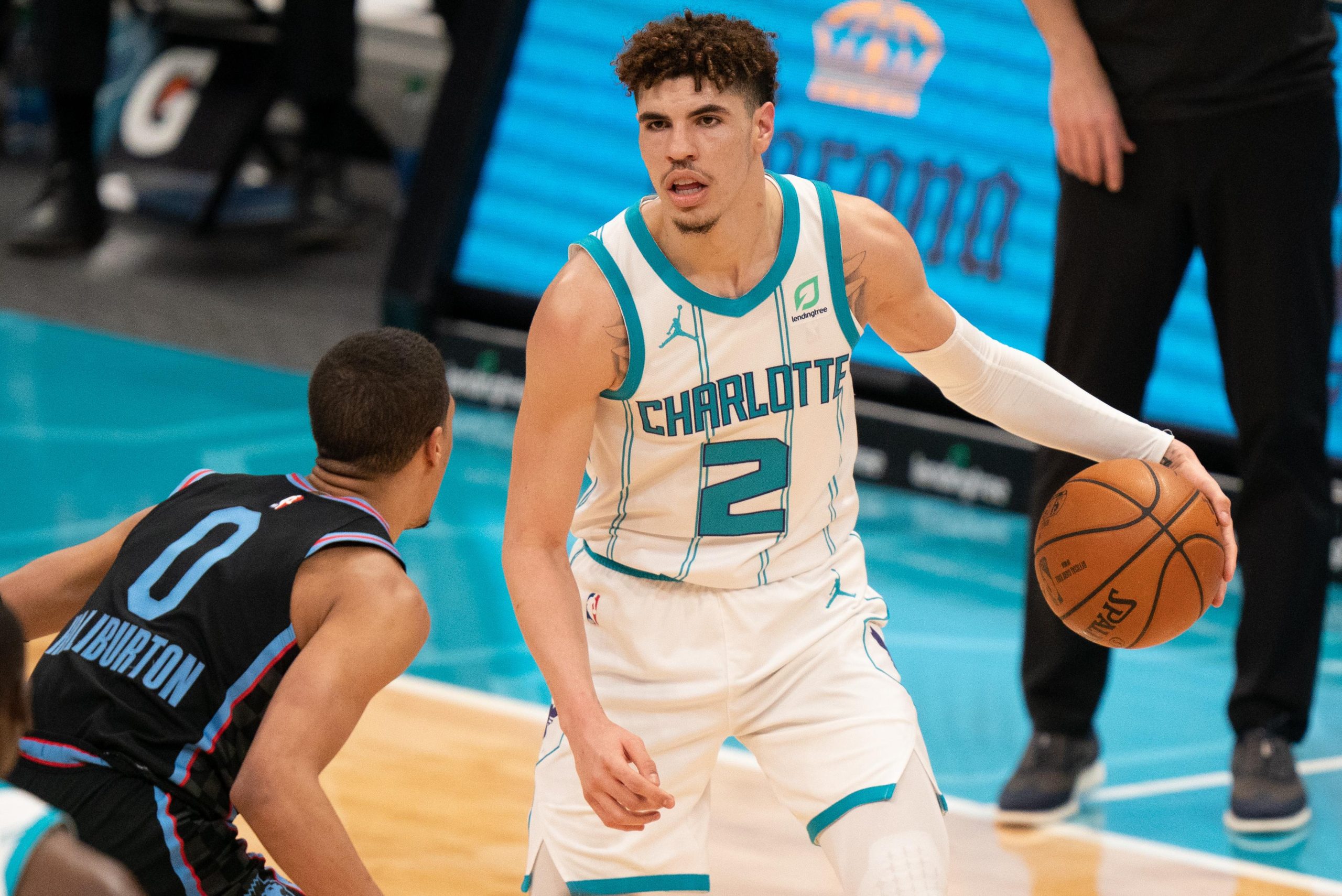
The NBA offseason has already produced one blockbuster after another, and the league’s rumor mill shows no signs of slowing down with free agency set to officially open Tuesday. Here are the five biggest trade stories currently swirling around the league.
1. Jaylen Brown’s future remains unsettled, with competing scenarios emerging
Boston’s All-Star wing continues to be at the center of trade speculation, with multiple, sometimes conflicting, reports describing how the Celtics might eventually move him. According to RealGM, citing Marc Stein and Jake Fischer of The Stein Line, the Boston Celtics and Detroit Pistons are considering a Jaylen Brown trade that would involve restricted free agent center Jalen Duren as the centerpiece of the deal on a sign-and-trade.
The dynamics behind that scenario trace back to Detroit’s roster needs. The Pistons have entered the offseason aggressively looking to add a shot creator beside Cade Cunningham, with Austin Reaves, Tyler Herro, Norman Powell and Coby White among the names they had explored, only for Reaves and White to already agree to re-sign with their incumbent teams. Detroit and Duren, meanwhile, have reportedly been far apart on contract talks, fueling expectations that the All-NBA big man will explore his options in restricted free agency through a sign-and-trade.
Boston’s motivation in any Brown scenario appears tied to retooling its frontcourt after a disappointing finish to last season. The Celtics are prioritizing getting bigger and more versatile this offseason following their first-round playoff exit to the Philadelphia 76ers, and notably, Boston previously offered Brown in a package to the Milwaukee Bucks as part of trade discussions for Giannis Antetokounmpo before that deal ultimately sent Antetokounmpo to Miami instead.
2. LaMelo Ball is officially headed to Minnesota
What began as trade speculation has already turned into one of the offseason’s biggest completed deals. According to Bleacher Report’s NBA rumors tracker, LaMelo Ball is headed to the Minnesota Timberwolves in a blockbuster trade, with the Charlotte Hornets receiving Naz Reid, a 2033 first-round pick, three first-round pick swaps and three second-round picks in return.
Ball had been a driving force behind Charlotte’s strong second-half surge last season, but the move reflects long-standing questions about his durability, given that he has also long been considered a significant injury risk throughout his career. The Hornets moved quickly to address their backcourt after the trade, re-signing guard Coby White, though the deal has already drawn some criticism in NBA media circles given the perceived drop-off in production between Ball and White at the position.
3. Kawhi Leonard’s situation in Los Angeles draws renewed scrutiny
Speculation around Clippers star Kawhi Leonard has intensified as the team signals its roster flexibility heading into the new league year. According to RealGM, the Los Angeles Clippers have the capacity to open up cap space this offseason if they decline team options on Brook Lopez, Bogdan Bogdanovic and Nicolas Batum. ESPN’s Zach Lowe added detail on that posture, saying, “I don’t know if this has been decided yet, but someone who would know told me that the Clippers are telling or behaving I guess as though they’re going to have cap space in the offseason.”
That maneuvering has coincided with renewed chatter about Leonard’s long-term future with the franchise. During the second round of the NBA Draft, ESPN’s Bobby Marks dropped what RealGM described as “a not-so-subtle hint” that one of Leonard’s former teams might be interested in reacquiring him, fueling speculation about a possible reunion with either the Toronto Raptors or San Antonio Spurs if Leonard’s situation in Los Angeles doesn’t ultimately work out on a new contract.
4. Ja Morant’s trade market has gone cold
Few players have seen their trade outlook shift as dramatically as Memphis guard Ja Morant. According to Bleacher Report, despite the fact that Morant is only 26 years old, it’s not difficult to understand why, seemingly, no one wants him in a trade, pointing to a steep decline in availability and production over the past three seasons, including multiple suspensions and injuries that have limited him to fewer than 30 appearances per season since 2022-23.
Memphis appears to be moving on regardless of the lack of trade interest. The report noted that the Grizzlies’ new core, built around Cameron Boozer, Zach Edey and Cedric Coward, doesn’t need Morant’s off-court baggage as it continues developing together, and suggested the most likely path forward for both sides might ultimately be a buyout rather than a trade.
5. LeBron James’ free agency decision could reshape multiple rosters
Few storylines carry more weight across the league than where 41-year-old LeBron James lands as he enters unrestricted free agency. James is coming off a historic season in which he became the first NBA player to play a 24th year, averaging 20.9 points, 7.2 assists and 6.1 rebounds while shooting 51.5% from the field, even as the Lakers were swept by the Oklahoma City Thunder in the conference semifinals.
Speculation connecting James to a reunion with the Miami Heat, where he won two championships alongside Dwyane Wade and Chris Bosh, has grown louder following Miami’s blockbuster trade for Giannis Antetokounmpo. ESPN’s Stephen A. Smith said on “First Take” that he doesn’t believe Heat president Pat Riley would turn James away if he called expressing interest in joining Antetokounmpo and Bam Adebayo, while former Heat champion Mario Chalmers told WQAM radio, “I can see him coming back. It’ll definitely be a good opportunity because of Giannis and Bam.” Still, multiple reports have characterized a Miami reunion as unlikely given the team’s hard-capped financial situation, leaving James’ ultimate decision, and its ripple effects across the league, as one of the offseason’s most closely watched outcomes.
With several of these situations still unresolved heading into the official start of free agency Tuesday, expect continued movement across the league in the coming days as teams race to finalize their rosters before training camps open later this year. Brown’s situation in Boston, Leonard’s future in Los Angeles, Morant’s path out of Memphis, and James’ eventual destination all stand to significantly reshape the league’s competitive landscape depending on how each storyline ultimately resolves.


Markets Starting To Choke On Massive Surge In Debt Issuance
Business
Passive investing explosion: DSP’s Anil Ghelani predicts ETFs, index funds will command 30% of mutual fund industry
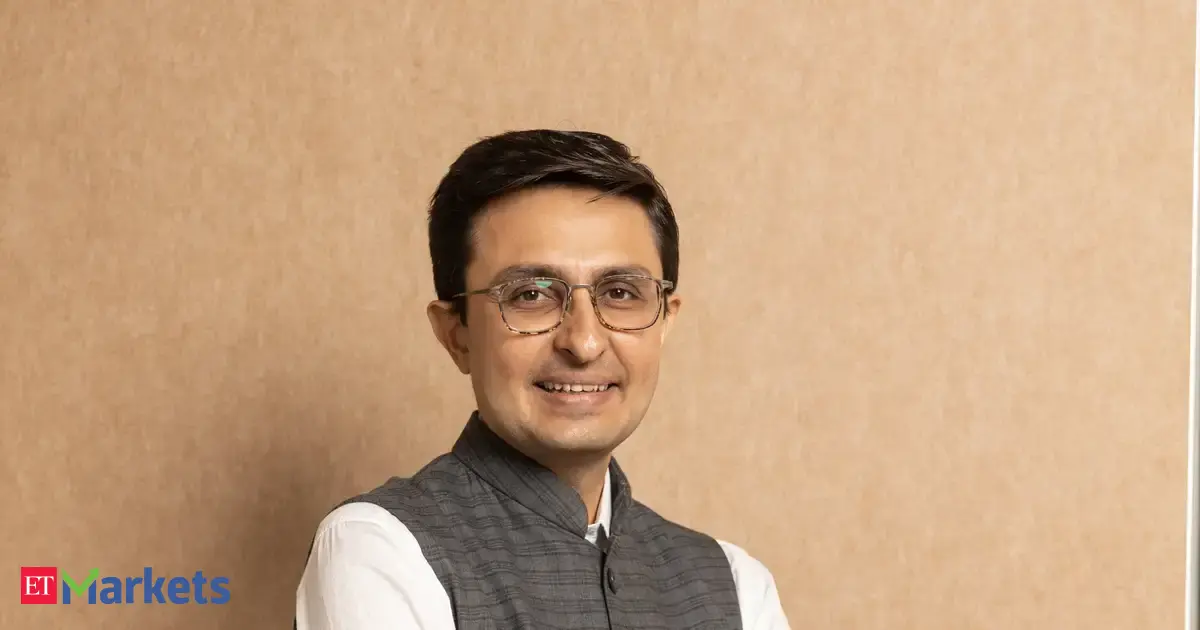
Passives are becoming increasingly popular in India with the launch of several new products suited to meet the needs of different kinds of investors. How popular do you think ETFs will become in the next five years?
In the US, we have already seen passive funds, i.e. ETFs and index funds, take over in size, with AUM exceeding 50% of the total mutual fund industry. In India, we are gradually seeing this growth. Today, ETFs and index funds account for about 17% of the total mutual fund industry AUM, which, in my view, could grow to 30% in the next five years.
However, the more interesting trend would not be the growth in the size of ETFs, but the evolution of investor behaviour. We often spend a significant amount of time trying to identify the next big stock idea or chasing a star fund manager, whereas there are more important aspects that we miss out on: prudent asset allocation aligned with our life goals, and staying invested until we reach them. ETFs and index funds will be natural beneficiaries of this shift.
In the coming years, passive investing is likely to become a much larger part of investors’ portfolios as a core allocation, while active funds will be selectively used as satellite allocations for alpha opportunities.

The consensus used to be that India is an inefficient market where active managers will always beat the index. However, information is now real-time, and alpha in the large-cap space is shrinking. In which segments do you think active management still holds an edge, and where is passive now the obvious choice?
While ETFs and index funds can be used across market-cap segments and sectors to build a portfolio, the largest AUM today is still in large-cap passive funds. In my view, the case for passive investing is strongest in the large-cap segment.In the small-cap and micro-cap segments, the stock universe is much larger, and there is greater potential for bottom-up research, management assessment and identifying under-researched stocks. So, active management may continue to have an edge in these segments and in certain niche sectors. That said, such outperformance potential often comes with higher volatility and manager-selection risk.
Hence, for core portfolio allocations, passive strategies are increasingly becoming the default choice. I have always believed that “and” is better than “or”. We will see a thoughtful blend where passive strategies form the core of a portfolio, while active strategies are used selectively in areas where alpha opportunities exist.
When an investor is looking at a theme, such as large caps, how should they decide between an ETF and an index fund? What are the liquidity and execution realities of trading ETFs on Indian exchanges that retail investors often overlook?
When investors compare an ETF and an index fund tracking the same benchmark, it is important to remember that both aim to deliver the same index return. The difference is primarily in the mode of access, not the underlying exposure.
For investors who prefer convenience and automated investing through SIPs, index funds are often a straightforward option. They do not require a demat account, and transactions happen directly with the fund house at end-of-day NAV.
ETFs, on the other hand, offer intraday liquidity, transparency and potentially lower expense ratios. They are useful for investors who already have a demat account and are comfortable transacting on exchanges. The choice is less about expected returns and more about convenience, flexibility and execution preference.
With multiple indices being launched by BSE and NSE, AMCs are following up with ETF NFOs. How do you view this trend?
The launch of many indices reflects the growing maturity of capital markets and the passive investment industry. However, every new index does not automatically need to become an ETF or index fund.
As a responsible fund manager, we ask whether it solves a genuine portfolio need or is just another option in an already crowded space. More choice is useful, but beyond a point, it can make decision-making harder. Simplicity is as important as innovation.
Broad-based market-cap indices should continue to form the core of most portfolios. Thematic, sectoral and factor-based products can play a satellite role where investors understand the risks and investment thesis.
Help us understand parameters like iNAV and tracking error before buying ETFs.
Many investors start by comparing an ETF’s size or expense ratio. Instead, one should first evaluate the underlying index: whether it is large, liquid and transparent.
Next, assess how closely the ETF tracks that index. Tracking difference is the gap between ETF returns and index returns, while tracking error measures consistency. Lower is better on both counts.
For ETFs, liquidity and execution also matter. Intraday iNAV helps assess whether the ETF is trading close to its underlying value. A good ETF tracks a large, liquid index efficiently and allows fair pricing.
What would be your advice for someone looking for a low-cost product for child goals over 10 to 15 years?
When investing for children, the biggest risk is emotional decision-making driven by greed and fear. Over long horizons, staying invested and maintaining the right asset allocation matters more than finding the best-performing fund.
A simple, low-cost approach would be an index fund. A disciplined SIP strategy aligned with the goal timeline, reviewed periodically with a financial adviser, would work best.
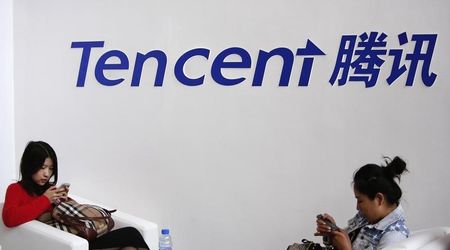
Tencent tests TenPayGo app to simplify payments for overseas visitors to China

U.S. charitable giving had a good year, not a great year, in 2025, up 3%, adjusted for inflation, to $617.2 billion. The big factor: bequests—gifts left through wills—which rose 16.5% to $62.2 billion, according to the Giving USA Foundation. Bequests have risen in three of the past four years, a pattern that holds over recent five-year periods, says Jon Bergdoll, interim director of data and research partnerships at Indiana University’s Lilly Family School of Philanthropy, which researched and wrote the report.
Business
Funding the ‘mother of all cycles’: Chris Wood cuts Indian stocks to double down on South Korean chip giants
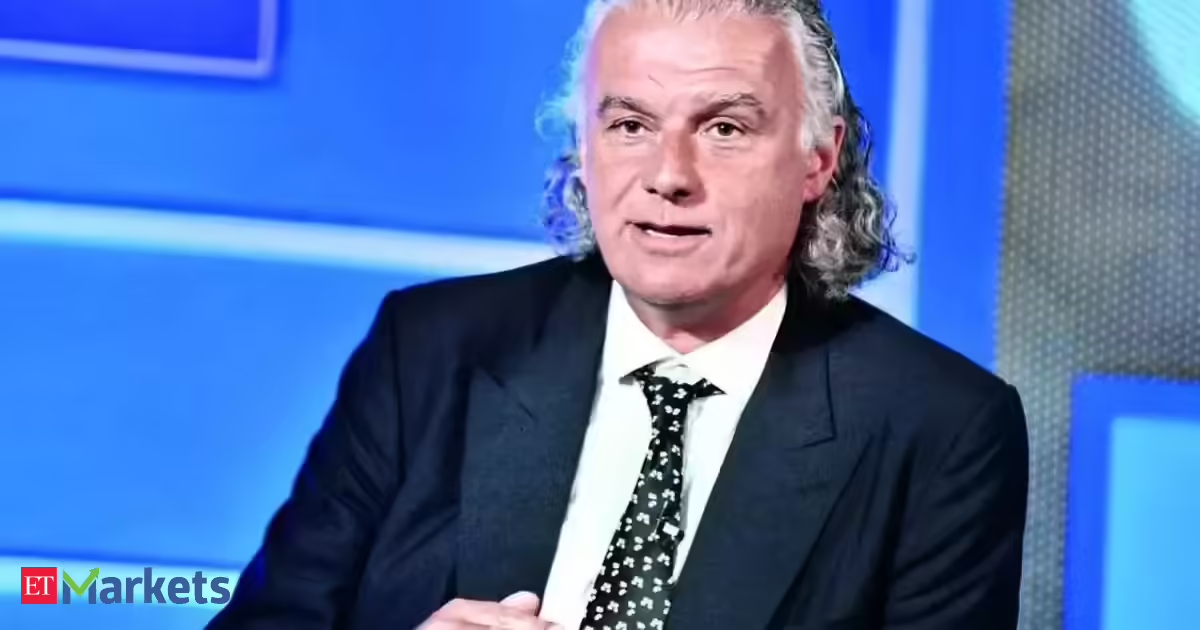
Wood describes the ongoing AI build-out as “the most dramatic capex cycle Greed & Fear has ever seen,” with hyperscalers and foundries ramping up spending at an unprecedented pace. Against that backdrop, he is explicitly “going to have to increase exposure to tech hardware in the various Greed & Fear portfolios,” adding SK Hynix and Kioxia to his global long-only book and increasing the weighting in Samsung Electronics.
In the updated global long-only portfolio, SK Hynix and Kioxia are included “with an initial 4% weighting each,” while the existing Samsung Electronics position is raised by one percentage point. “All this means that Greed & Fear is going to have to increase exposure to tech hardware,” Wood writes in his newsletter, emphasising that DRAM and NAND suppliers are at the heart of the AI trade three and a half years into the capex arms race.
Also Read | Chris Wood’s big warning: The specific risk that will finally trigger the end of AI trade
‘Mother of All Cycles’ and Jevons Paradox
The strategic shift is anchored in Wood’s conviction that falling token costs will drive explosive growth in compute demand, not a bust in AI usage. Citing Jevons Paradox, he argues that “falling token prices should lead to rising DRAM prices,” as cheaper AI services spur more usage and, in turn, greater consumption of memory and bandwidth.
“So the increased demand triggered by cheaper prices should be good for the picks and shovels plays, which have already been by far the main beneficiaries of AI in stock market terms three and a half years into the AI capex arms race,” he notes, adding that “for now at least, there remains zero sign of AI capex slowing.” With AI-linked data centre investment driving boom-like conditions in Taiwan and record export orders, Wood views the entire supply chain, especially DRAM, as central to what he calls “the mother of all cycles.”
Funding the Shift: India and Other Cuts
To fund this hardware tilt, Wood is trimming exposure in India and other markets rather than adding overall risk. In the Asia ex-Japan long-only portfolio, “an initial 4% will be re-initiated in Hynix by removing PolicyBazaar,” while a one-percentage-point cut to Alibaba helps finance an increased stake in Samsung Electronics.
The India long-only portfolio also takes a hit. “Finally, in the India long-only portfolio, the investment in Ambuja Cements will be removed, while the investments in GMR Airports, JSW Energy and Adani Energy Solutions will be reduced by two percentage points, one percentage point and one percentage point respectively,” the note states.
These reallocations free up capital to deploy into the South Korean and Japanese memory complex, underscoring Wood’s preference to fund the AI hardware trade by rotating within equities rather than increasing overall exposure.
Wood’s conviction rests heavily on structural changes in the DRAM industry and the evolving role of memory in AI workloads. He highlights Micron CEO Sanjay Mehrotra’s assertion that “memory has evolved from a peripheral component into the core engine driving productivity in the AI era,” and points to long-term strategic customer agreements (SCAs) as evidence of newfound pricing power.
Micron has signed 16 SCAs covering roughly 20% of DRAM volumes and a third of NAND volumes, typically with five-year terms, signalling greater visibility and discipline across the industry. On valuations, Wood argues that “the story that the DRAM industry has changed structurally, and that the companies should now be valued on a price-to-earnings basis rather than on a price-to-book basis, looks to Greed & Fear an increasingly powerful argument.” Hynix, Samsung Electronics and Micron, he notes, are trading at 7.8x, 6.8x and 9.2x consensus 12-month forward earnings respectively.
How the AI Boom Might End
Even as he increases exposure, Wood is candid about what he sees as the defining risk of the AI trade. “Greed & Fear is personally convinced that concerns about malinvestment will be the most likely trigger for an end to the AI trade, or at least for a protracted pause to refresh, given the huge amounts now being spent by the main players,” he writes.
He warns that the “main risk to the picks and shovels story remains a sudden realisation by investors that hyperscalers and the likes of OpenAI and Anthropic will not be able to generate returns on their investment,” which could abruptly curtail funding for AI capex. Circular arrangements, such as Nvidia financing OpenAI so the latter can buy more Nvidia chips, could aggravate that unwinding once capital markets begin to question long-term returns.
Portfolio Track Record and Lessons Learned
Wood also reflects on past positioning as he executes the latest reallocation. In the global portfolio, he is removing Alphabet and Alibaba to make room for SK Hynix and Kioxia, noting that Alphabet has risen 19% since its inclusion in November 2025, while Nvidia is up only 3.3% since being dropped in October 2025.
“In this sense, the trade worked. But clearly Greed & Fear would have done better to invest more in DRAM stocks,” he concedes, underlining the lesson that memory has been, and remains, the most leveraged way to play the AI theme.
Nvidia, he adds, “seems to have been used as the funding short by tech ‘pod’ platforms in recent months to bet on higher beta AI hardware plays,” further illustrating how investor focus has shifted towards component and capacity providers. That rotation is now being mirrored in his own model portfolios as he cuts India-centric positions and other non-hardware names to double down on South Korean chip giants at the heart of the AI capex cycle.
(Disclaimer: Recommendations, suggestions, views and opinions given by the experts are their own and do not represent the views of The Economic Times)
Palantir: Recreating My Reverse DCF Model After A Year Since Turning Bearish

The Capex Boom Goes Beyond AI. That’s Good News for Stocks.

ICICI Pru Balanced Hybrid Fund and ICICI Pru Multi-Asset Active FOF will open for subscription on June 30 and close on July 14. The minimum investment amounts are Rs 500 and Rs 1,000, respectively.

Over the past 1 month, 13 penny stocks have recorded sharp declines, falling between 20% and 55%. These underperformers were identified through a targeted screening approach focused on stocks with a market cap below Rs 1,000 crore, a share price under Rs 20, and a minimum recent trading volume of 5 lakh shares. The strategy aims to highlight low-priced, actively traded penny stocks that have experienced significant downside. (Data Source: ACE Equity)
Although penny stocks often attract investors with their low entry prices and potential for rapid gains, they come with substantial risks. Due to low liquidity, high volatility, and limited transparency, they are prone to manipulation and sudden price drops. Without a clear strategy and strong risk controls, investors may face more losses than gains.


The Value Portfolio specializes in building retirement portfolios and utilizes a fact-based research strategy to identify investments. This includes extensive readings of 10Ks, analyst commentary, market reports, and investor presentations. He invests real money in the stocks he recommends.
He is the leader of the investing group The Retirement Forum with features including: model portfolios, macro overviews, in-depth company analysis and retirement planning information. Learn more.
Analyst’s Disclosure: I/we have a beneficial long position in the shares of PBR either through stock ownership, options, or other derivatives. I wrote this article myself, and it expresses my own opinions. I am not receiving compensation for it (other than from Seeking Alpha). I have no business relationship with any company whose stock is mentioned in this article.
Seeking Alpha’s Disclosure: Past performance is no guarantee of future results. No recommendation or advice is being given as to whether any investment is suitable for a particular investor. Any views or opinions expressed above may not reflect those of Seeking Alpha as a whole. Seeking Alpha is not a licensed securities dealer, broker or US investment adviser or investment bank. Our analysts are third party authors that include both professional investors and individual investors who may not be licensed or certified by any institute or regulatory body.

Markets Starting To Choke On Massive Surge In Debt Issuance

Bitcoin under $60,000 on track for a rare back-to-back quarterly loss

Off Campus Creator Teases Season 2 Change After Surprise Cast Exit


-
 Sports5 days ago
Two goals and an assist by sheer aura: Cristiano Ronaldo just entered the World Cup chat
-

 Tech6 days ago
Microsoft accidentally kills epic Outlook email threads
-

 Fashion2 days ago
Weekend Open Thread: Staud – Corporette.com
-

 Politics2 days ago
The House | Manchesterism won’t survive the painful trade-offs unless it gets citizens on board
-

 Politics2 days ago
Potential 2028er World Cup attendee leaderboard
-

 Business2 days ago
Asia stock markets slide as tech shares slump
-

 Tech2 days ago
A Look At A Gaggle Of Transputer Boards
-
Crypto World4 days ago
Bitcoin (BTC) Dips Below $62K, Ethereum (ETH) Plunges 6% Daily: Market Watch
-

 Crypto World4 days ago
Securitize Wraps Roubini's SEC-Registered ETF as Dubai VARA Digital Security
-
 Crypto World3 days ago
Dell (DELL) Shares Tumble Over 5% Following Analyst Downgrade to Hold
-
Business4 days ago
Entergy settles forward sale agreements, raises $672 million in cash proceeds
-

 Crypto World1 day ago
Kraken's xStocks Opens Bending Spoons IPO Registration to EEA Retail
-

 Sports1 day ago
FIH Pro League: India defeat Pakistan 7-1, register biggest win of campaign | Other Sports News
-

 Crypto World2 days ago
RTX holders must register wallets before token distribution begins
-
 Crypto World2 days ago
Hyperliquid Named on Singapore MAS Investor Alert Register
-

 Sports3 days ago
India vs Bangladesh LIVE Score, Women’s T20 World Cup: Bangladesh Opt To Bat; India Enter ‘Do-Or-Die’ Stage As Semi-Final Race Heats Up
-
 Tech7 days ago
Signal’s Meredith Whittaker says AI chatbots ‘are not your friends’ and calls Copilot agents a backdoor
-
Crypto World2 days ago
The DATA Foundation Launches to Tackle AI’s Multi-Billion Dollar Training Data Bottleneck
-

 Crypto World3 days ago
Strategy (MSTR) has a 10-month cash runway for dividends, but retail investors are losing faith
-
 Crypto World2 days ago
AAVE price tests 9-month trendline after 17% rebound as breakout hopes build
You must be logged in to post a comment Login