
Business
Passive investing explosion: DSP’s Anil Ghelani predicts ETFs, index funds will command 30% of mutual fund industry

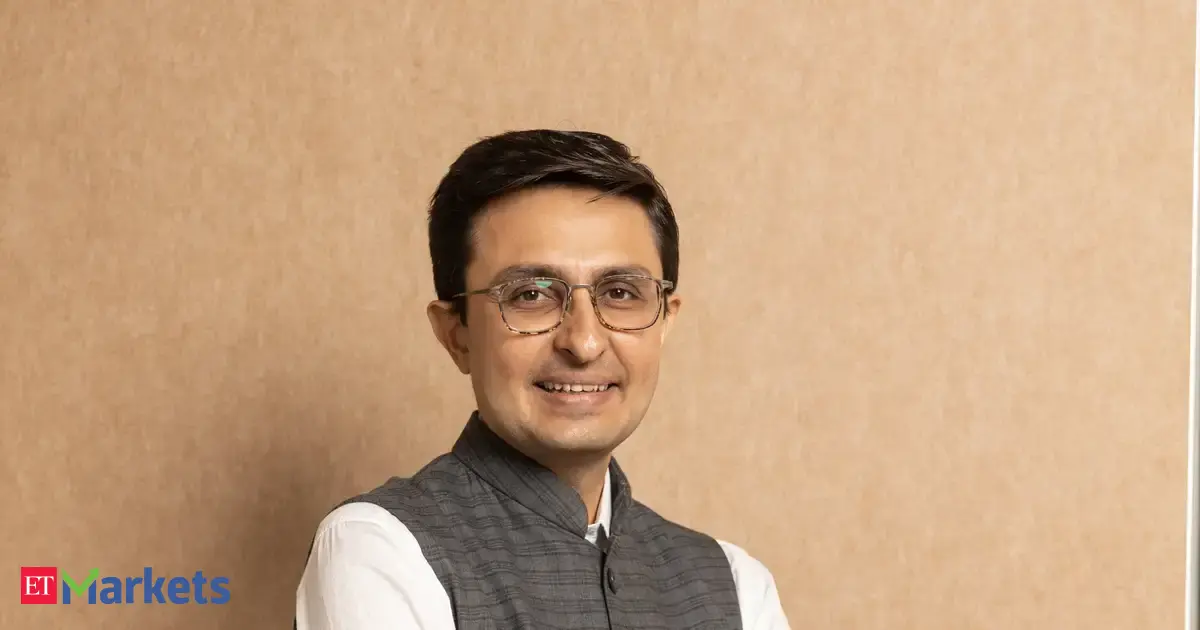
Passives are becoming increasingly popular in India with the launch of several new products suited to meet the needs of different kinds of investors. How popular do you think ETFs will become in the next five years?
In the US, we have already seen passive funds, i.e. ETFs and index funds, take over in size, with AUM exceeding 50% of the total mutual fund industry. In India, we are gradually seeing this growth. Today, ETFs and index funds account for about 17% of the total mutual fund industry AUM, which, in my view, could grow to 30% in the next five years.
However, the more interesting trend would not be the growth in the size of ETFs, but the evolution of investor behaviour. We often spend a significant amount of time trying to identify the next big stock idea or chasing a star fund manager, whereas there are more important aspects that we miss out on: prudent asset allocation aligned with our life goals, and staying invested until we reach them. ETFs and index funds will be natural beneficiaries of this shift.
In the coming years, passive investing is likely to become a much larger part of investors’ portfolios as a core allocation, while active funds will be selectively used as satellite allocations for alpha opportunities.

The consensus used to be that India is an inefficient market where active managers will always beat the index. However, information is now real-time, and alpha in the large-cap space is shrinking. In which segments do you think active management still holds an edge, and where is passive now the obvious choice?
While ETFs and index funds can be used across market-cap segments and sectors to build a portfolio, the largest AUM today is still in large-cap passive funds. In my view, the case for passive investing is strongest in the large-cap segment.In the small-cap and micro-cap segments, the stock universe is much larger, and there is greater potential for bottom-up research, management assessment and identifying under-researched stocks. So, active management may continue to have an edge in these segments and in certain niche sectors. That said, such outperformance potential often comes with higher volatility and manager-selection risk.
Hence, for core portfolio allocations, passive strategies are increasingly becoming the default choice. I have always believed that “and” is better than “or”. We will see a thoughtful blend where passive strategies form the core of a portfolio, while active strategies are used selectively in areas where alpha opportunities exist.
When an investor is looking at a theme, such as large caps, how should they decide between an ETF and an index fund? What are the liquidity and execution realities of trading ETFs on Indian exchanges that retail investors often overlook?
When investors compare an ETF and an index fund tracking the same benchmark, it is important to remember that both aim to deliver the same index return. The difference is primarily in the mode of access, not the underlying exposure.
For investors who prefer convenience and automated investing through SIPs, index funds are often a straightforward option. They do not require a demat account, and transactions happen directly with the fund house at end-of-day NAV.
ETFs, on the other hand, offer intraday liquidity, transparency and potentially lower expense ratios. They are useful for investors who already have a demat account and are comfortable transacting on exchanges. The choice is less about expected returns and more about convenience, flexibility and execution preference.
With multiple indices being launched by BSE and NSE, AMCs are following up with ETF NFOs. How do you view this trend?
The launch of many indices reflects the growing maturity of capital markets and the passive investment industry. However, every new index does not automatically need to become an ETF or index fund.
As a responsible fund manager, we ask whether it solves a genuine portfolio need or is just another option in an already crowded space. More choice is useful, but beyond a point, it can make decision-making harder. Simplicity is as important as innovation.
Broad-based market-cap indices should continue to form the core of most portfolios. Thematic, sectoral and factor-based products can play a satellite role where investors understand the risks and investment thesis.
Help us understand parameters like iNAV and tracking error before buying ETFs.
Many investors start by comparing an ETF’s size or expense ratio. Instead, one should first evaluate the underlying index: whether it is large, liquid and transparent.
Next, assess how closely the ETF tracks that index. Tracking difference is the gap between ETF returns and index returns, while tracking error measures consistency. Lower is better on both counts.
For ETFs, liquidity and execution also matter. Intraday iNAV helps assess whether the ETF is trading close to its underlying value. A good ETF tracks a large, liquid index efficiently and allows fair pricing.
What would be your advice for someone looking for a low-cost product for child goals over 10 to 15 years?
When investing for children, the biggest risk is emotional decision-making driven by greed and fear. Over long horizons, staying invested and maintaining the right asset allocation matters more than finding the best-performing fund.
A simple, low-cost approach would be an index fund. A disciplined SIP strategy aligned with the goal timeline, reviewed periodically with a financial adviser, would work best.


Earnings call transcript: Divi’s Laboratories posts strong q1 2026 growth


Rubicon Associates is headed by a Chartered Financial Analyst charter holder with over 20 years of experience in the investment management industry focused on the analysis, investment and management of fixed income and preferred stock portfolios as well as asset allocation and macro portfolios. Over the years, he has analyzed and invested in both public and private companies around the world as well as advised institutional clients on fixed income strategies, manager selection, and asset allocation. The principal has been responsible for managing nearly seven billion dollars in credit investments across the capital structure and overseeing the research and trading of credit market activities, $20 B in a short-duration fund, and was Chief Strategist at a wealth management firm. Rubicon Associates has written for Seeking Alpha, Learn Bonds, a newsletter and TheStreet.com in addition to advising institutional and private investors.
Analyst’s Disclosure: I/we have a beneficial long position in the shares of ARCC, BXSL, GBDC, HTGC, TSLX, MSDL, RWAYI, TRIN either through stock ownership, options, or other derivatives. I wrote this article myself, and it expresses my own opinions. I am not receiving compensation for it (other than from Seeking Alpha). I have no business relationship with any company whose stock is mentioned in this article.
The content of this article reflects my personal views and is provided for informational and educational purposes only. It does not constitute investment advice, financial advice, or a recommendation to buy or sell any securities or financial instruments. While I strive for accuracy, the information presented may contain errors or omissions or be based on sources believed to be reliable but not independently verified. I make no representations or warranties as to the completeness, accuracy, or timeliness of any information presented. This article is not intended to provide, and should not be relied upon for, investment, legal, tax, or accounting advice. The securities and strategies discussed may not be suitable for all investors. Past performance is not indicative of future results. All investments involve risk, including the potential loss of principal. I may hold, or have held, positions in the securities mentioned. I do not receive compensation for writing this article, nor do I intend to influence the price or trading volume of any security discussed. All opinions are subject to change without notice. This content is written strictly in a personal capacity and does not reflect the views of any employer, organization, or associated entity. Readers are strongly encouraged to conduct their own independent research and to consult with a licensed financial advisor before making any investment.
Seeking Alpha’s Disclosure: Past performance is no guarantee of future results. No recommendation or advice is being given as to whether any investment is suitable for a particular investor. Any views or opinions expressed above may not reflect those of Seeking Alpha as a whole. Seeking Alpha is not a licensed securities dealer, broker or US investment adviser or investment bank. Our analysts are third party authors that include both professional investors and individual investors who may not be licensed or certified by any institute or regulatory body.
Business
Casemiro Calls New Teammate Lionel Messi “the God of Football” After Joining Him at Inter Miami
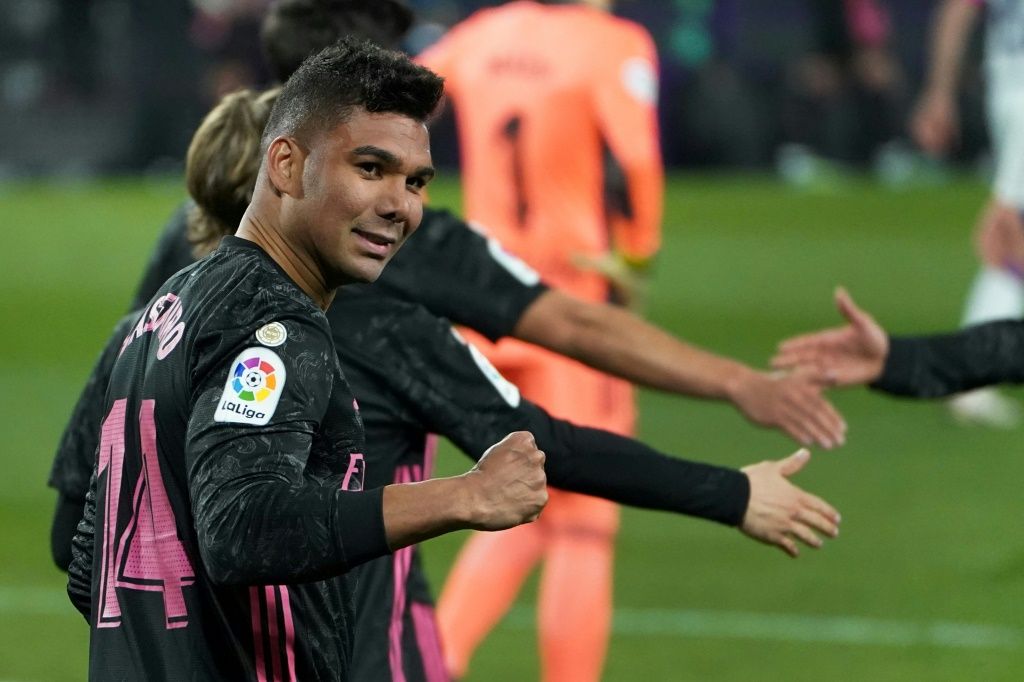
Brazilian midfielder Casemiro offered effusive praise for new Inter Miami teammate Lionel Messi following his departure from Manchester United, describing the Argentine star in the most exalted terms shortly after arriving at the Major League Soccer club.
Inter Miami, co-owned by David Beckham, announced Casemiro’s signing immediately following the conclusion of the 2026 FIFA World Cup last month. The contract runs through 2027 and includes an option for a two-year extension. Speaking to the outlet All About Soccer after training alongside Messi at the club’s facility, Casemiro did not hold back in his assessment of his new teammate. “Messi is one of the gods of football, no, he is simply ‘the god of football’ itself,” Casemiro said, according to the report.
Casemiro, 34, spent nine years at Real Madrid, where he played alongside Cristiano Ronaldo and the two combined to win the UEFA Champions League four times together. During that period, Real Madrid and Barcelona, Messi’s longtime club, formed one of soccer’s fiercest rivalries through the annual “El Clásico” matches, meaning Casemiro faced Messi repeatedly as an opponent throughout much of his career before now joining him as a teammate for the first time.
Reflecting on the shift from rival to teammate, Casemiro described the early days of training alongside Messi as a striking experience. “Training with Messi for two days was an unbelievable experience,” Casemiro said. “I already knew it was impossible to stop him because I faced him as an opponent. Now that I’m on the same side, I’m really happy. I want to keep enjoying this moment.”
Casemiro made his competitive debut for Inter Miami in an away match against CF Montreal on July 26, helping the team secure a 1-0 victory that was decided by a goal from longtime Messi collaborator Luis Suarez. The result marked an encouraging start for Casemiro as he begins integrating into a squad already built around some of the sport’s most recognizable attacking talent.
Casemiro is expected to line up in Inter Miami’s midfield alongside Argentine international Rodrigo de Paul, forming a partnership intended to provide greater defensive stability for a team that had previously struggled with an unsettled back line. His arrival is expected to serve as a defensive foundation that allows the club’s attacking players, including Messi, Suarez, Mexican forward Germán Berterame and Argentine forward Mateo Silvetti, to advance further up the field with less defensive risk.
Beyond his on-field role, Casemiro explained that his move to Miami reflected a rare degree of personal agency in choosing his next club. “For the first time in my career, I was able to freely choose where I wanted to go,” Casemiro said. He went on to describe a longstanding connection to the city itself. “I have always had a special affection for the city of Miami, and I am very happy because of the tremendous effort the club showed to bring me here.”
Casemiro also used the moment to push back against perceptions of Major League Soccer as a lesser competitive league relative to Europe’s top divisions, pointing directly to Messi’s continued presence in MLS as evidence of the league’s growing stature. “Many people think the MLS still has a long way to go, but we must not forget that it is a league where the best player from the last World Cup is playing,” Casemiro said, a reference to Messi’s continued individual excellence on the world stage even as he enters the later stages of his career at Inter Miami.
Casemiro’s move to MLS adds another prominent name to a growing list of established international stars who have joined the American league in recent years, a trend that accelerated significantly following Messi’s own arrival at Inter Miami in 2023. The club has continued building out its roster with experienced, championship-caliber players in the years since, aiming to pair that veteran talent with rising South American prospects like Silvetti as the team competes for MLS Cup and continental honors.
With Casemiro now settled into the squad following his competitive debut and early praise for his new teammate, Inter Miami will look to build on its win against CF Montreal as the club continues navigating the remainder of its MLS season, with expectations elevated given the star power now assembled across the roster following Casemiro’s arrival alongside Messi, Suarez, de Paul and the club’s younger attacking talents.

How to Invest in Bonds Now
Business
Colgate-Palmolive Company 2026 Q2 – Results – Earnings Call Presentation (NYSE:CL) 2026-08-01


Seeking Alpha’s transcripts team is responsible for the development of all of our transcript-related projects. We currently publish thousands of quarterly earnings calls per quarter on our site and are continuing to grow and expand our coverage. The purpose of this profile is to allow us to share with our readers new transcript-related developments. Thanks, SA Transcripts Team
Patrick André
CEO & Executive Director
Good morning, ladies and gentlemen. Welcome to the Vesuvius Half Year 2026 Results Presentation. My name is Patrick Andre, Chief Executive of Vesuvius. And with me this morning is Mark Collis, our Chief Financial Officer.
I will start with some updates on our performance during the half year. Then Mark will give you more details on our financials. I will conclude at the end of the meeting with some perspectives for the full year 2026 and beyond before opening the floor for questions.
Our performance for the half year was resilient and in line with last year’s, driven by self-help actions offsetting temporary operational disruptions. Our revenues slightly increased by 1.5% on a constant currency basis. Our trading profit at GBP 74 million was similar to last year’s, also on a constant currency basis. Our return on sales decreased marginally by 10 basis points as compared to last year on a constant currency basis. As expected, our free cash flow generation increased significantly by GBP 41.4 million year-on-year to a total of GBP 27.5 million, driven by improved working capital discipline and stronger operating cash generation.
Working capital intensity declined from 23.6% to 23.1% and is expected to improve further in the second half. Our net debt-to-EBITDA ratio improved to 1.9 on a pro forma basis and is expected to improve further in the second half. These positive trends in cash generation made the board confidence to
Business
SpaceX Stock Nears All-Time Low as Investors Weigh Coming Insider Lockup and Its Long-Term Growth Story

SpaceX shares closed at $108.37 Friday, down 3.41% for the session, trading within striking distance of the stock’s all-time low of $107.01 set just days earlier, as investors weigh a wave of upcoming insider selling against the company’s long-term growth ambitions. Because this involves an individual investment decision, the following covers the publicly available facts and differing analyst views rather than a recommendation, and it isn’t a substitute for advice from a licensed financial professional.
SpaceX completed the largest initial public offering in history on June 12, pricing shares at $135 and raising approximately $75 billion, an offering that valued the company at nearly $1.8 trillion. The stock surged in its opening days of trading, briefly pushing SpaceX past both Amazon and Microsoft in market capitalization and reaching an intraday all-time high of $225.64 on June 16, according to TradingView. Since that peak, however, the stock has fallen sharply, dropping more than 50% to trade around $108 to $113 as of late July, according to Investing.com, putting shares roughly 19% below their original IPO price and just above the stock’s 52-week low.
A significant driver of recent selling pressure has been the approaching expiration of insider lockup restrictions, the contractual period following an IPO during which company executives, early investors and employees are barred from selling their shares. CNBC’s Jim Cramer addressed the dynamic directly in commentary published July 28, advising investors interested in the stock to wait for that initial wave of insider selling to play out before considering a purchase. “If you want to buy SpaceX, let the first wave of insider selling lockups expire,” Cramer said, according to CNBC. In a separate piece of commentary the same day, Cramer counseled patience more broadly, saying, “It probably pays to be patient with SpaceX.”
The scale of expected insider selling once lockup restrictions lift has become a central concern for analysts modeling the stock’s near-term trajectory. Motley Fool analyst Geoffrey Seiler wrote that a substantial increase in the number of freely tradable shares could weigh on the stock for an extended period. “With a deluge of shares expected to exponentially increase the amount of SpaceX stock available on the open market, this is a headwind the stock will have to contend with for most of the rest of 2026 and into 2027,” Seiler wrote, adding that “SpaceX’s stock price could get cut in half from here by year-end.”
Options markets have reflected similarly cautious positioning among some traders. According to TipRanks, options traders have placed approximately $26 billion in short bets against SpaceX stock as of late July, indicating a meaningful segment of the market is betting on continued near-term price declines rather than a recovery.
Valuation remains a central point of debate among analysts covering the stock. Even after its sharp pullback, SpaceX carries a market capitalization of roughly $1.49 trillion to $1.7 trillion, according to figures from TradingView and Motley Fool, for a company that generated less than $19 billion in revenue during 2025 and posted a net loss of $4.3 billion in the first quarter of 2026 alone, according to TradingView. Morgan Stanley, which maintains a bullish stance on the stock, projects SpaceX’s revenue could reach $45 billion this year, driven substantially by growth in the company’s Starlink satellite internet business, but the bank does not expect SpaceX to become free-cash-flow positive until 2035, according to Motley Fool’s reporting.
Despite the stock’s recent decline, Wall Street’s overall analyst consensus on SpaceX has remained decisively positive. According to Investing.com, 27 analysts currently recommend buying the stock while only one suggests selling, resulting in an overall buy rating. The average 12-month price target sits at $236.71, with estimates ranging from a low of $62 to a high of $800, implying more than 119% potential upside from Friday’s closing price, though the unusually wide range of those targets itself reflects significant uncertainty among analysts about how to value a company this large that remains deeply unprofitable.
SpaceX’s business has continued to expand beyond its traditional rocket launch and Starlink satellite internet operations. The company completed its acquisition of xAI, Elon Musk’s artificial intelligence venture, in February 2026, adding AI operations as a third major business segment. More recently, reports have indicated SpaceX is exploring a potential move into offering wireless phone service in direct competition with traditional carriers, according to Semafor reporting cited by CNBC, a development that contributed to declines in shares of AT&T and Verizon in late July amid concerns about new competition tied to SpaceX’s expanding satellite spectrum ambitions.
SpaceX’s ownership structure has also drawn separate scrutiny. Musk has publicly declined to rule out a potential future merger between SpaceX and Tesla, remarks made July 22 that added another layer of speculation to how investors should value the space company relative to Musk’s other ventures. Congressional stock trading in SpaceX shares has separately drawn attention, with reports in late July raising conflict-of-interest concerns tied to purchases by members of Congress, according to CNBC.
With the stock trading near its post-IPO low, a substantial insider lockup expiration still ahead, and analysts sharply divided on how to value a company burning significant cash while pursuing an ambitious, capital-intensive growth strategy, prospective investors are likely to want to weigh their own risk tolerance, time horizon and portfolio diversification needs carefully, and may wish to consult a licensed financial advisor, before making a decision about whether current prices represent an attractive entry point or a stock still working through the aftermath of an unusually volatile public debut.
Business
Sumitomo Pharma Co., Ltd. 2027 Q1 – Results – Earnings Call Presentation (OTCMKTS:DNPUF) 2026-08-01
Seeking Alpha’s transcripts team is responsible for the development of all of our transcript-related projects. We currently publish thousands of quarterly earnings calls per quarter on our site and are continuing to grow and expand our coverage. The purpose of this profile is to allow us to share with our readers new transcript-related developments. Thanks, SA Transcripts Team
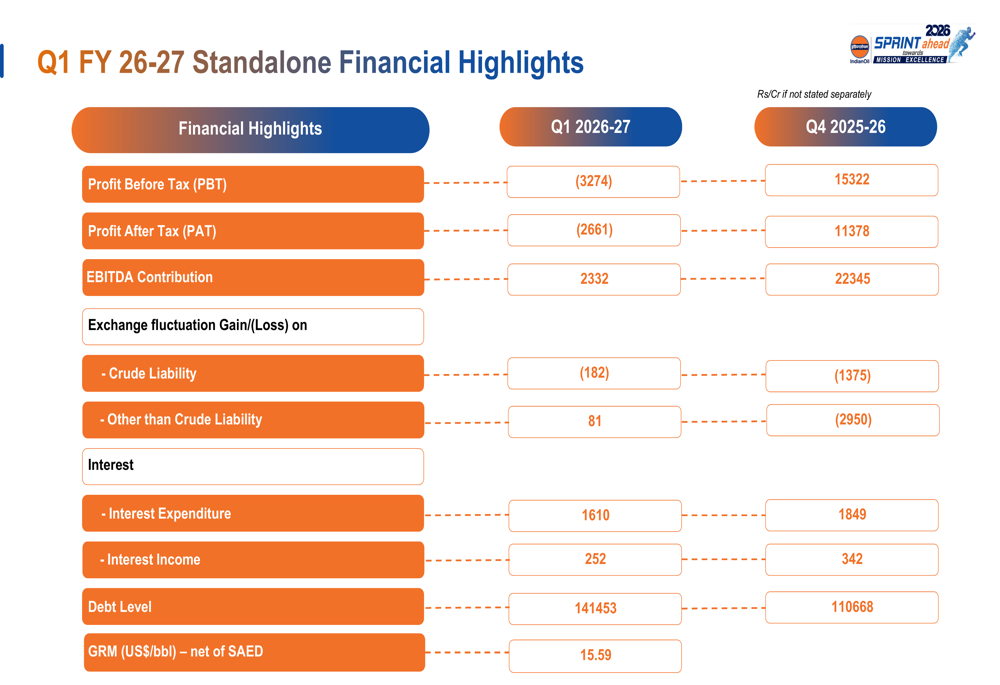
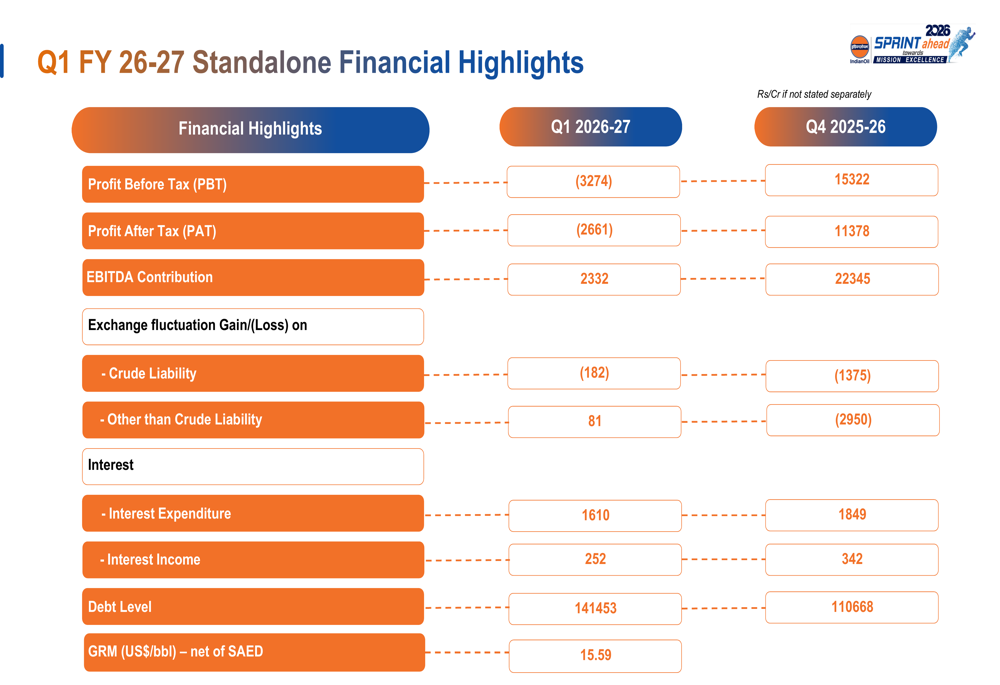
Indian Oil Q1 FY27 slides show sharp loss amid crude volatility

The company had reported a loss of Rs 17 crore in the year-ago period, a company statement issued late on Friday evening showed.
According to the statement, the revenue from operations grew 107 per cent year-on-year to Rs 832 crore in Q1 FY27, compared to Rs 402 crore in Q1 FY26, led by a larger operational asset base and ramp-up in the RE Services segment.
The company reported PAT (profit after tax or net profit) of Rs 55 crore in Q1 FY27 aided by operating leverage and a larger base of stabilised assets.
CleanMax’s total contracted capacity, including the RE Services segment, stood at 6.8 GW as of June 30, 2026.
The board has also approved a proposal to raise up to Rs 2,500 crore through issuance of listed, rated, redeemable, non-convertible debentures/bond on private placement basis.
Kuldeep Jain, Founder & Managing Director, said in the statement, “We added a record new capacity of over 500 MW in the first quarter, and are well on track to meet our guidance of adding a minimum of 1,500 MW of new capacity during the year.”

Fifa World Cup plans: Uefa has ‘lost confidence’ in current leadership
Earnings call transcript: Divi’s Laboratories posts strong q1 2026 growth

America Broke a 28-Year Rule to Save the Yen and Bitcoin Felt It First


-
 Sports6 days ago
Commonwealth Games boxing: Jadumani Singh seals dominant 5-0 win over Pakistan’s Sumama Rehman to enter quarter-finals | Commonwealth Games News
-

 Business3 days ago
Why Trees Belong on the Risk Register
-

 Fashion16 hours ago
Weekend Open Thread: Wit & Wisdom
-

 Politics13 hours ago
Meta enters AI-training agreement with far-right ‘propaganda rag’ Newsmax
-

 Tech5 days ago
Intel is reversing course and bringing hyper-threading back to its server chips
-

 Crypto World7 days ago
Ripple bought a bank in pieces. The $4 billion audit
-

 Politics5 days ago
Luke Littler dismantles Gerwyn Price to retain title in Blackpool
-

 Politics4 days ago
The Part of the Electric Transition Nobody Wants to Discuss
-

 News Videos6 days ago
BITCOIN JUST ENTERED THIS CRITICAL ZONE…
-
 Entertainment4 days ago
‘Stargate’ Creator’s New Sci-Fi Series Returns for Season 3 Tomorrow
-

 Business3 days ago
Major shareholder moves on Canyon
-

 Crypto World6 days ago
XRP Ledger adds $2.6B as RWA inflows rank second
-

 Politics6 days ago
Spain sweeps the board at 2026 World Cup with individual awards
-

 News Videos2 days ago
Bitcoin Enters the 3rd Stage of the Bear Market
-
Crypto World4 hours ago
XRP Ledger v3.3.0 brings five institutional features
-

 Entertainment6 days ago
Sara Gilson Killed By Husband After Viral “Pedophile” TikTok Video
-

 Crypto World3 days ago
Kraken Enables Retail Access to Jersey Mike’s IPO via Tokenized Shares
-

 News Videos4 days ago
Claude: Build Financial Dashboards in Minutes (2026)
-

 Tech4 days ago
New macOS Sequoia & Sonoma security updates for older Macs
-

 Politics2 days ago
Luke Littler’s dominance sparks GOAT debate
You must be logged in to post a comment Login