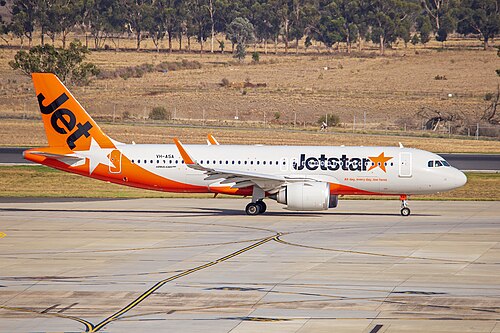
SYDNEY — Jetstar has temporarily cut more than 10% of its scheduled flights between Australia and New Zealand as soaring jet fuel prices triggered by the Middle East conflict bite into demand and raise operating costs for the Qantas-owned low-cost carrier.
Jetstar
A Jetstar New Zealand spokesperson confirmed Wednesday that approximately 12% of services — including popular routes such as Auckland-Sydney and Auckland-Brisbane — have been affected, along with some domestic New Zealand flights like Auckland-Christchurch and Auckland-Wellington. More than 55 flights are expected to be removed from the schedule in May alone, according to aviation analytics firm Cirium.
“We have made some temporary changes to our schedule, including due to a rise in jet fuel prices as a result of the conflict in the Middle East and other rising costs,” the spokesperson said. “All impacted passengers have been contacted directly and most have been offered same-day travel. We are sorry for the inconvenience and thank our customers for their understanding.”
The cuts come as Brent crude and jet fuel prices have surged following U.S. and Israeli strikes on Iran in late February, disrupting supplies through the Strait of Hormuz and pushing aviation fuel costs sharply higher. Jet fuel prices, which hovered around $85-$90 per barrel before the escalation, have climbed dramatically, forcing airlines across the region to reassess schedules and fares.
Jetstar’s move mirrors broader industry pain. Air New Zealand earlier announced cuts to about 1,100 flights — roughly 5% of its schedule — through early May, affecting around 44,000 passengers. Other carriers, including Qantas on its international routes, have raised fares in response to the volatility.
Advertisement
Trans-Tasman travel has long been one of Jetstar’s strongest routes, with the airline positioning itself as an affordable option for holidaymakers, families and business travelers between major Australian cities and New Zealand destinations like Auckland, Christchurch and Queenstown. The reductions are expected to run through at least early May, with potential for further adjustments if fuel prices remain elevated.
Industry analysts said the decision reflects a combination of higher input costs and softening demand as higher airfares deter some leisure travelers. Jetstar has not disclosed exact passenger numbers affected but emphasized that most rebookings were on the same day.
The timing adds pressure to Australia’s broader fuel crisis, where hundreds of service stations have run dry or limited grades amid panic buying and supply disruptions from Asian refineries. The government has released strategic reserves and relaxed diesel quality standards, but aviation fuel faces its own constraints.
Qantas Group, which owns Jetstar, has already hiked international fares and is monitoring domestic and low-cost operations closely. Chief executives across the sector have described the fuel spike as “unprecedented” in recent years, with some comparing it to historical shocks in the 1970s.
Advertisement
For passengers, the cuts mean potential disruptions to holiday plans, especially with Easter and autumn school breaks approaching in both countries. Jetstar urged travelers to check their bookings via the airline’s app or website and contact customer service if needed. Those on affected flights have generally been offered alternatives or refunds where rebooking is not possible.
New Zealand tourism operators expressed concern. The trans-Tasman corridor is a vital lifeline for the country’s visitor economy, with Australians making up a large share of short-haul visitors to destinations like Queenstown for skiing or Auckland for city breaks. Reduced capacity could dampen bookings at a time when the sector is still recovering from earlier pandemic effects and recent global uncertainty.
Australian travelers heading to New Zealand for rugby, concerts or family visits may face fewer options and potentially higher fares on remaining services. Competition on the route includes Air New Zealand and full-service Qantas flights, which may see some spillover demand.
Jetstar operates a fleet primarily of Airbus A320-family aircraft on these routes. While no safety issues were cited, the airline has faced separate challenges with aircraft availability in recent months, though the current cuts are explicitly tied to fuel economics.
Advertisement
The Qantas Group has not suspended its overall financial guidance but has flagged increased costs flowing through the low-cost subsidiary. Jetstar’s New Zealand operations have grown significantly in recent years as the carrier expanded domestic and trans-Tasman services to challenge Air New Zealand’s dominance.
Economists warned that sustained high fuel prices could ripple through the wider economy. Higher airfares and reduced connectivity may dampen tourism spending, while freight and logistics costs could rise for businesses reliant on quick trans-Tasman movement of goods and people.
The International Energy Agency has described the current global supply disruption as potentially severe if the Middle East conflict persists, with Asian refineries — key suppliers to both Australia and New Zealand — facing feedstock shortages.
For now, Jetstar described the schedule changes as temporary and said it would continue to monitor the situation. Passengers with upcoming travel are advised to allow extra time for any rebookings and to consider travel insurance that covers flight disruptions.
Advertisement
The development highlights the vulnerability of low-cost carriers, which typically operate on thin margins and have less flexibility to absorb sudden cost increases compared with full-service airlines. Jetstar’s business model relies on high load factors and efficient operations, making fuel a critical variable.
As the situation evolves, both Australian and New Zealand governments are monitoring aviation fuel supplies closely. No formal fuel emergency has been declared, but contingency planning is underway in case disruptions worsen.
Travelers affected by the cuts can visit Jetstar’s website or app for the latest information on their specific flights. The airline has pledged to minimize inconvenience by prioritizing same-day alternatives where possible.
With oil markets remaining volatile and no immediate resolution in sight for the Middle East tensions, further adjustments across the aviation sector cannot be ruled out. For Jetstar passengers planning trips across the Tasman, flexibility and early checks on bookings will be essential in the coming weeks.
It’s first restaurant in Wales in the centre of Cardiff has been supported with debt funding from the £130m Investment Fund for Wales
Left to right Bethan Bannister, British Business Bank; Joe Cook, Bosco; John Babalola, FW Capital.
Italian restaurant venture Bosco has opened its first Welsh restaurant with plans for further venues.
Its latest venue, in the centre of Cardiff, has been supported with a £350,000 loan from the £130m Investment Fund for Wales (IFW),The first Bosco opened in Bristol in 2014, with it now operating four restaurants in the south-west of England.
With the successful launch of its Cardiff restaurant the business is looking to add further Welsh locations over the next 18-months.
Funding support for its Cardiff venue, has come from the large loans element of the British Business Bank’s IFW. It is managed by Development Bank of Wales, subsidiary business FW Capital. Bosco has deployed the funding to refit premises on High Street, as well as providing working capital. The loan also unlocked a further seven-figure co-investment from private investors
Joe Cook, managing director at Bosco, said: “The new restaurant at Cardiff has already exceeded our expectations. That part of the city has an impressive buzz and busy atmosphere, and we’ve been welcomed with open arms.
“It’s always been our intention to grow as a business, and this loan allowed us to put our stamp on the new site, and refit it at scale in line with our brand. Thanks to the success of the Cardiff restaurant, we’re know confident in what we can accomplish in Wales, and certainly want to grow further in Wales in the next year-and-a-half.”
Advertisement
John Babalola, investment executive at FW Capital, said: “Bosco have a fantastic brand. Their expansion to one of Cardiff’s most popular areas for bars and restaurants was an obvious next step for them. We’re glad that our support has helped them to get the Cardiff restaurant set up at speed, and it’s good to see that it’s already in high demand.”
Bethan Bannister, senior investment manager, nations and regions investment funds at the British Business Bank, said: “We’re pleased to see the Investment Fund for Wales supporting Bosco, bringing a popular brand to Cardiff. This investment highlights how the fund can provide the right finance at the right time to help ambitious businesses expand into new markets, create jobs and contribute to the vibrancy of our towns and city centres.”
The large debt element of the IFW can makes loans from £100,000 to £2m.
Value stocks led U.S. markets higher in the fourth quarter, with large-cap value broadly outperforming growth counterparts. Artificial intelligence (AI) remained a dominant performance driver. Yet, significant multiple expansion across the AI trade helped to prompt emerging signs of
A project to map the entire ocean floor by 2030, which is supported by Japan’s largest charitable organisation, has inked a deal with a Perth maritime autonomy software developer.
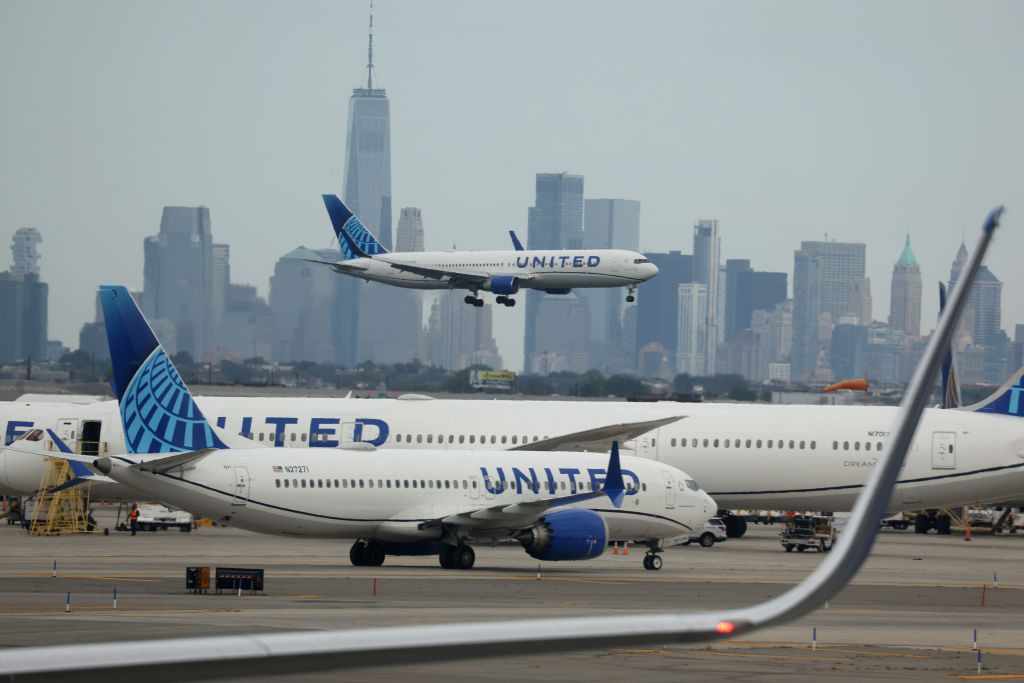
Airfares could soon rise sharply as United Airlines warns that high oil prices may force ticket increases of up to 20%, putting pressure on travelers and the broader airline industry.
Speaking in a recent interview, CEO Scott Kirby said the company is preparing for fuel costs to stay high for a long time, especially as global tensions continue to push oil prices upward.
If that happens, airlines may have no choice but to pass those costs on to customers.
“That would require prices to be up 20%, to break even to cover that cost,” Kirby said, pointing to the growing financial strain from fuel expenses, NY Post reported.
Advertisement
Jet fuel is one of the biggest costs for airlines. When oil prices rise, it becomes much more expensive to operate flights. Kirby warned that if fares increase, fewer people may choose to travel.
“There will be less demand. There’ll be fewer people traveling as prices go up,” he said.
For now, travel demand remains strong. Kirby noted, “Demand is incredibly strong right now,” but added that the airline is planning ahead in case conditions change.
United Airlines CEO Scott Kirby said ticket prices may have to go up by 20% if jet fuel prices remain elevated for longer https://t.co/WPmNuUmZ0R
United has already cut about 5% of its flight capacity, removing routes that are not making enough money to cover rising fuel costs.
“There’s just no point in flying flights that are gonna lose money,” Kirby explained, emphasizing that the airline is focusing on efficiency.
According to FoxBusiness, the company expects oil prices could remain above $100 per barrel through next year and may even climb as high as $175 in a worst-case scenario.
If that happens, Kirby described it as a “stress event” for the airline industry, though still not as severe as the impact seen during the COVID-19 pandemic.
Advertisement
Unlike some airlines, United does not rely heavily on fuel hedging. Kirby said the company’s size makes it difficult to hedge without affecting the market. Instead, United has built up its cash reserves to handle unexpected cost increases.
The airline estimates that current fuel prices could add about $11 billion in expenses. To offset that, ticket prices would need to rise significantly, which could change how people plan trips.
Experts say higher fares may push families to rethink vacations or choose closer destinations. While business travel may continue, everyday travelers could feel the biggest impact.
With the 2026 MLB season getting started on Wednesday night, baseball’s first-ever “CEO of H2O” has been appointed by Primo Brands, and it happens to be one of the smoothest-swinging players of all time.
Primo Brands, a leading North American branded beverage company whose water brands serve as the official water of MLB for the third straight season, has appointed Ken Griffey Jr., the National Baseball Hall of Fame outfielder who belted 630 home runs throughout his storied career, as the “CEO of H2O” in its new national campaign.
Advertisement
The new campaign marks the first time all six of its regional spring water brands – Arrowhead Spring Water (West Coast), Poland Spring Water (Northeast), Ice Mountain Spring Water (Midwest), Deer Park Spring Water (Southeast, Mid-Atlantic), Ozarka Spring Water (Texas) and Zephyrhills Spring Water (Florida) – come together to celebrate America’s Pastime.
Baseball Hall of Famer Ken Griffey Jr. pitches healthy hydration in a new campaign from Primo Brands, with the campaign marking the third consecutive year that Primo Brands’ water brands are the Official Water of Major League Baseball, and the first (Primo Brands / Fox News)
The premise of the campaign by Primo Brands is to elevate healthy hydration as millions of fans return to their respective ballparks to watch their favorite teams all season long. Whether in the stands, or watching at home, hydration is key, and Griffey is excited to lead the charge in his new role.
“I’m so excited for fans to see what I’m working on with Primo Brands,” Griffey said in an exclusive statement to FOX Business. “Healthy hydration is critical for the players on the field, the young people working to get better at the sport, and the fans in the stands. It’s an honor to be the first ever Baseball CEO of H2O. I’ll be working with Primo to tell that hydration story through all of their regional spring water brands all over the country.
“Today is the start, but there will be much more throughout the season – follow along with Primo to see how we’re promoting healthy hydration all season long.”
Throughout the MLB season, Griffey will be engaging with fans across social platforms, sharing fun trivia for a chance to win monthly prizes, and of course, making a special red carpet appearance during MLB All-Star Week. This year’s festivities will take place in Philadelphia at Citizens Bank Park.
A 30-second national ad will also be shown, as Griffey puts together the ultimate spring water team through Primo Brands roster.
Advertisement
Hall of Famer Ken Griffey Jr. is introduced during the 2025 National Baseball Hall of Fame and Museum Induction Ceremony at Clark Sports Center on Sunday, July 27, 2025 in Cooperstown, New York. (Mary DeCicco/MLB Photos / Getty Images)
“Baseball is woven into communities across the country, just like our brands,” said Primo Brands chief marketing officer Kheri Tillman. “In our third year as the Official Water of MLB, and with Ken Griffey Jr. as Baseball’s CEO of H2O, we’re building on that foundation to unveil a national campaign that connects fandom and healthy hydration with the star power of one of the greatest in the game.”
Uzma Rawn Dowler, CMO and senior vice president of global corporate partnerships with MLB, added: “By uniting its regional spring water portfolio and tapping a baseball icon like Ken Griffey Jr., Primo Brands is showing it knows how to bring energy and authenticity to our partnership. We’re excited to continue telling the Primo Brands story through a baseball lens on our platforms while celebrating the role hydration plays in the game.”
Baseball’s first-ever CEO of H2O, Hall of Famer Ken Griffey Jr., pitches healthy hydration in a new campaign from Primo Brands. (Primo Brands / Fox News)
As the New York Yankees and San Francisco Giants kick off the 2026 MLB season on Wednesday night in the Bay Area, Griffey and Primo Brands will be working together to celebrate healthy hydration for players and fans like it’s a walk-off home run.




















































You must be logged in to post a comment Login