
Business
Kalyan Jewellers shares jump 5% after Jefferies starts coverage with ‘Buy’. More upside after 63% rally in 1 month?


The foreign brokerage said the company has built a differentiated growth engine by combining neighbourhood relevance with the scale of an organised retailer, a strategy that should continue to drive market share gains in the coming years.
It also highlighted Kalyan’s franchisee-led expansion model, which supports capital-efficient growth, particularly beyond South India. While the company has an international presence, Jefferies said India remains its core market. The brokerage also noted that Kalyan has a net cash balance sheet, backed by rising free cash flow and strong return ratios.
“Weddings contribute 60% of jewellery demand in India, and Kalyan is well-aligned to tap this opportunity. The company has a dedicated Muhurat brand and also participates in an integrated wedding ecosystem through initiatives that support customer targeting, acquisition, & retention,” However, its presence extends beyond, with a portfolio of product brands catering to different needs & occasions,” the brokerage said in a note. “The company has also recently unveiled a new regional brand, with plans to expand into more identified states to strengthen local connect and compete more effectively with regional players,” it added.
Over FY26-29, Jefferies forecasts Kalyan to deliver 21-23% CAGR in revenue & earnings, driven by continued expansion in non-South alongside steady growth in the South. International ops, led by the Middle East, should remain stable, with LT upside potential from newer markets, and brands such as Candere & regional retail brands.

Also read: Stocks to buy in 2026 for long term: DLF, BSE among 5 stocks that could give 10-40% return
Kalyan Jewellers stock on charts
Ruchit Jain, Vice President of Technical Research at Motilal Oswal, said the stock has recently seen an uptick supported by good volumes. The pullback move towards the 20 DEMA has witnessed buying interest and thus the near-term trend remains positive. The immediate support is placed around Rs 560 which remains a crucial level for the short term. On the higher side, a move above Rs 650 should lead to a momentum towards Rs 700-720.Virat Jagad, Technical Research Analyst at Bonanza, recommended traders buy around Rs 615-620 with a stop loss at Rs 560 and a target of over Rs 700. The stock has bounced from its short-term EMA support and resumed its uptrend while sustaining above all major EMAs. RSI remains above 65, indicating strong momentum, and improving volumes support the ongoing bullish price action, suggesting further upside potential.
Kalyan Jewellers FY27 outlook
Looking ahead, the company said it is targeting mid to high single-digit same-store sales growth. It also expects its capital-efficient franchise-led expansion strategy to further improve return on capital employed from the current level of around 30.3%, based on the last 12 months’ performance.
Kalyan Jewellers said it will continue to focus on a capital-efficient franchise-led expansion strategy to further improve return on capital employed from the current level of around 30.3%, based on the last 12 months’ performance.
Read more: Kalyan Jewellers among 5 F&O stocks with a sharp rise in futures open interest
On the expansion front, Kalyan plans to increase the share of revenue from non-South Indian markets, with most new showroom additions planned outside the southern region. The company said future store openings will largely follow its asset-light franchise model.
It also plans to accelerate the rollout of Candere showrooms, which focus on lightweight lifestyle jewellery, and launch new regional jewellery brands offering localized designs, with the first such brand expected to debut in FY27.
The jewellery retailer reported a strong set of June quarter earnings, with consolidated net profit rising 32% year-on-year to Rs 348.7 crore on the back of robust sales. The company’s revenue from operations rose 45.7% year-on-year to Rs 10,588.9 crore from Rs 7,268.5 crore, according to the unaudited financial results approved by the board on August 4.
Operating performance remained healthy, with EBITDA, or earnings before interest, tax, depreciation and amortisation, increasing 24.5% to Rs 632.5 crore from Rs 508 crore in the year-ago quarter.
(Disclaimer: Recommendations, suggestions, views and opinions given by the experts are their own. These do not represent the views of The Economic Times)


AppLovin’s APP profit and revenue growth continued in the latest quarter but the advertising company said the results weren’t quite up to par with its standards.
The company, which provides software and AI solutions aimed at improving marketing and monetization of mobile apps, reported second-quarter revenue of $1.92 billion, up 53% year over year but toward the bottom end of the guidance range it had provided in May.
Copyright ©2026 Dow Jones & Company, Inc. All Rights Reserved. 87990cbe856818d5eddac44c7b1cdeb8

Verastem, Inc. 2026 Q2 – Results – Earnings Call Presentation

HYMB: Muni ETF Good For High-Yield Dividend Capture

ozgurdonmaz/iStock Unreleased via Getty Images
In its Q2 earnings release, management raised guidance for both other revenue and RLDC margin, which surprised us. A closer look shows that the increase is driven by one-time Arc token presale revenue. This buys Circle time through

More than 100 research-intensive UK businesses, including AstraZeneca and Jaguar Land Rover, can now support international scientists and engineers to live and work in the UK through the Global Talent visa, under an expansion of the route announced by the government on Thursday 6 August.
For the first time, commercial research businesses can host researchers working on funded projects through the visa’s endorsed funder pathway, which was previously limited to universities, academic institutions and independent research institutes. The government said the pathway has already helped more than 12,500 people from over 130 countries build their research careers in Britain.
The newly approved companies range from global names, including AstraZeneca, which set out a £650 million UK investment plan in 2024, to fast-growing firms such as Added Value Solutions, Denroy Plastics and Ffilm Cymru. Each falls within the eight high-growth sectors identified in the government’s Modern Industrial Strategy, which include advanced manufacturing, digital and technologies, clean energy, life sciences and the creative industries.
Researchers whose expertise is recognised through a research grant will also be able to switch to a new firm or start their own spin-out under the route, the government said.
Jonathan Reynolds, Secretary of State for Business, Innovation, Science and Trade, said: “By expanding the Global Talent visa to more than 100 businesses, we’re making it easier than ever for our most innovative companies to recruit eligible researchers who will develop the medicines, technologies and industries of the future right here in the UK, underpinning our industrial strategy, creating skilled jobs and driving growth in the process.”
Professor Christopher Smith, UKRI’s International, Talent and Skills Champion, said the change “will ensure these benefits are felt across more of the country and in a wide range of sectors, from medicines and AI to the creative and cultural economy”.
The full list of approved host organisations is published on GOV.UK. The expansion follows a change in May that extended the pathway to the remaining members of the Association for Innovation, Research and Technology Organisations, including IBM, and an April simplification of the Global Talent visa’s fast-track academic appointments route, a commitment from the Immigration White Paper.
The government is also preparing to broaden the Future Technology Research and Innovation scheme, a UKRI-run programme under the Government Authorised Exchange visa route that lets eligible companies working on critical technologies host international researchers, interns and technical specialists for placements of up to two years. That expansion will open the scheme to a wider range of R&D-focused businesses in sectors such as AI, quantum and engineering biology.
Alongside the visa changes, the government said the £54 million Global Talent Fund has brought 18 research group leaders to the UK so far, while the Global Talent Taskforce offers a concierge service to attract top international talent.
Oliver Buckley-Mellor, UK competitiveness senior policy manager at the Association of the British Pharmaceutical Industry, said the visa was “one of the most globally competitive routes of its kind, but its potential to boost British science and economic growth was not being fully realised”. He described the change as “a welcome first step”.
The ABPI reported in September that foreign direct investment in UK life sciences fell to £795 million in 2023, 58 per cent below 2017 levels.
Steve Brierley, chief executive and founder of the Cambridge quantum computing company Riverlane, said: “The Global Talent visa gives us a fast, flexible route to bring the best people to the UK, and that speed matters when the field is moving as quickly as quantum is right now.”

Amy Ingham
Amy Ingham is a reporter at Business Matters, covering UK business news with a focus on breaking news, business policy, late payments and insolvency. She joined the magazine in 2026 after completing the NCTJ Diploma in Journalism at Harlow College’s journalism school. Her recent reporting includes British Steel’s nationalisation and its impact on SME suppliers, the decline in late payments by large firms, and Insolvency Service director disqualifications. Reach her at aingham@cbmeg.co.uk.

Sprouts Farmers Market: Sales Rebound Underpins Cheap Multiples

OPINION: West Australians understand the value of a home. Not simply as a roof over our heads, but as the place where families gather. Yet somewhere along the way, we’ve lost this message.

Accell Group, the Dutch owner of Raleigh bicycles, has entered court-supervised insolvency proceedings in the Netherlands after takeover talks collapsed, while Accell UK and Ireland has filed a notice of intention to appoint administrators.
The group, whose brands also include Haibike, Lapierre, Ghost and Babboe, said in a statement that Dutch courts had granted a provisional suspension of payments for its Dutch entities with effect from 5 August, and that court-appointed administrators would now work alongside its board.
Jonas Nilsson, Accell’s chief executive, said it was a “deeply sad and frustrating situation” and that the company had “tirelessly explored” every option for the future of the cycling business.
A prospective takeover by the Singapore-based DuTech Group fell through recently, despite the deal having received regulatory approvals in Germany, Austria and Poland.
KKR, the US private equity firm, acquired Accell in 2022 for €1.56 billion, using a mix of equity and debt. In February, the group completed a restructuring that delivered a substantial reduction in debt and transferred majority control from KKR to its syndicate of lenders. In January, Accell sold its titanium specialist brand Van Nicholas to the Italian manufacturer Velo-ce.
Accell said it had since “explored every possible avenue” for its future, including discussions with potential buyers, but that it had not been possible to find a solution that would allow the group to continue in its current form.
Raleigh was founded in Nottingham in 1887 and grew to become the largest bicycle manufacturer in the world. It created the Chopper, with its extended handlebars and backrest seat, in the 1970s. Accell bought the brand in 2012 for about $100 million.
The company no longer makes bikes in Nottingham. Its head office has moved to Eastwood, Nottinghamshire, and it has shifted to selling electric bikes.
Accounts filed at Companies House in January 2025 show Raleigh made a pre-tax loss of £30.1 million in 2023, against a £6.8 million loss in 2022, despite turnover rising 3.5 per cent to £57.7 million.
Several European bicycle businesses have failed or restructured since the pandemic cycling boom ended, as demand weakened and the industry was left with excess stock. They include the Dutch e-bike maker VanMoof, the brand group 7Anna, the power-meter maker Stages Cycling and the online retailer Wiggle Chain Reaction Cycles, whose brand was bought out of administration by Frasers Group in 2024.
Molly Monks, an insolvency specialist at Parker Walsh, said the case showed that a well-known brand could still fail if its cash flow and debts became unmanageable.
She said: “The Raleigh name carries enormous affection and recognition, but nostalgia does not pay wages, suppliers or interest. A company can be known and loved by millions and still reach a point where it cannot meet its financial obligations.”
Monks said restructuring could buy a struggling company time but could not save a business unless its underlying commercial problems were tackled.
She said: “Reducing debt or securing emergency funding may provide breathing space, but it does not restore demand, clear surplus stock or suddenly make an unprofitable operation sustainable.”
She added that insolvency proceedings did not necessarily mean Raleigh would disappear, as valuable brands could be sold, restructured or continue trading under new ownership.
Nilsson said: “This is a deeply sad and frustrating situation given all the hard work and everything we have achieved, with the support of shareholders and lenders, to restructure Accell’s operations and finances. It is an especially difficult moment for our employees, creditors, customers, suppliers and partners.”
Amy Ingham
Amy Ingham is a reporter at Business Matters, covering UK business news with a focus on breaking news, business policy, late payments and insolvency. She joined the magazine in 2026 after completing the NCTJ Diploma in Journalism at Harlow College’s journalism school. Her recent reporting includes British Steel’s nationalisation and its impact on SME suppliers, the decline in late payments by large firms, and Insolvency Service director disqualifications. Reach her at aingham@cbmeg.co.uk.
Business
SK Hynix Shares Plunge 10% as Weak SanDisk, Western Digital Guidance Rattles Memory Chip Stocks
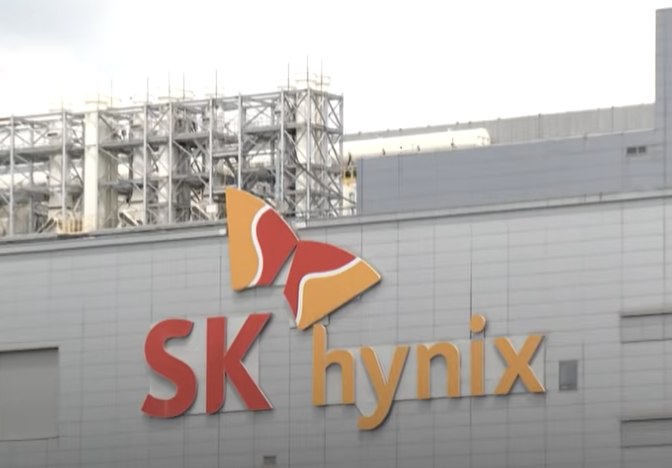
SEOUL — Shares of SK Hynix Inc plunged Thursday, falling 10.37%, or 173,000 won, to close at 1,495,000 won, as disappointing forward guidance from two major U.S. memory chip companies triggered a broad selloff across the global semiconductor sector and rattled South Korea’s benchmark stock index.
The decline made SK Hynix, one of the world’s largest producers of memory chips and a key supplier for artificial intelligence infrastructure, the worst-performing major stock within a broader selloff that briefly pushed South Korea’s KOSPI index down as much as 5% during Thursday’s trading session, triggering the exchange’s automatic “sidecar” mechanism, which temporarily halts programmatic sell orders once futures decline sharply within a short window.
The Trigger: Disappointing US Guidance
Thursday’s selloff traces directly back to earnings reports released after Wednesday’s close by two major U.S. storage and memory companies, SanDisk and Western Digital. Both companies posted results that exceeded Wall Street’s expectations for the quarter just completed. SanDisk reported fiscal fourth-quarter revenue that surged 372% year over year to $8.96 billion, with adjusted earnings per share of $39.25, both figures beating analyst forecasts. Western Digital similarly posted strong results, with fourth-quarter revenue climbing 44% year over year to $3.747 billion and GAAP net income surging 1,215% from a year earlier to $3.195 billion.
Despite those strong headline numbers, both companies issued forward guidance that fell short of the market’s elevated expectations. SanDisk projected first-quarter fiscal 2027 revenue in a range of $10.3 billion to $10.8 billion, with a midpoint of approximately $10.55 billion, below the roughly $10.8 billion analysts had anticipated. That guidance miss, paired with a similarly underwhelming outlook from Western Digital, was enough to trigger sharp declines in both companies’ shares in after-hours and premarket trading, with Western Digital falling as much as 13% to 14% and SanDisk dropping roughly 8% to 9% at various points.
A Selloff That Spread Across Asia
The disappointing U.S. guidance quickly rippled into Asian trading Thursday morning, hitting memory chip producers across the region particularly hard given their central role in the same global supply chain. Samsung Electronics, South Korea’s largest company and SK Hynix’s primary domestic rival, fell alongside SK Hynix, with declines ranging from roughly 5.7% to 6.3% across various points in the session. In Japan, memory chipmaker Kioxia slumped more than 10%, while broader technology indexes across the region also came under pressure, with Hong Kong’s Hang Seng Tech Index falling more than 2%.
The pressure extended back to U.S. markets as well. Micron Technology, another major memory chip producer, fell more than 3% in premarket trading Thursday, while the broader Roundhill Memory ETF, which tracks a basket of memory and storage-related stocks, also declined sharply as investors reassessed valuations across the sector following the guidance misses.
A Sector Already Prone to Sharp Swings
Thursday’s decline extended a pattern of extreme volatility that has characterized memory chip stocks throughout 2026. SK Hynix alone has experienced several dramatic single-session moves this year, including a 15% single-day plunge in mid-July, its largest ever at the time, after a South Korean brokerage published a second-quarter profit estimate for the company that came in 8% below consensus, citing concerns over slower-than-expected shipments of high-bandwidth memory chips used in AI applications.
That volatility has cut in both directions. Despite Thursday’s steep decline, SK Hynix and its memory sector peers have posted extraordinary gains for the year overall, driven by surging demand for the high-bandwidth memory chips that power artificial intelligence data centers. SanDisk shares, for instance, had climbed as much as 640% year-to-date as of a session earlier this week, before Thursday’s guidance-driven pullback, illustrating just how dramatically sentiment toward the memory sector has swung across 2026.
Analysts Divided on What Comes Next
Despite Thursday’s sharp selloff, not all analysts have turned bearish on the sector’s longer-term prospects. Analysts at Goldman Sachs and JPMorgan have maintained buy ratings on memory chip stocks even amid the volatility, pointing to forward price-to-earnings ratios in the range of 3.5 to 3.6 times as evidence that current valuations appear detached from the sector’s underlying fundamentals. Some institutional investors have characterized the current pullback as a potential buying opportunity, provided the broader thesis around sustained AI-driven memory demand remains intact.
Other market observers have expressed more caution, noting that the sector’s heightened sensitivity to even modest guidance misses reflects how aggressively investors had priced in continued exponential growth across the memory chip industry. Analysts tracking the space have noted that any performance falling even slightly below elevated market expectations has been enough to trigger rapid, outsized selloffs in recent months, a dynamic that played out again with Thursday’s reaction to the SanDisk and Western Digital reports.
A Broader Test for South Korea’s Market
Thursday’s decline also arrived alongside separate corporate news involving SK Hynix’s operations. According to a report from the Korea Economic Daily, Solidigm, a wholly owned subsidiary of SK Hynix, has formally begun a pre-IPO financing process ahead of a planned Nasdaq listing, targeting a valuation of approximately 50 trillion won, or roughly $35.15 billion, and aiming to raise between 5 trillion and 10 trillion won, or roughly $3.5 billion to $7 billion, in the process.
Even with that separate corporate development in progress, Thursday’s trading was dominated by the broader memory chip selloff, which analysts characterized as reflecting sector-specific concerns tied to the pace of near-term AI memory demand rather than a systemic risk-off event across markets more broadly.
With SK Hynix and its peers continuing to exhibit some of the sharpest single-session volatility in the global technology sector this year, investors are likely to remain closely focused on upcoming earnings and guidance updates from other major memory producers, including Micron, for further signals on whether Thursday’s pullback reflects a temporary reassessment or a more sustained shift in sentiment toward the artificial intelligence-driven memory chip boom that has defined much of the sector’s performance throughout 2026.


Over fifteen years of experience making contrarian bets based on my macro view and stock-specific turnaround stories to garner outsized returns with a favorable risk/reward profile. If you want me to cover a specific stock or have a question for an article, just let me know!
Analyst’s Disclosure: I/we have no stock, option or similar derivative position in any of the companies mentioned, and no plans to initiate any such positions within the next 72 hours. I wrote this article myself, and it expresses my own opinions. I am not receiving compensation for it (other than from Seeking Alpha). I have no business relationship with any company whose stock is mentioned in this article.
Seeking Alpha’s Disclosure: Past performance is no guarantee of future results. No recommendation or advice is being given as to whether any investment is suitable for a particular investor. Any views or opinions expressed above may not reflect those of Seeking Alpha as a whole. Seeking Alpha is not a licensed securities dealer, broker or US investment adviser or investment bank. Our analysts are third party authors that include both professional investors and individual investors who may not be licensed or certified by any institute or regulatory body.
AppLovin Stock Drops After Revenue Misses Estimates

Binance BTC Trading Volume Ratio Hits Record Amid Spot, Futures Split

A Bird-Like Moth Is Making UK Gardeners ‘Gasp’ This Summer

Renter of Home in Anne Heche Crash Denies Settlement With Son

No Jackpot Winner as $257 Million Prize Rolls Over to $269 Million Monday Draw

Weekend Open Thread: Staud – Corporette.com

Cryptocurrency mu Rwanda: Menya byinshi kuri yo | Ese ubu buryo busimbura amafaranga asanzwe?

Kevin Nguyen Makes $100k Per Year

Trump SCANDALIZED as Bank Declares They FEARED Trump WAS A MONEY LAUNDERER As They Closed Accounts!
-

 Fashion7 days ago
Weekend Open Thread: Wit & Wisdom
-

 Politics7 days ago
Meta enters AI-training agreement with far-right ‘propaganda rag’ Newsmax
-

 Politics5 days ago
Zack Polanski: an incitement to murder Nigel Farage?
-

 Crypto World6 days ago
MicroStrategy Post-Earnings CLARITY Act Push Could Add New Catalyst for Its Stock
-

 Crypto World6 days ago
XRP Ledger v3.3.0 brings five institutional features
-

 Crypto World6 days ago
New York sues Kalshi over prediction market gambling
-

 Crypto World5 days ago
Crypto PAC spending tops $2M in Michigan House race
-

 Business7 days ago
Trump Announces Hamas Disarmament Agreement as Iran Strikes Kuwait Air Base and US Attacks Pause Overnight
-

 Business4 days ago
DTCR: Deleveraging And A Hedge Fund Collapse Point To A Possible AI Bottom
-

 Tech5 days ago
ESET tracks rise in malicious AI skills and adaptable malware
-

 Crypto World7 days ago
3 Fed Officials Just Explained Their Rate Hike Vote: Is Inflation Winning?
-

 Tech7 days ago
Building A Reproduction PlayStation Motherboard
-

 Sports6 days ago
France Cricket implodes: letters hidden in a drawer and a board at war
-
Crypto World5 days ago
XRP Ledger urges node upgrade after manifest flood
-

 Crypto World6 days ago
Moneyflip CEO charged in $40K murder-for-hire plot
-
 Sports6 days ago
Bruno Fernandes decision made as Man United ‘discuss’ striker transfer option
-
Business7 days ago
FIFA has scrapped $20 billion World Cup sell-off plan, New York Post reports
-

 News Videos6 days ago
Financial Crash Expert: The 90-Day Collapse Timeline They Are Desperately Hiding.
-

 Sports1 day ago
Jordan Coyle & Cordiamo take Laya Arena Stakes at RDS
-

 Sports7 days ago
Commonwealth Games 2026 Live Updates | Day 9 CWG 2026: Lovlina Borgohain, Sachin Siwach Enter Final After Indian Judokas Script History
You must be logged in to post a comment Login