




Connect with us
DAPA Banner
DAPA Coin
DAPA
COIN PAYMENT ASSET
PRIVACY · BLOCKDAG · HOMOMORPHIC ENCRYPTION · RUST
ElGamal Encrypted MINE DAPA
🚫 GENESIS SOLD OUT
DAPAPAY COMING

Business

Kevin O’Leary agrees to shrink Utah AI data center after 75% cut demand

Published

on

Kevin O'Leary agrees to shrink Utah AI data center after 75% cut demand

“Shark Tank” investor Kevin O’Leary says he is prepared to shrink a sprawling artificial intelligence data center development in Utah after top state lawmakers pushed for major reductions and additional environmental safeguards, according to reports.

O’Leary told NBC News on Wednesday that he is willing to reduce the size of the proposed Stratos data center project after Utah Senate President J. Stuart Adams called for a 75% reduction in its footprint.

Advertisement

“I have no choice,” O’Leary told NBC News at the Washington AI Network’s AI Honors gala.

The project, which has been promoted as one of the largest AI-focused data center developments in the world, would span roughly 40,000 acres in Box Elder County.

KEVIN O’LEARY DETAILS MASSIVE UTAH AI DATA CENTER TO RIVAL CHINA’S TECH DOMINANCE

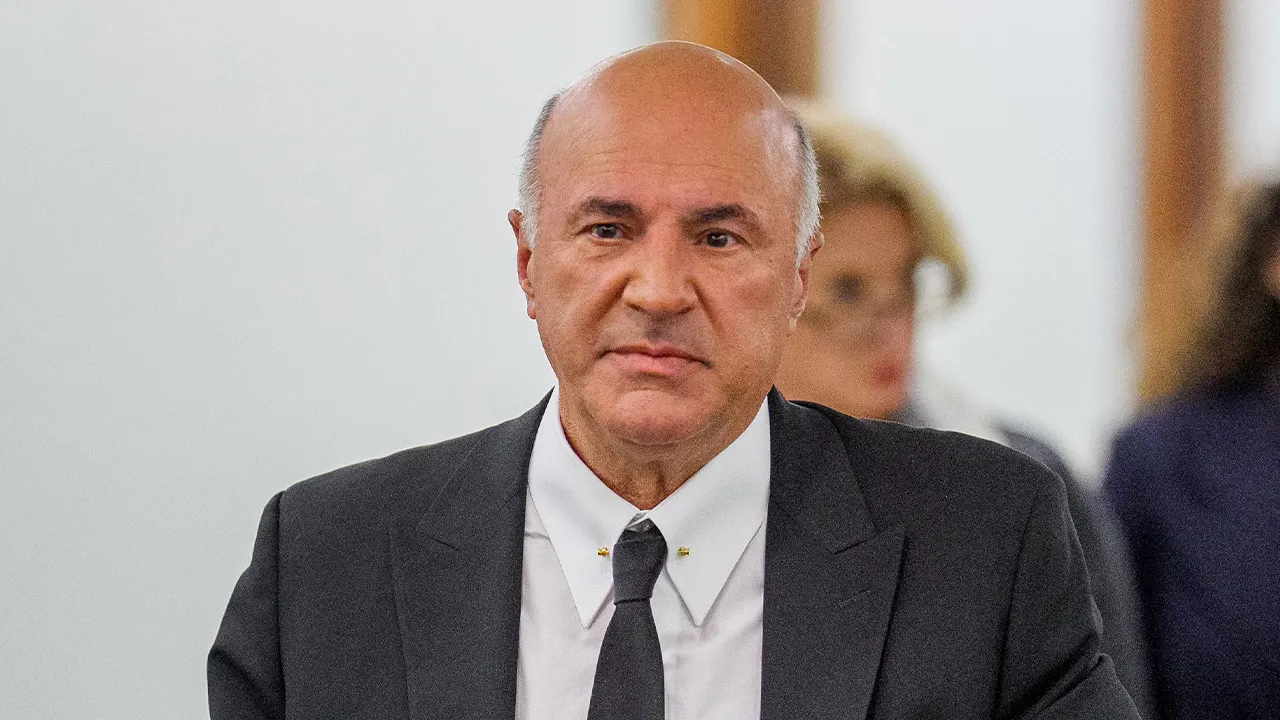
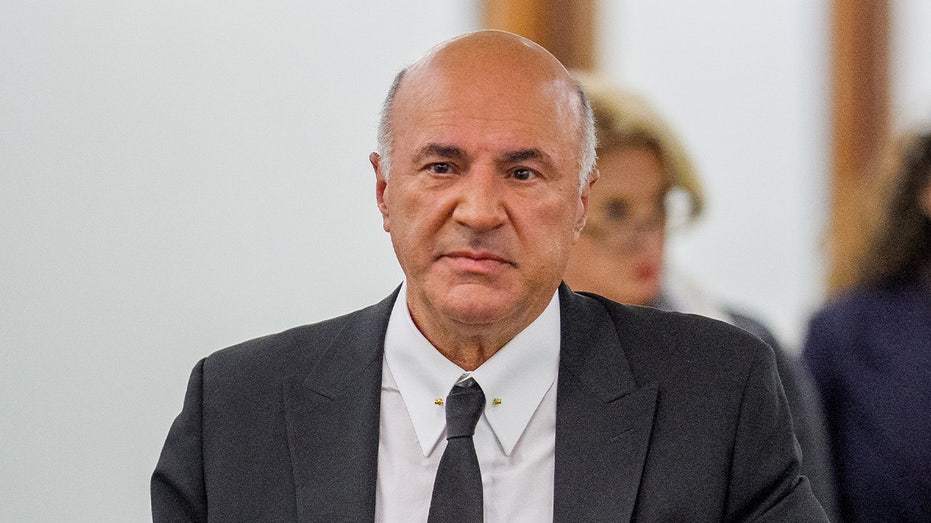
Kevin O'Leary in Washington, DC

Kevin O’Leary, Chairman of O’Leary Ventures, arrives to speak before a Senate Committee on Aging and House Select Committee on the Chinese Communist Party joint hearing on April 9, 2025, in Washington, DC.  (Andrew Harnik/Getty Images / Getty Images)

In a letter sent Monday, Adams urged O’Leary to reduce the project area to approximately 10,000 acres and adopt additional environmental safeguards before moving forward.

Advertisement

“I’ve sent a letter directly to Kevin O’Leary calling for a 75% reduction in the proposed data center project area, from 40,000 acres to approximately 10,000 acres,” Adams said in a statement.

The Republican Senate president also called for stronger conservation measures, greater public transparency and protections for Utah’s natural resources.

FOX NEWS AI NEWSLETTER: BACKLASH OVER MYSTERY COMPANY’S DATA CENTER

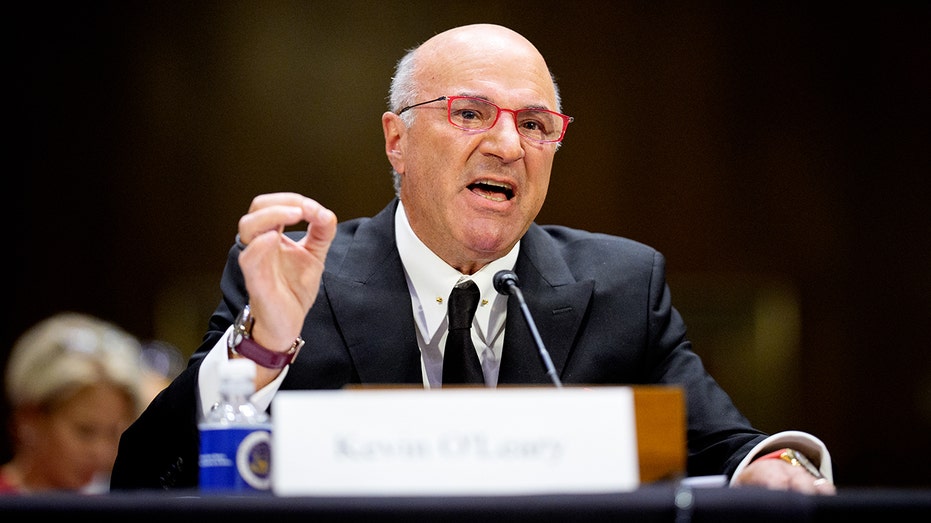
Kevin O'Leary at Senate hearing

Kevin O’Leary, Chairman of O’Leary Ventures, speaks before a Senate Committee on Aging and House Select Committee on the Chinese Communist Party joint hearing on April 9, 2025. (Photo by Andrew Harnik/Getty Images / Getty Images)

Among his requests, Adams said the project should commit to using the latest technology to minimize water consumption, dedicate any excess treated water to the Great Salt Lake and enter into agreements with state officials to preserve wildlife habitat and agricultural land.

Advertisement

“Utah can pursue economic opportunity while protecting our water, air, wildlife and communities,” Adams said. “We can and must do both.”

O’Leary suggested the demand was driven in part by political pressure as opposition to the project continues to grow.

KEVIN O’LEARY REVEALS THE ONLY TWO CRYPTOCURRENCIES HE SAYS ARE WORTH OWNING

High-tech data center with server racks

High-tech data center with server racks (iStock / iStock)

“I know he did it for political reasons,” O’Leary told NBC News. “He has to address those issues, and so do I.”

Advertisement

Residents and environmental advocates have raised concerns about the project’s potential demands on water supplies, power infrastructure and nearby communities.

O’Leary has previously dismissed some of those concerns as misinformation and accused opponents of spreading false claims about the project.

US BANS NEW FOREIGN-MADE CONSUMER INTERNET ROUTERS OVER SECURITY CONCERNS

“All these people have a right to get information,” O’Leary told NBC News. “Why are they getting it from a false initiative? Who is spending all this money to put out all these falsehoods and straight-out misinformation and lies and agitate these people?”

Advertisement

Adams noted that several legislative committees are examining how large-scale developments could affect Utah’s water supply, energy system, land use and environmental resources.

GET FOX BUSINESS ON THE GO BY CLICKING HERE

Utah has also invested more than $1 billion in water conservation and infrastructure projects while increasing oversight of large-scale developments, Adams said.

O’Leary told NBC News he plans to formally respond to Adams by Friday with details of a revised proposal.

Advertisement
Continue Reading
Click to comment

You must be logged in to post a comment Login

Leave a Reply

Business

Brown-Forman Corporation 2026 Q4 – Results – Earnings Call Presentation (NYSE:BF.B) 2026-06-05

Published

on

OneWater Marine Inc. (ONEW) Q1 2026 Earnings Call Transcript

This article was written by

Seeking Alpha’s transcripts team is responsible for the development of all of our transcript-related projects. We currently publish thousands of quarterly earnings calls per quarter on our site and are continuing to grow and expand our coverage. The purpose of this profile is to allow us to share with our readers new transcript-related developments. Thanks, SA Transcripts Team

Continue Reading

Business

Asia’s Industrial Supercycle awakens

Published

on

Asia's Industrial Supercycle awakens

The word “supercycle” is rarely used with precision. Economists employ it to describe periods when commodity prices, investment flows, and capital-formation rates all move together, in the same direction, for a decade or more — driven not by a single trigger but by an irreversible structural shift in how the world organises production. The last one, centred on China’s entry into the global economy, ran roughly from 1999 to 2014. A new one is now beginning, and once again Asia is its engine room.

This time the forces at work are different in character — and arguably more durable. The previous supercycle was propelled by urbanisation and export-led manufacturing. The one now emerging is propelled by four concurrent waves of capital expenditure: artificial intelligence infrastructure, energy transition and security, defence rearmament, and the re-shoring and diversification of industrial supply chains. Each wave would be significant on its own. Together, they are mutually reinforcing in ways that make the cycle self-sustaining.

$4.1T
Asia capex forecast 2026–30

47%
Global semiconductor output by 2030

Advertisement

19
Asian nations lifting defence budgets


Data centre build rate vs. US by 2028

What Makes a Supercycle?

Most economic expansions are cyclical: a period of growth, followed by contraction, driven by the ebb and flow of credit, sentiment, and inventory. A supercycle is structurally different. It is anchored by a step-change in the underlying organisation of the economy — a change that takes fifteen to twenty years to fully express itself, during which demand for capital goods, raw materials, skilled labour, and infrastructure remains structurally elevated.

Advertisement

Historical precedent
The last commodity supercycle (1999–2014) saw iron ore prices rise 800% and copper prices quadruple, driven almost entirely by Chinese industrialisation. The current cycle is likely to see similar price behaviour in copper, rare earths, and uranium.

The Industrial Revolution was a supercycle. So was America’s post-war economic build-out. The Japanese miracle of the 1960s and 1970s. China’s accession to the WTO. Each of these was characterised not by boom-and-bust but by a sustained, decade-long reallocation of capital toward production — physical assets that generate returns over long periods and create demand for more of the same.

The conditions for a new supercycle have been accumulating for several years. The COVID-19 pandemic exposed the fragility of hyper-concentrated supply chains. The war in Ukraine made energy security a first-order strategic priority. The emergence of large language models created a demand for computing infrastructure on a scale that has no historical parallel. And across Asia, a set of governments decided — almost simultaneously — that the era of passive participation in the global economic order was over.

Asia’s Structural Advantage

The manufacturing base

Asia already produces roughly 60 percent of global manufactured output. It is home to the world’s most sophisticated electronics ecosystems (Taiwan, South Korea, Japan), the world’s largest and most rapidly automating factory floor (China), and a rapidly expanding second tier of lower-cost industrial bases (Vietnam, India, Indonesia, Malaysia). This is not merely a cost advantage — it is a capabilities advantage, one that takes decades to build and cannot be replicated quickly elsewhere.

Advertisement

“The west spent thirty years offshoring its industrial commons. It will take thirty years to rebuild it — during which time Asia will have moved two technological generations ahead.”

— Kenji Watanabe, former METI Director-General

Capital formation rates

Asian economies invest a far higher share of GDP in fixed capital than their Western counterparts. China’s gross fixed capital formation runs at approximately 43 percent of GDP. India’s is around 31 percent. South Korea’s is 30 percent. By comparison, the United States invests roughly 21 percent and the United Kingdom a mere 17 percent. These are not short-term fluctuations — they reflect deep cultural and institutional dispositions toward investment over consumption, toward building infrastructure rather than buying services.

Government coordination capacity

Perhaps the least-appreciated advantage is the capacity of Asian governments to coordinate large-scale industrial policy. Japan’s Ministry of Economy, Trade and Industry has orchestrated the country’s semiconductor resurgence through the RAPIDUS programme and its partnership with TSMC at Kumamoto. South Korea’s government has pledged over 550 trillion won in support for its semiconductor and battery industries through 2030. India’s Production Linked Incentive scheme has attracted over $40 billion in manufacturing commitments. China’s state-directed investment machine, for all its inefficiencies, continues to move capital at a speed and scale that democratic market economies struggle to match.


The Four Pillars of the Cycle

The supercycle that is now underway rests on four distinct but interconnected pillars of capital expenditure. It is important to understand each on its own terms — because each has its own investment logic, its own timeline, and its own geography — but equally important to understand them as a system, because their interactions are what give the cycle its extraordinary duration and scale.

Advertisement

Pillar one: AI infrastructure

The artificial intelligence revolution is, at its core, an infrastructure story. Training and running large AI models requires vast quantities of specialised chips, enormous amounts of electricity, sophisticated cooling systems, and reliable high-speed network connectivity. Every one of these requirements drives capital expenditure in sectors that are disproportionately concentrated in Asia.

TSMC alone manufactures roughly 92 percent of the world’s most advanced logic chips. Samsung and SK Hynix together produce the majority of the world’s high-bandwidth memory — the component most constrained in AI server builds. Japan’s Shin-Etsu Chemical and SUMCO supply the silicon wafers on which the world’s most sophisticated chips are built. The AI boom is a geographically concentrated demand signal, and the geography it points to is overwhelmingly Asian.

Pillar two: Energy transition and security

Asia accounts for two-thirds of global electricity consumption growth and is simultaneously the world’s largest producer of solar panels, wind turbines, batteries, and electric vehicles. The energy transition is not happening to Asia — Asia is building the energy transition for the rest of the world, while simultaneously undergoing its own. Japan is reviving its nuclear sector. South Korea is building the world’s largest offshore wind farms. India is installing solar capacity at a pace that defies conventional forecasting. Every megawatt of new renewable capacity requires copper wiring, steel towers, rare-earth magnets, and semiconductor-controlled inverters — all of which feed demand back through the same Asian industrial base.

Pillar three: Defence rearmament

The geopolitical tensions of the 2020s have triggered a rearmament cycle that is, by some measures, the most broad-based since the Cold War. Japan has doubled its defence budget to two percent of GDP and is rebuilding its shipbuilding, aerospace, and missile industries after decades of deliberate demilitarisation. South Korea is now one of the world’s largest arms exporters. Australia is investing in nuclear-powered submarines. India is pursuing strategic autonomy in defence technology with an urgency it has never previously demonstrated. Even countries as historically pacific as the Philippines and Vietnam are significantly expanding their military procurement. The domestic defence industrial base required to sustain these ambitions — shipyards, electronics manufacturers, propulsion systems — is entirely capital-intensive.

Advertisement

Pillar four: Supply chain re-architecture

The post-pandemic realignment of global supply chains is creating massive greenfield investment opportunities across South and Southeast Asia. Apple now assembles a meaningful portion of its products in India and Vietnam. Samsung has shifted significant production to Vietnam and is expanding in India. Intel, TSMC, and Texas Instruments are all building new fabs in markets they would have dismissed as too risky a decade ago. This is not a marginal reshuffling — it is a fundamental redesign of the geography of global production, and it requires the construction of entirely new industrial ecosystems: factories, ports, power grids, roads, logistics hubs, worker housing.


Why Now? The Convergence Moment

Supercycles do not begin because analysts predict them. They begin because a set of structural forces reaches a threshold at which capital allocation becomes, in effect, compulsory. Companies and governments that fail to invest in the new paradigm find themselves competitively disadvantaged within a single product cycle. This is the moment Asia has now reached.

The AI compute shortage is so acute that hyperscalers — Microsoft, Google, Amazon, and Meta — are signing long-term supply contracts with Asian chip manufacturers that extend years into the future, regardless of near-term demand fluctuations. The energy security imperative is so pressing, following Russia’s weaponisation of gas supplies, that no government with access to renewables manufacturing capacity is choosing not to deploy it. The defence rearmament cycle is locked in by geopolitical forces that show no sign of reversing. And the supply chain diversification imperative has been institutionalised by legislation in the United States, the European Union, Japan, and a dozen other jurisdictions.

Each of these forces is self-reinforcing. AI infrastructure requires energy, which drives energy capex. Defence systems require advanced electronics, which drives semiconductor capex. Re-shored factories require logistics infrastructure, which drives construction capex. The cycle feeds itself.

Advertisement

“We are not in a normal capex cycle. We are in a structural reconfiguration of the global economy. The companies and countries that build now will own the next twenty years.”

— Rashida Nakamura, Chief Economist, Asian Development Bank

The Investment Implication

For investors, the supercycle thesis has a clear implication: the period of elevated capital expenditure is only beginning, and the beneficiaries are disproportionately concentrated in Asia. The companies that supply the inputs to this capex — semiconductor manufacturers, energy equipment producers, industrial machinery makers, defence contractors, construction firms — are in the early stages of a decade-long demand supercycle.

This does not mean the path will be smooth. Every supercycle contains within it episodes of over-investment, inventory correction, and political disruption. The AI capex boom, in particular, is vulnerable to periodic corrections as hyperscalers digest the infrastructure they have built. Geopolitical escalation remains the great wildcard: a conflict over Taiwan, however unlikely, would not merely disrupt the supercycle — it would rewrite it entirely.

But the structural forces are too large, too deeply embedded, and too mutually reinforcing to be undone by normal cyclical fluctuations. Asia has decided to build. The only question for investors is where, specifically, that building will create the most durable value — a question we turn to in the articles that follow.

Advertisement

The figures cited in this article represent analyst consensus estimates as of Q1 2026 and are subject to revision. This article is the first in a three-part series examining Asia’s industrial supercycle.

Continue Reading

Business

FPI exodus from financials cools, but foreign investors remain net sellers

Published

on

FPI exodus from financials cools, but foreign investors remain net sellers
Mumbai: Global investors continued to pare equity stake in the financial services sector in the second half of May, however the pace of selling came off.

Foreign portfolio investors (FPI) sold shares worth ₹5,181 crore from the sector in the period, significantly lower than the outflow of ₹17,000 crore in first half of the month, according to the data from NSDL. Between January and March, global investors pulled out shares worth over ₹60,000 crore from the sector.

“Banking stocks offered foreign investors an easy exit from India by virtue of being highly liquid,” said U R Bhat, co-founder & director, Alphaniti. “Despite the sell-off, the sector has fared well, barring a few specific exceptions. Now investors are reducing exposure in other sectors.”

Bank Nifty fell 1% over the past one month compared with a 2.9% drop in the benchmark Nifty 50.

Advertisement

“Global investors toned down the selling in the banking and financial services sector and bought selectively- mostly smaller banks instead of the large caps which is why the pace of outflows moderated,” said Sonam Srivastava, founder and CEO, Wright Research. Overseas investors sold shares worth ₹14,621 crore across 13 sectors in the second half of May, after withdrawing ₹38,443 crore across 19 sectors in the first half of the month.

FPI 2026 Sales Top Last Year’s OutflowsAgencies

Mood Shift: Sharply cut pullouts from fin services in May 2nd half, with some buying in small banks

FPIs have continued the selling spree in the current calendar year, offloading equities worth ₹2.6 lakh crore up till June 03. This exceeds their outflow of ₹1.7 lakh crore in the whole of 2025. A sustained selling pressure has intensified this year due to AI disruption and inflationary pressure on account of elevated oil prices given the US-Iran war. In addition, the net outflow of ₹1.3 lakh crore in FY27 so far exceeds the net investment of ₹84,132 crore by FPIs since FY17. The cumulative net foreign investment in Indian equities dropped to the lowest level in 12 years to ₹7.1 lakh crore in FY27.
In the second half of May, automobiles and oil and gas sectors reported worth over ₹2,000 crore. On May 29, The MSCI rebalancing led to outflows worth ₹8,000-8,500 crore which also factored in the outflows for this fortnight. “Changes in the MSCI Index shifts the composition of not just index funds that mimic the index but also weighs on decisions of other funds,who largely use MSCI indices as benchmarks” said Bhat.Among sectors that reported net inflows in the second half of May, metals attracted nearly 60% of the inflows -the highest foreign inflows worth ₹4,999 crore for the period. The sector witnessed inflows worth over ₹6,500 crore in May.

Continue Reading

Business

AI threat overblown: Why Invesco’s Hiten Jain is doubling down on IT stocks

Published

on

AI threat overblown: Why Invesco’s Hiten Jain is doubling down on IT stocks
As global uncertainties and AI disruption fears rattle investors, Invesco Mutual Fund’s Hiten Jain delivers a contrarian wake-up call. In this exclusive breakdown, Jain explains why the tech rout is a massive buying opportunity, why broad PSU rallies are dead, and where smart money is moving right now.

Edited excerpts from a chat:

How are you viewing the Indian equity market at current valuations, and where do you see the next leg of earnings growth coming from?
At an index level, large caps are trading below their long-term average valuations, while mid- and small-cap stocks are trading above them. This divergence reflects stronger recent earnings delivery and higher liquidity in the broader markets, but it also suggests greater valuation comfort and a stronger margin of safety in large caps. In the near term, earnings growth is expected to be driven by the rally in commodities, benefiting metals & mining and select energy companies. As West Asia tensions ease and supply chains normalize, earnings growth should broaden and be led by the financial, consumer, industrial, and healthcare sectors.
Financials continue to remain a key pillar of the Indian market. What is your outlook on banks and financial services over the next 12-18 months?

India is currently in the midst of a favourable credit cycle, which began post-COVID following a prolonged weak phase (FY14–FY20) marked by the NPA crisis. The clean-up of balance sheets over the past few years has laid a strong foundation for sustainable growth in the financial sector. For lending businesses, which constitute a significant portion of the financials universe, asset quality remains the most critical driver and continues to be robust across both banks and NBFCs.
Additionally, credit growth has accelerated, supported by improved systemic liquidity following RBI measures. The interest rate cycle appears to have bottomed out, with a moderate upward bias, which should support net interest margins (NIMs) for lenders. From a balance sheet perspective, both banks and NBFCs are well capitalized, positioning them to capture incremental credit demand and sustain growth.
Private sector banks are trading at attractive valuations, especially given their consistent book value compounding and superior return ratios. PSU banks, while trading above historical averages, still appear reasonable on an absolute basis, supported by improved profitability and healthier balance sheets, albeit with somewhat lower growth and compounding relative to private peers.
Importantly, the financials landscape has broadened beyond traditional lending businesses. Sub-sectors such as insurance and capital markets are experiencing structural growth tailwinds, adding new dimensions to the sector. These segments are benefiting from rising penetration and increasing financialization. Within banking, CASA ratios have structurally declined, reflecting a shift in household savings toward capital markets and higher-yielding instruments.

PSU stocks have delivered strong returns over the past two years. Do you believe the rerating story still has further room to play out?
Over the past two years, the PSU index has marginally underperformed the broader market following a strong post-COVID re-rating. Much of the structural re-rating in PSU stocks now appears to be largely priced in, with valuations settling closer to fair levels. Going forward, a stock-specific approach is essential, as broad-based multiple expansion is largely behind us. Within the PSU universe, we continue to see selective opportunities, particularly in segments benefiting from structural tailwinds such as defense, new energy, and maritime.

Advertisement

Technology stocks are navigating global uncertainty and AI-led disruption. How are you approaching the IT sector at this stage?
The IT services sector appears quite attractive, with companies currently offering compelling free cash flow (FCF) yields of around 4–5%. Revenue growth also seems to have bottomed out, as guidance from several companies for the upcoming year is broadly in line with last year’s performance. We expect revenue growth to accelerate as enterprise adoption of AI increases going forward.

Recent news flow around AI-led disruption appears somewhat exaggerated. IT services is a services-oriented sector rather than a product-centric one, making it less susceptible to obsolescence. In fact, these companies play a critical role in enabling their clients to adopt and invest in new technologies, rather than being disrupted by them.

The industry has successfully navigated multiple technology cycles in the past, and with each new wave of innovation, spending on related services has only increased. While global uncertainty can impact decision-making around technology investments in the near term, such investments are typically deferred rather than cancelled and should recover over time.

We remain overweight on the sector.

Advertisement

Largecaps have lagged broader markets in recent years. Do you expect leadership to shift back toward largecap stocks going ahead?
Large caps have lagged the broader market in recent years, creating an attractive valuation gap relative to both mid- and small-cap stocks and their own historical averages. This underperformance has been driven largely by financials and IT services, both of which now appear attractive from a valuation perspective.

We expect earnings acceleration in financials, driven by increasing credit growth and healthy book value compounding supported by a favourable credit cycle. On the other hand, an improvement in earnings in the IT services sector is still awaited, as a pickup in enterprise adoption of AI has yet to materialize. However, earnings in this sector appear to have bottomed out, and valuations remain attractive, supported by healthy free cash flow yields.

Both sectors appear well positioned to demonstrate improving earnings growth, thereby presenting a case for mean reversion from a valuation standpoint.

Overall, mid- and small-cap stocks appear expensive at the index level. However, within these segments, there are selective opportunities that offer a long runway for strong growth.

Advertisement

Do you think midcaps are in a bull cycle and best placed to navigate global uncertainties?
Like the broader market, the midcap index has delivered sub-optimal returns over the past two years, generating only ~6–7% CAGR. However, despite this modest price performance, valuations at the index level remain elevated relative to long-term historical averages.

Recent geopolitical tensions related to the Iran conflict have introduced an additional layer of uncertainty for corporate earnings in the near term, particularly through potential supply chain disruptions and input cost volatility.

In this environment, a stock-specific approach becomes critical. A significant portion of the midcap universe has already evolved into relatively large and well-established businesses, many of which offer a meaningful runway for growth. As valuations correct or become more reasonable, such companies could present attractive opportunities for investors

From a 5 year view, which sectors are you most bullish on and why?
Over the next five years, financials, consumer, and healthcare are expected to be key outperformers, supported by strong structural drivers. Within these sectors, select sub-segments offer high-growth opportunities.

Advertisement

Within the consumer space, themes such as e-commerce, quick commerce, organized retail, and aviation are well positioned. These are being driven by rising per capita income and the nuclearization of households, which are accelerating discretionary spending and increasing the preference for convenience.

In financials, the capital markets ecosystem appears particularly attractive, driven by increasing financialization of savings, rising retail participation, and improved market structures.

In healthcare, hospital services are expected to see strong growth, supported by rising income levels, increased health awareness, and higher insurance penetration, leading to a shift toward organized healthcare providers.

Beyond these, several emerging themes also stand out. Electronics manufacturing should benefit from geopolitical shifts and policy support for indigenous production. Industrial firms catering to strong pockets of private capex such as data centers, electrification, and battery-enabled storage systems are also likely to see robust growth, supported by rising demand for new technologies and energy.

Advertisement
Continue Reading

Business

Docusign, Inc. (DOCU) Q1 2027 Earnings Call Transcript

Published

on

OneWater Marine Inc. (ONEW) Q1 2026 Earnings Call Transcript

Docusign, Inc. (DOCU) Q1 2027 Earnings Call June 4, 2026 5:00 PM EDT

Company Participants

Matt Sonefeldt – Head of Investor Relations
Allan Thygesen – President, CEO & Director
Blake Grayson – Executive VP & CFO

Conference Call Participants

Advertisement

Robbie Owens – Piper Sandler & Co., Research Division
Michael Turrin – Wells Fargo Securities, LLC, Research Division
Rishi Jaluria – RBC Capital Markets, Research Division
Patrick Walravens – Citizens JMP Securities, LLC, Research Division
Tyler Radke – Citigroup Inc., Research Division
Patrick McIlwee – William Blair & Company L.L.C., Research Division
Scott Berg – Needham & Company, LLC, Research Division
Brent Thill – Jefferies LLC, Research Division
Jacob Gideon – BofA Securities, Research Division
Allan M. Verkhovski – BTIG, LLC, Research Division

Presentation

Operator

Advertisement

Good afternoon, ladies and gentlemen. Thank you for joining DocuSign’s First Quarter of Fiscal Year ’27 Earnings Conference Call. [Operator Instructions] As a reminder, this call is being recorded and will be available for replay from the Investor Relations section of the website following the call. [Operator Instructions]

I will now pass the call over to Matt Sonefeldt, Head of Investor Relations. Please go ahead.

Matt Sonefeldt
Head of Investor Relations

Advertisement

Thank you, operator. Good afternoon, and welcome to DocuSign’s Q1 of fiscal 2027 earnings call. Joining me on today’s call are DocuSign’s CEO, Allan Thygesen; and CFO, Blake Grayson. Press release announcing our first quarter of fiscal 2027 results was issued earlier today and is posted on our Investor Relations website along with a published version of our prepared remarks.

Before we begin, let me remind everyone that some of our statements on today’s call are forward looking, including any statements regarding future performance. We believe our assumptions and expectations related to these forward-looking statements are reasonable, but they are subject to known and unknown risks and uncertainties that may cause our actual results or performance to be

Advertisement
Continue Reading

Business

(VIDEO) Will Smith Calls Shohei Ohtani ‘Best Player That’s Ever Walked This Earth’

Published

on

Los Angeles Dodgers catcher Will Smith

LOS ANGELES — Los Angeles Dodgers catcher Will Smith delivered one of the strongest endorsements of Shohei Ohtani’s greatness yet, declaring the two-way superstar “the best player that’s ever walked this earth” following Ohtani’s dominant outing against the Arizona Diamondbacks on Wednesday night.

Ohtani lowered his ERA to 0.74 with six scoreless innings on the mound while reaching base five times at the plate in the Dodgers’ 7-0 victory. The performance marked another historic chapter in what is becoming one of the most remarkable individual seasons in Major League Baseball history.

Smith, who caught Ohtani’s gem, did not hold back in his postgame praise. “He’s the best player that’s ever walked this earth,” Smith said. “It’s fun to see him each and every day going out there and competing, giving us six scoreless innings, getting on base a bunch. You don’t do that all the time.”

Advertisement

Ohtani’s night was extraordinary by any measure. He struck out six and allowed just two hits while walking one. At the plate, he went 3-for-3 with two walks, raising his batting average above .300 for the first time since Opening Day. He became just the fifth player since 1900 to pitch at least six scoreless innings and reach base five or more times in the same game — and the only one who did not throw a complete-game shutout.

The two-way rule change implemented in 2022 has allowed Ohtani to remain in games as the designated hitter after pitching, unlocking possibilities that were previously impossible. Before the rule, pitchers essentially had to complete the game to have any realistic chance of reaching base five times.

Dodgers manager Dave Roberts highlighted Ohtani’s unique competitive drive. “I’ve noticed with Shohei, every run is a premium. He’s literally trying to throw a shutout every time out there,” Roberts said.

Ohtani’s performance came against a Diamondbacks team that has struggled to find answers against him. He retired the first 11 batters he faced, extending a streak of 34 consecutive batters retired without a hit dating back to his previous start. Arizona’s Gabriel Moreno ended the no-hit bid with a two-out double in the fourth, but the Diamondbacks could not capitalize on their limited opportunities.

Advertisement

The victory improved the Dodgers’ strong start to the 2026 season. Ohtani’s ability to impact games on both sides of the ball has provided Los Angeles with a significant advantage, allowing greater flexibility in lineup construction and bullpen management.

For Smith, catching Ohtani has been a privilege. The veteran backstop has witnessed Ohtani’s work ethic, preparation and in-game execution up close. His praise reflects the respect Ohtani commands throughout the clubhouse and league.

Ohtani has adapted seamlessly to life with the Dodgers after signing a record contract before the 2024 season. His transition to the National League and the expectations of playing for a perennial contender have been seamless. He continues to evolve as both a pitcher and hitter, showing improved command and refined approaches at the plate.

The Japanese superstar’s historic night adds to a growing list of remarkable achievements. Since joining the Dodgers, he has redefined what is possible for a two-way player. His combination of elite pitching velocity, disciplined hitting and baserunning instincts has few historical parallels.

Advertisement

Dodgers players and coaches continue to express awe at Ohtani’s abilities. His dedication to recovery, preparation and continuous improvement sets a standard that influences teammates. Wednesday’s performance may rank among his most complete showings, blending pitching dominance with consistent offensive production.

Arizona struggled to mount any sustained offense against Ohtani. The Diamondbacks managed just two hits and could not take advantage of their few scoring chances. The loss highlighted the challenge opposing teams face when confronting Ohtani at his peak.

As the season progresses, Ohtani’s presence continues to draw sellout crowds and national attention. His games are must-watch events for fans eager to witness history. Wednesday’s performance added another milestone to a career already filled with extraordinary accomplishments.

For the Dodgers, the victory strengthened their position in the National League West. With Ohtani leading the way, the team has shown the ability to win through multiple avenues — pitching excellence, timely hitting and defensive reliability.

Advertisement

Ohtani’s recovery and workload management remain focal points. The Dodgers have been careful with his schedule, balancing starts on the mound with designated hitter appearances. His ability to deliver at an elite level on both sides when called upon has been a hallmark of his tenure in Los Angeles.

The two-way rule has proven transformative for Ohtani and the sport. Without it, his offensive contributions in games he starts would be severely limited. The change has unlocked new strategic possibilities, and Ohtani has maximized them.

Looking ahead, Ohtani will aim to build on this performance as the Dodgers pursue another deep postseason run. His dual impact makes him one of the most valuable players in baseball.

Wednesday’s game will be remembered as another landmark moment in Ohtani’s extraordinary career. In an era of specialized roles, he continues to redefine the limits of what one player can accomplish in a single night.

Advertisement

Smith’s high praise captures the sentiment shared by many throughout the league. Ohtani’s blend of talent, humility and work ethic has earned him respect across baseball. As he continues to produce at historic levels, the conversation around his place among the game’s all-time greats grows louder.

The baseball world will keep watching as Ohtani pursues new milestones. Whether on the mound or at the plate, his presence elevates every game and reminds fans why they fell in love with the sport.

Continue Reading

Business

Trump ’anti-weaponization’ fund dominates Senate debate on ICE funding bill

Published

on

Trump ’anti-weaponization’ fund dominates Senate debate on ICE funding bill


Trump ’anti-weaponization’ fund dominates Senate debate on ICE funding bill

Continue Reading

Business

Corporate regulator investigating KPMG Australia partners over audit leak scandal

Published

on

Corporate regulator investigating KPMG Australia partners over audit leak scandal


Corporate regulator investigating KPMG Australia partners over audit leak scandal

Continue Reading

Business

British Heart Foundation plans to close 150 charity shops

Published

on

British Heart Foundation plans to close 150 charity shops

The charity says it is facing “an exceptionally challenging trading environment”.

Continue Reading

Business

The curious case of Rajesh Exports: Massive revenues, meagre profits

Published

on

The curious case of Rajesh Exports: Massive revenues, meagre profits
Mumbai: It is India’s fourth biggest company by revenue, but the managing director of precious metals trader Rajesh Exports (REL) apparently doesn’t know how and from where it gets the biggest chunk of the revenue, show the findings of a regulatory investigation.

In its investigation report, the Securities and Exchange Board of India observed allegedly unscrupulous activities by REL’s promoters, such as accounting irregularities and siphoning off of company funds into personal accounts, and also pointed out lapses by its auditors. The regulator said the company and its auditors were non-cooperative.

“The acts of REL constitute a deliberate device, scheme and artifice to mislead and defraud investors dealing in the shares of REL by portraying an inflated and misleading picture of its operational scale, revenue and financial health,” Sebi observed in its report.

The company, eponymously named after its chairman Rajesh Mehta, is accused of committing an elaborate financial fraud that includes dressing-up of revenues of ₹15.15 lakh crore over the years, personal gold trades covered up as corporate sales and phoney gold mine investments of ₹1,035 crore, according to the interim report.

Advertisement

REL denied the charges of misdeeds. In a press release Thursday, the company said the revenues stated in its financials were correct and that the confusion arose because of a mix-up between Ebitda and revenue numbers at Swiss refiner Valcambi SA, an indirect subsidiary.


Sebi has not made any adverse observation with regard to earnings, the company said, claiming that the regulator has only observed suspicion with regard to revenues which was primarily because of confusion over the Valcambi numbers.
Numbers don’t add up
In fiscal 2025, REL reported consolidated revenue of ₹4.23 lakh crore against a profit after tax of just ₹95 crore, translating into a net margin of barely 0.02%. The year before, on ₹2.8 lakh crore revenue, profit was ₹336 crore.
Experts who have studied the Sebi report and the company’s annual reports say the numbers did not add up. The business appeared to be operating at margins that were not merely thin but structurally negligible, they said.

“It looks like a case of pass-through accounting. There is no value creation. It was ‘flow of gold’ being booked as revenue,” said a leading auditor on the condition of anonymity.

Sebi, which began the investigations in March 2024 following a shareholder complaint about suspected accounting malpractices, said it found that about 97-99% of REL’s consolidated revenues were attributed to its overseas subsidiaries, principally Valcambi. But Valcambi’s own accounts, audited by KPMG SA, recorded only processing fees that were about ₹3,027 crore across five years.

Valcambi refined gold on behalf of clients and never took ownership of the precious metal or recognised the value of gold as revenue in its books. Yet, Global Gold Refineries AG (GGR), the parent of Valcambi that had no independent operating business, recorded gross revenues running into hundreds of crores by including the gross value of gold that actually belonged to others, according to the Sebi report.

Advertisement

Rajesh Exports, which owns GGR through a Singapore subsidiary, used those unaudited figures in its financial statements, significantly bumping up the company’s revenue, it said.

In its press release, REL said: “The core observation in the order is with regard to the misreporting of the revenues. This has emerged primarily due to confusion because Sebi has considered the Ebitda of Valcambi instead of revenue hence it has stated that there is a difference of about 97% in the revenue.”

“There is no reason for any listed entity to inflate revenue and maintain the earnings, this will only reduce the margins of the company, which would be adverse to the company,” it said.

Senior management in the dark
The senior management of REL told regulators that most of them were in the dark about the company’s overseas operations and only the promoter, Rajesh Mehta, dealt with those activities.

Advertisement

“Valcambi SA does not have any gold mine on its own,” managing director Suresh Gowda was quoted in the Sebi order as saying. “It refines the raw gold purchased by it from various entities, whose names I do not recollect, as these things are exclusively handled by Rajesh Mehta, chairman of REL. I have never interacted nor involved with any subsidiary/step-down subsidiary of REL, as these were exclusively taken care of by Rajesh Mehta,” he told the investigators, as per the order.

According to the report, REL booked ₹11,487 crore in sales between 2021-22 and 2023-24 to Affluence Shares and Stocks, a broker that made up to 66% of the company’s standalone revenue for that period. But Affluence, in formal depositions to the regulator, said it had not done any business with REL.

Following the transaction trail, the investigators found out that the transactions were personal gold derivative trades executed by promoter Mehta using his own brokerage account and then recorded in the company’s books as corporate sales, the order said.

The investigators also found that Mehta used corporate funds. As per the Sebi observations, bank records show REL transferred ₹338.90 crore directly into Mehta’s personal accounts between April 2020 and September 2025.

Advertisement

Unlike in the case of Nirav Modi or Gitanjali Gems, who are accused of bank fraud, Rajesh Exports doesn’t appear to have borrowed big from banks or through sale of bonds, according to regulatory filings.

The company’s market cap was just over ₹3,000 crore, as per Thursday’s closing share price. LIC (10.8%) and Bridge India Fund (8.46%) are its major institutional shareholders.

“It is striking that, even at a peak market capitalisation of ₹25,000 crore, the company did not hold any analyst calls, a basic expectation for a listed company of that scale,” said Shriram Subramanian, founder and managing director of InGovern Research Services, a corporate governance advisory firm.

The regulator in 2024 hired BDO India Services to investigate. But the forensic audit faced problems at almost every stage of the investigation. It was denied access to ERP systems and was not provided a complete journal dump, preventing independent verification of transactions recorded in the books, according to the regulatory report.

Advertisement

And the company declined to share subsidiary-level records with the investigator, citing Swiss data protection laws, limiting auditors largely to reviewing financial statements prepared by the management itself rather than underlying evidence, it said.

What’s also come under the scanner was the conduct of statutory auditors for the last few years: CA PV Ramana Reddy, the proprietor at PV Ramana Reddy & Co, and CA PL Venkatadri, partner at BSD & Co.

The company’s FY24 and FY25 annual reports, filed with the stock exchanges, carry an unqualified opinion from BSD & Co, which concluded that the financial statements presented a “true and fair view” in line with Indian Accounting Standards.

The company’s FY24 Directors’ Report noted that the statutory and secretarial auditors had made no qualifications, reservations or adverse remarks.

Advertisement

The Sebi report said for over five months, the auditors sat on the regulator’s request for missing documents and statements.

Emails sent to both audit firms did not elicit any response.

REL closed 5% lower at ₹103.92 Thursday on the NSE. The shares are down from their peak of ₹1,028.40 on February 6, 2023.

Advertisement
Continue Reading

Trending

Copyright © 2025