
Connect with us

Business

KOSPI Surges 2.81% as Falling Oil Prices and the Fed’s Rate Hike Ease Persistent Global Inflation Worries

Published

on

KOSPI Plunges Another 5% as Second Wave of Sharp Chip-Sector

SEOUL — South Korea’s benchmark KOSPI index surged 2.81% to 6,903.94 by mid-afternoon Friday, adding 188.53 points, as falling global oil prices and a widely anticipated interest rate increase from the U.S. Federal Reserve combined to ease inflation worries that had rattled markets throughout the week.

The rally built on strength that was evident from the opening bell. The index opened at 6,885.70, up 170.29 points, or 2.54%, from the previous close, and continued climbing through the morning session, touching 6,870.45 by 9:02 a.m. local time before extending further gains into the afternoon. The advance marked one of the KOSPI’s strongest single-day performances in recent weeks, offering a sharp reversal from a volatile stretch that had seen the index swing between steep losses and partial recoveries over the preceding four trading sessions.

Friday’s gains tracked a broadly positive overnight session on Wall Street. U.S. stocks closed higher after falling oil prices and easing pressure in the bond market lifted investor sentiment, with the S&P 500 adding 1.14% and the technology-heavy Nasdaq Composite climbing 1.69%. That rally followed confirmation that the Federal Reserve had raised interest rates as widely expected, an outcome that removed a significant source of uncertainty that had weighed on global markets throughout the week. Combined with a pullback in crude oil prices, which had surged in recent sessions amid escalating tensions in the Middle East, the resolution of both the rate decision and the energy price pressure gave investors reason to step back into riskier assets.

Within the KOSPI, gains were broad-based across sectors, though technology and industrial shares led the advance. The electric and electronics sector climbed 3.29%, the single strongest-performing group in Friday’s session, followed by manufacturing shares, up 2.66%. Construction stocks rose 1.77%, securities firms gained 1.13%, and machinery and equipment makers advanced 1.05%, rounding out a session in which nearly every major sector participated in the rally.

Advertisement

Trading activity showed a notable divergence between different categories of investors. Individual retail investors were net sellers during the session, offloading a net 174.1 billion won worth of shares, while foreign investors also recorded modest net selling of 16 billion won. Institutional investors, by contrast, were the primary buyers driving the rally, recording net purchases of 111.2 billion won, suggesting large domestic institutions moved more aggressively to capitalize on the improved macroeconomic backdrop than either retail or foreign participants during Friday’s session specifically.

Friday’s rebound caps an unusually turbulent week for South Korean equities. The KOSPI tumbled 3.26% on Monday amid a combination of surging oil prices, rising U.S. Treasury yields and renewed doubts about the pace of global artificial intelligence infrastructure spending, before slipping a further 0.85% on Tuesday. The index staged a partial recovery Wednesday, adding 1.37% as chipmakers Samsung Electronics and SK Hynix clawed back some lost ground, before Friday’s sharper rally pushed the benchmark decisively higher for the week overall.

The broader bullish case for South Korean equities has remained intact even amid the recent volatility. Goldman Sachs Research has identified the Korean stock market as its highest-conviction regional pick in Asia, citing a projected 300% surge in 2026 corporate earnings, which the firm’s analysts describe as the strongest annual profit expansion in any major Asian market since the region’s recovery from the 1999 Asian financial crisis. Central to that bullish outlook is what Goldman Sachs has called a memory chip supercycle, driven by record shortfalls in memory chip supply, surging demand from hyperscale cloud computing providers, and the broader global buildout of artificial intelligence computing infrastructure. Timothy Moe, the firm’s chief Asia Pacific regional equity strategist, has said Korea represents the firm’s “highest-conviction view” within the region, and Goldman has set a KOSPI target of 9,000, implying substantial further upside from Friday’s levels even after the index’s sharp gains so far this year.

The KOSPI’s performance over the past year illustrates both the scale of that opportunity and the volatility that has accompanied it. The index touched an intraday record high of 9,385.59 in June before retreating sharply in the weeks since, with its 52-week trading range spanning from a low of 3,365.73 to that June peak, according to data compiled by Investing.com. Friday’s close of 6,903.94, while representing a strong single-day gain, still sits well below the index’s record high, underscoring how much ground South Korean equities have given back since the market’s peak earlier in the year even as the underlying earnings and semiconductor demand story that originally drove the rally has, according to Goldman Sachs and other bullish analysts, remained largely intact.

Advertisement

With Friday’s session bringing some measure of resolution to the twin sources of pressure that dominated trading earlier in the week, the Fed’s rate decision and surging oil prices, investors are likely to turn their attention next to whether South Korea’s underlying semiconductor and technology earnings growth can reassert itself as the primary driver of the market’s direction heading into the final months of the year, following one of the more volatile stretches the KOSPI has experienced in recent months.

Continue Reading
Click to comment

You must be logged in to post a comment Login

Leave a Reply

Business

Columbia Disciplined Growth Fund Q2 2026 Commentary (RDLAX)

Published

on

Northern Small Cap Index Fund Q1 2026 Commentary (Mutual Fund:NSIDX)

Columbia Threadneedle Investments is a leading global asset management group that provides a broad range of actively managed investment strategies and solutions for individual, institutional and corporate clients around the world. Columbia Threadneedle Investments is the global asset management group of Ameriprise Financial, Inc. (NYSE: AMP). For more information please visit columbiathreadneedleus.com.

Continue Reading

Business

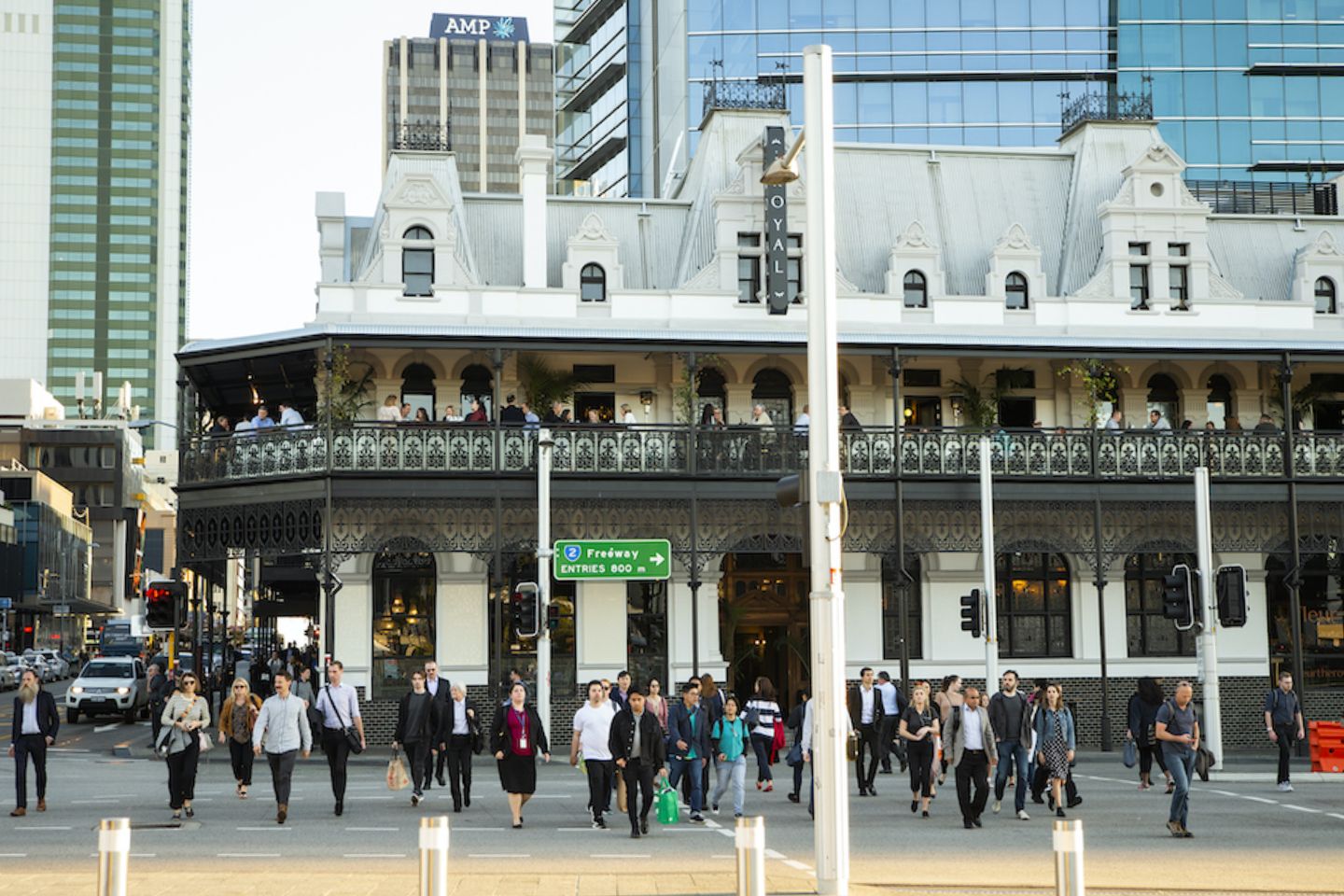
Parker Group to reclaim The Royal Hotel in Perth CBD

Published

on

Parker Group to reclaim The Royal Hotel in Perth CBD

Parties have executed a deed to return The Royal Hotel in Perth to Parker Group’s hands, which includes a $850,000 fund from the John Parker-led hospitality business.

Continue Reading

Business

The WRU has a business plan for cutting a region but it needs to be shared

Published

on

Business Live

The WRU now has the opportunity, when appearing before the Senedd committee, to finally put the record straight

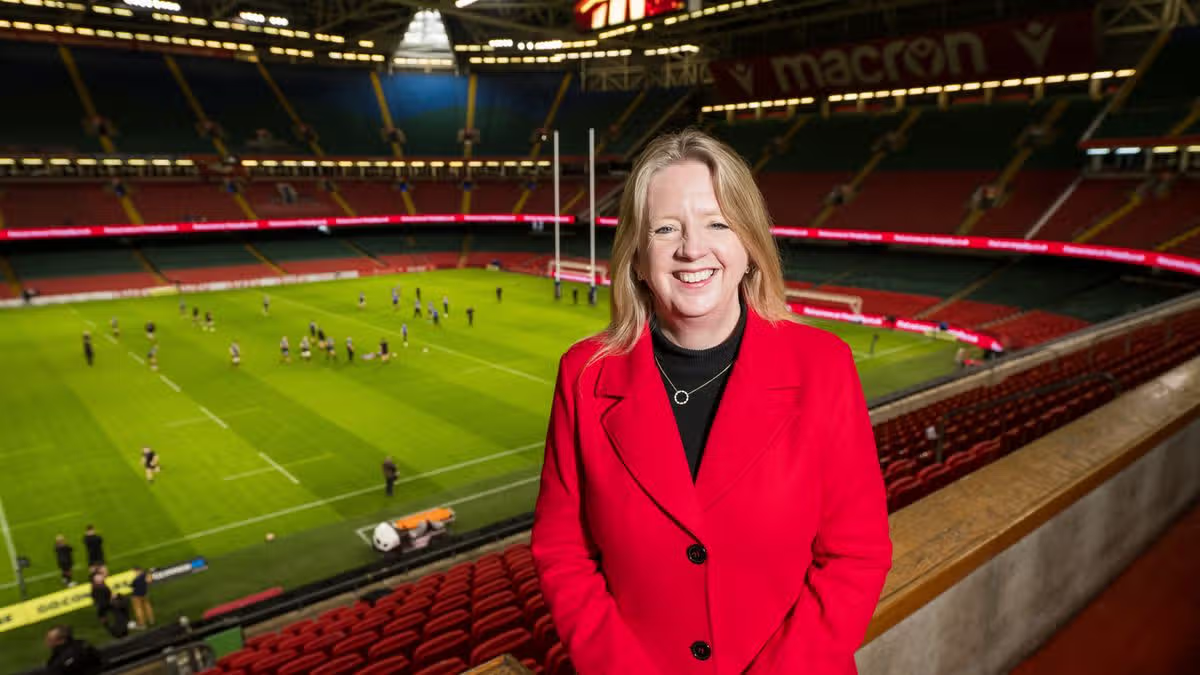
WRU CEO Abi Tierney(Image: Mark Lewis/Huw Evans Agency)

For months those questioning the Welsh Rugby Union’s decision to reduce the professional game from four teams to three have been told the decision followed extensive consultation, detailed analysis and independent challenge.

When WalesOnline recently raised concerns about the lack of supporting data, the WRU said it would “publish the information soon”, including more detail on the reasoning, evidence, criteria and weightings behind its proposals. Now, at long last, we finally know that decisive evidence exists, but the WRU does not intend to publish it in a form that would allow anyone to test its conclusions.

Advertisement

In correspondence with me last month, chief executive Abi Tierney confirmed that the board considered a “detailed, fully costed business case comparing three teams against a reformed four-team alternative” before reaching its decision last autumn.

According to Ms Tierney, this incorporated financial analysis, strategic considerations, risks and stakeholder feedback. That confirmation matters, as we now know a business case apparently underpinned one of the most important and effectively irreversible decisions in Welsh rugby history.

Unfortunately, none of us can currently see it because Ms Tierney conveniently said the material is commercially confidential and “will not be published in the form you have requested”. Instead, member clubs will receive what she describes as “the appropriate briefings and evidence through the proper channels” before the WRU’s annual general meeting.

That language is very revealing because it suggests that clubs are not being promised the business case or underlying model, but whatever the WRU decides is “appropriate”. They may receive selected presentations explaining a decision already made without the evidence needed to test its assumptions or develop an alternative.

Advertisement

Sadly, for a modern organisation that is supposed to hold to the highest standards of governance, that is not meaningful transparency but managed disclosure. Explaining where three professional teams should be located is no substitute for demonstrating why Welsh rugby must be reduced to three teams in the first place.

In other words, the WRU is offering evidence about the consequences of its decision while withholding the evidence that supposedly justified making it.

Following a letter from that Hayley Parsons and I sent to the Senedd’s sport and culture committee about this failure to reveal the data to the clubs once again, Ms Tierney and the WRU are to be invited to appear before the committee for the second time this year.

So what should the WRU reveal when they appear before members of the Senedd?

Advertisement

Without getting too technical, they should start with details of the formal post-consultation option appraisal the board considered in October 2025 and submit, as evidence, the underlying financial model, including annual projections, funding allocations, revenue assumptions, owner contributions, and transition costs.

Without it, Senedd members and their constituents cannot establish what reducing the number of teams saves, whether the preferred structure survives less favourable assumptions, whether alternatives were assessed fairly, or whether the calculations were independently verified.

The WRU must also explain what it means by a “reformed four-team alternative” and whether that option incorporated the same shared services, central efficiencies, player controls, pathway reforms and commercial improvements assumed for three teams, or was the preferred model compared with a weaker version of four that was never given an equal opportunity to succeed?

The committee should also consider the wider consequences of removing a professional team, especially given that an independent report found the Scarlets generated over £1m in annual gross value added and supported 336 jobs, alongside extensive work with schools, community clubs and disadvantaged groups.

Advertisement

In Swansea, substantial public and private investment has already been committed to the Ospreys and the redevelopment of the ground at St Helen’s.

It would have been better to have had the answers made public before having to ask a Senedd committee to intervene, but we cannot know what the board considered because the business case remains withheld. Indeed, Ms Tierney told me that correspondence about governance and disclosure should be properly conducted with member clubs rather than “individual columnists or commentators”.

That is a curious position as the WRU seems happy to use the media to assure the public that evidence would be published but appears less comfortable when one of the Western Mail’s longest-serving columnists asks what will be disclosed.

Speaking truth to power has been one of this column’s central purposes for over twenty years, and I will not be discouraged from doing so simply because the organisation being scrutinised would prefer the questions not to be asked publicly.

Advertisement

Yes, the WRU is entitled to refuse to answer, but it should not pretend that the questions are illegitimate in doing so, and it will be interesting to see if it adopts the same approach with the Senedd and its member clubs as it did when it responded to my request for this information.

The WRU may ultimately be right that three (or even two) teams represent the only sustainable future, and anyone proposing an alternative must explain how it would be financed, but how on earth can any alternative be tested while the WRU withholds its financial data and assumptions?

And it is ironic that Ms Tierney, when speaking at the Welsh Select Committee last January, said that she would not “apologise for being data-driven”, and yet the more they hide this data, the more mistrust they generate in their ability to govern the game.

Therefore, the issue is no longer whether the evidence exists – it does – and given that Ms Tierney said member clubs should pursue these matters, I hope at least one will now formally request the complete business case and supporting evidence before the union’s AGM late this year.

Advertisement

The WRU now has the opportunity, when appearing before the Senedd committee, to finally put the record straight and, as part of its evidence, to provide all the information required to scrutinise its decision.

But if the WRU again refuses a reasonable request to do so from the democratically elected members of the Senedd whose constituents across Wales are supporters of local, regional and national rugby, then they can no longer claim that the problem was who asked the question, but that the WRU never wanted anyone outside its board to see the answer.


Continue Reading

Business

Aussie shares limp across the line to end volatile week

Published

on

Aussie shares limp across the line to end volatile week

Yes. Corporate subscriptions are available for teams and organisations, with discounted rates as user numbers increase. Pricing starts from $1,625 + GST per user.

Get in touch
to discuss the right option for your organisation.

Business News subscriptions are used by executives, investors, consultants and professionals who need to stay informed and make better decisions about the WA market. When you subscribe you’ll get

  • Unlimited access to WA’s most trusted business journalism
  • Data & Insights — detailed profiles of WA companies, people, projects and deals
  • MyBN — a personalised feed based on the companies, people and sectors you follow
  • Special publications and industry reports
  • Daily and weekly email newsletters

Data & Insights is a research tool built specifically for the WA market. It draws on more than 30 years of Business News reporting, updated regularly to reflect what’s happening now. Use it to:

  • Look up detailed profiles of WA companies, including financials, directors and ownership
  • Find decision-makers and track their career movements
  • Research live and completed projects across WA industries
  • Monitor deals, appointments and market activity
  • Access industry rankings and league tables

Data & Insights is updated daily by our dedicated research team, which uses the latest announcements, ASX filings and editorial coverage to keep our person, company, list and project records up to date.

Business News welcome all opportunities to make our dataset accurate, complete and current, so if you have an update request, please email the team at
general@businessnews.com.au, and we’d be happy to assist.

Advertisement

MyBN
is part of every subscription. It’s your personalised view of Business News. You can follow the companies, people, sectors and projects that matter to you, and get a news feed and alerts tailored to your interests. You can save articles to read later and retain only what you need.

Only subscribers have full access to all content on the Business News website.

Advertisement

If staying informed about the WA economy is part of your job, and/or you’re looking for networking opportunities in WA, Business News is built for you.

Business News subscribers are:

  • Executives and directors tracking competitors, clients and market movements
  • Investors and advisers researching companies, deals and industry trends
  • Consultants and professionals staying across sectors relevant to their clients
  • Business owners looking for leads, context and market intelligence

Most Business News publications cover national or global markets. Business News is focused entirely on Western Australia, which means the journalism, the data and the intelligence are all built around WA companies, people and projects — not adapted from a national feed. Data & Insights, included with every subscription, combines more than 30 years of WA-specific editorial research with live business data. There’s no comparable product for the WA market.

Advertisement

The Morning Digest Email provides a comprehensive wrap of the major headlines, relevant to WA business, and includes with a snapshot of the overnight news covering oil, gold and ASX-listed companies.

The Afternoon Wrap Email focuses on the news covered by our team of journalists during the course of the working day, including exclusive stories and analysis, all of which relates to WA business and the local economy.

The BN Weekender Email contains a wrap of the Business News from the week that was, highlighting the top stories in each area of WA business.
Sign up for free.

Advertisement

We’re happy to help.
Get in touch
and our team will come back to you.

Advertisement
Continue Reading

Business

DXC Technology's AI Ambitions May Struggle To Offset Shrinking Revenue (Downgrade)

Published

on

AI Artificial Intelligence technology for data analysis, research, planning, and work generate. Man uses a laptop and AI assistant dashboard. Technology smart robot AI agents and agentic workflows.

DXC Technology's AI Ambitions May Struggle To Offset Shrinking Revenue (Downgrade)

Continue Reading

Business

Earl Spencer’s New Book Claims King Charles Said Diana Would Be ‘Forgotten Soon Enough’ After Her Death

Published

on

Princess Diana

LONDON — Princess Diana’s brother, Charles Spencer, the 9th Earl Spencer, has alleged in a forthcoming memoir that King Charles III made a dismissive remark about his former wife’s memory in the days immediately following her fatal car crash in 1997, a claim Buckingham Palace has responded to without directly disputing.

The allegation appears in Spencer’s book, “Swan Song: Diana, My Sister,” scheduled for publication September 22 by Michael Joseph, an imprint of Penguin Random House, ahead of the 30th anniversary of Diana’s death next year. According to excerpts published by the Daily Mail and reported by CBS News, Spencer writes that he objected to a plan for Diana’s young sons, Princes William and Harry, then 15 and 12, to walk behind their mother’s coffin during her funeral procession. Spencer says the then-Prince Charles responded to his objection by questioning the family’s sense of duty, telling him over the phone: “Rest assured, we’ll forget her soon enough.”

According to the fuller account of the exchange recorded in the memoir, Charles’s reaction reflected what Spencer described as long-suppressed feelings toward his former wife. The book recounts that the suggestion “allegedly angered the prince, who ‘unleashed down the phone what I have always taken to be his pent-up contempt for Diana, and his horror that the world was so bowled over by her death.’” Spencer writes that Charles then “hissed” the line about forgetting her, and the author has separately accused the king of harboring “contempt” for Diana throughout their account of the period surrounding her death.

Despite Spencer’s objection, William and Harry ultimately did walk in the funeral procession, producing images of the two young princes trailing their mother’s coffin through central London that have remained among the most enduring photographs of the period.

Advertisement

Buckingham Palace addressed the allegation in a statement without directly denying that the remark was made. “While we do not comment on books as a matter of principle, His Majesty is mindful that the pain of fraternal grief can cloud reason, affect judgment and colour memory in ways others do not recognise, even many years after such a loss,” the palace said.

Royal Editor Roya Nikkhah of The Sunday Times said the claims are likely to be the first of several sensitive disclosures as excerpts from the memoir continue rolling out ahead of publication. Nikkhah said the royal family faces “a very tricky few days,” predicting the initial claims about Charles’s reaction to Diana’s death would be “just the beginning of a serialization that will go on … and we know there are going to be some pretty sensational claims” in the lead-up to the book’s release. She added that the palace would now need to weigh how to respond to each individual claim as they surface, saying the situation had put “Buckingham Palace into reactive mode.”

“Swan Song: Diana, My Sister” is being translated into twelve languages and covers a broad span of the siblings’ shared history, including their childhood at the Spencer family’s Althorp estate, their parents’ divorce, Diana’s rise to global prominence following her marriage to Charles, her humanitarian work, and the intense media scrutiny that defined much of her adult life. Spencer has said he was ultimately persuaded to write down his own recollections directly, rather than continuing to have his family’s story told primarily through the accounts of others.

The book’s release comes at a sensitive moment for the royal family more broadly, arriving shortly after Prince Harry and Meghan Markle relocated back to the United Kingdom in late August following roughly six years based in the United States. Harry has continued to maintain a limited, strained relationship with his father and brother since stepping back from royal duties in 2020, and the timing of his uncle’s memoir, arriving so soon after his return to Britain, has drawn additional attention to the broader state of relations within the family.

Advertisement

Separately, Harry and Meghan have also navigated a more immediate, practical challenge in recent weeks tied to their children’s education. Prince Archie, 7, and Princess Lilibet, 5, were withdrawn from their initial school in England after only a few days, following what a spokesperson for the couple described as security concerns raised by their protection team. “The parents remain extremely grateful to all the teachers and staff for the love, care and effort they have shown their family,” the spokesperson said. “This decision should in no way be interpreted as a reflection on the school or the exceptional care the children have received there.” The spokesperson said the decision followed “a discussion with the family’s security team about the practicalities of their current arrangements,” with reports indicating the original school’s location created difficulties for the family’s security convoy amid heavy local traffic.

Harry has continued to carry out public engagements since returning to Britain, appearing this week at the inaugural Invictus Spirit Gala Dinner and Awards at the Old Royal Naval College in Greenwich, part of continued preparations tied to the Invictus Games, the sporting competition for wounded and injured service members that he founded, with the next edition scheduled for Birmingham in 2027.

With Spencer’s memoir still more than a week from its official release and further excerpts expected to continue emerging in the British press, the royal family’s response to the book’s claims, and any further detail the memoir provides about the days surrounding Diana’s death, is likely to remain a closely watched story in the run-up to its September 22 publication date.

Advertisement
Continue Reading

Business

The Office Long Term Lease and Ownership Headache Businesses No Longer Want: ‘Serviced Everything’ Takes Off

Published

on

Brett McAllen

Australian businesses are embracing a new era of ‘serviced everything’, replacing costly office fit-outs, furniture, telephone systems, internet infrastructure and ongoing maintenance with workspaces where virtually everything is provided, managed and ready to use.

According to workplace expert Brett McAllen, CEO of @WORKSPACES, Australia’s leading brand of serviced offices, flexible, shared and coworking spaces with locations across cities and suburban centres, serviced and flexible offices are no longer simply viewed as a way to reduce rent or avoid lengthy commercial leases. They are becoming a complete operational solution that allows businesses to walk into a fully functioning office and start working immediately.

“Businesses have spent decades purchasing desks, chairs, telephone systems, internet hardware, artwork, kitchen equipment and countless other items that depreciate, wear out, break or become obsolete,” McAllen said.

“Then they have had to pay people to install, maintain, repair, replace and eventually dispose of it all.

Advertisement

“Serviced offices completely change that equation. The desks, chairs, internet, telephones, meeting rooms, kitchens, artwork, reception and shared facilities are already there.

Everything is connected, maintained and managed for you.

“You simply walk in, open your laptop and get to work. If you don’t have a computer, we can provide one as well. It is the ultimate form of serviced everything.”

The end of the office shopping list

Advertisement

McAllen said moving into a conventional office can require a significant upfront investment before a business has even opened its doors.

“Securing the premises is just the beginning. Businesses then face the cost of the fit-out, cabling, furniture, internet connection, telephone systems, appliances, security, signage, artwork and all the smaller items required to make an office functional,” he said.

“You may also have to coordinate builders, electricians, telecommunications providers, internet technicians, furniture suppliers and other trades.

“With a serviced office, that entire shopping list and project-management burden disappears. Businesses arrive to find a professional, fully equipped workplace ready for their team.”

Advertisement

No more depreciating desks and broken chairs

Traditional offices require businesses to purchase physical assets that begin depreciating from the moment they are installed.

“Desks get damaged, chairs wear out, technology becomes outdated and fit-outs rarely retain their original value,” McAllen said.

“Businesses can spend tens or even hundreds of thousands of dollars creating an office, only to discover that it no longer meets their needs a few years later.

Advertisement

“They may grow, contract, restructure or change how their people work. Suddenly, they have the wrong number of desks, too much space, not enough meeting rooms or expensive equipment they no longer need.

“Serviced offices allow businesses to use what they need without having to own, maintain or eventually replace it.”

Internet that simply works

McAllen said connectivity is another major source of cost and frustration in conventional offices.

Advertisement

“Reliable, high-speed internet is essential to virtually every modern business, but arranging commercial connectivity can be expensive and time-consuming,” he said.

“There may be installation delays, hardware requirements, lengthy contracts and ongoing dealings with service providers when something goes wrong.

“In a quality serviced office, the connectivity is already in place. Businesses do not need to purchase routers, install cabling or spend hours on the telephone trying to resolve technical issues.

“The internet simply works. If there is ever a problem, which is rare, the business calls the front desk and the issue is managed.”

Advertisement

One call replaces a list of tradies

McAllen said one of the most underestimated advantages of a serviced office is the amount of management time it returns to business owners and their teams.

“In a traditional office, if a chair breaks, an appliance fails, the internet drops out or something needs repairing, somebody within the business has to deal with it,” he said.

“They need to identify the right provider, request quotes, book the service, wait for the technician and approve the invoice. One small issue can consume hours of productive time.

Advertisement

“In a serviced workspace, you make one call to the front desk. The issue becomes our responsibility, not yours.

“Business owners should be focused on serving clients, growing revenue and leading their people—not searching for an electrician, assembling furniture or troubleshooting the internet.”

The office is becoming a service, not an asset

McAllen believes the shift towards serviced workspaces reflects a broader change in how organisations think about ownership.

Advertisement

“Businesses already use software, cloud storage and other critical services through flexible subscription models. The office is now heading in the same direction,” he said.

“Instead of tying up capital in a static workplace, businesses can access the space, infrastructure, technology and support they need as a service.

“It reduces upfront costs, removes unnecessary operational headaches and makes it easier to respond when circumstances change.”

Built for businesses that need to move quickly

Advertisement

The serviced model can be particularly valuable for growing companies, project teams, interstate businesses, professional service firms and organisations entering new markets.
“A business may need to accommodate five people today and 15 people next year. It may win a new project, open in another city or need additional space at short notice,” McAllen said.

“A traditional office can lock that business into a fixed footprint and a significant financial commitment. Flexible serviced spaces allow it to adapt much more quickly.

“Companies can establish a professional presence without spending months sourcing premises, coordinating a fit-out and waiting for essential services to be connected.”

A game changer for smaller businesses

Advertisement

McAllen said the ‘serviced everything’ model also enables smaller businesses to access facilities and technology that may otherwise be beyond their budgets.

“A small business can have a professional reception, sophisticated meeting rooms, quality furniture, high-speed internet, fully equipped kitchens and beautifully designed communal areas without funding all of those things itself,” he said.

“It can present to employees and clients like a much larger organisation while retaining the flexibility and agility of a smaller business.

“That is a genuine game changer. Businesses receive the benefits of an impressive, fully operational office without the capital cost, maintenance burden or operational complexity of owning everything inside it.”

Advertisement

McAllen expects demand for fully serviced and flexible workplaces to continue growing as businesses scrutinise fixed costs and seek more responsive ways of operating.

“The smartest office asset may now be the one you don’t have to own,” he said.

“Serviced everything gives businesses their time, capital and flexibility back. They can walk in, get connected and focus entirely on doing business while somebody else takes care of the office. That is one of the key reasons why our centres are growing across Australia and why so many organisations, businesses and start ups choose to locate their operations and staff in our centres, we make things so easy and we save them money.”
About @WORKSPACES

@WORKSPACES is a premium, Australian-owned flexible workspace provider delivering enterprise-grade, on-demand office solutions across Australia. With locations in Melbourne, Brisbane and the Gold Coast, the company offers serviced offices, coworking environments, virtual office solutions and meeting facilities designed to support modern businesses.

Advertisement

Led by CEO Brett McAllen, @WORKSPACES is focused on delivering high-quality, flexible and scalable workspace solutions that enable organisations to operate efficiently and competitively in a rapidly evolving business landscape. For more information, visit: www.atworkspaces.com.au

Continue Reading

Business

Euro zone current account surplus narrows in July

Published

on


Euro zone current account surplus narrows in July

Continue Reading

Business

At Close of Business podcast September 18 2026

Published

on

At Close of Business podcast September 18 2026

Gary Adshead and Nadia Budihardjo discuss some ideas that came out of a recent local government convention.

Continue Reading

Business

Barclays starts bullish coverage on Hill & Smith on U.S. infrastructure demand

Published

on


Barclays starts bullish coverage on Hill & Smith on U.S. infrastructure demand

Continue Reading

Trending

Copyright © 2025