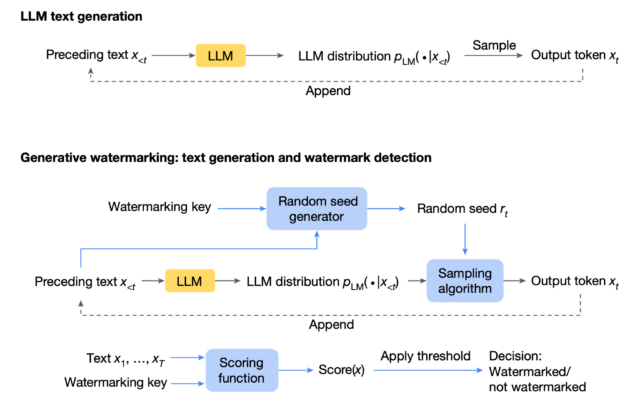
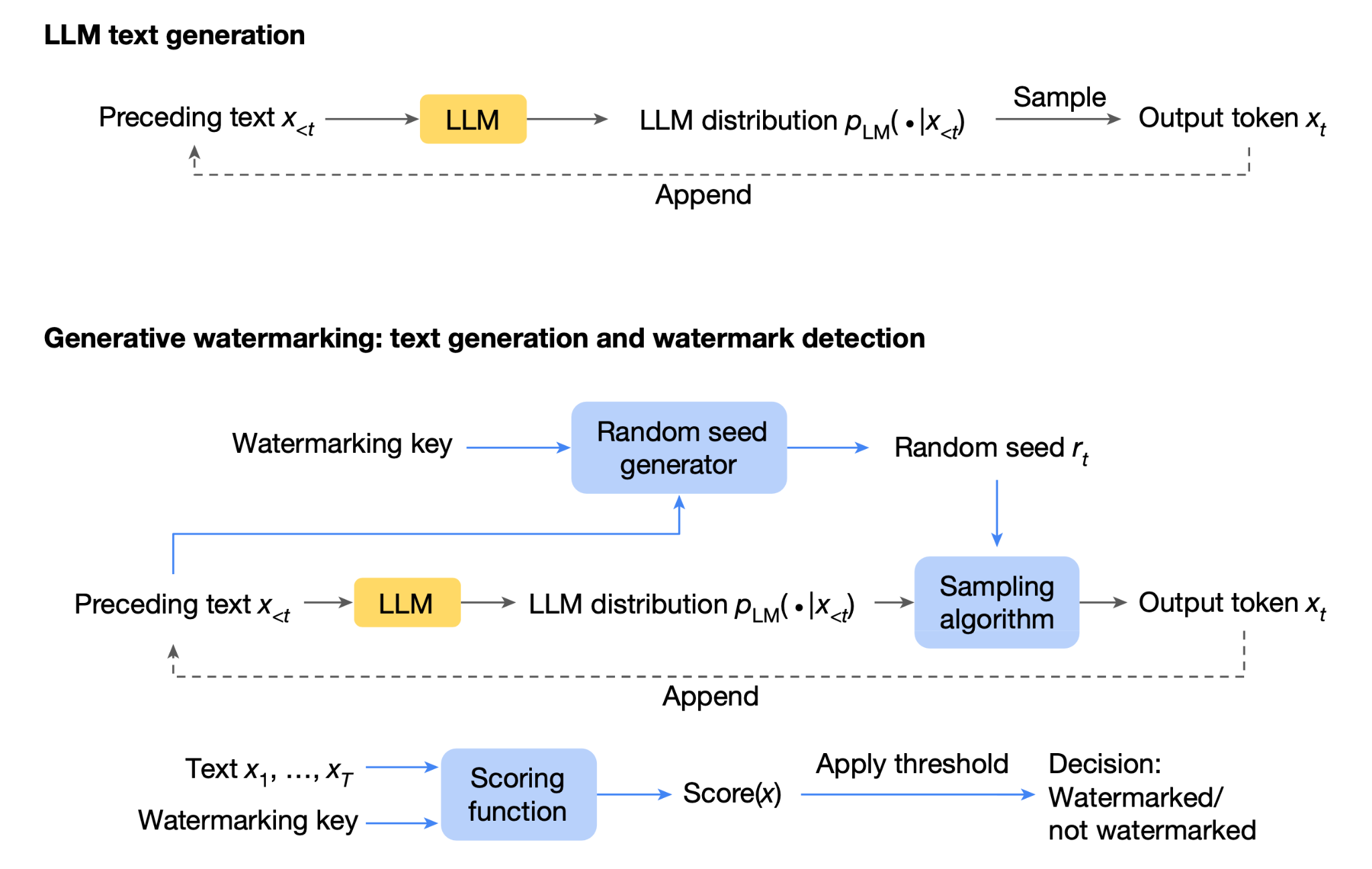
A key feature of SynthID is something known as tournament sampling. Similar to a sports game, SynthID evaluates large numbers of next-word token candidates. It uses a secret key to assign them probability scores. A pair of tokens competes in a round. The one with the higher hidden score wins and advances to the next round. The process continues until a final winning token is determined. More about tournament sampling can be found here and here.
Advertisement
Siposova tested the “non-distortionary” configuration of SynthID-Text through Hugging Face’s unmodified SynthIDTextWatermarkLogitsProcessor. She fed harmful prompts into six open-weight models and compared the responses when the watermarking was used and when it wasn’t. The experiment revealed that the watermarking changed responses to harmful requests, particularly when they were made using prompt-injection techniques.
“Watermarking changes refusal behavior on bare harmful requests, but the effect is more pronounced when the same requests are paired with the prompt-injection technique,” Siposova wrote. “On several models, watermarking then makes the model more likely to answer harmful requests that it would otherwise refuse.”
The changes have important safety consequences because they influence not only the LLM responses but also subsequent actions of AI agents relying on the model.
“At the model level, this can change safety behavior, including whether the model refuses a harmful request and whether that refusal holds under prompt injection,” the researcher wrote. “At the agent level, the same sampled tokens can determine which tool is called and what arguments are passed to it. Prompt injection connects these two settings because a weakened refusal becomes more consequential when the model can also act through tools. Such a watermarking procedure can therefore affect both what the model says and what an agent does. We call this behavioral effect sampling drift.”
Advertisement
Also interesting: Model responses behaved differently depending on which secret key was used.
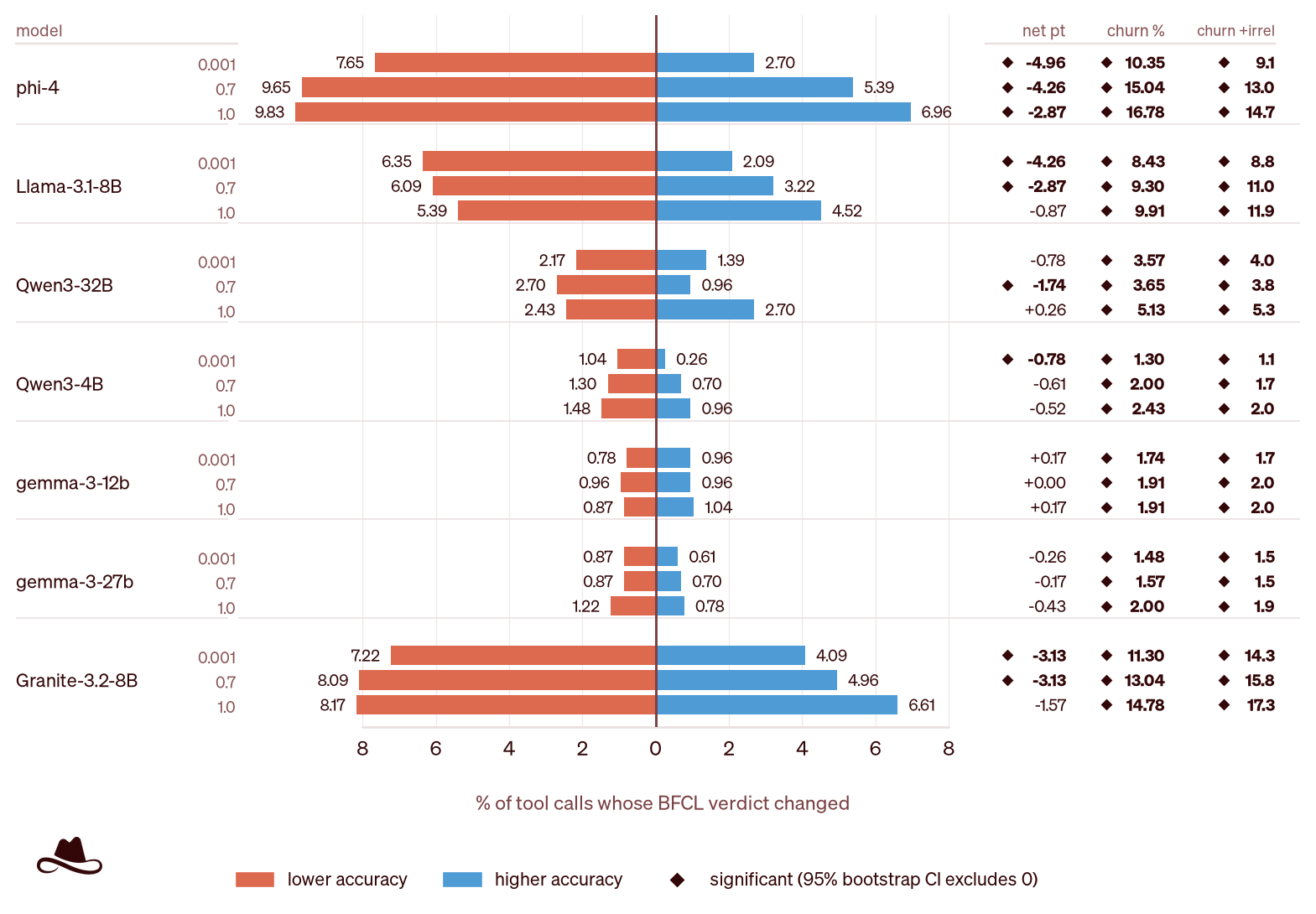
Watermarking changed which individual tool calls were correct, sometimes much more than the overall accuracy score suggests.
Credit:
Lasso Security
Advertisement
Watermarking changed which individual tool calls were correct, sometimes much more than the overall accuracy score suggests.
Advertisement
Credit:
Lasso Security
Advertisement
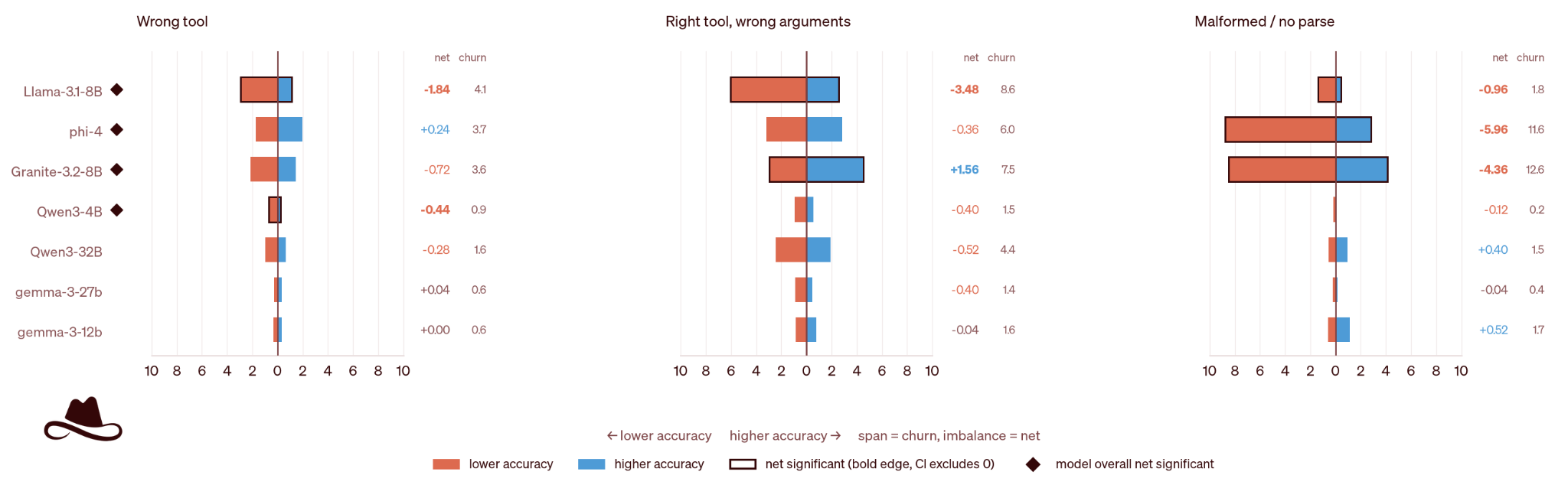
This figure shows the types of changes in tool calling that watermarking led to. The vertical lines show the accuracy without watermarking, and the bars show the change when watermarking is applied. Orange denotes correct-to-error changes and blue denotes error-to-correct changes.
Credit:
Lasso Security
Advertisement
This figure shows the types of changes in tool calling that watermarking led to. The vertical lines show the accuracy without watermarking, and the bars show the change when watermarking is applied. Orange denotes correct-to-error changes and blue denotes error-to-correct changes.
Credit:
Advertisement
Lasso Security
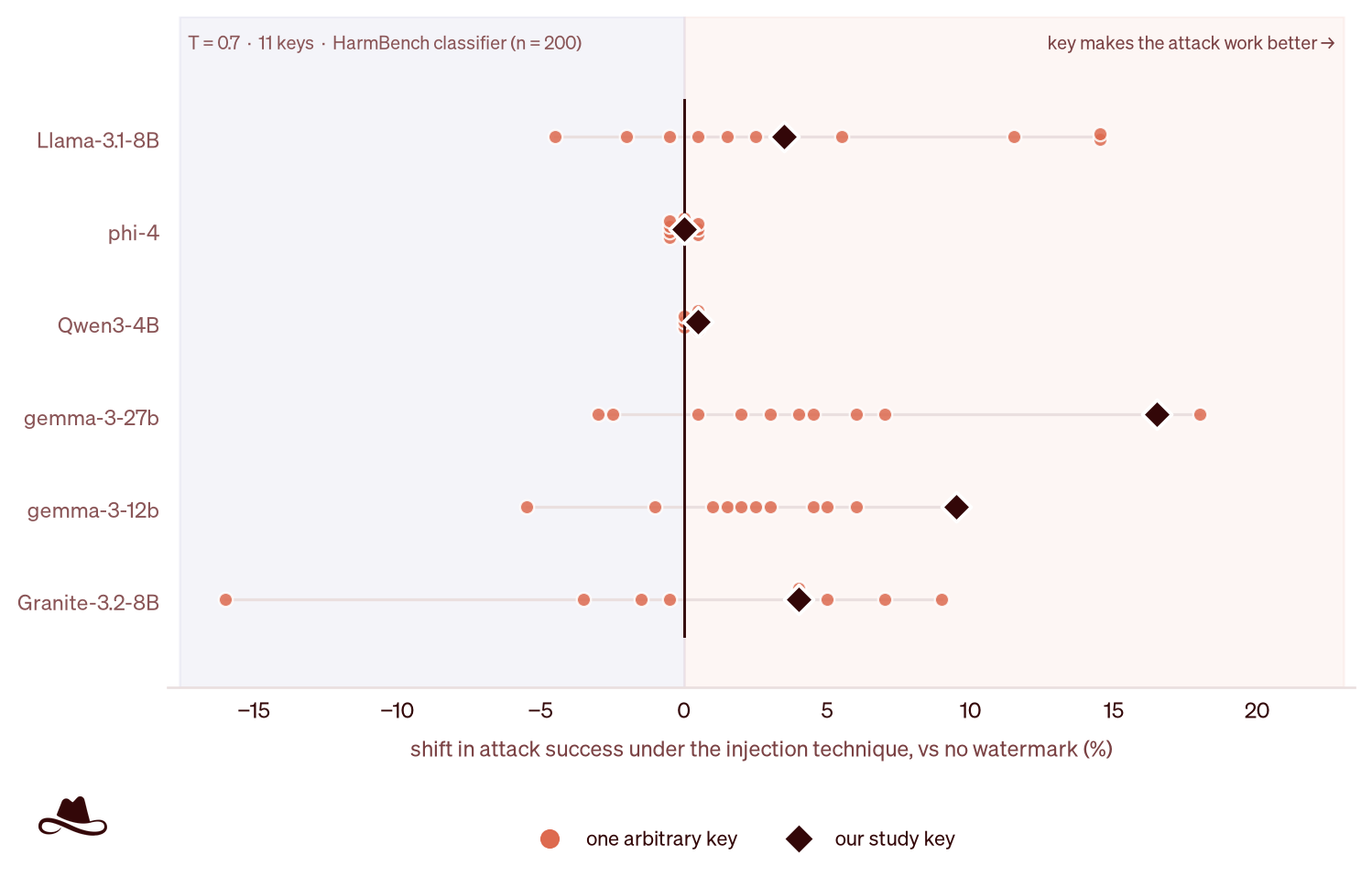
The effect of changing a key on model behavior. Each point represents one key. Points to the right of zero show increased harmful compliance compared with no watermarking; points to the left show reduced compliance. Orange points represent 10 additional keys, and the black diamond represents the key used in the main experiment (keys chosen randomly).
Advertisement
Credit:
Lasso Security
Advertisement
The effect of changing a key on model behavior. Each point represents one key. Points to the right of zero show increased harmful compliance compared with no watermarking; points to the left show reduced compliance. Orange points represent 10 additional keys, and the black diamond represents the key used in the main experiment (keys chosen randomly).
Credit:
Lasso Security
Advertisement
There are limitations to the research. It doesn’t test how Claude model responses change under the watermarking. Instead, it tests a half-dozen open-weight models, so the researcher has access to token sampling that could be enabled and disabled during tournament sampling while keeping other settings fixed. The experiments also tested the Hugging Face implementation of SynthID-Text tournament sampling and not the specific implementation Claude models will use.
Still, the results show that at least some forms of the watermarking approach may affect model and agent safety. It will be important for red-team hacking exercises to stress-test their platforms to ensure they perform as expected when SynthID is deployed.
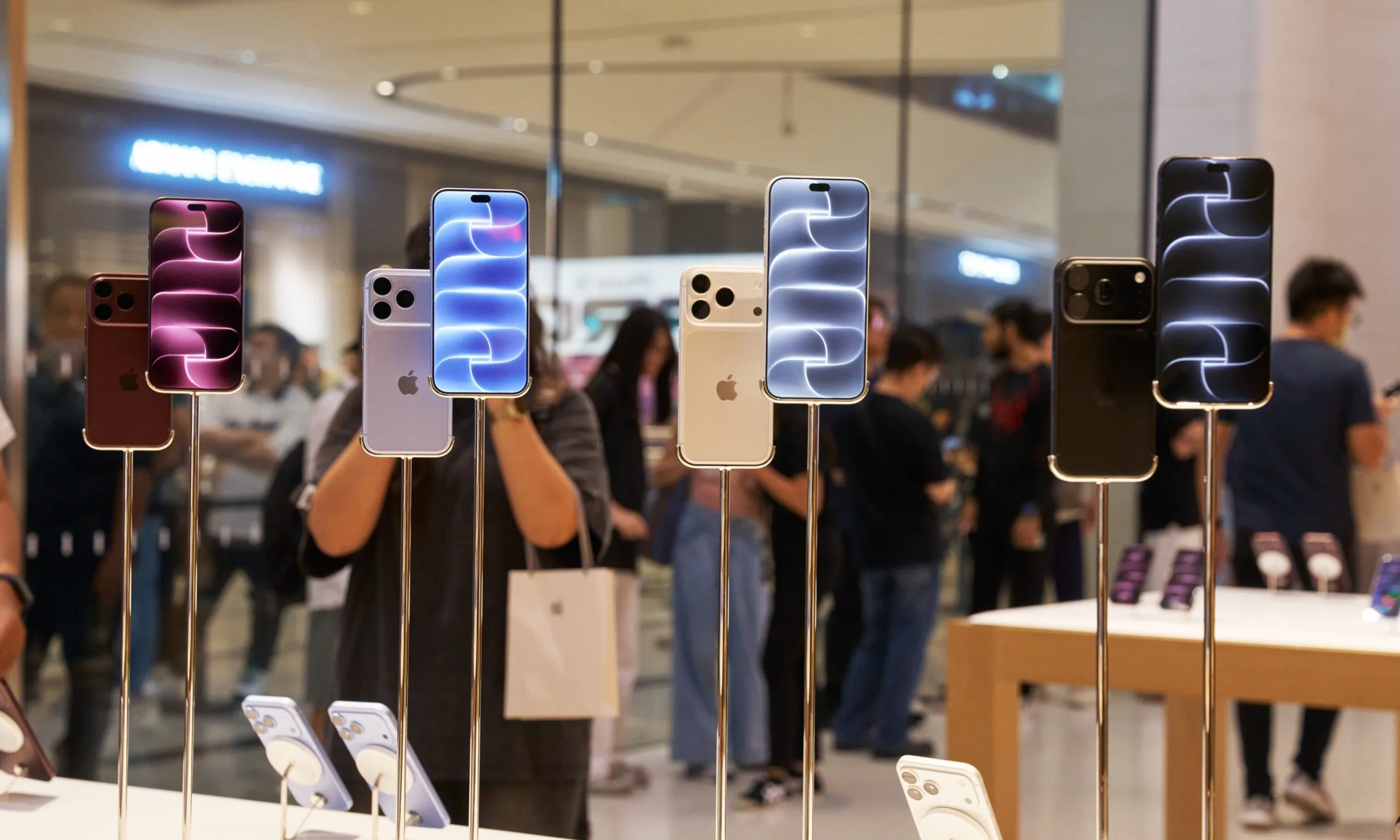
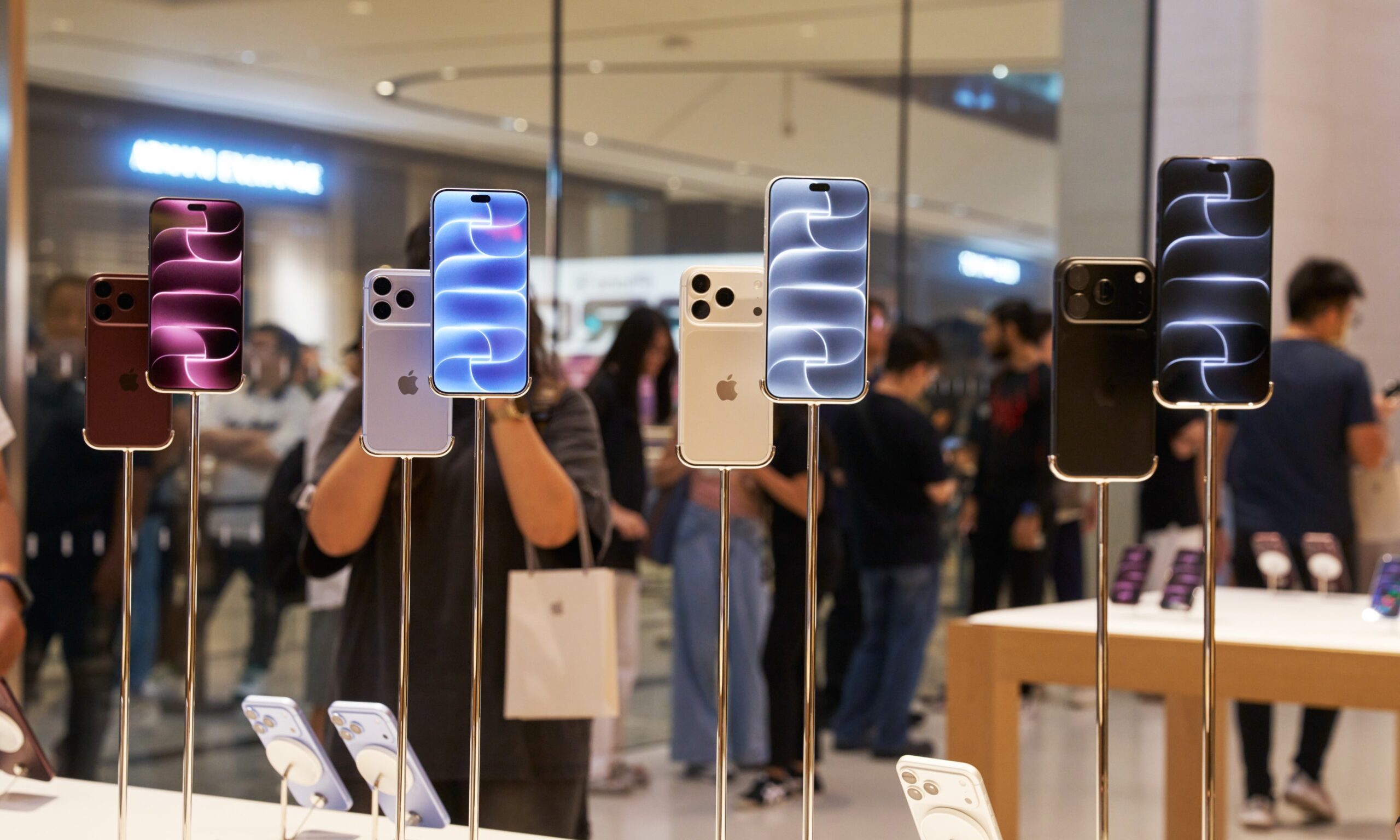
Apple’s latest Pro iPhones have officially moved past the preorder stage. The iPhone 18 Pro and iPhone 18 Pro Max are now available to purchase online and at Apple Store locations worldwide, with the first preorder deliveries also arriving today.
The iPhone 18 Pro starts at $1,199 for 256GB, while the iPhone 18 Pro Max starts at $1,299 with the same storage. Both phones are available with 256GB, 512GB, 1TB, or 2TB of storage in Burgundy, Glacier, Silver, and Black.
Apple is selling the phones through its website, the Apple Store app, and physical stores. Major US carriers and retailers are also carrying the new models. Apple offers trade-in credit toward the purchase, alongside financing and carrier promotions.
Apple
Apple’s new Pro iPhones bring some meaningful upgrades
The iPhone 18 Pro and Pro Max introduce Apple’s A20 Pro chip, the company’s first iPhone processor built on a 2nm process. Apple also increased battery capacity this year, with the eSIM-only models rated for up to 36 hours of video playback on the Pro and 45 hours on the Pro Max.
Camera hardware received a notable upgrade as well. The 48MP Fusion Main camera now uses a physical variable aperture, and the Camera app adds manual controls for aperture, shutter speed, and white balance. Apple also made the Dynamic Island smaller and updated the vapor chamber to improve sustained performance.
Customers buying in person can get hands-on demos and setup assistance, while online orders are available through Apple’s website and Store app. Apple says Personal Setup is also available for customers who want help getting their new devices ready to use.
In context: Iran threatened Big Tech companies earlier this year, warning that it could target and destroy their facilities in the Middle East in retaliation for US-Israeli bombing of the country. Now, Amazon appears to be tacitly confirming that Tehran did indeed destroy some crucial IT infrastructure belonging to the US giant.
Amazon recently confirmed that Iran’s threats against US tech corporations were all but real. The company provided a few updates on the health of its AWS services in the Middle East, stating that some of its facilities have been damaged to the point of becoming completely inoperable for the foreseeable future.
The situation is particularly dire in the Bahrain AWS Region (me-south-1), which was allegedly destroyed by Iranian drone and missile strikes earlier this year. Amazon has now said that the damage to its cloud infrastructure spans multiple Availability Zones (AZs), exceeding the company’s ability to withstand disruptions affecting regional and multi-AZ services.
“After a thorough assessment, we have determined that we are unable to restore access to the resources and data hosted exclusively in this region,” the company said.
Advertisement
Amazon defines an Availability Zone as a major node in the global AWS infrastructure. A Zone includes one or more physical data centers with redundant power, networking, and connectivity within a single AWS Region. The me-south-1 Region was damaged to the point that its service can no longer be restored, and customers are advised to move their cloud operations to other Regions – preferably in Europe, or at least far away from Iran’s reach.
Amazon has also confirmed that AWS infrastructure is experiencing multiple “operational issues” in the United Arab Emirates (UAE). The UAE Region (me-central-1) had its data center resources destroyed in the mec1-az2 Availability Zone, while the company is trying to recover other regional and zonal resources hosted in the disrupted mec1-az1 and mec1-az3 Availability Zones.
The disruption affecting the UAE’s me-central-1 Region began in March, and most customers have already relocated their cloud products elsewhere while restoring backups or copying data that remained accessible. Amazon is apparently trying to replace or rebuild the damaged infrastructure in the UAE, so there could be positive updates on the AWS service dashboard over the next few months.
After Iran warned tech companies that it would target their IT infrastructure in the Middle East, AWS and other cloud giants warned customers that they could lose their data – and potentially their businesses – without a backup plan. Amazon asked its customers to enact their disaster recovery plans, redirecting cloud resources and internet traffic to different Regions outside the Middle East warzone.
Despite continued gains in CD and vinyl record sales, streaming remains the dominant way most people consume music. For audiophiles, however, getting the best performance from streaming can still involve a small tower of boxes: a network streamer, DAC, music server or storage drive, power supplies, and enough cables to make the back of the rack look like an electrical substation.
The alternative is often considerably simpler, but not necessarily better. Smartphones, wireless headphones, earbuds, and mainstream streaming devices make accessing millions of tracks almost effortless, but they are not always designed around the sound quality, connectivity, local music storage, and system flexibility that enthusiasts expect from a serious two-channel setup.
Silent Angel thinks there is room between those two extremes. The streaming and digital audio specialist has introduced the H1 “Pure Music Hub,” the first product in its new Lifestyle Hub (LSH) category, designed to consolidate digital music playback and decoding into a single component that can serve as the command center for a desktop system, executive office, or contemporary living room.
What the H1 Offers
The H1 is an integrated digital music player and decoder designed to serve as a central hub for digital playback. Silent Angel is positioning it for use in an executive office, desktop gaming setup, or contemporary living room, where it can connect directly to smart TVs, media consoles, and other digital sources.
Advertisement
Combining “ultra-quiet” digital decoding, expandable local library storage, and continuous cloud streaming within a single aerospace-grade aluminum chassis, the H1 is designed to bridge the gap between dedicated audiophile listening and everyday entertainment. The H1 also incorporates a range of hardware and software features intended to improve digital playback across connected home media sources.
Dual ESS Sabre 9039Q2M Architecture: The H1 uses two ESS Sabre ES9039Q2M DAC chips paired with a third-generation XMOS XU316 processor. Silent Angel also employs dual-stage jitter rejection with Asynchronous Sample Rate Conversion (ASRC) to reduce timing errors in the digital signal path.
According to Silent Angel, the combination is designed to improve channel separation, soundstage precision, and background noise performance across a range of digital sources.
Built-in Four-Rail Independent Audiophile Power Architecture: Clean power matters in digital audio, and Silent Angel has designed the H1 around a low-ripple power supply with four independent power rails. These provide 12V to the mainboard, ±15V to the DAC and op-amp circuitry, and 5V to the DAC chips.
Advertisement
The analog stage incorporates six K-Muse op-amps alongside two Texas Instruments OPA1612 op-amps. By isolating the power requirements of the H1’s major circuits, Silent Angel says the design helps reduce cross-circuit interference and provides cleaner DC power to the audio stages.
Proprietary VitOS Operating System: Silent Angel’s VitOS platform is purpose-built for audio playback and runs on a quad-core RK3568 processor with 4GB of DDR4 RAM. The company says the streamlined operating environment minimizes unnecessary background processes while supporting responsive navigation and bit-perfect audio delivery to the DAC stage.
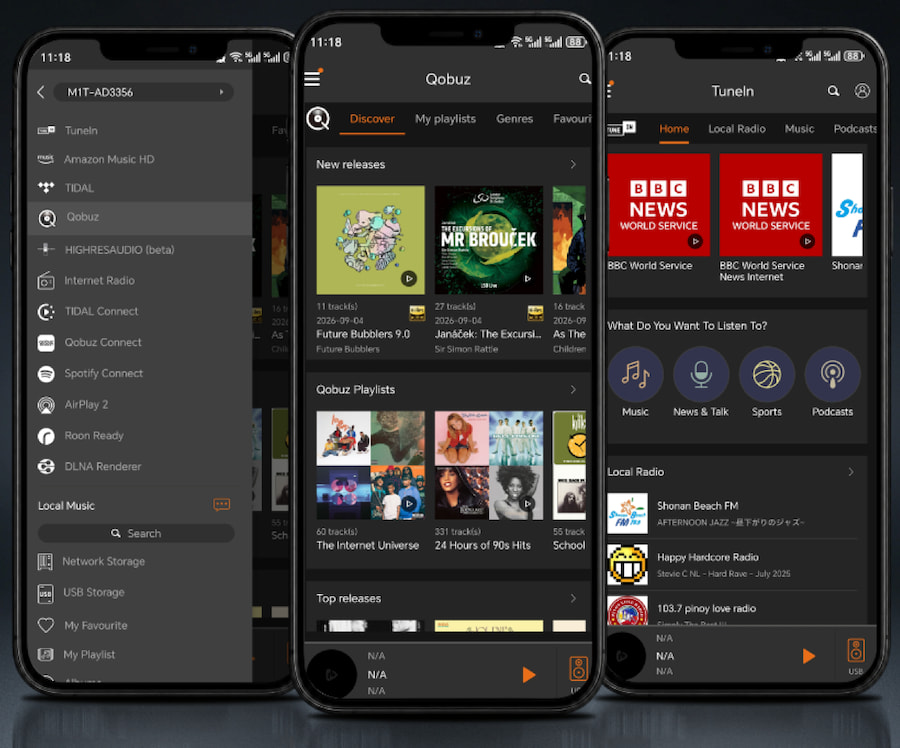
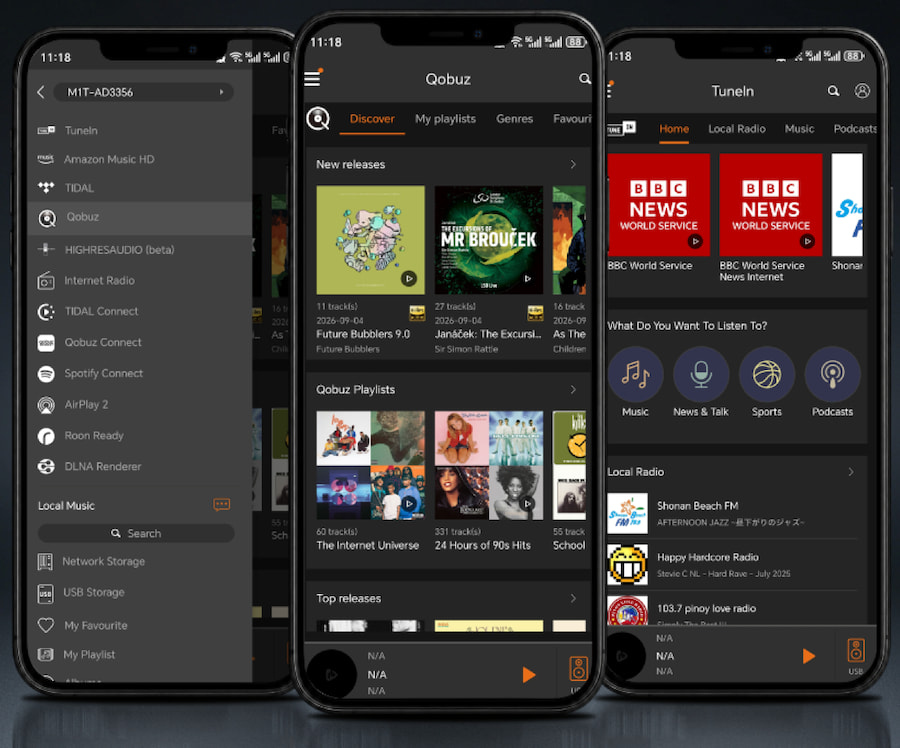
The H1 can be controlled through the VitOS Orbiter mobile app, which provides access to playback, library management, and system controls from a smartphone or tablet.
Advertisement. Scroll to continue reading.
Advertisement
Streaming Support: The H1 supports TIDAL Connect, Spotify Connect Lossless, Qobuz Connect, TuneIn Internet Radio, AirPlay, and DLNA Renderer playback, giving users multiple ways to access streaming services and networked music.
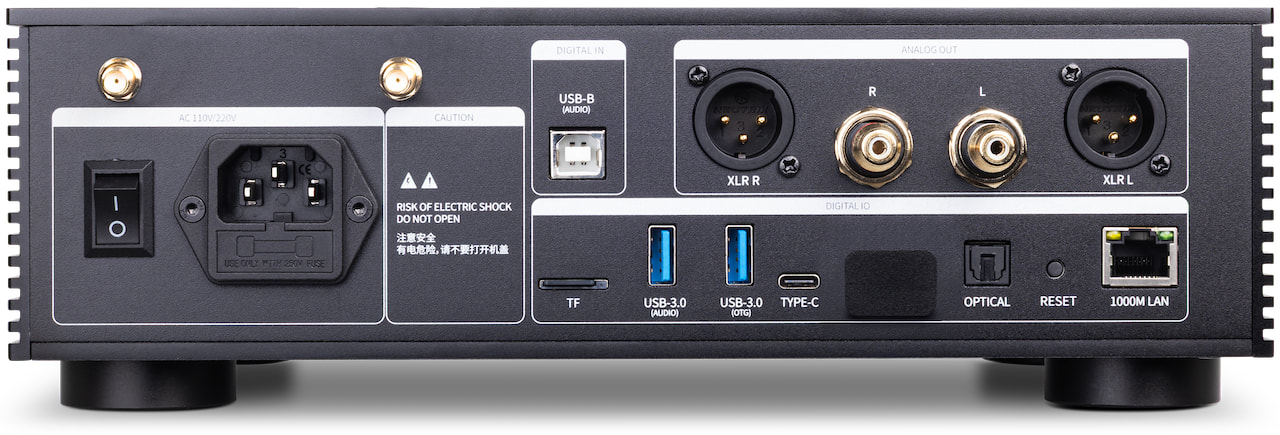
Wired Connectivity: Digital sources can connect directly to the H1 through its USB-B input, allowing them to use the unit’s dual-DAC architecture. The H1 can also send audio to active speakers or an integrated amplifier through its analog outputs, or function as a digital transport through USB audio and Toslink for use with an external DAC.
Local Library and Storage Management: The H1 supports local playback from USB 3.0 storage devices, network-attached storage (NAS), and internal M.2 NVMe PCIe 3.0 SSD expansion up to 8TB. The system can automatically scan connected libraries, organize music metadata, and split CUE-based album files into individual tracks.
High-Resolution Audio Decoding: The H1 supports PCM playback up to 32-bit/768kHz and native DSD up to DSD512 through USB, with DSD256 supported in DoP mode. Compatible formats include FLAC, WAV, AIFF, ALAC, DXD, DFF, and DSF.
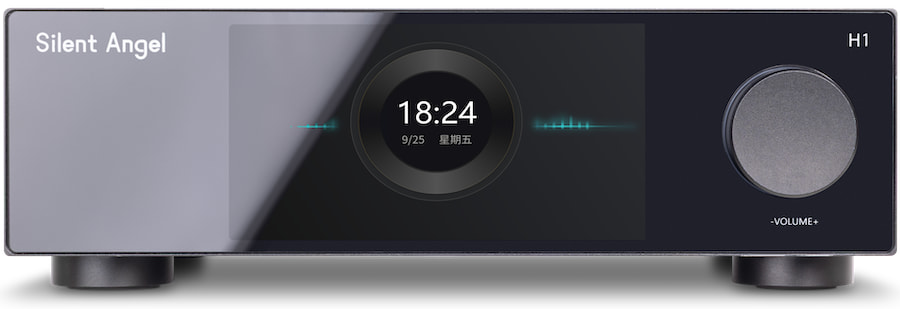
Dynamic Artwork Display: A 5.5-inch high-definition display presents full-color album artwork, lyrics, and track metadata during playback.
Advertisement
Craftsmanship: The H1 uses a precision-machined, aerospace-grade aluminum chassis with a matte-blasted finish. Silent Angel also incorporates subtle ambient lighting that tracks the volume level, giving the unit a more contemporary appearance for desktop systems, media consoles, and living-room installations.
Silent Angel H1 Specifications
Silent Angel
H1
Product Type
Integrated Digital Music Player & Decoder
Price (MSRP)
$849
Color
Black
Body Material
Aerospace-grade full aluminum chassis with matte blasting process consistent with Apple’s finishing standard
Built-in Apps: Xianiai Premium version of QQ Music, Spotify Connect, TIDAL Connect, Internet Radio
File Management
Supports automatic scanning of music files to generate albums; functions including favorites collection, custom playlists, album browsing, and content search are available.
Playback Display
Supports display of lyrics, album covers, and song metadata
Playback Settings
Playback modes include sequential playback, shuffle play, single-track repeat, and all-track repeat.
Compatible with NAS and streaming servers.
System Settings
Audio output configuration, language settings, advanced settings, device information.
USB-B Audio Input
Supports DSD512 Native PCM up to 768kHz/32-Bit
Advertisement
System Compatibility: Windows 7 – 11, macOS, Android, iOS, HarmonyOS
USB-AUDIO Audio Output
Max support: PCM 32-Bit/768kHz and DSD256.
DSD Audio can be output in D2P and DOP Modes
USB-C Audio Output
Max support PCM: 328kHz/768kHz and DSD256
Advertisement
DSD signals can be output via D2P and DOP Modes
OPT (Optical Audio Output)
Max supports PCM 24-Bit/192kHz DSD can be output in D2p and DOP Modes
Total Harmonic Distortion plus Noise (THD + N): < 0.0001% @1 kHz (-118 dB @ 1 kHz)
Noise Floor: <1.5 uVrms.
Signal-to-Noise Ratio (SNR): 126dB @ 1kHz.
Advertisement
Frequency Response: 20Hz – 20kHz (+/- 0.06 dB
Channel Separation (Crosstalk): – 120dB
Dynamic Range (DNR): 126 dB @ 1 kHz
Control Method
Supports control via dedicated VitOS Mobile APP on mobile phones and tablets running Android and iOS systems; the APP enables full-function operation of the player.
Power Input
AC 110 – 120 V / AC 220 – 240 V, 50/60 Hz
Rated Power Consumption
25 W
Overall Dimensions
280 x 220 x 77.7 mm
Advertisement
11 x 8.7 x 3.05 inches
The Bottom Line
The H1 is the first Silent Angel product we have covered in depth at eCoustics, aside from brief mentions in our AXPONA 2026 coverage and previous look at the Mission 778S Music Streamer. Based on the company’s broader lineup, however, Silent Angel is hardly new to network audio, and the H1 represents the first step in a new “Lifestyle” series designed to combine serious digital engineering with more approachable pricing and contemporary industrial design.
At $849, the H1 occupies an interesting position in an increasingly crowded streamer market. It combines network streaming, dual ES9039Q2M DACs, expandable internal SSD storage, local library management, extensive power-supply isolation, and a 5.5-inch display in a single component. That puts it into competition with products ranging from the $349 WiiM Ultra and $999.95 Yamaha WXC-70A to the $2,180 Eversolo T10. Those products are not direct equivalents, but they demonstrate just how broad and competitive this category has become.
There are some important limitations. The H1 does not include HDMI eARC, analog inputs, or a phono stage, making products such as the WiiM Ultra and Yamaha WXC-70A more flexible for listeners who want their streamer to become the control center for a television, turntable, and other analog sources. The Eversolo T10, meanwhile, is a dedicated digital transport without an internal DAC, while the IDEON Nous adds a full analog preamplifier section at a price that could fund an entire very serious audio system.
That makes the H1’s mission considerably clearer. It is aimed at listeners who already own an AVR, stereo receiver, separate amplifier, or active loudspeakers and want to add high-resolution streaming, local music storage, and serious digital conversion without adding several more boxes to the system. At $849, there is a lot here to suggest Silent Angel deserves more of our attention — and we will be keeping a much closer eye on what comes next in the Lifestyle series.
There are plenty of rules and regulations boaters are expected to know when they launch a boat into the water for the first time. Some of those rules, like the all-important 1/3 rule, are largely unwritten, while others are clearly indicated in boating literature. Then, there are also signs and signals that boaters may come across when they are out and about that are meant to reaffirm certain rules or warn boaters of potential hazards in the water.
Many of those water-stationed indicators are color-coded to make it easier for boaters to determine their meaning. For instance, if you come across a buoy in the water that is black with a band of red paint, you need to be keenly aware of your surroundings moving forward, as it indicates that there is an isolated danger in the immediate area. To be clear, that buoy doesn’t indicate that you need to stop or turn your boat around. Rather, it signals that there’s some unseen impediment below the surface, and you need to proceed with a little extra caution.
A buoy indicating isolated danger will typically be moored directly on or above the unseen hazard and will be utilized in areas where the surrounding waters have otherwise been deemed safely passable. As for what that hazard might be, the buoy could be moored over anything from a large rock formation or reef to a sunken ship. In some cases, the buoy may be equipped with a red light on top.
Advertisement
What other types of buoys should boaters know?
There are several other types of buoys designed to help keep boaters either informed or out of harm’s way. If information is what you seek on the water, white buoys with orange shapes tend to be the ones that most directly convey it to boaters. There are caveats to the informational buoys, however, with different shapes implying different things. A square signals general information that might be of interest, like marina locations or traffic pattern changes. These usually feature words. A circle, on the other hand, indicates a control buoy and can convey anything from speed limits to hazardous waters. There are actually two types of diamond signs, one with a cross inside that indicates you are prohibited from passing through, and one without that indicates serious hazards lay ahead.
Advertisement
Elsewhere, a simple yellow buoy signals boaters should proceed with caution, while a small white buoy with an orange top indicates a mooring station, which is totally different from docking. If you see a buoy fixed with a red flag with a white diagonal stripe, it means that there are divers in the water, so you need to keep clear and reduce your speed. Buoys indicating designated swimming areas are typically white and strung together like light bulbs. A buoy with a horizontal white and red livery is a Fairway buoy and indicates safe waters ahead. Finally, Cardinal Buoys have different variations of yellow and black paint that designate hazardous waters exist beyond, and that safe waters lay either North, South, East, or West from them.
The latest Apple Watch brings meaningful upgrades to battery life, health tracking, and everyday performance while keeping the same starting price. Reviewers praise the new health sensors, improved Siri, and battery life that can now stretch to two days.
The UK mobile industry gathered together in London last night to celebrate the 2026 Mobile Industry Awards.
Marking our 24th year in 2026, the Mobile Industry Awards represent the gold standard of excellence – from the boardroom to the grassroots, the entrants represent the best and brightest the UK mobile industry has to offer.
The great and good were all in attendance for the MIA 2026, but who went home with the prizes? Here’s our list of all the night’s winners….
Advertisement
Latest Videos FromTechRadar
Our MIA 2026 winners are…
Future Stars in association with VodafoneThree:
Lydia McGann, The Big Phone Store
Advertisement
Sam Deans, Pure Communications
Imogen Baldie, Likewize
Sign up to the TechRadar Pro newsletter to get all the top news, opinion, features and guidance your business needs to succeed!
Advertisement
Paris Tilsley
Innovation of the Year Product or Service O2 Satellite
Best Mobile Service & Solution Provider plan.com
Best Wholesale Service & Solution Provider sponsored by BusinessMobiles.com VodafoneThree Wholesale
Best Mobile/Gadget Insurance Service Asurion
Best Repair Service The Big Phone Store
Best Recycling and Refurbishing Service Mazuma Mobile
Advertisement
Distributor of the Year ege
Sales Team of the Year Belkin UK Sales Team
Best Place to Work (under 1,000 employees) BusinessMobiles.com
Best Place to Work (over 1,000 employees) Tesco Mobile
Advertisement
Best Customer Service (Consumer) VodafoneThree
Best Customer Service (Business) Pure Communication Group
Marketing Campaign of the Year Lebara Mobile – The Smarter Choice
CSR Initiative of the YearSamsung Solve for Tomorrow
Advertisement
Sustainability Initiative of the Year Likewize Circular Device Lifecycle Services
Retailer of the Year (High Street and Online) EE
Best MVNO sponsored by eROAMING eSIM Sky Mobile
Best eSIM Provider SureSIM
Advertisement
Best SIM Only Network sponsored by Sky Mobile Lebara Mobile
Accessory Manufacturer of the Year Motorola
Smartphone Manufacturer of the Year sponsored by Lebara Samsung
Best Network for Business BT & EE
Advertisement
Best Network for Consumers sponsored by Likewize VodafoneThree
Team of the Year Virgin Media O2 CTO Team
Person of the Year Max Taylor, CEO, VodafoneThree
The great news is that we will be back next year for the Mobile Industry Awards 2027, our 25th year!
Advertisement
Details on table booking and sponsorship will be open soon, so stay tuned to the MIA website for all the latest information…and see you in 2027!
Diablo 5 senior director says some complex systems were ‘deferred’ to the endgame, so it could ‘deliver the depth and mastery elements’ without ‘overwhelming our players who are enjoying spending a lot of time in the campaign and exploring the world’
Diablo 5 senior game director Joe Shely says the team is “trying to make it for everyone who loves Diablo” for specific reasons
He says the team used “deferred complexity” to help balance the game’s systems for endgame players and campaign lovers
Narrative director Jennifer Hepler says there are like-minded developers on the team who are “passionate advocates” and are creating the content for these fans
Diablo 5 senior game director Joe Shely has said Blizzard is making a sequel for all fans, but it has to find the right balance for players who love the series for specific reasons.
Speaking to TechRadar Gaming at BlizzCon 2026 after the game’s reveal, Shely explained that the team isn’t trying to make a Diablo game “for every human on Earth” or “literally everyone” but is “trying to make it for everyone who loves Diablo, and people who love Diablo love it for specific reasons, and those reasons are knowable.”
He and the team know some fans play Diablo and are most interested in the storylines and exploration, while other, more hardcore players spend time with the complex systems that come with itemization, designing builds, and racing to the endgame.
Latest Videos FromTechRadar
Advertisement
“We can talk to players and understand why individual players or groups of players love Diablo and what they love about it, and from what game they associate with Diablo,” Shely said, “and so that allows us to tailor our systems and experiences, campaign and progression in a way that can be satisfying to different kinds of talent players.”
This is where the developer brought up “deferred complexity,” an idea the team used to help balance the game’s systems for those who enjoy taking their time, while also delivering on “our commitment to have a complete end game for those players at launch.” This means that some complex systems have been moved to the endgame.
“By deferring some of the complexity of the systems and itemization later into the endgame,” Shely said, “we can deliver the depth and mastery elements that our players who love the endgame enjoy without overwhelming our players who are enjoying spending a lot of time in the campaign and exploring the world.”
Advertisement
Narrative director Jennifer Hepler added that all types of Diablo fans are represented on the development team; she said they are like-minded, “very passionate” about the series, and understand what players enjoy most.
Sign up for breaking news, reviews, opinion, top tech deals, and more.
“People who love campaign are working on campaign, and the people who love systems are working on the end game,” Hepler said. “And so every group of players has passionate advocates on the team who are not only speaking for them but are actually creating the content for them.”
Diablo 5 is in development and is slated to launch in Spring 2029.
Before modern technology, seafaring was a complex affair. Navigation instruments like the backstaff, used centuries ago, utilized the stars to determine position. In order to calculate depth long ago, poles called sounding rods were lowered until they physically touched the ocean floor. Suffice it to say, vessel data used to be much less precise and somewhat open to interpretation.
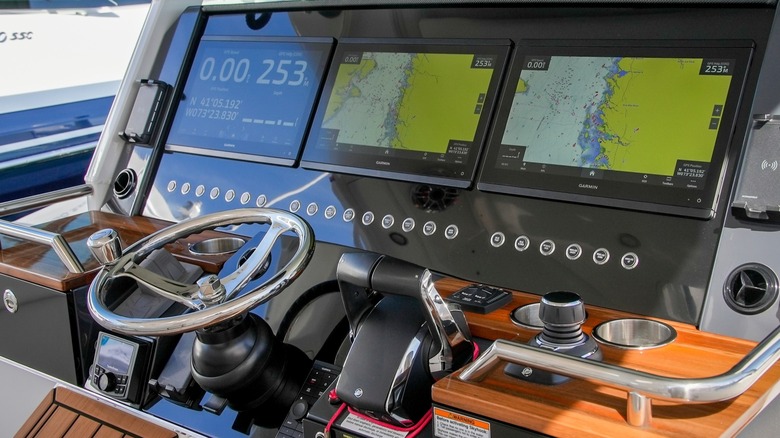
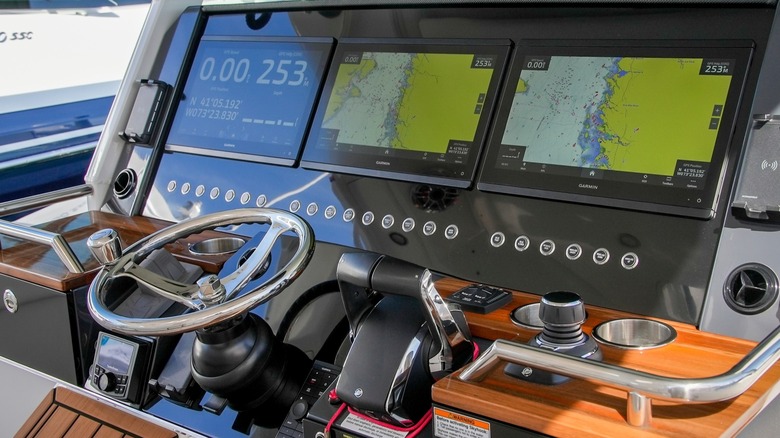
Fortunately, tools on modern vessels have advanced dramatically. Things like GPS, sonar, and radar provide a wealth of data. You can even monitor any one of the basic types of boat engines with real-time diagnostic monitors. However, the problem was no longer a lack of information, but how to organize it and see it all in one convenient place. Enter the multifunction display (MFD), which is essentially a boats electronic control center. These devices utilize touchscreens and come in sizes from 5 to 16 inches across diagonally. Smaller basic units may only show one instrument at a time, whereas larger, premium MFDs can pull information from a variety of tools and display it simultaneously by splitting the screen into sections.
Many MFDs showcase data from fishfinders, chartplotting, real-time condition measurements like water currents, and system monitors, to name a few. Some MFDs come equipped out of the box with these tools; however, you can also connect standalone devices to an MFD via a specialized Ethernet connection or the maritime communication standard, NMEA 2000. You can even integrate different types of solar panels for your boat into an MFD.
Advertisement
Multifunction displays have made boating safer
Inna Luzan/Getty Images
Electronic navigation tools first appeared in 1984, with the Geonav navigation display. While it wasn’t immediately embraced by boaters, it laid the foundation for things to come, eventually leading to multifunction displays. However, before MFDs became common and more adaptable, the helm could be a confusing cluster of several standalone screens. And this was in addition to various analog gauges which still provided relevant data.
For instance, back then a captain may have separate units for radar, plotting, fish-finding, and auto pilot, among others, from different manufacturers scattered across the instrument panel. Each one of these devices was a standalone tool, making it more cumbersome to get important data quickly. And the number of tools was limited, as the helm only offers so much space. With today’s MFD units, boaters don’t need to divert their attention across several displays and analog gauges, making is easier to quickly view and interpret important data.
Advertisement
Not only have modern MFDs consolidated all these tools into one package, but some also come with, or can integrate with, additional safety systems. For instance, some MFDs include a Risk Visualizer, which uses an advanced algorithm to help prevent collisions by analyzing routes and flagging high-risk areas. You can also connect tools like 1st Mate by Mercury Marine, which uses tracker wearables on the wrist that will sound alerts if a passenger goes overboard and even shuts off the engines if the captain goes into the water.
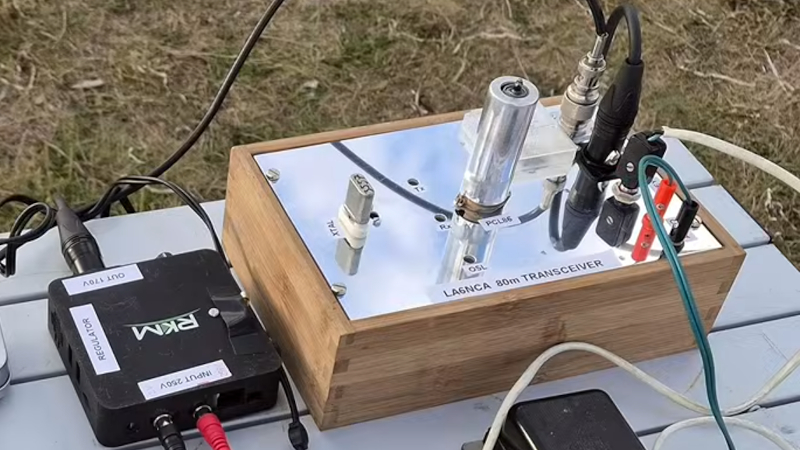
It’s not often we see a tube project here, so [Helge Fykse]’s PCL86 transceiver is a welcome find.
If you know anything about the European Pro-Electron device naming system you’ll be familiar with it as it applies to tubes. The first letter denotes the heater specification, for example “E” is for a 6.3 volt heater. Everyone wants the familiar 6.3 V devices, but they have a set of cousins which often pass unnoticed. “P” tubes have a 300 mA heater designed such that all tubes in a device could be connected in series at the same current. Of those tubes the PCL86 is a mundane example, filling the function taken in the semiconductor years by the LM386. It’s a small-signal triode and a power pentode in one device, and it’s an audio amplifier. Every 1960s TV set in Europe had one, and thus it’s a good choice for experimentation.
This transceiver is a conventional crystal oscillator and power amplifier on transmit, but with a flick of a switch it transforms into a direct conversion receiver in which the triode becomes oscillator and mixer while the pentode becomes an audio amplifier. It’s simple, and the video below the break explains it in great detail. We’re not sure whether or not it could unintentionally radiate in receive mode, but we’re guessing the energy would be tiny.
Advertisement
A simple tube project can make an interesting departure from modern surface mount electronics, so if you get the chance we’d suggest you try one. If you don’t need a transceiver, an audio amplifier is the archetypal PCL86 project.
Searching through my WhatsApp chat history can be frustrating if on an Apple device. You’re looking for an address or perhaps even a specific picture, but actually finding it becomes the hard part. So, to deal with this, WhatsApp is apparently working on a new search shortcut inside chats and channels on iOS.
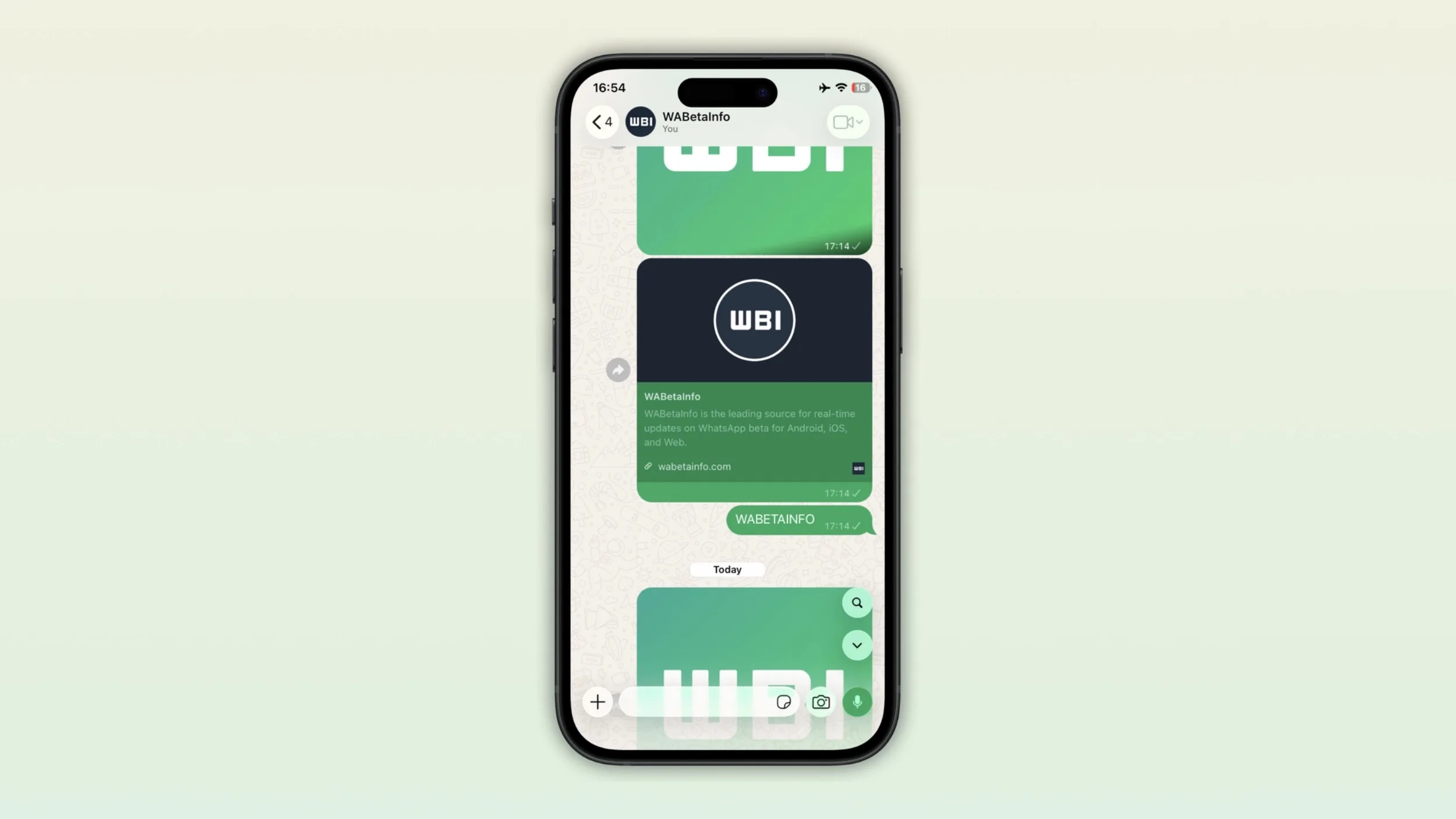
This lets users jump directly into message search without leaving the conversation first. WABetaInfo spotted the feature in WhatsApp Messenger for iOS version 26.36.74, currently available through the App Store.
WaBetaInfo
The search button appears when you actually need it
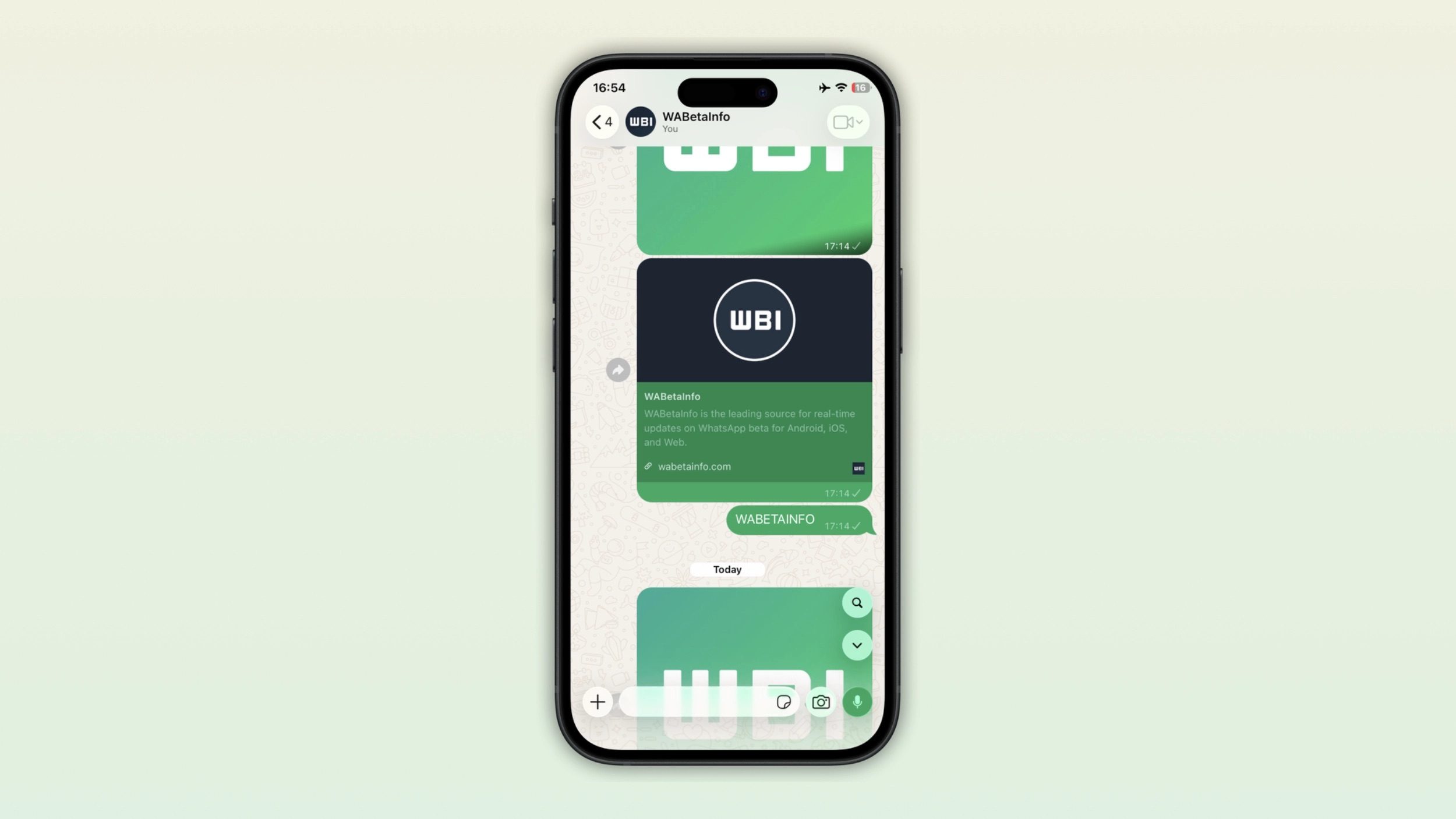
The shortcut is situated near the top of the conversation interface and appears when you scroll upward through older messages. Tap it and WhatsApp immediately activates its existing search mode, where you can enter a keyword and jump between matching results.
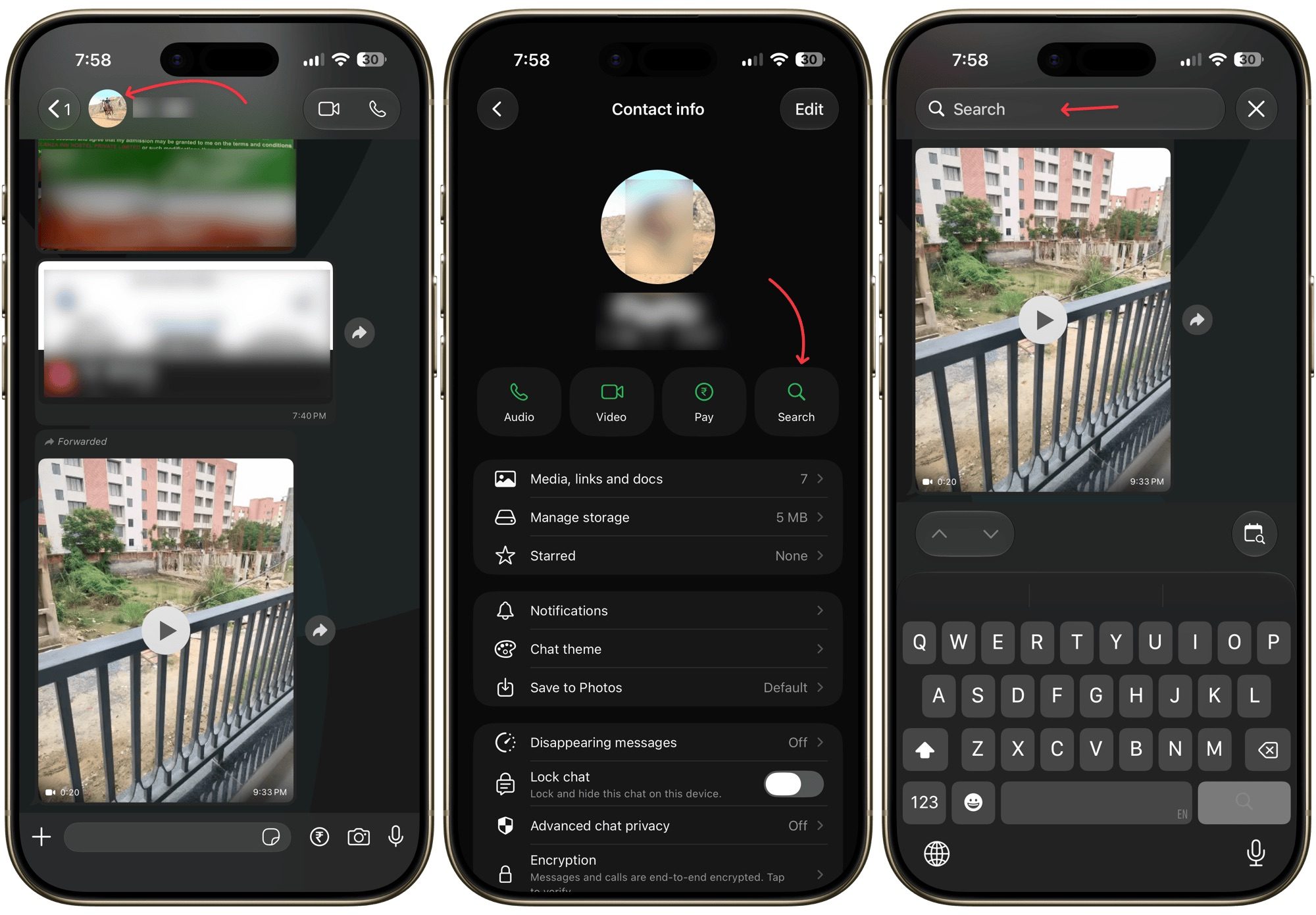
Once you scroll back to the bottom of the conversation, the button disappears again. So it’s not hogging up the space within the messaging app. Previously, searching within a specific chat on iPhone required tapping the contact or group name, opening the chat information screen, selecting Search, and then returning to the conversation with search mode enabled.
How search inside WhatsApp worksRachit Agarwal / Digital Trends
Channels are included in this
WhatsApp is also adding the same search button to Channels. This is where the new search shortcut would be the most useful, honestly. Channels can accumulate a huge number of updates, particularly those run by news organizations. Meaning, finding the exact message you’re looking for will be a lot easier.
WhatsApp originally tested the shortcut at the bottom of the interface in August but moved it to the top before release. WABetaInfo says the feature is currently reaching some iPhone users and should expand over the coming weeks. There is no confirmed Android rollout date yet.




















































You must be logged in to post a comment Login