

Business
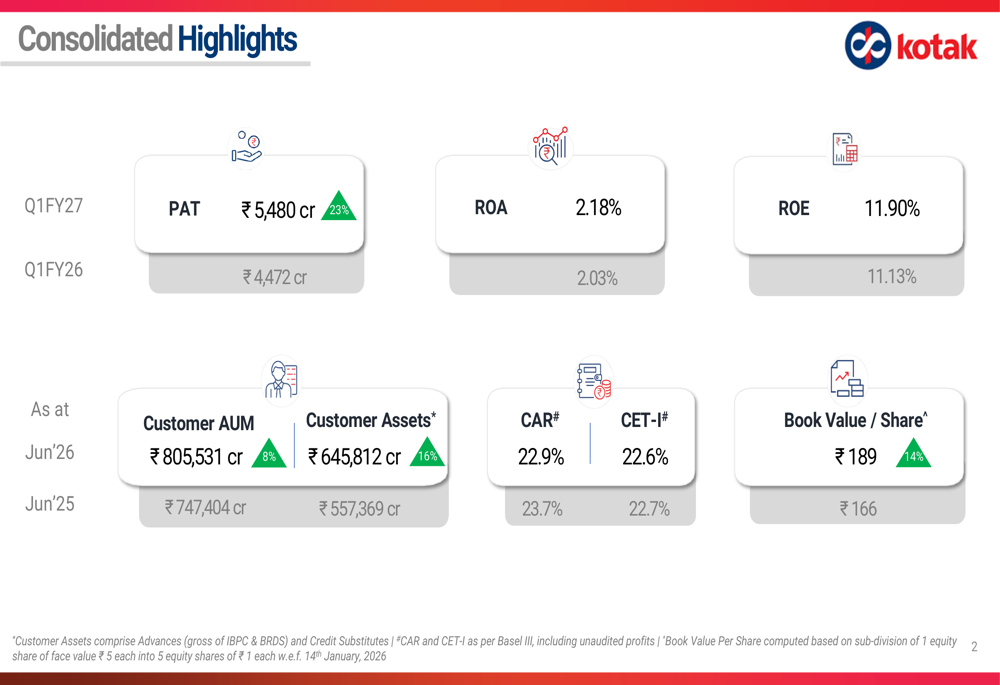
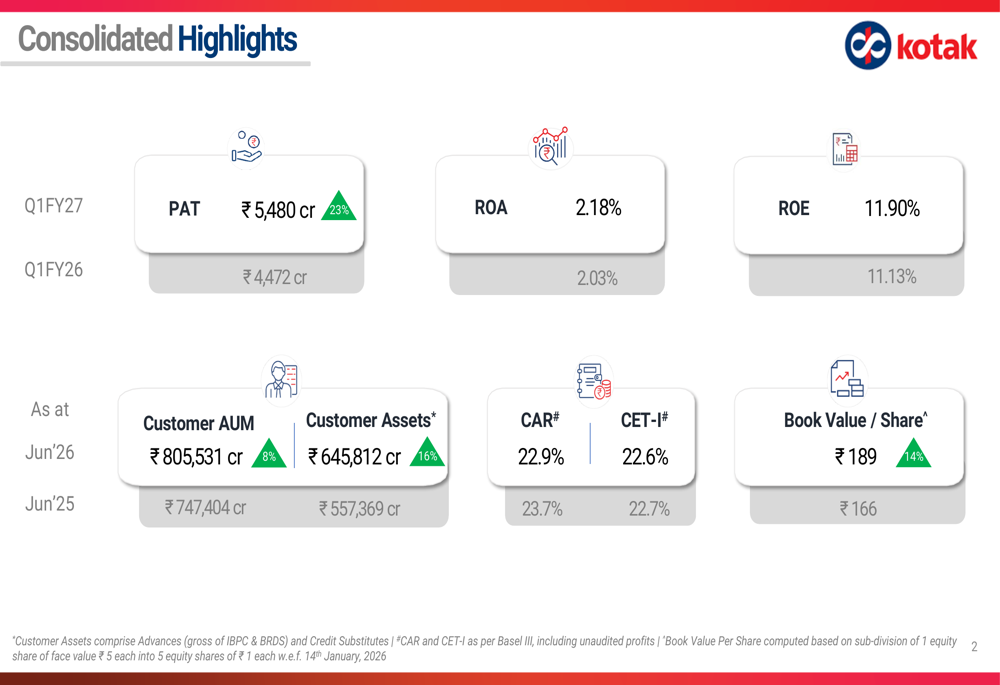
Kotak Q1FY27 presentation: 23% profit growth, asset quality improves



Vishal Jadaun is the founder of Tickzen, a company that develops quantitative research tools, valuation frameworks, and stock analysis models for investors. With a background in computer science and a self-directed approach to investing, he evaluates companies primarily through financial statements, SEC filings, earnings reports, and management disclosures rather than market narratives or third-party opinions.His research on Seeking Alpha focuses on post-earnings and fundamental analysis of industrial, logistics, and technology companies. His process emphasizes separating one-time accounting items from underlying operating performance, assessing balance-sheet strength, and building independent estimates of intrinsic value.
Analyst’s Disclosure: I/we have no stock, option or similar derivative position in any of the companies mentioned, and no plans to initiate any such positions within the next 72 hours. I wrote this article myself, and it expresses my own opinions. I am not receiving compensation for it (other than from Seeking Alpha). I have no business relationship with any company whose stock is mentioned in this article.
Seeking Alpha’s Disclosure: Past performance is no guarantee of future results. No recommendation or advice is being given as to whether any investment is suitable for a particular investor. Any views or opinions expressed above may not reflect those of Seeking Alpha as a whole. Seeking Alpha is not a licensed securities dealer, broker or US investment adviser or investment bank. Our analysts are third party authors that include both professional investors and individual investors who may not be licensed or certified by any institute or regulatory body.
Business
(VIDEO) BTS Concert in Paris Draws Record 92,000 Fans as President Macron Attends Historic Show

BTS drew the largest crowd of the group’s career Friday night, performing before 92,000 fans at Stade de France in Saint-Denis, just north of Paris, in what marked the biggest single-night audience the K-pop supergroup has ever played to since debuting in 2013.
The concert, part of the European leg of the group’s Arirang World Tour, filled France’s largest stadium beyond its listed 80,000-person capacity, with fans packed in for roughly 150 minutes of continuous performance. More than 90,000 members of the group’s fan base, known as ARMY, had gathered outside the venue as early as an hour before the show began, chanting the group’s traditional cheering call listing each member’s Korean name. When the seven members emerged onstage amid red smoke, the crowd erupted, with some fans reportedly fainting or needing assistance from safety staff amid the overwhelming noise and emotion, and others moved to tears simply from seeing the group perform in person.
French President Emmanuel Macron and his wife, Brigitte Macron, were among those in attendance, seen on broadcast cameras holding light sticks known as ARMY bombs throughout the performance. Macron later shared a video of the concert filmed on his phone to his Instagram account, writing simply, “Welcome to Paris.”
The set list moved through material spanning the group’s career, opening with “Hooligan” before running through the “Arirang” album’s title tracks, with fans singing along fluently in Korean. The show also featured longtime fan favorites including “FAKE LOVE,” “Not Today,” “IDOL,” “Butter” and “Dynamite,” along with two surprise additions for the French crowd: “A Song Dedicated to the Small Things” and “JUMP.” Throughout the performance, fans stood and sang continuously without sitting or resting, a display of stamina and devotion that reporters covering the show described as remarkable given the concert’s length.
The production leaned heavily on elements of Korean cultural heritage, incorporating stage design and performance references tied to traditional tal masks, the Buddhist seungmu dance, the Taegeuk symbol, the circle dance known as ganggangsullae, and Gyeonghoeru Pavilion at Gyeongbokgung Palace. Pyrotechnic elements inspired by sparklers and traditional Korean fire rituals accompanied songs including “FYA” and “Burn It,” adding to the visual spectacle throughout the night.
The international makeup of the crowd stood out as one of the evening’s defining features. Fans from across Europe and beyond, including from Spain, Portugal, Italy, Norway, England, Ukraine, Argentina, the Philippines and Turkey, waved their national flags throughout the show, creating an atmosphere reporters compared to a World Cup or Olympic event. French fans were spotted waving a hybrid flag combining France’s tricolor with South Korea’s Taegeuk symbol, while women wearing hijabs waved light sticks alongside others dressed in traditional Korean hanbok attire. When an image of Spanish fans waving their flag appeared on the venue’s screens, French fans, still processing France’s recent World Cup semifinal loss to Spain, responded with a good-natured chorus of jeers.
Members of BTS addressed the crowd directly throughout the night, expressing gratitude for what they described as an unusually passionate reception even by the standards of their global tour. Jungkook, the group’s youngest member, spoke in French, telling fans he had spent a happy evening with them and would never forget the memory. Jin, the group’s oldest member, referenced his experience carrying the Olympic torch in Paris in 2024, saying he had again enjoyed a wonderful day surrounded by fans. V attempted a French greeting despite acknowledging uncertainty about his pronunciation, drawing cheers after mentioning his fondness for croissants and snails. RM, the group’s leader, also spoke in French, expressing happiness at returning to Paris while forming a heart shape with his hands.
Suga, who had previously said the Paris stop was the tour date he anticipated most, drew a direct comparison to the group’s history at the venue, noting that BTS had performed at the same stadium seven years earlier to roughly half Friday’s crowd size, calling Paris the largest and most passionate audience of the tour. Jimin echoed that sentiment, describing the show as the largest audience in the group’s history, while J-Hope asked the crowd in French whether they had enjoyed themselves before calling Paris the city with the best ARMY fan base.
Beyond the celebrity attendees, the concert drew broad coverage from French media outlets. Le Monde published an extensive online feature tracing the group’s journey from their 2013 debut to the present, noting that the members’ mandatory military service, which many observers had speculated could strain the group, instead appeared to have left them more unified and confident in their identity.
Fans in attendance brought handmade signs and artwork reflecting years of devotion to the group, with messages referencing more than a decade of fandom and long journeys to reach the concert, including at least one sign noting a 3,000-kilometer drive to attend. Attendees also displayed artistic tributes depicting the band members in styles ranging from Renaissance portraiture to superhero-inspired illustrations.
The Paris show capped what has already been a milestone year for BTS following the group’s return from an extended hiatus tied to mandatory military service. The “Arirang” album, released in March, previously became the most-streamed K-pop album in Spotify’s history, and the group’s music video for the single “NORMAL” similarly broke Spotify’s single-day streaming record for a K-pop video earlier this month. With the European leg of the tour now concluding, BTS is scheduled to perform at additional stops in the coming days before joining Madonna, Shakira and Justin Bieber as co-headliners of the FIFA World Cup final halftime show Sunday, July 19, at MetLife Stadium in East Rutherford, New Jersey.
Canada prepares to evacuate Ontario community as wildfire smoke chokes US
Business
(VIDEO) Tom Brady Slaps Logan Paul Onstage at Fanatics Fest as Video of Long-Running Feud Goes Instantly Viral
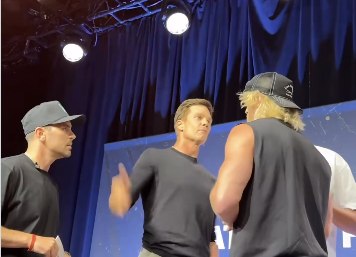
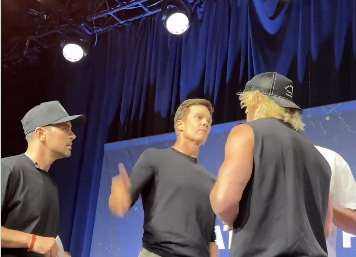
Tom Brady slapped WWE star and YouTuber Logan Paul across the face during a live panel at Fanatics Fest in New York City on Friday, escalating a months-long public feud between the two that has now played out across podcasts, a flag football field and, most recently, a live stage in front of a crowd of onlookers.
The incident occurred after Brady, Paul, New York Knicks star Karl-Anthony Towns and others wrapped up a panel discussion titled “This Is Why We Collect” at the sports memorabilia and fan convention. According to multiple accounts of the moment, a heated verbal exchange between Brady and Paul followed the panel’s conclusion, ultimately ending when Brady struck Paul with an open-handed slap across the face. Towns, who was standing just inches from the two men, stepped in immediately to separate them before the confrontation could escalate further, and both Brady and Paul were quickly escorted off the stage.
Footage of the exchange, posted by Fanatics with Brady, Paul, WWE and the NFL all tagged as collaborators, spread rapidly across social media. According to Variety, the clip drew more than 17.5 million views on Instagram and nearly 7 million more on X within hours of being posted. Fanatics captioned its own post of the video, “Round 100 of this never ending beef at Fanatics Fest.”
Brady addressed the incident afterward on X, sharing his own footage of the altercation and referring to Paul as a “dork.” Paul, for his part, offered his own account of events on X, framing the confrontation as retaliation for needling Brady over a prior loss. “This happened bc I was roasting Tom for beating him in flag football. And he tries to smack me?? Horrible example for the kids. Aura -100 + Blocked. With a torn tricep,” Paul wrote. In a separate clip captured after the slap, Paul could be heard telling someone nearby to “get your boy,” before adding, “Take him out of here, bro. He’s going to get himself hurt. I swear to God.”
It remains unclear whether the confrontation was staged, either as a preview for a potential Brady appearance in WWE or as additional promotion for Paul, who is currently recovering from a torn triceps and has said he is eager to return to the ring once healed. Speaking about a possible WWE debut of his own during the Fanatics Fest panel, Brady suggested he had given the idea real consideration. “I feel like I’m retired from football, and I have an opportunity to go out there and still showcase that I’m a little bit of an athlete. My boy [Rob Gronkowski‘s] done it. I’ve seen, obviously, Logan Paul do it. I think I could get in there for at least one match, right?” Brady said. He added that if he did step into the ring, he would likely embrace a villainous persona given his history as a divisive figure among opposing fan bases during his NFL career. “I’ve always been a bad guy,” Brady said, explaining that success on the road in the NFL tends to make a player unpopular with rival crowds. “When you go on the road and you’ve had some success in the NFL, they don’t like you. It’s an incredible feeling when you work that entire day to basically try to send the crowd home early.”
The rivalry between Brady and Paul stretches back several months. According to Bleacher Report, the tension first flared at a February Fanatics event, when Paul told Brady he believed his WWE career made him just as athletic as NFL players. The two clashed again during the draft process for the 2026 Fanatics Flag Football Classic, with Brady pushing back on Paul’s athletic credentials by pointing to the fact that Paul had cited his own high school football statistics as part of his argument. That event took place in March, when Brady and Paul competed on opposing teams, with Paul’s squad ultimately defeating Brady’s in the tournament, even as Brady appeared to mock Paul during their head-to-head matchup by throwing the football directly at him.
The feud has also included sharper exchanges. Ahead of the March flag football event, Brady used an appearance on Paul’s podcast, “Impaulsive,” to dismiss WWE as “cute” and question whether Paul’s athleticism compared to top NFL talents such as Saquon Barkley. In a separate Instagram video, Brady went further, calling Paul derogatory names and daring him to compete against “the big boys” in football. Brady later appeared to walk back the intensity of the rift during an appearance on “The Tonight Show Starring Jimmy Fallon,” telling the audience he was not looking to escalate tensions with Paul despite hearing from fellow NFL players eager to see the wrestler humbled. “I’m like, ‘Guys, chill out,’” Brady said at the time. “‘We’re not committing any crimes against Logan Paul.’”
Friday’s slap suggests that détente did not last. Paul made his WWE debut in April 2021 and has continued building a career in the promotion alongside his YouTube and boxing ventures, though his in-ring activity has been paused since he suffered a torn triceps on May 23 while defending the WWE World Tag Team Championship alongside his tag partner in a match against The Vision’s Austin Theory. WWE doctors have reportedly estimated a six-month recovery timeline for the injury, with Bron Breakker stepping in as Theory’s tag team partner in Paul’s absence.
Brady, who played in the NFL from 2000 to 2022 and won seven Super Bowl championships during his career, is now a part-owner of the Las Vegas Raiders. Reaction to Friday’s viral moment has been mixed, with some fans questioning whether the slap represented a genuine escalation of tension or simply the latest chapter in an ongoing publicity exchange between two of sports and entertainment’s most recognizable personalities. Whether the incident leads to any further confrontation, either on another flag football field or potentially inside a WWE ring once Paul returns from injury, remains to be seen.

NEW YORK — Investors weighing technology opportunities in 2026 face a choice between established leaders in artificial intelligence infrastructure like SK Hynix and ambitious newcomers in space and satellite communications such as SpaceX, both offering exposure to high-growth sectors but with distinct risk profiles and market dynamics.
SK Hynix, the South Korean memory chipmaker, has emerged as a key beneficiary of the AI boom through its high-bandwidth memory products essential for training large language models. SpaceX, which completed its initial public offering in June, brings a different proposition centered on reusable rockets, Starlink satellite internet and potential AI compute capabilities in orbit.
The comparison highlights broader themes in technology investing: tangible near-term earnings from semiconductor demand versus long-term visionary bets on space industrialization. Both companies operate in capital-intensive industries with significant barriers to entry, but their paths to value creation differ markedly.
SK Hynix has posted strong results tied to surging demand for HBM chips used in NVIDIA graphics processors and other AI accelerators. The company has expanded production capacity aggressively to meet orders from major clients building data centers. Analysts project continued revenue growth as AI infrastructure spending remains elevated through the decade.
The memory sector has historically been cyclical, with periods of oversupply pressuring prices. However, the structural shift toward AI has altered dynamics, with HBM representing a higher-margin, specialized segment less prone to commoditization than traditional DRAM or NAND.
SK Hynix’s technological edge in stacking and bandwidth has allowed it to capture significant market share. Partnerships with foundries and direct sales to hyperscalers provide diversified revenue streams beyond traditional PC and mobile markets.
In contrast, SpaceX has disrupted the launch industry with reusable Falcon rockets and is scaling Starlink to provide global broadband. The company’s valuation soared post-IPO, reflecting enthusiasm for its role in lowering space access costs and enabling new applications from broadband to Earth observation.
SpaceX’s Starship program aims for even greater payload capacity and eventual Mars missions, though technical challenges remain. Starlink revenue growth has been a highlight, with subscriber additions driving recurring income.
Both companies face substantial capital requirements. SK Hynix invests heavily in fabrication facilities, while SpaceX funds rocket development and constellation deployment. Access to capital and execution on these investments will determine long-term success.
For public market investors, SK Hynix offers more immediate financial visibility through quarterly earnings tied to chip demand. SpaceX, as a newer public entity, is still establishing its reporting cadence and faces scrutiny over valuation sustainability after an initial post-IPO surge.
Analysts covering SK Hynix highlight its positioning in the AI supply chain. Memory demand for data centers is expected to remain robust, supporting pricing power in premium segments.
SpaceX’s investment thesis rests on execution across multiple fronts. Starlink’s path to profitability and global scale is critical, as is progress on Starship for higher-margin launch contracts and future exploration missions.
Regulatory environments differ. SK Hynix navigates semiconductor export controls and trade tensions, while SpaceX deals with aviation and space regulatory bodies alongside international spectrum allocation for Starlink.
Geopolitical risks affect both. Tensions in Asia impact semiconductor supply chains, while space activities face scrutiny over orbital debris and national security implications.
Diversification benefits exist for portfolios including both. SK Hynix provides exposure to proven AI infrastructure demand, while SpaceX offers asymmetric upside from space economy expansion.
Valuation metrics vary. SK Hynix trades at multiples reflecting growth expectations in memory, with analysts monitoring inventory levels and capital expenditure cycles. SpaceX’s post-IPO trading has shown volatility typical of high-profile technology debuts.
Investment decisions should consider time horizons. Near-term catalysts favor SK Hynix through earnings and AI spending updates. SpaceX’s story unfolds over years as Starship matures and Starlink reaches critical mass.
Broader market context includes Federal Reserve policy, economic growth and technology sector rotations. AI enthusiasm has lifted related stocks, but concerns over concentrated spending have prompted periodic pullbacks.
SK Hynix benefits from South Korea’s semiconductor ecosystem and government support for strategic industries. The company has announced expansions to meet projected demand.
SpaceX, under Elon Musk’s leadership, maintains ambitious timelines. Recent Starship test flights have advanced development despite setbacks common in complex engineering programs.
Financially, SK Hynix reports consistent profitability tied to product cycles. SpaceX has shown improving economics as launch cadence increases and Starlink scales.
Risk management differs. Semiconductor investors monitor inventory and pricing, while space investors track launch success rates and regulatory approvals.
Longer-term, both could benefit from AI synergies. SK Hynix supplies memory for ground-based training, while SpaceX could enable distributed computing or data relay in orbit.
Portfolio allocation depends on risk tolerance. Conservative investors may prefer SK Hynix’s established financials, while those seeking higher growth potential might allocate to SpaceX despite volatility.
Analyst consensus for SK Hynix remains positive, with price targets incorporating HBM expansion. SpaceX coverage is developing as the company reports public results.
The 2026 investment landscape favors companies with clear technological moats and secular tailwinds. SK Hynix and SpaceX exemplify different expressions of innovation in critical infrastructure.
Investors should conduct due diligence, considering overall asset allocation and market conditions. Neither represents a guaranteed outcome, as execution and external factors will influence results.
As AI and space technologies evolve, both companies are positioned at the forefront of their respective domains. The choice between them reflects preferences for near-term cash flows versus visionary disruption.
Market watchers will monitor upcoming earnings and operational updates from both. SK Hynix’s next results and SpaceX’s quarterly filings will provide fresh data points for comparison.
In summary, SK Hynix offers a more mature play on AI memory demand, while SpaceX represents a bet on multi-decade space ambitions. Diversification across both could balance immediate returns with long-term potential in transformative technologies.
Business
NFL Suspends Cardinals Scouting Director Ryan Gold Indefinitely for Leaking Draft Info and Gambling
The NFL has suspended Arizona Cardinals personnel executive Ryan Gold indefinitely for violating the league’s gambling policy, the league announced Friday, citing an investigation that found Gold leaked confidential draft information and placed prohibited bets on NFL and college football games.
The league said its investigation determined that Gold, the Cardinals’ director of college scouting, provided confidential, nonpublic information regarding Arizona’s 2026 draft selections before the picks were officially announced. Investigators also found that Gold participated in parlay bets involving both NFL and college games. The NFL did not disclose who Gold shared the draft information with, and it remains unclear how the league first became aware of the violations.
In a statement announcing the suspension, the NFL emphasized the seriousness with which it treats any breach of its gambling policy, even when game integrity itself is not in question. “The Gambling Policy, which is annually reviewed with all NFL personnel, strictly prohibits anyone in the NFL from participating in or facilitating any form of sports gambling, and from providing third parties non-public information,” the league said. “Although there is no reason to believe the integrity of any NFL game was affected, the League takes any violation of the Gambling Policy with the utmost seriousness.”
The Cardinals organization issued its own statement following the announcement, expressing support for the league’s decision while emphasizing that the violation was isolated to a single employee. “The NFL’s policies and expectations for all employees are clear, comprehensive, and consistently communicated. We fully support the league’s decision in this matter, which involves a single employee. Our focus remains on preparing for the start of training camp next week and the 2026 season,” the team said.
Gold has spent 13 seasons with the Cardinals organization. He was promoted to director of college scouting in June 2025, after spending the previous three years, from 2022 to 2024, as assistant director of college scouting. Before that, he worked four seasons, from 2018 to 2021, as a college scouting coordinator. In his current role, Gold oversees a scouting department that includes four regional and pro scouts, six area scouts, and lead assistant director Alfonza Knight, who is also in his 13th season with the organization, according to reporting from The Mirror.
The timing of the suspension has drawn additional scrutiny given a notable moment from this year’s NFL Draft. The Cardinals surprised many draft analysts by selecting Notre Dame running back Jeremiyah Love with the No. 3 overall pick, passing over Ohio State defender Arvell Reese, who had been widely projected as a likely selection at that spot. According to reporting from The Mirror, footage that circulated after the draft appeared to show Love being named as the Cardinals’ pick prematurely during a rehearsal held ahead of the official broadcast, raising questions about whether that specific selection was connected to the information Gold is accused of leaking. Gold was also reportedly involved in the team’s process of selecting quarterback Carson Beck in the draft’s third round.
The NFL said its review of Gold’s conduct included interviews with relevant individuals and an examination of electronic records. The league further stated that the Cardinals organization fully cooperated with the investigation, and that there was no indication any other member of the team, including coaches or players, was aware of or involved in Gold’s activity. The league also said it found no evidence that any play or game outcome was affected by the violations.
Gold retains the right to appeal his suspension. He could not immediately be reached for comment following the league’s announcement Friday.
The NFL has maintained increasingly strict gambling policies in recent years as legalized sports betting has expanded across the country following a 2018 U.S. Supreme Court ruling that opened the door for states to authorize sports wagering. The league has invested significant resources into gambling education programs, reaching more than 20,000 people associated with the league across teams and front offices. Under the current policy, players are barred from placing any bet on NFL football, from attempting to fix or manipulate any aspect of an NFL game, and from sharing confidential, nonpublic information about any NFL game, player or event with third parties. Players are permitted to legally bet on other sports, provided they are off club property and not traveling with the team, and may also participate in traditional fantasy football leagues with prize pools capped at $250, or gamble legally at casinos during personal time.
League and club staff, including scouting and front-office personnel like Gold, are held to comparable restrictions barring participation in or facilitation of sports gambling and prohibiting the sharing of non-public information with outside parties. To help enforce those rules, the NFL partners directly with sportsbooks and data-analysis firms such as Genius Sports, which monitors real-time betting activity to flag suspicious patterns, including unusually high-volume wagers or unexpected shifts in betting lines that could indicate the misuse of inside information.
Gold’s suspension adds to a long history of gambling-related discipline within the league. At least 15 NFL players have been suspended for gambling violations since 1963, according to ESPN, with several cases occurring in recent years amid the broader expansion of legalized sports betting. The most recent player suspension prior to Gold’s case involved Isaiah Rodgers, who was suspended in June 2023 while with the Indianapolis Colts and was later reinstated in April 2024. Other notable cases in recent seasons have included multiple Detroit Lions players, including wide receiver Jameson Williams, as well as Tennessee Titans offensive tackle Nicholas Petit-Frere and former Atlanta Falcons wide receiver Calvin Ridley, each disciplined for violations ranging from betting on non-NFL games at team facilities to wagering directly on NFL contests.
Gold’s case marks a notable shift in that pattern, given his role as a front-office scouting executive rather than a player. The suspension comes just weeks before the Cardinals are set to open training camp ahead of the 2026 season, with the team saying its focus remains squarely on preparing for the upcoming year despite the disruption caused by the investigation into Gold’s conduct.

Earnings call transcript: ICICI Bank posts strong Q1 2026 growth, shares slip after hours
There’s a version of me from a few years ago who spent $340 on a candle-making kit, four bags of soy wax, and a stack of amber glass jars, convinced I’d stumbled on the one small business idea that would finally make me my own boss. Six weeks later, I’d set off my smoke alarm twice, given away eleven candles to neighbors who hadn’t asked for them, and quietly returned the wax to the back of a kitchen cabinet, where- if I’m honest- it might still be.
Was the idea bad? Not really. Was I ready to execute it? Absolutely not. That’s the gap nobody warns you about: there are a thousand small business ideas floating around the internet, but almost nothing written about how to tell a genuinely good one from an expensive way to occupy a weekend.
So is there a formula for picking a winner? Not exactly, but there’s a much better filter than “this seems fun,” and we’ll get to it. First, a running start: 80 real ideas, organized by the situation you’re actually starting from, each with a plain-English note on why it works and who it’s for.
The Highlights, If You’re Short on Time
Pulled from the full list below, these are the ones with the clearest path from “idea” to “first paying client” right now:
- Freelance writing or copyediting
- Virtual assistant services
- AI workflow consulting for small businesses
- Bookkeeping for solo entrepreneurs
- Mobile pet grooming
- Residential or office cleaning
- Niche e-commerce (one tight category)
- Personal training or nutrition coaching
- Local SEO consulting
- Home organizing services
- Senior companion care
- Meal-prep delivery service
- Online course creation
- Web design for local businesses
- Handyman or small home-repair work
That’s the appetizer. The full 80 are below, grouped by category, but the list isn’t actually the hard part. The decision is.
What Makes a Small Business Idea Good, Instead of Just Cute?
Here’s the uncomfortable truth: almost any idea on this list can work, and almost any idea can fail. The difference usually comes down to four things:
- You already have the skill, or can get good at it fast. Starting from zero adds months, sometimes years, to your runway.
- The startup cost is low enough to survive being wrong. If your first attempt flops, can you try again, or are you done?
- There’s a repeatable way to find customers — not just the first ten, who are usually friends and family, but the hundred after that.
- It can grow without your hours growing at the same rate. A business that only makes money when you’re personally trading time for it has a ceiling built in.
It also helps to remember what “small business” actually means at scale: according to the U.S. Small Business Administration’s Office of Advocacy, small businesses make up 99.9% of all U.S. businesses and employ roughly 62.3 million people, nearly 46% of the private-sector workforce. This isn’t a fringe category. It’s most of the economy.
With that filter in mind, here’s the full list.
Low-Cost Small Business Ideas (Almost No Startup Capital Required)
Low-cost doesn’t mean low-quality, it means the idea is built around your time and skill instead of inventory and equipment. This is usually the right starting category if you’ve never run a business before and want to test the water without draining your savings.
- Freelance writing or copyediting — turns existing writing ability into paid work with essentially zero equipment cost beyond a laptop.
- Virtual assistant services — inbox management, scheduling, and admin support for founders who’d rather not do it themselves.
- Social media management — running content calendars and posting schedules for small businesses too busy to do it consistently.
- Proofreading and transcription — detail-oriented work with low startup cost and steady demand from authors, students, and podcasters.
- Voiceover work — a home mic and some patience are the main barriers to entry; auditions do the rest.
- Online research services — freelance research for writers, analysts, and small firms that need a second set of eyes.
- Academic or test-prep tutoring — built directly on a subject you already know, with pay that scales with your track record.
- Resume and LinkedIn profile writing — steady demand from job seekers, especially during hiring-season spikes.
- Bookkeeping for solo entrepreneurs — recurring monthly work once you land a handful of regular clients.
- Independent consulting in your current field — the fastest route from “employee” to “business owner” because the expertise already exists.
Service-Based Small Business Ideas (Skills You Already Have)
If you’ve spent years getting good at something inside someone else’s company, that skill doesn’t stop being valuable the moment you leave. It just needs a new home.
- Marketing or brand strategy consulting — for small businesses that know they need better positioning but not how to get there.
- Web design and development — a service almost every small business needs and few want to learn themselves.
- Real estate or product photography — recurring work tied to two industries (real estate, e-commerce) that never stop needing images.
- Interior design or home staging — project-based work with strong word-of-mouth potential once you have a portfolio.
- Financial or tax consulting — high-trust, high-repeat-business work, especially for other small business owners.
- HR consulting for small teams — hiring, policy, and compliance help for companies too small to have an in-house HR person.
- Graphic design and branding — logos, packaging, and visual identity work for businesses at the “we finally need this” stage.
- Video editing services — demand driven by every small business now needing short-form content for social platforms.
- Career or executive coaching — one-on-one work that scales through referrals and testimonials more than ads.
- Grant writing for nonprofits — a narrow, specialized skill with less competition and often better pay than general freelance writing.
“Take what I already know how to do” is unglamorous advice compared to “chase a trend,” but it’s the version with the shortest distance between idea and first paying client.
Product and E-Commerce Small Business Ideas
Service work trades hours for dollars. Product work can, eventually, decouple the two – though it usually asks for more patience and more upfront cash before that happens.
- Niche e-commerce store (one tight category) — outperforms general stores by giving customers an actual reason to choose you over Amazon.
- Handmade goods on Etsy or your own site — low overhead, direct customer relationships, and full control over pricing and quality.
- Print-on-demand apparel — no inventory risk, since items are made only after they’re ordered.
- Interest-based subscription boxes — recurring revenue built around a specific hobby or identity rather than a general category.
- Specialty food products sold online — sauces, snacks, and baked goods with a shelf-stable format and a built-in gifting angle.
- Curated vintage or resale — sourcing is the real skill here; a good eye is worth more than a large budget.
- Digital products (templates, planners, courses) — sell once, deliver infinitely, with no shipping or inventory involved.
- Pet products for a specific niche — senior dogs, allergy-prone cats, exotic pets — narrower focus, more loyal customer base.
- Home goods with a sustainability angle — appeals to buyers actively looking for lower-impact alternatives to mass-market options.
- Custom stationery or invitation design — event-driven demand (weddings, showers, milestone birthdays) with strong repeat referrals.
Local and Mobile Small Business Ideas
Not everything needs to scale nationally to be worth doing. Some of the steadiest small businesses are the ones that never leave a five-mile radius.
- Residential or office cleaning — dependable recurring revenue once you build a regular client roster.
- Mobile pet grooming — convenience-driven pricing premium over storefront groomers, with lower overhead than a physical shop.
- Dog walking and pet sitting — low startup cost, flexible hours, and strong demand in dense residential areas.
- Lawn care and landscaping — seasonal but reliable, with equipment as the main upfront investment.
- Home organizing services — a fast-growing niche driven by decluttering trends and smaller living spaces.
- Handyman or small home-repair work — broad demand and minimal competition in most residential neighborhoods.
- Power washing and exterior cleaning — low equipment cost relative to the price customers are willing to pay per job.
- Senior companion care — non-medical support work with rising demand as the population ages.
- Mobile car detailing — comes to the customer, which is the entire value proposition and pricing justification.
- Moving and junk removal — physically demanding but reliably in-demand, especially in areas with high rental turnover.
Local services tend to have something the internet-first ideas don’t: word-of-mouth that compounds. One good review in a neighborhood Facebook group can outperform a month of ads.
Tech-Enabled and AI-Adjacent Small Business Ideas
Every wave of new tooling creates a matching wave of people who need help using it. Right now, that’s AI and the businesses built around helping other small businesses adopt it are among the fastest-growing ideas heading into 2026.
- AI workflow consulting for small businesses — helping owners figure out which tools are actually worth adopting, and which aren’t.
- Custom chatbot or GPT setup for local companies — practical, narrow-scope tech work most small businesses can’t build themselves.
- Data cleanup and automation services — unglamorous but consistently in-demand as businesses accumulate messier spreadsheets and systems.
- No-code app or website building — technical results without requiring the client (or you) to write code.
- AI-assisted content editing and fact-checking — a service layer on top of AI writing tools, for businesses that don’t trust raw output.
- Basic cybersecurity services for small businesses — most small businesses have none in place and don’t know where to start.
- Tech support for non-technical business owners — patient, plain-English troubleshooting that IT firms often price out of small-business range.
- Paid social media ad management — running and optimizing campaigns for businesses that don’t have the time to learn the platforms.
- E-commerce store audits and optimization — improving conversion rates on stores that already have traffic but weak sales.
- Local SEO consulting — helping brick-and-mortar businesses actually show up when someone searches nearby.
Wellness and Health Small Business Ideas
Wellness spending has kept climbing for years, and it’s increasingly treated as a routine expense rather than a luxury- which is the kind of demand a small business can build a real practice around.
- Personal training — one-on-one or small-group fitness coaching, in a gym, at home, or outdoors.
- Nutrition and health coaching — personalized guidance that goes beyond generic diet plans.
- Mobile massage therapy — brings the service to the client, commanding a premium over studio-based competitors.
- Yoga or Pilates instruction — can run in-person, online, or both, with low equipment costs to start.
- Non-clinical mental wellness coaching — support-focused work distinct from licensed therapy, with its own growing demand.
- Sleep coaching — a narrow, underserved niche with a clear, specific customer pain point.
- Postpartum support services — doula-adjacent, non-medical support for new parents in the weeks after birth.
- Senior fitness classes — a growing demographic with specific, underserved mobility and strength needs.
- Corporate wellness consulting — bringing wellness programming into small and mid-size workplaces.
- Assisted stretching or mobility studio — a newer fitness-adjacent model built around guided, hands-on flexibility sessions.
Food and Beverage Small Business Ideas
- Home bakery under a cottage food license — one of the lowest-overhead ways to turn a baking hobby into real income.
- Small-batch hot sauce or condiment brand — a manageable production scale with strong farmers-market and gift-market appeal.
- Mobile coffee cart — lower buildout cost than a café, with the flexibility to work events and high-traffic locations.
- Food truck — higher startup cost than a cart, but a full menu and a loyal local following to match.
- Personal chef service — in-home cooking for clients who want restaurant-quality meals without eating out.
- Meal-prep delivery service — batch-cooked, ready-to-eat meals delivered on a weekly schedule, distinct from one-off personal-chef visits.
- Small-batch beverage brand — cold brew, kombucha, or specialty sodas, often starting at farmers markets before retail shelves.
- Cooking or baking classes — turns existing kitchen skill into a teaching business with strong repeat-attendee potential.
- Farmers market vendor — low commitment way to test a food product before investing in a storefront or full production.
- Small-event catering — a natural next step for anyone already cooking at scale for friends and family.
Creative, Content, and Education Small Business Ideas
- Freelance illustration or design commissions — client work ranging from branding projects to personal commissions.
- Stock photography or video licensing — passive-leaning income once a library of work exists.
- Niche YouTube channel or content creation — monetized through sponsorships, ads, or a related product line once an audience builds.
- Paid newsletter publishing — subscription-based writing built around a specific topic and a loyal reader base.
- Ghostwriting for executives or founders — high-paying, relationship-driven work once you’ve built a track record.
- Online course creation — packages existing expertise into a product that can sell without your ongoing time.
- Children’s enrichment classes — art, coding, or music instruction for kids, often run through schools or community spaces.
- Music lesson instruction — steady, recurring income built on regular weekly sessions with the same students.
- Craft workshop hosting — paint nights, pottery sessions, and similar hands-on events with built-in social appeal.
- Podcast production and editing services — technical and creative support for the growing number of small businesses launching their own shows.
How Do You Actually Narrow This Down?
Take whichever three or four ideas from this list made you sit up a little straighter, and run each through the same four questions:
- Do I already have this skill, or could I realistically learn it in a month?
- Could I lose the startup cost entirely and still be okay?
- Do I know exactly where my first ten customers would come from?
- Is there a version of this that doesn’t require me personally, forever?
An idea that answers “yes” to all four isn’t just cute anymore. It’s a plan.
What Actually Trips People Up
It’s rarely the idea itself. It’s usually one of three things: underpricing out of nerves, waiting for a perfect logo and website before ever taking a paying client, or picking something with no clear path to customer number two. Every idea on this list can survive a rough first attempt. Almost none of them survive six months of avoiding the actual work of finding customers.
I think about the candle wax still sitting in that cabinet sometimes- not as a failure, exactly, more as a $340 lesson in doing the filtering before the buying spree. If you take nothing else from this list, take that: the idea rarely fails you. The lack of a plan usually does.
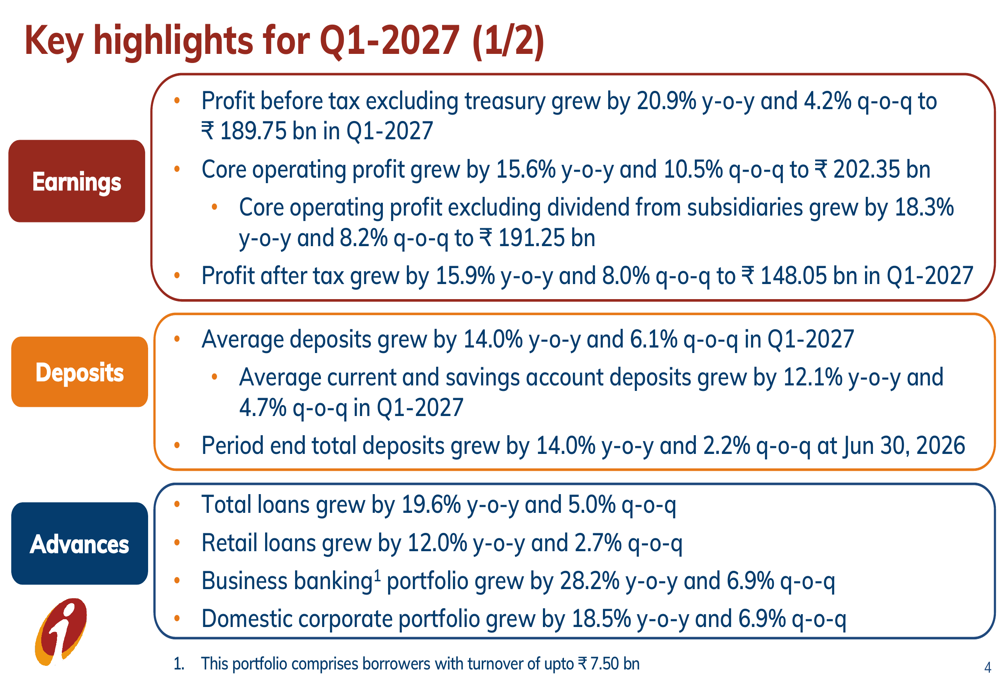
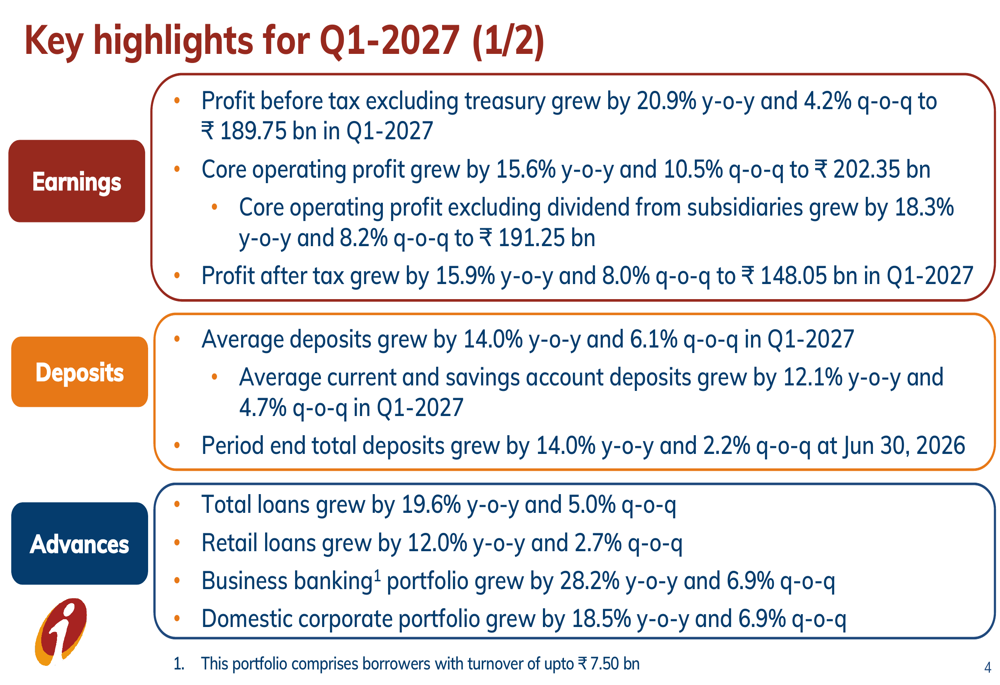
ICICI Bank Q1 2027 slides: profit surges 21%, loan growth accelerates

The issue entirely comprises an offer for sale (OFS) of over 2.59 crore shares by promoters and other shareholders, according to the Draft Red Herring Prospectus (DRHP) filed on Friday. This means that none of the IPO proceeds will go to the company, as they will be received by the selling shareholders.
The IPO of the Kanpur-based company will open for anchor investors on July 22. Equirus Capital and Motilal Oswal Investment Advisory are the book-running lead managers to the issue. The equity shares of the company will be listed on the BSE and NSE.
Promoters participating in OFS include Raj Kumar Lohia (up to 167.28 lakh shares), Gaurav Lohia (up to 22.18 lakh shares), Amit Kumar Lohia (up to 9.2 lakh shares) and Ritu Lohia (up to 16.71 lakh shares). Other selling shareholders include Alok Kumar Lohia (up to 21.71 lakh shares), Anurag Lohia (up to 11.38 lakh shares) and Anuja Lohia (up to 10.85 lakh shares).
Also read | IPO calendar: 5 IPOs opening for subscription to keep investors busy; SBI Funds among 4 listings scheduled
Lohia Corp financials
Lohia Corp reported a net profit of Rs 193 crore for the financial year which ended on March 31, 2026. This marked a 64% year-on-year (YoY) rise from Rs 118 crore net profit reported in FY25. Its revenue from operations, meanwhile, rose around 25% YoY to Rs 1,717 crore in FY26 from Rs 1,377 crore in FY25.

Lohia Corp is the manufacturer of machinery and equipment used in the production of technical textiles, in particular for manufacturing polypropylene and high-density polyethene woven fabric and sacks.
Also read: Zepto said to face sharply lower valuation for IPO Meanwhile, the primary market will stay active next week, with five IPOs opening for subscription and four IPOs set to list on the exchanges. The focus will be on Xtranet Technologies and Cube Highways Trust InvIT, which are the mainboard offerings scheduled to open next week. Alongside them, a few SME issues will also hit the market. Investors will also track the listing of SBI Funds Management, Millworks Technologies and Alpine Texworld after their IPOs close this week.
(Disclaimer: Recommendations, suggestions, views and opinions given by the experts are their own. These do not represent the views of The Economic Times)

‘Shutting down Messi is impossible’: Andres Iniesta reveals what Spain must do against Argentina in World Cup final | Football News

Transport for London hackers jailed for five and a half years

13 Celeb-Inspired Gingham Dresses for Summer


-
 NewsBeat2 days ago
London Mayor Sadiq Khan handed a peerage by Keir Starmer alongside 15 other Labour figures… just days before the PM leaves No10
-

 Fashion20 hours ago
Weekend Open Thread – Corporette.com
-

 Politics4 hours ago
The House | The City of London can help the new chancellor deliver growth in every postcode
-

 Crypto World3 days ago
CFTC blocks Kalshi from unwinding Michigan trades after court order
-

 Politics3 days ago
Young campaigners urge incoming PM to act on outdoor junk food ads
-

 Business2 days ago
Nvidia Stock Slips After Big Tuesday Rally as Huang Confirms Vera Rubin Chip Is Now in Production Today
-

 Crypto World4 hours ago
Ripple Payments Joins MiCA With 14 Firms, Does It Mean Anything For XRP?
-
 Entertainment3 days ago
Disney’s Most Ambitious Failed Star Wars Attraction Is Coming to SDCC
-

 Crypto World16 hours ago
Ripple wins EU-wide access as ESMA adds it to MiCA register
-

 Tech4 days ago
Get Your ESP32 Sunny Side Up With This Solar Dev Board
-

 News Videos4 days ago
XRP BOMBSHELL… XRP OMBOARDED FOR TRANSACTIONS!!!
-

 Crypto World2 days ago
Injective Submits SEC Transfer-Agent Registration to Onchain Ownership Records
-

 Business2 days ago
Palantir Shares Rise After Expanded Nvidia Partnership and Fresh Analyst Upgrades Ahead of Earnings Day
-

 NewsBeat1 day ago
Registration is now open for March for Men with Kev 2026
-

 Tech4 days ago
Dark Secrets Emerge When Jailbreaking LLMs
-
 Sports3 days ago
New Cornerback Enters Vikings Trade Rumor Mill
-

 News Videos1 day ago
Money | Class 12 Economics | CBSE Board Exam 2026-27
-

 Business2 days ago
Banco Bilbao Vizcaya Argentaria, S.A. (BBVA) Discusses Global Macro Environment and Economic Outlook for Core Markets Transcript
-

 NewsBeat9 hours ago
Durham County Council to send out electoral registration emails
-
 Tech5 days ago
Cloudflare Precursor Watches Your Mouse and Keyboard To Decide If You Are Human
You must be logged in to post a comment Login